Disobedience (親不孝通り, Yasuzo Masumura, 1958)

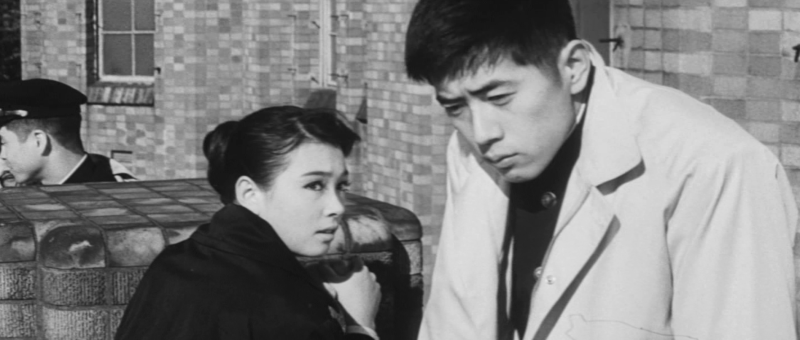
After finding out his older sister has had an abortion after her lover tells her he has no interest in marriage, a college student vows revenge in Yasuzo Masumura’s Disobedience (親不孝通り, Oyafuko Dori). The film’s Japanese title translates as something like “lack of filial piety street” and refers to an area where youth congregates to misbehave, bringing shame on their families with their debauched behaviour. It’s into this world that the cynical hero attempts to drag the sheltered heroine as part of his revenge plot while she apparently decides to stick with him even after he raped her during a college camping trip.

It is though notable that neither of them have much parental input to begin with. Kaneko’s (Hitomi Nozoe) mother has died and we’re told that their father spends all his time with a mistress and never comes home leaving her in the care of older brother Shuichi (Eiji Funakoshi), a salaryman. It’s not exactly clear where Katsuya’s (Hiroshi Kawaguchi) mother is, only that she lives somewhere else and occasionally writes while he is technically in the care of his older sister Akie (Yoko Katsuragi) who works as a tailor in a boutique store selling western fashions. Akie had been carrying on an affair with Shuichi she assumed would lead to marriage and was initially happy about the pregnancy only to be blindsided by Shuichi’s reaction. When he tells her that he has no intention to marry, she realises that the relationship is at a dead end and that an abortion is her only real option given the situation.

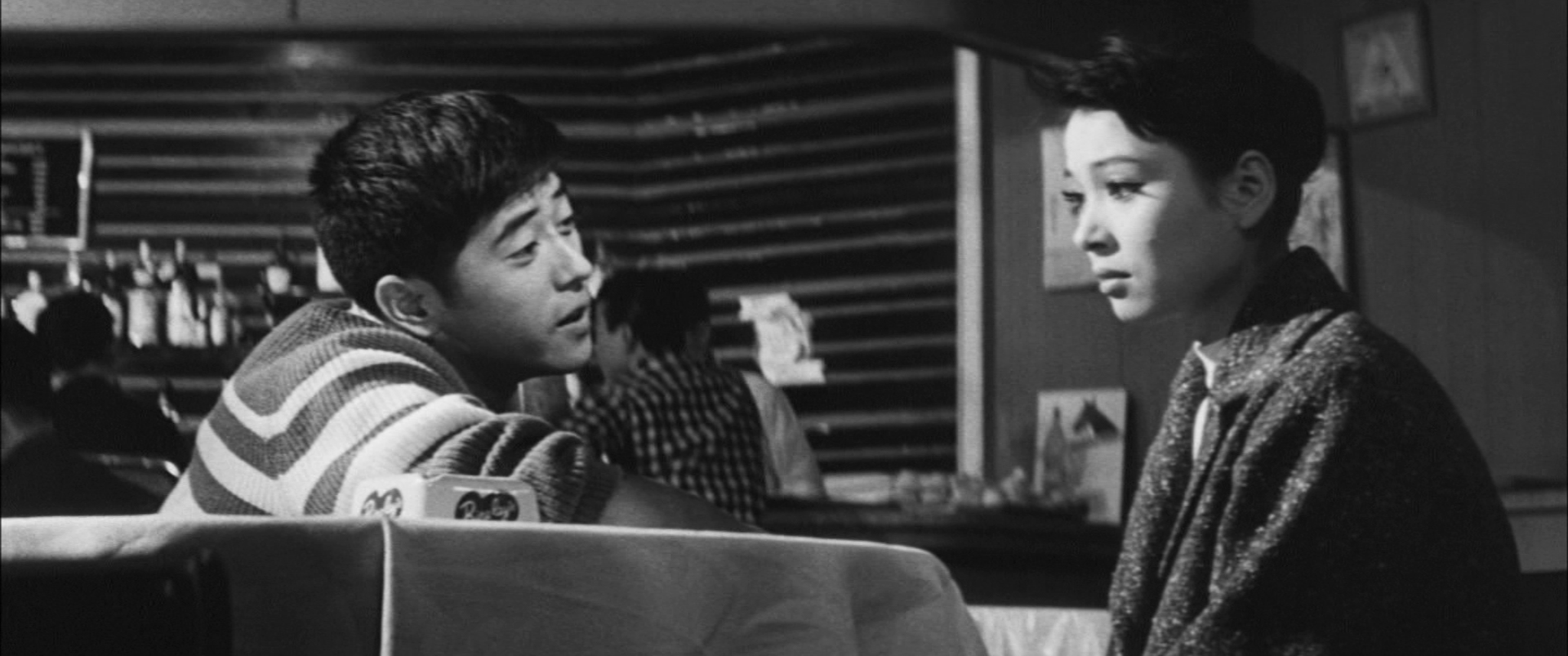
The irony is that Katsuya resents Shuichi for failing to take responsibility as a man and vows to take revenge by doing the same thing to his sister and seeing how he likes that. Though Akie points out that it’s nothing to do with Kaneko and tries to stop him, Katsuya is hellbent on playing the cad to make a point. Of course, he may also resent Shuichi, an executive salaryman, precisely because of the position he is in. There has been an economic downturn and he’s having trouble securing a job for after his university graduation. Some companies have halted recruitment entirely and another of Katsuya’s friends has already been through 11 unsuccessful interviews. Other young men have taken to politics, protesting new authoritarian legislation and investing in socialism. Katsuya and friends find this to be disingenuous, assuming it’s just another shrewd move to get on the ladder by finding employment in government or unions. The salaryman dream is a fairly new post-war invention, but it seems to be dying already and Katsuya can’t even really see what his education was for. He tells Kaneko that he only studies well enough to pass so that he can get a good job and the point of life is to figure out how to make money. If he can’t do that, then his life is meaningless and futile. That might be why he spends his time scamming entitled Americans (the only people with money), beating them at bowling, and hanging out in jazz bars. Though the Occupation is long over, the film has a strong but subtle sense of anti-Americanism as symbolised by the aeroplane flying above as Katsuya rapes Kaneko out in the mountains. 

But for Kaneko the situation is not much different. The young women complain it’s even harder for them to secure employment. Katsuya dismisses Kaneko’s university education by calling it a bridal academy, though most of the women lament that marriage is the ultimate job and perhaps the point of university for them is meeting a husband, just as it’s securing employment for Katsuya. Later, when he confronts Shuichi, Katsuya describes Kaneko as damaged goods now that she’s no longer a virgin and is currently carrying a child for which he accepts no responsibility. That may be one reason that she decides to stick with her rapist, realising that her situation is now impossible given it may be difficult for her to marry someone else while supporting herself financially as a single woman is not yet a viable option. By pursuing a relationship with Katsuya, she reasserts control over the situation along with the narrative of what happened between them on the mountains. 

On learning the truth, however, she makes a different decision from Akie in declaring that she will drop out of university and move to Osaka to live with an aunt and raise the baby alone there, declaring that she has decided to go on loving Katsuya no matter what he might think about it. Kaneko’s decision prompts a reversal of Akie’s thinking too. Though she had decided to be independent, starting her own business rather than planning for marriage, she returns to Shuichi and suggests they should get back together. To her the idea of running her own business and being married seem incompatible. Chastened by this whole affair, Shuichi’s thinking seems to have reversed too, to the extent that he decides to marry Akie after all, while Katsuya also decides to accept responsibility and go to Osaka with Kaneko where they will marry and stay together forever. It’s a strange “happy” ending, though it’s difficult to see how these marriages could ever really be happy given the circumstances that led to them and the discordant music that strikes over an ironic Merry Christmas sign as the film comes to an end suggests they probably won’t be. Nevertheless, the ending reverses a lack of filial piety in the shift toward conservatism through heteronormative marriages and the formation of new families as Katsuya, at least, takes responsibility for his paternity and exits the nihilistic world of clubs, bars, and bowling alleys in which his friends remain trapped.

The Wandering Princess (流転の王妃, Kinuyo Tanaka, 1960)

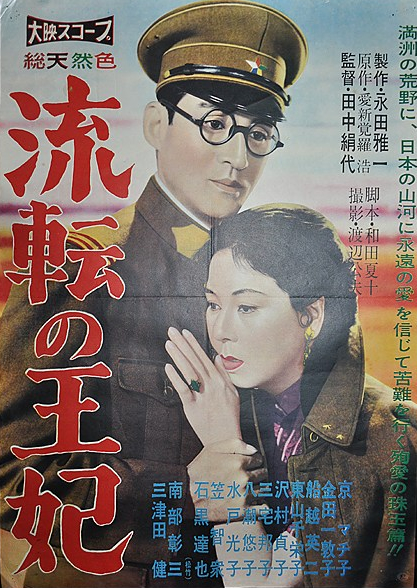
Wandering Princess posterAs in her third film, The Eternal Breasts, Kinuyo Tanaka’s fourth directorial feature, The Wandering Princess (流転の王妃, Ruten no Ouhi), finds her working with extremely recent material – in this case the memoirs of Japanese noblewoman Hiro Saga which had become a bestseller immediately after publication in 1959. Tanaka’s filmic adaptation arrived mere months later in January 1960 which was, in an ironic twist, a year before the real life tale would meet something like the conventional romantic ending familiar from classic melodrama. Nevertheless, working with Daiei’s top talent including Kon Ichikawa’s regular screenwriter (and wife) Natto Wada, Tanaka attempts to reframe the darkness of the preceding 20 years as the defeat of compassionate idealism at the hands of rigid austerity and unstoppable oppression.

Tanaka opens with a scene taking place in 1957 which in fact depicts a somewhat notorious incident already known to the contemporary audience and otherwise unexplained on-screen in which the older Ryuko (Machiko Kyo) tenderly bends over the body of lifeless schoolgirl. The camera then pulls back to find another girl in school uniform, Ryuko, twenty years earlier. A young woman with innocent dreams, Ryuko’s life encounters the usual kind of unwelcome disruption in the unexpected arrival of a marriage proposal but this is no ordinary wedding. Ryuko, as the oldest daughter of a prominent noble family, has been selected as a possible bride for the younger brother of the former Qing emperor now installed as the symbolic leader of the Japanese puppet state of Manchuria. Against the odds, Ryuko and her new husband Futetsu (Eiji Funakoshi) are well matched and endeavour to build a happy home together just as they intend to commit themselves to the creation of a new nation born from the twin legacies of the fallen Chinese empire and the resurgent Japan.

Foregrounding Ryuko’s experience, the film does its best to set “politics” aside but the inescapable truth is that each of our protagonists is a prisoner of the times in which they live. The second scene finds Ryuko in 1937 as an innocent schoolgirl gazing at the young men in uniform as they march past her. She remains out of step with them, walking idly and at her own uneven rhythm while they keep rigorous and seemingly unstoppable time. The family are understandably wary of the implications of the marriage proposal, especially as it comes with a military escort, with Ryuko’s beloved grandmother the only one brave enough to ask to see whoever’s in charge of this outrage only to be told that their fates are in the hands of the nebulous concept known as “army” which knows no individual will.

Assured by her family that the decision rests with her, Ryuko consents – not only to becoming a stranger’s wife (which would have been her fate in any case) but to being a kind of ambassador, the presentable face of imperial ambition. On her marriage she’s presented with a deep red cheongsam and continues to dress in Chinese fashion for remainder of her life in Manchuria where she learns to speak Mandarin and devotes herself to becoming as Chinese as it’s possible to be. Meanwhile, her husband Futetsu busies himself with a complementary desire to become Japanese, intensely worried that the sometimes degrading treatment he and his family receive is exclusively caused by his problematic nationality. When their daughter, Eisei, is born, the couple determine to raise her as the child of a new world, the embodiment of idealised cultural integration.

The world, however, is not so kind and the blunt force of militarism continues to present a barrier to familial harmony. Futetsu is prevented from seeing his brother by the officious forces of the military police while the lonely, paranoid “emperor” suspects that Ryuko is nothing more than a Japanese spy sent to undermine his rule. Ryuko was sent to Manchuria to be the bridge between two cultures. Her, in a sense, feminine energy which attempts to build connection through compassion and understanding is consistently contrasted with the prevailing male energy of the age which prizes only destruction and dominance. Filled with the naivety of idealism, she truly believes in the goodness of the Manchurian project and is entirely blind to the less altruistic actions of her countrymen engaged in the same endeavour.

Confronted by some children in a park while pushing the infant Eisei in a pram, Ryuko is identified as a Japanese woman by her accent while conversing in Mandarin. She assures the children that Eisei is Manchurian like them, and that seeing as she married a Manchurian she is now too despite her Japanese birth. The kids are satisfied, so much so that they warn her that some Manchurians were killed recently in this park by Japanese soldiers, adding a mild complaint that it upsets their parents when Japanese people come to their restaurant and leave without paying. Mortified, Ryuko decides to use some of her (meagre) resources to buy all of the kids and everyone else in the park some sweets from a nearby stand, fulfilling her role as a Japanese ambassador even while insisting that she is a proud citizen of the newly born state of Manchuria.

Nevertheless the Manchurian project is doomed to fail, the kind of idealism fought for by Ryuko and Futetsu crushed under the boot of militarism. Despite everything, Ryuko still wants to be the bridge if only to prevent a catastrophe of this kind happening again (while perhaps refusing to engage with some of the reasons it happened in the first place) but in Eisei’s eventual death, foreshadowed in the melancholy opening, a deeply uncomfortable implication is made that the kind of cross-cultural harmony that Ryuko dreams of may not be viable. In contrast to the salaciously reported real life events (somewhat alluded to by presence of a schoolboy’s cap next to the body) which hinted at a suicide pact or murder, Ryuko attributes Eisei’s decision to end her life to an inability to reconcile her twin heritage coupled with the heavy burden of being the last descendent of the Qing Dynasty. Despite this minor misstep of tying the fate of Eisei to the failure of the Manchurian dream and the loss of its misplaced idealism, Ryuko ends her account on a hopeful note in admiring the flowers she planted finally in bloom and looking forward to a more hopeful age governed by warmth and compassion rather than violence and austerity.


The Wandering Princess was presented by Japan Foundation London as part of a series of events marking the publication of Tanaka Kinuyo: Nation, Stardom and Female Subjectivity.