Wait and See (あ、春, Shinji Somai, 1998)

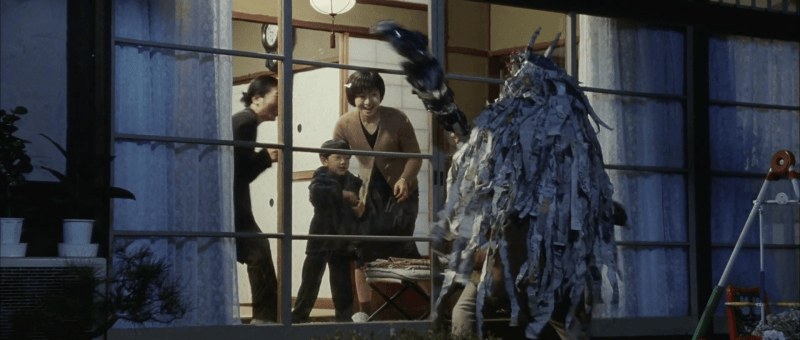
In the opening sequence of Shinji Somai’s Wait and See (あ、春,  Ah haru), a large grey cat growls as it creeps through a suburban home and out into the garden where it sits outside a henhouse and loudly miaows at the birds trapped inside. In many ways, this is exactly what’s about to happen to the Nirasakis when a prodigal father suddenly returns to disrupt the life of his incredibly dull and emotionally distant son. 

Hiroshi (Koichi Sato) is the epitome of the ideal salaryman and seems to be living a charmed life having married into his wife’s wealthy family but under the surface nothing is quite as it seems to be. His wife Mizuho (Yuki Saito) seems to be suffering with some kind of mental distress and Hiroshi often appears indifferent or even cold towards to her. At the memorial service for his late father-in-law, Mizuho’s mother (Shiho Fujimura) and aunt (Chisako Hara) reflect on the late patriarch in less than favourable terms remarking that “everything was half measures” with him. He didn’t commit himself fully to either his family or his career and consequently achieved success with neither. 

The implication is that Hiroshi is much the same, simply going through the motions whether at work or at home and largely closed off to his wife at one point even drawing a curtain and leaving her in the dark to escape a conversation. “He never tells you anything” Mizuho’s mother points out after reading in the paper that the company where Hiroshi works may be in financial trouble, while Mizuho too complains that he never discusses anything with her only announcing the results when it’s already finished. 

Hiroshi had always believed his own father to have died when he was five years old, so it’s quite a surprise when the gnomish Sasaichi (Tsutomu Yamazaki) accosts him in the street and claims to be his long lost dad. Like the cat outside the henhouse, he’s set to create a disturbance but not quite the one everyone assumes it will be. Hiroshi’s mother Kimiyo (Sumiko Fuji) warns him that his crass working class dad will only cause embarrassment in the refined elegance of the upper-middle-class family he has married into. Yet Mizuho and her mother actually find Sasaichi quite amusing for the first couple of days, the mother very impressed by Sasaichi’s unreconstructed manliness which she finds so in contrast to the comparatively meek Hiroshi. Sasaichi fixes the leaky bath and sticking door that Hiroshi never got round to symbolising his lack of regard and inability to care for his home, which is in a sense ironic because Sasaichi was never really able to take care of anything. 

Sasaichi later explains that he left because his business failed and he ended up with debts to loansharks so he divorced Kimiyo and moved away to prevent them coming after her money. A fatherless son, Hiroshi struggles to construct the image of himself as a father and cannot create intimate relationships with people, but has settled for fulfilling the role of a successful member of society who can support a family financially even though the sense of himself as a provider is an illusion as his wife’s generational wealth already guarantees them a comfortable existence. Even so, this being the difficult post-bubble economy Hiroshi lives with a sense of economic anxiety but buries his head in the sand refusing to listen to a more savvy friend who can see the writing on the wall and tries to convince him to take a job at another company where he’s just secured a position for himself. But Hiroshi is afraid of change and ironically clings fast to his corporate family even while fearing it will leave him. 

He desperately doesn’t want to think that he is like Sasaichi, that he may fail his family by failing in his career or that he too is an uncouth, unrefined country bumpkin incapable of taking care of himself let alone anyone else. The again perhaps they’re more alike that he’d like to think. Hiroshi and Mizuho object when they realise Sasaichi’s been teaching their son Mitsuru (Keita Okada) how to play craps, but as his friend points out stockbroking is also really just legitimised high stakes gambling. He too wanders around until late at night because he doesn’t want to go home and makes his wife worry so she has to take sleeping pills .

Yet there’s also a side of him that is still the gentle boy from the country as he painstakingly raises chicks in the back garden. In the end, it’s Sasaichi who shows them the maternal warmth they need to grow, gestating the eggs in a pouch inside his haramaki only for them to hatch at the most ironic moment. Hiroshi gives his son a brief life lesson in explaining that the chicks that hatch from these eggs will go on to lay their own in a circular process of renewal just as he is passing on knowledge from his childhood to the next generation. The film begins and ends with a ritual of mourning, though Somai takes us through the passing season moving from Setsubun to Hinamatsuri as Sasaichi continues to outstay his welcome while attempting to repair his corrupted paternity. “Don’t worry, life will go on,” Mizuho reassures a more open Hiroshi finally coming to terms with his anxieties and willing to share them with his family in full knowledge of who he is as a man and a father in a world that’s anything but certain.


Original trailer (no subtitles)
Like a Savage (野蛮人のように, Toru Kawashima, 1985)

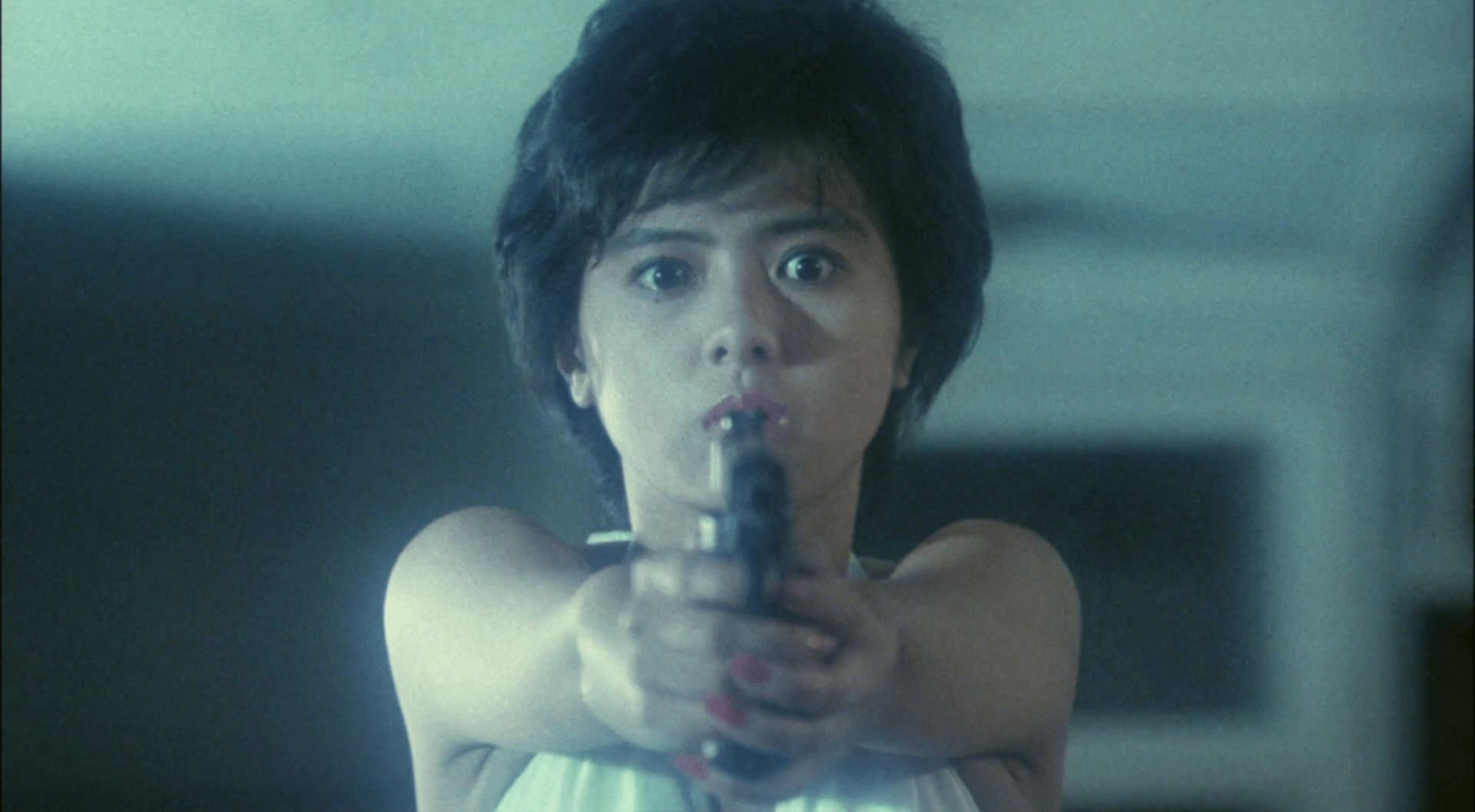
Hiroko Yakushimaru had been the breakout star of Haruki Kadokawa’s idol cinema in the early 1980s, but as she approached her 20th birthday had developed an increasing desire to retire and leave the showbiz world behind. Having won the prestigious Blue Ribbon Best Actress award for her role in W’s Tragedy, she ended her contract with the studio but following the outcry over news of her intention to retire ultimately set up on her own as an independent performer with her own management company. 

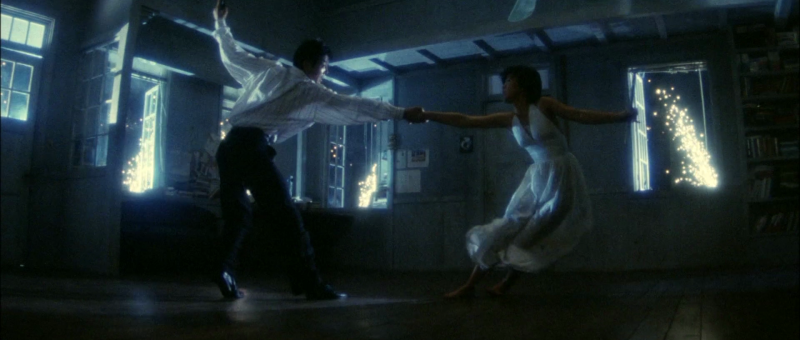
Like a Savage (野蛮人のように, Yabanjin no Youni) was her first project after moving on from Kadokawa and was intended to signal a new phase in her career though incorporating many of the elements that had made her teen idol films so successful. This time around, she plays a character seemingly a few years above her actual age though in other ways childlike and something of a fantasist. Tamako is a blocked novelist in her mid-20s who had tremendous success with her first work published when she was only 15. Ostensibly, she leads an incredibly aspirational life living in a beautiful cabin on the beach where she tries to write sitting out in the sun on her terrace. In the opening sequences, we see her taking a break by reading a novel in English while she also shows a knowledge of French which adds to her intellectual credentials and sense of contemporary sophistication. 

But it seems that she may be bored with this seemingly charmed life and is having trouble gaining inspiration because she’s become too comfortable. She also has a capricious selfish streak, randomly abandoning her friends who’ve come for a fireworks party by driving her open-topped jeep all the way into the centre of Roppongi “to find adventure in the night”. Adventure ends up finding her when she’s unwittingly drawn into underworld intrigue after being mistaken for a sex worker who was with a yakuza boss immediately before he was assassinated, as it turns out by one of his own men intent on succession but trying to disguise his ham-fisted bid for power as turf war. Teaming up with yakuza-adjacent fixer Eiji (Kyohei Shibata) she finds herself on the run before eventually taking him back to the cabin to hide out and recuperate from a stab wound. 

Yakushimaru had played similar roles as a teen star, but adds an adult edge as Tamako chain smokes and is almost always drinking, in fact being seven sheets to the wind while driving the jeep to the city. In other ways, however, she retains a childlike quality most obviously in the film’s repeated to references to Alice in Wonderland which paint the contemporary capital as a fantastical place coloured by her own literary imagination. In her flight through the city, she passes what seems to be a Mad Hatter’s Tea Party, while there’s also a neon sign featuring what looks like the Cheshire Cat grinning wildly in the Cabaret-influenced drag bar where Eiji works in which a performer dressed as Sally Bowles sings in French and many of the waiters are implied to be trans or gay. When the gangsters finally surround the beach house in the final act, a pottery figurine of a rabbit with a stopwatch is obliterated by their bullets as if to remind her that she’s not in Wonderland anymore and all of this is “real” rather than the romanticised fantasy she may have bought into while nursing a handsome yakuza back to health by the sea. 

Even so, the city has its darkness. The girl who really was with the yakuza boss when he died twice gives her age as only 15, one of many Eiji shepherded around as part of his yakuza-adjacent job. The head yakuza has an eerie presence deepened by the use of a strange voice effect whenever he speaks, while Kawashima captures a fantastical side of Bubble-era Tokyo lit by the warm glow of hazy neon. In a moment of irony, a large sign on the building where the yakuza boss met his end reads “Desire” with its letters finally flickering out to leave just “Die” as if to tell us this rampantly consumerist city of darkness will eventually consume all those who cannot escape its allure. 

In any case, Tamako finds herself literally blowing up her world to cure her existential crisis reflecting that life is like a firework destined to burn out bright. What she experiences is another kind of rebirth, the climactic shootout occurring on her birthday which Eiji, who does not know his date of birth presumably having been abandoned as a baby, later adopts as his own. Surprisingly stylish and generally upbeat despite the darkness around its edges, Kawashima’s zeitgeisty action drama captures something of an age of ennui in which fantasy is the only escape from the emptiness of a neon-lit Tokyo. 


Original trailer (no subtitles)
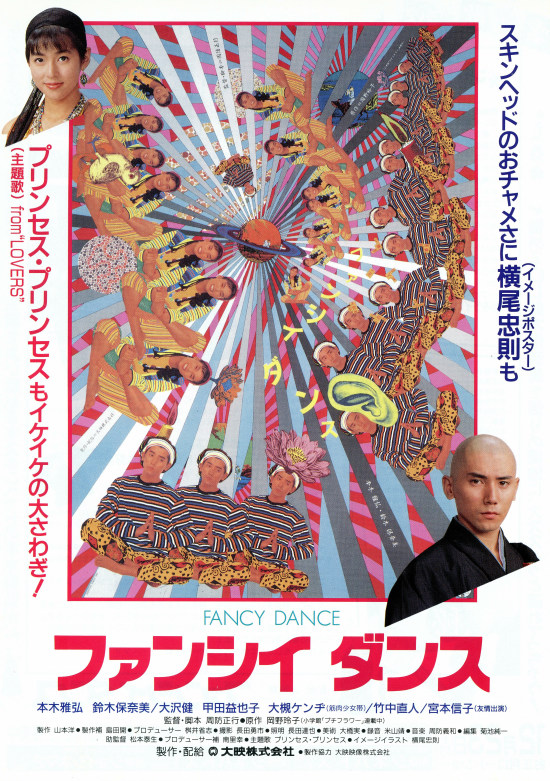
Fancy Dance (ファンシイダンス, Masayuki Suo, 1989)

Thematically speaking, the films of Masayuki Suo have two main focuses either dealing with esoteric ways of life in contemporary Japan such as sumo wrestling in Sumo Do Sumo Don’t, ballroom dancing in Shall We Dance?, and geisha in Lady Maiko, or pressing social issues such the operation of the justice system in I Just Didn’t Do It or euthanasia in A Terminal Trust. After making his debut with pink film Abnormal Family: Older Brother’s Bride, Suo’s first mainstream feature Fancy Dance (ファンシイダンス) belongs to the former category as a Bubble-era punk rocker finds himself entering a temple to honour a familial legacy. 

As the film opens, Yohei (Masahiro Motoki) is onstage singing a very polite and respectable version of a classic song, Wakamonotachi (lit. the young), made popular as the theme to a television drama in the mid-1960s, before suddenly turning around, the other half of his head already shaved continuing with the same song but now in an anarchic punk rock arrangement. The son of Buddhist temple, he is expected to become a monk and take over the family business but he’s also a young man coming of age in the ultra-materialist Bubble era raised in the city and with little inclination towards the ideals of Zen. In fact, we learn he’d long resisted the idea of entering a monastery and has only recently given in intending to stick it out for a year in order to please his parents and then return to to his Tokyo life. 

His hair reflects an inner duality, torn between his duty to take up Zen and his desire for personal freedom. Yet as he’s repeatedly told by his razor-wielding office lady girlfriend Masoho (Honami Suzuki), in the end he’s going to have to choose which from her point of view means choosing between her and the temple. Though there is obviously no prohibition on monks getting married, Yohei is the son of a monk after all, girlfriends are one of many things not really allowed during his initiatory period though as we’ll see the monastic life is often more about knowing how to game the system than it is about actually sticking to the rules. It’s a minor irony that temples, Buddhist or Shinto, are actually one of the most lucrative businesses in Japanese society and despite apparently rejecting material desire many monks are fantastically wealthy. Yohei’s fellow noviciate Eishun (Hikomaro) is dropped off by a young woman in a bright red sports car who turns out to be the daughter of a monk, Eishun only entering the temple to please her family so that he can marry her, committing himself out of love but also admitting it’s nice work if you can get it. 

Yohei’s brother Ikuo (Ken Ohsawa) is also fine with the idea of becoming a monk, describing it perhaps surprisingly as an “easy life”. Ikuo’s presence is initially a little irritating to Yohei, he only agreed because he was under the impression Ikuo had also declined to enter the temple and feels that he’s been tricked when he could have just let him train to take over the family “business”. The treatment they receive is often surprisingly harsh with a high level of physical violence administered by their superiors, in particular the more experienced Koki (Naoto Takenaka) who has it seems figured out how to break the rules in an acceptable fashion carrying on a secret romance with a young woman who often attends the temple while visiting hostess bars in the town in disguise, wearing a wig to cover his distinctive monastic hairstyle. Meanwhile, even the supposedly austere master of asceticism Shoei (Miyako Koda) has a secret stash of sweets in their room. The message seems to be that once you “graduate” from the junior ranks you too are free to interpret the tenets of a Zen life however you see fit. 

Yet despite himself, Yohei comes to appreciate the trappings of monasticism most particularly in its graceful movements and the aesthetic quality of the outfits. The temple may not be free of the consumerist corruptions of the Bubble era, but perhaps there is something it for a man like Yohei, a different kind of “freedom” than he’d envisioned but freedom all the same even within the constraints of a superficial asceticism. Masoho meanwhile rejects her own fancy dance in refusing to play the part of the conventional office lady no longer smiling sweetly cute and invisible but dressing in her own individual style and defiantly taking command of the room. The strains of Wakamonotachi recur throughout hinting at Yohei’s youthful confusion as he tries to decide on his path in or out of the temple while finding himself “swimming in a sea of desire between Masoho and Zen”, perhaps concluding that his own endless journey has only just begun.


Fancy Dance streams in the US Dec. 3 to 23 alongside Suo’s 2019 Taisho-era drama Talking the Pictures as part of Japan Society New York’s Flash Forward series.

Wakamonotachi TV drama theme by The Broadside Four (1966)

Music video for the updated theme from the 2014 TV drama remake (known as All About My Siblings) performed by Naotaro Moriyama

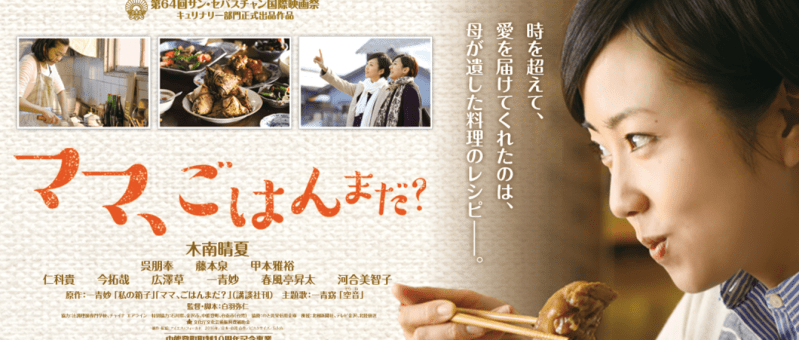
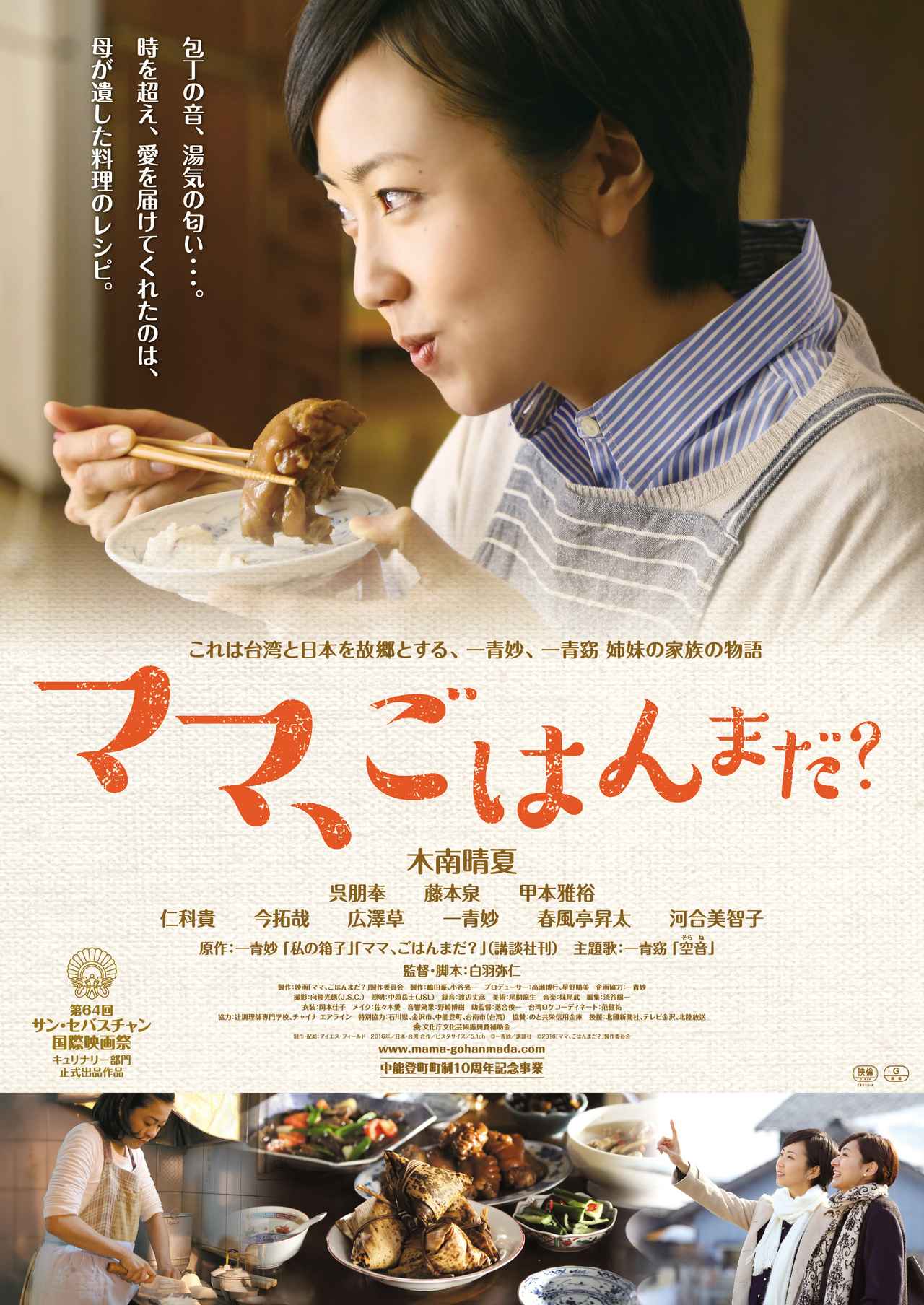
What’s For Dinner, Mom? (ママ、ごはんまだ?, Mitsuhito Shiraha, 2016)

What's for Dinner Mom posterJapanese cinema has a preoccupation with mothers and the nature of motherhood, but the mothers of the typical “hahamono” tend to be either saintly, self sacrificing figures whose selfless love often goes unrecognised, or problematic matriarchs whose fierce love and desire to protect their children has caused them to transgress and perhaps lose their children’s love. The mother at the centre of What’s For Dinner, Mom? (ママ、ごはんまだ?, Mama, Gohan Mada?) falls into a more realistic category – loving, self sacrificing, imperfect and perhaps sometimes misunderstood but always doing the best for her two daughters even in difficult circumstances. Where What’s For Dinner, Mom? differs from the accepted pattern is in its use of the domestic world to ask questions about culture and identity, and about all the various ways one never quite knows one’s family.

Tae (Haruka Kinami) and Yo (Izumi Fujimoto), sisters and now middle-aged women, are preparing to clear their family home 20 years after the death of their mother (Michiko Kawai). What’s taken them so long to make the decision is never revealed but both are as happy as possible about the idea and it seems Tae and her husband plan to knock the house down and build their own on the same plot – not quite so radical a thing as it might sound, Japan has no real housing market and “modern” houses are often knocked down and rebuilt every 20 to 30 years. Whilst packing things away, Tae finds a small box full of her mother’s keepsakes – chiefly letters and photographs along with a handwritten recipe book she began keeping in 1972.

Though Tae has lived in Japan for all her adult life, she was born in Taiwan and is half Taiwanese. Tae’s father passed away from lung cancer when she was small, but was a depressed, sometimes difficult man with ambivalent feelings towards his home nation. His own family had come from the mainland, but he’d lived in Taiwan under Japanese rule and attended university in Japan. He felt himself to be Japanese and was constantly upset and angry about the turbulent political situation of the post-war nation, facing its own series of identity crises and a protracted period of oppressive martial law.

Nevertheless, after their unpredictable whirlwind romance, Tae’s mother Kazue moved to Taiwan to live with her husband’s family and became determined to adapt to the local culture – chiefly through food. After her husband died in Japan, Kazue kept Taiwan alive for her daughters through continuing to cook the dishes she’d learned from her friends and family in Taiwan (even though her intensely “Japanese” husband only ever wanted to eat yudofu). Though Tae at one point urged to her mother to stop cooking Taiwanese and give her stereotypically cute high school bento, she quickly realised her mistake and Kazue’s unusual Taiwanese cooking became a local hit (even boosting the availability of the previously unobtainable pig’s trotters).

Despite her love of the food, Tae has all but forgotten her Taiwanese roots since her mother’s death and doesn’t know how to cook any of the dishes herself. Tae’s mild identity crisis comes to the fore in the second half of the film, though it’s an oddly under developed plot strand given the centrality of the cuisine. When she eventually makes the decision to visit her father’s remaining family, Tae seems to understand Taiwanese Mandarin but usually replies in Japanese (her uncle, accompanying her, is fluent). Like Kazue’s diary, Tae’s reminiscences are accompanied by on screen intertitles written in Chinese characters drawn childishly (even the characters which are identical to those used in Japanese are somewhat awkwardly rendered), which points to a kind of duality but is never really resolved even if Tae is able to explain a strange childhood memory and bring a piece of her past home with her.

Through her food odyssey and return to source, Tae is able to appreciate her mother’s love and sacrifice from an adult perspective, no longer left with teenage resentment and unfair anger over her early death but reclaiming her happy memories and appreciating the hardship her mother must have faced as a single mother in pre-bubble Japan. Despite its warm and fuzzy tone, What’s For Dinner, Mom? occasionally seems as if it wants to do something bigger by briefly introducing larger themes – Tae’s father’s depression, illness, the difficult political situation of post-war Taiwan, and the complex interplay between the two nations, but is content to settle back into a comforting “hahamono” tale of selfless motherhood finally appreciated only when it’s too late. Nevertheless it does what it set out to do in telling the story of a warm and loving family anchored by a kind yet determined woman and tables full of wholesome home cooking offered with an open, internationalist, heart.


Original trailer (English subtitles)

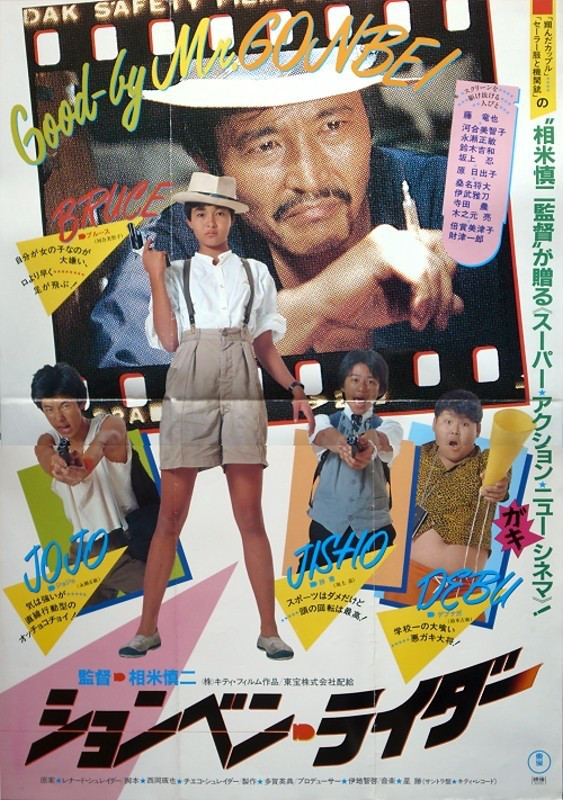
P. P. Rider (ションベンライダー, Shinji Somai, 1983)

PP rider poster

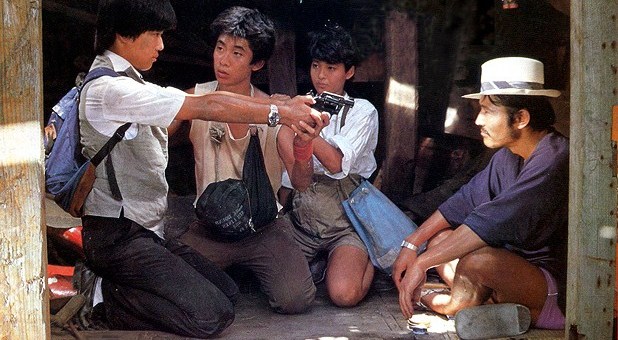
Despite a brief resurgence following a retrospective at Tokyo Filmex followed by another at Edinburgh International Film Festival, Shinji Somai remains frustratingly underrepresented in the West. Though his career is more varied than most give him credit for, encompassing the melancholy pink film Love Hotel and masculinity drama The Catch among others, Somai is justifiably most closely associated with his youth films. Running from the artier Typhoon Club and The Friends to the rabidly populist in the Kadokawa idol movies Sailor Suit and Machine Gun and Tokyo Heaven, Somai’s work is unique in managing to catch hold of a zeitgeist, capturing the essence of the contemporary teenager more or less in the way they saw themselves rather than the way they were generally seen by adults. Like many Japanese teen movies of the ‘80s, the world of P.P. Rider (ションベンライダー, Shonben Rider) is essentially a safe one. Our three protagonists get themselves mixed up in some dark and shady business but they are never afraid, do not lose heart, and face danger with only contempt and determination.

Somai opens with one of his trademark long takes which whirls around from two suspicious looking yakuza types to a bunch of kids playing around in the school swimming pool. One of the kids, a rotund boy who goes by the nickname Debunaga (his full name being Nobunaga (like the historical tyrant) Deguchi, ‘Debu” essentially meaning “fat”) is being a bit of a twit and having a go at one of our heroes, JoJo (Masatoshi Nagase). Debunaga (Yoshikazu Suzuki) then tries to “drown” JoJo’s friend Jisho (lit. “Dictionary”) (Shinobu Sakagami), before the third member of the trio arrives, an androgynous girl who goes by the name of Bruce (Michiko Kawai). Bruce neatly dispatches the petty high school punks while a teacher, Arane (Hideko Hara), attempts to shift some bosozoku bikers who’ve invaded school property.

Meanwhile, the petty yakuza get on with their plan. They’ve come to kidnap Debunaga, his pharmacist dad apparently has a sideline in drug dealing, but before they can grab him, Debunaga is kidnapped by entirely different kidnappers! Our three heroes, JoJo, Jisho, and Bruce are very annoyed about this because they didn’t get a proper chance to get even with him. Accordingly, they decide the best way to make use of their summer holiday is to rescue Debunaga themselves and make sure they get their revenge before the kidnappers do him in.

P.P. Rider means exactly you think it means, except it doesn’t quite mean anything at all aside from perfectly capturing the strange mix of childish jokes and serious crime that defines the movie’s tone. The atmosphere is absurd and ironic, the kids distrust adult authority and attempt to define their own nascent personalities by effectively rejecting them by using nicknames, dressing in highly codified ways, and either conforming to or subverting social codes as they see fit. Amusingly enough, the trio take a brief pause in the middle of their quest to get haircuts and change outfits, after which they emerge dressed in each other’s clothes as if implying they are almost interchangeable. 

In keeping with most Japanese youth dramas, parents are an entirely off screen presence. Adult input comes from two very different directions (plus the occasional interventions of bumbling beat cop Tanaka), a down-at-heels yakuza called Gombei (Tatsuya Fuji), and the kids’ teacher, Arane. Gombei, a drug-addled gangster, is hardly an ideal role model (especially when he tries to drown Bruce and attacks Jisho with a samurai sword), but he does eventually take the kids under his wing with JoJo picking up the classic deputy role in learning the yakuza ropes. Arane, by contrast begins by letting them down. Harried by the bosozoku she tells the kids to buzz off when they try to talk to her, telling them that she’s off to hot springs town Atami and they’d best come back next term. Nevertheless she eventually becomes an integral part of their group, assisting in the quest and helping to rescue Debunaga while the strange finale plays out before her impassive eyes.

The kids didn’t really want to save Debunaga, and are conflicted when they eventually locate him, but in the end it’s friendship which wins out as they each celebrate their various roles in the successful rescue whilst lamenting the relative lack of care they’ve received from adults and authority figures aside from Arane and Gombei. Absurdist and ironic, P.P. Rider is a strange children’s odyssey in which the adolescent teens head out on a dark and dangerous adventure but live in the relative safety of the world and so nothing very bad is going to happen to them despite the terrible things they eventually witness. Classical long takes jostle alongside Somai’s mobile camera, random intertitles, and frequent breaks for pop music (this is an idol movie after all) in a frenzy of post-modern gags but somehow it all just works, and does so with wit and charm.


Opening scene (no subtitles)

Interview with actor Masatoshi Nagase from the Tokyo Filmex screening in 2011 (Japanese only, no subtitles)

Michiko Kawai’s main titles song – Watashi, Takanna Koro

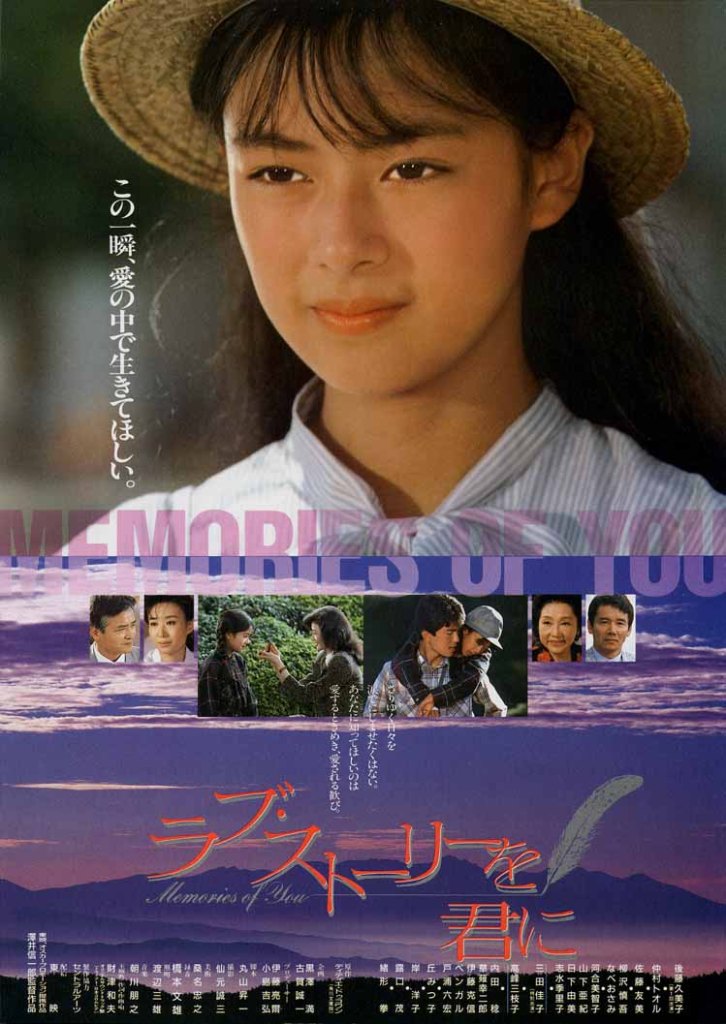
Memories of You (ラブ・ストーリーを君に, Shinichiro Sawai, 1988)

Memories of youIf you thought idol movies were all cute and quirky stories of eccentric high school girls with pretty, poppy voices then think again because Memories of You is coming for you and your faith in idols to make everything better. Directed by W’s Tragedy‘s Shinichiro Sawai, Memories of You (ラブ・ストーリーを君に, Love Story wo Kimi Ni) stars one of the biggest idols of them all – Kumiko Goto, only 14 years old at the time of filming. Seemingly inspired by classic Hollywood melodramas of the ‘50s, Sawai’s film finds its innocent protagonist attempting to live an entire lifetime in only six months as she succumbs to a cruel and relentless disease.
Giving no clue as to its eventual destination, Memories of You begins with two young men returning from a hiking trip. You can tell the pair are committed alpinists because of their distinctly alpine attire and by the way they look at a glockenspiel. In this early comic scene, Araki (Shingo Yanagisawa) is heading straight to an important job interview that he hopes will help him get his girl back if he’s hired so he’s talking a mile a minute whilst awkwardly changing into a business suit inside a photo booth.

The other young man, Akira (Toru Nakamura), runs into the star of film, Yumi (Kumiko Goto), on her way back from the hospital. Akira used to be Yumi’s tutor and it’s obvious she has kind of a crush on him. Unbeknownst to Yumi, the results of her tests are much more serious than might be assumed from her cheerful persona. Yumi has leukaemia and the doctors do not expect her to survive for more than six months at most.

Yumi’s devasted mother shifts her grief away from the pain of losing her only child, to that of her stolen future – no high school, no romance, no love, marriage, or children. Accordingly she asks teacher in training Akira for a considerable sacrifice – essentially, pretend to date Yumi and give her the kind of love story that she will never now be able to experience.

Needless to say, this is a little creepy given that Akira is in in his mid-twenties and Yumi is only fourteen. Of course, it’s all very chaste and innocent like something out of a shoujo manga but still even in 1988 the scenario rings alarm bells. Akira is conflicted about his new role as a fake boyfriend for a dying teenager but it would be heartless to refuse, though one may wonder about what effect all of this may have on his future chosen career.

The world of 1988 is noticeably sexist in that Yumi’s mother works as a cookery teacher, reminding her pupil’s that this is the most important course because they’ll all be competing with their future mother-in-laws in the great culinary battle to win their husband’s hearts. These girls are raised to be housewives and nothing more, although, Yumi’s mother is divorced and now has a career, is taking care of Yumi alone and is not particularly looking to remarry. So, swings and roundabouts in terms of social progress.

The film flits between the viewpoints of Yumi and Akira as they both try to adapt to this unusual situation. As is common in these kinds of films, Yumi is not quite as in the dark as everyone had assumed and is readying herself to say her final goodbyes. This also brings about a reunion with her long absent father who has emigrated to Canada where he has a new wife and younger daughter. Yumi’s family status is an uncommon one for 1988, yet there is relatively little stigma surrounding it. Perhaps her father’s return after three years is one factor in Yumi’s realisation of the seriousness of her condition (as her mother feared it might be) but the final reconciliation does at least bring her a little more calmness and stability.

Yumi’s illness is a mountain which cannot be conquered. The beauty of the natural world and the desire to overcome it, in a sense, through physical exertion are the chief motifs of the film as Yumi dreams of travelling to Switzerland – the spiritual home of alpinism (it would seem). The loving looks at the glockenspiel in the opening scenes develop into an underlying musical theme as they also recur during the lengthy cabaret sequence close to the film’s climax. Of course, Yumi finally attempts to climb her mountain with Akira as her guide but there is only so far she can proceed.

Despite its melodramatic touches and desire to be a grand tearjerker, Memories of You is too restrained to make the full force of its tragedy achieve the kind of emotional effect that it aims for. Filled with syrupy, orchestral music very much like that employed by classic Hollywood examples of the genre, Memories of You really wants the viewer to experience the intense sadness of such a young life taken by a cruel and indiscriminating disease but often overplays its hand. This isn’t helped by the unsettling nature of the “romance” between Akira and Yumi or the (entirely understandable) lack of chemistry between the leads who each give independently high quality performances. An interesting example of an “idol movie” which steps outside the genre norms, Memories of You doesn’t quite have the courage of its convictions but is another nicely photographed effort from Sawai.


End credits and title song (not sung by Kumiko Goto)

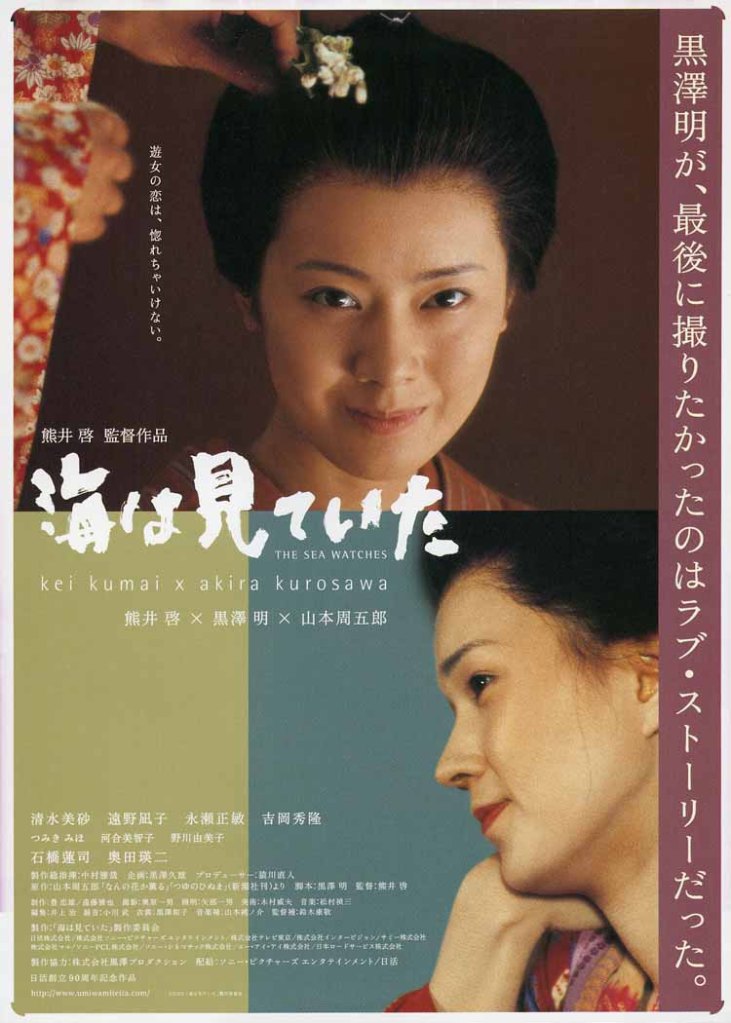
The Sea is Watching (海は見ていた, Kei Kumai, 2002)

The Sea is WatchingAkira Kurosawa’s later career was marred by personal crises related to his inability to obtain the kind of recognition for his films he’d been used to in his heyday during the golden age of Japanese cinema. His greatest dream was to die on the set, but after suffering a nasty accident in 1995 he was no longer able to realise his ambition of directing again. However, shortly after he died, the idea was floated of filming some of the scripts Kurosawa had written but never proceed with to the production stage including The Sea is Watching (海は見ていた, Umi wa Miteita) which he wrote in 1993. Based on a couple of short stories by Shugoro Yamamoto, The Sea is Watching would have been quite an interesting entry in Kurosawa’s back catalogue as it’s a rare female led story focussing on the lives of two geisha in Edo era Japan.

Throughout this tale of love bought and love lost, we mainly follow the kindly geisha Oshin (Nagiko Tono) who ends up helping a nervous young man one night when he crashes into her geisha house in an attempt to avoid being picked up by the police. It seems he’s been out drinking with friends for the first time and, after having drunk far too much, may have stabbed another customer (though he can’t quite remember). Oshin comes up with a plan by cutting off his topknot and passing him off as one of her regular customers but Funosuke (Hidetaka Yoshioka) is not a born dissembler and remains sitting bolt upright before heading home at the first light of day.

Something passes between the two in the night and Oshin unwisely begins to fall in love. Though she begs him not too, Funosuke repeatedly visits her claiming to enjoy her company. However, though the other girls at the geisha house are in favour of Oshin’s love across the class divides romance and go to great lengths to help her, Funosuke is just a feckless boy completely unaware of the way he’s been toying with people’s hearts. Later, Oshin meets another damaged man, Ryosuke (Masatoshi Nagase), and begins to fall in love again but can a put upon geisha ever believe the words of men who think they can trade money for love?

Kurosawa has sometimes had the charge of misogyny thrown at him, somewhat unfairly, as his films are often very masculine in nature. The Sea is Watching, conversely, is the story of two women, Oshin and her fellow geisha Okikuno (Misa Shimizu), who claims to have come from a wealthy samurai background. Oshin is still young, her kindness and softness have not yet been eroded by the often harsh and cruel world in which she lives. She contents herself with romantic dreams of finding a man who will rescue her from this unpleasant way of life. Okikuno, by contrast, is older, harder, more experienced in the ways of the world, and therefore more inclined to towards pragmatism. She finds her salvation in self deception about the past whereas Oshin’s fantasies are all focussed on her future. In many ways the women are mirrors of each other but they also have a tight, sisterly bond in which each seems to understand the other perfectly without the need for explanation.

Structurally, the film feels unbalanced as it focusses more heavily on Oshin in the early stages only to gradually shift through to Okikuno by the end. The thematic split between Oshin’s twin tales of love doesn’t quite help, though it does add a degree of pathos to the situation as Okikuno can see that Oshin’s happy ever after is an unlikely prospect, but still somehow wants to make it happen. Oddly, Kumai chooses not to emphasis the relationship between the two women until the very end, preferring to deal with each of their disappointments and dead end romances separately, but the film does finally come together when they are trapped alone in the geisha house following a freak flood.

In many ways, filming the unfinished work of a great director is an entirely thankless task – every fault is because you aren’t him and every success is down to the departed genius, but Kumai does what he can to both honour Kurosawa’s memory and put his own stamp on the material. There are frequent Kurosawa-esque compositions and the final, deliberately unreal scene of the geisha house underwater framed against the starry sky also has a suitably Kurosawan feeling. That said, something about The Sea is Watching never quite catches fire, its symbolism feels underworked and the final, climactic scene lacks the power it seems to want to have despite Misa Shimizu’s impressive performance. Not drowning, but waving, The Sea is Watching is an uneven experience but makes up for its tonal problems through the strong performances of its cast and powerful, expressionist imagery which allow it to successfully ride the waves of the emotional storms at its centre.


The Sea is Watching is available on DVD with English subtitles in the US and UK from Sony Pictures Entertainment.

US release trailer:

https://www.youtube.com/watch?v=0wtx5B__UFk