The Lightning Sword (抜打ち鴉, Bin Kato, 1962)

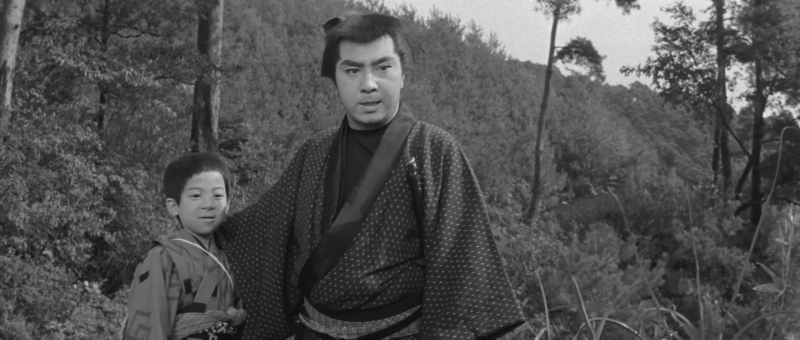
A wandering samurai comes to the rescue of a young boy in search of his father in a jidaigeki adventure from Bin Kato, The Lightning Sword (抜打ち鴉, Nukiuchi Garasu). Starring Tomisaburo Wakayama in an early leading role still billed as Kenzaburo Jo, the film takes place in a slightly liminal space following those who have already fallen from the samurai world, some of whom may be able to return and others not. They are all, however, in search of something from absent fathers to runaway sisters and lost loves.

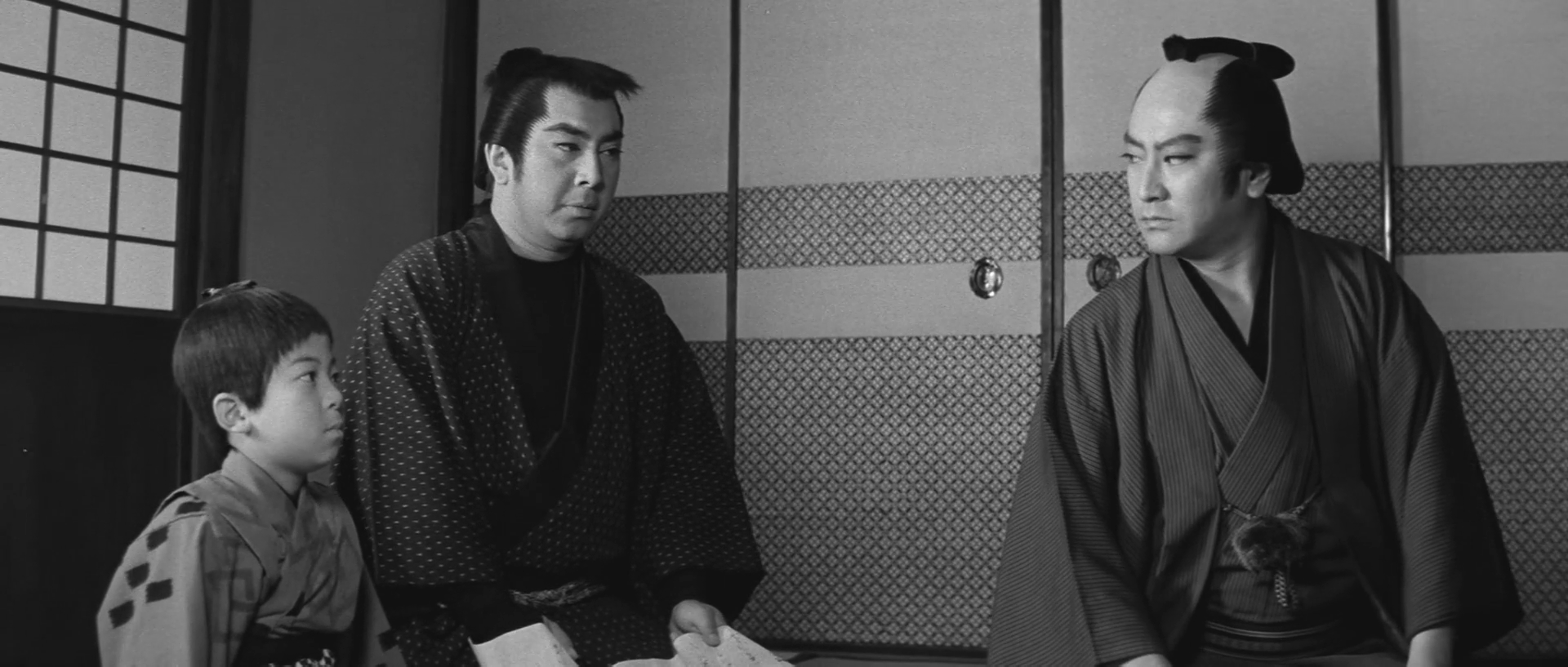
Shinjiro is on the road looking for the man for ran off with his younger sister Fumie with whom he has now lost touch, Tokunosuke (Shigeru Amachi). Unbeknownst to him, they cross paths at a roadside food stall, but Shinjiro is distracted by the presence of a little boy no more than seven or eight apparently travelling alone in search of his father now that his mother has died. On hearing this story, another man, Takuro, gets up so abruptly he leaves his sweets behind. Fearing that this man plans to rob the boy, Shinjiro goes after him and the three of them ending up going in search of Takichi’s father together.

Takuro’s intention to rob a small boy of all the money he has in the world, which admittedly seems to be quite a lot as his mother sewed koban into his kimono before she died, bears out the venality and cruelty of this rather cut-throat world. Nevertheless, Takuro is not all bad despite swiping Shinjiro’s (empty) wallet instead and is motivated to try helping a young woman escape from a brothel though he had no relationship with her and ends up losing a finger for his pains. The antagonist Tokunosuke, meanwhile, has apparently sold Shinjiro’s sister into sexual slavery and used the money for his own amusement such as drink and other women. Nevertheless, he appears to regret his decision and is filled with self-loathing as if his poor conduct were a kind of self-harm. He is minded to redeem Fumie and sells his own life to yakuza boss Tokusaburo to get the considerably large sum of 25 ryo to do so.

Even Tokusaburo is not completely heartless though ruled by greed and ambition. When Shinjiro arrives and shows him the letter from Takichi’s mother, Tokusaburo admits that he is the man named in it but denies that he ever knew her and insists he is not the boy’s father. He does this in part because he has married the daughter of his current boss and is planning not only to take over the gang but knock out their rivals and assume control over the area. To do this, he goes so far as to kill another woman he had been in a relationship with but betrayed to marry the boss’ daughter because she threatens his path to success.

But, on the other hand, denying his son seems to be something painful for him. As he says after killing Oharu, if he has denied his son to take over the gang, killing her is no big deal. He does finally acknowledge Takichi, but only when dying as a final means of making amends when it’s clear that he has failed in his ambitions. Shinjiro, meanwhile, is kindhearted and compassionate. Even on meeting Tokunosuke, he realises that he does not want to kill him because it would bring his sister pain. He protects the boy though it does not benefit him in any way, and also rescues the brother of a woman he seems to have fallen in love with but had to leave due his important revenge business. Having rescued his sister, he leaves her with Oryo and resists the cruelty of this world by forming a new family outside it. Though the events it depicts may be bleak, the film is lighthearted rather than nihilistic and allows simple human kindness and decency to triumph over venal usurpers like Tokusaburo. Elegantly lensed as one would expect of a Daiei production, the fight scenes are also impressive in terms of scale and choreography, though its real power lies in its essential good-heartedness and compassion even for its villains.


Trailer (no subtitles)
The Blind Menace (不知火検校, Kazuo Mori, 1960)

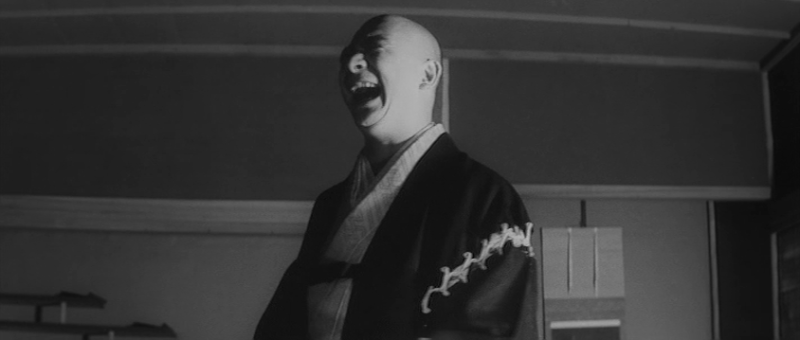
Two years before finding fame as Zatoichi, Shintaro Katsu starred as his mirror image in a tale of pure villainy, The Blind Menace (不知火検校, Shiranui Kengyo). As the title suggests, the film follows the upward trajectory and eventual downfall of an unsighted man who gleefully rapes and pillages his way to becoming the leader of his community aided and abetted by the ills of the feudal era which allow him to profit from his crimes until the past finally catches up with him.

After all as he later says, “as long you as you keep rising in the world, past misdeeds don’t matter.” In any case, even as a child the man who would later be known as Suginoichi (Shintaro Katsu) is incredibly unpleasant. In the opening festival sequence he picks his nose and flicks it in a barrel of sake so that the men drinking will abandon it. The only sign of possible goodness in him is that he takes the sake home for his mother to enjoy, though he seems to relish the idea of her unwittingly drinking his snot so perhaps that was the real purpose. Other hobbies of his include conning wealthy passersby out of a ryo with a well worn scam in which he asks them to read a letter from his uncle which mentions that it should include one ryo only what’s in there is a stone. When the reader explains the situation, he accuses them of trying to take advantage of his blindness and makes a fuss about it until they’re embarrassed into coughing up a ryo of their own (not a small sum for the time period). 

In some ways his poverty and disability might explain his behaviour. His family set up is subverted with his mother much like him money hungry and willing to do anything to get it while his saintly, henpecked father is gentle and honest. This might have taught him the wrong lessons about masculinity that lead him to see his father as weak in allowing the world to trample him while taking his mother’s advice to heart that if they only had a 1000 ryo they could get him trained up properly so that he might one day become a Kengyo which is a little bit like a community leader for the blind with social status and political influence. 

It’s this kind of social affirmation he seems to crave, but is essentially a narcissistic sociopath who takes advantage a stereotype that in some ways infantilises the blind and those with other disabilities who are believed to be pure-hearted and incapable of intrigue or evil. He seems to come to the rescue of a noblewoman who asked his boss, the Kengyo, to lend her money secretly because her brother has been caught embezzling but then rapes her, asks for the money back, and blackmails her into further acts of sexual exploitation offering her only 5 ryo a time knowing she needs 50. He thinks nothing of using his acupuncture skills to kill a man who was carrying 200 ryo to buy a “boneless girl” for a freak show and then framing a man who saw him do it but agreed to say nothing for a 50% cut for the crime. Suginoichi later teams up with “Severed Head” Kurakichi (Fujio Suga) to commit a series of burglaries including that of the Kengyo master who he also has killed to usurp his postion. 

But as he said, once his recognition is in sight with an invitation from the shogun everything begins to fall apart as all his wrongdoing starts to catch up with him. The feudal world had allowed him to prosper partly because of other people’s greed but also the social codes that favour shame and secrecy along with people’s unwillingness to accept that a blind man can also be selfish and evil despite a lot of evidence to the contrary. Elegantly lensed by Kazuo Mori who brings a sense of realism to the hardbitten backstreets of the feudal poor, the film may suggest that the wealthy only get that way by trickery and exploitation and the only way to rise to the loftiest place is to be like Suginoichi and not care what you do to get there but is clear that once you arrive you won’t stay very long because one day the past will really will come back to bite you. 


4K restoration trailer (no subtitles)