The Lightning Sword (抜打ち鴉, Bin Kato, 1962)

A wandering samurai comes to the rescue of a young boy in search of his father in a jidaigeki adventure from Bin Kato, The Lightning Sword (抜打ち鴉, Nukiuchi Garasu). Starring Tomisaburo Wakayama in an early leading role still billed as Kenzaburo Jo, the film takes place in a slightly liminal space following those who have already fallen from the samurai world, some of whom may be able to return and others not. They are all, however, in search of something from absent fathers to runaway sisters and lost loves.

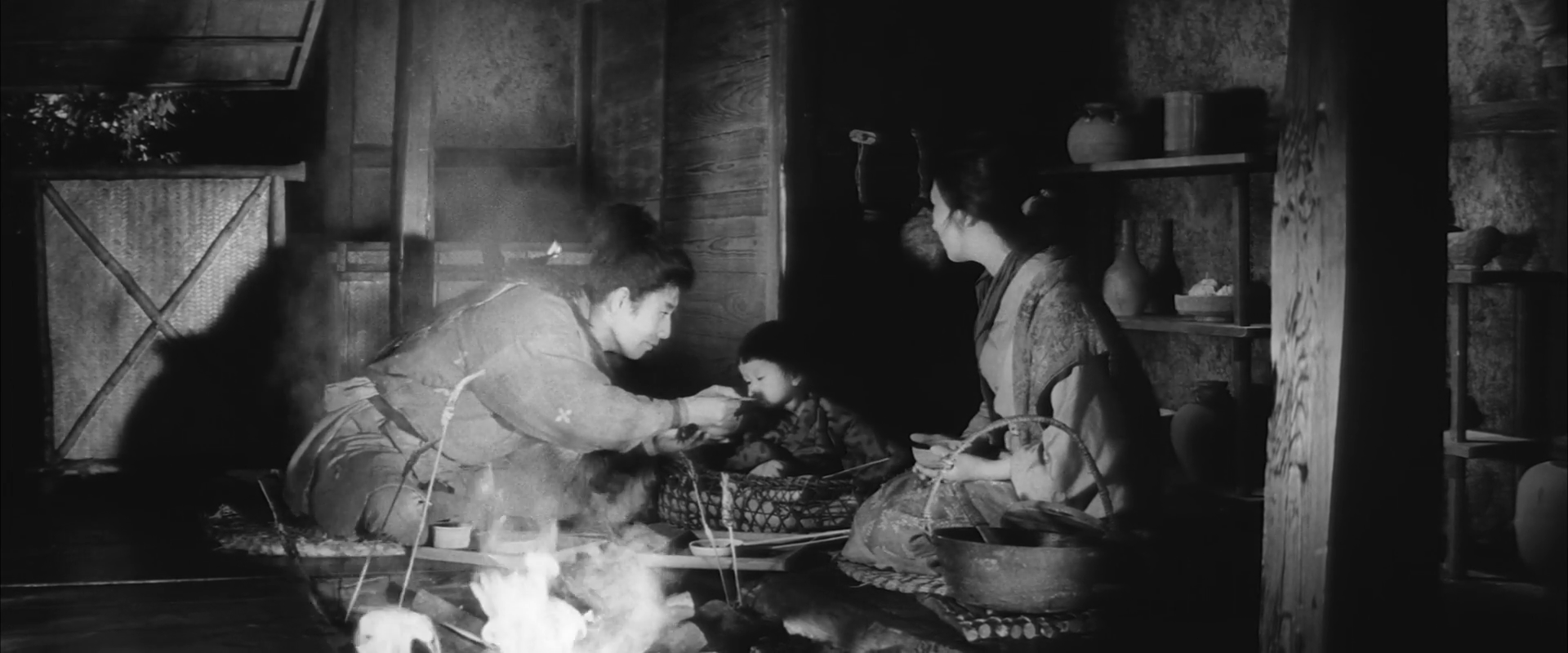
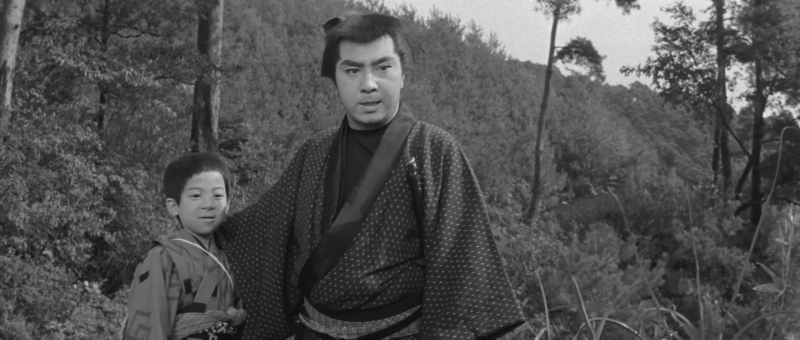
Shinjiro is on the road looking for the man for ran off with his younger sister Fumie with whom he has now lost touch, Tokunosuke (Shigeru Amachi). Unbeknownst to him, they cross paths at a roadside food stall, but Shinjiro is distracted by the presence of a little boy no more than seven or eight apparently travelling alone in search of his father now that his mother has died. On hearing this story, another man, Takuro, gets up so abruptly he leaves his sweets behind. Fearing that this man plans to rob the boy, Shinjiro goes after him and the three of them ending up going in search of Takichi’s father together.

Takuro’s intention to rob a small boy of all the money he has in the world, which admittedly seems to be quite a lot as his mother sewed koban into his kimono before she died, bears out the venality and cruelty of this rather cut-throat world. Nevertheless, Takuro is not all bad despite swiping Shinjiro’s (empty) wallet instead and is motivated to try helping a young woman escape from a brothel though he had no relationship with her and ends up losing a finger for his pains. The antagonist Tokunosuke, meanwhile, has apparently sold Shinjiro’s sister into sexual slavery and used the money for his own amusement such as drink and other women. Nevertheless, he appears to regret his decision and is filled with self-loathing as if his poor conduct were a kind of self-harm. He is minded to redeem Fumie and sells his own life to yakuza boss Tokusaburo to get the considerably large sum of 25 ryo to do so.

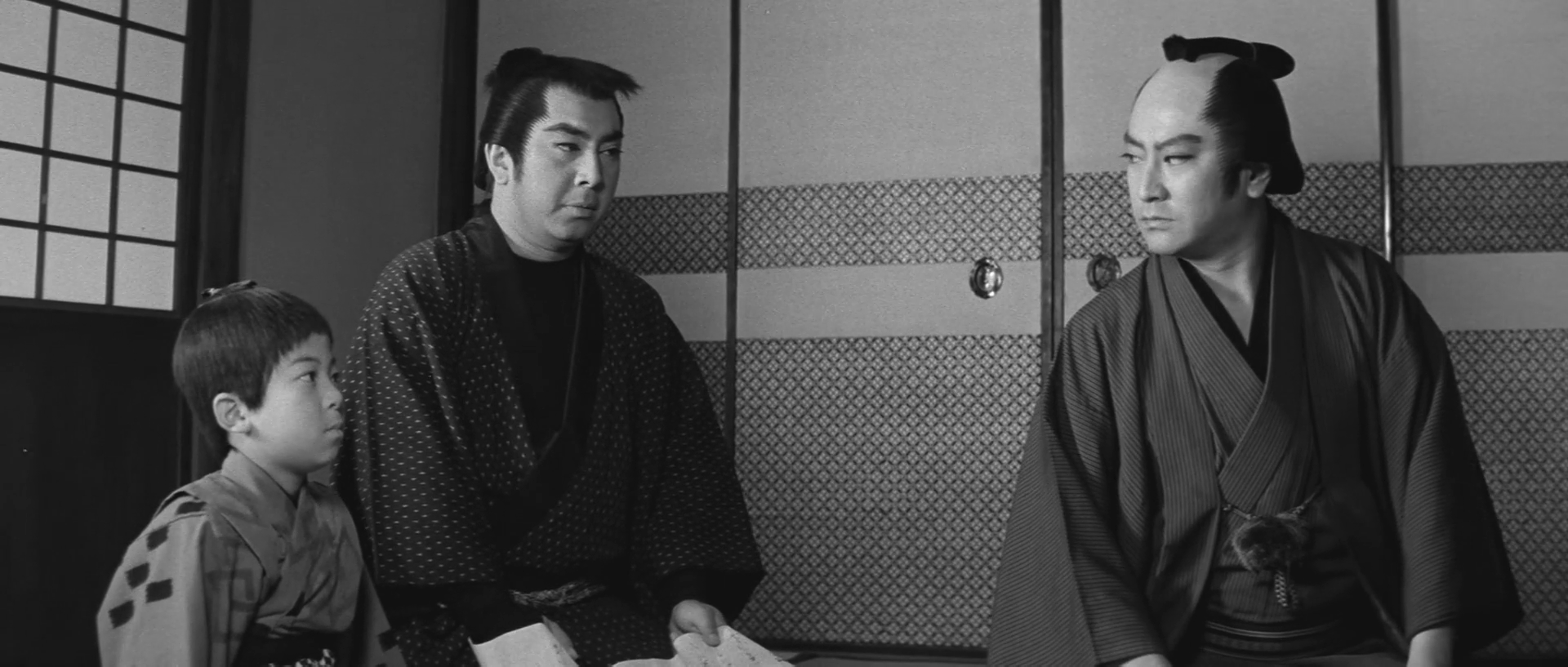
Even Tokusaburo is not completely heartless though ruled by greed and ambition. When Shinjiro arrives and shows him the letter from Takichi’s mother, Tokusaburo admits that he is the man named in it but denies that he ever knew her and insists he is not the boy’s father. He does this in part because he has married the daughter of his current boss and is planning not only to take over the gang but knock out their rivals and assume control over the area. To do this, he goes so far as to kill another woman he had been in a relationship with but betrayed to marry the boss’ daughter because she threatens his path to success.

But, on the other hand, denying his son seems to be something painful for him. As he says after killing Oharu, if he has denied his son to take over the gang, killing her is no big deal. He does finally acknowledge Takichi, but only when dying as a final means of making amends when it’s clear that he has failed in his ambitions. Shinjiro, meanwhile, is kindhearted and compassionate. Even on meeting Tokunosuke, he realises that he does not want to kill him because it would bring his sister pain. He protects the boy though it does not benefit him in any way, and also rescues the brother of a woman he seems to have fallen in love with but had to leave due his important revenge business. Having rescued his sister, he leaves her with Oryo and resists the cruelty of this world by forming a new family outside it. Though the events it depicts may be bleak, the film is lighthearted rather than nihilistic and allows simple human kindness and decency to triumph over venal usurpers like Tokusaburo. Elegantly lensed as one would expect of a Daiei production, the fight scenes are also impressive in terms of scale and choreography, though its real power lies in its essential good-heartedness and compassion even for its villains.


Trailer (no subtitles)

Shinobi no Mono 2: Vengeance (続・忍びの者, Satsuo Yamamoto, 1963)

Though Goemon might have thought himself free of his ninja past at the conclusion of the first film, he was unfortunately mistaken. Shinobi no Mono 2: Vengeance (続・忍びの者, Zoku Shinobi no Mono) sees him trying to live quietly with Maki and their son in a cabin in the woods, but Nobunaga is more powerful than ever. He’s wiped out the Iga ninja and is currently hunting down stragglers. Try as he might, what Goemon discovers the impossibility of living outside of the chaos of the feudal era. 

After he’s caught and suffers a family tragedy, Goemon and Maki (Shiho Fujimura) move to her home village in Saiga which is the last refuge of the Ikko rebels who oppose Nobunaga. This time around, the film, based on the novel by Tomoyoshi Murayama, even more depicts the ninja as backstage actors silently shuffling history into place. Thus Goemon takes advantage of a rift between the steady Mitsuhide (So Yamamura) and loose cannon Nobunaga (Tomisabur0 Wakayama) in an attempt to push him into rebellion. But what he may discover is that even with one tyrant gone, another will soon rise in its place. Hideyoshi (Eijiro Tono) seems to be forever lurking in the background, while Ieyasu makes a few experiences explaining that he intends to wait it out, allowing his rivals to destroy each other so he can swoop down and snatch the throne at minimal cost. 

But he too has his ninja such as the legendary Hanzo Hattori (Saburo Date) who arrives to complicate the intrigue and tempt Goemon away from his attempts to live a normal life. Interestingly enough, one of the factors leading to Nobunaga’s downfall is his disregard for Buddhism in frequently burning temples associated with ninja along with everyone inside them. Burning with a desire for vengeance, Goemon describes Nobunaga as inhuman, a demon, though he also embodies the vagaries of the feudal era in which no one is really free. Nobunaga has built a large castle estate for himself while ordinary people continue to suffer under onerous demands from local lords. Hideyoshi has also done something similar in an attempt to bolster his status and prepare for his own inevitable bid for national hegemony. 

The implication is that though the constant warfare of the Sengoku era is of course bad for farmers in particular, the political machinations which revolve around the egos of three men are far removed from the lives of ordinary people. Even so, the code of the ninja continues to be severe as we’re reminded that love and human happiness are not permitted to them. A female ninja spy working for Hanzo is despatched to Nobunaga’s castle to seduce his retainer Ranmaru but is cautioned that she must not allow her heart to be stirred. Predictably this seems to be a promise she couldn’t keep, eventually dying alongside him during an all out attack on the castle. 

Goemon discovers something much the same in encountering further losses and personal tragedies, but takes on a somewhat crazed persona in his continuing pursuit of Nobunaga, grinning wildly amid the fires of his burning castle while taunting Nobunaga that he is the ghost of the Iga ninjas he has killed. Then again, he’s laid low by his own ninja tricks on discovering that Hideyoshi has had a special “nightingale floor” installed that lets out a song whenever someone crosses it, instantly ruining his attempt to infiltrate the castle. “The days when a few ninja could control the fate of the world are over,” Ieyasu ironically reflects though perhaps signalling the transition he embodies from the chaos of the Sengoku era to the oppress peace of the Tokugawa shogunate.

Somehow even bleaker than its predecessor, Yamamoto deepens the sense of nihilistic dread with increasing scenes of surreal violence and human cruelty from a baby been thrown on a fire to a dying commander teetering on his one leg and holding out just long enough to gesture at a sign requesting vengeance against those who have wronged him. Echoing the fate of the real Goemon, dubbed the Robin Hood of Japan for his tendency to steal from the rich to give to the poor, the conclusion is in its own way shocking but then again perhaps not for there can be no other in this incredibly duplicitous world of constant cruelty and petty violence.