Sweet Rain: Accuracy of Death (Sweet Rain: 死神の精度, Masaya Kakehi, 2008)

“What do you think about death?” a charming grim reaper awkwardly asks, seemingly taking into account the answers given when deciding whether his “subject” should survive or if the untimely death they’re about to meet should be final. Adapted from the novel by Kotaro Isaka, Masaya Kakehi’s Sweet Rain: Accuracy of Death (Sweet Rain: 死神の精度, Sweet Rain: Shinigami no Seido) contemplates what it means to live well, how to go on living in the midst of pain and suffering, and finally how to know when it’s time to accept the finality of death. 

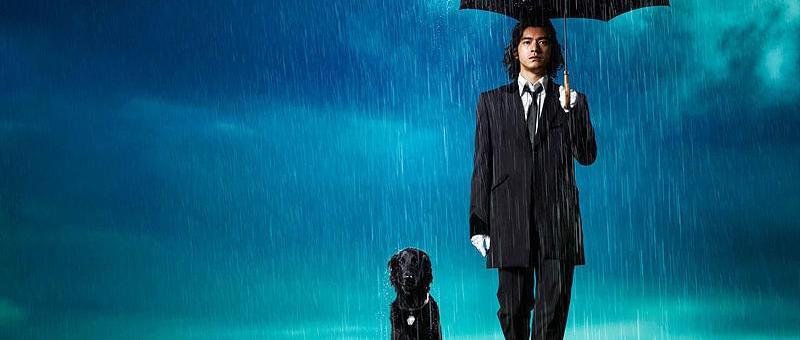
Chiba (Takeshi Kaneshiro) is a grim reaper and it’s his job to decide whether those involved in unexpected deaths, those not due to old age, illness, or suicide, should be allowed to live. According to his partner, who appears alternately as a black dog or raven, Chiba always chooses to “proceed” but something is obviously a little different with his latest job monitoring customer services representative Kazue (Manami Konishi) in the seven days leading up to her demise. Kazue is currently being harassed by a repeat caller who keeps calling the helpline asking for her personally and has recently graduated to pestering her about meeting up in person. It’s easy to see which way this could go, though luckily for her she ends up meeting Chiba who acts as a kind of protector when she’s hassled yet again by a different set of creeps in a park. As he gets to know her, Chiba learns of Kazue’s loneliness and sense of despair having endured more than her fair share of loss which has convinced her that everyone around her dies and she’s destined to be alone. But whether down to Chiba’s interference or otherwise, a surprising twist sees her offered a gig as a top idol star, leading Chiba to conclude that she has not yet fulfilled her purpose and should be granted more time. 

The expected romance does not quite take place, though Chiba is indeed becoming more interested in human life along with death while fascinated by music which he describes as humanity’s greatest invention. As we gradually gather, Chiba’s three jobs occur at lengthy temporal intervals, though the music store he frequents appears to be a constant and almost unchanged. Bar a hyper-realistic humanoid robot appearing in the final section in which Chiba is sent to assess an elderly hairdresser (Sumiko Fuji), these different temporal spaces are in another sense an extension of the present in which technology does not otherwise change substantially. Chiba picks up an iPod belonging to a petty yakuza on job two but continues to listen to CDs while the hairdresser seems to be doing her job the old-fashioned way and the kids that come to her store all collect Pokémon/Top Trumps-style paper cards. 

Yet Chiba is also a fish out of water, constantly confused by contemporary slang and with a strong tendency towards taking things literally. His discombobulation with language and custom is perhaps enhanced by the casting of Takeshi Kaneshiro who is half-Taiwanese and grew up in Taiwan speaking Mandarin as his first language, later working predominantly in Chinese-language cinema. In the audience perception he carries with him a quality of otherness that adds to the ethereality of his existence as a grim reaper. His appearance changes with each of his subjects, firstly appearing as a handsome young man, then as a grizzled yakuza complete with sunshades, and finally as a slacker student with each of his portals mirroring his destination from telephone booths to emergency exits and shopfront doors. As a grim reaper he has long unruly hair and wears a suit a loosened tie, but perhaps has little identity of his own and laments that he has never seen a blue sky because it is always raining whenever he is in the mortal world.  

The rain might well symbolise the pain and suffering around him as he lives among those who are about to die, but he himself feels that death is nothing special. As the old lady points out, that might be because it’s all he sees, he never visits people while they’re alive and knows nothing of life nor what it is to leave it. The old lady too experienced a lot of loss in her life and came to the conclusion that she was in some way cursed, severing her connection with those she truly loved believing she could only bring them harm and choosing to live all alone. “The sun in the sky’s nothing unusual but it’s important that it be there,” she adds, “death’s like that, maybe”. In any case she seems to have lived a long life that was happy enough even if it was “nothing special” and she can die with no regrets while Chiba too begins to learn something of the world’s ordinary beauty in his first glimpse of a sunny sky even if one overshadowed by the spectre of death. 


Trailer (no subtitles)

Twilight Cinema Blues (銀平町シネマブルース, Hideo Jojo, 2023)

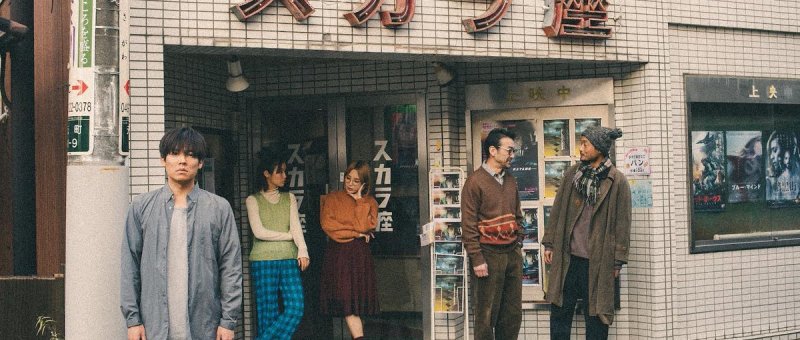
Japan’s mini theatres have been in a status of crisis since the pandemic. Already struggling under the weight of changing times the immediate restrictions pushed many over the edge unable to entice older regulars back into screens or find a new audience among the young. This is doubly bad news for the industry as a whole as it’s mini theatres that allow indie films the platform they need to succeed and without them there is little avenue for films produced outside of the mainstream. Like Lim Kah-Wai’s Your Lovely Smile, Hideo Jojo’s Twilight Cinema Blues (銀平町シネマブルース, Ginpeicho Cinema Blues) similarly extols the virtues of the mini theatre which is not just somewhere to watch films but a place to belong that has room for anyone and everyone that wants to be there.

That’s more than true for Takeshi (Keisuke Koide), a struggling man approaching middle age who’s become near destitute and is almost sucked into a welfare scam targeting the homeless by a pair of shady yakuza claiming they run an NPO. At the orientation he runs into Kajiwara (Mitsuru Fukikoshi ), the owner of a mini theatre who declines to join the gangsters’ scheme but offers Takeshi the opportunity to bunk in his storeroom while working part-time little knowing that to Takeshi this particular mini cinema is like a return to source allowing him to rediscover his love of film.

But the mini cinema itself is also struggling. They simply don’t get bums on seats and Kajiawa is behind on paying his staff. Though they have a small collection of regulars, they aren’t enough to keep the lights on on their own. Even the projectionist is thinking he’ll probably retire along with the machine. Unable to afford new films, Kajiawara relies on cheap and easily licensable classics such as old favourite Casablanca but is largely unable to see away out of his situation while feeling guilty over ending what was effectively a family business and local landmark. The building’s 60th anniversary, 60 being a symbolic number in Japanese culture as it represents a full turn of the Chinese zodiac and literal new start, presents an opportunity to both Kajiawara and Takeshi to begin to move forward by renewing their faith in cinema.

The faith of Takeshi’s homeless friend Sato (Shohei Uno) needed no renewing. Though he had nothing, the ability to see a film twice a month made him feel human while the community at the cinema is perhaps the only one that still accepts him. He offers a small prayer after every film, and instructs Takeshi that he should the same. But his openhearted faith is also his undoing, allowing him to fall for the yakuza scam little realising they’ll force him to work for them taking half of the social security payments they helped him sign up for in the process. In the outside world, men like Sato find only exploitation and prejudice with cinema their only refuge.

Then again, filmmaking isn’t easy. A young woman who desperately wanted her debut film to play in her hometown cinema has based her first feature on the life of her father, a failed film director who drank himself to death (in a neat allusion to Oshima’s Cruel Story of Youth, her film’s title literally translates as “cruel story of a director”). Similarly, the suicide of a much loved assistant director has prevented those around him from moving on, preoccupied with the shock his death caused them in its suddenness and lack of obvious cause. They blame themselves sending their lives into a downward spiral that results in crushing financial debts and the end of a marriage. In some ways, the film is an ode to the ADs who keep everything running, including on occasions the director, and are in a sense the custodians of filmmaking.

Still, it’s clear that not everything can seamlessly repaired. Times have moved on even if some have been left behind and you can’t always simply reclaim what you’ve lost, but you can always start again with another spin of the wheel and make the most of what you’ve got. It won’t be the same, but that doesn’t mean it won’t be good. Jojo’s heartwarming tale of cinema has an undercurrent of darkness and despair running beneath, but also suggests that the silver screen can be a beacon hope when the world is at its bleakest and not least for those whose existence largely lies behind it.


Screened as part of this year’s Japan Foundation Touring Film Programme.

Original trailer (English subtitles)

Angry Rice Wives (大コメ騒動, Katsuhide Motoki, 2021)

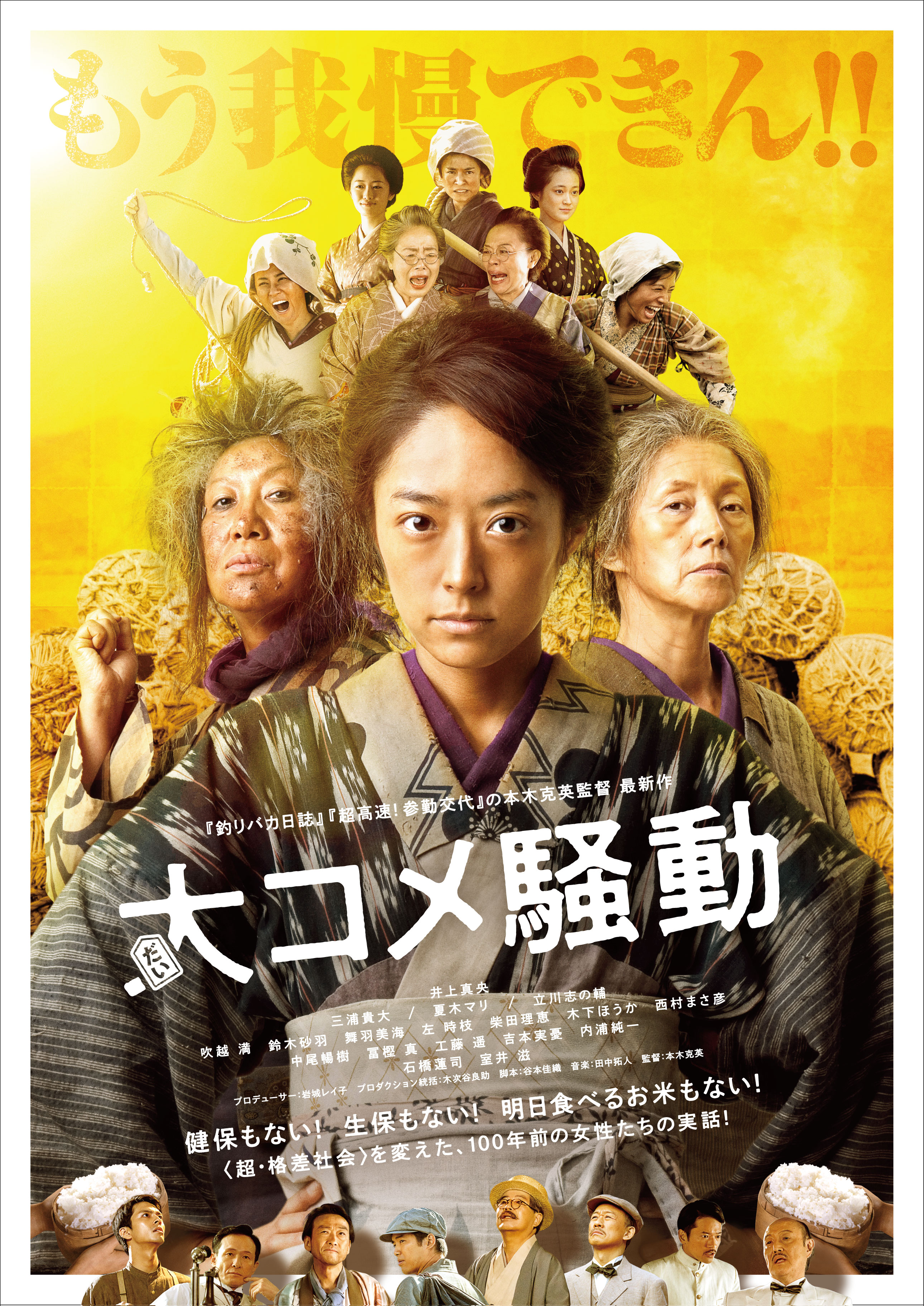
“Even if women try to do something, nothing will change” a condescending husband insists cautioning his wife not to take part in any more protests lest he lose his protected status and the family its source of income. Set in the middle of the Taisho era, Angry Rice Wives (大コメ騒動, Dai Kome Soudo) dramatises a small moment of revolution in which the resistance movement organised by a community of women towards the spiralling cost of rice sent shock waves through a changing society and in its own way provoked a change of course in an increasingly capitalistic society. 

Beginning in April 1918, the small fishing village of Toyama sees an exodus of its young men who must spend the off-season when the catch is low working other jobs in order to make ends meet, This necessarily means their wives and families are left behind and must make do with what they themselves can earn in doing menial jobs such as transporting rice and the little their husbands might be able to send before their return. A farmer’s daughter who married into the fishing community, Ito (Mao Inoue) is one of the few literate women in the village and looked to as a kind of oracle reporting the contents of the morning paper to the other wives who are keenly interested in the continually fluctuating price rice which seems set to rise still more with news that Japan plans to send troops to Siberia. 

As the voiceover relates, with the catch so low rice is the only form of sustenance available but prices have already exceeded what most of the women can earn in a day leaving them unable to feed their feed their families and giving rise to increasing discontent with the inequalities of the contemporary social order. Taking drastic action and led by eccentric old woman Kiyonsa (Shigeru Muroi), they stage a rebellion by intercepting their locally grown rice in order to stop it being sent to Hokkaido which is reported in the newspapers as an “uprising”. The term is indeed a little grand for what actually took place, but it does at least seem to spark a spirit of rebellion echoing around the country even if nothing much as changes in Toyama. Buoyed by a sense of wider support, the women continue their protests merely asking for the rice merchants to sell at a more reasonable rate (which they are perfectly capable of doing) while decrying the immorality of the obvious profiteering by corrupt authorities including local bigwig Kuroiwa (Renji Ishibashi) who are deliberately stockpiling rice to push the price up while planning to sell it to the government for a hefty price to feed their troops. 

Kuroiwa is entirely unsympathetic to the women’s predicament while the local police chief Kumazawa (Junichi Uchiura) believes himself indebted to him and is therefore entirely under his thumb. Neither of them think the women are much of a threat, Kumazawa randomly arresting a middle-aged man close to several of the women the rationale being as the husband of one puts it that women can never achieve anything no matter how hard they try but a man’s involvement in such rebellious activity would be cause for concern. Similarly, Ito is often told that her education is of no use, partly because the other women feel inferior for not having any, but struggles to find the self-confidence to standup to the corruptions of lingering feudalism owing to her liminal status as a non-native villager despite having given birth to three children there. Even so she is often looked to as a local problem solver and potential successor to Kiyonasa as leader of the village women if only she could learn to embrace the courage of her convictions. 

The children, by contrast have no such qualms, Ito’s young son Soichiro directly telling the profiteering proprietress of the rice store Mrs Washida (Tokie Hidari) that it’s her own fault another child stole food because if she hadn’t insisted in pricing her customers out to the point that they were starving she would never have needed to steal. “What exactly has capitalism done for us?” an opportunistic visitor from the workers party asks but receives short shrift from the cynical Kiyonsa who agrees they should rebel but is non-plussed by the flummoxed canvasser’s admission that he has no real plan for what do afterwards. Washida plays divide and conquer, pitting the women against each other and tempting even Ito with offers of under the table rice deals to feed their starving families if only they back down but though the solidarity of the women is temporarily ruptured it is never truly broken as they stand together to fight for fairness in the face of the Kuroiwas and Washidas of the increasingly capitalistic society. Their resistance eventually forces the government to backdown, realising they can’t simply ignore the plight of society’s poor or take their complicity for granted while attempting to starve them into submission. 


International trailer (English subtitles)
Heaven’s Story (ヘヴンズ ストーリー, Takahisa Zeze, 2010)

“When your family’s murdered, aren’t you entitled to happiness?” remarks a bereaved husband trying to move on from tragedy to a similarly bereaved little girl who is determined not to. “I don’t think so”, she coldly replies, dragging him back into a dark world of hate and vengeance. At that time perhaps best known for his career in pink film, Takahisa Zeze’s 4.5-hour epic Heaven’s Story (ヘヴンズ ストーリー) weaves a tale of interconnected hurts born of violence and its legacy, parental betrayals, and irreconcilable loss. The only victory is survival, but it’s a prize none of us will win. The best we can hope for is continuity, and perhaps leaving something more behind us than fear or rage. 

Our heroine, Sato (Moeki Tsuruoka), is orphaned when her parents and older sister are brutally murdered by a disgruntled employee exacting some kind of petty revenge on her father. The killer is later found dead in a hotel room, presumed to have taken his own life. The tragedy is however just one of many. Passing by a TV screen, Sato catches a report detailing the death of her family members and their murderer which is immediately followed by a press conference with a very angry young man whose wife and infant daughter were killed in random attack by a passing drifter who has been given an indeterminate sentence on account of the fact that he was underage and suffered greatly during his childhood. Tomoki (Tomoharu Hasegawa), the bereaved husband and father, vows revenge angrily insisting he won’t ask for the death penalty because he wants the killer, Mitsuo Aikawa (Shugo Oshinari), released as soon as possible so he can kill him with his own hands. Only eight years old, Sato identifies with his rage. The man she wants to kill is already dead and she’s been robbed of the chance of closure through vengeance so vicariously latches on to Tomoki’s quest for retribution, making him something of a personal hero. 

Tomoki’s words were offered in the raw pain of his loss. His reaction is understandable, but as he later says, people started to lose sympathy for him once he called for the killer’s death. As time moves on, he perhaps starts heal, marrying again and having another little girl, starting a new life in a new place which of course does not overwrite his past loss but is a new start. That’s something Sato can’t allow or understand. She feels irrationally betrayed by Tomoki’s decision to leave his loss in the past and move on to a new life. Rocking up at his tranquil island home, she accuses him of forgetting the dead, guilting him into thinking he’s betrayed the memories of his wife and child by not knowing that Mitsuo has been released from prison let alone not having taken his revenge. 

Mitsuo, however, has also attempted to move on. It can’t be denied that he committed a heinous, unforgivable crime, but he is also, in a sense, a victim himself. His mother took her own life when he was 13 because his father was abusive and he carries that abuse with him, which of course does not excuse his crime but might help to explain it. Kyoko (’70s folk singer Hako Yamasaki), a lonely doll maker, is taken by his enigmatic statement that he wants to be remembered by the unborn and begins writing to him in prison, eventually agreeing to adopt him as her son though she is already suffering with the early stages Alzheimer’s. Later in a tense conversation with Tomoki, Mitsuo describes Kyoko as a woman of great warmth and if it were not for her he might perhaps have killed again. Her positive maternal presence gives Mitsuo the sense of anchoring through parental love that he had never had, restoring him towards a more normal kind of existence as he diligently cares for her while her condition continues to deteriorate. 

Time swindles them all. Kyoko desperately tries to remember something she’s forgotten, while Sato is locked into a pleasant childhood memory of walking with her parents to see a newly completed housing estate which seems to be the very embodiment of a post-war utopia, a large green space surrounded by neatly arranged, identical blocks with well appointed family homes piled one on top of the other. The conclusion takes us somewhere similar, only inverted, in the empty shell of a disused danchi, once a home to a bustling mining community now abandoned by the modern era. In the monologue which opens the film, Sato recounts a folktale about a monster who lived in the hills and attacked people, but did so only accidentally in his loneliness and longing to be a part of the world around him, but the people were afraid and so they rejected him and his monstrousness intensified. Tomoki destroys his second family in an internecine need to avenge the first driven by Sato’s demonic need for vicarious retribution, while Mitsuo’s attempt to move into the light is frustrated by an inability to escape his past. All the fear, and hate, and suffering, breeds only more of the same. “Heaven’s Story” may be in many ways the story of violence, but violence is not its resolution. Sato makes a kind of peace with the past, but will also carry that legacy of pain back into the complicated urban world as far from the heavenly vistas of tranquility which exist now only in her memory as it’s possible to be. 


Original trailer (no subtitles)

Love Will Tear Us Apart (ラヴ・ウィル・テア・アス・アパート, Kenichi Ugana, 2023)

“This film depicts a pure and genuine love between an awkward boy and a girl with a pure heart,” according to a pop idol starring in a film called “garbage love”, but it’s a true enough description of Kenichi Ugana’s genre-crossing slasher romance, Love Will Tear Us Apart (ラヴ・ウィル・テア・アス・アパート). Co-scripted by Hirobumi Watanabe, the film has a deadpan, surreal sensibility but has a lot to say about entrenched patriarchy and a bullying culture. 

As the film begins, Wakaba is a cheerful little girl who has an all encompassing obsession with a handsome pop idol, but is secretly enduring an oppressive atmosphere of domestic violence in her family home at the hands of her cruel and violent father. In this she might have found a kindred spirit in classmate Koki who is enduring physical abuse at the hands of his mother who openly tells him how much happier she’d be if only he’d never been born. Koki is also being bullied by a pair of mean kids at school and meekly takes it, unable to stand up for himself. When Wakaba steps up and tries to help him, the bullies turn on her too and their teacher (Atsuko Maeda) seemingly does nothing. After the pair bond through a screaming session at a local river, the bullies mysteriously fall out of a window which Koki is then seen ominously staring out of. 

The film jumps on seven years to a teenage Wakaba (Sayu Kubota) who discovers the world is not a safe place for women, repeatedly encountering a series of skeevy guys beginning with her favourite pop band who lure her to a cabin in the woods where they openly talk about getting her drunk to take advantage of her or spiking her drinks. One of the chief victimisers is another woman, Moeka, whose apparent “job” it is to recruit girls for the guys to have fun with. Wakaba’s friend Kanna (Riko) wants to leave, sensing that there’s something not quite right but Wakaba is naive and unable to see the danger. A similar thing happens when she visits Tokyo alone and has a meet cute with a guy who spills coffee on her shirt and offers to buy her a new one, then to show her around, takes her for sushi, declares his love and makes a proposal of marriage. 

As might be expected, many of these men end up dead at the hands of a vicious, chainsaw-wielding serial killer in a white hazmat suit, gas mask, and goggles. You can’t quite blame him for his crimes because everyone he kills is so irrediambly awful while it really does seem that he might be trying to protect Wakaba in some way from the hidden dangers she remains unable to see because of her pure heartedness. While her own father had been cruel and violent, she discovers that Moeka’s, police detective Kamiyama (Mitsuru Fukikoshi), is the opposite but worse in his unsettling obsession with his daughter, whom he believed to “pure and earnest” little knowing that she had been procuring young girls to serve up to the sleazy band members.

In a strange way, the serial killer turns out to be Wakaba’s healthiest relationship even if he’s basically stalking her not to mention murdering people with chainsaws because they threatened her happiness. The film runs through a series of genres from the cute childhood romance that soon turns ominous and the cabin in the woods slasher movie complete with creepy monkey and trainset, to martial arts epic as Wakaba abandons her life to train with a YouTube serial killer catching guru in a tropical resort town but retains its sense of anarchic innocence and internal integrity. As the pop star had implied, it really is a tale of genuine love between an awkward boy and a pure hearted girl in which they gradually realise that they each have a right to be happy and can be so together despite all violence and mayhem around them which includes killing a guy by shoving a grapefruit blender on his head. Strange and absurd the film nevertheless has a heartwarming romantic sensibility along with a desire for a less destructive world defined more by kindness and compassion than bullying and violence. 


Love Will Tear Us Apart screened as part of this year’s Camera Japan.

International trailer (English subtitles)

Winny (Yusaku Matsumoto, 2023)

Can a creator be held legally responsible for what other people might decide to do with their creation? For some, that is the essential question of the trial at the centre of Yusaku Matsumoto’s legal drama Winny, but in speaking more to the present day than the early 2000s in which the real life events took place the film is more concerned with freedom of speech in a society in which established authorities may seek to resist the democratisation of information. 

A talking head seen on television at one point suggests that peer-to-peer file sharing programme Winny disrupts the democratic copyright regime, but according to its creator Isamu Kaneko (Masahiro Higashide) the appeal of peer-to-peer is that it is by nature democratic in forging a network of machines on an equal footing. Nevertheless, in November 2003 two people were arrested for using Winny to share copyrighted material and Isamu’s home was searched by the Kyoto police who arrested him for aiding and abetting copyright infringement. He and his lawyers argue that to charge the developer is wrongheaded and irresponsible in that it will necessarily stifle technological advance if developers are worried about prosecution if their work is misused by others while his intention in any case had not been to undermine copyright laws but essentially for technological innovation in and of itself. 

Meanwhile, the film devotes much of its running time to a concurrent police corruption scandal in which a lone honest cop is trying to blow a whistle on a secret slush fund founded on fraudulently produced expense receipts. The implication is that the reason the police decided to go after Isamu is that they feared Winny’s potential to expose their own wrongdoing. A member of the police force had apparently used Winny and introduced a vulnerability to the police computer system that allowed confidential data to be leaked, and Winny is indeed later used to publicly disseminate evidence which proves the claims of the whistleblower, Semba (Hidetaka Yoshioka), are true. Semba had previously tried to take his concerns to the press privately but was ignored, the editor simply printed a police press release without investigation unwilling to rock the boat. But a programme like Winny exists outside of the establishment’s control which is why, the film suggests, the police in particular resent it. 

A younger officer Semba reproaches at his station gives the excuse that everybody does it and refusing to fill in the false receipts would make it difficult for him to operate in an atmosphere in which corruption has become normalised. Even the police use Winny, a prison guard confiding in Isamu that he’s used the programme to download uncensored pornography while prosecution lawyers conversely attempt to embarrass Isamu by leaking pictures of his porn collection to the press and bringing it up on the stand. “Everybody does it” is not a good defence at the best times aside from being a tacit admission of guilt but reinforces a sense that the police operates from a position of being above the law. A particularly smug officer thinks nothing of perjuring himself on the stand, spluttering and becoming defensive when Isamu’s lawyers expose him in a lie. 

Isamu is depicted as a rather naive man whose social awkwardness and childlike innocence leave him vulnerable to manipulation. He’s told to sign documents by the police so he signs them thinking it’s better to be cooperative, taking the advice he’s given when he questions a particular sentence that he can correct it later at face value while assuming that he’ll be able to straighten it all out in court by telling them the truth and that he signed the documents because the police told him to. Meanwhile, he’s almost totally isolated, prevented from talking to friends and family out of a concern that he may use them to conceal evidence. 

The film seems to suggest that the stress of his ordeal which lasted several years may have led to his early death at the age of 42 soon after his eventual acquittal. In any case he finds a kindred spirit in his intellectually curious lawyer (Takahiro Miura) who defends him mostly on the basis that the right to innovate must be protected and a developer can not be responsible for the actions of an end user any more than a man who makes knives can be held accountable for a stabbing. Matsumoto captures the sense of wonder Isamu seems to feel for the digital world and has a great deal of sympathy for him as an innocent caught up in a game he doesn’t quite understand while fiercely defending his right to express himself, along with all of our own, without fear no matter what the implications may be.


Winny screens in New York Aug. 2 as part of this year’s JAPAN CUTS.

Original trailer (no subtitles)

The Mole Song: Final (土竜の唄 FINAL, Takashi Miike, 2021)

“He’s horny and looks like a fool but you can count on him” according to top mob boss Todoroki and it’s as good a description as any of the hero of Takashi Miike’s adaptation of the manga by Noboru Takahashi, The Mole Song: Undercover Agent Reiji. Billed as the conclusion of the trilogy each of which is scripted by Kankuro Kudo, The Mole Song: FINAL (土竜の唄 FINAL, Mogura no uta Final) arrives almost 10 years since the series’ first instalment and five years after the second as Reiji (Toma Ikuta) proceeds towards his ultimate target and staves off the next evolution of organised crime.

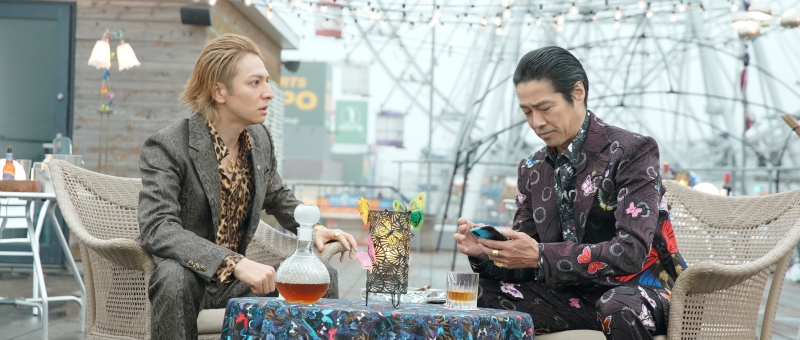
To rewind a little, as film frequently does in flashbacks to the earlier movies, Reiji was a useless street cop facing a host of complaints not least for being a bit of a creep upskirting the local ladies until offered the opportunity to go undercover in the yakuza in order to break a drug smuggling ring run by ageing boss Todoroki (Koichi Iwaki). No longer technically a law enforcement officer because undercover operations are apparently illegal in Japan, Reiji has begun to find himself torn between his ultimate mission and the codes of gangsterdom not least in his relationship with sympathetic, old school yakuza Papillon (Shinichi Tsutsumi) so named for his love of butterflies many of which adorn his brightly coloured suits. 

Reiji’s inner conflict may ironically mirror the giri/ninjo push and pull central to the yakuza drama as he begins to realise that in completing his mission of taking down Todoroki he will end up betraying Papillon who once saved his life at the cost of his legs. Papillon meanwhile is presented as the idealised figure of the traditional yakuza in his fierce opposition to the drugs trade in the conviction that all they do is make people’s lives miserable and destroy families. He alone maintains the traditional ideas of brotherhood that underpin the underworld society in which a boss is also a father and betrayal is a spiritual if also in a sense literal act of suicide. His opposite number, meanwhile, Todoroki’s son Leo (Ryohei Suzuki), is the evolution of the post-Bubble yakuza, highly corporatised and essentially amoral. Papillon compares him to a mutant butterfly fed on coca lives that will eventually kill all of those with which it is confined while Leo himself claims that he intends to redefine the concept of the yakuza for the new generation. 

Caught between policeman and gangster, Reiji’s identity confusion is mediated through his relationships with Papillon on the one hand and pure-hearted love interest Junna (Riisa Naka) on the other. Each of them at one point tells Reiji that he is dead to them, thereby exiling him to the other side temporarily or otherwise. His yakuza traits which include the perversity which plagued him before endanger his otherwise innocent love for Junna in his inability to control his impulses, upsetting her by revealing a possible fling with a local woman while working on the drug deal in Italy, while his inclination towards police work that informs his sense of “justice” places him at odds with Papillon even though they are in many ways pursuing the same goal in keeping Japan free of dangerous drugs and the crime at surrounds them while purifying the contemporary yakuza of the pollution they have caused and restoring it to the pure ideal of another kind of “justice” advocated by Papillon which Todoroki has in a sense betrayed. 

As the film makes clear, the traditional yakuza is in any case on its way out with successive law enforcement initiatives that perhaps unfairly in some senses prevent them from living their lives. Todoroki’s guys defend their choices to the more idealistic Papillon under the rationale that they can’t open bank accounts, rent apartments, or even make sure their kids have lunch to take to school, so they have to dirty their hands with these less honourable kinds of work. Leo is simply a turbo charged version of their determination to survive. As eccentric cat-like gangster Nekozawa (Takashi Okamura), making a shock reappearance, explains it isn’t as if they can go straight either because who’s going to hire a former yakuza for a regular job? 

There may be in a sense a sympathy for those caught out by their choices with no real way back, a more liberal view of “justice” leaning either towards that by their own code or a simple rejection of the amoral selfishness of those who think nothing of ruining the lives of others for their own gain. With plenty of call backs to earlier instalments, Reiji once again opening the film buck naked with in this case a vase for modesty, Miike maintains the same slapstick sense of humour frequently employing zany animation and even a puppet show to express Reiji’s sometimes simplistic way of thinking. The film even unexpectedly shifts into tokusatsu in its closing sequence, bearing out the similarity in the titular “mole song” to the classic Mothra refrain, while placing Reiji and Papillon back into their respective roles having perhaps exchanged something between them in continuing to pursue their shared goal of a drug-free society. 


The Mole Song: Final streamed as part of this year’s Nippon Connection.

Original trailer (English subtitles)
Images: Ⓒ2021 FUJI TELEVISION NETWORK/SHOGAKUKAN/JSTORM/TOHO/OLM ⒸNOBORU TAKAHASHI/SHOGAKUKAN

Between Us (藍に響け, Yasuo Okuaki, 2021)

Hyper-individualism goes to war with collective harmony in Yasuo Okuaki’s taiko-themed coming-of-age manga adaptation, Between Us (藍に響け, Ai ni Hibike, AKA Wadaiko Girls). Reminded that “your sound is everyone’s sound” the closed-off heroine begins to realise you can’t always just do your own thing and expect everyone else to deal with it, but in the end shows remarkably little growth as even her otherwise positive contribution of helping a similarly troubled young woman quite literally find her voice is in itself achieved mainly through abrasive bullying not to mention a persistent ableism which otherwise entirely ignores her feelings. 

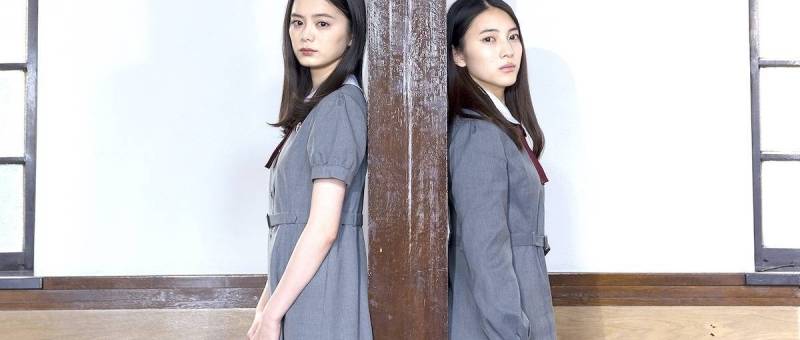
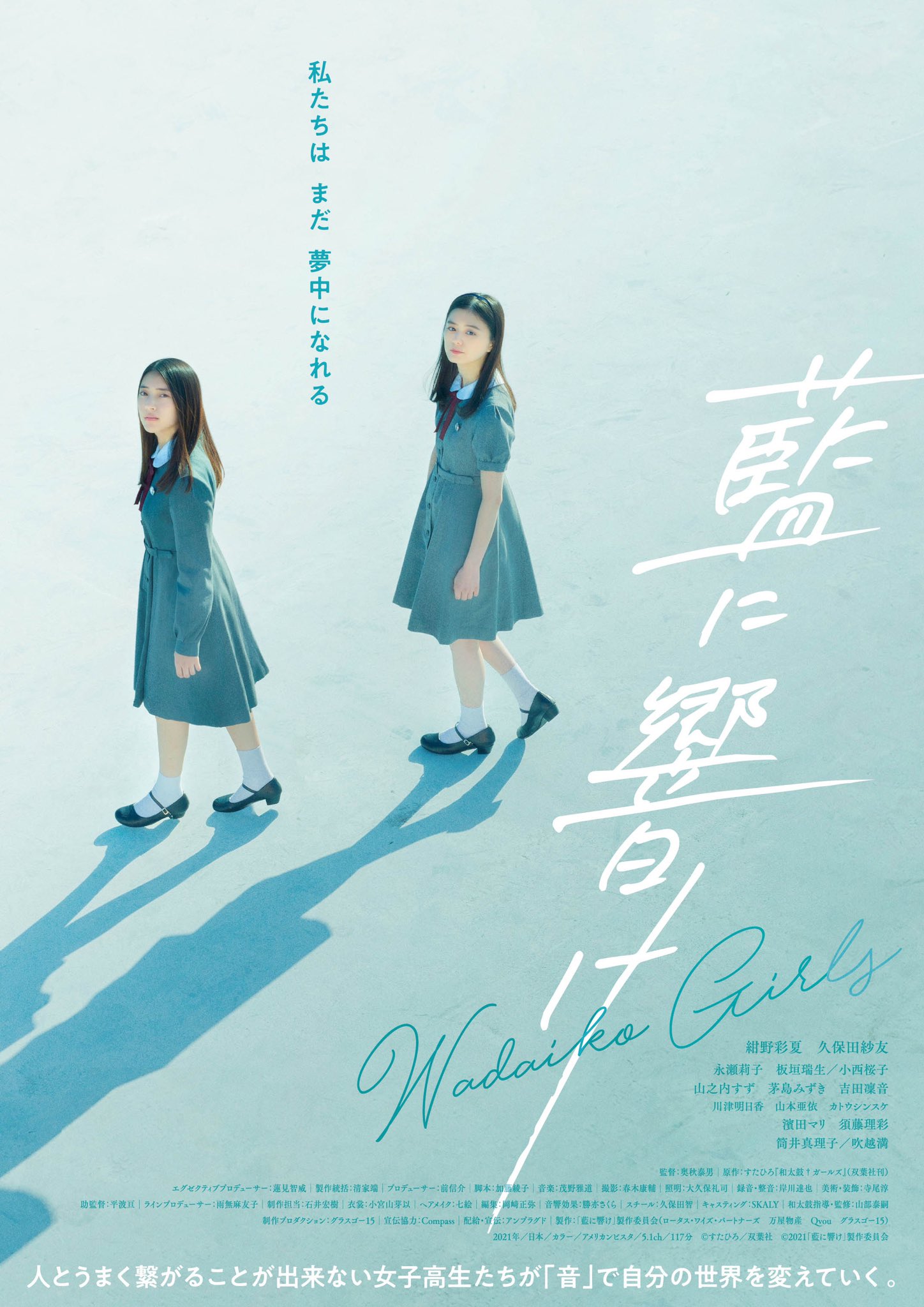
Okuaki opens with an intense scene as the heroine, Tamaki (Ayaka Konno), burns her ballet shoes alone on the beach at night before staring pensively out at the ocean. As we discover, Tamaki has a lot going on that she is reluctant to share with others. Something has evidently gone wrong at home, she seems worried about money and the modest house she shares with her mother who appears to work late often is filled with packing boxes suggesting they may only recently have moved. She hasn’t told her mum she’s given up ballet, partly it seems because she’s working part-time at the local supermarket which she has to keep a secret because the elite Catholic school she attends has a rule against part-time jobs. Wandering around alone however while her friends, who each seem to come from extremely wealthy families, assume she’s heading to ballet Tamaki becomes captivated by the sound of taiko drumming, eventually spotted by a young woman practicing, Maria (Sayu Kubota), who happens to be mute. 

Despite the impossibility of direct communication, Maria manages to covey her enthusiasm for the drums presumably picking up on something in Tamaki which, for unexplained reasons, she is extremely reluctant to explore. Fellow drummer Kahoko, however, is dead set against her joining the club even setting her a cruel and impossible challenge as a kind of entrance exam. The irony is that even as the sullen Tamaki stands up against low-level bullying from Kahoko who makes a basic training exercise seem like humiliating punishment, Tamaki becomes far too into perfecting the art of taiko, obsessively honing her craft and displaying natural ability but quickly losing patience with her fellow drummers who are mostly playing for fun and friendship. 

Tamaki is and remains distinctly unpleasant to be around while Kahoko seems to soften, becoming a source of support to the other girls, and poor Maria is rounded on by just about everyone including maternal figure Sister Nitche (Mariko Tsutsui) who was once herself a top taiko coach but for reasons unknown gave up the art, got religion, and became a nun. Sister Nitche was known as a demon coach, and the decision to reassume her role does indeed resurface an element of cruelty in her unseen in her role as high school teacher and carer at the attached children’s centre. Maria first bonds with Tamaki in revealing to her that she was rendered mute in a car accident and has been undergoing rehabilitative therapy in an attempt to regain her speech but that it hasn’t been going as well as she’d hoped. Yet both Sister Nitche and Tamaki eventually set on her, insisting that the reason she’s not making progress is because she’s not trying hard enough instead of, perhaps, reassuring her that even if she not able to improve her speaking it would still be fine and there’s no need to rush. 

The conflict seems to be between the ultra-competitive, deeply wounded Tamaki and the ethos of taiko which demands group harmony. There’s no point being a show off because the group must move as one, yet Tamaki struggles to accommodate herself to the idea of adapting to the collective rhythm insisting everyone attempt to match her speed while suggesting that those who can’t aren’t up to the task and should voluntarily resign rather than bring the group down, echoing the rather harsh survival of the fittest philosophy espoused by a transformed Sister Nitche. Just as she had, Tamaki later turns on Maria in the face of her own failure repeatedly insisting that she is a “loser” who wouldn’t fight for taiko or for her voice in a confrontation that leads first to a physical fight and then to an intense taiko battle that bears out the repeated notion of baring one’s soul through the beating of the drum. 

There is an unmistakable though unresolved homoerotisicm in the conflict between the two young women filled as it is with repressed emotion, frustration, and unspoken desires all of which appear to dissipate through the climax of the physically and emotionally intense taiko session. Nevertheless, there is also something in uncomfortable in the fact of Maria’s path towards finding her literal voice arising because of what is essentially abusive bullying rather than encouragement or positive support especially as it also denies her the right to speak her feelings honestly while no one is making much of an effort to listen to her. Tamaki meanwhile remains somewhat unsympathetic even in her silent concern for Maria betrayed by the unexpected warmth of her smile in seeing her deciding to return to taiko, her own buried troubles otherwise unresolved while her unforgiving hyper-individualism is tacitly condoned even as she learns to submit herself to the collective rhythm and finds through it the sense of connection she was perhaps missing. 


Between Us screened as part of this year’s Camera Japan

Original trailer (no subtitles)

Red Post on Escher Street (エッシャー通りの赤いポスト, Sion Sono, 2020)

“Freedom is disappearing from our world. Everyone rise up!” screams an accidental revolutionary having achieved a kind of self-actualisation in wresting the leading role not only in the film within the film but in the film itself in an act of characteristically meta Sion Sono playfulness. Harking back to the earlier days of his more recently prolific career, Red Post on Escher Street (エッシャー通りの赤いポスト, Escher dori no akai post) is perhaps a thinly veiled though affectionate attack on the mainstream Japanese cinema industry, a defence not only of “jishu eiga” but a “jishu” life in the meditation that a crowd is composed of many faces in which we are all simultanteously extra and protagonist.

In a sense perhaps Sono’s stand-in, the director at the film’s centre, Tadashi Kobayashi (Tatsuhiro Yamaoka), is a festival darling who made his name with a series of critically acclaimed independent films but has since been dragged towards the mainstream while forced into a moment of reconsideration following the sudden death of his muse and lover. Kobayashi’s ambition is to produce another DIY film of the kind that first sparked his creative awakening, but it’s clear from the get go that his desires and those of his backers to not exactly match. Middle man producer Muto (Taro Suwa), sporting a sling and broken leg after being beaten up by the jealous boyfriend of a starlet he’d been “seeing”, is under strict instructions to ensure Kobayashi casts names and most particularly the series of names the studio want. To convince him, they go so far as to have the established “stars” (seemingly more personalities than actresses) join the open auditions at which the director hoped to find fresh faces, hoping he can be persuaded to cast them instead. The irony is that the studio want Kobayashi’s festival kudos, but at the same time deny him the freedom to make the kind of films that will appeal to the international circuit, the director frequently complaining the producers keep mangling his script with their unhelpful notes. 

A handsome young man, Kobayashi has also inspired cult-like devotion among fans including a decidedly strange group of devotees branding themselves the “Kobayashi True Love Club” who each wear Edwardian-style white lace dresses and straw hats while singing a folksong everywhere they go. Nevertheless, most of the hopefuls are ordinary young women with an interest in performing or merely for becoming famous. Their stories are the story, a series of universes spinning off from the central spine from a troupe kimono’d actresses performing a play about female gamblers, to a young widow taking on the mission of making her late husband’s acting dreams come true, and a very intense woman with an extremely traumatic past. The audition speech finds each of the hopefuls vowing to drag their true love back from “the crowd” into which he fears he is dissolving, only for them later to save themselves by removing their “masks” to reclaim their individual identity and agency as protagonists in their own lives rather than passively accept their relegation to the role of extra.

Then again, there are those who wilfully embrace the label such as a faintly ridiculous old man who commands near cult-like adoration from his disciples of professional supernumeraries for his ability to hog the screen even if his less than naturalistic acting is at best a distraction from the main action. Without extras, he points out, the screen would become a lonely place, lacking in life and energy though he at least seems to be content to occupy a liminal space never desiring the leading role but seizing his 15 seconds of fame as a prominent bystander. Others however are not, determined to elbow aside the vacuous leading players and reclaim their space. Subtly critiquing the seamier ends of the industry from the lecherous producers who always seem to be draped with a young woman eager for fame and fortune, to the machinations of star makers and manipulations of talentless celebrities, the film makes an argument for sidestepping an infinitely corrupt system in suggesting the jishu way is inherently purer but nevertheless ends on a note of irony as its defiant act of guerrilla filmmaking is abruptly shutdown by the gloved hand of state authority. 


Red Post on Escher Street streamed as part of this year’s Nippon Connection.

Original trailer (English subtitles)
A Girl Missing (よこがお, Koji Fukada, 2019)

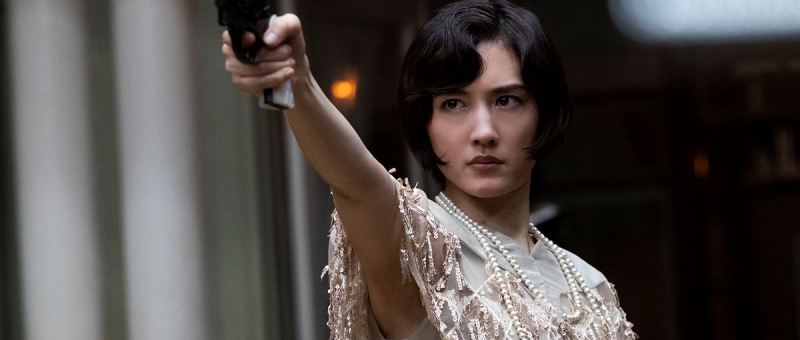
A Girl Missing poster 1In Harmonium, Koji Fukada explored the death of the family unit as a harried father found the foundations of his home eroded by a mysterious “stranger” with whom he shared an unspoken connection. A Girl Missing (よこがお Yokogao) pushes a little deeper in demonstrating how profoundly the foundations of a life can be shaken by frustrated connections, misunderstandings, and unspeakable desire. Probing deeper still, it wants to ask us on what foundations we’ve chosen to build our selfhoods, why it is that we don’t know ourselves without those tiny markers that tell us where we stand, and if it is really possible to rediscover a sense of self if we somehow go missing from our own lives.

Beginning in the mysterious second timeline, Fukada opens with the heroine changing her identity through the time-honoured fashion of a haircut. Calling herself Risa, she brushes off the hairdresser’s suggestion that they’ve met before, but she hasn’t chosen this salon because of its reputation or proximity to her home. Flashing back some months, we see the same woman looking a little softer and apparently working as a homecare nurse known as Ichiko (Mariko Tsutsui) to an elderly woman dying of stomach cancer. Ichiko’s colleagues worry that she’s becoming too emotionally involved with the Oishi household, helping the two daughters – uni student Motoko (Mikako Ichikawa) and high schooler Saki (Miyu Ogawa), study in cafes in her off hours, but she enjoys playing mother and does after all like to help. Meanwhile, she’s also happily engaged to a doctor (Mitsuru Fukikoshi) with a young son and looking forward to starting a brand-new family life of her own.

All that is derailed, however, when Saki goes missing in a suspected abduction on her way home from cram school. Thankfully, she’s found alive, unhurt, and apparently relatively well adjusted a few days later and anyone would assume the drama to be over, only it turns out that the suspect is Ichiko’s own nephew whom she briefly introduced to Saki at a cafe on the night in question. Feeling tremendously guilty and confused though she herself had nothing to do with the incident, Ichiko feels she must confess and make a formal apology to the Oishis but Motoko stops her fearing that the family will fire Ichiko and she’ll never see her again. Ichiko decides to trust Motoko and keep quiet, but it will prove to be a bad decision not least because it is in such sharp contrast to her otherwise straightforward and honest character.

The film’s Japanese title, “Yokogao” or “profile” reminds us that it is not possible to see the entirety of any one thing, only a single facet and more often that not the facet that it particularly wants you to see. Ichiko is guileless, innocent, and naive in her innate kindness. She doesn’t see how her relationship with the Oishi girls could eventually become problematic because, as a nurse, she’s used to doing what needs to be done when it needs doing. What we see of her is a woman about to marry “late” by the standards of her society into a readymade family, an intensely maternal figure looking for people who need mothering. Meanwhile, Saki’s disappearance exposes cracks in the Oishi household, Motoko’s grumpy response of “would you rather it was me?’ to her mother’s wails of “why her?” beginning to explain some of her seeming disaffection with her family.

Yet as much as there may be a maternal component in her desperation to keep Ichiko in her life, we can infer from all her plaintive looks that there is another kind of desire in play, one which she seems to regard as unspeakable. Ichiko, oblivious, does not quite realise the depth to which her accidental rejections wound the troubled young woman but equally could not anticipate the casual cruelty of her petty revenge. Upset that Ichiko is not catching her drift, Motoko leaks her connection to the case to the papers, and then tells them a secret shared in confidence to pour salt on the wound. Instantly regretful and caught in the white heat of passion, Motoko fails to realise the extent to which her desire to return the hurt done to her will only wound her more in ensuring Ichiko disappears from her life for good.

Ichiko then does something much the same, reinventing herself as “Risa” she lives in an empty apartment overlooking Motoko’s with the sole aim of taking revenge against the woman who pretended to be her friend and then betrayed her. But Ichiko does not understand why Motoko did what she did, and so her own revenge is also a misplaced act of self harm which causes her to absent herself from herself, assuming another identity better disposed to cruelty but finding it an awkward fit.

Fukada places emotional repression at the heart of all. Ichiko, despite her kindness, keeps others at a distance without entering into true intimacy with anyone, while Motoko apparently struggles to articulate perhaps even to herself the truth of her own feelings, childishly hitting back when slighted and unable to bear the possibility that she is in love with someone who cannot return her feelings. Forever at odds, they see each other only in profile. The desire for revenge destroys them both, but despite the pain and inescapability of regret, they have to find new ways of going on, making little nicks on their identities to help them remember who they really are. A melancholy tale of frustrated desires, A Girl Missing flirts with constructed identities polluted by social toxicity but leaves its heroines on (slightly) firmer ground in having at least taken what control they can over the forces which destabilise them.


A Girl Missing was screened as part of the 2019 London East Asia Film Festival.

Original trailer (no subtitles)