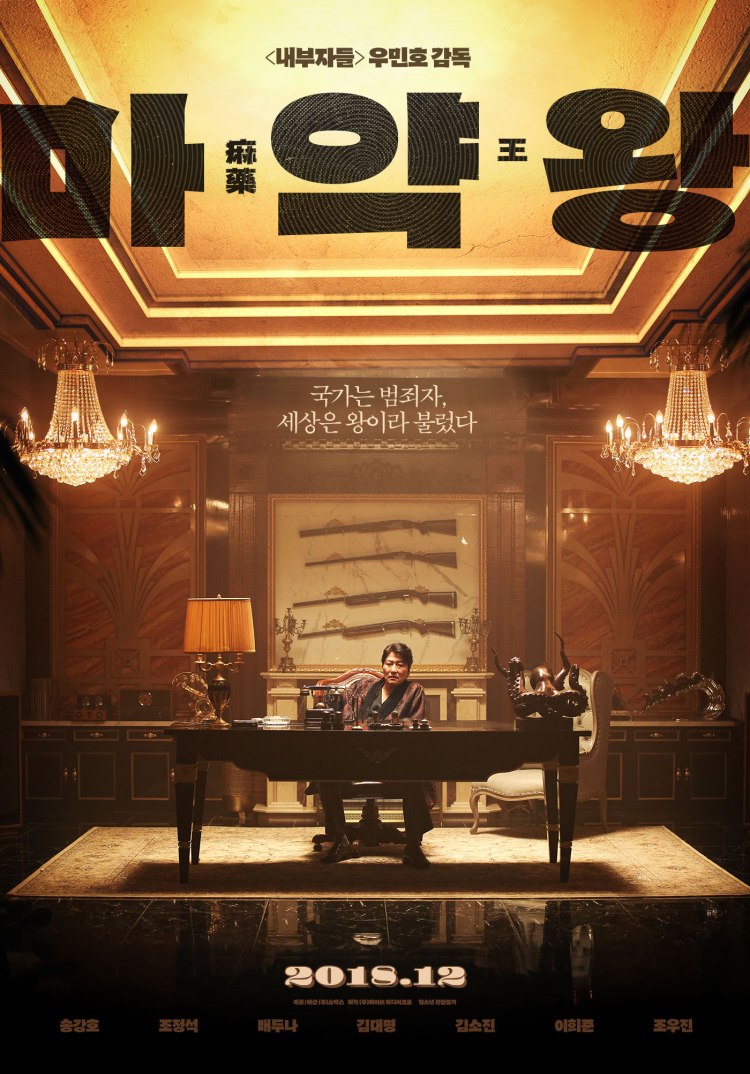
The Drug King (麻藥王 / 마약왕, Woo Min-ho, 2018)

Drug King posterKorean cinema has been in a reflective mood of late, keen to re-examine the turbulent post-war era in the wake of a second wave of democratic protest and political turmoil. Even so, dealing with the difficult Park Chung-hee era has remained sensitive with the legacy of life under a repressive regime apparently very much still felt. Woo Min-ho’s Drug King (麻藥王 / 마약왕, Mayakwang) is first and foremost a crime doesn’t pay story, but it’s also a subtle condemnation of authoritarianism and the corruption and cronyism that goes along with it. Painting its hero’s rise as a consequence of the society in which he lives, it perhaps implies the new wind of egalitarian democracy made such amoral venality a thing of the past but then again is at pains to show that nothing really changes when it comes to greed and resentment.

Our hero, Lee Doo-sam (Song Kang-ho), starts out as a jeweller dabbling in smuggling in Busan in 1972. Just as the smuggling business starts to take off, Doo-sam’s boss falls out with his friends in high places and decides to throw him to the wolves while he escapes abroad to safety. Doo-sam, not one to be beaten, starts coming up with ideas. Mobilising his wife (Kim So-jin) to get him out of jail through a combination of bribery and blackmail, he teams up with the area’s smuggling king to act on a tip-off he got from a Korean-Japanese yakuza and begins producing popular drug Crank for export to Japan.

As the opening voice over explains, Crank is a dangerous stimulant developed by the Japanese during the war and given to factory workers and kamikaze pilots because of its ability to eliminate both fear and fatigue. It is also highly addictive and provides an extreme high which have made it a popular recreational drug but, crucially, the real value is economic. The rising Japan is keen to make use of foreign labour, and Korea is keen to up its export capability. This, coupled with poor regulation of the workforce, has led to extreme exploitation in which factory workers are encouraged to hop themselves up on stimulants to keep working overtime for the sake of economic expansion. Thus, the influx of Crank is, in many ways, simply another facet of ongoing Japanese imperialism.

Not that Lee Doo-Sam cares very much about that. An honest prosecutor later puts it to him that he’s contributing to the exploitation of ordinary workers who might earn a few pennies extra for working a few more hours but at the cost of their health and wellbeing, while he gets filthy rich off the back of their misery. Doo-sam is, however, unrepentant. In the beginning he just wanted to provide for his wife, children, and unmarried sisters, but perhaps he also wanted to kick back against his reduced circumstances and he certainly did enjoy playing the big man. In any case, it has paid off. Doo-sam too has friends in high places and they won’t want to let him sit in a police cell for long in case he starts feeling chatty.

Times change, however, and whatever standing and influence Doo-sam thought he’d accrued his life is built on sand. When Park is assassinated by a member of his own security team, all those contacts are pretty much useless because the cronies are now out in the cold. There are protests in the streets and the wind of a new era is already blowing through even if it is still a fair few years away. That bold new era will, it hopes, do away with men like Doo-sam and their way of thinking, eradicating corruption and backhanders in favour of honest meritocracy. Naive, perhaps, and idealistic but it is true enough that Doo-sam is a man whose era has passed him by while he, arrogantly, burned all his bridges and gleefully sacrificed love and friendship on the altar of greed and empty ambition.

Hubris is Doo-sam’s fatal flaw, but he remains a weasel to the end only too keen to sell out his associates in order to save his own skin. He may claim he was only trying to live a “decent” life, but his definition of “decent” may differ wildly from the norm. Nevertheless, perhaps he was just like many scrappy young men of post-war years, desperate, hungry, and left with few honest options to feed his family if one who later found himself corrupted by backstreet “success” and the dubious morals of the world in which he lived which encouraged him to disregard conventional morality in favour of personal gain. Much more about life in Korea in the authoritarian ‘70s than it is about crime, The Drug King is nevertheless an ironic tragedy in which its drug peddling hero eventually enables the birth of a dedicated narcotics squad and helps to dismantle system which allowed him to prosper all while grinning wildly and, presumably, planning his next move.


Currently available to stream online via Netflix in the UK and possibly other territories.

International trailer (English subtitles)

Key tracks from the (fantastic) soundtrack:

Jung Hoon-Hee – Flower Road

Kim Jung Mi – Wind
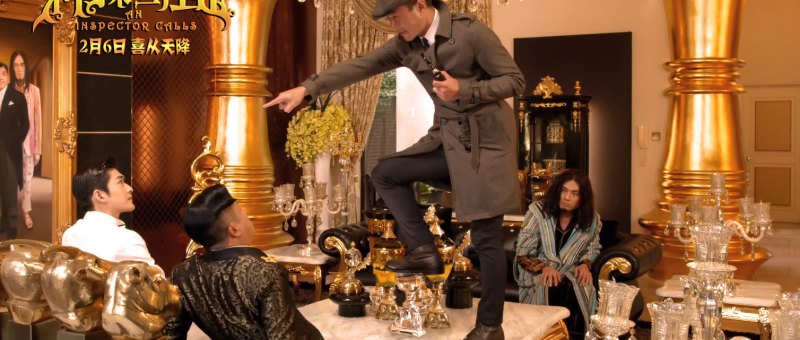
An Inspector Calls (浮華宴, Raymond Wong & Herman Yau, 2015)

Inspector Calls poster 1J.B. Priestley’s An Inspector Calls found itself out of favour until a phenomenally successful stage production brought it back into the national consciousness in the early ‘90s, but even if some decry its inherent melodrama as a relic of another era the play’s comments on the entrenched classism of British society sadly still ring true. An Inspector Calls is many things, but one thing it defiantly is not is funny – a series of concentric tales of betrayals and oppressions, Priestley’s drama lays bare the callousness with which the privileged bolster their position through the story of one faceless factory girl standing in for an entire social class whose lives are often at the mercy of those “above” them.

In adapting Priestley’s play as a Chinese New Year movie (a strange concept in itself), Herman Yau and Raymond Wong relocate to contemporary Hong Kong, re-conceiving it as a broad comedy of the kind one might expect for the festive period. The setup is however still the same. The Kau family will be receiving a visitation – this time from Inspector Karl (Louis Koo Tin-lok) who has some difficult news for each of them. Three hours previously, a young woman committed suicide in her apartment by drinking bleach, taking the child she was carrying with her. Inspector Karl views this as a double murder and, based on the diary they found at the crime scene, has brought the reckoning over to the Kaus’.

The Kaus, at the present time, are preparing an engagement party for daughter Sherry (Karena Ng) who will be marrying the handsome younger brother of a factory owner, Johnnie (Hans Zhang Han). What no one can know is that the family business is going under, the Kaus are broke, mum and dad don’t get on, and all of this finery is merely rented affectation. The only member of the family who still seems to have something like a social conscience – Tim (Gordon Lam Ka-tung), the 27-year-old younger son, is viewed by all as a feckless and naive hippy, hiding out in his childhood bedroom, still all fluffy cushions and toy soldiers.

As the Inspector explains, he holds Mr Kau (Eric Tsang Chi-wai) responsible because the woman once worked in his factory and he fired her for participating in a strike for better pay and conditions. Sherry got her fired too when she worked in an upscale fashion store. Johnnie knew her during an unfortunate period as a bar hostess, and Tim as a masseuse. Mrs Kau (Teresa Mo Shun-kwan), who heads up a woman’s charity and publicly espouses tolerance while privately judgmental, once turned her down for familial support seeing as the father of her child was still living. She advises holding him to account and if he won’t pay, forcing his family to take responsibility on his behalf. The irony being that the father is likely her own son and that if this poor woman had rocked up at the Kaus’ with a sad story and an infant in her arms, she would have been met with nothing more than contempt save perhaps some hush money to send her on her way.

The Kaus are merely a series of examples of the various ways the wealthy mistreat the poor, wielding their sense of entitlement like a weapon. Yau and Wong adopt an oddly Brechtian approach in their expressionist production design with the faceless masses identified only through titles – the word “labour” on the workers’ caps, “manager” in the fashion store, “secretary” at the foundation. None of these people are really worthy of names because they will always be “less” while the Kaus are “more” in more ways than one. Actions, however, have consequences. The family console themselves that this is all far too coincidental, that they couldn’t all have known the “same” woman in different guises, but that in many ways is the point – she isn’t one woman but all women, used, abused, and discarded not only by heartless men but by jealous and judgemental members of her own sex too. Better than her than me, they might say, but that’s no way to run a healthy society as the sensitive, slightly damaged Tim seems to see.

Like the Birlings, the Kaus attempt to brush the Inspector’s warning off, thinking it’s all been some elaborate prank that can they laugh about and then forget, but there will be a reckoning even if they attempt to gloss over the various revelations regarding their moral failings. Wong and Yau’s vague gesturing towards the outlandish greed of the hypocritical super wealthy is undercut by the ridiculous New Year slapstick of it all despite the Metropolis-like production design and expressionist trappings, giving in to an excess of its own in an extremely unexpected musical cameo from a martial arts star and the decision to end on a social realist photo of an innocent, pigtailed proletarian woman dressed in red. Nevertheless, strange as it all is the bizarre adaptation of Priestley’s play has its own peculiar charm even if it’s outrageousness rather than moral outrage which takes centre stage.


Currently available to stream online via Netflix in the UK and possibly other territories.

Original trailer (English / Traditional Chinese subtitles)

Jo Pil-ho: The Dawning Rage (악질경찰, Lee Jeong-beom, 2019)

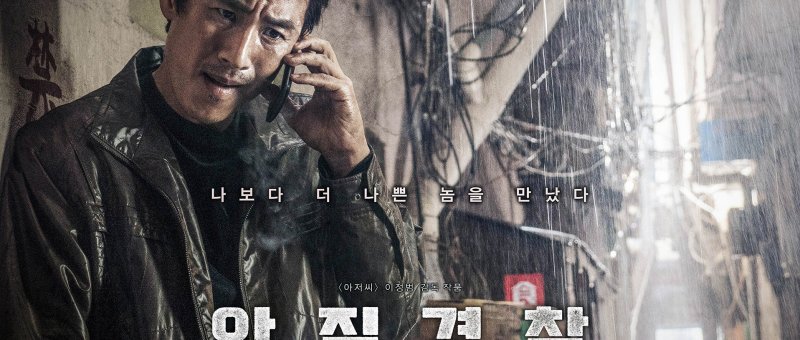
Jo Pil-ho- The Dawning Rage posterThe Man From Nowhere’s Lee Jeong-beom returns five years after No Tears for the Dead with another retro crime thriller, though this time one with additional bite as he digs into a nation quite clearly failing its young. Another of the recent films set in the post-Sewol world, Jo Pil-ho: The Dawning Rage (악질경찰, Akjilkyungchal) is a noirish voyage through an intensely corrupt society in which Chaebols act with impunity while goodhearted schoolgirls are branded delinquents and left to fend for themselves by the “adults” who seem to have abandoned all sense of social responsibility.

Our hero and the titular “bad cop” of the Korean title, is Jo Pil-ho (Lee Sun-kyun) – a corrupt police officer who abuses his position to force criminals to commit crime on his behalf. Recently, he’s teamed up with a teenage safecracker, Gi-chul (Jung Ga-ram), and is also involved in an ill-advised business relationship with a petty gangster. IA are all over him, but they don’t have anything yet. Everything is about to change, however, when an angry Pil-ho decides it would be a good idea to rob the police warehouse. The gangster’s minion makes a mistake and the place blows up with Gi-chul trapped inside. Suddenly it’s not looking so rosy for Pil-ho who is now implicated in a series of crimes only to discover that there is far more going on than he could have anticipated. The warehouse fire appears to be connected to an ongoing corruption case involving one of Korea’s biggest conglomerates and Pil-ho may have just destroyed key evidence without realising in an attempt to save his own skin.

Despite himself, Pil-ho is not such a bad guy. He’s corrupt and greedy, but he has a moral compass and probably sees himself as kicking back against the system rather than abusing it seeing as he only seems to take money from sources he feels could stand to lose. This is perhaps why he finds himself increasingly shaken by his investigations, eventually forced to pick a side – surrender to Chaebol influence as a willing underling or expose the corruption possibly at the cost of his own life.

In true noir fashion his own past comes back to haunt him as he re-encounters the father of a young woman (Im Hyeong-gook), Song Ji-won (Park So-eun), who died in the ferry tragedy and had wanted to become a policewoman when she grew up. Pil-ho was the officer charged with the empty gesture of presenting him with a police uniform with his daughter’s name on it. In an unlikely coincidence, the girl Pil-ho needs to find, Mina (Jeon So-nee), was Ji-won’s best friend. Alone and without family, Mina has been living by her wits on the streets but as Mr. Song points out she’s not a bad kid at heart and goes to great lengths to protect those close to her.

Despite their original mutual distrust, a kind of camaraderie eventually builds up between the cynical cop and the jaded teen who views the so-called “adults” around her with nothing more than contempt. Her admiration for Pil-ho begins when he beats up a sleazy backstreet doctor who tries to swap treatment for sexual favours and then continues as Pil-ho, against the odds, begins to look out for her in ways no one else ever has. Mina, like many kids, is simply trying to survive in a world which is often actively hostile to her existence, but unlike Pil-ho she has avoided becoming cynical and remains committed to protecting those weaker than herself even if others may write her off as a lost cause delinquent.

Set in Ansan which, as an ironic sign tells us before falling to the ground, is the “city of happiness”, Dawning Rage locates itself in a haunted land in which the lingering effects of the ferry tragedy are impossible to ignore. Pil-ho begins catching sight of teenagers everywhere but their presence only seems to highlight absence while providing a kind of chorus watching and observing the adults around them in order to learn how to live. The corrupt Chaebol cites his provision of scholarships as evidence of his commitment to building a fairer society, all while knowing that by doing so he is really buying influence and loyalty. He spins a yarn about his humble origins and makes a show of inspiring the next generation, but thinks nothing of silencing those who stand in the way of his selfish aims.

The corruption rains down from above – the Chaebols make their money and they cut corners, leaving ordinary people squeezed. Fear and deference are the primary contributors to the societal decline which placed innocent young people directly, if unwittingly, in harm’s way. This is Pil-ho’s “dawning rage” as he awakens himself to the depths of injustice within his own society with which he had blindly gone along thinking only of himself. With a distinctly 1970s aesthetic, Dawning Rage is a dark conspiracy thriller in which the system is so hopelessly corrupt as to be beyond saving. Pil-ho is a “bad cop” who turns out to be acting for the public good after all but finds himself pushed towards the dark side by the intransigence of his society and forced into an act of violent revenge both personal and social.


Currently available to stream online via Netflix in the UK and possibly other territories.

Original trailer (English subtitles)

The Thousand Faces of Dunjia (奇門遁甲, Yuen Woo-ping, 2017)

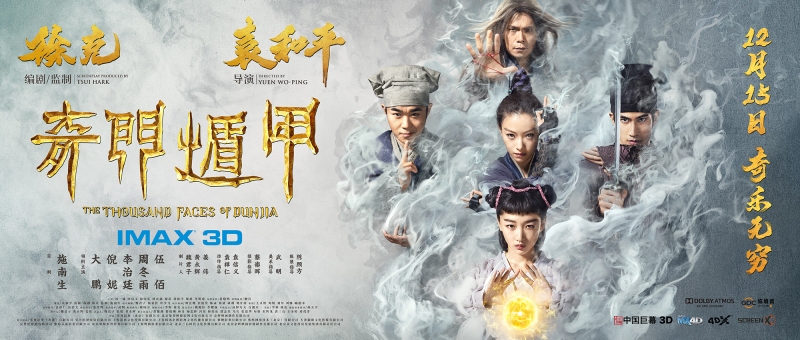
Thousand faces of Dunjia poster 6The Dunjia has a thousand faces. Or maybe not. Yuen Woo-ping teams up with Tsui Hark for a “remake” of Yuen’s 1982 classic The Miracle Fighters retitled The Thousand Faces of Dunjia (奇門遁甲, Qíméndùnjiǎ), only it isn’t much of a remake at all and simply pinches the idea of supernaturally-charged heroes fighting for justice which, it has to be said, is hardly original or at least not enough to justify Tsui’s claim that the two films are linked by a desire to push the boundaries of the wuxia film. Nevertheless, Yuen does his best to craft a tale of brotherhood and rebirth for his noble warriors newly re-energised by a life-giving phoenix, but struggles under the weight of an otherwise incoherent narrative.

So, in fantasy medieval China, the land is beset by a stealth invasion from otherworldly powers. Our heroes, the Wuyin clan, are the last line of defence against the increasingly powerful alien marauders. In order to beat them, they need to unlock the mysterious power of Dunjia, which, according to a prophecy, can only be done by a very specific person. Accordingly, the clan’s “big brother”, Zhuge (Da Peng), has gone out looking. Unfortunately, not everyone is convinced by what he brings back – a young woman he found in some kind of institution who has a childish, ethereal quality and a surprising ability to suddenly morph into a giant colourful phoenix.

Yuen opens with a brief discussion of Qimen and the Dunjia which seems to have something to do with interdimensional co-ordinates but truth to tell it turns out not to be very important. The main thrust is that weird alien beings have been living amongst us for centuries and are quietly waiting for us to die out so that they can inherit the Earth. Only some of them have lost patience. The aliens might be about to get their hands on a world destroying device, something the Wuyin are desperate to prevent but the aliens keep using their abilities against them and their prospects look increasingly hopeless.

With the narrative in disarray, Yuen relies on the camaraderie between the members of the Wuyin to carry the film (which it largely does). There’s history between the de facto leader Dragonfly (Ni Ni) and healer Zhuge despite the Wuyin’s increasingly silly code which forbids affection between comrades and punishes it with mutual slapping. Accordingly the pair spend most of the film bickering while conflicted by the arrival of romantic rivals in the form of the mysterious Circle (Zhou Dongyu) and an earnest young policeman, Dao (Aarif Lee), who keeps stumbling on the activities of the Wuyin but has his memory wiped to prevent the truth getting out. Despite the plot holes and inconsistencies, the Wuyin are an intriguing bunch who do their best to earn our sympathies even whilst shouldered with a series of incomprehensible events.

Incomprehensibility is not necessarily a problem in a wuxia film, in fact it can sometimes be an asset, but the concept is continually let down by over reliance on poor quality CGI and bland production design. Yuen opens with an engaging, if surprisingly cutesy, sequence of Dao and Dragonfly enjoying a (re)meet cute while chasing a giant three-eyed fish through the streets of an ordinary city, but despite the resurgent beauty of Circle’s colourful phoenix the cartoonish battles between soulless alien mecha giants largely fail to convince.

Cartoonish though it may be, there is charm in Dunjia’s lowbrow humour as the gang bicker amongst themselves and engage in a comically romantic tug of war. Yuen breaks the tale into a series of chapters as if mimicking an old fashioned wuxia serial and there is certainly a strain of meandering fairytale nonsense in the film’s refusal to pick a direction and follow it even if it takes things too far with an all too abrupt ending designed only as an inelegant hook for an upcoming sequel. Ironically enough, Dunjia is a film about coming “full circle” and then being reborn anew like a phoenix from the flames but pushes itself too far in threatening to set the wheel turning again just when it ought to be hitting its stride. Flawed but intermittently entertaining, the first adventure fo the Wuyin clan is off to a rocky start but sheer charisma alone may be enough to ensure repeat custom.


Currently available to stream in the UK (and possibly other territories) via Netflix.

Original trailer (English subtitles)

Accident (意外, Cheang Pou-Soi, 2009)

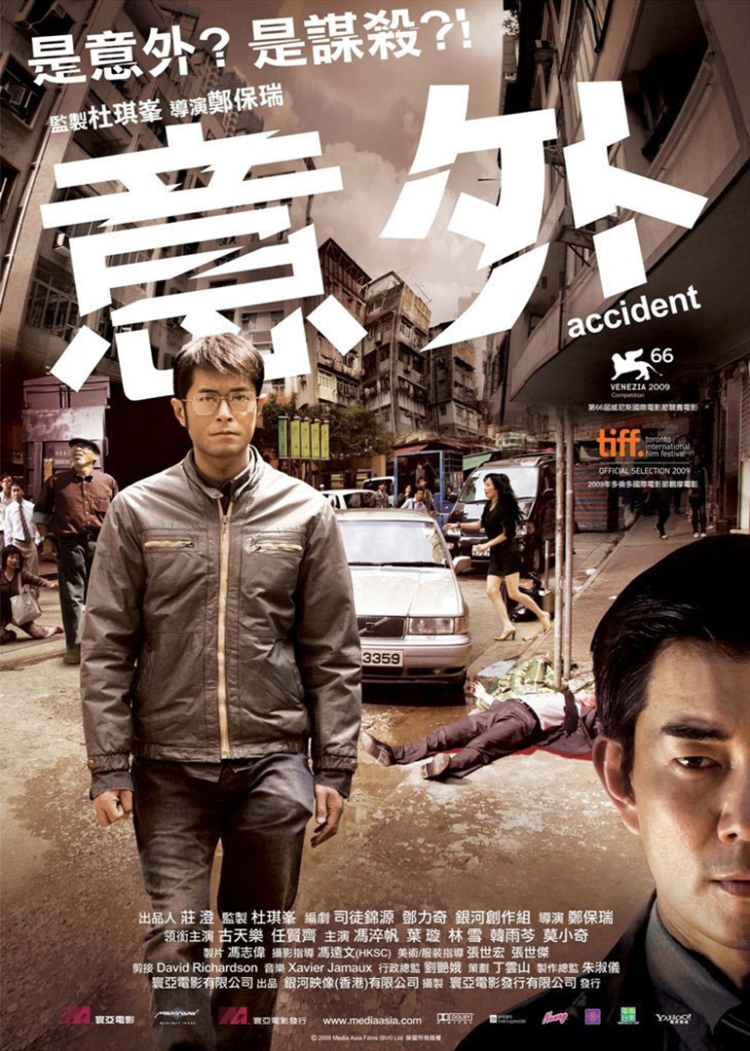
Accident poster 1Is an accident ever really just an accident? The cosmos may be conspiring against us, but one can’t rule out a man-made conspiracy in a world as venal and corrupt as ours has become. Riffing off The Conversation, Cheang Pou-Soi’s The Accident (意外) stops to ask if you really do reap what you sow or if you merely think you do as its increasingly paranoid hero attempts to manipulate fate for his own ends only to find himself encircled by a net of his own making.

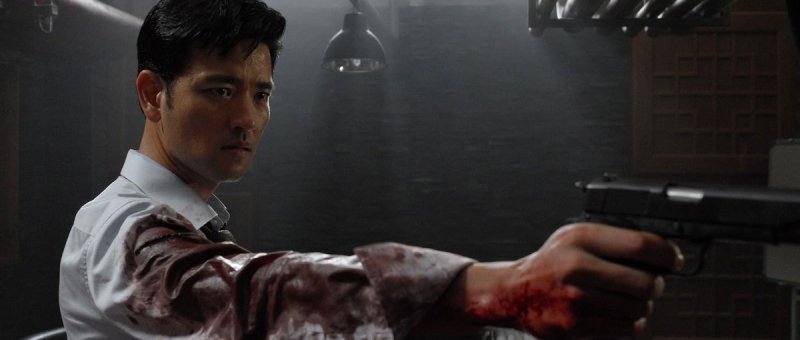
The Brain (Louis Koo Tin-lok) is the head of a very particular gang. A hitman of sorts, he specialises in untraceable crimes, choreographing elaborate pathways to death that appear indistinguishable from accidents. He knows that he is not the only such orchestrator of endings and that he has likely made enemies and rivals as a result of his activities and so is extraordinarily careful when it comes to the execution of his work.

It is, therefore, a concern when a bug appears in a routine job. Uncle (Stanley Fung Shui-fan), the oldest member of the team, drops a cigarette butt. It might seem like a small thing, but it makes a mark and leaves a little piece of Uncle at the crime scene – a tiny fragment that could become a part of a larger whole exposing the entire enterprise. The Brain is so careful that he even uses a hankie to funnel change into the bus driver’s ticket box, but he’s known Uncle a long time and is loath to cut him loose for a “minor” infraction even if the buzzing in the back of his head reminds him that maybe Uncle’s lapse of judgement wasn’t mere sloppiness.

A man attempting to live with tragedy by imposing order on a chaotic world, The Brain’s sense of cosmic coherence begins to unravel after the next job goes horribly wrong. Someone is plotting against him and one (or more) of the team must be in on it. He tracks his mark to an insurance broker (Richie Jen Hsien-chi) who is his mirror image in every respect as another gambler against the random, spies on him, and almost becomes him in installing himself in the apartment beneath his and literally tracking his every move thanks to a madman’s map on the ceiling and some carefully placed bugs.

Yet, is his assumption right? This could all just be a series of coincidences ranging from an old man’s dementia, to inauspicious weather, and unforeseen tragedy. The Brain, however, needs to believe in his own primacy of agency, that there are no “coincidences” and everything that befalls him is a product of his own actions. He wants revenge – against the man he believes has deliberately punctured his carefully controlled world, but also against the universe itself and the various ways it has misused him.

Fate, however, has other ideas and history later repeats itself with relentless and horrifying cruelty. The Brain, perhaps himself wandering into an “accident” of his own making, chases death in his double who finds himself touched by The Brain’s curse – uncertain yet convinced that he has been the victim of more than circumstance and vowing revenge on the (presumed) orchestrator of his fate, becoming just as strung out and paranoid as The Brain himself.

Produced by Milky Way, Accident does indeed share something with To’s whimsical worldview in which it is the random, inexplicable acts of chance which govern our lives. Fate cannot be outrun or out-thought, there is an accident waiting for all of us (who are each products of the accident of birth). Free will is an illusion, and The Brain will pay a heavy price for the depth of his faith its efficacy and rebellion against a chaotic universe through his attempt to use its propensity for random chance against it and for his own ends. A heady mood piece filled with the intense anxiety of existential unease, Cheang Pou-Soi’s perfectly crafted chronicle of a fragmenting consciousness spinning ever deeper into an entropic well of self-destruction is as melancholy an encapsulation of the human condition as one may hope to see as its hero battles valiantly against the inevitable while secretly perhaps longing to lose, like a degenerate gambler betting against fate.


Currently streaming via Netflix in the UK (and possibly other territories).

Original trailer (Cantonese with Traditional Chinese & English subtitles)

Underground Rendezvous (만남의 광장, Kim Jong-jin, 2007)

Underground Rendezvous posterAt the very beginning of Kim Jong-jin’s Underground Rendezvous (만남의 광장, Mannamui Gwangjang), a group of kindly villagers in the north of Korea are caught by surprise when they unwittingly help to build the 38th parallel – a series of fortifications which will divide them from one another forevermore. Family members are trapped on different sides of an artificial border by a matter of accident rather than choice, a decision effectively made for them by the Americans and Russians amping up cold war hostility in engineering a proxy war over war-torn Korea.

30 years after the villagers sealed their own fates through being overly helpful, the South Korea of the 1980s is perhaps not so different from its Northern counterpart. A brief hope for democracy had once again been dashed and the land remained under the yoke of a cruel and oppressive dictatorship. Young-tan (Im Chang-jung), a boy from a poor village, is determined to escape his life of poverty by travelling to Seoul and studying to become a teacher. However, within five minutes of exiting the station, his country bumpkin ways see his only suitcase swiped by a street thief. An attempt to report the crime only gets him into trouble and so Young-tan is sent to a “re-education” camp in the mountains. Falling off the back of a truck, he gets lost and eventually ends up in a remote village where they assume, ironically enough, that he is the new teacher they’ve been expecting for the local school. The village, however, has a secret – one that’s set to be exposed thanks to Young-tan’s questions about a beautiful lady he saw bathing at the local watering hole.

Young-tan turns out to be a pretty good teacher, though not exactly the sharpest knife in the drawer. The village’s big secret is that the divided families were so attached to each other that they each started digging tunnels to the other side shortly after the wall went up and eventually met somewhere in the middle where they’ve built a large cave they use for underground reunions. Apparently existing for 30 years, no one outside of trusted citizens on either side knows about the tunnel’s existence. No one has used it to switch sides, the only purpose of the tunnel is for relatives and friends to mingle freely in defiance of the false division that’s been inflicted on them by outside forces.

Young-tan, however, is fixated on the bathing woman who turns out to be North Korean Sun-mi (Park Jin-hee) – the sister-in-law of the village chief. Thinking only of his crush and also a comparative innocent and devotee of the moral conservatism of ‘80s Korea, Young-tan catches sight of Sun-mi and the village chief and is convinced that the old man is molesting an innocent young maiden. He sets out to convince the villagers of this, little knowing the truth and unwittingly threatening to expose the entire enterprise through failing to understand the implications of his situation.

Kim pulls his punches on both sides of the parallel, only hinting at the oppressions present on each side of the border with Sun-mi fairly free in the North, working as the army propaganda officer in charge of the noisy broadcasts which attempt to tempt South Koreans to embrace the egalitarian “freedoms” on offer to defectors. Meanwhile the villagers in the South live fairly isolated from the unrest felt in the rest of the country, continuing a traditional, rural way of life but are also under the supervision of a local troop of bored army conscripts on the look out for North Korean spies. Nobody wants to defect, though perhaps there’d be little point in any case, but everyone longs for the day when families can all live together happily as they used to free from political interference.

Satire, however, is not quite the main aim. An absurd subplot sees the “real” teacher marooned on his own after taking a detour and accidentally standing on a landmine leaving him rooted to the spot on pain of death, but the majority of the jokes rest on Young-tan’s “misunderstandings” as a village outsider, goodnatured simpleton, and bullheaded idiot. A final coda tries to inject some meaning by hinting at the effects of repurposing the truth for political gain and the tempered happiness of those who get what they wanted only not quite in the way they wanted it, but it’s too little too late to lend weight to the otherwise uninspired attempts at comedy.


Currently streaming on Netflix UK (and possibly other territories)

Original trailer (no subtitles)

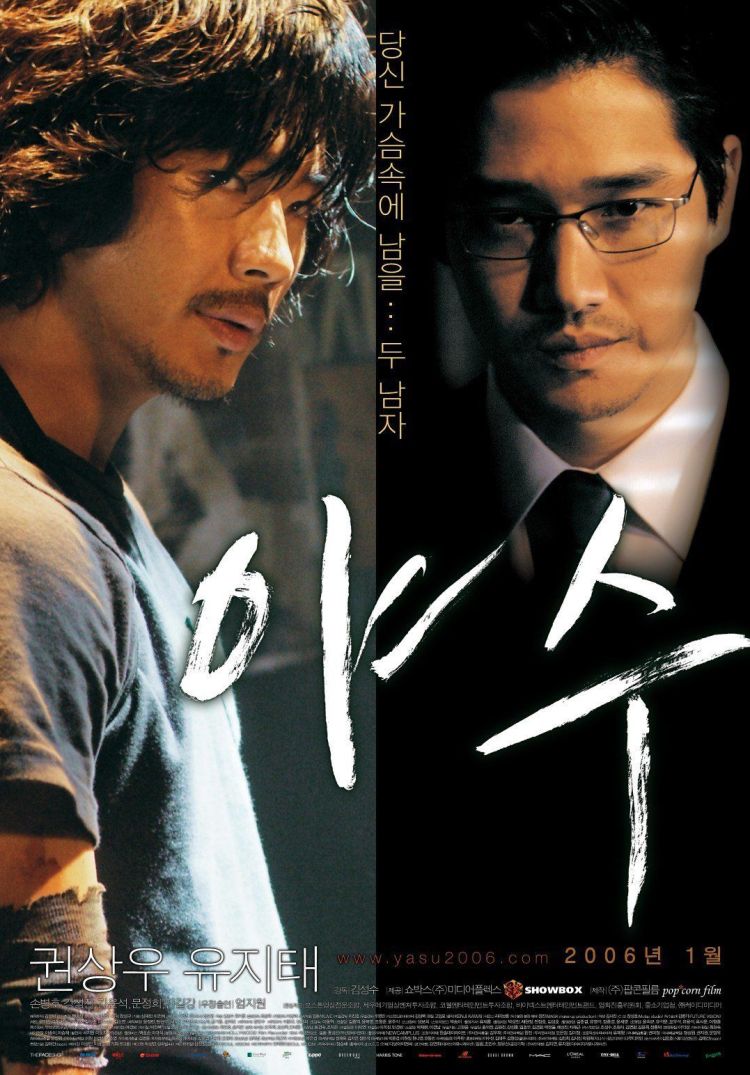
Running Wild (야수, Kim Sung-soo, 2006)

Running wild posterHeroic bloodshed meets corruption drama in the retro debut feature from Kim Sung-soo (b. 1971 – not to be confused with the director of Beat/Asura), Running Wild (야수, Yasu). Over the top macho action mingles with saccharine family drama as two seemingly very different law enforcement officials realise they aren’t that different after all as their relentless pursuit of a mob boss turned “legitimate businessman” with political aspirations becomes increasingly intense. Filled with typically 70s touches from split screens to zooms and descents into ridiculous displays of male aggression set against the pounding rhythms of an action score, Running Wild is a story of the law on fire but one which never quite knows which side it’s on.

Straight-laced prosecutor Oh (Yoo Ji-tae) has been slumming it in the boonies for the last few years after his attempt to bring down top gangster Yoo Kang-jin (Son Byong-ho) was derailed because of the dirt Yoo has on a selection of important people. Stopping only to take out a local big wig mobster, Oh is finally on his way back to Seoul with settling scores firmly on his mind. Meanwhile, maverick cop Jang (Kwon Sang-woo) collects his younger half-brother from jail and takes him to see their seriously ill mother in hospital. While Jang is busy meticulously filling in a lottery ticket, Dong-jik (Lee Joong-moon) is knifed by his old buddies and so Jang now has his own score to settle with the Dokang family.

Eventually teaming up to take down their common enemy, Jang and Oh have very different approaches to law enforcement. Oh hates the likes of Yoo because they break the social order while Yoo is a bully who profits from the suffering of others and laughs at the likes of Oh while he does it. Oh believes in the supremacy of the law, that the law is his greatest weapon and the one unassailable force that even men like Yoo will eventually have to submit to. Yoo feels differently. For Yoo the law is an irrelevance or even a symbol of other men’s naivety; he will overcome it and live outside of its control.

While Oh pins his hopes on the proper operation of the law, Jang pins his on his fists. Flailing wildly, Jang is more thug than cop – urging Oh to abandon his ridiculous righteousness and do what it takes to take the bad guys down even if that means planting evidence and beating information out of suspects. He is a classic angry man, frustrated by his powerlessness in the face of his mother’s illness and his inability to protect his makeshift family. Blaming himself for Dong-jik’s death and for failing to prevent his flirtation with criminality, Jang spars with his step-sister, half rejecting her role as primary care-giver to the mother he can’t save and part longing to see her as a true and permanent member of the family which constantly eludes him.

Family becomes a recurrent theme as both Jang and Oh ruin their respective relationships through their unconventional working lives. Despite finally getting back to Seoul, Oh’s wife plans to leave the husband whose obsession with his work, or more particularly his vendetta with Yoo, has consumed him while Jang’s family life remains a total mess. Yoo, by contrast, now a legitimised CEO playing golf with the rich and famous, enjoys lovely family meals with his elegantly dressed wife and cute little children who seem to adore him.

The law, it seems, is not robust enough to withstand the finagling of the corrupt criminal class who ride the waves of their power and influence all the way to the top. Oh steps further towards the edges of his noble goal, at which point he has to admit his quest is also one of personal revenge more than of truth or justice. Both men ruin themselves in stupid acts of self destruction, turning themselves into grenades thrown against a regime content to protect its inherent injustices. Running Wild, the pair fight fire with fire but also become victims of the system which oppresses them. Kim piles on the retro style but lets the old fashioned heroics run away from him abetted by the bombastic Kenji Kawai score. Nevertheless, Running Wild is a stylish enough calling card even if its aesthetics trump its sincerity.


Currently streaming on Netflix UK (and possibly other territories)

Original trailer (English subtitles)

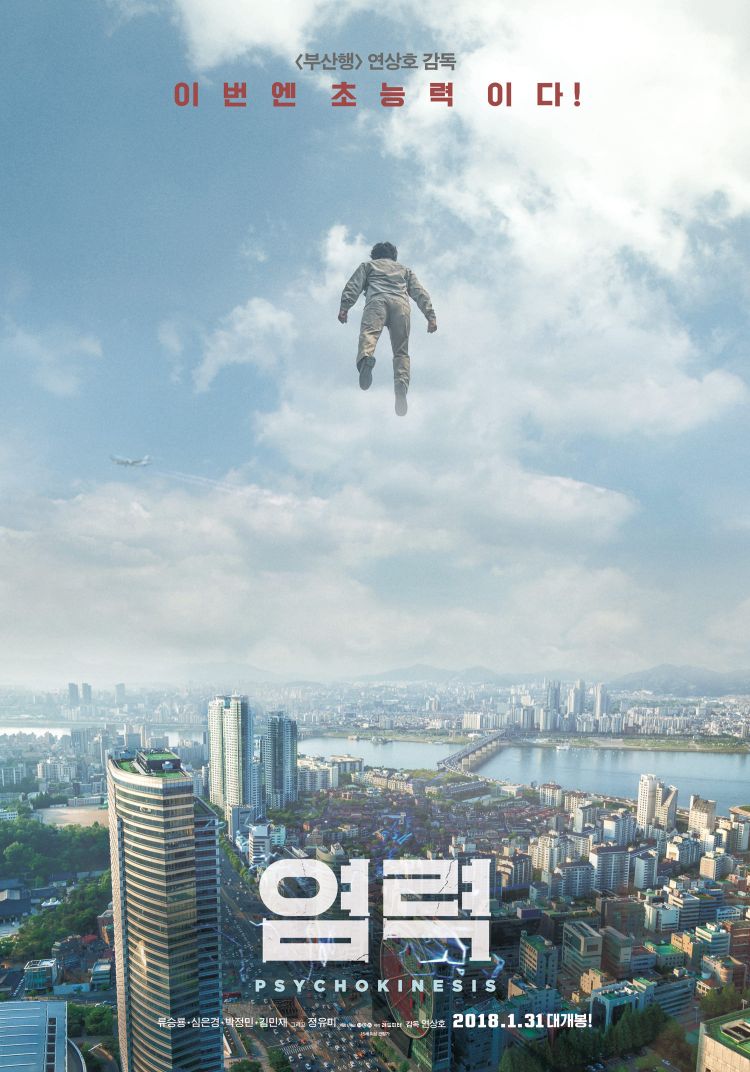
Psychokinesis (염력, Yeon Sang-ho, 2018)

Psychokenesis posterThe animated world of Yeon Sang-ho is dark and cynical, finding only fear and anger in the hopeless vision of contemporary Korea that his films continue to paint. His first live action feature, Train to Busan, began to see a little light as its jaded protagonist finally rediscovered his humanity while the innocent were eventually allowed to find a degree at least of rescue. Psychokinesis (염력, Yeomlyeok), in once sense, continues the theme in centring itself on another of Korean cinema’s bad dads, one so morally corrupted that he rejects all responsibility to others and lives only for the self-indulgent pleasure of the petty scam. Given superpowers, his thoughts turn to finance but eventually lead to an opportunity to right himself in societal eyes by reconnecting with his estranged daughter and accepting his responsibility as a family man.

Seok-heon (Ryoo Seung-Ryong) left his family when his daughter was only ten years old. These days he makes a living as a (lazy) security guard while supplementing his income by pilfering coffee and toilet paper from the company. After drinking spring water from a mountain shrine which, unbeknownst to him, has recently been struck by a mysterious meteoroid, Seok-heon realises he has developed the power of psychokinesis but is only really interested in how it might benefit him financially. That said, Seok-heon’s thoughts do not turn to crime, but to fame – he thinks it might make a good magic act and has heard there can be a lot of money to be made on the circuit.

Shortly after his magical revelation, Seok-heon gets a call from Ru-mi (Shim Eun-kyung) – his now grown up daughter who had been running her own very successful fried chicken restaurant until the shop was compulsory purchased to make way for a shopping mall intended to cater for Chinese tourists. Ru-mi and some of the other shopkeepers have been engaged in a resistance movement, refusing to let their property be taken until they have received fair compensation. During an altercation with the thugs sent in to evict them by force, Ru-mi’s mother was killed – which why is she called, to invite her long lost father to the funeral. Though Seok-heon is not exactly keen to get involved, he eventually realises that his new found abilities might prove useful and help him restore himself in his daughter’s judgemental eyes.

As in Train to Busan, Seok-heon is a cynical and jaded father but this time he’s one very much down on his luck, one of life’s losers whose decision to accept defeat has been lifelong and total. Faced with Ru-mi’s cohort of resistance members, he publicly refuses to help, pointing out that their battle is doomed to failure and it would be better to just give up now. Ru-mi, apparently still capable of additional disappointment, reminds her father that this is what he does – when things look grim he runs away. Ru-mi refuses to be like her dad, and therefore refuses to give up without a fight.

Yeon once again injects some background social criticism into an otherwise friendly tale of dead beat dads and the power of community. Echoing the Yongsan tragedy, Yeon makes the destruction of a neighbourhood to build a shopping mall for tourists his battleground as Ru-mi and her fellow resistance members hole up behind a barricade throwing Molotov cocktails at the police and trying to avoid a fight with the thugs who work for the corrupt construction company behind the whole affair. To make matters worse, Yeon takes us past the site of so much drama at the film’s conclusion, showing us an empty lot, a scar on the landscape memorialising the senselessness of corporate greed which eventually eats itself and stifles any kind of progress economic or social. Ru-mi and the others are powerless to resist their eviction but insist on the compensation they ought to be entitled to which would allow them to begin their businesses again elsewhere so they can continue to earn a living.

Seok-heon is the archetypal apathetic man who thinks it’s pointless to resist and is content to live in as corrupt a way as his society permits. He refuses his responsibility to others, walking past the cleaner being threatened for taking the “free” coffees from the lobby he convinced her were OK to take whilst lamenting her “stupidity” for inexpert pilfering. Battered and defeated, Seok-heon rejoices in pettiness, getting his kicks by shirking at work and getting one over on the bosses by stealing. His first thought on getting powers isn’t their capacity for good, but nor is it a lust for power or revenge, he merely wants to show off a little and earn big bucks – his crime is petulant self-indulgence, not active villainy. Reuniting with his daughter and witnessing her fighting for something she believes in, Seok-heon begins to rediscover his long buried heroism finally becoming a father worthy of his daughter’s respect.

It’s not all plain sailing however as the corporate stooges are not just thuggish but clever and devious. Figuring out that the twin issues to evicting the protestors are the unsolved murder of Ru-mi’s mother and Seok-heon’s superpowers, they set about undermining both – setting up a patsy for the crime and attempting to blackmail Seok-heon by leaking footage of his powers to the news in the hope that the country turns against him. Unable to explain his unusual abilities, TV news pundits do what they always do – blame North Korea, and insist he must be some kind of spy and/or infiltrator.

Working with a much lower budget, Psychokinesis is a lighter affair than might be expected, essentially mixing a hapless dad narrative with a superhero origin story but with a more cheerful tone than one usually associates with Yeon. As expected, you can’t fight city hall and Seok-heon’s assertion that the battle was always a losing one may prove to be correct but what he discovers is that is not necessarily a reason to just give up and walk away. Even if one plan fails, there may be other ways to “succeed” so long as there are enough people willing to stand up for what’s right whilst holding fast to each other, committed to building something better rather than just to tearing something down.


Psychokinesis is currently streaming worldwide via Netflix.

Original trailer (Korean subtitles only)

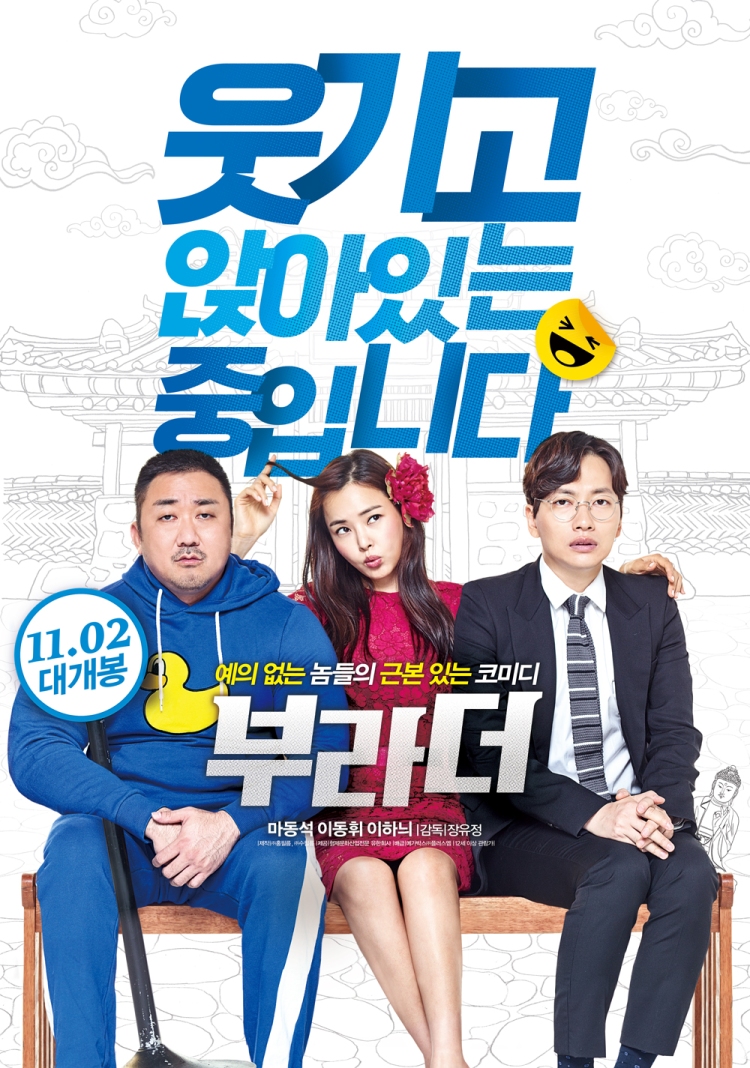
The Bros (부라더, Chang You-jeong, 2017)

The Bros posterTime passes differently in the country. Two brothers from rural Andong thought they’d escaped the relative restrictions of an oddly feudal upbringing, but something keeps pulling them back. Ghosts literal and figural force them to return home, confront each other and their remaining family, and then attempt to come to some kind of acceptance of their places in the grand scheme of things in light of their newly acquired knowledge. The Bros (부라더, Buladeo) stars unlikely siblings Ma Dong-seok and Lee Dong-hwi and is adapted from the stage musical “The Brothers Were Brave” which was also directed by Chang You-jeong. Set in rural Andong, the film is an affectionate, if not entirely sympathetic, portrayal of the fiercely traditional way of life in tiny country towns in which it really still matters who accedes to be the head of a family and women are expected to know their place.

“Estranged” brothers Seok-bong (Ma Dong-seok) and Joo-bong (Lee Dong-hwi) have each skipped out on their familial responsibilities for lives of modern “freedom” in Seoul. Seok-bong is a “treasure hunter” who gives eccentric lessons on archeological ethics to bored students while overspending on the latest tools to aid him in his (permanently unsuccessful) quests, while Joo-bong is an ambitious salaryman whose career runs into a problem after he is accused of “embezzlement” for ruling out the cheapest route for a new road because (unbeknownst to his bosses) it would cut right past his childhood home. Just as Seok-bong realises he’ll have to pay back the outrageous sum of money he “speculated” on new equipment when a civil war breaks out in his prospective dig site, and Jong-boo frets over his workplace blunder, both sons get an unexpected text informing them that their “estranged” father has died and they’re “welcome” to attend the funeral, if they should wish. As both brothers are in need of a getaway plan (and also an opportunity to ask for some financial assistance), they find themselves finally going “home” only to unexpectedly find each other on the road, start bickering in the car, and then accidentally run over a random young woman (Lee Honey) apparently out walking in this otherwise barren and deserted stretch of land.

On their arrival, the brothers are not exactly embraced by their loving family. Nobody really expected to see them and, as it turns out, their grandfather didn’t even realise they’d been invited. The boys’ rural country home is one of fierce traditionality, seemingly cut out of time and existing in the feudal past where people refer to each other via archaic titles and it really seems to matter who is declared “first son” of the family. Both Seok-bong and Joo-bong left the village because they had no interest in all this feudal nonsense and resented the old fashioned authoritarianism which defined their relationships with the apparently tyrannical patriarch they have both come home to bury, if not perhaps to mourn. Seok-bong, in particular, remains extremely resentful towards his late father for the way he treated their mother who, he assumes, must have been very unhappy all her married life.

Rural Andong, it turns out is not a great place for women. The brothers do have a “friend” in the family complex in the form of Mi-bong (Jo Woo-jin) – a policeman recently married to a very nice but often frustrated young lady who has taken to smoking (still considered scandalous in these parts) in secret in order to relieve the stress of being a married woman suddenly expected to undertake all these arcane social responsibilities, which include being “nice” to her overbearing mother-in-law who seems to delight in scolding her for doing everything wrong. In fact Mi-bong’s wife wants to move to Vietnam to get as far away from the family as possible, but  finds it difficult to abandon the feudal way of thinking in wondering what it would be like to be the wife of a “first son”. Women here are supposed to know their place – stay silent, serve the men. When Joo-bong’s “lady friend” from the city shows up unexpectedly, everyone reacts to her as a “potential daughter-in-law” and sets about giving her the third degree which includes a pop quiz on the three duties of an Andong woman which include obeying a father, then a husband, and then presumably a son. In a running joke, no one can even remember the given name of the boys’ mother because she was always just referred to as “first daughter-in-law”.

All in all, it’s no surprise that Seok-bong and Joo-bong wanted to leave but then again, it turns out there was a lot more going on with the family than they were ever privy to know and they have perhaps judged their father unfairly without knowing all the facts. This being a comedy, the central point is the repair of a broken family – firstly in the brothers repairing their bond as they face the crumbling of their individual quests and are forced to work together, unwittingly uncovering the truth about their family history. Meanwhile, they also have to cope with the strange woman they apparently ran over who seems to have lost her memory but has valuable information to impart to each of them. Haunted by the ghosts of home, neither of the boys finds what they originally came for but gets something (arguably) better in rediscovering their roots and experiencing the upsides of familial connection.

Filled with the strangeness of the village tradition with its mourning suits, wandering monks, shamanic rituals, and uncles who speak only in incomprehensible four character idioms The Bros is an absurd affair but one with its heart in the right place. Chang enlivens the otherwise unremarkable comedic narrative with interesting visual compositions as the mysterious woman seems to drag the brothers away into a pretty fairytale land filled with oversaturated picture book images in which the moon is just a little bit bigger than you’d expect and oddly ‘70s fashions of purple and yellow lend a cheerful and nostalgic air. A comedic tale of family, brotherhood, and the unexpected endurance of feudal tradition, The Bros is a warm and fuzzy tribute to rediscovering one’s roots but also one with unexpected bite in its subtle undercutting of the pervasive misogyny which underpins it.


The Bros is currently available to stream in the UK (and possibly elsewhere) via Netflix.

Original trailer (Korean subtitles only)

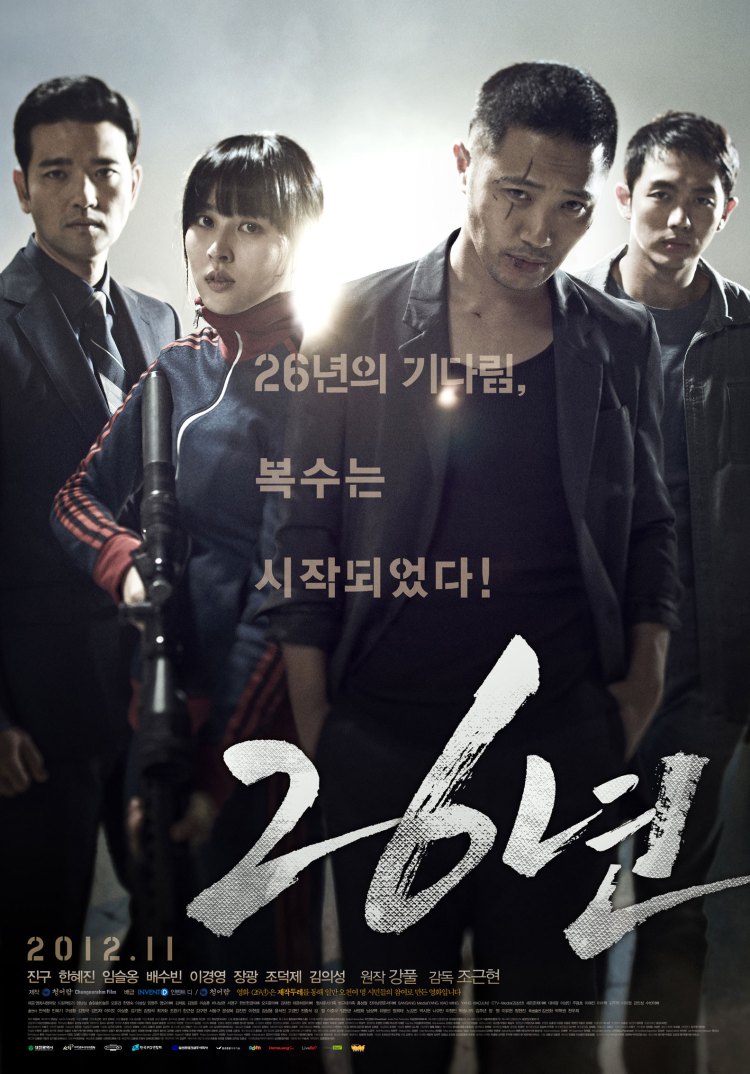
26 Years (26년, Cho Geun-hyun, 2012)

26 Years posterA society says a lot about itself in the way it treats its villains. Chun Doo-hwan was a brutal dictator who came to power as a result of a violent counter coup which encompassed the now notorious murder of ordinary citizens by agents of the state in Gwangju in May 1980. Chun’s reign eventually came to an end with the successful conclusion of the democratisation movement which gave birth to the modern democratic state of South Korea that is, at present, in the aftermath of dealing with another unpopular leader deposed through peaceful, democratic means. Though originally sentenced to death Chun’s punishment was later commuted. He has never paid the massive fine that was imposed upon him as symbolic recompense for his acts of terror and vast web of corruption. .

The five men and women at the centre of 26 Years (26년, Nyeon) have not forgotten the face of Chun Doo-hwan (Jang Gwang), identified only as “that man”, and are among the many frustrated by his refusal to take responsibility for his actions. A former soldier remorseful for his role in the events (Lee Geung-young) recruits an olympic sharpshooter (Han Hye-jin) whose mother was killed by a stray bullet, a gangland thug (Jin Goo) whose father was tortured and murdered by security forces driving his mother into madness, and a policeman (Im Seulong) who lost his sister running away from a demonstration, as well as his son (Bae Soo-bin), to assist in a plan to force the former general to apologise for his crimes and, if he refuses, enact their own justice.

Spoilers aside, Chun Doo-hwan is still very much alive and the events of 26 Years are inspired by an entirely fictionalised webmanga though it is true that Chun lives in an L-shaped compound protected by perimeter walls and a small army of police and security forces presumably at great cost to the Korean tax payer. He has never apologised for his actions regarding the Gwangju massacre and continues to blame the “rioters” in insisting that the soldiers had no choice but to fire back in self defence. That such a politically sensitive film could be made about a figure who is still alive, let alone that it would become a major box office success and crowd funding phenomenon is a small miracle in itself but speaks to the deep rift this troubled period of recent history provokes in the minds of the contemporary society.

First time director Cho opens with the events of 1980 but in highly stylised animation rather than live action. There is something in the sketchy quality of the artwork that perfectly evokes the ambivalence of the entire enterprise, of not quite wanting to look at events which are so hard to see. See we do as bystanders are cruelly struck by stray bullets, soldiers panic and shoot, and the left behind search desperately for their missing loved ones but find only tragedy and pain. Reverting to live action for 1983 onwards, Cho then takes us through the next 20 years noting landmarks as he goes – the ever present terror of Chun on TV screens everywhere, his eventual fall and the restoration of democracy, Chun’s pardoning and eventual yet accidental house imprisonment for his own security.

The wounds remain unhealed, festering without resolution. While protestors make their voices heard, a room full of supporters fall to their knees before a resurgent Chun standing proud before them. Chun remains unrepentant, cruelly so in Cho’s dramatisation, shaking off the body of a fallen bodyguard like a slobbering dog, caring nothing for his people and thinking only of his own survival.

Cho keeps the tension high as the small band of traumatised youngsters attempts to confront their nation’s difficult history head on, finding both resistance and camaraderie yet fighting internal conflict all the way. Avoiding easy answers, 26 Years is among the most direct attempts Korean cinema has made to reckon with the traumatic recent past, mixing high octane action with a melancholy consideration of the effects of a national trauma but it also finds itself in a moment of indecision, refusing the ending narrative demands in favour of an intake of breath followed by a weary exhale of weighty resignation.


Currently available to stream via Netflix.

Original trailer (English subtitles)

https://www.youtube.com/watch?v=YOkVdoVMc-g