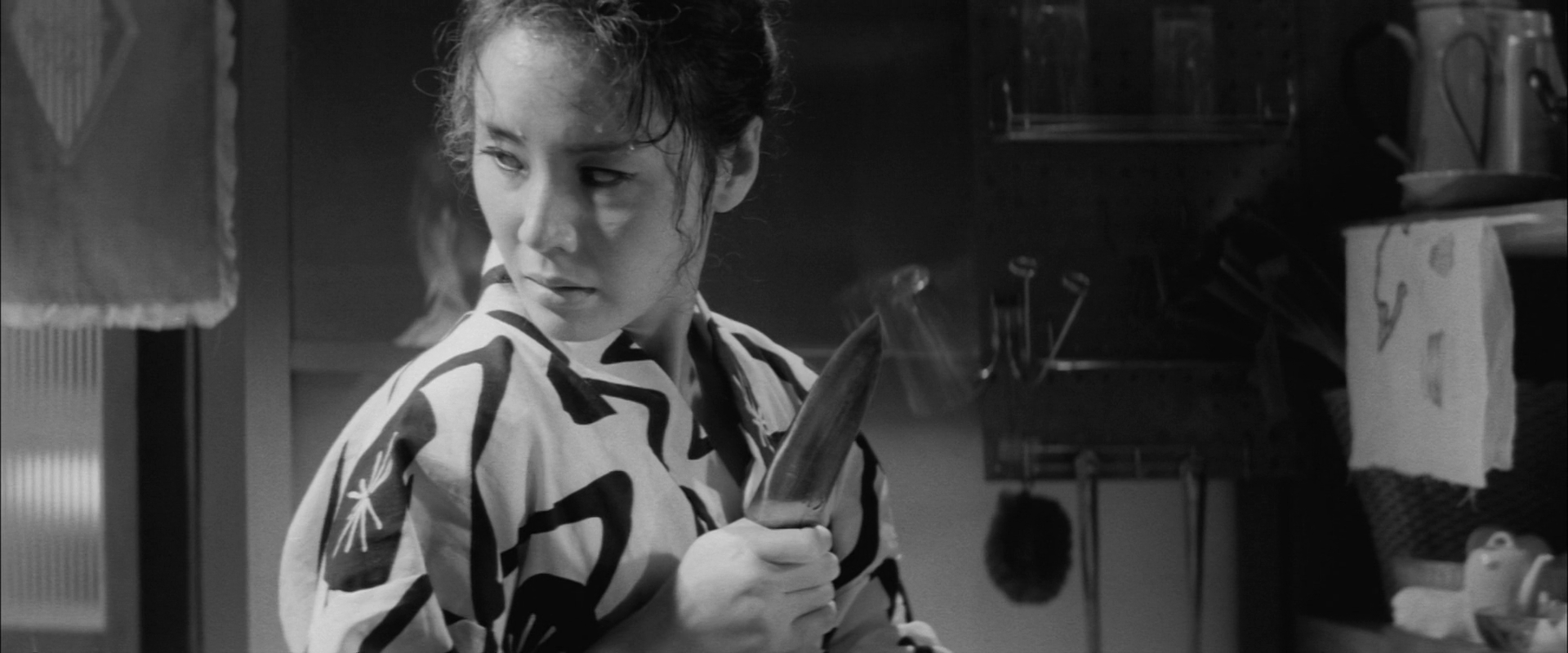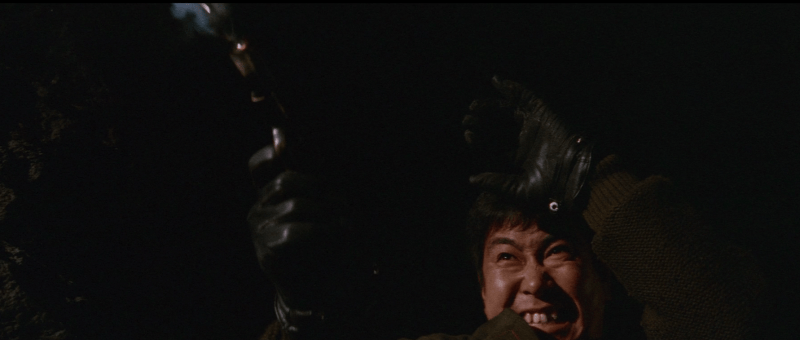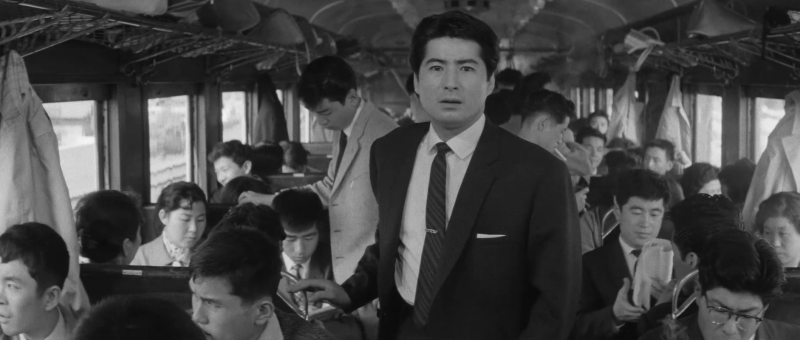
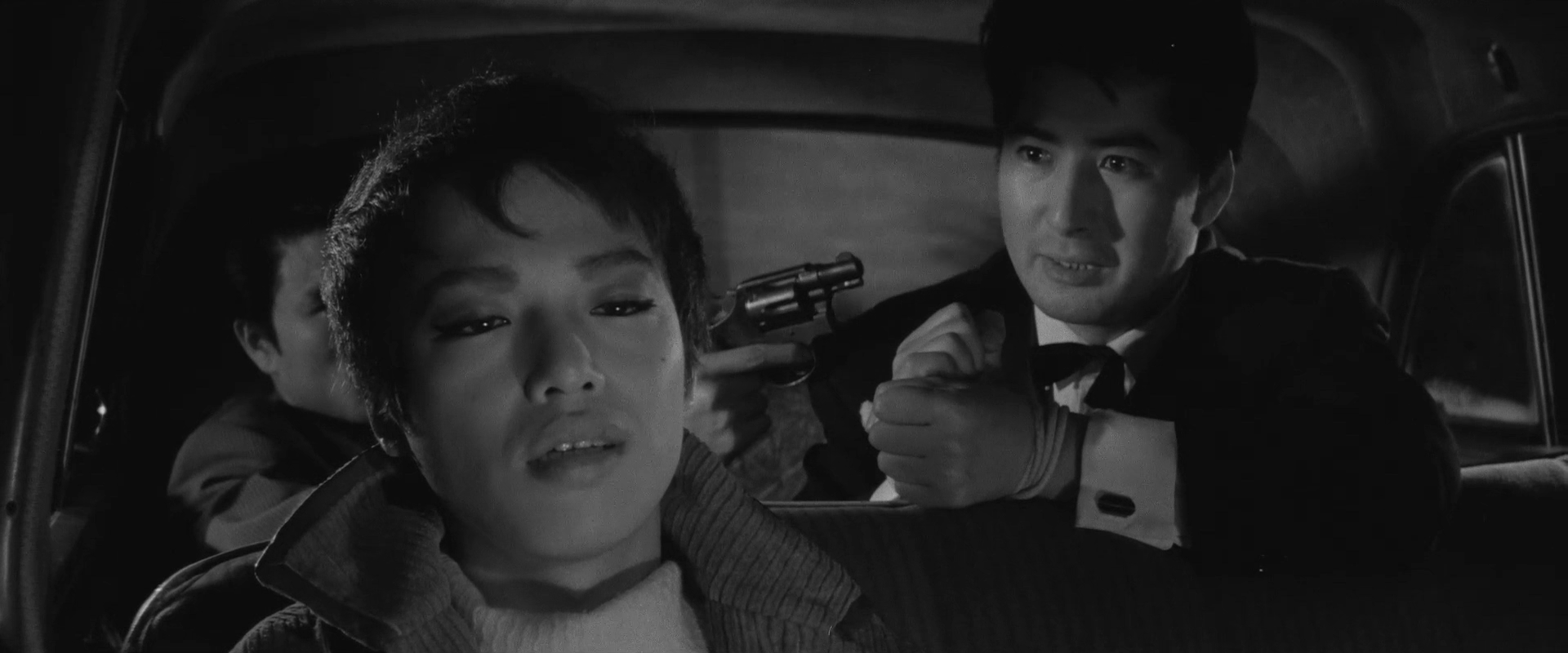
Angel Guts: Red Porno (天使のはらわた 赤い淫画, Toshiharu Ikeda, 1981)

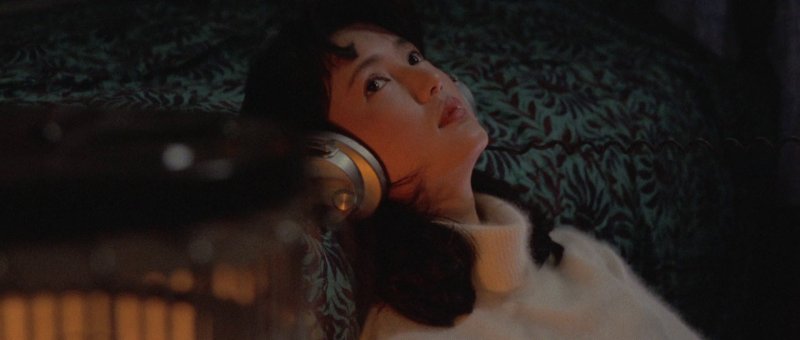
“Lots of perverts around these days”, Nami (Jun Izumi) sighs to herself on becoming convinced that someone’s stalking her. She isn’t wrong, but her increasing paranoia bears out the sense of threat in the contemporary city. Perhaps something has happened to her before, or maybe it’s because she’s a young woman living alone who has been receiving dirty calls from anonymous heavy breather, but she can’t escape the sense of being watched even when she’s at home on her own.

Nami isn’t a well-known person, but it’s not beyond the realms of possibility that some strange man has followed her home from the department store where she works after taking a liking to her. She sees herself clearly as not that kind of woman, and ostensibly leads a very proper life with a decent job and her own apartment. The fact that she masturbates under her kotatsu might be both an expression of her loneliness and an attempt to own her sexuality, but also hints at its illicitness in the fact that it is hidden and out of view. When her friend asks her to fill in at her part-time gig, Nami agrees out of politeness but far from the simple modelling job she was expecting, she’s forced into a shoot for a bondage magazine and becomes an unexpected pinup star.

The reason she’s so popular may indeed be because of the real shock and confusion obvious in her almost comical expression. Though the team from the magazine want her to come back promising a sizeable paycheque, Nami refuses and is unable to accept the image of herself as a pornographic model. When a man, Muraki (Masahiko Abe), chases her into a ladies’ bathroom at the train station, she keeps telling him that she’s not that sort of woman, but there’s uncertainty in her voice and what she most seems to want is vindication. Meanwhile, she’s basically harassed into an affair with her married floor manager who gets her drunk and takes her to a hotel room explaining that she was regarded as the “hardest girl to get” among the department store staff. He becomes increasingly forceful as Nami resists before finally giving in and thereafter continuing an affair with him. 

Even before she became an accidental magazine star, Nami was indeed the focus of unwanted attention and felt herself threatened by simply by existing in a male society. Muraki peeps on the teenage girl who lives in the posh house next to his rundown apartment building as she, ironically, masturbates by shoving an egg into her vagina and cracking it open with a set of pencils. Later it seems as if the girl knew Muraki was watching her, but evidently continued to do it anyway. In any case, Muraki’s peeping is also a kind of class transgression as is his fantasy of raping his landlady after she enters his apartment without permission in the belief that he’s been stealing women’s underwear. Unable to get a job, his existence is fairly dismal and he’s viewed with suspicion by his neighbours due to his slovenly appearance and uncouth manner. He too becomes fixated on Nami’s photo, fantasising about her as a possible source of salvation based only on her image in the magazine.

When he eventually encounters Nami, he too like her boss first seems as if he means to force himself on her, but then pulls back, explains that his feelings are genuine, and he’d rather meet her in a more normal way in a public place to go on a conventional date, making clear that he’s interested in Nami, not just the image of her from the magazine onto which he’s projected his own fantasies. But conversely, as much as it might inspire a sense of hope in the readers, the photo is also a liability and when her floor manager discovers it, he attempts to blackmail her into shifting the dynamics of their relationship so that he’d no longer have to pay for hotel rooms or expend any extra funds on Nami. Despite the fact her friend has been a nude model for ages, Nami is dismissed from the department store. The boss describes her as “just a slut”, though lamenting it’s a shame seeing as she was so pretty as he instructs her floor manager to fire her, bearing out the double standard that men are free to view these images but scorn the women who are in them.

Nevertheless, the encounter with Muraki and being let go from the department store provoke a kind of liberation in which Nami flips the kotatsu over and masturbates with the chair leg bathed in the red glow of the heater. She has perhaps fully embraced her sexuality, indulging in rope play and no longer hidden beneath the curtain of the blanket but orgiastically pleasuring herself out in the open. Muraki, meanwhile, pays another sort of price in being the prime suspect in a rape and murder just because the neighbours think he’s a bit weird and assume it must be him. He continues to cling to the idea of Nami as a kind of salvation, while she too seems drawn to him and is about to throw away the magazine and say goodbye to this sorry episode in her life until a potential happy ending is abruptly cut short. Filled with urban melancholy, the film paints both Muraki and Nami as prisoners of their society, unable to find self-acceptance or security save in the frustrated bond they unexpectedly discover in their shared desire for escape.


Angel Guts: Red Porno is available as part of The Angel Guts Collection released on blu-ray 23rd February courtesy of Third Window Films.

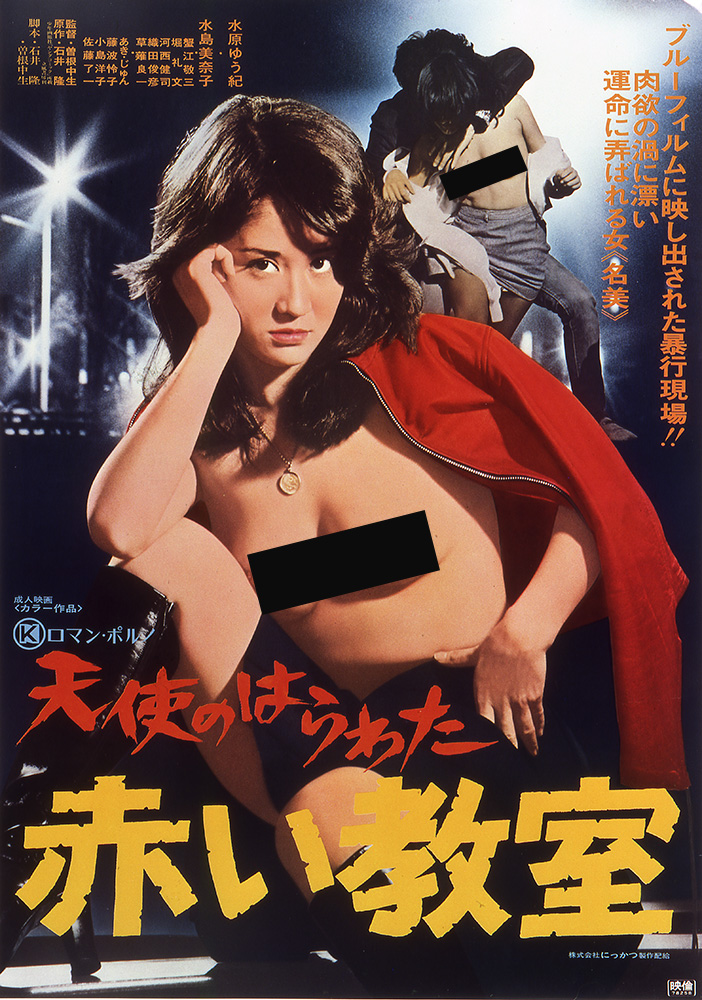
Angel Guts: Red Classroom (天使のはらわた 赤い教室, Chusei Sone, 1979)

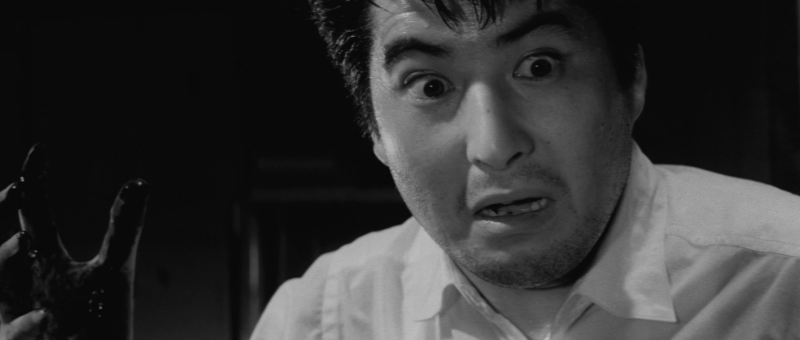
Chusei Sone’s Angel Guts: Red Classroom (天使のはらわた 赤い教室, Tenshi no Harawata: Akai Kyoshitsu) opens with grainy 8mm footage of a woman being gang raped, but this turns out to be a film being watched by the protagonist, Muraki (Keizo Kanie), rather than the one we’re actually watching. Nevertheless, in presenting the footage in this way, the film has made us somewhat complicit in witnessing this woman’s exploitation for the purposes of entertainment. A producer of pornographic magazines, Muraki is captivated by the woman’s ruined innocence and becomes obsessed with the idea of finding her.

Though he says he doesn’t think she belongs in this world, Muraki does not so much want to save Nami (Yuki Mizuhara) as get her to work for his magazine. He declares that years of this kind of work have left him numbed and desensitised. Watching her video was the first time he’s felt moved in years. However, it turns out that this may be because the video wasn’t a movie in which the actress had consented to appear, but raw footage of an actual gang rape committed against a trainee teacher. The implication is that this traumatic incident has numbed Nami in the same way Muraki has been numbed by his exposure to pornography, leaving her with a permanently vacant, inscrutable expression and reducing her to nothing but a sexual object. Though the 8mm “blue movie” is an illegal form of pornography that can be watched only in underground clubs, she claims to have run into several men like Muraki who recognise her and has concluded that the only way to get rid of them is to satisfy their desire by sleeping with them. She says she won’t feel anything anyway, but has scars on her wrist and seems to have turned to potentially dangerous sex with random men as a means of self-harm.

Muraki refuses to sleep with her, but in Nami he seems to be looking for his own buried innocence and masking the shame he feels towards his line of work. His parents think he publishes books for children, he tells Nami, but rants to another woman that his magazines are all the same and he doesn’t know how to make them better. He can’t take the kind of pictures he wants to, because he wouldn’t be able to publish them under the increasingly strict censorship laws. Repeated references are made to the need to avoid showing any pubic hair which is considered obscene under Japanese law, though they’re otherwise free to depict scenes of sexual violence and degradation. Ironically, Muraki is unable to meet Nami at their rendezvous because he’s been arrested for breaking the Protection of Minors Act after having photographed a 15-year-old girl, though Muraki claims he was just trying to help her. He says she told him she was 19, recently arrived from Aomori and had been reduced to shoplifting, so he gave her a job out of the kindness of his heart.

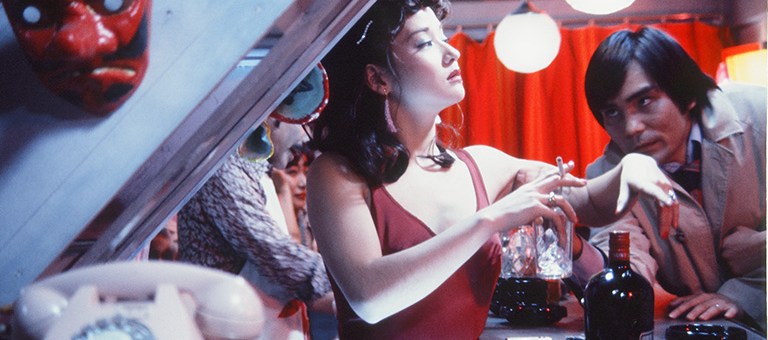
It’s things like this that might have Muraki desperate to prove he’s not “scum” but a good man and an artist rather than a purveyor of pornography and exploiter of women. The film has its cake and eats it too, critiquing female exploitation but simultaneously trading on it, if doing its best to make the viewer feel at least conflicted. Three years later, Muraki is in a relationship with a woman he once exploited who couldn’t let him go and has fathered a child, but the papers are full of news about suicides and domesticity does not seem to him provide much of a refuge. He continues to search for Nami in order to reclaim his innocence, but discovers that she has become a vacant sex worker, ironically working at a bar called “blue” and the plaything of a man in a James Dean-style red jacked who has broken dreams of his own. Unlike Muraki, she has only fallen further, and he is ultimately forced to watch what his business has reduced her to as a group of men set on a captive high school girl like a pack of wolves, ironically echoing the opening sequence. Yet in the end, it’s Nami who frees him by literally showing Muraki the way out of this place as he urges her to leave though she seems to say it’s already too late. Looking at her own distorted image in a puddle, she no longer knows who she is and has no identity that is not forced upon her by a violent male gaze.


Angel Guts: Red Classroom is available as part of The Angel Guts Collection released on blu-ray 23rd February courtesy of Third Window Films.

Jungle Block (地図のない町, Ko Nakahira, 1960)

The contradictions of the post-war era are thrown into stark relief in the forced redevelopment of slum area on the edge of an increasingly prosperous city in Ko Nakahira’s intense noir, Jungle Block (地図のない町, Chizu no nai Machi). The slightly unfortunate English title may hark back to that chosen for a US screening of Nakahira’s landmark film Crazed Fruit, Juvenile Jungle, or just echo the titles of classic Hollywood noir movies such as Asphalt Jungle and Blackboard Jungle, but otherwise has little to do with the content of the film. The Japanese title, meanwhile, means something like “a town not marked on the map” and hints at the invisibility of those who live in this slum, a self-built post-war shantytown inhabited by those largely left behind by the nation’s rising prosperity. 

Then again, Shinsuke (Ryoji Hayama) seems to have fallen behind on his own account. We’re later told that he resigned from his position at the hospital because of some kind of medical mistake for which he blames himself and has since taken to drink and gambling while working at the poor clinic run by his former mentor Kasama. The most immediate effect of his, perhaps unnecessary, decision to resign was that it prevented the marriage of his younger sister, Sakiko (Kazuko Yoshiyuki), as he was then financially dependent on her. Having delayed the wedding for two years waiting for Shinsuke to pull himself together, Sakiko and her fiancé are set upon by local gangsters working for yakuza turned politician and legitimate businessman Azusa (Osamu Takizawa). Sakiko attempts to take her own life and the relationship does not survive this crisis thanks to her fiancé’s wounded masculinity in having been unable to save her or stand up to the goons afterwards. 

As repeated flashbacks reveal, Azusa is the root of the disease spreading across the city. It’s he that’s intent on clearing the slum, as he says just doing what the government has asked him to do, planning to build luxury apartments on its site along with supermarkets and entertainment facilities. Perhaps it’s not an entirely bad thing to clear a slum, the living conditions are in themselves a health hazard, but Azusa has drastically cut the amount of compensation on offer preventing the residents from securing new places to live and essentially rendering them homeless which defeats the humanitarian justification for forcing them out when most of them don’t want to go. 

Kayoko (Yoko Minamida), an old flame of Shinsuke’s who’s since become a sex worker to pay off her father’s debts to loan sharks and ends up as Azusa’s mistress, has a cat that she confesses to mistreating which makes her feel better only to feel terrible afterwards. The film seems to align the cat with the people of the slums who are bullied by men like Azusa who have untold influence buying off police and politicians while he himself later holds public office. The cat eventually fights back by scratching Kayoko who acknowledges it’s her own fault for her treatment of it, while it’s clear that the anger of the slum dwellers will eventually boil over and they too will strike back against the corruptions of this post-war era which otherwise sees fit to leave them behind. 

Meanwhile, Shinsuke plots a revenge he may not have the courage to take explaining to Kasama (Jukichi Uno), otherwise the voice of moral reason, that it’s the city that sick and the only way to save it is an operation to remove the Azusa-shaped tumour that’s currently killing it. It’s not for mere convenience that his weapon of choice is a scalpel. Kasama, however, tells him that he’s got the wrong idea and it’s their responsibility as doctors to take the long-term view and patiently run their clinic to produce results in the far off future. But Kasama’s eventual decision would seem to walk that back, suggesting that perhaps a radical solution really is necessary to save the patient from the ravages of amoral capitalism. 

Then again, like Kayoko’s father Yoshichi (Jun Hamamura) who is branded a “cripple” and “only half a man” by Azusa, Shinsuke begins to realise that perhaps you can’t create lasting change on your own and taking out Azusa won’t solve the problem as someone else will simply rise to take his place. There is a pervasive sense of hopelessness, Shinsuke caught and frantic amid the dim backstreets of this rundown town desperate for revenge when the police are in league with Azusa and no one really cares about the residents of the slum who are beginning to lose the will to resist. Nevertheless, eventually rediscovering himself Shinsuke opts to follow Kasama’s path insisting that will join the ranks of “good, honest, people” who, like the cat, will eventually scratch back until then resisting by “doing the right thing” even in the face of violence and intimidation while staunching the flow of corruption and cruelty from the seeping wounds of the post-war society.


DVD release trailer (no subtitles)

Wolves of the Night (夜の狼, Yoichi Ushihara, 1958)

A cold-hearted yakuza starts to get second thoughts when confronted with the misery his actions create in Yoichi Ushihara’s slice of Nikkatsu Noir, Wolves of the Night (夜の狼, Yoru no Okami). Though the hero is ostensibly Tsukida (Ryoji Hayama), the conflicted gangster unable to reconcile himself with the fact that he has fallen in love with a women he himself destroyed, it’s equally about the women who get caught in the crossfire of a burgeoning gang war and are each victims of male greed and indifference.

In any case, gang boss Tachibana (Somesho Matsumoto) brings a lot of this on himself. The secondary narrative revolves around a woman, Takako (Mari Shiraki), who borrowed money from the Manji gang to build her bar, but now that it’s complete Tachibana swindles her by calling in the debt and foreclosing on the property, passing ownership to Tsukida with instructions to kick Takako out. She, however, doesn’t take well to this and is resentful of Tachibana for screwing her over so she vows revenge. Her original attempt to get it by seducing Tsukida doesn’t work out, so she recruits a yakuza from a rival gang to extort them claiming that they have mole and he’ll only reveal their identity when they hand over the cash. This plan has some pretty tragic consequences and not least for Tachibana himself, but none of this would have happened if he hadn’t behaved so badly in cheating Takako out of the bar she worked so hard to build. He’d also told Tsukida that the bar owner was a beauty and it was understandable if wanted to try seducing her. 

But by this point Tsukida has developed a fondness for Katsumi (Izumi Ashikawa), a young woman he first meets when she’s caught by some of his guys offering herself for sex work in their territory. The other ladies describe Katsumi as “odd” and “an outsider”. It’s clear from her behaviour and the way she’s dressed, not to mention a lack of awareness of the rules of the gang, that she’s never done this before and is terrified. Tsukida calls his men off and tells her to go home, but later realises that it’s his own fault she was put in this situation because he was responsible for collecting the debt her parents owed to Tachibana taken out because her father is bedridden. Tsukida seems shaken by the old lady’s intense resentment, but still takes their money if attempting to convince Tachibana not to pursue them any further because they have nothing left to give, correctly assuming that Katsumi resorted to sex work to get the money. 

It maybe the sense of guilt that proved the last straw as the old couple then take their own lives but rather than freeing her lead Katsumi on a lonely path of self-destruction driven only by her hated for Tachibana and Tsukida. The fact that she later becomes ill further emphasises her positioning as a symbol of a despoiled nation poisoned by the ruthless inhumanity of the post-war society, along with literal a embodiment of Tsukida’s guilty conscience. Tsukida rejects Takako as a person more like himself, an example of corrupted femininity using her body to manipulate men in a world in which a woman has little other power, and instead is drawn to Katsumi who was once innocent, demure, and cheerful but who he himself has destroyed through his own greed and heartlessness.

Spending some time in hospital following a failed suicide attempt seems to heal her in body body and soul, though the total about face in Katsumi’s feelings for Tsukida seems somewhat bewildering even if he did visit her every day and presumably win her over despite her resentment towards him for contributing to her parents’ deaths. Nevertheless, it’s his feelings for Katsumi that see Tsukida longing to quit the yakuza and retreat to the country to live a small, honest life with her free of the city’s corruption. But as so often in the movies, it’s not that simple and this time it’s a tragic consequence born of male failure and insecurity that eventually costs him his shot at a normal life even as his frenemy, a local policeman he often sees in the same bar and gives him unsolicited advice about how he should quit the yakuza, remains surprisingly supportive suggesting that his redemption may merely be on hold rather than cancelled. In any case, though shooting almost entirely on stage sets, Ushihara makes good use of stock footage of contemporary Ginza as a place of bright lights and equally dark shadows where gangsters lurk on every corner and mercy is in desperately short supply.

Crossroad (死の十字路, Umetsugu Inoue, 1956)

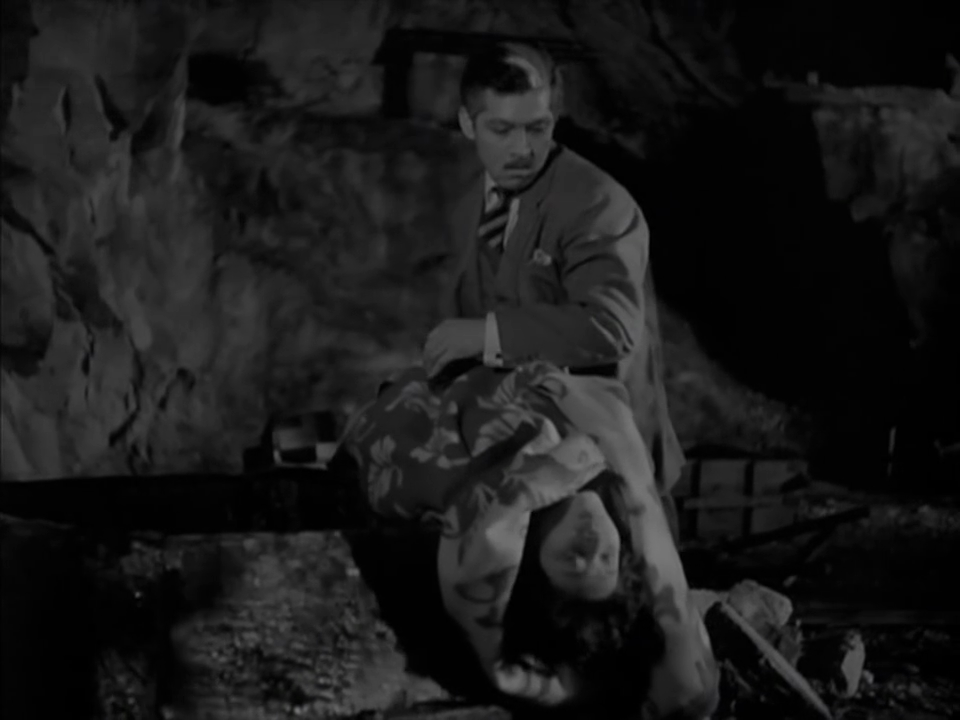
An adulterous industrialist finds himself in a sticky situation after accidentally killing his wife in Umetsugu Inoue’s bizarre noir Crossroad (死の十字路, Shi no Jujiro). Based on a story by Edogawa Rampo, the film like any good noir suggests that in the end you can’t outrun your fate and all transgressions must be paid for but also turns on cosmic irony and strange coincidence in the great “tapestry” of life in which everything really is connected.

Shogo Ise (an aged-up Rentaro Mikuni) is the director of a construction firm about to complete a hugely expensive dam project which requires the sinking of a village and quarry. Apparently unhappily married to a woman obsessed with Nichiren Buddhism believing it helped to cure her of a serious illness during the war, he more or less lives with his secretary/mistress Harumi (Michiyo Aratama) who has been receiving incredibly weird and definitely threatening letters from Shogo’s wife Tomoko (Hisano Yamaoka). Tomoko claims that she has received an order from the “Child of the Sun” insisting that she must exact vengeance for the “great sin” Harumi has committed. The letter seems to be the last straw for Shogo who has decided to leave his wife, despite her incredible wealth, and set up home with Harumi permanently. 

Shogo hadn’t taken the threat very seriously, but sure enough Tomoko later shows up with some kind of ceremonial dagger and barges in to attack Harumi in the bath. During the struggle, Shogo accidentally kills Tomoko while trying to wrestle the knife from her. After briefly considering turning himself in, he realises that doing so will involve them all in scandal so he decides the best thing to do is dump her body in a well at the quarry which is shortly to be sunk. However, the plan soon goes awry and not least because a random man with a head injury climes into his car after he has a fender bender on a set of crossroads and later dies there leaving Shogo no choice but dump him alongside Tomoko. 

Inoue casts the abandoned quarry in truly eerie light, filled with gothic winds as if Shogo were being chastised by the gods themselves. In a sense, he’s paying not only for his sexual transgression but for the breaking of a taboo. A homeless man who once lived in the village later relates that he stayed until the last day because he did not want to leave his ancestors’ land. Shogo is part of the post-war construction boom but there’s also an underlying implication that this industrialisation is harmful to the land itself, not least in constraining a natural flow with the imposition of a dam in addition to causing a displacement of the people who once lived in the village while literally drowning the ancestral spirits. 

Harumi too speaks of feeling as if they’re both sinking beneath the waves, chasing a happiness to which they have no entitlement though she herself seems completely blameless save for her involvement in an extra-marital affair and strangely wholesome in comparison to the film’s otherwise sordid atmosphere. Even for a noir, Inoue’s sensibility is surprisingly sleazy for the world of 1956 and more than a little suggestive. A detective that randomly shows up, Minami (Shiro Osaka), lives with his foxy assistant and the interaction between them is constantly sexually charged while Inoue frequently returns to the backstreets of a neon city and the bars that line the streets approaching the crossroads where Shogo’s fate will align. 

It could be inferred that Shogo is a man whose life was marked by the war, his marriage perhaps in haste and then regretted while his wife developed her illness and subsequent obsession with Nichiren because of its corruption. Nevertheless, he’s portrayed as a basically “good” man in a very bad situation who made some very bad choices he wasn’t in the end bad enough to carry through properly hence the amazing series of collisions that seal his fate. On the one hand, like the young couple related to the drunk man who ended up in Shogo’s car, he and Harumi are just two otherwise ordinary people who decided to chase happiness albeit through an extra-marital affair only to pay a heavy price for daring to dream of a better future. Inoue has his usual amount of fun playing with noir archetypes as men strike matches in darkened alleyways and silhouettes of mysterious men in trench coats line the walls, not to mention the gothic sense of dread in the abandoned quarry, while constantly wrong footing us only to set us on our own collision course with the vagaries of post-war morality. 


The Hunter’s Diary (猟人日記, Ko Nakahira, 1964)

Ko Nakahira is most closely associated with the seminal Nikkatsu Sun Tribe film Crazed Fruit which sent Yujiro Ishihara to stardom though he began his career at Shochiku in 1948 alongside Seijun Suzuki who like Nakahira would transfer to the newly re-established Nikkatsu when it resumed production in 1954. Suzuki was rather famously let go in 1968 due to creative differences with Nakahira also leaving the studio that year in similar circumstances having decamped to Shaw Brothers in Hong Kong in 1967 where he remade some of his previous hits including 1964’s Hunter’s Diary (猟人日記, Ryojin Nikki). 

Based on a mystery novel by Masako Togawa who in fact stars in her only film role as the hero’s little seen wife, Hunter’s Diary is one of a string of films in the mid-1960s critical of the functioning of the legal system in the post-war society. Nakahira opens with a lengthy sequence introducing new forensic technologies which anticipate the use of DNA as an investigative tool in the use of blood type analysis to place a suspect at a crime scene. This science will however be undercut by the sympathetic lawyer Hatanaka (Kazuo Kitamura) who reminds us that the presence of such evidence is not proof in and of itself in much the same way that DNA has since become the new smoking gun and is as susceptible to misuse as any other kind of forensic technique. 

It’s a problem for the hero, Honda (Noboru Nakaya), because his blood type is incredibly rare. In fact he was once in the paper for saving a baby by coming to the rescue with a donation just in time which as we later discover is ironic because much of his behaviour is shaped by the loss of his own child who was born with osteogenesis imperfecta and did not survive. The traumatic circumstances of the birth left his wife, Taneko, with a fear of pregnancy that eventually destroyed their marriage. The couple now live largely apart, she in her family’s country mansion painting disturbing pictures and he in the city “hunting” women for one night stands adopting the persona of a man who is foreign or part-Japanese. There is something of the fear of foreignness seen in other similarly themed films of the era in the fact that Honda’s child is born in Mexico while the couple had met and married in the US, Taneko convinced that had they returned to Japan earlier her baby may have survived while Honda claims that “intellectual” women are drawn to foreign men as he assumes his rather creepy “Monsieur Soubra” alter-ego complete with a funny accent and slightly broken Japanese. 

He positions his “hunting” as a way of dealing with the collapse of his marriage and his guilt over the death of his child overcoming his sense of impotence through transgressive sexuality though many of the women Hatanaka later interviews describe him as disappointingly vanilla and as we discover his games might have begun long before. Meanwhile the women are themselves judged for their sexuality, the discovery of a male muscle magazine in the home of a mousy spinster somewhat amusing to Honda while the unintended darkness of his sport is brought home by the film’s opening sequence in which a 19-year-old woman who became pregnant after he seduced and abandoned her takes her own life in shame and desperation only to be branded an “idiot” by her grieving sister for having slept with a man she had only just met. When a previous conquest of his is murdered in her apartment, Honda is momentarily worried but assumes it’s a grim coincidence. When her death is followed by that of a woman who could have provided him with an alibi he comes to the conclusion that someone is trying to frame him. 

Hatanaka’s conviction is that “the law is everything in court” and that Honda should not be judged on his moral character for his sleazy philandering only on the basis of the evidence presented which he believes may have been deliberately planted to incriminate him. His investigations take him to unlikely places discovering the potentially unethical practices of blood donation programs along with the illegal sale of blood and other bodily fluids such as semen while seeing the tables turned on visiting a gay bar where a male sex worker reports a weird encounter with a suspicious client, and salesman continues to frequent a Turkish bath hoping to run into a woman who seduced him but may only have been interested in his blood type. Honda soon forgets the name of the woman who took her own life, but is haunted by the visions of the women he has harmed while simultaneously rejecting the labels placed on him as a pervert or a predator and believing that his child’s death is punishment for his “abnormal sexuality” as some may brand it. 

This sense of guilt is also reflected in his worry that he is a “spreader of death”, as if though he did not kill them directly he were the carrier of a disease or else some kind of grim reaper beckoning these women towards their demise though he evidently thinks little of them outside of their status as trophies and does not stop to consider the consequences of his actions on others. Above his bed in his city hideout (officially he lives in a hotel) there is a picture of a fox hunt making plain that his satisfaction lies in the chase rather than its conclusion yet otherwise his motives are rather banal. He cannot leave his wife because he married into her prominent family and his social standing depends on his connection to them, likewise he decides against alerting the police or the building’s caretaker on discovering one of the women’s bodies because his reputation would be ruined if were to become involved in a murder and his secret life exposed. Ironically his salvation comes precisely because of this social standing when his wealthy father-in-law hires Hatanaka to handle his appeal and save him from the death penalty. 

Hatanaka had resigned from a previous position in opposition to the system, disappointed on meeting the lawyer who defended Honda at trial and realising they did not attempt to mount a defence nor investigate his case simply try to mitigate it in the hope of working it down to a custodial sentence. He instructs his naive young assistant who wonders if Honda is the sort of man they should be saving that she should approach every case on its merits as if the defendant is innocent without bringing in external moral judgements on his character. As he tells him, Honda may be legally vindicated but his moral judgement would depend on how he lives his life from then on later offering him a kind of absolution in telling him that one of his conquests, who does not want to be identified, gave birth to a son who is healthy and happy signalling that his is not an original sin and he does not bear that kind of responsibility for the death of his child. Veering towards the avant-garde Nakahira makes frequent use of superimposition and dissolves to reflect Honda’s fracturing mental state along with the persistence of his guilt while shifting into the purely documentarian in his lengthy explanation of forensic techniques and the science behind blood types but always returns to the Hitchcockian interplay of sex, death, and remorse which is true source of Honda’s trial. 


DVD remaster trailer (no subtitles)

Tomodachi (ともだち, Yukihiro Sawada, 1974)

As the Japanese studio system began to implode in the late 1960s, Nikkatsu which had specialised in youth cinema, pivoted towards softcore pornography rebranding itself as Nikkatsu Roman Porno. At the same time, however, they also launched an unexpected sideline of family films with strong educational aims under the Nikkatsu Children’s Films banner. Selected by the Ministry of Education and recommended by various educational and parent and teacher associations, the second feature put out under the label, 1974’s Tomodachi (ともだち), is in its own way instructional with a strong anti-bullying theme but also has something to say about the literal pollution of the contemporary society. 

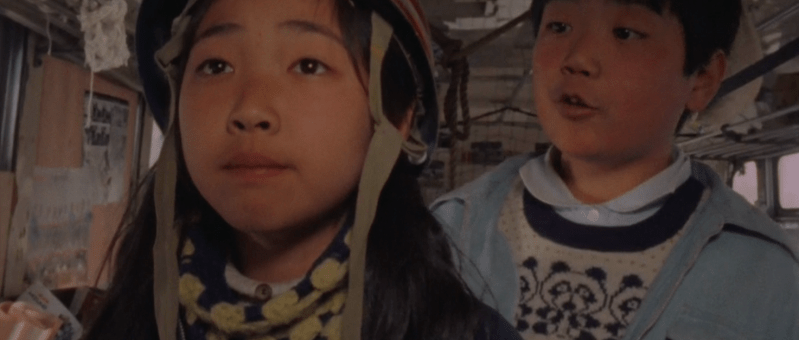
As such, the film revolves around the originally unsympathetic hero, Shinta (Hitoshi Abe), who openly bullies a girl in his class by kicking a football at her because she alone has been excused the after school duty of sweeping the school yard. Having transferred from rural Tohoko, Yoshiko (Noriko Suzuki) has developed serious asthma from living in the centre of industrial Kawasaki and has been instructed to avoid physical exertion or activities which might cause her to breath in additional dust and smoke. Shinta and his friends are however entirely insensitive, literally surrounding Yoshiko while they hound her with questions insisting she’s not really “ill” and merely shirking her duty. When the teacher tries to explain to them that Yoshiko has been excused because it would be bad for her heath to be sweeping dust, Shinta and his friends all immediately claim to be ill too, fake coughing and wheezing despite having just been playing football rather than doing their after school chores like the other kids. 

What doesn’t occur to Shinta is the loneliness, isolation, and embarrassment Yoshiko must feel on being singled out because of her illness. Rather poignantly, the school nurse and others describe how cheerful and friendly Yoshiko was when she first arrived only to reflect on how depressed and withdrawn she’s since become. This is partly as Shinta later learns because her classmates rejected her once she became ill. Asthma is obviously not a contagious disease, yet many of the other parents stopped their kids playing with her because of the stigma surrounding any kind of “illness” while simulataneously unwilling to bear the responsibility of needing to care for her if she should undergo an asthma attack while in their home or under their care fearing they would then suffer a reputational loss if they failed to treat her properly. 

For his part, Shinta is intensely resentful when the teacher sits him next to Yoshiko in the hope that his cheerfulness will help bring her out of her shell. Exclaiming that he hates sick people and thinks that Yoshiko is boring and creepy because she doesn’t really say anything, he begins to have second thoughts when the teacher implores him to help “as a man” suddenly discovering a sense of honour and justice that he doesn’t want to let down. His first action however is to continue kicking footballs at her, but strangely it works rather well providing a physical activity which is compatible with her asthma in not needing to move around while allowing her to feel part of the game. As he gets to know her more, Shinta comes to sympathise with his new friend and is angry with the other kids who reject her but discovers that his own parents are not much different refusing him permission to invite Yoshiko over on talking to other parents at the PTA in part because they run a bento store and are nervous of coming under suspicion if anyone notices a girl with a heavy cough coming and going and questions their hygiene practices. 

Shinta does, however, visit her small apartment which is unfortunately right behind a dusty construction site. As she explains, Yoshiko’s parents were part of a new agricultural drive which later failed and left them with massive debts which is why they had to leave the country to work in a factory in Kawasaki. As her parents often work late shifts for the extra money, she has to look after not only herself but her younger brother with only a pet squirrel for company. Constant references are made to other children having to change schools because their parents moved into a company dorm, while the poor quality of the air is repeatedly given as the cause of Yoshiko’s illness literally choked by the thoughtless post-war economic drive that continues to disrupt not only family lives but the local environment, Shinta also revealing that his parents used to farm seaweed but were forced to stop because of industrial pollution in local rivers. 

This destructive industry also creates unintended divisions among the children along class lines between those whose parents work manual jobs in the factories and those whose families are wealthier and involved in white collar work. The ring leader of the girls who reject Yoshiko, Ayako (Masayo Koga) is the daughter of a wealthy conservative family living in a large house with a mother (Yoshie Kitsuta) who wears kimono. When Ayako shuns her the other girls follow, Yoshiko inviting them to her birthday party only to discover them all together eating cake at Ayako’s house instead. She’d invited them partly out of worry that they were offended she hadn’t invited them to her small apartment, only then realising that they rejected her because of the stigma towards her illness leaving her feeling hopeless and dejected. As Shinta later points out, this kind of emotional pain negatively impacts her medical condition coming to despise the adult world describing his father as the worst in his class for his insistence that he should accept the way the world works rather than idealistically trying to help his new friend. 

The message of the film, however, is that it’s wrong to leave people out and that children in particular should always attempt to friendly with each other. Developing appendicitis, Shinta comes to a new appreciation of how difficult it can be being ill while his mother too starts to regret her decision finally inviting Yoshiko to come and visit them at their home after spotting her sadly walking around outside uncertain if it’s alright to come and visit Shinta on his sickbed. Shinta’s two best friends had also been not entirely supportive of his decision to bring Yoshiko into their group, referring to her as “goldfish poo” in her tendency to trail along behind them, though partly out of jealousy along with the natural awkwardness of a girl suddenly being introduced into a previously all male club but even they eventually come round and decide to reaffirm their friendship. Despite this rosy conclusion in which the other children are convinced to abandon their unfair prejudices and become friends with each other, the eventual conclusion seems rather cruel if returning to the minor theme of the destructive effects of increasing industrialisation even as Shinta’s father is also reminded of the importance of friendship in stating an intention to attend his own primary school reunion. A touching coming-of-age tale, Tomodachi puts its young hero through the emotional wringer but also allows him to discover a strong sense of justice and empathy towards those rejected by their society. 


Step on the Gas! (新宿アウトロー ぶっ飛ばせ, Toshiya Fujita, 1970)

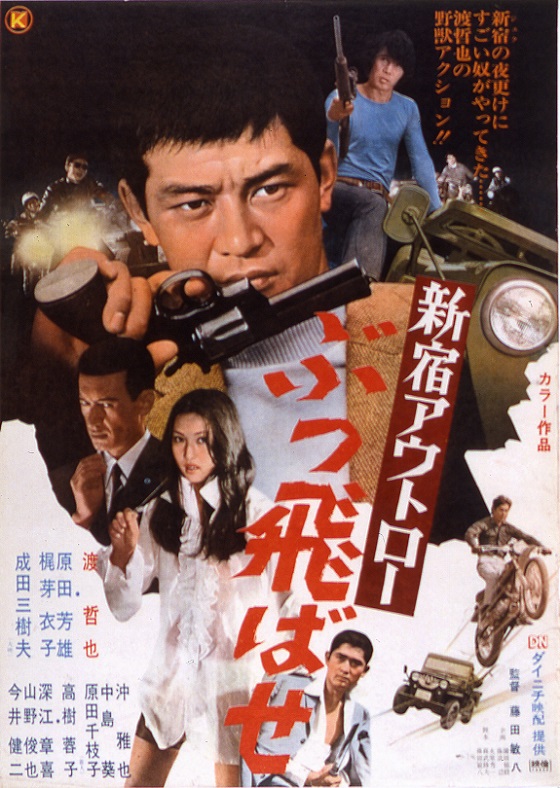
A recently released former gangster and the bored son of a CEO look for new directions in early ‘70s Japan in Toshiya Fujita’s Step on the Gas! (新宿アウトロー ぶっ飛ばせ, Shinjuku Outlaw: Buttobase). Released between his two instalments in the Stray Cat Rock series, Fujita’s freewheeling underworld drama is high on irony and shot in a surprisingly warm colour palate replete with pastels seemingly eschewing the seriousness of Nikkatsu’s earlier youth dramas for sense of youthful ennui eventually granting its mismatched heroes if not the direction they seek then at least possibility in their forever floating existence. 

“Angel of Death” Yuji (Tetsuya Watari) waltzes out of prison to be met by no one, only for another man it later transpires he does not know to attempt to flag him down in his military jeep. Ignoring him, Yuji jumps in a taxi and asks to go to Shinjuku, presumably his old stomping ground, before changing his mind and travelling on to Yokohama instead. This would indeed be a fantastically expensive journey, Yuji ironically taking the cabbie for a ride only for the mysterious man to appear and pay his fare for him. Giving his name as Nao (Yoshio Harada), he eventually explains that he’s trying to recruit Yuji for a job hoping to make use of his fearsome reputation to help him recover some missing drugs and get a gang of bikers off his back. 

As we later discover, however, Nao is not some street punk but the son of a wealthy businessman if one obviously at odds with this conservative father. That might be why he seems so hopelessly out of his depth in his relationship with the delinquent bosozoku motorcycle gang led by Rikki (Masaya Oki) who is perhaps equally in over his head in his rather naive approach to criminal enterprise. Nao and his friend Shuhei were supposed to handle a shipment of marijuana for the gang, but the deal went south and the drugs went missing along with Shuhei so now Nao owes them big time. He wants to use Yuji’s “Angel of Death” skills to find out what happened to Shuhei and retrieve the drugs to settle things with Rikki. 

Inevitably, events have a connection to Yuji’s former Shinjuku life Nao employing a woman he used to know, Shoko (Meiko Kaji) who is also Shuhei’s sister, to run his bar, while the icy enforcer working for the big enemy, corporatised yakuza, also turns out to be someone he knew before in the aptly named and distinctly creepy “Scorpion” (Mikio Narita) a former policeman turned amoral gangster. “His power lies not in fearlessness or being a good shooter but in the fact he doesn’t care about anything” Yuji later explains, describing him as the kind of man willing to knock off anyone in his way without a second thought be it a woman or a partner. One might have thought the same of Yuji in his breezy insouciance, but he is at heart noble despite his fearsome nickname displaying compassion and empathy for those around him along with old-fashioned values like loyalty siding with Nao against the twin threats of Scorpion and the biker gang with whom he later proposes a mutually beneficial alliance. 

Skipping between strangely whimsical folk music and a melancholy jazz score, Fujita’s freewheeling crime drama hints at a kind of aimless ennui Yuji and Nao both in differing ways emerging from a obsolescent past into a new and confusing world, Yuji realising the kind of life he lived before is no longer viable while Nao rejects his wealthy upbringing for a life of unglamorous crime engaging in drug use which he at one point hints has left him impotent. Meanwhile, the fading grandeur of old school yakuza is very much apparent in the cowardliness of the gang’s corporatised boss who hires a man like Scorpion to protect him because he cannot defend himself, planning to make off with the stolen money in a helicopter he has waiting rather than honourably facing off against Nao and Yuji in their quest to retrieve what was stolen from them. Constant red and white imagery recalling the Japanese flag clues us in to the sense of futility in their violence, but even so Fujita closes on an ironic note cementing the friendship of the two men but leaving them free floating with no clue how to land floundering for direction above an increasingly confusing society. 


Red Handkerchief (赤いハンカチ, Toshio Masuda, 1964)

The moral compromises of the post-war era are brought home to a trio of frustrated lovers in Toshio Masuda’s Nikkatsu “mood action”, Red Handkerchief (赤いハンカチ, Akai Handkerchief). Starring an ageing Yujiro Ishihara perhaps cast slightly against type as an ultra noble policeman choosing self-exile after accidentally shooting dead a key witness, who also happens to be the father of the woman he loved, in order to save his partner, Masuda’s noirish melodrama takes aim squarely at the radiating effects of social inequality and the moral bankruptcy of an increasingly prosperous society. 

Masuda opens, however, with an old-fashioned foot chase as cops Mikami (Yujiro Ishihara) and Ishizuka (Hideaki Nitani) attempt to run down a drug mule carrying a briefcase full of illicit substances. The suspect later gets hit by a truck and killed while the briefcase is nowhere to be found. Concluding the mule must have abandoned it at a ramen stand he ran past on the way, the cops haul in the old man running it, Hiraoka (Shin Morikawa), who seems to know more than he’s letting on but is too terrified of the gangsters to consider giving anything up. In an effort to get him to talk, Mikami pays a visit to his relentlessly cheerful factory worker daughter Reiko (Ruriko Asaoka), becoming instantly smitten with her as she quickly packs a bag of warm clothing and miso soup assuming her dad’s in for a bit of drunk and disorderly. Their romance is however not to be. Apparently feeling himself out of options, Hiraoka opts for suicide by proxy, grabbing Ishizuka’s gun and firing at police. An Olympic sharpshooter, Mikami draws his pistol to save his friend and the old man is killed. Guilty, the pair attempt to apologise to Reiko, but unsurprisingly she is not in the mood to accept it. 

Four years later, Mikami has left the force for a life of wandering doing odd jobs all over Japan while entertaining his co-workers with sad songs about lost love. Yokohama detective Tsuchiya (Nobuo Kaneko) eventually tracks him down in frosty Hokkaido, encouraging him to return with tales of Ishizuka’s wildly improbable success as a supermarket entrepreneur now apparently married to Mikami’s lost love Reiko. Tsuchiya thinks Mikami was set up and that Ishizuka is a dirty cop who’s been living the high life while Mikami has been slumming it in an unnecessary act of atonement for something that wasn’t really his fault. 

Though they were apparently good friends and loyal partners, Ishizuka flags up a potential source of tension early on in his solo interrogation of Hiraoka explaining that unlike Mikami he’s not an educated man and understands how difficult it is to be poor. Tsuchiya later posits this same sense of class conflict as one reason that Ishizuka may have betrayed him, that he felt inferior and that he would not be able to compete with his elite partner. Ishizuka later implies something similar in his dog eat dog view of the world, explaining to a newly conflicted Reiko that life is a matter of winning and losing and that Mikami is the very image of defeat. He views himself as a winner thanks to his burgeoning supermarket empire, taking full advantage of the rising consumerism of the post-war era and willing to do whatever it takes in order to achieve success even if that means crossing a line that Mikami would never cross. Yet he is also like Mikami hobbled by his love for the “beautiful”, “pure” Reiko, allowing his insecure acquisitiveness to turn violent in his determination to keep her or at least keep her from any other man. 

“Money rules everything!” Ishizuka insists, attempting to justify himself for his turn towards selfish individualism willing to sacrifice not only a “worthless” old man but even friendship in the conviction that he is “a man of great value, a winner!” and therefore entitled to move beyond conventional morality while using his ill-gotten gains to support needy orphans. Even he, however, is later undone by love, perhaps the one true form of “justice”, in realising that Reiko has chosen nobility in the form of Mikami and could never accept the man he is or the things he’s done. A romantic melodrama masquerading as a crime thriller, Red Handkerchief finds Masuda in expressionist mode, the pounding machinery at the foundry where Reiko works pulverising Mikami’s noble heart as his romantic dreams are crushed, the highway streetlights dancing across Reiko’s windscreen as she returns in confusion, and in the constant use of weather to indicate the mood, the sky suddenly brightening behind Ishizuka as his confidence returns. Echoing in The Third Man in its melancholy ending, however, even if slightly inverted, Masuda sets his battered hero adrift in the confusions of the post-war era striding into the mist guitar in hand a perpetual wanderer. 


Original trailer (no subtitles)

Velvet Hustler (紅の流れ星, Toshio Masuda, 1967)

Perhaps overlooked in comparison with his better known contemporaries, Toshio Masuda was a bankable talent at Nikkatsu directing some of the studio’s biggest box office hits largely thanks to his long association with tentpole star Yujiro Ishihara. Nine years on from their collaborative debut Rusty Knife, however, times had perhaps begun to change. Featuring vibrant colour production design by Tokyo Drifter’s Takeo Kimura, a frequent Seijun Suzuki collaborator, 1967’s Velvet Hustler (紅の流れ星, Kurenai no Nagareboshi, AKA Like a Shooting Star) is a reworking of Masuda’s own Red Pier, itself inspired by Julien Duvivier’s 1937 French thriller Pepé le Moko, with Tetsuya Watari in the role originally filled by Ishihara. Apparently drawing inspiration from Godard’s Breathless, Velvet Hustler is a thoroughly post-modern retake, a parodic tale of gangster ennui and post-war emptiness in which rising economic prosperity has brought with it only despair. 

When we first meet petty gangster Goro (Tetsuya Watari), he’s coolly standing by, leaning on a fencepost like a bored gunslinger as he waits for the perfect getaway vehicle. Jumping into a fancy red convertible which it seems has already been stolen by the young man who parked it in this packed car park, the wires handily hanging striped and exposed, Goro barrels along the highway and and performs an infinitely efficient drive-by shooting on a rival gang boss. According to the man who hired him, Goro was only supposed to cause serious injury, not death, but as he points out if the guy insists on dying that’s hardly his problem. Taking his paycheque, Goro agrees to lie low in Kobe for the next six months after which his boss will come and get him. A year later, however, and he’s still there doing not much of anything, hanging out with the local kids and acting as a procurer dragging sailors on shore leave into gang-run clubs where Americans get into fights with Vietnamese émigrés. So desperate for escape are they that Goro’s underling even suggests they go to war, later thinking better of it when he remembers seeing horrific photos from the front.  

In a convenient but unsatisfying relationship with bar hostess Yukari (Kayo Matsuo), Goro explains that it’s not that he doesn’t like her, but he’s bored, “bored with fooling around with women”, but also of the business of living. The sun comes up, the sun goes down, and then it comes up again, every day all the same. His life has become completely meaningless and he has no idea what to do about it. He longs to go back to Tokyo, but is trapped in this strange Kobe limbo land, an end of the line sea port in which there is ironically no sense of escape. He doesn’t know it yet, but there’s a killer (Jo Shishido) on his trail, a killer who eventually reminds Goro that even if he kills him first another man will come. The bullets you fire are aimed squarely at yourself, Goro’s destiny is already set. There is only one way out of Kobe and it doesn’t lead back to Tokyo. 

Meanwhile, another possibility presents itself in the beautiful Keiko (Ruriko Asaoka), a temporary visitor from the capital looking for her missing fiancé presumed to have done a bunk with her father’s money. Keiko is a distinctly cool yet self-assured figure, generating an instant connection with the affable gangster at once reassured by a sympathetic mama-san that Goro is good but also warned that he’s still a yakuza and as such no good for a smart young woman like her. Keiko thinks that Tokyo is pretentious and boring, confused by Goro’s insistence on getting back there but like him perhaps in waiting. “I love you to death” she later ironically confesses while simultaneously insisting that men and women are different. There is no escape for her. Goro is tired of running but refuses to be handcuffed, choosing perhaps the only path to freedom presented to him. 

A nihilistic tale of gangster ennui in which life itself no longer has value, Velvet Hustler is a curiously cheerful affair despite its essential melancholy, Goro and Keiko sparring in a romantic war of attrition while he almost flirts with the dogged detective (Tatsuya Fuji) determined to bring him down. The kitschy production design gives way to Antonioni-esque shots of a strangely empty city while an ethereal sequence of dissolves eventually leaves the pair alone on the dance floor as if to imply their single moment of romance is but a brief dream of emotional escape. The trappings of post-war success are everywhere from Keiko’s elegant outfits to the cute red sports car and the weird club where Goro dad dances in front of his minions, not so much older than them but clearly out of place in this distinctly unhip seaside bar, but finally all there is is a dead end and an infinite emptiness the embrace of which is, perhaps, the only viable path to freedom.