Hong Kong 1941 (等待黎明, Leong Po-Chih, 1984)

“Britain has reassured the people that it will not give up Hong Kong,” according to a radio broadcast at the beginning of Leong Po-Chih’s Hong Kong 1941 (等待黎明). The words have a kind of irony to them and not only because Britain did abandon the people following the Japanese invasion, but because the film was released on the eve of the Sino-British Joint Declaration in which it said something quite similar. 

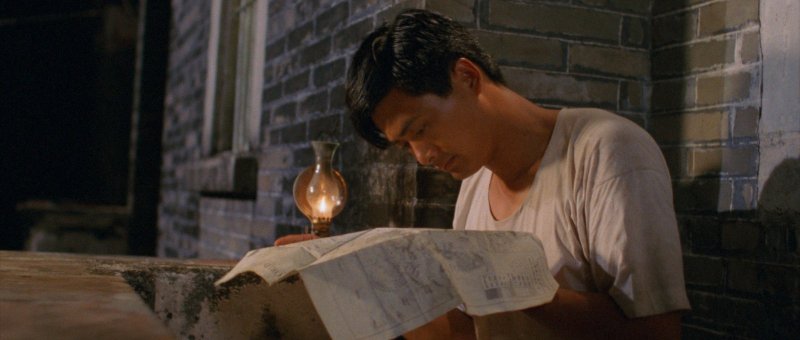
But then again, the opening scenes are themselves quite critical of British rule as they, on the one hand, insist they aren’t going anywhere and, on the other, start evacuating women and children to “safer” areas of the commonwealth such as Australia. Out of work actor Fei (Chow Yun-fat) fled the Japanese incursion on the Mainland and came to Hong Kong, but now tries to stowaway abroad a boat going to Australia. He’s caught by a little British girl who speaks fluent Cantonese yet refers to him as her “slave” and insists that he “kowtow to me, now.” But then the girl suddenly adopts the persona of the Empress Dowager Cixi and demands the same. Fei makes the first of his many jumps into the water around Hong Kong, as if only in this liminal space can he be free. Anticipating the wave of migration occurring before and after the Handover, and also that of the present day, he and his friends Keung (Alexander Man Chi-leung) and Nam (Cecilia Yip Tung) set their sights on leaving to find Gold Mountain in Australia or America.

But they’re one day too late because the date of their departure is that the Japanese arrive in Hong Kong. Their haste to leave was in part caused by the fact that Nam’s father, Ha Chung-sun (Shih Kien), was trying to force her to go through with an arranged marriage her prospective groom didn’t want either. Nam is never really free as, as she points out, even after her father relents and allows Keung to marry her after she is raped by a police officer emboldened by the chaos and therefore worthless to him as currency, Keung never actually asked her and she’s in effect forced into a marriage with him instead. In fact, she returns to the shrine Keung lives in two find the two men constructing her marital bed for her with the double helix symbol of happiness already placed above it in an ironic expression of patriarchal oppression.

Indeed, her position is more precarious than either of the men and we see other families roughly cutting their daughters’ long hair to make them look like boys in fear of a rapacious Japanese army. But it largely turns out that it wasn’t so much the Japanese they needed to be worried about as the local population, experiencing a temporary limbo in which the social order has been suspended. Police officer Fa Wing (Paul Chun) who had acted as a lackey for Ha Chung-sun while constantly eying up Nam leads a gang of looters to Ha’s house to take their own revenge against his capitalistic oppression of them. Ha had largely made his money through rice profiteering and exploiting the local workforce. Recent layoffs at the warehouse had led to a labour riot, while Keung and his friends had been running a sideline skimming sacks of rice to sell on the black market. 

Ha and his henchmen anxiously await the arrival of the Japanese hoping that they will protect them from retribution, but the Japanese do not arrive fast enough. When they do, Ha collaborates and attempts to ingratiate himself with the Japanese officer in charge of the colony who once again takes a liking to Nam. General Kanezawa (Stuart Ong) also uses their poverty to starve them into submission, promising rice to anyone who will come and sing with him. The song he chooses is “Shina no Yoru” by Li Hsiang-lan, whom he describes as “their very own”, yet was actually a Japanese woman, Yoshiko Yamaguchi, groomed for stardom in Manchuria and marketed a Chinese star in propaganda films. Another song of hers, Ieraishan, can be heard earlier on the soundtrack as if heralding Japanese arrival. 

Though Nam tries to resist, Fei raises the trio’s arms in a cry of “banzai” in a moment of ostensible collaboration designed to buy them temporary safety. His philosophy and that of many others is to take the rice and deal with the rest later, which Fei does by becoming an enforcement officer with the Japanese to get papers that will allow all of them leave. He uses his position to help a gang of Mainlanders who are resisting the Japanese, and are, in fact, the last ones to stay behind and defend the colony, as well as well as save Keung when his attempt to rescue two friends who have been sold out for forced labour on another Japanese-controlled island by a local gangster backfires and he’s captured himself. 

Ironically enough, Fei had been the first one to try to leave and described himself as “selfish” after jumping back into the water to return to Nam and Keung who didn’t make the boat on time because they were trying to save a local eccentric everyone calls “emperor” played by the director himself. Fei is quite obviously in love with Nam, and she gradually falls for him in return though symbolically wedded to Keung, if not in the legal sense. Again, she has no say over her romantic future which is sorted out between the two men with Fei abiding to a code of honour in continuing to protect the relationship between Keung and Nam. Perhaps this echoes the way in which the Hong Kong people of 1941 or 1984 have little say in their future either as their fate is decided by two distant powers. Nevertheless, it leaves Keung feeling awkward and inadequate, realising that Nam likely prefers the smart and dynamic Fei over his constant failures and inability to protect her, though he is never jealous or resentful towards him only knowing that he is continually indebted. Yet it’s Nam who eventually strikes back for Hong Kong and for her own freedom while Fei looks on as children in the street play at beheadings as if they were Japanese soldiers. She embodies the spirit of Hong and carries it with her, and as the Chinese title of the film suggests, waits for a new dawn while accepting that just like old memories it will be replaced by what is to come. She speaks from a perspective that is both historical and uncertain, mourning the past while fearful of the future, but all the while continuing to live as one new dawn replaces another.


Hong Kong 1941 screened as part of this year’s Focus Hong Kong.

Trailer

Love After Love (第一炉香, Ann Hui, 2020)

A naive young woman’s path from besotted teen to tortured yet masterful courtesan amid the colonial realities of pre-war Hong Kong is elegantly charted in Ann Hui’s stately adaptation of the novel by Eileen Chang, Love After Love (第一炉香, Dì yī lú xiāng). A slow-burn romantic tragedy, Hui’s floating drama at once reflects a sense of hopeless rootlessness and the ruinous intensity of a one-sided love but also the transgressive possibilities for freedom and independence in the rejection of traditional patriarchal social codes. 

Displaced from her native Shanghai by ongoing political tension, Weilong (Ma Sichun), the daughter of a once noble house, finds herself impoverished and left with the choice either of accompanying her family in returning to the Mainland where she will be set back a year in completing her studies or remaining behind alone in Hong Kong to graduate high school. Unable to support herself, she decides to turn to an estranged aunt she barely knows, throwing herself on her mercy and asking to be taken in even while knowing of the animosity which exists between her father and his sister. That would be because her aunt, Madame Liang (Faye Yu), turned down all the suitors her family found for her and chose instead to become the mistress of a wealthy man. He now having died, Madame Liang has inherited a sizeable fortune including a European-style mansion where she hosts society parties and enjoys a hedonistic lifestyle which has earned her a reputation as a seducer of young men. 

On her introduction to this world, one of the maids uncharitably describes Weilong’s entrance as like that of a new girl in a brothel and there is indeed something of that in her new role in the household, dangled like a bauble in front of Madame Liang’s collection of wealthy male associates, though Madame Liang apparently intends her only as decoration rather than gift. Tensions come to the fore as Weilong develops a fondness for a dashing young man, George (Edward Peng Yu-Yan), the mixed ethnicity son of coterie member Sir Cheng (Paul Chun), previously eyed by Madame Liang who understands much better than her naive niece that men like George are dangerous in their destabilising faithlessness. For Madame Liang, so perfectly in control, George may be manageable but as she later tells Weilong, unwisely goading her that her life of comfort is a failure because she will never find love, the only danger that exists to her is in unequal affection a prophecy that will in a sense come to pass in Weilong’s single-minded obsession to possess the heart of George. 

Weilong may describe Madame Liang’s lifestyle as ridiculous, yet as she points out her transgressive sexuality is also currency that permits the opulence and luxury in which she lives. Seduced by this world as much as by George, Weilong disapproves but admits that she is no longer the naive girl who arrived even if she also dislikes this new version of herself, considering a return to Shanghai and a possible reset to become someone else again presumably more in line with contemporary notions of social proprietary. She can’t deny that Madame Liang’s rejection of the patriarchal institution of marriage has granted her an unusual degree of independence otherwise unavailable in the contemporary society. She herself faces a choice in approaching the end of her high school days, either progressing to higher education, seeking work, or getting married naively insisting to Madame Liang that she will earn money in order to support George and his lavish lifestyle even as she advises her to enact a plot of romance as revenge. 

While Weilong’s discarded suitor benefits financially in becoming Madame Liang’s lover, she sponsoring his study abroad, Weilong again attempts to reverse traditional gender roles by trapping George as a kind of trophy husband. He had repeatedly told her he wasn’t the marrying kind, in part because of his insatiable sexual desire and perpetual loneliness in having lost his mother young, yet also because of his father’s perfectly acceptable yet socially destructive romantic history which includes several concubines and illegitimate children meaning there will be little in the way of inheritance. If he married, he’d need to marry well but Weilong’s family is impoverished and she has only her connection with Madame Liang to leverage. As she’d warned her it would be, the relationship between them will always be unhappy, Weilong winning a symbolic victory in coercing George towards marriage but unable to accept the limits of her control while he, paradoxically, is emotionally honest only with her but she can only see this as a slight as if he is so indifferent towards her that she is not worth lying to. 

As Weilong gradually morphs into her aunt, George’s sexually liberated sister Kitty lands on a different path later becoming a nun. The three women attempt to muster all of the advantages afforded to them under an oppressive patriarchal system but none perhaps find true happiness. It might be tempting to read a subversive comment on the nature of colonialism in the various frustrated love affairs and persistent sense of rootlessness, Hui’s drama is at heart a romantic tragedy in which two people become locked in a torturous relationship because they cannot understand each other. Their very idea of love is different. Doyle’s floating camera perfectly captures the fleeting opulence of this unreal society itself lingering on an abyss as the lovers continue to dance around each other looking perhaps for the love after love in immaterial comfort. 


Trailer (English subtitles)

The Last Dance (破·地獄, Anselm Chan, 2024)

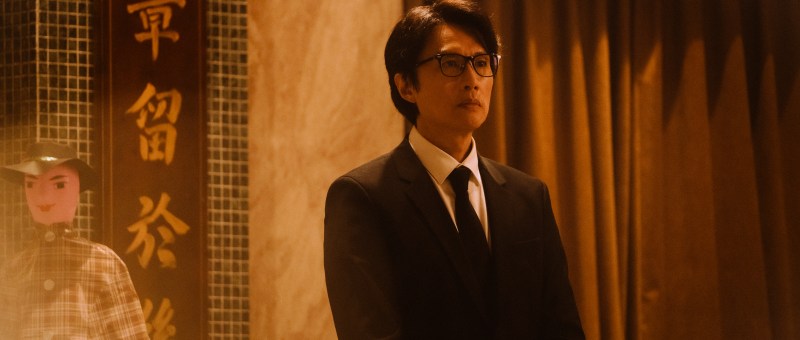
When serving the living doesn’t pay, why not make money from the dead? That’s the advice that’s given to former wedding-planner Dominic (Dayo Wong) in Anselm Chan’s touching spiritual drama The Last Dance (破·地獄), but after pivoting towards organising death rituals it’s the living he continues to serve. In many ways, Dominic stands at the borders of life and death, but he’s also an onlooker in a wider debate about tradition and modernity, what we inherit and what we choose to pass on, along with the departing soul of an older Hong Kong as the young flee abroad leaving those who stay behind to carry what may seem to them a burden too heavy to bear alone.

The irony is that though Dominic had been a wedding planner until the economic effects of the coronavirus pandemic killed his business, he is not in fact himself married and according to his long-term girlfriend Jade (Catherine Chau) did not see the point in a marriage certificate. One might infer that if he thought weddings were essentially meaningless exercises in vanity then he might feel the same way about funerals and his initial behaviour after taking over the funeral parlour run by Jade’s ageing Uncle Ming (Paul Chun) might confirm that suspicion. Not only does he start selling tacky trinkets as some kind of funeral favours, but makes a huge faux pas with an ostentatious stunt at his first funeral that causes upset and offence to the family. At the very least, it would have been useful to confirm how the deceased passed away before trawling their instagram account in an attempt to reconstruct their personality.

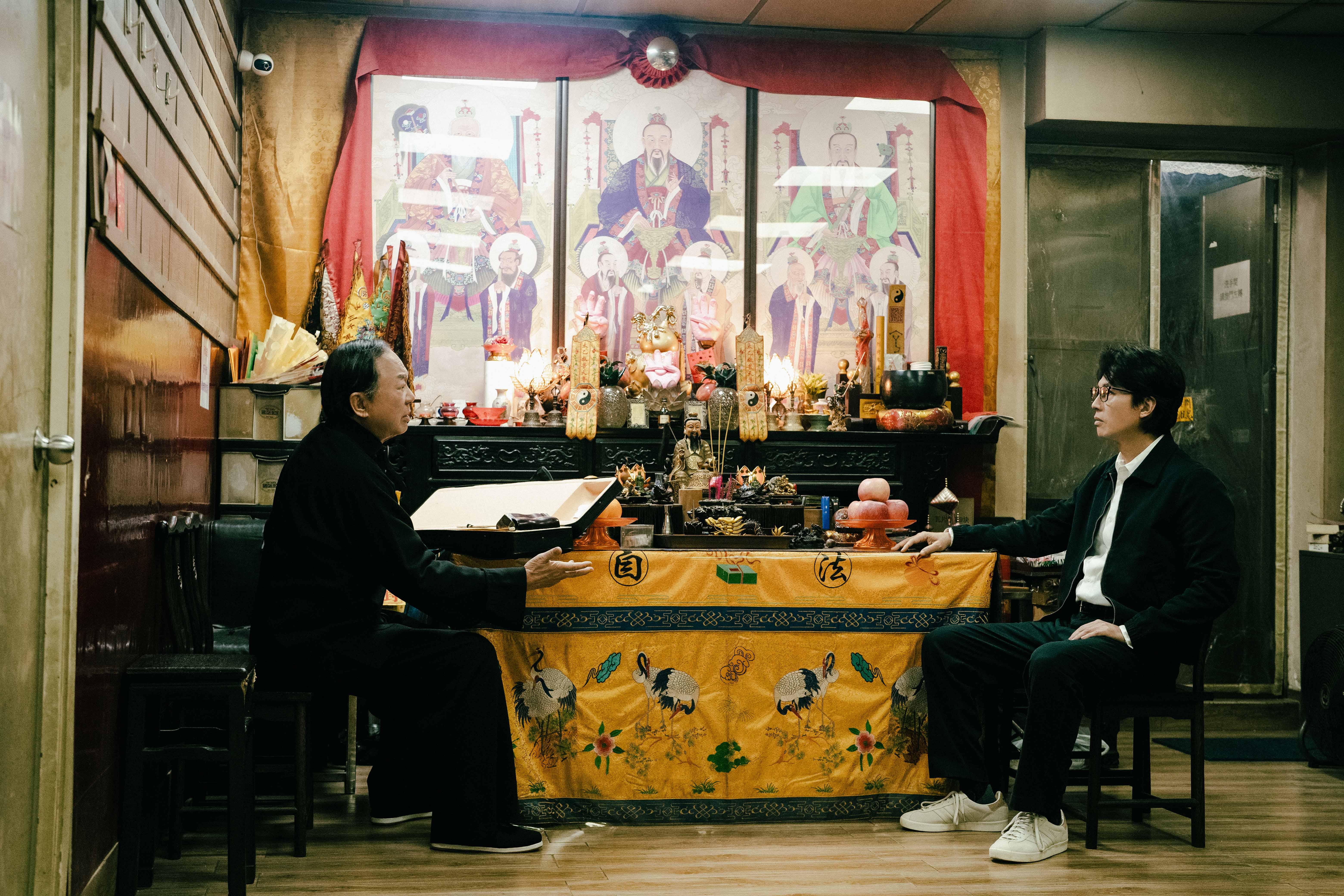
It’s this kind of insensitivity that irritates intensely grumpy Taoist priest “Hello” Man (Michael Hui) who brands Dominic an “amateur” believing that he’s only obsessed with money and intent on exploiting the grief of bereaved families. But on the other hand, Man is only really interested in the sanctity of ritual and doesn’t get involved with the living nor is he very sensitive to the emotional needs of those in the process of sending off a loved one. His entire life has been in service of the ancestors to the point that it’s soured his relationships with his two children. He has no faith in his son Ben (Chu Pak Hong) to inherit his position as a Taoist priest, while Ben resents being forced to inherit a burden he has no desire to carry. Daughter Yuet (Michelle Wai), perhaps ironically a paramedic, would have happily have carried it, but has endured years of being told that “women are filthy” and is prevented from inheriting these traditions because there is a taboo against women undertaking the role of a Taoist priest. The continual sense of rejection has left her with huge resentment towards her father and resulting low self-esteem that sees her engage in a no strings relationship with a married doctor.

Ultimately the film suggests that these traditions themselves are too large to bear, at least in their entirety, and do nothing more than crush and oppress the young. In part, they embody the spirit of an older Hong Kong which is itself in danger of fading away as seen in Dominic’s innovative new bespoke funeral planning services which to traditionalists might seem like they play fast and loose with ancient ritual, but the resolution that each Dominic and Man come to is that funerals are for those who remain behind and while Man liberates the souls of the dead Dominic does the same for the living in taking a more compassionate approach to dealing with those grieving a loss. Not only does his acceptance of the strange requests of a heartbroken mother (Rosa Maria Velasco) branded a “nutcase” and rejected by the local area bring her a degree of comfort, but his decision to allow what seems to be the same sex partner (Rachel Leung) barred from a funeral service the right to say goodbye albeit in secret demonstrates the necessity of doing right by both the living and dead.

As Man later says, in some ways he’s shown him how to do funerals and awakened him to the ways his oppressiveness in his adherence to tradition has prevented him from being a better father. His decision to wear a western suit for his own funeral might indicate a desire not to take this rigidity into the next world while hoping to liberate his children from the burden of tradition and show them that they were each loved and accepted even if it did not always seem that way. Which is not to say that the tradition should not be saved or that this is itself a funeral for the soul of an older Hong Kong, but only that if you let some of it, such as its inherent sexism, go it will be easier to carry when everyone carries it together. “Living can be hell,” Dominic admits and the funeral is a liberation both for the living and the dead. A touching yet surprisingly lighthearted meditation on life and death, what it comes down to really is that death is coming to us all but there’s no point spending your life worrying about it when you should just try to enjoy the dance until the music stops.


The Last Dance is in UK cinemas from 15th November courtesy of CineAsia.

UK trailer (Traditional Chinese / English subtitles)

Forever Young (栀子花开, He Jiong, 2015)

“As long as you don’t give up, it’s never too late to follow your dream” according to a sympathetic teacher perhaps incongruously advising a conflicted student who might in one sense be facing an ending but also has his whole life in front of him. Apparently inspired by a song from 2004, Gardenia in Blossom, Forever Young (栀子花开, Zhīzihuā Kāi) ironically concerns itself with the lives of a collection of youngsters facing their first roadblock as they approach the end of university while their dreams seem further away than ever. 

Popular girl Yanxi (Zhang Huiwen) has her heart set on joining the Paris Opera Ballet along with her three roommates with whom she dances the Dance of the Four Swans. Yanxi’s boyfriend Xunuo (Li Yifeng), meanwhile, dreams of making it as a rockstar with his three bandmates. The combined group of friends, cheerful and excited about celebrating Yanxi’s upcoming 21st birthday, are upbeat about the future and looking forward to their graduation concert “Dream Night” at which they hope to catch the eye of influential people. When tragedy strikes however and it seems the girls will not be able to perform, Xunuo makes a surprising decision, roping his bandmates in to take their place and dance the Dance of the Four Swans in their stead. 

Mirrors of each other, Yanxi and Xunuo can each be blinkered and self-centred. Yanxi takes it for granted that the group all want the same thing and are determined to go to Paris with her but apparently hasn’t noticed that her friends have their own problems and at least one may not be able to afford to go abroad because she’s already subsidising her brother’s education. Stubborn and unsympathetic, Yanxi later comes to regret having been so unforgiving as she faces the prospect of continuing alone only to encounter yet another setback. Xunuo meanwhile does something similar in convincing his bandmates to join him in the Four Swans project at the expense of their own dream in taking time away from their band practice while forcing them to don tutus and possibly make fools of themselves in front of all their friends. 

Asked why she chose ballet, Yanxi replies that standing on tiptoes allowed her to see further, but now she worries she’s been suffering with a particular kind of myopia in having seen nothing at all while still clinging on to a vain hope for her Paris dream. The idealised relationship between the pair is marred only by Xunuo’s petulant decision not to get on the bus with everyone else after their night out when Yanxi reminded him she was bound overseas, and her later despondency as they’re temporarily forced apart by Xunuo’s secret plan even while his strange rivalry with a former friend with whom he wrote a plaintive love song takes on an overtly homoerotic quality.  

Nevertheless, there’s something of an incongruity in such young people being constantly reminded that as long as you don’t give up there’s always time to achieve your dreams though it’s true enough that they’re each at a crisis point, about to lose the student safety net and faced with the choice of whether to keep trying to make it or go for the “safe” option of heading into the workforce. Xunuo declares that he just wants “all the sadness and troubles to go away”, only for his teacher to point out that if you’ve nothing to overcome then you’ll never grow. The presence of tragedy never seems to touch them as deeply as one would think, though at least through Xunuo’s vicarious dancing dream the guys are able to renew their friendships, acknowledging their own strengths and weaknesses as they work together in memory of absent friends and perhaps their own fading youth. 

A strangely cheerful campus drama despite its darkness and the foreboding of the title, Forever Young allows its heroes to be just that as they promise themselves that as long as they refuse to give up it’s never too late for their dreams to come true while also subtly hinting at a new ideal of masculinity in the infinitely sensitive Xunuo who is selfless and kind and just wants everyone to be happy. An overly idealised conclusion perhaps as the youngsters bid goodbye to their adolescent lives for the stormy seas of adulthood, but also a reassuring one as they emerge from their respective traumas and hardships with renewed hope for the future.


Forever Young streams in the US Feb. 12 to 18 as part of Asian Pop-Up Cinema’s “Happy Lunar New Year!”

Original trailer (English subtitles)

Love on Delivery (破壞之王, Stephen Chow & Lee Lik-Chi, 1994)

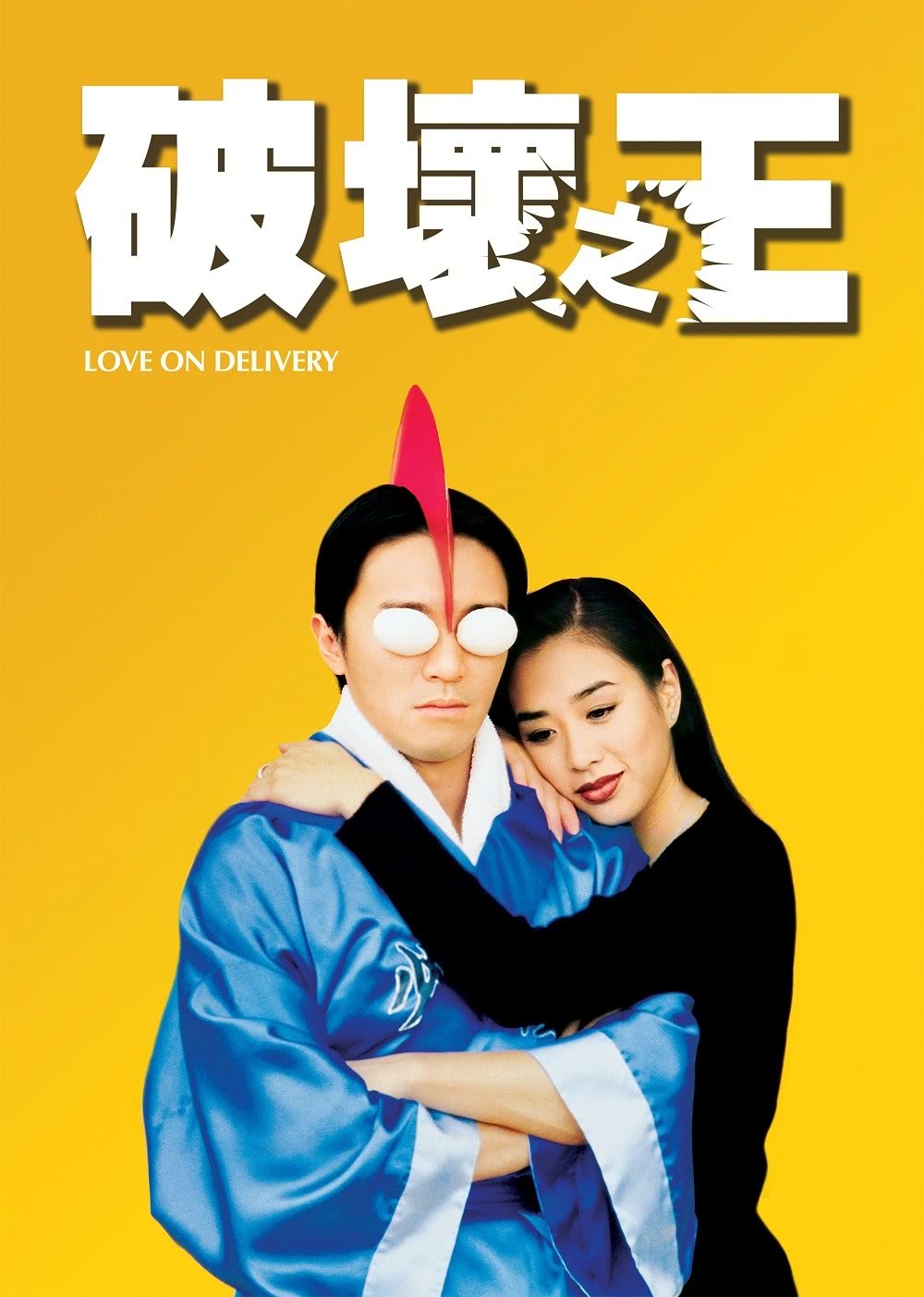
Love on Delivery posterBy the standards of ‘90s Hong Kong cinema, early Stephen Chow hit Love on Delivery (破壞之王) might seem refreshingly down to earth but make no mistake this under appreciated romantic comedy gem is as zany as you’d expect from the master of surrealist laugh a minute humour. A curious tale of cultural pollinations, Delivery once again stars Chow as an ineffectual loser trying to impress a girl but this time it’s a battle of wits he ends up winning when he unexpectedly finds himself standing up for “garbage” in the face of arrogant elitism.

The film opens not with its hero, but with judo champion Li (Christy Chung) who finds herself persistently sexually harassed by her slimy dojo leader who is apparently determined to win her because she’s the only woman capable of “throwing him over”. Seeing as his chat up lines are things like “my house is really big and my bed is really comfy come and see”, Li isn’t really interested which is why she ends up kissing in the right place at the right time delivery boy, He (not altogether against his will). He (Stephen Chow) is smitten, but Li has been looking for a “hero”, someone big, strong, and manly who can match her martial arts prowess but also respect her as a human being. Unfortunately, He is a weakling and a coward, as Li discovers when the boss of the dojo interrupts their first “date” and tries to thump He who activates his well honed coward skills and dodges the blow which lands squarely in the middle of Li’s face.

Fearing his romantic dreams have been well and truly shattered, He resolves to become stronger so he can fight back which is how he ends up meeting conman and stall owner “Devilish Muscle Man” (Ng Man Tat) who claims to be the last heir to “Ancient Chinese Boxing” as well as a close friend of Bruce Lee and Jackie Chan (only he doesn’t like to name drop). Devilish Muscle Man offers to “train” He in the ancient martial arts, for a “small” fee. Though all of Devilsh Muscle Man’s “training” is a sham, He starts to get quite good at it and eventually defeats the dojo boss whilst wearing a giant fluffy Garfield head. However, a new challenger soon enters the arena – a childhood friend of Li’s who went to Japan and has become an “elite” karate champion claims to be the mysterious Garfield head, stealing He’s thunder and Li’s heart along with it! 

Chow may be in a relatively restrained mood, but there are pop-culture references and in jokes galore which eventually culminate in a Hong-Kong vs Japan standoff in which Chow ends up inheriting Devilish Muscle Man’s kung fu persona which saw him fighting in a strange costume inspired by Ultraman (or possibly Chinese Ultraman rip off Inframan). Meanwhile, the big bad – Li’s ex Duan Shui Liu (Ben Lam Kwok-Bun), dresses in an old fashioned Japanese students’ uniform and rails about the “garbage” people of Hong Kong with their “garbage” kung fu which he plans to eradicate through affirming the primacy of karate as the best and only real martial art. He’s first problem is that he actually self identifies as “garbage” – he is only a poor delivery boy working for a tiny cafe which stoops to various scams to trick its customers out of their money and/or complaining and has no real prospects of being able to lift himself out of the gutter despite his new found fighting spirit and commitment to martial arts training. Nevertheless, He decides to own his “garbage” status to stand up for all the other “garbage” people resisting “Japanese imperialism” in the only way he knows how – by using his wits to trick Duan into allowing himself to be defeated.

He, a perpetually “nice guy” who gives away not only his entire wallet but all his clothes to a homeless father, eventually defeats the forces of “elitism” through an acknowledgement of his inferior fire power and an efficient use of the skills he does have to create a confusing atmosphere of chaos which ensures his final victory. A mildly subversive tale of fighting back against “the elite”, Love On Delivery is also a hilarious romantic comedy in which the nice guy gets the girl solely by demonstrating himself brave enough to face defeat with, well if not dignity, perhaps resolve.


Currently available to stream on Netflix in the UK (and possibly other territories)

Celestial Pictures trailer (Cantonese with English/Traditional Chinese subtitles)

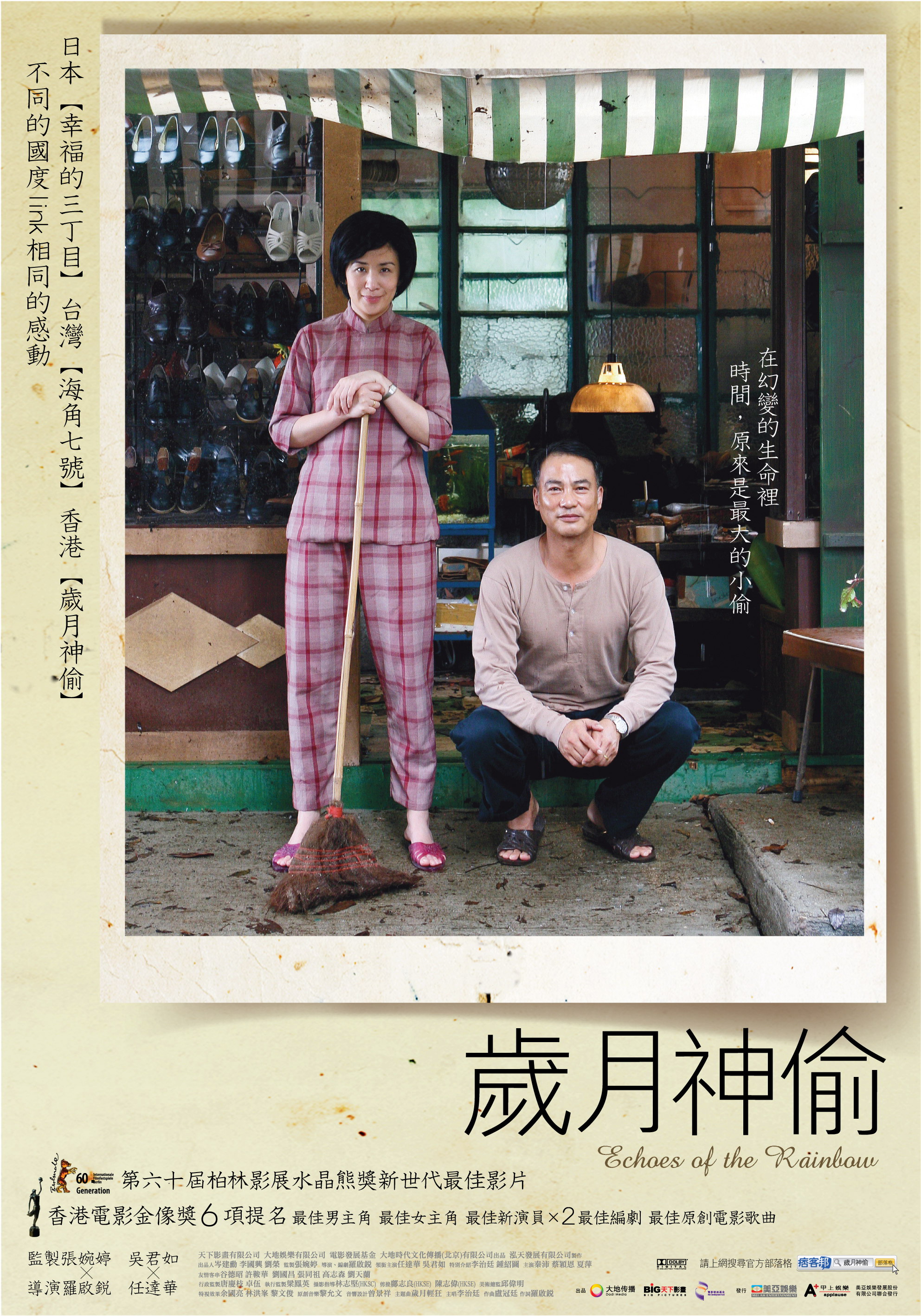
Echoes of the Rainbow (歲月神偷, Alex Law, 2010)

echoes of the Rainbow posterThe tragedy of childhood is that you can’t quite see it on the ground. Looking back the truth is plainer but it’s also painful, containing all the warmth of those times but also the regrets and irreconcilable longings. Alex Law’s small scale personal tale of inevitable tragedies mixed with intense nostalgia, Echoes of the Rainbow (歲月神偷, Shui Yuet Sun Tau), is deeply sincere and more than earns its turn for the sentimental in its never wavering feeling of authenticity as it paints a picture of a rapidly disappearing Hong Kong and a childhood lived in a big brother’s shadow.

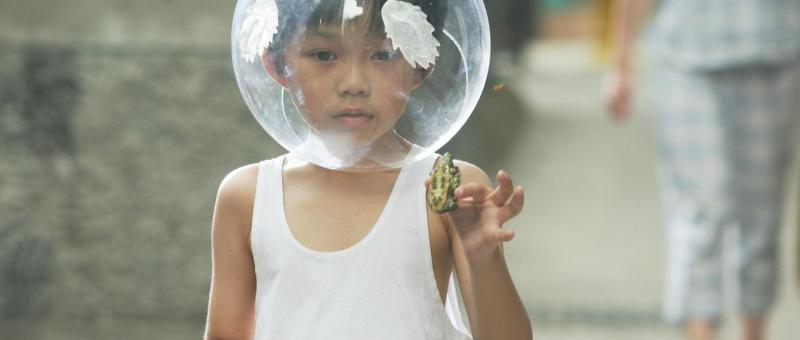
Eight-year-old “Big Ears” (Buzz Chung) lives with his cobbler father (Simon Yam) at the end of a long, run-down street of shopkeepers. Amusingly enough, Big Ears’ uncle (Paul Chun) lives at the other end of the street where he cuts hair so the family kind of has the full run of the place, head to toe. While Big Ears whiles his time away daydreaming,  putting a fish bowl on his head and pretending to be an astronaut or indulging in his favourite hobby – kleptomania, his big brother Desmond (Aarif Lee) is busy doing everything right. A tall, strong teenager with more than a passing resemblance to Bruce Lee, Desmond is a track and field star and academically gifted student at the prestigious Diocesan Boys’ School. Big Ears loves everything about his big brother, including his sort of girlfriend Flora (Evelyn Choi).

Law sketches the everyday lives of this ordinary family with the sort of details which randomly recall themselves years later – the tear on his father’s T-shirt from where it hits the end of his chisel, the taste of Autumn Moon Cake, the random conversations with passersby. The small community on this run-down street more is like an extended family in and of itself as the families take their meals on tables outside, each overhearing each other’s conversations and interfering in various family dramas. Big Ears quips that his mum (Sandra Ng) is known as “Mrs. Outlaw” because she’ll talk her way into or out of anything and has a talent for talking people around to her way of thinking, but the warmth and love between his parents is never shaken. Even in the midst of an encroaching tragedy, Mr. Law takes the time to design a pretty pair of ultra comfortable shoes for his harried wife who often complains about her corns.

Seen through little Big Ears’ eyes, the film avoids the bigger picture or any political concerns save for the presence of the corrupt colonial forces as represented by Sergeant Brian who speaks fluent Cantonese but stresses that English is essential for “getting on” in Hong Kong. Sergeant Brian is also going to get one whole box of the moon cakes Big Ears wanted all for himself and his mum has been paying for in instalments for the last few months, but the reason for his visit is a rise in the protection money the local police takes from shopkeepers. If the Laws can’t pay it (and they can’t, really) they’ll be evicted. Not that Big Ears would know, but business is bad and the family is spending most of its income on Desmond’s expensive school fees so it’s doubly galling to them when his grades and athletic success begin to decline.

Big Ears is a naughty little boy, but often gets away with it because he’s just so darn cute. His pilfering habit goes largely undetected even though he steals quite ostentatious items like a glowing goblet souvenir from a movie starring his favourite actress whose picture he also sells with a fake signatures attached, a British flag from a nearby base, and even a pottery statue of the Monkey King from an actual temple. Desmond has this theory about about double rainbows that are an inversion of each other – something that could easily work for himself and his brother with Desmond’s essential goodness contrasting nicely with Big Ears’ roguish adventures whilst also speaking for the enduring bond between the brothers.

Even before the literal typhoon rips through Big Ears’ idyllic childhood home, there are signs of trouble on the horizon – firstly in Desmond’s melancholy love story with fellow tropical fish enthusiast Flora who turns out to come from an entirely different world filled with all the ease and possibility so absent from the Law’s, and then in Desmond’s gradual slowing down. The respective catch phrases of Big Ears’ parents signify the twin pillars of the age with his father’s insistence that “nothing is more important than the roof” as he works steadily to keep one over his boys, and his mother’s instances that life is “half difficult, half wonderful” but “you have to keep believing”. Earning a right to melodrama through fierce authenticity, Echoes of the Rainbow does not negate its tearjerking premise but rings it for all of its joy and sorrow, revelling in nostalgia but also in a kind of hopefulness born of having weathered a storm and survived to witness the birth of new rainbows lighting up the sky.


Screened at Creative Visions: Hong Kong Cinema 1997 – 2017

Original trailer (English subtitles)

Love Off the Cuff (春嬌救志明, Pang Ho-cheung, 2017)

love off the cuff posterJimmy and Cherie, against all the odds, are still together and in a happy longterm relationship in the third addition to Pang Ho-cheung’s series of charming romantic comedies, Love off the Cuff (春嬌救志明). Following the dramatic declaration at the end of Love in the Buff, the pair have continued to grow into each other embracing each of their respective faults but after all this time Jimmy and Cherie have to make another decision – stay together forever or call it quits for good.
The major drama this time around occurs with the looming spectre of parenthood as Cherie’s long absent father and Jimmy’s “godmother” suddenly arrive to place undue strain on the couple’s relationship. These unexpected twin arrivals do their best to push Cherie’s buttons as she’s forced to re-examine her father’s part in her life (or lack of it) and how he may or may not be reflected in her choice of Jimmy, whilst Jimmy’s Canadian “godmother” makes a request of him in that he be the father of her child. Jimmy, a self confessed child himself, does not want anything to with this request but is too cowardly to hurt the feelings of a childhood friend and is hoping Cherie will do it for him. Cherie is wise to his game and doesn’t want to be trotted out as his old battle axe of a spouse but at 40 years of age children is one of the things she needs to make a decision on, another being whether she wants them with Jimmy.

Cherie’s father was an unhappy womaniser who eventually abandoned the family and has had little to do with any of them ever since. In his sudden return he brings great news! He’s getting married, to a woman much younger than Cherie. Building on the extreme insecurities and trust issues Cherie has displayed throughout the series, her faith in Jimmy crumbles especially after she intercepts some interestingly worded (yet totally innocent) text messages on his phone which turn out to relate to an unfortunate incident with their dog. Jimmy’s reliability continues to be one of his weaker elements as the behaviour he sees as pragmatic often strikes Cherie as self-centered or insensitive. Things come to a head during a disastrous getaway to Taipei in which the couple are caught in an earthquake. Cherie freezes and cowers by the door while Jimmy ties to guide her to safety but his efforts leave her feeling as if he will never value anything more than he does himself.

Moving away from the gentle whimsy of Love in a Puff, Cuff veers towards the surreal as the pair end up in ever stranger, yet familiar, adventures including a UFO spotting session which goes horribly wrong landing them with community service and accidental internet fame. A real life alien encounter becomes the catalyst for the couple’s eventual romantic destiny as does another of Jimmy’s grand gestures enlisting the efforts of Cherie’s father to help him win back his true love. Cherie’s troupe of loyal girlfriends even indulge in some top quality song and dance moves in an effort to cheer her up when it’s looking like she’s hit rock bottom though, improbably enough, it’s Yatterman who eventually saves the day.

Supporting cast is less disparate this time around relying heavily on Cherie’s dad and Jimmy’s godmother but Cherie’s friends get their fare share of screentime even if Jimmy’s seem to fade into the background. Cherie never seems to notice but one of her friends is in love with her and is not invested in her relationship with Jimmy, constantly trying to get her to come away on vacation to a nostalgic childhood destination, but most of the girls seem to be in the dump camp anyhow loyally making sure Cherie thinks as little about Jimmy as is possible lest she eventually go back to him.

Trolling the audience once again with the lengthiest of his horror movie openings (so long you might wonder if you’ve wandered into the wrong screen), Pang begins as he means to go on, mixing whimsical everyday moments of hilarity with surreal set pieces. It’s clear both Jimmy and Cherie have grown throughout the series – no longer does Jimmy skip out on family dinners with Cherie’s mother and brother but patiently helps his (future?) mother-in-law figure out her smartphone as well as becoming something like her errant father’s wingman. Things wrap up in the predictable fashion but it does leave us primed for the inevitable sequel – Love up the Duff? Could be, it’s the next logical step after all.


Love off the Cuff was screened at the 19th Udine Far East Film Festival.

Original trailer (Cantonese with Traditional Chinese/English subtitles)

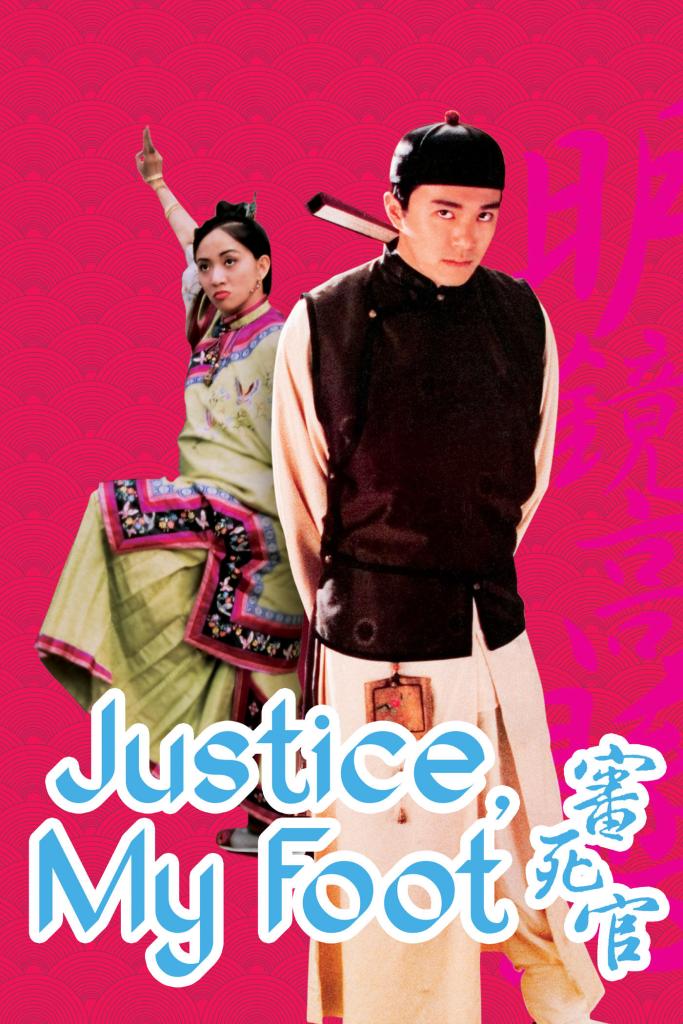
Justice, My Foot! (審死官, Johnnie To, 1992)

Stephen Chow has always been a force of nature but even before making his name as a director in the mid-90s, he contributed his madcap energy to some of the highest grossing movies of the era. Justice, My Foot! (審死官) is very much of the “makes no sense” comedy genre and, directed by Johnnie To for Shaw Brothers, makes great use of the collective propensity for whimsy on offer. Even if not quite managing to keep the momentum going until the closing scenes, Justice, My Foot! succeeds in delivering quick fire (often untranslatable) jokes and period martial arts action sure to keep genre fans happy.

Chow plays unscrupulous lawyer Sung Shih-Chieh who has built himself quite the reputation as a silver tongued advocate, able to talk his clients out of pretty much anything by bamboozling the judges with crazy logic offered at speed. However, his talents have a downside in that he and his wife (Anita Mui) have sadly lost 12 children already which he attributes to a karmic debt for all his finagling. She’s convinced him to retire and move to the country but Sung keeps getting himself involved in other people’s affairs and when his reckless to decision to defend the son of a wealthy man who has caused the death of a pauper in a street fight results in the death of their own infant son, Mrs. Sung has had enough.

That is, until she encounters a series of injustices of her own as a heavily pregnant woman visits her tea shop along with her shady seeming brother. Soon enough the brother tries to convince a random stranger to marry his sister, only to suddenly run off with all of the guy’s money leaving him alone and confused with the mother to be Madame Chou (Carrie Ng). The man gives chase but unfortunately Madam’s Chou’s brother falls off a cliff and creates a whole lot of problems for everyone in the process. Now feeling sorry for a pregnant woman who has been left so completely alone after her own brother tried to sell her and her in-laws murdered her husband, Mrs. Sung changes her mind and convinces her husband to return to the law in defence of this extremely desperate woman.

For a “nonsensical” film, there is actually quite a lot of plot which occasionally becomes hard to follow as it moves freely between set pieces. The jokes come thick and fast and are often of the idiosyncratic Cantonese variety which does not translate particularly well though the delivery helps make up for any lack of understanding. Aside from that Chow packs in as much of his trademark slapstick as possible as he cedes the spotlight to his co-star Anita Mui who provides the martial arts action whilst proving why Mrs. Sung is the more dominant partner. Accordingly there is some typically sexist humour in which Sung is criticised for his “effeminate” cowardice by Mrs. Sung as she dresses him in her clothes, makeup and hairstyle while he escapes. A running joke about two gay servants doesn’t really go anywhere but is actually sort of refreshing in its ordinariness.

Nonsense it may be but there’s a persistent layer of darkness from the throwaway references to the deaths of the Sungs’ children, to the violent punishments inflicted by the court which include both beatings and eye gouging, and then there’s the attempted suicide of Madame Chou apparently gathering enough energy to hang herself from the rafters mere minutes after unexpectedly giving birth in another extended gag. A judicial farce, the film mocks the very idea of justice as the judges are all corrupt noblemen, well known for taking bribes and looking after their own to further their positions. Sung is no better as he plays the system for his own gain, cynically affirming that there is no rule of law and it’s everyman for himself when you live in such an anarchic system. To’s direction is typically ironic with his canted angles and balletic camera even if he is, to a certain extent, playing the Shaw Brothers game. Justice, My Foot! is not a first rate Chow effort, sagging in the middle and getting bogged down in its own manoeuvring, but does bring both the laughs and the punches with a standout performance from Anita Mui to boot.


Celestial Pictures trailer (English subtitles)