Seobok (서복, Lee Yong-ju, 2021) [Fantasia 2021]

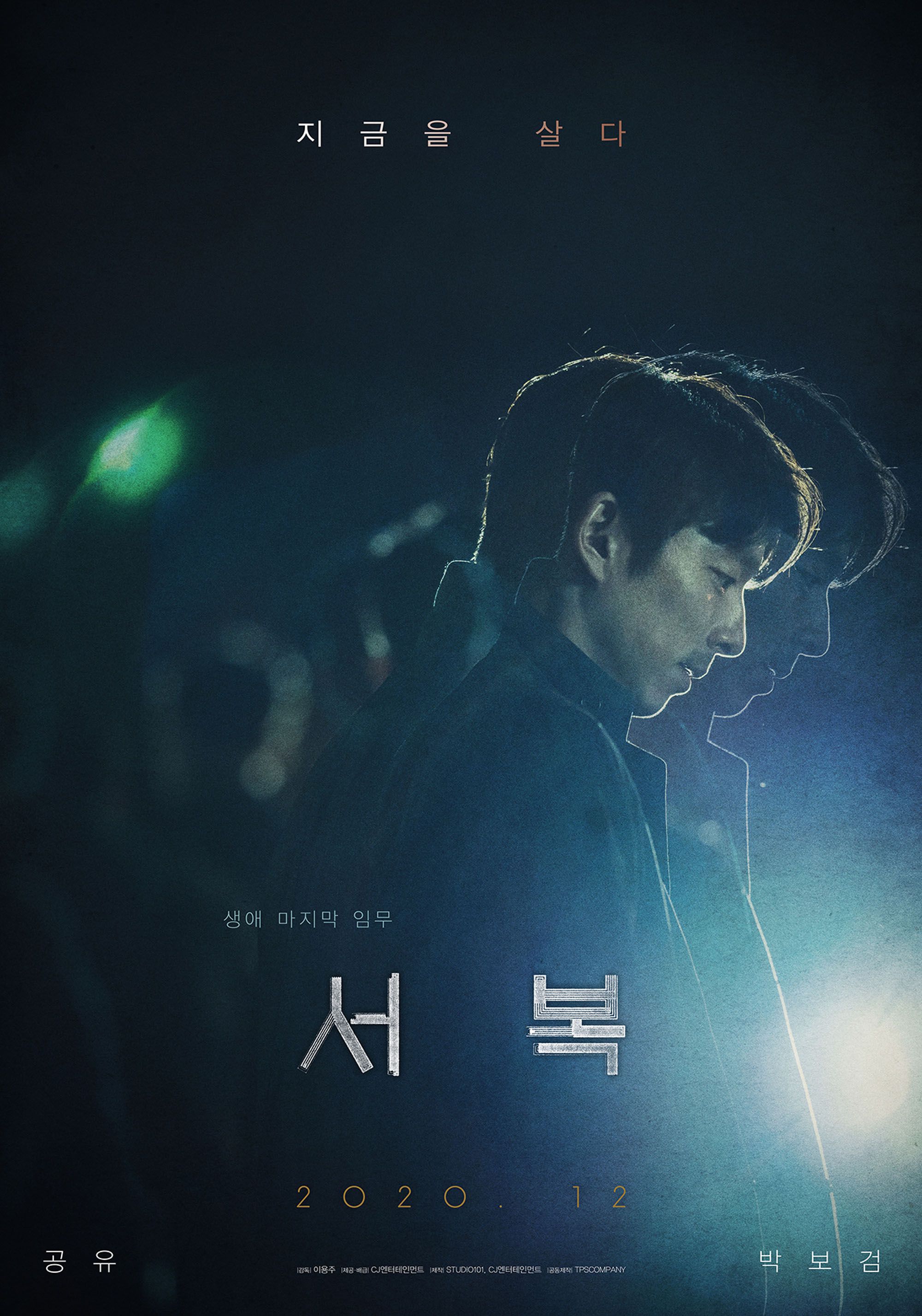
Without death, would life still have meaning? Lee Yong-ju’s high concept sci-fi thriller Seobok (서복) situates itself in a near future Korea in which the possibility of immortality is tantalisingly close only there are some who would prefer it not to be, fearing that without the driving force of mortal dread humanity will lose its ambition and thereafter slide into internecine greed. Then again, humanity hasn’t needed much of an excuse before. 

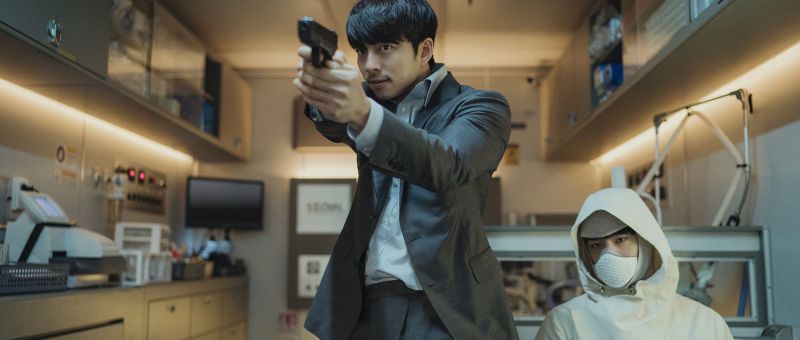
When a foreign scientist is murdered by drone the incident is attributed to “terrorists” presumably objecting to his research into stem cell technology and the possibilities of eternal healing. Fearing exposure, NIS agent Ahn (Jo Woo-jin) advises the project move to a secret location and recruits a former associate, Min Ki-hun (Gong Yoo), to act both as a test subject and a bodyguard. Since leaving the service, Ki-hun has been suffering with a terminal brain tumour that leaves him plagued by debilitating headaches and distressing hallucinations. 

Ki-hun is roped in by the promise of a potential cure for his condition brokered by Seobok (Park Bo-gum), a genetically modified clone who cannot die. Speaking to the dubious ethics of the research project, no one quite thinks of Seobok as “human” though he was born in the same way as any other child. “It’s like collecting insulin from a pig” a doctor later scoffs at Ki-hun’s squeamishness witnessing Seobok hooked up to a chair and milked for his lifesaving properties, realising that this may be his life “forever”. Having lived all his life within the lab, Seobok is filled with wonder for the outside world begging Ki-hun to walk a little slower through a market when the pair are forced on the run together so he can take it all in a little better. He has no clothes of his own, cannot use chopsticks, and is left with nothing to do with his time other than think. The scientists refer to him only as a “specimen” refusing to acknowledge his humanity viewing him solely as a test subject. 

Seobok can’t decide if life in the presence of death is worse than the curse of immortality. Already condemned, Ki-hun no longer knows if he wants to live or is merely afraid of dying. The fear of death is itself a kind of weapon, at least according to those against the project, a force which propels mankind forward in imposing an unavoidable deadline as it struggles against its mortality. Ki-hun, meanwhile, regards his tumour as a punishment, a mark of his moral cowardice in failing to stand up to his boss’ duplicitous practices and blaming himself for the death a friend who was silenced for daring to speak to out. In bonding with Seobok he realises he cannot allow the same thing to happen again in choosing to prioritise his own survival over someone else’s life. Seobok, meanwhile, comes to the opposite conclusion in realising that his existence is potentially apocalyptic and that there is no escape for him because he has nowhere else to go other than back to his “home” at the lab despite coming to an understanding that much of his treatment there constitutes abuse. 

Nevertheless, Seobok is fiercely contested by mysterious foreign forces intent either on capturing or destroying him apparently terrified of the implications of a world in which sickness can be instantly cured and death has become a thing of the past. Such a world would, of course, be very bad news for Big Pharma and the medical industry, yet it’s the philosophical arguments which they claim motivate them in a fear of a permanent and destructive anarchy which is more than a little ironic considering what eventually unfolds in their quest to capture Seobok who, as it turns out, has also developed awesome powers of telekinesis. Rather than eternal life, however, it’s death that the two must learn to accept, Ki-hun reckoning with his trauma while coming to terms with his terminal diagnosis, and Seobok by contrast seizing his humanity by rejecting his immortality. 

Essentially a lowkey existential drama, Lee Yong-ju’s high concept sci-fi thriller boasts excellent production design and large scale action set pieces, yet situates itself in a cold world of paranoia and anxiety in which even mortal dread has been effectively weaponised by duplicitous forces intent on playing god in the permanent power vacuum of the modern society.


Seobok streams in Canada until Aug. 25 as part of this year’s Fantasia International Film Festival.

International trailer (English subtitles)
Midnight in a Perfect World (Dodo Dayao, 2020)

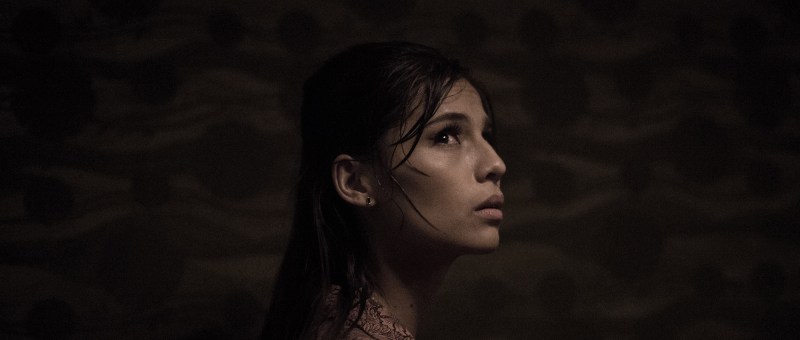
“It doesn’t matter what’s happening as long as nothing’s happening to me” a middle-aged woman exasperatedly exclaims, irritated by a young man’s naive curiosity. A dark exploration of the legacy of Martial Law, Dodo Dayao’s surrealist horror movie Midnight in a Perfect World asks how much of your freedom you’re prepared to sacrifice for security and if the illusion of a “perfect world” in which everything “just works” is worth the price of your complicity. 

In a near future Manila in which all of the city’s infrastructural problems have been solved, conspiracy theorist Tonichi (Dino Pastrano) is convinced that a mysterious force is disappearing people in random parts of the city after midnight, a theory which is only strengthened after his friend Deana rings him in a panic convinced she’s become a victim of his “blackouts” and insisting that someone’s stolen the moon. Tonichi’s other friends, the sensible Mimi (Jasmine Curtis-Smith), reckless Jinka (Glaiza de Castro), and melancholy hospital worker Glenn (Anthony Falcon), are less convinced but caught in the street after midnight the gang have no option but to look for a “safe house” in order to escape the creeping darkness. For unexplained reasons, Tonichi is unable to enter with his friends and finds himself trapped outside in “God’s Blindspot”, as the mysterious Alma (Bing Pimentel), a middle-aged woman and safe house veteran, describes it. 

Alma might in a sense be seen as the embodiment of the Martial Law generation, holing up in her safe house minding her own business and defyingly not caring what’s going on outside determined only to make it through the night. She offers cryptic words of advice to the youngsters, but does not really try to help them outside of trying to prevent them from interfering with her own survival. The so-called safe house has a hidden upper floor apparently invisible from the outside and hiding its own secrets. When one of the gang manages to break open the door and pays a heavy price for their curiosity, Alma merely creeps forward fearfully and closes it again ensuring she is safe from its myriad horrors even in her wilful ignorance. 

Still, you have to ask yourself why if this world is now so “perfect” the youngsters seem so unhappy. Their drug use appears not to be particularly hedonistic but may offer them a degree of escape from a society which has become oppressive in its efficiency. Sensible Mimi cautions Jinka against associating with smarmy drug kingpin Kendrick (Charles Aaron Salazar) who spins bizarre stories of weird aliens while proffering a new drug which supposedly feels “like dying and going to heaven.” On her way from Kendrick’s Jinka passes a group of intense men and immediately pegs them as a hit squad, realising that Kendrick’s hideout has been exposed and she herself may now be in danger in an echo of the extra-judicial killings which have become a grim hallmark of Duterte’s Philippines. “Beta version Martial Law” is the way Jinka later describes it, drug users now taking the place of “activists” as targets not solely of legitimate authority but vigilante bounty hunters. The rumours of strange disappearances, people “erased” from their society, are yet another means of control inviting complicity with an unofficial curfew for a population ruled by fear.  

As if to ram the allegory home, Dayao ends the credit roll with the Martial Law era slogan “Sa ikauunlad ng bayan, disiplina ang kailangan” or “For the nation’s progress, discipline is needed” followed by the English phrase “Never Again”. Yet, it is happening again, the extra-judicial killings of the Duterte era no different from the disappearances of “activists” under Marcos. Jinka refers to the old Manila as the world capital of malfunction, its transformation seemingly brought about by a mysterious force but unlike Mimi who seems otherwise prepared to accept complicity in her “everything works” conspiracy theory remains dejected and suspicious. None of these young people is happy with their new utopia or prepared to pay the price demanded to live in it yet there appears to be no real way to resist and their eventual decision to brave the darkness exposes nothing so much as their naivety. Scored with eerie sci-fi synths and often shot in total darkness, Dayao’s surreal horror show offers a bleak prognosis for the contemporary society unable to escape from the permanently haunted house of an authoritarian legacy. 


Midnight in a Perfect World screened as part of this year’s Neuchâtel International Fantastic Film Festival (NIFFF).

Original trailer (English subtitles)

Extraneous Matter – Complete Edition (異物-完全版-, Kenichi Ugana, 2021)

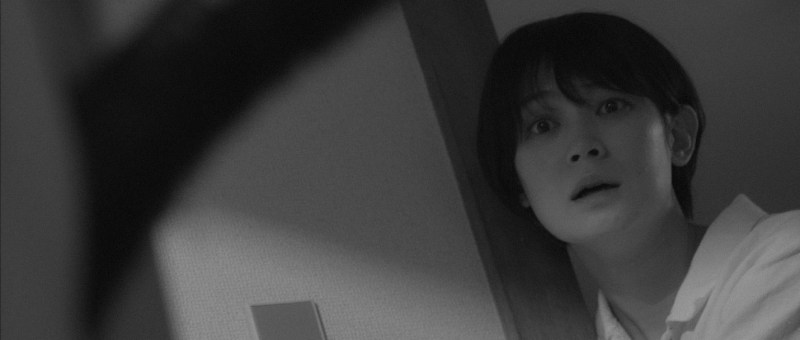
If you suddenly encountered a weird, decidedly alien, octopus-like creature living in your wardrobe what would you do? Would it frighten or intrigue you, would you want to get rid of it as quickly as possible or look after it for the rest of your life? The presence of these strange creatures provokes different responses from each of the heroes of Kenichi Ugana’s Extraneous Matter – Complete Edition (異物-完全版-, Ibutsu – Kanzenban-), an expansion of his earlier short of the same title. Drawing inspiration from the early work of Shinya Tsukamoto, Ugana’s crisp, academy ratio black and white photography makes use of an ironic score mimicking classic Hollywood melodrama lending a mythic quality to this lowkey tale of alien sex fiend invasion and human loneliness. 

For Kaoru (Kaoru Koide), heroine of the first segment, the creature seems to signify her sexual frustration and sense of existential inertia. For her, every day is the same. She wakes up alone, makes herself a cup of coffee and eats a pastry in front of the television which always seems to be carrying news of a celebrity sex scandal, and then starts work with her friends (for some reason working at her apartment) who gossip about their various sugar daddies. Her boyfriend (Shunsuke Tanaka) apparently lives with her, but immediately disappears right after dinner and actively avoids intimacy. Were it not for later events, we might wonder if the creature is somehow a transformation of the boyfriend, Kaoru herself unsure whether it was a dream, first violated but then apparently satisfied by the alien tentacles which later begin satisfying all of her friends. 

If the “extraneous matter” of Kaoru’s life was indeed her unfulfilled desire and internalised shame, then for the barmaid (Momoka Ishida) of the second sequence it’s perhaps a lack of excitement while for the young man (Kaito Yoshimura) who brings a creature zipped into a holdall to a pub to meet his ex-girlfriend (Makoto Tanaka) it’s more a desire for familial intimacy or a sense of commitment that may previously have frightened him. He appears to want to get back together with the young woman, apologising for his past behaviour while explaining that he found the creature in his wardrobe scary to begin with but later became fond of it and is convinced he could raise it with her help, ordering a parfait to feed it because he’s discovered it has a sweet tooth and particularly likes strawberries. He swats the errant tentacles away as if shushing a naughty baby as the woman too begins to coo over it, shovelling cream from the parfait into its mouth with a spoon. 

But then, the extraneous matter of the lives of others can also present a challenge to the social order. Some wish to eliminate the alien threat, a young man working at a factory (Shuto Miyazak) charged with disposing of alien bodies eventually conflicted on discovering one alive sure that he can hear the creature begging him for help. Together with a like-minded colleague (Duncan) he determines to save it and help it return to its people, culminating in an unexpected ET moment which perhaps realigns the “alien” threat with a social other as the two compassionate employees evade the authorities to get the creature to safety despite having been betrayed by their female colleague (Mizuki Takanashi). 

So, what is the “extraneous matter” of our lives, a kind of loneliness, a sense of “alienation”, or of emptiness in an “absurd” world of infinite mundanity? Perhaps all of the above, Kaoru returning to her lonely life apparently missing the strange and unidentified creature only to re-encounter it in an unexpected place and discover it has not forgotten her. Gently ironic, Ugana’s sci-fi-inflected aesthetic begins with grim body horror before progressing into something warmer, for good or ill becoming fond of its alien invaders as compassionate humans refuse to reject them embracing in a sense these “extraneous” sides of themselves they may have previously found disturbing in search of more fulfilling lives. Elegantly composed in its classic academy ratio frame with its ironic bonsai pillow shots and continuing sense of unease, Extraneous Matter nevertheless ends on a note of hope rather than threat even as the invaders apparently lurk among us but bringing with them comfort even in the reflection of our unmet desires. 


Extraneous Matter – Complete Edition streamed as part of this year’s Nippon Connection.

Original trailer (English subtitles)

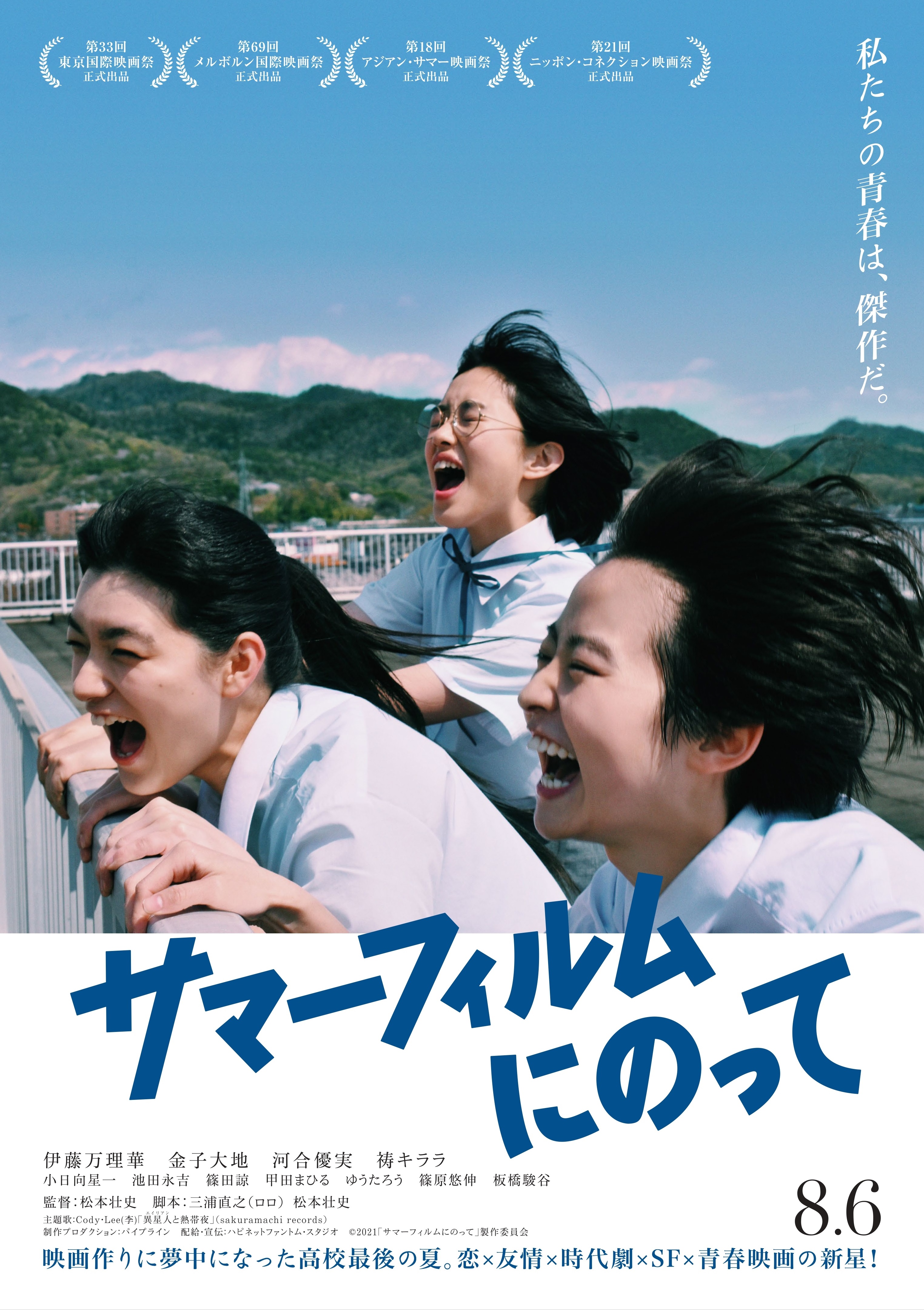
It’s a Summer Film! (サマーフィルムにのって, Soshi Matsumoto, 2020)

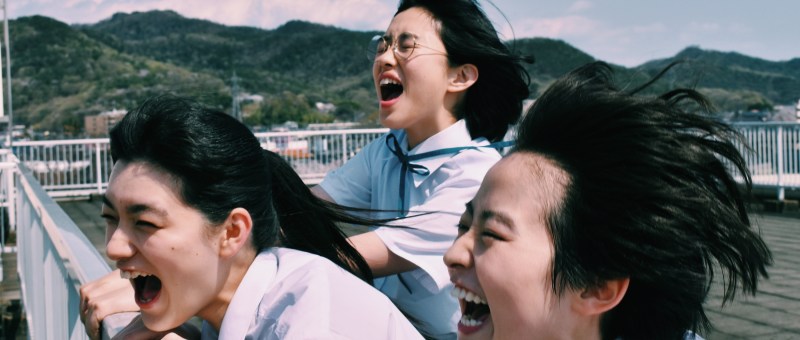
“Movies connect the present with the past through the big screen” according to the jidaigeki-obsessed heroine of Soshi Matsumoto’s charming sci-fi-inflected teen movie It’s a Summer Film! (サマーフィルムにのって, Summer Film ni Notte). True to its title, Matsumoto’s whimsical drama very much belongs to the grand tradition of high school summer movies as its youthful heroines contemplate eternity, romantic heartbreak, and artistic fulfilment while secretly plotting to best their vacuous rival by filming their very own teen samurai movie ready in time for the all-important school cultural festival. 

Aspiring director Barefoot (Marika Ito) is completely obsessed with classic samurai movies, arguing with her similarly devoted friends about who is hotter Shintaro Katsu or Raizo Ichikawa. She is a key member of the school movie making club, but intensely resentful of star player Karin (Mahiru Coda) who won the tender to make the film for this year’s cultural festival with a sappy teen romance which mostly seems to involve repeated scenes of the central couple loudly declaring their love for each other. Barefoot thinks a film should convey love without words and has written a script for a teen samurai movie in which adversaries become too emotionally invested in each other to engage in the expected final confrontation. All she’s lacking is a star and after spotting a handsome guy apparently as moved by a local rep screening as she is decides she’s found her man. What she doesn’t know is that Rintaro (Daichi Kaneko) is a secret time traveller from a future in which she has become a renowned master filmmaker but film itself sadly no longer exists. 

Being from the future and all explains Rintaro’s reluctance to star in the film, dropping accidental hints that he’s from another place as in his amusement that humans still staff removal companies and total mystification by the word “Netflix”. Yet he too is completely obsessed with classic jidaigeki from the heyday of the genre which had largely gone out of fashion by the early 1980s. As many point out, Barefoot’s hobby is slightly unusual, though she learned her love of chanbara from her grandma, receiving messages from the past she hoped to pass on to the future. Gathering most of the other rejected, outsider teens from a boy who looks about 40 to a pair of baseball nerds who can correctly guess the player from the sound of a ball hitting a glove and a bleach blond biker, she assembles a team to make her movie dreams come true as if to prove there’s something more out there than the, as she sees it, vacuous high school rom-coms favoured by the likes of Karin. 

Among the series of lessons she finally learns is that Karin need not be an adversary but could be a friend if only she look beyond her snootiness and resentment of the popular crowd even if Karin’s all pink, needlessly extravagant and egotistically branded crew shirts don’t do much to dispel Barefoot’s perception of her as entitled and self-obsessed. Another lesson she learns is that she’s not as disinterested in romance as she thought she was, though falling for Rintaro leaves her with a secondary dilemma realising that he’ll eventually have to return to his own times while also contemplating what the point of the future even is if they don’t have movies there. What she’s going to do with the rest of her life if the art of cinema is already obsolete? 

With some ironic help from Karin, what she realises is that even if something is destroyed it doesn’t disappear, films live on in the memories of those who saw them who can then take their memories with them into the future. Where her first draft had ended with an emotional anti-climax that saw her heroes too emotionally involved to engage in conflict, she now realises that samurai movies are love stories too and that “killing is a confession of love” in a slightly worrying though not altogether inaccurate take on the homoerotic subtext of the chanbara. A charmingly whimsical coming-of-age tale filled with meta touches from the constant references to classic jidaigeki to the heroine’s sci-fi-obsessed sidekick who seems to have an unrequited crush on her best friend idly reading The Girl Who Leapt Through Time, It’s a Summer Film! more than lives up to its name in its cheerful serenity as the teenage old souls defiantly learn to claim their own space while connecting with each other as they contemplate love and transience in the eternal art of cinema. 


It’s a Summer Film streamed as part of this year’s Nippon Connection.

Original trailer (English subtitles)

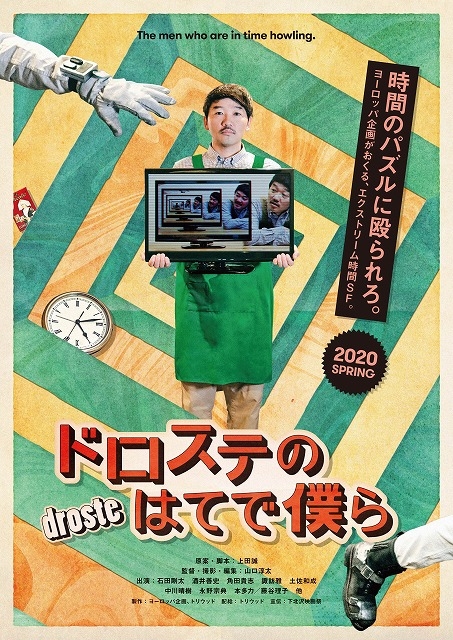
Beyond the Infinite Two Minutes (ドロステのはてで僕ら, Junta Yamaguchi, 2020)

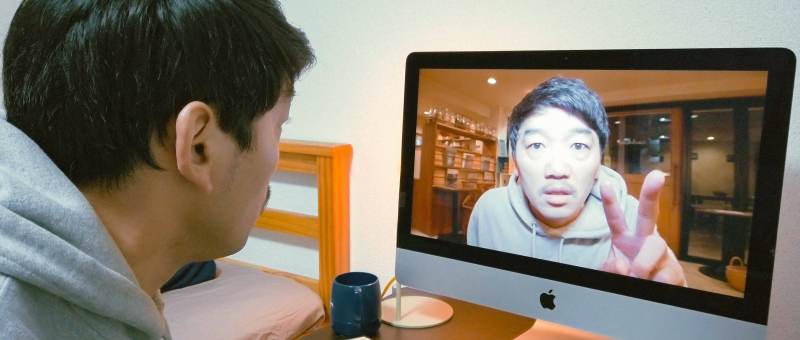
If you had the opportunity to talk to your future or past self, what would you want to say to them? There are many advantages to having some knowledge of things still to come, finding out next week’s winning lottery numbers for example or who’s going to win the Grand National, but on the other hand mightn’t you start to feel as if your life has no freedom or purpose if you find yourself compelled to do exactly as your future self advised? That’s something the future-hating hero of Junta Yamaguchi’s farcical time travel comedy Beyond the Infinite Two Minutes (ドロステのはてで僕ら, Droste no Hate de Bokura) can’t help feeling as he finds himself trapped in an infinite loop of communication with the him from two minutes previously. 

Granted, getting knowledge of what’s going to happen in two minutes is not actually that useful. Cafe assistant Aya (Riko Fujitani) makes a point of asking her future self what the next era is going to be after Reiwa ends forgetting that it is almost certainly still Reiwa in two minutes’ time. Then again, it could help with very short term decisions such as whether or not to confess your feelings to a crush or which spots to scratch on your scratch card to win the best prizes, but maybe knowing only the immediate consequences of your actions isn’t very helpful either. Let’s say your future self finds a bunch of money and tells you to go get it, only the money belonged to gangsters and now you have a big problem with a two-minute head start. And then, can you really trust your future self? Maybe they aren’t being completely honest with you for reasons you may well understand in two minutes’ time. In any case, maybe you have better things to do than be struck in an infinite dialogue loop parroting back what you’ve just been told by your future self to your past self. Maybe you should learn to live in the moment. 

That’s something cafe owner Kato (Kazunari Tosa) has had trouble doing, later confessing that he hates the idea of knowing what lies ahead largely because he over invested in conspiracy theories and prophesies about the end of the world and therefore failed to plan very much for his future. His friends, however, are childishly excited by the discovery that his upstairs TV is linked to the downstairs with a two-minute delay, realising they can extend its range through the “Droste” effect to send themselves messages from further into the future, but then again how long do they really want to keep all this up slavishly reenacting the same conversations afraid of deviating from the original path lest they create a time paradox or provoke some other kind of disaster. They find themselves trapped in the middle as if the present no longer existed and had become merely a conduit between an extremely near future and very recent past. 

Yamaguchi captures their farcical dilemma with an ironic immediacy, filming with an elaborate one shot conceit that adds to the sense of wonder as the gang find themselves continually running upstairs and down to talk to themselves from either side of the time divide. The uncanny absurdity is the film’s greatest asset, placing this extremely bizarre scientific anomaly in the centre of an ordinary hipster cafe run by a guy who really wants to be a musician and is too shy to ask out the girl who works in the hairdresser’s next-door (Aki Asakura). By the time a pair of strange-looking gentlemen turn up claiming to be from the time travel police insisting that the guys stop all this nonsense before they cause a serious problem in the space time continuum you might come to sympathise with Kato’s resentment in feeling as if the future is controlling him but then there are always unexpected ways to rebel against fate and who knows, maybe your romantic destiny will work out after all with a little old-fashioned conversation only tangentially assisted by sci-fi hijinks. A charmingly whimsical take on time travel shenanigans and their existential dilemmas, Yamaguchi’s meticulously plotted farce is an indie gem.  


Beyond the Infinite Two Minutes streams in Germany 1st to 6th June as part of this year’s Nippon Connection.

Original trailer (English subtitles)

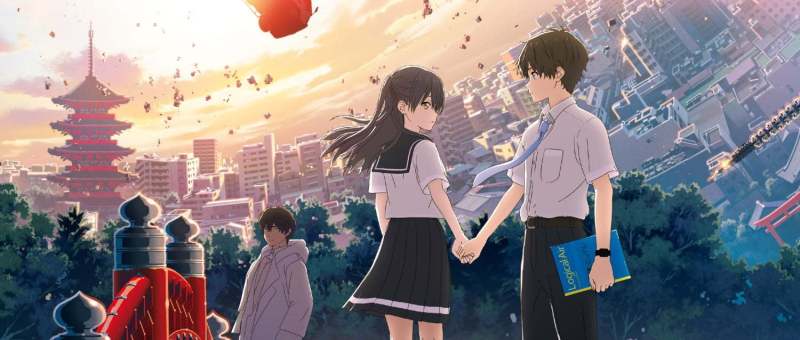
Hello World (ハロー・ワールド, Tomohiko Ito, 2019)

“Hello World” is a phrase familiar to many as the first line of text given to a new program. It signals firstly that the code is functioning correctly, but also expresses a sense of excitement and positivity as if a new entity were standing on the shores of an unfamiliar land eager for adventure. Tomohiko Ito’s sci-fi-inflected anime carefully places the phrase not at its beginning but at its conclusion, affirming that the hero has managed to step into himself, discover his place, and come to an understanding that grants him a sense of agency and possibility in a brand new world that is in a sense of his own creation and choosing. 

Before all that, however, Naomi Katagaki (Takumi Kitamura) is a textbook “regular high school boy” who fears he is just an extra in his own life quietly reading away at the back of the classroom and last in line in the dinner queue. Reading a self-help book on becoming more assertive helps less than he might have hoped, but two changes are slowly introduced into his life albeit passively the first being he is press-ganged onto the library committee and the second that he is approached by a strange man who claims to be himself a decade older. Future Naomi (Tori Matsuzaka) claims not to have come from another time but from “reality”, explaining that the world Naomi currently inhabits is a simulacrum designed to perfectly preserve the city of Kyoto as a digital archive housed inside supercomputer Alltale which has infinite memory. His older self tells him that he is fated to fall in love with classmate Ruri (Minami Hamabe) but she will then be killed by a lightning strike at a festival in three months’ time. Though their actions will have no effect on the “real” world, Future Naomi claims it’s enough for him to “save” Ruri even if it’s only virtually seemingly caring little that he will in fact be completely ruining the Chronicle Kyoto project by introducing a note of the inauthentic perfectly primed for the butterfly effect. 

In any case, what Naomi eventually discovers is that you can’t always trust “yourself” especially if you’re apparently merely data and therefore perhaps infinitely expendable. Young Naomi doesn’t seem particularly fazed by the revelation that his world is not “real”, and is perhaps overly trusting of his new mentor’s guidance following his instructions to the letter in accordance with the “Ultimate Manual” he’s been given to facilitate his romance with Ruri whom he originally claims not to fancy because like many immature teenage boys he only likes “cute” girls like transfer student Misuzu (Haruka Fukuhara) who literally sparkles while Ruri is like him a wallflower obsessed with books, shy and with an aloof, slightly intense aura. What Future Naomi offers him is pure male adolescent fantasy wish fulfilment in gifting him both the means for romantic success and literal superpowers in the form of the Hand of God which allows him to conjure objects from the digital world and will apparently help to save Ruri from her cruel fate.

The universe, however, has other plans. Soon enough he’s being chased by the forces of order, Homeostasis System Droids, trained to eliminate and correct inconsistencies in data appearing as oversize policemen in kitsune masks. Nothing in Naomi’s world makes much concrete sense, even as he’s been told he’s the creation of a simulacrum. Why would Future Naomi fetch up three months before the accident to train him rather than simply altering code, why would someone bother to create these universal super powers, and what exactly are the connections between this world and the “real” from which Future Naomi claims to have come? Some of this might well be explained by a final twist which turns everything we thought we knew upside down, implying perhaps that the gaps and contradictions we see are down to the vagaries of analogue rather than digital memory mixed with trauma both physical and emotional. Nevertheless, it turns out that Naomi’s mission is less to save Ruri than to save himself twice over, allowing Future Naomi to find an accommodation with the traumatic past while essentially giving birth to a “new world” of adulthood in which he is the fully actualised protagonist rather than the bit-playing extra he’s always believed himself to be. 

Featuring character designs by Kyoto Animation stalwart Yukiko Horiguchi, Hello World’s 3D animation fusion of 2D reality and the digital realm makes for interesting production design as Naomi’s world eventually crumbles around him in multi-coloured pixel while he’s chased by giant neon hands under an angry red sky. Nevertheless, its wilful incoherence often proves frustrating even if its myriad plot holes might be explained in part by the final revelation which itself introduces another note of bafflement in its parting scene. Asking some minor questions about the collection, use, and storage of personal data, archival practice, the limits of digital technology, and the nature of “reality”, Hello World is nevertheless a coming of age romance at heart in which the hero saves himself twice over while learning to rediscover a sense of wonder in future possibility.


Hello World streamed as part of the 2021 Japan Foundation Touring Film Programme.

International trailer (English subtitles)

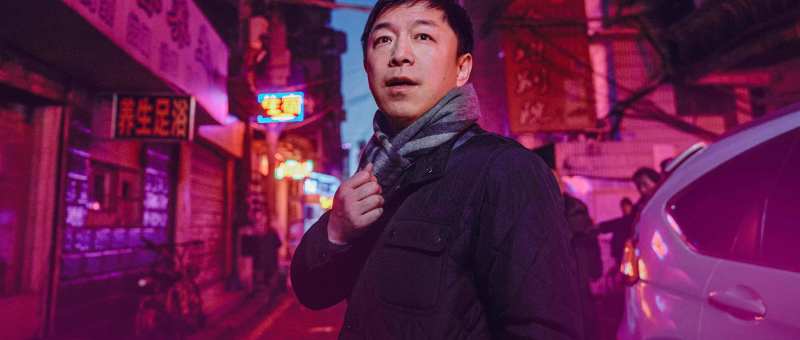
Gone with the Light (被光抓走的人, Dong Runnian, 2019)

What is love, and in the end does it really matter? It’s a question the mostly middle-aged couples of Gone with the Light (被光抓走的人, Bèi Guāng Zhuāzǒu de Rén) who perhaps assumed they were past such existential questioning find themselves contemplating after an unprecedented event causes the disappearance of seemingly random people from all over the world giving rise to the rumour that those taken were those truly in love. But if that’s so, what does it mean for the overwhelming majority left behind, suddenly lonely and uncertain wondering if they’ve been spared or judged and found wanting for their lack of emotional fulfilment. 

At 10am one spring morning, a brief flash of light creates a slight temporal disturbance causing a small percentage of the population to simply vanish. No one knows what happened or where they’ve gone, but the connection is later made that many seem to have been taken in pairs giving rise to the theory that the disappeared are the only true lovers. This is a minor problem for some of the left behind who have lost spouses twice over, not only literally but emotionally in realising that their loved one was in real, deep love with someone else. Meanwhile, those not taken begin to wonder why, questioning the validity of their relationships, doubting that their loved ones really love them but not quite daring to ask the same question in reverse. 

Dong opens the film with a vox pop session questioning several people about the nature of love, some of whom we’ll get to know better and others not. Our hero, school teacher, Wenxue (Huang Bo), unconvincingly claims that he does not put any stock in the admittedly unscientific theory that only true lovers were taken and that the rumours have not affected him or his wife but as we later see they have profoundly unsettled his unexceptional, middle-class family life which was at least superficially happy or perhaps merely unhappy in the most ordinary of ways. Before the light, we see him annoy his wife by waking her up smoking in bed before they have perfunctory, routine sex over which they discuss Wenxue’s hopes for promotion and whether or not it’s appropriate to schmooze with the headmaster to smooth the path. The fact they weren’t chosen eventually becomes a kind of embarrassment, the promotion going to a man whose wife disappeared on him for the slightly strange reason that being betrayed in love somehow grants him the moral high ground. Wenxue, like many, goes to great lengths to excuse himself, getting a fixer to photoshop pictures of his wife along with train tickets to make out she was in another town when the light descended.

Meanwhile, Li Nan (Wang Luodan), a woman who was in the middle of trying to divorce her husband when the light struck finds herself accosted by his mistress (Huang Lu) demanding to know where he is seeing as he did not ascend with her. The obvious conclusion is that he had another woman, but the quest forces each of them to reassess their true feelings towards the missing man, the mistress desperate to prove she wasn’t just an “adulteress” but a woman in love, and the wife that she really is ready to let him go. A young woman (Li Jiaqi) who threatened to commit suicide by jumping off a roof when her parents tried to stop her marrying her boyfriend (Ding Xihe) suddenly doubts her feelings when her parents disappear together while she and the man she thought she loved are left behind. A petty thug (Bai-ke), in the only subtle implication of a same sex love, becomes obsessed with the idea that his friend has been murdered by a TV presenter who had been bothering him and his death has been covered up to look like one of the disappearances, perhaps again hoping to find evidence against a romantic rejection. 

Talking to another man in a similar situation Wenxue is given a dressing-down, reminded that he’s been extremely self-involved and that the problems he’s now able to see in his marriage thanks to the light were there all along, only now he’s refusing to face them in a much more direct way. He couldn’t or chose not to see that his wife was lonely and filled with despair while flirting with an equally lonely woman at work. His confrontation with her provokes his only real moment of emotional reckoning as they each reflect on the fantasy of romance and its capacity to dissipate when realised. Walking in on his teenage daughter getting dumped for the first time he’s perhaps in the best position to offer advice, even if it’s of the fairly prosaic kind to the effect that she’ll get over it in time. “Your lies make me ashamed” she’d fired back at her parents’ middle-aged hypocrisy, a very ordinary marriage in which perhaps the “love” has gone, in one sense, but equally might be succeeded by something else. “It’s alright, you will know it in the future” Wenxue tells his heartbroken daughter but might as well be talking to himself, beginning to feel the love after love in conceding that perhaps this is what “love” is rather than any kind of “rapture” literal or otherwise. A beautifully pitched meditation on the consequences of love, the madness, violence, and loss, Gone with the Light finds its release in stillness and a gentle contemplation of that which remains when everything else is burned away. 


Gone with the Light streamed as part of this year’s New York Asian Film Festival.

Original trailer (Simplified Chinese subtitles only)

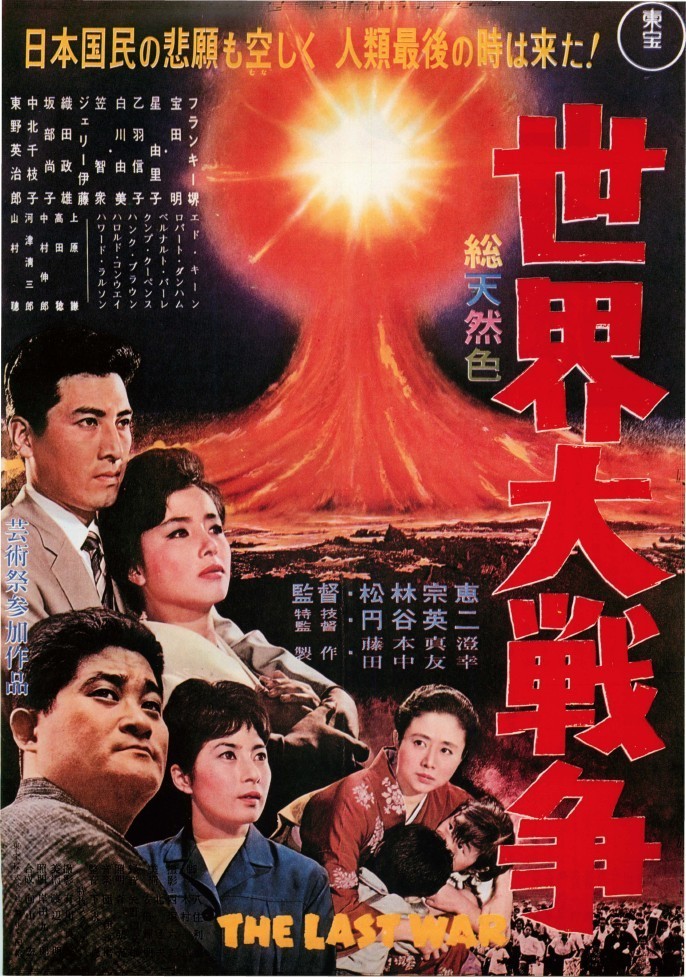
The Last War (世界大戦争, Shue Matsubayashi, 1961)

As The Last War (世界大戦争, Sekai Daisenso) points out, by 1961 16 years had passed since the end of World War Two during which Japan had begun to rebuild itself, heading into a period of unprecedented economic prosperity with the Olympics already on the horizon. But the early 1960s were also a time of increased international tension as the Cold War mounted and many in Japan feared being pulled into another conflict especially with the Korean War not quite so much in the distant past. Toho had become the home of special effects cinema and such films were often coloured with strong messages of peace and social responsibility as humanity banded together to combat an existential threat be it a giant monster or mad scientist. The Last War is no different in that regard, but sadder in showing us that the end of the world may come suddenly and without warning and that if we for a second become complacent it could already be too late to stop it. 

Patriarch Mokichi (Frankie Sakai) has made a decent life for himself after the war working as a driver. His wife, Oyoshi (Nobuko Otowa), is in poor health and he dreams of buying a house by the sea where she can live in comfort. Meanwhile, they have a grownup daughter, Saeko (Yuriko Hoshi), born before the war, and two much younger children, a girl, Haru, and boy, Ichiro. They are a very happy, very ordinary family who are beginning to think that their days of hardship are finally behind them and they have escaped the war’s shadow. The only note of potential conflict lies in the fact that Saeko wants to marry a family friend, Takano (Akira Takarada), a sailor, and is afraid of Mokichi’s reaction, especially as he keeps trying to set up matches for her. 

In fact, having lived through the war Oyoshi and Mokichi are certain that nothing like that is going to happen again, even if the younger generation is filled with anxiety. “Who could ever profit from the destruction of the Earth?” Mokichi not unreasonably asks, signalling his newly consumerist world view. Mind you, he adds, everyone knows the alternative to calamity is hard work, “you have to work hard for peace”. 

Mokichi has indeed been working hard, but has perhaps begun to neglect other areas of his life in his desire to become rich even if that desire is only to make his family more comfortable and give his children better opportunities than he had. Brought over to see a new TV set now on sale, he scoffs that he already has one, “Who needs a second TV?” he asks, but on hearing the news that tensions are rising because a military plane has gone down off the coast of Africa, his first thought is to get on the phone to his broker and junk his real estate stocks for shares in aeronautics. Mokichi is unconvinced by an old man selling potatoes on their street who apparently lost everything in Hiroshima and has since become a devoted Christian donating most of his profits to anti-nuclear charities, describing him as just “showing off”, firmly believing that nothing like that is ever going to happen again. “I cannot accept it” he says, “what would be the point of the aspirations of humble folk like us if we’re all destined to go poof into extinction?”.  

As the only nation to have directly experienced nuclear war, the intense fear of its recurrence is indeed understandable. If a nuclear war escalates, it will be the end of everything. All human endeavours over thousands of years will be mere dust. There will be no weddings, no births, no graduations, no grand discoveries, just nothing. When the bomb does indeed hit, the scenes of devastation must have proved extremely traumatic for many in the audience as buildings crumble ominously, the sky turns a fiery red, the streets run with lava, and we can see the outlines of charred bodies lying among the wreckage. The tip of the Diet building sits neatly atop the rubble as if in rebuke of the political failures which, despite the best efforts of the Japanese politicians who make an effort to govern responsibly and are honest with the electorate while advocating strongly for peace through diplomatic channels, have led to the literal end of the world. “You have to work hard for peace” the closing title card reminds us. “We can stop this before it happens, but we have to work together”. “I won’t let you destroy our happiness” Mokichi had screamed at the void, but in the end he was powerless. All it takes is a minor slip, and the world as we know it will cease to be.


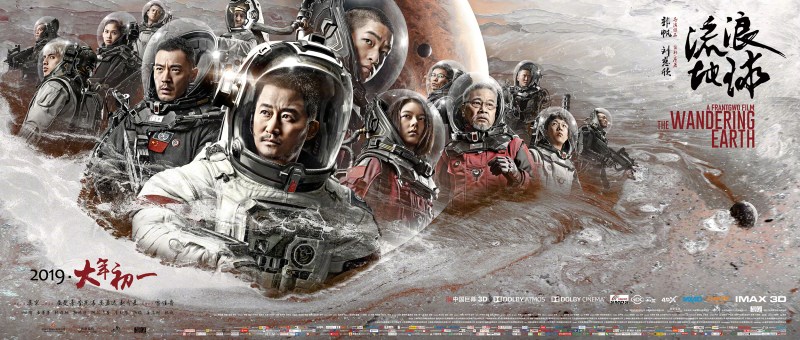
The Wandering Earth (流浪地球, Frant Gwo, 2019)

Wandering Earth poster 5Chinese cinema has not been as averse to science fiction as some would have it, but it’s true enough that The Wandering Earth (流浪地球, Liúlàng Dìqiú) marks a bold new chapter in its ambitious attempt to take Hollywood on at its own game. Adapting the novel by China’s premier sci-fi author Liu Cixin, Frant Gwo’s third feature is an interesting take on the New Year movie in which new beginnings are sought and families desperately try to reunite to see them in, only this time they do so against the backdrop of impending apocalypse as the universe threatens to swallow us whole.

Far in the future, the vast expansion of the sun will soon consume the Earth. The Wandering Earth project aims to save humanity by attaching jet thrusters to the Earth’s surface to push it out of harm’s way yet this safety measure has also had grave effects on the planet’s climate rendering the surface uninhabitable. 17 years previously, astronaut Liu Peiqiang (Wu Jing) left his 4-year-old son behind in the care of his father (Ng Man-tat) to take up a position on the space station intended to safeguard the Earth’s future. Now 21, Liu Qi (Qu Chuxiao) has grown up into a resentful, rebellious young man intent on seeing the surface for himself if only not to be home when Peiqiang finally returns to Earth. A natural disaster, however, leaves him stranded with his adopted teenage sister, Duoduo (Zhao Jinmai), just as the Earth is inconveniently drawn into a fatal collision course with Jupiter.

As much about fatherhood as it is about survival of a species, The Wandering Earth centres itself on the angry figure of Liu Qi who has been forced to live his entire adolescence underground and has come to deeply resent the memory of the father who allowed his sickly mother to die and then abandoned him. Peiqiang, meanwhile, has spent 17 years on the space station solely in order to save his son’s future, dreaming of the day they will finally be reunited. He cares little for his own life and has already spiritually handed the baton on to the next generation whose descendants, he hopes, may finally see a kinder sun rise over a new Earth.

This kind of selflessness is also reflected in the film’s refreshingly globalist outlook in which the world, no longer divided, has learned to act as one in order to combat the extreme threat from its own sun. The resistance may be China led, but depends on common endeavour and personal sacrifice. When a last ditch effort is required, the government cannot order its forces away from their families but can offer them the individual choice to keep fighting for survival, bringing teams from all corners of the Earth together as they descend on Indonesia where there just might be a one in a million chance to strike back at Jupiter and escape its gravitational pull.

Meanwhile, Peiqiang is up still up on the space station all alone and powerless while the annoyingly efficient operating system MOSS attempts to frustrate his efforts to save the Earth in service of its own mission to preserve humanity’s legacy. MOSS has made a series of calculations and given up, but giving up is not a very human trait and Peiqiang won’t do it. He makes impassioned speeches to the French-accented global authorities and ponders the best way to ensure his son’s survival even at the cost of his own but finally can only resist by literally attacking the system in overruling MOSS and acting on his own initiative.

A New Year tale through and through, The Wandering Earth is a celebration of family, togetherness, and home but is careful to dial down the patriotism for an insistence on the importance of mutual cooperation between peoples in order to combat existential threat with the spectre of climate change always on the horizon. The point, however, is that it is important to keep hope alive, if not for yourself then at least for others rather than give in to nihilistic despair. The Wandering Earth, grand and ambitious in scale, marks a new dawn of its own in terms of Chinese blockbuster sci-fi and does so with refreshing positivity as it places its hopes in human solidarity and individual sacrifice over jingoism and self-interest.


Currently available to stream on Netflix in the UK and possibly other territories.

Netflix trailer (English subtitles)

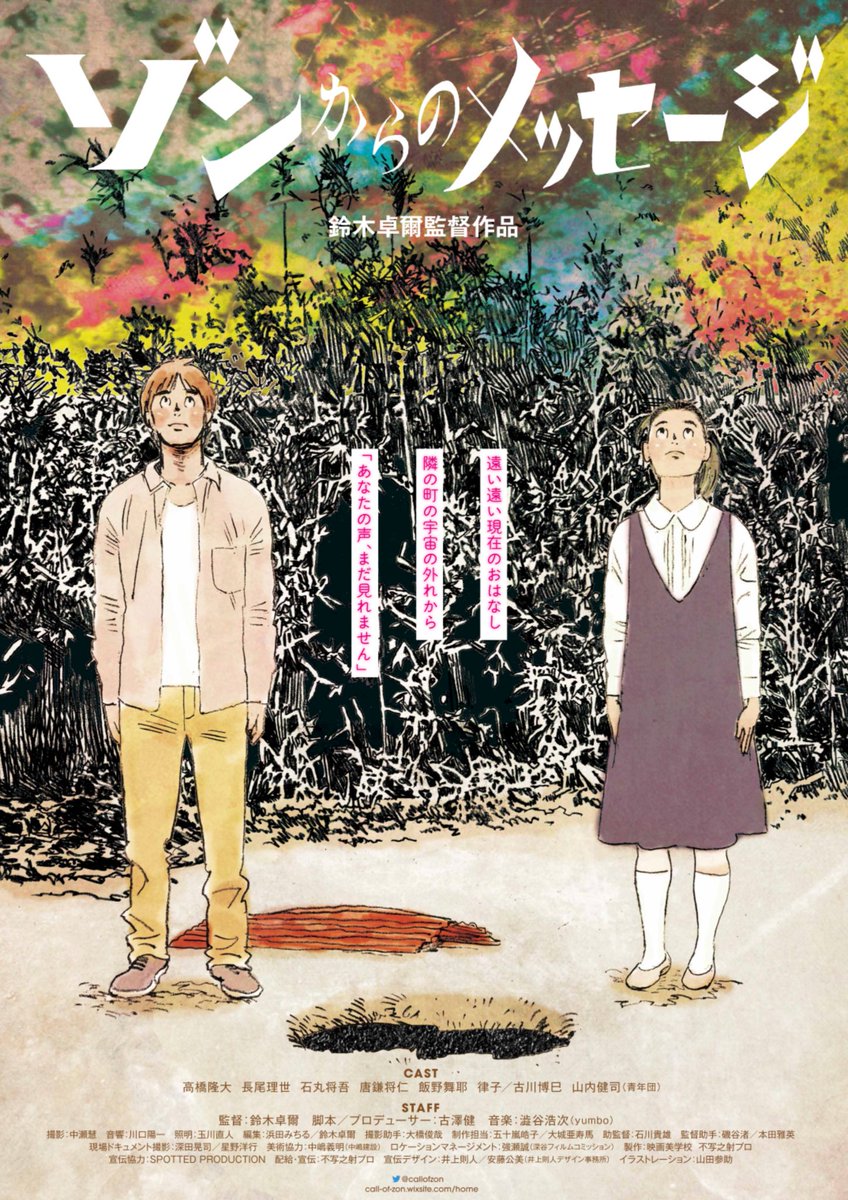
The Call Of Zon (ゾンからのメッセージ, Takuji Suzuki, 2018)

The Call of Zon posterWalls – do they constrain or protect? The residents of Yumetoi which has been sealed off for the last two decades by a mysterious force known as “Zon” cannot help but ask themselves the question. No-one claims to know what Zon is or why it arrived, but everyone has their own opinion on its existence from the youngsters brimming with curiosity about what lies outside to the older residents who think perhaps its best not to question the thing which keeps you safe.

Among the curious, intrepid youngster Ippo (Ryudai Takahashi) has got his hands on a videocamera and begun investigating the local environment, venturing well beyond “safe” limits in his quest for truth which is how he encounters the eccentric figure of Kantaro (Shogo Ishimaru) – a strange middle-aged man living in a disused building right next to the Zon barrier. Thanks to Kantaro, Ippo learns that Zon likes to throw things out into the world and is particularly intrigued by a strange black box (it’s a VHS tape but he’s too young to know what that is) he thinks might be some kind of message.

The small town of Yumetoi is a wholesome, nostalgic place filled with happy, innocent people who ostensibly want for nothing. Most of them have become used to Zon and accepted it as their new reality, neither resenting it nor particularly feeling its presence because they have little desire to leave. Others however, like Ippo, are intensely curious and begin to doubt everything they’ve been taught, wondering if Zon is really “dangerous” at all and if what lies outside of its walls really is nothing more than the land of the dead or if a lie has been spun to keep them from venturing forth.

Conceived in the wake of the 2011 earthquake and tsunami, Zon makes a subtle point about invisible barriers and the business of sealing off “unsafe” territory in wondering which side of the wall one is really on. Many residents of Yumetoi, like Kantaro, think Zon keeps them safe from external “evil” (as evidenced by adult magazines, apparently), while Ippo wonders if it might not be the opposite and it’s Zon keeping them prisoner. In any case, he wants to understand the message even others warn him that it’s best not to poke the beast and he’s better to let things lie. Nevertheless, he begins trying to communicate with the strange manifestation of existential dread through its own medium – by sending it video messages asking for greater clarification.

His quest has a profound impact on the town at large and most particularly Kantaro along with his former friend turned creepy cult minister running “rebirth” workshops, Ninomiya (Masahito Karakama). The pair “lost” a friend to Zon when he decided to cross the barrier in search of his own sound never to return. Though many have ventured outside, none have made it back. Some believe they died, others that they merely could not return, but still there are those who wait for them, like Michiko – the owner of Bar Yu who regards it as her calling to provide a place to which those who are lost can return.

Shooting in a constraining 4:3 and heightened colour palate, veteran director Takuji Suzuki adds an unexpectedly meta dimension to his already surreal exploration of physical and mental imprisonment in allowing the film crew to to appear on screen and including scenes of retake and rehearsal. In a roundabout way, the film crew itself becomes a manifestation of “Zon” as it literally captures the dreamy world of Yumetoi from outside as if trapping it in cinematic amber. Zon in itself may be a state of mind, a manifestation of the complex push and pull between the anxious need for safety and natural longing to understand the nature of the world, but it also serves as a literal barrier to transgressive thought as the more conservative residents resent any attempt to question its true purpose while the curious young insist on change and inquiry. The gift of Zon may be a kind of paradise but it’s one that comes at a price that the young are increasingly unwilling to pay. Zon’s message is its own undoing, urging the curious to free themselves from the accepted order by questioning its authority and finally finding the courage to step outside its bounds.


The Call of Zon was screened as part of the 2019 Nippon Connection Film Festival.

Original trailer (no subtitles)