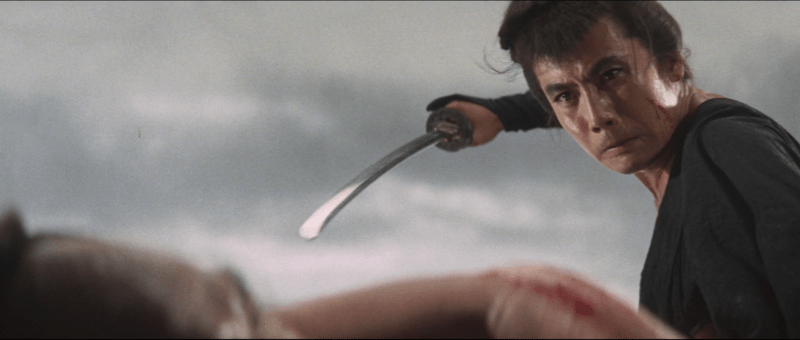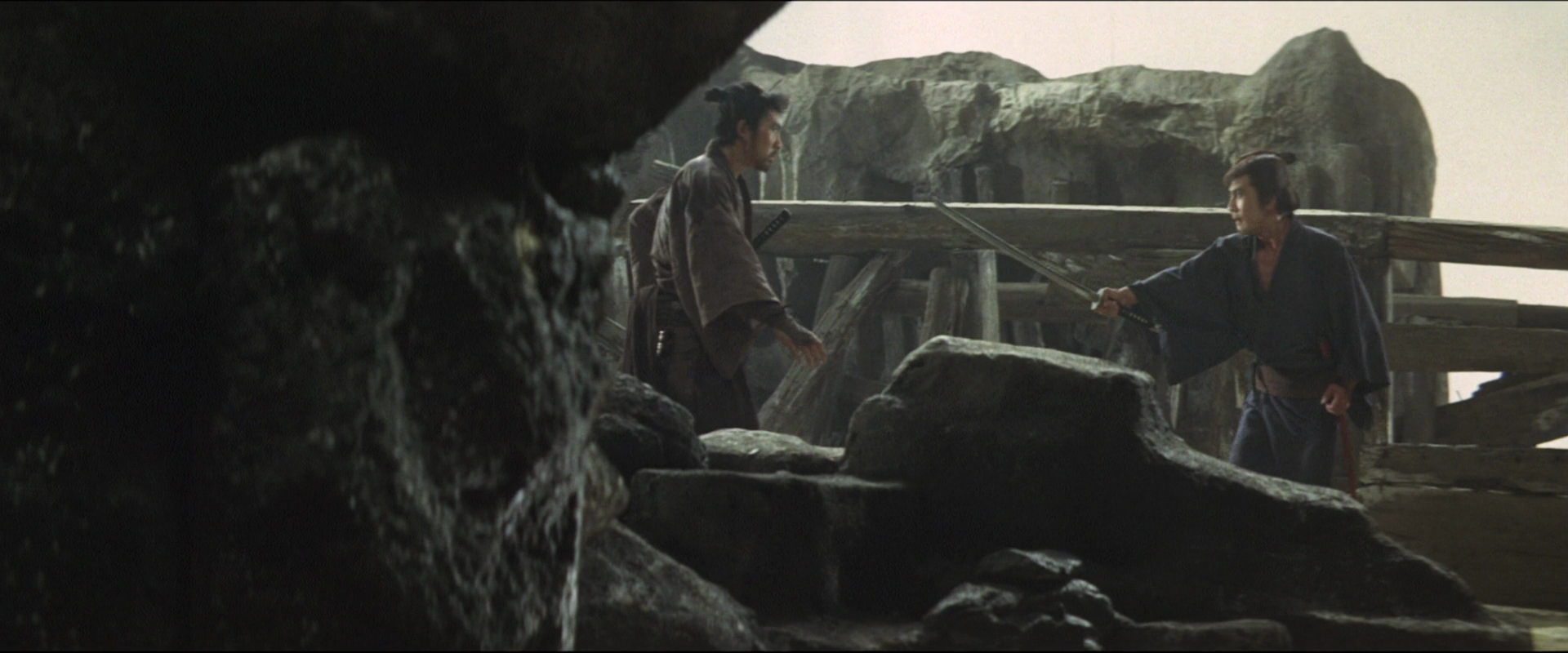
Shinobi no mono 8: The Three Enemies (新書・忍びの者, Kazuo Ikehiro, 1966)

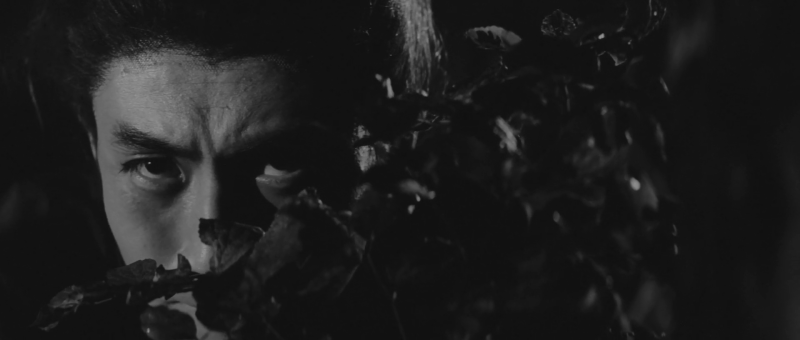
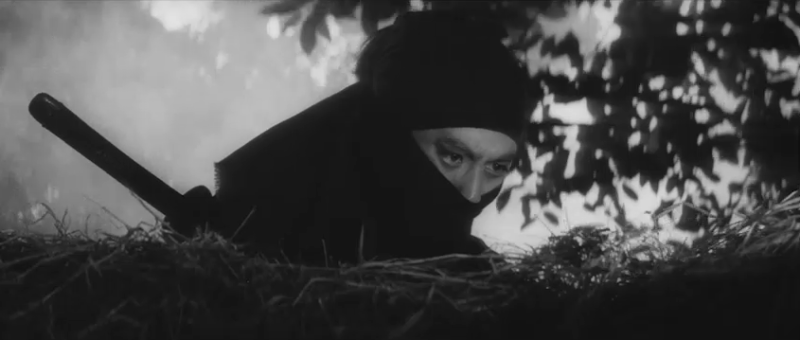
The abiding constant of the Shinobi Mono series had been its continual forward motion, at least up until instalment seven which had backtracked to the death of Ieyasu. This eighth and final film (save for a further sequel released in 1970 starring Hiroki Matsukata replacing Raizo Ichikawa who had sadly passed away a couple of years earlier at the young age of 37) however reaches even further back into the mists of time setting itself a few years before the original trilogy had begun.

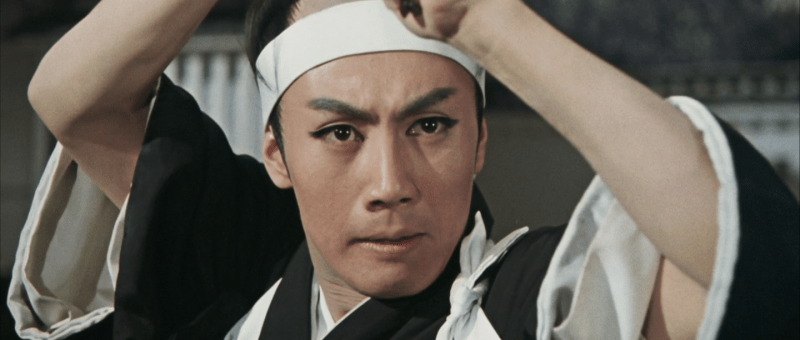
This time around, we follow young Kojiro (Raizo Ichikawa) on what is a more stereotypical tale of personal revenge albeit that one that eventually becomes embroiled in politics as he joins a ninja band that’s working for Takeda Shingen (Kenjiro Ishiyama). In slightly surprising turn of events, Ieyasu (Taketoshi Naito) turns out to be what passes for a good guy at least in contrast to Shingen’s duplicity though Ieyasu himself is still young and at the very beginning of his military career which is why unlike his older self he’s a little more proactive and willing to start a fight as well as finish one. In any case, Shingen thinks he’s an easy target largely because he simply hasn’t been in post long enough to have begun making connections with local lords, bribing them with gifts to secure their loyalty. 

In any case, Kojiro’s journey begins as something more like a martial arts film as he surpasses his current teacher and is told to find a man called Sadayu (Yunosuke Ito) in the mountains if wants to be up to gaining his revenge against the three men who killed his father while trying to steal his gunpowder. Perhaps there’s something a little ironic in the fact that Kojiro’s father was killed in a fight over what amounts to the substance of the future engineering a wholesale change in samurai warfare and edging towards the oppressive peace of the Tokugawa shogunate. But to get she revenge, Kojiro commits himself to learning true ninjutsu as the film demonstrates in a lengthy training montage. Unlike previous instalments, however, there is left emphasis place on the prohibition of emotion with the reason Kojiro cannot romance Sandayu’s adopted daughter down to her father’s whim forbidding her from marrying a ninja.

Apparently not the Sandayu of the earlier films despite the similarity of the name, this one has decided to side with Shingen because he’s mistakenly concluded that he is a “fair person who understands us ninja” when in reality he just using them and is no better than Nobunaga or Ieyasu. Shingen hires them to tunnel into a castle through the well, but is entirely indifferent to their complaints about safety leaving a Sandayu voiwing vengeance. The ninja, he says, generally serve themselves and are bound to no master but he seems to have thought Shingen was different only to be proved wrong once again.

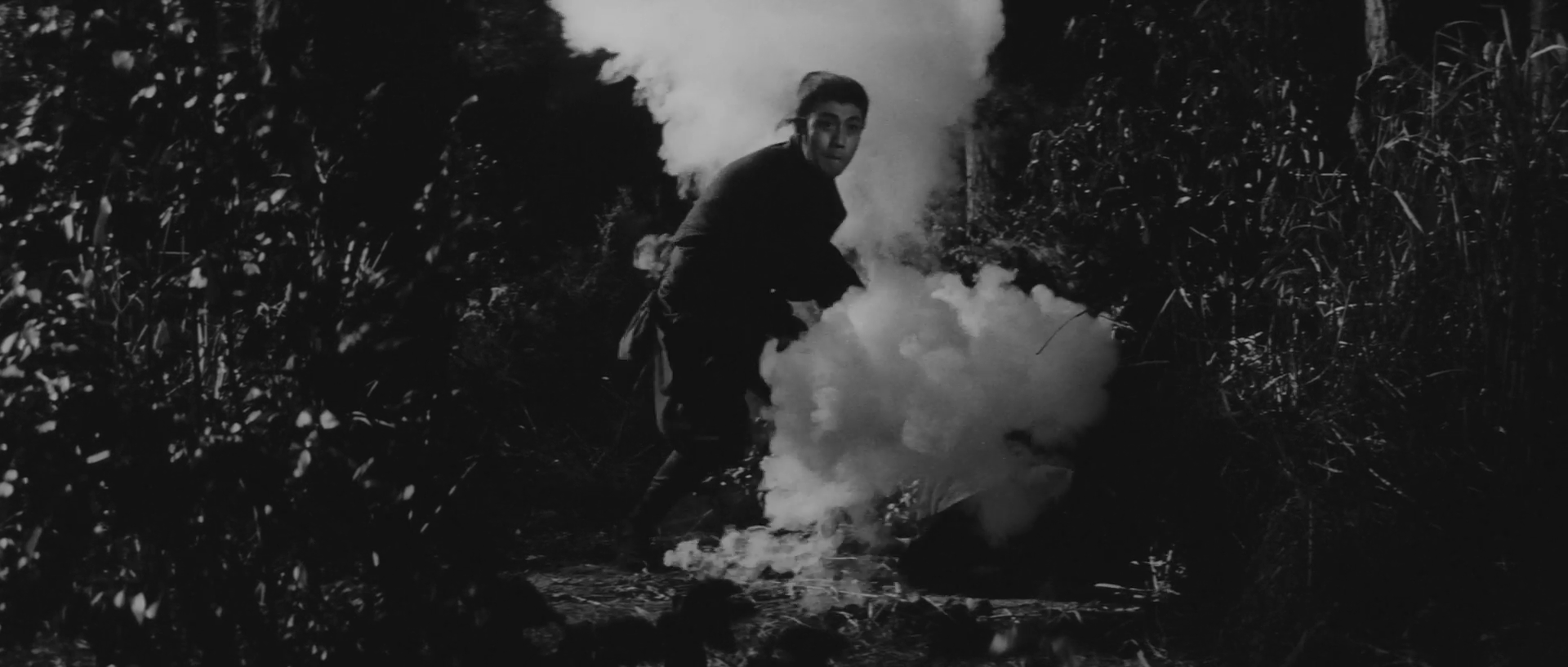
Of course, Kojiro continues looking for the men who killed his father though they obviously guide him back towards conflict anyway. When he tracks some of them down, one remarks that all he did was finish him off which was an act of kindness to end his suffering not that he necessary approved of what his fallow gang members had done. Kojiro finds a surrogate father in Sadayu much as Goemon had though this time a slightly better one even if Sandayu is also a man with a lot on his conscience. Even more so than the other films, this one takes place in a largely lawless land too consumed with perpetual warfare to notice the starving and the desperate let alone the inherent corruption of the feudal era. The bad of ninjas has a rather scrappy quality, not quite as sleek as the Iga of previous films while also a little naive. Shooting more like a standard jidaigeki, Ikehiro uses relatively few ninja tricks generally sticking to smoke and blow tarts with a few shrunken battles. Nevertheless, the violence itself is surprisingly visceral beginning with unexpected severing of an arm and leading to a man getting stabbed in both eyes. Then again, the film ends in the characteristically upbeat way which has become somewhat familiar only this time Kojiro runs back towards romantic destiny now freed of his mission of vengeance and the oppressive ninja code. 

Shinobi no Mono 4: Siege (忍びの者 霧隠才蔵, Tokuzo Tanaka, 1964)

When he began what would become the Shinobi no Mono series, Satsuo Yamamoto had wanted to put a more realistic spin on the ninja movie, shifting from the fantasy-esque wuxia with which the genre had been associated since the silent days to something that was largely devoid of romanticism. In the films he directed, the ninja are powerless manipulators doomed to live unhappy lives defined by a cruel and heartless code. Though still based on the same novel, the third film began to compromise that vision in the hero’s miraculous escape from certain death, ending on a note of ambivalent positivity in which Goemon declines the offer to join Ieyasu and instead walks out into independent freedom. 

The first three films had covered all of the action in Tomoyoshi Murayama’s serialised novel, and so the following four are based on original ideas by screenwriter Hajime Takaiwa save for episode six which is scripted by Kei Hattori and Kinya Naoi. Many of the same actors appear but in different roles while the action has moved on 15 years, skipping ahead from the unseen battle of Sekigahara to the siege of Osaka and the end of the Toyotomi. Raizo Ichikawa stars as another displaced Iga ninja nominally in the service of the Toyotomi but secretly longing to bump off Ieyasu not for reasons of revenge but because there is no place for ninja in his new and peaceful society. If they’re able to unseat him, they assume the situation will revert to the civil war society with the effete Hideyori (Junichiro Narita) too ineffective to assume control over the nascent nation. 

It has to be said, this version of events has rather misogynistic overtones with frequent speeches from Sanada Yukimura (Tomisaburo Wakayama) avowing that it’s all Lady’s Yodo’s (Otome Tsukimiya) fault for giving her son bad advice that he is too naive to know not to follow. In negotiating to end the siege at Osaka castle, Yukimura had advised it was better to strike back against Ieyasu and kill him as soon as possible, but Lady Yodo vetoed it and insisted she and her son remain locked up in relative safety. His conviction is somewhat born out seeing as Ieyasu had deliberately targeted the area of the castle where they assumed she was staying in order to further frighten her.

Nevertheless, he’s astute in realising it was all essentially a ruse and part of Ieyasu’s plan to force the Toyotomi into submission. The attack on the castle was only ever intended to engineer a peace treaty which Ieasyu himself presented and forced Hideyori to sign. Then again, there’s some strange symmetry in play. When Saizo enters the castle in an attempt to assassinate Ieyasu he mangles to trick him into killing his double instead, then when Ieyasu’s ninja try to assassinate Yukimura after following Saizo having known he would pretend to be dead and dig himself out of his own grave they also kill his double much to Ieyasu’s consternation. 

It’s this similarity that Saizo hints at when he pities a retainer of Ieyasu’s explaining that Nobunaga and Hideyoshi had tried to eliminate them but they survived while Ieyasu now wants to use them for his own ends but will likely do the same when they are no longer necessary to him. Thus what they want is a kind of chaos, desperate to assassinate Ieyasu to return to the world in which the ninja are able to influence events from the shadows. Even so his conviction is apparently shaken. As in the previous series, Saizo gains a love interest, Lady Akane (Midori Isomura), who has become a sex worker as an apparent act of self-harm after being raped by Tokugawa soldiers during the fall of Osaka castle. But as we’ve been repeatedly told, a ninja’s heart lies under the blade. Born in darkness, they shall die in darkness and are not permitted to fall in love. Thus Saizo rejects her affections, but eventually declares himself corrupted by wanting to die alongside Yukimura as a loyal soldier. The in-film lore would have us believe that Yukimura did not in fact die during the final assault but was spirited away by Saizo to plot Ieyasu’s downfall in the shadows. 

Directed by Tokuzo Tanaka in his only instalment in the series, the film is shot more like a conventional jidaigeki but returns something of the fantasy aesthetic to the ninja as they somersault through the forest. Saizo’s surname effectively means “hidden in the mist”, which is partly ironic seeing as Akane also describes her rape as being overcome by a thick fog, but is also symbolic of his frequent use of smoke bombs as a disappearing trick which again undermines the sense of realism with which the series began. Yukimura is fond of declaring that the clock cannot be turned back, a sentiment echoed by Akane and emphasising the sense of melancholy fatalism that cannot be avoided in a historical drama in which the outcome is already very well known, imbuing Tanaka’s take with the sense of elegy and legend Yamamoto had so deliberately rejected. 


Shinobi no Mono 3: Resurrection (新・忍びの者, Kazuo Mori, 1963)

At the end of the second film in the Shinobi no Mono series, Goemon (Raizo Ichikawa) was led away to be boiled alive in oil after failing to assassinate Hideyoshi Toyotomi. Obviously, Goemon did not actually die, but exchanged places with a condemned prisoner thanks to the machinations of Hanzo Hattori (Saburo Date) which is a clear diversion from the accepted historical narrative to which the film otherwise remains more or less faithful. However, in this instalment more than all the others, Goemon is very much a shadow figure, pale and gaunt, who appears much less frequently on screen and mainly relies on stoking the fires of an already simmering succession conflict in the Toyotomi camp.

At this point, Hideyoshi has already made himself de facto leader of a unified Japan having been made the “kampaku”, advisor to the emperor, only to cede that position in favour of his adopted heir, Hidetsugu (Junichiro Narita) taking the title of “Taiko.” Hideyoshi has been childless for many years which is why he adopted his nephew, but the birth of his son by blood has dangerously unbalanced the palace order with Hidetsugu increasingly certain he’s become surplus to requirements. Meanwhile, in an effort to secure his position Hideyoshi has also embarked on an ambitious plan to conquer Korea as a means of getting to Ming China and circumventing the tributary requirements necessary for trading with it. 

This plan necessarily means that they need more money with Hideyoshi calling an end to all building and renovation projects including that of a Buddhist temple playing into the series’ themes about hubris in the face of Buddha though by this point Goemon too has lost faith in Buddhism in the clear absence of karmic retribution. As Ieyasu (Masao Mishima) points out, this works out well for him as it will stir discord among local lords who will be forced to squeeze their already exploited subjects even more earning nothing more than their resentment which will then blow back on oblivious Hideyoshi.  

Thus Goemon’s role mostly involves sneaking in and telling various people that others are plotting against them and they’d be better to get ahead of it. A secondary theme throughout the series has been a sense of powerlessness which is perhaps inevitable in a historical narrative in which we already know all of the outcomes. Ieyasu scoffs at Goemon, remarking that he thinks he’s walking his own path but is really being manipulated into walking that which Ieyasu has set down for him, though Goemon effectively rejects this stating at the conclusion that as Ieyasu believed he was using him he was also using Ieyasu to achieve his revenge on Hideyoshi for the death of his wife and son. In the historical narrative, Hideyoshi dies of a sudden illness as he does here with Goemon lamenting that his revenge is frustrated by the fact that Hideyoshi is now old and frail though he achieves it through symbolically cutting off his bloodline but explaining to him that Hideyoshi will not become the heir to anything because Ieyasu will be taking the role he has so patiently waited for. Hideyoshi has in any case perhaps disqualified himself as the father of a nation by wilfully sacrificing his adopted son, Hidetsugu, who was ordered to commit suicide to avoid any challenge to Hideyori after becoming desperate and debauched in the knowledge that his days were likely numbered anyway.

In any case, Goemon perhaps declares himself free in asking why he should care who’s in charge after Hanzo once again tries to recruit him to work for a now triumphant Ieyasu whose long years of simply waiting for everyone else to die have paid off. This is what passes for a happy ending in that he has thrown off the corrupt authority of the feudal era and discovered a way to live outside of it as a “free” man though as others point out the system hasn’t changed. Poor peasants continue to be exploited by lords who are greedy but also themselves oppressed by an equally ruler playing petty games of personal power. Fittingly, ninja tricks mainly revolve around smoke bombs and the covert use of noxious fumes to weaken the opposition as they creep in to spread their poison. Never shedding the series’ nihilistic tone, the film ends on a moment of ambivalent positivity albeit one of exile as Goemon declines the invitation to the fold instead wandering off for a life of hidden freedom in the shadows of a still corrupt society. 

Freelance Samurai (桃太郎侍, Kenji Misumi, 1957)

An abandoned son resolves to wander Japan killing the “demons” of Edo-era society in Kenji Misumi’s adaptation of the popular novel by Kiichiro Yamate, Freelance Samurai (桃太郎侍, Momotaro-Zamurai, AKA The Demon Crusader). Starring a young Raizo Ichikawa in dual roles as twins separated at birth, a familiar jidaigeki plot device, Misumi’s drama is among his most conventional but still finds the demon-hunting hero of the title resolutely rejecting the “silly rules of the samurai” in refusing to serve or be served while resisting the persistent corruptions of the feudal society. 

First spotted returning a paper balloon to some children playing in the street, the hero (Raizo Ichikawa) later gives his name as “Momotaro”, the legendary folklore champion who was born from a peach and then went on to befriend various forest creatures travelling with them to fight the cruel demons who had been oppressing the peasants of the farmland where his adoptive parents lived. The name is a sense ironic in that it reflects his own fatherless existence having discovered that he is actually Shinjiro, the younger brother of the heir to a nearby clan, Shinnosuke (also Raizo Ichikawa). At this particular cultural moment, twins were thought inauspicious with one usually cast out, Momotaro in someways more fortunate than most in that he was sent away and raised by his mother to whom he was apparently devoted. In fact, as he says, he only delayed his demon-killing mission out of consideration for her but that now that she has sadly passed away he is free to pursue justice as a wandering ronin determined to serve no master but himself. 

This insistence on justice and opposition to samurai oppression is made plain in the opening scene in which he rescues pickpocket Kosuzu (Michiyo Kogure) from two samurai she’d robbed who were hassling her. She of course falls in love with him, but is also party to the central conspiracy engineered by high ranking retainer Shuzen (Shosaku Sugiyama) who is plotting to unseat Shinnosuke in favour of the lord’s illegitimate young son Mantaro (Junta Yamamoto) with the help of ambitious underling Iga (Seizaburo Kawazu). Momotaro is swept into the intrigue when he rescues the beautiful daughter of loyal retainer Iori (Gen Shimizu), Yuri (Yoko Uraji), from an attempted kidnapping. Both sides want to recruit him for his bravery and sword skill, but Momotaro is reluctant to help either of them especially on discovering the ironic coincidence that he finds himself caught up in a succession struggle in the very clan which previously cast him out. 

Deciding to help when hearing that Shinnosuke has been poisoned, Momotaro demonstrates his strategic abilities in coming up with a ruse to trick the conspirators but remains somewhat conflicted remembering his mother’s dying words that he should hold no grudges even as a part of him continues to resent his abandonment. That may in part explain his defiant rejection of the hierarchal society, ignoring the “silly” rules of the samurai while insisting on equality in refusing to serve or be served by anyone else. In a nod to the folktale, his greatest friend is a humble peddler, Inosuke “the monkey man” (Shunji Sakai) who gives him a place to stay in the rundown tenement where he lives affectionately known as “ghost apartments”. Even so, Inosuke as much servant as sidekick, and while he is in a sense torn between the earthy pickpocket Kosuzu who is later redeemed through her loyalty to him and the beautiful samurai daughter Yuri it seems fairly clear that he will eventually opt for his class-appropriate match the only surprising thing being that it is she who transgressively breaks with convention in abandoning her samurai home in order to follow Momotaro out on the road as he hunts other “demons” corrupting the social order all over Japan. 

Shot in colour academy ratio, Freelance Samurai features little of Misumi’s trademark natural vistas save for the poignant pillow shots of flowers growing in the compound though it does reflect his preoccupation with absent fathers and perpetual wandering. In the many dualities in play, it is also interesting that Momotaro is depicted as the more capable of the brothers, Ichikawa’s characterisation of the cosseted Shinnosuke as a kind and compassionate, effete young man rather than the strapping warrior the heir to a clan is expected to be hinting perhaps at the perceived weakness that allowed the conspirators to assume they could usurp him. Similarly, it’s Michiyo Kogure’s tragic pickpocket undone by her love for the noble samurai that makes the deeper impression rather than the rather insipid Yuri who makes her mark only in her final decision to follow Momotaro unbidden. Momotaro’s quest may in a sense be ironic in that he outwardly rejects the superiority of the samurai but effectively preserves it even as he determines to clean out the oppressive “demons” intent on corrupting the land just as his folkloric namesake had done, but in its own way has its defiant nobility in his fierce love of justice and equality. 


Sword Devil (剣鬼, Kenji Misumi, 1965)

An orphaned son’s attempts to overcome his cursed destiny are poisoned by the duplicities of the samurai society in third part of Kenji Misumi’s loose “Sword Trilogy”, Sword Devil (剣鬼, Kenki). Perhaps unfairly dismissed by some as a mere genre craftsmen, Misumi was also an intense visual stylist, a quality very much on show in this vibrant drama which pits the beauty of the natural world against the samurai order but eventually finds its hero succumbing to cruelties of his age unable to outrun himself or his destiny. 

In the prologue which opens the film, shot in an arty theatrical style, a young peasant woman formerly a maid to the late Lady Makino gives birth to a “stranger’s” child after having been promoted and given a place in the women’s quarters as a reward for her loyalty in continuing to serve her mistress in the depths of her “madness”. Lady Makino claims that Kin’s kindness brought her back to reality and is keen to ensure she continues to be taken care of after her death, but also asks her to take charge of her precious pooch hoping that she will treat it “as herself”. This is perhaps why it is rumoured that the child, given the name “Hanpei” which ironically is in part inspired by the dog-like “Spot” coupled with a suffix which implies a lowly rank, is in fact the product of a taboo union between the maid and the dog (rather than admit he is almost certainly the illegitimate son of Lord Masanobu). For some reason this bizarre rumour persists throughout the boy’s life, cast out as he is from the palace and raised in an ordinary village as the son of a low-ranking samurai who appears to be kind and loving, worried enough about Hanpei’s (Raizo Ichikawa) future to advise him to find a special skill that will allow him to support himself and perhaps overcome some of the persistent prejudice against him after the old man’s death. 

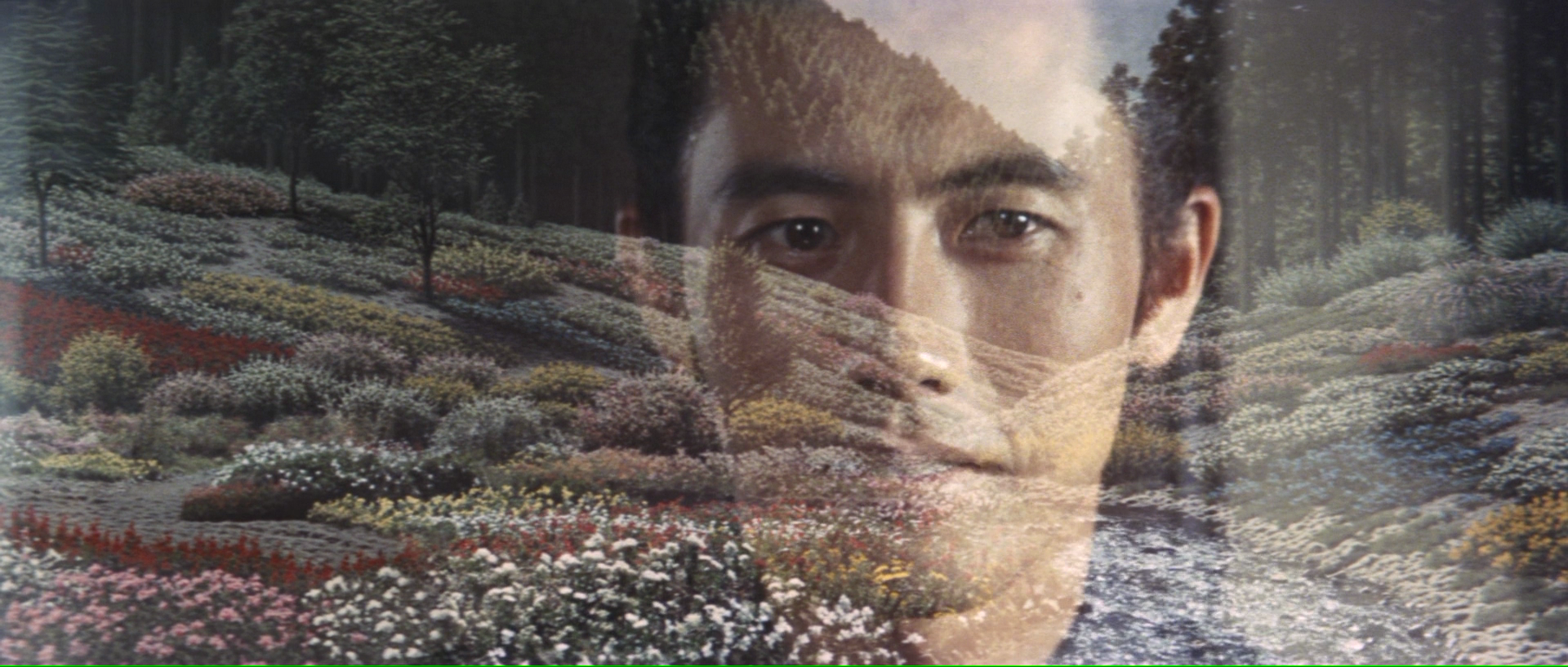
The skill he perfects, however, continues to set him apart from his fellow men in that he chooses the cultivation of flowers. A particularly snotty neighbour describes Hanpei’s art as “annoying”, though others are impressed enough by his skill to marvel that they have such a man in their clan while also pointing out that in these times of peace becoming a samurai florist might be much more useful than perfecting the art of the sword. Ironically, however, it drags him back towards the court and intrigue when he’s invited to craft a flower garden to cheer up the present young lord who seems to be succumbing to the same “madness” as his mother. The trouble starts when the garden is completed to the lord’s satisfaction but marred by the sudden and apparently unexpected arrival of a bumblebee which damages the lord’s tranquility and provokes a violent outburst in which he begins to hack at the flowers hoping to punish the one which “rudely” invited the bee to the garden. Hiding behind a tree, Hanpei perfectly aims a rock at the lord’s head to prevent him destroying his precious work and is spotted by his chief retainer, Kanbei (Kei Sato), who earmarks him for future use in his nascent conspiracy. 

Hanpei finds himself at the centre of intrigue, increasingly seduced by promises of advancement that he might be “titleless” no more and perhaps in fact escape his lowly position as the son of a dog. He ingratiates himself by, like his mother, being one of the few servants willing to bear the lord’s violent rages in volunteering to accompany his horse even though he has none of his own and has to run along behind thereby demonstrating his slightly supernatural athletic ability that gives further credence to his canine origins. In similar fashion he learns by observation, captivated rather than appalled on witnessing an old ronin practicing his sword technique by cutting in half a butterfly in the forest. Preoccupied by his lowly status and consequent lack of sword skills, Hanpei is reassured by the man’s explanation that there’s nothing more to it than draw, strike, and sheath but takes yet another step towards the samurai dark side in accepting the gift of a sword. Later he breaks it, meaning to break with the cruel path on which fate has set him, only to pick up another, supposedly cursed sword to which he was attracted because of its “evil spirit”.

Osaki (Michiko Sugata), a kind and innocent woman seemingly attracted to Hanpei because of his difference in his gentle sensitivity in contrast to the rough men around her, refuses to believe the rumours he has become an assassin working for Kanbei because no one who loves flowers like he does could be a coldblooded killer. This is in fact what he has become, sent, like a dog, after Kanbei’s enemies killing without even knowing who it is who must die only to be remorseful on discovering he has killed someone known to him. There is division and sedition within the court caused by the lord’s madness, Kanbei and his associates keen to rule in his stead while keeping his mania secret from the shogun while others, a small group of lower samurai rebels, prefer to depose him in favour of his adopted heir. Hanpei is once again a pawn, taking no side in this debate but unthinkingly doing Kanbei’s dirty work in the service of his sword. He hopes that by taking the “evil” instrument in his hands he might double his bad luck to overcome his unhappy destiny, gazing at his distorted face in its reflection, but discovers himself merely outcast once again as the villagers begin to realise he is an obstacle to their rebellion and responsible for the assassinations of their loved ones. 

The ironic conclusion finds the hero’s planned flower garden, a shared endeavour with love interest Osaki, rendered a bloody graveyard, men cut down like weeds as Hanpei’s quick draw philosophy makes a mockery of their fancy samurai fencing. The poisonous samurai legacy, infected with madnesses literal and figural, destroys everything, all beauty and grace falling under Hanpei’s “evil” sword as he finds himself, quite literally, chased out of town like a stray dog condemned to wander exiled from human society. 


On the Road Forever (無宿者, Kenji Misumi, 1964)

“I take to the road whether or not I am alive” confesses the spiritually defeated hero of Kenji Misumi’s filiality drama, On the Road Forever (無宿者, Mushukumono). Two sons each seeking vengeance for a wronged father become first accidental friends, then almost enemies, and finally something more like brothers bound and ruined by the failures of the samurai code. The villain may not unfairly claim that the system of the world is one “dirty great monster”, but the implications of his revelations lead directly back into the infinite corruptions of the samurai order as mediated through the failures of fatherhood. 

“Drifting crow” Ipponmatsu (Raizo Ichikawa) temporarily teams up with fallen samurai Kuroki Yaichiro (Jun Fujimaki) who has become desperate enough to unwisely attempt robbing a gambling den. Nevertheless, we are clued in to the idea that these are the good guys when they’re helped by a young village woman, Haru (Mikiko Tsubouchi), who lends them her father’s horse instructing them to return it to him at a nearby village which the guys later do even attempting to hand the old man some of their ill-gotten gains as a thank you though he refuses and warns them not to hang around too long because “it’s a rough neighbourhood”. All too soon we discover what he means. A big wig former yakuza who suspiciously came into massive amounts of money two years previously has pressed the villagers into debt and is currently inducting them into indentured servitude on Sado island in order to recoup costs. Perhaps Ipponmatsu doesn’t approve, but he’s on a journey for a reason and would have carried on by had he not heard word that that shady yakuza Shima-ya Jubei (Toru Abe) may be connected to the death of his father during a high stakes robbery on a mountain pass. 

Ipponmatsu, whose name literally means “a single pine”, is the archetypal wandering son who ran away from his clan without permission in rebellion against his authoritarian father who raised him alone after his mother’s death and tried to instil in him the values typical of his class through the medium of violence. Having come across a decomposed body with his father’s distinctive sword at the scene of the robbery, Ipponmatsu has had a change of heart and dedicated his wandering to avenging his memory. Sticking around in the town, he comes to suspect that Yaichiro’s father Hanbei may have been behind the theft of the missing imperial gold only later realising that he too is on a quest to learn the truth in the hope of clearing his father’s name. The two men end up raising swords against each other but discovering they are indeed different, Yaichiro a gentle soul who apparently excelled in the dojo but has no “courage” in the field and Ipponmatsu a fiery hothead who thinks killing is less a matter of skill than “courage and explosiveness”. 

There is, it has to be said, a fairly obvious twist that neither man perhaps too bound up in their own sense of responsibility fully considers. Nevertheless, they are both faced with the decision of what to do should they discover the truth considering that raising a sword against one’s father is an unforgivable sin while knowing that such a heinous betrayal of their code cannot go unpunished. The villains boast of their well connected networks and supposed untouchability laying bare the essential corruption of the samurai order as they wilfully manipulate and exploit impoverished peasantry for their own ends while cruelly joking that all classes are alike in their greed when tempted with riches, entirely unrepentant even as they lament the hypocrisy of the samurai who have no money yet continue in their arrogance. 

Despite having been raised in a homosocial environment told that falling in love with women is a pointless waste of time, Ipponmatsu picks up the affections of two firstly earnest farm girl Haru and secondly misused mistress and sister of Shima-ya, Osei (Eiko Taki). This is however a manly drama concerned with the ways in which men interact with other men, firstly in the awkward fraternity of Ipponmatsu and Yaichiro and then in their mutual and continually changing relationships with their absent fathers living in the shadow of patricide and justice. Elegantly composed as always, Misumi frequently shoots through obstacles imprisoning the men within the broken beams of ruined buildings or spying in a POV shot from an upstairs balcony while making full use of his trademark love for the natural world in closing with a painful confrontation in which the nature of filiality is turned inside out as a corrupt father falls on his sword for his noble son amid the rocks surrounded by rolling waves. As the title suggests, the melancholy ending severs the hero from his ancestral “home” leaving him forever a wanderer untethered yet in a sense never free of his paternal legacy. 


Bronze Magician (妖僧, Teinosuke Kinugasa, 1963)

Even when you’re the empress, a woman has little freedom. Teinosuke Kinugasa’s Bronze Magician (妖僧, Yoso) is loosely based on a historical scandal concerning Nara-era empress Koken/Shotoku and a Rasputin-like monk, Dokyo, who unlike his counterpart in the film, eventually tried to seize the throne for himself alone only to have his ambitions frustrated by the empress’ death and the fierce resistance of her courtiers. As the title implies, Kinugasa is more interested in Dokyo than he is in the perilous position of Nara-era women even in power, painting his fall from grace as a Buddhist parable about a man who pays a heavy price for succumbing to worldly passions. 

As the film opens, Dokyo (Raizo Ichikawa) emerges from a shallow cave amid many other caves after meditating for 10 years during which he reached a higher level of enlightenment and obtained mystic powers. Now he thinks it’s time to continue the teachings of departed mentor Doen and use his abilities to “actively do good and save the masses”. Before that, however, he does some not quite Buddhist things like turning a rat into a living skeleton, and twisting a snake into a tangle. In any case, he begins roaming the land, miraculously healing the sick. While reviving a thief who had been killed by samurai after trying to make off with a bird they shot, Dokyo is spotted by a retainer of the empress who brings news of his miracles back to her closest advisors. 

Empress Koken (Yukiko Fuji), in the film at least, was a sickly child and even after ascending the throne has often been ill. She is currently bedridden with a painful respiratory complaint that is giving her servants cause for concern. None of the priests they’ve brought in to pray for her (apparently how you treat serious illness in the Nara era) has been of much use. The empress’ steward Mabito (Tatsuya Ishiguro) orders that Dokyo be found and brought to the palace to see if he can cure Koken, which he does while stressing that he’s helping her not because she’s the empress but in the same way as he would anyone else. 

As might be expected, the empress’ prolonged illness has made her a weak leader and left the door open for unscrupulous retainers intent on manipulating her position for themselves. There is intrigue in the court. The prime minister (Tomisaburo Wakayama) is colluding with a young prince to depose Koken and sieze power. Left with little oversight, he’s been embezzling state funds to bolster his position while secretly paying priests to engineer Koken’s illness continue. Dokyo’s arrival is then a huge threat to his plans, not only in Koken’s recovery and a subsequent reactivation of government but because Dokyo, like Koken, is of a compassionate, egalitarian mindset. She genuinely cares that the peasants are suffering under a bad and self-interested government and sees it as her job to do something about it, which is obviously bad news if you’re a venal elite intent on abusing your power to fill your pockets while the nation starves. 

As the prime minister puts it, however, the empress and most of her courtiers are mere puppets, “naive children”. At this point in history, power lies in the oligarchical executive who are only advised by the empress and don’t actually have to do what she says. As she is also a woman, they don’t necessarily feel they have to listen to her which is one reason why the prime minister assumes it will be easy to manoeuvre the young prince toward the throne. Koken’s short reign during which she overcame two coups is often used to support the argument against female succession because it can be claimed as a temporary aberration before power passed to the nearest male heir. Nevertheless, Koken tries to rule, even while she falls in love with the conflicted Dokyo. Her right to a romantic future, however, is also something not within her control. Many find the gossip scandalous and use it as an excuse to circumvent her authority, especially after she gives Dokyo an official title which allows them to argue she has been bewitched by him and he is merely manipulating her to gain access to power. 

Dokyo, meanwhile, is in the middle of a spiritual crisis. After 10 years of study he as reached a certain level of enlightenment and attained great powers which he intended to use for the good of mankind. He is happy to discover that Koken is also trying to do good in the world but she is, ironically, powerless while the elitist lords “indulge in debauchery”, abusing their power to enrich themselves while the people starve. He begins to fall in love with her but the palace corrupts him. He accepts a gift of a beautiful robe despite his vows of asceticism, and then later gives in to his physical desire for Koken only to plunge himself into suffering in the knowledge that he has broken his commandments. He loses his magic, but chooses to love all the same while rendered powerless to hold back Koken’s illness or to protect her from treachery. 

The pair mutually decide they cannot “abandon this happiness”, and Dokyo’s fate is sealed in the acceptance of the extremely ironic gift of golden prayer beads which once belonged to Koken’s father. He is reborn with a new name in the same way as the historical Koken was reborn as Shotoku after surviving insurrection, embracing bodily happiness while attempting to do good but battling an increasing emotional volatility. The lords continue to overrule the empress’ commands, insisting that they are really commands from Dokyo, while Dokyo’s “New Deal” involving a 2 year tax break for impoverished peasants finds support among the young radicals of the court who universally decide that they must stand behind him, protecting the ideal even if they are unable to save the man.

This troubles the elders greatly. Declaring that Dokyo has used “black magic” to bewitch the empress, they determine to eliminate him, but Dokyo never wanted power. “Power is not the final truth” he tells them, “those blindly pursuing status and power only destroy themselves”. Yet Dokyo has also destroyed himself in stepping off the path of righteousness. He damns himself by falling in love, failing to overcome emotion and embracing physical happiness in this life rather than maintaining his Buddhist teachings and doing small acts of good among the poor. Nevertheless, he is perhaps happy, and his shared happiness seems to have started a compassionate revolution among the young who resolve to work together to see that his ideal becomes a reality even in the face of entrenched societal corruption.


Original trailer (no subtitles)

The Haunted Castle (秘録怪猫伝, Tokuzo Tanaka, 1969)

haunted castle 1969These days, cats may have almost become a cute character cliche in Japanese pop culture, but back in the olden days they weren’t always so well regarded. An often overlooked subset of the classic Japanese horror movie is the ghost cat film in which a demonic, shapeshifting cat spirit takes a beautiful female form to wreak havoc on the weak and venal human race. The most well known example is Kaneto Shindo’s Kuroneko though the genre runs through everything from ridiculous schlock to high grade art film.

Daiei’s 1969 genre effort The Haunted Castle (秘録怪猫伝, Hiroku Kaibyoden) sits towards the high art end but remains firmly within the realm of entertainment. Displaying the high production values the studio was known for, the film paints its 18th century tale with a plush opulence and makes fantastic use of the nighttime gloom to evoke a gothic, supernatural atmosphere which is at least extremely unsettling even if it stops short of actual terror.

As for the story, it’s another take on the classic Japanese supernatural tale The Vampire Cat of Nabeshima. Events are set in motion when blind monk Mataichirou and his sister Sayo run into their lord whilst out walking one day. Lord Tangonokami Nabeshima takes a liking to Sayo and wants to add her to his collection of concubines. He despatches an underling to ask Mataichirou about it, but Mataichirou understandably refuses, offering the excuse that Sayo is “too awkward” and the the lord wouldn’t find her very good company anyway. Nabeshima is angry at this affront to his authority and summons Mataichirou for their regular round of Go where Mataichirou once more resolutely refuses to surrender his sister. When Mataichirou realises Nabeshima and his aid are cheating, the pair argue and Nabeshima loses his temper and kills him.

This is a big problem for several reasons so they pretend not to know anything about it and dump the body in a well. Fearing discovery, they also banish the sister, Sayo, but she opts to commit harakiri and begs the weird cat that had been attached to her brother to drink her blood and become a demon to enact their revenge! Soon enough, two maids are dead in the Nabeshima household and the lord’s favourite mistress is refusing to take baths and has developed a liking for fish which she previously could not stand….

Ghost cats mostly come at night (mostly) so the majority of the film takes place in the intense darkness of the pre-electric world. The cat begins to stalk its prey quietly with only the tinkling of its ghostly bell and then tiny, bloody paw prints left as evidence of a supernatural killing. Tanaka opts for a floating, dreamlike shooting style weaving a degree of hypnotic confusion into the proceedings which also manage to keep up a high level of tension as the demonic cat spirit goes about its bloody business.

Of course, the moral of the tale is to live your life in a more altruistic manner – stop trying to take things which aren’t yours, respect the views of others, and don’t lose your temper and rashly kill people for no reason at all. All good advice there. The “hero” of the story is the more sympathetic vassal, Komori, who is trying to broker a satisfactory outcome of this complex situation right from the start, but finds himself frustrated as the servant of an unreasonable lord whose will cannot be restrained. Komori can’t avoid the supernatural retribution but manages to ride the waves well enough to ensure a morally satisfying ending where corruption is exposed and the land returned to its rightful owners rather than remaining in the hands of a lascivious usurper. It’s an old story, but a good one, and is presented with such a degree of sophistication to make The Haunted Castle one of the better horror offerings of the late ‘60s.


Invisible Man Appears (透明人間現る, Nobuo Adachi, 1949)

Invisible man appearsReleased in 1949, The Invisible Man Appears (透明人間現る, Toumei Ningen Arawaru) is the oldest extant Japanese science fiction film. Loosely based on the classic HG Wells story The Invisible Man but taking its cues from the various Hollywood adaptations most prominently the Claude Rains version from 1933, The Invisible Man Appears also adds a hearty dose of moral guidance when it comes to scientific research.

Once again the action centres around an esteemed chemist, Professor Nakazato, who has been working on a serum to render living things invisible. So far he has a sample which works on animals but is reluctant to move on to human testing as A) he hasn’t found a way to reverse the procedure, and B) there are some unpleasant side effects in which the subject becomes increasingly violent and irrational. The professor currently has two top students who are helping him towards his goal and, inconveniently, both have taken a shine to his daughter, Machiko. Half joking, the professor remarks that whoever can solve the problem first will win his daughter’s hand.

A business associate of the professor, Kawabe, is also interested in Machiko and also in the rights to the professor’s important new discovery. The professor, however, is a responsible man and refuses to sell it in case it falls into the wrong hands. Shortly after the professor is kidnapped by a gang of armed thugs who plan to use the serum to steal a set of diamonds known as The Tears of Amour.

There’s plenty of intrigue with various twists and turns to the original story which keep the viewer on their toes as they try to figure out who exactly is the invisible man and what he’s really after. Actually, the solution is sort of obvious and heavily signposted but that doesn’t make it any less fun. Kawabe is a moustache twirling villain from the get go and it’s obvious he has various things going on in the background but there’s more to the story than a greedy business man trying to manipulate everyone around him for his own gains. There’s also an interesting subplot in which the younger sister of one of the scientists is a top actress at the Takarazuka Review and turns out to have a connection to the Tears of Amour.

All of the classic B-movie hallmarks are here from the slightly ridiculous sci-fi jargon to the classic women in peril shenanigans as the serum starts to take hold and the Invisible Man becomes increasingly paranoid. There’s nothing good or bad but thinking makes it so – so it would be for science as far as the film is concerned. According to the message at the film’s beginning and end, there is no scientific discovery which is innately “evil” but each is apt to be misused. It’s not difficult to see why this would be a popular, even essential, message in the Japan of 1949 and indeed it recurs in many films of this type including, of course, the original Godzilla. The professor takes responsibility for having invented something which, although not created with evil intent, has wrought such destruction on society but finds himself with nothing left to do other than apologise.

Director Nobuo Adachi uses a lot of classic silent cinema techniques such as dissolves and montages with a fair amount of handheld camera and some location shooting (though the majority of the film is studio bound). The special effects were supervised by Eiji Tsuburaya who would later become the founding father of tokusatsu and co-creator of the Godzilla franchise and are top notch for the time period. An enjoyably silly B-movie, The Invisible Man appears is a well crafted addition to the Invisible Man corpus and a fantastic example of Daiei’s post-war genre output.


Original trailer (English subtitles) – I wish all trailers were this much fun!