Zone Pro Site: The Moveable Feast (總舖師, Chen Yu-hsun, 2013)

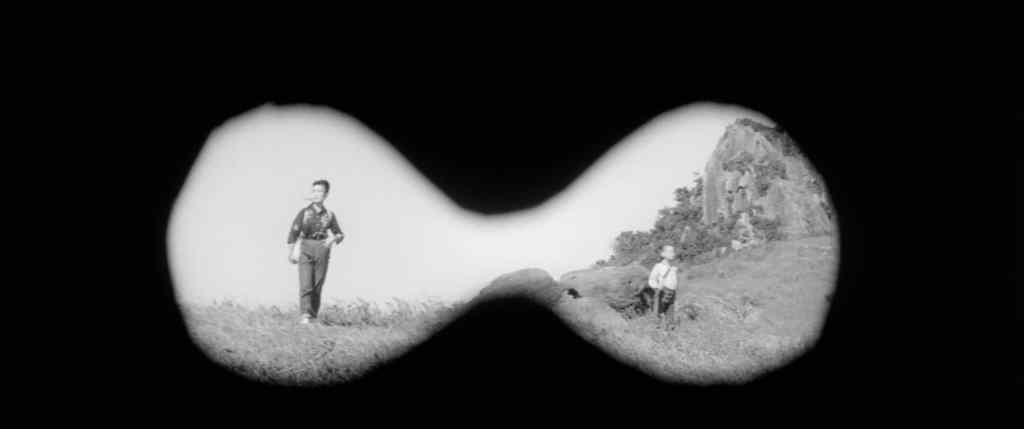
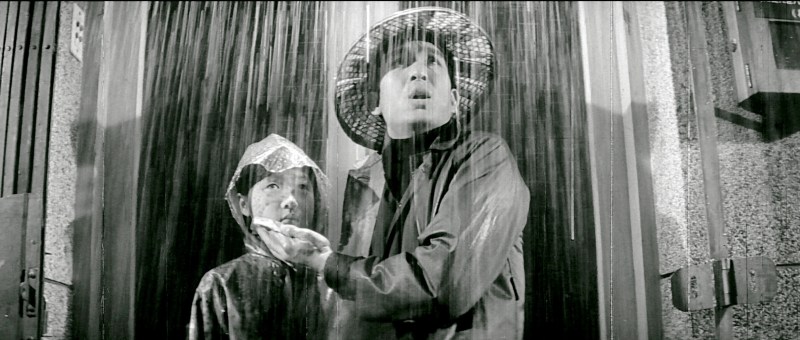
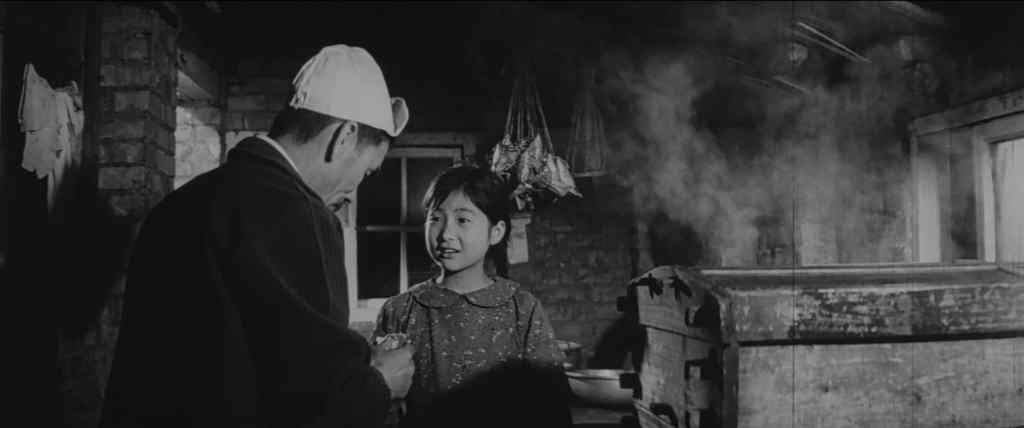
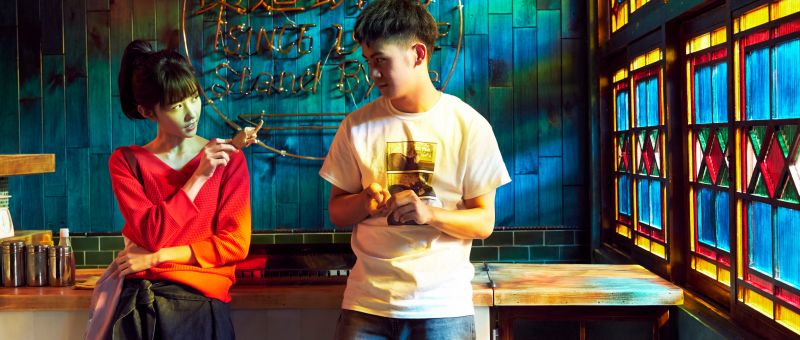
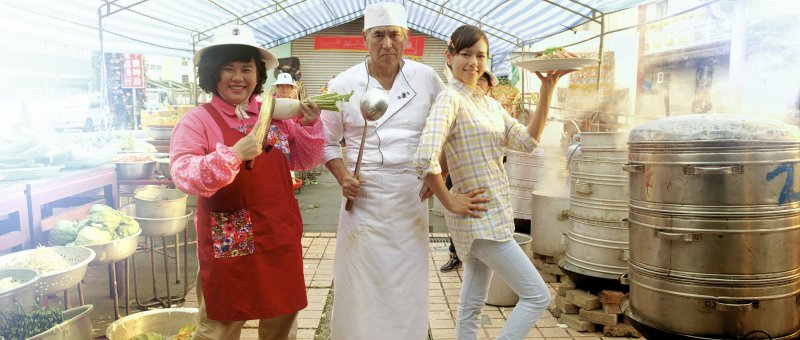
In these high speed days, it’s sometimes difficult to remember that “cooking means something” or at least it should do according to “Doctor Gourmet” Hai (Tony Yang). A warm tribute to the Taiwanese tradition of bandoh outdoor banquets, Zone Pro Site: The Moveable Feast (總舖師, Zǒng Pù Shī) positions the figure of the chef as a kind of conduit bridging the gap between people through the art of well cooked food. Heroine Wan (Kimi Hsia Yu-chiao), however, thoroughly rejected the ambitions of her top chef father and determined on a life in the city with her heart set on becoming a famous model, actress, and celebrity. 

Life in Taipei is however hard. Career success is hard to come by and duplicity lurks round every corner. Wan learns this to her cost when two shady guys turn up on the pretext of delivering a birthday cake only to explain to her that her boyfriend, whose loans she’s unwisely co-signed, has skipped town and left her with the bill. Confused and afraid, Wan decides to skip town herself, planning to head back to her hometown and ask her mother for help. What she discovers however is that her mother is on the run too after losing the family restaurant partly through her subpar cooking skills which could never match those of her late husband, and partly through the betrayal of his apprentice who poached all their best customers and set up on his own. Despite being “in hiding”, the only way Puffy (Lin Mei-hsiu) has been able to make ends meet is by putting on an impromptu dance show in the central square to promote her small noodle stall. Luckily for them both, Wan makes a chance encounter on the train with a nice young man, Hai, who turns out to be a “Doctor Gourmet” specialising in “fixing” failing restaurants.

His arrival comes at just the right moment as Wan and her mother get a visit from potential clients – a sweet older couple who first met 50 years previously at a wedding catered not by Wan’s father Master Fly Spirit, but by his now departed mentor. Wan’s mother was going to turn the request down because neither she nor Wan know how to make the traditional dishes the couple are looking for, but Wan makes an impromptu decision to try and make their wedding dreams come true, warning them that it might take a little extra time and not quite match up to their romantic expectations. 

Wan’s problem is that she always hated her family’s restaurant. She resented the heat and the smell and the grease, often placing an empty box over her head and retreating into a fantasy world to escape the chaos. Her father wanted her to take over, leaving her a notebook filled with his recipes which was unfortunately stolen by a homeless man who mugged her at the station, but she was dead set on escape and becoming a “someone” in the city. Unlike her mother, however, she has real talent for cooking and is equally skilled at using her good looks and sweet nature to get things done. Soon after her arrival at the noodle stand, she’s already got herself a gang of geeky groupies calling themselves “Animals on Call” who are ready to do pretty much anything she asks of them. 

That comes in handy when Puffy persuades her to enter a national cooking competition where her rival is none other than Tsai, the apprentice who betrayed them, backed up another famous ex-chef Master Ghost Head (Hsi Hsiang) who has a fiery temper and spent some time in prison which might be why he still dresses like an ultra cool motorcycle guy from the ‘70s. There were apparently three great masters, the other being the eccentric  Master Silly Mortal (Wu Nien-jen) who is later discovered living in a subway tunnel where he keeps the art of bandoh alive through a literal underground restaurant where his regulars bring him a selection of ingredients before sitting down to enjoy a communal meal. It’s Silly Mortal whose food is said to evoke human feelings who guides Wan towards a series of epiphanies about the nature of “traditional” food. According to him, there are no rules about what goes together, and having a “traditional” heart is really about embracing the true nature of bandoh. Only by having a heart full of joy can you make good food. 

Equally eccentric in some respects, Hai takes a back seat after reminding Wan that cooking is really a way of sending a coded message to its intended target. The two goons eventually join the team, working together earnestly to prepare for the biggest banquet of all which is both the old couple’s wedding celebration and the competition’s finale. Master Ghost Spirit talks about taking the “grief” out of meat through fine cutting, while Master Silly Mortal is all about putting positive emotions in, but the missing piece of the puzzle is Master Fly Spirit who sends his final message to Wan only after death as she rediscovers him through his recipes. Not quite giving up on her celebrity career, Wan embraces her inner chef, happy with the idea of making lunchboxes to sell at the station with her new friends and family rather than chasing money through oddly nihilistic cuisine as Tsai had done. In the end, it’s all about joy and togetherness, sharing tasty food in the open air where anyone and everyone is welcome to bring whatever they have to the table.


Zone Pro Site: The Moveable Feast screens in New York on Feb. 16 as part of this year’s New York Asian Film Festival Winter Showcase.

International trailer (English subtitles)

Someone in the Clouds (真愛神出來, Gary Tseng & Mitch Lin, 2019)

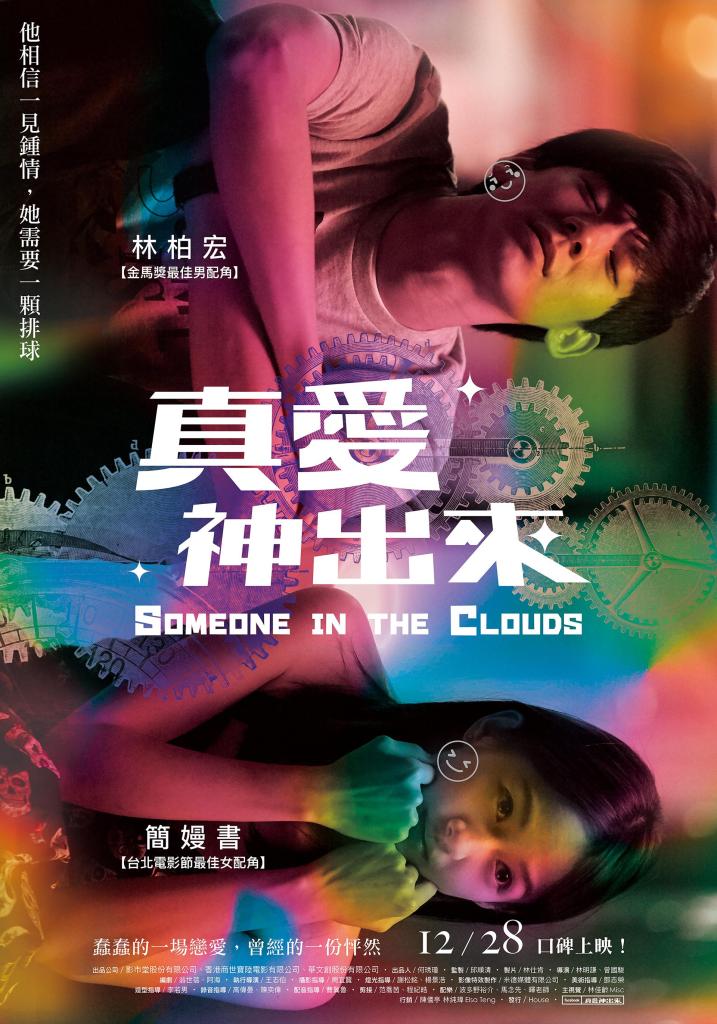
“True love is your own choice, you have to love unconditionally” the cynical fortuneteller at the centre of Someone in the Clouds (真愛神出來, zhēn’ài shén chūlái) is told by Venus herself during an impromptu intervention. Is love fated or a matter of choice? Both, it would seem. At least, that special person might be out there, but you won’t know unless you fully commit. Another in the ongoing series of charming romantic comedies from Taiwan, Someone in the Clouds tackles the divination of love in more ways than one as its romance-averse heroine is forced to look at love from all angles. 

The daughter of a fortune telling family, Hsaio-Pei (Jian Man-shu) makes a living as a tarot reader mostly offering romantic advice to women suffering in love while she herself does not really believe in “the one”. Hsiao-Pei’s cynical, flighty mother declares that the most loveable love letter is a credit card and has been in a constant cycle of failed relationships since divorcing Hsaio-Pei’s father for the crime of working too much. In any case, the drama begins when Hsiao-Pei is spotted by in the subway by cocksure student Chiung-nan (Austin Lin Bo-hong) who tracks her down, walks into her uni tarot club, and wields the cards asking for a date. Not given much opportunity to refuse, Hsiao-Pei goes with it and the two have a beautiful, adolescent romance only for petty insecurities to end up getting in the way. 

According to Venus, all romances begin with “coincidence” but there is no “coincidence” in love. The goddess can guide the way, but the truth, apparently, is that true love is a free choice which is why Venus finds Hsiao-Pei’s mother so particularly annoying seeing as she always backs off when the going gets tough. Thus, Venus guides Chiung-nan to the tarot club for the meet cute, but Hsiao-Pei has to agree to the match. Venus’ parting wisdom is that true love, in a sense, is actually self love in that once you’re happy in yourself and can love unconditionally without expecting anything in return you will find “true love” without even realising it. 

Yet Hsiao-Pei’s path towards such a realisation requires a fair amount of intervention from the increasingly exasperated goddess. A moment of jealousy about some texts from an old girlfriend threatens to bring the whole thing crashing down while Hsiao-Pei relives her climactic moments Sliding Doors style trying to decide what might have been if different things had been said or done. Meanwhile, she continues reading the future for others and “punishing” Chiung-nan by punishing herself in a grim mirror of Venus’ central philosophy. 

Alternatively, as her grandpa claims, all you need to do to be happy is be kind and generous in the knowledge that life is short. This is a life lesson he imparts to Chiung-nan’s buxom cousin, a super popular online glamour model currently engaged to a wealthy Singaporean air steward who was originally taken by the idea of annoying his conservative parents with a surprise marriage to a modern girl but is now waking up to the major implications of his reckless decision. More words of wisdom come from Hsiao-Pei’s friend Panhai who takes a cheating ex back because she feels he needs her, replying to Hsiao-Pei’s criticism that need is not love with the reasoning that not everyone can tell the difference. 

True love is, according to the goddess at least, as simple as deciding to be happy. She can point the way, but in the end it’s up to the individual to claim their right to happiness or dwell in cynical misery for evermore. A whimsical coming-of-age romance, Someone in the Clouds finds that love is fate and free will in equal measure in which there are no “coincidences” only brief moments of transition standing in for destiny. What Hsiao-pei learns is that in order to achieve romantic happiness she’ll have to put her cards on the table for someone else to read while resolving to accept another interpretation in order to make a “free” choice with the spirit of kindness and generosity which allows her to forgive both herself and others. 


Someone in the Clouds was screened as part of the 2019 New York Asian Film Festival.

Original trailer (Traditional Chinese subtitles only)

The Laundryman (青田街一號, Lee Chung, 2015)

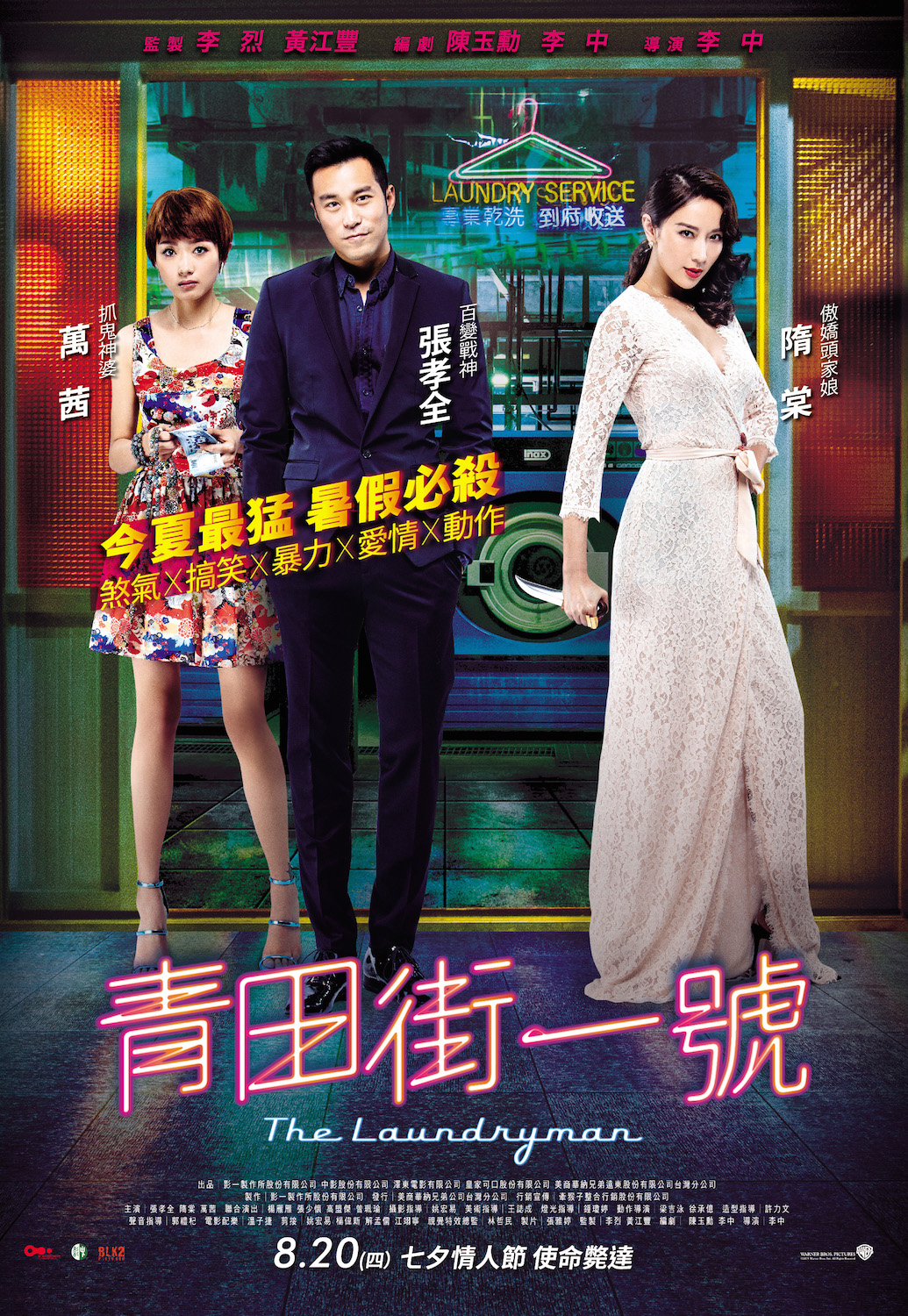
青田街一號_主海報A_直式_有贊助_OLCould you, should you, attempt to wash away life’s “stains” by erasing them? The hero of Lee Chung’s The Laundryman (青田街一號, Qīngtián J Yīhào) is engaged with just that in his clandestine occupation in which he works as a kind of “cleaner”, smoothing the wrinkles out of life’s little problems for the monied and unscrupulous. Yet he finds himself “haunted” by his crimes, accused by those he so casually dispatched without asking why, and eventually forced into a reexamination of his life and work.

Known only by the cryptic codename “No. 1, Chingtian Street” (Joseph Chang Hsiao-chuan), our hitman is one of many working for the mysterious A-gu (Sonia Sui Tang) at her family laundry which she runs as a cover for her stable of assassins, claiming that they merely clean the stains from people’s lives rather than their clothes. A-gu’s methods are complex and exacting. Picking up concerned citizens in the street, she guides them towards her services before Chingtian or one of his colleagues inserts themselves into their target’s daily routine, knocks them off in a quiet sort of way, then brings the body “home” to be “laundered”.

The snag is that Chingtian has recently become plagued by the spirits of those he’s killed. Three of them, to be exact (and an extra one he didn’t off but has started following him anyway). Traditional therapy proving no help, A-gu sends Chingtian off to see Lin (Regina Wan Qian), a pretty psychic, despite affirming that all of this is some weird thing going on with Chingtian’s head rather than genuine paranormal activity. Lin, spotting his ghostly followers right away, explains to Chingtian that they most likely have unfinished business – i.e. finding out who wanted them dead and why. There is, however, a little more to it than that as a further trail of death begins to linger behind Chingtian that leads back to a dark and repressed memory of his youth.

Despite its whimsical tone, Lee’s drama leans heavily into the darkness in asking why it is someone might decide to pay to have someone else killed. The answers aren’t the ones you’re expecting. No business disputes or political machinations, only frustrated loves and loneliness. A nerdy young loner falls for the larger lady from next-door and is horrified to realise that her boyfriend beats her to the point at which she has begun to consider suicide as a means of escape. He wants to save her, and after all the world might be “better off” without the violent boyfriend, so he gives in to A-gu’s alluring offer to have the guy offed (for a small fee). Meanwhile, another mark decided on his course of action out of an excess of love, or to put it more pointedly, its dark side as he became increasingly convinced he could not live up to its expectation and determined to free himself of the burden, damning himself further into a downward spiral of self-destructive humiliation.

A-gu’s life philosophies lean to towards the callous with all her talk of “cleaning” and affirmations that “useless people should be destroyed”, but as Lin points out it’s quite something else to bump off a lovely older couple – some might even call it heartless. Heartless is what Chingtian has been raised to be, so his recently reawakened humanity is quite a problem. Caught between A-gu who alternates between something like possessive mother and femme fatale (which is just as strange a dynamic as it sounds), the pixyish Lin, and later the dogged policewoman Yang (Yeo Yann Yann) who’s picked up on a trail set down for her to find but followed it further than intended, Chingtian is forced to confront himself and his past, in a sense putting his psyche on a spin cycle to reverse a lifetime’s worth of brainwashing and remember who it is he really is.

Strangely warm and fuzzy, Lee’s whimsical world of colour is a perfect mix of film noir fatalism and fairytale promise as Chingtian walks a precarious path towards reintegration of his personality while trying a fair few others on for size. The childlike silliness of an anti-ghost musical number mingles with the hard edged kung fu of a violent procedural but Lee never loses his sense of cartoonish fun even as Chingtian begins to find his answers and with them a clue to inner darknesses personal and otherwise.


Currently available to stream in the UK (and possibly other territories) via Amazon Prime Video.

International trailer (English subtitles)

Nina Wu (灼人秘密, Midi Z, 2019)

Nina Wu poster 1“They’re not just destroying my body but my soul” complains an exploited woman in a film within a film, “I’ll do something you’ll all regret” she adds, only the actress never will. Penned by leading actress Wu Ke-xi, Nina Wu (灼人秘密, Zhuó Rén Mì) provides a timely exploration of the gradual erasure of the self the pursuit of a dream can entail in a fiercely patriarchal, intensely conservative culture. Arriving in the wake of the #metoo scandal the film goes in hard for industry exploitation but never tries to pretend that these are issues relating to the film industry alone or deny the various ways it informs and is informed by prevailing social conservatism.

Originally from the country, the titular Nina Wu (Wu Ke-xi) has been in Taipei for eight years trying to make it as an actress but is still awaiting that big break. Aside from some small bit parts and commercial jobs, she supports herself by working in restaurants with a side career as a live-streaming webcam star. Then, just as she’s starting to think it’s too late, a call comes through – she’s in the running for the lead in a high profile period spy thriller. The only snag is that the part requires full frontal nudity and explicit sex scenes.

Nina is understandably conflicted. Aside from the potential discomfort, taking a part in the kind of film this could turn out to be is a huge gamble that could either make or break her career (just look at what happened to Tang Wei after Lust Caution, itself a period thriller about a female assassin who falls for her target). Nina’s unsympathetic agent skirts around the fact this might be her last chance while promising to respect her decision, implying it’s this or nothing. Of course, neither he nor the sleazy director inviting parades of identically dressed hopefuls up to his hotel room where he forces them to engage in dubious acts of degradation for his own enjoyment will admit that the reason they want a “fresh face” isn’t for any artistic motivation but that no well established actress with a proper agent would ever take a role like this (and even if she did, she couldn’t be pushed around in the same way).

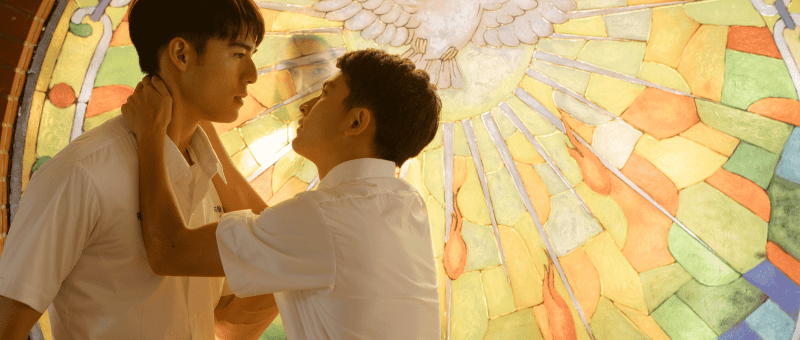
Convincing herself to do whatever it takes, Nina takes the part but goes on to suffer at the hands of a controlling and tyrannical director who psychologically tortures and physically abuses her supposedly in order to get the performance he wants rather than the one she chooses to give him. A repeated motif sees hands continually around Nina’s throat as if she were being permanently strangled, unable to speak or express herself, permitted breath only when compliant with the desires of men.

Subsuming herself into the part, Nina avoids having to think about the various ways her offscreen life is also a performance or of her own complicity in the erosion of her emotional authenticity. A visit home reveals a difficult family environment with a father (Cheng Ping-chun) losing out in the precarious modern economy, while she, now the “famous actress”, wonders if she was happier as an am dram bit player staging inspirational plays for children. The secret she seems so desperate to conceal seems to be her same sex love, sacrificed for a career in Taipei and now perhaps unsalvageable. Her lover has moved on, preparing to marry a man and embark on a socially conventional life. If she too has made her peace with sacrificing a part of her true self, she does at least seem superficially “happy” in contrast to Nina’s gradually fracturing psyche.

Meanwhile, Nina becomes paranoid that a mysterious woman is stalking her. Apparently another hopeful also driven mad by the demands of an exploitative industry, the woman is convinced Nina has taken what was rightfully hers and done so by selling her body for career advancement. Yet as time goes on we begin to wonder if the film ever happened at all or is only a part of Nina’s fabricated delusion sparked Marienbad-style by the single traumatic event on which the film ends, filled as it is with a lingering sense of tragic defeat. Nina Wu never takes her longed for revenge, even if she (perhaps) gains it in a kind of success, but silently endures as the misuse of her body begins to destroy her soul and leaves her nothing more than an empty vessel on which the desires of others are projected.


Nina Wu was screened as part of the 2019 London East Asia Film Festival.

Original trailer (English subtitles)

Heavy Craving (大餓, Hsieh Pei-ju, 2019)

Heavy Craving poster 1“Just look at yourself” the heroine of Hsieh Pei-ju’s Heaving Craving (大餓, Dà È) is constantly told, as if she should simply know why she’s not getting on in life. Ying-juan (Tsai Jia-yin) is a larger lady in a culture which prizes conformity, insisting on its own narrowly defined notions of “beauty” and rejecting all which lies outside them. Though she’s perhaps “happy” in herself, at least to a point, Ying-juan harbours an intense sense of inferiority which is not helped by her emotionally distant yet judgemental mother whose less than gentle prodding presents an additional barrier to her daughter’s forward motion.

When we first meet Ying-juan, she’s buying a trolly full of puddings from the supermarket, in fact clearing out their entire stock. A woman behind her complains that she can’t see any on the shelves, noticing that they’re all in Ying-juan’s trolley and silently judging her, assuming that she’s going to eat them all herself. Ying-juan takes a box out and gives them to the woman, well accustomed to this kind of disapproval though as we later discover the puddings were actually for the kids at the school where she is temporarily working as a cook. These kinds of micro-aggressions are a constant occurrence in Ying-juan’s everyday life. She tries to give up her seat on a bus to an elderly lady, but everyone tells her to sit down because she’ll block the aisle. She thinks about getting another job in a restaurant but realises that the kitchen is too narrow for her to move about freely, and then there are horrible kids in the street who like to throw eggs at the local “fatso”.

Despite her kind heart and affable nature, Ying-juan is constantly told that she’s undesirable and that her unconventional looks are an embarrassment to those around her. Ying-juan’s mother (Samantha Ko Hoi-ling), a skinny, elegant woman, practices yoga and puts great effort into being presentable. She’s “ashamed” to introduce her daughter looking as she does and constantly makes excuses, eventually signing her up for weight loss courses as a “birthday present” under the pretext that she’s trying to help Ying-juan get her mojo back so she can get going with a “proper” career and perhaps a relationship.

The weight loss courses, which we are first introduced to by means of a creepy advert, are almost akin to a dodgy cult promising to introduce participants to their “better selves”. Ying-juan is not really invested and somewhat dismissive of the the impatient life coach’s theatrical manner, but after she meets a handsome delivery driver, Wu (Chang Yao-jen), who comes to her defence when a neighbour tries to sexually assault her, she decides to give them a go. Though she tries to follow their guidance even as they try to sell her expensive “supplements”, treatments, and finally an operation, Ying-juan cannot seem to lose the weight, leading her to feel even more inadequate that she did before.

Underneath it all, she wonders if anyone is going to like the “real” her, that perhaps her size wasn’t the problem and she’s just not someone people will want around whether she conforms to their desires or not. A caring and nurturing person, Ying-juan loves to cook but her mother doesn’t even come home in time for her birthday dinner, which she cooked herself because going to restaurants is no fun when people judge you for what or how much you’re eating.

Judgement is indeed the primary problem, and when it’s connected to your appearance that’s something you cannot hide. Wu, confiding in her that he used to be bigger himself, tells Ying-juan that he eventually came to the conclusion that changing other people is too hard, it’s faster to change yourself, but his words have a rosier connotation than it at first seems in that it’s not so much that Ying-juan needs to lose weight as it is that she needs to feel more comfortable in herself so that she’s not enduring judgement but actively rejecting it. It’s a lesson she begins to discover after bonding with a lonely little boy, Xiao-yu (Chang En-wei), whom she accidentally discovers likes to wear dresses.

Like Ying-juan’s mother, Xiao-yu’s does not approve of her son’s difference and has apparently already sent him to several doctors to try and get it fixed. Because he doesn’t like upsetting his mum, Xiao-yu vowed not to wear girls’ clothes anymore, but living with shame and repressing a part of your true self is a painful and heavy thing, especially for a child. The mothers might say that they’re looking out for their kids, that they know their lives will be harder if they seem to be “different” and that therefore they want them to fit in and be “likeable”, but it’s also true that they are embarrassed and ashamed to have have children that don’t “measure up” to the norm, preoccupied with the way their difference reflects on them as people and as parents.

Luckily, Xiao-yu has a friend like Ying-juan who tells him that it’s OK to be himself and there’s nothing wrong in liking to wear pretty dresses even if she hasn’t quite learned to extend herself that same generosity. After trying everything and finally being robbed of her sense of taste, she begins to rediscover what’s important seeing a chubby little boy living his best life by thoroughly enjoying a tasty sandwich and radiating joy, while a pair of skinny women walk past grumpily judging others for their lack of self-control when they themselves are wilfully repressing their desires and probably a little bit miserable on the inside. The creepy self help video from the beginning was right in one respect, in that what Ying-juan craves is happiness but that’s not something you find by following other people’s arbitrary rules, only in accepting yourself and embracing joy where you find it.


Heavy Craving was screened as part of the 2019 Five Flavours Film Festival.

Original trailer (Traditional Chinese / English subtitles)

Cities of Last Things (幸福城市, Ho Wi Ding, 2018)

Cities of last things poster 1A sense of finality defines the appropriately titled Cities of Last Things (幸福城市, Xìngfú Chéngshì), even as it works itself backwards from the darkness towards the light. Still more ironic, the Chinese title hints at “Happiness City” (neatly subverting Hou Hsiao-hsien’s “City of Sadness”) but that, it seems, is somewhere its hero has never quite felt himself to be. Embittered by a series of abandonments, betrayals, and impossibilities, he grows resentful of the brave new world in which old age has marooned him. 

Ho opens with a bouncy, retro track advising that one should never be too generous with love only for a body to suddenly rain down from above. As we later discover, the body belongs to 60-something former policeman Dong-ling (Jack Kao) who has grown disillusioned with his futuristic, digital world, stubbornly smoking cigarettes and growing old gracefully while surrounded by vapers and ads for rejuvenating drugs. For reasons we don’t yet understand, he ventures into the red light district to buy a gun, punches his wife’s dance partner, and visits a hard-nosed sex worker who reminds him of a woman he loved and lost thirty years previously.

Love, guns, death and revenge become persistent themes for the older Dong-ling whose only bright spot seems to be a grownup daughter preparing to move abroad with her foreign boyfriend. Thirty years previously Dong-ling (Lee Hong-chi) too dreamed of running overseas. Consumed with rage on discovering his wife’s infidelity, he imagines himself killing her, her lover, and himself but settles only for a petty revenge against a colleague which exposes the entrenched police corruption he had refused to participate in, alienating his fellow officers. Bonding with a French kleptomaniac (Louise Grinberg) on the run from some kind of unresolved conflict with her father, he sees a way out only to have the door cruelly closed on him just as it was so many years before when he was just a teenager picked up for trying to steal a scooter.

In true film noir style, all women are perhaps one woman. Abruptly shifting tone in venturing into the recent past, we are introduced to Big Sister Wang (Ding Ning) – an embittered, disappointed femme fatale running out of road, hemmed in by the choices she has already made. She may already know there’s no way out for her, little needing the policeman’s warning that after her arrest everyone in gangland will assume she talked when they let her go, but she refuses to give in, repeatedly insisting on cigarettes and asserting her dominance while the unsympathetic policemen get on with their grim business.

Cornered, Ara, the shoplifting free spirit, decides to interrogate her interrogator, calling back to the later version of herself in asking why it is that prostitution is illegal. The policeman has no answer for her, save that he does not make the rules only follow them. Dong-ling too wanted to be a force of order, perhaps taking Big Sister Wang’s impassioned pleas to be a good person and not end up like her a little too much to heart. He follows the rules too closely for the comfort of his colleagues but finds himself dangerously exposed by an inability to regulate his feelings, a victim of toxic masculinity humiliated by his wife’s betrayal but unable to stand up to the corrupt superior who so casually closes down the only escape route he has been able to find.

The older Dong-ling is horrified by his daughter’s revelation that she lasered away a birthmark. How else can you recognise someone you lost long ago in the great wide world other than by a mark placed on them when they were born? His daughter rolls her eyes and reminds him that these days everyone is chipped, but there may be something in his rationale that everyone is marked at birth. Dong-ling is surrounded by handcuffs, self-driving vehicles, and locked doors. His fate is sealed, as we know, because we saw him fall, yet like Big Sister Wang he fought back only his resistance was violent and vengeful, abhorrent in its enraged pettiness. His is a tale of fatalistic resentment and of an existence consumed by a sense of hopeless abandonment, coloured only by a longing for lost love. Ho’s decision to end the film with its happiest moment, bright sunshine in place of rain soaked night, is ironic in the extreme but returns us to the grim serenity of the opening as the cheerful retro strains re-echo and Dong-ling catapults himself into a life of misery in the cities of last things where all hope is futile and all love loss. 


Screened as part of the 2019 London East Asia Film Festival, Cities of Last Things is also available to stream online via Netflix.

TIFF trailer (English subtitles)

Liu Wen-cheng – Don’t Be Too Generous About Love

It’s a Mad, Mad, Mad, Mad Show (瘋狂電視台瘋電影, Hsieh Nien Tsu, 2019)

It's a Mad, Mad, Mad, Mad Show poster 1New Year comedies are usually about food and community, but for those lonely souls with no one to go home to, perhaps TV can fill the void. That’s certainly been the way for kindhearted TV variety show producer Yeh (Ou Han-Sheng). As a young boy he was often all alone at home and turned to TV for comfort, but with the industry as soulless as it is, is it still possible to lose yourself in the glow of the television screen?

In truth, Yeh’s programming has never been very successful which is perhaps why he finds himself unexpectedly promoted to director by his shady boss Lo (Lin Yu-Chih) who abruptly fires almost everybody else while suddenly insisting on round the clock programming. Unbeknownst to the crew, Lo has fallen foul of eccentric gangster David (Yen Cheng-kuo) who has showbiz ambitions and is determined to buy Crazy TV at a rock bottom price. Lo promoted Yeh in the hope that he’d fail so the ratings would crash and the station would go bust. Yeh’s programming, however, while not exactly a smash begins to find its audience largely through the zany schemes he comes up with to make the most of his budget like substituting repetitive ads for a “signal problem” warning, running cutesy phone-in kids TV, and a deliberately boring overnight program narrated by a guy in a sheep costume and featuring complicated maths problems and military history designed to send you straight to sleep.

Meanwhile, the backstage drama kicks off as Yeh begins to get closer to aspiring Malayasian actress Diva (Lin Min-Chen) while still nursing a broken heart over a failed relationship with a rising star who dumped him for her career. The main issue is, however, his obsession with television as a lifelong friend. As lonely child, TV was there for him, and it was still there for him as an ambitious adult, but somehow it’s lost its way and Yeh isn’t sure how to guide it home. Eventually he has to consider selling his house and earning his living as a noodle vendor while he waits for TV to rediscover its sense of self.

Filled with references to retro Taiwanese television and Western movies, It’s a Mad, Mad, Mad, Mad Show (瘋狂電視台瘋電影, Fēngkuáng Diànshì Tái Fēng Diànyǐngwears its love of the medium on its sleeve but is clearly unafraid to stick the knife in as Crazy TV lives up to its name with a series of bizarre skits created to make up for the fact they have no actual reporters so cannot actually report the news. The only way back in for Yeh, his aspiring actor friend Abi (Liu Kuan-Ting), and Diva is to enter a competition where they have to go head to head with Mr. David reenacting The Godfather, a singer, a guy reading a book, and a pair of gamers. They choose the surreal with a high risk strategy inspired by the movie Money Monster which eventually goes in an unexpected direction. 

A chance meeting with an old friend currently shooting an indie movie brings home to Yeh what exactly has been missing in his TV life – “value”, as in everyone has something valuable in their hearts that ought to be expressed but often isn’t in the increasingly commercialised TV industry. The veteran director deposed during Lo’s mass purge eventually says something similar, that the audience for their programming is mostly the elderly and children and that therefore they should accept a little more responsibility for the programmes that they air and do their best to send positive messages rather than focus on sensationalist stunts designed to win short-term ratings.

Yeh’s epiphany comes a little late, but eventually leads him to realise that if TV was a friend to him it can be a friend of everyone else and then they can all be mutual friends bonding in shared enjoyment even if they’re apart. In true New Year spirit, it really was all about community after all. Adapted from the stage play by variety TV legend Hsieh Nien Tsu, It’s a Mad, Mad, Mad, Mad Show is a warmhearted tribute to the healing power of silly TV, bringing tired people together through shared bemusement as they eagerly tune in to the next crazy onscreen antics as an antidote the increasingly surreal offscreen reality.


It’s a Mad, Mad, Mad, Mad Show screens on 4th July as part of the 2019 New York Asian Film Festival. It will also be screened in Australia on 26th July as part of the Taiwan Film Festival in Sydney.

Original trailer (English/Traditional Chinese subtitles)

Han Dan (寒單, Huang Chao-liang, 2019)

Han Dan poster 1Military deity of wealth “Han Dan” is said to be afraid of the cold, so those who worship at his altar try to keep him warm with firecrackers during a ritual still practiced in the Eastern cities of Taiwan in which young men embody the god and brave the fiery assault in a daring show of their masculinity. Some volunteer to play the god for money, others for pride, and a few for atonement but there are some crimes you can’t simply burn away either with fire or by hate. The heroes of Huang Chao-liang’s Han Dan (寒單) bond through tragedy and try push past their pain through brotherhood but only one of them is aware their present relationship is founded on twisted hate fuelled revenge even as a genuine connection forms underneath.

Nerdy, earnest school-teacher-to-be Zheng-kun (George Hu Yuwei) has been fostering a lifelong crush on the girl next door, Xuan (Allison Lin), who went away to Taipei and only rarely returns home. Too shy to declare himself, he is enraged and hurt to discover that she has been secretly dating a guy they went to high school with – popular kid Ming-yi (Cheng Jen-shuo) who used to bully him for being only a trash collector’s son. Ming-yi is set to play Han Dan at this year’s Lantern Festival and his show of manly bravado is almost more than Zheng-kun can bear. In a moment of madness, he throws his lighter into a pile of firecrackers hoping to injure his rival, but Xuan runs to warn him and is caught in the crossfire. She dies from her injuries, leaving both men feeling guilty and bereft though no one else knows that it was Zheng-kun who started the fire. 

While Zheng-kun gives up on his teaching career and retreats into gloomy introspection, Ming-yi, who lost his hearing and the use of his hand in the accident, has become a drug addict and petty criminal. Riddled with guilt, Zheng-kun commits to “saving” his former enemy – locking him up while he goes cold turkey and then bringing him into the recycling business he’s started on his father’s land, but still harbours hate in his heart both for himself and for the man Ming-yi used to be.

“If only we were real friends” Zheng-kun mutters under his breath during an otherwise idyllic moment at the river. Learning more about his “blood brother”, Zheng-kun discovers that a toxic family situation is what made him such a terrible person in high school which might ordinarily have fostered compassionate forgiveness but only makes things worse for Zheng-kun who continues to hate Ming-yi to avoid having to think about how much he hates himself for what he did to Xuan. In an effort to atone, he forces himself through the Han Dan ritual year after year, scorching his body with firecrackers but finding little in the way of cathartic release.

“Feeling the pain means I’m alive” he tells a melancholy woman who seems to have had a thing for him ever since he was a shy student with a part-time job in the sleazy snack bar where she works. Now violent and angry, he’s not such a sensitive soul anymore but she loves him all the same and resents the intrusion of the late Xuan into their awkward relationship. Like the lovelorn hostess and the song they find themselves listening to, Zheng-kun too has a secret in his schoolbag that’s becoming impossible to keep but speaking it threatens to upset the carefully balanced semblance of a life that he’s forged with an oblivious, wounded Ming-yi.

Both men struggle to move on from the past, unable to forgive themselves not only for what happened to Xuan but for the choices they did or didn’t make in their youths that leave them afraid to move forward and locked into an awkward brotherhood bonded by love and hate in equal measure. A final cathartic explosion may provide a path towards a new life but only through shattering the fragile bond born of shared tragedy and irretrievable loss. A beautifully lensed morality tale, Han Dan is an acutely observed portrait of the corrosive effects of guilt and trauma but also a tragedy of misplaced male friendship as two lost souls find each other only in losing themselves as they battle the inescapable shadows of the past.


Han Dan screens as part of the 2019 New York Asian Film Festival on June 30.

Original trailer (English subtitles)

The Scoundrels (狂徒, Hung Tzu-hsuan, 2018)

The Scoundrels posterTaiwanese cinema has, of late, been most closely associated with whimsical romantic comedies and maudlin melodrama but a return to action could very much be on the cards if The Scoundrels (狂徒, Kuáng Tú) is anything to go by. A tensely plotted neo-noir, the debut feature from Hung Tzu-Hsuan takes its cues from classic Hong Kong heroic bloodshed and contemporary Korean crime thrillers as its conflicted hero battles himself in other forms, unwittingly taking the fall for the “Raincoat Robber” all while trying to reclaim his sense of self approval.

Ruining himself through a senseless act of self destructive violence, Ray (J.C. Lin Cheng-Hsi) lost his top basketball career along with the fame and fortune that went with it and now makes a living on the fringes of the crime world tagging luxury cars with GPS trackers so the thugs can pick them up later. His life takes an abrupt turn for the worse when he is about to tag the car belonging to the elusive “Raincoat Robber” (Chris Wu Kang-Ren) who takes him hostage at gunpoint and gets him to call an ambulance for the injured woman (Nikki Hsieh Hsin-Ying) lying in the back before abandoning her on the roadside and driving off.

Despite his obvious fear, Ray finds himself warming to the strangely jovial criminal who perhaps reinforces his sense of being wronged by the world with his dubious philosophies. Ben, as he calls himself, tells him that society is to blame and he’s better off embracing his darker nature but Ray remains unconvinced. Despite an awareness of his bad qualities – his self destructive need for violence and propensity to make unwise decisions, Ray prefers not to think of himself as actively criminal and resents being lumped in with the Raincoat Robber even if the TV stations sometimes paint him as a kindly Robin Hood figure who only shoots people in the knees  and makes a point of stealing from those who can afford to lose.

Even so there is something in what he says in that Ray struggles to emerge from the labels which have been placed on him throughout his life. He wants to change his fate, but is uncertain how to do it. If everyone calls him a crazed and violent man, perhaps it’s a label he can’t help but live up to and if you can’t beat your programming perhaps it’s easier to give in and simply become what everyone assumes you to be.

The police, as a case in point, quickly decide Ray is guilty because of his previous crimes and reputation as a man of violence. The veteran cop (Jack Kao) who arrested him before is convinced that Ray is their man not because the evidence says so but because he has it in for him and is convinced that no one is ever really reformed. Only one more earnest cop (Shih Ming-Shuai) bothers to examine the evidence and give credence to Ray’s pleas, but in any case Ray is unlikely to trust the authorities when the authorities have so little trust in him despite the encouragement of his loyal girlfriend (Nana Lee Chien-na) who seems to think he really might be guilty but looks as if she might stand by him anyway.

Ray wants to change his fate, but to do it he’ll have to face himself in the form of Ben only Ben is quite the adversary and in some ways even more like himself than he might have guessed if more ruthless and (almost) completely amoral. The awkward bromance between the two begins to simmer as they dance around each other never quite sure who is going to betray whom and when though Hung is careful to keep the tension high and the door open for a more genuine kind of camaraderie.

Set against the rain drenched streets of Taiwan at night, The Scoundrels fully inhabits its murky noirish world of tiny back alleys and underground gambling dens existing underneath the gleaming spires and shiny high tech hospitals. The action is thick and fast but always realistic with a good deal of humour which even sees the fight in a tea house tradition honoured in true heroic bloodshed fashion while Ray scraps for his life literally and metaphorically. A tightly plotted thriller with true noir flair, Hung’s debut is an impressively assured affair which makes the most of its meagre budget to prove that action cinema is well and truly alive and kicking in contemporary Taiwan.


The Scoundrels was screened as part of the 2019 Udine Far East Film Festival.

International trailer (English subtitles)

Small Talk (日常對話, Huang Hui-Chen, 2016)

Small talk poster“Who would want to understand me?” asks the laconic mother of filmmaker Huang Hui-Chen early in her autobiographical documentary, Small Talk (日常對話, Rì Cháng Duì Huà). “We do” the director replies, “but you won’t let us”. Huang’s film is, in a sense, an attempt to break through an emotional fourth wall in order to make sense of her complicated relationship with her distant mother Anu if only to ensure that her own daughter never feels as rejected or isolated as she herself has done living under the same roof with a woman she cannot quite claim to know.

In fact, Huang’s childhood memories of her mother are mainly to do with her absence. Even her younger sister eventually remarks that she always felt as if her mother was uncomfortable at home, preferring to spend time out with her friends rather than with her children. Forced to join her mother in her Spirit Guide business rather than attend school like the other kids, Huang began to resent her but also longed to be close to Anu despite her continuing distance. This desire for closeness is, ironically, only achieved through the introduction of the camera, acting as an impartial witness somehow uniting the two and making it possible to say the things which could not be said and ask the questions which could not be asked.

For Huang, the central enigma of her mother’s life is why she married man and had two daughters if she always knew she was gay. That her mother is a lesbian is something Huang always seemed to just know – it’s not as if Anu ever sat her down and explained anything to her, she gradually inferred seeing as her mother had frequent female partners and seemed to prefer spending time with groups of other women. Putting the question to her extended family perhaps begins to illuminate part of an answer. Like Anu, they will not speak of it. They claim not to know, that they do not want to know, and that they would rather change the subject. Even Anu, who otherwise seems to have no interest in hiding her sexuality, remarks that it “isn’t a good thing to talk about”. Nevertheless, her marriage seems not to have been a matter of choice. In those days marriages were arranged by the family, which is perhaps how she ended up with a man her sister describes as “no good” who later became a tyrannical, violent drunk she eventually had to flee from and go into hiding with her two young daughters.

Abusive marriages become a melancholy theme as Anu briefly opens up to recall throwing away sleeping pills her own mother had begun to stockpile in desperation to get away from her violent husband. A former girlfriend also mentions having divorced her husband because he was abusive, but seems surprised to learn that Anu had been a victim too. According to her, Anu had told her she was married once but only for a week and that her two children were “adopted”. Of course, this is mildly upsetting for Huang to hear, but seems to amuse her in discovering her mother’s tendency to spin a different yarn to each of her lovers to explain the existence of her family while also distancing herself from it. This seems to be the key that eventually unlocks something of Anu’s aloofness. Humiliated by her capitulation to marriage and then by her mistreatment at the hands of her husband, she cannot reconcile the two sides of her life and has chosen, therefore, to reject the idea of herself as a mother. Something she later partially confirms in admitting that though she does not regret her daughters, given the choice she would not marry again, not even if same sex marriages were legal believing herself to be the sort of person best off alone.

Huang interrogates her mother with a rigour that is difficult to watch, often to be met only with silence or for Anu to walk away with one of her trademark “I’m Off”s. It may be true that most people have something they would rather not talk about, and perhaps Anu is entitled to her silence but if no one says anything, then nothing will change and the cycle of love and resentment will continue on in infinity. Using the camera as a shield, Huang brokers some painful, extremely raw truths to her elusive mother and does perhaps achieve a moment of mutual catharsis but is also too compassionate to satisfy for laying blame, exploring the many social ills from entrenched homophobia to persistent misogyny and even the class-based oppression hinted at by the use of native dialect rather than standard Mandarin which help to explain her mother’s complicated sense of identity. Yet she does so precisely as a means of exorcising ghosts more personal than political in the hope that her own daughter will grow up to know that she is loved, unburdened by a legacy of violence and shame, and free to live her life in whichever way she chooses.


Small Talk was screened as part of the Taiwan Film Festival UK 2019.

Original trailer (English subtitles)