Kokuho (国宝, Lee Sang-il, 2025)

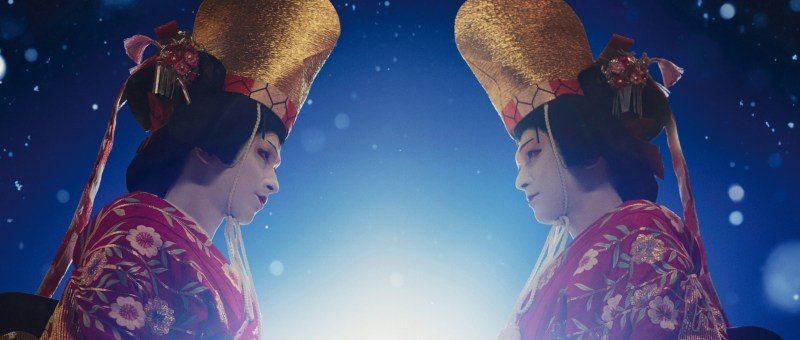
What does it mean to commit yourself so entirely to your art that you become it and effectively cease to exist? Playing the role of Ohatsu in Chikamatsu Monzaemon’s Love Suicides at Sonezaki, Kikuo (Ryo Yoshizawa) asks if Ohatsu’s lover Tokubei is really resolved to die for their love. The scene is intercut with his brother and rival Shunsuke leaving the theatre, led away by Kikuo’s girlfriend Harue (Mitsuki Takahata), just as Ohatsu leads Tokubei towards their mutual fate, as if Shunsuke were agreeing that he is not resolved to give his all to art in the way Kikuo evidently feels himself to be, at least in this moment.

The roles between them are reversed several times before they eventually perform the play again, but each of them are, in effect, in a love suicide with the art of kabuki, though kabuki itself is destined to live on. In any case, the “kokuho” of the title is a living national treasure and one who has indeed embodied their art. We’re introduced to one early on, Mangiku (Min Tanaka), an ageless onnagata, or player of female roles, who has a quasi-spiritual quality and warns the young Kikuo that though his face maybe beautiful, it could also be a barrier to his art and, in the end, consume him. It is said of Mangiku that all he will leave behind him is his art. The words are spoken with pity, but this is really what it means to be a kokuho and the highest compliment that might be paid to an artist. Mangiku himself would likely approve, casting an eye around his spartan room and declaring himself unburdened. 

But Kikuo is only half-joking when he says he cut a deal with the devil to make him the best kabuki actor in Japan. As a woman he abandoned later scolds him, all his sacrifices were made by others. Actors are greedy, another laments, and it’s true enough that Kikuo feared little in his need for success. The irony is that he too was an heir, only to a yakuza dynasty to which he could not succeed. His was father was gunned down in front of him while preparing to draw his sword, while Kikuo’s rebound tattoo does him no favours in the end and his attempt to avenge his father’s death apparently fails. Nevertheless, he vies for the approval of his surrogate father and kabuki master Hanjiro (Ken Watanabe) who values his skills above those of his biological son Shunsuke (Ryusei Yokohama) who alternately resents having his birthright stolen from under from him and acknowledges that Kiku has an innate talent with which his bloodline can’t compete.

Nevertheless, there’s a genuine and enduring brotherhood between the two men that never quite slips into hate or acrimony even as circumstances conspire against them. They both want what the other has. In the kabuki world, bloodline is everything and Kikuo is viewed as a interloper usurping Shunsuke’s rightful position, while Shunsuke wants the raw talent he knows he lacks and no amount of training and commitment can buy. Yet it is in a way about resolve, or at least the willingness to give your life to the stage and die in the pursuit of art. Kikuo’s signature piece is the Heron Maiden, in which a heron falls in love with a young man and becomes a young woman. But her love is unrequited. She goes mad, and can only show her love for him by dancing until she dies. This is, in effect, Kikuo’s dance with kabuki, a waltz to the death as he yearns for the “scenery” he as been searching for and eventually finds the apotheosis of his art in the moment of the heron’s demise.

Like Lee Sang-il’s previous films Villain and Rage based on a novel by Shuichi Yoshida, the film is a poetic meditation on the price of the pursuit of art that revels in its sumptuous production design and the intricacies of the kabuki world. With shades of Farewell, My Concubine, it frames its central dynamic not quite one of straightforward rivalry but a brotherhood between two halves of one whole who each know that neither of them can really win, while becoming a kokuho is an endless pursuit of artistic perfection in which one must be resolved to kill the self and die on stage in a lover’s suicide with a forever elusive kabuki.


Kokuho screened as part of this year’s LEAFF.

Trailer (English subtitles)

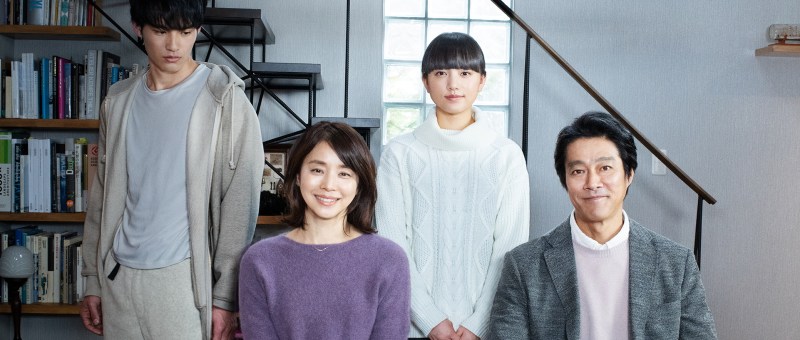
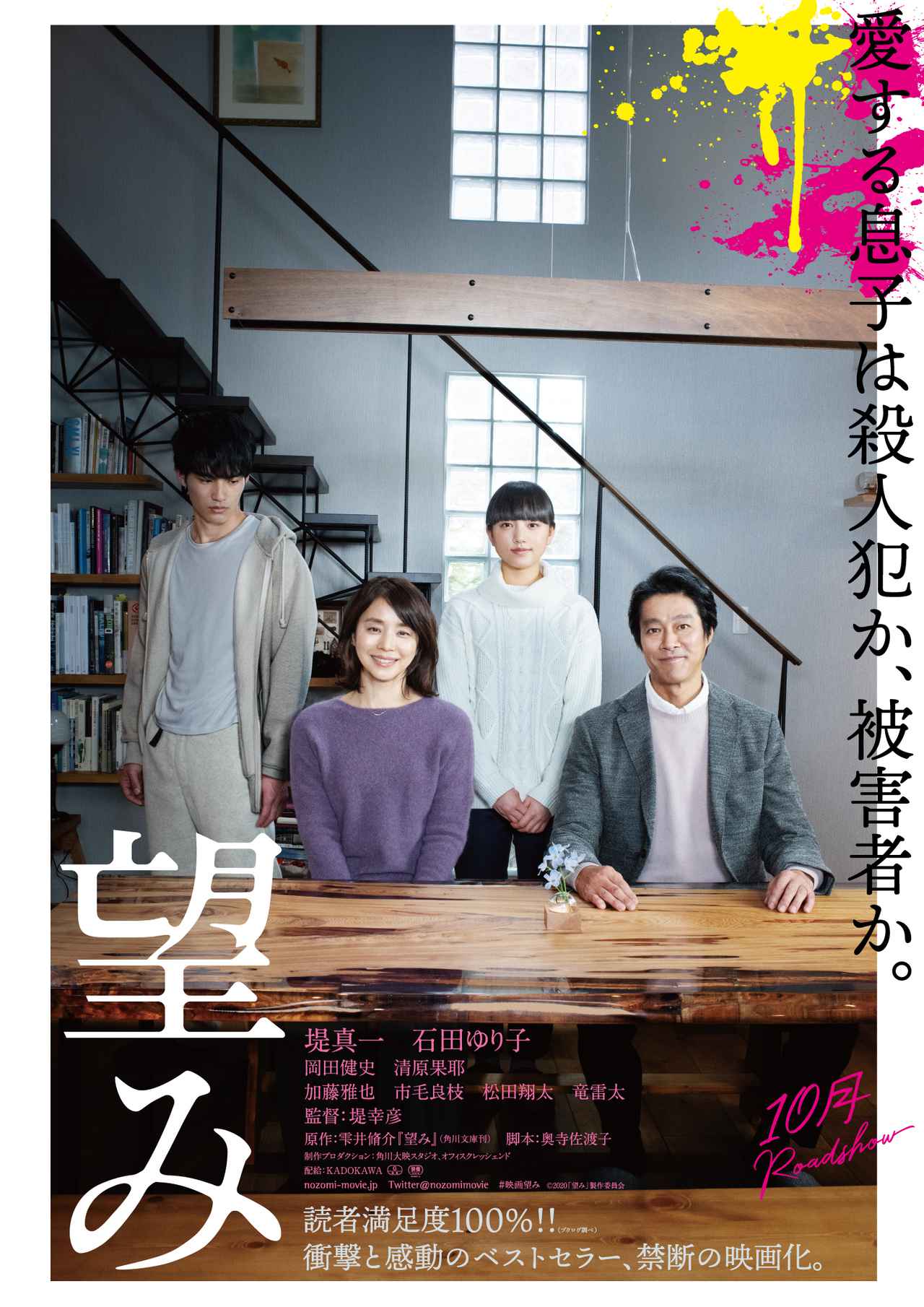
Hope (望み, Yukihiko Tsutsumi, 2020)

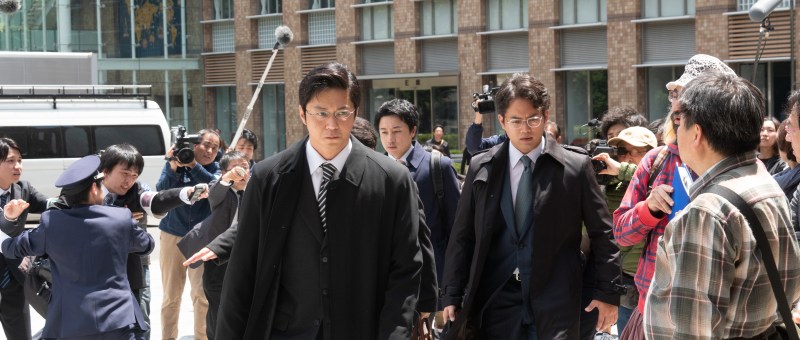
What would you prefer, that your son is alive but a murderer, or that he’s dead but blameless? That’s the dilemma faced by the family at the centre of Yukihiro Tsutsumi’s Hope (望み, Nozomi) who find themselves wondering if they really knew their son at all or had been deluded by an image of familial harmony that was only ever superficial. Meanwhile, they’re also at the centre of a media storm, on the receiving harassment from the press and neighbours, along with the potential financial strain of lost business and fracturing relationships in the local community.

Teenage daughter Miyabi (Kaya Kiyohara) tells her father that she’s read online some families have to move after a relative becomes involved with a crime, that they lose their jobs and place in the community. She’s been studying hard to get into a top high school and is worried that they may not now accept her even if she passed the exam because of something her brother may or may not have done. Some might say that a being a part of the family means that you live or die together, but there is a persistent sense of unfairness felt by all they are being made to suffer because of something over which they had and have no control.

Tadashi (Koshi Mizukami) never explained of this to them and it’s true that he had been behaving differently, was sullen, stayed out all night coming home with bruises, and had in fact recently purchased a knife but it’s difficult for them to believe that he could really have gone on the run after murdering a classmate. At the beginning of the film, architect Kazuto (Shinichi Tsutsumi) had shown off their warm family home to some prospective clients remarking that they wanted to ensure close relationships with the their children and that the design is a good opportunity to plan ahead for the next 10 or 20 years but perhaps there’s something a little hubristic in that statement. Kazuto is trying to sell an image of familial bliss that his house design can bring, but when he knocks on Tadashi’s door the boy is rude and resents the intrusion. Typical teen behaviour, the clients might think, but still it’s a minor crack in the edifice of the image of a perfect family.

But for all that it’s Kazuto who most strongly resists the idea that Tadashi may really have killed his friend and clings fast to the hope that he may be a victim too even though, as mother Kiyomi (Yuriko Ishida) points out, that might mean that he’s already dead and was killed alongside him. For Kiyomi, she just wants Tadashi, whose name means “correctness”, to be alive even if that means he really did do it. If that were the case, the family would also face constant harassment for the rest of their lives, Tadashi would be in prison for the next 15 years, and they would likely have to compensate the other family financially for the boy’s lost future and 50+ years’ worth of lost earning potential. None of that matters to her so long as Tadashi is alive, but to Kazuto it seems more important that Tadashi not be guilty and he reclaim the image he had of his son as a good and honest young man rather than a delinquent killer and bully.

Investigations among the teens turn up contradictory reports, some saying that Tadashi was aloof and arrogant while a group of girls insist on his innocence and even contemplate going to the police to help clear his name. What’s clear is that everyone seems to have taken football far too seriously and a situation among hotheaded young men went way out of control. As a policeman later says, problems often occur at this age because children who are mature enough to think for themselves start wanting to solve their own problems without worrying the adults around them but don’t always know the best way to do it and end up making everything worse. The irony may be that in the end Tadashi may indeed restore a sense of hope for his family that they can turn things around and regain a more genuine sense of familial harmony no matter what the outcome may be.


Hope screens as part of this year’s Japan Foundation Touring Film Programme.

Trailer (English subtitles)

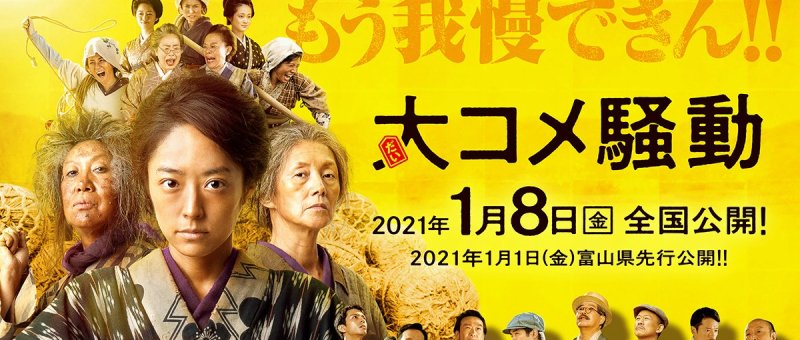
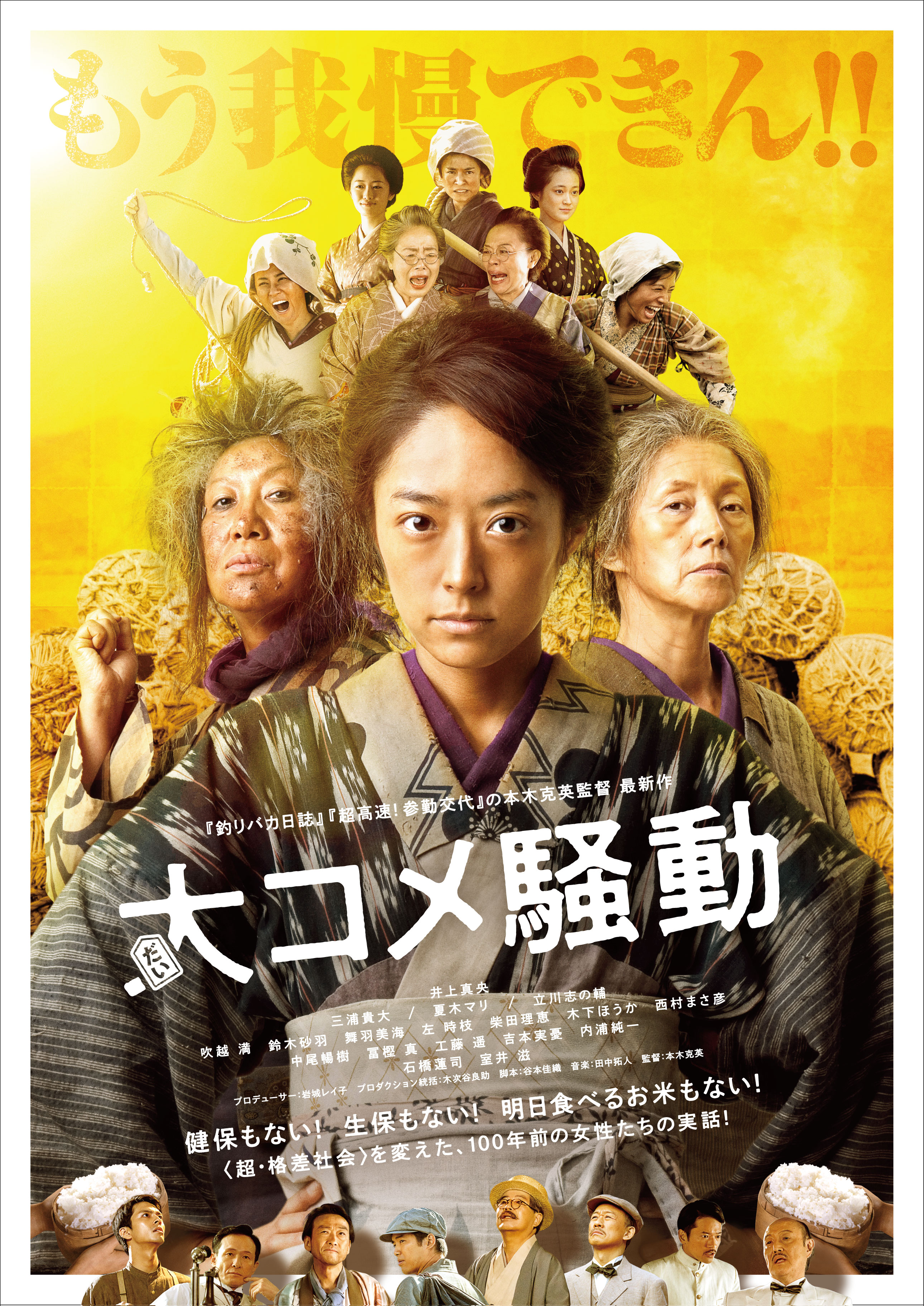
Angry Rice Wives (大コメ騒動, Katsuhide Motoki, 2021)

“Even if women try to do something, nothing will change” a condescending husband insists cautioning his wife not to take part in any more protests lest he lose his protected status and the family its source of income. Set in the middle of the Taisho era, Angry Rice Wives (大コメ騒動, Dai Kome Soudo) dramatises a small moment of revolution in which the resistance movement organised by a community of women towards the spiralling cost of rice sent shock waves through a changing society and in its own way provoked a change of course in an increasingly capitalistic society. 

Beginning in April 1918, the small fishing village of Toyama sees an exodus of its young men who must spend the off-season when the catch is low working other jobs in order to make ends meet, This necessarily means their wives and families are left behind and must make do with what they themselves can earn in doing menial jobs such as transporting rice and the little their husbands might be able to send before their return. A farmer’s daughter who married into the fishing community, Ito (Mao Inoue) is one of the few literate women in the village and looked to as a kind of oracle reporting the contents of the morning paper to the other wives who are keenly interested in the continually fluctuating price rice which seems set to rise still more with news that Japan plans to send troops to Siberia. 

As the voiceover relates, with the catch so low rice is the only form of sustenance available but prices have already exceeded what most of the women can earn in a day leaving them unable to feed their feed their families and giving rise to increasing discontent with the inequalities of the contemporary social order. Taking drastic action and led by eccentric old woman Kiyonsa (Shigeru Muroi), they stage a rebellion by intercepting their locally grown rice in order to stop it being sent to Hokkaido which is reported in the newspapers as an “uprising”. The term is indeed a little grand for what actually took place, but it does at least seem to spark a spirit of rebellion echoing around the country even if nothing much as changes in Toyama. Buoyed by a sense of wider support, the women continue their protests merely asking for the rice merchants to sell at a more reasonable rate (which they are perfectly capable of doing) while decrying the immorality of the obvious profiteering by corrupt authorities including local bigwig Kuroiwa (Renji Ishibashi) who are deliberately stockpiling rice to push the price up while planning to sell it to the government for a hefty price to feed their troops. 

Kuroiwa is entirely unsympathetic to the women’s predicament while the local police chief Kumazawa (Junichi Uchiura) believes himself indebted to him and is therefore entirely under his thumb. Neither of them think the women are much of a threat, Kumazawa randomly arresting a middle-aged man close to several of the women the rationale being as the husband of one puts it that women can never achieve anything no matter how hard they try but a man’s involvement in such rebellious activity would be cause for concern. Similarly, Ito is often told that her education is of no use, partly because the other women feel inferior for not having any, but struggles to find the self-confidence to standup to the corruptions of lingering feudalism owing to her liminal status as a non-native villager despite having given birth to three children there. Even so she is often looked to as a local problem solver and potential successor to Kiyonasa as leader of the village women if only she could learn to embrace the courage of her convictions. 

The children, by contrast have no such qualms, Ito’s young son Soichiro directly telling the profiteering proprietress of the rice store Mrs Washida (Tokie Hidari) that it’s her own fault another child stole food because if she hadn’t insisted in pricing her customers out to the point that they were starving she would never have needed to steal. “What exactly has capitalism done for us?” an opportunistic visitor from the workers party asks but receives short shrift from the cynical Kiyonsa who agrees they should rebel but is non-plussed by the flummoxed canvasser’s admission that he has no real plan for what do afterwards. Washida plays divide and conquer, pitting the women against each other and tempting even Ito with offers of under the table rice deals to feed their starving families if only they back down but though the solidarity of the women is temporarily ruptured it is never truly broken as they stand together to fight for fairness in the face of the Kuroiwas and Washidas of the increasingly capitalistic society. Their resistance eventually forces the government to backdown, realising they can’t simply ignore the plight of society’s poor or take their complicity for granted while attempting to starve them into submission. 


International trailer (English subtitles)
Winny (Yusaku Matsumoto, 2023)

Can a creator be held legally responsible for what other people might decide to do with their creation? For some, that is the essential question of the trial at the centre of Yusaku Matsumoto’s legal drama Winny, but in speaking more to the present day than the early 2000s in which the real life events took place the film is more concerned with freedom of speech in a society in which established authorities may seek to resist the democratisation of information. 

A talking head seen on television at one point suggests that peer-to-peer file sharing programme Winny disrupts the democratic copyright regime, but according to its creator Isamu Kaneko (Masahiro Higashide) the appeal of peer-to-peer is that it is by nature democratic in forging a network of machines on an equal footing. Nevertheless, in November 2003 two people were arrested for using Winny to share copyrighted material and Isamu’s home was searched by the Kyoto police who arrested him for aiding and abetting copyright infringement. He and his lawyers argue that to charge the developer is wrongheaded and irresponsible in that it will necessarily stifle technological advance if developers are worried about prosecution if their work is misused by others while his intention in any case had not been to undermine copyright laws but essentially for technological innovation in and of itself. 

Meanwhile, the film devotes much of its running time to a concurrent police corruption scandal in which a lone honest cop is trying to blow a whistle on a secret slush fund founded on fraudulently produced expense receipts. The implication is that the reason the police decided to go after Isamu is that they feared Winny’s potential to expose their own wrongdoing. A member of the police force had apparently used Winny and introduced a vulnerability to the police computer system that allowed confidential data to be leaked, and Winny is indeed later used to publicly disseminate evidence which proves the claims of the whistleblower, Semba (Hidetaka Yoshioka), are true. Semba had previously tried to take his concerns to the press privately but was ignored, the editor simply printed a police press release without investigation unwilling to rock the boat. But a programme like Winny exists outside of the establishment’s control which is why, the film suggests, the police in particular resent it. 

A younger officer Semba reproaches at his station gives the excuse that everybody does it and refusing to fill in the false receipts would make it difficult for him to operate in an atmosphere in which corruption has become normalised. Even the police use Winny, a prison guard confiding in Isamu that he’s used the programme to download uncensored pornography while prosecution lawyers conversely attempt to embarrass Isamu by leaking pictures of his porn collection to the press and bringing it up on the stand. “Everybody does it” is not a good defence at the best times aside from being a tacit admission of guilt but reinforces a sense that the police operates from a position of being above the law. A particularly smug officer thinks nothing of perjuring himself on the stand, spluttering and becoming defensive when Isamu’s lawyers expose him in a lie. 

Isamu is depicted as a rather naive man whose social awkwardness and childlike innocence leave him vulnerable to manipulation. He’s told to sign documents by the police so he signs them thinking it’s better to be cooperative, taking the advice he’s given when he questions a particular sentence that he can correct it later at face value while assuming that he’ll be able to straighten it all out in court by telling them the truth and that he signed the documents because the police told him to. Meanwhile, he’s almost totally isolated, prevented from talking to friends and family out of a concern that he may use them to conceal evidence. 

The film seems to suggest that the stress of his ordeal which lasted several years may have led to his early death at the age of 42 soon after his eventual acquittal. In any case he finds a kindred spirit in his intellectually curious lawyer (Takahiro Miura) who defends him mostly on the basis that the right to innovate must be protected and a developer can not be responsible for the actions of an end user any more than a man who makes knives can be held accountable for a stabbing. Matsumoto captures the sense of wonder Isamu seems to feel for the digital world and has a great deal of sympathy for him as an innocent caught up in a game he doesn’t quite understand while fiercely defending his right to express himself, along with all of our own, without fear no matter what the implications may be.


Winny screens in New York Aug. 2 as part of this year’s JAPAN CUTS.

Original trailer (no subtitles)

To The Supreme! (もっと超越した所へ。, Santa Yamagishi, 2022)

Is it worth staying in a dissatisfying relationship just so that you’ll have someone to carry your rice? The idealist in all of us might want to say no, but it’s undeniably a strong argument. The four heroines of Santa Yamagishi’s To the Supreme! (もっと超越した所へ。, Motto Chouetsushita Tokoro e), adapted from the stage play by Shuko Nemoto, find themselves asking just this question as their relationships with a series of narcissistic, selfish men reach a crisis point on the eve of the coronavirus pandemic. 

Opening in early 2020, the film finds costume designer Machiko (Atsuko Maeda) reconnecting with middle school friend Reito (Fuma Kikuchi) who abruptly announces he’s moving in because he’s worried about her given the tone of her late night tweets. Former actress turned variety star Suzu (Shuri) lives with her gay best friend, Tommy (Yudai Chiba), after ending a 10-year relationship with petulant former child star Shintaro (Takahiro Miura) who is now seeing sex worker Nanase (Mei Kurokawa). Miwa (Marika Ito), meanwhile, is in a relationship with vacuous hipster Taizo (Reiji Okamoto) who spent an exorbitant amount of money on gold grills as a present and seems to be very concerned about this new virus going around. 

None of these men have a full-time job and all are (or were at one time or another) supported by their partner who is shouldering the responsibility for rent and domestic bills singlehandedly, not that there’s anything wrong with that in itself if were not such a blatant attempt to take advantage of the women they claim to love. In a flashback to 2018, we discover that Miwa was previously in a relationship with Reito and she’s carried on giving him pocket money every month for the last two years despite having moved on romantically. In his sudden announcement to Machiko that he’ll be stying by her side for the foreseeable future, it’s difficult not to wonder if he’s simply looking for a free place to stay especially as he largely continues to mooch off her while doing so claiming his live streaming channel is sure to take off soon. 

Shintaro had similarly been supported by Suzu during the time they lived together and put on a big show of letting her kept the apartment when he left even though the apartment was hers anyway because it was her name on the lease and she paid the rent while he wasn’t working. More practically minded, Suzu had been taking jobs that paid in light entertainment and variety only to be branded a sellout by Shintaro who was nevertheless jealous of her success. A former child star, he feels humiliated taking bit parts and even working as an extra but talks a big game to Nanase whom he often brands “stupid” and looks down on for being a sex worker. He makes her shout out that he’s the best actor as she climaxes and quizzes her about foreign directors when she says she struggles to watch the films of Shunji Iwai because they make her wonder if there’s something wrong with her eyesight. When she genuinely tells him that she enjoyed his “performance” after spotting him as an extra in a movie, he tells her that a sex worker’s opinion doesn’t count despite having been paying for just that kind of validation the entire time. 

Suzu runs into a similar problem in developing feelings for Tommy who rejects her in an incredibly insensitive way when she tries to make a move on him. During a heated argument, Tommy yells at Suzu for ruining all his plans because he wants to start a family and was intending to marry a woman Suzu being a prime candidate. The film flirts with but does not really get into Tommy’s internalised homophobia in which he seems to regard his sexuality as a barrier to achieving the life he wants given the still conservative culture has not yet legalised same sex marriage and makes life difficult for same sex partners who want to raise children together. He lets himself off the hook suggesting that his sexuality permits him to be “selfish” while admitting that he too has taken advantage of women’s feelings for him without really giving much thought to their own. 

Taizo is much the same. On the surface, it looks like he is genuinely solicitous of Miwa though it’s really more that he doesn’t want to get sick himself or be responsible for looking after someone who is ill. When Miwa goes to the hospital thinking she may be pregnant, she gets some other distressing news but all Taizo can do is focus on himself not wanting to accept the responsibility of becoming a father. When she looks to him for comfort, he fixates on his own relief. These men are selfish, self-involved, proud and fragile in their masculinity requiring the women in their lives to take care of all their basic needs without lifting a finger to help. But the film doesn’t quite let the women off the hook either, a sudden coup de théâtre bringing them together to reconsider making clear that they themselves enable the men’s behaviour by forgiving them if in part because they expect little better and having someone around who could theoretically help out, for example by carrying heavy bags of rice home from the store, might make life easier even if they never actually do it. Witty and slickly edited, Yamagishi ends with a sudden intrusion of eijanaika dancers as if literally to say “what’s wrong with that?”, which might present a rather cynical view of contemporary romantic relationships but one that is also admittedly difficult to argue with. 


To The Supreme! screened as part of this year’s Nippon Connection.

Original trailer (English subtitles)

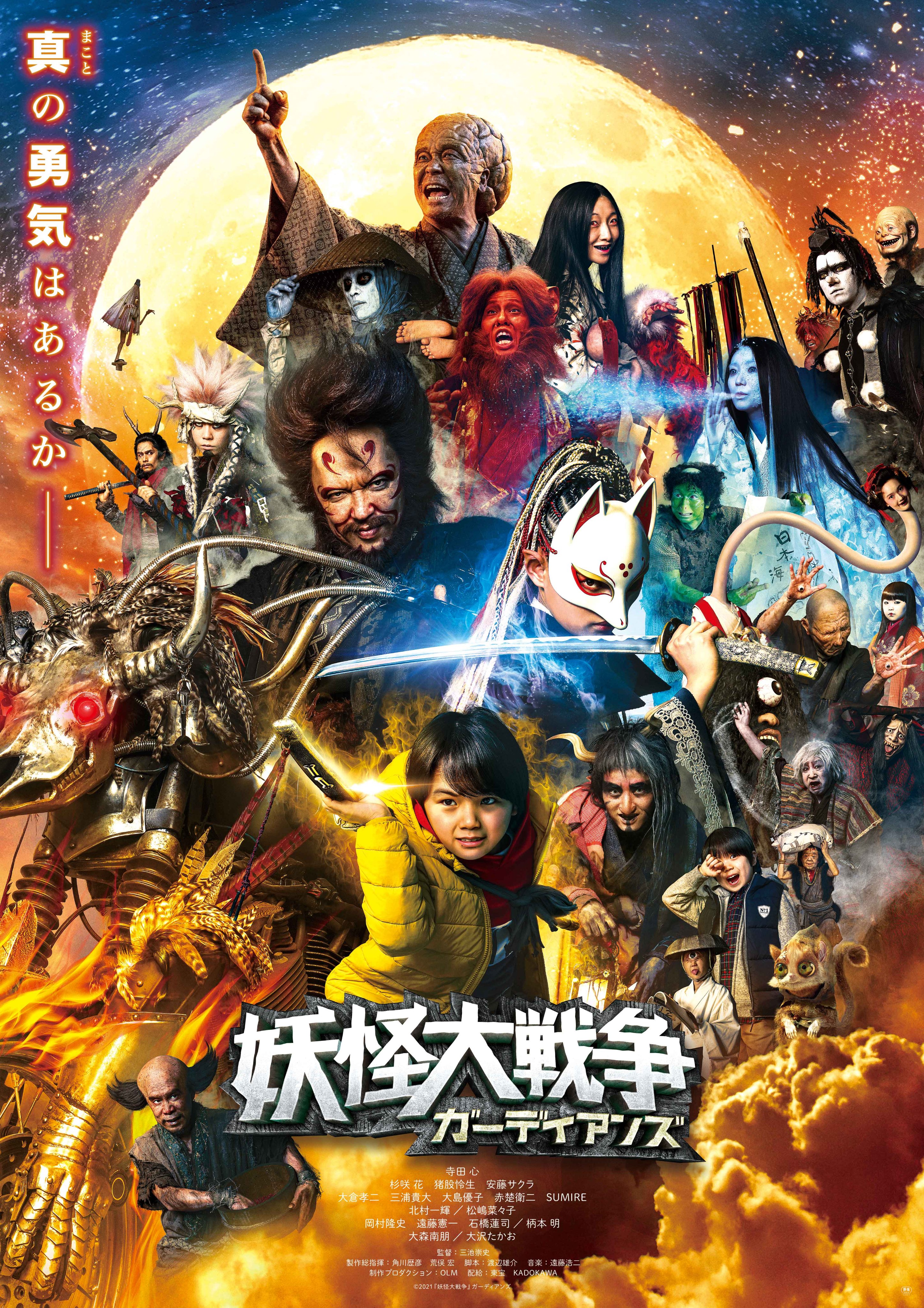
The Great Yokai War: Guardians (妖怪大戦争 ガーディアンズ, Takashi Miike, 2021)

An anxious little boy struggling with his growing responsibility finds himself charged with saving the world in Takashi Miike’s return to the realms of folklore, Great Yokai War: Guardians (妖怪大戦争 ガーディアンズ, Yokai Daisenso Guardians). Not quite a sequel to the 2005 supernatural drama, Guardians once stars a child hero trying to come to terms with his place in the world, but this time takes on another dimension as the pint-sized hero determines to embrace his “humanity” through the very qualities the yokai fear are largely absent among those who “kill and cheat their own kind”. 

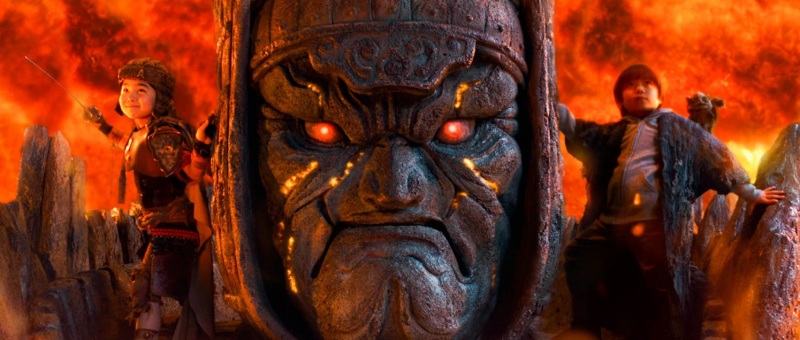
Young Kei (Kokoro Terada) has recently lost his father and as the oldest child has gained an additional responsibility especially towards his younger brother, Dai (Rei Inomata). The other children meanwhile think of him as a scaredy-cat, a small gang of them exploring a disused shrine from which they each pick a fortune from a small box, Kei’s being an ominous red sheet otherwise blank. While Kei had hesitated to enter, Dai did as he was told and waited outside but longed to be included, excited rather than frightened by the creepy old buildings. Later that night, Kei is woken up by a scary yokai leaning over him in bed, covering up one eye so he can see him. Running away in fright the boy finds himself in another world, surrounded by dozens more scary yokai who tell him he’s the descendent of a legendary Edo-era yokai hunter and it’s time for him to accept his destiny by helping the yokai avoid disaster. It just so happens that a bunch of sea creatures trapped underneath a fault line have banded together in a huge ball of resentment that is currently barreling towards Tokyo. The yokai are particularly worried that the monster which they’ve named “Yokaiju” (see what they did there?) will break the seal over the city and release a nameless evil. 

The yokai first tried asking for help among themselves at the “Yammit” or Yokai Summit recently held in Beijing at which supernatural monsters from across the world including vampires, mermaids, and even Bigfoot meet, but were roundly rebuffed. Japanese yokai rarely carry weapons, and they’ve already tried asking Yokaiju nicely not to destroy Tokyo, so they need some help. The yokai that that Kei encounters are mostly of the harmless kind like the guy who just stands around holding tofu or the one who creepily washes azuki beans at inappropriate moments, what they want Kei to do is help them wake up General Bujin, the god war, though others fear the cure may be worse than the disease. Some yokai are even of the opinion that letting Yokaiju run riot is no big deal because humans are generally awful anyway and so deserve little sympathy. 

Little Kei, however, is a counter to their argument. They constantly ask him if he really has the courage to carry his mission through, even at one point taking his brother Dai instead, while Kei struggles with himself understandably afraid of his new destiny. Back in the “real” world, he is of course entirely anxious about his responsibilities as a “big brother” now that his father’s no longer around and especially as his mother is a nurse meaning she often has to work late helping other people. He is however determined to keep his promise to look after Dai, mustering all his courage to push through the scary world of monsters to save him from being sacrificed to General Bujin. He also acts with kindness and generosity of spirit, even on being betrayed by a yokai expressing only sympathy that he’s glad the lonely monster turned out to have more friends than he thought, while also making a point of stopping to save even the bad demons who were trying to kill him after they’re trapped by rockfall because “you can’t just leave a suffering person”. 

Kei’s solution is, ultimately, love not war. Faced with the giant resentment monster he chooses to soothe its pain, teaching the yokai a thing or two about themselves as they rediscover their ancient capacity for compassion and forgiveness. It’s the brothers’ love for each other which eventually saves the world, leading even the most cynical of yokai to hope that the spirit of kindness in this generation might be enough to bring about a human revolution. A good old-fashioned family adventure, Guardians’ charmingly grotesque production design and childlike view of the twilight world of spirits and demons carries genuine magic while its wholesome messages of kindness, acceptance, and personal responsibility can’t help but warm the hardest of hearts. 


The Great Yokai War: Guardians screens on Aug. 28 and Sept. 1 as part of this year’s Japan Cuts.

Original trailer (no subtitles)

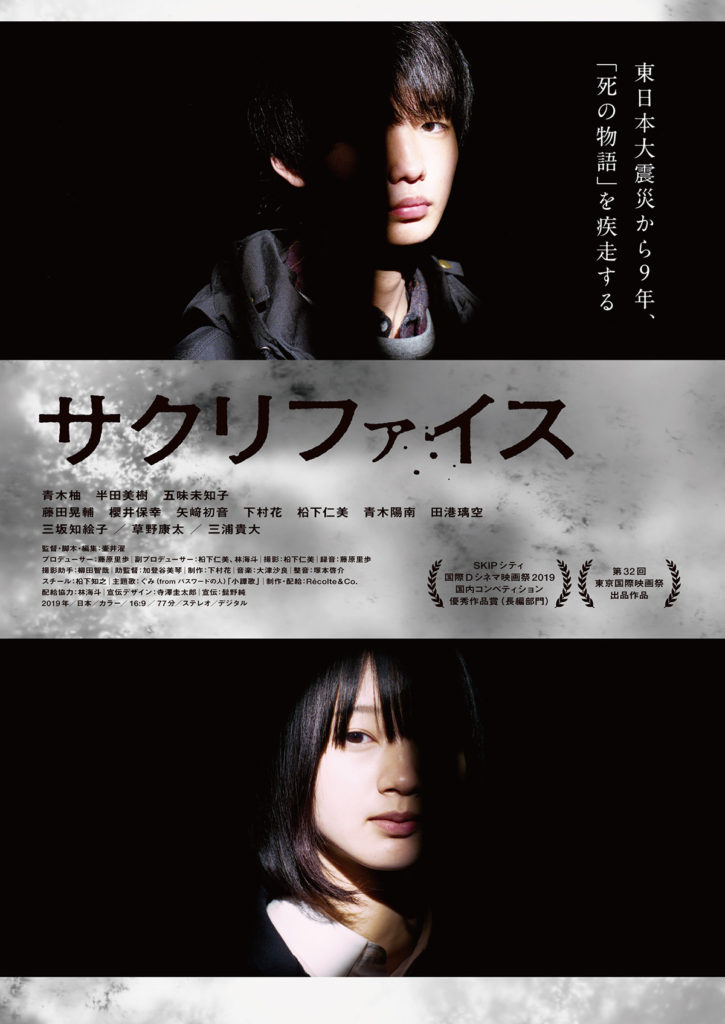
Sacrifice (サクリファイス, Taku Tsuboi, 2019)

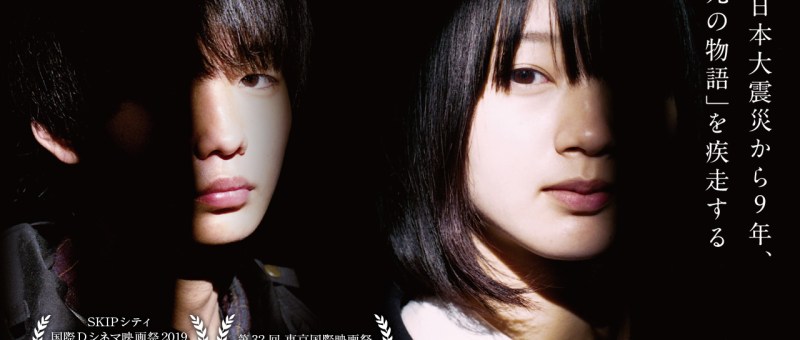
Taku Tsuboi meditates on coming disaster in his evocative debut feature, Sacrifice (サクリファイス). Post-earthquake anxiety meets its opposite number in doomsday cult as an Aum-esque sect rejects and then embraces a contrary prophecy of the end of the world ushered in by a giant worm already burrowing menacingly under our feet. Putative apocalypses however pale in comparison to the incurable threat of other people and it may not be an earthquake or a war or a terrorist attack that puts an end to us so much as our inability or perhaps refusal to overcome our fear. 

“Forgiveness transcends revenge” a young man claims during a debate about the death penalty, “the cycle of hate must be broken”, only he later confesses that he didn’t quite mean what he was saying. He opposed the death penalty but less for humanitarian reasons than curiosity. Okita (Yuzu Aoki) wants to know the why, what the killer was feeling when they did what they did. Fellow student Toko (Miki Handa) has been patiently watching Okita, suspicious of him because when he thinks no-one’s watching, he drops his mask. She’s convinced that he is responsible for a notorious series of ritualised cat killings, as well as the death of fellow student Sora (Hana Shimomura) who was apparently investigating them and had presumably gotten too close to the truth. Toko’s suspicions are confirmed when she raids Okita’s backpack and discovers an incriminating file, essentially blackmailing him to become her friend in the hope that, unlike her boyfriend the straight-laced job hunter Masaya (Kosuke Fujita), he can buy her a ticket out of her maddeningly “normal” life. Meanwhile, Okita also becomes an unexpected protector for another student, Midori (Michiko Gomi), who finds herself targeted by a young man in camouflage (Yasuyuki Sakurai), apparently a member of a cult, Shinwa, successor to the defunct Sacred Tide and the first private army in Japan. 

Midori was once a cult member herself, unwillingly inducted by her mother, and is plagued by strange visions after having foreseen the devastating March 2011 earthquake in a dream and subsequently targeted for elimination by those who feared her power. The cat murders are numbered and apparently counting down from 311 leading some to conclude they have something to do with the earthquake, some kind of “sacrifice” in the face of coming disaster. “The world needs sacrifices” a true believer later affirms, but has no reason why it should, only insisting that they are following the teachings of Mr. Sazanami, the mercenary turned cult leader. Some become soldiers, others kill cats in Japan without knowing why. 

“Seeking reason makes you weak” Sazanami conveniently claims, “view the world without the blindfold of humanity, then you can understand my vision”. Toko is drawn to Okita precisely because of his lack of human feeling, “You see people only as objects”, she tells him with admiration not caring if he killed or not only hoping that his difference will help her escape a life of crushing mundanity. She thought the earthquake would change something. Everyone was talking of new beginnings and great renewals but in the end nothing really happened and her adolescence has been one of disappointment coloured with anxiety. She resents being “the only normal one” trapped in “a world of normality” and longs to throw herself into this strange world of conspiracy and ritual in order to give her life the greater meaning she craves. 

Midori, however, craves that kind of normality. Her mother ironically lost faith in the idea of salvation after facing death in the wake of disaster, while she struggles to escape from an unfair sense of responsibility for the fate of the world seeing too much and not enough at the same time. Yet in a strange way it is faith that sustains her. “All I can do is run” she affirms, hoping that she will one day re-encounter the person who claims his life found meaning only when he found her. She refuses to discard her “blindfold of humanity”, living in the shadow of future catastrophe but living all the same. An accomplished feature debut, Tsuboi’s broody drama wrings all the dread out of its eerie settings from churches disused and not to abandoned buildings and the bleakness of a somehow comforting dreamscape while offering his beleaguered youngsters a tentative sense of hope if only in the ability to normalise a sense of existential anxiety.


Sacrifice streamed as part of this year’s Japan Cuts.

Original trailer (English subtitles)

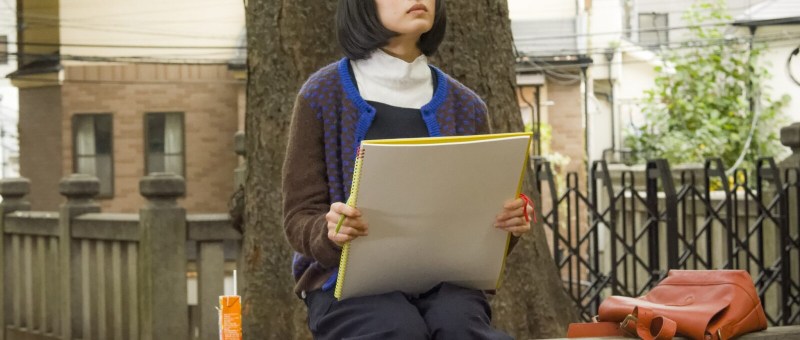
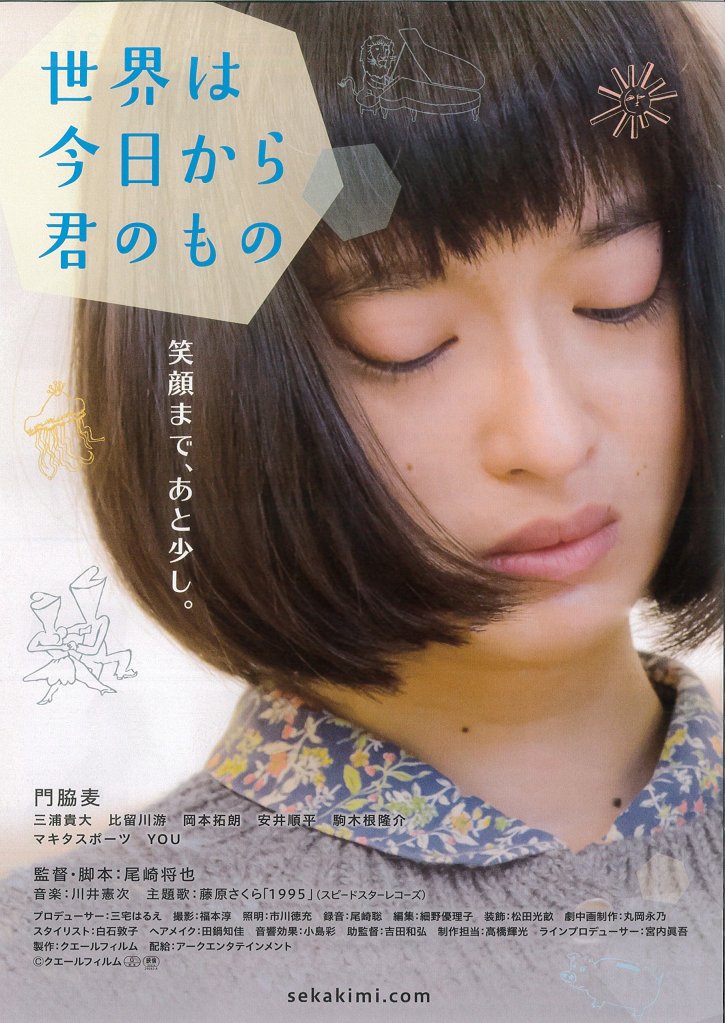
Her Sketchbook (世界は今日から君のもの, Masaya Ozaki, 2017)

Many young people struggle to find their place in the world, but for young Mami who largely just wants to be left alone, the struggle is all the greater. Less a hikikomori drama than a tale of destructive parenting and buried talents, Her Sketchbook (世界は今日から君のもの, Sekai wa Kyou kara Kimi no Mono) charts the gradual blossoming of a young woman who begins to take root after finding the right environment in which to thrive, encouraged by others who take the time to see and appreciate her for who she is rather than all they fear she’s not. 

A shut-in since dropping out of middle school, Mami (Mugi Kadowaki) has recently taken a factory job but is laid off after a little misadventure at the seaside leaves her with an injury that prevents her from strenuous labour. Her father Eisuke (Makita Sports), recently made redundant himself, is worried for her future and wants her get out more so he sets her up with a job that seems ideal, testing games for bugs at a software company. It’s there that she crosses paths with harried project manager Ryotaro (Takahiro Miura) who is getting fed up with the artistic temperament of his usual character designer. He drops a sketch covered in markup notes and she tries to hand it back to him but is too shy and ends up taking it home where she diligently corrects it according to his instructions and mails the revised illustration to the address on the bottom, trying to make up for her failure in being unable to approach him in person. The new drawing is exactly what Ryotaro had envisioned, but he has no idea who the mystery illustrator is. Nevertheless, he decides to start mailing additional requests to the unfamiliar email address. 

Eisuke thinks he’s doing the best for his daughter, but even he in unguarded moments describes her as odd and a failure. He had no idea that she had any kind of “talent”, believing she was just sitting in her room twiddling her thumbs. But for Mami, the discovery of her boxes of illustrations is something of a mixed blessing. She’s glad people seem to be pleased, but partially resents the new attention and quickly realises that they’ve misunderstood her capabilities. She’s good at mimicking the style of others and correcting proofs according to instructions, but struggles when asked to come up with ideas of her own. 

That struggle is essentially a mental block on being able to see herself. Always a little “different”, Mami never fit in at school and while her father fretted that she wasn’t making friends, her mother (You) was content to let her be. Unfortunately that wasn’t because she accepted her daughter for who she was and wanted to support her, but that she knowingly or otherwise used her difference against her as a reason to keep her close. Now having left the family for unclear reasons, Mami’s mother remains possessive and domineering, never missing an opportunity to undermine her daughter’s sense of confidence or to remind her that she doesn’t belong in regular society. Mami’s struggle is, in that sense, to break free of her mother’s toxic parenting and reject her view of her as someone who is entirely unable to lead a normal life as independent adult. 

Essentially infantalised, Mami finds herself learning adult life lessons at an accelerated pace but also battling unhelpful attempts to exploit and misuse her hikikomori past. A sleazy public servant who threatens to assault Mami after bringing home her drunken friend from a bar convinces her to appear at a panel he’s running on the hikikomori phenomenon but completely ignores everything she tells him, trying to twist her words to suit his own hypotheses in presenting her as someone who has successfully reintegrated into mainstream society. He wants her to say that she took the factory job to help out after her dad was laid off, but really she took it because his being home all day was quite annoying so she got a job to avoid him. The public servant simply isn’t listening, but a shy little girl in the back is and finally knows there’s nothing wrong with her and she’s not alone. 

What gives Mami the courage to move forward is the gentle encouragement of her new friends who never treat her as if she’s weird or incapable and are prepared to be patient while she finds her footing. Just like the flower in the flip book she draws while waiting for inspiration, Mami blossoms after finding the right environment in which to thrive, gaining confidence from other people’s confidence in her but resolving to take things one step at a time, harnessing her newfound talent to claim a space for herself in a world opening up before her.  


Screened as part of the Japan Foundation Touring Film Programme 2020.

International trailer (English subtitles)
First Love (初恋, Takashi Miike, 2019)

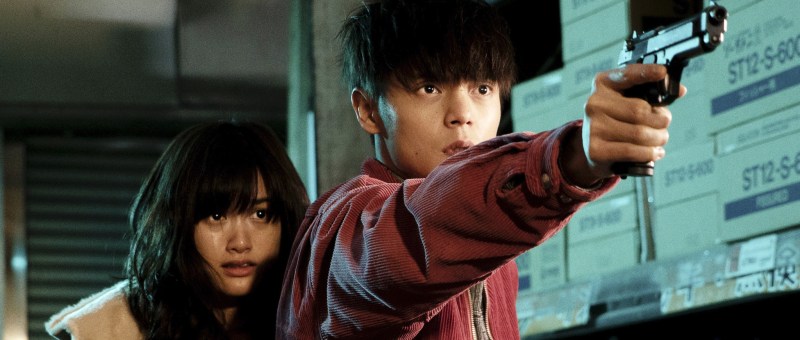
First love poster 1Taking a deep dive into Showa era nostalgia repurposed for the modern era, Takashi Miike returns to the world of jitsuroku excess with an ironic tale of honour and humanity. Quite literally all about the jingi, First Love (初恋. Hatsukoi) takes a pair of exiled loners betrayed by the older generation, and allows them to escape their sense of futility through simple human connection while the nihilistic gangster underworld slowly implodes all around them.

Sullen boxer Leo (Masataka Kubota) is so filled with ennui that nothing really excites him, not even success in the ring. An unexpected KO, however, sends him off to the doctor’s where he is told that he has a possibly inoperable brain tumour and very little time left to live. That is perhaps why he decides to punch a policeman in defence of a young woman running away and desperately pleading for help. Yuri (Sakurako Konishi), known as “Monica” to her captors, was sold to the yakuza by her father and has since become dependent on drugs. Little known to either Leo or Yuri, they are about to become embroiled in a long brewing turf war between the local yakuza and the Chinese Triads engineered by jaded underling Kase (Shota Sometani) who has enlisted rogue policeman Ohtomo (Nao Omori) to help in a plan to steal his gang’s drug supply and have Ohtomo sell it on in the same way he does with “confiscated” narcotics while blaming the whole thing on the Chinese.

Abandoned at birth, Leo is a man who doesn’t know his history and so doesn’t know himself. He tells a reporter that there is no particular reason that he boxes save that he doesn’t know how to do anything else, yet the fighter’s all that remains and “boxer” has become his entire identity. A passing fortune teller advises him that he loses because he only fights for himself and if he truly wants to win he needs to learn to fight for someone else, but Leo is used to being alone and believes he has no need of other people. Knowing he’s going to die means, paradoxically, that he has infinite potential because he has nothing left to lose.

Leo punching out the policeman reawakens in Yuri a memory of her “first love”, a high school classmate who tried to defend her against her abusive father whose ghost still haunts her in drug-fuelled hallucinations. The ultimate proof of the yakuza’s ironic lack of “jingi” or “honour and humanity” when it comes to the treatment of women, Yuri was betrayed first by her father and then by the petty street thug who got her hooked on drugs as a means of control and exploited her body for financial gain.

Ironically enough, it’s a Chinese Triad who proves the ultimate heir to “jingi” having come to Japan because of her love for classic Toei gangster hero Ken Takakura only to discover that kind of nobility is something you only see in the movies. While the yakuza lament that they’re at a disadvantage fighting the Chinese because they don’t need to worry about “honour” as dictated by their code, they are quick enough to scream vengeance when Kase convinces them that it was the Triads who offed their street fixer (Takahiro Miura) to get back at recently released gangster Gondo (Seiyo Uchino) who is the reason that the Triad boss is nicknamed One-Armed-Wang. Gondo and Wang are already on a collision course as representatives of their respective ideologies with Gondo perhaps the last true yakuza standing, faithful to his code to the end.

Sensing his strong sense of jingi, the romantic Triad allows Leo to escape with Yuri as if recognising that neither of them belong in this nihilistic world of pointless and internecine violence. Despite proclaiming that he had no need of other people, it’s Leo’s humanity that eventually saves him as he realises that he was always going to die and rediscovers his true strength through fighting to protect someone else. Yuri, meanwhile, finds the will to live again in making peace with the past and laying old ghosts to rest thanks to Leo’s altruistic decision to protect her. Echoing Fukasaku’s classic crime cycle in its severed heads and funky ‘70s jazz score remixing the iconic theme tune, Miike ups the ante with a series of outlandishly idiosyncratic gags as Kase’s nefarious scheme snowballs into a darkly humorous crescendo of ridiculous brutality, but ultimately rejects the futility of a world without jingi in allowing his pure hearted heroes the possibility of escape, saved rather than consumed by their sense of honour and humanity.


First Love was screened as part of the 2019 BFI London Film Festival.

Original trailer (English subtitles)

Dance with Me (ダンスウィズミー, Shinobu Yaguchi, 2019)

Dance With Me posterYou might be rich and successful, but are you really being true to yourself? The heroine of Shinobu Yaguchi’s latest comedy Dance With Me (ダンスウィズミー) thinks that she is, cynically rolling her eyes at her colleagues mooning over the cute new boss but jumping at the opportunity to join his elite team. Meanwhile, she’s ignoring her family, has few friends, and seems distinctly uptight. Is there more to Shizuka (Ayaka Miyoshi) than meets the eye, or is she really destined for the life of a dull office drone?

Everything starts to change for her one day when she’s bamboozled into looking after her teenage niece and decides to take her to a weird theme park she noticed on a flyer that got stuck to her shoe. It’s there, in Fortune Land, that Shizuka ends up visiting a shady hypnotist named “Martyn” (Akira Takarada) who offers to give her niece some treatment so she can perform to her full potential in an upcoming high school musical. This comes as news to Shizuka, because they were just mocking the art of the musical on the bus, but when she steps out to answer her phone she notices the cheapo ring Martyn gave her on the way in won’t come off. Sure enough, his “treatment” seems to have worked, only on the wrong person. Now whenever Shizuka hears any kind of music at all she can’t resist breaking into song and dance like the heroine of an old Hollywood musical.

It seems in her youth Shizuka loved singing and dancing, but a traumatic bout of stage fright put her off for life. While her family are all cheerfully energetic and easy going, she is uptight and reserved. Now a middle-rank executive at a top rated company, she’s dedicated herself to achieving the idealised image expected of female businesswomen – elegant, professional, and above all quiet. Her new affliction is therefore a major problem, as she proves to herself by breaking into song during an important meeting with the magic Mr. Murakami (Takahiro Miura) who might be able to take her career to the next level.

Luckily, the incident isn’t really quite so bad as she thought seeing as Murakami’s business idea was a little left of centre so her strange behaviour looked like an unusual pitching technique that makes her seem an attractive asset to Murakami’s new team which is currently a member down after the last girl took too much vacation time and then quit. Offered the post, Shizuka asks for a week’s grace and determines to track down Martyn so he can undo the hypnotism, but Martyn is currently on the run from loan sharks so it’s going to be more difficult than she thought.

Forced to sell all her worldly possessions to make up for a restaurant she accidentally trashed, Shizuka takes to the road armed only with her niece’s piggy bank and accompanied by Martyn’s former shill, Chie (Yu Yashiro). Despite herself, she begins to shake off her carefully crafted corporate persona and open herself up to the pleasures of music and movement, freeing both her body and her mind. Her total opposite, Chie is a laidback woman who loves to have a good a time and doesn’t generally think too much beyond the present moment. Though obviously very different and united only by their quests to track down Martyn, the two women develop an awkward friendship in which they begin to see their own flaws as reflected in each other and shift into the centre as they learn to work together while chasing Martyn all the way to Hokkaido.

A chance encounter with a crazy hippie singer-songwriter (Chay) who claims she broke up with her last band because she couldn’t bear to hide from herself anymore pushes Shizuka (whose name literally means “quiet”) into a reconsideration of her life choices, feeling that perhaps she was wrong to reject the frightened little girl she was so completely out of embarrassment and insecurity, wilfully suppressing her sense of fun and freedom for the safety and security of corporate button-down respectability. As the mental health specialist she visited in hope of a cure suggested, maybe the reason she was so suggestible is that, deep down, she always wanted to sing and dance anyway. A musical celebration of the pleasure of living life to its fullest, Dance With Me is a cheerful exploration of one woman’s gradual emergence from emotional repression into a richer, fuller existence as she rediscovers her essential self through the medium of song and dance.


Dance with Me screens in New York on July 19 as the opening night gala of Japan Cuts 2019.

Original trailer (English subtitles)

Playlist:

Tonight -Hoshi no Furu Yoru ni- (Kumiko Yamashita, 1991)

ACT-SHOW (Spectrum, 1979)

Happy Valley (Orange Pekoe, 2002)

Neraiuchi (Linda Yamamoto, 1973)

https://www.youtube.com/watch?v=TyfsYwojpjk

Yume no Naka e (Yosui Inoue, 1973)

https://www.youtube.com/watch?v=EelHcHwnEdA

Toshishita no Otoko no Ko (Candies, 1975)

https://www.youtube.com/watch?v=pM9lajx6IPQ

Wedding Bell (Sugar, 1981)

https://www.youtube.com/watch?v=SLvbAMvnEZE

Time Machine ni Onegai (Sadistic Mica Band, 1974)