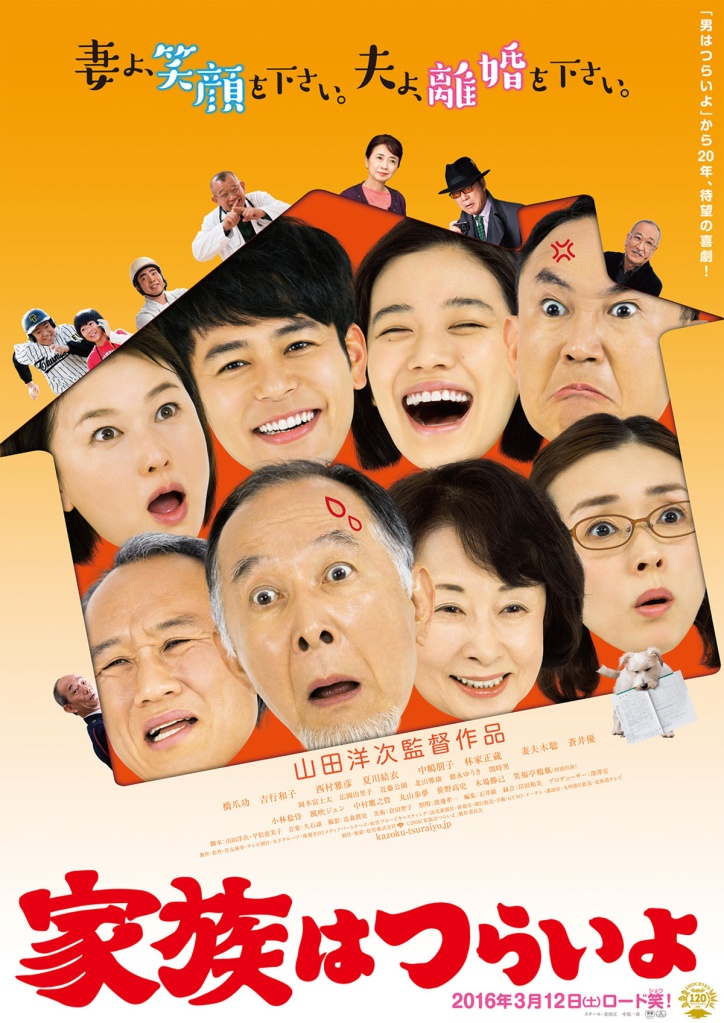
What a Wonderful Family! (家族はつらいよ, Yoji Yamada, 2016)

what-a-wonderful-familyProlific as he is, veteran director Yoji Yamada (or perhaps his frequent screenwriter in recent years Emiko Hiramatsu) clearly takes pleasure in selecting film titles but What a Wonderful Family! (家族はつらいよ, Kazoku wa Tsurai yo) takes things one step further by referencing Yamada’s own long running film series Otoko wa Tsurai yo (better known as Tora-san). Stepping back into the realms of comedy, Yamada brings a little of that Tora-san warmth with him for a wry look at the contemporary Japanese family with all of its classic and universal aspects both good and bad even as it finds itself undergoing number of social changes.

Once upon a time it was normal for the entire family clan to live together, sons bring their wives to their father’s house, become fathers and then grandfathers themselves passing the property on their eldest when they go. After the war everything changed, the return to prosperity brought about a greater need for mobility as well as increasing desire for privacy and individual freedom which saw the domestic environment shrinking.

The Hiratas still live the old way with “difficult” family patriarch Shuzo (Isao Hashizume) nominally in the lead but spending his retirement in the local bar flirting with the mama-san, Kayo (Jun Fubuki), who is gracious, but extremely skilled in her work which often involves deflecting the attentions of the clientele. His long suffering wife, Tomiko (Kazuko Yoshiyuki), eases her boredom with classes at the local community centre while the wife of eldest son Konosuke (Masahiko Nishimura), Fumie (Yui Natsukawa), has taken taken over the running of the household whilst also taking care of her two sons. The house is also still home to sensitive youngest son Shota (Satoshi Tsumabuki), and a point of refuge for daughter Shigeko (Tomoko Nakajima), during her inevitable fights with mild mannered husband Taizo (Shozo Hayashiya).

When Shuzo can’t really be bothered with his wife’s birthday, he asks her what she’d like as a present – as long as it’s not too expensive, he’s not made of money after all. That’s no problem she says, what I want only costs 450 yen. Shuzo’s confusion gives way to shock as he realises the bit of paper he’s just been handed is a petition for divorce….

Tomiko’s reasoning is sound, the position she’s been occupying for the last forty years is, effectively, a job. Now that the children are grown and another woman has taken over the domestic responsibilities, Tomiko wants to retire and enjoy some well earned freedom at last. The decision sends the entire family into a spiralling existential crisis as they contemplate this unexpected development and what it could mean for their previously ordinary way of life.

It would be nice to think men like Shuzo are a dying breed, so gruff and aggressive that his own daughter-in-law almost hangs up on him thinking he’s an “ore ore” scammer. Having worked hard for his family throughout his life, he feels a tremendous sense of entitlement in playing the king of his own domain. Tomiko, by side all these years putting up with his rudeness, selfishness, and inconsiderate behaviour is thoroughly sick of being taken for granted and unfavourably compared to a bar hostess whose job it is to stroke her husband’s ego.

More challenges to the domestic set up occur when youngest son Shota, still living at home into his 30s, decides to move out and get married. The polar opposite of his brash father, Shota has often been the mediator between different family factions which might well have gone to war and destroyed the household long before now were it not for his calming influence. A marriage would usually be a cause for celebration but Shota has picked exactly the wrong time to introduce his lovely new fiancée, Noriko (Yu Aoi), to the family right in the middle of this extended moment of crisis.

Divorce is still a taboo subject in Japan carrying its own degree of stigma whatever the circumstances which makes Tomiko’s sudden bid for individualistic freedom all the more difficult to understand for her family. This is thrown into sharp relief when Tomiko begins enquiring about Noriko’s family background and discovers she is actually the child of divorced parents only to have a momentary flash of distaste or perhaps mild disapproval before getting over it and trying to make her son’s future wife feel welcome even in this quite tense domestic environment. Disconnected from her own family, being suddenly thrown into the deep end with the boisterous and perhaps too closely involved Hiratas might be a little overwhelming for Hirata-in-waiting Noriko but luckily she takes to it well enough and perhaps finds the liberated frustrations of the large family unit a warm rather than intimidating experience.

It is, indeed, hard being a family. Total honesty is neither possible nor advisable and harmony is largely born of mutual compromise but the essential thing is understanding – both of everyone else’s feelings and of everyone’s unique places within the familial system. Like any good Japanese family drama things have to change so that everything can stay the same, and there’s a poignant moment towards the end where we observe the large number of vacant family homes in the neighbourhood where the elderly owners have either died or moved into residential care facilities while their children and grandchildren founded homes of their own. At the end of the day all anyone wants is a degree recognition as an individual rather than as an embodiment of a concept and if certain people are able to swallow their pride, there might still be hope for the old ways yet.


HK Trailer (English/Traditional Chinese subtitles)
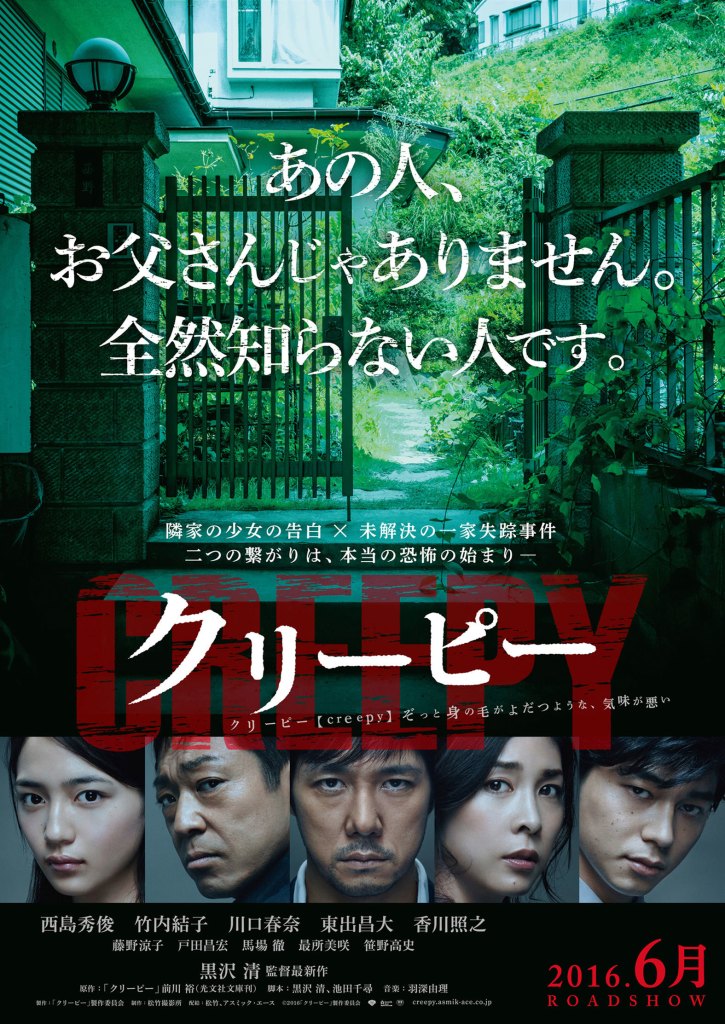
Creepy (クリーピー 偽りの隣人, Kiyoshi Kurosawa, 2016)

creepyHow well do you know your neighbours? Perhaps you have one that seems a little bit strange to you, “creepy”, even. Then again, everyone has their quirks, so you leave things at nodding at your “probably harmless” fellow suburbanites and walking away as quickly as possible. The central couple at the centre of Kiyoshi Kurosawa’s return to genre filmmaking Creepy (クリーピー 偽りの隣人, Creepy Itsuwari no Rinjin), based on the novel by Yutaka Maekawa, may have wished they’d better heeded their initial instincts when it comes to dealing with their decidedly odd new neighbours considering the extremely dark territory they’re about to move in to…

The Takakuras, Koichi (Hidetoshi Nishijima) and Yasuko (Yuko Takeuchi), have just relocated to the suburbs where Koichi will be taking a position at a local university teaching criminal psychology. A year previously, Koichi had been a member of the police force working on serial murder cases but after a serious miscalculation on his part during a negotiation with an escaped prisoner leaves an innocent woman dead and himself in the hospital, Koichi comes to the conclusion that he’s not quite cut out for the force after all.

Having just moved into the neighbourhood, Koichi and Yasuko attempt to make the expected visit to announce their presence to their neighbours only to find that the locals aren’t exactly friendly. After one neighbour slams the door in her face, Yasuko pays a visit to the other one, Nishino (Teruyuki Kagawa), but the way in which be begins talking to her is very strange indeed. Though unsettled, Yasuko just can’t let the idea drop and becomes intent on building up a more conventional relationship with her hard to read neighbour, ignoring all of her better instincts in the process.

Meanwhile, Koichi has become intrigued by a six year old cold case in which three members of a family abruptly disappeared leaving their young daughter, Saki (Haruna Kawaguchi), behind. Working with a former colleague, Nogami (Masahiro Higashide), Koichi tracks down the abandoned little girl (now a teenager) and attempts to get to the bottom of the mystery.

Japanese films are full of the parasitic interloper who wheedles his way into a family only to usurp control for himself and eventually colonise it. Generally, such families go back to normal once the interloper has had his fun but for the families of Creepy that would be quite difficult. In the modern world when the family unit has become so fractured and insecure that it renders once permanent communities only temporary, a chasm has been opened in human interactions which makes it easier for extreme horror to locate itself right next door to you. Nobody knows what goes on behind closed doors, and in a sense no one wants to know. Koichi attempts to use his scientific knowledge to reassure Yasuko that, as psychopaths are usually very good neighbours, Nishino must be fine, but this only goes to show superficial the couple’s interest in their environment really is.

Koichi has a mild obsession with serial killers. His desire to spend more time with a real life psycho contributed to this fall from grace at the beginning, but his investigative abilities leave a lot to be desired. Yasuko may have suggested that Nishino is the kind of person who “has no social skills” but Koichi is the archetypal interrogator – only interested in the facts and blind to the emotional subtext. After Koichi puts too much pressure on the traumatised Saki, she accuses him of tearing into people’s emotions as if dissecting a rat, and later asks him if he has any kind of heart or real human empathy at all. For all his highly prized science, most of Koichi’s clues are based on his intuition – he just “feels” the house seems like a crime scene, that Nishino is a bad guy, and that something strange is going on.

This almost supernatural “feeling” becomes the central spine of the film as creepiness travels through the air in invisible waves. Kurosawa adopts a swirling, floating approach to camera movement in the early part of the film which gives it a drunken, ethereal atmosphere, preventing any concrete attempt to grasp the reality. Playing with lighting levels Kurosawa emphasises and isolates the characters but also adds a note of uncertainty that hints at the darkness lingering at the edges of the frame. This sense of the ever present evil that exists within otherwise pleasant environments contributes to the Lynchian sense of the absurd which is also echoed by the anxiety inducing lingering camera shots of banal objects such as room thermostat or closed gates.

Despite the eeriness of the general tone, Kurosawa encourages a strain of black humour which helps to cover some of the more outlandish plot elements. The final conclusion perhaps strains credulity and is never fully explained but then the lack of concrete details adds to the already overwhelming creepiness of the events in play. Wonderfully atmospheric, beautifully photographed, and filled with a spirit of absurdism, Creepy is a very modern horror story though one not unafraid to step into the realms of the senses.


Reviewed at 2016 BFI London Film Festival

Original trailer (English subtitles)

The Discarnates (異人たちとの夏, Nobuhiko Obayashi, 1988)

discarnatesNobuhiko Obayashi is no stranger to a ghost story whether literal or figural but never has his pre-occupation with being pre-occupied about the past been more delicately expressed than in his 1988 horror-tinged supernatural adventure, The Discarnates (異人たちとの夏, Ijintachi to no Natsu). Nostalgia is a central pillar of Obayashi’s world, as drenched in melancholy as it often is, but it can also be pernicious – an anchor which pins a person in a certain spot and forever impedes their progress.
Hidemi Harada (Morio Kazama) is a successful TV scriptwriter whose career is on the slide. He’s just gotten a divorce and seems to be conflicted about the nature of his new found bachelordom. As if he didn’t have enough despair in his life, the closest thing he has to a friend – his boss at the TV station, tells him he thinks it’s better if they end their professional relationship because he plans to start dating Harada’s ex-wife and it would all get very awkward.

Feeling unloved, Harada takes a trip to his hometown on a location scout for another project and takes in a few familiar sights along the way. It’s here that he runs into a youngish man who looks just like Harada’s father did when he was a boy. Not only that, accompanying his new found friend home, the man’s wife looks just like his mother, but Harada’s parents died when he was just twelve years old. The mysterious couple are glad to have him in their house and treat him with the warmth and kindness that seemed to have been missing in his life, leaving him the happiest and most cheerful he’s been in years.

Now in a much better mood, Harada feels guilty about rudely dismissing the woman from upstairs who’d come to visit him the day before. Apologising, Harada strikes up a friendship and then a romance with the equally damaged Kei (Yuko Natori) but even if his mental health is improving, his physical strength begins to deteriorate. Looking pale and old, Harada’s teeth rot and fall out while his hair loses its color. Even so, Harada cannot bear to pull himself away from the warmth and security that was so cruelly taken away from him when he was just a child.

Harada doesn’t start off believing that the mysterious couple really are his late parents, but if even if they weren’t these two people who are actually younger than him take him in as a son, feeding and entertaining him. When Harada returns a little while later confused by what exactly has happened, his mother immediately treats him as a mother would – physically taking off his polo shirt and urging him to remove his trousers lest they get wrinkled from sitting on the floor. Having lost his parents at such a young age, Harada has been a adrift all his life, unable to form true, lasting emotional bonds with other people. Lamenting his failure as a husband and a father, this very ordinary kindness provides the kind of warmth that he’s been craving.

However, there is always a price to be paid. Harada’s visits become increasing tiring, taking a physical toll on his ageing body. Each hour spent in the past is an hour lost to the dead. His parents are both dead and alive, existing in a strange, golden hued bubble filled with the comforting innocence of childhood free from the concerns of the adult world. Yet each time Harada succumbs to his weakness and goes to visit them, he is doing so as a way of avoiding all of his real world problems. According to one of Harada’s scripts, the past becomes a part of you and is never lost, but memory can be an overly seductive drug and an overdose can prove fatal.

Contrasted with the warm glow of the post-war world of Harada’s childhood home, his life in bubble era Tokyo is one filled with blues and a constant sense of the sinister. Harada believes himself to mostly be alone in the apartment block save for a mysterious third floor light that hints at another resident who also favours late nights over early mornings. The light turns out to belong to a lonely middle-aged woman, Kei, who is also a fan of Harada’s work. Kei has her own set of problems including a wound on her chest that she is too ashamed to let anyone see. Ultimately, Harada’s self-centred inability to lay the past to rest and fully take other people’s feelings into account will deal Kei a cruel blow.

Harada sees everything with a writer’s eye. His childhood world is a dream, but his life is a film noir filled with shadows and misery. His environments appear too perfectly composed, like a TV stage set and, as if to underline the fact, at the end of each “scene” the colour drains from the screen to leave a blue tinted black and white image shrinking into a rectangle and disappearing like the dot going out in the days when television really did close down overnight. Whether any of this happened outside of Harada’s mind or reflects a constructed reality he wrote for himself in the midst of a mental breakdown, his dilemma is an existential one – return to childhood and the side of his parents by accepting the death of his present self, or say goodbye to remnants of the abandoned child inside him and start living an adult, fully “fleshed” life by killing off this unattainable dream of a long forgotten past which never took place.

Filled with melancholy, longing and regret, The Discarnates is the story of a hollow man made whole by coming to terms with his traumatic past and all of the ways it’s influenced the way in which he’s lived his life. Harada’s parents treat him as their twelve year old son, barely acknowledging that he’s a middle aged man with a teenage son of his own. They feel regret for all of the thousand things they were never able to teach him though they are unable to see the full depths of his inability to escape his interior bubble for the wider world. Unsettling, though not as obviously surreal as some of Obayashi’s other efforts, The Discarnates is one of his most melancholic works speaking of the danger of nostalgia and all of its false promises whilst also acknowledging its seductive appeal.


Original trailer (no subtitles)

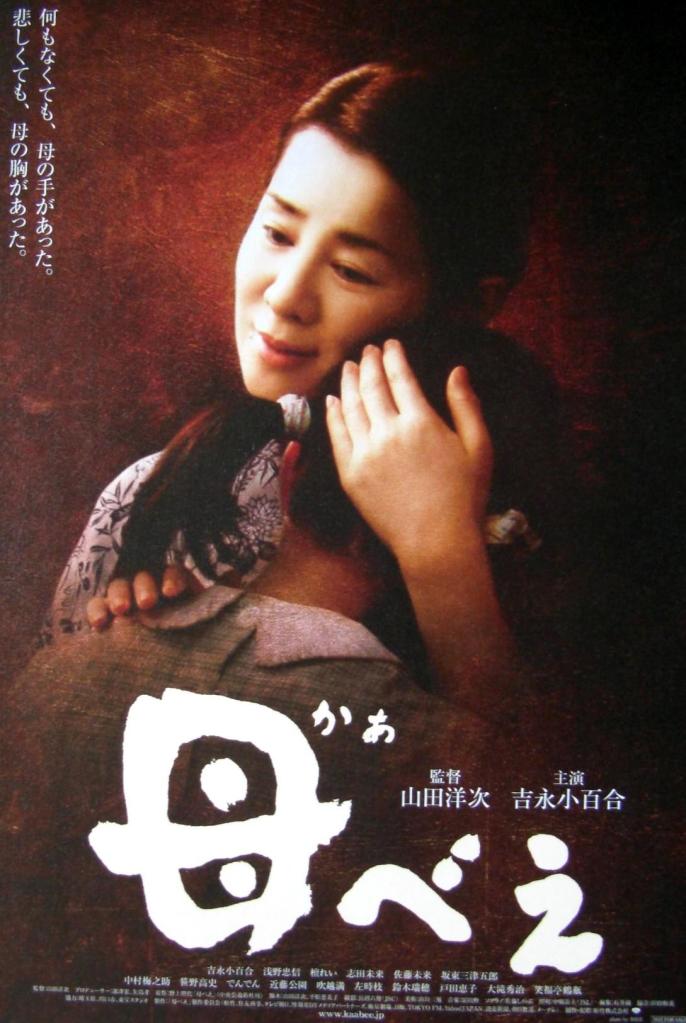
Kabei: Our Mother (母べえ, Yoji Yamada, 2008)

KabeiYoji Yamada’s films have an almost Pavlovian effect in that they send even the most hard hearted of viewers out for tissues even before the title screen has landed. Kabei (母べえ), based on the real life memoirs of script supervisor and frequent Kurosawa collaborator Teruyo Nogami, is a scathing indictment of war, militarism and the madness of nationalist fervour masquerading as a “hahamono”. As such it is engineered to break the hearts of the world, both in its tale of a self sacrificing mother slowly losing everything through no fault of her own but still doing her best for her daughters, and in the crushing inevitably of its ever increasing tragedy.
Summer, 1940. The Nogamis are a happy family who each refer to each other by adding the cute suffix of “bei” to their names. The father, Tobei (Bando Mitsugoro X), is a writer and an intellectual opposed to Japan’s increasing militarism and consequently has found himself in both political and financial difficulties as his writing is continually rejected by the censors. Eventually, the secret police come for him, dragging him away from his home in front of his terrified wife and daughters. After Tobei is thrown into jail for his “thought crimes”, the mother, Kabei (Sayuri Yoshinaga), is left alone with her two young girls Hatsuko and Teruyo (Hatsubei and Terubei in family parlance).

Though devastated, Kabei does not give up and continues to try and visit her husband, urging his release and defending his reputation but all to no avail. Thankfully, she does receive assistance from some of her neighbours who, at this point at least, are sympathetic to her plight and even help her get a teaching job to support herself and the children in the absence of her husband. She also finds an ally in the bumbling former student, Yamazaki (Tadanobu Asano), as well as her husband’s sister Hisako (Rei Dan), and her brother (Tsurube Shofukutei) who joins them for a brief spell but ultimately proves a little too earthy for the two young middle class daughters of a dissident professor.

The time passes and life goes on. The war intensifies as do the attitudes of Kabei’s friends and neighbours though the family continues its individual struggle, sticking to their principles but also keeping their heads down. By the war’s end, Kabei has lost almost everything but managed to survive whilst also ensuring her children are fed and healthy. A voice over from the older Teryuo calmly announces the end of the conflict to us in such a matter of fact way that it’s impossible not wonder what all of this was for? All of this suffering, death and loss and what has it led to – even more suffering, death and loss. A senseless waste of lives young and old, futures ruined and families broken.

Yet for all that, and to return to the hahamono, the Nogami girls turned out OK. Successful lives built in the precarious post-war world with careers, husbands and families. Unlike many of the children in the typical mother centric movie, Hatsuko and Teruyo are perfectly aware of the degree to which their mother suffered on their behalf and they are both humbled and grateful for it. Kabei was careful and she kept moving to protect her children in uncertain times. Seen through the eyes of a child, the wartime years are ones of mounting terror as fanatical nationalism takes hold. Bowler hatted men seem to rule everything from the shadows and former friends and neighbours are primed to denounce each other for such crimes as having the audacity to wear lipstick in such austere times. In one notable scene, the neighbourhood committee begins its meeting by bowing at the Imperial Palace, until someone remembers the paper said the Emperor was in a different palace entirely and they all have to bow the other way just in case.

Though the tale is unabashedly sentimental, Yamada mitigates much of the melodrama with his firmly domestic setting. We see the soldiers massing in the background and feel the inevitable march of history but the sense of tragedies both personal and national, overwhelming as it is, is only background to a testament to the strength of ordinary people in trying times. An intense condemnation of the folly of war and the collective madness that is nationalism, Kabei is the story of three women but it’s also the story of a nation which suffered and survived. Now more than ever, the lessons of the past and the sorrow which can only be voiced on the deathbed are the ones which must be heeded, lest more death and loss and suffering will surely follow.


Original trailer (English subtitles)

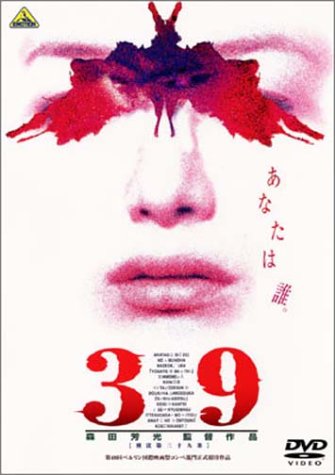
Keiho (39 刑法第三十九条, Yoshimitsu Morita, 1999)

keihoArticle 39 of Japan’s Penal Code states that a person cannot be held responsible for a crime if they are found to be “insane” though a person who commits a crime during a period of “diminished responsibility” can be held accountable and will receive a reduced sentence. Yoshimitsu Morita’s 1999 courtroom drama/psychological thriller Keiho (39 刑法第三十九条, 39 Keiho Dai Sanjukyu Jo) puts this very aspect of the law on trial. During this period (and still in 2016) Japan does nominally have the death penalty (though rarely practiced) and it is only right in a fair and humane society that those people whom the state deems as incapable of understanding the law should receive its protection and, if necessary, assistance. However, the law itself is also open to abuse and as it’s largely left to the discretion of the psychologists and lawyers, the judgement of sane or insane might be a matter of interpretation.
The case at the centre of the film centres around a young actor, Masaki Shibata, who has confessed to the murder of a pregnant woman and her husband after he argued with the woman at her place of work. Shibata acts strangely and makes a point of asking for the death penalty before spouting off about angels and demons and later displays evidence of a split personality. Everyone seems convinced he’s suffering from MPD and committed the murders during a dissociative episode but the assistant psychologist is convinced he’s faking. At the same time, one of the lead policemen on the case also thinks there’s more to this. On investigating further, he discovers the strange irony that the murdered man himself escaped prosecution by reason of insanity after committing a horrifying crime that lead to the death of a six year old girl.

The film may be about a murder but what’s really on trial here is the law itself. The murdered man, Hatada, committed a heinous crime but was a child himself at the time so received only a brief sentence served in a hospital. He was released, went to university, got a good job and got married – a normal life. The family of the little girl he killed, by contrast, will never be able to return to normality and will continue to live in torment for the rest of their lives knowing the man who so brutally took their child from them is still out there living just like one of us. The film does not go into why Hatada committed the original crime or the reasons he was later declared fit to return to society, but the film wants to question the idea of releasing back into the world someone who has done something as horrifying as the rape, murder and dismemberment of a child.

The case at hand is a complicated one which has so many layers coupled with twists and turns that it becomes unavoidably confusing. Playing with several literary allusions from the frequent quotations from the “mad prince” Hamlet to naming the assistant psychologist “Kafuka”, Keiho also wants to delve deep into human psychology with its questions of identity and self realisation. Both the accused and the psychologist have deeply buried memories of trauma the suppression of which has cast a shadow through the rest of their lives. Both of them are, in a sense (even if not quite in the way it originally appears), haunted by a shadow of themselves.

When it comes to the procedural aspects, the final “twist” is a step too far and perhaps undermines the groundwork which has gone before it. Something which is presented as an elaborate revenge plot against both the state and the original instigator of a crime also appears to originate with a clumsy motion of self preservation. The state’s failure to properly deal with the criminal in the first case has resulted the death of another innocent bystander, all of which might have been avoided if Article 39 had not come into play.

Kafka-esque is, in fact, a good way to describe the circularity of the narrative as the notion of an insanity plea becomes a recurrent plot device. Backstories are constructed and discarded, identities are shed and adopted at will and the past becomes a thorn in the side of the future that has to be removed so everyone can comfortably move on. Morita relies heavily on dissolves to create a floating, dreamlike atmosphere as memories (imaginary or otherwise) segue in and out like tides but he also shows us images reflected in other surfaces such as the Strangers on a Train inspired sequence which literally shows us events through someone else’s eyes as we’re watching them reflected doubly on the lenses of a pair of sunglasses.

Difficult, complicated and ultimately flawed Keiho proves an elusive and intriguing piece that is put together with some truly beautiful cinematography and interesting editing choices. Fascinating and frustrating in equal points Keiho is another characteristically probing effort from the wry pen of Morita which continues to echo in the mind long after the credits have rolled.


Keiho is available with English subtitles via HK R3 DVD as part of Panorama’s 100 Years of Japanese Cinema Collection.

http://www.youtube.com/watch?v=PrgZp2Bhizo


Greatful Dead (グレイトフルデッド, Eiji Uchida, 2013)

OEO9ONpIf there’s one thing Third Window Films have proved themselves adept at, it’s finding those smaller, off kilter and cultish films that often fall through the cracks. Greatful Dead, the deliberate misspelling the title of which is only the first sign of its oddness, is the latest find in what might be thought of as “weird cinema”. Evoking comparisons with Sion Sono’s Love Exposure thanks to its christianising themes, wry tone and sheer craziness, Greatful Dead is not all together as successful but is likely to find its own fans through its undeniably cultish appeal.

Nami, like many movie heroines, starts by recounting her childhood as a lonely, neglected child. The younger of two sisters, she desperately tries to get the attention of her mother who is only interested in saving disadvantaged children in other countries whilst ignoring the needs of her own two daughters, or her father who is so entirely wrapped up in their mother that he’s barely noticed the two girls either. Eventually after her mother leaves and her father slowly disintegrates, Nami becomes increasingly isolated. After inheriting a sizeable fortune, grown-up Nami wastes her time in idle pursuits before hitting on her favourite hobby – an amateur anthropological study of the “Solitarian” or those who have driven themselves completely mad through loneliness. Her favourite kind of Solitarian is randy old men whom she likes to watch as they spiral deeper into depravity before eventually reaching their end game. Old Mr. Shiomi, who was once something of a big shot but is now an embittered old man, is her perfect specimen but after he receives a visit from a pretty Korean Christian missionary and becomes “reborn” her observational project is ruined! Mr Shiomi’s been stolen by God, what lengths will Nami go to to get him back?

Of course, the irony is Nami is the biggest Solitarian of them all and the one she’ll never be able to identify. In the accompanying DVD interviews, the director states his intention to highlight the increasing numbers of lonely, older people in Japan thanks to the declining birth rate and fracturing of traditional community bonds but in actual fact many of the Solitarians Nami identifies are younger people and some of them even appear to have quite serious mental issues which require more serious intervention. Taking frequent field trips and noting down rare specimens in a little notebook like some deranged “twitcher”, Nami joyfully enjoys the darker side of her hobby as her favourite part seems to be watching lonely people die at the zenith of their craziness. Though in fact both she and Mr. Shiomi have both in some senses chosen their lonely lives as both have rejected the interest of family members – Nami the insistences of her sister that the normal is best and to be strived for and Mr Shiomi those of his son (who may or may not be mainly interested in his money).

There is then, obviously, a veneer of social commentary, though it feels fairly thin at best. The main appeal is in the degree of tonal shifts that occur throughout the film. Starting out in a similar way to many a quirky comedy as young Nami goes to extreme lengths just to get some kind of attention from her indifferent parents, to her carefree adult life the film plunges off a cliff face about two thirds of the way through thanks to Mr. Shiomi’s “betrayal”. Where another film would end with Nami meeting another lonely person and becoming slightly less unhinged, Greatful Dead veers into some seriously dark alleyways filled with blood, murder and pensioner rape among other perversions. The wildest thing is the resurgence of Mr. Shiomi as he decides he’s mad as hell and isn’t going to take this anymore! Fighting back in an equally strange way (why does no one ever just call the police? No, sharpening a mop into a spear seems like a more rational solution), the furious battle between subject and observer is quite literally in the lap of the gods.

Greatful Dead is an undeniably enjoyable, wild ride that escalates in a gently expert manner from its black comedy beginnings to exploitation ending but never quite coalesces into something more. Its views on the place of religion in this lonely world seem a little ambiguous – would Mr. Shiomi have opened his door to the male missionary quite as readily as he opened it to a pretty Korean girl and how long would his quite radical conversion really have lasted? Is the church actually helping some of these elderly people who might just want company or exploiting them? The film doesn’t seem sure, not that it’s that much of a problem. In the end, Grateful Dead is a wild ride through crazy town and destined to become another cult classic entry in to the world of wacky Japanese horror.


Review of Greatful Dead up at UK Anime Network – released courtesy of Third Window Films this coming Monday 26th January 2015.

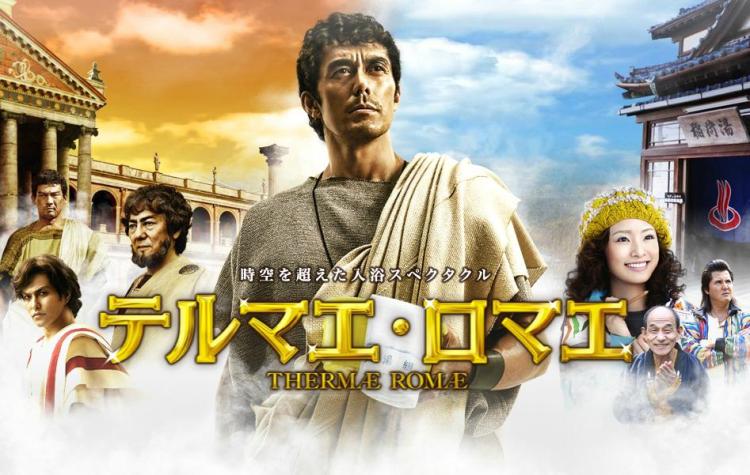
Thermae Romae

THERMAE ROMAE-T

Lucius ambulat in Tokyo? Review of improbable time travel comedy Thermae Romae up at UK-anime.net.


Pop quiz – what do modern day Japan and Ancient Rome have in common? Fish sauce? Emperor worship? Sandals? More than you thought, wasn’t it? Well, the correct answer is public bath houses and sure enough the people of modern day Tokyo still love going to the public bath even though they enjoy the luxury of being able to bathe at home! Of course, bath house culture with all its social and political uses and divisions was one of the things the Roman Empire took with it wherever it went. However, there must have been a time when some Romans began to feel their baths were getting a bit stale and in need of a new ‘modern’ twist, but what to do? What if they could leap forward in time and learn from the 21st century bath culture of modern Japan! Enter down on his luck architect Lucius who suddenly finds himself in a strange land full of strange looking people who seem to have taken bath technology to its very zenith.

Lucius Modestus (Hiroshi Abe) is a once successful bath architect with a case of serious designer’s block. Replaced on a prime project because he’s been unable to come up with any ideas he decides to go for a soak at the local bath house but whilst clearing his head underwater he finds himself sucked through a passage way only to reappear in a very strange looking place – it’s a bath house alright, but not as we know it! As they’re speaking a strange language he doesn’t understand, Lucius assumes the elderly men bathing here must be slaves and he’s been sucked into the “slaves only” part of the baths. Some of this stuff is kind of cool though – what are these funny spigot like things for, and these handy little buckets? Wait – they have baskets for their clothes?! We could do with some these in our bit! And so Lucius experiences the wonder of public bathing in Japan to the extent that it makes him cry with joy at which point he returns to Ancient Rome and begins to put some of these techniques to use in his designs. Travelling back and fore, Lucius always seems to run into the same Japanese girl who wants to make him the star of a manga and group of kindly old men. Can Lucius finally build the bath house of his dreams and stop a conspiracy against his beloved Emperor Hadrian at the same time?

Based on Mari Yamazaki’s manga of the same name (which also received an anime treatment from DLE), Thermae Romae sticks fairly closely to a fish out of water format for the the first half of the film as Lucius becomes by turns confused and then entranced by the various pieces of modern bathing technology he encounters on his travels. As a Roman encountering other people who are obviously not Roman, he of course adopts a superior attitude and assumes these people are either slaves or ought to be and so is extremely bewildered that their advancements seem to have eclipsed those of his own beloved Rome. These situations obviously provide a lot of room for humour as Lucius encounters various things that seem perfectly normal to us but strange and alien to him – his pure joy at discovering the wonder of the multifunctional Japanese toilet being particularly notable. It does though become fairly repetitive as Lucius finds himself in different situations which are essentially the same joke in different colours but then when the plot element begins to kick in later in the film it too fails to take off and feels a little too serious when taken with the wacky time travelling antics we began with.

Aided in his quest Lucius meets several amusing supporting characters including the group of elderly men from the baths who didn’t really need the help of an improbable ancient Roman to get themselves in trouble and Mami who functions as a kind of love interest who’s cast Lucius as the hero in her next manga. Mami begins learning about the Roman Empire and takes a course in Latin which helps a lot when she too finds herself in Ancient Rome and facilitates a kind of cross cultural exchange as she steals ideas from Rome for her manga as Lucius stole for the baths. However, the romantic comedy element never really comes together and even as Mami continues to pine over her noble Roman, Lucius remains aloof in the universal belief that all non-Romans are inferior. Though he does come to grudgingly acknowledge that the ‘flat faced people’ as he calls them have particular strengths such as their willingness to work as a team and put collective success ahead of personal gain, he never quite sheds his Roman arrogance.

It’s all very silly but undeniably quite funny if often absurd. We hear everyone in Rome speaking in Japanese and Lucius continues to think in Japanese wherever he actually is but obviously once he gets to Japan he can’t understand what anyone’s saying and attempts to communicate with them in Latin (whilst still giving his interior monologue in Japanese). Likewise, when Mami learns Latin she uses it to communicate with Lucius in Japan but once they get to Rome, all their ‘Latin’ is Japanese too which causes problems when the old men arrive because they’re speaking the same language as everyone else yet can’t understand anyone or be understood – which might be why they don’t get to say very much other than to Mami. It’s all quite strange and disorientating but kind of works as does the largely Puccini based score which screams 19th century Italy much more than Ancient Rome but helps to give the film the air of classical pomposity it’s aiming for. Big, ridiculous, silly fun – no one could accuse Thermae Romae of having any kind of serious message but it does provide genuinely entertaining silliness for the majority of its running time.