Festival Champ (お祭り野郎 魚河岸の兄弟分, Norifumi Suzuki, 1976)

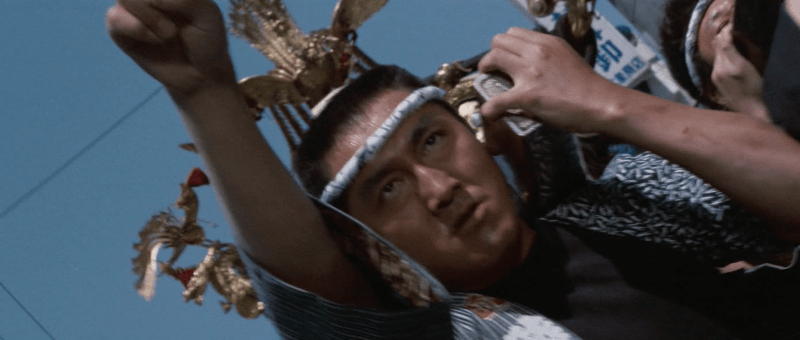
Who doesn’t love a festival? The hero of Norifumi Suzuki’s Festival Champ (お祭り野郎 魚河岸の兄弟分, Omatsuri yaro: Uogashi no Kyodai-bun) loves them so much that he travels all over Japan to help out in places where young men have become thin on the ground thanks to increasing urbanisation and rural depopulation. Following the success of Suzuki’s entries in the Truck Yaro series in 1975 and 1976, the film was part of a new line of comedies and sports movies launched by Toei as well as a vehicle for Hiroki Matsukata who was trying to move on from yakuza movies.

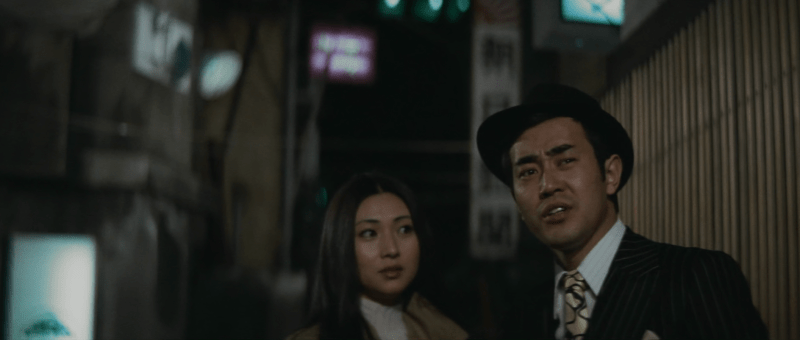
Katsuo (Hiroki Matsukata) is however something of a goodhearted bruiser who is always getting into manly scraps and especially at the festivals he travels to which is a pretty good hook for an ongoing series. But it’s not all that great for his employer who runs a family fishmonger’s at the Uogashi fish market and complains that Katsuo’s always running off and causing trouble. The fish market itself takes on an exoticised quality in the opening sequence which features a voice over from karate queen Etsuko Shihomi, here in a purely dramatic role, who is the daughter of a well-to-do traditional Japanese restaurant and travels there daily by speedboat to pick up the best fresh fish available. Suzuki throws in some documentary-style stock footage and statistics about the market that lend a strangely corporate feel, but then homes in on its capacity as a community hub. Kiyoko says it’s her favourite place precisely because there’s nothing formal about it. Deals are done through body language and you don’t need any kind of resume to work there, everyone’s welcome. 

That may be the implied contrast between Kiyoko’s father, who owns an upscale place and cultivates genuine relationships with local fishermen and brokers, and local boy made good Kurosaki who has supposedly become the CEO of a restaurant chain, itself a symbol of the soulless corporation of ‘70s Japan. Kurosaki rocks up dressed like a yakuza, but everyone treats him as a successful businessman and in part thanks to Katsuo’s boss Zenjiro’s recommendation is eager to make deals with him but predictably he’s running a huge scam that could destroy the local economy. Zenjiro is later faced with the difficult decision of selling his family business to repay all the other fishermen and brokers that have fallen foul of him. 

It’s this societal sense of unfairness that stripper Kumi (Terumi Azuma) hints at when she says she feels “frustrated” and that her long-lost brother Eiji (Toru Emori) probably feels even more frustrated than she does after he slaps her having found out that she’s become a burlesque dancer. As she points out to him, he ran away from home and left her behind with the aunt that was cruel to them so what exactly he expected her to do is a mystery. In the end, it’s his own fault for abandoning her, so he has no leg to stand on in criticising her for the way she’s lived her life. Kumi is well accepted in the local community and walks around in very elegant attire which gives her the air of an “ojosan” or upperclass lady to much greater extent that Kiyoko has in her love of the earthy world of the fish market. The fact that she turns out to be suffering from a tragic terminal illness perhaps only reinforces this sense of unfairness, that the modern world has essentially poisoned her and she can no longer survive in it.

The only things that give her solace are Katsuo and the idea of joining in carrying a shrine festival which would seem to be ways of reconnecting with a more essential Japaneseness. Despite his rowdiness, Katsuo is as she describes him the kindest person she’s ever met and a more positive vision of a still traditional masculinity that looks to protect the community and those around him. He gets into a fight with Eiji, but after exchanging a few blows the men become firm friends, while it’s trying to hook his wimpy friend Kinichi up with a date that brings him to Kumi in the first place. Meanwhile, it seems like Ayuko (Junko Natsu) has a crush on him and despite Zenjiro’s exasperation with Katsuo, everyone expects that he will eventually marry her and take over the family business. 

And so, it’s only a violent, but also quite funny, intervention from Katsuo that can eventually overcome the disruption Kurosaki threatens. Suzuki throws in a lot of his trademark weirdness including all of Zenjiro’s other daughters having fishy names, and a local sex worker who is insatiably aroused by octopuses followed by a gag in which Katsuo is trolled with a suggestive-looking shellfish, but mostly rests on a sense of qualified wholesomeness and community all carried on Katsuo’s broad shoulders as the lone guardian of a more essential Japaneseness otherwise uncorrupted by venal post-war capitalism.


*Norifumi Suzuki’s name is actually “Noribumi” but he has become known as “Norifumi” to English-speaking audiences.

Curse of the Dog God (犬神の悪霊, Shunya Ito, 1977)

By the late 1970s, Japan was a very prosperous place and the cutting edge of modernity yet old beliefs die hard and those who run afoul of a natural order they assumed had long been forgotten will pay a heavy price for their arrogance. After a four-year hiatus following the third of the Female Prisoner Scorpion films, Shunya Ito returned with a strange slice of folk horror The Curse of the Dog God (犬神の悪霊, Inugami no Tatari) in which it is indeed the city invaders who have transgressed these ancient boundaries in their wilful indifference to the natural world.

The conflict between these two Japans is clear in the opening sequence in which three men pass through a tunnel in a truck bearing the logo of a nuclear power company and emerge into a village where a group of boys jump out from behind a row of tiny haystacks wearing masks made of leaves. The boys crowd around the van asking the strangers why they’re here and they jokingly tell them that they’ve come to look for “treasure,” which turns out to be a quest to find uranium in the local mountains. Otherwise uninterested in the village or the landscape, the men back their truck into a dilapidated roadside shrine which then collapses, and subsequently run over a little boy’s dog which had attempted to stop their car by barking fiercely at them. Rather than stop to apologise or comfort the boy who is cradling his dead dog in his arms, the men sheepishly drive off as if embarrassed. 

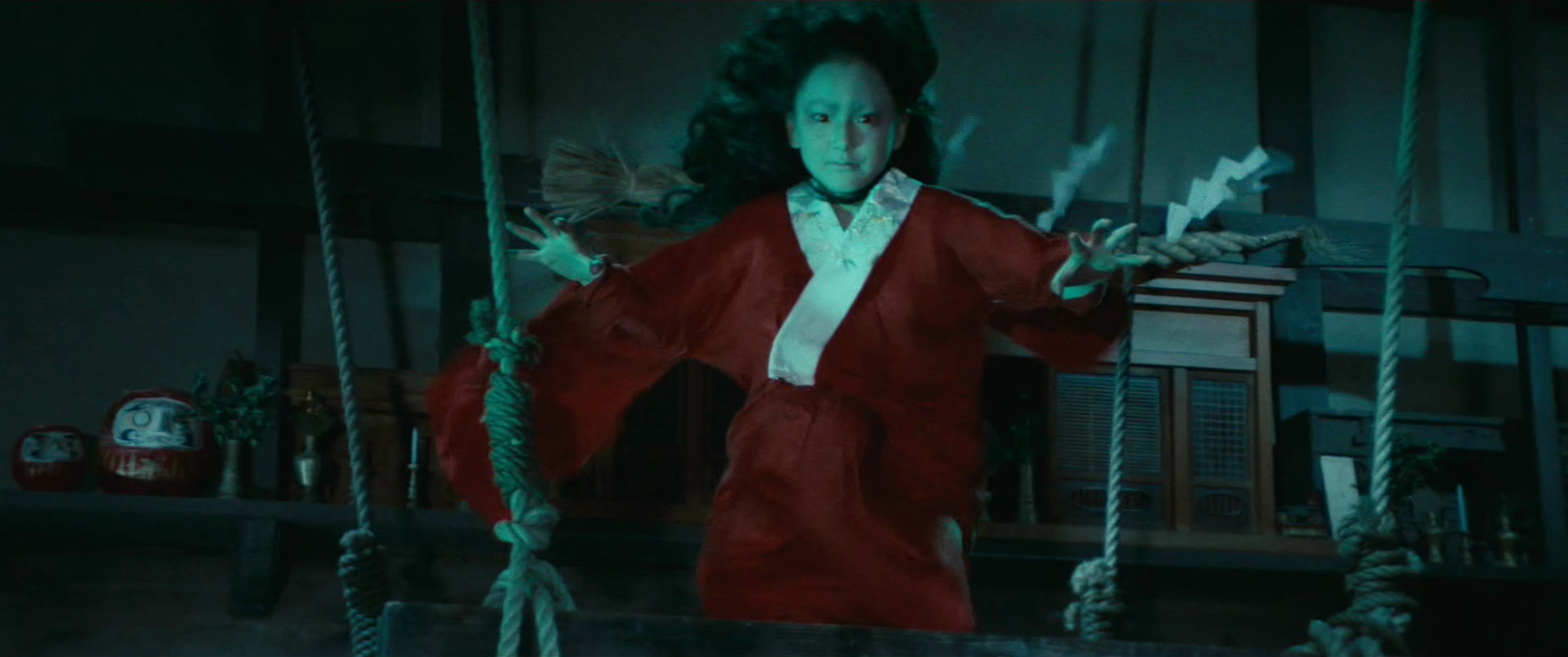
Of course, the shrine turns out to belong to the Dog God who is guardian deity of these mountains and now incredibly annoyed not just by the destruction of the shrine and killing of the dog, but by the men’s intention to tear the natural world apart looking for something which could prove very destructive even if they claim they want to use it responsibly to fuel the economic rocket which is Japan in the 70s. The Kenmochi family, the head of which, Kozo, is the local mayor are very receptive to the firm’s entreaties and immediately grant them access to their land while arranging a marriage which at least in part dynastic between Kozo’s daughter, Reiko (Jun Izumi), and the head of the expeditionary group Ryuji (Shinya Owada). But once they return to the city, the other two men die in mysterious circumstances, one entering a kind of trance and walking off the roof of the hotel after the couple’s formal wedding reception and the other attacked by a pack of wild German Shepherds in the middle of Tokyo. 

Reiko is quick to exclaim that it’s all the fault of the Dog God, though it’s never quite clear whether or not she is aware that her family is the subject of an ancestral curse because they themselves offended the deities by getting their hands on the land cheaply when it was used as collateral for a loan. In contrast to the Tarumis, the family of Reiko’s best friend Kaori (Emiko Yamauchi) and her little brother Isamu (Junya Kato) who is the boy whose dog they killed, the Kenmochis put on heirs and graces and as if they were the ancestral aristocracy of this area rather than having made a speedy class transition thanks to someone else’s misfortune and the vagaries of the post-war era. The Tarumis, meanwhile, live in a much more humble home and dress in a much more traditional mountain village manner. Patriarch Kosaku (Hideo Murota) point-blank refuses to sell his land and will have little truck with Ryuji or the mine once it opens, leaving the family regarded as outcasts within the village. 

But then there is a definite and literal pollution signalled by the arrival of the prospectors. At a meeting, it’s suggested that the sulphuric acid they’re using to flush out the uranium in inaccessible areas of the mine could contaminate the local groundwater which is a problem when many families are still taking their water from wells but they all laugh it off. Sometime later Ryuji is horrified to see dead fish floating in the river, while his own in-laws, the older generation of the Kenmochi family, are also killed by ingesting contaminated water. A rumour arises that the culprit is the Tarumis who have poisoned the wells out of spite, and when Ryuji tries to raise the alarm after getting a positive result for sulphuric acid in the water supply the company tell him to pin it on them instead. 

The intrusion of modernity has interrupted the careful, if woefully feudal, balance of the village with terrifying and tragic consequences. Yet Kosaku is also surprised, asking how a city man like Ryuji could really believe in something like a “curse”. The shamans they bring in to do a ritual also blame everything on the Terumis, adding the suggestion that the ill will is motivated by Kaori’s sexual jealousy over Ryuji giving rise to yet another interpretation of the curse’s origin besides the Kenmochi’s class transgression and the unintentional offence caused by the destruction of the shrine. Then again, perhaps it really is all because of the Dog God in a great confluence of coincidences that have led to this incredibly strange and unfortunate situation. In the end, even the film’s purest character, the Kenmochi’s small daughter Mako (Masami Hasegawa), is possessed by the evil spirit and made to take her revenge with a remorseful Ryuji desperately trying to repair what he himself broke in the acceptance that he should not have come here and was the catalyst for this confrontation with fate. Weird and haunting even in its bizarre obscurity the film nevertheless makes a case for the protection of the dark heart beating at the centre of the contemporary society which speaks of something older that cannot be crossed and most specially by those hellbent on a hubristic path to prosperity that has little respect for the land.


The Last Kamikaze (最後の特攻隊, Junya Sato, 1970)

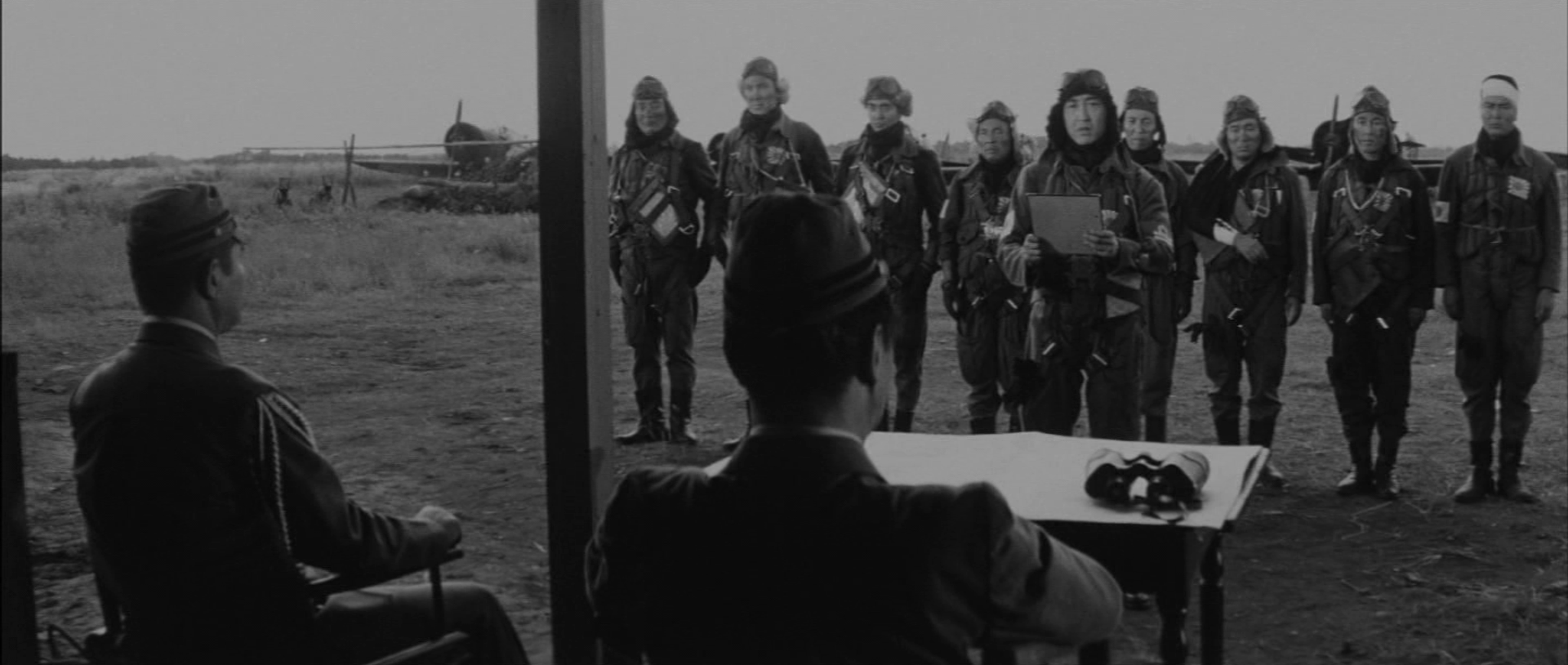
Junya Sato’s The Last Kamikaze (最後の特攻隊, Saigo no Tokkotai) opens with a title card explaining that it has nothing to do with the life of Matome Ugaki, which seems disingenuous at best given that the narrative has tremendous similarities with his life. In any case, 25 years after the war in a very different Japan which is perhaps becoming more willing to reexamine its wartime history, Sato’s film nevertheless walks an ambivalent line clearly rejecting the idea of the kamikaze special attack squadrons as absurd and inhuman yet simultaneously glorifying the deaths of the men who willingly took part in them. 

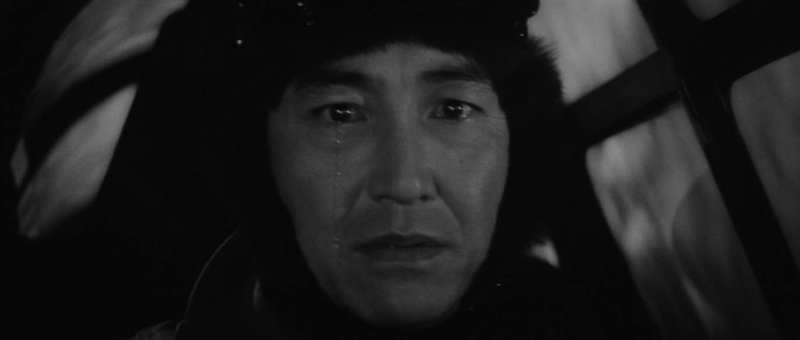
For sympathetic Captain Munakata (Koji Tsuruta) the issue is one of consent and willingness more than it is of essential immorality. Placed in charge of the very first suicide attack, he elects to go himself rather than ask someone else but is first overruled before deciding to go anyway after appealing for volunteers and coming up one short. His general, Yashiro (Bontaro Miake), who had voiced his opposition to the policy in the opening sequence reminding his own commander than even when men were given impossible missions in previous wars they were always ordered to return home if possible, takes the unprecedented step of climbing into an aircraft himself in an act of protest insisting that this be the last and final time that men were ordered to their deaths. The mission, however, does not succeed. All of the pilots bar Yashiro are shot down before reaching their targets while Munakata, injured and having lost sight of the general, aborts his mission and returns to base only to face censure from his superior officers. 

Sent back to Japan, he wrestles with himself over whether his decision was one of cowardice and he turned back because he was afraid to die rather than, as he justifies, because he did not want to die in vain and did what he thought was right. Far from cowardice, it may have taken more courage for him to ignore his orders and choose to live yet there must also be a part of him that believes dying to be heroic if not to do so is to be a coward. As the situation continues to decline and suicide attacks become the only real strategy, Munakata is recalled for an ironic mission of heading the escort squad designed to protect the pilots from enemy attack so they can reach their targets. He first turns this down too not wanting to be an angel of death but is finally convinced to accept on the grounds that the men will die anyway and at least this way their deaths will have meaning. 

Munakata was greeted on his return to Japan by the sight of his father (Chishu Ryu) being carted off by the military police for expressing anti-war views, stopping only to tell him that people should be true to their own beliefs. Nevertheless, even if Munataka objects to the tokkotai strategy he does not oppose it only emphasise that the men should should be willing and resolved rather than forced or bullied. There is indeed a shade of toxic masculinity in the constant cries of cowardice along with a shaming culture that insists a man who refuses to give his life for his country is not a real man. Munakata comes to the rescue of a young recruit, Yoshikawa (Atsushi Watanabe), who twice returns from a tokkotai mission claiming engine trouble but does not try to save him only to petition his superiors that he be given ground duty until such time as he gets used to the idea of dying. Because of Munakata’s kindness in saving him from a suicide attempt after being rejected by the mother he worried for if he were to die, Yoshikawa is pushed towards a “hero’s death” that does at least help to change the mind of Yashiro’s zealot son (Ken Takakura) who knew nothing of the reasons behind his father’s suicide and believed wholeheartedly in the necessity of the special attack squadrons. 

The younger Yashiro’s rationale had been that to show compassion to a man like Yoshikawa was to shame the memories of the men who had already died, yet even in realising the futility of the gesture he still resolves to proceed towards his own death as do others like him such as a student who had been against the war and ironically consents to the suicide mission in order to end it more quickly. “There’s nowhere to run to” Yoshikawa’s mother (Shizuko Kasagi) had said on his attempted desertion, echoing the words of another that there was no escape from this war, while poignantly crying over her son’s ashes that she wishes she had raised him to be a coward. The human cost is brought fully home as the families storm the airfield fence in an attempt to wave goodbye to their loved ones as they prepare for their glorious deaths, another pilot reflecting on the fact that each of these men is someone’s precious son rendered little more than cannon fodder in an unwinnable war. Even with the escort squads, only 30% of the special attacks succeed. Most of the pilots are so young and inexperienced that even assuming they survive the anti-aircraft fire they are incapable of hitting their targets. 

To add insult to injury, Munakata returns from his final mission to an empty airfield where a drunken engineer (Tomisaburo Wakayama) explains to him that the war is over and the generals knew it 10 days earlier but still sent these men to their deaths anyway. Overcome with remorse, Munakata posits his own suicide mission but is instructed to live on behalf of all those who died only to take off and fly into a technicolor sunset as Sato switches from the period appropriate black and white to vibrant colour elegising Munakata’s death while lending it an otherwise uncomfortable heroism. Casting ninkyo eiga icons Koji Tsuruta and Ken Takakura as the infinitely noble yet conflicted pilots and employing jitsuroku-esque narratorial voice to offer historical context the majority of the audience probably does not strictly need, Sato rams home the righteousness of these men while casting them as victims of their times trying their best to be true to what they believe but finding little prospect of escape from the absurdity of war. 


Violent Streets (暴力街, Hideo Gosha, 1974)

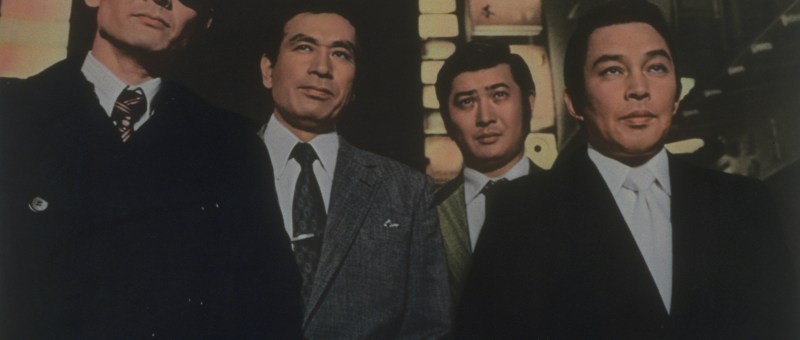
“Nothing’s like it used to be anymore” sighs a woman who’s had to betray herself but has tried to make break for it only to discover there is no way back. Hideo Gosha’s Violent Streets (暴力街, Boryoku Gai) is like many films of its era about the changing nature of the yakuza in an age of corporatised gangsterdom. Now “legitimate businessmen” who claim to no longer deal in thuggery, their crimes are of a more organised kind though a turf war’s still a turf war even if you’re fighting from the boardroom rather than simply getting petty street punks to fight it for you in the streets. 

In a touch of irony, former yakuza Noboru Ando stars as a man who’s tried to leave the life behind but is pulled back into underworld intrigue when his former foot soldiers mount an ill-advised bid for revenge against the clan they feel betrayed them. After serving eight years in prison for participating in the last turf war, Egawa was given flamenco bar Madrid on the condition that he dissolve his family and attempt to go straight as a legitimate businessman. The Togiku gang has since gone legit and distanced itself from most of its old school yakuza like Egawa. But now a yakuza conglomerate from Osaka is moving in on their old turf and the Togiku want the Madrid back as a bulwark against incursion from the west which is why they’ve been sending the boys round to cause trouble in the bar. 

Egawa is the classic ex-gangster who wants to turn himself around but is largely unable to adapt to life in a changing society. He is technically in a relationship with a bar hostess who has a severe drinking problem in part exacerbated by his inability to get over his former girlfriend who left him and married the boss, Gohara, while he was in prison. His former foot soldiers attempt to convince him to get the gang back together and take revenge, resentful of having been used and discarded, but he tells them to let it go, that they’ve all got “honest jobs” and that they should try to live as best they can. Like him, the guys are ill-equipped to make new lives in the consumerist society and cannot move on from the post-war past. Hoping to engineer a turf war between the Osaka guys and Togiku, they kidnap a popular TV personality/pop singer (Minami Nakatsugawa) attached to a station which Togiku controls and frame a rival affiliated with the Osakans for taking her. 

This just goes to show the various ways in which newly corporatised yakuza have expanded their business portfolio, heavily participating in the entertainment industry moving beyond bars, clubs, and the sex trade into mainstream television and idol stars. Egawa’s old friend Yazaki (Akira Kobayashi) is his opposing number, just as caged but trapped within the confines of the new gangsterdom, reprimanded by his boss for raiding the rival studio’s offices and undoing the gang’s attempt to rebrand themselves as legitimate businessmen rather than violent street thugs. “I can’t stand being humiliated” he explains as Gohara points out he’s stepped right into their trap now giving the Osakans an excuse for retaliation. “The Togiku group is a defanged, domesticated dog” Yazaki barks, “I can’t pretend to be an obedient company employee forever and do nothing”. 

Neither man is able to progress into the new era of rising prosperity, both little more than caged animals thrashing around trying to break free but continually crashing into the bars. Just as Egawa’s old guys had tried to engineer a turf war hoping that the two gangs would take each other out and leave a vacuum they could fill, arch boss Shimamura (Tetsuro Tanba) flies above the city in a helicopter as the “worms fight among themselves” and observes the chaos below as he completes his silent conquest of the contemporary economy like some modern day Nobunaga of corporatised gangsterdom. 

Taking over the Togiku through a process of corporate infiltration and gradually ridding themselves of all the old school yakuza ill-suited to the shady salaryman life, the contrast between the world of cabaret bars and back street dives and Shimamura’s smart suits and helicopters couldn’t be more stark. A slightly sour note is struck by the use of a transgender assassin (Madame Joy) who performs a lesbian floorshow by day and kills by night while working with a bald sidekick who carries a parrot on his shoulder, her coldness bearing out the tendency of yakuza movies to associate queerness with sadistic savagery. Gosha rams his point home with the otherwise surreal scene of a pile of abandoned mannequins by a swamp that becomes a popular yakuza kill site homing in on the emptiness of their eyes and the uncanniness of dismembered bodies, mere empty shells just like the men who die in this literal wasteland. Egawa perhaps feels himself to be a man already dead long before being pushed towards his act of futile rebellion, somewhere between sitting duck and caged dog fighting for his life between the chicken coops of a moribund small-town Japan. Marching to a frenetic flamenco beat of rising passions and barely contained rage, Violent Streets leaves its former foot soldiers with nowhere to go but down while their duplicitous masters continue to prosper riding the consumerist wave into a new and prosperous future.


Violent Streets opens at New York’s Metrograph on Dec. 16 as part of Hideo Gosha x 3

Trailer (English subtitles)

Graveyard of Honor (仁義の墓場, Kinji Fukasaku, 1975)

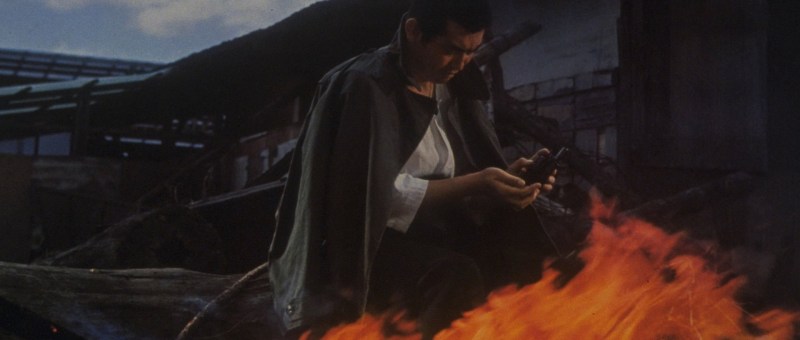
“Like hell you’re free” the “hero” of Kinji Fukasaku’s Graveyard of Honor (仁義の墓場, Jingi no Hakaba) coolly snaps back in squaring off against a rival gang in a crowded marketplace. Perhaps a familiar scene in the jitsuroku eiga, a genre Fukasaku had helped usher into being and later solidified in the hugely influential Battles Without Honour and Humanity series. A reaction against the increasingly outdated ninkyo eiga and their tales of noble pre-war gangsterdom, the jitsuroku or “true account” movie claimed a higher level of authenticity, inspired by the real lives of notorious gangsters and depicting the chaotic post-war period as it really was, a Graveyard of Honor. 

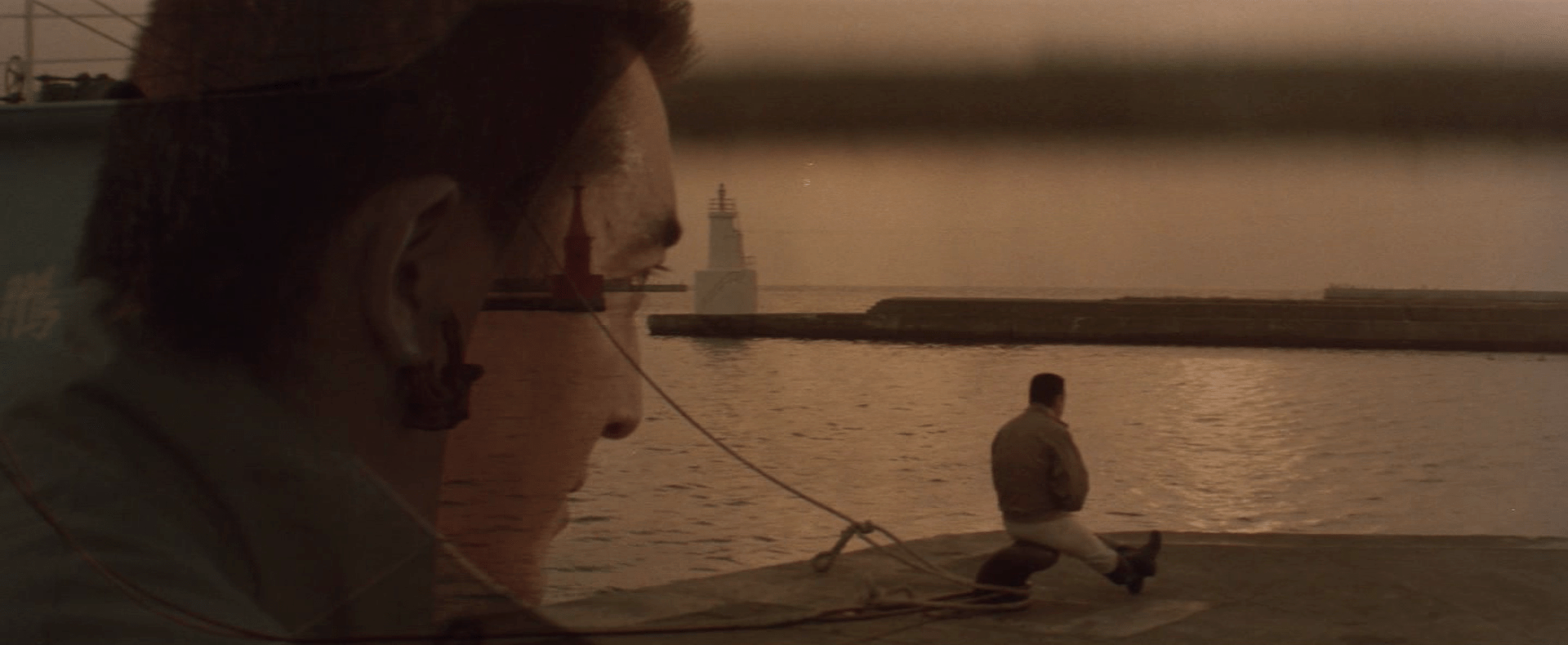
Based on another true crime novel by Battles Without Honour and Humanity’s Goro Fujita, Graveyard of Honour charts the slow self-implosion of reckless gangster Rikio Ishikawa (Tetsuya Watari). In keeping with the jitsuroku mould, Fukasaku opens in documentary mode, onscreen text giving us Rikio’s pregnant birthdate of 6th August, 1924 before giving way to the voices of, we assume, real people who actually knew him when he was child. They describe him alternately as shy, an oversensitive crybaby, and an evil genius in waiting who was always different from the others and had a lifelong ambition to become a yakuza. They wonder if it was the chaos of the post-war world which turned him into a “rabid dog” but note that he was in fact just as crazy before the war and after.

A cellmate during his time in juvenile detention recalls that Rikio would often liken himself to a balloon, intending to rise and rise until he burst but his trajectory will be quite the opposite. A mess of contradictions, he repeatedly tells his remarkably understanding boss Kawada (Hajime Hana) that whatever it is he’s done this time it was all for the gang but all he ever does is cause trouble, picking fights with the rival area gangs in an obsessive need for masculine dominance over his surroundings. His trip to juvie was apparently down to getting into a fight defending Kawada’s honour, implying that he was “the sort of kid who genuinely respected his godfather”, yet it’s in transgressing this most important of unwritten yakuza rules that he damns himself. Beaten up as punishment for setting fire to the car of a gang boss he felt slighted him, Rikio is asked for his finger but gets so drunk psyching himself up that he eventually turns on his own side and is exiled from the capital for a decade. 

That gang boss, meanwhile, Nozu (Noboru Ando), is currently running for political office in Japan’s new push towards democracy. He eventually loses but only by a small margin, bearing out that in this extremely difficult post-war environment, the yakuza is still a respected, if perhaps also feared, force providing services which ordinary people are sometimes grateful for in that they provide a buffer against other kinds of threat. Meanwhile, the first of Rikio’s gang raids is undertaken against so called “third country nationals” a dogwhistle euphemism for Zainichi Koreans, Chinese, Taiwanese, and other citizens from nations colonised by Japan during in its imperialist expansion who entered the country as Japanese citizens but have now been “liberated” only to face further oppression while those like Rikio accuse them of looking down on and taking revenge against the Japanese for the abuse they suffered as imperial subjects. When both sides are arrested a racist policeman allows the yakuza to escape, thanking them for helping him round up all the Chinese businessmen who will now go to jail for illegal gambling allowing the local gangs to seize their turf. 

The greatest irony is, however, that the American occupation forces may be the biggest gang of all, willingly collaborating with Kawada in peddling blackmarket whiskey (amongst other things) from the local base. The yakuza is also in collaboration with the local sex workers who use their connections with American servicemen to facilitate yakuza business. When Rikio starts a fight with a rival gang in a local bar that threatens to spark a war, it’s the Americans who are called in as neutral third party mediator, Nozu being unable to fulfil that role in having an affiliation with Kawada. The Americans, however, merely issue a loudspeaker announcement for the gang members to disperse or face possible arrest, keeping the peace if somewhat hypocritically. 

Rikio, meanwhile, continues to flounder. Exiled from his gang, he becomes addicted to hard drugs and gets a problematic minion of his own, Ozaki (Kunie Tanaka), not to mention contracting tuberculosis. In a particularly morbid moment, he has his own gravestone carved, perhaps detecting that the end is near or at least that an ending is coming for him. In another somewhat inexplicable turn of his life, though a common trope in jitsuroku, he eventually marries the sex worker who fell in love with him after he raped her, presumably touched by his concern after he burned a hole in her tatami mat floor. Wearied by grief and already out of his mind, a final act of nihilistic craziness sees him approach his former boss for the turf and capital to form his own gang, crunching his late wife’s bones as hardened gang members look on in utter disbelief. 

Rikio’s desire for freedom, to be his own boss, is elusive as the red balloon we often see floating away away from him, free in a way he’ll never be. “Don’t these young people respect the code anymore?” Kawada exasperatedly asks on hearing that Rikio has broken the terms of his exile and returned only a year into his sentence. But Rikio’s tragedy may in a sense be that he understood the code too well. On the side of his tombstone he writes the word “jingi”, honour and humanity, full in the knowledge that such concepts in which he seems to have believed no longer exist in the cruel and chaotic post-war world which forces even true believers to betray themselves in a desperate bid for survival. “We all live by a code” his friend echoes, “there’s just no way around the rules”. 

A case of printing the legend, Fukasaku’s take on the life of Rikio Ishikawa may not quite be the “true account” it claims but is in its own strange way a tale of frustrated gangster nobility, a cry baby’s failure to become the man he wanted to be in the complicated post-war landscape. Capturing the confusion of the era through frantic, handheld camera Fukasaku nevertheless takes a turn for the melancholy and mediative in his shifts to sepia, the listless vacant look of a drugged up Rikio somehow standing in for the nihilistic emptiness of a life lived in honour’s graveyard. 


Original trailer (English subtitles)

The Bullet Train (新幹線大爆破, Junya Sato, 1975)

bullet train posterFor one reason or another, the 1970s gave rise to a wave of disaster movies as Earthquakes devastated cities, high rise buildings caught fire, and ocean liners capsized. Japan wanted in on the action and so set about constructing its own culturally specific crisis movie. The central idea behind The Bullet Train (新幹線大爆破, Shinkansen Daibakuha) may well sound familiar as it was reappropriated for the 1994 smash hit and ongoing pop culture phenomenon Speed, but even if de Bont’s finely tuned rollercoaster was not exactly devoid of subversive political commentary The Bullet Train takes things one step further.
A bomb threat has been issued for bullet train Hikari 109. This is not a unique occurrence – it happens often enough for there to be a procedure to be followed, but this time is different. So that the authorities don’t simply stop the train to find the device as normal, it’s been attached to a speedometer which will trigger the bomb if the train slows below 80mph. A second bomb has been placed on a freight train to encourage the authorities to believe the bullet train device is real and when it does indeed go off, no one quite knows what to do.

The immediate response to this kind of crisis is placation – the train company does not have the money to pay a ransom, but assures the bomber that they will try and get the money from the government. Somewhat unusually, the bomber is played by the film’s biggest star, Ken Takakura, and is a broadly sympathetic figure despite the heinous crime which he is in the middle of perpetrating.

The bullet train is not just a super fast method of mass transportation but a concise symbol of post-war Japan’s path to economic prosperity. fetching up in the 1960s as the nation began to cast off the lingering traces of its wartime defeat and return to the world stage as the host of the 1964 olympics, the bullet train network allowed Japan to ride its own rails into the future. All of this economic prosperity, however, was not evenly distributed. Where large corporations expanded, the small businessman was squeezed, manufacturing suffered, and the little guy felt himself left out of the paradise promised by a seeming economic miracle.

Thus our three bombers are all members of this disenfranchised class, disillusioned with a cruel society and taking aim squarely at the symbol of their oppression. Takakura’s Okita is not so much a mad bomber as a man pushed past breaking point by repeated betrayals as his factory went under leading him to drink and thereby to the breakdown of his marriage. He recruits two helpers – a young boy who came to the city from the countryside as one of the many young men promised good employment building the modern Tokyo but found only lies and exploitation, and the other an embittered former student protestor, angry and disillusioned with his fellow revolutionaries and the eventual subversion of their failed revolution.

Their aim is not to destroy the bullet train for any political reason, but force the government to compensate them for failing to redistribute the economic boon to all areas of society. Okita seems to have little regard for the train’s passengers, perhaps considering them merely collateral damage or willing accomplices in his oppression. Figuring out that something is wrong with the train due to its slower speed and failure to stop at the first station the passengers become restless giving rise to hilarious scenes of salarymen panicking about missed meetings and offering vast bribes to try and push their way to the front of the onboard phone queue, but when a heavily pregnant woman becomes distressed the consequences are far more severe.

Left alone to manage the situation by himself, the put upon controller does his best to keep everyone calm but becomes increasingly frustrated by the inhumane actions of the authorities from his bosses at the train company to the police and government. Always with one eye on the media, the train company is more preoccupied with being seen to have passenger safety at heart rather than actually safeguarding it. The irony is that the automatic breaking system poses a serious threat now that speed is of the essence but when the decision is made to simply ignore a second bomb threat it’s easy to see where the priorities lie for those at the top of the corporate ladder.

Okita and his gang are underdog everymen striking back against increasing economic inequality but given that their plan endangers the lives of 1500 people, casting them as heroes is extremely uncomfortable. Sato keeps the tension high despite switching between the three different plot strands as Okita plots his next move while the train company and police plot theirs even if he can’t sustain the mammoth 2.5hr running time. A strange mix of genres from the original disaster movie to broad satire and angry revolt against corrupt authority, The Bullet Train is an oddly rich experience even if it never quite reaches its final destination.


Original trailer (no subtitles)

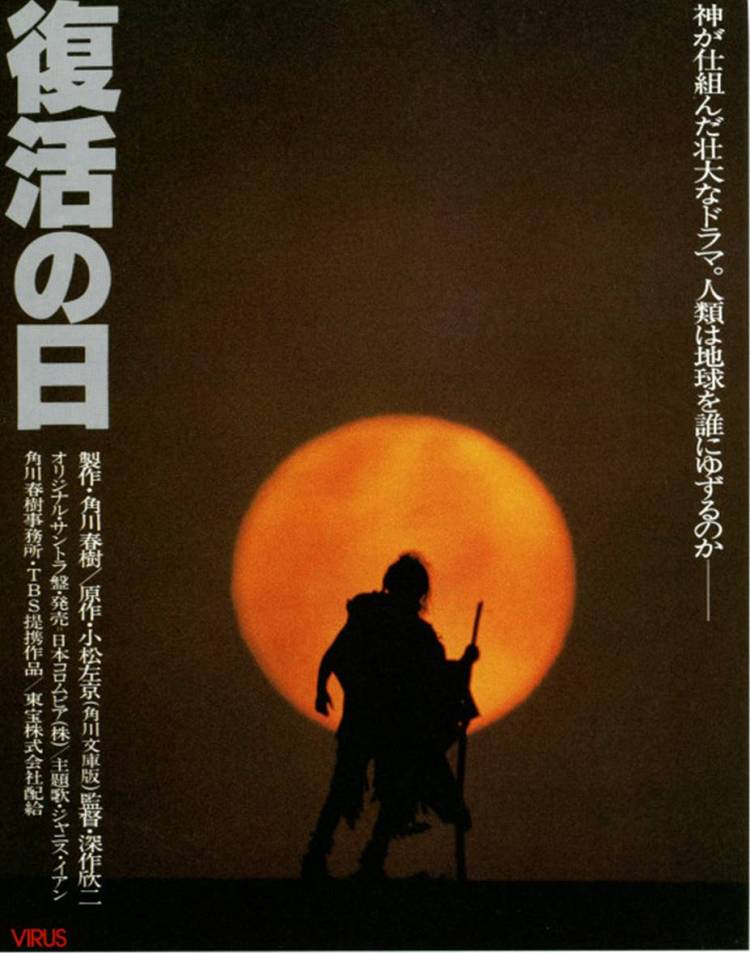
Virus (復活の日, Kinji Fukasaku, 1980)

virusThe ‘70s. It was a bleak time when everyone was frightened of everything and desperately needed to be reminded why everything was so terrifying by sitting in a dark room and watching a disaster unfold on-screen. Thank goodness everything is so different now! Being the extraordinarily savvy guy he was, Hiroki Kadokawa decided he could harness this wave of cold war paranoia to make his move into international cinema with the still fledgling film arm he’d added to the publishing company inherited from his father.

Adapted from a pessimistic, post-plague novel in the vein of Andromeda Strain penned by Japan Sinks’ Sakyo Komatsu, Virus (復活の日, Fukkatsu no Hi) was, at that time, the most expensive Japanese movie ever made. Using an international cast with the bulk of the dialogue in English, Kadokawa’s hopes were high but his dream was ultimately dashed when the film bombed at the box office and ended up being unceremoniously sold off to cable TV in a re-edited international version which removed almost all of the Japanese scenes. Since its original release, the film has accrued something of a negative reputation and left a stain on the resume of its otherwise popular director Kinji Fukasaku  (whose other international effort, Tora! Tora! Tora! didn’t do him any favours either) but Virus is far from the disaster it’s often regarded to be, even if extremely flawed.

Seismologist Yoshizumi (Masao Kusakari) witnesses the ruined state of his homeland in December 1983 from the comfort of a British submarine. Reminiscing about the woman who left him because of his scientific obsessions, Yoshizumi becomes our catalyst for a flashback to learn exactly how the world was destroyed in just a couple of years. Genetic experiments to create new viruses were banned in 1981 but in the following February a dodgy deal goes down in East Germany and the most dangerous biological weapon ever created is accidentally unleashed when the plane it was travelling on crashes into the Alps. It’s not long before “Italian flu” is laying waste to half of Europe before reaching Asia and the Americas. The virus is all powerful and no serious attempts to combat it are possible given the lack of time, but, the virus is dormant at below zero temperatures so the antarctic polar research station becomes humanity’s last hope for survival.

Though the film is funded and produced by Japan, it clearly positions America as its global leader. This is, however, countered by the fact that the weapon itself was being developed in America as a “credible deterrent” against Russian aggression now that Russia and the US are about even on Nukes. The bad guys are the American intelligence officials who have been continuing the research illegally without the President’s knowledge. In a touch of ironic Soviet-style manoeuvring, a research scientist trying to blow the whistle on this frighteningly destructive project is thrown into a mental hospital.

Rather than the struggle to find a cure, Virus prefers to focus on the immediate effects of the epidemic as the civilised world crumbles with alarming speed. Zipping around the major world capitals with death tolls placed against picturesque landmarks, Fukasaku mixes in stock footage of real rioting and civil unrest (of which he had a lot to choose from by 1980) as people take to the streets in desperation. Hospitals overflow with the infected, and the bodies pile up unceasingly.

The situation in Antartica is calmer if concerned. Some researchers opt for suicide whilst others club together to discuss possible plans for the survival of the human race. Unfortunately, this being a scientific community in the 1980s, there are 800 men and just 8 women, which leads to a number of obvious social problems. The remaining women are quickly convinced to become a kind of comfort team “accommodating” the needs of the attendant men. If the need really was to repopulate as quickly as possible, such an extreme re-imagining of current social mores would hardly be necessary, but strangely the women seem to accept their sudden conversion to forced prostitution with stoic pragmatism. Civility is maintained, and the outpost colony survives without too many problems but another threat arrives when Yoshizumi predicts a major earthquake event set to hit Washington that may activate its secret nuclear weapons which are trained on Moscow. That hardly matters now except that Moscow’s nukes are pointed at their research base owing to a slight political misunderstanding.

The research base is a testament to international cooperation with representatives from all continents, all working together peacefully (well, mostly – Lopez (Edward James Olmos) is…a passionate man) for the betterment of science. When it comes down to it, Yoshizumi and the American soldier Carter (Bo Svenson) are the lone duo heading back into plague infested Washington in an attempt to shut down the nuclear weapons systems before it’s too late.

Where Virus differs from many of the similarly themed films of the time is in its generally benevolent view of humanity. Despite the fact that the virus was man made, constructed to perpetuate an ongoing arms race, and was released due to bad luck and avarice, the majority of people are good, progressive sorts who want to work together to figure all of this out. Where the re-edited US version opts for a bleaker than bleak ending, the Japanese version does at least demonstrate the strength of human endurance as Yoshizumi trudges south in search of the survivors. The world is not restored, but there is still a kind of life possible if only those left behind can choose to live it.

Fukasaku opts for a more straightforward approach than some of his more frenetic work, but introduces an interesting device when the exhausted, hungry, and lonely Yoshizumi passes through a church. A mental dialogue with Christ on the cross is offered entirely in subtitles, as is the later “conversation” with a skeleton lying next to it who asks Yoshizumi some tough questions about his relationships and intentions.

These more spiritual enquiries play into the secondary theme of Yoshizumi’s ongoing guilt over abandoning his pregnant girlfriend to head off to Antarctica. Though adding to Yoshizumi’s backstory, his lost love in Japan occupies slightly more of the running time than is comfortable only to end on an ambiguous, if bleak, note which has little to do with anything else going on at the time. It does, however, feed into the mirroring developments at the research station when Yoshizumi is charged with looking after a pregnant woman and then becomes attached both to her and to the baby. It’s Yoshizumi’s love for another man’s wife and child coupled with the failure to save his own which drive him onward, but the romantic subplot often feels like an after thought and never achieves the kind of impact it hopes for.

Though a meandering, unwieldy beast, Virus is undoubtedly ambitious and often successful even if its production values don’t always live up to its famously high budget. Despite odd casting decisions which find Americans commanding British submarines and Brits playing Norwegians with English accents the largely international cast acquits itself well. Virus’ world is an oddly rational one where those left behind are willing to put aside their differences to work together rather than selfishly try to save themselves (though the film offers no ideas on how anyone is going to survive on Antartica when the supplies run out). As such, its vision is as bleak as many ‘70s dystopias but it also offers a brief glimmer of hope in allowing Yoshizumi to trudge to a kind of home, even if it’s one of ongoing uncertainty and primitive survival.


This review refers to the full 156 minute cut rather than the 108 minute US version.

Original trailer (no subtitles)