Whirlpool of Flesh (おんなの渦と淵と流れ, Ko Nakahira, 1964)

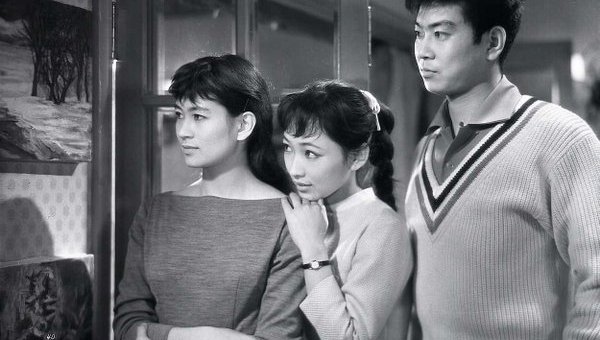
A intellectual professor and his wounded wife find themselves trapped in a toxic marriage after returning from Manchuria in Ko Nakahira’s fatalistic drama, Whirlpool of Flesh (おんなの渦と淵と流れ, Onna no Uzu to Fuchi to Nagare). Set in the late ‘40s, the film does indeed position Manchuria as a point of corruption while otherwise suggesting that Japan itself has been emasculated by the Occupation, but otherwise demonstrates how the couple drag each other into a cycling whirlpool of jealousy and obsession that it seems neither of them are really equipped to understand let alone escape.

Claiming to have been struck by her bright and smiling face in her omiai photo, Keikichi (Noboru Nakaya) married Sugako (Kazuko Ineno) in Manchuria without actually meeting her before the wedding. Apparently uninterested in sex, Keikichi was a virgin on their wedding night but harbours doubts Sugako may not have been. In any case, he seems put out that Sugako is not in his opinion his intellectual equal. He chances on her diary in which she details how bored she is by his constant lectures about English literature and that she feels him to be more schoolteacher than husband, but he merely scoffs that it’s not particularly well written. He begins to suspect that she’s sleeping with customers who come into the speakeasy she opens in their home during the days between the Russian invasion and repatriation and succumbs to a generalised sense of impotence hiding out in his room upstairs reading while she takes care of business below. 

In the present day, convinced that she’s having an ongoing affair with a merchant, Otani (Kazuo Kitamura), Keikichi pretends to go to a hot springs resort and then sneaks back to spy on her from an adjacent room. Though he feels no desire for her as his wife, through the eyes of these other men he rediscovers a sense of Sugako as the woman from the photograph for whom he does feel some attraction and satisfies his latent sexual desires through watching her sleep with Otani. As an escape from the war, he’d been working on a translation of Shakespeare’s Troilus and Cressida the heroine of which he seems to superimpose on Sugako in wondering if she is a faithless woman or true, angel or devil. 

Yet from Sugako’s point of view, she begs him for physical intimacy which he refuses to grant despite his jealousy over her relations with other men. Traumatised by her sexual abuse at the hands of her uncle, Sugako believes that she has a body designed to satisfy men’s desires and is drawn into meaningless, and often transactional, sexual relationships. When Keikichi later questions her, it seems she doesn’t remember any of them in detail for to her they were simply “men” and nothing more. The situation is somewhat complicated by the fact that her uncle was a scholar of Chinese literature, which in part aligns him with Keikichi, but also points back to Manchuria as a source of corruption though coming uncomfortably from the opposite direction. 

Sugako equates this corrupted sexuality with the great emptiness inside her that frequently leads to thoughts of suicide. Nakahira constantly shows us shots of Keikichi’s knife as if implying some kind of violence is inevitably going to take place, though in the end it signals nothing so much as Keikichi’s impotence. Then again, the emptiness is also linked to a sense of despair in Japan’s defeat that is manifested most obviously in the house next-door where the widowed mother may have been having an affair with Sugako’s uncle and unsubtly tries to blackmail her by threatening to expose the secret of her sexual abuse about which she had tried to tell Keikichi but he had refused to listen. The daughter has become a sex worker catering to American servicemen to support the family while her brother, Kenichi (Tamio Kawachi), allows her to sacrifice herself for him justifying himself that it’s for the greater good as he’ll eventually become a doctor and save countless other lives. He’s also masquerading as a Christian to get a scholarship to an American university through the church which is all very contradictory not to mention selfish and cynical. The sister, meanwhile, appears to have lost her mind and frequently rants and raves, blaming her mother by claiming that walking in on her with Sugako’s uncle permanently corrupted her sense of self and sexuality. Like Sugako, she exorcises her trauma through abusing her body, in her case through sex work with “nasty GIs who don’t always pay.”

Keikichi refers to this as “post-war nihilism” like the frequent strikes and workers parades that take place around him, but partially repairs his sense of masculinity after moving to Tokyo and getting a job. At work he meets another young woman who is a mirror of the young lady from next-door in that she was also repatriated from Manchuria where her father was a member of the government. With her mother dead and father unable to work, Shimura (Kaori Taniguchi) also supports her family with her secretarial job and often goes without lunch herself to make ends meet. Keikichi notices this and offers her his bento claiming to be feeling unwell, but fails to notice how his pity wounds her dignity even if he meant in kindness while acknowledging that he’s never known hunger. Unlike the mismatched Sugako, Keikichi and Shimura are an ideal match. She also wanted to study English literature and can meet him on his level discussing politics and culture though he does not seem to be aware that he is attracted to her and acts almost paternally in offering to pay her university fees to help her escape her life of poverty, echoing Sugako’s claims that he had become her “little boy” rather than her husband. 

The irony is that Sugako insists Keikichi, who does little but look down on her and alternately complain that she’s either impure or unattractive, is the only man she’s ever loved and blames his lack of sexual interest in her on the unresolved trauma of her childhood abuse. Having asked Kenichi to help her get her hands on some cyanide, she is shocked and disgusted when despite his need he rejects her money and asks for her body instead. He insists that it’s “only the friction of mucus membranes” and that she might as well sleep with him first if she’s going to die, though her refusal is in part a desire to die “pure” and finally overcome the emptiness and despair inside her. This inability to reconcile herself is also aligned with Keikichi’s vision of “post-war nihilism” and suggests that in the end this trauma can’t be healed and must necessarily lead to destruction. Meanwhile, Keikichi seems to have discovered a path towards his rebirth in his friendship with Shimura only to potentially have the rug pulled from under him. His new future too, may end up poisoned by Sugako’s unilateral decision to facilitate it. Dark and twisted in true Nakahira fashion, the film paints the post-war society itself as a deepening whirlpool from which there is no escape or at least not for those like Keikichi and Sugako forever locked in a deathly embrace and drawn ever deeper into the waves.


Tokyo Drifter (東京流れ者, Seijun Suzuki, 1966)

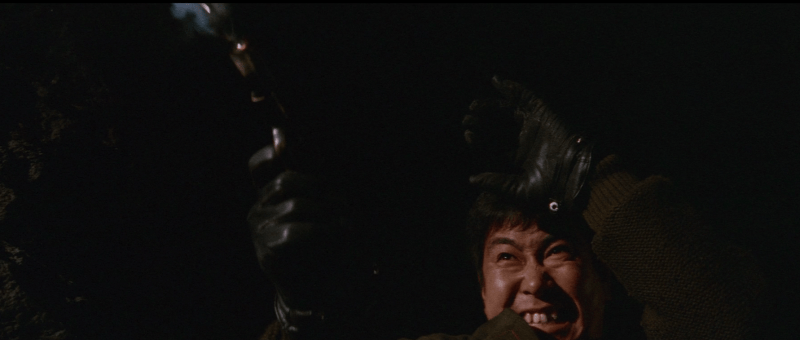
“Money and power rule now, honour means nothing” according to the new bread of upstarts gangsters in Seijun Suzuki’s Tokyo Drifter (東京流れ者, Tokyo Nagaremono). In many ways, what separates Nikkatsu’s youthful crime movies from Toei’s yakuza epics is that the nobility of Toei’s heroes is rarely questioned. In a Toei movie, it’s the world that’s wrong because the code is good and should be obeyed just as the hero obeys it, but in a Nikkatsu picture nihilism rules. The code isn’t right either, in fact it’s just another tool to manipulate and the hero, while noble, is wrong to follow it. 

That is in essence how Tetsu (Tetsuya Watari) will end up a Tokyo drifter, caught between the old world and a new consumerist Japan in which even the yakuza is attempting to corporatise and reform its image. His old boss, Kurata (Ryuji Kita), has done just that only he’s had to take out a sizeable loan from another former gangster turned real estate agent, Yoshii (Michio Hino), to do it. Realising his weakness, the upstart Otsuka gang sees an opportunity and stages an elaborate ruse that allows them to get their hands on Kurata’s valuable building and take out Yoshii at the same time though it results in Yoshii’s secretary (Tomoko Hamakawa), also the girlfriend of one of the Otsuka gang, getting caught in the crossfire. 

Tetsu describes his relationship with Kurata as like father and son and is sure he would never betray him. To preserve their new image, Tetsu does not fight back when ambushed by Otsuka goons and even puts himself on the hook for the secretary’s murder, but as much as Kurata insists he wouldn’t betray one of his “kids” to make things easier for himself perhaps he will if the situation calls for it. A defector from Otsuka’s gang, Shooting Star (Hideaki Nitani), tries to warn Tetsu that his faith in ideals like duty and loyalty is misplaced but Tetsu refuses to believe him. “Don’t shatter my dreams” Tetsu pleads, claiming that he cannot be around someone with “no sense of duty”.

Tetsu even feels sorry for Shooting Star, attributing his melancholy air to his having lost his sense of purpose in his disillusionment with post-war gangsterism. He might have a point in Shooting Star’s world weariness, but fails to realises that Shooting Star does in fact have a sense of duty and is in some ways the film’s only truly free man in forging it for himself from basic humanitarian values if tinged with a degree of cynicism. Though the pair clash, Shooting Star claims that he wants to save Tetsu from the pain of his inevitable betrayal and the disillusionment that will eventually come with it rendering him a perpetual wanderer and exile from mainstream society. 

Both men are in a sense lost amid the rapid social changes of their era, unable to move on from the post-war past into the new society even after breaking with the yakuza code in order to live by their own. In Suzuki’s complex colour scheme, Shooting Star is always clad in a forest-like green which echoes his freedom, while Otsuka is represented by a bloody red, and Tetsu dressed in an innocent powder blue suit until the final confrontation in which, along with his equally innocent love interest Chiharu (Chieko Matsubara) who had previously been associated with the colour yellow, is dressed in a pure white while all around him are now in black as representatives of those who have succumbed to the amoral capitalism of the the contemporary society. 

Suzuki even has Tetsu walk down an arched corridor reminiscent of a church into an abstract space expanding the stage at the club to lend this moment of existential struggle a little more theatricality. In a sense what Tetsu does is an act of suicide, severing his ties to the yakuza world by smashing Kurata’s glass and killing at least the image of him as a father figure to become a new man or perhaps a wandering ghost who no longer has a home and must even give up his romance with Chiharu in an acknowledgement of his exile. On Otsuka’s death, it’s almost like an alarm is switched off in the sudden shift from red to white in the giant statue standing behind Chiharu, the survivors united in white but rather than the wedding suggested by the colour of their clothes the atmosphere is funereal as Tetsu accepts he can no longer stay in this temporary space and must enter another sort of purgatory as lonely wander comforted only by his newfound freedom.


Tokyo Drifter screens at Japan Society New York on Feb. 4 as part of the Seijun Suzuki Centennial.

Original trailer (English subtitles)

Red Handkerchief (赤いハンカチ, Toshio Masuda, 1964)

The moral compromises of the post-war era are brought home to a trio of frustrated lovers in Toshio Masuda’s Nikkatsu “mood action”, Red Handkerchief (赤いハンカチ, Akai Handkerchief). Starring an ageing Yujiro Ishihara perhaps cast slightly against type as an ultra noble policeman choosing self-exile after accidentally shooting dead a key witness, who also happens to be the father of the woman he loved, in order to save his partner, Masuda’s noirish melodrama takes aim squarely at the radiating effects of social inequality and the moral bankruptcy of an increasingly prosperous society. 

Masuda opens, however, with an old-fashioned foot chase as cops Mikami (Yujiro Ishihara) and Ishizuka (Hideaki Nitani) attempt to run down a drug mule carrying a briefcase full of illicit substances. The suspect later gets hit by a truck and killed while the briefcase is nowhere to be found. Concluding the mule must have abandoned it at a ramen stand he ran past on the way, the cops haul in the old man running it, Hiraoka (Shin Morikawa), who seems to know more than he’s letting on but is too terrified of the gangsters to consider giving anything up. In an effort to get him to talk, Mikami pays a visit to his relentlessly cheerful factory worker daughter Reiko (Ruriko Asaoka), becoming instantly smitten with her as she quickly packs a bag of warm clothing and miso soup assuming her dad’s in for a bit of drunk and disorderly. Their romance is however not to be. Apparently feeling himself out of options, Hiraoka opts for suicide by proxy, grabbing Ishizuka’s gun and firing at police. An Olympic sharpshooter, Mikami draws his pistol to save his friend and the old man is killed. Guilty, the pair attempt to apologise to Reiko, but unsurprisingly she is not in the mood to accept it. 

Four years later, Mikami has left the force for a life of wandering doing odd jobs all over Japan while entertaining his co-workers with sad songs about lost love. Yokohama detective Tsuchiya (Nobuo Kaneko) eventually tracks him down in frosty Hokkaido, encouraging him to return with tales of Ishizuka’s wildly improbable success as a supermarket entrepreneur now apparently married to Mikami’s lost love Reiko. Tsuchiya thinks Mikami was set up and that Ishizuka is a dirty cop who’s been living the high life while Mikami has been slumming it in an unnecessary act of atonement for something that wasn’t really his fault. 

Though they were apparently good friends and loyal partners, Ishizuka flags up a potential source of tension early on in his solo interrogation of Hiraoka explaining that unlike Mikami he’s not an educated man and understands how difficult it is to be poor. Tsuchiya later posits this same sense of class conflict as one reason that Ishizuka may have betrayed him, that he felt inferior and that he would not be able to compete with his elite partner. Ishizuka later implies something similar in his dog eat dog view of the world, explaining to a newly conflicted Reiko that life is a matter of winning and losing and that Mikami is the very image of defeat. He views himself as a winner thanks to his burgeoning supermarket empire, taking full advantage of the rising consumerism of the post-war era and willing to do whatever it takes in order to achieve success even if that means crossing a line that Mikami would never cross. Yet he is also like Mikami hobbled by his love for the “beautiful”, “pure” Reiko, allowing his insecure acquisitiveness to turn violent in his determination to keep her or at least keep her from any other man. 

“Money rules everything!” Ishizuka insists, attempting to justify himself for his turn towards selfish individualism willing to sacrifice not only a “worthless” old man but even friendship in the conviction that he is “a man of great value, a winner!” and therefore entitled to move beyond conventional morality while using his ill-gotten gains to support needy orphans. Even he, however, is later undone by love, perhaps the one true form of “justice”, in realising that Reiko has chosen nobility in the form of Mikami and could never accept the man he is or the things he’s done. A romantic melodrama masquerading as a crime thriller, Red Handkerchief finds Masuda in expressionist mode, the pounding machinery at the foundry where Reiko works pulverising Mikami’s noble heart as his romantic dreams are crushed, the highway streetlights dancing across Reiko’s windscreen as she returns in confusion, and in the constant use of weather to indicate the mood, the sky suddenly brightening behind Ishizuka as his confidence returns. Echoing in The Third Man in its melancholy ending, however, even if slightly inverted, Masuda sets his battered hero adrift in the confusions of the post-war era striding into the mist guitar in hand a perpetual wanderer. 


Original trailer (no subtitles)

A Slope in the Sun (陽のあたる坂道, Tomotaka Tasaka, 1958)

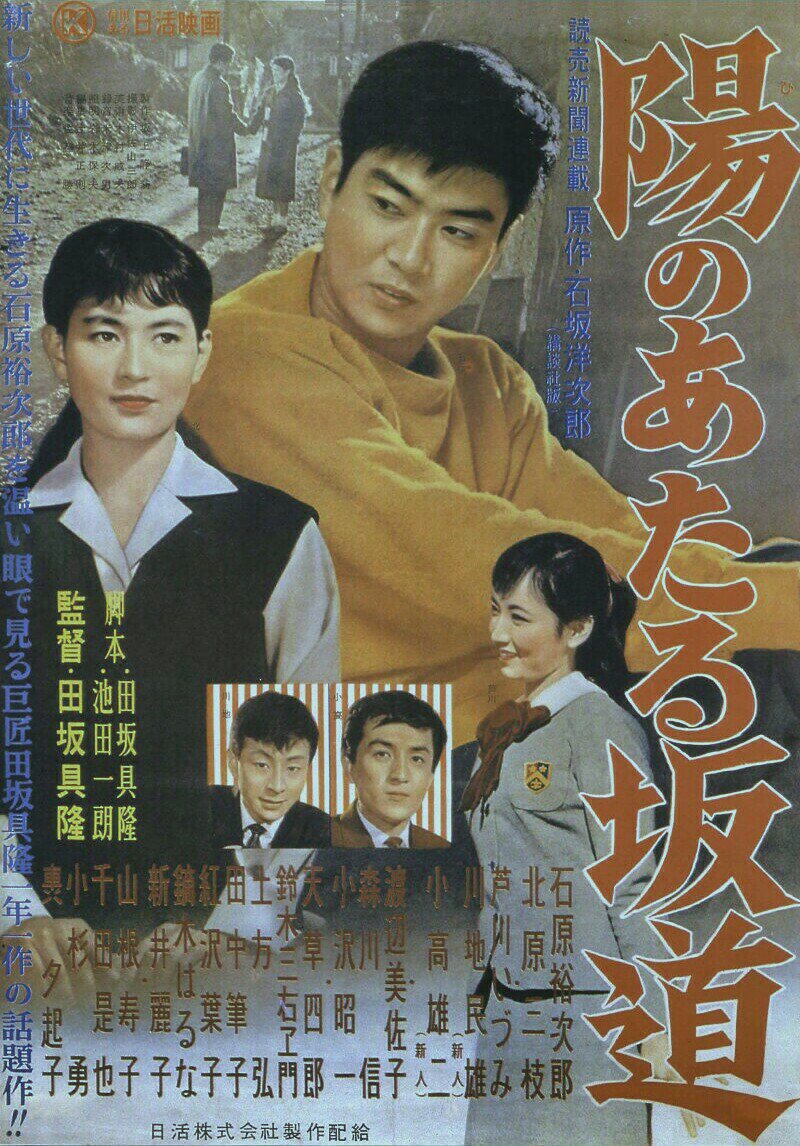
Slope in the sun posterYujiro Ishihara had become the face of the “Sun Tribe” movement thanks to roles inspired by his brother Shintaro’s novels including the seminal Crazed Fruit in which he starred opposite his later wife, Mie Kitahara. Tomotaka Tasaka’s A Slope in the Sun (陽のあたる坂道, Hi no Ataru Sakamichi), adapted from the novel by Yojiro Ishizaka, is a much less frenetic affair than Nakahira’s famously intense youth drama, but retains the Sun Tribe’s world of purposeless youth whose inherited wealth has driven them to a life of listless ennui. Like Crazed Fruit, Slope in the Sun is the story of two brothers chasing the same girl, only this time one looks bad and is really good, while the other looks good but is really no good at all.

Beginning on the titular sun beaten slope, the film opens with a young woman, Takako (Mie Kitahara), entering the frame as she searches for an address on a piece of paper she is carrying. She finds the house – a large Western-style mansion, but is prevented from entering by a young man who mistakes her for a saleswoman and instructs her to use the tradesman’s entrance. The young man, Shinji (Yujiro Ishihara), continues to taunt her with lewd language before poking at her breast. Takako tries to leave but is persuaded to come inside to meet the lady of the house and the young woman, Kumiko (Izumi Ashikawa), whom she has come to tutor.

The Tashiro household is a strange one. There are three almost grown up children – oldest brother Yukichi (Yuji Odaka) who is a medical student, middle brother Shinji who is a painter, and the youngest daughter Kumiko who is approaching the end of high school and is a little over sensitive about a mild limp which is the consequence of a childhood accident. Takako nearly turns the job down when she realises that the family want less a teacher to help with Kumiko’s studies, than a kind of big sister to help her navigate her way into the adult world, but eventually warms to the Tashiros and decides to give it a go. A college student in need of money, Takako is currently living in a boarding house where she is friends with the older lady next door, Tomiko Takagi (Hisako Yamane), and her 18 year old musician son Tamio (Tamio Kawachi).

In contrast to the earlier Sun Tribe films, A Slope in the Sun is much more subdued though it does maintain an upperclass atmosphere filled with bored young people who struggle to find purpose in their lives through having no particular economic or social worries thanks to the protective cushioning of their wealth. The central issue is a common one to the familial melodrama – middle child Shinji has always felt disconnected from his family and has discovered that the woman who raised him is not his birth mother. He wants to know the truth of his family history but is also a kinder soul than his outward behaviour may suggest and does not want to hurt anyone or risk destroying the otherwise pleasant enough family life he enjoys as a Tashiro.

As expected coincidences abound though the truth is obvious seconds after Takako tells someone the name of her new employer causing them to gasp and draw pale with shock. It seems that everyone in the family already knew that Shinji is only a half brother except Shinji himself – their overcompensation in treating him kindly was the initial tipoff for his suspicions, but this question of blood relation turns out to have a surprising dimension. Oldest brother Yukichi is, outwardly, the model son – handsome, clever, gentlemanly, but on closer inspection his veneer of respectability turns out to be just that. The boys’ mother, Midori (Yukiko Todoroki), knows this well and partly blames herself for allowing Shinji to take the blame for a childhood accident rather than forcing her own son to confess. For all his seeming goodness, Yukichi is an amoral coward, womaniser, and habitual liar whereas there’s a kind of honesty in Shinji’s lewd speech and even in his own lies which he indulges partly out of a sense of smug superiority, as Midori puts it, but also because of the inferiority complex which has marred his life as he feels himself somehow lesser than either of his siblings.

Takako vacillates between the two brothers, taken in by the manipulative Yukichi but strangely drawn to the provocative Shinji. Unlike Nikkatsu’s other youth films, Slope in the Sun ends on a note of happy resolution rather than nihilistic suffering as each member of the family is encouraged to embrace their true natures, putting secrets to one side, and becoming closer in the process. Tanaka’s approach is a more classical one than Nikkatu’s usual fare, making use of silent cinema-style closeups and dissolves but veers towards the avant-garde in a brief flashback sequence offered in dreamlike widescreen. Despite the jazz clubs and subplots about misused geishas, this is a more innocent world than the post-war melodrama would usually allow, finding space for happiness and forgiveness in each of the conflicted protagonists once they each agree to submit themselves to the truth and meet the world with openness and positivity.


Detective Bureau 2-3: Go to Hell Bastards! (探偵事務所23 くたばれ悪党ども, Seijun Suzuki, 1963)

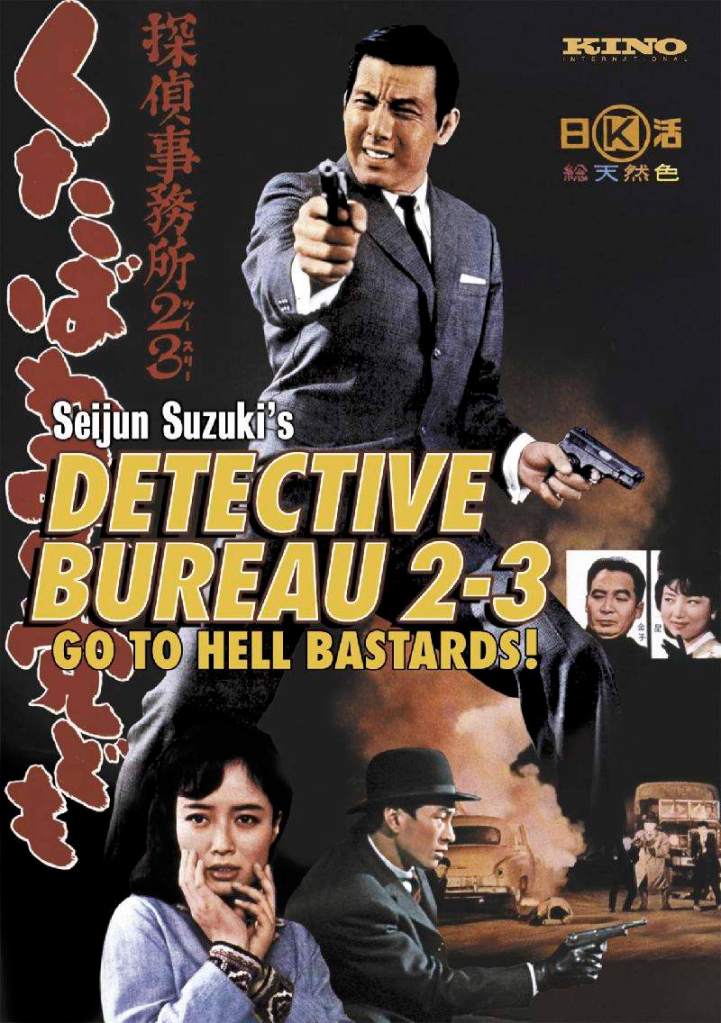
detective-bureau-2-3Before Seijun Suzuki pushed his luck too far with the genre classic Branded to Kill, he bided his time adding his own particular brand of zany absurdism to Nikkatsu’s standard cool guy fights crooks and gets girl formula. Detective Bureau 2-3: Go to Hell Bastards! (探偵事務所23 くたばれ悪党ども, Tantei Jimusho 23: Kutabare Akutodomo) is just one of these efforts. Made around the time of Suzuki’s major turning points such as the similarly named The Bastard, and relatively better known Youth of the Beast, the film follows Nikkatsu’s standard pattern but allows frequent Suzuki leading man and Nikkatsu A-lister Joe Shishido to swan about the place in grand style, effortlessly manipulating everything and everyone to come out on top once again. Filled with snappy dialogue and painted with an irony filled noirish aesthetic, Detective Bureau 2-3 does not care about its plot, and wants you to know you shouldn’t either.
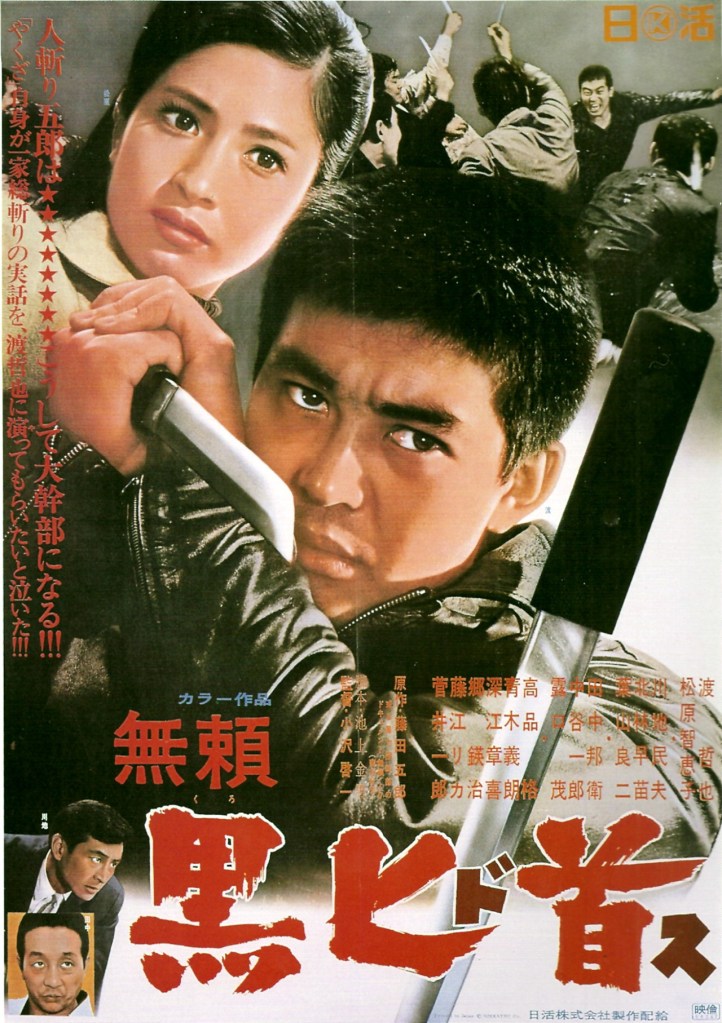
The action kicks off when a low level yakuza, Manabe (Tamio Kawachi), is captured by the police following a bloody turf battle. Manabe isn’t talking, the police can’t hold him much longer, and a bunch of gangsters from all factions are already waiting outside to eliminate him as soon as he’s released. Enter Tajima (Jo Shishido) – private detective and head of Detective Bureau 2-3. Managing to convince his “buddies” in the regular police that he’s exactly the right guy to sort all of this out, Tajima constructs an undercover ID, stages a daring rescue of Manabe, and worms his way into his gang to find out what’s going down in yakuza land. Whilst there he begins romancing the boss’ cold hearted girl and attempting to find out the whereabouts of a cache of stolen weaponry before getting all of the bad guys together in one place so the police can arrest them with maximum efficiency.

Even more so than Suzuki’s other films from the period, Detective Bureau 2-3 moves like a rocket with barely anytime to follow the plot even if there was one. Tajima is like some cartoon hero, half Lupin III and half Top Cat, always landing on his feet or speeding away from danger in a swanky sports car. Even when trapped (along with his love interest) inside a burning basement with no means of escape, he comes up with an ingenious solution to get the all important evidence out there in the hope that his police buddies will come and rescue him. Tajima is the guy you can always rely on to get you out of a fix, even if it gets you into an even bigger fix.

Unexpectedly, Detective Bureau 2-3 also has a mild Christmas theme as the seedy dive bar Tajima and the crooks hang out in attempts to get into the festive spirit. This is a world of gamblers and showgirls where the glamour of the smokescreen underworld undercuts the less savoury aspects the men who people it. Suzuki gives us a fair number of cabaret numbers set against the Christmassy decorations and creates an awkward situation for Tajima as his on and off cabaret star girlfriend threatens to blow his cover, even dragging him up on stage for a pointed duet about useless boyfriends who never keep their promises. Actually that all kind of works for him too because it annoys the boss’ girl, who is definitely starting to at least develop complicated feelings towards him. Trapped with her cruel yet supposedly impotent gang boss boyfriend-cum-jailer, she’s about eight different kinds of frustrated and has been waiting for someone like Tajima to come and set her free (in about eight different ways), so all of this is really going very well for him.

Detective Bureau 2-3: Go to Hell Bastards! is just as zany and frenetic as the title suggests, moving from one bizarre action set piece to another filled with exploding coke bottles and weaponised cement trucks all while Shishido grins wildly and poses in his sharp suit and trench coat. Inconsequential, yes, but Detective Bureau 2-3 never claims to be anything other than cartoonish fun as Shishido and co offer up a series of wacky one liners and breeze through the action with an effortless kind of glee. Filled with Suzuki’s visual flair, Detective Bureau 2-3 is among his lesser efforts but is undeniably good fun and another colourful outing for the increasingly cool Shishido.


Original trailer (no subtitles)

https://www.youtube.com/watch?v=rztsD3cWTes

Outlaw: Black Dagger (無頼 黒ヒ首, Keiichi Ozawa, 1968)

outlaw black daggerGoro (Tetsuya Watari) just can’t catch a break. He sends his one true love off on a train to safety only to see her dramatically return because she can’t bear to leave his side. Her devotion costs her her life as she places herself between Goro’s manly chest and an assassin’s knife. Heartbroken, Goro gets out of town only to run into another old flame who is now a mama-san and has apparently married another yakuza (despite the fact that Goro parted with her because of his chaotic yakuza lifestyle). As usual, the past won’t let him go – this time in a more literal sense as Goro encounters another woman who looks exactly like the girlfriend who died in his arms….
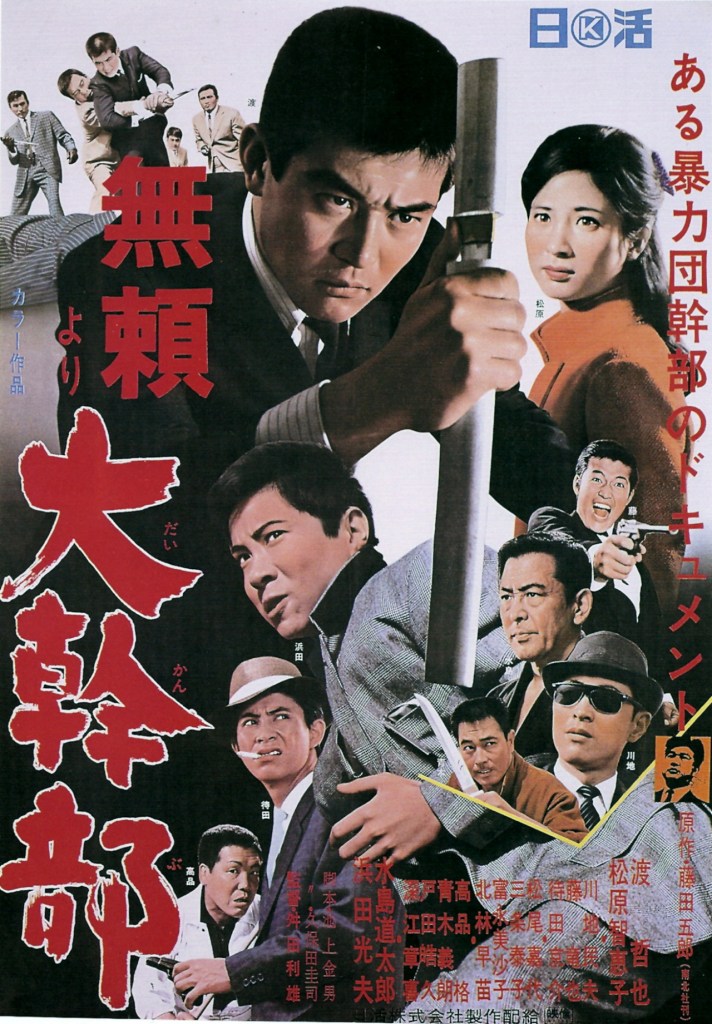
This time for the fifth instalment in the Outlaw series, Black Dagger (無頼 黒ヒ首, Burai Kurodosu), it’s not so much family as romance which takes centre stage as we witness just how dangerous it can be to fall in love with a yakuza. Yuri (Chieko Matsubara), the girlfriend Goro couldn’t save, died because she loved him too much.  Saeko loved him too – he succeeded in getting rid of her but she ended up rebound married to another guy who kind of looks like him but isn’t as good, and now there’s Shizuko (Chieko Matsubara again) – a warmhearted nurse who’s once again fallen for Goro’s noble tough guy act. Goro knows the price of love and he thinks he’s no good so he tries to avoid letting himself fall, both for his own safety and for his prospective love, but in the end the one fight he can never win is the one against his own heart.

Oddly Goro gets on quite well with Saeko’s husband, though he’s not keen to get involved with his troubles. He warns him that it might be better to let Saeko go as in the end yakuza only cause suffering for their women and soon enough Goro is proved right when the local gang become intent on pimping Saeko out leaving her husband pretty much powerless to resist.

Apparently this cuts both ways as a sad song from a band of street musicians recounts that a good wife can be a man’s weakness. Again it isn’t really clear how this instalment fits with the others but Yuri’s story is certainly very similar to Yukiko’s as seen in the first two movies and Goro’s guilt over not being able to protect her comes to colour the rest of his life. Once again Goro tries to say goodbye to love, advising Shizuko of the folly of falling for a man like him – she should just find someone nice and be happy. Full of nobleness and conviction, Goro strides out to clean up the town for good, knowing he may not return to see the fruits of his labours.

Black Dagger is once again directed by Keiichi Ozawa and is more or less in keeping with his other efforts in the series, mixing studio bound action with occasional forays into wider outdoor expanses. The film opens with an impressive montage title sequence and fight scene, but other than that the only set piece we get is the street singer sequence towards the end though the final fight is once again action packed and impressively filmed. Black Dagger perhaps doesn’t bring anything too new to the franchise, but it does improve on its already familiar narrative with another doomed love story and a series of shattered dreams for poor old Goro. Unlike the more hopeful ending of the last film, Black Dagger ends on exactly the same note as the other Outlaw movies as Goro staggers away from the crime scene, knife in hand and ready for the next crisis to come his way.


Outlaw: Black Dagger is the fifth of six films included in Arrow films’ Outlaw: Gangster VIP The Complete Collection box set (which is region free on DVD and blu-ray and available from both US and UK).

English subtitled original theatrical trailer:

https://www.youtube.com/watch?v=XlPk35AXV2I

Outlaw: Gangster VIP (「無頼」より大幹部, Toshio Masuda, 1968)

outlaw gangster VIP 1 posterBy 1968 the fate of the gangster movie was somewhat in flux as the old ninkyo style was on its way out yet the jitsuroku approach, later to find its zenith in the Battles Without Honour and Humanity series, hadn’t quite taken hold. Outlaw: Gangster VIP provides an essential bridge as it takes its inspiration from the writings of one time yakuza Goro Fujita but at the same time brings together many of the themes that were dominating Nikkatsu’s output at the time from their star led, youth appeal billboard cool to their noir inflicted, nihilistic crime thrillers as a kind of culmination of everything they had been producing up to that point.
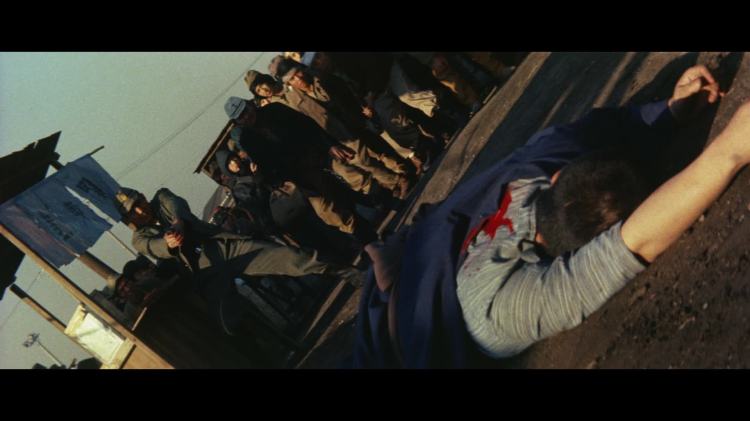
The first film in the series, Outlaw: Gangster VIP (無頼」より大幹部, Burai yori Daikanbu) begins with a black and white prologue seemingly set around the end of the war in which a young boy endures firstly the death of his mother and then the younger sister who has been left in his care – presumably through hunger or at least ill heath exacerbated by malnutrition. Eventually he himself is arrested after being caught trying to steal food and is sent to a reform school from which he escapes alongside another boy, Sugiyama.

Flash forward to a grown up version of Goro (Tetsuya Watari) lounging around in a dingy apartment and the film expands into glorious, if garish color. Goro is summoned to a local drinking establishment where his yakuza boss is under attack. On getting to the bar and coming to his boss’ defence he finds that the aggressor is none other than Sugiyama. Saving his boss by stabbing his friend he nevertheless ensures Sugiyama’s survival with a carefully placed blow though both are sent back to prison. Goro gets out three years later to discover his girlfriend has married someone else and the yakuza world is just as dog eat dog as it was when he left it.

As in many other films of this burgeoning genre, the yakuza is more or less a surrogate family of grown up orphaned street kids who’ve bound together for increased odds of survival. There maybe strong bonds between brothers, but the old ways of samurai style honourable conduct are long gone (if they ever really existed at all). Suigyama’s gang have failed to protect his girlfriend who has been reduced to prostitution despite his sacrifices for them – an unthinkable act in traditional terms, but Sugiyama’s boss is the new kind of uncaring, ambitious yakuza who cares nothing for traditional ethics.

The yakuza as a home for waifs and strays is a theme which continues throughout the series with the constant references to “hometowns” and a desire to get out of the city for a simpler, more honest life. People keep telling Goro that he’s not a real yakuza, that deep down he doesn’t have a gangster’s heart. This is true, to an extent, as Goro is the kind of noble criminal seen in the ninkyo genre who clings fast to the old ways – loyal to his friends and his clan, seeking to protect those who need it over choosing to further exploit the already vulnerable. He’s a gangster because life left him with no other options. For a street kid and reform school escapee, what possible other place could there be for him to survive than in the arms of his yakuza brothers?

An exile from the world of conventional society, Goro cuts a lonely path which ties into the nihilistic noir themes of the genre as he wanders around in very cool looking leather jacket. Mostly still studio bound, Masuda opts for a fairly straightforward approach yet with some noir-esque canted angles and a few interesting set pieces. The unusual finale in which Goro faces the treacherous yakuza kingpins against the background of a cabaret act serves as impressive highlight of the film, perfectly contrasting its garish technicolor world with the darkness underneath as Goro staggers off along a street dark with something more night and towards an eventual salvation of one kind or another.


Outlaw: Gangster VIP is the first of six films available as part of Arrow’s amazing new blu-ray and DVD box set which is released in UK and USA and is completely region free (hurrah!).

I’ve also written a full writeup of the box set as a whole over at UK Anime Network which you can read right now if you’re the sort of person who likes to skip to the end. Otherwise, get ready for five more tales of broken hearted tough guys….

English subbed version of the original theatrical trailer:

https://www.youtube.com/watch?v=fQDtXkgzhaA

The Yakuza Papers Vol. 1: Battles Without Honour and Humanity (仁義なき戦い, Kinji Fukasaku, 1973)

Snapshot-2015-12-07 at 11_06_36 PM-930280086When it comes to the history of the yakuza movie, there are few titles as important or as influential both in Japan and the wider world than Kinji Fukasaku’s Battles Without Honour and Humanity (仁義なき戦い, Jingi Naki Tatakai). The first in what would become a series of similarly themed movies later known as The Yakuza Papers, Battles without Honour is a radical rebooting of the Japanese gangster movie. The English title is, infact, a literal translation of the Japanese which accounts for the slightly unnatural “and” rather than “or” where the “honour and humanity” are collected in a single Japanese word, “jingi”. Jingi is the ancient moral code by which old-style yakuza had abided and up to now the big studio gangster pictures had all depicted their yakuza as being honourable criminals. However, in Fukasaku’s reimagining of the gangster world this adherence to any kind of conventional morality was yet another casualty of Japan’s wartime defeat.

The story begins with a black and white image of a mushroom cloud with the film’s bright red title card and now famous theme playing over the top. This is Hiroshima in 1946. Things are pretty desperate, the black market is rife and there are US troops everywhere. Shozo Hirono (Bunta Sugawara) has just returned from the war (in fact he’s still in his uniform). He gets himself into trouble when he intervenes as an American soldier attempts to rape a Japanese woman in broad daylight in the middle of a crowded marketplace. He manages to cause enough of a commotion for the woman to escape but the Japanese cops just tell him not to mess with the GIs. Things don’t get much better as one of Hirono’s friends is assaulted by a yakuza. They get some rival yakuza to help them get revenge and in the commotion Hirono accidentally kills someone and is sent to prison for 12 years. In prison he meets another yakuza who wants to escape by pretending to commit harakiri and promises to get his yakuza buddies to bail Hirono out if he helps. From this point on Hirono has become embroiled in the new and dangerous world of the Hiroshima criminal underground.

Battles Without Honour and Humanity has a famously complicated plot entered around the various power shifts and machinations between different groups of yakuza immediately after the end of World War II. The film begins in 1946 and ends in 1956 though many of its cast of tough guys don’t last anywhere near as long. The picture Fukasaku paints of Japan immediately after the war is a bleak one. Even if some of these guys are happy to have survived and finally reached home, they’ve seen and done terrible things. Not only that, they’ve been defeated and now they’re surrounded by foreign troops everywhere who can pretty much do what they want when they want. They just don’t have a lot of options – if they don’t have connections to help them find work when there’s not enough to go around then it isn’t surprising if they eventually fall into to crime. Also, having spent time in the military, the yakuza brotherhood provides a similar kind of camaraderie and surrogate family that you might also find in an army corps.

It all gets ugly quite fast. Largely the yakuza are making their money profiting from the political instability, resenting the US occupation yet reaching deals with them to support their efforts in the Korean war and then selling new and untested drugs at home (with less than brilliant results). Betrayals, executions, assassinations in previously safe places like a bath house or the barbers – these are a long way from the supposedly honourable gangsters of old. One minute Hirono is offering to cut off his finger as a traditional sign of atonement (though no one knows exactly what you’re supposed to do in this situation and it all ends up seeming a little silly) and taking the rap for everyone else’s mistakes, but his friend faked harakiri to get out of jail and everyone is double crossing everyone else whichever way you look.

The whole thing is filmed in an almost documentary style with captions identifying the various characters and giving the exact time of their demise (if necessary) as well as a voice over giving background information about the historical period. The film is inspired by real life yakuza memoirs and there are parts which feel quite like a bunch of old guys sitting in a drinking establishment and recounting some of their exploits.

This new postwar world of heartless gangsters is a tough one and almost devoid of the old honour-bound nobility, however somehow Fukasaku has managed to make it all look very cool at the same time as being totally unappealing. You wouldn’t want to live this way and you definitely don’t want to get involved with any of these guys but somehow their self determined way of life becomes something to be admired. That said, there’s a sadness too – that even in the criminal underworld there used to be something noble that’s been obliterated by the intense trauma of the war. You can rebuild, you can move on from the destruction left by the war’s wake but there’s no going back to those days of “honour and humanity” – if they ever existed, they’re gone forever now.


Battles without Honour and Humanity is available in blu-ray in the UK as part of Arrow Video’s Battles Without Honour and Humanity: The Complete Collection box set.