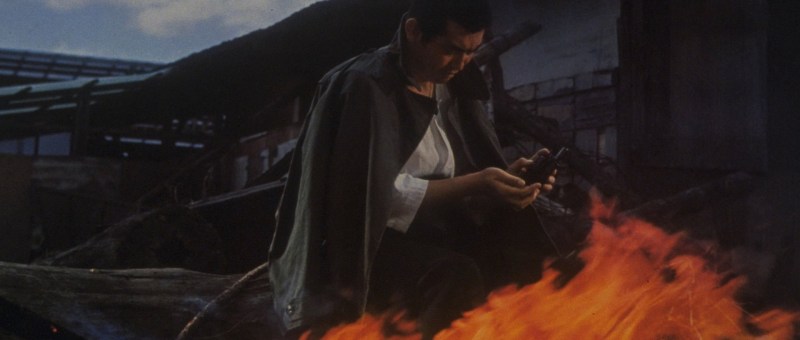
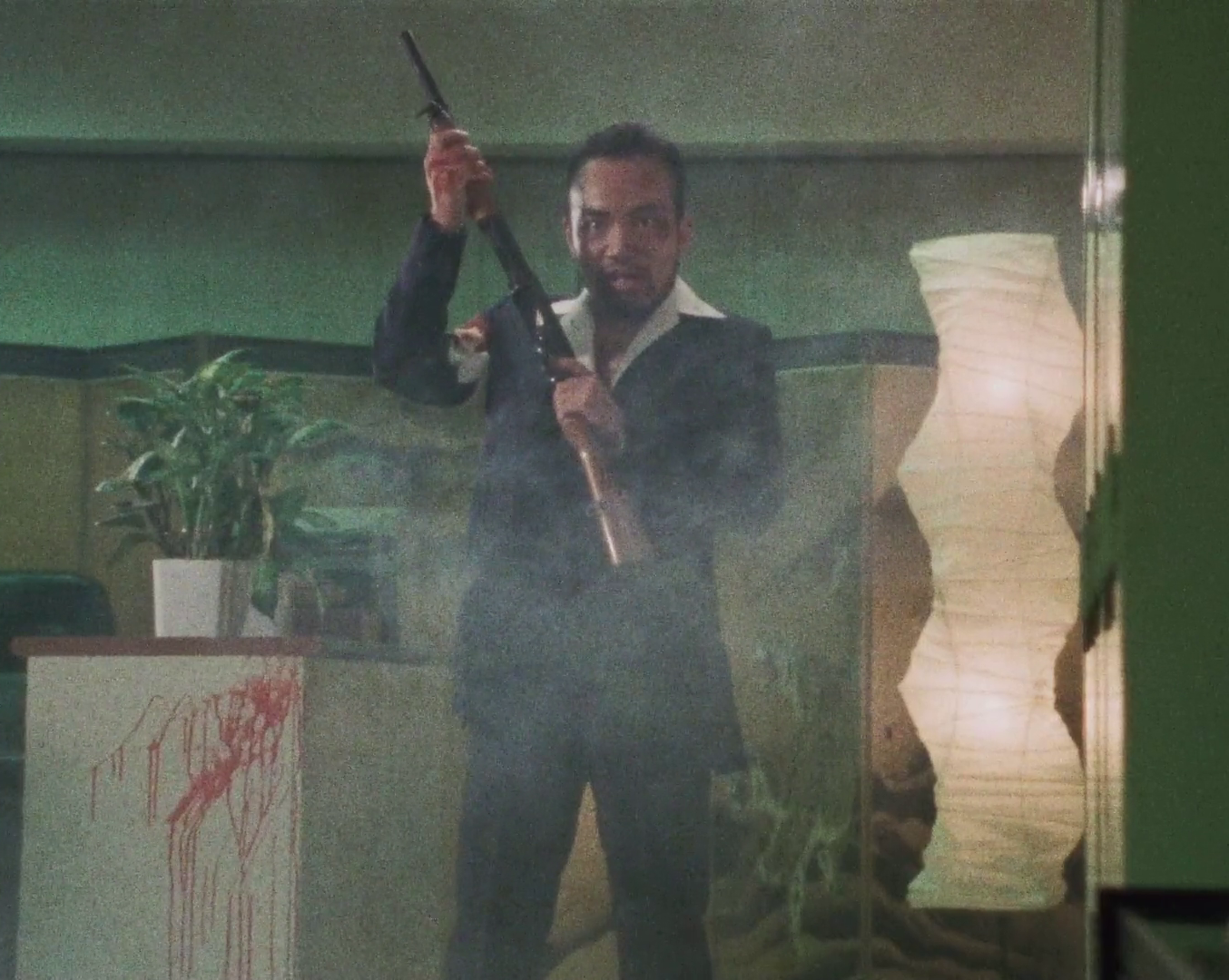
Carlos (カルロス, Kazuhiro Kiuchi, 1991)

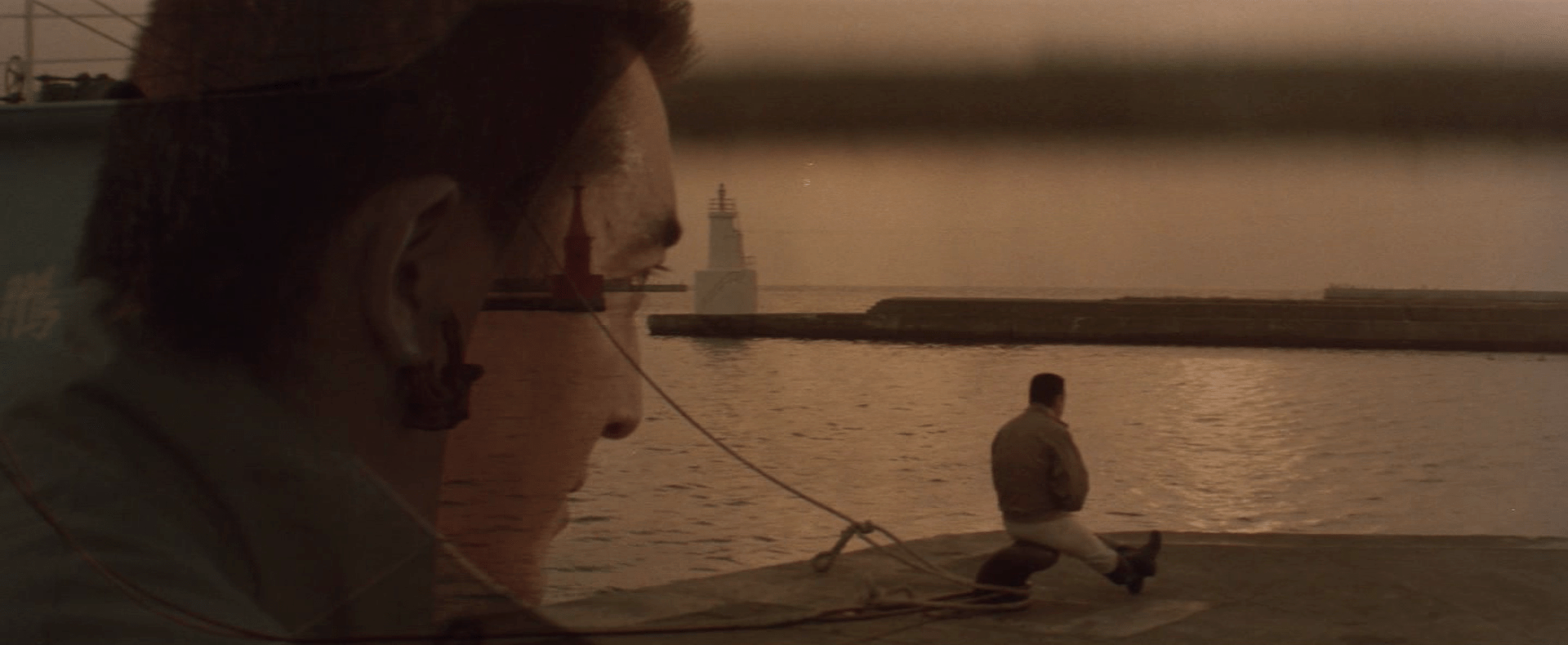
Fleeing a gang war with Columbian drug lords, a Brazilian gangster of Japanese descent tries his luck on the mainland but finds himself a perpetual outsider who can’t get himself taken seriously in Kazuhiro Kiuchi’s moody adaptation of his own manga, Carlos (カルロス). Owing a little bit to Brian De Palma’s Scarface, the tale takes place in a Japan mired in hopelessness and despair amid the spectre of economic collapse, while Carlos tries to play one gang off against another to exploit the terminal decline of the old school yakuza.

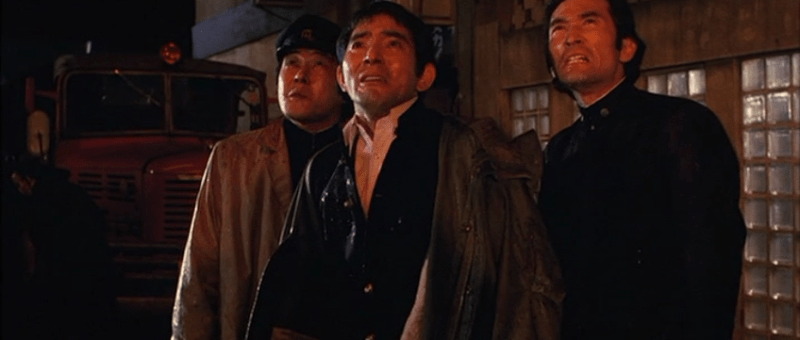
What we have here is a succession crisis. The Yamashiro boss (Minoru Oki) is planning to step down due to ill health though in the middle of a long-running dispute with the Hayakawa gang. When two of their guys are randomly killed, they assume only Hayakawa could be behind it little knowing that Carlos (Naoto Takenaka), a Brazilian-Japanese gangster on the run in Japan after killing eight policemen in a gang war in Brazil, killed them because they thought they didn’t need to obey the rules of the underworld with a “foreign” gangster. “We don’t need to treat those Brazilians as equals,” one says while already late to their appointed meeting. They haven’t paid Carlos for the guns he sold them, and when challenged, try to intimidate him into giving them away for free. But Carlos is sick of being intimidated and bumps them off himself. 

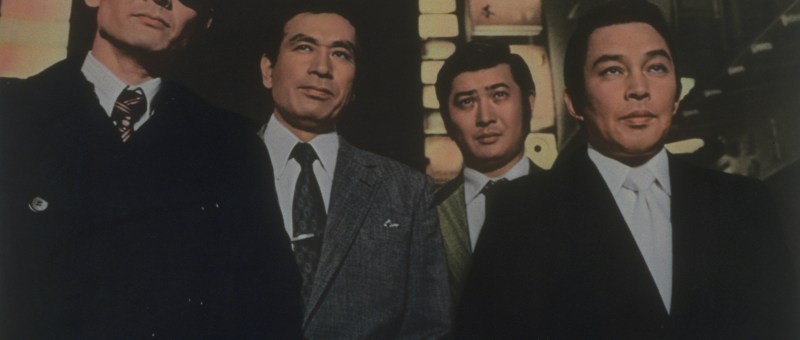
Carlos faces constant microaggressions about not being Japanese enough, though he speaks the language fluently without an accent. “Your crude taste doesn’t fly in Japan,” a yakuza tells him, criticising his outfit for being too informal when yakuza of this era generally dress in fancy suits and style their hair with military precision. That’s not really something that bothers Carlos, but he’s annoyed to be so easily dismissed and it’s true enough that he’s being used because they think he’s disposable. Not only is he not a “yakuza”, but as they don’t see him as Japanese either, they don’t need to accord him even the dignity they’d grant to a gang member. When Katayama hires Carlos to knock of his rival for the succession, Sato, he’s pissed off when Carlos takes things too far and puts on a show that threatens to blow the whole thing wide open by massacring Sato’s guys at baseball practice. To a man like Katayama, this is total idiocy and attributable to Carlos’ foreignness, both in his capacity for unnecessary violence and his lack of understanding of the rules of Japanese gangsterdom.

But the one place Carlos and his brother Antonio are fully Japanese is in the home of his aunt who also migrated from Brazil and their Japanese-born cousin Tomomi. Carlos’ aunt refers to them both by their Japanese names, Shiro and Goro, and cooks them Japanese food like sukiyaki. This pleasant domestic environment seems to represent a more settled life Carlos could have found outside of a crime family, especially as his brother Antonio grows closer to Tomomi, but there are also hints of darkness in his uncle’s early death from cirrhosis of the liver which suggests he may have had a hard life in Japan and taken to drink. Nevertheless, his aunt seems to have made a nice life for herself and her daughter and is overjoyed to expand her family by welcoming Carlos and Antonio.

Yet this sort of life seems outside of Carlos’ reach while he continues to play the yakuza gangs off against each other while simultaneously longing for some kind of recognition and almost willing them to figure out it was him who killed Sugita and Yano, the obnoxious Yamashiro guys. Meanwhile, the weakened yakuza have also turned to a foreign hitman, a brooding and robotic American who lacks compassion or compunction and unlike Carlos seems to be a mindless killing machine. When Carlos bests him, it’s an eerie moment echoing Blue Velvet as his body rocks and then falls. By contrast, when Carlos fights his way to the head of the Yamashiro gang, Yamashiro gets puffed up and draws his sword swearing he’ll teach Carlos what a mistake it is to underestimate the Japanese mob, only Carlos simply shoots him in a moment of clear victory over this outdated adherence to a traditional code. Nevertheless, it’s clear that Carlos can’t win here either and there is no room in Japan for a man like him. His only option is to go out all guns blazing as a means of validating himself as a force to be reckoned with, someone who was worthy of attention and of being taken seriously. Shot by the legendary Seizo Sengen, Kiuchi’s manga-informed compositions dissolve into visions of loneliness and despair but in its final moments reaches a crescendo of defiance if discovered only in futility.
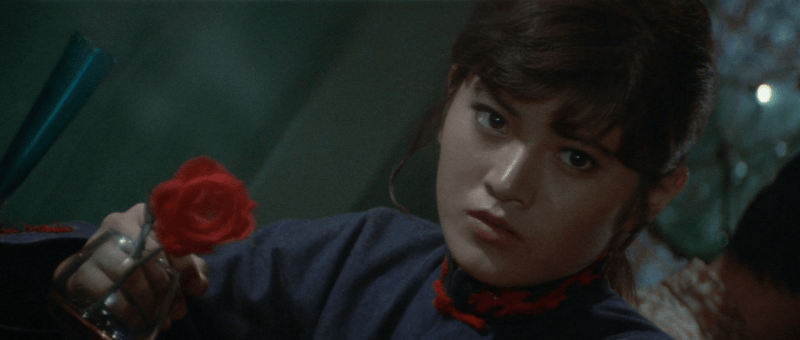
Sister Street Fighter (女必殺拳, Kazuhiko Yamaguchi, 1974)

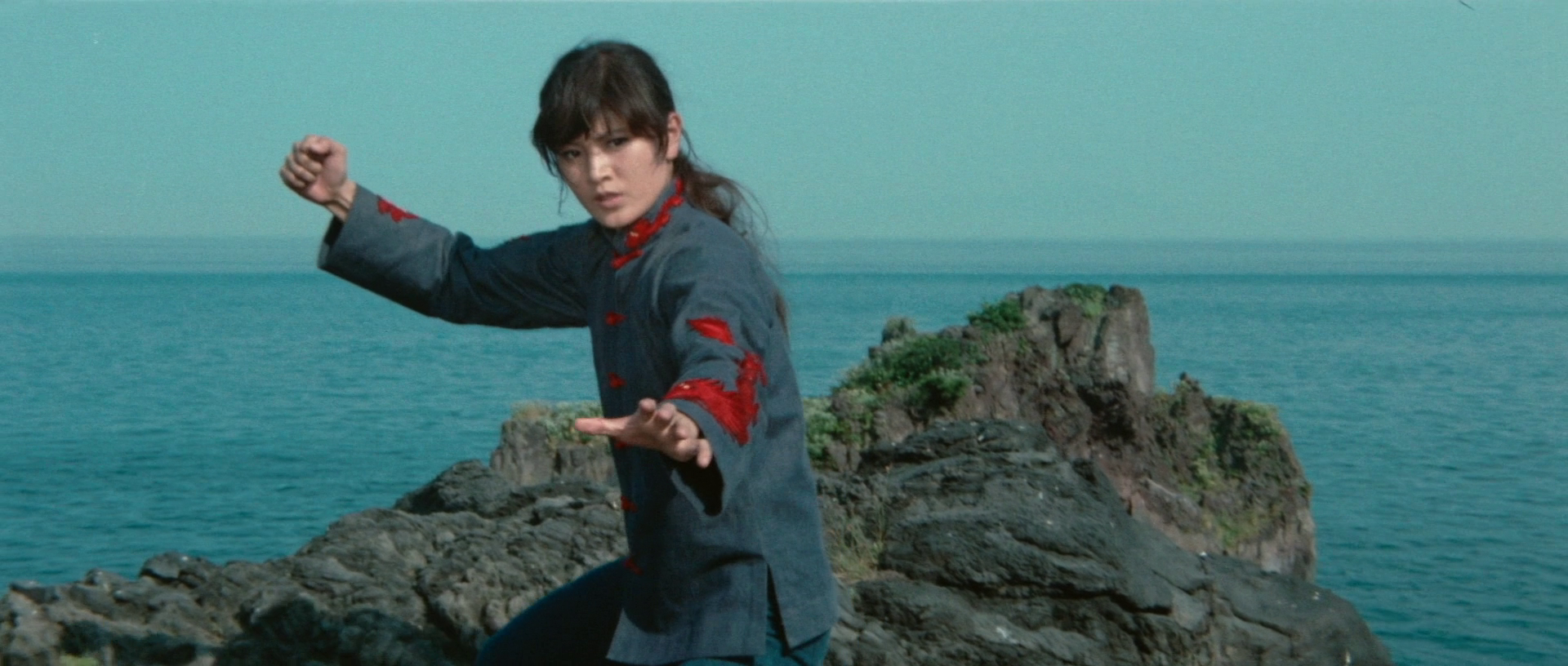
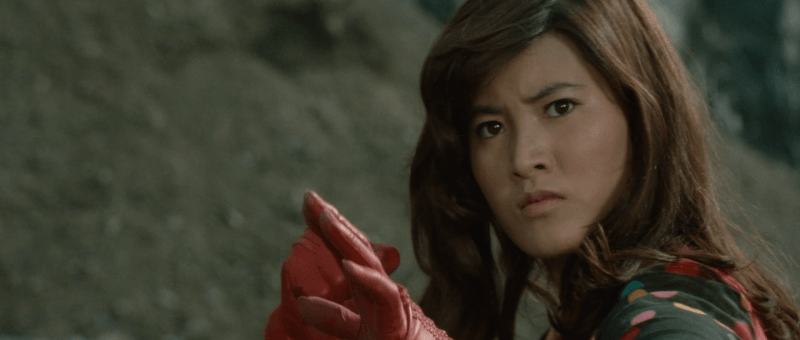
As the Japanese cinema industry continued to decline in the face of competition from television, there was perhaps paradoxically more space available for small-scale genre films. Shinichi Chiba had ushered in a new age of unarmed combat with his Bodyguard Kiba karate movies. The Street Fighter series followed hot on its heels and was enough of a hit for the studio to take notice. They suggested a new spin-off line that would feature a female action star with Chiba appearing in a supporting role and so Sister Street Fighter (女必殺拳, Onna hissatsu ken) was born.

Producers apparently first wanted Taiwanese-born Hong Kong actress Angela Mao who had starred with Bruce Lee in Enter the Dragon by which the film is clearly influenced. Angela Mao was, however, unavailable, which is what led them to take a chance on Chiba’s then 18-year-old protégé Etsuko Shihomi. Shihomi had joined his Japan Action Club out of high school to study stunts, martial arts, and gymnastics and had only limited acting experience but soon proved up to the challenge of carrying a movie as a female action lead. 

Koryu is the sister of a martial arts champion who has gone missing in Japan. She then finds out from his boss that he was actually an undercover narcotics agent trying to break a Japanese drug ring. As Koryu’s mother was Japanese and she still has family in Yokohama, the police inspector thinks she’d be a perfect fit to head out there, find out what’s happened to her brother Mansei (Hiroshi Miyauchi), and maybe take out the drug dealers too. 

In some ways, it’s an interesting subversion of the Sinophobia often found in Japanese films of this era that this time it’s a half-Chinese woman squaring off against Japanese drug dealers. Her brother was apparently so upset about not being able to stop the drugs flooding Japan that he decided to do something reckless that directly led to his disappearance. The Hong Kong police also have a second operative, a woman, working inside the gang but have lost contact with her. In contrast to Koryu, Fang Shing (Xie Xiu-rong) has been sent in as a classic honey trap to use her femininity as a weapon by becoming the boss’ mistress to get the lowdown on the gang. But as a consequence, Fang Shing has also become addicted to drugs which the boss uses as a means to control her. 

Koryu, by contrast, immediately stands up against male patriarchal control by beating up a bunch of guys that were trying to hassle her in a bar. Nevertheless, Mansei’s martial arts master says that her brother was hoping she’d get married and have a “normal life”, which does seem like quite a chauvinistic thing to say and especially to the martial arts-obsessed Koryu. Even so, he introduces her to another young woman, Emi, who got into Shorinji Kempo when Mansei saved her from being raped. These skills do after all give them the means to defend themselves against an often hostile and violent society along with granting them a greater independence than they might otherwise have.

Still, there are a selection of strange villains on show with death by blowgun and ex-priests along with the Amazon Seven team of Thai kickboxers and “Eva Parrish”, apparently the karate champion of the Southern Hemisphere. The action is quite obviously influenced by Hong Kong kung fu films and most particularly Enter the Dragon, though to a lesser extent Shaw Brothers in the warring schools subplot that sees the Shorinji Kempo love is power philosophy challenged by the gang’s very own martial artist, who feels he must wipe them out to overcome his humiliation in being defeated. Nevertheless, Koryu effortlessly takes out the bad guys as she battles her way towards saving her brother, whom the gang have started experimenting on in an effort to acquire more complex data about tolerance and safe levels for consumption of drugs. The bad guys have a full on lab in their basement where they’ve come up with an innovative solution to the smuggling issue by using wigs! It’s all quite surreal and cartoonish even when it starts getting grim, but rest assured Koryu is here to sort it all out, and sort it out she will.


Original trailer (English subtitles)

The Great Chase (華麗なる追跡, Norifumi Suzuki, 1975)

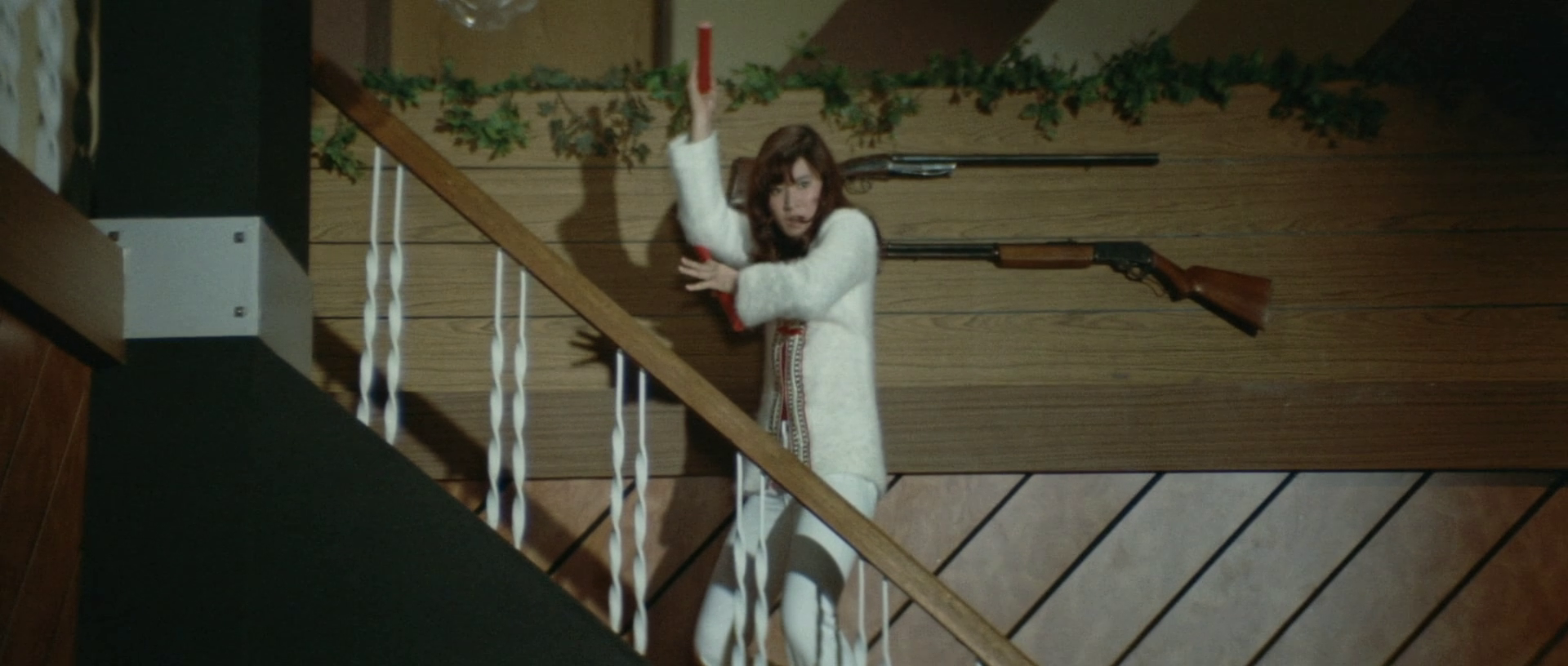
What about if you rebooted the Bannai Tarao series, but the hero was a female spy who is also a champion race driver and martial artist? Norifumi Suzuki did actually make a Bannai Tarao move in 1978 starring Akira Kobayashi, but the heroine of The Great Chase (華麗なる追跡, Karei-naru Tsuiseki) certainly loves a disguise or two and like the famous man of a thousand faces seems to have no trouble pulling them off as she infiltrates a gang of evil traffickers led by a furry which has come up with an ace new plan of packing heroin into coffins and having them shipped to nuns!

Oh, and the gang were also behind the death of her father who “committed suicide” in prison after being framed for drug smuggling. The Great Chase takes place in a world of pure pulp which somehow maintains its sense of cartoonish innocence even after Shinobu (Etsuko Shihomi) has infiltrated the heart of darkness and seen most of her associates killed by sadistic gang boss Inomata (Bin Amatsu). But at the same time, it delves into a deep sense of ‘70s paranoia as it becomes clear that the authority figures are all corrupt. Inomata has become a politician, while Shinobu’s father’s murder was orchestrated by the prison warden who was working with him in return for financial gain. The man who framed her father was a friend of his, implying that no one can really be trusted when there’s money to be made.

In a roundabout way,as this sense of anxiety is only reinforced by Shinobu’s role as some sort of secret agent working for the spy ring run by her uncle which is currently hot on the trail of the drug dealers even if they haven’t yet figured out who their boss is. Conversely, her home life is as wholesome as it could be with her two adopted siblings who run a florist’s along with Shinobu’s fan club. Her status as a kind of race car idol lends Shinobu a particular kind of ‘70s cool and turns her into some sort of superhuman figure capable of triumphing over any kind of adversity like a superhero worthy of any kid’s lunchbox. The siblings, Nagi (Fujika Omori) and Shinpei (Naoyuki Sugano), were taken in as orphans by her father which once again signals his goodness in contrast to the greed and selfishness of the gang that had him killed to cover up their crimes. 

That they peddle in drugs marks them out as a force of social disruption, but they’re also actively heretical in hiding behind the shield of the church. Suzuki frequently uses religious imagery in his films and here again echoes the romanticism of School of the Holy Beast with the use of red roses to decorate the coffin of the unfortunate young woman who has been turned into a vessel for smuggling drugs and has for some reason been laid out otherwise entirely naked. When it comes to retrieving the merchandise, we can see that many of the habits are being worn by men while Inomata himself masquerades as a priest. Then again, perhaps he is merely indulging his love of costume play seeing as he also has a hobby of wearing a furry bear suit to attack and rape women in his living room. 

Inomata’s claws then seem to represent something else, a rapacious, grasping sense of patriarchy in which he also uses drugs to bind women to him. Shinobu’s childhood friend Yukiko (Hisako Tanaka) has apparently fallen victim and laments that she is possessed by him body and soul to the point that the old Yukiko is dead which is why she hasn’t been able to step in and help Shinobu and is doing so now fearing that it may cost her her life. Suddenly, it’s all quite grim with the basement sex cult, whipping and torture, but Shinobu maintains her plucky spirit and is somehow able to lure Inomata towards a cable-car-based showdown. With a cameo from real life wrestler / singer Mach Fumiake, the film enters a kind of meta commentary on a real-life Shinobu (though she was not, as far as anyone knows, one of Japan’s top spies), but otherwise remains within the realms of pulp in which the heroine is able to pull off her difficult mission with the help of her talent for disguises before dramatically unmasking herself as the woman who’s going to take them all down. Camp to the max and incredibly surreal, the film never drops its sense of silliness even as the grim events enveloping Shinobu lead to tragic consequences that she barely has time to deal with before barrelling straight into the next duel with the forces of corruption.


*Norifumi Suzuki’s name is actually “Noribumi” but he has become known as “Norifumi” to English-speaking audiences.

The Killing Machine (少林寺拳法, Norifumi Suzuki, 1975)

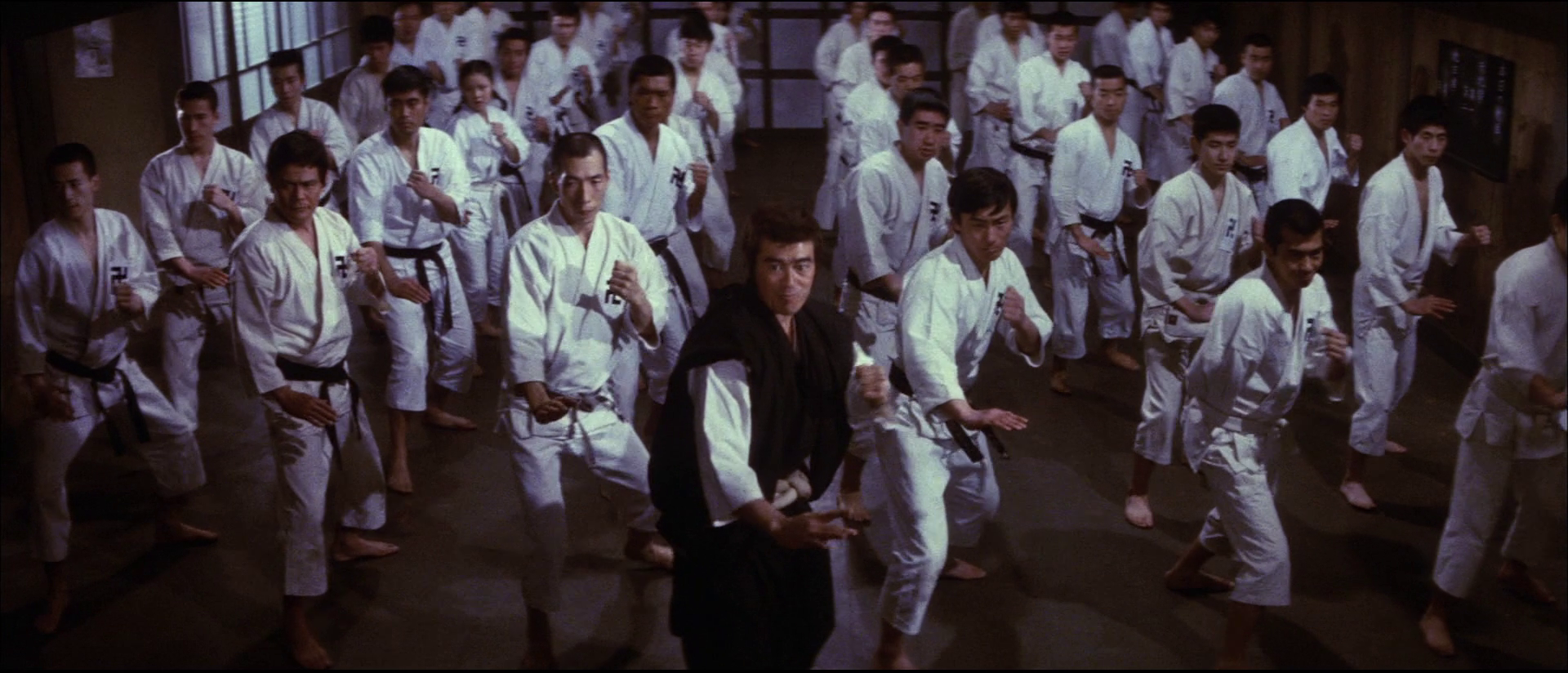
“As long as somebody like you is around, there’s hope for Japan,” an oddly sympathetic prison warden says to the last patriot standing in post-war Osaka. The title of Norifumi Suzuki’s Sonny Chiba vehicle The Killing Machine (少林寺拳法, Shorinji Kempo) maybe somewhat inappropriate or at least potentially misleading as the film is deliberately constructed as a martial arts parable emphasising the spiritual philosophy of self-improvement and compassion that is inextricable from its practice.

To that extent, the hero, Soh Doushin (Shinichi Chiba), is trying to fight his way out of the miasmas of the immediate post-war era. As may be apparent, Soh has taken a Chinese name, though Soh was apparently his along and belonged to a former samurai family whose nobility has been crushed by militarism. As the film opens, however, he’s a Japanese secret service operative in Manchuria blindsided by the news of Japan’s surrender. Soh is it seems a nationalist and a patriot, but a fairly revisionist one who stands up to the abuses of the Japanese army. He later says that he protested the way that the local Chinese population were often treated and he does indeed raise a fist toward an officer who wants to sell a young Japanese woman to a Chinese soldier in return for a guarantee of their safe passage to a boat heading out of the country. The young woman’s mother protests that she is an innocent virgin, a fact that has some later relevance. Soh refuses to let the officers take her, though evidently separated from her later.

When he meets the young woman again in the bomb-damaged backstreets of Occupation Osaka, she is dressed in Western clothing as opposed to the smart kimono she wore in Manchuria and is about to become a “pan pan” or streetwalking sex worker catering to American servicemen. Of course, Soh can’t let this happen either, but as she later tells him, she was raped by Russian soldiers during the retreat and now feels herself to be despoiled. She never wears kimono again and becomes a kind of symbol for a despoiled nation that Soh is reluctantly forced to accept he cannot save in part because his philosophy, which is still uncomfortably rooted in the philosophy of militarism, only valued strength when it should have valued love. The kind of love that Kiku (Yutaka Nakajima) had for her brother that made her willing to sacrifice herself for his wellbeing. 

Even so, Soh is doing his best to issue a course correction by caring for a small group of war orphans and helping them support themselves by running a rice soup stall so they won’t end up becoming dependent on the yakuza or the black market. It’s the yakuza and their increasingly corporatising nature that become Soh’s chief enemies, though standing right behind them are the Occupation Forces. They are, of course, just the biggest gang, as we can see when one of the kids steals a few tins from the gangster’s crate which is marked with text making it clear it came from the mess hall at the American base. The backstreets are full of sleazy soldiers and pan pans or otherwise the starving and dejected, sometimes violent demobbed soldiers filled with despair. It’s these men that Soh wants to buck up, telling them to rediscover their fighting spirit and giving them the opportunity to do so through learning Shaolin martial arts.

Of course there are those who don’t want to learn Chinese kung fu in the midst of their defeat, but what Soh is advocating is something that has a greater spiritual application even than karate can also have. It’s a kind of humanitarian riposte to the futility of the post-war society that might sometimes fail to recognise the depths of the impossibility faced by many in insisting they can be faced by discipline and moral fortitude but at the same time is not really judgemental except toward those who have deliberately abandoned their humanity, such as the trio of goons who rape a school for amusement (the girl is later seen among the students at Soh’s school along with the children from Osaka). The girl’s father reports it to the police, but the police and the gangsters are in cahoots, so nothing gets done. Soh cuts the guy’s bits off so he won’t be doing that again. Strength without justice is violence, he realises. But justice without strength is inability. Strength and love like body and mind should never be separated. The closing shots show an entire mountain covered in white-clad figures practising Shaolin kung fu and joining the humanitarian revolution rather than the cruel and selfish one represented by the gangsters with their red-light districts and black markets. It may be a simplistic solution, but it is in its way satisfying and at least a rejection both of the militarist past and the capitalistic future.


*Norifumi Suzuki’s name is actually “Noribumi” but he has become known as “Norifumi” to English-speaking audiences.

Minbo, or the Gentle Art of Japanese Extortion (ミンボーの女, Juzo Itami, 1992)

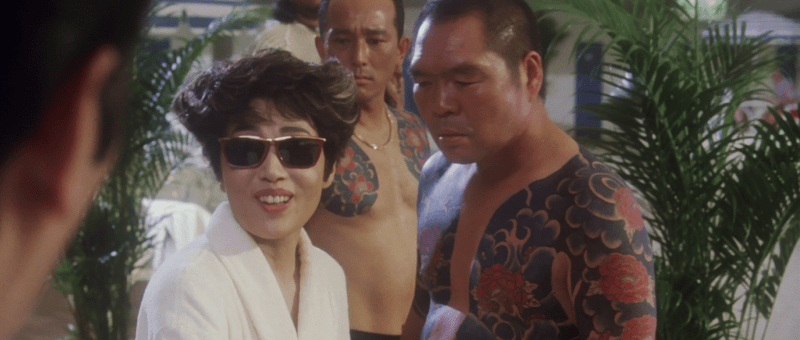
“Yakuza are vain, treat them politely,” the heroine of Juzo Itami’s 1992 comedy Minbo, or The Gentle Art of Japanese Extortion (ミンボーの女, Minbo no Onna) instructs a hapless pair of hotel employees trying to solve the organised crime problem at their hotel, but it’s a lesson Itami would go on to learn himself after he was attacked by gangsters who slashed his face and neck with knives. Itami in fact died in fairly suspicious circumstances in 1997 having fallen from the roof of a high-rise building leaving a note behind him explaining his “suicide” was intended to prove his innocence in regards to an upcoming newspaper story alleging an affair with a young actress. Given Itami’s films had often made a point of skewering Japanese traditions and that taking one’s own life is not the way most would choose to clear their name, it has long been suggested that his death was staged by yakuza who’d continued to harass him ever since the film’s release. 

It’s true enough that Minbo may have touched a nerve in undercutting the yakuza’s preferred image of themselves as the inheritors of samurai valour standing up for the oppressed masses against a cruel authority. Of course, that isn’t really how it works and getting the yakuza on your side in a civil dispute may be a case of out of the frying pan into the fire. It’s the yakuza themselves who are the oppressive authority ruling by fear and intimidation. Even so, the yakuza as an institution were in a moment of flux in the early ‘90s following the collapse of the bubble economy during which they’d shifted further away from the street thuggery of the post-war era into a newly corporatised if no more respectable occupation. This change is perhaps exemplified by “minbo”, a kind of fraud in which gangsters get involved in civil disputes underpinned with the thinly veiled threat of violence. 

The yakuza who plague the Hotel Europa, for example, pull petty tricks such as “discovering” a cooked cockroach in the middle of a lasagne, or claiming to have left a bag of cash behind which is later handed back to the “wrong” person by the front desk who probably should have asked for ID. Itami frames the presence of the yakuza as a kind of infestation, suggesting that if you do not tackle it right away it soon takes over and cannot be removed. Dealing with the problem directly may cause it to get worse in the short term, but only by doing so can you ever be rid of them once and for all. At least that’s the advice given by forthright attorney Mahiru (Nobuko Miyamoto) who demonstrated that the only way to deal with yakuza is to show them that you aren’t afraid because at the end of the day the law is on your side. 

Part of the “woman” cycle in which Itami’s wife Nobuko Miyamoto stars as a sometimes eccentric yet infinitely capable woman solving the problems of contemporary Japan through old-fashioned earnestness and everyday decency, Minbo finds its fearless heroine explaining that the yakuza themselves are a kind of con. In general they won’t hurt civilians because then they’re much more likely to be arrested. Going to prison is incredibly expensive and therefore not likely to prove cost effective. She knows that if she can catch them admitting they’ve committed a “crime” then they can’t touch her, and they won’t. They do however go after the rather more naive hotel boss Kobayashi (Akira Takarada) whom they try to frame for the rape of a bar hostess, drugging him after he unwisely agreed to meet them alone to hand over blackmail money. Then again, the hotel isn’t entirely whiter than white either. Kobayashi admits they can’t pull strings with the health ministry over the cockroach incident because they previously used them to cover up a previous instance of food poisoning. 

In any case, the yakuza end up looking very grubby indeed. It’s hard to call yourself a defender of the oppressed when you’re pulling petty stunts no better than a backstreet chancer. Yet like any kind of irritating insect, they too begin to evolve gradually developing a kind of immunity to Mahiru’s tactics in themselves manipulating law only they aren’t as good as she is and they are after all in the wrong. She’s a little a wrong too in that if pushed too far the yakuza will indeed stoop to physical violence against civilians, but she also knows that they thrive on fear and that to beat them she may have to put her safety on the line to prove they have no power over her. It seems Itami felt something similar issuing a statement shortly after his attack to the effect that “Yakuza must not be allowed to deprive us of our freedom through violence and intimidation, and this is the message of my movie”. As gently humorous as any of Itami’s movies and no less earnest, Minbo paints the yakuza as a plague on post-bubble Japan and suggests that it’s about time they were shown the door. 


Trailer (no subtitles)

Festival Champ (お祭り野郎 魚河岸の兄弟分, Norifumi Suzuki, 1976)

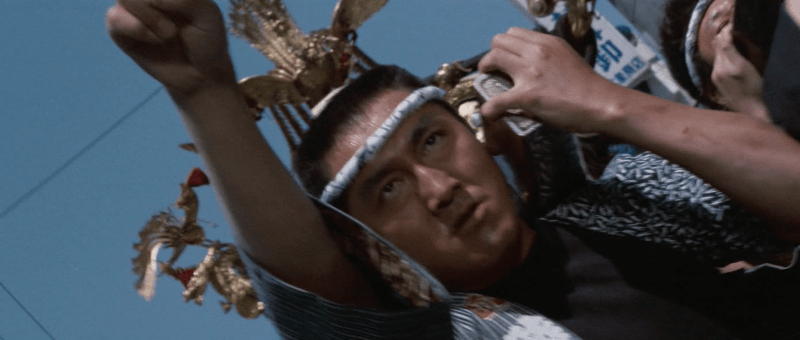
Who doesn’t love a festival? The hero of Norifumi Suzuki’s Festival Champ (お祭り野郎 魚河岸の兄弟分, Omatsuri yaro: Uogashi no Kyodai-bun) loves them so much that he travels all over Japan to help out in places where young men have become thin on the ground thanks to increasing urbanisation and rural depopulation. Following the success of Suzuki’s entries in the Truck Yaro series in 1975 and 1976, the film was part of a new line of comedies and sports movies launched by Toei as well as a vehicle for Hiroki Matsukata who was trying to move on from yakuza movies.

Katsuo (Hiroki Matsukata) is however something of a goodhearted bruiser who is always getting into manly scraps and especially at the festivals he travels to which is a pretty good hook for an ongoing series. But it’s not all that great for his employer who runs a family fishmonger’s at the Uogashi fish market and complains that Katsuo’s always running off and causing trouble. The fish market itself takes on an exoticised quality in the opening sequence which features a voice over from karate queen Etsuko Shihomi, here in a purely dramatic role, who is the daughter of a well-to-do traditional Japanese restaurant and travels there daily by speedboat to pick up the best fresh fish available. Suzuki throws in some documentary-style stock footage and statistics about the market that lend a strangely corporate feel, but then homes in on its capacity as a community hub. Kiyoko says it’s her favourite place precisely because there’s nothing formal about it. Deals are done through body language and you don’t need any kind of resume to work there, everyone’s welcome. 

That may be the implied contrast between Kiyoko’s father, who owns an upscale place and cultivates genuine relationships with local fishermen and brokers, and local boy made good Kurosaki who has supposedly become the CEO of a restaurant chain, itself a symbol of the soulless corporation of ‘70s Japan. Kurosaki rocks up dressed like a yakuza, but everyone treats him as a successful businessman and in part thanks to Katsuo’s boss Zenjiro’s recommendation is eager to make deals with him but predictably he’s running a huge scam that could destroy the local economy. Zenjiro is later faced with the difficult decision of selling his family business to repay all the other fishermen and brokers that have fallen foul of him. 

It’s this societal sense of unfairness that stripper Kumi (Terumi Azuma) hints at when she says she feels “frustrated” and that her long-lost brother Eiji (Toru Emori) probably feels even more frustrated than she does after he slaps her having found out that she’s become a burlesque dancer. As she points out to him, he ran away from home and left her behind with the aunt that was cruel to them so what exactly he expected her to do is a mystery. In the end, it’s his own fault for abandoning her, so he has no leg to stand on in criticising her for the way she’s lived her life. Kumi is well accepted in the local community and walks around in very elegant attire which gives her the air of an “ojosan” or upperclass lady to much greater extent that Kiyoko has in her love of the earthy world of the fish market. The fact that she turns out to be suffering from a tragic terminal illness perhaps only reinforces this sense of unfairness, that the modern world has essentially poisoned her and she can no longer survive in it.

The only things that give her solace are Katsuo and the idea of joining in carrying a shrine festival which would seem to be ways of reconnecting with a more essential Japaneseness. Despite his rowdiness, Katsuo is as she describes him the kindest person she’s ever met and a more positive vision of a still traditional masculinity that looks to protect the community and those around him. He gets into a fight with Eiji, but after exchanging a few blows the men become firm friends, while it’s trying to hook his wimpy friend Kinichi up with a date that brings him to Kumi in the first place. Meanwhile, it seems like Ayuko (Junko Natsu) has a crush on him and despite Zenjiro’s exasperation with Katsuo, everyone expects that he will eventually marry her and take over the family business. 

And so, it’s only a violent, but also quite funny, intervention from Katsuo that can eventually overcome the disruption Kurosaki threatens. Suzuki throws in a lot of his trademark weirdness including all of Zenjiro’s other daughters having fishy names, and a local sex worker who is insatiably aroused by octopuses followed by a gag in which Katsuo is trolled with a suggestive-looking shellfish, but mostly rests on a sense of qualified wholesomeness and community all carried on Katsuo’s broad shoulders as the lone guardian of a more essential Japaneseness otherwise uncorrupted by venal post-war capitalism.


*Norifumi Suzuki’s name is actually “Noribumi” but he has become known as “Norifumi” to English-speaking audiences.

Dead Angle (白昼の死角, Toru Murakawa, 1979)

The jitsuroku yakuza movie which had become dominant in the mid-70s had often told of the rise and fall of the petty street gangster from the chaos of the immediate post-war era to the economically comfortable present day. The jitsuroku films didn’t attempt to glamourise organised crime and often presented their heroes as men born of their times who had been changed by their wartime experiences and were ultimately unable to adjust themselves to life in the new post-war society. Adapted from a serialised novel by Akimitsu Takagi which ran from 1959 to 1960, Toru Murakawa’s Dead Angle (白昼の死角, Hakuchu no Shikaku) by contrast speaks directly to the contemporary era in following a narcissistic conman who has no need to live a life of crime but as he says does evil things for evil reasons. 

Prior to the film’s opening in 1949, the hero Tsuruoka (Isao Natsuyagi) had been a law student at a prestigious Tokyo university where he nevertheless became involved in the Sun Club, a student financial organisation launched by mastermind Sumida (Shin Kishida) who eventually commits suicide by self-immolation when the organisation collapses after being accused of black market trading. An unrepentant Tsuruoka resolves to start again, rebuilding in the ashes as a means of kicking back against hypocritical social institutions and rising corporate power by utilising his legal knowledge to run a series of cons through the use of promissory notes to prove that the law is not justice but power. 

In this Tsuruoka has an ironic point. He doesn’t pretend what he’s doing is legal, only that he’s safeguarded himself against prosecution. When a pair of yakuza thugs break into his office and threaten him in retaliation for a con he ran on a shipping company, he reminds them that as they’ve had him open the safe it would make the charge of killing him robbery plus murder which means automatic life imprisonment rather than the few years they might get for simply killing him without taking any money. He always has some reason why the law can’t touch him, while implicitly placing the blame on his victims who were often too greedy or desperate to read the small print and therefore deserve whatever’s coming to them. In at least one case, Tsuruoka’s victimless crimes end up resulting in death with one old man whom he’d double conned, pretending to give him the money he was owed but getting him drunk and talking him into “re-investing” the money with him, takes his own life by seppuku in the depths of his shame not only in the humiliation of having been swindled but losing his company, who had trusted him, so much money. 

You could never call Tsuruoka’s rebellion an anti-capitalist act, but it is perhaps this sense of corporate tribalism symbolised by the old man’s extremely feudalistic gesture that Tsuruoka is targeting. As his wife Takako (Mitsuko Oka) tells him, Tsuruoka should have no problem making an honest living. After all he graduated in law from a top university, it’s not as if he wouldn’t have been financially comfortable and it doesn’t seem that the money is his primary motive. While Takako continues to insist that he’s a good person who wouldn’t do anything “illegal”, his longterm geisha mistress Ayaka (Yoko Shimada) knows that he’s an evil man who does evil things for evil’s sake and that’s what she likes about him. Elderly businessmen are always harping on about the “irresponsible youth” of the day but all are too quick to fall for Tsuruoka’s patter while he is essentially nothing more than a narcissist who gets off on a sense of superiority laughing at the law, the police, and the corporate landscape while constantly outsmarting them. 

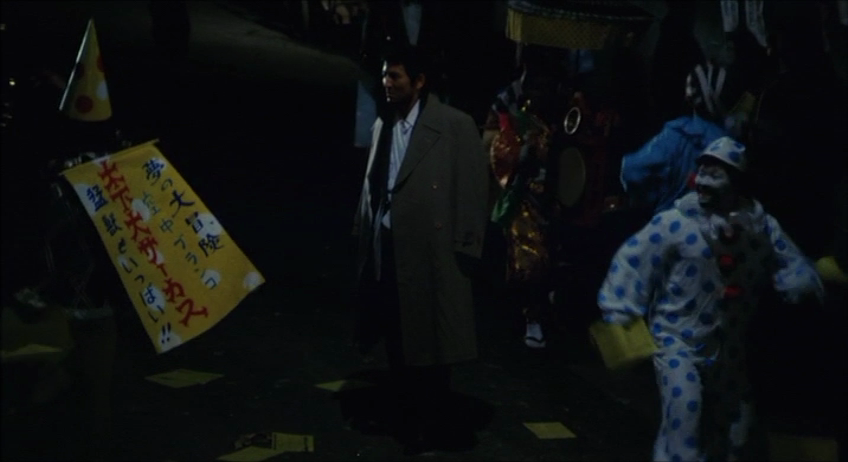
In this, the film seems to be talking to the untapped capitalism of the 1970s. Like Tsuruoka, the nation now has no need to get its hands dirty and should know when enough is enough but is in danger of losing sight of conventional morality in the relentless consumerist dash of the economic miracle. That might explain why unlike the jitsuroku gangster pictures, Murakawa scores the film mainly with an anachronistic contemporary soundtrack along with the ironic use of saloon music in the bar where Tsuruoka’s associates hook an early target, and the circus tunes which envelope him at the film’s opening and closing hinting that this is all in some ways a farce even as Tsuruoka is haunted by the ghosts his narcissistic greed has birthed. Then again perhaps he too is merely a product of his times, cynical, mistrustful of authority, and seeking independence from a hypocritical social order but discovering only failure and exile in his unfeeling hubris. 


Original trailer (no subtitles)

Violent Streets (暴力街, Hideo Gosha, 1974)

“Nothing’s like it used to be anymore” sighs a woman who’s had to betray herself but has tried to make break for it only to discover there is no way back. Hideo Gosha’s Violent Streets (暴力街, Boryoku Gai) is like many films of its era about the changing nature of the yakuza in an age of corporatised gangsterdom. Now “legitimate businessmen” who claim to no longer deal in thuggery, their crimes are of a more organised kind though a turf war’s still a turf war even if you’re fighting from the boardroom rather than simply getting petty street punks to fight it for you in the streets. 

In a touch of irony, former yakuza Noboru Ando stars as a man who’s tried to leave the life behind but is pulled back into underworld intrigue when his former foot soldiers mount an ill-advised bid for revenge against the clan they feel betrayed them. After serving eight years in prison for participating in the last turf war, Egawa was given flamenco bar Madrid on the condition that he dissolve his family and attempt to go straight as a legitimate businessman. The Togiku gang has since gone legit and distanced itself from most of its old school yakuza like Egawa. But now a yakuza conglomerate from Osaka is moving in on their old turf and the Togiku want the Madrid back as a bulwark against incursion from the west which is why they’ve been sending the boys round to cause trouble in the bar. 

Egawa is the classic ex-gangster who wants to turn himself around but is largely unable to adapt to life in a changing society. He is technically in a relationship with a bar hostess who has a severe drinking problem in part exacerbated by his inability to get over his former girlfriend who left him and married the boss, Gohara, while he was in prison. His former foot soldiers attempt to convince him to get the gang back together and take revenge, resentful of having been used and discarded, but he tells them to let it go, that they’ve all got “honest jobs” and that they should try to live as best they can. Like him, the guys are ill-equipped to make new lives in the consumerist society and cannot move on from the post-war past. Hoping to engineer a turf war between the Osaka guys and Togiku, they kidnap a popular TV personality/pop singer (Minami Nakatsugawa) attached to a station which Togiku controls and frame a rival affiliated with the Osakans for taking her. 

This just goes to show the various ways in which newly corporatised yakuza have expanded their business portfolio, heavily participating in the entertainment industry moving beyond bars, clubs, and the sex trade into mainstream television and idol stars. Egawa’s old friend Yazaki (Akira Kobayashi) is his opposing number, just as caged but trapped within the confines of the new gangsterdom, reprimanded by his boss for raiding the rival studio’s offices and undoing the gang’s attempt to rebrand themselves as legitimate businessmen rather than violent street thugs. “I can’t stand being humiliated” he explains as Gohara points out he’s stepped right into their trap now giving the Osakans an excuse for retaliation. “The Togiku group is a defanged, domesticated dog” Yazaki barks, “I can’t pretend to be an obedient company employee forever and do nothing”. 

Neither man is able to progress into the new era of rising prosperity, both little more than caged animals thrashing around trying to break free but continually crashing into the bars. Just as Egawa’s old guys had tried to engineer a turf war hoping that the two gangs would take each other out and leave a vacuum they could fill, arch boss Shimamura (Tetsuro Tanba) flies above the city in a helicopter as the “worms fight among themselves” and observes the chaos below as he completes his silent conquest of the contemporary economy like some modern day Nobunaga of corporatised gangsterdom. 

Taking over the Togiku through a process of corporate infiltration and gradually ridding themselves of all the old school yakuza ill-suited to the shady salaryman life, the contrast between the world of cabaret bars and back street dives and Shimamura’s smart suits and helicopters couldn’t be more stark. A slightly sour note is struck by the use of a transgender assassin (Madame Joy) who performs a lesbian floorshow by day and kills by night while working with a bald sidekick who carries a parrot on his shoulder, her coldness bearing out the tendency of yakuza movies to associate queerness with sadistic savagery. Gosha rams his point home with the otherwise surreal scene of a pile of abandoned mannequins by a swamp that becomes a popular yakuza kill site homing in on the emptiness of their eyes and the uncanniness of dismembered bodies, mere empty shells just like the men who die in this literal wasteland. Egawa perhaps feels himself to be a man already dead long before being pushed towards his act of futile rebellion, somewhere between sitting duck and caged dog fighting for his life between the chicken coops of a moribund small-town Japan. Marching to a frenetic flamenco beat of rising passions and barely contained rage, Violent Streets leaves its former foot soldiers with nowhere to go but down while their duplicitous masters continue to prosper riding the consumerist wave into a new and prosperous future.


Violent Streets opens at New York’s Metrograph on Dec. 16 as part of Hideo Gosha x 3

Trailer (English subtitles)

Graveyard of Honor (仁義の墓場, Kinji Fukasaku, 1975)

“Like hell you’re free” the “hero” of Kinji Fukasaku’s Graveyard of Honor (仁義の墓場, Jingi no Hakaba) coolly snaps back in squaring off against a rival gang in a crowded marketplace. Perhaps a familiar scene in the jitsuroku eiga, a genre Fukasaku had helped usher into being and later solidified in the hugely influential Battles Without Honour and Humanity series. A reaction against the increasingly outdated ninkyo eiga and their tales of noble pre-war gangsterdom, the jitsuroku or “true account” movie claimed a higher level of authenticity, inspired by the real lives of notorious gangsters and depicting the chaotic post-war period as it really was, a Graveyard of Honor. 

Based on another true crime novel by Battles Without Honour and Humanity’s Goro Fujita, Graveyard of Honour charts the slow self-implosion of reckless gangster Rikio Ishikawa (Tetsuya Watari). In keeping with the jitsuroku mould, Fukasaku opens in documentary mode, onscreen text giving us Rikio’s pregnant birthdate of 6th August, 1924 before giving way to the voices of, we assume, real people who actually knew him when he was child. They describe him alternately as shy, an oversensitive crybaby, and an evil genius in waiting who was always different from the others and had a lifelong ambition to become a yakuza. They wonder if it was the chaos of the post-war world which turned him into a “rabid dog” but note that he was in fact just as crazy before the war and after.

A cellmate during his time in juvenile detention recalls that Rikio would often liken himself to a balloon, intending to rise and rise until he burst but his trajectory will be quite the opposite. A mess of contradictions, he repeatedly tells his remarkably understanding boss Kawada (Hajime Hana) that whatever it is he’s done this time it was all for the gang but all he ever does is cause trouble, picking fights with the rival area gangs in an obsessive need for masculine dominance over his surroundings. His trip to juvie was apparently down to getting into a fight defending Kawada’s honour, implying that he was “the sort of kid who genuinely respected his godfather”, yet it’s in transgressing this most important of unwritten yakuza rules that he damns himself. Beaten up as punishment for setting fire to the car of a gang boss he felt slighted him, Rikio is asked for his finger but gets so drunk psyching himself up that he eventually turns on his own side and is exiled from the capital for a decade. 

That gang boss, meanwhile, Nozu (Noboru Ando), is currently running for political office in Japan’s new push towards democracy. He eventually loses but only by a small margin, bearing out that in this extremely difficult post-war environment, the yakuza is still a respected, if perhaps also feared, force providing services which ordinary people are sometimes grateful for in that they provide a buffer against other kinds of threat. Meanwhile, the first of Rikio’s gang raids is undertaken against so called “third country nationals” a dogwhistle euphemism for Zainichi Koreans, Chinese, Taiwanese, and other citizens from nations colonised by Japan during in its imperialist expansion who entered the country as Japanese citizens but have now been “liberated” only to face further oppression while those like Rikio accuse them of looking down on and taking revenge against the Japanese for the abuse they suffered as imperial subjects. When both sides are arrested a racist policeman allows the yakuza to escape, thanking them for helping him round up all the Chinese businessmen who will now go to jail for illegal gambling allowing the local gangs to seize their turf. 

The greatest irony is, however, that the American occupation forces may be the biggest gang of all, willingly collaborating with Kawada in peddling blackmarket whiskey (amongst other things) from the local base. The yakuza is also in collaboration with the local sex workers who use their connections with American servicemen to facilitate yakuza business. When Rikio starts a fight with a rival gang in a local bar that threatens to spark a war, it’s the Americans who are called in as neutral third party mediator, Nozu being unable to fulfil that role in having an affiliation with Kawada. The Americans, however, merely issue a loudspeaker announcement for the gang members to disperse or face possible arrest, keeping the peace if somewhat hypocritically. 

Rikio, meanwhile, continues to flounder. Exiled from his gang, he becomes addicted to hard drugs and gets a problematic minion of his own, Ozaki (Kunie Tanaka), not to mention contracting tuberculosis. In a particularly morbid moment, he has his own gravestone carved, perhaps detecting that the end is near or at least that an ending is coming for him. In another somewhat inexplicable turn of his life, though a common trope in jitsuroku, he eventually marries the sex worker who fell in love with him after he raped her, presumably touched by his concern after he burned a hole in her tatami mat floor. Wearied by grief and already out of his mind, a final act of nihilistic craziness sees him approach his former boss for the turf and capital to form his own gang, crunching his late wife’s bones as hardened gang members look on in utter disbelief. 

Rikio’s desire for freedom, to be his own boss, is elusive as the red balloon we often see floating away away from him, free in a way he’ll never be. “Don’t these young people respect the code anymore?” Kawada exasperatedly asks on hearing that Rikio has broken the terms of his exile and returned only a year into his sentence. But Rikio’s tragedy may in a sense be that he understood the code too well. On the side of his tombstone he writes the word “jingi”, honour and humanity, full in the knowledge that such concepts in which he seems to have believed no longer exist in the cruel and chaotic post-war world which forces even true believers to betray themselves in a desperate bid for survival. “We all live by a code” his friend echoes, “there’s just no way around the rules”. 

A case of printing the legend, Fukasaku’s take on the life of Rikio Ishikawa may not quite be the “true account” it claims but is in its own strange way a tale of frustrated gangster nobility, a cry baby’s failure to become the man he wanted to be in the complicated post-war landscape. Capturing the confusion of the era through frantic, handheld camera Fukasaku nevertheless takes a turn for the melancholy and mediative in his shifts to sepia, the listless vacant look of a drugged up Rikio somehow standing in for the nihilistic emptiness of a life lived in honour’s graveyard. 


Original trailer (English subtitles)

A True Story of the Private Ginza Police (実録・私設銀座警察, Junya Sato, 1973)

By the early 1970s the ninkyo eiga (pre-war tales of noble yakuza) had begun to fall from favour. Modern audiences were perhaps unconvinced by the romanticism of the honourable gangster caught between personal loyalty and his inner humanity, real life thugs are rarely so high minded after all. The cinema industry may have been in decline, but the consumerist revolution was well underway, the economic miracle was nearing completion, and there was perhaps a readiness to reckon with the recent past from a position of relative safety. The jitsuroku eiga did just that, providing a more “realistic” depiction of the yakuza life based on the recollections of real life gangsters and incorporating the aesthetics of reportage with the use of stock footage, newspaper montage, narratorial voiceover, and high impact text recording the names of characters along with the times of their deaths. 

Released in the same year as Kinji Fukasaku’s Battles Without Honour and Humanity which has perhaps become the jitsuroku archetype, Junya Sato’s A True Story of The Private Ginza Police (実録・私設銀座警察, Jitsuroku: Shisetsu Ginza Keisatsu) paints an even bleaker picture of the immediate post-war era as one in which chaos and inhumanity rule. The pre-credits sequence follows demobbed soldier Watarai (Tsunehiko Watase) who finds himself in a bombed out warehouse where a woman is drinking around an open fire with a US serviceman. Standing motionless he stares at an upper balcony where another woman is having sex with a black GI. It seems this woman is known to him, perhaps his wife or in any case a woman he thought he was coming back to. She is not overjoyed to see him, breaking down in tears while he spots a baby girl crying in the corner who also happens to be black. Unthinkably he takes the child and throws her into a flooded area of the floor below, chasing the mother when she goes after the baby, strangling and then bludgeoning her to death with a rock. 

All of this has happened in the first five minutes. There will be no heroism here, no noble act of resistance only shame and desperation. These are men brutalised by war who’ve come home to a land in ruins where the enemy is now in charge, ruling their streets and sleeping with their women. They are humiliated and resentful, many of them still in uniform likely because they simply have no other clothes. Sato introduces us to the later gang members in turn beginning with a scene which echoes those of the Battles Without Honour series as Iketani (Noboru Ando) is chased and beaten by an angry mob in the chaos of the marketplace after being accused of stealing. Masaru (Tatsuo Umemiya) meanwhile is beaten by GIs who come to the rescue of a sex worker he tries to rape, offended when she tells him she doesn’t go with Japanese customers dismissing him as “just another defeated soldier”. Iwashita (Hideo Murota) uses his service revolver to commit an armed robbery to get money to gamble. Only the gang’s later leader, Usami (Ryoji Hayama), is introduced without a wartime record, named only as a pre-war gangster. The gang is forged when they meet by chance in a gambling den and bond over a grenade, mounting a military operation against the Korean street gang who hassled Iketani by bombing their HQ. 

A few months later they’ve become the “Private Ginza Police Force” of the title, now all in smart suits, loud shirts, and sunshades. They have their eyes set on ruling the area, taking down rival gangsters the Nakane brothers through cunning and trickery, turning an underling by threatening his family. But there is no honour among thieves and the gang is only a temporary arrangement intended to last only as long it’s useful. Iketani goes his own way, starting a small business running black market goods from China, bribing the police to turn a blind eye while Usami runs a conventional protection scam targeting the Chinese owner of a cabaret bar, Fukuyama (Asao Uchida), run as a front for black market smuggling. The problems start when Iketani learns that Fukuyama has been colluding with a government accountant to misappropriate money intended to be used for subsidies. 

This world is infinitely corrupt, from the easily bribed policemen to the civil servants out for all they can get and those who merely make use of them like Fukuyama and Iketani. While the guys get rich opening gambling clubs in Ginza, a wide scale famine creates a shantytown of starving poor at Ueno station where six die per day from hunger. Iketani is in someways the “noble” thug, he looks after his guys and pays attention to their lives, perhaps even claiming that his black market activities are a public service but it’s still every man for himself and if he’s assuming post-war chaos is on its way out he is sadly mistaken. Having got him hopped up on heroine and used him as a ghostly assassin, the gang jokingly refer to Watarai as a zombie, somehow surviving every bizarre death experience that comes his way including being buried alive, but they are walking dead too, soulless men who left their humanity on the battlefield. Fearing the game may be up, Masaru suggests one last hurrah blowing their ill-gotten gains on sake and women. “I’ll show you how rape is done,” Usami deliriously exclaims”, “how we used to do it on the continental front.” Meanwhile, Masaru throws notes all around the room screaming “Rejoice! There will be no tomorrow” sending all into a Bacchanalian frenzy as they cram as much cash as they can grab inside what little clothing they still have on.

All moody, anarchic jazz score and canted angles, Sato’s post-war Tokyo is a world of constant anxiety, a maddening no man’s land of fire and rubble inhabited by ghosts of men who died long ago for whom the war never ended. In true jitsuroku fashion, the picture ends on a note of fatalistic nihilism, the screen filled with red as the narrator cooly informs us what became of our heroes as they find themselves consumed by the futility of their lives of violence.


Original trailer (no subtitles)