Aimitagai (アイミタガイ, Shogo Kusano, 2024)

When we say, “what goes around comes around”, we usually mean it in a bad way that someone is only getting what they deserve after behaving badly themselves. But the reverse is also true. The smallest acts of kindness people do without thinking can have quite profound effects on the world around them because, in the end, we are all connected. A bereaved father remarks that he thought novels that only had kind-hearted characters were unrealistic, but now he wants to believe that kind of world could exist after realising the impact his late daughter’s kindness had on those around her.

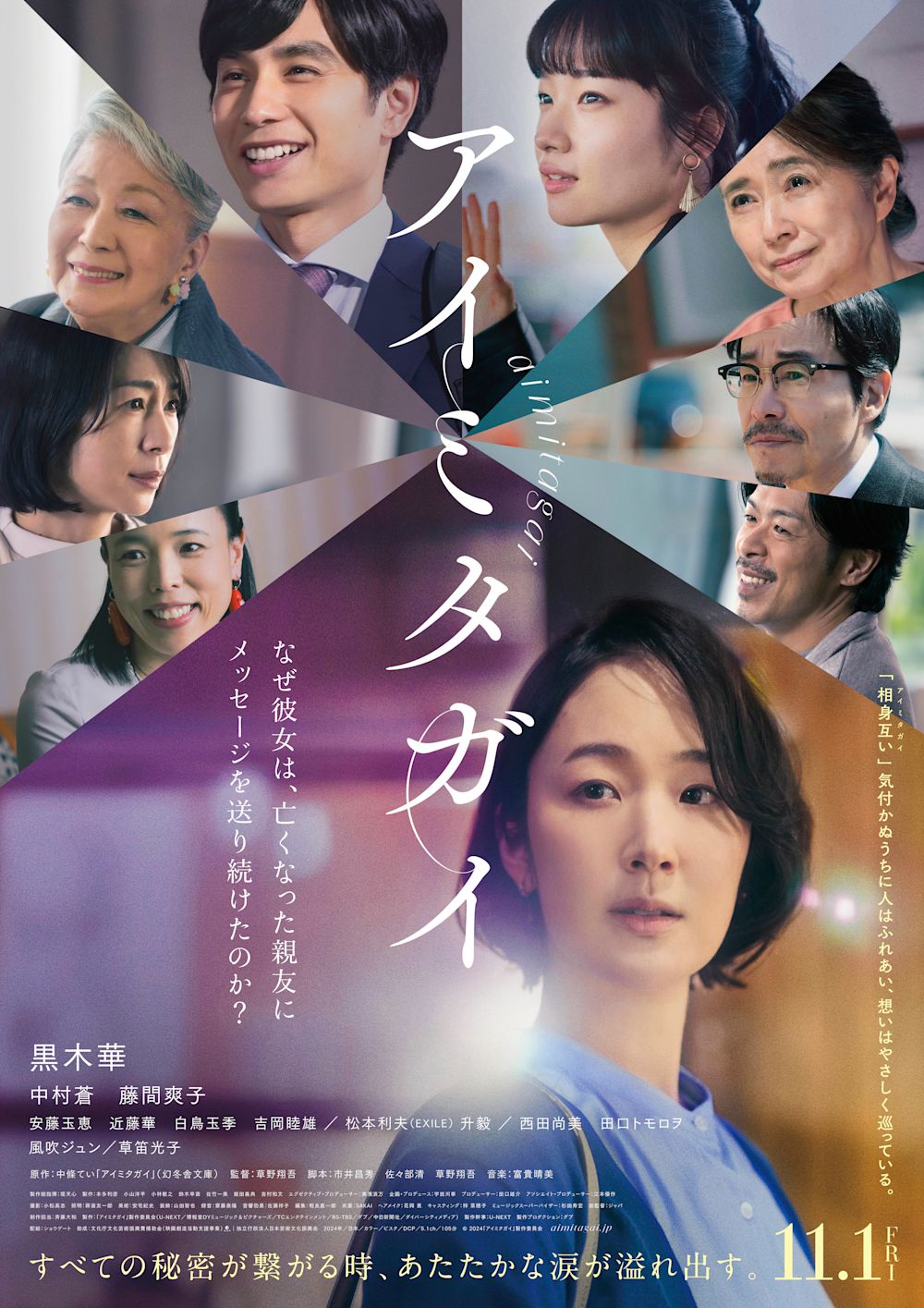
It was Kanami (Sawako Fujima) who saved Azusa (Haru Kuroki) in middle school when she was being bullied for coming from a single-parent family and the pair remained firm friends ever after until Kanami was suddenly killed in an accident while working overseas. Kanami’s loss leaves Azusa struggling to move forward with her life while mired in grief and uncertainty. Having lost her mother some years previously, she has never really dealt with the trauma of her parent’s acrimonious divorce and has a rather cynical view of marriage despite working as a wedding planner where her unmarried status sometimes causes her clients anxiety though it obviously has very little do with her ability to do her job. She’s always been clear with her long-time boyfriend Sumito (Aoi Nakamura) that marriage isn’t something she sees in her future, though he seems to want more commitment, while she repeatedly describes him as “unreliable” and is hesitant to take the next step with their relationship whether it involves getting married or not.

In that sense it’s really Azusa’s inability to surrender herself to the concept of what her grandmother (Jun Fubuki) calls “amai-tagai”, or mutual solidarity, which they experience first-hand while visiting her as another old lady nearby comes rushing in saying her house is on fire. It’s not so much reciprocity as a generalised idea of having each other’s backs, that people help each other as needed without keeping score in much the same way as Azusa was saved by Kanami and as she later realises by Komichi (Mitsuko Kusabue) whose piano-playing soothed her spirit though Komichi intended to play in secret, allowing her music to blend in with the six o’clock chimes as a daily act of atonement for having played the piano for boys who were going off to war many of whom never returned. It is then Azusa who saves Komichi in turn by telling her that she felt comforted by her music and that she does not believe that she has no right to play it simply because of the ways it was misused in the past. 

What Azusa fears is that by getting married she would essentially be cutting herself off from her paternal grandmother who, aside from her aunt (Tamae Ando) who is also Komichi’s housekeeper, is the only other family member she seems to have a meaningful connection with. Unable to let go Kanami, she keeps sending her messages little knowing that her mother is actually reading them and feeling both sorry and grateful that her daughter had such a good friend who like her is also struggling to continue on without her. She and Kanami’s father (Tomorowo Taguchi) find solace in the letters they receive from children at an orphanage where Kanami used to donate cakes and sweets after visiting there on a job. The photos she took are on display at their bathrooms, Azusa said because Kanami wanted them to be in a place where the children felt free to embrace their feelings privately without fear of embarrassment. 

The photographs, letters, and belated gifts are all examples of the ways in which what Kanami sent around is still going around and will continue to do so long after she herself is gone. Through realising the reality of “aimi-tagai”, Azusa learns that the world can also be a kind place, Sumito might be more “reliable” than she thought, and it might not be such a bad idea to trust people after all. Based on the novel by Tei Chujo, the film’s interwoven threads of serendipitous connections and the unexpected results of momentary acts of kindness prove oddly life-affirming if only in the ways in which each realise that Kanami is always with them even if physically absent.


Aimitagai screened as part of this year’s Toronto Japanese Film Festival.

Trailer (no subtitles)
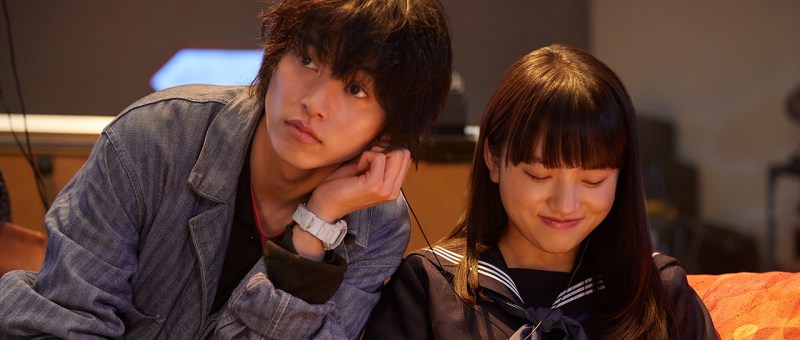
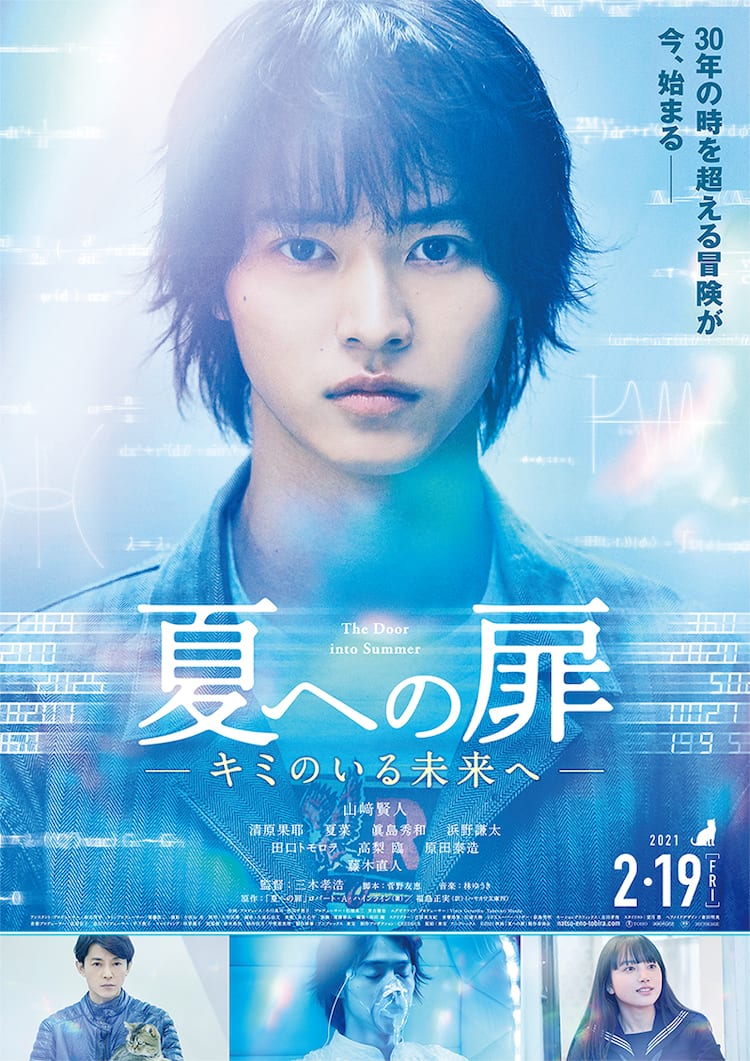
The Door into Summer (夏への扉 ―キミのいる未来へ―, Takahiro Miki, 2021)

Takahiro Miki has made something of a name for himself with a particular brand of bittersweet youthful romance often featuring a fantastical element such in Girl in the Sunny Place, or My Tomorrow, Your Yesterday. Adapted from a novel by Robert A. Heinlein, The Door Into Summer (夏への扉 ―キミのいる未来へ―, Natsu e no Tobira: Kimi on iru Mirai e) is in many ways more of the same, repurposing a sci-fi-inflected, slightly uncomfortable love story as an inspirational tale of never giving up and learning to overcome personal trauma in order to seek true happiness. 

In 1995, 27-year-old Soichiro (Kento Yamazaki) has experienced a lot of loss in his life. His mother passed away soon after he was born, followed by his father when he was 17. He was then taken in by a family friend and became a big brother to then 7-year-old Riko (Kaya Kiyohara), but his adoptive parents then died in a plane crash. While Riko went to live with her uncle Kazuto, Soichiro became a robotics prodigy with an internalised sense of despair that prevents him making lasting connections, believing that his fate is always to lose everything he loves. His prophecy is in a sense fulfilled when he’s duped into signing away some of his shares in the robotics company founded by his adoptive father by an unscrupulous colleague. Filled with despair, he decides to enter a cryostasis programme for 30 years intending to transfer his remaining stocks to Riko, in part avoiding the inappropriate crush she has on him and hoping to escape from reality along with his best friend/cat Pete to start again in another time when the programme promises his investments will have matured leaving him with a good quality of life. Before he can do that, however, an attempt to confront his wrongdoers backfires when he’s placed into their proprietary cryosleep programme to ensure he’s out of the way for the next three decades. 

To that extent, you’d have to wonder why they’d bother rather than just getting rid of him for good. In any case, when he wakes up he realises that the shady company that housed him, Mannix, went bust years ago leaving him with no savings and also no cat because his enemy didn’t give much thought to poor Pete. In the future, however, he gets a fancy new rogue robot companion, also called PETE, who supports him as he tries to adjust to the digital world his inventions helped create before realising that he must have at some point time travelled back to 1995 to put things “right” (to a certain extent) so that could happen and starting in on that. This accidental paradox is never really addressed, Soichiro travelling to the past because he knows he already has, but not giving himself very much time to complete the magic plasma battery that powers the future while remaining in hiding until ready to disrupt his tormentors’ dastardly plan, rescue his beloved cat Pete, save Riko, and return to the future to make sure that nothing else changes in the new 2025. 

It is indeed Pete that inspires the film’s title in his revulsion of winter weather, always insisting on checking all the internal doorways in the hope that one magically leads to summer which is a roundabout metaphor for film’s secondary message in the insistence on perseverance, never giving up or losing hope in a brighter future even it seems impossible. Nevertheless, it can’t be denied that there’s something slightly uncomfortable in the relationship between 27-year-old Soichiro and his 17-year-old adoptive sister Riko even as he repeatedly reminds her she’s still a child and should live her life with people her own age, especially given the implications of the romantic resolution which attempts to smooth over this awkwardness by placing them on a more equal footing if somewhat artificially. In the end, however, the most important tool for saving the future turns out to be companionship and unconditional support of the kind that Pete offered the orphaned Soichiro, a quality he later programs in to his over-curious robot “son”, PETE. Miki doesn’t do much with the hard sci-fi trappings of the original novel, but does in his best tradition craft an innocent romance as the hero learns to look for his eternal summer in the present rather than the past while overcoming his internalised despair in his cursed fate to embrace love and happiness. 


Trailer (no subtitles)
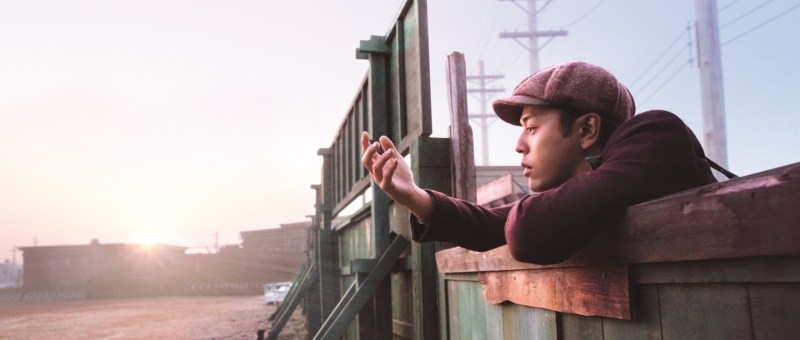
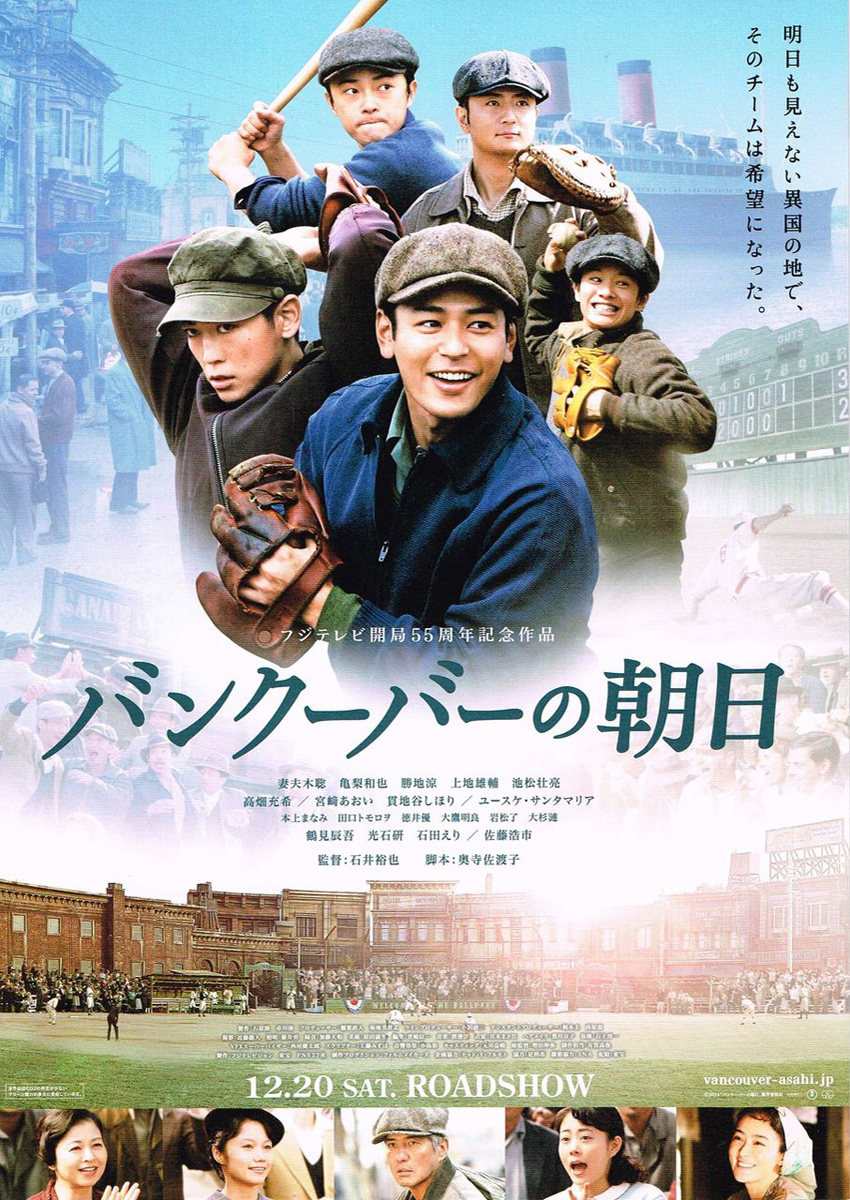
The Vancouver Asahi (バンクーバーの朝日, Yuya Ishii, 2014)

Second generation Japanese-Canadians stake their hopes on baseball in Yuya Ishii’s historical drama The Vancouver Asahi (バンクーバーの朝日, Vancouver no Asahi), inspired by the story of the Vancouver Asahi baseball team which was belatedly granted a place in the Canadian Baseball Hall of Fame in 2003. In many ways a conventional sporting movie in which the underdogs eventually triumph, Ishii does not shy away from the dark shadows of the 1930s even while framing the Asahi’s path to glory as a symbolic punch back against discrimination and oppression. 

As the hero, Reggie (Satoshi Tsumabuki), relates, many like his parents came to Canada at the beginning of the 20th century planning to work for three years and then return to a more comfortable life in Japan only to find themselves trapped in low-paid and exploitative work. Reggie’s main concern is that his drunken and dejected father Seiji (Koichi Sato) still sends the majority of his pay back relatives in Japan meaning their family live like paupers while as he never meant to stay he hasn’t bothered to learn the language or attempt to integrate into the local community. In fact, Reggie is their major breadwinner with his job at the sawmill but the only thing that makes his life worth living is playing baseball with the Vancouver Asahi baseball team even though they are regarded as something of a joke, always at the bottom of the league tables and never actually winning a game. 

The plight of Asahi is closely aligned with that of the immigrant community, divided as it is in its approach to integration with some feeling they should abandon their Japaneseness in order to better get along with Canadians and others fiercely determined to hang on to their traditions. When Reggie admits that they can’t win against the power of the Canadians it feels as if he’s talking about more than just baseball though his solutions are perhaps apt for both in realising that to beat strength you need to be smart. What he comes up with is essentially a bunt and run strategy that plays to their advantages of speed and lightness but also at times feels to him like a trick or a gimmick, an admission that they can’t compete in the normal way. “Why are you always apologising?” Reggie is repeatedly asked, his shyness and mumbling speech always seeking to keep the peace while his desire to offer justification is less as one Japanese old lady puts it “a bad habit of their culture” but a defence mechanism in an environment of potentially violent oppression. 

As Japanese migrants the family faces constant xenophobic micro aggressions, a woman at the hotel refusing to let Reggie’s bellboy friend Frank (Sosuke Ikematsu) carry her bags while they are also suspected as thieves or harassed by the local Canadians. Reggie’s hothead friend Kei (Ryo Katsuji) finds it increasingly difficult to keep his cool, not least as it turns out because his father was killed fighting for the Canadians in the last war and yet he is still treated as a dangerous outsider. Meanwhile, they are paid only half the wages of the Canadian workers, expected to work unreasonable hours, and can be fired without warning. Now an ageing man, Seiji is still a casual labourer fighting for a place on a truck to work at a quarry or construction site often in other towns away from his family in order to get more money. The team is constantly losing players because men lose their jobs and focus on finding new ones or moving away. As one old man laments, there’s no job security and even if you go to a Canadian university it won’t make any difference to your job prospects. Reggie’s sister Emi (Mitsuki Takahata) was on track for a scholarship only to have it pulled at the last minute when parents of the other kids complained it wasn’t right it was going to a Japanese girl. 

After the hotel fires all of its Japanese staff, Frank decides to go “back” to Japan where relatives will help him find work but pointing out to Reggie that he’ll still be seen as an outsider even there and there’s no guarantee anything will be any better in Japan. Poignantly the guys later catch sight of him in a newsreel as a soldier having been sent to the Machurian front. Once war breaks out they are discriminated against again, forced out of their homes and interned leaving all their property behind and destroying their small community, the Asahi included. The team’s unexpected success had forged a bridge between the Japanese and Canadian communities but it was not strong enough to survive the war. Stepping away from the sports movie, Ishii concentrates more on the ways they were betrayed, the team’s success later buried and forgotten while they find the advances they’d made washed away on the shore as if to suggest their strike back against an oppressive society could never be more than superficial while their position remains so precarious. 


Trailer (no subtitles)

Hijacked Youth – Dare to Stop Us 2 (青春ジャック 止められるか、俺たちを2,  Junichi Inoue, 2024)

A loose sequel to 2018’s Dare to Stop Us, Hijacked Youth (青春ジャック 止められるか、俺たちを2, Seishun Hijack Tomerareruka, Oretachi wo 2) picks up a decade later with an autobiographically inspired tale from writer director Junichi Inouchi but in its way also becomes the latest in a series of indie films to offer a celebration of Japan’s mini theatres still struggling with the fallout from the COVID-19 pandemic while exploring the origins of the contemporary independent film scene. 

The allusion seems clear even from the film’s opening in which cinephile and former programmer Kimita (Masahiro Higashide) fears for the future of cinema amid the arrival of the VCR. Having quit his job to support a young family, he is puzzled but eventually won over when unexpectedly contacted by notorious film director Koji Wakamastu (Arata Iura) who has apparently decided to open a cinema in provinciail Nagoya after the screening of Ecstasy of the Angels was restricted because someone bombed a police box for real. Kimita wants to run it as a rep cinema, but Wakamatsu sees it partly as a vanity project and a side business so has his eye on the bottom line. Making the mistake of programming films he thinks are good rather than ones people want to see quickly puts them in the red with Wakamatsu pressuring Kimita to give in and agree to screen pink films even though he himself had admitted that pink cinema had had its day. 

Wakamatsu is forever taking Kimita to task for having a prejudice against these kinds of films which are after all the kind that Wakamatsu makes though he does concede that there are talented directors working in pink film who may someday become the leading lights of the Japanese cinema industry. Some of that is hindsight, but what the film is working towards is a link between pink film, which was independently produced in contrast to something like Roman Porno which was made by a studio with much higher budgets and production values, and the rise of independent cinema which is largely dependent on the mini cinema ecosystem to it keep going. 

But then the film is also a nostalgic memoir revolving around the director’s teenage dreams and his eventual meeting of Wakamatsu thanks to the cinema in Nagoya. The irony is that the first film had been titled “Dare to Stop Us,” focussing on Wakamatsu Pro during the turbulent days before Asama-sanso as an anarchic force in a sometimes staid film industry. But the through line here is that everyone gives up far too easily. Kimita abandoned his dreams to sell video recorders, while the young woman who works for him believes she has three strikes against her, the first being her gender, the second a lack of talent, and the third which she does not disclose that she’s a member of the Zainichi community of ethnic Koreans often discriminated against even the Japan of the 1980s and in fact today. 

Junichi gives up a bit easily too after making a twit of himself on Wakamatsu’s film set, though the picture he paints of him is larger than life. Fatherly and compassionate, he gives him solid advice to go to a proper uni and learn filmmaking with him while otherwise taking him under his wing, but also pretty much takes over after giving him his first opportunity to make a film and has a tendency to take no prisoners when it comes to his crew members. At least as far as the film would have it, he’s become a rather lonely figure now that his more politically minded friends have scattered following he decline of the student movement in Japan. As much as anything else, the film is a sort of hagiography as evidenced by the surreal coda which seems to reference the director’s early death in traffic accident in 2012, jumping forward 30 years to find the cinema still open and celebrating his legacy more literally yet also in its existence in supporting the indie scene Wakamatsu helped to birth. According to Wakamatsu, the most important thing is finding your own angle and sticking to it, something his rebellious spirit at least may have fostered in the many directors who started their careers at Wakamatsu Pro and not least Inoue himself.

Hijacked Youth – Dare to Stop Us 2  screened as part of this year’s Nippon Connection

Original trailer (English subtitles)

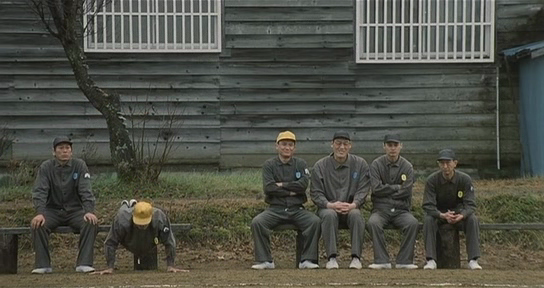
Doing Time (刑務所の中, Yoichi Sai, 2002)

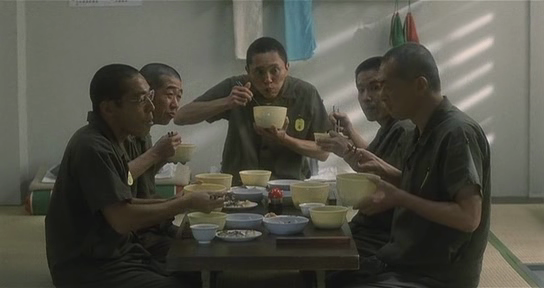
Who ever thought that life in prison could be so…peaceful? Adapted from the autobiographical manga by Kazuichi Hanawa, Yoichi Sai’s 2002 drama Doing Time (刑務所の中, Keimusho no Naka) is a slice of life dramedy somewhat typical of the early 2000s save its unexpected setting in a state penitentiary. Unlike the average prison movie, the main thing that Hanawa discovers is that life inside is incredibly dull, yet he approaches his brief sojourn in this other world with anthropological precision observing and mimicking the behaviour of his fellow prisoners while making the most of this hopefully once in a lifetime experience reflecting that he’ll likely never have the opportunity to wear such worn out undergarments ever again. 

A quiet man already in middle age, Hanawa (Tsutomu Yamazaki) is no dangerous criminal merely a firearms enthusiast who liked to fire modified pistols into bottles of water. He’s got three years for illegal possession of weaponry and explosives, which seems to be quite a harsh penalty considering another man is doing seven for murder after shooting a man he says waved an axe at him when he went to collect a debt. There are clearly men who have committed violent crimes in Hanawa’s immediate vicinity, yet this is not a traditional tale of prison gangs and factional infighting, the only violence we witness concerns one prisoner who appears to have broken the rules accidentally in thoughtlessness or ignorance rather than direct rebellion. Rather it is, ironically enough, almost like a summer camp in which Hanawa and his four cellmates attempt to amuse themselves during the little free time they are offered for contemplation and relaxation. 

Even so, every inch of the prisoners’ lives is micromanaged by the guards from the way they walk to when they are allowed to move or speak. So entirely stripped of their dignity are they, that they must ask for permission even to use the toilet in their own cell while in solitary confinement and dutifully report back once they’ve finished. The communal squat toilets at the back of the workshop where Hanawa works crafting wooden tissue boxes are entirely open with only knee-height doors on each stall for privacy. The prisoners’ days are tightly ordered, early to bed and early to rise with work in-between and only the promise of rest to look forward to on weekends and holidays. 

Ostensibly a shy man, Hanawa dislikes having to ask permission all the time though not so much as an affront to his autonomy as simply bothersome. Surprisingly he begins to warm to the rhythms and routines of prison life discovering in them a kind of liberation, finding his time in solitary for “unauthorised communication” the most enjoyable of his sentence free as it is of the necessity of interacting with other people. Like the bug collector in Woman of the Dunes, he finds freedom in simplicity appreciating the mindlessness of his absurd new job folding paper bags for medical prescriptions. He can abandon any sense of responsibility for his life, submitting himself entirely to the guards’ authority and surrendering the need for control, happy to allow his existence to be managed for him without needing to decide on anything for himself. 

That aside, it’s difficult to see what other purpose prison could serve for a man like Hanawa who merely had an unusual if potentially dangerous hobby save providing him with a unique life experience he seems to be treating as a kind of adventure. He may at times look down on his cellmates who have their own routines, but otherwise appears grateful for their input and advice regarding prison life often listening to their explanations for behaviour he regards as strange such as removing one’s trousers before entering the bathroom and then deciding to do as they do. With so little stimulation the mundane becomes exciting, each meal a culinary adventure listening to a cellmate recount his group treat of a film screening (Takeshi Kitano’s Kid’s Return) as if he had returned from exotic land relishing his description of the chocolate biscuits and cola he was given to snack on. Time is what Hanawa is doing, but he does at least gain the opportunity of experiencing life in slow motion learning to appreciate the beauty of a single dandelion while observing the absurdity of the world all around him which is perhaps no more absurd than that which exists outside. 


Love Life (Koji Fukada, 2022)

Emotional distance and the contradictions of the modern family conspire against a grief-stricken newlywed couple in Koji Fukada’s moving social drama inspired by the 1991 Akiko Yano hit, Love Life. Interrogating love in all its forms along with its limitations, Fukada seems to asks if love is ever enough to overcome a sense of loneliness or if the space between people can really be bridged by communication alone while the couple find themselves pulled back towards the unfulfilled potential of failed romance in contemplating the possibilities of different if not necessary better futures. 

The fracture points in the recent marriage of Jiro (Kento Nagayama) and Taeko (Fumino Kimura) are thrown into relief during a double celebration as the couple host what is superficially a party for Taeko’s six-year-old son Keita (Tetsuta Shimada) winning an Othello competition but in reality a surprise do for father-in-law Makoto’s (Tomorowo Taguchi) 64th birthday. The elephant in the room is that Makoto does not approve of the marriage, making a rather unkind remark about second hand goods in irritation that his son has chosen to marry a woman who already had a son. Though Jiro’s mother Akie (Misuzu Kanno) is in general kind and keen to defend her new daughter-in-law even she tactlessly adds that she hopes the couple provide them with their “own” grandchild as soon as they can. The remark appears to cut to the quick of the already wounded Taeko, a look of dumbfounded confusion on her face in this sudden moment of accidental rejection. 

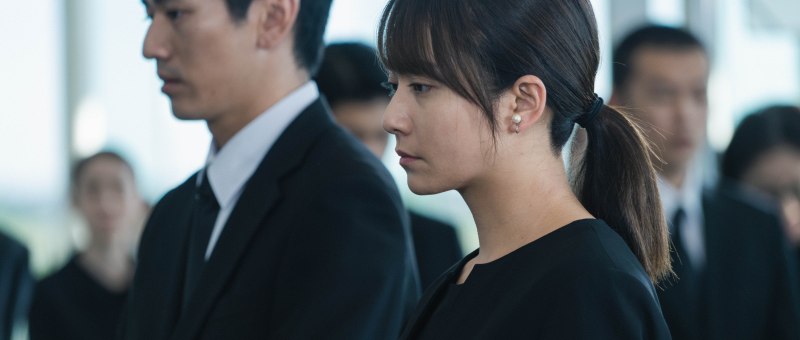
During the party, Keita is killed in a tragic domestic accident of the kind for which no one is to blame and could easily strike any family. Police questioning further emphasises the couple’s disconnection as a policewoman probes why Jiro had not legally adopted Keita as his son when they married only to discover that he did not want to do so until he’d received his father’s permission to add him to their family register. Though only married for a little under a year, Jiro had felt himself to be Keita’s father and loved him as a son yet is awkward in his grief, wanting to cry alongside his wife but feeling as if he had no right to do so. The feeling is compounded when Keita’s estranged father, Park Shinji (Atom Sunada), suddenly arrives at the funeral, soaking wet and in inappropriate clothes, to first breakdown over the coffin and then roundly strike his former wife across the face before being escorted away by security. 

In a mirrored scene, Taeko had asked her husband shortly before the party about another woman, Yamazaki (Hirona Yamazaki), sensing that there may have been something between them and feeling an anxiety in the precarity of their married life. Jiro is then left anxious by the resurfacing of Shinji yet trying to act against it, later advising Taeko that she should feel free to help him seeing as it seems he has fallen on hard times and has no one else to turn to as he is deaf and communicates in Korean sign language which few around him know. Taeko had previously used sign language to slip into a different world with her son when Jiro had asked why he never wants to play Othello with him only for Keita to reply in silence that it’s only because he’s not very good at it. There is a palpable pain on his face observing the closeness that exists between Taeko and Shinji as they communicate in a private language while, as Yamazaki later describes it, he is a man never quite able to look anyone in the eye. 

While he is drawn back to his unfinished business with Yamazaki, Taeko finds herself filling the void in her life by trying to rescue Shinji. Treating him almost as a child, she comes to believe that he cannot survive without her yet later realises that the intimacy she felt between them was only an illusion, Shinji had never really been emotionally honest with her and there are in fact plenty of other people with whom he can communicate if only he chose to do so. Just as she had been isolated at the party, marooned in the kitchen on her own, she is abandoned once again yet perhaps coming to a final acceptance of her son’s death along with a clearer understanding of her love and life even if it all it means is walking in parallel with no clear direction. A melancholy mediation on grief, Love Life suggests you don’t so much move on from the past as take it with you even as the pair of conflicted lovers determine to look to the future rather than the past as a path to salvation.


Love Life screens 8th/9th/14th October as part of this year’s BFI London Film Festival.

Original trailer (Japan subtitles only)

Love Letter (ラブレター, Shunji Iwai, 1995)

“People are forgotten so easily” a widow laments after an insensitive comment from a family friend, yet there is perhaps a difference between forgetting and letting go as exemplified in the distance between two accidental pen pals in Shunji Iwai’s profoundly moving romantic melodrama, Love Letter (ラブレター). A huge hit and pop culture phenomenon throughout Asia on its 1995 release, Iwai’s first theatrical feature bears many of the hallmarks of his enduring style in its soft focus, ethereal lighting and emphasis on nostalgia as the two women at the film’s centre each restore something to the other through their serendipitous correspondence. 

Iwai opens with a memorial service for Itsuki, the late fiancé of the heroine, Hiroko (Miho Nakayama), who passed away two years previously in a mountain climbing accident. Hiroko has since started a relationship with his friend Akiba (Etsushi Toyokawa) who avoided attending the memorial out of misplaced guilt and gave up mountaineering soon after Itsuki’s death. Akiba is keen to move their relationship forward, but fears that Hiroko is still stuck in the past unable to let go of her love for Itsuki. On a visit to Itsuki’s mother (Mariko Kaga), she finds an old address in his middle school year book for a home that apparently no longer exists and decides to mail him a letter saying nothing more than “How are you? I’m fine” of course expecting no reply. What she didn’t know, however, is that there were two Itsuki Fujiis in her Itsuki’s class, the other being a woman still living at the same address to whom Hiroko has accidentally mailed her correspondence. Confused, the other Itsuki (also played by Miho Nakayama) mails back and eventually finds herself recalling memories of the male Itsuki as an awkward, diffident teen she may have entirely misunderstood. 

Played by the same actress the two women are each in a sense trapped in an eternal present, unable to move forward with their lives. While Hiroko is consumed by grief and fearful of committing to her new relationship with Akiba lest she betray the memory of Itsuki, Itsuki is still struggling to come to terms with the traumatic death of her father 10 years previously who passed away from pneumonia after contracting the common cold leaving her with persistent health anxiety. Meanwhile, she is also struggling to move on from her family home which is in an increasingly perilous state of disrepair. She and her mother (Bunjaku Han) want to move into a modern apartment, while her grandfather (Katsuyuki Shinohara) prefers to stay even though it seems that the house will soon have to be demolished. 

Through their accidental correspondence, both women are forced to deal with recent and not so recent loss, Itsuki in some senses having forgotten the boy who shared her name while Hiroko remains unable to forget. Through his trademark ethereal lighting and frequent use of dissolves, Iwai hints at a sense of perpetual longing for the nostalgic past. The letters may not have been from the late Itsuki in a literal sense but were perhaps a message from him, connecting the two women and eventually freeing each of them as the love letter of the title is finally delivered ironically enough hidden inside a copy of Remembrance of Things Past. 

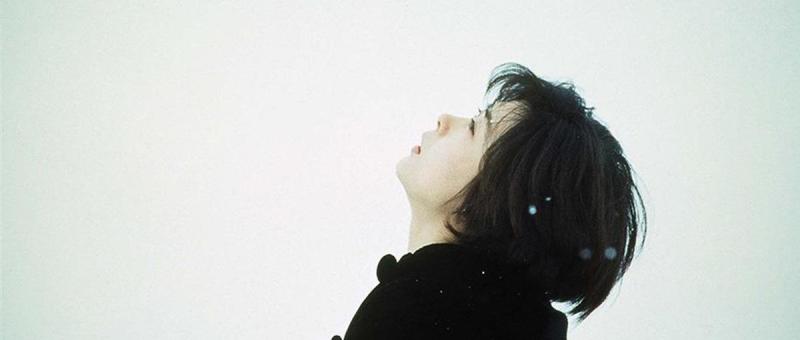
This sense of grief-stricken inertia is perfectly reflected in the snowy vistas of the lonely northern town of Otaru, thrown into stark contrast with the intense heat of the furnace in Akiba’s glassblowing workshop, or the gentle warmth of the old-fashioned stove in Itsuki’s room as she types replies to Hiroko’s handwritten letters. As Hiroko eventually reflects, they each knew a different Itsuki and have each in a sense both lost him if restoring something one to the other through the exchange of memories that grants Hiroko the understanding she needs to let go and Itsuki the poignant realisation of a youthful missed connection. A bittersweet meditation on love, loss, grief, and memory, Iwai’s epistolary drama has its own sense of magic and mystery in the strange power of this serendipitous connection leading to a tremendous sense of catharsis as a long delayed message finally makes its way home bringing with it a shade of melancholy regret but also possibility in the new hope of forward motion.


Love Letter screens at the BFI on 22/28 December as part of BFI Japan.

Original trailer (no subtitles)

Gohatto (御法度, Nagisa Oshima, 1999)

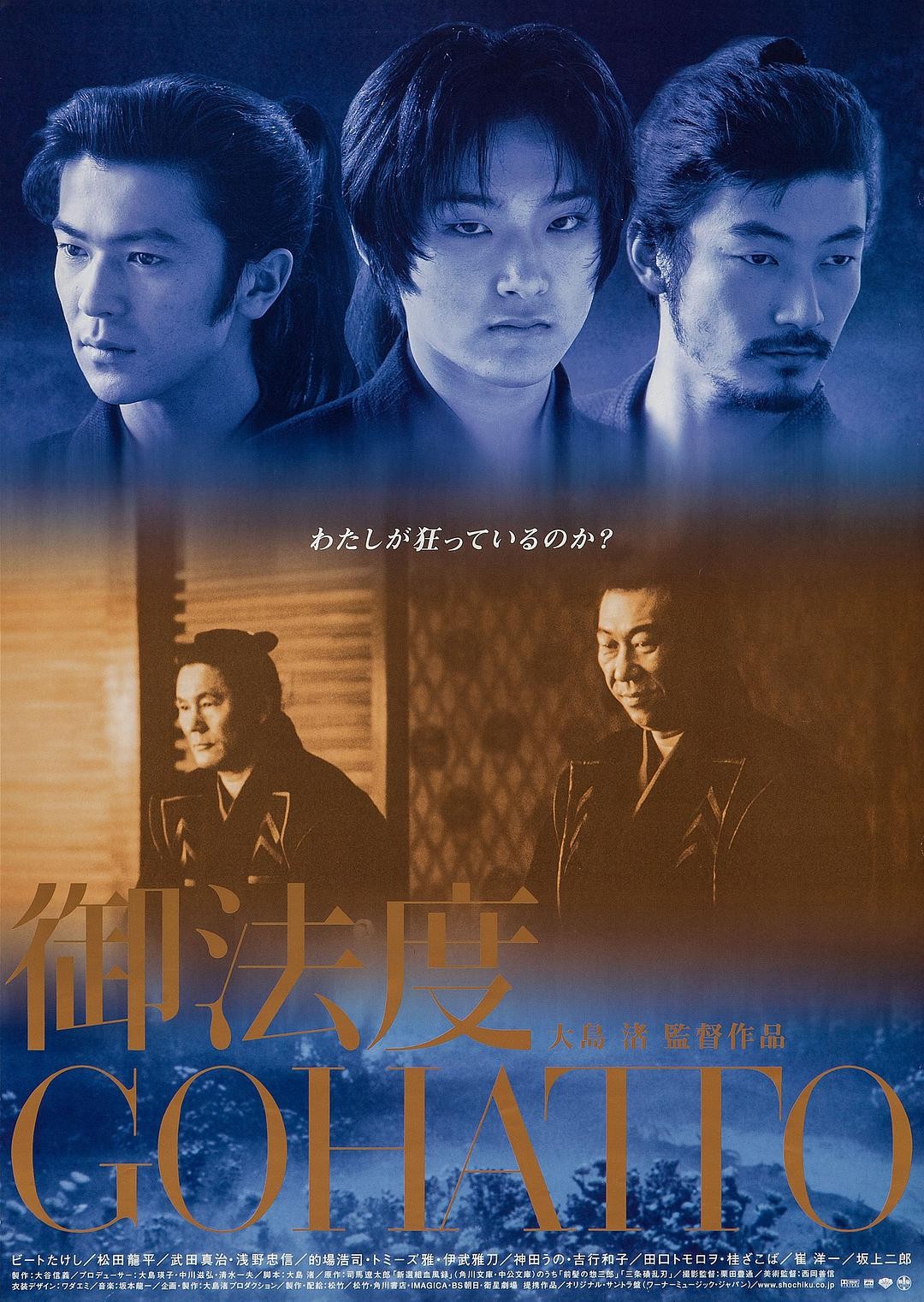
Nagisa Oshima once said that his hatred of Japanese cinema extended to absolutely all of it, decrying the hackneyed nativism of “foggy beauty and stupid gardens”, yet his final film is filled with Mizoguchian mist and almost a paen to Japanese aesthetics which ends with a cherry blossom tree in full bloom cut down in its prime. Burdened by the slightly more salacious title “Taboo”, Gohatto is less about love between men in an intensely homosocial world even as it asks what it might mean by “forbidden” or “against the law” than it is about idealism and aesthetics as its band of contradictory conservatives unknowingly approach the end of their world in a coming modernity ushered in by dangerous beauty. 

Set in the Kyoto of 1865, a scant three years prior to the Meiji Restoration, the film opens with an audition of sorts as the Shinsengumi search for promising new recruits among talented swordsmen. Already a mess of contradictions, the Shinsengumi is, loosely, a kind of official police force dedicated to defending the Shogunate against the revolutionary forces set on restoring power to the emperor. Nevertheless, in an odd way and in contrast to the elite Mimawarigumi which was staffed only by direct retainers to the Shogun, the Shinsengumi was noted for its lowkey egalitarianism in that it made a point of admitting those of ordinary birth as well as lower level samurai and ronin. Of course, the notions of equality only went so far and perhaps only fuelled its reputation for merciless savagery, but also make it a strangely progressive force fighting against progress in defence of the feudal status quo. 

Only two of the hopefuls are thought to be any good, one a young ronin, Tashiro (Tadanobu Asano), and the other a beautiful boy, Kano Sozaburo (Ryuhei Matsuda), the third son of a wealthy merchant whose line were once samurai but are no longer counted among the noble retainers. A talented swordsman, Sozaburo’s dangerous beauty presents an existential threat to the Shinsengumi order, the steely Hijikata (Takeshi Kitano) looking on conflicted in witnessing the way his commander, Kondo (Yoichi Sai), looks at this vision of androgynous beauty remarking that he had not known him to be “that way inclined”.

Being that way inclined does not seem to be a particular issue within the Shinsengumi, it is not against their draconian rules and in fact appears to be tolerated at least as long as it causes no further problems. Kondo is however mindful of the chaos caused by a similar wave of homoerotic lust which took hold shortly before a climactic battle which would prove to be their last success. What Sozaburo seems to arouse in them is something more dangerous than the accepted patterns of love between military men which is in a sense sublimated as a mentor/student relationship, loyalty more than romance. Tashiro, who is of a similar age to the apparently 18-year-old Sozaburo, lets his desire be known, vowing to sleep with him before he dies ironically acknowledging Sozaburo for what he is, an angel of death. 

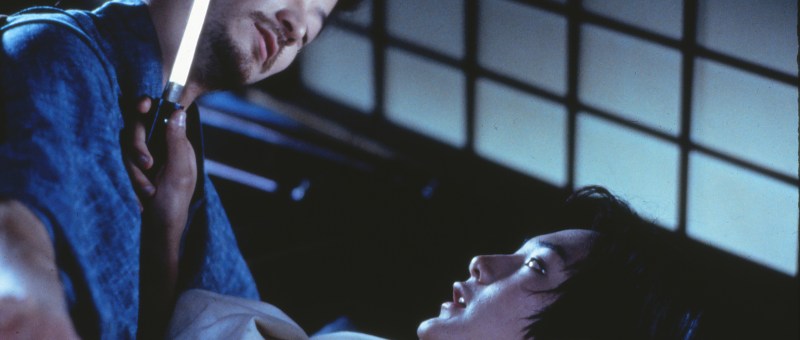
For his part, Sozaburo remains curiously passive in each of his encounters, aroused only it seems by the act of killing. Yet Hijikata discerns that he has indeed become Tashiro’s lover on witnessing them fight, Sozaburo losing clumsily despite being the more skilled in a dynamic that mimics their relationship in which Tashiro is the dominant partner. Aware of the danger in Sozaburo’s allure, Kondo suggests having a superior take him to the red light district to show him the delights of woman hoping to guide him back towards a less dangerous path, only the attempt backfires on several levels. Firstly, Sozaburo has no interest in women and continues to decline believing his commander is also hitting on him (like everyone else), thereafter determined to seduce him after all. Another retainer does indeed succeed in seducing Sozaburo, developing a mild obsession, but later ends up dead, Tashiro a main suspect in his murder with the motive of sexual jealousy though all of this additional violence is perhaps only an expression of Sozaburo’s dangerous beauty. 

As so often, sex if not love becomes the force which destabilises the social order only here it’s equated both with death and with an alternative mediation of male violence. Perhaps reflecting the way they look to the 18-year-old Sozaburo who makes a faux pas in accidentally suggesting at least one of them is of pensionable age, the ranking members of the Shinsengumi are played by actors already well into their golden years as if relics of a bygone era though in reality most were in their 30s. As Soji (Shinji Takeda), a filial figure like Sozaburo wearing long hair, puts it, there are no old men in their unit which is in essence an anti-revolutionary force. Nevertheless, the Shinsengumi is on the wrong side of history and already living in its end times, perhaps ushered towards its doom by the figure of the beautiful boy. “You were too beautiful”, Hijikata eventually laments as he finally perhaps understands the nature of the revolution he is witnessing. Perverse to the last, Oshima sets his ethereal finale in a stygian fog and pays an ironic tribute to the Mizoguchian classicism he so railed against in his youth, taking a sword to the cherry blossoms as he like Hijikata severs his own legacy in a moment of destructive beauty. 


Gohatto screens at Genesis Cinema on 25th September as part of this year’s Queer East

International trailer (English subtitles)

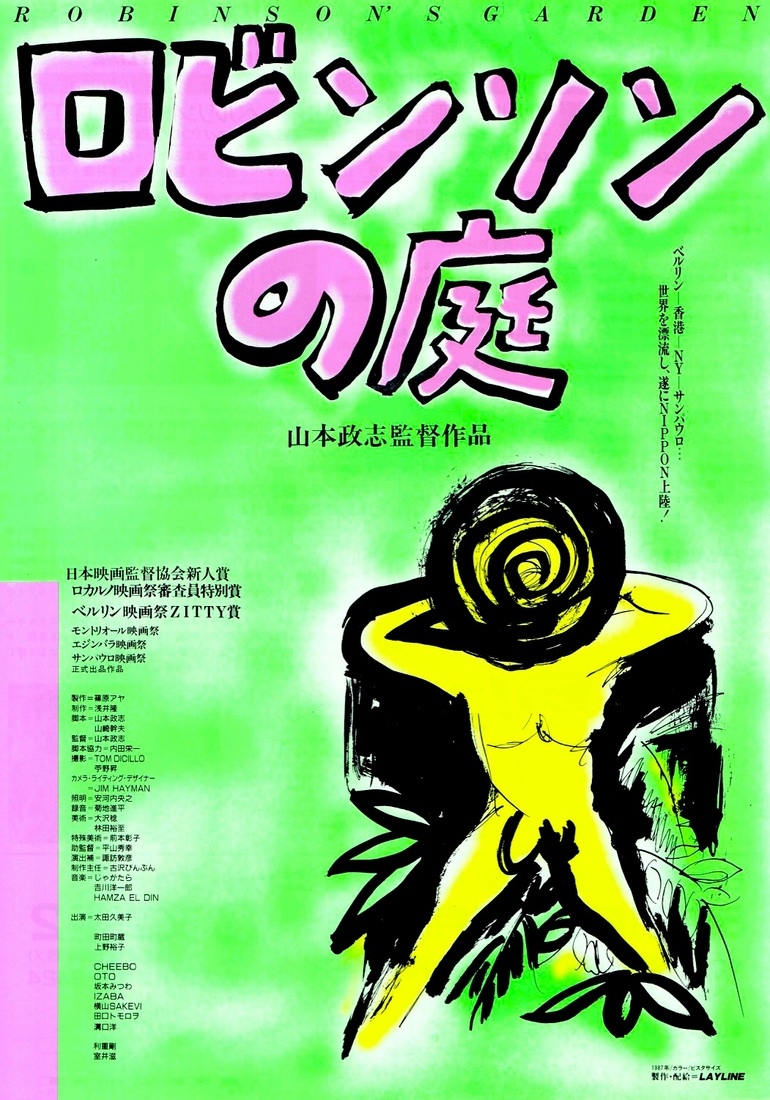
Robinson’s Garden (ロビンソンの庭, Masashi Yamamoto, 1987)

By 1987 Japanese society was at the height of Bubble-era consumerism. Everything was bright and exciting, money flowed freely, and everyone worked all the time. Meanwhile, there was also a flourishing of avant-garde subcultures among young people who actively rejected the salaryman straitjacket and sought for more individualistic freedoms in their lives. Masashi Yamamoto had begun his career with explorations of counter-culture life such as his 1982 debut Carnival of Night but shifts into a more metaphysical gear with his trippy 1987 tale of nature’s revenge and the costs of life in a solo commune, Robinson’s Garden (ロビンソンの庭, Robinson no Niwa). 

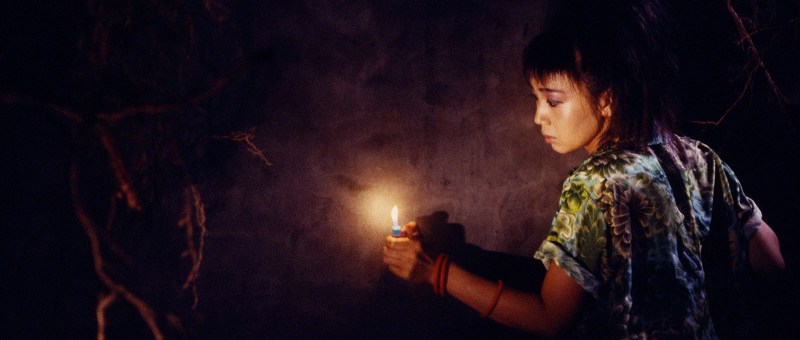
Two years later, Junichi Suzuki would also draw inspiration from the tale of Robinson Crusoe in the Bubble-era farce Robinson on the Beach which is in many ways an inversion of Robinson’s Garden in which a low-level salaryman’s life is upended when he wins a brand new house in the suburbs but becomes the subject of class-based resentment from his bosses while expected to play act the “model family” as part of the developer’s ideal homes marketing campaign. Kumi (Kumiko Ohta) by contrast is a floating bohemian living at the beginning of the film in a multi-cultural commune and supporting herself by selling drugs of which she is also a user. Drunk and stumbling around in the darkness, she accidentally comes across an abandoned industrial complex and is bewitched by the garden growing inside its walls as nature begins to reclaim its own. Selling most of her possessions in a yard sale, she leaves the commune and begins squatting in the factory attempting to return to the land by growing her own produce and living entirely alone. 

The bohemian, internationalist Tokyo that Kumi inhabits stands in direct contrast to that often seen in contemporary mainstream cinema, her eventual decision to leave this globalised communal society for ultra isolationism an intense irony. Then again, there is something of a negative judgement towards the aimless way she lives her life which extends to the wider world around her. Meeting up in a cafe with a friend recently released from prison, an extremely drunk man continues to have significant difficulty understanding where he is and what’s going on eventually picking up a table but unsure what to do with it. She and her friends are often described, and sometimes describe themselves, as “wacko” in their attempts to live outside of accepted social norms and it’s when Kumi invites her friends into her new private utopia that it first begins to betray her as a prayer circle and a pointless argument somehow provoke a mass brawl while Kumi remains on her sun lounger feeling the first pangs of an illness which will continue to plague her throughout the rest of the film. 

This may in part be down to a strange painting placed on her wall by an intruder, but nature also begins to take against her best efforts as the seasons change and her large crop of cabbages, for some reason all she appears to plant, is destroyed by heavy rainfall which later leads to flooding. Best friend Maki (Cheebo) ventures into a basement and finds tree roots growing through it, listening intently to rumbling behind a wall she attributes to the presence of the subway but is later implied to echo the scrabbling of a ghostly otter looking for its family. A casual boyfriend who stays the night appears to have an episode of mental instability while exploring as if the environment has driven him mad while Kumi becomes progressively sicker with debilitating stomach pains and fever. 

Yet the only lesson that we see her learn is that we are not the masters of our environment. With her help, nature gradually reclaims this previously industrial space filling halls with flowers and covering the walls with greenery. Even her pink moped lies rusty and half-buried while she furiously digs a hole with seemingly no way of climbing out unassisted. Meanwhile, a mean little girl that for some reason always hung around the factory, even at one point eating KFC in the rain, flies a model aeroplane around a sacred tree and trashes a toy birdcage as if playing in the ruins of a post-industrial world. Called to something older and earthier, Kumi retreats fully from the highly corporatised, consumerist society of the Bubble era but the jury seems to be out on whether her experiment in isolationism is success or failure. Yamamoto’s famous distain for logical narrative progression lends an absurdist air to Kumi’s continuing desire to return to the garden but captures the mystifying allure of nature in all its ethereal, if perhaps sinister, glory. 


Robinson’s Garden streams in the US until Sept. 2 as part of this year’s Japan Cuts.

Restoration trailer (no subtitles)

My Little Monster (となりの怪物くん, Sho Tsukikawa, 2018)

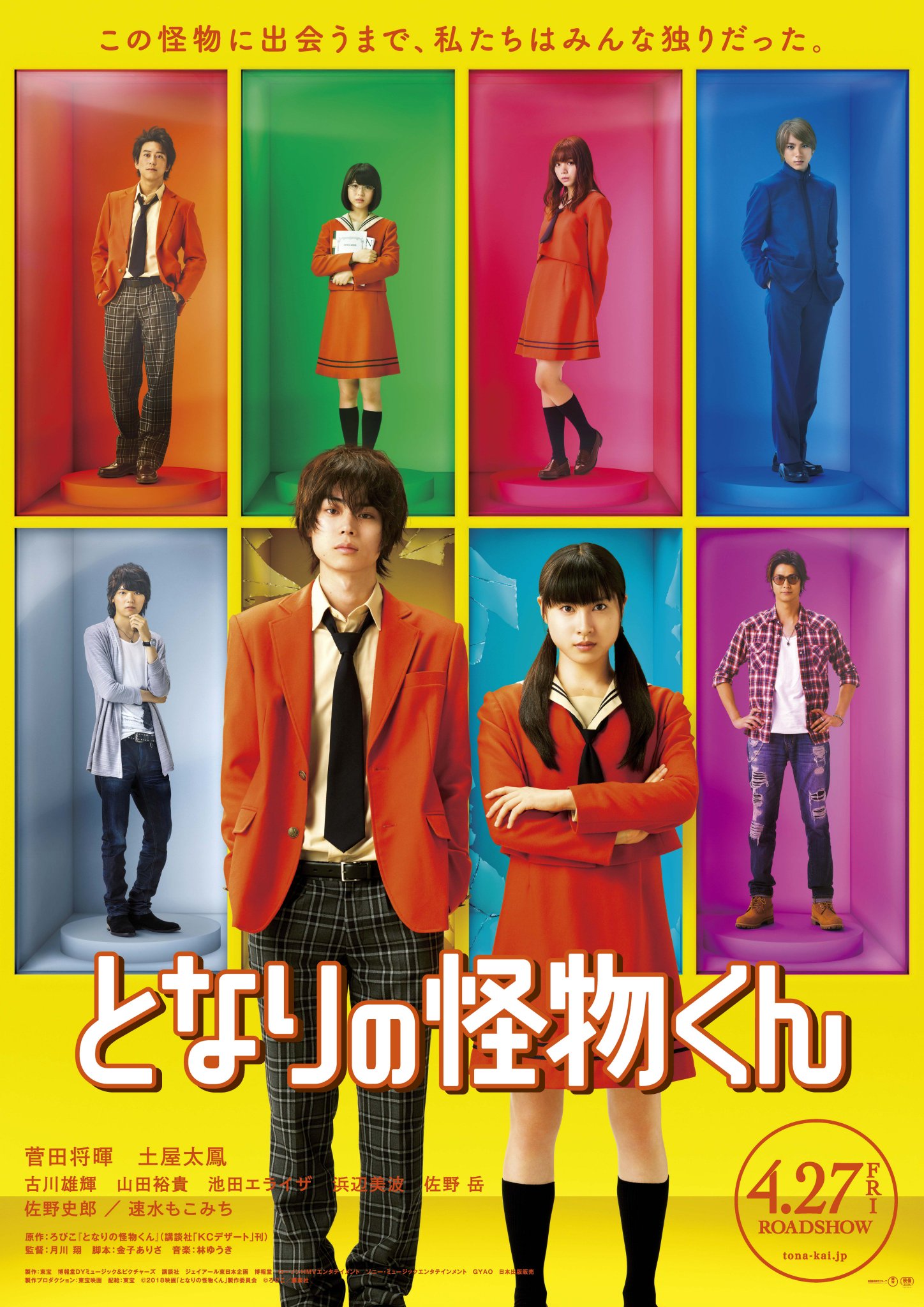
A wilfully self-contained high school girl falls for a big-hearted classmate, but struggles to understand that they are in essence fighting different battles in their parallel quests for acceptance. Adapted from the hit shojo manga by Robico, Sho Tsukikawa’s My Little Monster (となりの怪物くん, Tonari no Kaibutsu-kun) is in many ways a typical high school rom-com in which a repressed young woman begins to deal with her abandonment issues essentially by mothering a displaced young man whose “problematic” big-heartedness sees him regarded as a “monster” by a still conservative society. 

Opening with a flashback presumably set in the present day, an older Shizuku (Tao Tsuchiya) now wearing a lawyer’s pin listens wistfully to Kana Nishino’s 2010 hit Best Friend and reflects on a time when all she cared about was studying, rejecting all human connection. Until that is she met the titular “monster” Haru (Masaki Suda) and suddenly found herself surrounded by people. Haru, as we discover, got into a fight on the first day of school and never actually showed up for classes. Because Shizuku should have been his desk neighbour, the panicked teacher asks her to take the handouts etc to his home in the hope he’ll one day return. Shizuku has no interest in doing as the teacher has tasked her but fulfils her duty, only to unexpectedly encounter Haru who then decides they must be “friends” based on a primary school understanding that friends take each other notes and homework when one of them is sick. 

It turns out that Haru hasn’t been coming to school because it bothers him that everyone finds him scary because of his lack of impulse control. He desperately wants to make friends and thinks he has some in a trio of local boys but Shizuku can see right away that they are essentially bullying him for money and tries to explain that “real” friends don’t sponge off each other. Perhaps because of his innate kindness, Haru is completely guileless and sees the best in everyone unable to understand when he’s being taken advantage of. Despite herself, Shizuku begins to feel protective assuring Haru that he will one day be surrounded by people who understand him unwittingly echoing the words of his late aunt who was the only other person who’d ever rooted for him. Straightforward as ever, Haru immediately confesses his love and so their awkward high school romance begins. 

Shizuku, however, is still largely uninterested in love. She has devoted herself to studying and only cares about coming top in the school exams. As we discover this is less because of academic ambition than practical application. She studies hard and immediately sees results. It’s the sure thing, something which is completely within her own control, unlike other people’s feelings which are necessarily messy and unpredictable. There is however an uncomfortable conservatism in the centring of Shizuku’s trauma solely in the fact that her mother works outside the home and is therefore not present in her life in the way that mothers are expected to be in a patriarchal society while her family set up is regarded as unusual in that her father, having failed several times in business, is a househusband. 

Meanwhile, she remains fairly blinkered to Haru’s parallel familial disconnection in that he has apparently been disowned by his authoritarian father for his free-spirited ways. Taken to a birthday party held for Haru’s older brother Yuzan (Yuki Furukawa), Shizuku begins to realise there is a large class difference between them but reacts badly, confused that he is rejecting the very things she’s striving for in refusing to reconnect with his father, ignoring the fact that he has separated from him because he is essentially abusive. He refuses to let Haru be Haru, trying to straight-jacket him into conventionality by forcing him to clamp down on his noisy impulsivity, something which he seems unable to do even if he wanted to. Shizuku fails to realise the hurt she deals him in refusing to understand his reluctance, unable to see that it amounts to a rejection from the one person he assumed had completely accepted him. 

What she discovers is that you won’t always be forgiven for momentary thoughtlessness and in the end you have to let people be what they are, which throws into light the problematic “monster” of the title which is how Haru is often seen by others, a quality brought to vivid life in Suda’s manic performance. A rival suitor, Yamaken (Yuki Yamada), selling himself as the slow and steady candidate perhaps more suited to Shizuku in being more like herself, describes their relationship as a “make-believe friendship” rather than a real romance, something she has to accept may have a grain of truth in it in her inability to fully understand the person she claims to love, but nevertheless comes to the conclusion that while Yamaken may make her feel at ease in herself it’s the stressful stimulation with the intense yet passionate Haru that she truly craves. That aside, their romance is a fairly cool affair and its resolution too contrived to have any kind of impact which is perhaps why Tsukikawa resorts to anime-style imagery including a flying leap of love accompanied by bright sunshine flooding in from behind. Nevertheless, in true shojo fashion My Little Monster celebrates not only its heroine’s gradual path towards an embrace of the chaos of being alive, but also the power of friendship and acceptance as the gang find a place to belong in each other and with it a more concrete sense of self.


Singapore release trailer (English/Simplified Chinese subtitles)

Kana Nishino – Best Friend