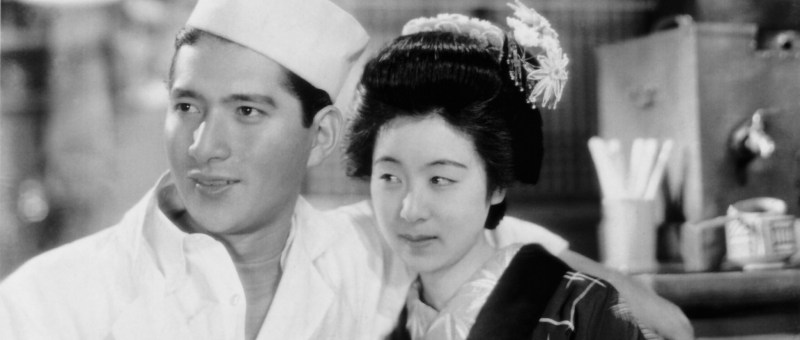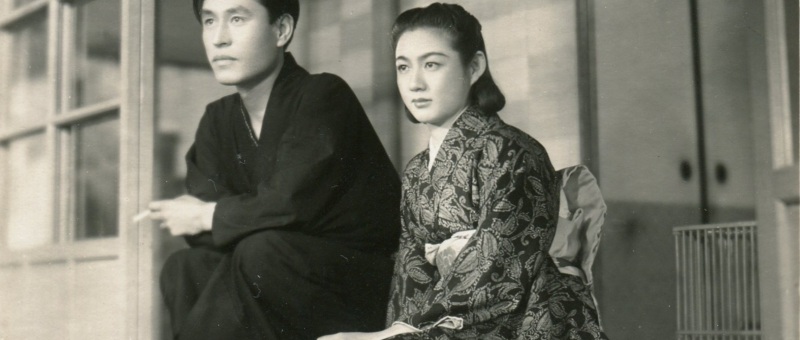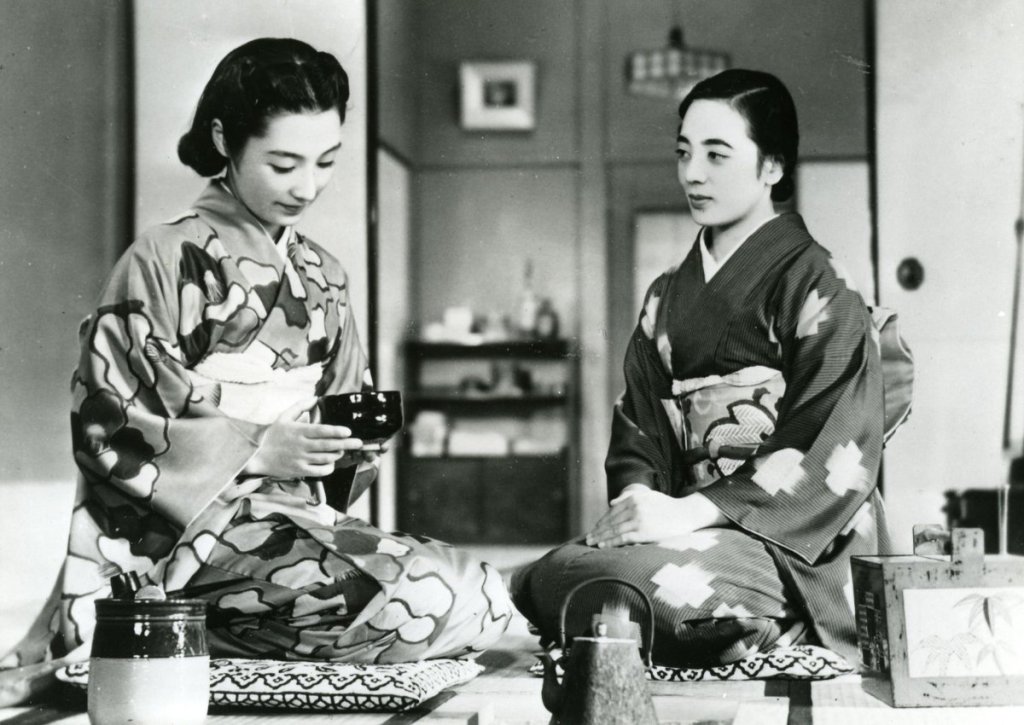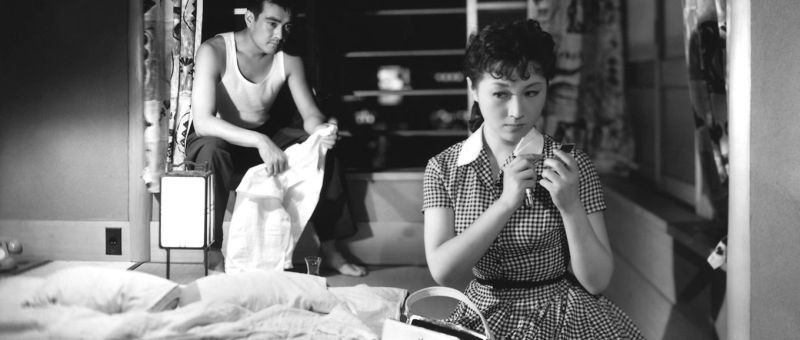
Dawn Chorus (暁の合唱, Hiroshi Shimizu, 1941)

“Before me flows a wide and serene river of life,” a young woman writes in an unexpectedly poetic essay, “I beg you to pray for my just and happy future.” Yet Tomoko (Michiyo Kogure) does appear to be pretty happy with her choice, even if the just future she’s forging for herself might not be what others see as just. Though she cites her family’s poverty and a minor disability as her reason for giving up on education, there seems to be another side of her that eagerly embraces independence and looks for it in unexpected places.

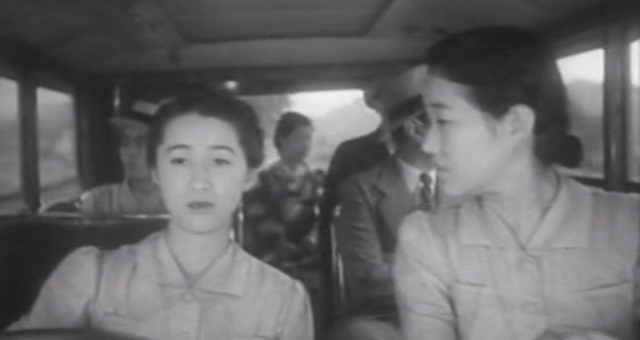
That would be her desire to become a bus driver, an occupation then thought to be inherently masculine. Perhaps in that way, it reflects her desire to be in control of her own destiny, while her apparent love of life on the bus hints at another for travel and ever-expanding horizons. Another of Shimizu’s travelling films, he often as in Mr Thank You includes scenes shot through the bus’ rear window including that of a flock of boys off to school on their bikes that makes Tomoko think of her stepbrother Ginjiro (Giichi Okita) who has a voracious appetite despite their family’s poverty. There are indeed all kinds of people who get on the bus, including, at one point, a melancholy woman in a bridal outfit who nevertheless pitches in when the bus gets stick in a ditch and needs a push. Tomoko fixes the bride’s makeup and gives her her compact, but there’s no avoiding the fact that she looks miserable despite the joy of the older women accompanying her.

Even Tomoko remarks that she isn’t sure whether her tears were in joy or sorrow even while wishing her a broad-shouldered husband. Later the bus catches her again trailing behind the man to whom she was married, older than her and not particularly handsome, pulling a cart. She still doesn’t look very happy, and is presumably bound for a life of drudgery over which she has little say. Her fate contrasts with that of Tomoko who is actively choosing her way forward even if the bride’s plight forces Tomoko to think about marriage and her womanhood as does the birth of a baby on the bus. Everyone is always telling Tomoko that she ought to get married quickly, and not least among them Eiko (Kiyoko Hirai) who declares herself tired by life. Working for a newspaper, she had apparently been the girlfriend of Saburo (Toshiaki Konoe) whose late brother once owned the company while now he runs a cinema. Saburo has apparently tired of her, though he appears to have developed a fondness for Tomoko which might seem slightly problematic to modern eyes because of Tomoko’s relative youth while she is in the process of coming of age and into herself uncertain if marriage is even something that she’s interested in.

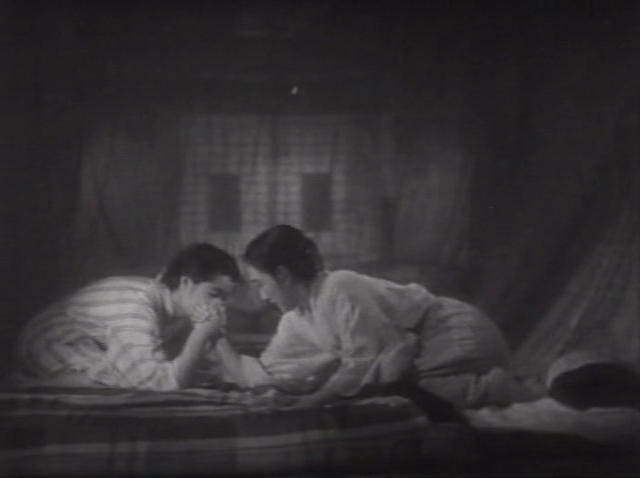
On the other hand, her tomboyish qualities leave her in a slightly liminal space as reflected in her desire to become a driver, rather than a conductress. In learning to drive, she mostly wears trousers while Eiko remarks on her “big hands” and she prides herself on her physical strength when engaging in an impromptu arm wrestling match with Yoneko (Hiroko Kawasaki), the widow of Saburo’s brother who now manages the bus company and has a crush on handsome driver Ukita (Shin Saburi) who also had to drop out of university for undisclosed reasons. Tomoko loses the match because she’s overcome by tears without really knowing why, which might in its way be a manifestation of her returning femininity along with her maturity, but there’s also something strangely transgressive about the scene featuring two women under mosquito net randomly arm-wrestling in the middle of the night.

Nevertheless, Tomoko’s life seems otherwise happy and pretty care free even if there are signs of corruption all around her. One of her first challenges while working as a conductress is an old woman (Choko Iida) who tries to get out of paying. It seems like the old woman probably can’t really afford to pay, but puts on a show of having tried to cheat them deliberately to save face. She suggests to Tomoko that she simply neglect to punch a ticket and pocket the money she’s already given her, until the bus driver, a man, gets out to exert his authority and tell her off despite Tomoko’s offer to make up the shortfall out of her own money. Later it’s discovered that two of the other conductresses have been made unhappy enough to consider quitting their jobs and are deliberately avoiding riding with one particular driver because he’s forcing them to embezzle ticket money in this way on his behalf, hinting at a kind of greed and immorality that might not necessarily be motivated by abject poverty.

It is though a presence Tomoko is able to dispel, bringing on Kimie (Chiyoko Fumiya) as her own conductress when she finally becomes a driver in her own right. Though the film hints at her feelings for Saburo, it does not end on marriage but with Tomoko’s personal fulfilment if tempered by the idea that a woman must now be useful and productive in the wider world while the men are away which might be how it gets around the censors despite otherwise avoiding overtly patriotic or imperialistic themes. Based on a novel by Yojiro Ishizaka, the film rather validates Tomoko’s desire to take charge of her life and drive off towards the future as an independent woman.
A Bullet Hole Underground (地下街の弾痕, Kazuo Mori, 1949)

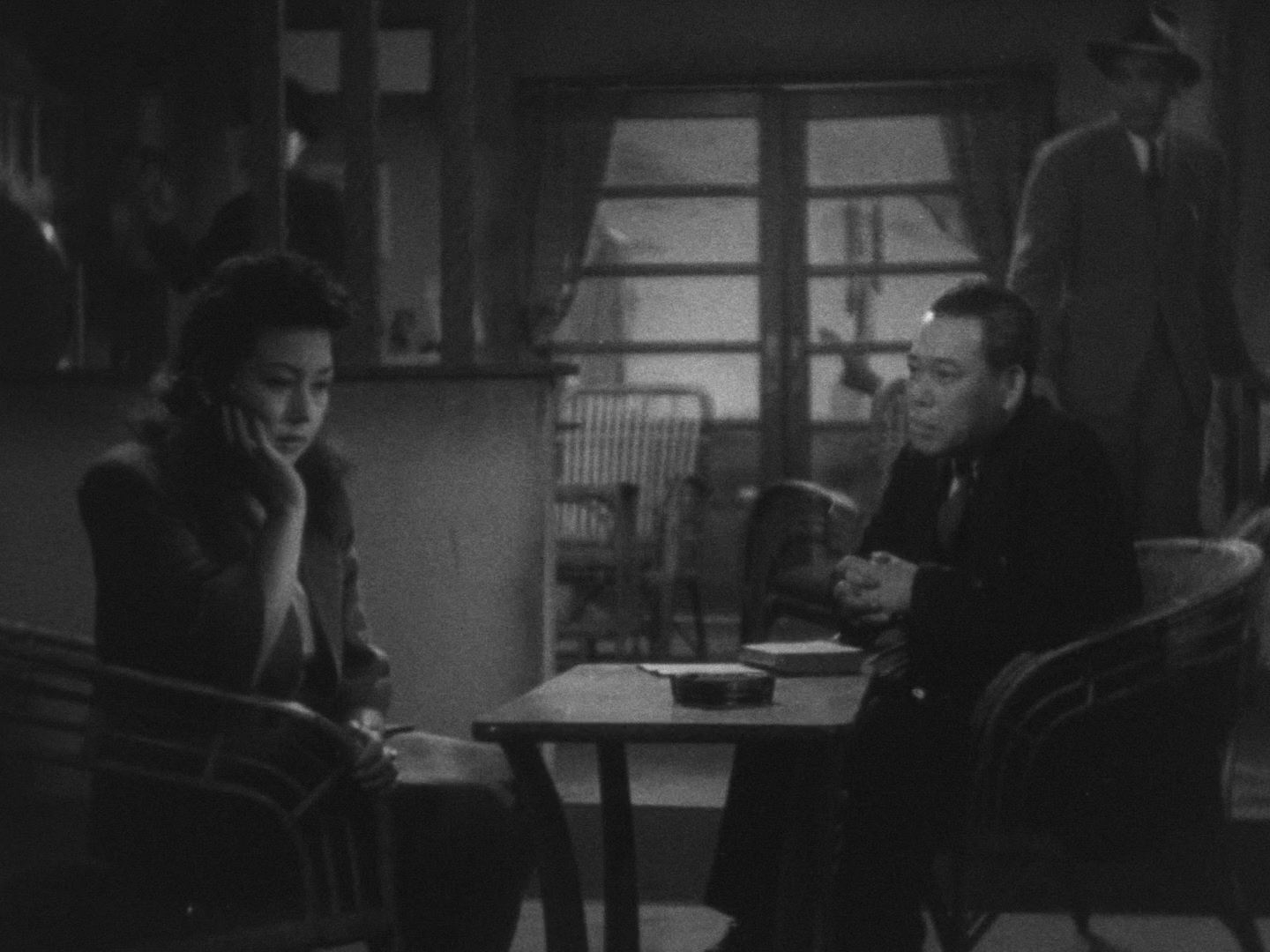
Produced by Daiei Kyoto under the guidance of the Osaka Police, Bullet Hole Underground (地下街の弾痕, Chikagai no Dankon) is keen on selling a vision of order in a new Japan in which the police force employs all the latest technology to solve crimes calmly and methodically. We see them approach the crime scene forensically and conduct a series of scientific tests with microscopes and gadgets such as lie detector machines and code breaking equipment as they proceed towards the truth while earnest policeman Minagawa (Hiroshi Nihonyanagi) battles the ghosts of his past on realising that the dead man’s wife is his own lost love.

In any case, the film opens with a noirish scene at Umeda Station, Osaka, which then turns strangely comic. A man stumbles toward the exit and we assume that he is probably drunk but another man soon comes up behind him and pushes a pistol into his back. The second man pulls the trigger, then again to make sure, before calmly walking up the steps and leaving the station. A little while later, another drunk man arrives and has a little banter with the body before covering it with a signboard which is one reason it isn’t spotted until the shoeshine boys turn up in the morning. 

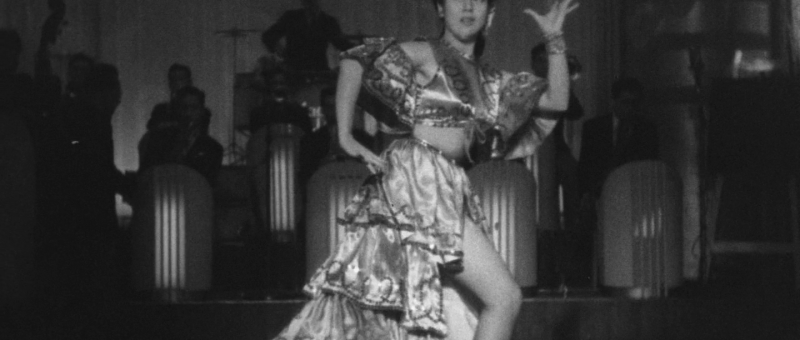
This sudden influx of children at rush hour is another symbol of the destabilisation of the post-war society in which the war orphans try to support themselves amid the still difficult economic environment. The lack of economic opportunities is also posited as a reason that the deceased, later identified as Kaneko, may have turned to crime by getting involved with a criminal gang smuggling drugs and money to destabilise the society even further. Yet the rot may have set in a little earlier than that. Before the war, Minagawa had wanted to marry Michiko (Machiko Kyo), the sister of his friend Sekiguchi (Toshiaki Konoe), but she later threw him over to marry the wealthy son of a family running a pharmacy. She admits she married him for the money, but after the war he lost everything. Unable to find work, Kaneko became a wastrel while Michiko gained employment at a cabaret bar as a dancer. He told her that he’d found a job at a company, but this turned out to be a lie and chief investigator Fujimoto (Takashi Shimura) assumes he must have been working for the gang. 

Still, to begin with it seems like it may have been a case of mistaken identity. Kaneko’s clothes turned out to belong to other people, a fact easily explained by Michiko that they were second hand, but also suggesting that someone may have set him up to take their fall. The gang needed the skills he learned in the navy but maybe they didn’t need him anymore. The root of the evil is located, ironically enough, in a jewellery store presenting a front of affluence and elegance but in reality founded on crime and misery when so many are still struggling to rebuild their lives. Michiko too seems to have turned cynical. She snarls and pushes Minagawa away, but privately cries and appears to regret her youthful decision to reject love for material comfort.

Perhaps because of its genesis as a film designed to promote the local police force, it has a much more upbeat conclusion and particularly for Michiko who is, unusually, allowed to redeem herself and gain a second chance to make a better decision by reuniting with Minagawa who does not and never has held her past against her. The pair of them look out over the fracturing city and remark at how it just carries on as if nothing had happened which feels like advice intended for the post-war society that it should do the same and try to leave the past behind to start a new life in this new era. Meanwhile, huge numbers of policemen swarm the harbour to crack down on the smuggling gang sending the not altogether comforting message that this city is well protected against all kinds of crime and the police force is a well-trained, modern institution that has the latest technology at its disposal along with astute and compassionate officers. There may be sleazy clubs, duplicitous men and heartless gangsters, black markets and smuggled dangers, but there are, the closing scenes with their wide-open vistas in which scorched trees stand behind the burgeoning city imply, better days to come.


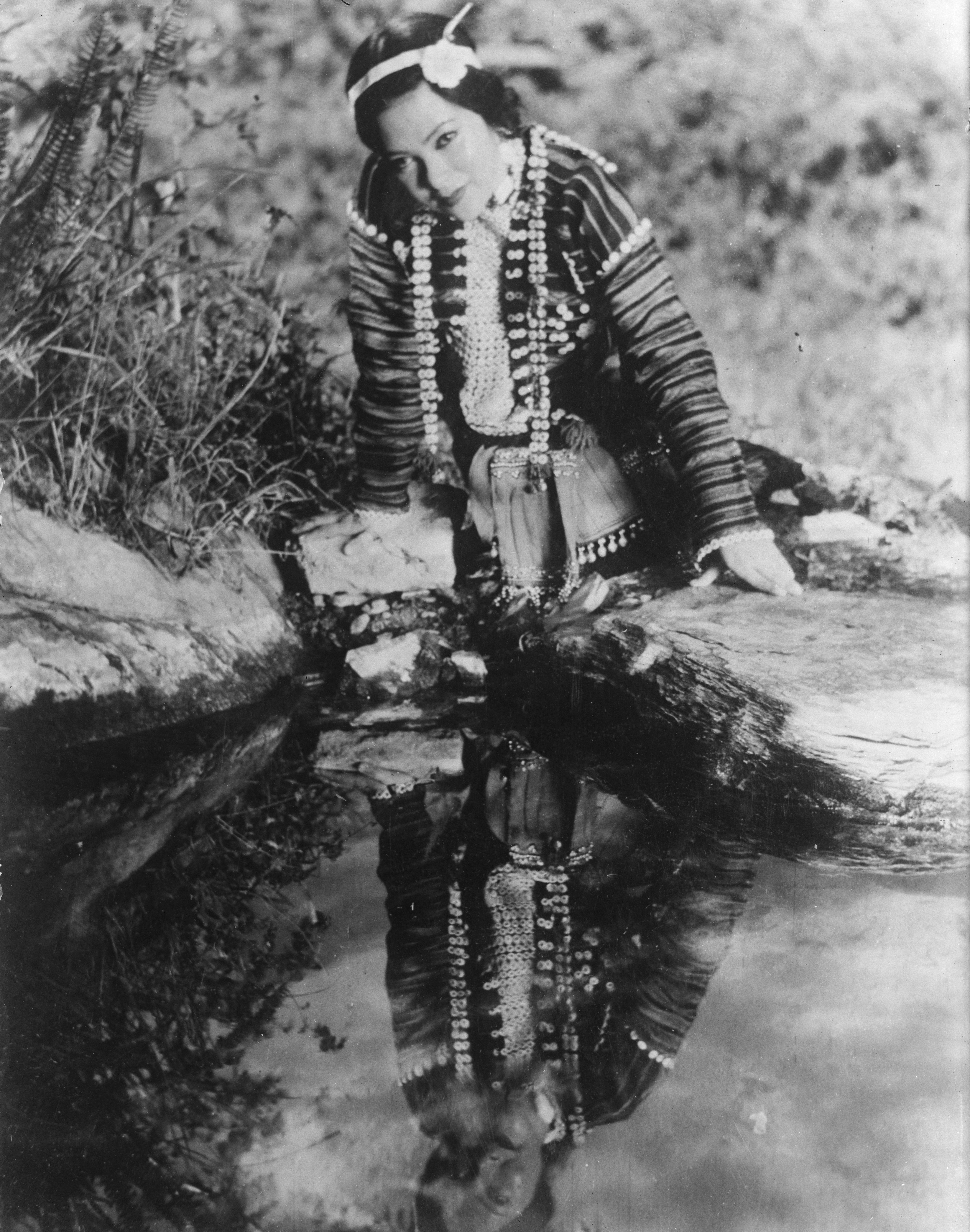
Sayon’s Bell (サヨンの鐘, Hiroshi Shimizu, 1943)

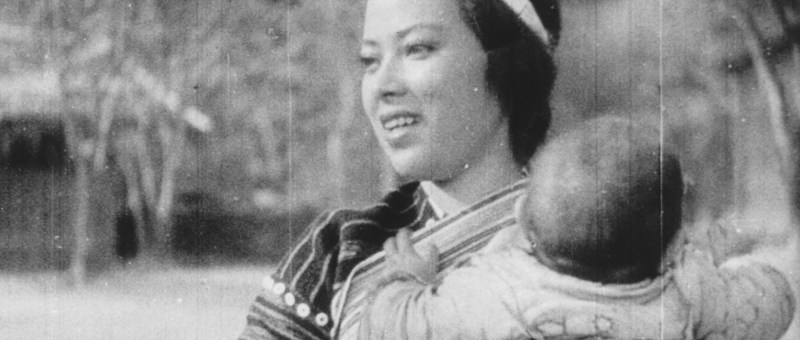
Like all directors of his era, Hiroshi Shimizu made a series of National Policy propaganda films though he was often able to circumvent their requirements by focussing on themes that interested him more directly such as teamwork or childhood. Sayon’s Bell (サヨンの鐘, Sayon no Kane) is however an unavoidably propagandist film filled with praise for the Japanese empire and to modern eyes incredibly problematic in its depictions of the indigenous peoples of Taiwan many of whom did “volunteer” to serve in the Japanese imperial army a notable example being that of Li Kuang-hui who was the last Japanese soldier to be discovered hiding in the Indonesian jungle in 1974 having been recruited from the Amis people.

The film opens with a lengthy series of title cards explaining that the film is dedicated to the Takasago Volunteers, “Takasago” being, aside from the title of a famous noh play, the name Japanese gave to the indigenous people of Taiwan believing them to have been “civilised” by Japanese rule. Thus in the opening sequences, we see the role of the Japanese military personnel as essentially paternal. They are policemen, doctors, teachers, instructors, and directors of construction who are dedicated to raising the aboriginal people to level of Japanese citizens through forced assimilation. 

Inspired by a real life incident that also inspired a popular song of an indigenous woman who drowned in a river while carrying the belongings of a Japanese policeman, the film uses the titular Sayon as an arbiter of Japaneseness enhanced by the casting of Li Koran, later known as Shirley Yamaguchi/Yamaguchi Yoshiko, who was actually Japanese but presented as Chinese in the propaganda cinema of the time having been born in Machuria and fluent in Mandarin. Somewhat awkwardly given that Sayon is supposed to be an indigenous woman herself, she is the one schooling the local children in how to be Japanese reminding them that they should “use Japanese properly” rather than their indigenous language and praising one young boy for abandoning his indigenous name and adopting that of “Taro” instead. Japanese rule in Taiwan was not as oppressive as it was in the other parts of the empire and they did have some local support thanks to their investments in infrastructure and modernisation. Nevertheless, they did attempt to enforce the use of the Japanese language and the taking of Japanese names though it should also be noted that the KMT government did exactly the same thing only with Mandarin when it gained control of the island. 

That aside the indigenous people were often treated poorly in comparison to the rest of the of the population and we can see that the framing of them is often racist and derogatory such as when an abandoned baby is taken to the police and they remark that the indigenous community have too many children and they all look alike. The eligible men from the village, including Sayon’s love interest Saburo (Hatsu Shimazaki), have been sent to Japan for a kind of militarist re-education and are eagerly awaiting their opportunity to serve the emperor in the army. Though this may seem surprising, it apparently reflects a real fervour among indigenous men who were convinced to enlist by the money on offer and a campaign of rumours that suggested men who did not do so were unmanly and therefore unattractive to the local women. When the first round of volunteers is selected, a great amount of time is given to consoling the men who were not chosen many of whom protest and plead to volunteer their services. 

In an effort to inject some drama the film includes a love triangle between Sayon, Saburo, and Mona (Kenzo Nakagawa) who is said to be moody out of jealousy and unrequited love for Sayon but later reveals he was only jealous of Saburo in respect of playing second fiddle to him as a worthy man of the village again eager to serve the Japanese emperor. Led by Li Koran, there are several renditions of a patriotic war song singing the praises of the Taiwanese army that read that like a call to arms, though the audience for this film is certainly domestic and it seems unlikely that it would be screened in these mountain villages in Taiwan.

The first part of the film is basically ethnography featuring picturesque scenes of the local scenery and footage of the indigenous people living the “simple, peaceful life” patronisingly described in the opening titles while there is some exoticisation of the aboriginal culture in the elaborate costumes and scenes of indigenous rituals. Perhaps the most shocking aspect is that Sayon is encouraged to break a traditional taboo by entering a sacred lake where women are forbidden to go lest they anger the god Uttofu. With her new cultural re-education, Sayon thinks Uttofu is a myth and goes to the lake to help Saburo assess it because the Japanese are planning to drain it to create a rice paddy. For this she is expected to drown herself in the water to placate Uttofu and is urged to do so by the tribal elders with the Japanese basically agreeing with them deciding that they should catch an animal to sacrifice and if that doesn’t work, while it’s “unfortunate”, Sayon should indeed hurl herself into the lake if the for the good of the empire rather than Uttofu. 

It is quite odd to think that the Japanese military personnel would go along with human sacrifice rather than clamp down on a practice they would otherwise term backward, though in that light it’s impossible not to see her later death by drowning as a rejection of the “modernity” the colonial authorities represent and a re-assertion of indigenous culture. The bell referenced in the title refers to one given to the village to commemorate the incident bearing an inscription of Sayon’s name. When the KMT gained control of Taiwan, they erased the inscription on the bell and removed it as a symbol of Japanese rule though it was later restored after the end of martial law and the monument re-erected beside the bridge which was also named “Sayon’s Bridge” in a evocation of the complicated relationships between the three nations. The film is however rather uncomplicated in its themes which to modern eyes prove extremely unpalatable despite the often beautiful cinematography capturing the idyllic Taiwanese countryside.


Sayon’s Bell screens at the Museum of the Moving Image May 11 as part of Hiroshi Shimizu Part I: The Shochiku Years.

Song of the Flower Basket (花籠の歌, Heinosuke Gosho, 1937)

The daughter of a tonkatsu shop finds herself with an overabundance of suitors in Heinosuke Gosho’s generally cheerful yet occasionally dark melodrama Song of the Flower Basket (花籠の歌, Hanakago no Uta). Adapted from a novel by Fumitaka Iwasaki and scripted by Kogo Noda, the film finds its heroine caught at a moment of social change as she battles her snooty aunt for the right to decide her romantic future while her impoverished student boyfriend does something much the same in defying his family’s attempts to micromanage his life dreaming of the bright lights of Ginza. 

Yoko (Kinuyo Tanaka) is the “kanban musume” of her father Keizo’s (Reikichi Kawamura) pork cutlet restaurant, attracting customers with her charm and beauty while the Chinese chef her father brought back with him from Shanghai, Lee (Shin Tokudaiji), is the culinary star. Lee is secretly in love with Yoko whom he continues to refer to largely as “the young lady” and has long been writing an ode in her honour. Yoko meanwhile is in love with a penniless student, Ono (Shuji Sano), who at the beginning of the film has just returned home after visiting his family whom he has alienated by declaring that he doesn’t want to work in an office in the country while refusing an offer to marry into another family as an adopted son-in-law. The reason for this is less his pride than his desire to stay in Tokyo amid the bright lights of Ginza, sighing as he looks out into the neon-lit night gazing at adverts for Club Hamigaki toothpaste and Meiji Chocolate. The second reason may also be that he’s fallen for Yoko but given his precarious financial situation and lack of prospects does not quite dare to imagine a future with her. 

He must however be serious as we later learn he’s given up going to hostess bars with his friends, a bar girl greeting him in the restaurant evidently not having seen him in ages asking where he’s been much to Yoko’s embarrassment. The encounter places a seed of doubt in her mind in a minor role reversal as she begins to resent Ono’s past irrationally annoyed by the idea he has dated other women. Meanwhile, at the memorial event marking 11 years since her mother passed away while working as a steward on a boat in Singapore, Yoko’s snooty aunt tries to set her up with an arranged marriage to an Osakan doctor who may or may not marry depending on the “negotiations” but has also been promised his own clinic by his wealthy parents if the marriage is confirmed. Okamoto (Toshiaki Konoe) has visited the restaurant to get a better look at Yoko making him the third suitor to encircle her even though the chief concern of the family is that Yoko is almost 24 and therefore ageing out of top tier matches.  

To his credit, Yoko’s father is fully in her corner trying to stand up to the domineering aunt who is definitely overreaching in trying to micromanage the romantic lives of her nieces in the absence of her sister. He determines to find out if Yoko has her eye on someone already to get the aunt off their backs, but the situation develops in an unexpected direction when Lee mistakenly assumes that she likes him back. Too shy to say himself, he advises Keizo to ask frequent customer and best friend of Ono, Hotta (Chishu Ryu), who is on track to become a Buddhist priest and take over the family temple, only Hotta obviously tells him, correctly, that Yoko is in love with Ono having completely forgotten that Lee had once confessed his feelings to him. 

The film does its best to present a more positive vision an internationalist Japan even in 1937 despite the Aunt’s obvious disapproval of the family’s wandering past and is largely sympathetic of the lovelorn Lee yet implies that a romance between he and Yoko is so unthinkable that no one really considered the possibility that he may be in love with her himself even though it is incredibly obvious given his ongoing attempts to write a love song while he’s even torn out a picture of Yoko which appeared in a magazine and hung it on his wall. Yoko is oblivious to his feelings, believing that he is in love with their waitress, Oteru (Yaeko Izumo), who is indeed in love with him, and perhaps doesn’t appreciate the effect moving Ono in as a trainee chef will have on him both professionally and emotionally. The message that is emerges accidentally or otherwise is that Lee’s place at the cafe is insecure despite his skill being a large part of its success as he falls into a deep depression and eventually decides it’s too painful for him to stay. 

The revelations surrounding Lee further destabilise Yoko’s confidence in her choice of Ono whom she constantly doubts even suspecting he may have committed a violent crime when carted off by the police after newspaper reports stating the bar hostess he introduced her to earlier has been murdered in her apartment. Perhaps it’s normal enough to be uncertain if you’ve made the right choice in the early days of a marriage, but believing your spouse capable of murder is a significant stumbling block as is her final admission that she doesn’t really trust him and isn’t ready to accept his past with other women in a further reversal of their roles given he has now married into her family and taken her name. Nevertheless, the crisis seems to be repaired by her father’s simple act of ordering a round of beers making clear that he plans to celebrate and obviously still has confidence in Ono while preparing to adapt their restaurant to their new circumstances by branching out into sukiyaki. Expressing some of the anxieties of the 1930s from the precarious economy and uncertainty of the future to changing social mores as young people reject the traditional to craft their own romantic futures, Song of the Flower Basket nevertheless ends on a note of melancholy in the wandering Lee’s ode to loneliness and heartbreak under the neon lights of Ginza.


Brothers and Sisters of the Toda Family (戸田家の兄妹, Yasujiro Ozu, 1941)

Yasujiro Ozu made only two films during the height of the war. After being drafted for the second time in 1943, he famously sat out the main action from the relative safety of Singapore where he was able to indulge his love of Hollywood cinema to an extent impossible in Japan. Somewhat surprisingly, 1941’s Brothers and Sisters of the Toda Family (戸田家の兄妹, Toda-ke no Kyodai) does not seem to fit the censor’s ideal in that it contains little to no patriotic content and never mentions the war save for presenting the idea of “Manchuria” as a place to start again free of burdensome codes of social oppression but, crucially, embraces classic ideas of filial piety which is presumably how it came to be approved by the powers that be. 

Shortly after the Toda family gathers for the first time in quite a while to celebrate Mrs. Toda’s (Ayako Katsuragi) 61st birthday, Mr. Toda (Hideo Fujino) drops dead of a heart attack and it is discovered that the family firm is near bankruptcy. The large, Western-style mansion where the family photo so recently took place will have to be sold and Mrs. Toda and her unmarried daughter Setsuko (Mieko Takamine) will have to move in with one of the married children. 

Like the later Tokyo Story, Brothers and Sisters of the Toda Family concerns itself with the failure of filial piety in an increasingly corrupt society. Multigenerational homes might once have been a cultural norm, but perhaps it’s understandable that few people might be excited about the prospect of their mother suddenly moving in with them especially as the traditional Japanese house is not designed with personal space in mind. Power dynamics seem to be the problem at the first home where daughter-in-law Kazuko (Kuniko Miyake) makes no secret of the fact that the two women are in the way. She resents having to shift everything around and reorder her home to give them space upstairs, complains about their noisy pet bird, and is then put out when Setsuko and her mother fail to greet her guests even though she specifically asked them to absent themselves in order to avoid meeting them. 

At the next home, however, it’s more a question of maternal heirarchy. Daughter Chizuru (Mitsuko Yoshikawa) has two children and the oldest, her son Ryokichi (Masao Hayama), is very attached to his grandma, so much so that he confides in her about skipping school because he got into a fight and is worried about reprisals. Chizuru’s main objection to them moving in had been that it might distract Ryokichi from his studies, and it’s clear that she finds it difficult to assert her own maternity with her mother hovering in the background. She accuses Mrs. Toda of interfering by keeping her promise to Ryokichi and not telling her about skipping school, making it impossible for them to keep living in the same house. 

Rather than descend on the home of the last daughter, Ayako (Yoshiko Tsubouchi), who is hurt but perhaps relieved to hear they won’t be living with her, Mrs. Toda and Setsuko decide to move into a dilapidated summer house the family thought too worthless to sell. They are now thoroughly marginalised, living in a literal half-way home having lost their position in society. Setsuko, naive but earnest, is the keenest to adapt to her circumstances. Her best friend Tokiko (Michiko Kuwano) is from an “ordinary” family and tries to point out, as nicely as possible, that Setsuko is going to find it much more difficult than she thinks to move beyond her privilege. Aware of her precarious circumstances, she expresses the intention to work but is quickly shut down by Chizuru who finds the idea highly offensive and in fact embarrassing. She urges her to think about a socially advantageous marriage instead.  

Shojiro (Shin Saburi), the youngest and as yet unmarried son, urges her to do something much the same at the film’s conclusion but also offers his sister the freedom to fulfil herself outside the home by accompanying him to the land of the possible, Manchuria. Previously regarded as a feckless failure, Shojiro decided to take up the opportunity to make something of himself in Japan’s new colonial endevour. On his brief return to mark the first anniversary of his father’s passing, he appears in a China-style suit and fiercely takes his siblings to task for their disrespect of his mother. It has to be said, however, that he does not particularly take Mrs. Toda’s feelings into account and foregrounds his own duty of filial piety in insisting that she live with family rather than alone excluding the possibility that she too may prefer her freedom. In any case, it’s freedom he dangles before Setsuko in suggesting that in Manchuria you can do as you please without needing to worry about what others think. He offers her the possibility of marriage, but also of working and a kind of independence which is bound within the family. For herself, Setsuko wants to bring Tokiko too, positing a possible arranged match between her friend and her brother which other members of the family may find inappropriate in its transgressive breach of the class divide. 

The family is both dissolved and restored as the three Todas prepare to remove themselves from a corrupted Japan for, ironically, a new start in the home of old ideas, China, where there is both the promise of modernity and all the “good” aspects of the traditional, to whit filiality. Fulfilling the censors demands in subtly criticising the decadent, selfish, and hypocritical lifestyles of an impoverished nobility while presenting Manchuria as an opportunity remake a better, purer (and subversively progressive) Japan through imperialist pursuits, Brothers and Sisters of the Toda Family offers an ambivalent portrait of contemporary Japanese society in which the young save themselves but only by saving their parents first. 


Brothers and Sisters of the Toda Family is available on blu-ray in the UK as part of the BFI’s re-release of Tokyo Story in its recent 4K restoration which also includes an introduction to Tokyo Story from Tony Rayns, and Talking with Ozu: a tribute to the legendary director featuring filmmakers Lindsay Anderson, Claire Denis, Hou Hsiao-hsien, Aki Kaurismäki, Stanley Kwan, Paul Schrader and Wim Wenders. The first pressing also comes with a booklet featuring an essay by Professor Joan Mellen, archival writing by John Gillett and Lindsay Anderson, and a biography of Yasujiro Ozu by Tony Rayns.

It is also available to stream online via BFI Player as part of the BFI Japan Yasujiro Ozu collection.

Titles and opening (no subtitles)

Gate of Hell (地獄門, Teinosuke Kinugasa, 1953)

Which is the greater challenge to the social order, love or ambition, or are they in the end facets of the same destabilising forces? Teinosuke Kinugasa’s Gate of Hell (地獄門, Jigokumon) is, from one angle, the story of a man driven mad by “love”, reduced to the depravity of a crazed stalker betraying his samurai honour in order to affirm his status, but it also paints his need as a response to the chaos of his age along with its many repressions while the heroine is, once again, convinced that the only freedom she possesses lies in death. Yet in the midst of all that, Kinugasa ends with a triumph of nobility as the compassionate samurai restores order by rejecting the heat of raw emotion for an internalised contemplation of the greater good. 

Set in the 12th century, the film opens in revolt as two ambitious lords combine forces to attack the Sanjo Palace in what would become known as the Heiji Rebellion. The lords have attacked knowing that Taira no Kiyomori (Koreya Senda) is not in residence, having departed on a pilgrimage. Fearful for the safety of his sister and father, retainers order decoys to be sent out to distract the rebels. Kesa (Machiko Kyo), a court lady in service to the emperor’s sister, agrees to be her decoy and Morito (Kazuo Hasegawa), a minor retainer, is ordered to protect her. He manages to escort her back to his family compound where he assumes she will be safe, transgressively giving her a kiss of life, pouring water into her mouth with his own, after she has fainted during the journey. Unfortunately, Morito has miscalculated. His brother has sided with the rebels and they are not safe here. During the chaos they go their separate ways, and as soon as Kiyomori returns he puts an end to the rebellion restoring the status quo.  

Shocked at his brother’s betrayal, Morito tells him that only a coward betrays a man to whom he has sworn an oath of loyalty but he explains that he is acting not out of cowardice but self interest. He has made an individualist choice to advance his status in direct opposition to the samurai code. Morito doesn’t yet know it but he is about to do something much the same. He has fallen in love with Kesa and after meeting her again at the Gate of Hell where they are each paying their respects to the fallen, his brother among them, is determined to marry her, so much so that he asks Kiyomori directly during a public ceremony rewarding loyal retainers for their service. The other men giggle at such an inappropriate, unmanly show of emotion but the joke soon fades once another retainer anxiously points out that Kesa is already married to one of the lord’s favoured retainers. Kiyomori apologises and tries to laugh it off, but Morito doubles down, requesting that Kiyomori give him another man’s wife. 

This series of challenges to the accepted order is compounded by a necessity for politeness. Morito is mocked and derided, told that his conduct is inappropriate and embarrassing, but never definitively ordered to stop. Making mischief or hoping to defuse the situation, Kiyomori engineers a meeting between Morito and Kesa, cautioning him that the matter rests with her and should she refuse him he should take it like a man and bow out gracefully. Kesa, for her part, has only ever been polite to Morito and is extremely confused, not to mention distressed, by this unexpected turn of events. She is quite happily married to Wataru (Isao Yamagata) who is the soul of samurai honour, kind, honest, and always acting with the utmost propriety. That might be why he too treats Morito with politeness, never directly telling him to back off but refusing to engage with his inappropriate conduct. That sense of being ignored, however, merely fuels Morito’s resentment. He accuses Kesa of not leaving her husband because Wataru is of a higher rank, as if she rejects him out of snobbishness, rather than accept the fact she does not like him. 

Morito continues in destructive fashion. We see him repeatedly, break, smash, and snap things out of a sense of violent frustration with the oppressions of his age until finally forced to realise that he has “destroyed a beautiful soul” in his attempt to conquer it. “One cannot change a person’s feelings by force” Wataru advises, but is that not the aim of every rebellion, convincing others they must follow one man and not another because he is in someway stronger? The priest whose head was cut off and displayed at the Gate of Hell was killed in part because he reaped what he had sown in beheading the defeated soldiers of a previous failed revolution. Morito kills a traitor and he falls seemingly into rolling waves which transition to an unrolling scroll reminding us that rebellions ebb and flow through time and all of this is of course transient. Only Wataru, perhaps ironically, as the unambiguously good samurai is able to end the cycle, refusing his revenge in the knowledge it would do no real good. Morito is forced to live on in the knowledge of the destruction his misplaced passion has wrought, standing at his own Gate of Hell as a man now exiled from his code and renouncing the world as one unfit to live in it. 


Gate of Hell is currently streaming on BFI Player as part of the BFI’s Japan season.

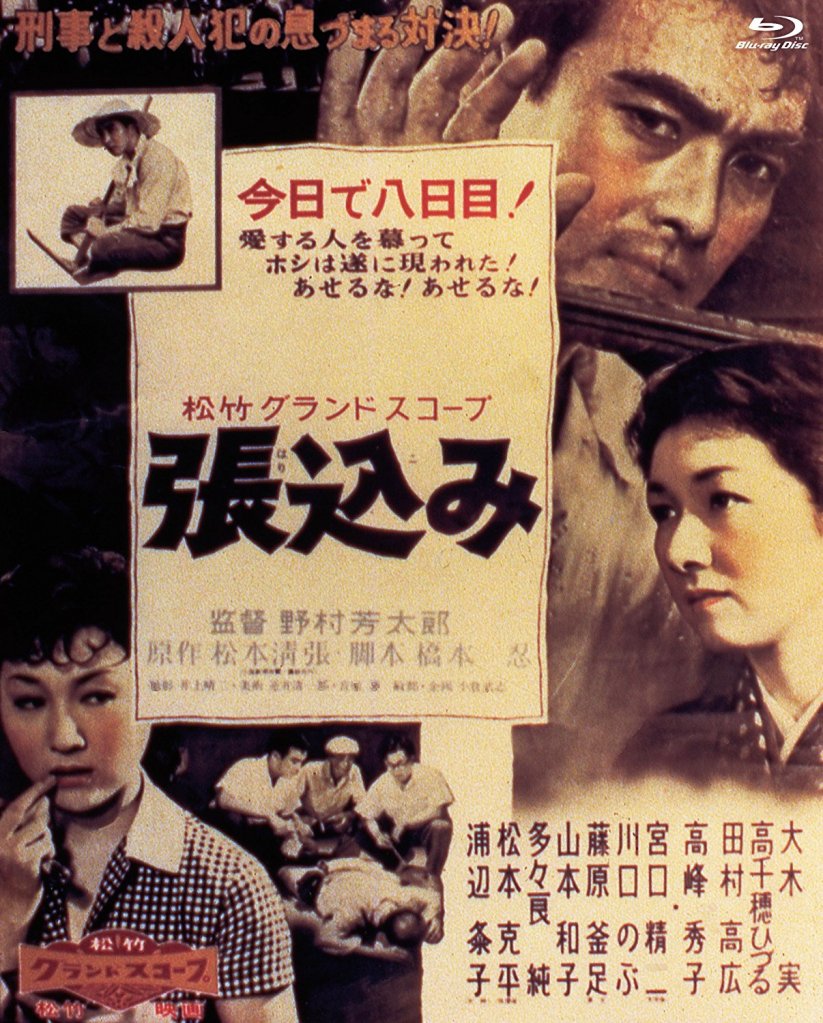
Stakeout (張込み, Yoshitaro Nomura, 1958)

Most closely associated with the crime genre, Yoshitaro Nomura was, like his frequent source of inspiration Seicho Matsumoto, also an insightful chronicler of the lives of ordinary people in the complicated post-war society. Stakeout (張込み, Harikomi), once again inspired by a Matsumoto short story, is on the surface a police procedural but underneath it’s not so much about the fugitive criminal as a policeman on the run, vacillating in his choice of bride, torn between the woman he loves who is afraid to marry him because her family is poor, and the pressure to accept an arranged marriage with the perfectly nice daughter of a local bathhouse. The stakeout becomes, in his eyes, a kind of illustrated parable, going against the socially conventional grain to convince him that making the “sensible” choice may only lead to long years of regret, misery, and loneliness. 

The film opens, as so many of Nomura’s films do, with a journey as two dogged Tokyo cops board a long distance train from Yokohoma travelling all the way down to provincial Kyushu which might as well be a world away from the bustling metropolis. Posing as motor salesmen, they take a room at a local inn overlooking the home of a melancholy housewife, Sadako (Hideko Takamine), the former girlfriend of a man on the run, Ishii (Takahiro Tamura), suspected of being in possession of a gun used to kill the owner of a pawn shop during a robbery. The younger of the policemen, Yuki (Minoru Oki), declares himself faintly disappointed with Sadako, complaining that she looks older than her years and is in fact quite boring, “the epitome of ordinary”. 

His older colleague, Shimooka (Seiji Miyaguchi), reminds him that most people are boring and ordinary, but as he watches her Yuki comes to feel a kind of sympathy for Sadako, seeing her less as a suspect than a fellow human being. Later we hear from Sadako that her marriage has left her feeling tired every day, aimless, and with nothing to live for, that her decision to marry was like a kind of suicide. “A married woman is miserable” Yuki laments on observing Sadako’s life as she earnestly tries to do her best as a model housewife, married to a miserly middle-aged banker who padlocks the rice, berates her for not starting the bath fire earlier to save on coal, and gives only 100 yen daily in housekeeping money while she cares for his three children from a previous marriage. Trying to coax him back towards the proper path, Shimooka admits that marriage is no picnic, but many are willing to endure hardship at the side of the right man. 

The “right man” gets Yuki thinking. Sadako has obviously not ended up with the right man which is why he sees no sign of life in her as if she simply sleepwalks through her existence. He is obviously keen that he wouldn’t want to make another woman feel like that, or perhaps that he would not like to be left feeling as she does at the side of the wrong woman. We discover that his dilemma is particularly acute because he finds himself at a crossroads dithering between two women, faced with a similar choice to the one he increasingly realises Sadako regrets. Shimooka’s wife is acting as a go-between, pressuring him to agree to an arranged marriage with a very nice girl whose family own the local bathhouse. She makes it clear that she’s not trying to force him into a marriage he doesn’t want, but would like an answer even if the answer is no so they can all move forward, but for some reason he hasn’t turned it down. Yuki is in love with Yumiko (Hizuru Takachiho), but Yumiko has turned him down once before because her family is desperately poor, so much so that they’re about to be evicted and all six of them will have to move into a tiny one room flat. She feels embarrassed to explain to her prospective husband that she will need to continue working after they marry but send almost all of her money to her parents rather than committing to their new family. 

Meditating on his romantic dilemma, Yuki begins to sympathise even more with Sadako, resenting their fugitive for having placed her in such a difficult position and repeatedly cautioning the other officers to make sure that the press don’t get hold of Sadako’s name and potentially mess up her comfortable middle class life with scandal when she is entirely blameless. The fugitive, Ishii, is not a bad man but a sorry and desperate one. He went to Tokyo to find work, but became one of many young men lost in the complicated post-war economy, shuffling from one poorly paid casual job to another. Now suffering with what seems to be incurable tuberculosis, he finds himself dreaming of his first love, the gentle tones of famous folksong Furusato wafting over the pair as they lament lost love at a picturesque hot springs while Yuki continues to spy on them from behind a nearby tree. 

They both bitterly regret their youthful decision to part, she not to go and he not to stay. The failure to fight for love is what has brought them here, to lives of desperate and incurable misery filled only with regret and lonliness. Sadako views her present life as a kind of punishment, finally resolving to leave her husband and runaway with Ishii who has told her that he plans to go to Okinawa to drive bulldozers for the next three years, though we can perhaps guess he has a different destination in mind. “That’s the way the world is, things don’t go the way you want” Ishii laments, but the truth is choices have already been made and your course is as set as a railway track. Sadako plots escape, but all Yuki can do is send her back to her husband with sympathy and train fare, leaving us worried that perhaps she won’t go back after all. Buying tickets for his own return journey, Yuki pauses to send a telegram. He’s made his choice. It’s not the same as Sadako’s, a lesson has been learnt. He goes back to Tokyo with marriage on his mind, but does so with lightness in his step in walking away from the socially rigid past towards a freer future, staking all on love as an anchor in an increasingly confusing world.


Original trailer (no subtitles)

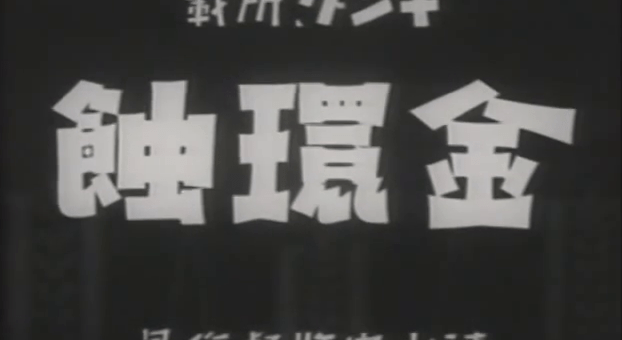
Eclipse (金環蝕, Hiroshi Shimizu, 1934)

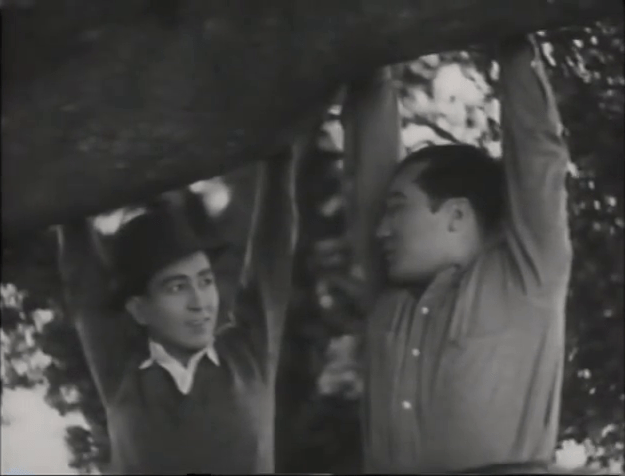
Shimizu Eclipse 1

Though most often remembered for his contribution to the cinema of children, Hiroshi Shimizu was also a practiced chronicler of his difficult times. 1934’s Eclipse (金環蝕, Kinkanshoku), unlike much of his other work from the period, avoids direct reference to Japan’s increasingly global or imperialist ambitions but paints its rapid shift towards “modernity” as dangerous and potentially tragic for the unlucky few who for one reason or another are unable to secure their passage towards a harmonious and prosperous future. Adopting the form of a classic romantic melodrama, Eclipse is a bittersweet exploration of corrupted social virtues which ends on an ironic note of defeated victory.

Shimizu begins in a traditional rural village which is all abuzz because prodigal son Seiji Kanda (Shiro Kanemitsu) – now a big shot lawyer in the city, is set to return and, rumour has it, is on the look out for a good country wife. Regarding a marriage to a promising young man like Seiji as the highest of prizes, the village women gossip about whom he might choose and correctly conclude Kinue Nishimura (Hiroko Kawasaki) is likely to be the front runner given her comparatively high education level, beauty, poise, and kindness. Kinue, however, has long been in love with her diffident cousin, Shukichi Osaki (Mitsugu Fujii), who now finds himself in a difficult position as Seiji’s best friend and the go-between charged with communicating his intention to marry. Called to a secret meeting by an old watermill, Kinue is shocked and offended when Shukichi proposes on behalf of someone else, strongly refusing the proposal and reminding him of all the times they had spent together during which she believed an attachment had been formed. Shukichi, whose family is impoverished, does not reject her affections but claims not to want to stand in the way of his friend’s romantic dreams.

Kinue, perhaps unwittingly setting up the ongoing drama, asks if she is to sacrifice her heart and marry a man she does not love and believes would ultimately be unhappy with a woman who yearns for someone else, in order that Shuikichi may continue to feel noble. In the end, Shukichi tries to make her decision for her by running away to the city in the hope of making a life for himself in the same way that Seiji has done. Kinue, brokenhearted, rejects the idea of marrying Seiji and runs off after him only to end up working as a bar girl under the bright lights of Tokyo. Meanwhile, Shukichi discovers that the bonds of obligation which carry so much weight the village are all but worthless in the city when his various contacts refuse to see him and he finds it impossible to gain promising employment. His big break comes when he is knocked over by the chauffeur of the man who just offered to pay his train fare back to the country and thereafter is taken into the family home as a tutor for the youngest son on the insistence of the forthright “modern girl” daughter, Tomone (Michiko Kuwano). Needless to say, the romantic drama isn’t over as Tomone also has a “cousin” who is in love with her and is also sought by Seiji who was her tutor while he was in college and she in school.

The values of the old world and the new are in constant conflict with each other though ultimately it is the failure to act decisively on one’s emotions which causes the greatest harm. Shukichi, knowing his family is poor and a marriage to Seiji the “better” social and financial option for Kinue, insists on nobly sacrificing himself in what he sees as her interest but in doing so rejects her own agency or right to choose her future, assuming she will simply passively pass into the arms of Seiji with no resistance. Kinue, however, resists by following him to Tokyo but, unable to find him, is forced into the sex trade to support herself. Meanwhile, Shukichi continues to break hearts in the city – firstly that of Tomone who has apparently fallen in love with him despite their class difference, but also that of Kayo (Yoshiko Tsubouchi) – the sister of the chauffeur who knocked him over. Still in love with Kinue he diffidently (but not categorically) rejects the affections of the two women but also refuses to act on his feelings for Kinue until he tries a last ditch attempt to “rescue” her from a fall into a life of prostitution through a worrying act of frustrated physical violence (something which ultimately fails).   

The final resolution is brought about by Seiji who, unlike Shukichi, has been able to reconcile his essential nobility with the forward moving nature of the times. Seiji, figuring out that he’d come between a loose arrangement between Kinue and her cousin, is full of remorse and steps back without a second thought, desiring only happiness for all rather than victory or conquest. Again, at the end, becoming the second choice match for Tomone, he returns to fix what he half feels he has broken by “rescuing” Kinue himself through an act of gentleman’s diplomacy and then giving his friend a good talking to. The problem becomes less of one of East and West, town and country, past and future, but personal integrity. Tomone laments that her “selfishness” has caused pain to others – something for which she is trying to make amends in becoming a “good wife” to Seiji, but this is a lesson Shukichi has been slow to learn. His failure to integrate his conflicting desires coupled with a feeling of social inferiority due to his family’s reduced circumstances and standing in the village has effectively created this web of broken hearts and ruined futures, all of which might have been avoided if he had been braver and chosen to stay at home with the woman he loved at his side, living a life of simplicity but with emotional integrity.

These twin destinies are reinforced by the final scenes which find Seiji and Tomone boarding a boat to the West to immense fanfare and celebration, while Kinue and Shukichi are perched aboard a baggage train, he standing and she sitting dejectedly, silent and apart as the rails speed away behind them. The city recedes and the chance of future happiness for our reunited lovers seems slim despite the conventionally romantic nature of their togetherness as they return home drenched in defeat. Seduced and betrayed by the bright lights of Tokyo, Kinue and Shukichi seem bound for the life they should have lived if they’d only been brave enough to fight for happiness at home rather than succumbing to the false promises of modernity but it remains to be seen if their time in the city can be “eclipsed” by a new hope for a traditional future or will continue to overshadow their simple and honest lives in the days to come.


Introspection Tower (みかへりの塔, Hiroshi Shimizu, 1941)

vlcsnap-2016-12-10-01h34m55s187Shimizu, strenuously avoiding comment on the current situation, retreats entirely from urban society for this 1941 effort, Introspection Tower (みかへりの塔, Mikaheri no Tou). Set entirely within the confines of a progressive reformatory for troubled children, the film does, however, praise the virtues popular at the time from self discipline to community mindedness and the ability to put the individual to one side in order for the group to prosper. These qualities are, of course, common to both the extreme left and extreme right and Shimizu is walking a tightrope here, strung up over a great chasm of political thought, but as usual he does so with a broad smile whilst sticking to his humanist values all the way.
Introspection Tower opens with a tour being given to a group of women guided by one of the teachers (Chishu Ryu) in which he outlines the qualities of the school. There are no high walls or barbed wire fences, the front gate remains open at all times for the children to feel free within their new environment so they can learn to want to stay until they can be reintegrated into society. The school is run like mini commune with several houses segregated by sex and headed by a teacher and a female guardian – usually his wife, though the female houses also have a female teacher. The kids spend time in conventional education in the morning followed up with physical activity and vocational training in the afternoons to help them find work later in life. Parents are welcome to visit and also encouraged to write letters (notably, all of these kids seem to be able to read and write, at least to a degree). The kids also take care of the housework amongst themselves so they learn life skills like cooking and cleaning, again meant to help them as they return to regular society.

Rather than a straightforward narrative, Shimizu concentrates on the general life of the school with particular interest in four difficult pupils – new arrival Tamiko (Yuiko Nomura), a naughty upperclass girl who has difficulty learning to muck in with everyone else, Yoshio (Jun Yokoyama, formerly known as Bakudan Kozo) who likes get into fights, Masao (Norio Otsuka) who has his head in the clouds, and Nobu who can’t seem to get on with his stepmother no matter how hard she tries. Several times the kids get fed up with their reform school lives and try to escape, only to be brought back with their tails between their legs and, being children, they are apt to fight, grouse and get upset over nothing.

Perhaps unusual given Shimizu’s reputation the film is not exclusively told from the point of view of the kids but also looks at the often difficult lives of the adults who’ve dedicated their entire existences to caring for them. Each of the teachers and guardians is fully committed to looking after the children and trying to teach them how to be functioning members of society, living with kindness and responsibility. The house leaders are referred to as “mother” and “father” and the kids are intended to think of the other residents as siblings as if they’re all part of one big well functioning family. Discipline is carried out through self reflection, penance, and apology as the offending child is encouraged to realise why the way they’ve behaved is unacceptable and why they should avoid acting in that way in the future. Endlessly patient and giving, the adults’ lives are not easy ones as a female teacher finds herself snapping and hitting a pupil while another couple wonder if they’re really making that much difference when the children continue to misbehave.

About half way through, one naughty boy causes a huge problem by temporarily draining the well which is the school’s only source of water. Faced with a number of serious issues, the teachers decide to try channelling a riverbed from the nearby lake down to the school but they obviously don’t have money to pay for it. You can see where this is going and it’s certainly the most problematic aspect of the film as these young children are suddenly expected to do the strenuous, sometimes dangerous, work of physically carving a channel in the land with shovels and pick axes. Intended to sell the virtues of togetherness and responsibility, the river construction is, in essence, the forced labour of imprisoned minors who are given no rights to refuse, are not compensated for their efforts, and are children who are not equipped to handle this physically taxing work. Shimizu films the sequence like some kind of Soviet propaganda film as the axes rise and fall rhythmically as a hymn to the beauty of physical labour, but this particular celebration of the strength of the group over the individual is very difficult to take at face value.

Whatever Shimizu intended with the river building sequence, several of the pupils earn their freedom through taking part in it, supposedly reformed by hard work and community. Their “graduation” ceremony involves them reading poems and inspirational phrases aloud as a tribute to the school, but Shimizu neatly undercuts the happily ever after image with the presence of an older boy who has returned to visit. Regarding the school as his home, he has nowhere else to go and it quickly transpires he’s lost yet another job. Even when things seem to be going well, people find out he was in a reform school and it all falls apart. No matter how good the efforts of the teachers, the kids will face constant stigma and internalised shame for the rest of their lives making reintegration into society a difficult prospect. Nevertheless, Shimizu does seem to want to believe the school can do some good in looking after these troubled children who often come from difficult family circumstances.

An odd, confused effort from Shimizu, Introspection Tower still does its best to emphasise his humanist philosophy in the broadly progressive approach of the school which truly is dedicated to to teaching these children how to live in the Japan of the day without getting into trouble. The tone is one of good humour mixed with Shimizu’s naturalistic approach to filming children which shows them for all of the complicated young people they really are, deriving both great comedy and heartrending drama from their comic escapades and melancholy backstories. Making fantastic use of location shooting once again with an approach closer to his silent work than his talkies, Shimizu’s return to the world of progressive education is a strange and occasionally problematic one which is at times hard to read but, worryingly enough, seems to have its heart in the right place.


Notes of an Itinerant Performer (歌女おぼえ書, Hiroshi Shimizu, 1941)

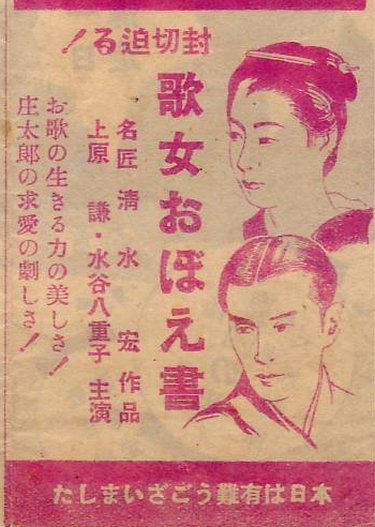
notes-on-an-itinerant-performerFilmed in 1941, Notes of an Itinerant Performer (歌女おぼえ書, Utajo Oboegaki ) is among the least politicised of Shimizu’s output though its odd, domestic violence fuelled, finally romantic resolution points to a hardening of his otherwise progressive social ideals. Neatly avoiding contemporary issues by setting his tale in 1901 at the mid-point of the Meiji era as Japanese society was caught in a transitionary phase, Shimizu similarly casts his heroine adrift as she decides to make a break with the hand fate dealt her and try her luck in a more “civilised” world.

At 25 years old, Uta (Yaeko Mizutani) jumps ships from one acting company to another having been promised better work by a roguish fellow performer. Tired of the strenuous life of travelling from village to village, putting on folk plays and street performances, Uta is thinking of quitting the business and looking for a job as a maid or something similar which is at least in the same place everyday. In a stroke of luck, she comes into contact with a kindly tea merchant who takes pity on her and suggests she come to live with him where she can teach his teenage daughter how to dance.

Uta becomes a member of the Hiramatsu household but not all of the inhabitants are as generous of spirit as Mr. Hiramatsu (Hideo Fujino) himself. The oldest son is away at college but the daughter, Nuiko (Kyoko Asagiri), has no interest in learning to dance and resents her father’s “adoption” of such a “common” woman. Youngest son Jiro (Haruhiko Tsuda) is similarly unimpressed with Uta’s presence, making her new home less than welcoming. To make matters worse, Mr. Hiramatsu abruptly dies leaving his business and household in disarray. Oldest son Shotaro (Ken Uehara) returns and feels as if he ought to abandon his studies and take over the company, but as a student he has no experience of running a business and lacks his father’s knowledge of the tea industry. Uta encourages him to return to university and finish his studies if only so that the prestige of a degree might help him later if he decides to restart the business. She also volunteers to act as a guardian for Jiro and Nuiko though Shotaro is wary seeing as they know each other so little. He then makes a surprising suggestion – that he and Uta marry, making it perfectly natural that she take care of everything at home while he’s away studying in the city.

Like many a Shimizu hero, Mr. Hiramatsu is a good hearted man but perhaps lacking in practical skills. Though he seemed to be prosperous and successful, the business was on the rocks and he dies leaving a number of debts behind him and total admin chaos for Shotaro as there is no clear successor to keep the business running in Mr. Hiramatsu’s absence. Luckily for Uta, Shotaro is also a kindhearted man like his father (in contrast to his siblings) and has no desire to suddenly throw her out when his father promised to look after her. He is, however, at a loss as of how to take care of everyone with no money coming in.

Even before Mr. Hiramatsu died, not everyone was happy about his decision to take in a travelling performer and an old friend begins to warn him about the danger of rumours. Friend of the family Kajikawa feels he has a stake in this as he intends his daughter Ayako to marry Shotaro and thinks it’s a done deal (though Mr. Hiramatsu does not seem particularly wedded to the idea). Ayako and Nuiko are also good friends and Ayako does seem like the ideal bride for Shotaro as a member of his own social class and a business connection for the family. Shotaro, however, proposes to Uta without really thinking things through. It is, in one sense, a purely practical decision but one that is likely to meet with a degree of social opposition.

Uta left her life as a travelling performer because she wanted something more conventional. Her mother died when she was six and she never knew her father. Her only happy memory of family is the time spent with her grandmother who died when she was twelve. Uta resents her lack of status as a member of a lowly order of entertainers and longs for something grander but has also internalised a deep seated sense of inferiority. Hence when Jiro and his school friends refer to her as a “monster” living in the house, she half accepts their prejudiced view of her. Nevertheless, she wants to honour the kindness that Mr. Hiramatsu offered her and also deeply respects his son, Shotaro, possibly even developing romantic feelings for him. Despite continuing to feel herself unworthy, Uta does the unthinkable by almost singlehandedly resurrecting the tea business when presented with an opportunity from a foreign company. Even after becoming a formidable business woman and winning the respect of Nuiko and affection of Jiro, Uta still feels herself out of place in the mercantile world and ultimately opts to leave in order to pave the way for the “proper” union of Ayako and Shotaro.

When Shotaro and Uta meet again she tells him that she left because she found his middle class world of “decency” too rigid and full of dull formality. Her “housewife” life was a hard one – getting up early, no smoking, no drinking. At least as a travelling performer she can sleep in and have her share of fun. This produces a quite shocking and strange scene in which Shotaro strikes Uta violently, knocking her to the floor. He repeats his earlier promise to marry her and invites her to come home as his wife, a “decent” woman, and full member of his social class whatever anyone else might have to say about it. Shotaro is apparently a man of his word but there is real feeling implied in his actions as opposed to duty or obligation. Nevertheless, this quite surprising scene of domestic violence used as a tool of coercion does not speak to Shotaro’s otherwise kindly personality and undercuts the “romantic”, if melodramatic, quality of the scene. This may be another instance of Shimizu’s aversion to romantic resolutions or romance as a solution to crisis, but one expects better from a director generally so keen to underline the hardships faced by women in his society.

Despite being filmed well into the era of the talkies and long after Shimizu himself had made the jump to sound, Notes of an Itinerant Performer makes use of frequent intertitles setting the scene or providing explanatory background material. Conversely, it also anticipates a more recent trend by allowing the discussions between the “American” (actually heavily accented European) and his interpreter to take place in English with Japanese sidetitles for parts not subsequently translated in the dialogue. In fact, this broadly positive foreign presence seems an odd inclusion for the fraught political world of 1941 (the film was released in March, just nine months before outright hostilities would commence with the USA which had been effecting a series of trade sanctions with the expansionist nation since 1938) even if the deal itself is taking place in the comparatively more open society of 1901.

In many ways about transitionary periods both in terms of society and of the self, Notes of an Itinerant Perfomer seems conflicted right up until its “Reader, I married him” inspired intertitle. Uta crosses a class border, transcending her lowly origins through selfless sacrifice, pure heartedness, and perseverance yet finally she is dragged across by violence and condescension rather than self acceptance or personal transformation. Filled with ambiguity, Notes of an Itinerant Performer reflects the uncertainties of its times and is noticeably less forgiving than Shimizu’s general outlook as its problematic finale demonstrates.