Cloud (Cloud クラウド, Kiyoshi Kurosawa, 2024)

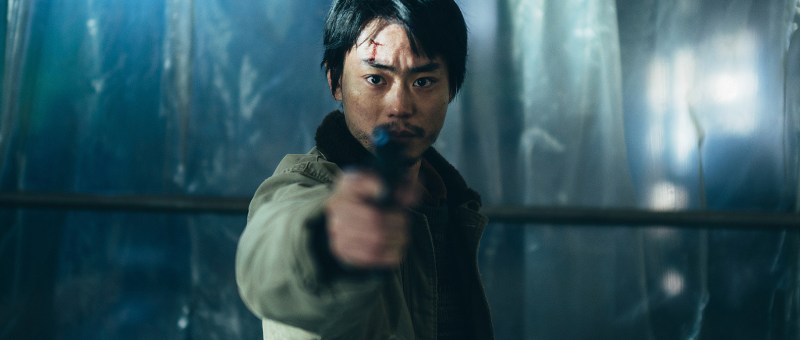
“We wanted to make easy money,” a down-on-his luck reseller admits, “is life easy now?” Factory worker Ryosuke (Masaki Suda) rebels against capitalism by subverting it through buying low and selling high while repeatedly refusing promotions at his job in a textiles factory. Though it might seem that reselling is just a way to earn an income that seems almost passive but is actually fairly labour-intensive, it’s clear that Ryosuke is a young man dissatisfied with capitalistic realities and lacking direction in his life. 

Reselling has become a kind of game to him and like a gambler who plays to lose he’s hooked on the thrill of making a killing exploiting other people’s misery. He’s at once filled with pride and smugness over his apparent triumph over his society and consumed by self-loathing. His friend and fellow reseller Muraoka (Masataka Kubota) tells him that another acquaintance has been arrested for scalping concert tickets with both of them lamenting his foolishness in getting involved with something so risky. The implication is that their friend, Goto, must have been in real desperation to lower himself to such levels and they each fear they may someday end up in the same position. Muraoka laments that that kind of selling is a young man’s game and neither of them have the time or energy to spend all day queuing to buy stuff just to sell it on cheap. They are each, it seems, beginning to feel the increasing desperation of their age that they are running out of time and have little to show for their efforts nor any prospects for the future. 

But on the other hand, neither of them want to be locked into the grind or join the oppressive but secure world of the salaryman. In many ways, Ryosuke’s factory boss Takimoto (Yoshiyoshi Arakawa) represents the “correct” path of hard and honest work, though his own paternalistic conviction in meritocracy seems outdated in a man of his age whose formative years occurred during an era of economic stagnation. He talks to Ryosuke as if he’s a young man who wants to get on but lacks confidence, telling him that he has leadership potential and is wasted on the shop floor, but his language also has an edge of the uncanny as if he were trying to recruit Ryosuke into his own worker drone revolution. In any case, even if it might be true that Ryosuke lacks confidence and ambition, that isn’t the reason he refuses promotions, which seems to be another way of rebelling against capitalism. When he eventually quits, he suggests it’s because he’s sick of being told what to do and wants more autonomy over his life and finances.

He tells his girlfriend Akiko (Kotone Furukawa) that she should quit her job too, which she’s only too happy to do because, unlike him, she actively doesn’t want to work and only wants to spend money. When she said she was thinking of giving up her apartment, Ryosuke naturally asked her to officially move in but she refused because his place is too small and she has too much stuff. Akiko has already been corrupted by the same consumerist bug that’s driving Ryosuke’s reselling business, but neither of them can really afford this lifestyle in the city. Ryosuke’s bright idea is to move to the remote countryside where he’s able to rent a huge, though ominous-looking, property for a fraction of the price with the idea of also economically supporting Akiko who will revert to traditional gender roles as a housewife in charge of the domestic space and most especially the kitchen.

But freedom cannot be found simply by retreating from urbanity and the couple soon find themselves plagued by a pervasive sense of resentment. The locals are not particularly accepting of people from Tokyo and are also needled by their success which is something they feel they’ve been unfairly denied. When Ryosuke tries to report a smashed window, even the policeman hassles him and says he’s received a tip-off that Ryosuke is breaking trading standards regulations by selling counterfeit goods as the real thing. Reselling in itself is not illegal, if definitely dubious morally and incredibly cynical. Ryosuke doesn’t seem to like to think about that and tells his new assistant, Sano (Daiken Okudaira), that he tries to sell all the items as quickly as possible so he doesn’t have to worry too much about their authenticity. If they’re wanted they’ll sell, Ryosuke justifies but he might as well be talking about himself.

“Being real or fake doesn’t matter?” Sano asks him, just as Ryosuke’s online and offline personas start to blur. He’s unaware that there are people actively hunting him for selling them substandard goods and is later pursued by real life vigilantes acting like online trolls and planning to torture him to death during a livestream. Like many of Kurosawa’s heroes, Ryosuke is completely convinced that he’s the benchmark for normal and it’s everything around him that’s strange or unfair. As the internet once again invades the “real” world, or perhaps it’s more that Ryosuke’s living his online life offline, the increasing unreality of the situation makes us wonder if any of this is “really” happening or product of Ryosuke’s fractured identity as it finally collapses under the twin corruptions of capitalism and social media. “Please keep focusing only on making money,” his new guardian angel Sano tells him, “everything will be obtainable. Whatever you want. Even things that can end the world.” Flying through ironically heavenly clouds, Ryosuke reflects that the path to hell really is paved with gold and his Mephistophelian pact with hyper-capitalism may have damned him beyond all repair.  


Cloud is in cinemas from 25th April courtesy of Blue Finch Film Releasing 

UK trailer (English subtitles)
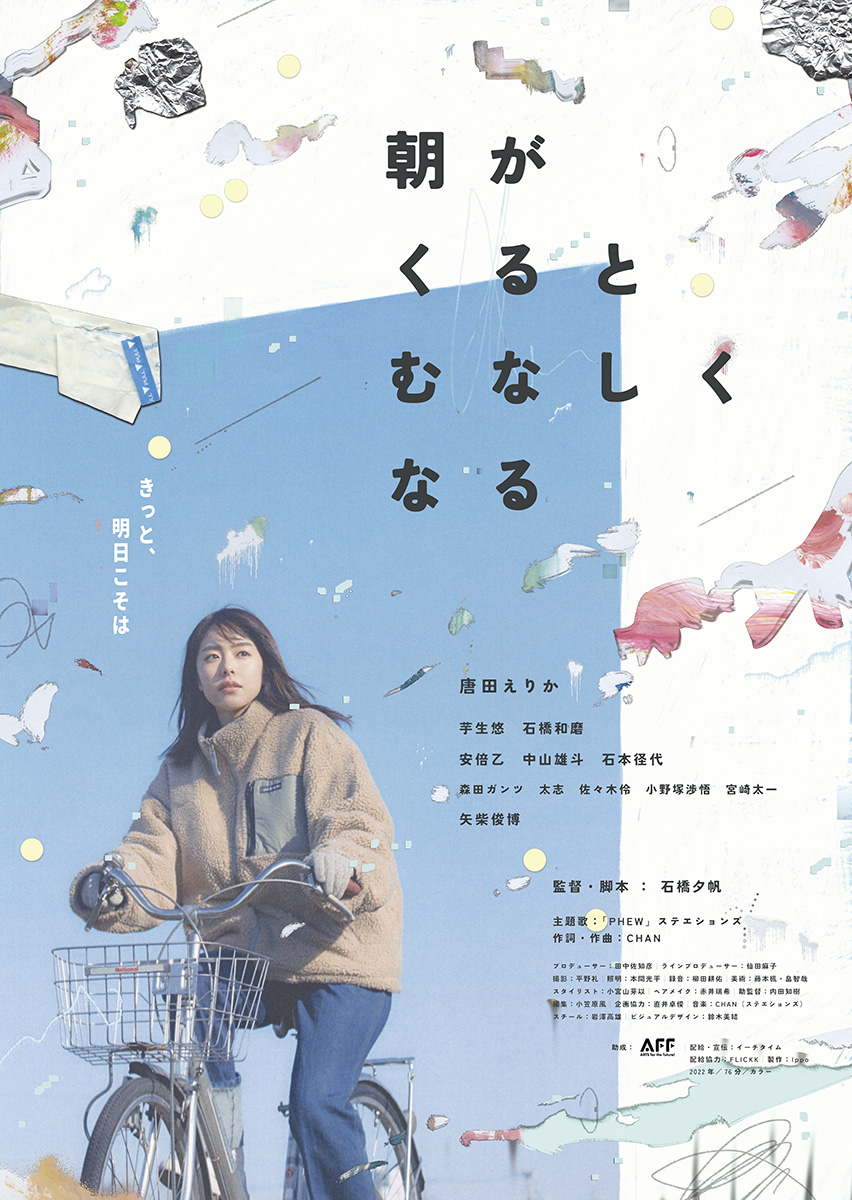
When Morning Comes, I Feel Empty (朝がくるとむなしくなる, Yuho Ishibashi, 2022)

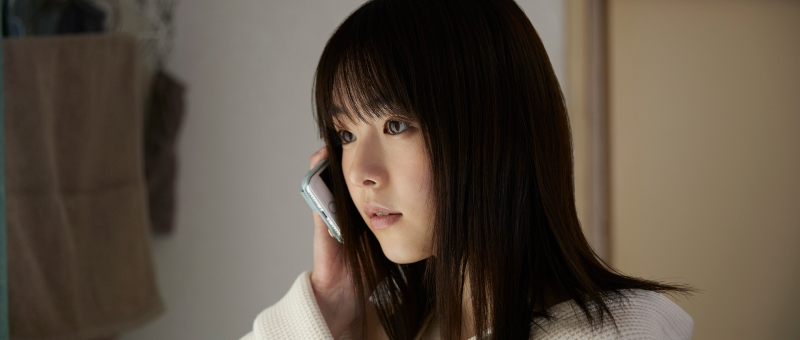
A young woman finds herself dealing with feelings of inadequacy and worthlessness after giving up on the corporate life in Yuho Ishibashi’s zeitgeisty indie drama When Morning Comes, I Feel Empty (朝がくるとむなしくなる, Asa ga Kuru to Munashiku Naru). Set against the backdrop of a society in which death from overwork is not uncommon and there have been countless reports of young people taking their own lives because of workplace exploitation, the film seems to ask if there isn’t another choice and if one can really be forgiven for rejecting the conventional path in an intensely conformist society. 

Nozomi (Erika Karata) quit her job at an ad agency six months previously and is currently working part-time in a convenience store not far from where she lives. So ashamed is she of her failure to live up to the demands of corporate life that she can’t bring herself to tell her parents that she no longer works in an office. Her co-workers at the store seem to know, but when they ask questions she tells them that she quit because of too much overtime which is ironic as her boss is forever asking her to work an additional late shift because of poor staffing levels and she always meekly agrees though never seems all too happy about it despite the extra money. 

Then again, she doesn’t seem too happy about anything. In a repeated motif, her mother sends her fresh vegetables from back home but she never has the energy to cook for herself and is usually seen eating bento from the store or slurping cup ramen. The fact her life is out of kilter is brought home to her when one side of the curtain rail in her room suddenly collapses in a bid for freedom from its imprisonment on the wall. Barely speaking and aloof from her colleagues, she seems to carry a deep-seated sense of shame that she “failed” to settle in to company life, later telling an old friend she’s unexpectedly reconnected with that she couldn’t cope with the intense overtime that often meant she’d miss the last train and have to overnight in a manga cafe or fork out for a taxi. Her boss always yelled at her, but she felt like everyone else seemed to be managing so the fault must be with her. She regards her decision to leave as a defeat and not a victory even as she recounts feelings of despair and hopelessness crossing the bridge every day to work with only a sense of emptiness in the hollowness of the salaryman dream. 

But then the film takes it title from a reflection something her younger colleague said about earnestly feeling that it was wonderful just to get up every day and come to work. Ayano doesn’t mean it as some kind of cultish devotion to the combini life or a toxic commitment to an unreasonable worth ethic, but more that she manages to find joy in the seemingly mundane even as she jokes about her nerdy college boyfriend who wears glasses, and sheepishly reveals that she’s been saving money with the intention of studying abroad. Nozomi’s only in her mid-20s, but perhaps it is a little different for these contemporary college kids who have bigger dreams and don’t feel the need to throw themselves into the corporate straightjacket just so they can feel like legitimate “members of society”. Their relative youth and sense of possibility may fuel Nozomi’s sense of failure, that she’s back doing a college kid’s part-time job at 24 and surrounded by students as if accidentally arrested in adolescence, but perhaps also shows her that there are other options and making a different choice doesn’t necessarily equate to failure. 

More than anything, it’s an accidentally encounter with a former middle school classmate (Haruka Imo) that finally allows her to make peace with herself and feel like a human being again, someone worthy of love and respect and with new hope for the future. Evoking a sense of disillusionment with the salaryman dream and the emptiness of corporate success that is devoid of human connection, Ishibashi shoots with a laidback ease that on one level reflects the heroine’s malaise but soon gives way to a comforting breeziness as Nozomi discovers a new home for herself in the wholesome pleasures of friendship and mutual acceptance as a bulwark against the vagaries of a capitalistic society. 


When Morning Comes, I Feel Empty screened as part of this year’s Osaka Asian Film Festival.

Images: (C)Ippo

Shrieking in the Rain (雨に叫べば, Eiji Uchida, 2021)

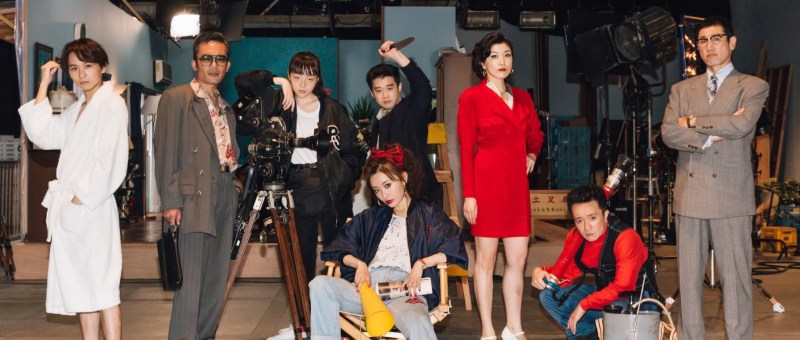
“Let’s change Japanese film” a duplicitous distributor tries to convince a diffident director though his “creators first” stance predictably turns out to be somewhat disingenuous. Inhabiting the same territory as Netflix’s Naked Director, Eiji Uchida’s meta dramedy Shrieking in the Rain (雨に叫べば, Ame ni Sakebeba) finds a young woman struggling to take charge of her artistic vision while plagued by workplace sexism, commercial concerns, and absurd censorship regulations but finally claiming her space and along with it her right to make art even if not quite everyone understands it, 

Set entirely on a Toei lot in the summer of 1988, the film opens with rookie director Hanako (Marika Matsumoto) locking herself inside a car with her hands clamped over her ears, fed up with the chaos that seems to surround her. How Hanako got the job in the first place is anyone’s guess, but it later becomes clear that she is in a sense being exploited by the producer, Tachibana (Kazuya Takahashi), who thinks a pretty young girl directing a softcore porno is a selling point in itself. Meanwhile, he’s teamed up with an US-based production company and its Japanese producer, Inoue (Kiyohiko Shibukawa), who seems fairly exasperated by the Japanese-style shoot and despite his pretty words is all about the business. For him, the main selling points are the actors, one a young idol star intending to boost his profile by getting into films and the other a veteran actress stripping off for the first time in an attempt to revitalise her fading career. 

Surrounded by male industry veterans, Hanako struggles to get her voice heard and feels under confident on set as they encircle her and bark orders she doesn’t quite understand. Her decisions are continually overruled by the male AD, cameraman, and finally Tachibana who always has his mind on the bottom line while Hanako’s inability to express herself to the crew results in endless takes of scenes that others tell her are “pointless” and should be cut despite her protestations that they are essential to the piece. A forthright female makeup artist (Chika Uchida) asks if filmmaking should really be this heartless as she watches Hanako humiliated by the chauvinistic cameraman who forces her to get on her knees and beg for help, while a more sympathetic grip (Gaku Hamada) later tells her that becoming a successful director has little to do with talent and a lot to do with the art of compromise. 

Nevertheless, Hanako tries to hold on to her artistic vision even while some roll their eyes considering the project is a softcore romantic melodrama revolving around a love triangle involving two brothers in love with same woman. Inoue claps back that film is a business, admitting that when he said creators first he just meant the ones that make money. According to him, anyone could direct the film because all anyone’s interested in is the actress’ bared breasts and the teenybopper appeal of top idol Shinji. Or in other words, it doesn’t really need to be good, it’s going to sell anyway. In any case, it seems incongruous to cast a squeaky clean idol in an edgy erotic drama especially considering that if they want to market it to his fans then they need to secure a rating which allows them to see it without adult supervision. Business concerns and censorship eventually collide when the rather befuddled censor puts a red line through some of their kink and explains that the actress’ third hip thrust has just earned them an X rating. 

Unlike Hanako and her similarly troubled junior camerawoman Yoshie (Serena Motola), veteran actress Kaede at least knows how to advocate for herself and get what she wants on set so that she can do her best work. Only in this case doing her best work means she wants to go for real with arrogant idol star Shinji who refuses to wear a modesty sock or trim his pubic hair to fit in with the arcane regulations of the censors board. Shinji is brought to task by aspiring actor Kazuto who is pissed off by his unprofessional behaviour while struggling to get a foothold in a difficult industry and apparently finding one through a romantic relationship with the producer which otherwise seems to be a secret from cast and crew. 

In any case a final confrontation prompts a rebellion against Inoue’s production line metaphor as the crew reaffirm that they are a team working together on an artistic endeavour not mere cogs in his machine. Reemerging in bright red lipstick, Hanako returns to retake what’s hers boldly claiming her artistic vision and taking charge on set before descending into an unexpected musical number. With a retro sensibility, the film neatly echoes late 80s production style with a cutesy background score often heard in movies of the era while posters for top Toei movies from the 70s and 80s such as Yukihiro Sawada’s No Grave for Us line the walls. A meta rebuke against the constraints placed on filmmakers by those who shout “creators first” to bolster their image but never follow through Shrieking in the Rain, is at once a homage to the classic days of low budget Toei erotica and an inspirational tale of an artist finding her voice in a sometimes repressive industry.


Shrieking in the Rain screened as part of this year’s Camera Japan.

Original trailer (no subtitles)

What to Do With the Dead Kaiju? (大怪獣のあとしまつ, Satoshi Miki, 2022) [Fantasia 2022]

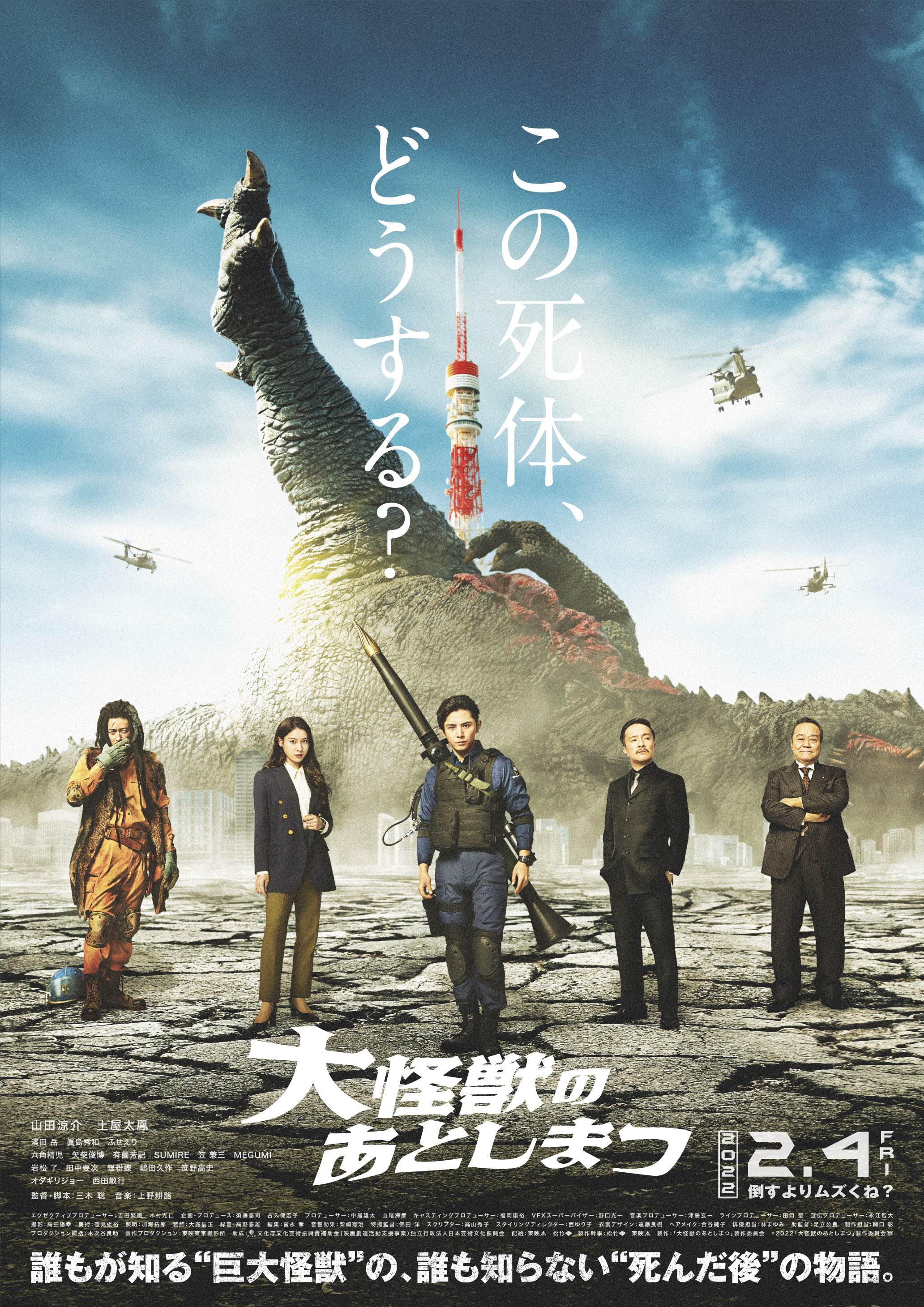
The sudden appearance of a deus ex machina is usually where a story ends. After all, that’s the point. Whatever crisis is in play is suddenly ended without explanation. But what happens then? Satoshi Miki’s What to Do With the Dead Kaiju? (大怪獣のあとしまつ, Daikaiju no Atoshimatsu) steps in to wonder what it is that comes next after a giant monster has been defeated. Someone’s going to have to clean all that up, and in a surprising twist a fair few people are keen to take on the burden. Like Hideaki Anno & Shinji Higuchi’s Shin Godzilla, which the film is on one level at least attempting to parody, Miki’s kaiju comedy is a government satire this time casting shade on the nation’s pandemic response, though with considerably less nuance. 

As the opening onscreen text, a nod to Shin Godzilla, and accompanying voiceover tell us Japan had been plagued by a kaiju but it suddenly died after being engulfed by a mysterious ball of light. While attempting to comedown from the constant state of anxiety under which they’d been living, the prime minister (Toshiyuki Nishida) is at a loss for what to do next especially as no-one really knows if the kaiju corpse is safe. While trying to ascertain whether or not the fallen kaiju might explode, spread dangerous radiation, or present some other kind of threat, government departments start fighting amongst themselves about whose responsibility the clean up effort must be all of them wanting the glory but not the work or expense. 

Some suggest turning the kaiju’s body into a massive tourist attraction and are therefore less keen on anything that involves destroying it while others think it should be preserved and put in a museum. The government has placed the SJF, a militarised science force set up after a terrorist incident, in charge but isn’t listening to much of what they’re saying. Meanwhile, evil moustachioed staffer Amane (Gaku Hamada) is playing his own game behind the scenes which also involves his wife, Yukino (Tao Tsuchiya), who was previously engaged to the leader of the SJF Taskforce, Arata (Ryosuke Yamada), before he abruptly disappeared after being swallowed by a mysterious ball of light three years previously. 

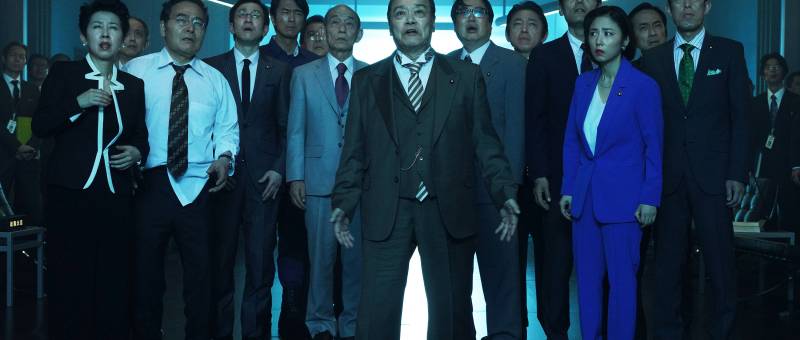
The political satire largely revolves around the indecisive PM, who at one point says he has no control or responsibility for what the other ministers do, and his anarchic cabinet meetings in which politicians run round in circles and insult each other like children. Not exactly subtle, much of the humour is indeed childish and scatological while one minister’s running gag is making sleazy sexist remarks even at one point accidentally playing a saucy video instead of displaying the latest kaiju data on the communal screen. The government experiences a public backlash in deciding to name the kaiju “Hope” which lends an ironic air to its rampage not to mention the necessity of its destruction, while the decision to declare the body safe for political reasons despite knowing it probably isn’t (“protecting the people’s right not to know”) casts shade on the pandemic response among other crises as do the constant refrains about getting back to normal now the crisis is over. 

Then again, there’s something a little uncomfortable going on with the film’s geopolitical perspectives, throwing up an angry politician on the screen with a mangled name who insists that the kaiju originated on their territory and must be returned to them in what seems to be an awkward allusion to Japan’s ongoing territorial disputes with Korea even while it’s suggested that the Americans wouldn’t mind getting their hands on the corpse either for purposes of experimentation and research. On the other hand it also becomes apparent that the Japanese military have deliberately destroyed civilian homes and cost lives in a reckless attempt to stop the kaiju which obviously failed. 

The closing scenes hint we may have been in a slightly different franchise than the one we thought we were dealing with, another deus ex machina suddenly arriving to save the day after the villains almost cause accidental mass destruction. The film’s problem may be that it’s the wrong kind of silly, relying on lowbrow humour while otherwise trying to conform to a blockbuster formula in which the kaiju corpse becomes the new kaiju but the battleground is bureaucracy. Ultimately the film’s prognosis is bleak. Even when the PM has achieved sufficient growth to realise he should make some kind of decision he makes the wrong call leaving everything up to a lone hero while fundamentally failing to come to any conclusion on what to do with a dead kaiju save trying to ensure it does not blow up in his face. 


What to Do With the Dead Kaiju? screened as part of this year’s Fantasia International Film Festival.

Original trailer (English subtitles)

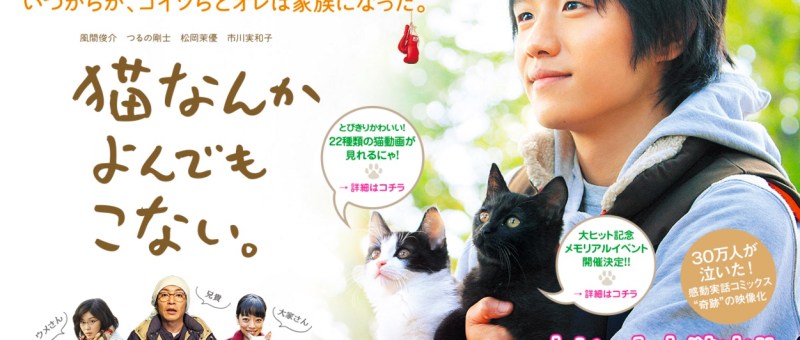
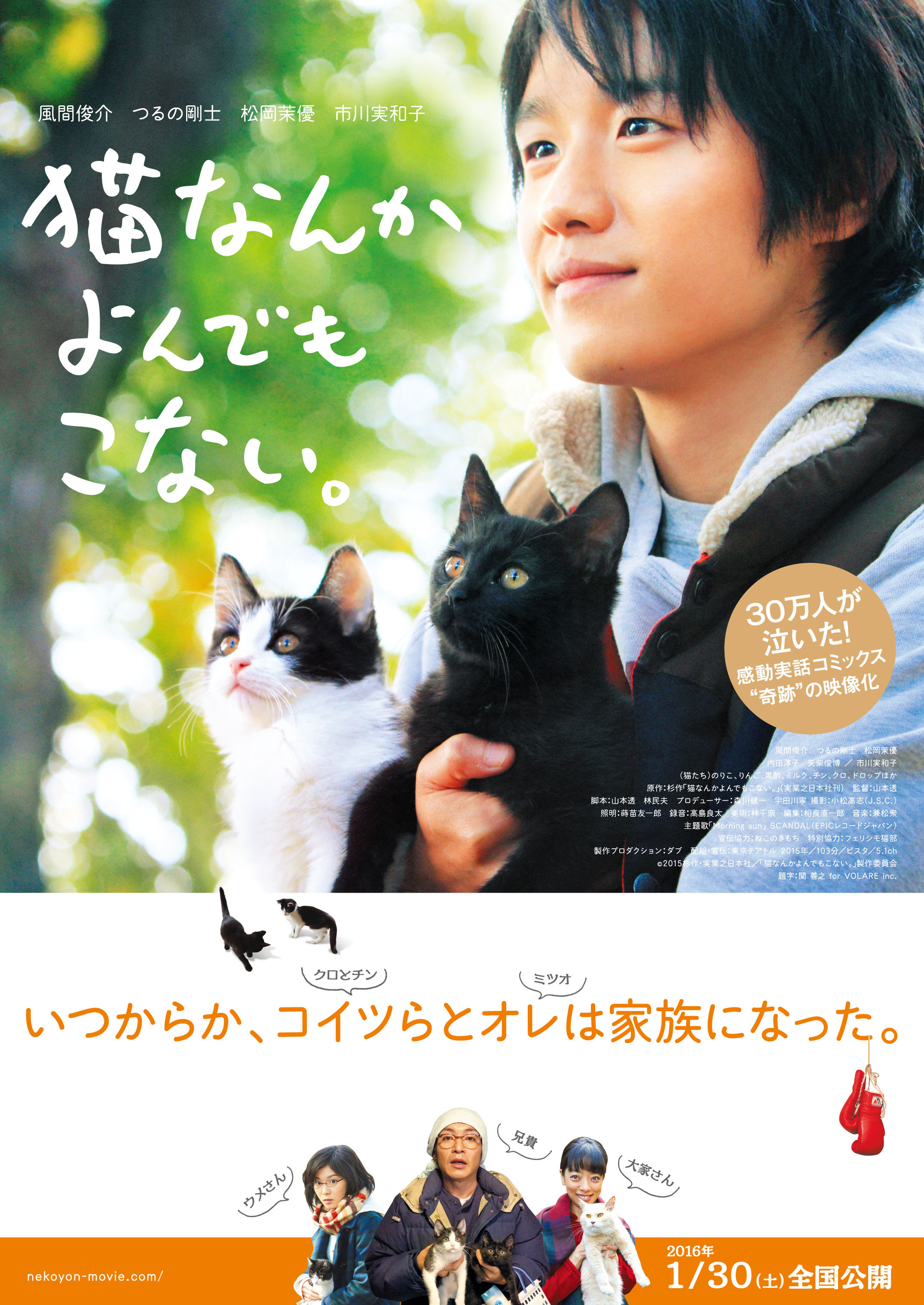
Cats Don’t Come When You Call (猫なんかよんでもこない。, Toru Yamamoto, 2016)

How do you keep going after all your dreams have died? For the hero of manga adaptation Cats Don’t Come When You Call (猫なんかよんでもこない。, Neko Nanka Yondemo Konai.), a pair of adorable kittens eventually point the way towards a more positive future. After all, it’s easier to convince yourself to look after something else than it is to look after yourself. As the title suggests, however, cats like the future can be elusive and confusing, both needy and indifferent. In caring for them you’ll inevitably make mistakes, but those mistakes will perhaps teach you something about the business of being alive. 

The hero, Mitsuo (Shunsuke Kazama), is a dog person, which is why he walks on by when he sees a cardboard box with two abandoned kittens inside by the railway line. An aspiring boxer, he’s moved in with his mangaka brother (Takeshi Tsuruno) and given up all his part-time jobs in the hope of winning enough fights to achieve A-rank status and get a license to turn pro. He’s quite annoyed, therefore, to discover that his brother decided to adopt the cats, naming them Tiny and Blackie, and is expecting him to look after them seeing as he’s not contributing in any other way. 

Despite his original animosity (he claims to hate cats because of their “malicious, warped personalities”), Mitsuo ends up taking to the kittens who quickly take to him, though mostly because he is providing them food and warmth. He even starts to think that these must be “special”, “genius” cats, especially after he wins his big fight and is all set to turn pro believing that the cats are his good luck charm. But all at once his dreams crumble. He receives an eye injury that requires surgery and is advised not to box again in case he goes blind. Feeling sorry for him, his brother keeps giving him money to get out of the house, something which makes Mitsuo feel loved and appreciated. Only later does he realise that he had an ulterior motive when his brother announces he’s decided to get married and will be moving back to the country. “You’re good at taking care of others” he tells him, dropping the bombshell he’s leaving the cats behind too. 

It’s tempting to believe that Mitsuo’s brother picked the cats up with just this purpose in mind, to give Mitsuo another outlet outside of boxing that encouraged him to nurture a more caring side that wasn’t all about solitary, singleminded athletic pursuit. For a man in his early 20s who’s thrown everything at his boxing dream, Mitsuo has few life skills and is perhaps not particularly used to taking care of himself even if he lived alone before surviving on part-time jobs alongside training. He quickly realises that the money his brother left won’t last long, and not only that he can’t really afford to be a cat dad on his meagre savings. An attempt to cut costs by buying cheaper cat food (which he at some points shares) backfires when the offended felines decide to stage a protest by temporarily leaving home. Cats don’t come when you call after all, and Mitsuo wonders if there’s anything more in their decision to stay with him than the fact he feeds them. 

For all that, however, they exemplify the contradictory qualities of his personality. The male cat, Blackie, is timid and shy, while his sister Tiny is outgoing and adventurous, quickly joining a local cat gang and taking up with its boss. Fuelled by a vicarious toxic masculinity, Mitsuo becomes preoccupied with Blackie’s lack of manly energy, obsessed with him becoming the boss of the local cats. A young woman in the park who found the pair after they ran away advises Mitsuo to get the cats spayed and neutered, something he probably should have thought about earlier but doesn’t really have the money for. Worried about Tiny’s “promiscuity”, he eventually decides she should have the surgery but later worries he did the wrong thing when the neighbourhood cats shun her and she becomes a depressed shut-in. Conversely he decides against Blackie getting the snip, glad to discover him going out on the prowl and challenging the local toms even when he is seriously injured in a fight. Projecting his own boxing struggles and the desire to be a champion onto his cat, Mitsuo decides his responsibility as a cat dad is to support from the sidelines as Blackie assumes his masculinity by becoming top cat. 

Because of his underdog boxer past, Mitsuo doesn’t stop to worry that it’s not good his cat keeps getting hurt, believing all these scars are badges of manliness especially after Ume (Mayu Matsuoka), the woman from the park, explains that the male cats fight over the females which is why he should have had him neutered. She also explains that Blackie’s delivering him dead lizards probably isn’t a thank you for not giving him the snip, but a minor insult in implying he thinks he’s a bit helpless and doesn’t know how to hunt. Spurred on by Blackie’s contempt he decides to forge ahead in the new frontier of manga, no longer content with his steady life working part-time in a school kitchen, to prove that he too is a “champion” even if not in the ring. Only too late does he realise he may have let Blackie down in not properly protecting him in projecting his own toxic masculinity onto his cat, and that he may have let himself down too with his all encompassing need to be the champion when maybe it’s better to just enjoy life while doing your best. Nevertheless as Ume points out, cats choose their carers and if they aren’t happy they leave. It’s better to look back on all the happy times you’ve spent together and take note of everything they’ve taught you. Cats don’t come when you call, but they come when you need them, and, as Mitsuo discovers, being needed by them when everything else seems to have rejected you might just be the push you need to finally start taking care of yourself.


Hong Kong release trailer (English / Traditional Chinese subtitles)

The Suicide Song (伝染歌, Masato Harada, 2007)

Suicide Song US Tokyo Shock DVD Cover
US Tokyo Shock DVD cover

There comes a time in every director’s life when fate leads them down the strangely tempting path of the idol movie. In recent years, sweet and innocent is no longer quite enough to cut it and when your film stars a bunch of kids from AKB48, you’re going to need 48x the kawaii factor so even though the DVD cover is suitably macabre and The Suicide Song (伝染歌, Densen Uta) is marketed as a J-Horror movie, there’s quite a lot more singing and dancing than might be reasonably expected.

In true idol star horror movie fashion, the film begins with some cutesy high school scenes before one student, Kana (Atsuko Maeda), starts in on her teacher who basically wants to skip a whole bit of the text book because it’s not on the exam. The potentially irrelevant teaching matter concerns famous Japanese playwright Chikamatsu whose big thing was, you guessed it, double suicides. Shortly after this, Kana is heard singing a weird song and then cuts her own throat with a kitchen knife right in front of her friend and classmate, Anzu (Yuko Oshima). It seems there has been a spate of these spontaneous suicides of teenage girls which occur after singing this particular song so skeevy newspaper guys Macasa, led by occult obsessed Riku (Ryuhei Matsuda ) and his ex-military buddy Taichi (Yusuke Iseya), decide to do some “investigative journalism”. Anzu and some of the other kids wind up helping out too, eventually coming under threat of that very same curse….

The idea of a “suicide song” isn’t a new one. Gloomy Sunday – a 1930s Hungarian folk song which achieved widespread acclaim thanks to an English language cover version recorded by Billie Holiday in 1941 became an urban legend after numerous suicides were linked to the doleful track and its extremely bleak lyrics. This time around, it’s AKB48’s inoffensive Boku no Hana which apparently drives anyone who tries to sing it to their deaths. Like Gloomy Sunday, the song features extremely nihilistic lyrics which echo the existential confusion and romantic disillusionment that many of its young listeners are undoubtedly experiencing. A perfectly rational explanation for why so many young women might be taking their lives with this particular song on their lips, yet Suicide Song is not particularly interested in exploring the various real world pressures which might push high school students towards death when their lives ought to be just beginning.

It’s not long before the curse makes the leap to supposedly solid adult males. Later, one character tries to weaken the importance of the song by suggesting that it just opened a door for the suppressed feelings that were already there. That each of the victims already wanted to die and and simply allowed themselves to make use of this real world meme to give themselves permission to end it all. This is an interesting idea in some ways, though comes close to victim blaming and conveniently lets the central characters off the hook for failing to save their friends who have already fallen for what is either a curse or mass hysteria. In any case, like most Japanese horror movies and mysteries, the real villain is a circle of buried secrets. The traumatic past must be faced, brought out into the light and then given a proper burial to end the ongoing chaos.

Harada is playing a very strange game. He adds in generic J-horrorisms such as odd jump cuts, stuttering, power outages and possessed video footage as well as a good deal of shadiness in the form of the low rent newspaper guys and the investigation turning up something as dark as a teenage gang competing to see how many kids they can get to kill themselves using the song as a marker. Yet, he generally keeps things cute and light just like your average teen idol romance movie. We’re even treated to a very special AKB48 performance at their club in Akihabara (“Japan’s Most Sophisticated Show” !) where they sing Aitakatta for a room full of devoted middle aged guys who are their biggest fans. There are also frequent cinematic quotations from such Hollywood classics as Vertigo and The Lady From Shanghai (not to mention a completely shoehorned in paintball sequence using Ride of the Valkyries a la Apocalypse Now) which seem to hint at some kind of greater plan, but whatever it is never quite materialises.

Whatever Harada’s intentions may have been, Suicide Song is a strange beast which veers widely in tone from wacky comedy to supposed horror film. In actuality there are very few real scares despite the J-horror aesthetic and the comedy never amps itself up to the level of parody. If the intention was to create some kind of weird, subversive genre hybrid, the punches have been well and truly pulled. Watched as a horror movie Suicide Song is prone to disappoint, though its moments of absurd comedy and cute schoolgirl drama prove enjoyable enough for those able to adjust their expectations on the turn of a dime.


The Suicide Song is available with English subtitles on R1 US DVD from Tokyo Shock.

English subtitled trailer (aspect ratio is slightly stretched):

https://www.youtube.com/watch?v=PT2vVgmwb10