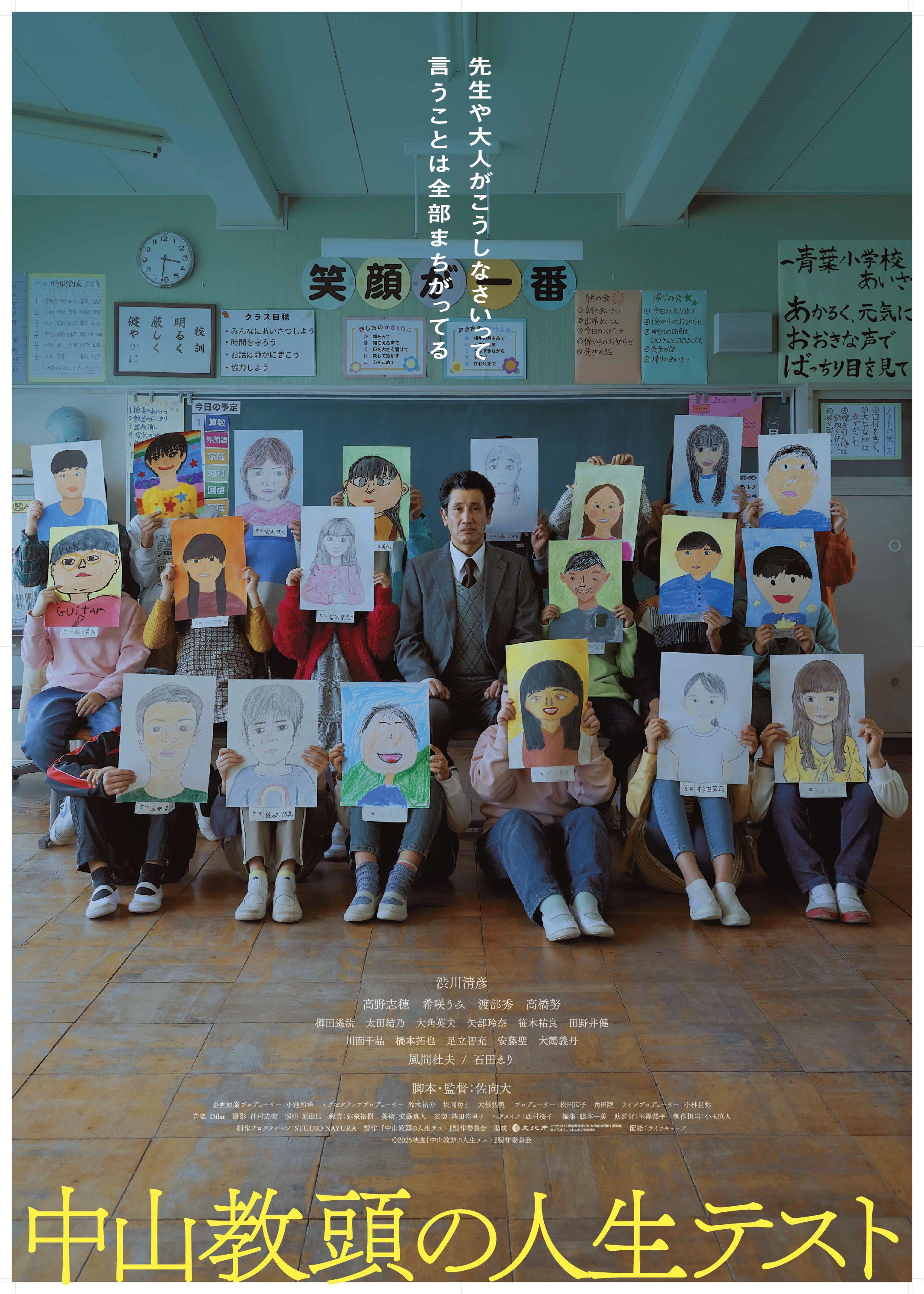
PRINCIPAL EXAMINATION (中山教頭の人生テスト, Dai Sako, 2025)

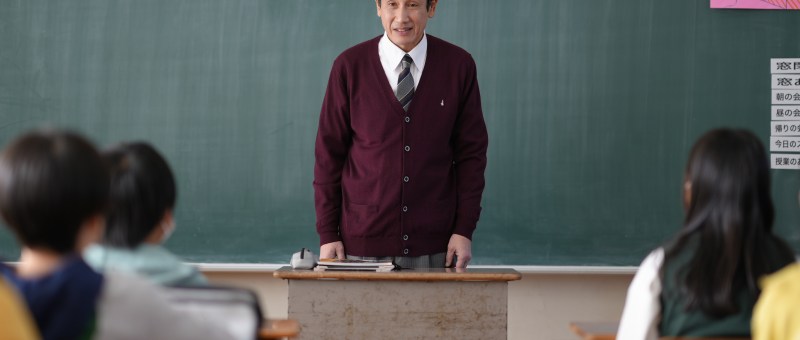
What is the place of the teacher in the contemporary society? Are they extensions of authority whose only role is to insist on order and produce children who will be obedient and know how to follow rules, or is it to educate and care for them so they can become the best versions of themselves free from the pressures of a conformist society? After taking some time away from active teaching, an absent-minded deputy headmaster finds himself confronted by just these contradictions as he’s suddenly tasked with taking over a class of primary school children while studying for the exams to qualify as a head teacher.

A mild-mannered man, it’s clear that Nakayama (Kiyohiko Shibukawa) is already overloaded and that the headmistress, Ms. Takamori (Eri Ishida), delegates most of her work to him. Though he was a frontline teacher for most of his career, he took an admin job after his wife’s death and seemingly lost his enthusiasm for the profession but quickly finds himself in the middle of a wider dispute about the scope of a teacher’s responsibilities to their students. He’s asked to take over after the current teacher, Kurokawa (Shu Watanabe), takes a leave of absence having come in for criticism from the children and their parents over his overly harsh teaching style. We see him force the children to repeat their morning greeting several times because they were not “in unison,” while he otherwise singles children out in front of the class for various rule infractions or poor performance. He appears to be more or less bullying some of the students, including Reona (Michiru Kushida), who comes from a single-parent family and is not able to get her mother to check her homework over for her because she just doesn’t have time.

There is a degree of push and pull between the teachers and parents over the shared responsibility for educating the child with some feeling that asking parents to do this kind of task is unreasonable while also reinforcing traditional gender roles in expecting there to be someone at home who is always available and dedicated only to raising children. This mistaken assumption disadvantages children like Reona while also stigmatising her in front of the rest of the class. Meanwhile, teachers are overly cautious of upsetting parents if they tell a child off in school. One irate father makes a point of coming in to see them when his son was merely questioned about something that happened after class and appears to be something of a bully himself. His son was one of the boys who criticised Kurokawa, and seems to have a lot of pent-up anger that could become a problem in the future but there isn’t much they can do about it at school. 

Kurokawa had only been appointed because Ms. Takamori insisted on temporarily suspending the original teacher, Ms. Shiina (Shiho Takano), because of complaints about something that happened outside of school. She had accepted an invitation to a barbecue with the children’s families where a child fell over and was injured. Ms. Shiina was then criticised for not properly supervising the children though she had only been at the barbecue as a guest and wasn’t responsible for watching them. Nevertheless, she was criticised because her role as a teacher leads people to think that she should be somehow responsible for any children present even when attending in a personal capacity as a private citizen, further emphasising a blurring of the lines when assessing the boundaries around the roles of teacher and parent. 

Ms. Shiina, who also appears to be queer coded, is presented as a more progressive teacher who doesn’t care about playing the game but only about the children’s welfare and wants them to grow up to be morally responsible people who can think for themselves. The irony is that Ms. Takamori may have been similar, later saying that Ms. Shiina reminded her of herself when she was younger, but because of the discrimination and prejudice she faced as a woman she decided her life would be best served by following all the rules so no one could complain. A former champion weightlifter, she had been criticised for a lack of femininity all her life and is also subject to the sexist and misogynistic judgements of the former headmaster, Kishimoto, who has made Nakayama his prodigy, but only if he plays the game which means becoming the kind of teacher who puts appearances first and enforces discipline rather than attempting to find out what’s going on in the children’s lives or fully understand the realities of class dynamics.

Indeed, it turns out to be the kids who are following the rules who are the worst and actively encouraging the semblance of order maintained through hierarchical bullying. Nakayama tries to investigate, but only arrives at half the truth and is torn between his desire to become a head teacher, which means submitting himself to the rigidity of the school system, and the idealism he once had for teaching. He finds himself effectively bullied, pressured into going along with things he doesn’t think are right which is the opposite of what he wanted for the children. As he eventually tells one of them, everything the teachers say is wrong, and what they really wanted to do was right, which is as close to admitting the irony of his position as it’s possible to get. 

The film’s English title has its ironies too as this is also an examination of Nakayama’s principles and how far he’s willing to compromise on them to be validated by the system in becoming a headmaster. He betrays his principles when he takes the test, but gets away with it and is in fact uncomfortably praised for his hardline stance after lying to protect Ms. Takamori by saying it was his decision to suspend a pupil who was caught shoplifting and drinking though some criticise it for its unfairness on the child. After all, suspending them will just result in them having nothing to do and getting into more trouble. But on the other hand, some parents now see this child as problematic and don’t want them back at the school where they worry they may prove disruptive to their own children’s education and development. 

The film offers no solutions though lands on the side of the children rather than the authority, sympathising with Ms. Shiina and encouraging Nakayama to regain his former idealism rather than become just another tool of an already oppressive social system. The fact that Nakayama loses his notebook implies a disregard for the kind of rules that are written in the headmaster’s manual and a return to his own judgement while leaving his final decision ambiguous as to which side of the line he will finally be on or whether he can really change this system from within. Though pretty bleak about the education system and its implications for the wider society, there is still a note of optimism in those like Ms. Shiina who don’t care about the rules so much as the children’s wellbeing that there is still a place for a more idealised form of teaching even within a fairly oppressive society.


PRINCIPAL EXAMINATION screens 31st May as part of this year’s Nippon Connection.

Trailer (no subtitles)
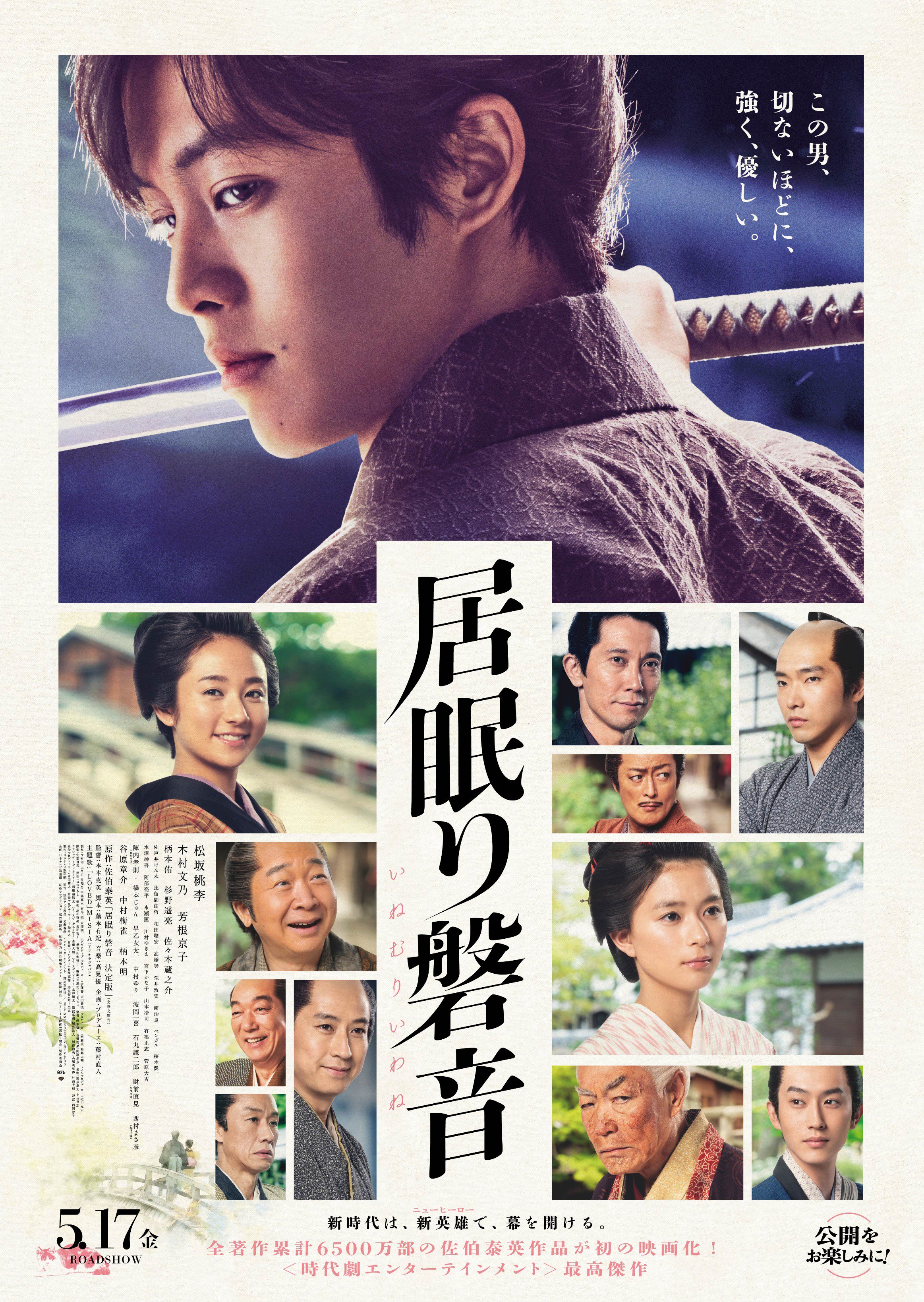
Iwane: Sword of Serenity (居眠り磐音, Katsuhide Motoki, 2019)

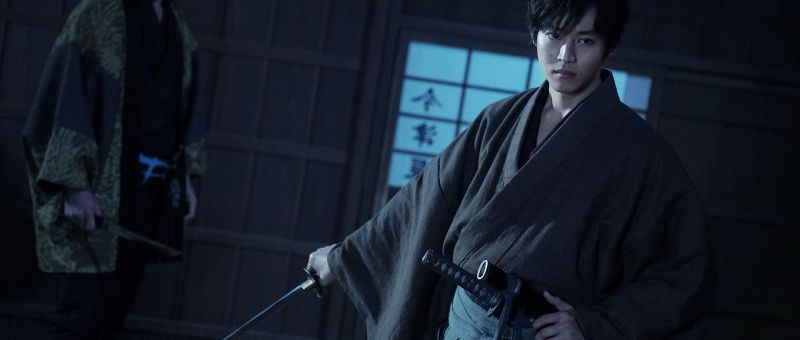
The contradictions of the samurai code conspire against one noble-hearted young man in Katsuhide Motoki’s adaptation of the long running series of historical novels by Saeki Yasuhide, Iwane: Sword of Serenity (居眠り磐音, Inemuri Iwane). Yet this truly serene samurai is a stoical sort, learning to bear his pain with fortitude while standing up for justice in an increasingly corrupt Edo where money rules all while an ascendent merchant class continues to challenge the fiercely hierarchical social order. 

Beginning in 1772 which turned out to be a disastrous year, the tale opens as hero Iwane (Tori Matsuzaka) prepares to return home after completing his three year rotation in Edo in the company of childhood friends Kinpei (Tasuku Emoto) and Shinnosuke (Yosuke Sugino). Shinnosuke is in fact married to Kinpei’s sister Mai, while Iwane will himself be married to Kinpei’s other sister Nao immediately on his return so close are they. As Iwane’s father tells him, there are great hopes for these young men that they can “turn our outdated clan around”, but events will conspire against them. Spoiling the happy homecoming, Shinnosuke is accosted by a drunken uncle who convinces him Mai has been unfaithful in his absence with the consequence that he kills her immediately on his return home. Unable to understand this turn of events, Kinpei confronts his friend but eventually kills him, while Iwane is then forced to kill Kinpei after he goes on murderous rampage in revenge for the wrong done to his sister. 

In trying to mediate the case, the argument is put forward that Shinnosuke acted rashly and should have brought his suspicion to the authorities rather than opting for summary execution. The lord however disagrees, condoning Shinnosuke’s actions under the rationale that to do so would have been considered “weak minded” while as Shinnosuke himself had claimed he acted in accordance with the samurai code in which female adultery is illegal and punishable by death. By contrast, he finds Kinpei’s rashness offensive, insisting that he also should have recognised the legitimacy of his sister’s murder and simply left quietly with her body. Having learned the truth in which his childhood friends became victims of clan intrigue, romantic jealousy, and tragic misunderstandings in this Othello-like plot, Shinnosuke and childhood sweetheart Nao are also consumed by the rashness of samurai law each exiled from their clan and cast adrift in Edo-era society. 

Edo-era society is however also itself corrupt. Some months later, Iwane has returned to Edo as a lowly ronin lodging with a kindly old man, Kinbei, who helps him find a job firstly gutting eel then as a bodyguard at a money exchange which has been receiving anonymous threats they assume are from rival broker Awaya who has hatched a nefarious plan to manipulate the currency market to stop the current Shogun introducing a new unit which can be used in both Edo and Kyoto which would understandably cut into his already corrupt business model. Luckily, Imazuya is an honourable man who backs the new currency plan and wants to do the right thing which makes him a perfect fit for Iwane’s innate sense of justice. “You don’t know the way of the merchant” Awaya snaps at him, suggesting both that the samurai are already on their way down as the merchants rise and that his unwillingness to play dirty will be his downfall. Nevertheless, Iwane is the type to adapt quickly, instantly coming up with a way to play Awaya at his own game and kick his destructive amoral capitalism to the curb. 

Meanwhile, he continues to pine for Nao while drawing closer to Kinbei’s earnest daughter Okon (Fumino Kimura). As we discover Nao is also a victim of an intensely patriarchal social order but through the tragedy that befalls them also finds strength and agency making a life changing decision that allows her to become independent while looking after her family if in the knowledge that the childhood romance she shared with Iwane is a thing of the past. Iwane too agrees that he is trapped in a living hell of guilt and grief, yet choosing to go on living anyway as calm and cheerful as he’d ever been while standing up to Edo-era corruption though uncomfortably enough this time against the destabilising influence of the rising merchant class and therefore in contrast to most jidaigeki reinforcing the legitimacy of the samurai order which has paradoxically also ruined his life with its rigid and implacable social codes. In any case, Motoki’s classic chanbara melodrama has a serenity of its own as the cheerfully laidback hero resolves to live his life by a code of his own free of samurai constraint. 


Trailer (no subtitles)

Drive Into Night (夜を走る, Dai Sako, 2022)

Small-town futility leads to tragedy when two frustrated scrapyard workers attempt to cover up a crime in Dai Sako’s dark psychological drama Drive into Night (夜を走る, Yoru wo Hashiru). Oppressive in its atmosphere, the film situates itself in a world of constant humiliations where life is cheap and reputation everything. Its heroes seek escape from their disappointing existences through consumerism and extra-marital affairs, but no longer see much of a future for themselves while even the dissatisfying present seems to be ebbing away from them. 

Asked what makes his life fun, Akimoto (Tomomitsu Adachi) replies “not much”. A classic mild-mannered guy, he’s regarded as the office dogsbody and at the beck and call of his abusive manager, Hongo (Tsutomu Takahashi). When a new female sales representative, Risa (Ran Tamai), visits the yard, Hongo runs Akimoto down in front of her apologising for having such a useless employee who does nothing other than drive around all day. His sense of masculinity is also wounded by an older colleague who tries to sell he and his friend Taniguchi (Reo Tamaoki) some kind of aphrodisiac but reflects that Akimoto is too “tame” to ever make use of it, while even Taniguchi needles him about being a 40-year-old man who’s never had a girlfriend and still lives at home with his parents. In many ways he’s the classic “nice guy”, but there’s also something a little dark about him that makes it seem as if he may snap any moment. That may have been what happened when he and Taniguchi went to a bar with Risa shortly after she’d been coaxed into a works drink with Hongo. Something obviously went dreadfully wrong in the night, because Risa is soon reported missing and both Akimoto and Taniguchi begin behaving oddly. 

It is true enough that both men, and many of their colleagues, also consider themselves to be on the scrap heap. Akimoto is tempted to quit his job to put distance between himself and the scrapyard but reflects that he’s unlikely to find another job even if quitting so suddenly might arouse suspicion as Taniguchi warns him. Meanwhile, he knows the yard is in trouble. They have him running round doing cold calls but returning empty handed, while office workers are constantly fielding calls about unpaid invoices. His irritation is palpable when he spots the boss, Miyake, leaving one morning soon after he arrives, loading expensive golf clubs into his fancy car. Hongo bullies him, but later says he does it out of respect because Akimoto is the only one who bothers to do his job properly. But then again even Hongo concedes that hard work gets you nowhere. Most of his paycheques go on child support and he often sleeps in his car in the car park. The only reason he’s not been fired is that he has a personal connection to Miyake.

Even so, this fairly tenuous relationship does not really explain why Miyake goes to such great lengths to protect Hongo when he becomes the prime suspect in Risa’s disappearance and is framed by Taniguchi and a guilty Akimoto. It may be in a way that he really does think of the company as a kind of family, as perhaps do the loan sharks who keep calling them after Akimoto ends up in debt having joined a weird cult encourages him to think there is nothing wrong with him and the fault is all with an unaccepting world. The cult leader tells him that he is “full of anger”, which perhaps he is. This being in the immediate aftermath of the coronavirus pandemic, Akimoto is often questioned about still wearing a mask long after most people have abandoned them and part of the reason is as an attempt to hide his true self. After joining the cult he takes it off, but soon adopts another disguise in dressing in Risa’s clothes as his mental state continues to decline. 

Taniguchi meanwhile makes an effort to continue with his “normal” life which includes visiting his mistress. Unbeknownst to him, his wife Misaki (Nahana) is also having an affair with the consequence that neither of them is able to fully devote themselves to their young daughter Ayano who eventually ends up in a potentially dangerous situation because of her parents’ various transgressions. Nevertheless, despite discovering that her husband may have been involved in a murder it’s Misaki who decides that he has to “protect our family” above all else. Amid all of this, Risa becomes almost literally lost before later being unceremoniously dumped like so much scrap. After framing Hongo, Taniguchi tries to convince Akimoto that Risa isn’t their problem anymore as they each struggle to hang on to the previously disappointing realities they had been so desperate to escape. 

It has to be said that aside from the misogyny of its worldview, there is also an uncomfortable quality in the film’s characterisation of a shady Chinese businessman who of course knows how to get rid of bodies along with the fact his chief associate is Korean-Japanese gangster. Though the film’s strongest character may in fact be the Filipina bar hostess, Gina (Rosa Yamamoto), on whom Akimoto fixes most of his hopes who defiantly tells the cult leader that she’s happy with her life and has no reason to join his organisation, Akimoto exposes himself by telling her she’s wrong because he doesn’t see why a “foreigner”, “a woman”, who works in a “dirty” bar, could be happy or averse to being “saved” by him. Still he insists that he hasn’t “changed”, it’s the world that’s changed around him. Taniguchi later says something similar, and they each may have a point. In any case, this world is largely one of resentment and futility in which there is no release. Sako captures the drudgery of his protagonists lives with crushing naturalism but also perhaps little sympathy.


Original trailer (no subtitles)

The Legend & Butterfly (レジェンド&バタフライ, Keishi Otomo, 2023)

“What was everything for?” an ageing Nobunaga (Takuya Kimura) asks his attendant Ranmaru (Somegoro Ichikawa) towards the conclusion of Keishi Otomo’s historical epic, The Legend & Butterfly (レジェンド&バタフライ, Legend & Butterfly) produced in celebration of Toei’s 70th anniversary. Oda Nobunaga is such a prominent historical figure that his story has been told countless times to the extent that his legend eclipses the reality, but rarely has been he depicted so sympathetically as in Otomo’s history retold as romantic melodrama in which he and his wife, Lady No (Haruka Ayase), are mere puppets of the times in which they live dreaming only of a place beyond the waves where they might be free of name or family. 

Tellingly, Otomo opens in the spring of 1549 in which the dynastic marriage was arranged to broker peace between unstable neighbouring nations Owari and Mino. Nobunaga’s father’s health is failing and he fears in the chaos of his death Mino may attack, while No’s father fears that her brother will soon revolt against him plunging the fiefdom into disarray and therefore vulnerable to an attack by Owari. At this point, Nobunaga is known as “the biggest idiot in Owari,” a foppish dandy who cares only about appearances. As he prepares to meet No, his courtiers apply his makeup and do his hair while dressing him in a rather outlandish outfit No immediately insults as “foolish”. He treats her with chauvinistic disdain, barely speaking save to order her to pour the drinks and give him a massage only for her to point out that she’s been travelling all day and a “thoughtful” considerate husband would be giving her a massage instead. “I detest women who do not know their place,” he snaps. “I detest men who are ignorant,” she counters. The wedding night ends in humiliating failure as No demonstrates her martial arts skills and Nobunaga is forced to call his guards to rescue him. 

Little is known of Lady No in historical record, but here she is bold and defiant, as her father had said too free with her opinions for a woman of the feudal era. She claims to have been married twice before and assassinated both husbands on her father’s orders, implying that she is essentially sleeper agent more than hostage and will kill Nobunaga without a moment’s thought as soon as the word is given. Yet she also begins to guide her husband towards his destiny, mocking him as a fool but giving him useful strategic advice that wins him glory on the battlefield along with the political advancement that led him to become the first great unifier of Japan. For all that they “hate” each other, they are well matched and have a similar sensibility that allows them first to become allies and then friends before frustrated lovers.

But their love is enabled only when they escape the feudal world, shaking off their retainers to go on a “normal” date in Kyoto where they dance to Western musicians and taste foreign candy only to end up accidentally massacring some peasants when No’s martial arts training kicks in trying to stop a man beating his son. Even so, they are forever linked by their time in Kyoto in the romantic talisman’s of a carved wooden frog and a European lute even if the blood-spattered jizo and buddhist statue watching their eventual connection imply there will be a reckoning for all the blood that is spent. Jumping on a few years, the film does not elaborate on what caused Nobunaga to become a man without a heart and lose the love of his most trusted ally but positions his transformation into the “Demon King” as the kernel of his undoing just as his dream of unifying Japan and bringing about an age of peace (if one ruled by fear) is about to become a reality. 

In any case, the one thing that everybody knows about Nobunaga is how he died though then again his remains were never recovered giving rise to a happier ending in which he and Lady No were finally able to escape the feudal world to chase a freer future beyond the sea which is perhaps what they do in the film’s poetic final sequence in which they might in a sense share a dream connected by frog and lute. It might not be very historically accurate, but that is perhaps the point in hinting at the lives they might have led if the world had been different. Otomo films with a painterly eye that lends an air of poignant gravitas to a tale of romantic tragedy in which love is both salvation and destruction amid the flames of a collapsing temple. 


The Legend & Butterfly screened as part of this year’s JAPAN CUTS.

Original trailer (English subtitles)

As Long As We Both Shall Live (わたしの幸せな結婚, Ayuko Tsukahara, 2023) [Fantasia 2023]

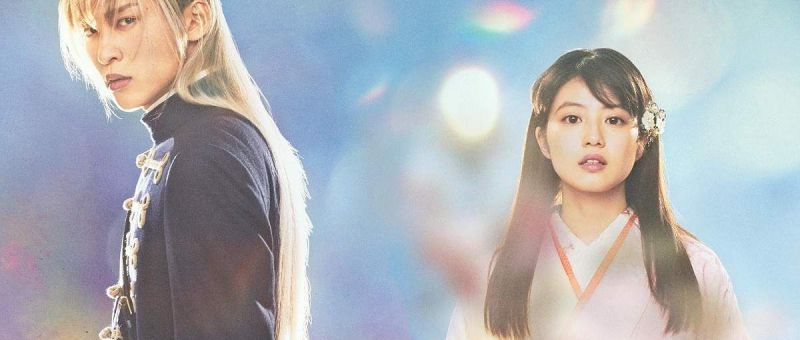
A young woman with chronically low self-esteem learns to love herself after bonding with a taciturn nobleman in Ayuko Tsukahara’s adaptation of the fantasy romance light novel series by Akumi Agitogi, As Long As We Both Shall Live (わたしの幸せな結婚, Watashi no Shiawasena Kekkon). Set in an alternate version of the late 19th/early 20th century in which the nation is ruled by an emperor who has the ability to foresee the future and leads a series of prominent clans of superpowered soldiers against “aberrations” who wreak havoc in the lives ordinary people, the film is effectively a kind of Cinderella story only the fairy godmothers are a kindly housekeeper a shady underground sect with the power to manipulate people’s minds. 

In any case, Miyo (Mio Imada) was born into a noble house the members of which have the ability to manipulate the wind though sadly she appears to have been born “powerless” and is bullied by her step-mother and step-sister who treat her as a servant. At 19, she learns she’s to be married off and is excited about finally escaping her abusive family home but also wary that it might not make much difference because her potential husband, Kiyoka Kudo (Ren Meguro), is said to be cruel and violent. All three of his matches have fled the house in under three days though being so used to mistreatment Miyo is sure that it will just be a matter of adjusting to her new circumstances. 

What she discovers is that Kiyoka doesn’t seem all that bad just a bit aloof and direct in his manner of speech. Nevertheless, she continues to believe that she isn’t good enough to marry him because she doesn’t have any magical powers and is convinced he will call off the engagement when he finds out. Meanwhile, she bonds with housekeeper Yurie (Mirai Yamamoto) after breaking protocol by helping out around the house for something to do though it is perhaps a bit odd that someone from such an apparently wealthy family has only one servant and seems to lead an incredibly simple life devoted to his role as a soldier helping to keep the aberrations in check especially now that the emperor is dying and someone has apparently released the pent up souls of fellow aberration fighters who died horribly and are filled with dangerous resentment.

Many of Miyo’s self-esteem issues are down to the way she was treated by her family and having lost her mother at two years old though there is obviously parallel in her literal “powerlessness” and the lack of agency that is afforded to her in having been kept a prisoner in the family estate only to be traded off in marriage by a father apparently out for whatever he can get for such a “mistake” of a daughter. It’s perhaps a slight failing in the narrative that she turns out to have powers after all rather than simply beginning to accept herself in the comparatively warmer environment of Kiyoka’s home even if it might also be a little awkward that her self-love is born of feeling loved by Kiyoka and to a lesser extent Yurie and immediately has her pledging to give her life for him if only he should ask it. 

For his part, Kiyoka is also undergoing something of a transformation in that it turns out he also felt estranged from his mother and is actually kind at heart just incredibly awkward and taciturn. The reason he didn’t bond with any of his previous suitors seems to be that he objected to their insincerity and the nonsense that goes along with being a member of the aristocracy like the concept of arranged marriage in itself, later taking Miyo’s family to task for their treatment of her claiming that he doesn’t really care about her social status or whether or not she has any powers. In any case, it’s love that helps her overcome her “powerlessness” even if she uses her newfound inner strength for someone else rather than herself, taking control over and her life regaining self-confidence as someone worthy of love, respect, and basic human decency not to mention happiness. A post-credits trail hints at a potential sequel or even series expanding on the franchise’s rich world building but for now at least it seems as if Miyo has found her happy ending, finally able to embrace life on her own terms rather than feeling as if she needs to make a mends for her existence.


As Long As We Both Shall Live screened as part of this year’s Fantasia International Film Festival.

Original trailer (no subtitles)

The Three Sisters of Tenmasou Inn (天間荘の三姉妹, Ryuhei Kitamura, 2022)

Caught in a space of existential limbo, a young woman struggles with the uncertain nature of life. What’s the point of living in a world that might end, she asks herself, seemingly not having realised that it’s as it always was, the world is always ending and may blink out at any given second. Ryuhei Kitamura’s adaptation of the manga by Tsutomu Takahashi The Three Sisters of Tenmasou Inn (天間荘の三姉妹, Tenma so no San Shimai) plays out a little like a mashup of Hirokazu Korea’s Afterlife and Our Little Sister, but ultimately meditates on how to live on in the shadow of loss.

After all, as the relentlessly cheerful heroine Tamae (Non) later says, life is hard but the world is not so bad and everyone has their part to play. That’s something she discovers for herself after falling into a coma following a traffic accident and arriving at Tenmasou Inn in the picturesque seaside town of Mitsuse. As is explained to her, the inn exists in a liminal space between Heaven and Earth where those caught between life and death are expected to make a choice on their direction of travel. 

But Tamae begins to enjoy her time at Tenmasou in part after learning that the owner’s daughters, Nozomi (Yuko Oshima) and Kanae (Mugi Kadowaki), are her half-sisters. They are fully aware of their liminal status and that unlike Tamae they can never return to the mortal world or make any kind of life for themselves in Mitsuse where time stands still. Nevertheless, Tamae’s relentless cheerfulness and knack for human empathy prove key assets, beginning to return an energy and warmth that has those around her giving new thought to their cosmic inertia and if it’s really possible to go on living in a constant state of timelessness. 

Tamae might want to stay, experiencing for the first time the sense of family that she’s searched for all her life. She considers giving up the rest of her time to stay with them, but is reminded that no one can stay in this transient place forever while this version of Mitsuse which seems to hang over the “real life” town may soon disappear. Those who live there describe it as like living in a dream, a confusing simulacrum of life in which no time passes. There are those who make the eventual decision to pass on towards rebirth while others opt to stay, still having unfinished business or perhaps just not quite yet ready. 

Recalling the 2011 tsunami, the film touches on the difficult subject of survivor’s guilt and how to come to terms with loss on a mass scale while Tamae tries to process what it means to live and to not to. She resolves that “people don’t end when they die” but live on in the memories of those who remember them, though her conviction that she must live on as a kind of conduit for the souls of others may also rob her of a degree of her selfhood in her own right to live simply as herself.

Even so as she admits life is hard. An old woman suffering with liver cancer who had been blind for many years looks for beauty in the afterlife only to be reminded that there are beautiful things everywhere if you take the time to look. She too has had a life of sadness, but discovers that it might not be too late to make up for lost time, while a very young woman who felt herself to be alone learns that she has a friend and there are those who care for her even she did nearly burn the inn down in a fit of temper. Unabashedly sentimental, the film is as much about moving on as it is about learning to live in the present as the various guests contemplate whether to return to the world of the living with all of its pain and loneliness, or proceed to that of the dead knowing that there’s no guarantee the next life will be any better. Melancholy but also in its way uplifting, Kitamura’s empathetic drama eventually settles on a note of poignancy in which the act of living becomes its own memorial and defiant act of remembrance in the face of constant and unexpected loss.


The Three Sisters of Tenmasou Inn screens in New York Aug. 6 as part of this year’s JAPAN CUTS.

Original trailer (English subtitles)

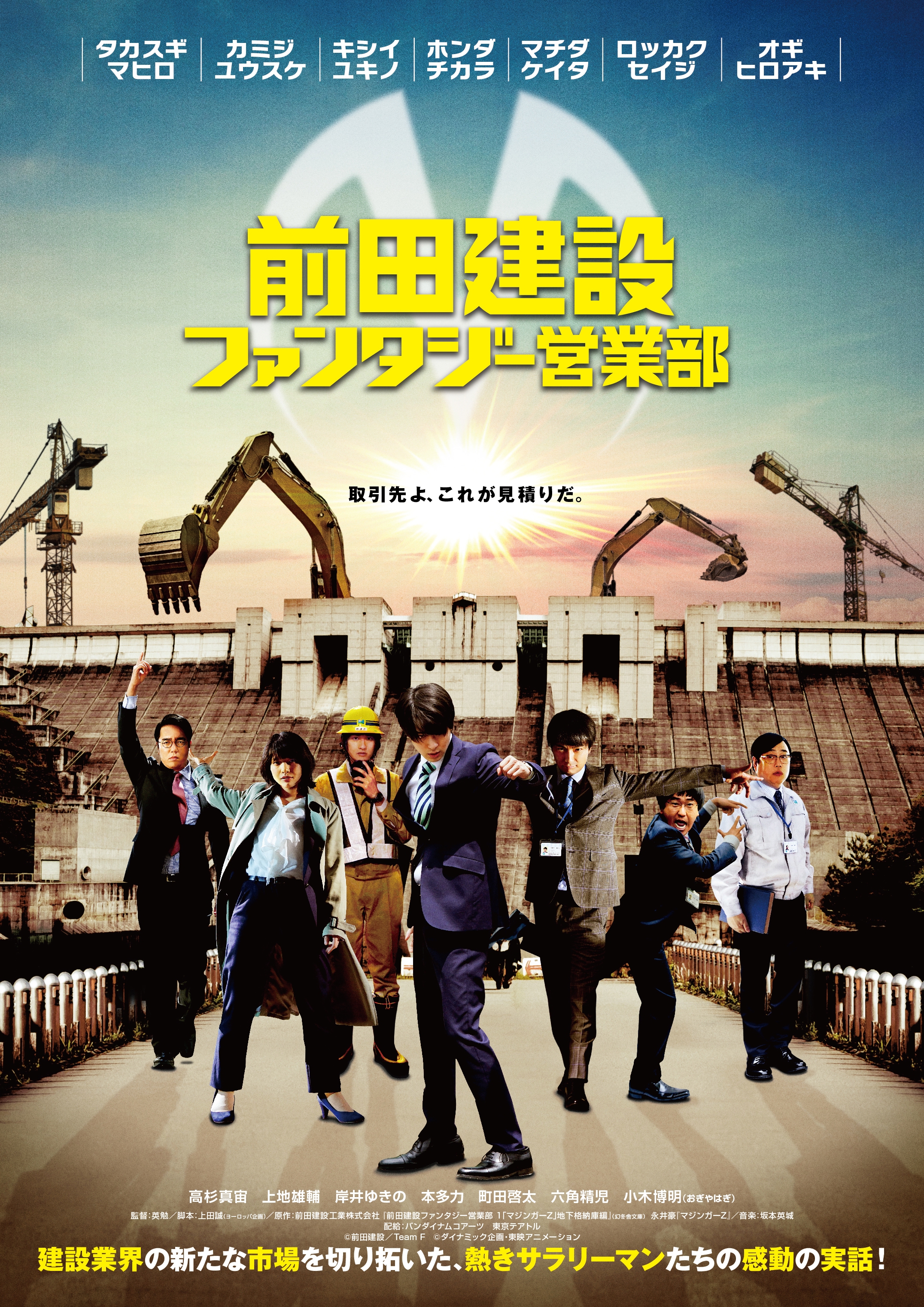
Project Dreams: How to Build Mazinger Z’s Hangar (前田建設ファンタジー営業部, Tsutomu Hanabusa, 2020) [Fantasia 2020]

Construction was the post-war powerhouse and a traditional solution for governments looking to boost the economy but what are successful firms to do when everything’s already been built? Maeda made a name for itself as an expert in the construction of dams, but there are only so many you can build and theirs were state of the art so no one’s really looking for any more in the near future. Enter enterprising PR chief Asagawa (Hiroaki Ogi) who has a bold new plan to raise the company’s profile – start an enticing web project in which they draft iconic buildings from the fantasy world as if they existed for real starting with the underwater hangar from nostalgic ‘70s mecha anime, Mazinger Z!

As you can imagine, not everyone is taken by the idea even if initially swept up by Asagawa’s impassioned sales pitch. Being an otaku isn’t something you really want to advertise at work, and perhaps especially if you’re really into kids robot shows from 40 years ago. The point however is less about Mazinger Z than it is that Maeda can build anything it sets its mind to and if it can figure out the wilfully outlandish designs of classic anime which, it has to be said, rarely thought through the real world physics of its creations which are not even generally internally consistent, there’s nothing it cannot handle. 

The major sticking point with the Mazinger Z design is that the hangar is covered by a large amount of water (Mazinger Z is made from a special metal which is completely rust proof) which, given their proficiency with dam technology, shouldn’t be so much of a problem, but the more they look into it the more issues they find from the joints on the “roof” to the platform which pushes Mazinger Z into the launch position needing to boost him within 10 seconds. It doesn’t help that the anime often ignored the constraints of the original design for reasons of plot such as when Dr. Yumi suddenly has the robot slide to the left and bust out of the concrete rather than using the shoot. 

The team will need to show all of their engineering knowhow in order to solve the increasingly annoying number of problems, which is in a sense the point of the project in showcasing Maeda’s superior engineering power. Not all employees are originally behind it, however. Emoto (Yukino Kishii), a young woman entirely uninterested in mecha anime discovers that her colleagues quickly leave the canteen when they see her coming, while reluctant office worker Doi (Mahiro Takasugi) and former engineer Besso (Yusuke Uechi) both find themselves accosted by section chiefs who want them to undermine the project because they are embarrassed to be associated with something so “silly” and worry it will damage the firm’s reputation. Asagawa however is undaunted, sure that this kind of “silliness” is perfect for improving the company brand and capturing an online audience that will eventually lead to more business in the future even if it’s true that their “Fantasy World” clients aren’t going to be paying them nor will they actually be building any of their designs. 

In this Asagawa may well have a point because Project Dreams: How to Build Mazinger Z’s Hangar (前田建設ファンタジー営業部, Maeda Kensetsu Fantasy Eigyobu) just might be the most accessible intro to civil engineering imaginable as they somehow manage to make even the driest of calculations seem exciting in direct contrast to the frequent complaints that the ideas they’ve come up with aren’t “glamorous” enough. Dragged along by his passion, the team gradually come on side one by one with even Doi, the most cynical who told himself that he needed to knuckle down after becoming a regular salaryman, realising that there’s no shame in having fun at work, unexpectedly finding a new appreciation for the craft of engineering after being ordered to read a lot of books about dam building by the company’s foremost expert, himself quietly in favour of the project in its capacity to show off their collective know how and inspire the next generation of engineers. Contrary to expectation, they discover there’s much more industry support than they ever could have imagined for this kind of “silliness” with other companies enthusiastically coming on board to help them achieve their Mazinger dreams. Inspired by true events, Project Dreams has real love and affection for the craft and for those who are just very good at what they do no matter what it might be, embracing a childish sense of fun and imagination along with teamwork and camaraderie which suggests that anything really is possible when you put your mind to it, even constructing an underwater hangar for a robot that doesn’t exist to defend the world against the forces of evil.  


Project Dreams: How to Build Mazinger Z’s Hangar streamed as part of this year’s online edition of Fantasia International Film Festival.

Original trailer (English subtitles)

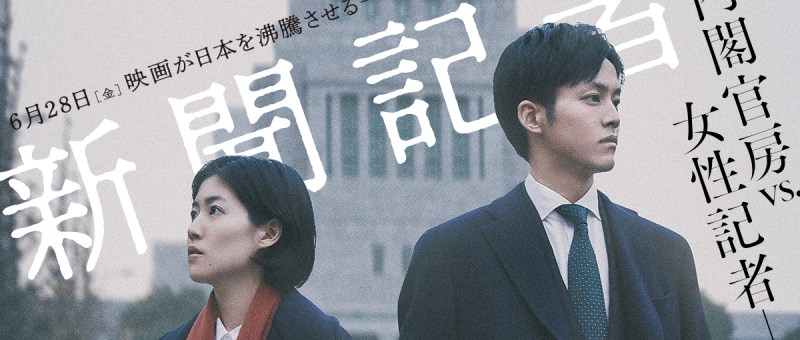
The Journalist (新聞記者, Michihito Fujii, 2019)

The Journalist poster 2In these days of “fake news” and misinformation, a robust press is more important than ever. In Japan, however, the news media institution has long been decried as toothless, if not actually in league with the ruling regime. A timely and appropriately exasperated conspiracy thriller, Michihito Fujii’s The Journalist (新聞記者, Shinbun kisha) is inspired by the non-fiction book by newspaper reporter Isoko Mochizuki who makes a brief appearance at the beginning of the film and has herself been singled out as “problematic” by politicians unused to being held to account and objecting to her intensive interview technique.

Mochizuki’s fictionalised stand in, Erika Yoshioka (Shim Eun-kyung), is a rookie reporter who grew up in America with her Japanese journalist father and Korean mother. Following her father’s “suicide” she returned to Japan and is currently working for Toto News where she receives a mysterious fax containing information about a suspicious government plan to found a new medical university.

Meanwhile, idealistic former international diplomat Sugihara is on temporary secondment to CIRO (Cabinet Intelligence and Research Office) – a secretive organisation set up under the occupation to mirror the US’ CIA but often criticised for acting like a secret police force and expending too much effort on spying on ordinary Japanese citizens on Japanese soil rather than gathering useful international intelligence. Sugihara (Tori Matsuzaka) finds himself conflicted in his new work, the first assignment of which is handling a smear campaign against a young woman (clearly inspired by the Shiori Ito case) who has accused a high ranking journalist close to the government of rape. A married man with a baby on the way, he fears rocking the boat but resents his complicity with such obvious government finagling and failure to counter the misogynistic narrative that passes for office banter.

When his former mentor, Kanzaki (Kazuya Takahashi), commits suicide, no longer able to live with his compromises, Sugihara begins to reconsider his decision not to go against his superiors but finds it difficult to countenance “betraying” his organisation even in the knowledge that they are no longer working in the best interests of the people. Yoshioka, with whom he eventually bonds after witnessing her sympathetic treatment of Kanzaki’s bereaved daughter, may in some senses be better placed to resist given her overseas upbringing. Where Sugihara and the news media at large struggle with the idea of standing up to authority, Yoshioka is keen to sell the ideals of journalistic integrity, insisting that a robust press is essential in holding power to account.

Meanwhile, she finds herself a lone voice adrift in the largely patriarchal world of Japanese news media. Leaving the press conference called by the woman accusing the government crony of rape, she stops to tell off a pair of journalists making sexist comments but receives only a brief eye roll before they walk away laughing. She also finds herself resented by her colleagues for pointing out that their hounding of Kanzaki’s bereaved wife and daughter at his funeral is insensitive and inappropriate, but refuses to back down in fierce determination to do what is right even if it is not popular.

Meanwhile, Sugihara’s odious boss Tada (Tetsushi Tanaka) is desperately trying to keep a grip on power from the shadows. He uses Sugihara’s conflicted loyalties against him, subtlety reminding him that he has a wife and newborn daughter to whom he has a greater responsibility, and insisting that there is no “shame” in complicity when it comes to maintaining “the illusion of democracy”. CIRO, it has to be said, does not come out of this well as it wilfully does the government’s dirty work – covering up the indiscretions of “valuable” politicians and their relatives in order to avoid the unpleasant chaos of unwelcome political scandals. Kanzaki’s compromises left him a broken and defeated man, Sugihara wonders what kind of man his daughter would think him to be if he too just went along with the government line and enabled their subversion of democracy solely for personal and economic security.

The press may be waking up, but The Journalist’s chief takeaway is that change comes when enough people find the courage to keep saying no. As the ending implies, the battle is far from over but it has perhaps begun thanks to the efforts of those like Mochizuki and her filmic counterpart Yoshioka as well as the courage of whistleblowers like Sugihara who risk personal ruin merely for speaking out. A timely, urgent defence of press freedom in the face of tightening authoritarianism, The Journalist is an all too plausible conspiracy thriller in which the last guardians of liberal democracy are the nails which refuse to be hammered down.


The Journalist screens in New York on July 27 as part of Japan Cuts 2019.

Original trailer (English subtitles)

April Fools (エイプリルフールズ, Junichi Ishikawa, 2015)

april-foolsIn this brand new, post truth world where spin rules all, it’s important to look on the bright side and recognise the enormous positive power of the lie. 2015’s April Fools (エイプリルフールズ) is suddenly seeming just as prophetic as the machinations of the weird old woman buried at its centre seeing as its central message is “who cares about the truth so long as everyone (pretends) to be happy in the end?”. A dangerous message to be sure though perhaps there is something to be said about forgiving those who’ve misled you after understanding their reasoning. Or, then again, maybe not.
Juggling seven stories April Fools is never as successful at weaving them into a coherent whole as other similarly structured efforts but begins with an intriguing Star Wars style scroll regarding alien sleeper agents who can apparently go home now because they’ve accomplished everything they came for. Changing track, pregnant snack addict Ayumi (Erika Toda) decides to ring the still unknowing father of her child after witnessing an improbable reunion on TV only he’s in bed with someone else and assumes her call is a weird practical joke. Overhearing that he’s just arrived at a restaurant for a lunch date, Ayumi takes matters into her own hands and marches over there, eventually taking the entire place hostage. Meanwhile an older couple are having a harmless holiday pretending to be royalty and a grizzled gangster has “kidnapped” a teenage girl only to give her a nice day out at the fun fair. Oh, and the hikkikomori from the beginning who’s fallen for the whole alien thing has made a total fool of himself at school by taking out his bully, kissing his crush goodbye and racing up to the roof to try and hitch a lift from the mothership.

Importing this weird European tradition to Japan, the creative team have only incorporated parts of it in that they don’t call time on jokes at noon and it’s less about practical shenanigans and elaborate set ups than it is about wholesale lying which is frustrated by this famous non-holiday apparently created in celebration of it. All of the protagonists are lying about something quite fundamental and usually to themselves more than anyone else but at least their April Fools adventures will help them to realise these basic inner truths.

Then again some of these revelations backfire, such as in the slightly misjudged minor segment concerning two college friends who are repeatedly kicked out of restaurants before they can get anything to eat. One decides to “prank” his friend with an April Fools confession of love, only to find that his friend really is gay and is in love with him. Awkward is not the word, but then an April Fools declaration of love is about the worst kind of cruel there is and is never funny anyway, nor is the casual homophobia involved in this entire skit but that’s another story.

In fact, most of the other people are aware they’re being lied to, but are going along with it for various reasons, some hoping that the liars will spontaneously reform and apologise or explain their actions. Ayumi, who is shy and isolated by nature, always knew her handsome doctor suitor was probably not all he seemed to be but is still disappointed to be proved right, only be perhaps be proved wrong again in the end. Convinced to take a chance on an unwise romance by an older colleague who explains to her that many miracles begin with lies, Ayumi is angry with herself as much as with her lying Casanova of a baby daddy, and also feels guilty about an incredibly sight deception of her own. As in many of the other stories, now that everyone has figured out the real, important, truths about themselves and about the situation, they can excuse all of the lying. Sensible or not? The choice is yours.

Despite coming from the team who created some very funny TV dramas including Legal High, the comedy of April Fools never quite hits its stride. Weak jokes backed up with slapstick humour giving way to sentimentality as the “good reasons” for the avoidance of truth are revealed don’t exactly whip up the farcical frenzy which the premiss implies. The point may very well be that we’re the April Fools going along with this, but even so its difficult to admire a film which pushes the “lying is good” mantra right to the end rather than neatly undercutting it. Still, there is enough zany humour to make April Fools not a complete waste of time, even if it doesn’t make as much of its original inspiration as might be hoped.


Original trailer (English subtitles)

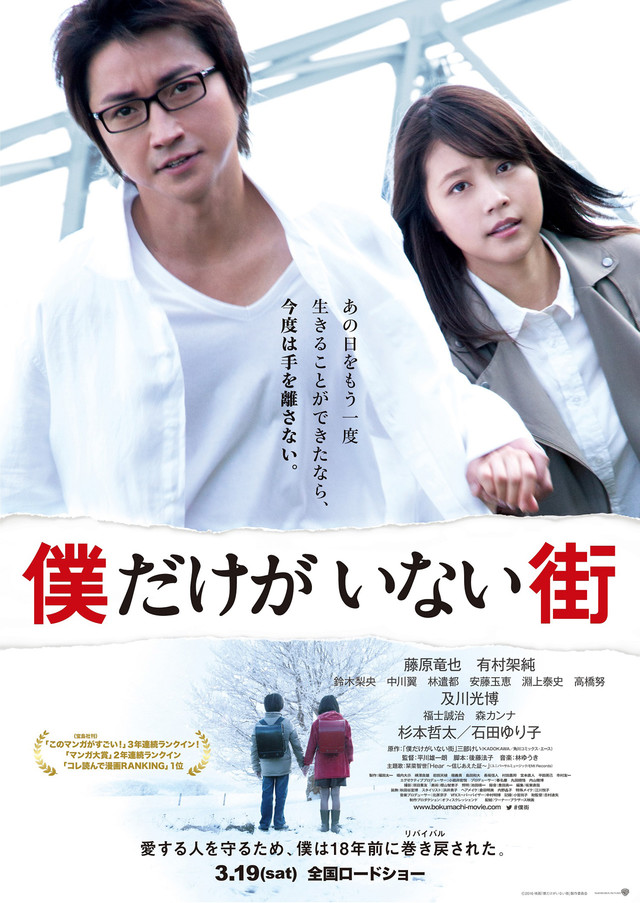
Erased (僕だけがいない街, Yuichiro Hirakawa, 2016)

erasedErased (僕だけがいない街, Boku Dake ga Inai Machi), a best selling manga by Kai Sanbe, has become this year’s big media spectacle with a 12 episode TV anime adaptation and spin-off novel series all preceding the release of this big budget blockbuster movie. Directed by TV drama stalwart Yuichiro Hirakawa, the live action iteration of the admittedly complicated yet ultimately affecting story of a man who decides to sacrifice himself to ensure his friends’ happiness, acquits itself well enough for the most part but changes two crucial details in its concluding section which unwisely undermine its internal logic and make for an unsatisfying conclusion to the ongoing puzzle.

Beginning in the “present” of 2006, Satoru Fujinuma (Tatsuya Fujiwara) is an aspiring mangaka making ends meet with a part-time job as a pizza delivery guy (a kind of “Hiro Protagonist”, if you will). Aloof and sullen, Satoru has no real friends but does possess an unusual supernatural ability – if a tragedy is about to occur in his general vicinity, he will enter a “Revival” loop in which he temporarily rewinds time, allowing him to figure out the problem and save everyone’s lives. Rescuing a child about to be hit by an out of control lorry, Satoru rides his pizza delivery bike into an oncoming car and winds up in hospital.

When he comes to he finds cheerful co-worker Airi (Kasumi Arimura), who witnessed the accident, waiting for him as well as his mother (Yuriko Ishida) coming in for visit. Reconnecting with his mother and getting closer to Airi (albeit reluctantly) Satoru’s life appears to be brightening up but the good times are short lived as Satoru’s mother is brutally murdered in his apartment leaving him looking like the prime suspect. This time when Revival kicks in it doesn’t just rewind a few minutes but 18 years, back to the winter of 1988 when Satoru’s small town was rocked by a series of child murders and abductions which resulted in the arrest of a local boy (Kento Hayashi) whom Satoru had always believed to be innocent.

Repossessing his childhood body but with a grown man’s mind, the “younger” Satoru is considerably less jaded than his 2006 counterpart, determined to change the future and save his mother’s life. The root causes of her death, he is sure, rest in this unresolved and traumatic period of his childhood. Swapping back and forth between 2006 and 1988 as Satoru makes the best of his opportunity to investigate from both sides, Erased is a tightly controlled time travel puzzle of trial and error in which Satoru must use all of the evidence he can gather to unmask the criminal in order to save both the lives of his friends in 1988 and that of his mother in 2006.

As in many similarly themed franchises, the plot turns on the bonds formed in childhood as the connections between Satoru and his friends become the binding glue in an otherwise fluid time travel dilemma. Older Satoru is better equipped to recognise the trouble one of his friends is in – Kayo, a sad and lonely girl who, in the original timeline, eventually became one of the victims attributed to the serial murders plaguing the town. Trapped in an abusive home environment, Kayo isolates herself for reasons of self preservation, both too afraid and too ashamed to let anyone know what’s going on at home. Managing to befriend her, Satoru does indeed help to change something for the better but only finds himself becoming more deeply entrenched in the central mystery.

It’s at this point that the film begins to diverge from its source material as Satoru is attacked by the murderer and “wakes up” back in 2006 but rather than having been in a coma for 18 years has apparently been leading a much more successful life than his previous incarnation. Within the peculiar laws of the franchise which don’t always match standard time travel logic, Satoru’s central timeline does not change – only his mind moves between bodies, he retains full knowledge of his original timeline as well as the changes he brings about. However, he now seems to magically receive memories of the life he never lived whilst also retaining his previous ones. Now knowing the identity of the real murderer and the probability that they are still out there, Satoru decides to re-team with his old friends but his showdown with the psychotic killer is entirely contrived to engineer a “tragic” ending, oddly more like something that might have befallen the 11yr old Satoru than his older counterpart, further undermining the already shaken sense of internal consistency.

The film’s Japanese title, Boku Dake ga Inai Machi (the town where only I am missing), takes inspiration from the short story which Kayo writes in school. Wishing that she alone could be transported to another life free of abuse and loneliness, Kayo writes herself into a better place. Satoru reimagines a similar scenario with himself in the lead as he makes the decision to sacrifice himself to save his friends. The ending of the original source material both undercuts and reinforces this idea as Satoru’s friends are both extremely proud and grateful for his efforts, but are also keen to point out that the world is a much better place with him in it than without. In removing the opportunity for Satoru’s friends to come to his rescue, the live action version of Erased also removes its most crucial message – that heroes are never “alone”, and Satoru’s salvation lies in that of his friends and family.

Yuichiro Hirakawa mostly opts for a lighter tone than the children investigating a serial killer whilst also trying to rescue their friend from her abusive mother narrative might indicate. There are some nice visual ideas including a switch to POV during the first time skip to 1988, the repeated hero of justice hand gestures, and thoughtful use of manga, but given the obvious problems with internal consistency, the high quality of the performances and cinematography can’t reconcile the various cracks within the film’s structure. Uneven, but strong until its contrived and illogical end point, Erased is a slightly disappointing live action adaptation of its source material in which it might have been (ironically enough) better to have more faith rather than pushing for the predictably melodramatic conclusion.


Original trailer (no subtitles)