Lost, Found (找到你, Lü Yue, 2018)

Lü Yue’s Lost, Found (找到你, Zhǎodào Nǐ) follows hot on the heels of Korean kidnap drama Missing but it is not, apparently, a remake but part of an increasing trend of global filmmaking in which an original scenario is developed for several territories simultaneously with Qin Haiyan’s script reportedly produced while the Korean version was shooting. Despite sharing the same plot outline, however, Lost, Found puts a distinctly Chinese spin on the central dilemma as its cynical heroine is forced to reassess her life choices and her entire relationship with her society when her daughter disappears.

Li Jie (Yao Chen) is a high flying, cynical lawyer who only cares about winning cases. At home, she’s mother to two-year-old Duo Duo and is currently engaged in a custody battle with her daughter’s father following the breakdown of her marriage to a successful surgeon. To help her out at home with her busy schedule, she’s employed a young woman, Sun Fang (Ma Yili), as a nanny but is at times jealous that her little girl seems more attached to the traditionally maternal home help than to her biological mother. Her worst fears are realised one day when she returns home to find dirty breakfast dishes still on the table and the flat empty. Worrying her mother-in-law has managed to snatch Duo Duo, Li Jie is reluctant to get the authorities involved but is eventually forced to acknowledge that something more serious may have occurred with Sun Fang nowhere to be found.

Talking to her former husband, Li Jie insists that a woman’s future shouldn’t be decided by love or marriage and that she wants Duo Duo to have more freedom but she’s distinctly slow to warm up the theme of female solidarity as shown by her callous treatment of the defendant in her divorce case in which she is trying to win custody on behalf of an adulterous husband by calling into question the wife’s mental stability. Despite the woman’s pleas as one mother to another, Li Jie coldly tells her that the circumstances are largely irrelevant – she is merely a lawyer wielding the law and will do her best to win the case because that is her job.

Forced to investigate the life of Sun Fang, however, her perspective begins to shift. Busy as she is, Li Jie did not perhaps pay as much attention to her nanny as she should have. She took the word of a neighbour with whom she was not particularly close that Sun Fang was a trusted relative with childcare experience without asking for documentation or employment records. Besides, Sun Fang was good with the child and Duo Duo seemed to like her so Li Jie felt comfortable leaving her in Sun Fang’s care. What she discovers is that Sun Fang had experienced many difficulties in her life which she, as an urban middle-class and highly educated woman, had largely been protected from. Because she personally had not suffered, she was content not consider the suffering of others and thought only of herself, even perhaps regarding possession of Duo Duo as something to be won on a point of pride rather than an expression of maternal love or a deeply seated belief that she could offer better care.

Despite its fairly progressive message of social responsibility and female solidarity, Lost, Found takes a disappointing turn for the conservative when it implies that Li Jie should ease back on her career to focus on motherhood rather than allowing her simply to re-embrace her love for her daughter without fear or anxiety. Yet it does also encourage her to contemplate the increasingly unequal nature of the modern China – men/women, town/country, rich/poor, destinies are decided largely by circumstances of birth rather than individual merit. If Li Jie had been born in the same place as Sun Fang, her life might have been much the same. Realising she should have taken more of an interest in the woman raising her child, Li Jie is forced to accept that her own privilege has blinded her and that she does indeed have a responsibility to others and to her society if most particularly to her daughter. A tense, frantic tale of frustrated motherhood, Lost, Found is at once a condemnation of modern disconnection and a quiet plea for a return to kindhearted altruism.


Lost, Found was screened as part of the 2019 Udine Far East Film Festival.

Original trailer (English subtitles)
Default (국가부도의 날, Choi Kook-hee, 2018)

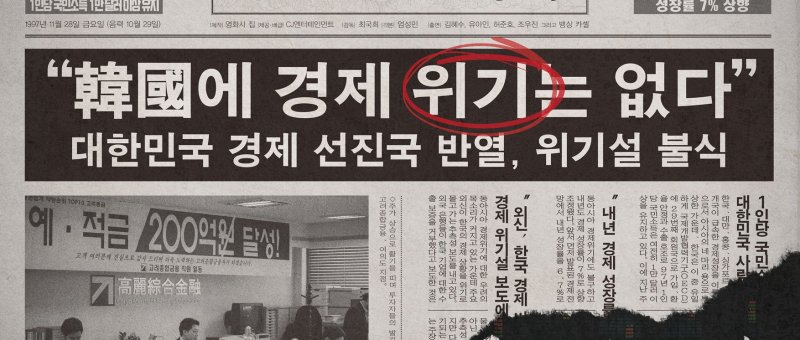
Default poster 1The Korean economic miracle came to an abrupt halt in 1997. In an event the media labelled “the day of national humiliation”, the Korean government went to the IMF for a bailout in order to avoid bankruptcy. So, what went wrong? Choi Kook-hee’s Default (국가부도의 날, Gukga-budo-eui Nal) looks back at the fateful seven days before the country would go bust, asking serious questions about why it found itself in this position and why it chose to opt for external assistance rather than fix its own problems. The answer is, as always, a mix of disaster capitalism, incompetency, and a healthy disinterest in the lives of the less well off.

As if to signal its hubris, the Korea of 1997 is busy celebrating its accession to the OECD and emergence on the world stage as a major player, escaping post-war austerity once and for all. Young Koreans have embraced consumerism with gusto. Luxury goods and foreign travel are becoming increasingly popular with the government insisting everything is on the up and up. However, listeners to Son Sook’s Woman’s Era are telling a different story – cafes not getting customers, businesses going under, people not getting paid. With the Asian Financial Crisis mounting, the Korean Won is being hit hard and the government does not have the reserves to cover its debts. A high ranking Bank of Korea official, Si-hyun (Kim Hye-soo), has concluded that the nation has one week to find a solution before everything comes to a grinding halt.

Meanwhile, self-interested merchant banker Yoon (Yoo Ah-in) has come to the same conclusion on his own but his aims are very different. Where Shi-hyun sees crisis, Yoon sees opportunity. He quits his job and starts calling up wealthy clients with an innovative pitch. Explaining to them that the country is about to go bust, he outlines a plan to short the government which will make them a lot of money though at the expense of those without who will be hung out to dry when it all goes to hell.

As Yoon tells his investors, the trouble is that the entirety of the modern Korean Economy is built on lies. An underling is tasked with explaining the crisis to the president in simple terms, only for Si-hyun to grimly suggest he tell him “we spent borrowed money like it was water hoping to get an extension and here we are”. Factory owner Gap-soo (Heo Joon-ho) is excited to receive a large order from a major department store, but put off when he realises that they intend to pay him with a promissory note. The department store CEO belittles his concerns, implying that he can’t be much of a player if he doesn’t know that’s how business is done these days. Gap-soo’s partner is all for it and so they sign, but when banks go bust promissory notes become worthless and they need ready cash to pay their staff and suppliers.

Si-hyun tries to make the case for saving the economy to protect the working classes but her advice falls on deaf ears. Often the only woman in the room, Si-hyun is dismissed as a “secretary” while the all male officials make a point of talking to her male assistant and accusing her of being “sentimental” when she points out that people will starve if they put their plan into action. The conclusion that she gradually comes to is that the crisis is an elaborate game being played by elites for their own gain at the expense of ordinary men and women all across the country. Odious finance ministers prioritise saving the Chaebols, warning their friends and cronies, while deliberately running down the clock so the country will have no other option than running to the IMF full in the knowledge that an IMF bailout comes with considerable strings which will vastly constrain their sovereignty and economic freedom – effectively handing control over to the Americans who will use it as an excuse to extend their own business interests by insisting on destructive labour reforms which will devastate the working classes.

Si-hyun’s exasperation leaves her making a last ditch effort to get the government to see sense only for the IMF negotiator (Vincent Cassel) to make her removal another of his red lines, her plain speaking instantly deemed “inappropriate”. Meanwhile, Yoon’s headlong descent into amoral profiteering begins to prick at his conscience even as he tries to justify his actions to himself. 20 years later, it might seem as if the crisis is over but its effects are very much still felt. Gap-soo’s factory may have survived, but it’s running on exploited foreign labour while the Chaebols continue to run rampant over the increasingly unequal Korean economy. None of the problems have been solved and another crisis is always on the horizon. Tense and infuriating, Default is a story of moral as well as financial bankruptcy which places the blame firmly on systemic corruption and the undue influence of self-interested elites while acknowledging that little has changed in the last 20 years leaving the little guy very much at the mercy of capricious Chaebol politics.


Default was screened as part of the 2019 Udine Far East Film Festival. It will also be screened as the next teaser for the upcoming London Korean Film Festival on 20th May at Regent Street Cinema, 7pm.

International trailer (English subtitles)

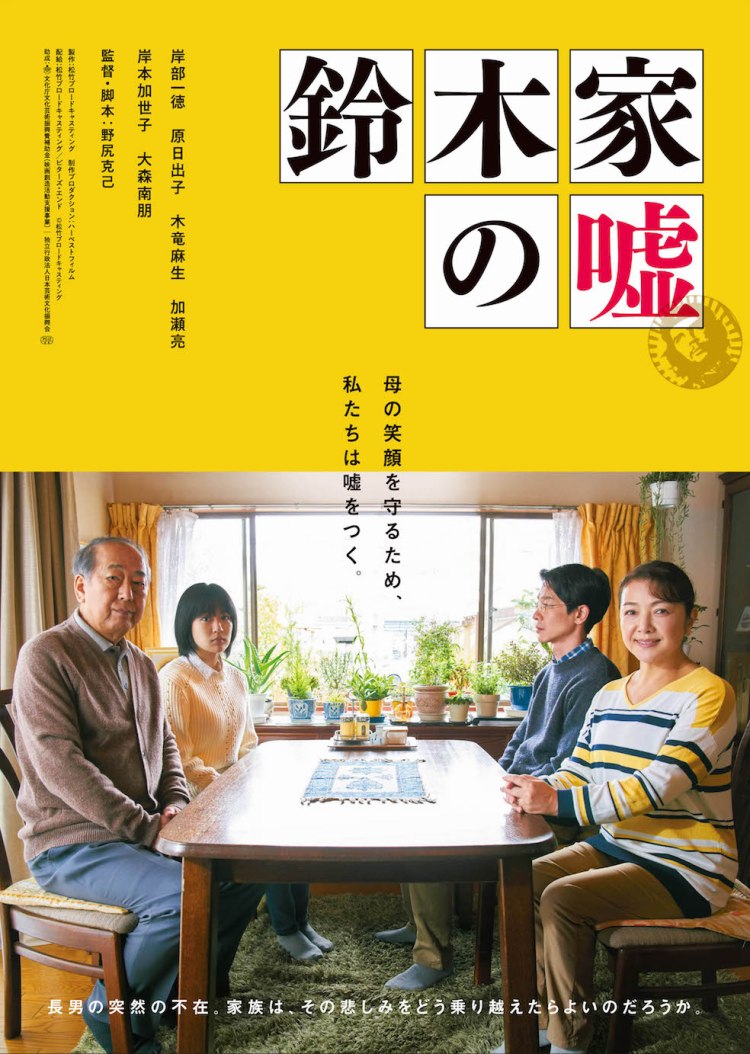
Lying to Mom (鈴木家の嘘, Katsumi Nojiri, 2018)

Lying to Mom posterLearning to live with loss is difficult for any family, but when the loss was caused by suicide the pain is even more acute as those left behind try to understand why it is their loved one had to die and if there was anything else they could have done to prevent it. The family at the centre of Lying to Mom (鈴木家の嘘, Suzukike no Uso) choose, initially at least, to avoid dealing with it at all. Each taking their individual paths through grief, they keep the past painfully alive by pretending that oldest son Koichi (Ryo Kase) is only temporarily absent and will eventually return.

Koichi, who has been a hikikomori for many years, takes one last look at the peaceful suburban scene outside his window and hangs himself from a storage closet in his room. His mother Yuko (Hideko Hara), out at the time, only discovers the body when trying to get him to come down to lunch. Panicked, she injures herself and ends up in a coma in hospital while nothing could be done for Koichi. When she wakes up some time later, she’s lost all her memories of the incident and the family don’t have the heart to tell her that her son is gone so they pretend he went to work for his uncle in Argentina.

This is of course very comforting to Yuko who now believes that as a result of her illness Koichi has finally been able to leave his room for a more productive life, but it places a strain on the other family members – father Yukio (Ittoku Kishibe) and daughter Fumi (Mai Kiryu), who remain conflicted about keeping up the pretence while dealing with their own grief in secret. Fumi, whose idea it was to lie in the first place, types out beautiful letters supposedly from Koichi to be handwritten in his handwriting by an associate in Argentina which detail his new life full of freedom and promise overseas.

Meanwhile, Yukio ponders on his relationship with his son with whom he admits he never quite bonded. He sets about trying to find a mysterious woman named on Koichi’s life insurance policy less for practical reasons than to ascertain some sort of evidence that his son lived, even if he lived the last years of his life alone in a room. The reasons for Koichi’s isolation are never exactly explained with Yuko blaming high school bullying and the stagnant economy, but it is clear that he never managed to find himself in Japan and perhaps if he really had gone to Argentina things might have been different.

Wracked with guilt, Fumi finds herself trying out a support group for relatives of those who died by suicide but struggles to put her own thoughts in order. Though people try their best, insensitivity reigns when they try to offer words of condolence. Only love can save people, Fumi’s colleague smugly tells her with a random story about coaxing a shy high school student out their room, little realising he’s tacitly accusing her of not trying hard enough to save her brother. People can’t be saved, Fumi retorts, and she might well have a point. Even the leader of the support group shows himself up when he considers banning a grief-stricken woman with a loud personality because her problems are “smaller” seeing as she’s wealthy. As another attendee tells him, people grieve in different ways and having money or not is unlikely to affect the degree of your emotional pain even if it might in some sense reduce the burden. Besides, his assumptions about her are mostly wrong because he’s not been paying attention to the things that really matter only to his own surface level prejudices.

Despite the prevalence of suicide, the Suzukis still find themselves embarrassed by Koichi’s passing. They tell people it was an illness or avoid mentioning it all. Meanwhile they keep the secret from Yuko and avoid talking about it amongst themselves until finally forced to deal with all of their anger, guilt, pain and confusion. A comforting lie may serve its purpose, but only an emotional reckoning can clear the air. There may be no real answer to why Koichi did what he did, but the Suzukis will have to make their peace with it, finding fresh hope in the process as they begin to repair their emotional wounds together as a family.


Lying to Mom was screened as part of the 2019 Udine Far East Film Festival. It will also be screened at the 2019 Nippon Connection Film Festival on 30th May at 7.30pm.

International trailer (English subtitles)

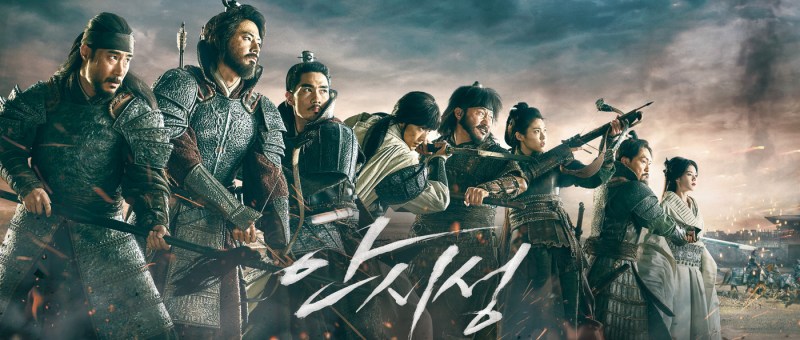
The Great Battle (안시성, Kim Kwang-sik, 2018)

Great Battle posterThe moral of every Korean war film, period and modern, is that Koreans are resilient and resourceful. They can accomplish great things when they work together in a spirit of collective good. Kim Kwang-sik’s The Great Battle (안시성, Ansi-seong), is no different in this regard for being set in 645AD when Goguryeo is threatened by the warlike Tang Dynasty which has its eyes firmly set on conquest.

Meanwhile, there is drama in the court. The king has been usurped and most of the lords have fallen behind General Yeon (Yu Oh-seong) who promises to vanquish the Tang, but to do so he intends to cede territory and abandon his fellow citizens (mostly peasants) to the mercy of Emperor Li (Park Sung-woong). However, the governor of Ansi understandably objects and has alone chosen to stand against Yeon in support of his people, vowing to fend off the Tang all alone by defending his garrison to the last man if necessary. To facilitate his plan, Yeon orders Ansi native and earnest cadet Samul (Nam Joo-hyuk), still grieving for the loss of his brother in a previous battle, to infiltrate the recalcitrant fortress and assassinate Yang (Jo In-sung) so that the territory can be razed.

Having been inducted into the city and despite his fierce loyalty to Yeon, Samul begins to question his mission the longer he is exposed to Yang’s unfettered nobility. A lord but also a man of the people, Yang thinks of himself as a leader among equals. He is not the type to observe from the safety of the rear lines, but proudly wades into battle alongside his men, unafraid to risk his life in their service. In fact, Yang is also perfectly aware of Samul’s true intentions, but is prepared to let him bide his time as a son of Ansi in the hope that he can be turned. Orders, as it turns out, are less important than doing the right thing, and Yang, out of sense of loyalty to the old king refuses to throw his lot in with Yeon, especially if it means he is supposed to throw away the lives of his subjects without a fight.

This necessarily means that the people of Ansi are left with the prospect of fending off the entire might of the Chinese Empire with only a garrison army and limited resources. Of course, they succeed – largely through ingenious stratagems and a sense of solidarity. The Tang, not to be outdone, decide to build an entire artificial mountain in order to fight on Yang’s level, bedding in for months of siege as they do so, but there is no crisis Yang cannot overcome and Emperor Li is about to discover he has seriously underestimated the capabilities of Goguryeo warriors when their backs are to the wall.

Not for nothing does Li eventually mutter that it’s bad idea to go about invading Korea and instruct his successors never to bother trying. Sacrifices, however, must be made – many of them romantic. Yang’s dynamic sister (Kim Seol-hyun), a talented bow woman, has long been in love with the head of his cavalry (Uhm Tae-goo) but Yang tells them to delay their happiness until after the war while he himself nurses a broken heart over a young woman who ended up becoming a shamaness (Jung Eun-chae) and later falls into the hands of the Tang. Not everyone is as convinced by Yang’s boldness as he is, and even some of his own people decide perhaps it would be better to simply acquiesce in the face of such overwhelming odds, but Yang remains firm. He will protect his fortress and the people inside it from anything which threatens their peaceful way of life.

In contrast to Yeon’s authoritarian austerity, Yang’s leadership is one built on nobility and fellow feeling. He hopes to create a freer, more equal society in which the king exists to serve the people rather than the other way around. The battle for Ansi is then an oddly revolutionary affair as they fend off imperialists on either side, bowing neither to Li nor to Yeon in steadfastly defending their principles against overwhelming odds. Kwang achieves truly epic scale through the modern wonder of CGI and ensures his battles are suitably gruelling while keeping the patriotism in check as Yang makes himself stand for something bigger than nationhood or ancient nobility in solidarity as he leads from the front but gives the power back to his people.


The Great Battle was screened as part of the 2019 Udine Far East Film Festival.

International trailer (English subtitles)

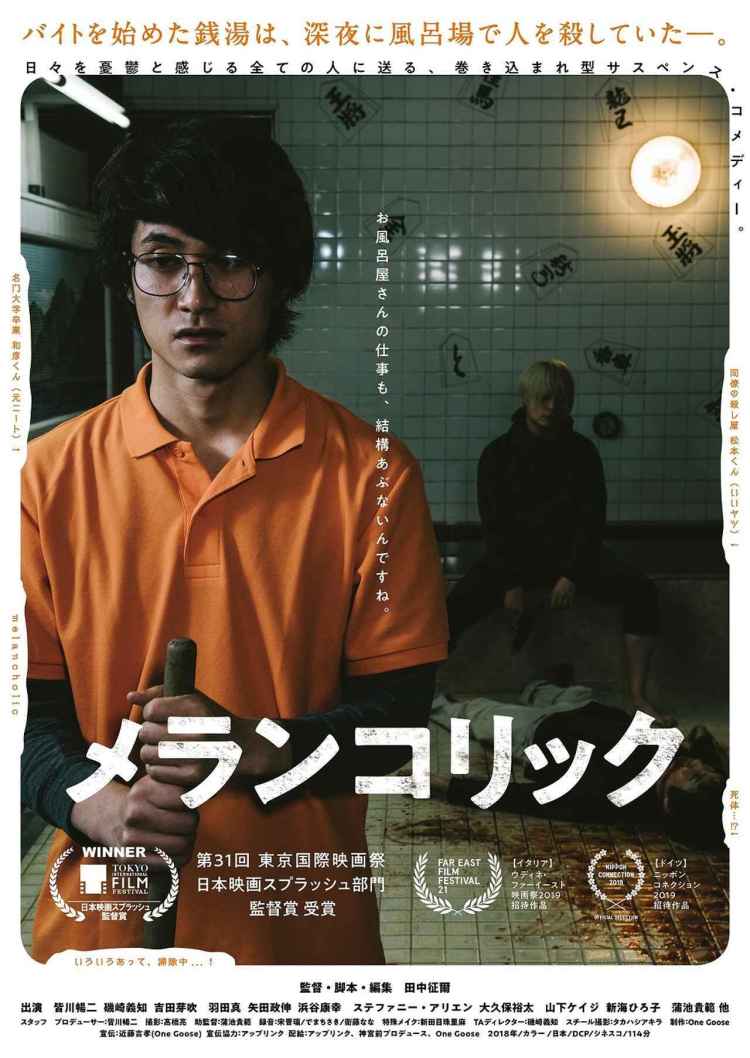
Melancholic (メランコリック, Seiji Tanaka, 2018)

Melancholic posterJust because you’re smart and graduated from a top university, does that necessarily mean you have to put on the salaryman straitjacket in order to become “a success”? The dejected hero of Seiji Tanaka’s Melancholic (メランコリック) isn’t quite so sure, but then he’s always been the type to amble through life going wherever the wind blows him. The time is about to come, however, when decisions must be made and priorities decided lest someone else decide them for you.

Kazuhiko (Yoji Minagawa) graduated from Tokyo University but he’s never been in full time employment and has no definite career plans. Still living at home with his parents, he floats between part-time jobs with little sense of forward motion while his mum and dad are content to let him find his way, if a little exasperated. On a rare visit to a public bathhouse he ends up running into an old high school classmate, Yuri (Mebuki Yoshida), who half-jokingly advises he apply for the open job at the baths seeing as it’s bound to be less stressful than your average salaryman gig. Smitten but too awkward to do much about it, Kazuhiko applies for the job and consents to go to a school reunion as a means of seeing Yuri again. Much to his surprise, however, the bathhouse has a second life as a yakuza kill room with on site body disposal facilities.

Asking questions about what goes on at the bathhouse after dark, Kazuhiko’s boss Azuma (Makoto Hada) tells him that it’s dangerous to know things you aren’t supposed to know, but Kazuhiko is not good with hints and his natural curiosity won’t it let it rest. After he finds out about the secret yakuza backroom deal, Kazuhiko has a “difficult” choice to make – elect to help out with the “night shift”, or die. Kazuhiko chooses to help out (he likes being helpful) and discovers that he actually doesn’t mind it all that much, especially considering the “bonus” package Azuma gave him for being a good boy.

The extra money made Kazuhiko feel as if he could grasp that swanky salaryman life without having to submit himself to the rat race. He uses the money to take Yuri to a fancy French restaurant where he’s flummoxed by the wine list and she’s uncomfortable, but still it goes well even if they both resolve to go somewhere more casual next time. Kazuhiko’s inferiority complex is only enflamed by the lingering presence of Tamura (Yuta Okubo), another old classmate made good, who is also interested in Yuri and is everything Kazuhiko feels himself not to be – handsome, successful, filthy rich, cultured, and confident.

Being allowed in on the after hours business made Kazuhiko feel as if he’d been promoted, that Azuma obviously trusted him and that there might be more overtime coming if he played his cards right. His confidence receives a further knock, however, when he realises that a punkish colleague who joined at the same time as him, Matsumoto (Yoshitomo Isozaki), is technically in a more senior position despite being a barely literate drop out with bleach blond hair. In way over his head, Kazuhiko still desperately wants to regain some of that status and approval he felt was his when the cleanup business was their little secret.

An awkward, naive, but sincere man, Kazuhiko marvels on realising how many yakuza seem to be “around” before Azuma and Matsumoto remind him that not everyone involved with crime is a bona fide yakuza. The bathhouse outfit is, more or less, run by freelancers but still at the mercy of mob boss Tanaka (Masanobu Yada) who has an iron hold over Azuma because of outstanding debts. Azuma would like to put a stop to the night shift, but can’t – or so he claims. As is later pointed out, for those getting on in years an unsatisfying status quo is often preferable to a turbulent new. Though Kazuhiko has no real objection to working the night shift as far as the clean up goes, he is not completely comfortable with its wider implications, often asking why it was someone had to die only for Matsumoto and Azuma to shrug and say it doesn’t matter. They had orders and carried them out, anything else is an irrelevance they don’t need to worry about.

Kazuhiko, however, does worry if in a fairly minor way until his gradual descent into the world of crime drags him into a vicious quagmire in which he must accept the seriousness of his situation along with its potential costs. Despite the original animosity and natural sense of distrust, what wins out is a sense of fellow feeling between unlikely allies Matsumoto and Kazuhiko who begin to see a way out of their mutual malaise through seizing their own futures and daring to pin their hopes on things they assumed unattainable, like love and friendship. Rather than chasing the salaryman dream, or climbing to the top of the yakuza tree, they pick an ordinary kind of “good enough” success in which moments of warmth and togetherness become the only things which give life meaning. A surreal ode to just muddling through and learning to be happy in the moment, Melancholic more than lives up to its name but despite all the darkness eventually finds real joy in the easy pleasures of mediocrity and mutual acceptance.


Melancholic was screened as part of the 2019 Udine Far East Film Festival. It will also be screened at the 2019 Nippon Connection Film Festival where director Seiji Tanaka and actor Yoshitomo Isozaki will be present for a Q&A.

Original trailer (English subtitles)

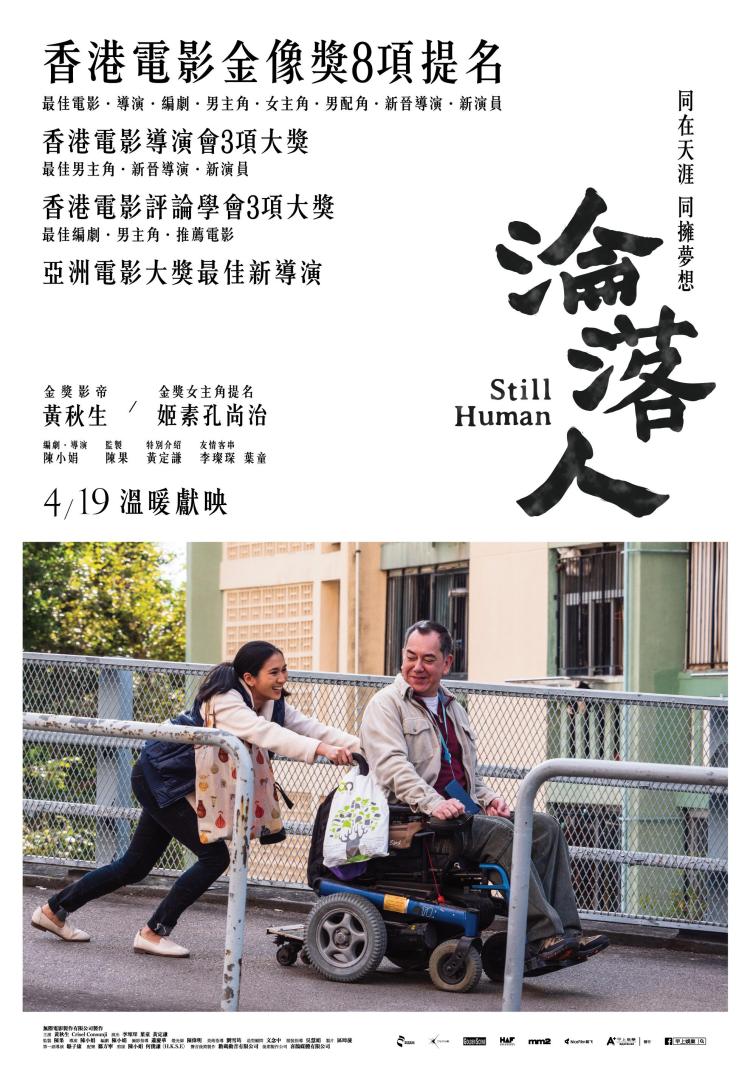
Still Human (淪落人, Oliver Chan Siu-kuen, 2018)

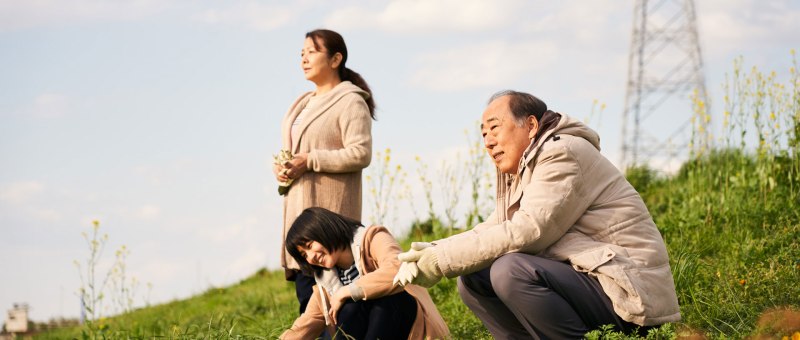
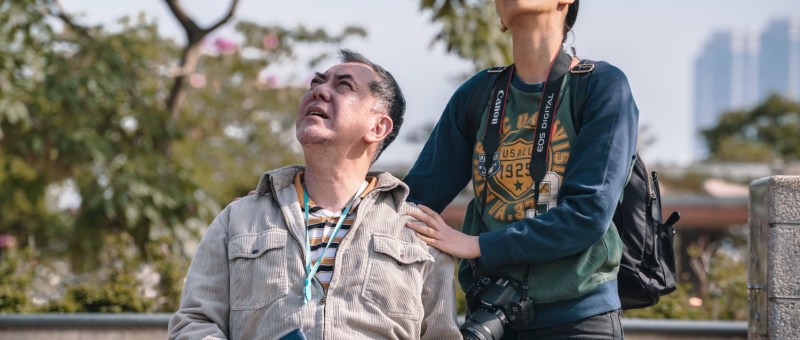
Still human posterA peculiarly Hong Kong phenomenon – crowds of Filipina domestic helpers filling the city streets on a Sunday, for many of them their one and only day off in an often 24/7 job. The presence of the Filipina workers has often been a taboo subject, as has the frequently inhumane treatment they receive from exploitative employers, but Hong Kong cinema has been in a self-reflective mood of late as Oliver Chan’s Still Human (淪落人) proves. A quiet ode to the power of breaking down barriers and embracing difference, Chan’s bold debut centres itself on the unlikely friendship between a disabled man and his Filpina carer.

Cheong-wing (Anthony Wong) has been paralysed from the chest down for the past few years following a construction site accident. Though he has enough movement in his hands to be able to get himself about with an electric wheelchair, he needs day to day help with essential tasks such as cleaning and washing not to mention getting himself from the chair to the bed. His last few carers have all abruptly left him in the lurch so he doesn’t have high hopes for the latest – Evelyn (Crisel Consunji), a former nurse from the Philippines recruited by Cheong-wing’s friend Fai (Sam Lee). Cheong-wing is irritated to discover that Evelyn speaks no Cantonese while he has almost no grasp of English but is encouraged to make it work because he needs help and, according to Fai, none of the Cantonese-speaking carers is prepared to help him.

From Cheong-wing’s earliest behaviour, it might seem obvious why he has such a high turn over of helpers and one wouldn’t blame Evelyn for walking out right away but then again, perhaps he is only grumpy because he’s lonely and sick of everyone suddenly abandoning him. A solitary pensioner, Cheong-wing lives alone in a high rise council flat. His wife left him years ago and remarried while his medical student son is away in the US. On the ground he only has Fai – a slightly younger man who acts as a surrogate child in gratitude for the various ways Cheong-wing once looked after him when he arrived as teenager from the Mainland with no Cantonese and no family to help him.

Meanwhile, Evelyn tries to adjust to her new life, having made peace with her decision but making the best of a suboptimal situation. Scrimping and saving, she tries to get the funds together to definitively escape a bad marriage against the wishes of her family who constantly beg her for money and guilt her into doing their bidding. Making friends with some other helpers via a Facebook group, she joins the regular Sunday gatherings but feels herself somewhat out of place even as she begins to bond with the already jaded veteran overseas workers. Play dumb, they tell her. Don’t learn Cantonese, or do but don’t let your employer know. All that matters is not getting fired and sent back to the Philippines so keep your head down and say yes sir while always looking for a better gig or, best of all, a wealthy husband. Evelyn ignores most of their advice. She isn’t interested in another loveless marriage, what she wants is her freedom.

Nevertheless she continues to endure xenophobic micro-aggressions and constant mistrust despite her warm and winning personality. Cheong-wing, teaching her Cantonese, eventually begins to bond with Evelyn, convinced that she is a “good person” though maybe, like him, going through some tough times. Interacting with Evelyn allows his sweet side come through, making plain that he is at heart a kind and sincere man but one who had long since given up on life and kept others at a distance believing himself to be a burden. Where the traditional family has failed, found family plugs the gap as Cheong-wing and Evelyn pick up an easy paternal rapport, supporting each other with genuine warmth and affection as Cheong-wing discovers Evelyn’s long buried dream of becoming a photographer and commits to helping her achieve it all while knowing it will eventually take her away from him.

Realising that where there’s life there’s hope, the pair come to the conclusion that it’s never too late to dream and each find themselves edging towards what it is they really want from life with the confidence of knowing someone has their back and their best interests at heart. A warm and empathetic yet uncompromising look at life on the margins of modern Hong Kong, Still Human is a beautifully humane tribute to the healing power of human connection and the joy of finding kindred spirit in unexpected places.


Still Human was screened as part of the 2019 Udine Far East Film Festival. The film will also receive a special one off screening in Chicago courtesy of Asian Pop-Up Cinema on Monday 13th May at the Gene Siskel Film Center, 8pm where director Oliver Chan and actress Crisel Consunji will be present for a Q&A.

Original trailer (English subtitles)
The Rib (肋骨, Zhang Wei, 2018)

“You choose to live together because you love each other, and to enter holy matrimony with our blessing” a rigid priest ominously intones at the outset of Zhang Wei’s The Rib (肋骨, Lèi). This conflict between personal choice and a need for approval from authority figures to legitimise it is at the heart of Zhang’s empathetic exploration of transgender lives in contemporary China. Given the censors’ constant preoccupation with LGBT issues (40 minutes of footage were apparently removed to gain approval though at the request of the Catholic Church rather than the state authorities), his decision to focus on a transwoman’s struggle to get through to her religious father may be a surprising one but follows a wider trend in Chinese language cinema which is beginning to embrace such formerly untouchable subjects with increasing positivity.

The Rib is, however, as much a critique of oppressive Confucianist social codes and rigid religiosity as it is a plea for greater empathy and understanding in accepting others for who they are rather than forcing them to abide by outdated ideas of conservative conformity. Huanyu (Yuan Weijie) was assigned male at birth but identifies as female and wants to undergo gender reassignment surgery. Unfortunately, however, despite the fact that Huanyu is 32 years old she still needs her father’s signature on a consent form to get the operation and not only that, her father has to be filmed signing it in person in case there are any repercussions further down the line.

The major problem is, Huanyu’s father Jianguo (Huang Jingyi) is a devout Christian who even serves as a sign language interpreter during church services. Huanyu’s mother passed away when she was small and so Jianguo raised her alone. Given his strict religiosity he is unlikely ever to agree to the surgery and Huanyu has never felt able to discuss her gender dysphoria or sexuality with her father for fear that he wouldn’t understand. Those fears are borne out when Huanyu is forced to talk to him in order to move towards surgery. Jianguo thinks it’s a joke, and then some kind of mental illness which could be cured with the right treatment. He hosts an intervention with the priest and other attendees of the church in order to talk Huanyu out of her conviction that she is a woman and even goes so far as to set her up with a selection of pretty sex workers in the belief that Huanyu will change her mind after feeling “like a man” through experiencing “proper” sex with a woman.

Of course, all this really does is drive a further wedge between father and son. Jianguo lashes out. He goes to visit a friend of Huanyu’s, Liu Mann (Gao Deng), who has recently returned from undergoing reassignment surgery in Thailand (where it’s cheaper and there aren’t so many barriers), but rather asking pertinent questions he viciously berates her. Liu Mann, Huanyu’s closest confidante, is not herself certain that Huanyu should have surgery. Returning to work after her operation she found herself fired for not being the same person who left and though she’s suing them for unfair dismissal has discovered that one kind of unhappiness has merely replaced another. Jeered at in the street, enduring the sniggers from insensitive shop staff, and labeled a pervert for just trying to use the bathroom in a public place, Liu Mann has begun to fall into despair no longer believing that a happier future where she could live as herself in freedom is a real possibility.

Jianguo insists he knows his son best and blames Huanyu’s friends for corrupting her. Huanyu is 32, but Jianguo still exercises his paternal authority in loudly declaiming that he will not “allow” this situation to continue any further. Believing that the problem may be that Huanyu had no maternal input, he even starts romancing a woman from church who has no idea she is merely a tool in Jianguo’s mission to “save” his son, while furiously praying that Huanyu will soon marry and have children. The Church itself becomes, perhaps ironically, another vessel for rigid Confucianism as Jianguo ponders the end of his family line along with his dwindling authority and the effects of his son’s “sin” on his own good standing in the eyes of the community.

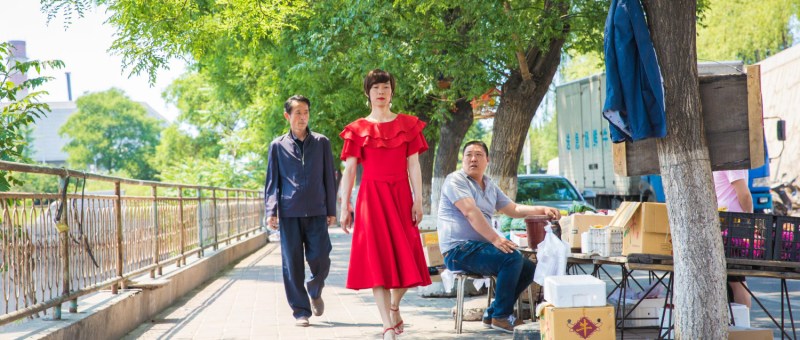
Yet through witnessing the increasingly destructive results of his actions Jianguo begins to reconsider. He listens to medical advice, attends seminars, and asks himself the true meaning of his faith. After all, if God is in heaven listening to prayers from his children below, then shouldn’t a father on Earth listen to his son’s wishes? Jianguo stops worrying about sin and asks more practical questions – is it safe, is it painful, will it end Huanyu’s life sooner, and weighs the degree of his child’s suffering against his ideology. Shooting in crisp black and white with only the startling red of Huanyu’s favourite dress, Zhang captures the dullness of Huanyu’s existence as she feels herself only half alive before ending on a note of vivid colour as the faces of transgender people fill the frame. A tender, empathetic exploration of a sensitive issue, The Rib is an important step forward for trans representation in Mainland China and a powerful plea for human decency and universal understanding.


The Rib was screened at the 2019 Udine Far East Film Festival and the 2019 Chinese Visual Festival.

Original trailer (English subtitles)
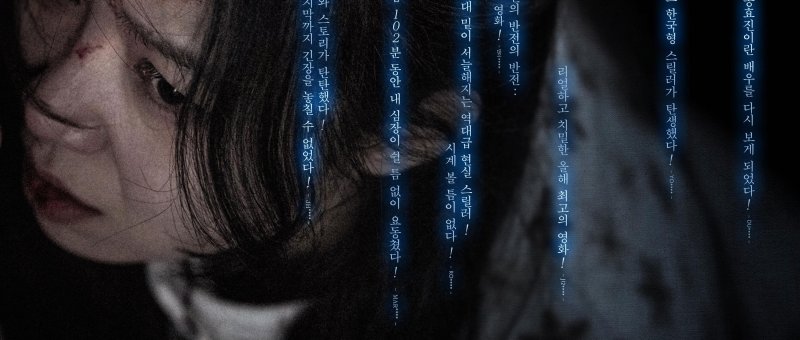
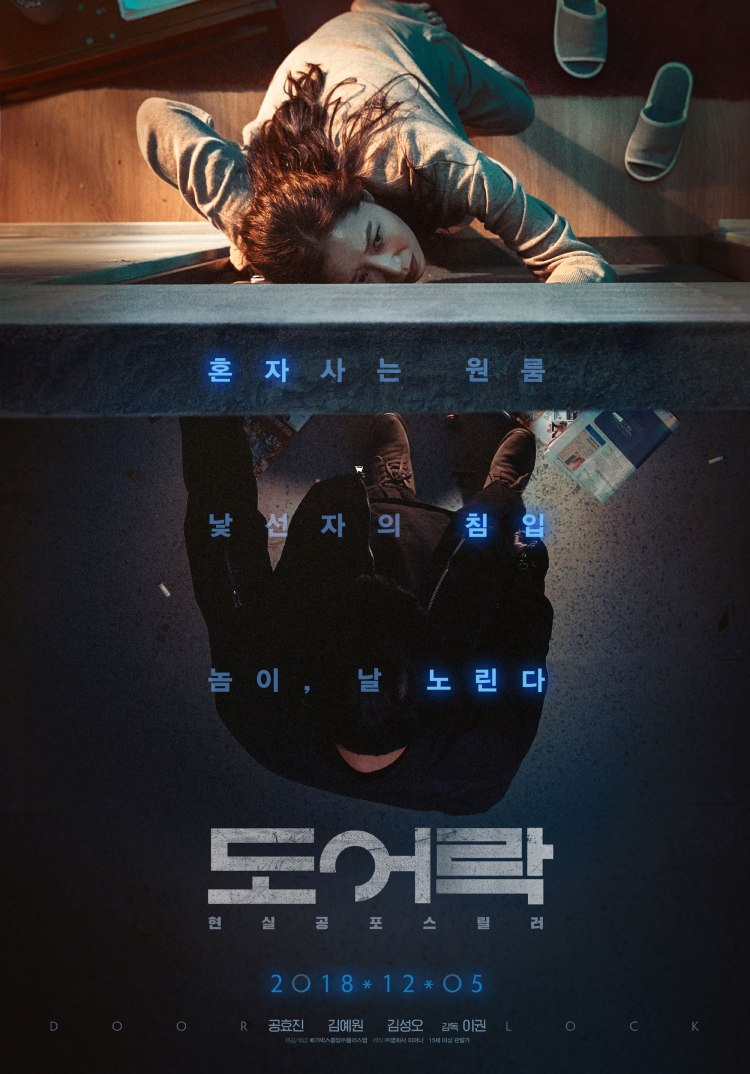
Door Lock (도어락, Lee Kwon, 2018)

Door lock poster 1Behind your own front door, you’re supposed to feel safe but the modern city conspires to ensure no space, not even the most private, can feel completely free from danger. A Korean spin on the Spanish film Sleep Tight, Lee Kwon’s Door Lock (도어락) shifts the focus from perpetrator to victim as it explores each of the many and various ways women are made to feel vulnerable in the still male dominated Korean society.

Kyung-min (Gong Hyo-jin) has more than one reason to feel anxious. A bank clerk on a temporary contract, she’s forever worrying that she’ll soon be out of a job though there is a rumour of permanent employment on the horizon if only she can keep up her efficiency at work. That might be difficult, however, because Kyung-min has not been feeling well. She wakes up groggy and goes through much of the day feeling a little out of things, though perhaps that’s just the city air. Another cause for concern is that she keeps having the eerie feeling that someone’s been in her apartment when she wasn’t there. Fully aware of all the dangers (and perhaps having had problems before), Kyung-min is concerned enough by signs of someone fiddling with her door lock to change the code every few days, and is panicked by someone furiously rattling the door late at night trying to get in.

Like any sensible person, Kyung-min calls the police but they remain unsympathetic to her fears. Knowing she’s called several times before, they write her off as nervous and hysterical or perhaps an attention seeking lonely single woman. Kyung-min, unfortunately for her, has a habit of attracting the attentions of unpleasant men like a customer at the bank, Ki-jung (Jo Bok-rae), who refuses to take no for an answer after inappropriately asking her out during a consultation about his bank account. In an angry rant, Ki-jung accuses her of leading him on, that she flirted with him on purpose to encourage him to take out additional accounting services. Kyung-min feels herself shrinking in wondering if there’s some truth in what he said, instantly blaming herself, as she recalls that the appraisals are in the offing and she wasn’t making enough sales. Her colleague told her to smile more, so maybe she did and this is what comes of it. The situation is only diffused when Kyung-min’s smartly dressed boss steps forward to place a hand on her shoulder and call security on her behalf.

The boss, nice and well mannered as he is, is perhaps another sort of problem as he too has additional interest in Kyung-min that could end up becoming an awkward workplace issue. As it turns out he becomes another sort of crisis entirely which gets Kyung-min mixed up with the police who now assume she herself is the creepy stalker with only the evidence of her previous calls to back up her claim of persistent harassment. The police remain unsympathetic, intent on pinning something on Kyung-min to close the case quickly while dismissing her fears as either lies, psychosis, or hysterical paranoia. Eventually Kyung-min and her best friend Hyo-joo (Kim Ye-won) decide they’re on their own and they’ll have to proactively protect themselves because, it seems, no one else is going to.

The men who routinely approach Kyung-min do so with frustrated entitlement. They disregard her right to refuse for no particular reason and assume it to be a slight, insisting that Kyung-min is a snob who has only rejected them for their working class occupations and relative lack of financial status. Wounded male pride is once again the most dangerous force of them all. In a precarious economic situation of her own, Kyung-min is left feeling as if nowhere is safe in an intensely chauvinistic, rabidly capitalist, and conservative society which encourages her to find fault with herself rather than the world in which she lives that forces her to feel that way. Inequalities, both economic and sexual, are driving violent crime but when it comes down to it the powers that be are relatively uninterested in the fears of single women or in doing more to create a fairer, safer society. They would rather hang fake security cameras that make you feel safe than deal with illicit spy-cams or listen seriously to women’s concerns when they say they feel afraid. A tense and harrowing thriller, Door Lock is also a frighteningly relatable exploration of the fears of modern urban living.


Door Lock was screened as part of the 2019 Udine Far East Film Festival.

International trailer (English subtitles)
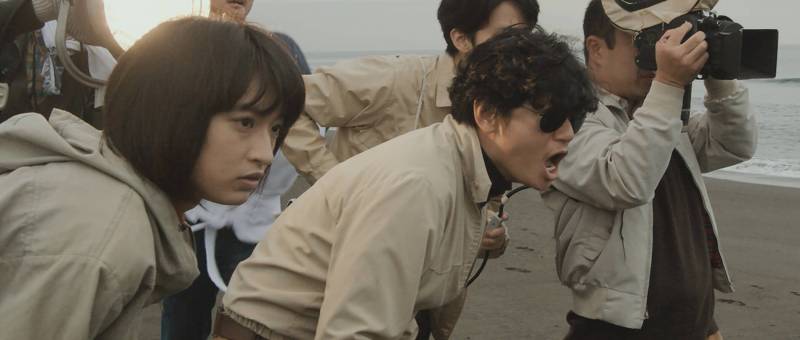
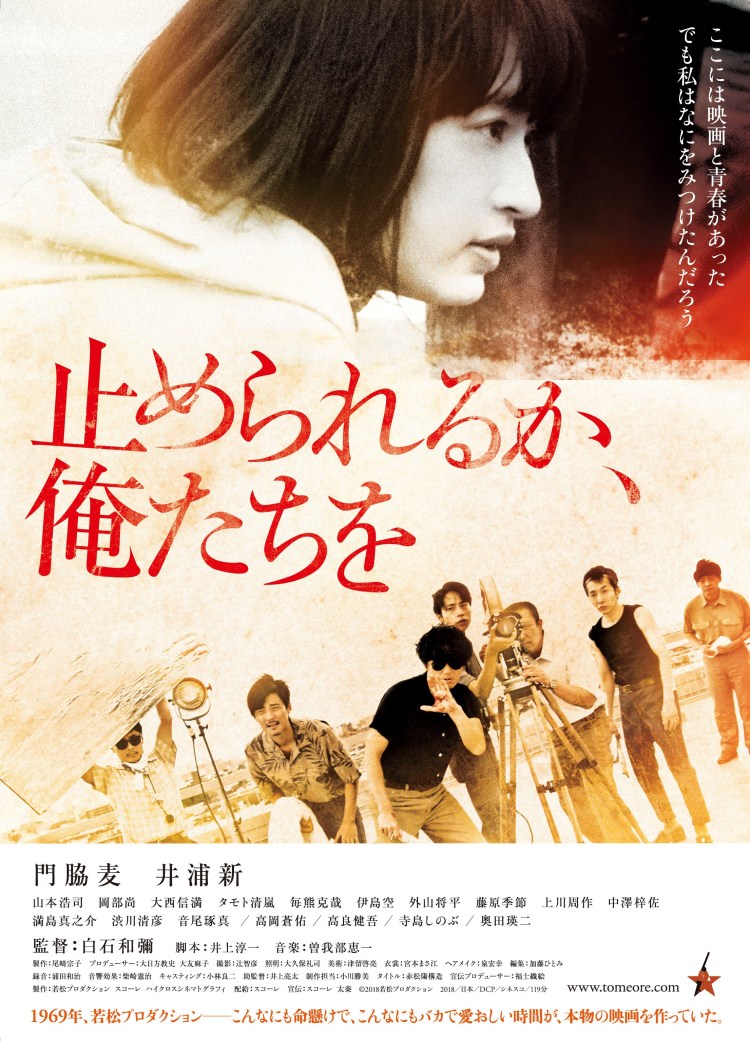
Dare to Stop Us (止められるか、俺たちを, Kazuya Shiraishi, 2018)

Dare to stop us posterUntil his untimely death in a road traffic accident in 2012, Koji Wakamatsu had been the enfant terrible of Japanese cinema. An irascible but somehow much loved figure, Wakamatsu is most closely associated with a series of provocative sex films which mixed politically radical avant-garde aesthetics with pink film exploitation. Kazuya Shiraishi, himself a former Wakamatsu apprentice, takes a look back at the heady years of Japanese indie cinema in the aptly titled Dare to Stop Us (止められるか、俺たちを, Tomerareruka, Oretachi wo) which explores the backstage environment at Wakamatsu Production from 1969 to 1972 (or, right before everything changed with the death of the student movement in Japan following the Asama-sanso incident).

Rather than follow Wakamatsu (Arata Iura) directly, Shiraishi frames his tale around aspiring director Megumi Yoshizumi (Mugi Kadowaki) – the only female presence (besides the actresses) at the otherwise extremely masculine studio which focusses mainly on artistic soft-core pornography. A Shinjuku hippie and self-confessed fan of Wakamatsu, Megumi finds herself joining the team after being recruited to scout potential starlets who could pass for high schoolers. On arrival at the studio, Megumi is quickly mistaken for an actress or mistress but finally manages to win the guys round and is taken on as an assistant director with the possibility of stepping up to the director’s chair if she lasts three years working under Wakamatsu.

As the gruff director warns her, most don’t even last the month. Megumi is however determined, despite Wakamatsu’s continued show of forgetting her name and harsh on-set demeanour. Commiserating with her, another veteran affirms that the big studios wilfully exploit their ADs, at least with Wakamatsu his heart is in the right place even if he’s only a different sort of difficult. He also, however, hands her a bottle of hooch which serves an unfortunate harbinger of things to come as Megumi finds herself playing along with the hard drinking boys club but becoming ever more confused about her role in the organisation and the further direction of her life.

Wakamatsu and his partner Masao Adachi (Hiroshi Yamamoto) vow to make films to shake the world, but are not above commercial concerns which is why they find themselves making pure sex films under pseudonyms to balance the books, much to the chagrin of some of the studio’s more politically engaged members. These are particularly politically engaged times in which the student movement is at its zenith, protesting not only the renewal of the ANPO treaty, but the Vietnam War, and the fiercely contested building of Narita airport. Mostly thanks to Adachi, Wakamatsu Production gradually shifts from indie film company to activist organisation in which political concerns are beginning to take precedence over the business of filmmaking.

The shift leaves those like Megumi who were not so interested in the political dimension floundering along behind and increasingly disillusioned with the world of Wakamatsu Pro. Megumi may admit that she had other problems that probably should have been better addressed, but remains conflicted as to her involvement with the studio. Feeling as if she has nothing in particular to say, she questions her desire to make films at all while clinging fiercely to the surrogate family that has grown up around the strangely fatherly director and continuing to feel insecure in her atypical femininity in a world which more or less requires her to act like a man but doesn’t quite accept her for doing so.

Wakamatsu said he wanted to hold the masses at knifepoint and create a film to blow up the world, but Megumi increasingly feels as if it’s she who will eventually face Wakamatsu with only one of them surviving. Megumi is, in a sense, a victim and encapsulation of her age in which she wanted a little more than it had to give her and found herself increasingly disillusioned with its various betrayals and disappointments. Given the chance to direct a 30-minute short for love hotels, Megumi spins a tale of Urashima Taro which is, as Adachi puts it, all about how she can’t go back to being a hippie after getting mixed up with Wakamatsu and has lost sight of her true self in her quest for acceptance. Both nostalgic look back to a heady era and a tragic tale of that era’s costs, Dare to Stop Us is a fitting tribute to the Wakamatsu legacy which portrays the irascible director as neither saint nor demon but painfully human and infinitely flawed.


Dare to Stop Us was screened as part of the 2019 Udine Far East Film Festival.

Original trailer (no subtitles)

Innocent Witness (증인, Lee Han, 2019)

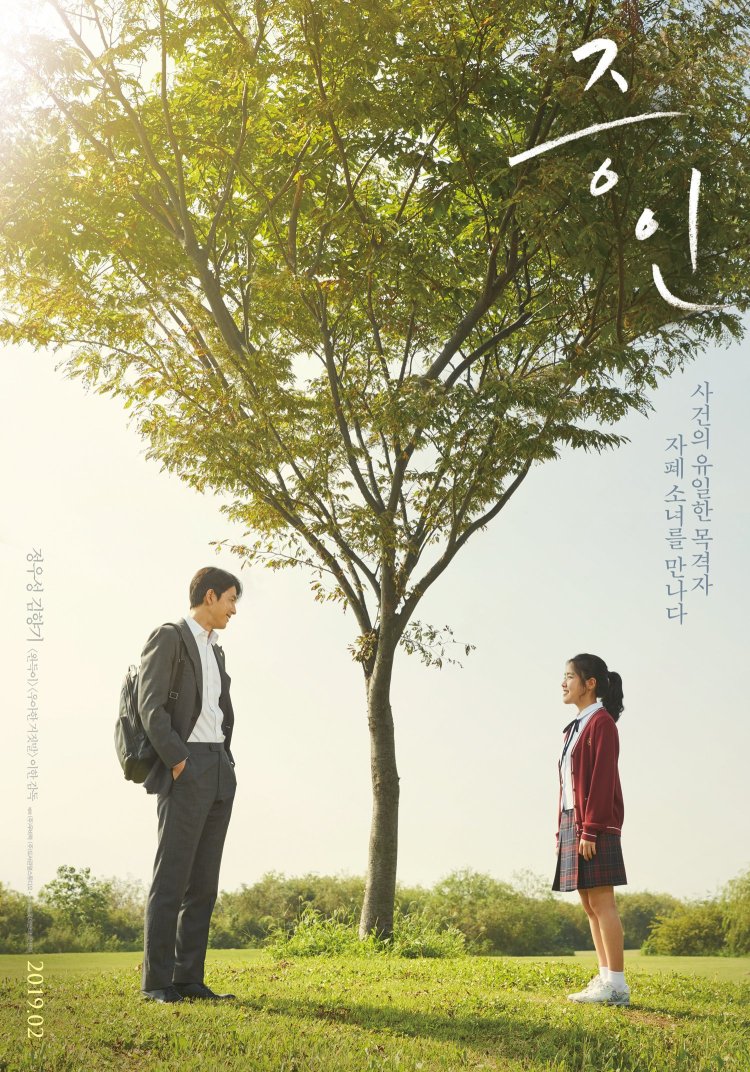
Innocent Witness poster“Are you a good person?” asks the confused girl at the centre of Lee Han’s Innocent Witness (증인, Jeungin). Her question comes after a series of surprising revelations which have left her questioning all of her relationships and the nature of the world itself, yet it’s one that’s largely impossible to answer. Formerly idealistic lawyer Soon-ho (Jung Woo-sung) thinks he’s been given the kind of case he can get behind, but as usual nothing is quite as it seems and if he wants to get to the truth of the matter he’ll have to learn to think differently.

Soon-ho began his career as an activist lawyer working for NGOs, but now he’s “sold out” to join an elite law firm with a dodgy reputation in order to pay back debts his father unwisely guaranteed for a friend. Because of his precarious financial status, Soon-ho has put-off marriage and relationships, despite his father’s nagging, believing them to be out of his reach and is conflicted by his recent career choices which leave him on the opposite side from old friends. When he’s handed a pro-bono case to defend a housekeeper (Yum Hye-ran) accused of murdering her employer he thinks it’s the best of both worlds. All the evidence points to suicide, but there’s a witness testimony which suggests otherwise. Seeing as the testimony is from a 15-year-old autistic girl who witnessed the crime from across the street, Soon-ho feels he can easily have it discounted.

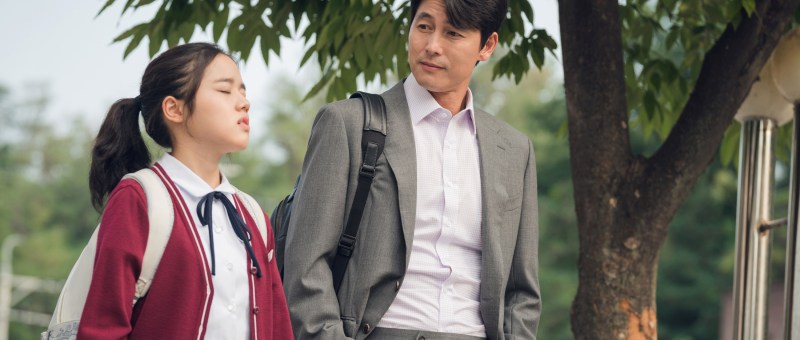
Like many in the film, Soon-ho doesn’t know much about autism and writes Ji-woo (Kim Hyang-gi) off as “mentally impaired”, believing that will be enough for the jury to disregard her testimony especially as it so strongly conflicts with the rest of the evidence. Refused permission to meet with her in person, Soon-ho begins trying to befriend Ji-woo on the way home from school and eventually comes to realise that she is highly intelligent if easily distracted and uneasy in social situations. What he discovers is not that Ji-woo is unable to communicate with the world, but that the world is unwilling to communicate with her. If he wants to bond, he will need to learn her language and earn her trust.

Trust maybe he hard to come by as he witnesses the minor aggressions she goes through every day like the horrible boys at school who taunt her mercilessly and the supposed friend bullying her in secret, not to mention a world full of barking dogs and ringing telephones. When he finally puts her on the stand, his own co-defence chair reads out passages from a book about autism which describe it as a “mental disability” before painting her as a deranged idiot who probably half-imagined what she saw from things she’d seen on television – an act which has profound ethical implications in eroding Ji-woo’s sense of self. Ji-woo told Soon-ho she wanted to be a lawyer because lawyers are good people who help those in need, but Soon-ho has to ask himself whose interest destroying a 15-year-old girl on the stand is really serving.

The law firm Soon-ho joined does seem to be a sleazy one. Despite hiring him to improve their image, Soon-ho’s boss tells him that his new clients won’t be comfortable with him unless he gets himself a little “dirty” while inviting him to awkward parties with call girls in high class hotels. Meanwhile, Soon-ho remains conflicted – especially after potentially losing a 20-year friendship through saying the wrong thing to a still idealistic lawyer and passing it off as an attempt to be “realistic”. Realism is one thing, but Soon-ho seems to have given up and decided if you can’t beat them join them. His dad, sensing his son’s unease, writes him an impassioned letter in which he tells him that the most important thing in life is to be happy with yourself, everything else you can figure out later.

Realising his mistake, Soon-ho begins to see the light. Through bonding with Ji-woo, he learns that seeing things differently can be advantage and that society should have a place for everyone where they shouldn’t have to worry about being themselves. Tellingly, no one ever bothered to ask Ji-woo about the most important part of evidence in her testimony because they all had too many prejudices about her delivery. Only Soon-ho, having bothered to get to know her, was able see what it was that she wasn’t saying. The film perhaps missteps when it has Ji-woo come to the conclusion that she can’t be a lawyer because of her autism, but otherwise presents a sensitive portrayal of a society trying to be better in accommodating difference and doing it with empathetic positivity while subtly waving a finger at the self-serving forces of conservative corruption.


Innocent Witness was screened as part of the 2019 Udine Far East Film Festival.

International trailer (English subtitles)