Escape (逃走, Masao Adachi, 2025)

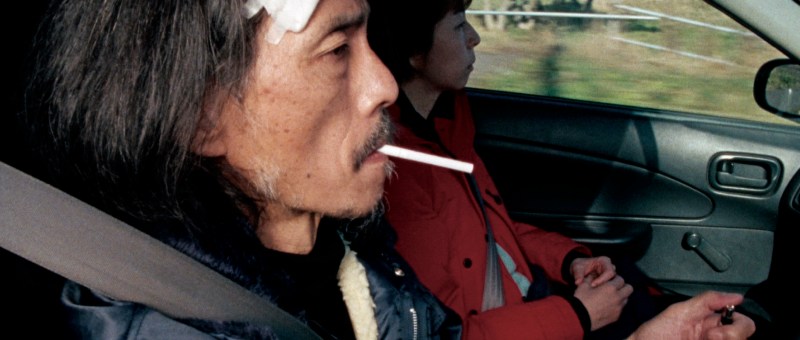
Satoshi Kirishima’s incongruously smiling face was a familiar presence across on the nation for over 40 years until he finally made a deathbed confession revealing his true identity as a man wanted in connection with a series of bombings in the 1970s and that he’d successfully evaded the authorities until the very end of his life. What apparently appealed to director Masao Adachi, a former Japanese Red Army member, was the question of why he chose to come clean rather than enjoy his secret victory by taking the truth to his grave.

That might be a minor irony at the centre of the Escape (逃走, Toso) in that Satoshi (Kanji Furutachi) is essentially in flight from himself only to finally escape from his torment by accepting his original identity. As a young man, Satoshi had been a member of a left-wing cell that wanted to awaken the population at large to the ways Japanese society had not changed in continuing to discriminate against the Ainu, those from the Ryukyu Islands, Koreans and other minorities while modern corporations enact another kind of capitalistic imperialism built on exploitation. It was for this reason that they embarked on a bombing campaign targeting large companies, but due to a miscalculation with the explosives, the bombing of the Mitsubishi Heavy Industries Building in 1974 proved more destructive than intended resulting in loss of life. 

Satoshi was not directly involved in that bombing which was carried out by another cell but was wanted for allegedly setting up a bomb in the Economic Research Institute of Korea which did not result in any casualties. Details of the real Satoshi’s life during his 40 years on the run are thin on the ground, but Adachi paints him as a man torn apart by internalised conflict and unable to make peace with the sense of guilt he feels for those who killed even if he was not directly responsible. The film’s Japanese title is a kind pun in that it’s a homonym which can mean both “escape” and “struggle” which for Satoshi become one and the same. He’s in flight from his younger self while simultaneously preoccupied with how he can continue the revolution in the name of his friends who were not so lucky. Adachi structures the later part of the film as a kind of self-criticism session as Satoshi engages in various dialogues with himself notably as a Buddhist priest interrogating him about his worldly attachments. 

These worldly attachments also obviously separate him from his true calling to revolution including a non-relationship with a woman he meets at a concert venue and is later told has two previous convictions for marriage fraud. Most of the people around him are also leading double lives or harbouring secrets of their own including a man that Satoshi once worked with whom he finds out years later was also another former member of the far left movement living life on the run. The implication is that this sense of isolation and aloneness in wilfully having to suppress his identity became a kind of prison, but that it also liberates Satoshi to a more intensive examination of the self. 

To that extent, his escape is also from contemporary Japan and an act of resistance towards an increasingly capitalistic and indifferent society. Hoping to stay below the radar, Satoshi works a series of casual construction jobs chiefly because of their anonymity. There was plenty to be built in this era and jobs like these were plentiful, usually offering basic accommodation in a company dorm. He experiences the hardships of the working man first-hand and lives a life of asceticism in which live music and drinking are his only outlets. “We’re all dying to survive,” he reflects, “trying to go home,” though he no longer has a home to go to and has become estranged from his previous identity. He meditates on fallen comrades who either took their own lives or spent them in prison while convincing himself that he’s continuing the struggle on their behalf even in the act of running away in perfecting his “escape”. Though Adachi’s approach is less sentimental than Banmei Takahashi’s in I am Kirishima, he is not immune to sentiment as in his depiction of Satoshi’s final escape from life as the ultimate form of liberation even as his ghost proclaims he will continue to fight, but nevertheless introduces a meta commentary of self-examination in Satoshi’s constant questioning if his long years of struggle have really been worth it.


Escape screened as part of this year’s Nippon Connection.
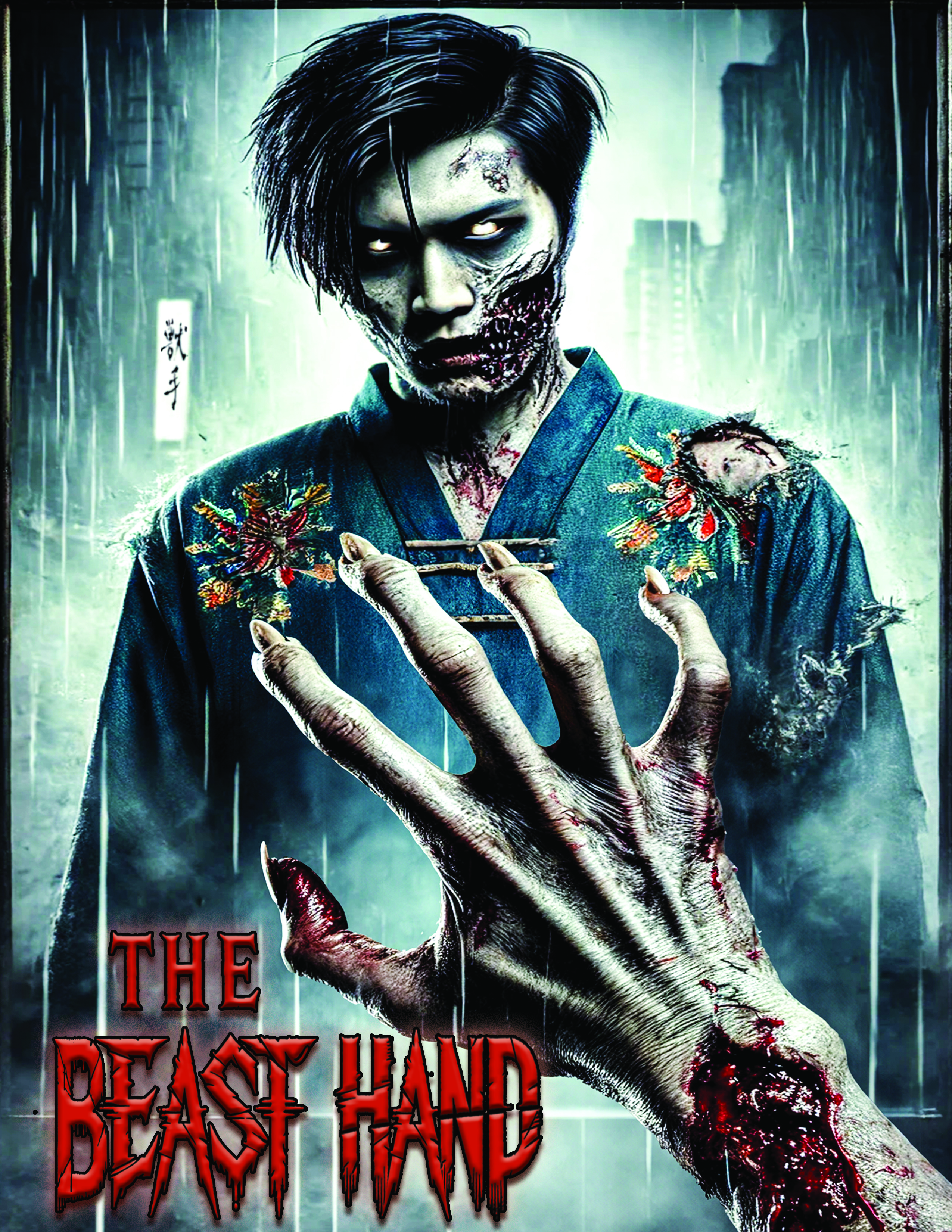
The Beast Hand (獣手, Taichiro Natsume, 2024)

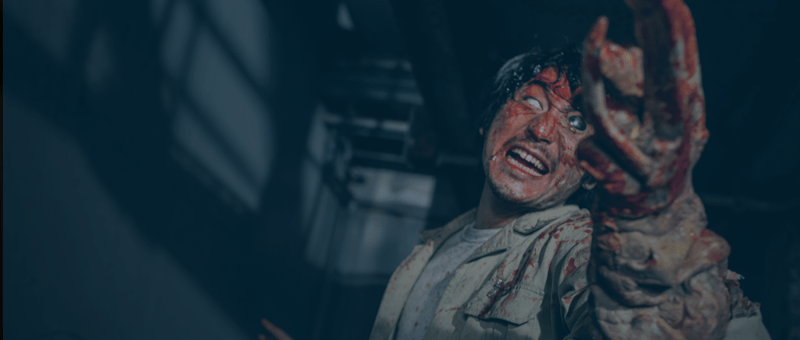
This world makes monsters of us all in Taichiro Natsume’s low-budget indie body horror Beast Hand (獣手, Kemonote). In many ways, Osamu (Takahiro Fukuya) is pursued by his own left arm in his continual powerlessness and tendency towards self-destructive acts of crime and violence. But it’s also true that it isn’t just his hand that makes him monstrous to the world around him and that his “deformity” is also symbolic of the ways in which he is excluded from mainstream society.

Indeed, Osamu already lives a marginal existence in a cramped, reclaimed space on the edges of a town. Having served time in prison, he gets by doing casual labour and quite literally kicking the can down the road, while we also seem him shoplift a can beer after paying for his dinner. His life appears to be defined by futility even before Inui (Yota Kawase), a man with whom he seems to have shared a criminal past, arrives on his doorstep and barges his way back into his life. Technically on parole but having absconded from his probation office, Inui forces Osamu to give up the contact details for his old girlfriend, Koyuki (Misa Wada), who stopped visiting him in prison and was apparently so desperate to get away from him that she had “full body surgery” to essentially become someone else and start a new life.

Starting a new life is it seems something that they both want to do but are each unable to shake off the hold that Inui has over them. He, however, is in the same position and though he bullies and assaults them both, bows down before a man he met in prison who gave him extra food from the canteen. The old prison friend wants help on a job robbing the woman who still hands out physical pay-packets to workers at a local factory, but Inui turns him down stating that he’s still on parole and it’s too risky though secretly plotting to have Osamu do the job on his own. Predictably, it all goes wrong and Osamu ends up losing an arm only for Koyuki to drag him to a backstreet doctor who first refuses to help but then apparently experiments on him with a drug he’s researching into regenerative health with the consequence that Osamu’s arm grows back but as a monstrous lump of throbbing grey muscle that he is no longer able to fully control. At moments of high emotion, the arm takes him over and he’s transformed into a mindless, thrashing beast to the extent that Koyuki has to chain him to the wall to ensure her own safety.

Having bonded in their shared sense of subjugation, they once again attempt to change by living a more normal life in a small town by the sea. But even here, Osamu is rejected in part because of the arm itself, which he keeps disguised in bandages and a sling as if it were broken, and otherwise because of his secrecy about it which sees him fired by the kindly older gentleman running a factory where Osamu found temporary employment. Koyuki becomes pregnant, but financial pressures and the lingering anxiety about what kind of child this world might produce eats away at them. Osamu isn’t sure if the baby’s his or Inui’s nor which of those two options is better given that the child might inherit whatever’s infected his arm, while Koyuki is no longer certain about the viability of raising a child in their present circumstances. Both from single-parent families, they lamented that neither of them had the experience of being taken to the beach by their parents which seems to be the idyllic picture of a carefree childhood they’re trying to recapture.

But still they find themselves hounded and pursued, this time by a shady businessman who doesn’t want cure Osamu but to exploit him by ripping off his arm and using the technology for his own nefarious ends. The remorseful doctor also wants a tissue sample, but promises a salve in return that would at least subdue his violent impulses and allow him to live a more normal life. The implication is, however, that the only way Osamu can have the semblance of a happy family is by wilfully sacrificing himself and accepting that he has no place within in it. Condemned by his monstrousness to the edges of the frame, he accepts his liminality rather than railing against it and resigns himself to self-isolation as a permanent exile from a continually unforgiving society.


The Beast Hand is released in the US on DVD and blu-ray May 13 courtesy of Cleopatra Entertainment and available from MVD.

Trailer (English subtitles)

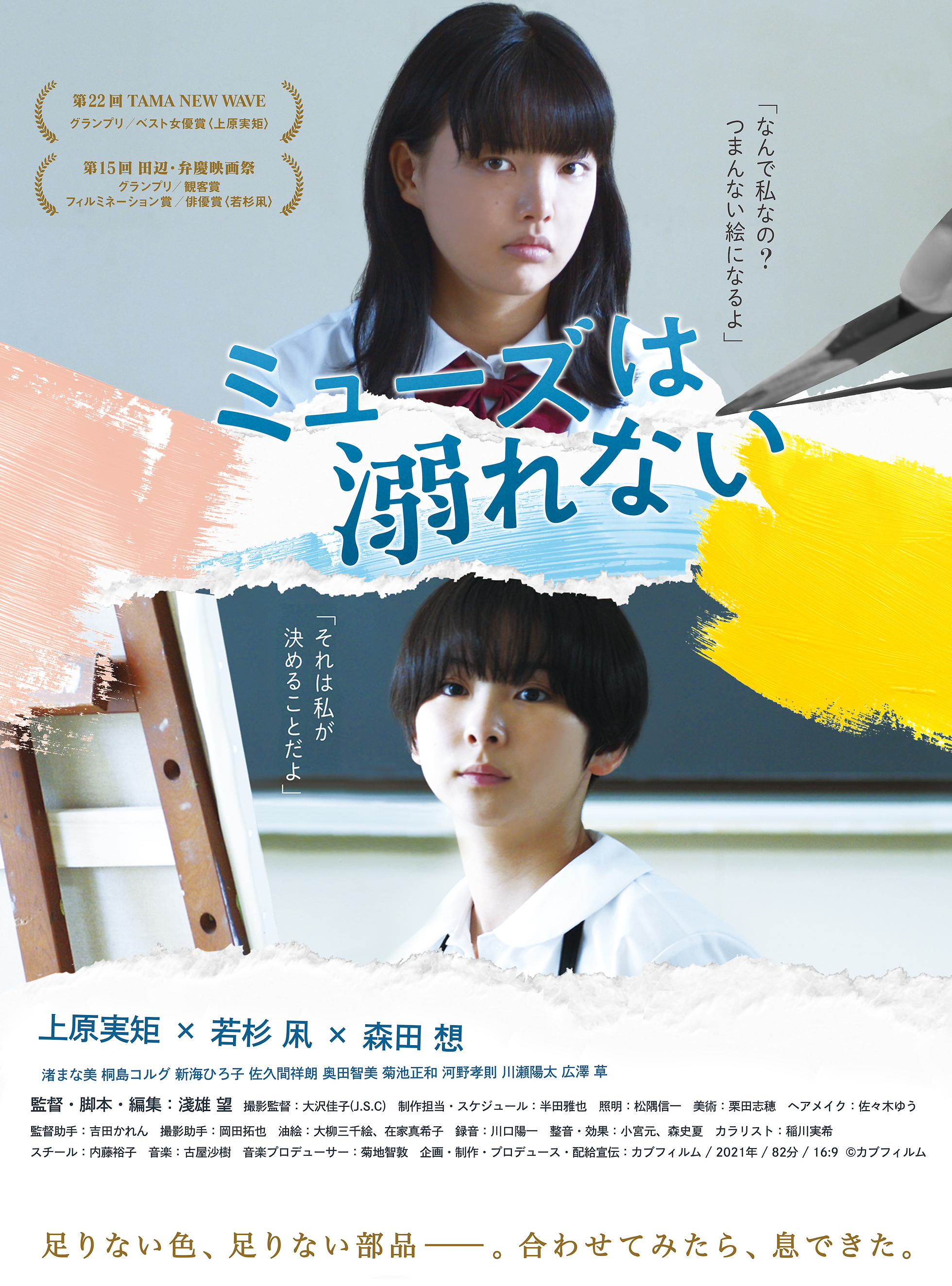
A Muse Never Drowns (ミューズは溺れない, Nozomi Asao, 2022)

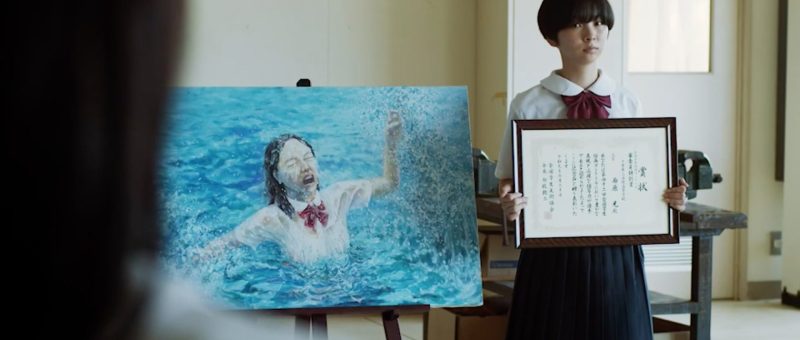
A teenage girl flounders amid a series of changes in her life while questioning her future and identity in Nozomi Asao’s empathetic coming-of-age film, A Muse Never Drowns (ミューズは溺れない, Muse wa Oborenai). Saku (Miku Uehara) is however drowning, a fact brought home to her by the relentlessly aloof Saibara (Mimori Wakasugi) who captures a sense of her panic and despair in a painting of her falling into the local harbour. Yet through their rather tumultuous friendship the pair eventually discover that they aren’t so different after all.

Saibara’s perfectly executed painting destabilises Saku on more than only level, firstly in her discomfort in having been seen and secondly in the insecurity it causes her in her own talent as an artist. Saku had wanted to go to art college, but a teacher harshly corrects her drawing style as if trying to push her towards a more authentic form of expression that’s less worried about getting it right than capturing a sense of what she sees and feels. Lacking confidence that she’ll get in, Saku is thinking about quitting the club in embarrassment but is persuaded to try making something else for the cultural festival while simultaneously receiving an unexpected entreaty from Saibara who wants her to pose for her next painting.

Most of the other students seem to resent Saibara for what they see as her superiority complex, believing she is aloof because she thinks she’s better than them. Because of her blunt manner, Saku too had thought her to be ultra confident and is surprised to realise that Saibara too is filled with doubts and anxieties even if she makes a point of pushing through them. Echoing her teacher’s words, Saibara admits that the lines don’t always come out the way she wants them either but all she can do is try to connect the dots. The reason for her aloofness is a vicious circle of deep-seated loneliness that convinces her she will ultimately be rejected, mirroring Saku’s conviction that she is a “boring” person, and therefore it is easier to remain alone from the start. 

Part of Saibara’s self-rejection is borne of internalised homophobia uncertain if others will accept her sexuality while harbouring a crush on Saku she doesn’t know how to articulate other than through her art while Saku too struggles with her feelings and is confused by the attention she receives from Saibara. Saku’s feelings of insecurity are informed by a sense of embarrassment that she has never experienced a romantic crush like her friend Emi (Kokoro Morita) who likes baseball player Endo despite knowing that likes he Saku, though Emi has also picked up on the way she looks at Saibara and is drawing conclusions about her lack interest in boys. Emi tells her that she accepts her whatever her sexuality is, but is hurt and confused when Saku remains silent and declines the opportunity to open up to her though perhaps partly because she does not really know the answer herself. 

Other than Saibara, Saku is the only one who hasn’t yet returned her careers survey still uncertain of the future direction of her life. Her father has recently remarried and he and her step mother Satomi (So Hirosawa) are expecting a baby all of which has Saku feeling somewhat adrift, displaced within her family and soon to lose her home which has been bought out for a new development project meaning they’ll soon be moving to a new house shorn of the memories of her birth mother and primed for her father’s new start. 

Yet through all her experiences, slowly bonding with Saibara and repairing her friendship with Emi, Saku begins to discover a path towards a more authentic art born of the desire to take things apart and put them back together again while quite literally feeling her way forward with her hands. Coming to terms with her new family circumstances, she builds herself a boat and is no longer drowning but drawing strength from her new found friendships with a renowned sense of possibility for the future while her friends do much the same in the knowledge that they are all scared and uncertain but doing their best to join the dots towards a happier future. 


Trailer (English subtitles)

Lonely Glory (わたしの見ている世界が全て, Keitaro Sakon, 2023)

A thoroughly unpleasant young woman gradually begins to realise that other people have feelings too and she has no idea what she’s doing with her life in Keitaro Sakon’s indie drama Lonely Glory (わたしの見ている世界が全て, Watashi no Mite Iru Sekai ga Subete). Haruka currently runs a startup geared towards helping people maintain good mental health which is ironic in the extreme because she has no understanding of or regard for the feelings of others. Yet as she says during a role play with an employee, the basic principle of their business is helping people identify their problems which she ironically does on returning home to her estranged family if not entirely for altruistic reasons. 

Before that, however, we see her be unnecessarily harsh during a staff evaluation later justifying herself to the boss that they needed to clear out those who are of no use. To her, the staff member’s feelings were irrelevant, she just informed them of their subpar performance. Her boss isn’t buying it. He tells her that her management techniques are counterproductive and that with multiple accusations of bullying behaviour she herself says she is unwilling to work on (because she doesn’t understand she’s done anything wrong) he has no option other than to ask for her resignation. Unfazed, Haruka decides to start her own startup, but is soon confronted with another crisis on learning that her mother has passed away. 

On arrival at the hospital and despite being the youngest sibling Haruka immediately takes over, seemingly unmoved, and opts for the cheapest funeral plan available. She didn’t come to her father’s funeral and her siblings didn’t expect to see her for this one either, but now she has an ulterior motive in that she wants to sell the family home and business to finance her new business venture despite the fact all three siblings still live there and two of them are financially dependent on the cafe/greengrocers for their living. Haruka is incredibly judgemental about her small-town siblings’ life choices branding them as delusional and generally carrying on with an air of superiority but it’s also true enough that they are all to a degree trapped, unable to move on with their lives while afraid to leave the safety of their childhood home. 

As she says, sometimes people just need a little push which is something that she can give them but it’s never quite clear if she genuinely cares or is motivated solely by the desire to manipulate her siblings into agreeing to sell the house. Divorced sister Miwako is fairly unfussed either way but oldest son Keisuke is consumed with shame in the idea of giving up the family business while Takuji has self-esteem issues and thinks everyone looks down on him for never managing to get a job since he finished university four years previously. Challenged by Keisuke’s much younger farm girl girlfriend Asuka on the nature of success, Haruka replies that it’s having everyone around you admit you were right which lays bare her own insecurity and need to dominate every situation that she’s in. But then ironically enough she does help each of her siblings identify their problems and then gain the courage to begin moving forward. 

The dissolution of the family business and the erasure of the family home becomes in its way liberating, less the glue that bound them together than that trapped them in a perpetual adolescence. Haruka begins to realise she’s not much better than the life coach scammer who sold her vulnerable brother false promises of easy success, and that the way she treats others can have unintended consequences but in the end she’s the one left rootless and bereft of direction after closing the shop. Perhaps that’s her lonely glory, the knowledge that she helped each of her siblings do what she now can’t (or maybe just that she got what she wanted and doesn’t know what to do with it). Told with a down to earth naturalism, Sakon’s indie drama is also a lament for the changing nature of small-town life and a loss of community as the closure of the store robs the locals of another neighbourhood hub ironically leaving Haruka all alone in the now empty space of her family home with a newfound sense of loneliness still searching for the right words and a new direction. 


Original trailer (English subtitles)

Between the White Key and the Black Key (白鍵と黒鍵の間に, Masanori Tominaga, 2023)

The hero of Masanori Tominaga’s Between the White Key and the Black Key (白鍵と黒鍵の間に, Hakken to Kokken no Aida ni) looks up and declares that it’s not Jazz if you can’t the stars, quoting Charlie Parker but mired in artistic compromise amid the heady air of Bubble-era Ginza. Adapted from the 2008 memoir of jazz pianist Hiroshi Minami, the film’s surrealist conceit sees two eras overlap confronting a jaded bandman with his naive, earnest younger self while looking for a path back towards “real” jazz.

The intentionally confusing opening sequences introduces us to Hiroshi (Sosuke Ikematsu), dressed in white, a young man with romantic jazz dreams slumming it in a moribund cabaret bar, and Minami dressed in a smooth black and wearing sunshades now the top pianist at the area’s most prestigious bar. Chaos ensues when Hiroshi, intimidated by a recently released yakuza, innocently plays his request of the Godfather Waltz without realising that the song is prohibited, only the local yakuza chairman is allowed to request it. Minami is, meanwhile, the only musician apparently allowed to play the boss’ favourite tune, but it’s a double-edged sword. He’s come to hate his life of soulless playing and feels trapped as the chairman’s favourite while secretly plotting his escape to study real jazz in America.

Irritated by the attitude of American guest singer Lisa, Minami explains that the musicians are really just decoration. At the height of the Bubble-era the bars are full of people with too much money looking to show it off. No one really cares about jazz or even about music so no one pays them any attention. Minami has long since got used to this, but is also crushed by his sense of artistic inauthenticity and declares himself sick of making music that doesn’t come from his soul.

Perhaps the rest is mere fever dream, but in the cyclical turn of events Hiroshi’s godfather faux pas comes back to haunt him, stalked by the recently released yakuza who follows him like a ghost while simultaneously dealing with the chairman’s apparent crisis which may send him abroad and change the local hierarchy forever. In the increasing surreality, the two periods overlap and influence each other as Minami is confronted by artistic compromise and forced to quite literally confront himself in a dirty alleyway while his opposite number claims that they already are in America and have been for some time.

To that extent it’s Minami who is caught between the black and white keys, looking for the sweet spot between the ability to play real jazz and the economic and social realities of his life as a Ginza bandman suffering with what he calls “bar musician disease”. His former mentor had told him that he needed to learn to play more “nonchalantly” which is advice somewhat difficult to understand but perhaps implies that Hiroshi Minami needs to learn to let himself go, to struggle less with anxiety and just play as if it were as easy as breathing. To that extent, what Minami has discovered is the wrong kind of nonchalance. Told that his job is only really to sit there and add to the false sense jazzland sophistication, he’s lost himself between the gangsters and the high rollers and is at a crossroads of an artistic crisis that maybe about to fracture his mind.

Tominaga does his best to capture an anarchic sense of a world bent out of shape and filled with surrealistic absurdity as Minami seems to see events replay with different outcomes and encounters various bizarre incidents around the back alleys of Ginza clubland themselves an incongruous mix of high class sophistication and sleaziness in which gangsters still rule the roost. Consequently the other players in Minami’s psycho drama remain largely cyphers, themselves part of the furniture in this weird mental landscape in which violence appears cartoonishly and in silence, never really connecting and irony rules in the petty gangsters who see the the Godfather Waltz as their song. In any case, Minami seems to recover himself, partly thanks to a vision of his oblivious mother retuning to him something that was lost, in the simple act of sitting down to play as if it were the beginning once again, or perhaps it really is, more acquainted with the music of his soul.


Between the White Key and the Black Key screens in New York July 10 as the opening night of this year’s JAPAN CUTS.

Original trailer (no subtitles)

Drive Into Night (夜を走る, Dai Sako, 2022)

Small-town futility leads to tragedy when two frustrated scrapyard workers attempt to cover up a crime in Dai Sako’s dark psychological drama Drive into Night (夜を走る, Yoru wo Hashiru). Oppressive in its atmosphere, the film situates itself in a world of constant humiliations where life is cheap and reputation everything. Its heroes seek escape from their disappointing existences through consumerism and extra-marital affairs, but no longer see much of a future for themselves while even the dissatisfying present seems to be ebbing away from them. 

Asked what makes his life fun, Akimoto (Tomomitsu Adachi) replies “not much”. A classic mild-mannered guy, he’s regarded as the office dogsbody and at the beck and call of his abusive manager, Hongo (Tsutomu Takahashi). When a new female sales representative, Risa (Ran Tamai), visits the yard, Hongo runs Akimoto down in front of her apologising for having such a useless employee who does nothing other than drive around all day. His sense of masculinity is also wounded by an older colleague who tries to sell he and his friend Taniguchi (Reo Tamaoki) some kind of aphrodisiac but reflects that Akimoto is too “tame” to ever make use of it, while even Taniguchi needles him about being a 40-year-old man who’s never had a girlfriend and still lives at home with his parents. In many ways he’s the classic “nice guy”, but there’s also something a little dark about him that makes it seem as if he may snap any moment. That may have been what happened when he and Taniguchi went to a bar with Risa shortly after she’d been coaxed into a works drink with Hongo. Something obviously went dreadfully wrong in the night, because Risa is soon reported missing and both Akimoto and Taniguchi begin behaving oddly. 

It is true enough that both men, and many of their colleagues, also consider themselves to be on the scrap heap. Akimoto is tempted to quit his job to put distance between himself and the scrapyard but reflects that he’s unlikely to find another job even if quitting so suddenly might arouse suspicion as Taniguchi warns him. Meanwhile, he knows the yard is in trouble. They have him running round doing cold calls but returning empty handed, while office workers are constantly fielding calls about unpaid invoices. His irritation is palpable when he spots the boss, Miyake, leaving one morning soon after he arrives, loading expensive golf clubs into his fancy car. Hongo bullies him, but later says he does it out of respect because Akimoto is the only one who bothers to do his job properly. But then again even Hongo concedes that hard work gets you nowhere. Most of his paycheques go on child support and he often sleeps in his car in the car park. The only reason he’s not been fired is that he has a personal connection to Miyake.

Even so, this fairly tenuous relationship does not really explain why Miyake goes to such great lengths to protect Hongo when he becomes the prime suspect in Risa’s disappearance and is framed by Taniguchi and a guilty Akimoto. It may be in a way that he really does think of the company as a kind of family, as perhaps do the loan sharks who keep calling them after Akimoto ends up in debt having joined a weird cult encourages him to think there is nothing wrong with him and the fault is all with an unaccepting world. The cult leader tells him that he is “full of anger”, which perhaps he is. This being in the immediate aftermath of the coronavirus pandemic, Akimoto is often questioned about still wearing a mask long after most people have abandoned them and part of the reason is as an attempt to hide his true self. After joining the cult he takes it off, but soon adopts another disguise in dressing in Risa’s clothes as his mental state continues to decline. 

Taniguchi meanwhile makes an effort to continue with his “normal” life which includes visiting his mistress. Unbeknownst to him, his wife Misaki (Nahana) is also having an affair with the consequence that neither of them is able to fully devote themselves to their young daughter Ayano who eventually ends up in a potentially dangerous situation because of her parents’ various transgressions. Nevertheless, despite discovering that her husband may have been involved in a murder it’s Misaki who decides that he has to “protect our family” above all else. Amid all of this, Risa becomes almost literally lost before later being unceremoniously dumped like so much scrap. After framing Hongo, Taniguchi tries to convince Akimoto that Risa isn’t their problem anymore as they each struggle to hang on to the previously disappointing realities they had been so desperate to escape. 

It has to be said that aside from the misogyny of its worldview, there is also an uncomfortable quality in the film’s characterisation of a shady Chinese businessman who of course knows how to get rid of bodies along with the fact his chief associate is Korean-Japanese gangster. Though the film’s strongest character may in fact be the Filipina bar hostess, Gina (Rosa Yamamoto), on whom Akimoto fixes most of his hopes who defiantly tells the cult leader that she’s happy with her life and has no reason to join his organisation, Akimoto exposes himself by telling her she’s wrong because he doesn’t see why a “foreigner”, “a woman”, who works in a “dirty” bar, could be happy or averse to being “saved” by him. Still he insists that he hasn’t “changed”, it’s the world that’s changed around him. Taniguchi later says something similar, and they each may have a point. In any case, this world is largely one of resentment and futility in which there is no release. Sako captures the drudgery of his protagonists lives with crushing naturalism but also perhaps little sympathy.


Original trailer (no subtitles)

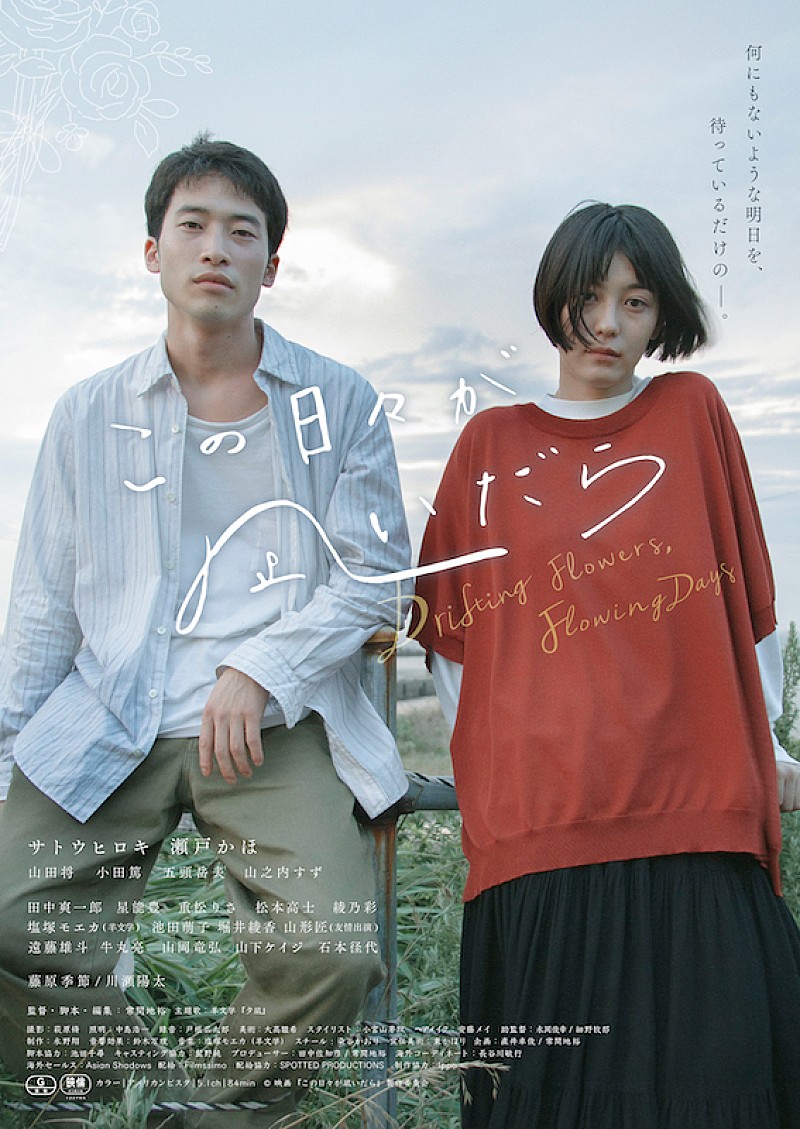
Drifting Flowers, Flowing Days (この日々が凪いだら, Yutaka Tsunemachi, 2023)

Life goes on as usual, until it doesn’t. The couple at the centre of Yutaka Tsunemachi’s debut feature Drifting Flowers, Flowing Days (この日々が凪いだら, Kono Hibi Ga Naidara), are about to hit the crisis of youth in which they begin to think seriously about their futures and fear that their lives can no longer continue simply as they were but also struggle to find direction while torn between what society views as a successful life and their own desires.

The crunch point comes when Hiroto (Hiroki Sato), a construction worker, and Futaba (Kaho Seto), who works in a florist’s, learn that their rundown apartment block is going to be demolished and they have six months to find somewhere else to live. While Futaba idly looks at wedding rings, she isn’t really sure how Hiroto views their relationship or if he’s even assuming they’ll finding somewhere new together. The financial strain of an unexpected move also has her wondering if she should give up her job in the florist’s, which she enjoys due to her love of flowers, and start looking for a regular company job but an attempt to talk about it with Hiroto only results in petulance born of male pride as he takes it as her complaining he doesn’t earn enough with his job as a casual labourer. 

Another source of friction is that Hiroto seems reluctant to meet Futaba’s family while refusing to introduce her to his hinting at longstanding childhood trauma stemming from a legacy of domestic abuse and a father who lost himself in drink. Even so, he’s drawn to an older man at work, Haruo, who soldiers on despite his decreasing physical capability. When he is unceremoniously fired, the Haruo takes his own life having lost his both his means of supporting himself and his sense of purpose. Haruo might remind him of father though Hiroto feels somewhat guilty that he didn’t do very much to help while he was alive and resentful towards his heartless boss and colleagues who did nothing more than make fun of him. 

This idea of people being disposable tools of corporate entities is further born out by the experiences of his hometown friend, Daigo (Masashi Yamada), who is feeling burned out by his dream job in the city largely thanks to a bullying boss and overbearing work culture. A friend who experienced something similar tells him she just quit her job and feels much better so if he doesn’t feel appreciated he should leave, but it’s not really that simple. Not only does he need a steady income to survive but there’s a degree of shame and trepidation in not following the conventional path, the same shame and trepidation that has Futaba worrying she’s being irresponsible in following her dream of opening a florist’s of her own rather than using her degree to get a better paid job and start saving for the next phase of adulthood while still uncertain if Hiroto is going to want to get married and settle down. 

Experiencing another crisis that forces him to confront his childhood trauma, Hiroto sighs that his future is shrouded in darkness and he wishes that it was all set out for him an ironic inversion of the crisis experienced by others his age that they resent being railroaded into a life of conventional success that in fact does not make them happy. In any case, he emerges with a little more clarity about the kind of future he might want no longer so frightened of commitment or suspicious of familial bonds. What the youngsters experience is a perhaps premature end to their youth symbolised by the literal tearing down of their world in the soon to be demolished apartment block that forces them out of their inertia and onto a path towards a more settled adulthood. But equally that doesn’t necessarily mean that they have to abandon their dreams or live up to an ideal of conventional success if it’s not what they want but can begin to find other futures for themselves outside of the mainstream that are valid and satisfying. Tsunemachi follows them with a hazy detachment but captures something of the anxieties of contemporary youth still struggling to find accommodation with demands of living in a judgmental and uncertain society. 


Drifting Flowers, Flowing Days screened as part of the 18th Season of Asian Pop-Up Cinema.

Original trailer (English subtitles)

The Cold-Blooded Trap (冷血の罠, Takahisa Zeze, 1998)

“This place is full of people like me” a violent criminal jeers, admitting that he’s killed “plenty” of women but not necessarily the one he’s being questioned about. There is indeed something eerie that seems to have taken over this small corner of Shibuya in Takahisa Zeze’s dark millennial thriller The Cold-Blooded Trap (冷血の罠, Reiketsu no Wana). “Strange things are happening here” another investigator notes, “someone’s malice has infected this whole place.” Yet the sense of haunting may be closer to home than it first seems as two men attempt to come to terms with a traumatic past by solving present mystery. 

Even the police seem to concede that the strange goings on are a “continuation” of something else. As we first meet him private detective Fujiwara (Sho Aikawa) appears to be following a young woman home from the station only as we later discover she hired him herself to watch over her because she had the feeling she was being watched. Fujiwara watches her enter her apartment building and then calls her to say everything looks clear on the ground, but a short time later a body wrapped in sheets is dropped from the roof onto the street below. The weird thing is that it’s the same building Fujiwara’s sister Noriko used to live in, only she took her own life and that of her child by jumping off the roof five years previously. 

Not only does Fujiwara feel as if he failed in his duty to protect his client, but he’s forced into a similar contemplation in his latent guilt surrounding his sister’s death. The most obvious reason for Noriko to have considered suicide was that her salaryman husband Hanazono (Hidetoshi Nishijima) had been having an affair with a work colleague, Yoko (Asuka Kurosawa), yet Hanazono refuses to accept responsibility and is convinced that Noriko was murdered by a mysterious serial killer stalking the streets of Shibuya. 

The irony is that we first think Hanazono is the faceless killer after watching him enter the woman’s apartment building, only to learn that he may have been investigating Noriko’s death. Later these assumptions are overturned again, but even he concedes that he seems suspicious. Wandering around the city at night, he runs into women alone who immediately see him as a threat and assume he may be a dangerous criminal who means them harm. The realisation first shocks him, but then gives way to a physical high in the adrenaline rush of fleeing the scene. He comes to the conclusion that he must get into the killer’s mindset in order to catch him and begins actively stalking people around the city, following them home and checking mailboxes to find out names. 

Fujiwara doesn’t trust Hanazono for obvious and understandable reasons, but even so he begins following him as Hanazono continues to follow the killer. Zeze opens the film with fuzzy 90s camcorder footage trained on the forecourt of a station from a balcony opposite. The camera follows a woman as she leaves, and Fujiwara behind her with eerie intent evoking the mild paranoia of millennial surveillance. Later Hanazono films his own POV walking through the midnight city, once again lending the streets a sense of lurking malevolence and dread-fuelled fatalism even before he arrives at his shocking destination. 

Yet we wonder if Hanazono is just a paranoid obsessive with his giant map of crime insisting that seemingly isolated incidents of violence are somehow linked. Before Fujiwara hears about the woman’s death on the news they were reporting on insolvent banks hinting at a financial anxiety in the contemporary society, and as the suspect Fujiwara later tracks down suggests there are lot of distressed or perhaps disturbed people around. The crimes may really be random, but they are also connected by virtue of being provoked by an anxious society even if as Hanazono admits there are several criminals behind them. Whether or not he gets the answer he seeks, Fujiwara will have to accept that he too bears some responsibility as Hanazono has perhaps already done even if desperate to deny it. “I’ve always been responsible” he admits while taking control over his life, only the elliptical structure of the film may imply otherwise. Dark and eerie, Zeze captures a sense of millennial dread in the streets of the capital filled as they are with “random” crimes and lurking killers in the haunting anxiety of constant threat.


Clip (English subtitles)

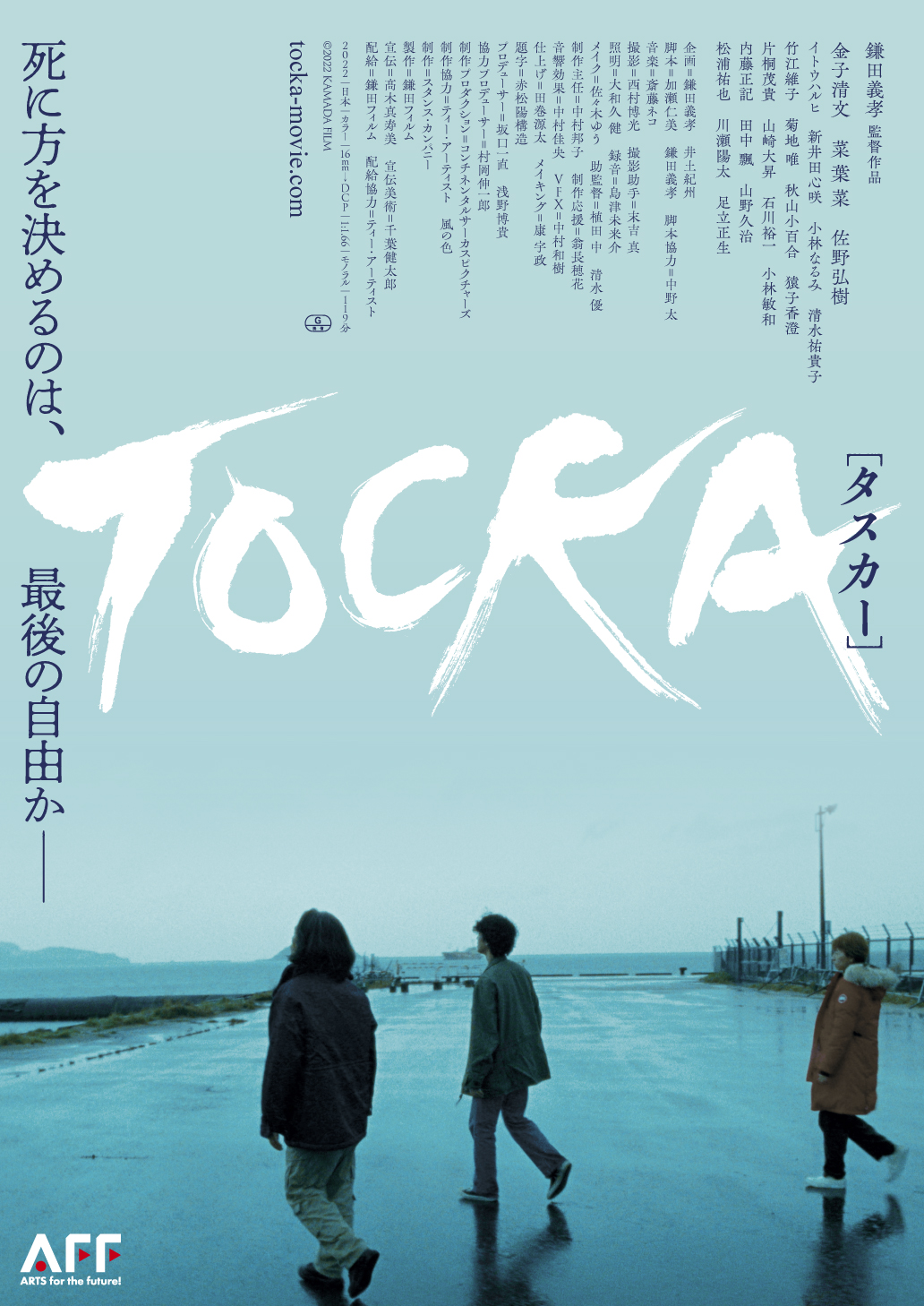
TOCKA (タスカー, Yoshitaka Kamada, 2023)

The man at the centre of Yoshitaka Kamada’s bleak social drama Tocka (タスカー) claims that he no longer knows why he’s alive, but as the woman he’s just asked to kill him replies no one else really knows either but even so they continue to live. Set in the northernmost reaches of Hokkaido where you can pick up Russian-language radio and it’s not unusual to spot signage in Cyrillic, the film’s title is taken from a Russian word that describes a quality of spiritual agony that manifests as listless ennui while its sensibility seems to be very much in tune with that of 19th century Russian literature. 

This indeed a cold a barren place almost devoid of signs of life. The heroine, Saki (Nahana), has returned in flight from the implosion of her life in Tokyo but has not told her parents who presumably live not too far away that she’s lost her job or broken up with her fiancé. Instead, she’s living a difficult and dissatisfying life with a part-time job in a local supermarket while contending with massive debts. Unable to see a way forward, she begins to consider taking her own life which is how she ends up meeting Shoji (Kiyobumi Kaneko), a man who wants to die but is unable to kill himself so is looking for someone to help him. 

Perhaps it says something of Saki’s own desperation that she considers his proposal or at least does not necessarily see anything odd about it aside from Shoji’s general vagueness about the reasons he wants to die. Like her, he is living a dissatisfying life but mostly precipitated by the loss of his family and his subsequent descent into alcohol dependency. He used to run a junk shop selling second hand appliances, but his business has also gone bust leaving him with nothing. His only goal is to make sure his daughter receives the payout from his life insurance policy which would be void if it was ruled that his death was a suicide. 

Yukito (Hiroki Sano) also works as a junk man, but scams his clients by pressing them to pay despite advertising a free removals service for unwanted appliances. He also steals petrol to sell illegally on the side and has nothing much going for him in his life while feeling guilty that he has failed to repay the sacrifices his mother made to raise him. Meanwhile, his sister is pregnant and the baby’s father has abandoned them leaving her in much the same position as her own mother but worried she doesn’t have the strength to manage on her own. 

It’s not difficult to understand the reasons why they want to end their lives even if as they sometimes suggest it’s more that they lack reasons to live while those in favour of dying are readily apparent. There doesn’t appear to be much going on in Northern Hokkaido when the businesses seem to be those dedicated to moving around obsolete items, buying junk or selling junk or maybe even stealing junk to sell to people who can’t afford anything better or else for scrap. All three feels themselves already on the scrap heap with nothing more than broken dreams to their names. Saki once wanted to be a singer in Tokyo, but now can’t seem to see a reason to be much of anything at all.

The way she later sees it, it’s alright to want to die and it’s alright to do it too even if you’ll hurt the people you’ll leave behind. None of them are fully able to escape their sense of despair or hopelessness despite the bonds that arise between them as they try to fulfil Shoji’s dying wish. In the end, the firmest expression of friendship is that they will help one another die if and when it’s what they really want though they may never meet again in more pleasant circumstances. In any case, Kamada captures a sense of bleakness in the beauty of the snowbound landscape which remains otherwise barren and defined by emptiness even as those trapped inside it try to find reasons either to live or to die but more often than not find nothing much of anything at all. 


TOCKA screened as part of this year’s Nippon Connection

Original trailer (English subtitles)

Images: ©2022 KAMADA FILM

Mountain Woman (山女, Takeshi Fukunaga, 2022)

A young woman charged with disposing of the corpse of an infant has only a few words to impart as she lowers its body to the river, “Don’t be born human in your next life.” Set in late 18th century Tohoku where famine ravages the land, Takeshi Fukunaga’s bleak fable Mountain Woman (山女, Yama Onna) sees humanity in extremis pushed to its most inhumane but also offers refuge in spirituality and a retreat to a less sophisticated existence. 

Calling this existence sophisticated might be a stretch, but there is more than a little constraint attached to the idea of community in this typical farming village in a feudal society. Bad weather has produced two poor harvests, and the villagers are beginning to feel desperate. As the film opens, a woman goes through a painful and traumatic labour only for the midwife to silently offer a cloth to her husband (Takashi Yamanaka) who ignores her pleas and smothers the child. They have nothing to feed it, and perhaps a part of him thinks it’s kinder this way. A young woman, Rin (Anna Yamada), waits outside for the inevitable and accepts a few coins to spirit the baby’s body away. Rin’s family is shunned by the other villagers because of a crime her ancestors apparently committed, and it’s for this reason that they deal with the dead. 

When it comes to handing out the rice rations, the village chief gives Rin’s father Ihei (Masatoshi Nagase) only half but justifies it as a kindness explaining that he is entitled to nothing because his family owns no land (it was taken from them because of their ancestral crime) but even those tainted with the legacy of criminality are still considered part of the community and so they are doing what they can. It’s this liminal status that begins to eat away at Rin. She’s expected to support a community that as she later says considers her less than human and gives her nothing in return. When her father is caught stealing from the rice reserves, she selflessly claims responsibility and Ihei lets her, savagely beating his daughter in front of the village elders as if he thought that might be enough to settle the matter.

It’s at this point that Rin decides to leave the village, taking off her sandals and leaving them at the gate to imply that she has been “spirited away” though everyone likely knows she has walked into the mountains to die. Several times we see her gazing at Mt. Hayachine which is where locals believe souls go after death, praying to its goddess who was herself apparently a thief and sympathetic to those who find themselves in moments of desperation. As Rin tells her younger brother who is rejected by the community because he is blind, the goddess Hayachine accepts everyone the same, good or bad, rich or poor, unlike the hypocrites from the village desperate to find a scapegoat on whom to blame their plight. There is no longer any space for sentimentality in their lives. Listening only to an old shamaness who claims to be in contact with the gods, they squabble amongst themselves for what little that remains before deciding they must sacrifice a virgin girl to the Weather God to end the bad harvests. 

But what Rin discovers in the mountains is freedom in simplicity. Having broken a taboo in stepping beyond the Mountain God Stone, she is freed from the constraints of “civility” and later tells a man who has come to rescue her that she has no desire to return for only in the mountains has felt herself to be a true human being. She encounters another person there she assumes is the mysterious Mountain Man (Mirai Moriyama) and is kind to him though he never speaks and shows her only silent comfort. It may be this that later saves her life in a fable-like moment that frees her to return to the mountain and the only place she has ever felt alive, but also says something of the inhumanity of so-called civilisation that only in a “savage” land can she find comfort and serenity. Often shot in crushing darkness contrasted with the overwhelming light and beauty of the forest, Fukunaga’s bleak tale of human selfishness implies that only by shaking off the false sophistication of an oppressive “civilisation” can one discover true humanity.


Mountain Woman screened as part of this year’s Nippon Connection.
Original trailer (dialogue free)

Images: ©YAMAONNA FILM COMMITTEE