 Written by
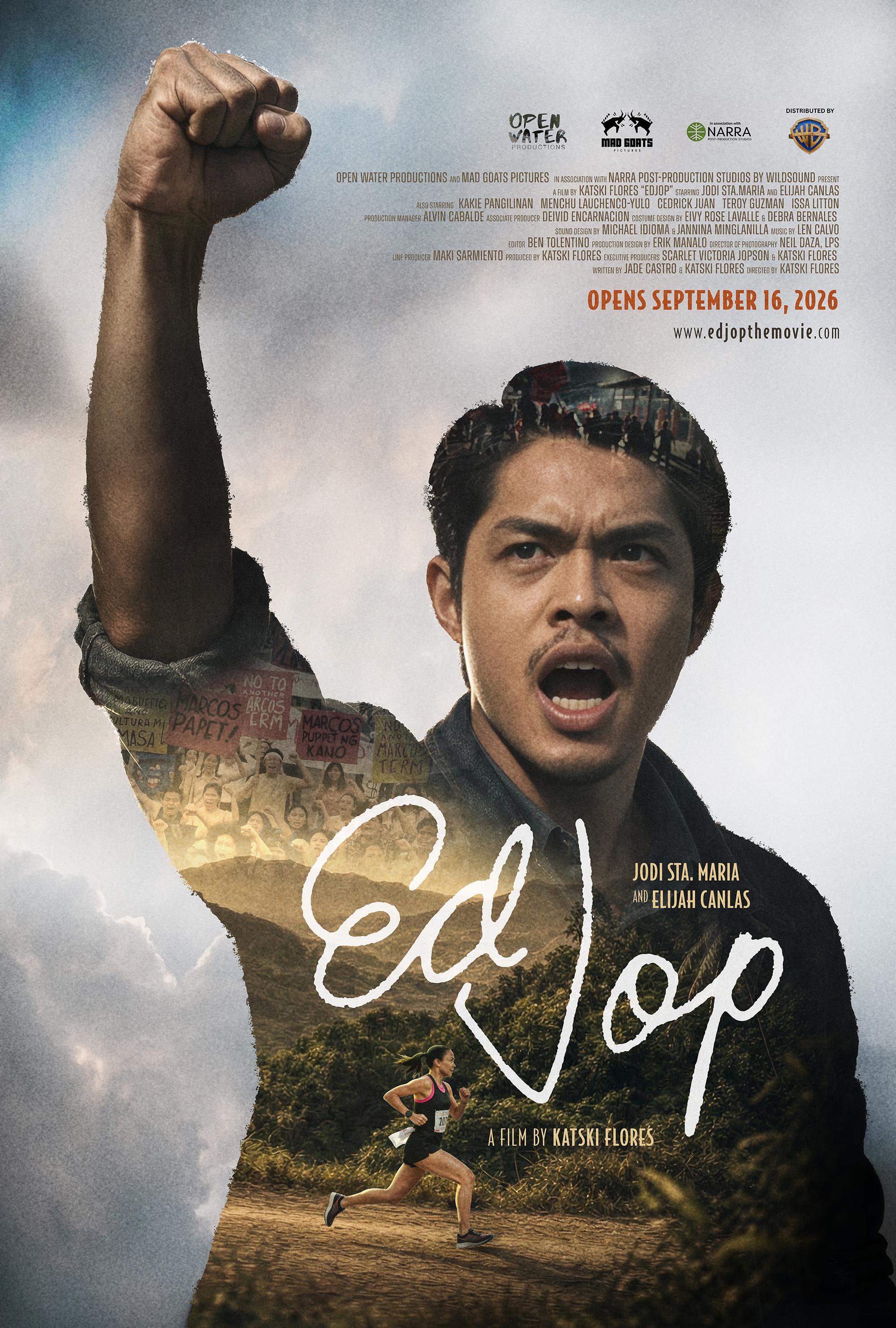
The daughter of a fallen revolutionary finds herself reckoning with her father’s legacy in Katski Flores’ dramatisation of the life of Edgar Jopson (Elijah Canlas), a key figure in the resistance movement towards the Marcos regime who was killed by the state when his daughter Joyette (Jodi Sta. Maria) was only three years old. Joyette’s reluctance to look back or talk about the past echoes that of her nation, which less than 40 years after the People Power Revolution elected Marcos’ son to power.
Joyette, a prize-winning international marathon runner, begins her voice-over with a metaphor about different kind of races, and to that extent the film charts her course from running away from something to running towards it as she begins to confront her complicated feelings about her father. As she has no memories of him, all she really feels is a sense of resentment that he abandoned his family to fight for a nebulous concept like “revolution”. Being the biological child of a famous figure comes with a degree of responsibility that she doesn’t really want nor know how to handle when she’s expected to attend all these memorial events but feels that she has nothing really to say about a father she never knew.
For Joyette, all she really wants to do is run. She doesn’t feel that politics is anything to with her and is both uncomfortable and evasive when people ask about her father, but she’s also oppressed in other ways while being trapped in an abusive relationship with her controlling coach. It’s not really until her mother is diagnosed with early-onset dementia that she begins to realise that her window to the past may be closing soon and she should ask her mother about these things now while she is still able to remember them. Then again, Joy’s dementia also echoes the lack of clarity we also have about the historical past with Joyette uncertain how much her mother has actually forgotten and how much she may simply not want to remember or to talk about.
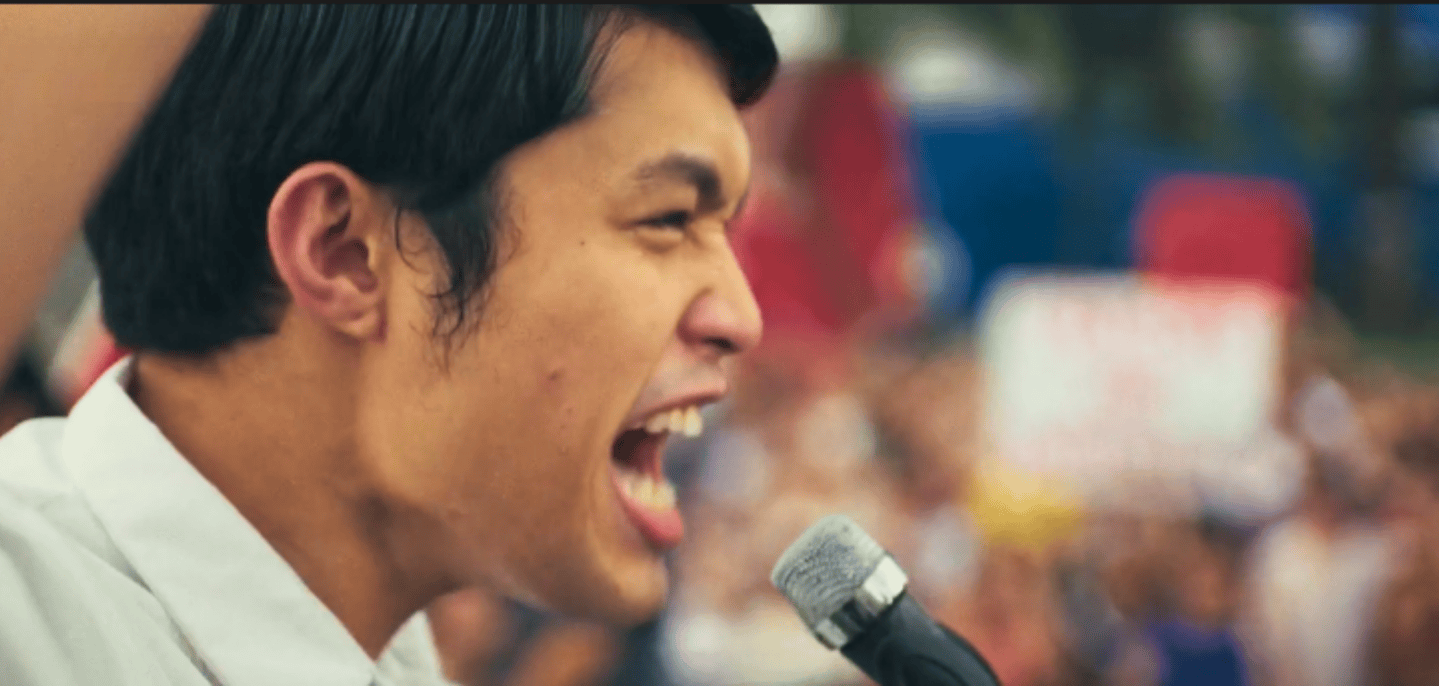
Flores intersperses Edgar’s life within Joyette’s introspection, charting his course from upper-middle-class boy to communist revolutionary. The early scenes find him even as a young child giving righteous and eloquent speeches to the other kids at school and later inspiring those around him to fight for a fairer and more equal world. But at the same time it does not shy away from his ideological conflict with Edgar’s wife Joy (Kakie Pangilinan) asking if his admiration for China is not misplaced and their authoritarian rule isn’t just fascism by another name. Meanwhile, it’s clear that his desire to improve conditions for all nevertheless means that he places his family in danger with his young son in the room when the military come for him and even later in his prison cell when he’s being beaten.
The soldier that has a particular fixation with catching Edgar says that he was once a fan, but his family was poor so he didn’t get to go to university and had to enlist in the military to get an education instead, ironically bearing out the social issues that Edgar was campaigning against but also push some towards authoritarianism thinking that they can prosper inside that system if only by oppressing other people. Edgar’s own family were once poor but later went on to own one of the biggest supermarket companies in Manila. He later runs into a problem when workers at his father’s company start striking for better pay and conditions with his father refusing to concede, insisting his business will go bust if he gives in to their demands.
Nevertheless, Edgar’s father later says he’s proud of him for what he’s done standing up to an authoritarian regime, much in the same way Joyette later comes to accept his legacy along with her own part within it as someone who could carry these ideas forward and resist the authoritarian legacy in the contemporary Philippines. They want you to forget, Joyette’s father tells her in a dream in which past and present come to co-exist. They want you to be silent and to stop caring so that you think this is the way things are and nothing will ever change. But on her circular journey, Joyette eventually comes around not only to the nature of her father’s sacrifice but the simple power of speaking the truth aloud and actively engaging with the past.
EDJOP screened as part of this year’s San Diego Asian Film Festival
Trailer (English subtitles)

