 Written by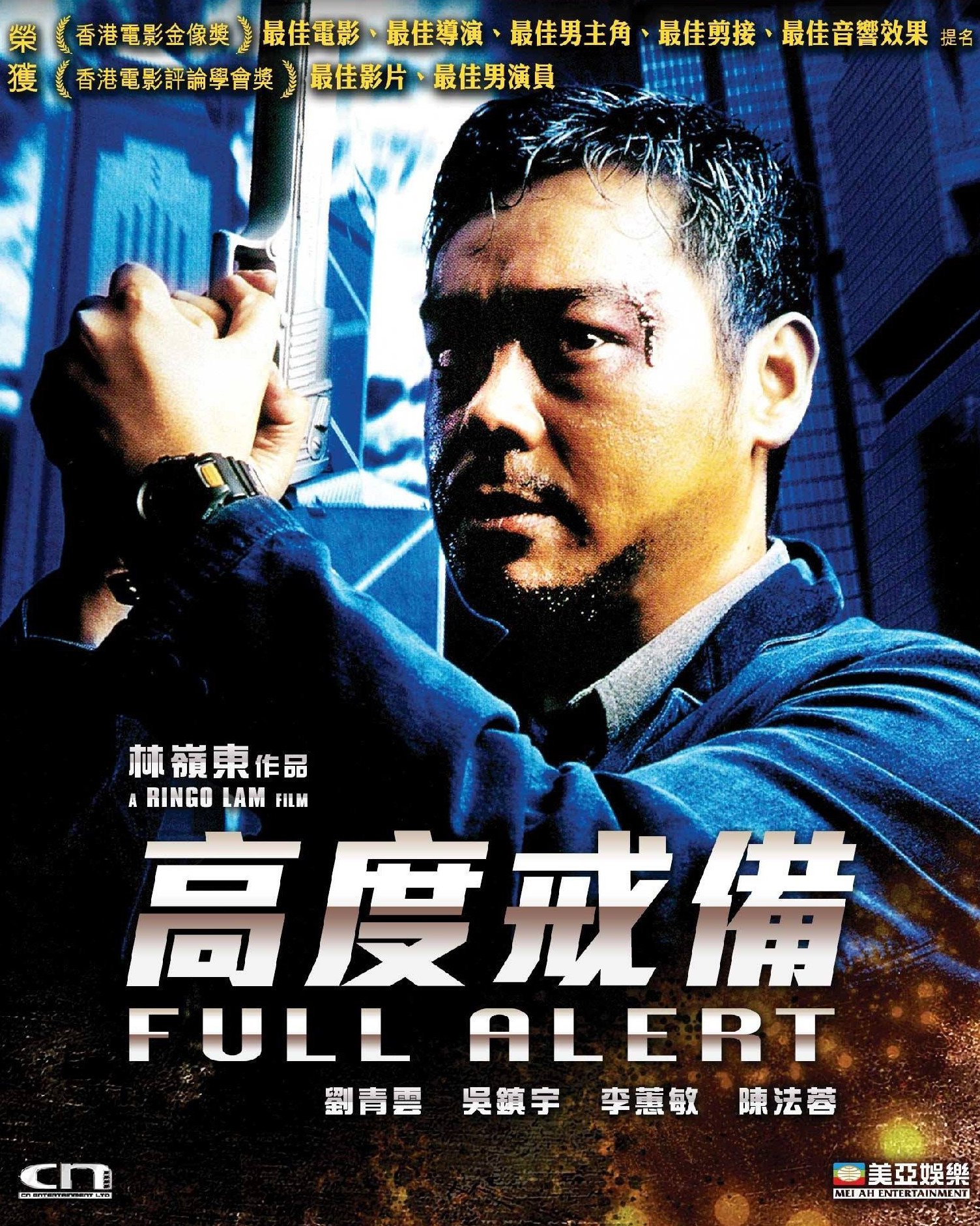
“Neither of us are normal people,” the antagonist of Ringo Lam’s Full Alert (高度戒備) points out to his opposite number, an increasingly compromised cop not so different from the man he is pursuing. Something is poisoning the waters of contemporary Hong Kong, and as it turns out there’s no real cure for this sickness. Neither man can escape the ghosts of his past, nor can he accommodate himself with this new reality of the coming post-Handover society defined by nothing other than nihilistic despair.
When residents of an apartment block begin falling ill, policeman Pao (Sean Lau Ching-wan) is called in only to discover the body of a man in the rooftop water tank. The image of his face floating in the water has a haunting, nightmarish quality that is only deepend by the anxiety of his killer who can’t be sure if he was really dead when they put him there, or ended up drowning all alone in the dark. His fate is ironically echoed in Kwan’s (Francis Ng Chun-yu) use of the sewer network to plot a heist on the Jockey Club on the busiest day of the year, emerging into a rain-drenched city only to be faced by despair and futility in the form of Pao.
Yet at times, Kwan is an oddly sympathetic villain. He comes across as a kind of everyman pushed to the brink by a society he feels is unjust and has treated him poorly. “I’ve come here to get back what I lost,” he explains as if he too were trying to find a way back to the pre-Handover society. He targets the Jockey Club in revenge for having his life ruined by gambling and hopes to make ironic use of his engineering background as an explosives expert fired for abusing his position to illegally sell explosive devices.
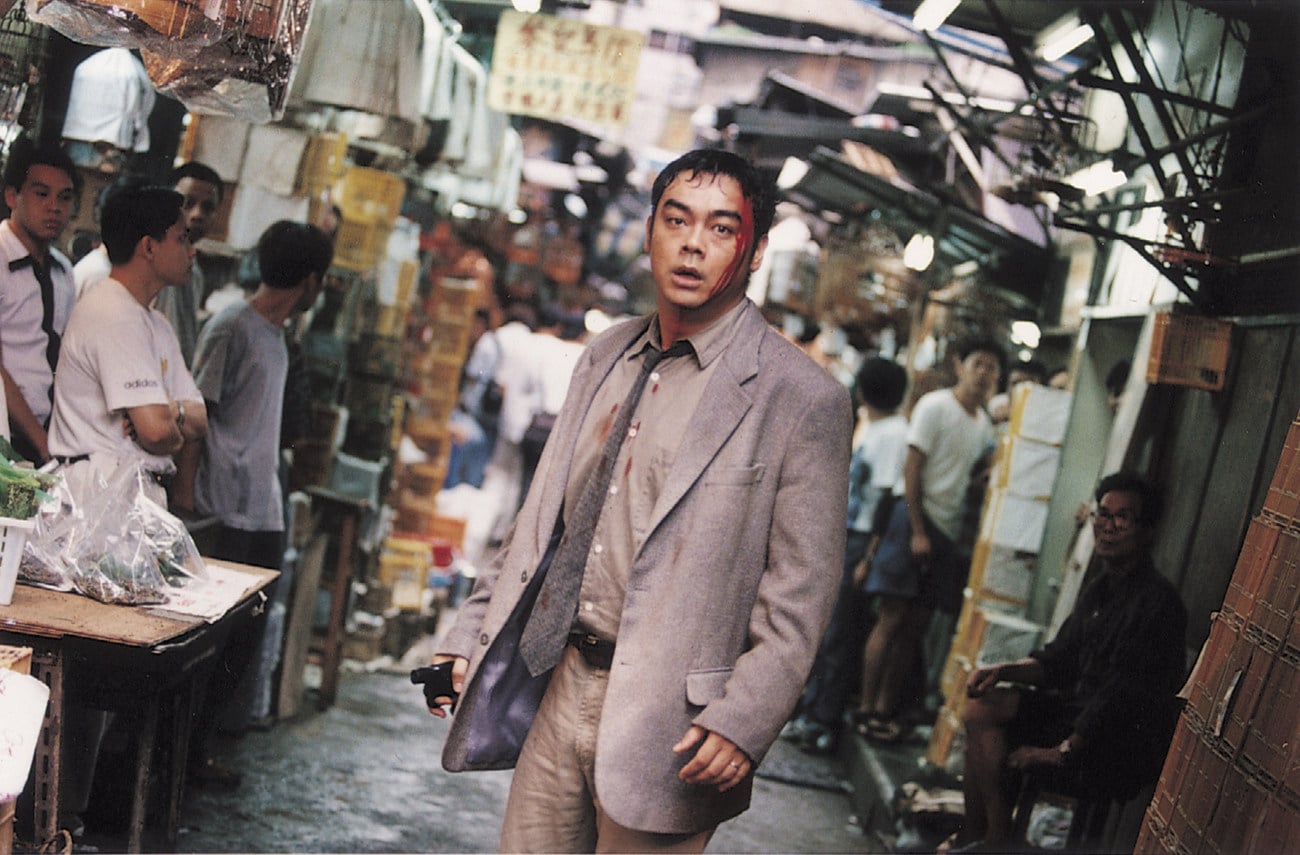
Pao, by contrast, is also a haunted man and not least by Kwan who comes to represent his other self. Just as Kwan is plagued by visions of the architect from the water tank, so Pao cannot escape the memory of having killed a man as a serving police officer. “It’s not easy to kill someone,” Kwan laments, reflecting that his transgression has changed him in untold ways that give him an odd kind of affinity for Pao. While chasing Kwan in a crowded marketplace, Pao loses his cool and fires his gun despite the risk to the general public, causing a motorcyclist to crash. When Kwan rings him, it’s less like taunting than a genuine sense of commiseration in which he likens Pao to a boy he knew at school who cried in the toilets after losing out on the number one spot that he had been fixated on taking. “That made me sad too,” he admits bearing out the inherent bond between rivals and the loneliness that exists outside it. Each man is, to an extent, motivated by fear and the desire to free themselves by destroying their other self.
“It’s just that we’re standing on different sides,” Kwan reflects, remarking that Pao is a good cop and he doesn’t mean to go against him, but believes he has no other choice. The Taiwanese gangsters may believe they have no other choice either, plotting either to rescue Kwan or neutralise him before he can expose their plans. Nevertheless, the loss of one of their men is directly contrasted with Pao’s loss of his fellow officer, arguably through his own recklessness and obsession with catching Kwan at all costs. Kwan, meanwhile, is conflicted too, apologising for involving Pao’s family and on some level self-aware that he’s destroying himself. He may not actually expect to survive but does his best to shield those he loves from the consequences of his actions, just as Pao wonders if he should quit the force to be there for his wife and son.
Shooting guerrilla style in the streets of Hong Kong, Lam captures a very real sense of panic and anxiety hanging over the city as the Handover draws closer. With the “reunification” coming, all that matters is peace, according to Pao’s superior officer, though peace is something Pao will never find, just as Kwan will never really find escape, not from himself or from a Hong Kong which seems to be in a state of total collapse. To that extent, they are each ghosts of a rapidly disappearing city fighting to take back what they’ve lost, but in the end finding only despair and loneliness.

