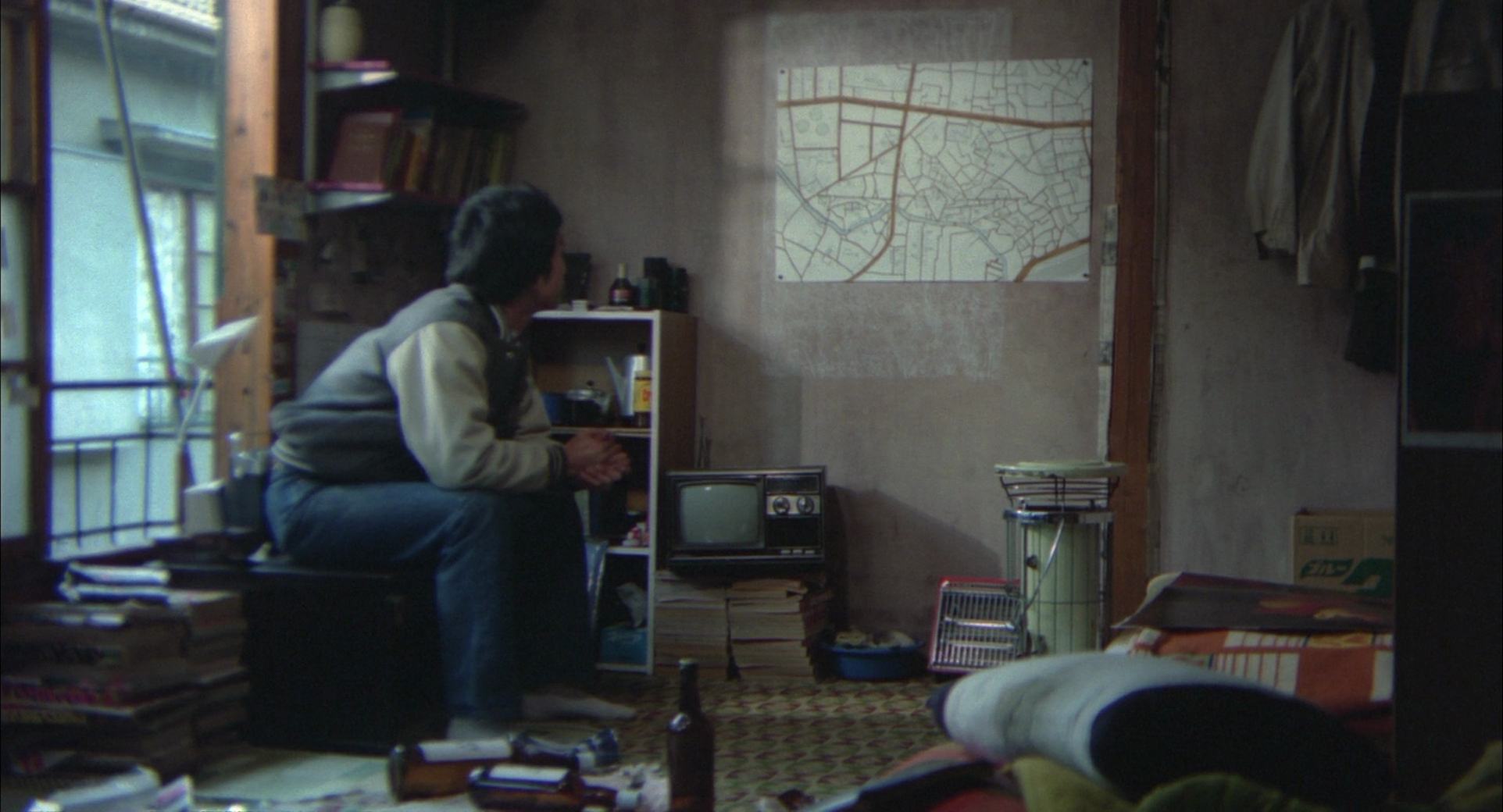
The Whale God (鯨神, Tokuzo Tanaka, 1962)

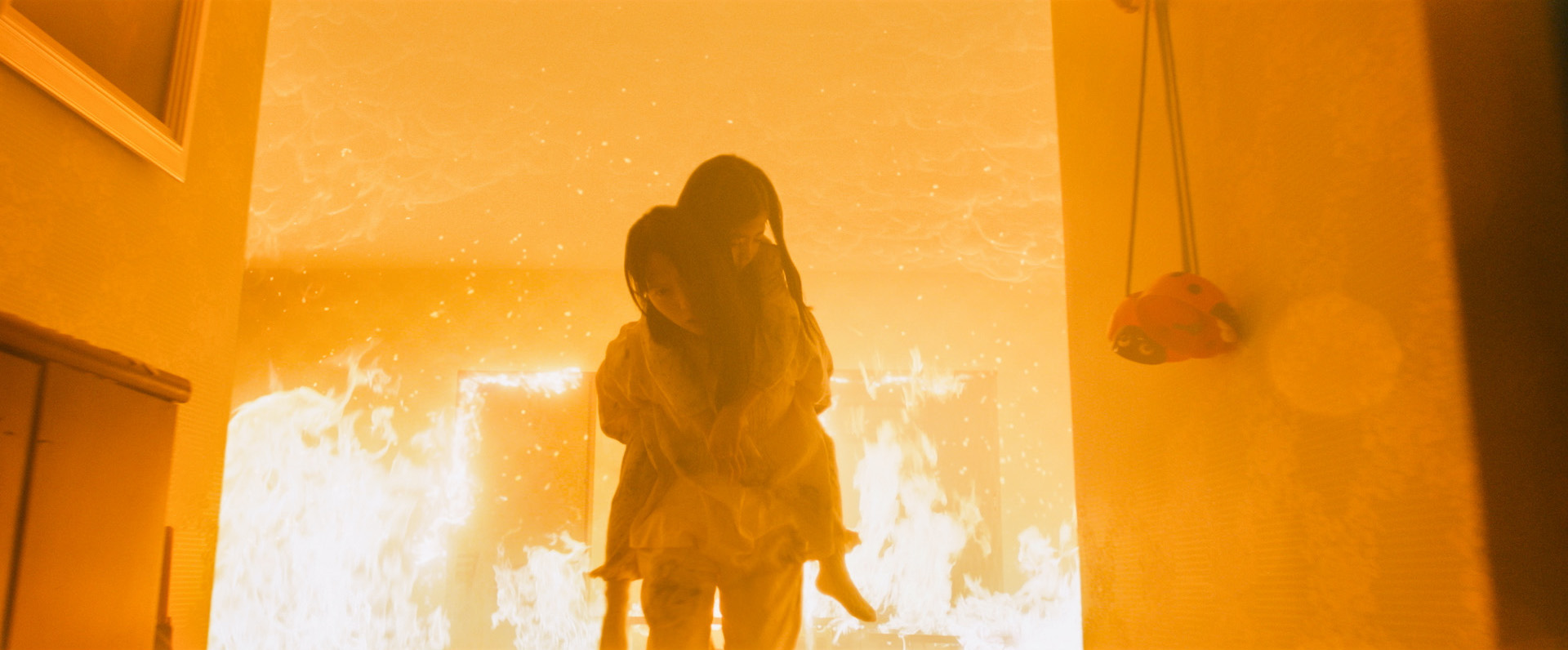
“You’re all mad” the hero of Tokuzo Tanaka’s The Whale God (鯨神, Kujiragami) finally exclaims, perhaps in a sense cured of the overwhelming mania that has defined his life but only at the cost of it. Adapted from the Akutagawa Prize-winning novel by Koichiro Uno which owes a significant debt to Moby Dick, Tanaka’s tokusatsu-adjacent drama is part haunting morality tale cautioning against the destructive absurdity of obsessive vengeance, and a kind of treatise on life in traditional village at a moment of eclipse as the burgeoning modernity of early Meiji washes up on its shores. 

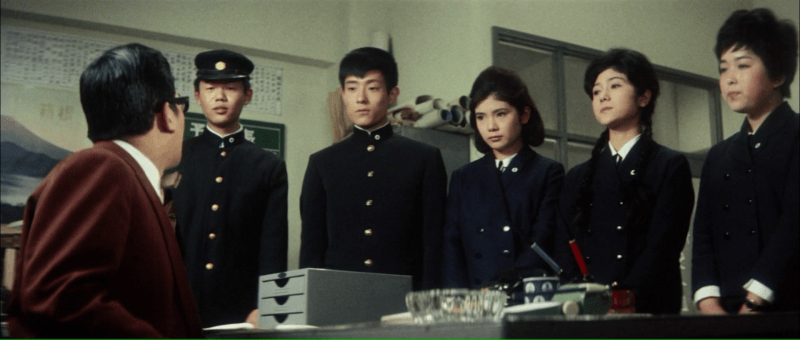
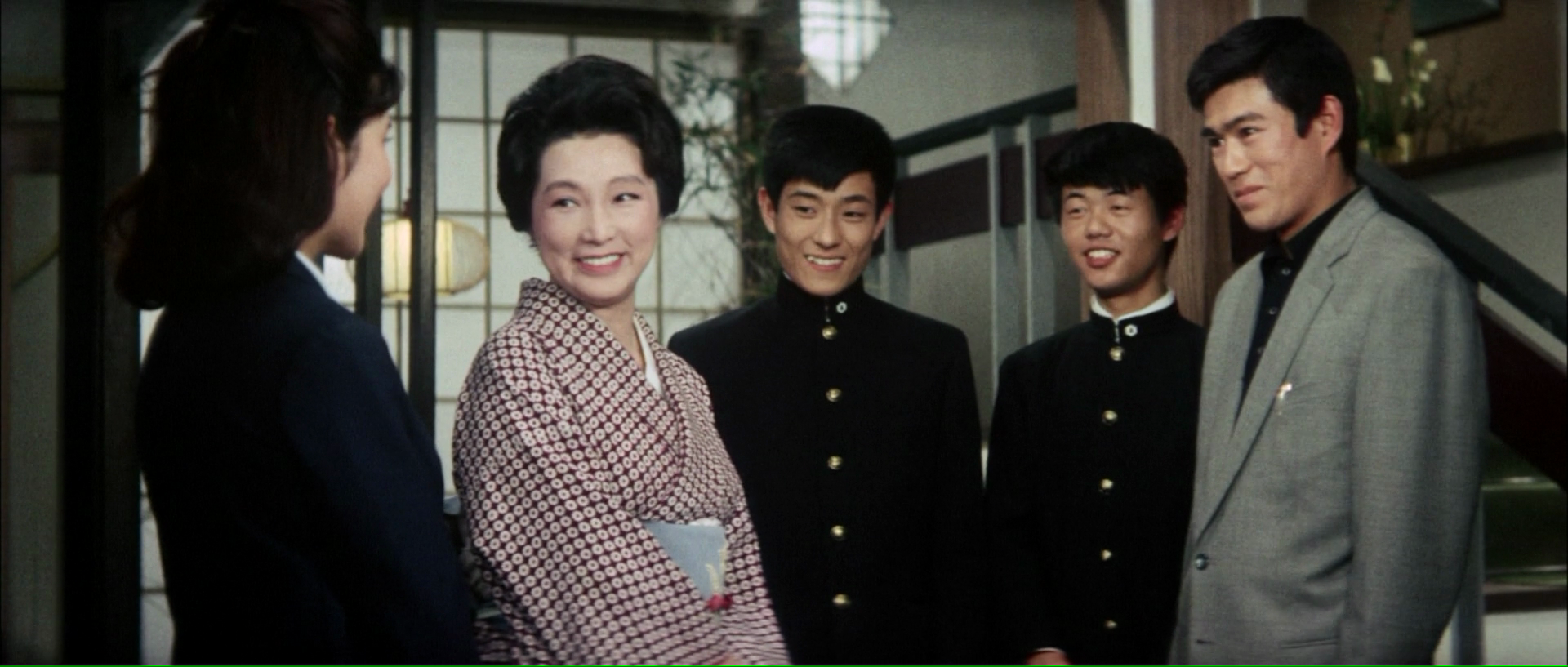
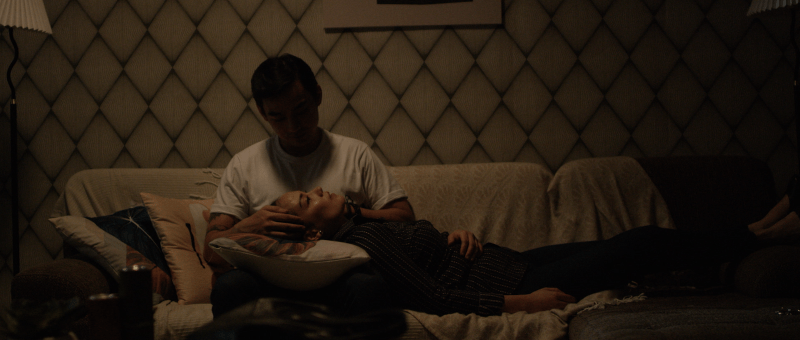
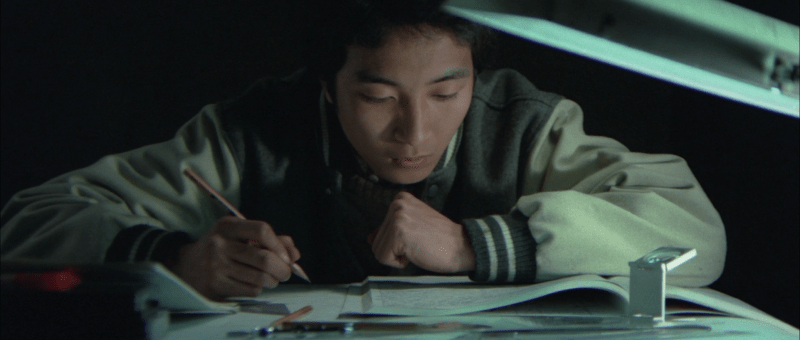
Tanaka opens with a brief prologue in which an elderly man is killed attempting to destroy the “Whale God” only for his son to swear vengeance before being killed himself. The man’s mother instructs his sons to vow revenge, 10 years passing before she sends the oldest one out against the whale. He is also killed, instantly. The last of his line, young Shaki (Kojiro Hongo) is burdened with this piece of filial responsibility, forced to bear the weight of his family’s vengeance while the village elder (Takashi Shimura), a samurai, wants to ensure the Whale God’s destruction and offers up his own daughter, Toyo (Kyoko Enami), along with his lands and title to any who can bring him the snout of the whale. Shaki throws himself forward though he has little desire for the prize obsessed only with vengeance, while another challenger soon appears, Kishu (Shintaro Katsu), a uncouth drifter deciding to hang around after confirming that the offer is open to all no matter their origins. 

Origins do, however, matter. The village elder instructs Kishu to step back lest he spear his “stinking guts” for failing to know his place, a commoner with the temerity to encroach on a samurai’s personal space. The two men, Shaki and Kishu, in a sense represent two halves one whole, one resigned and contemplative and the other rough and greedy. Kishu attempts to challenge Shaki directly but is rebuffed, later settling for besting him through raping his girlfriend, Ei (Shiho Fujimura), who conceives a child as a consequence of the attack but somehow manages to keep the pregnancy entirely secret. Both the woman and the whale become a surrogate battleground for a contest of masculinity, Kishu symbolically ahead in having violated Ei while Shaki remained too consumed with vengeance to have consummated their union. 

Toyo, meanwhile, the samurai’s daughter, insists that she won’t be “the prize for a fisherman’s ambition”, rejecting the idea of becoming the wife of a lowly villager which would of course mean for her great shame. Nevertheless, she is as powerless as Shaki in her inability to shake off patriarchal authority or refuse her duty to obey her father’s orders even as he tells her it’s all a cruel joke, he doesn’t believe that any fisherman could kill the Whale God and survive. Nevertheless she develops a fascination with Shaki and is intensely offended to discover that he wants no part of her father’s bargain and has in fact married Ei claiming her child as his own. He does this in part in order to ensure that someone will exist in order to avenge his own death which he is sure is coming at the fins of the Whale God, resigned with fatalistic nihilism to the ancestral curse which has haunted him for almost all his life living only for vengeance. 

Yet he does in fact manage to kill the Whale God and live, if only for a brief time but long enough to hear Toyo echo that she must marry the man who killed the god in accordance with her father’s promise despite knowing he is already married with a child. His curse lifted, he understands that the whole village is affected by a kind of madness no longer understanding why a samurai’s daughter would agree to marry a man she didn’t love who was not her social equal. In a beatific state, he reflects on his rivalry with Kishu whom he comes to believe deliberately sacrificed himself in order to assure Shaki a survival he does not appear to want in order to ensure his own child would have a father. Discomfortingly, he asks Ei to forgive Kishu because of this fact, little acknowledging her suffering and reducing her once again to a token traded between men in their now concluded battle for masculine dominance. 

An old man having escaped the village’s madness had encouraged Shaki not to die for nothing, to live his life in rejection of his mother’s fatalistic deathbed instruction only to live until you die. In achieving his vengeance he reaches a kind of apotheosis becoming a Christ-like figure sacrificed on behalf of the village which has been liberated of the tyranny of the Whale God even if the Whale God has been exposed as merely a larger than average sea creature. Meanwhile, we can also see that modernity is hovering on the outskirts, the whale’s arrival is signalled by telegraph while Shaki’s childhood friend Kasuke (Yosuke Takemura) alone is able to see through the village’s “madness” leaving to study medicine in Nagasaki. When he returns a year later, Shaki relents and asks him to take his sister with him away from the maddening village towards a more enlightened land. 

The village is also surprisingly enough Christian, though the new religion does not seem to have eclipsed their traditional beliefs or practices. The fishermen still perform a ritual dance before a whale hunt and continue to demand vengeance against the Whale God even when cautioned against it. Shooting in intense gloominess Tanaka emphasises the sense of spiritual dread that accompanies this “ludicrous” vendetta, the village seemingly always cloaked in darkness as if awaiting its own destruction eventually hastened by the elder’s transgressive offering which in itself represents a small revolution that would make a peasant a king and therefore implode a feudal order that is already on its way out. The elder wants vengeance for glory, Kishu wants vengeance for gold, but only Shaki desires vengeance for peace and later wins it only to have nothing left to live for, ominously telling Ei to raise their son to become “a proud whaler”. Making great use of miniatures, Tanaka’s parabolic drama may park itself in the realms of tokusatsu but is in its own way stranger, and darker, yet also poetic in its examination of destructive obsession, traditional masculinity, feudalistic patriarchy, and existential futility through the story of a young man born to die for a father’s transgressive failures. 


Original trailer (no subtitles)

Odyssey 2023 Announces Stephen Chow in Focus

This year’s Odyssey: A Chinese Cinema Season will be hosting a four-film Stephen Chow retrospective at London’s Prince Charles Cinema on Thursdays throughout June.

Forbidden City Cop

Period spy/wuxia spoof starring Chow as an imperial agent with a knack for zany inventions which comes in handy when he attends a conference which turns out to be a trap to kill all the doctors who serve the emperor.

Sixty Million Dollar Man

Chow stars in a Wong Jing & Raymond Yip Wai-Man comedy in which a rich and arrogant playboy is brought back to life by a mad scientist after being blown up by the yakuza who now want to kill him again.

Kung Fu Hustle

2004 comedy starring Chow as a petty thief in 40s Shanghai who desperately wants to join the Axe gang which currently dominates the city except for the small enclave of the slums in Pigsty Alley.

The Mermaid

2016 eco comedy starring Deng Chao as a heartless capitalist intent on bulldozing an area of outstanding natural beauty and Jelly Lin as a undercover mermaid sent to assassinate him only to fall in love instead. Review.

Stephen Chow in Focus screens at the Prince Charles Cinema, London, on Thursdays in June as part of Odyssey: A Chinese Cinema Season which runs 26th May to 30th June online and in-person. The full programme will be announced in due course and you can keep up with all the latest news by following the festival on Instagram and Twitter.

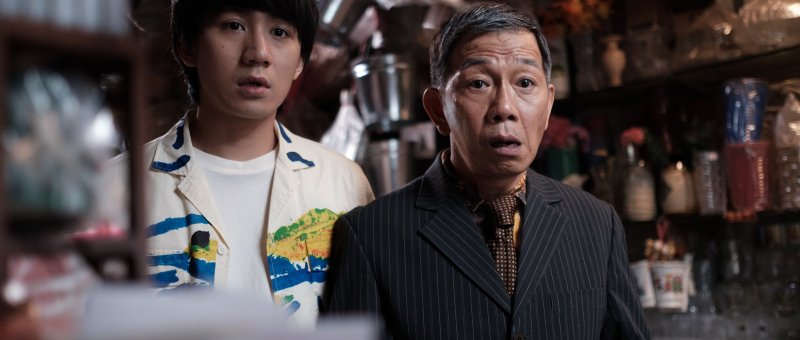
King and the Clown (왕의 남자, Lee Joon-ik, 2005)

The feudal order conspires against everyone from minstrel to king in Lee Joon-ik’s Shakespearean historical epic, King and the Clown (왕의 남자, Wang-ui Namja). The Korean title might translate to the equally ambiguous “The King’s Man”, but in any case invites the question of who it is that is the “king” and who the “clown” though in practice it might not matter because their roles are to a degree interchangeable. Nevertheless, a minstrel’s attempt to transgress class boundaries eventually leads to tragedy but also perhaps defiance in his seizing of the little freedom that is given to him. 

The oppressiveness of the system is emphasised in the opening text which explains the historical background and reveals that the king of this story was considered a tyrant, though also thought to be sensitive and intelligent, while permanently damaged by the early death of his mother who was forced to take her own life because of machinations in the court. The King (Jung Jin-young) himself rails at the system complaining that he has no real power and is largely unable to overrule the advice of his courtiers who remain loyal to his late father and simultaneously force him to obey the rule of a man who is already dead. In this internecine feudal society, not even the king is free. 

This might in a sense explain his tyranny, borne both of an anxiety over the precarity of his rule (the text also reveals that he was deposed by his courtiers shortly after the film concludes) and is otherwise engaged in a kind of frustrated boundary pushing. At heart, he is a wounded and petulant child. His eventual decision to participate in the clown show put on by Jang-saeng (Kam Woo-sung) and his troupe of jesters hints at his mental instability and growing inability to discern reality from fantasy, or to a point perhaps there is no true “reality” for a king and so the distinction no longer matters as there is no real difference for him between a man “dying” in a play and dying for real. 

For Jang-saeng, however, there is a difference. He and his brother-in-arms Gong-gil (Lee Joon-gi) are technically on the run after Gong-gil ended up killing their manager to defend Jang-saeng who had tried to protect him from exploitation in being pimped out as a male sex worker to earn extra money for the company. It’s Jang-saeng who hits on the lucrative opportunities of satire after teaming up with three other minstrels in the capital and hearing tales of the King’s scandalous sex life. This obviously gets him into hot water with the authorities, though Jang-saeng talks himself out of trouble by convincing conflicted courtier Cheo-seon (Jang Hang-seon) to allow them to perform before the King who actively enjoys being mocked and brings the clowns into the palace to entertain him at his pleasure causing a further rift with his conservative courtiers who do not enjoy having their dirty dealings exposed through bawdy street theatre. 

The repeated visual motif of the tightrope emphasises the fine line Jang-saeng is walking as a commoner in the court. Cheo-seon had hoped their performance would show the King the extent of the corruption among his courtiers, but the results leave Jang-seong conflicted as he sees men die as a result of his comedy while failing in his primary goal of protecting Gong-gil from exploitation as he quickly becomes a favourite of the King again endangering their position as they become a target for the King’s mistress (Kang Sung-yeon), a former sex worker who had like them used her natural gifts to transgress the boundaries of class. Cheo-seon complains that it’s the King’s “lust for a boy” which has corrupted the court, while Jang-seong’s resentment may otherwise be unwarranted as Gong-gil appears to like and pity the King and may have come to his own decision about advancing his fortunes despite Jang-seong’s assertion that there are some things that should not be sold.  

But as Jang-seong comes to realise, all around the tightrope is an abyss. “Never knew a fool who knew his place” Jang-seong wrote in one of his plays and that is in someways his tragedy, that he dared to challenge the social order but in the end could not overcome it and neither could the King. Even so he may find a kind of freedom in seeking escape from a cruel and oppressive society in the only way that is available to him. “The world’s but a stage. Kingly is he who struts for a while, then exits in style” Jang-seong exclaims, a “sightless fool” who finally knows where he stands.


King and the Clown screened as part of this year’s Queer East .

Trailer (English subtitles)

Fantasia Confirms First Wave of Titles for 2023

The Fantasia International Film Festival returns to cinemas for its 27th edition taking place once again in Montreal from July 20 to Aug. 9. This year’s festival will have a special focus on South Korean cinema marking the 60th anniversary of diplomatic relations between the two nations including the latest blockbusters such as the third instalment in the popular Roundup series, and a screening of the 4K restoration of 2001 classic Take Care of My Cat. The second wave of titles will be announced early next month with the full programme following in July. Here are the East Asian Films so far confirmed for Fantasia 2023.

Japan

  • People Who Talk to Plushies Are Kind – a collection of sensitive uni students pour out their worries to cuddly toys to avoid burdening others with their fears in Yurina Kaneko’s charmingly empathetic drama. Review.
  • Tokyo Revengers 2 Parts 1 & 2 – the long-awaited two-part sequel to the timeslip drama.

South Korea

  • Mother Land – stop motion animation from Park Jae-beom.
  • New Normal – horror anthology from Jung Bum-shik (Gonjiam: Haunted Asylum)
  • The Night Owl – period conspiracy thriller in which a blind acupuncturist witnesses the death of the crown prince.
  • The President’s Last Bang – Im Sang-soo’s ironic take on the assassination of Park Chung-hee.
  • The Roundup: No Way Out – third instalment in the popular series starring Ma Dong-seok (Don Lee) as a maverick policeman.
  • Take Care of My Cat – much loved female friendship drama from 2001 revolving around five friends heading in different directions after high school. Review.

The Fantasia International Film Festival runs in Montreal, Canada, July 20 to Aug 9. Full details for all the films will be available via the the official website, and you can also keep up with all the latest news via the festival’s official Facebook pageTwitter account, Instagram, and Vimeo channels.

Yakuza Graveyard (やくざの墓場 くちなしの花, Kinji Fukasaku, 1976)

“We don’t resort to violence. We observe the law.’ The hero of Kinji Fukasaku’s Yakuza Graveyard (やくざの墓場 くちなしの花, Yakuza no Hakaba: Kuchinashi no Hana) is berated by a superior officer for excessive use of force, but his criticism is in some senses ironic because it is the police force itself which becomes a symbol of the societal violence visited on those who can find no place to belong in the contemporary society. By this time the yakuza was already in decline and in the process of transforming itself into a corporatised entity while as a police chief explains increasing desperation has led to escalating gang tensions. 

Recently transferred maverick cop Kuroiwa (Tetsuya Watari) finds himself caught between two worlds in attempting to enforce the law through methods more familiar to yakuza. Soon after he’s had his gun taken away for exercising excessive force on a suspect he’d been independently tailing in the street on whom he’d found bullets designed to be used with a remodelled toy gun, Kuroiwa is pulled aside by another senior officer, Akama (Nobuo Kaneko) who takes him to a meeting with local yakuza boss Sugi (Takuya Fujioka). It seems obvious that Akama has cultivated a relationship with the Nishida gang which may not be strictly ethical for a law enforcement officer and hopes to bring Kuroiwa on board as a potential asset. They attempt to bribe him in return for information on the Yamashiro clan, the dominant organised crime association in the area, which has been hassling Nishida in an attempt to take over their territory. But Kuroiwa ironically tells them that they should “act like yakuza” and sort out their own problems rather than relying on the police before dramatically walking out much to to the consternation of everyone else present. 

Nevertheless, he eventually comes to sympathise with them as a symbol of the little guy increasingly crushed by corporate and authoritarian forces outside of their control. He finds out from a briefing that the police’s goal is the disbandment of the Nishida gang but when he asks why they aren’t going after the Yamashiro too he’s told to mind his own business and begins to realise that the police are in cahoots with organised crime. Whether they justify themselves that managing the Yamashiro to prevent a turf war is the best way to protect the public or are simply corrupt and in the pocket of big business, Kuroiwa can’t help but balk at the blatant hypocrisy of the law enforcement authorities. 

Later Kuroiwa reveals that he became a police officer after being bullied as a child in order to exert power over his life, or perhaps becoming an oppressor in order to avoid being oppressed. He was bullied because he had been born in Manchuria and even years later remains a displaced person at least on a psychological level. It’s this sense of displacement which allows him to bond with the Nishida gang’s accountant, Keiko (Meiko Kaji), whose father was Korean. Kuroiwa agrees to accompany Keiko to visit her husband (Kenji Imai) who is serving a lengthy prison term in order to tell him that the gang want to promote someone else to a position he viewed as his by right. The husband explodes in rage and uses a word some would regard as a slur to reference Keiko’s Korean heritage while she later attempts to walk into the sea feeling that there really is no place for her in the contemporary society. 

Just as she claims that she is neither Korean nor Japanese or much of anything at all, Kuroiwa is neither cop nor thug and similarly excluded from society at large. He ends up bonding with old school Nishida footsoldier Iwata (Tatsuo Umemiya), who is also ethnically Korean, for many of the same reasons and attempts to mount a doomed rebellion against their mutual oppression, but is hamstrung by his otherness which is only deepened when he’s taken prisoner by loan shark Teramitsu (Kei Sato) and given a mysterious truth drug developed by the nazis later becoming a user of heroin. Already marginalised, forced into crime by economic necessity and social prejudice, Iwata and Keiko like Kuroiwa himself struggle to escape their displacement while pushed still further out by systemic corruption and the amoral capitalism of an era of high prosperity. Shot with jitsuroku-esque realism and characteristically canted angles, Fukasaku injects a note of futility even within the hero’s tragic victory as he quite literally sticks two fingers up to the corrupted “brotherhood” that has already betrayed him.


Yakuza Graveyard is released on blu-ray on 16th May courtesy of Radiance Films. On disc extras include an in-depth appreciation of the film and the work of screenwriter Kazuo Kasahara from Blood of Wolves director Kazuya Shiraishi, and an informative video essay from Tom Mes on the collaborations of Meiko Kaji and Kinji Fukasaku. The limited edition also comes with a 32-page booklet featuring new writing by Miko Ko plus translations of a contemporary review and writing by Kasahara.

Original trailer (no subtitles)
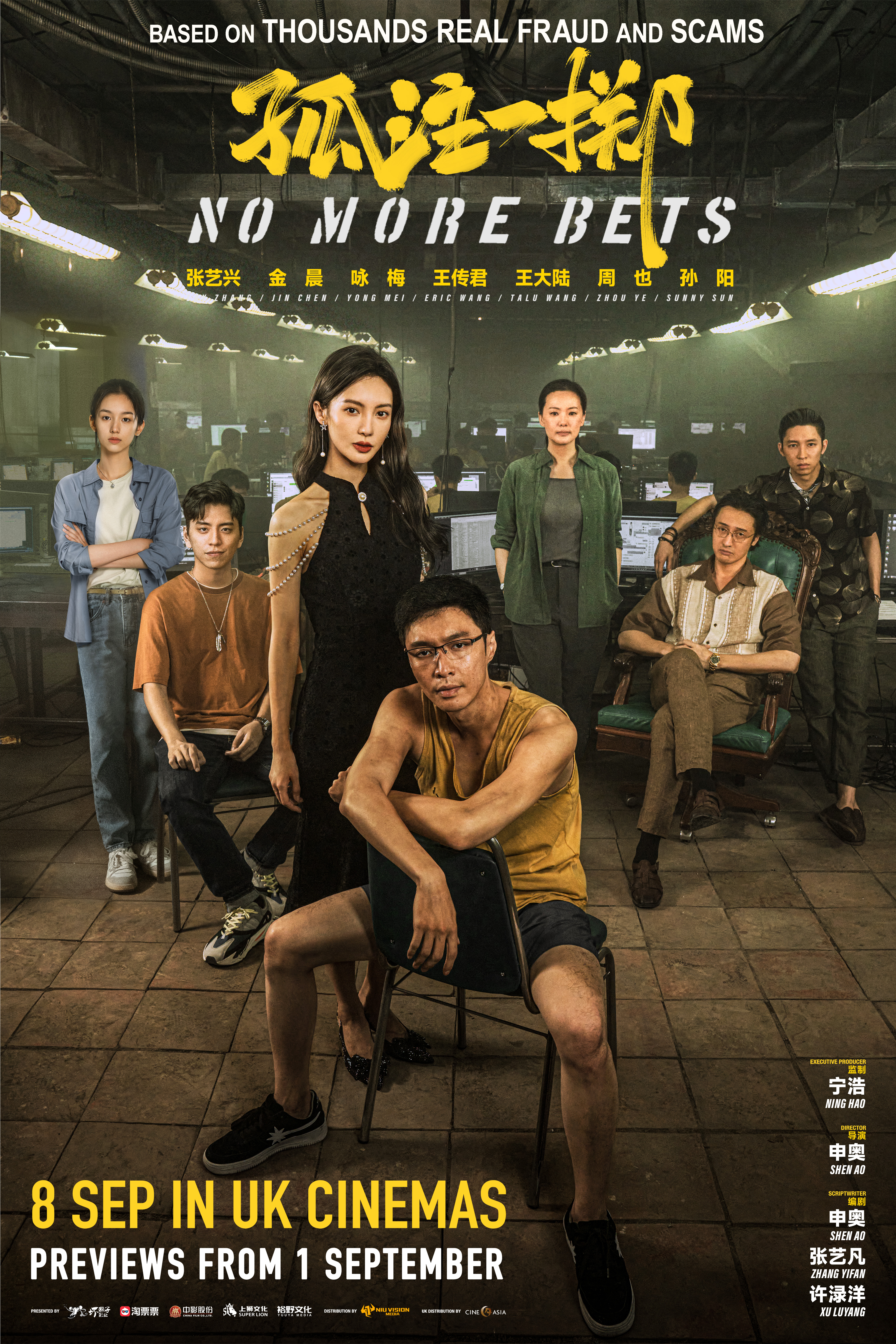
Young Ip Man (少年叶问之危机时刻, Li Liming, 2020)

In another branch of the sprawling Ip Man tree, Li Liming’s Young Ip Man (少年叶问之危机时刻, shàonián Yè Wèn zhī wēijī shíkè) aims to kickstart a new strand of streaming action drama in following the titular hero in his days as a student in Hong Kong. Li never misses an opportunity to remind us that this is all taking place in the colonial past, a large British flag flying over the prison in which the film opens. Yet perhaps surprisingly, the betrayals that Ip Man (Zhao Wenhao) faces are local and personal in which the corruption of British rule is felt only distantly and in the priggish figure of a bullying police commissioner who as it turns out is really just an unimportant middleman. 

The most literal villain is, however, arch criminal Ma Long (Mu Fengbin) who is sprung from prison by his gang in the film’s high impact opening sequence. Determined to get revenge on corrupt police chief Stewart (Jonathan Kos-Read), Ma somewhat bizarrely decides to kidnap a bunch of rich kids at school for an English speech competition hoping to get his hands on Stewart’s son Jack. The funny thing is he has a connection to Ip Man’s past and later suggests he may have known that he would be involved all of which seems to be quite a flaw in his plan. In the company of his friend Ya Yun, the daughter of the head of the Axe gang, Ip Man defiantly decides to use his martial arts skills to save his fellow students while squaring off against the corrupt figure of Ma.  

Then again, as we discover Ma only became the arch villain he is because of judicial corruption. When someone close to him was killed, he sought justice but was denied because the perpetrators were influential people, the implication being that they were members of the colonial elite which Stewart was propping up. Filled with grief and rage, he’s hellbent on ruining Stewart’s life and doesn’t really care all that much about what he might have to do to do it. As Ip Man points out, he once tried to teach him about the importance of knowing right from wrong, but Ma now believes that the distinction is one made only by the weak for the strong care only about winning. 

The secondary part of Ip Man’s mission is dedicated to saving his old friend Xuehu from becoming another Ma after becoming frustrated that he was prevented from marrying the woman he loved because of his poverty and the class difference between them. He too vacillates, uncertain if he will actually betray his friend to get the money to get married while remaining complicit in kidnap and murder. As usual, the situation gives Ip Man a lot of opportunities to remind others of the martial arts philosophy and the importance of humanity even if others try to convince him that “feelings are worth nothing in this world”.

Still, the battle plays out like a chess game as Ip Man tries to outsmart Ma and win the students’ freedom while inexplicably still believing in his good sportsmanship certain that Ma will honour his word and let the hostages go if only he manages to beat his arbitrary challenges. Ip Man fights off the bad guys, dashing over balconies and leaping from windows to save his friends, while experiencing an internal conflict as he finds himself at odds with men he previously respected hoping he can still redeem them even as they seem intent on his death. In any case, the most surprising element of the film maybe that in the end the corruption goes largely unpunished with the true winner the duplicitous policeman with a habit of selectively enforcing the law. 

Even Ma seems to recognise the hollowness of his revenge in coming to an understanding of his role and position in otherwise corrupt society while Ip Man appears to win the esteem of Ya Yun’s gangster father who despite his overprotective parenting does nothing at all to try to save her other than raising money and waiting patiently outside the school. Despite its low budget, the film packs in a fair few impressive action sequences beginning with daring prison break and culminating in the schoolhouse siege as the young Ip Man gets the chance to show off his skills while fighting for justice in old Hong Kong.


Young Ip Man is available to stream in the US via Hi-YAH! and released on DVD & Blu-ray May 16 courtesy of Well Go USA.

Trailer (English subtitles)

A Light Never Goes Out (燈火闌珊, Anastasia Tsang, 2022)

A mother and a daughter take very different paths in trying to come to terms with grief in Anastasia Tsang’s poignant drama, A Light Never Goes Out (燈火闌珊). A tale of loss in more ways than one, the film is also a deeply felt lament for the old Hong Kong which finds itself slowly erased as symbolised by the movement to remove the “dangerous” neon signage which was once such a part of the city’s identity. 

Heung’s (Sylvia Chang Ai-Chia) late husband Bill (Simon Yam Tat-Wah) had been a master craftsman of just such signs though as far as Heung knew had retired a decade previously as the industry continued to decline. Where once the city was full of neon, modern businesses prefer cheaper LED signage. Now that Bill is gone, Heung struggles to find direction in her life. She continues cooking for three even though they’re only two and sadly reflects on how dark and sad the streets now feel as she witnesses the signs that Bill spent so much of his life crafting unceremoniously dismantled. While all she wants to do is hang on to the past, her daughter Prism (Cecilia Choi Si-Wan) takes the opposite path insensitively getting rid of her father’s things without her mother’s knowledge while secretly planning to move to Australia with her fiancé Roy. 

In some ways the two women represent a set of opposing views with the mother standing in for those who decide to stay and fight for the soul of Hong Kong, and the daughter those who decide their future lies abroad in her case in Australia where she believes there is “more creative freedom”. When Heung tells some construction workers that “your new laws are illegal”, it sounds as if she’s talking about more than just building ordinances while exasperated by the idea that something which seemed very ordinary just a short time ago is deemed against the law because of a sudden and arbitrary introduction of additional legislation. 

It might be assumed that the neon lights fade because young people do not care for them, but Heung’s greatest allies are the young apprentice, Leo (Henick Chou), she belatedly discovers Bill had taken on before he died and a young woman who fiercely protects the neon sign that hangs above her bar. It’s she who also points out that Bill supported her during the SARS crisis when her family’s business was suffering, bearing out his humanity in helping those in need while suggesting that it is spirit of the neon lights that has kept Hong Kong going during its darkest days. Bill had been a bit of a dreamer, fond of encouraging those around him to wish upon a star while insisting that nothing’s predetermined and if you wan’t something you can make it happen all of which sounds like a subtly subversive advocation for the fight for Hong Kong. 

As he later says, his signs may have been torn down but they can be built again while Heung and her daughter eventually find a way to reconcile in their grief and she gains a surrogate son in the earnest Leo who encountered rejection all his life until discovering a calling in the art of neon signage. Leo’s commitment suggests that something of the neon lights can be preserved and brought into a new era while there is a genuine poignancy in the significance of the sign reading “myriad lights” which eventually guides each of the heroes towards their resolution in attempting to fulfil Bill’s dying wish of recreating a sign which had long since disappeared but held a memory for another couple that another one long departed had held for he and Heung. 

Tsang often cuts back to stock footage of a neon-lit Hong Kong in the 60s and 70s before contrasting it with the comparatively empty streets of today which appear almost soulless in their slick modernity. It is in a sense nostalgia, a yearning for another Hong Kong which is fast disappearing or perhaps being deliberately erased as symbolised in the final, post-credits shot of the famous floating restaurant with its vibrant exterior and giant green “Jumbo” sign which capsized in June 2022 after being towed out of Hong Kong for storage in Cambodia. A poignant tale of grief and healing, Tsang’s moving drama nevertheless suggests a flame still burns in the flickering lights of the old Hong Kong which continue to illuminate the night sky in defiance of those who might seek to extinguish them. 


A Light Never Goes Out opens in UK cinemas on 12th May courtesy of CineAsia.

UK trailer (Traditional Chinese / English subtitles)

A Man and a Gisaeng (남자와 기생, Shim Wu-seob, 1969)

Under the authoritarian regime of Park Chung-hee, Korean Cinema was subject to increasingly stringent censorship and film was seen as an important means of moral instruction. The central message behind Shim Wu-seob’s raucous comedy A Man and a Gisaeng (남자와 기생, Namjawa Gisaeng) is that a man should be faithful to his family and avoid the double betrayal represented by drinking in the company of women which fritters away financial security and endangers his relationship with his wife. Yet the film is also subversive despite the underlying conservative message in making a mockery of so-called “traditional” gender roles.

Indeed, the film’s very thesis is that men are weak and women are strong. The men visit who gisaeng appear to have done so to reaffirm their dominant masculinity through their financial power in essentially paying women to be subservient towards them. Yet the gisaeng themselves are fully in control of the game they are playing as one makes clear when she tells a drunken businessman off after he gets handsy with her. She reminds him that a gisaeng is a person too, not a doll to be played with, and when he doesn’t listen she gets up and leaves proving who it is that has the upper hand in this situation. All the businessman can do is splutter and threaten the otherwise mild-mannered male manager. 

The hero’s boss, Heo (Heo Jang-gang), is a henpecked husband who visits gisaeng as a means of escape from his domineering wife (Do Kum-bong) who punishes him like a child. He asks Tae-ho (Gu Bong-Seo) to resign after catching him sitting at his desk darning socks to earn extra money and though it might be perfectly reasonable to fire an employee for brazenly doing another job on company time, Heo mainly lets him go because of his unmanliness. Tae-ho is a fully domesticated man who does work traditionally regarded as “feminine” in taking in sewing and looking after all of the domestic tasks such as cooking and cleaning as a “maternal” figure to his younger sister Tae-suk (Kim Chung-ja) who is then depicted as “manly” in her mastery of martial arts. 

It quickly becomes clear that the “effeminate” man Tae-ho is the film’s strongest character and the only one largely in control of his circumstances. He agrees to become a gisaeng partly because he needs to earn money after being fired, but also he claims as a “joke” before committing himself to punishing men who neglect their duty to their families by shaming them into changing their behaviour as he largely does with Heo who, bizarrely, develops a fascination with Tae-ho’s gisaeng persona San-wol as she apparently reminds him of the first love he was prevented from marrying because of her family’s disapproval. 

The gender subversion is in essence the joke, but there are also constant hints that it might not be and Tae-ho’s female persona is also authentic, not least among them the music cues which are extremely ironic. For example, the melody of “Don’t Fence Me In” plays over Tae-ho at the house of gisaeng, as do the strains of “Nature Boy” which also hint at a validation of Tae-ho’s expression of femininity. Before being fired, Tae-ho tells Heo that he’s repressing himself and it isn’t good for him, and there is a (joking) suggestion in the final scenes that Heo’s attraction to San-wol is partly born of her seeming masculinity. He did indeed unwittingly appreciate a drag performance from Tae-ho’s queer-coded musician friend, after all.

It’s also possible to read Heo’s reunion with his wife as a new appreciation for her own “masculine” qualities in her capacity to dominate him even if the film simultaneously suggests that the role of a “good wife” is to offer “affection” to her husband and if the husband visits gisaeng it’s the wife’s fault for not giving it to him. Even so, what the film’s conclusion implies is closer to a rebalancing than might be expected in allowing Jeong-mi, the gisaeng with whom Tae-ho falls in love to counter any suggestion of queerness, to open her own shop as an independent woman pursuing a relationship with Tae-ho who is then a travelling salesmen selling cosmetics. Jeong-mi asks Tae-ho to give up “knitting” before they get married which would signal a remasculinisation, but Tae-suk, though dressing in a more feminine fashion to meet her in-laws, is not directly asked to give up Taekwondo and it seems that her fiancé appreciates her feistiness rather than seeking to soften it. Even Heo’s wife if seeming more cheerful has not given up control in their marriage despite her own drag experience in the gisaeng house yet their relationship is now considered “repaired”. “Traditional” gender roles have ostensibly been reaffirmed, Heo’s marriage is saved and both Tae-ho and his sister are about to marry, but they’ve also been subverted and redefined in unexpected ways. Some of this may only be possible because A Man and a Gisaeng is an absurd comedy of the kind Shim was known for, but it nevertheless hints at an underlying plea for greater social freedom in an authoritarian era. 


A Man and a Gisaeng screened as part of this year’s Queer East .

Insiang (Lino Brocka, 1976)

“It’s your father’s fault.” the heroine of Lino Brocka’s 1976 realist melodrama Insiang is told, neatly hinting at the destructive patriarchy of the Philippines under Marcos. Like the heroine of a fairytale, Insiang (Hilda Koronel) is a radiant source of light amid the darkness of a Manila slum where jobless men drown their sorrows and burden their wives while proving their masculinity by often violent sexual conquest. Soon even she is consumed by the corruption of the world all around her against which she eventually plots her revenge. 

The chief source of Insiang’s misery is her harridan of a mother, Tonya (Mona Lisa), who has become cruel and embittered in the humiliation of her husband’s abandonment. Tonya has agreed to allow some of her husband’s relatives to stay with them as the father has lost his job, but often insults them and her harsh words weigh heavily on Insiang’s cousin Edong who is old enough to work but cannot find find a job. When Edong gets drunk and gropes Insiang’s best friend Ludy (Nina Lorenzo) who runs the local store, Tonya loses her temper and throws them all out even insisting on the return of some clothes she’d bought the children sending them away not even in rags but naked. 

Isiang confesses that she has come to hate her mother and feels no maternal connection with her at all, knowing that her coldness towards her is motivated by resentment towards her estranged father who left them for another woman. Tonya’s decision to throw out the relatives was in part motivated by her desire to move in Dado (Ruel Vernal), a thuggish man much younger than herself who guts pigs at a local slaughter house. In the end, he will be stuck himself just like one of the animals he and men in general are so often likened to. Dado has a tattoo of his own name on his chest and struts his stuff like a proud alpha male, quickly questioning the masculinity of Insiang’s sometime boyfriend Bebot (Rez Cortez) who has a giant perm and wears an earring in one ear. Insiang dislikes going to the cinema with Bebot because he has a tendency to become handsy, justifying his disregard of her discomfort by insisting that he’s a man and cannot help it. Dado later says something similar after raping an unconscious Insiang, telling the incensed Tonya that it’s not his fault because no man could fail to be “seduced” with a such a beautiful woman in the house. 

At heart, the film is a painful melodrama about the frustrated love between mother and daughter which is made impossible because of male failure. When she finds Insiang sobbing and realises Dado has raped her, Tonya tries to comfort her daughter but is soon seduced again on Dado’s return. As Ludy says, Tonya too has her needs even if her relationship with a much younger man scandalises the local community, but in the end she chooses to maintain her connection to male power rather than the emotional connection to the daughter she has come to resent as a constant reminder of her failure as a woman. To escape her impossible situation, Insiang agrees to sleep with Bebot on the condition that he will rescue her in marriage. But Bebot is also a coward who has already been warned off by Dado. He takes her to a hotel but doesn’t even have the money to pay, asking Insiang to chip in the difference. When morning comes Bebot is gone. “No one can help me with my problem but myself” Insiang tells Ludy’s sympathetic younger brother Nanding (Marlon Ramirez) who tells her that he loves her anyway even if the rumours about her unusual family situation are true and is willing to help her escape the futility of the slums as he is already preparing to do through pursuing education. 

But Insiang has already been transformed, only her revenge will buy her her release. She manipulates Dado through her sexuality and motivates her mother’s jealously to engineer the tragic outcome that will free her. But having achieved her vengeance she has only regrets in the continued absence of maternal love, while Tonya too feels much the same. Insiang takes back some of her own cruelty, though what she said was not wholly untrue, but Tonya turns away from her only to regret her inability to embrace her daughter. Trapped behind bars, she can only watch silently as Insiang walks away and does not look back. The two women are forever divided by the patriarchal society. Insiang has won a temporary victory but only in self-destruction. In Brocka’s bleak depiction of Marcos’ Manila, not even maternal love is safe from the ravages of the contemporary society.  


Insiang screened as part of this year’s Red Lotus Asian Film Festival.

Original trailer (English subtitles)

Being Two Isn’t Easy (私は二歳, Kon Ichikawa, 1962)

With the Olympics still two years away, the Japanese economy had begun to improve by 1962 and the salaryman dream was on the horizon for all. But for young couples trying to make it in the post-war society things were perhaps far from easy and having more to want coupled with the anxieties of a newly consumerist society only left them with additional burdens. A surprisingly moving evocation of the cycle of life, Kon Ichikawa’s Being Two Isn’t Easy (私は二歳, Watashi wa Nisai) is as much about the trials and tribulations of its toddler hero’s parents as they try to navigate their new roles in a world which now seems fraught with potential dangers. 

This difference in perspective is brought home in the opening sequence in which soon-to-be two Taro (Hiro Suzuki) recalls his own birth in a slightly creepy voiceover, lamenting his mother cooing over him excited that he is smiling for her though he is not yet able to focus and has no idea the vague shadow above him is his mother or even what a mother is. His smiling is simply involuntary muscle contraction as he learns how to manipulate his body. Nevertheless, little Taro is a definite handful taxing his poor mother Chiyo (Fujiko Yamamoto) with frequent attempts to escape, managing to get out of the apartment and start climbing the stairs the instant she’s turned her back. “Always finding fault, that’s why grown-ups are unhappy” Taro complains, irritated that even though he’s quite proud of himself for figuring out not only how to undo the screws on his playpen but the string his parents had tied around it for extra protection, he’s not received any praise or congratulation and it feels like they’re annoyed with him. 

The landlord alerted by the commotion somewhat ironically remarks that “Japanese houses are best for Japanese babies” (being at least usually all on one level even if they also sometimes have their share of dangerously precipitous staircases), implicitly criticising the new high rise society. There do indeed seem to be dangers everywhere. Another baby playing on the balcony eventually falls because the screws are rusty on the railings only to be caught by a passing milkman in what seems to be an ironic nod to the film’s strange fascination with the new craze in cow’s milk to which Taro’s father Goro (Eiji Funakoshi) attributes Westerners’ ability to grow up big and strong. Taro does seem to get sick a lot, the doctor more or less implying that his sickliness is in part transferred anxiety from an overabundance of parental love. Visited by her older sister who lives on a farm in the country and has eight children, Chiyo becomes broody for a second baby (though not another six!) but Goro isn’t so sure, not just because of the additional expense or the fact that their danchi apartment is already cramped with the two of them and a toddler, but reflecting that he already lives in a world of constant fear why would you want to double it worrying about two kids instead of one?

Nevertheless, Goro is certainly a very “modern” man. He helps out with the housework and is an active father, taking on his share of the childcare responsibilities and very invested in his son. He accepts that his wife also “works” even if he also insists it’s not the same because she doesn’t have to bow to Taro and is not subject to the petty humiliations of the salaryman life. Tellingly, this changes slightly when the couple end up leaving the danchi for a traditional Japanese home to move in with Goro’s mother after his brother gets a job transfer. Grandma (Kumeko Urabe) is actively opposed to him helping out around the house, viewing it as distasteful and unmanly not to say a black mark against Chiyo for supposedly not proving up to her wifely duties. Living with Grandma also introduces a maternal power struggle under the older woman’s my house my rules policy which extends to criticising Chiyo’s parenting philosophy not to mention refusing to trust “modern technology” by insisting on rewashing everything that’s been through the washing machine by hand.

Yet when Taro becomes sick again it’s perhaps Grandma who has a surprisingly consumerist view of medical care. Exasperated by the couple’s failure to get Taro to take his medicine she offends the doctor by insisting on him having an injection as if you haven’t really been treated without one. Eventually she takes him to another clinic where they get on a conveyor belt of doctoring, rushed through from a disinterested receptionist to a physician who yells “bronchitis” to a nurse who violently sticks the baby in the arm. After that Taro vows never to trust grown-ups, though Grandma only gives in when she realises injections are not an instacure and didn’t do any good. 

For all that however there’s a poignancy in Taro’s reflecting on his birthday cake with its two candles that Grandma’s must have many more and in fact be brighter than the moon with which he has a strange fascination. He’s just turning two. He used to be a baby but now he’s a big boy and soon he’ll be a man. Goro reflects on time passing, for the moment he’s a father but might be a grandad soon enough. The wheel keeps turning which perhaps puts the hire purchase fees on the TV he bought to keep Grandma occupied and out of the way into perspective. From the experimental opening to the occasional flashes of animation and that banana moon, Ichikawa paints a whimsical picture of the post-war world as seen through the eyes of a wise child but ironically finds a wealth of warmth and comfort even in an age of anxiety.