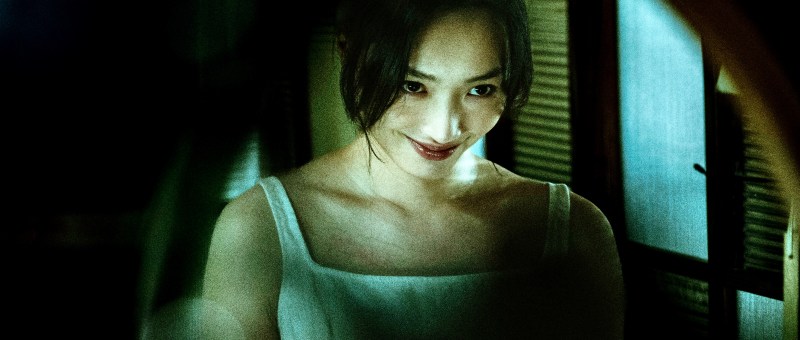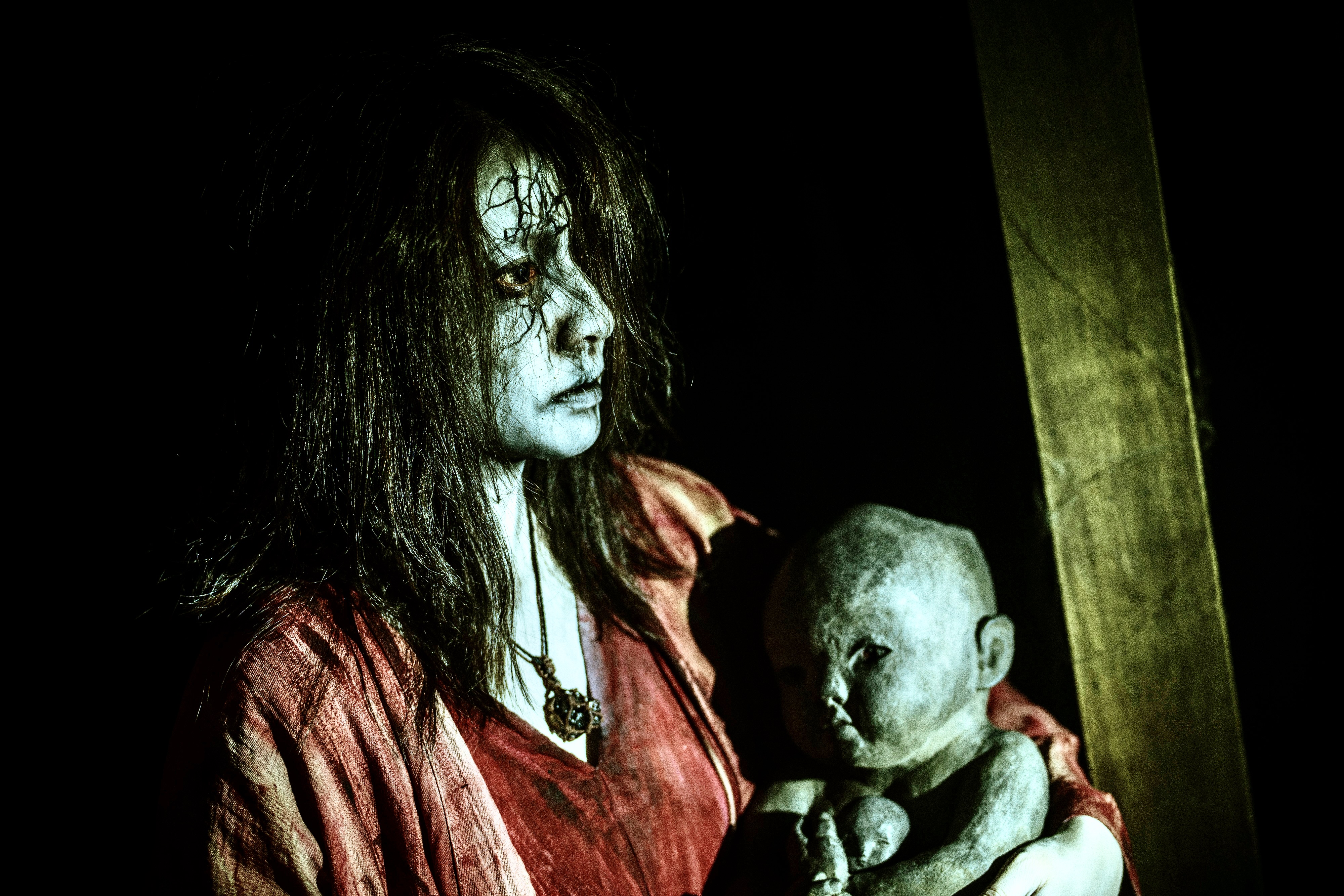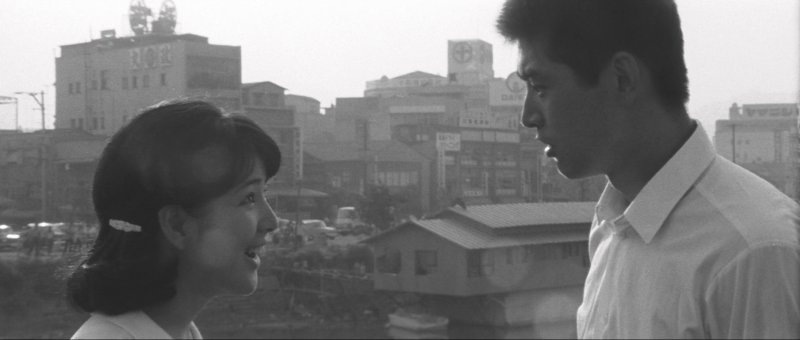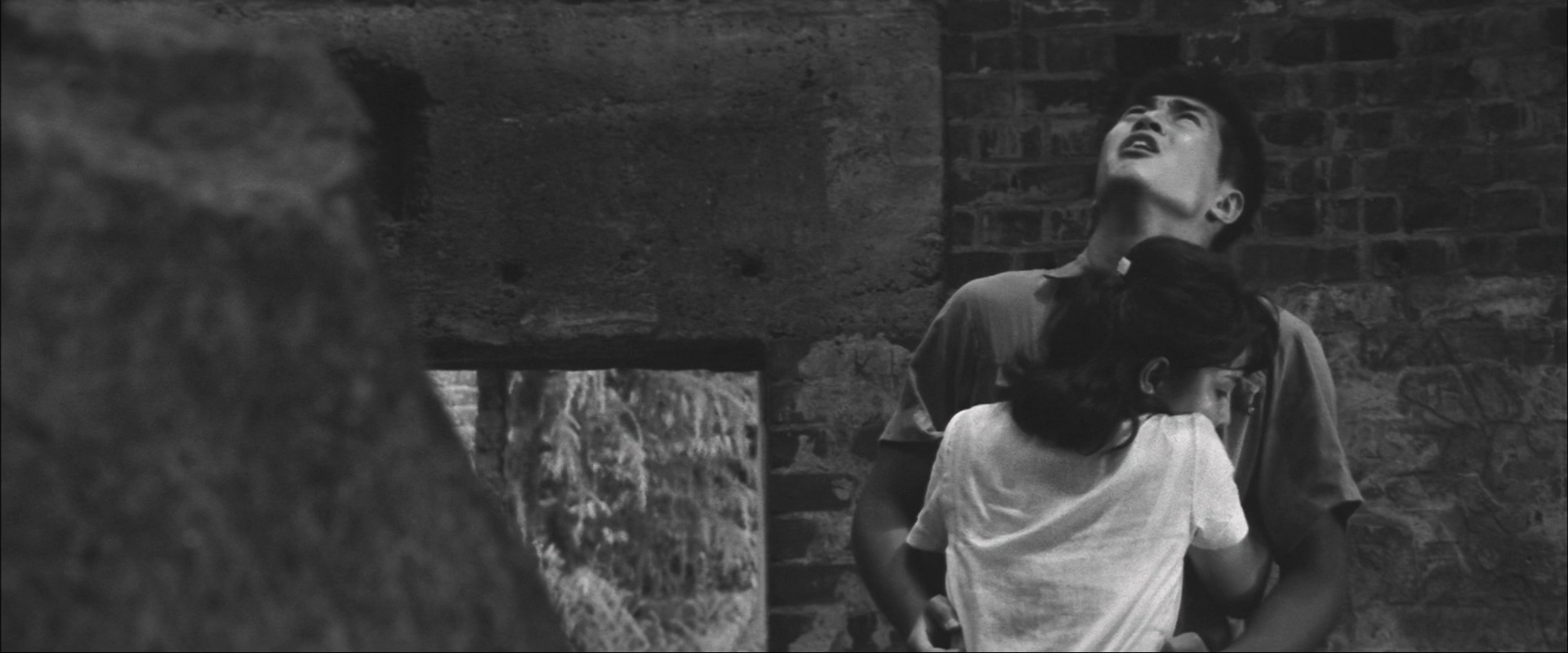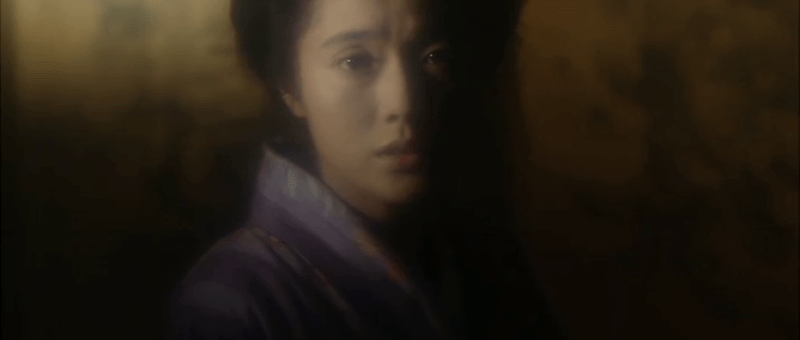
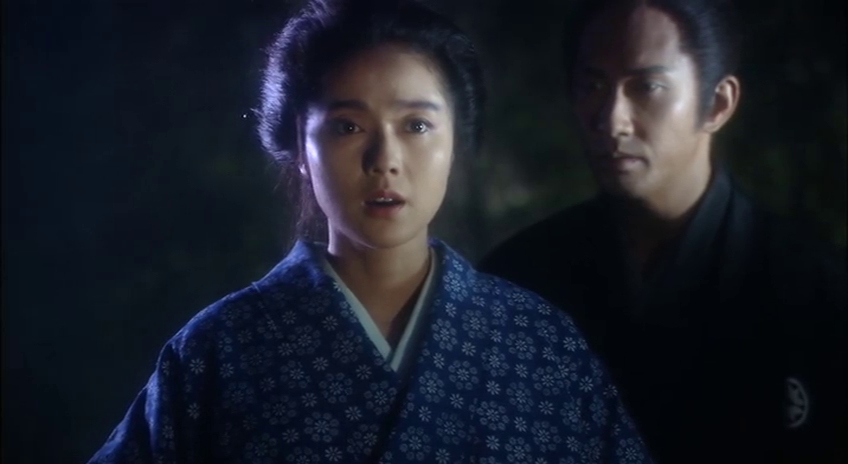
Both You and I (俺もお前も, Mikio Naruse, 1946)

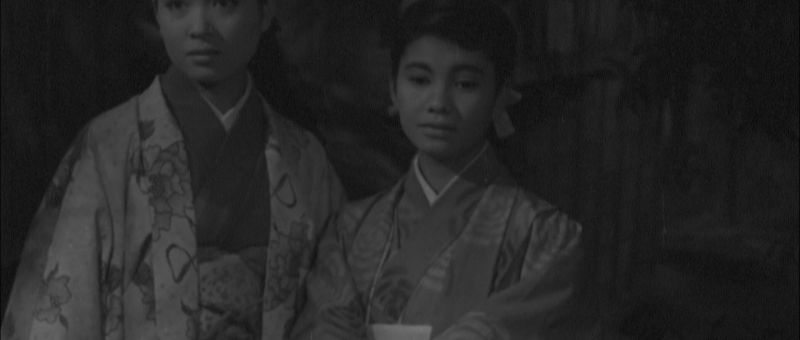
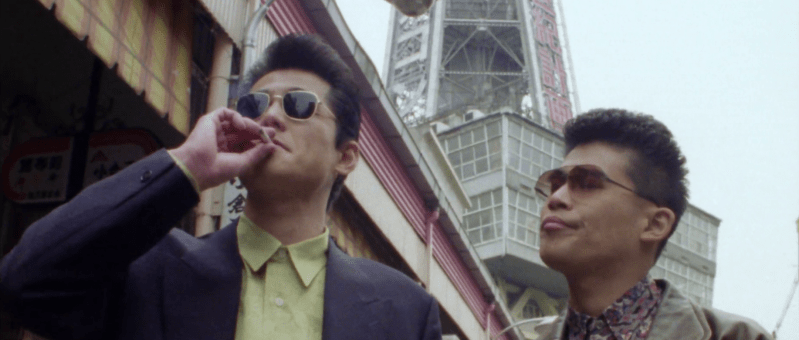
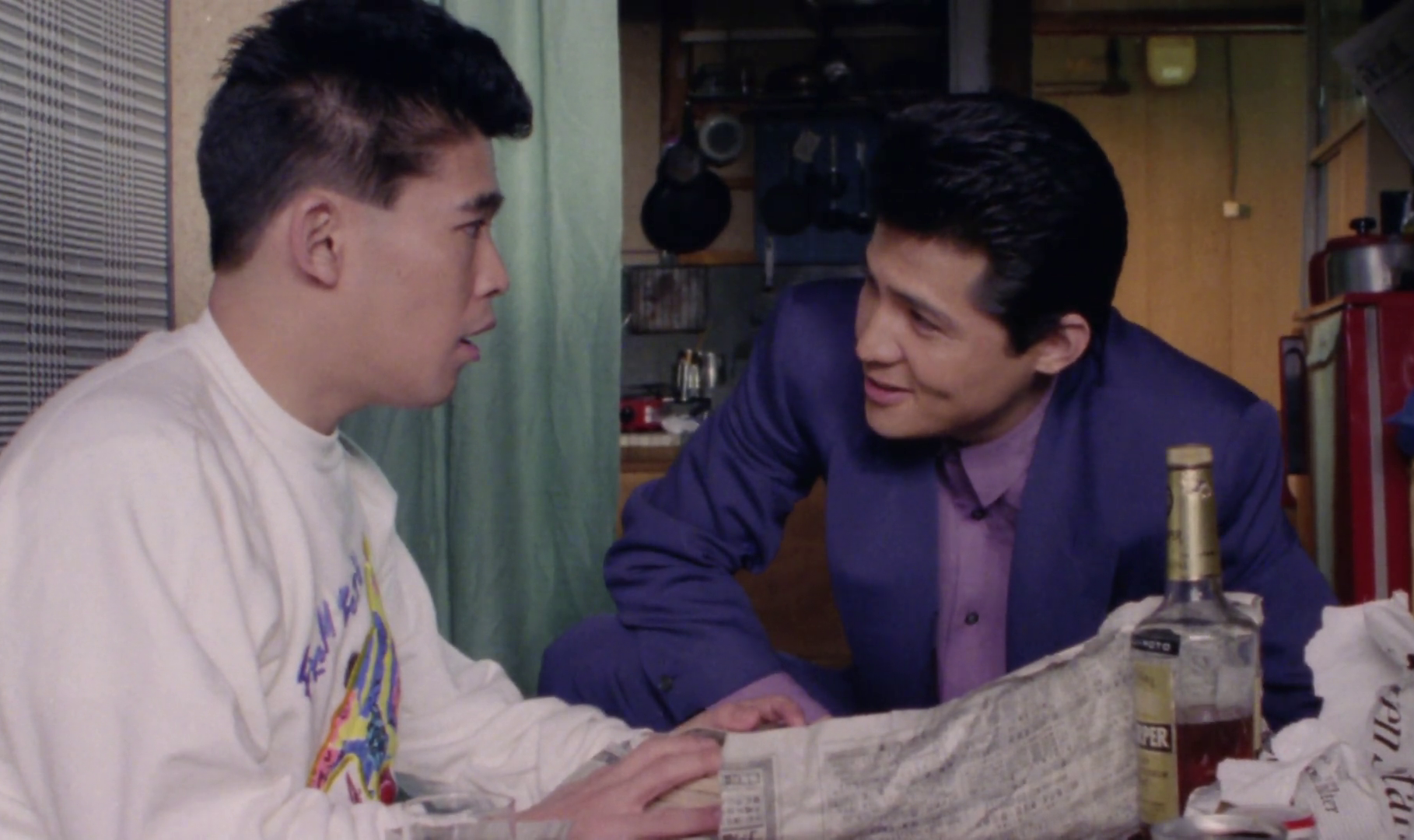
Two dippy salarymen finally rise up against a feudalistic corporate culture in a rare comedy from Mikio Naruse, Both You and I (俺もお前も, Ore mo Omae mo). Essentially a vehicle for real life manzai double act Entatsu Yokoyama and Achako Hanabishi, it’s also an Occupation-era social message movie intended to discourage workers from extending too much deference to their employers, though its positioning of the left-wing student movement as the future countering the militarist past is perhaps surprisingly radical.

In other ways, however, it harks back to the salaryman movies of the 1930s such as Naruse’s own Flunky, Work Hard and Ozu’s I was Born, But… in which the male office worker has been essentially emasculated and forced to debase himself in order to please his boss. As the film opens, Ooki (Achako Hanabishi) and Aono (Entatsu Yokoyama) are guests at their boss’ dinner party at a geisha house where they’ve been ironically invited as entertainment. The pair of them take the place of the geisha doing a silly dance to entertain the boss who quips that they’re cheap considering how much it would cost to hire a pair of comedians. It’s worth saying that Ooki and Aono are not particularly doing this in a calculated way but actively appreciate being appreciated by the boss and see it as their duty to keep him happy. At times, others suggest that it’s their attempt to ingratiate themselves with him, though they seem quite surprised by the suggestion in part because they still believe in an old-fashioned idea of the employer-employee relationship in which the company is supposed to look after them, so they assume they’ll make career progress naturally by being affable team players and aren’t really worried about losing their jobs despite all this talk of restructuring.

Their boss, however, thinks the pair of them are idiots and takes advantage of their loyalty towards him by getting them to dig his garden and complete other inappropriate personal tasks. He gives them a pair of tickets for an onsen resort as a kind of reward, but once they get there, they realise he’s done it to get them to bring back his “luggage” which is actually black-market supplies for his daughter’s birthday party. The boss’ superiority over them is signalled by his large Western-style house, while Ooki and Aono both live in humbler, traditionally Japanese homes. Aono is a widower with four children though he can’t remember how old they are the oldest two daughters are of marriageable age. The boss even requests the eldest, Hatsuko’s presence at the party, but it quickly transpires that he wasn’t inviting her but asking her to do unpaid serving work signalling the class disparity between the middle-ranking salarymen and the boss.

But it’s at the party that things start to change as Hatsuko talks her father out of doing another silly dance as part of the entertainment, in part because of her embarrassment but mostly because her sister Yasuko’s (Itoko Kono) boyfriend is a guest and she’s worried it’ll put him off marrying her. This angers the boss, who insultingly suggests that Aono and Ooki aren’t even fully human and only become a whole person when together so one alone is as useless as an orphaned sandal. Meanwhile, Ooki’s son, whom he’s very proud to say is in university, is rehearsing a communist play that’s about a strike at factory. Ooki doesn’t really understand it, but is worried about the neighbours overhearing and the police getting involved. He still has a pre-war mindset and hasn’t realised that things like freedom of expression now exist. His son tells him that it’s only right to speak up. If you can’t say anything because you’re afraid of getting fired, then you’ll just end up getting exploited. But Ooki and his wife insist they feel too indebted to the boss to be able to talk about him like that. He thinks his son will change his mind when he enters the world of work. Sadao replies that he understands why his father had to do it, but insists that the world is unjust and has been created by the capitalists for their own benefit.

Pushed too far, Ooki and Aono do eventually decide to confront the boss even if they immediately back track when he arrives at the office by hanging up his hat and dusting his desk. They accuse him of being a wartime profiteer who caroused with militarists and made his money by exploiting their labour while he now abuses the black market. They find themselves supported by the other workers from the other side of the door as they insist they’ll fight the restructuring along with the boss’ underhanded plan to sell the company to a rival. They’ve discovered workers’ solidarity and resolved not to be complicit any more with a feudalistic working culture, though it’s unclear if anything will really come of it. They are nevertheless free from their lives of constant debasement and have reasserted their individual identities while otherwise being an unbreakable pair.


Gezhi Town (得闲谨制, Kong Sheng, 2025)

Fleeing the Japanese, a collection of former munitions factory workers and displaced soldiers take refuge in an abandoned village in Kong Sheng’s wartime action drama Gezhi Town (得闲谨制, dé xián jǐn zhì). Another in a series of films released to mark the 80th anniversary of the Chinese People’s War of Resistance Against Japanese Aggression and the World Anti-Fascist War alongside Dongji Rescue and Dead to Rights, the film is much more overtly propagandistic and an old-fashioned patriotism epic in which the hero’s quest to defend his home against the Japanese is quite obviously intended as a declaration that the modern China too will defend itself from incursion.

Indeed, Dexian (Xiao Zhan) says as much when risking his life to fire the artillery gun at a Japanese tank insisting that his resistance is not just for his own wife and child but for the future generations of the Chinese people. Getting in a few digs at Chiang Kai-Shek and the KMT, the film finds the heroes on the run implicitly denied their homeland in being forced into constant retreat. “I don’t want to die, I just want to go home,” the soldiers are fond of exclaiming, though already traumatised by their experiences, they’re effectively hiding from the war while attempting to create a new homeland in Gezhi Town after deciding to settle there rather than carry on along the road.  

Captain Xiao (Peng Yuchang) might actually be the worst artillery officer in history and has a habit of making exactly the wrong decisions that put all his men in danger while fiercely defending an artillery gun he doesn’t really know how to use and has little intention of doing so anyway. A former munitions worker, Denxian was press-ganged into accompanying them to do maintenance on the guns, but Xiao has only been paying him in IOUs. Like everyone else, he just wants a home and is wary of being made “homeless” again if the Japanese turn up, so has been sharpening many of his tools and his wife’s domestic implements into makeshift weapons, much to her chagrin. Xia Cheng (Zhou Yiran) objects in part because she thinks it’s dangerous for their young son Dengxian who seems to have hearing loss as a direct result of his exposure to warfare when they were on the road.

But the problem is that when the Japanese actually arrive, the villagers are largely clueless. One challenges a Japanese soldier with a bakeshop bayonet but drops it and grins when the soldier lowers his weapon slightly. The soldier then bayonets him. Others run directly into the Japanese soldiers’s blades, while Xiao’s men randomly shoot all their bullets in one go then realise that they have no idea what to do now they’re essentially unarmed even though there are only three Japanese men in the village at this point. Only Denxian, the plucky civilian, knows what to do though even he originally gives the sensible advice to hide and wait for the Japanese soldiers to go away because they won’t have time to do an intensive search of every house.

Then again, the Japanese are quite stupid too and arrogant rather than cruel as they were in Dead to Rights even if constant references are made to Nanjing. Despite the grittiness of its storyline, the film is essentially a comedy filled with goofy humour along with Denxian’s winning hero antics as he resolves to do whatever he can to save his wife and son even if it costs his own life. When the Japanese first arrive, a kind of defeatism sweeps across the village that is only eventually broken by Denxian’s realisation that they don’t have to give in to their fate but might as well go out fighting. The film paints him as a kind of folk hero, echoed in the closing song recounting his exploits while the final title card says that he went on to use his skills in the resistance against American imperialism and the assistance of Korea. Xia Cheng fares a little less well. Despite singing a song about the new women, her role is limited to motherhood while Denxian’s love of his family is a metaphor for love of the nation as he desperately tries to reclaim a home in the wake of constant incursions. Nevertheless, the use of silent-film style intertitles and flashback scenes shot in the style of pathé news sequences add a degree of poignancy to this boy’s own adventure story.


Trailer (Simplified Chinese / English subtitles)

Kazuo Umezu’s Horror Theater: Present (楳図かずお恐怖劇場 プレゼント, Yudai Yamaguchi, 2005)

Generally speaking, Santa is quite a benevolent figure. Even the children who are naughty usually just get left out or else awarded a single piece of coal or some other worthy yet dull gift that lets them know how badly they’ve behaved. Not so in the world of Kazuo Umezu, however. You don’t want to get on the wrong side of this Santa, though in other ways it’s less “Santa” that is haunting these youngsters than the disappointed spectres of the children they once were.

As a small child, Yuko (Seiko Iwaido) had a funny dream, though her parents reassured her that Santa would come to save her. However, if she did anything wrong, he’d come after her too. Years later, when Yuko is a student, she writes a Christmas card to a boy she likes and goes to spend the night at a hotel with her friends. But the hotel looks weirdly like her doll’s house from when she was little, and other things from her childhood bedroom seem to turn up here and there. In case that wasn’t weird enough, the reception desk is manned by a creepy Santa, while the atmosphere inside couldn’t really be called “jolly” so much as mildly depressing.

Meanwhile, it almost seems as if Yuko is being bullied by her female friends and has been set up in some way as a figure of fun, though it turns out that Ryosuke (Takamasa Suga) seems to like her too. Only, that’s largely because she seems “pure” in comparison to her friends, which is a bit of a red flag. In any case, though this is a slasher film, it doesn’t really seem to be the case that Yuko is a “bad” girl for getting it on with Ryosuke but for some other transgression. As one of the kids says, they’re all apparently guilty of “desecrating” Christmas, which is what has annoyed Santa to the extent that he’s decided to take back all the gifts he previously gave them. What he actually takes, however, is most of their limbs and internal organs which he feeds to his reindeer.

How they “desecrated” this non-religious event isn’t really clear, but on the other hand it’s true that they don’t make much of an attempt to save each other apart from Ryosuke who is protective of Yuko suggesting that he did actually have feelings for her and wasn’t just looking for a bit of festive nookie. Yuko, by contrast, is revealed to be not quite all she seems and there are other reasons someone, like Santa, might judge her to have been “bad” not least in her rather callous disregard for her parents who were looking forward to seeing her over Christmas. The contrast with her younger self couldn’t be starker, while in her dream, the young Yuko believes herself to have beaten “the evil one” by pulling out her rotten brain which is either a fantastically grim paradox and metaphor about the various ways we disappoint our younger selves, or a kind of course correction in which the young Yuko “became Santa” and removed all the “rotten” parts of her future self’s mind so she won’t end up turning out like that.

The fact that everyone sees a different version of Santa also lends weight to the idea that they’re coming out of their own psyches and Santa is really a manifestation of their own fears and anxieties, though Yuko’s is a fairly conventional take based on what her mother told her Santa looked like. Her mother also attributes young Yuko’s rather gory dream to watching too many splatter films and reflects that perhaps she shouldn’t be letting her do that. “Who on earth would make such films?” she ironically asks in a meta moment while Yuko cheerfully plays “hide and seek” with her new stuffed toys of Santa and Rudolph smiling sweetly while her mother adds that she’s sure Yuko will grow up to be as gentle a woman as she is a child. Meatball Machine director Yudai Yamaguchi, however, indulges in some surreal Christmas gore as Santa goes on his killing spree utilising festive items to hack off the kids’ limbs before stuffing them in his sack and retreating to his decidedly unjolly grotto with his psychotic reindeer. The Christmas spirit is it seems alive and well.


Wedding Day (嫁ぐ日まで, Yasujiro Shimazu, 1940)

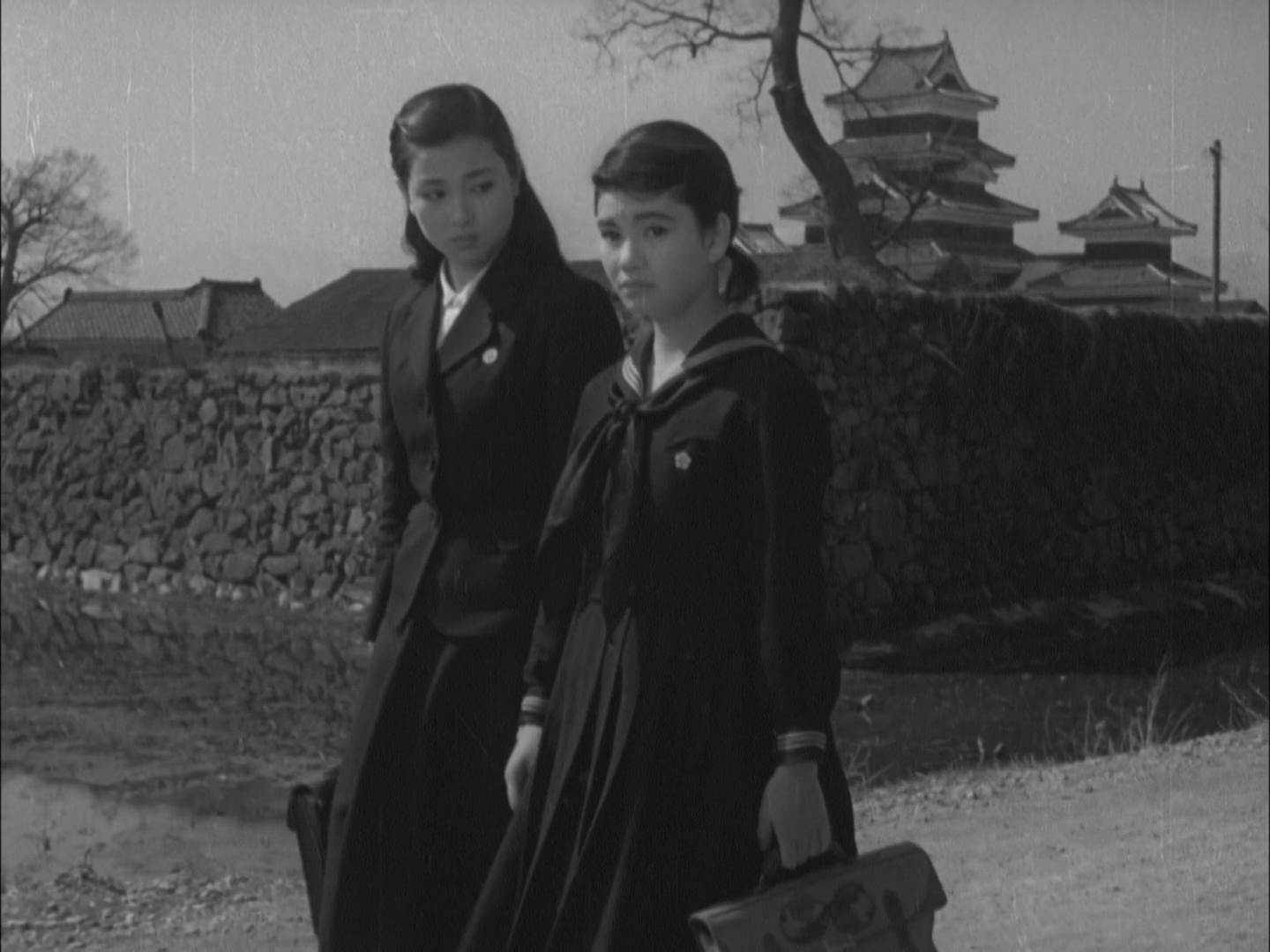
There are two weddings that occur during Yasujiro Shimazu’s Wedding Day (嫁ぐ日まで, Totsugu Hi Made), though we only really see one of them. The earlier part of the film seems to be leading up to the arrival of the widowed father’s second wife as the two daughters find themselves torn in their attachment to their late mother, but as we later discover, this first marriage is only intended to facilitate the second in “freeing” 20-year-old Yoshiko (Setsuko Hara) so that she too may marry.

Then again, perhaps “freeing” is the wrong word, seeing as Yoshiko is given very little choice in anything at all. It’s clear in the opening scenes that Yoshiko has taken over as the lady of the house, looking after the domestic space and raising her younger sister Asako (Yoko Yaguchi) who is still in school. But her mother’s absence is still keenly felt in Yoshiko’s quickening steps to return home after shopping. She’s left the front porch unlocked in anticipation of Asako’s arrival home from school and is anxious that she’ll be put out if she can’t get into the main house, though they could obviously have just given her a key. True to form, Asako has arrived early and come out looking for Yoshiko rather than having to sit and wait. The implication is that there is a domestic need that’s not being met because the house is understaffed and Yoshiko is taking on too much.

This is doubtless why the father, Mr Ubukata (Ko Mihashi), is being pressured into an arranged second marriage, though he doesn’t really seem all that keen and both he and the go-betweens are clear that it’s going to be a “marriage of convenience”. Tsuneko (Sadako Sawamura), a school teacher, seems to be a woman who’s resisted getting married so far and has aged out of the arranged marriage market, which is why she’s only being considered as a second wife to a widower with children. Nevertheless, she’s being taken on mostly to shoulder the domestic burden so that Yoshiko would be free to get married without worrying about leaving her father and sister alone with no one to look after them.

In fact, all of Yoshiko’s actions are dictated by filial piety and duty to the family, which is presumably how the film gets around an increasing desire for more patriotic content in the early 1940s. Asako’s attachment to her late mother is positioned as a barrier to the functioning of this system of social organisation in which feeling is almost secondary. Even if Mr Ubukata insists that it’s important not to forget human feelings and affection while being honest that he wants a wife to do his domestic chores, the point is that the nation is a collection of familial units led by a patriarchal figure to which all must be obedient. Once Yoshiko gets married, she writes to Asako and tells her that she should be nice to their step-mother because she’ll be the one looking after their father in the end once Asako too has married and that’s what will make their father happiest.

As such, Yoshiko’s own wedding arrives almost without warning. She does not marry the young man who’s been interested in her for the entirety of the film, but someone her father chooses, evidently a diplomat, with the help of the same go-betweens who can be seen in the back of the wedding car. The film, in part, seems to be a promotional tool for the song Totsugu Hi Made by Hideko Hirai which plays in a record towards the end where Asako has taken refuge after being scolded by her father by refusing to let go of her late mother’s memory. The lyrics express the mixed feelings of a bride who is giving all her girlish things to a younger sister as she transitions from daughter wife and is breaking from her original family in order to create a new one. Though the film views this as the proper order of things, it is sympathetic to Asako who is being left behind having lost first her mother and then her sister who had become a kind of mother to her.

Everyone has their role to play, and Asako’s is still that of a child as symbolised by her long pigtails. For her part, Tsuneko also does her best to fit into the household and is considerate of both daughters whom she treats kindly and with great sensitivity. Though Yoshiko and Mr Ubukata are keen to erase the memory of the late mother from the house in deference to Tsuneko, when she discovers the photograph Asako had misplaced she gives it back to her and tells her to hang on to it. She also does some of the less pleasant domestic tasks such as scrubbing the floors even if Mr Ubukata tells her to have one of the girls do it instead. But she’s also a part of this system and is fulfilling her role by doing her best to facilitate Yoshiko’s marriage. As she says, a bride should have delicate fingers. A mother, by contrast, those roughed by long years of loving domestic service. 

Without her presence, Yoshiko was in danger of ageing before her time. We can see subtle references to the straitened economic circumstances of the wartime era in the talk of the rising costs of vegetables, their late mother’s lessons in thriftiness, and perhaps how the family’s own circumstances have changed as their aunt enquires about their lack of a maid with Yoshiko avowing that they don’t really need one because she can manage on her own. A radio broadcast airs a recruitment ad for welders offering good salaries, hinting perhaps that more hands are needed for the war effort. But in other ways, life continues. Asako’s friends talk about seeing the 1938 French film Prison Without Bars which perhaps reflects Asako’s rebelliousness or the constraining nature of her of her home and life under entrenched patriarchy. Then again, the film very clearly thinks that’s as it should be in encouraging young women to believe that their duty lies in marriage and in obeying husbands and fathers with barely a recognition of their own hopes or desires.


The 36 Deadly Styles (迷拳三十六招, Joseph Kuo, 1979)

First you and your uncle are forced to flee for your life after getting attacked in a forest, then your uncle dies, you wake up in a monastery where you’re not a monk but the head monk keeps making you do all the chores anyway, and you still have no real idea of what is going on. That’s what happens to poor Wah-jee (Nick Cheung Lik) in Joseph Kuo’s wilfully confusing kung fu drama The 36 Deadly Styles (迷拳三十六招) which leaves us as much in the dark as the hero as he finds himself inexplicably pursued by a man with a red nose and his brothers who are each for some unexplained reason wearing ridiculous wigs. 

As much as we can gather, Wah-jee is on the run because the brother of a man his late father apparently killed by accident after messing up a kung fu move seeks vengeance against his entire family, leaving his uncles scattered and apparently unknown to him. As a young man, however, he is less than impressed with life in the monastery and often displays a comically cocky attitude, though if his torment of two of the lesser monks is intended to be comedic, it often comes off as cruel and bullying rather than just silly banter. Meanwhile, he remains clueless as to how to complete basic tasks familiar to the monks and even manages to get himself into a fight when sent to buy soy milk after forgetting he’d need to pay for it..

While all of this is going on, Kuo switches back and forth between a secondary plot strand concerning another man searching for the book of the 36 Deadly Styles before tracking down the man who’s supposed to have it only to be told he burnt the book ages ago without even reading it because it caused too much trouble in the martial arts world. It’s unclear how or if these two plot strands are intended to be connected, but they do perhaps hint at the confusing nature of personal vendettas and ironically destructive quests for full mastery over a particular style. Tsui-jee’s father (Fan Mei-Sheng) effectively splits his knowledge between Wah-jee and his daughter as a complementary pair of offence/defence partners. 

Meanwhile, Huang (Yeung Chak-Lam) and Tsui-jee’s father are also afflicted by pangs to the heart as a result of their previous battles, which can only be eased with strange medicine and herbal wine. Huang is a Buddhist monk but is seen early on skinning a live snake in order to make such a concoction. These are presumably symbolic of a bodily corruption caused by violence and the slow poisoning of the unresolved past. Wah-jee, a child at the time of his father’s transgression, is also forced to inherit this chaos of which he has little understanding and no real stake save vengeance for his familial disruption and a vindication for his father and brothers. If there is any kind of moral it seems to be in the ridiculous futility of vengeance as dictated by the codes of the martial arts world which demands that honour be satisfied even when it has lost all objective meaning. 

In any case, the narrative is largely unimportant merely connecting (or not) the various action scenes each well choreographed and expertly performed. Wah-jee undergoes a series of training sequences both at the monastery and after uniting with his second uncle who has some idiosyncratic teaching practices of his own that require Wah-jee to humble himself in order to learn. Then again, there are enough strange details to leave us wondering what is exactly is really going on such as Tsu-men suddenly turning up dressed as a woman looking for someone other than Wah-jee, eventually used for another bit of awkward comic relief as he struggles to write a letter and has to use drawings to make his point because he can’t remember the right characters. None of this makes any sense, but perhaps it never does when you live for the fight alone. 

Murderer Report (살인자 리포트, Cho Young-jun, 2025)

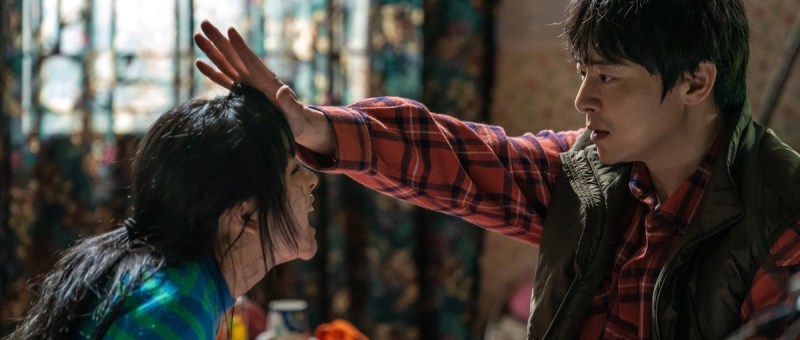
“Call it a psychodrama,” the psychiatrist/serial killer at the centre of Cho Young-jun’s psychological thriller Murderer Report (살인자 리포트, Salinja Report) suggests in a meta moment, and the film is, in some ways, a battle of wits between down on her luck journalist Sun-ju (Cho Yeo-Jeong) and a man who claims to have killed 11 people. There is, of course, more going on than it first seems, but also a push and pull between interviewer and interviewee in which the tables are always turning.

One might debate the wisdom of entering a hotel room with a man who says he’s a serial killer (Jung Sung-Il), but Sun-ju insists she’s agreeing to meet him not because she could really use an exclusive, but because he told her she could save his next victim by agreeing to interview him properly. She has no way of knowing whether he’s telling the truth, but leans towards assuming he’s a crank seeing as the victims he named didn’t have any obvious connections and were all killed in different ways, but still it’s a risky business. Despite assuring him that she hadn’t told anyone about their meeting, Sun-ju is being watched over by her policeman boyfriend Sang-woo (Kim Tae-Han) who is in the room below waiting to strike.

As for why the psychiatrist might want to be interviewed, he describes it as if it’s a kind of therapy session in which he can interrogate himself to ensure his practice is still justified. He believes it is because he only kills bad people that have harmed his patients and sees it as just another part of his treatment plan in alleviating his patients’ suffering as if he were excising a painful tumour from their lives. To that extent, it’s as if he’s providing extrajudicial justice in the face of a justice system in which he believes many have lost faith when criminals get off with light sentences while victims and their families will suffer forever. According to the psychiatrist, revenge is the best way to alleviate their pain. 

Or perhaps, as Sun-ju says, he just likes killing people and is trying to rationalise his actions. After all, even if he doesn’t, the patients probably feel guilty, though the psychiatrist claims to treat that too as part of his holistic service. Little by little he chips away at Sun-ju’s civility, pushing her towards an admission of her hypocrisy that if it were her in this situation and someone caused harm to her child, then she’d probably want them dead too. The psychiatrist obviously knows more about her than she does about him, including her career setbacks and difficult relationship with her teenage daughter whom she fears might rather live with her father instead.

That Sun-ju’s workplace troubles are concerned with a failed attempt to expose the wrongdoings of a major corporation who leaked toxic substances into the water supply leading to an increase in childhood cancers, further deepens the sense of rottenness in contemporary society. The corporation managed to cover it up by bribing prosecutors and politicians, implying that only a man like the psychiatrist is capable of providing true justice despite his claims that he isn’t trying to cure the slickness in his society only alleviate the pain of his patients. The doctor challenges Sun-ju’s ethics too, insisting that she as a duty to social justice and the safety of citizens, so rather than being here interviewing him she should have alerted law enforcement. Of course, Sun-ju has actually done that in having Sung-woo watch her, breaking her promise to keep it confidential, but perhaps trying to have her cake and eat it too. 

Still, the jury’s out on who is really interviewing who as the doctor and Sun-ju each attempt to dominate the narrative. This is indeed a psychodrama, or an extreme form of therapy in which the doctor is trying to force Sun-ju into a self-examination in order to alert her to things going on in her life that she is ironically unaware of. She, meanwhile, begins to get under his skin to the extent that he is mildly shaken from his mission, until hearing that there is another patient waiting to see him so his services may once again be needed. Tense, if eventually outlandish, the film reaches a rather troubling conclusion but is truly at its best in the verbal sparring between the doctor and Sun-ju each of whom has hidden agendas and a singular goal in mind.


Trailer (English subtitles)

Blazing Fists (BLUE FIGHT 蒼き若者たちのブレイキングダウン, Takashi Miike, 2025)

Ryoma (Kaname Yoshizawa) and Ikuto (Danhi Kinoshita) are boys without brakes trying to get some kind of a handle on lives on that are racing away from them. Caught between compromised father figures, an oppressive social structure, and the overriding despair of a life without prospects, they feel themselves to be beaten down and defeated. But then Ikuto isn’t the sort of guy to be cowed by authority and is willing to speak truth to power even if it might not be advantageous for him to do so.

Indeed, Ikuto becomes a kind of saviour as a figure of idealised masculinity that embodies the paternal presence the other boys are lacking for one reason or another. Ryoma’s father isn’t really mentioned, though he appears to have a strained relationship with his mother’s boyfriend and freely admits that until he met Ikuto in juvenile detention he was floundering. Picked up for a series of petty crimes, he blames another boy, Kosuke, for his predicament having been forced to steal to pay an exorbitant sum to bullies he was unable to defend himself from. Ironically enough, Ikuto has actually been framed and for a crime that Ryoma himself committed and perhaps it’s their sense of defiance against injustice that allows him to stand strong in the face of a corrupt authority represented by the prison guard Hakamada (Wataru Ichinose). 

Though the warden at Ryoma’s admission had told him that he should think of his time there not as a punishment but an opportunity while the reformatory was a space of rehabilitation, but Hakamada openly tells the boys that they are inherently bad and their lives will amount to nothing. In the prison yard, they tend to the pigs which is what Hakamada deems them to be. He abuses his authority because he is weak and cannot bear it that Ikuto might be right when he says that the reason he’s working here as a guard is because he too has failed at life. When Hakamada tries to take revenge by jeopardising Ikuto’s parole, it’s his mother, Haruka, who stands up to him by wielding her old righteousness to insist that he too abide by the rules he is supposed to represent thereby presenting another more positive vision of resistance that goes beyond the purely physical and allows a petite middle-aged woman to challenge a physically opposing man in a position of authority.

Part of the reason that Hakamada had said that Ikuto was doomed was because his father was prison and Ikuto too had rejected him for that reason. He resented his father because of the way the stigma of crime was visited on him, that he became an undesirable child tainted by his father’s transgression. At this time, he presumably had a solid faith in the justice system and believed his father to be guilty but given his own experience of false imprisonment has now come round to the idea that his father could be telling the truth and is innocent after all. Their struggles become directly linked when Ikuto is scheduled to square off against the prosecutor’s son, but in a more spiritual sense they are both battling against an oppressive society.

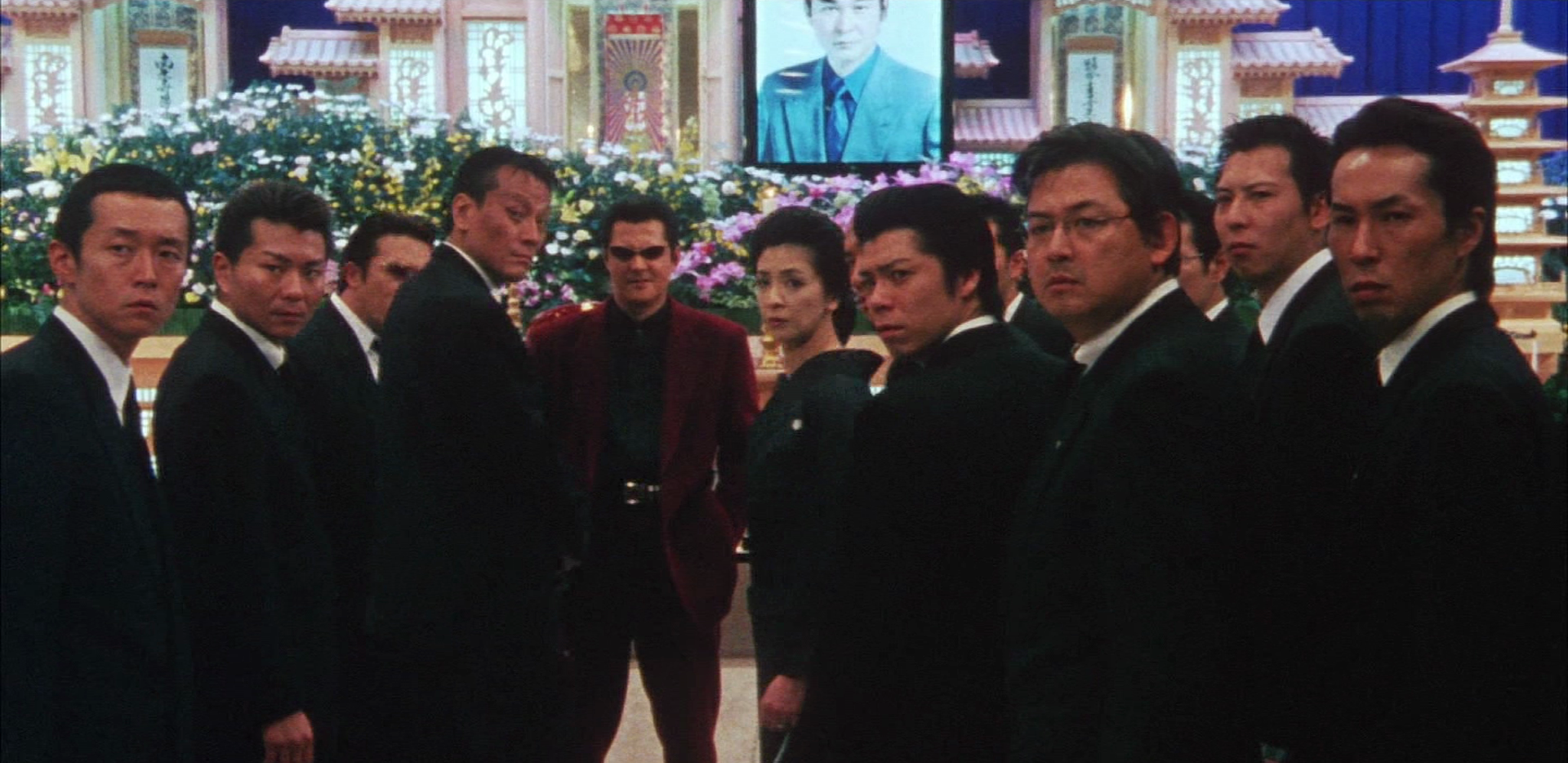
This Ikuto slowly comes to see on realising that he and primary antagonist Jun are basically the same as Jun is also battling the spectre of his father, a yakuza. Rejected by those around him because of the stigma of being a yakuza’s son, Jun (whose name means “pure”), has turned inward in bitterness and become a violent thug attempting to order his life through physical dominance. Accepting that he too was careering towards a cliff edge, Ikuto reflects that Jun is still hanging on if barely by the skin of his teeth which is to say he can wants to be saved in the way that Ikuto has been. But it wasn’t the reform system or the prison guards that helped him see a way forward but an inspirational lecture from real life MMA star Mikuru Asakura on whose life the film is loosely based. Asakura tells the boys that they have a right to dream and that their goals are achievable if only they can put their minds to them. That they hear this from a big brother figure rather than an older man in a paternal position makes it clear that these boy must save themselves through mutual solidarity in place of the positive paternal presence that is missing in most of their lives.

The film is filled with figures of those who have turned their lives around from Asakura himself to the former yakuza who runs the dry bar where the kids hang out. The coach at their gym also provides a supportive presence that makes the ring a safe place. But the ring is of course life and the point is to keep fighting. Winning and losing aren’t important, all that matters is getting back up when someone knocks you down and staying in the fight. The young men are not adversaries but comrades supporting each other as they battle a world with few rewards and endless temptations. In Ikuto, Ryoma finds the strength to stop blaming others for his failures while trusting more in himself and learning to value this new community that he’s discovering. Harking back to the Crows Zero series and a wider tradition of high school delinquent movies, Takashi Miike makes a series of loving jabs at the genre but at the same time transforms it into something a little less angsty as these blazing fists are turned not on each other but against the world that refuses to give these young men a chance as they band together to demand the right to their dreams.


Trailer (English subtitles)

Hong Kong Paradise (香港パラダイス, Shusuke Kaneko, 1990)

A tour guide on her maiden voyage finds herself swept into intrigue in Shusuke Kaneko’s madcap caper, Hong Kong Paradise (香港パラダイス). Effectively a Japanese take on mo lei tau nonsense comedy, it’s also a commentary on Japan at the tail end of the Bubble era as the heroine dreams of an exciting world of travel only to find herself shepherding a collection of mostly elderly retirees whose most pressing concern is finding the duty free shop.

Mamiko (Yuki Saito) wanted to go Paris, but according to her boss she’s not really the type, so he’s sending her to Hong Kong instead. Everyone keeps remarking on the fact that she looks just like a fugitive princess, Yoko Kitashirakawa, who eloped with the man she loved to escape from an arranged marriage with a member of the imperial family. Mamiko has also, apparently, recently broken up with a boyfriend which might explain her desire for travel, as the film flirts with the idea she might really be Yoko enjoying a kind of Roman Holiday and not wanting to return to her constrained life as an aristocrat. But on the plane over, she ends up running into Ando (Tsuyoshi Ihara), a man who’s on the run after committing a heist in which he stole a pair of golden chess pieces as part of an insurance scam.

The golden king and the queen who end up getting separated are a representation of frustrated romance as various parties try to get them back together for different reasons. Mamiko evidently took a liking to Ando, but sadly he is soon killed, leaving her to be rescued by Oishi (Kaoru Kobayashi), a man of dubious motivations. Having lost her memory after being press-ganged into being the subject at a hypnotism show, Mamiko must once and for all re-establish her identity by finding her way through the conspiracy while slowly falling for Oishi despite his irritating qualities. In order to find the treasure, Oishi lies to her, telling Mamiko that she’s Yoko while she’s also chased by a man claiming to be a police officer and Hong’s goons who are convinced that she knows where the chess pieces are.

For the criminals, and perhaps for us too, the missing king and queen are a kind of MacGuffin, but they link back to another tragic love story. Believing that Mamiko is Yoko, Mrs Yang (Keiko Awaji) sympathises with her predicament acknowledging that love across the class divide is never easy. The love of her life was an English prince called Charles, incongruously played by an American in the opening and closing voice over, whom she met thanks to her father’s work as a diplomat. Times being what they were (and perhaps are), she knew they could never marry. Oishi tries to trick Mamiko by playing on her sympathy, claiming that the chess pieces were a gift for Mrs Yang from the man she loved in an effort to get Mamiko to help him find them without realising that he has actually stumbled on the truth.

Hong Kong then becomes a place of romance not unlike the Paris of Mamiko’s imagination in being the paradise of a tragic love story even if in reality the chess pieces were “stolen” as part of an insurance fraud scam which is about as unromantic as it’s possible to get. Nevertheless, princess Yoko apparently got a happy ending, marrying an ordinary person even if there are many people who think she’s crazy for turning down the opportunity to become a member of the imperial household. Mamiko’s occupation as tour guide, or tour conductor as she keeps reminding the participants, is largely unromantic too, mostly consisting of shuttling disinterested guests from one tourist spot to another which is to say it’s not so much broadening her horizons as narrowing them.

But in any case through her zany adventure she does perhaps get to experience the romance of life in being pulled into unlikely intrigue and fighting to reunite the separated king and queen on a symbolic and spiritual level beyond the simply physical. “It doesn’t matter who I am,” she eventually reflects on embracing her liberated anonymity and enjoying the thrill of the chase, while paradoxically rediscovering her identity in the process. Critics at the time objected to the nonsensical plot and frequent tonal shifts, but they are, of course, a key element of mo lei tau and what gives the film its zany, madcap charm as the heroine careers from one ridiculous situation to another all while falling in love.


List (리스트, Hong Sang-soo, 2011)

Hong Sang-soo finds himself in a positive, if characteristically melancholy, mood for his hard to see 2011 short, List (리스트). Short as a companion piece to In Another Country, the film opens with the exact same scene as a mother and daughter bicker about the sorry circumstances which have forced them to retreat to the seaside where they’ll be living in peaceful seclusion. This time however, young(ish) Mihye (Jung Yu-mi) sits down to write not a screenplay but a list, a kind of itinerary in order to make the most of this deliberately boring “vacation” taken all alone with her nice but “concerned” mother (Youn Yuh-jung).

Mihye’s List runs right through the day and includes normal holiday activities like having a meal in a famous restaurant, checking out the mudflats, and buying souvenirs, as well as reminders to giver her mum a massage and let her know she’s loved, and a few idiosyncratic suggestions too. Perhaps what she’s really the most excited about is trying out her new tooth brushing technique! At night she plans to dream of “prince charming” which is also something her mother later brings up in pushing a little on why the near 30-year-old Mihye has no boyfriend and is not yet married. Mihye’s mother worries that she has no desires before dialling back and suggesting that Mihye has desires but not the courage to act on them. 

This will, perhaps, prove to be true when Mihye and her mother meet a nice man just sitting on the beach as if waiting for them. Unsurprisingly, the man turns out to be a film director but he’s a far cry from Hong’s general leads. Sanjun (Yu Jun-sang) is a nice, wounded young man who might be slightly awkward but in an affable way. Though Mihye’s mother is taken with him, Mihye isn’t so sure. He seems kind of like a prince charming, but then again he’s just a random man they met on a beach who turns out to be famous and successful. Claiming that her daughter is “shy”, Mihye’s mother agrees to Sanjun’s invitation to a date on Mihye’s behalf (which was bizarrely directed to her anyway) and then offers to come along despite Mihye’s double protests. 

Tellingly, Hong departs from his usual aesthetic with key scenes shot on obvious sets and a strange absence of energy even in those taking place on location. Mihye muses and her fantasies appear to come to life. She completes her list for the day almost by accident while in the company of the prince charming she requested. Still, she isn’t sure. She asks him why he likes her but his answers are vague and perhaps worrying. He likes her “purity” and thinks she’s cute. She’s “special” in a way no one can see. All things Mihye’s wants to hear but doesn’t quite believe. Later she tells Sanjun she’s frightened of what her life will become, that she’s trapped by her mother and feels, in some way, damaged by her though she fails to elaborate further. In true fairytale style the romance escalates improbably, culminating in lifelong declarations of love and a promise of mutual salvation. 

Mihye wonders why people can’t see the good right in front of them. Sanjun replies it’s because they’re too focused on indulging themselves in the now. Yet what Mihye learns is perhaps that occasional fantasies are OK, that vague lists are useful because they leave you open to possibilities while lessening the fear of disappointment, and that even if your mother thinks your plans are “too ambitious”, it doesn’t really matter, you can just see where they go. Mihye might not have cured any of those anxieties. Perhaps she still feels trapped, resentful, even hopeless, but the sun rises anew and there’s another day to explore. It’s as cheerful an ending as Hong can muster, hope mixed with melancholy resignation and a stoic determination to put a brave face on existential despair.


Phantom of the Toilet (トイレの花子さん, Joji Matsuoka, 1995)

A transfer student quickly becomes the magnet for the anxieties of her classmates amid an ongoing spate of serial murders of primary school children in Joji Matsuoka’s kids adventure movie Phantom in the Toilet (トイレの花子さん, Toiret no Hanako-san). Loosely inspired by the classic urban legend about the ghost of a little girl who haunts school toilets, the film is less a horror movie than a tale of bullying, mass hysteria, and the ways in which childish emotions can spiral out of control.

Natsumi’s (Ai Maeda) no stranger to that herself. A tomboy, she’s largely excluded from the group of popular girls at her school and exists in a rather liminal space. Her older brother Takuya (Takayuki Inoue) is in the year above, but predictably doesn’t like being bothered by his little sister at school and is for some reason embarrassed by the fact his widowed father is a milkman. Nevertheless, he’s incredibly earnest and righteous and volunteers for various things at the school like the student council. Natsumi’s problems begin when the popular girls insist on doing a Ouija board to find out the identity of a serial killer who’s already killed two children their age from different schools. Natsumi doesn’t realise that it’s a trick the other girls are playing on her, but the Ouija board says the killer is Hanako, the toilet ghost, and Natsumi is the next victim.

Meanwhile, a new girl joins their school in Takuya’s class and is immediately resented by the popular girls because she’s pretty and clever, so obviously they turn against her. Chief among the complaints against Saeko (Yuka Kono) is that she used the cubicle at the end of the girls’ toilets which supposedly belongs to Hanako, because obviously she doesn’t yet know this bit of school lore. After a series of odd things happen, including the murder of the school’s pet goat, everyone comes to the conclusion that Saeko must be possessed by Hanako and is planning to murder them all. Even Natsumi has her doubts, but eventually decides to defend Saeko while Takuya, who seems to have a crush on her, eventually gives in to peer pressure despite his promises to protect her and vision of himself as someone who does the right thing.

To that extent, it isn’t really Hanako that haunts the children so much as the idea of her is misused as a means of social control. A silly rumour soon gives way to mass hysteria as the popular girls bring more of the children over to their side to gang up on Saeko while the teachers are largely absent or oblivious. While in another film the kids might band together to look for the killer of the other children and thereby protect themselves and each other, instead they become ever more paranoid and the outsider figure of Saeko becomes the focus of all their negative emotions from the jealousy of the other girls to the uncertainness of Takuya who doesn’t know what to do with his confusing feelings for Saeko. In a touching moment, he replies via writing on the blackboard rather than speaking when Saeko uses it to communicate with him after losing her voice, but later ends up shouting at her to go away and leave him alone. “Silence means you agree,” one his classmates points out when Takuya attempts to abstain from an otherwise unanimous vote to subject Saeko to a kind of test akin to a ducking stool to prove whether or not she really is Hanako. Only Natsumi remains on her side.

Meanwhile, the real child killer hovers in the background like an abstract threat before finally invading the school like a refugee from a slasher movie. Swinging his scythe around, his crazed moaning may prove too prove frightening for younger audiences while not even Natsumi’s father and their teacher can stop him from murderous wandering. In the end, the “real” Hanako surfaces but as a more benevolent figure who calls the kids back to the school and creates a more positive sense of mob mentality as they all shine their torches on the killer as if confronting him with what he is and what he’s done. The curse itself is lifted as the other kids rally round to save Saeko and finally accept her as one of them. A charming exploration of a 90s childhood from Grandpa playing Nintendo shogi to the looming anxieties of stranger danger, the ultimate message is one of solidarity and friendship as Hanako helps the kids let go of their petty disagreements to confront the real monster and save each other.


Trailer (no subtitles)