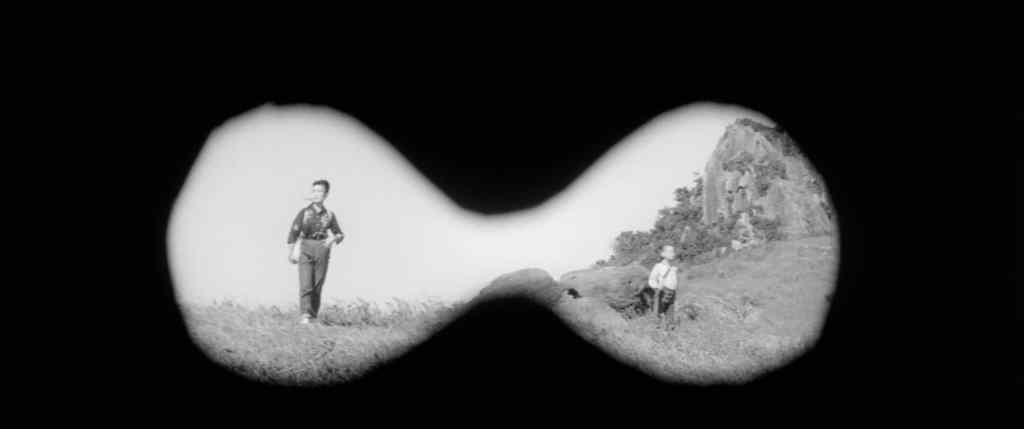
The Perfect Game (完全な遊戯, Toshio Masuda, 1958)

In the mid-1950s, Nikkatsu had courted controversy with a series of films depicting the amoral excesses of the immediate post-war generation. The “Sun Tribe” movies embedded themselves in a world of new bright young things who were largely independently wealthy and thoroughly bored by the ease of their lives. Nikkatsu was forced to halt production on the Sun Tribe films after only three (Toho and Daiei added one each of their own), but they did precipitate a wholesale shift towards youth movies which became the studio’s signature theme. 

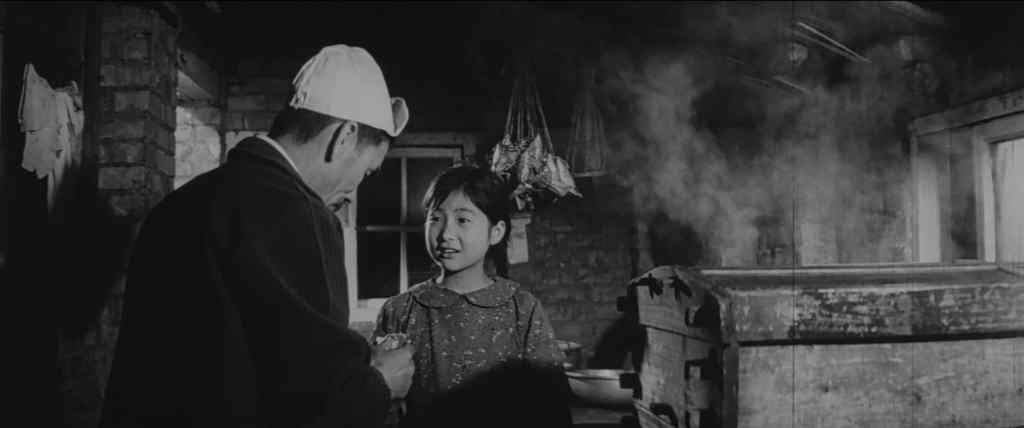
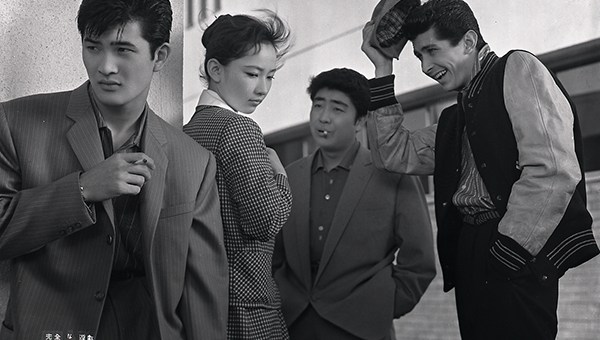
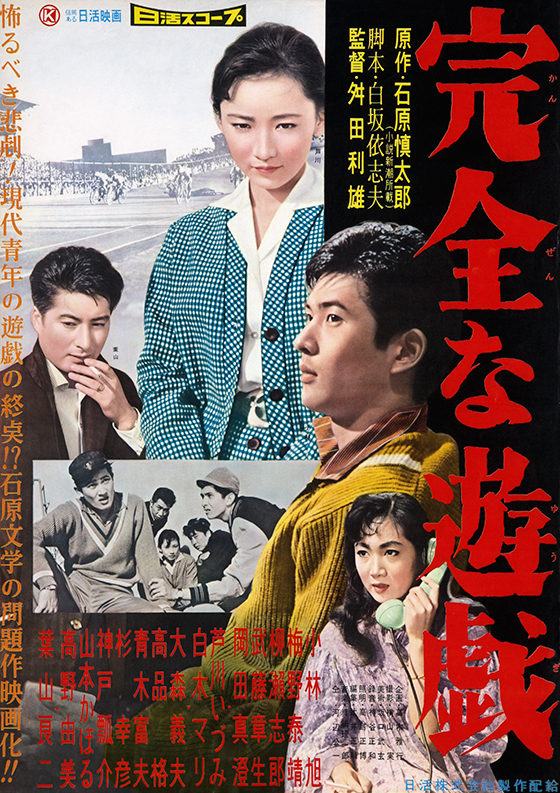
Best remembered for his contributions to Nikkatsu’s action noir, Toshio Masuda’s The Perfect Game (完全な遊戯, Kanzenna Yugi, AKA The Tragedy of Today) arrived two years after the Sun Tribe craze but neatly picked up the baton dropped by Kon Ichikawa’s Punishment Room in its tale of nihilistic college boy amorality. As the film opens, our four heroes are playing mahjong and lamenting their lack of funds. They are all, it goes without saying, middle class boys largely supported by their parents who, as far as we know, are high ranking salarymen. They are not hungry, or worrying about how to pay rent or tuition, they are just bored and want extra money to go out having fun before they they are forced into the corporate straightjacket with the regular salaryman jobs many of them already have in the bag thanks to the tremendous power of nepotism. 

As the the opening text implied, they viewed their money making exploits as a game, proving how clever they think they are in getting one over on the universe, but all too quickly it spirals out of control. Toda (Yasukiyo Umeno), the ring leader, has come up with an ingenious money making scheme. It turns out that there’s an illegal betting office some distance away from the bicycle racing stadium that keeps taking bets until someone rings from the track and tells them who won, which means there’s about a five minute delay between the winner being declared and bets being called. The boys figure that if they can somehow beat the lag they can win big. To make it work, they ask their “friend” Kazu (Masumi Okada), who they seem to regard as a bit dim, to join them as well as recruiting an old codger to call the race before the boards go up. Surprisingly it works out, but unfortunately the yakuza-backed bookmaker, Matsui (Ryoji Hayama), wasn’t banking on such a big win and doesn’t have the funds to pay out in one go. 

Toda in particular is pissed off. The wind taken out of his sails, he’s not sure what to do which is when So (Akira Kobayashi), the pretty boy of the group, suggests an ironic punishment. Matsui had joked that he’d put up his adorable kid sister Kyoko (Izumi Ashikawa) as collateral if he couldn’t pay out, so why don’t the boys take him at his word and kidnap her. Rewinding a little, these snotty college boys are about to become kidnappers, adding a little blackmail on the side. This isn’t a fun game anymore, someone is going to get hurt whatever happens even if they can’t know the extent to which their plan to earn a few bucks to blow on jazz bars and pool rooms is going to incur collateral damage. 

Unlike the boys, Kyoko is a working class girl. She wants to keep her head down and work hard, not quite approving of her brother’s involvement with the yakuza and wishing he’d find an honest job but also acknowledging that he had few options and it’s his job at the bookies that’s been keeping them all this time. Their father died in the war, and their mother (Yumi Takano) is very ill, bedridden with heart trouble. Kyoko is no innocent, she brushes off So’s attempts to court her by revealing that dozens of creepy guys try the same thing every day, and most of them don’t stop at passing notes. For whatever reason she ends up warming to him, making him take her to a theme park while her mother worries at home, while he also begins to feel conflicted about the plan in falling for her for real. 

So’s mistake is the childish belief that they’re still playing a game and everything will be alright in the end. He foolishly trusts that his friend’s are men of honour and that Matsui will come up with the money and redeem his sister in no time at all. But money’s not easy to come by even if you’re a yakuza, and the boys might not want it anyway if it comes with additional complications. Visiting with Kyoko’s sickly mother, he perhaps begins to see the gap between his comfortable existence and theirs of constant struggle. He’d been so proud to tell Kyoko that he had an interview lined up at a big company because of family connections, but when he arrives there he feels irrelevant. The interview board only ask him questions about his dad, as if he didn’t really exist. Finally they ask him to talk about what he did at uni, what his “passions” are, if he did anything of note in the past few years, perhaps even fall in love? They’ve unwittingly touched a nerve, but So is in any case forced to reflect on the meaninglessness not only of his adolescence, but of his future. This interview has been a farce, but they’re giving him the job anyway because he’s his father’s son. What more is there to say?

The other boys are also worried about their job prospects, concerned that someone might talk and they’ll be forever tarnished by “youthful exuberance”, refusing to take any personal responsibility for the consequences of their “perfect game”. Unlike So they still want to live in that inherently unfair world which exists for upperclass men to do as they please. Toda and So weren’t quite like their friends. They felt conflicted. Toda embarrassed to be borrowing money from his girlfriend but rejecting the others’ belief that you don’t have to pay women back, only to angrily bark at her that there’s “no way a woman can understand” the intensely masculine debate he’s just had with So about responsibility, which he accepted by deflecting in pushing So’s complicity back on him in an attempt to share his guilt. Unlike the Sun Tribe films, youth takes responsibility for itself and its friends, but can find no way to atone for its moral abnegation. 


Original trailer (no subtitles)
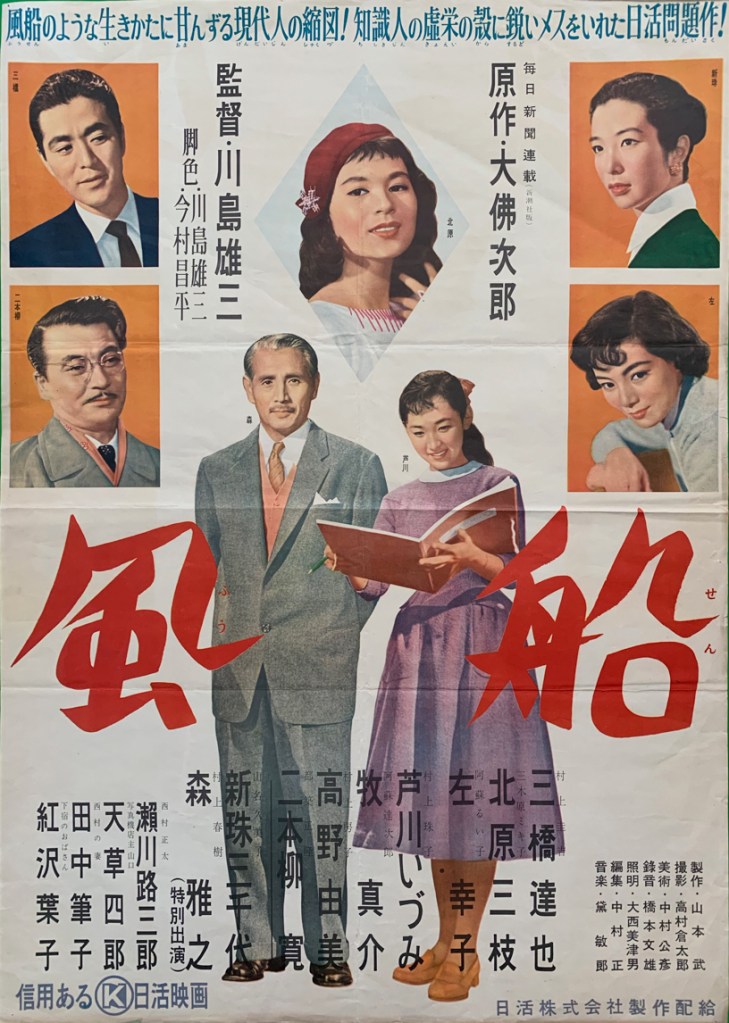
The Balloon (風船, Yuzo Kawashima, 1956)

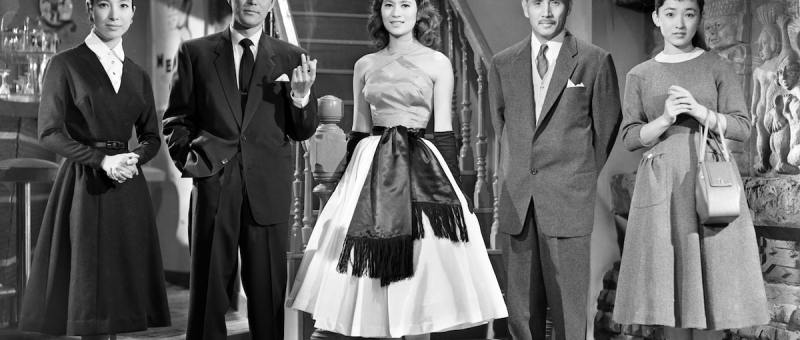
The uncertainties of the post-war world are often conveyed through the familiar “cloud” metaphor, but in characteristic fashion Yuzo Kawashima opts for something earthier in the manmade “Balloon” (風船, Fusen). Less representative of its troubled humanists than the amoral villain Tsuzuki (Hiroshi Nihonyanagi) who likes to know which way the wind is blowing so he can go that way too, these balloons are up in the air because they’re afraid to land fearing the inevitable pop if they pick the wrong spot.

Our hero, former painter Murakami (Masayuki Mori), has become the head of a successful camera firm. His son, Keikichi (Tatsuya Mihashi), works with him, while his 20-year-old daughter Tamako (Izumi Ashikawa) is a reluctant student still living in the family home. Out of step with his times, he’s known as a decent and compassionate boss, offering his staff a significant wage increase in excess of that recommended by the union just because he thinks it’s the right thing to do. Unfortunately, Keikichi is much more like his conservative mother and does not quite share his father’s egalitarian principles. He’s currently engaged in a “relationship” with widowed bar hostess Kumiko (Michiyo Aratama) but treats her extremely badly, throwing money on the side table as he leaves her apartment to make it clear that he views himself as a customer and not as a lover. When Murakami re-encounters a family friend, Tsuzuki, at his father’s funeral it sets off a chain of events that will change his life completely. Now a shady nightclub entrepreneur, Tsuzuki is dead set on making his singer, Mikiko (Mie Kitahara), a star and thinks a good way to help make that happen might be to get her married to someone with money, like, for instance, Keikichi. 

Raised in Shanghai, singing in French, and forever wearing berets, Mikiko may indeed be the face of avaricious post-war youth, apparently having floated along with Tsuzuki halfway across the world in search of a place in the sun. Urged on by her manager, she goes to war against Kumiko who, in contrast to the “bar girl” image, is earnest and naive. Working as a hostess places her on the fringes of the sex trade, but does not necessarily imply that she makes a living by sleeping with her customers, and she certainly seems less than grateful to receive money from Keikichi whom she believes to be her boyfriend. Mikiko willingly weaponises her sex appeal and seemingly endures no consequences for doing so, while Kumiko is roundly rejected as a “fallen woman” and deemed an unsuitable match by Keikichi’s snooty mother. 

Tamako, by contrast, actively reaches out to Kumiko and attempts to make her a member of the family, never for a second considering that she might not be welcome because she can see that Kumiko is a “nice” person. Much more like her kindly father, she finds herself uncomfortable at home and mostly holes up in the attic painting. After suffering childhood polio, she’s been left with muscle weakness in her left arm and is treated like a child by her mother and brother who openly tell people that the illness has also made her “simple”. Despite all that, however, she sees only the best in people and desperately wants those around her to be happy. 

The difference in her own family is brought home to her when her father takes her with him on a business trip to the much quieter, more traditional Kyoto where he has reunited with a pair of youngsters whose late parents once rented him a room when he was temporarily displaced by post-war confusion. Like Kumiko, Rui (Sachiko Hidari) is a kind person in difficult circumstances. She too is working in a bar and has done some work as a photo model, even glamour shots to earn money to pay her brother’s university fees. Rui doesn’t want to go on doing that in the future, but doesn’t feel too bad about it either because she only exposed the outside of herself, and really who cares about that. 

Beginning to regret some of his life choices, Murakami wonders if he mightn’t be better to move back into the attic room in Kyoto and pray at the temple everyday like before instead of trying to make money he feels has slowly corrupted his family. Confronted with Keikichi’s near sociopathic self-involvement over his relationships with Kumiko and Mikiko, he comes to the conclusion that all he can do is cut him loose and hope he learns some humility through being forced to stand on his own two feet. Given a talking to by his father Keikichi doubles down with his misogynistic world view, insisting that “all women are whores” and all relationships are essentially transactions while claiming that he, himself, as well as men in general, is the real victim because he’s being forced to carry the can for the way the world works. Murakami isn’t having any of it, calmly asking him if he’d say the same thing to his mother, which he sheepishly admits he couldn’t. 

Mikiko likens Tsuzuki to one off his metaphorical balloons, pointing out that he was an imperialist in Shanghai and now seems to have it in for the bourgeoisie, but for all his cynicism he seems to have a kind of admiration for a woman like Kumiko who carried on loving one man no matter how poorly he treated her. If only he had a woman like that, he might have found a place to land and his life would have been very different, he muses. Murakami, meanwhile, has rejected the modern city, certain that his son is the way he is because his life has been too easy and access to wealth has given him a superiority complex that’s put him out of touch with ordinary people. Disappointed with his own family, he decides to make a new one with the two cheerful youngsters in Kyoto, hoping that he will at least be able to save his daughter from the ravages of a rapidly declining society which seems primed to swallow the sensitive whole.


Currently available to stream on Mubi in the US.

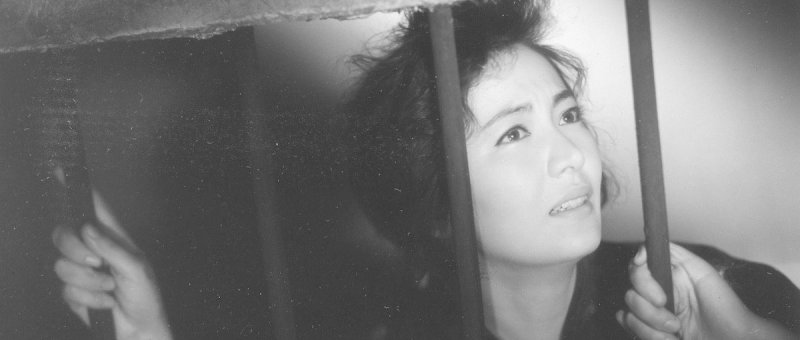
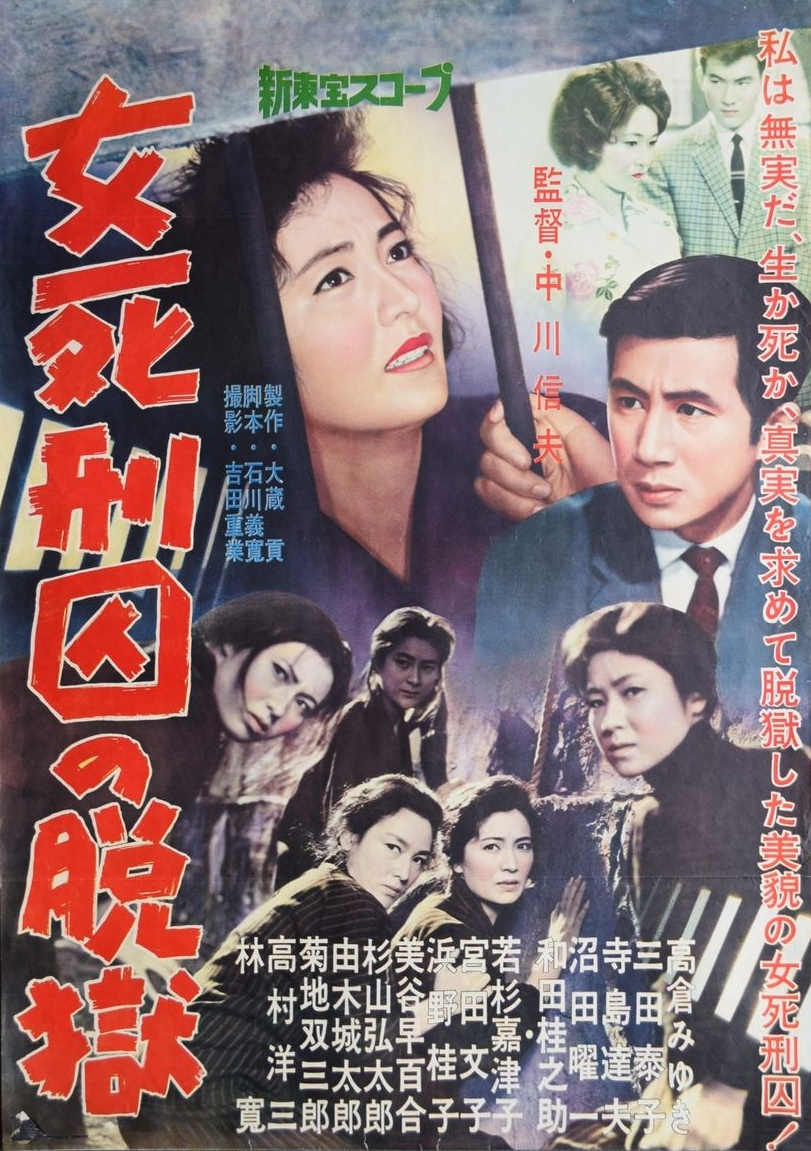
Death Row Woman (女死刑囚の脱獄, Nobuo Nakagawa, 1960)

How far does freedom extend in the complicated post-war society? Best known for his eerie horror films, Nobuo Nakagawa takes a stab at B-movie crime in a tale of wronged femininity as a woman’s attempt to escape her father’s authority ends in a death sentence. Death Row Woman (女死刑囚の脱獄, Onna Shikeishu no Datsugoku) sends its wrongfully convicted heroine on the run, literally, from a cruelly patriarchal society, but there is something quite perverse in its ambivalent conclusion which at once frees and vindicates but also suggests that perhaps daddy knows best after all. 

As the film opens, patriarch Imai (Hiroshi Hayashi) is engaging in a bonding ritual with his prospective son-in-law, Aoki (Keinosuke Wada), teaching him how to hunt. Meanwhile, his daughter, Kyoko (Miyuki Takakura), has wandered off with another man, Soichi (Tatsuo Terashima), with whom she is in love. Soichi is obviously worried about Aoki, but she tells him that the marriage is her father’s idea and she’s no intention of going through with it, not least because she is pregnant with Soichi’s child. The pair embrace, engaging in a clinch in the woods, but are spotted by Kyoko’s step-sister, Minako (Yasuko Mita), who apparently doesn’t like someone else hunting what she’s got her eye on, pointing her shotgun right at the loved up couple before her mother (Fumiko Miyata) arrives and knocks it out of the way sending a shot into the air in the process. 

Soichi is a spineless sort of man, telling Kyoko that he “can’t talk to old people” and refusing to go with her to see her father. She’s confident Imai will have to give in seeing as her pregnancy makes this a fait accompli, but he tells her to get an abortion and if she doesn’t like it she can get out. Imai wanted her to marry Aoki because he picked him out as a son, an heir to leave his company to. As Kyoko points out, he never considered her feelings, only seeing her as a tool to be manipulated for his own ends in securing his business interests. Imai objects to Soichi not only because he resents having his authority undercut, but because Soichi is a “nobody” and he finds the idea of his daughter marrying someone from a different social class distasteful in the extreme. All of that is about to become moot, however, because seconds after Kyoko storms out vowing to marry Soichi even if it means severing ties with her family, Imai drops dead, not of an apparent heart attack as it first seems but of poison! As the last person to see him alive and with the entire household having heard their row, Kyoko is arrested for her father’s murder and sentenced to death. 

Jumping on over a year, Kyoko’s son is seven months old and apparently living in a children’s home rather than being cared for by any of her family while she languishes in prison still proclaiming her innocence. Nakagawa flirts with woman in prison tropes, putting Kyoko in a room of four women including a predatory lesbian, but eventually allows her to find female solidarity with a “habitual criminal” who helps her escape in order that she might prove her innocence and be reunited with her son. Kyoko’s decision to escape is prompted by an awkward visit from Soichi who has neglected to bring the picture of their baby he’d promised her while claiming to be working hard on her case. He tells her that he’s engaged a lawyer who has turned up evidence implicating Aoki who has made several attempts of his own to visit her all of which she has turned down. Unbeknownst to her, he’s even transferred to the town near the prison and is living in a company dorm not too far away. Coming to the conclusion that Aoki is the architect of all her misfortune, she determines to pay him a visit and either get a confession or take her own life. 

Aoki, however, turns out to be a good guy after all. He didn’t kill Imai and has been living near by because he’s sure Kyoko didn’t either and is determined to crack the case. Aoki helps her hide from the authorities and manages to get her on a train to Tokyo daringly defying the police dragnet, while the case’s original investigator begins to smell a rat in staking out the Imai home. Soichi seems to have become awful close with the two Imai ladies, so perhaps he really was the odious social climber old Imai feared him to be. So far, Kyoko’s attempts to take charge of her own future in rejecting her father’s authority have not gone well. She has ended up with a death sentence for daring to challenge the social order by advancing her own agency and has escaped from the literal prison, but is once again locked up for her own safety while Aoki does all the investigating on the outside. Her desire to reassume her role as a mother to a child technically born out of wedlock is what eventually gets her caught, leaving her at the mercy of the magnanimous police who, thankfully, decide that the duty of law enforcement is to act in the best interests of justice, admitting their mistakes rather than covering them up to save face. 

So, Aoki turns out to be good and Soichi bad. Kyoko is vindicated, proving herself innocent of the crime of patricide, but is punished fiercely for her attempt to escape her father’s control. It’s tempting to think that the message is that her father knew best after all and if she’d only done as she was told and married Aoki without making a fuss all of this could have been avoided. Amoral post-war ambition has been unmasked, everyone has been shuffled back into their original class boxes with order seemingly restored. Kyoko has “escaped” her imprisonment, but is she truly “free”? “That’s all in the past now”, Aoki reassures her, “but hang on tight anyway”. 


Tarzan and the Treasure (泰山寶藏, Liang Zhefu, 1965)

Nothing is guaranteed to turn people against each other faster than hidden loot. So it is for the children of two wartime conscripts inheriting a dubious legacy from their departed fathers in the enticingly named Tarzan and the Treasure (泰山寶藏). The world was beginning to open up in 1965, but in cinema at least there was still space for the “mysterious East” even when seen from the relative proximity of Taiwan. 

A Taiwanese businessman travels to Macao in search of the missing half of a map said to lead to treasure hidden in the Malayan mountains by the Japanese at the end of the war. The man’s brother, Zheng, and the father of the man he’s supposed to meet, Fan, served together as conscripts to the Japanese army and agreed to tear the map in two because they were afraid that their descendants may try to do each other out of their shared inheritance. That proves truer than they could ever know seeing as they both died young. The businessman is shot dead by crooks including Fan’s son (Chin Tu) who planned to steal Zheng’s half of the map and get the treasure for himself, but thankfully he didn’t have it on him, leaving it with his niece Shufen (Liu Qing) for safekeeping. Fan’s son is also killed by his gangster boss who takes his leads about Shufen and her young cousin Hong-luk (Ba Ke) heading to Malaya and runs with them. 

Shufen meanwhile has been warned by a policeman from Macao that her uncle is dead and gangsters may be on her tail. Inspector Khoo tells her to go and wander around in the jungle as bait while he is supposedly going to protect her and her cousin. Hong-luk privately dreams of finding the treasure, but Shufen reminds him they’re here for “revenge” and to smoke out the gangsters, not to get rich. While in the jungle, however, they encounter many more dangers than the alien element of invading criminality. Despite being firmly set in the modern era, Shufen and her cousin repeatedly run into members of a primitive tribe, some of whom turn out to be predatory. A hero is, however, forever on the horizon and whenever Shufen finds herself shouting for help “Tarzan” (Gao Ming) swings out of the jungle to rescue her. 

Somewhat surprisingly, “Tarzan” speaks perfect Taiwanese but wears only a leopard print loincloth and a few bangles. He is apparently, and for obvious reasons, a popular guy but only has eyes for So-bi, his increasingly jealous girlfriend with an equally jealous sister constantly outraged on So-bi’s behalf. Tarzan never falls for the the “Jane” figure of Shufen standing in for urban sophistication but remains her protector, not only from the predatory members of his own tribe but from the gangsters too even as they bring unwelcome modernity in the form of guns into this idyllic paradise. 

As they said, Shufen and her cousin haven’t come to find the treasure, only to get justice and in the hope of figuring out what happened to Shufen’s father and brother who came to Malaya some years ago after Fan’s death made getting the second half of the map impossible. The treasure itself, unearned wealth with a less than ideal genesis, is the corrupting influence which has caused so much pain and suffering. Zheng may have given his life for it, his brother and Fan’s son were shot for it, and now amoral gangsters from Macao may make sure that Shufen pays for it too even though she seems to have no interest in striking it rich. The lesson seems to be that going off to foreign countries to pull dollars out of the hillsides is a meaningless and risky business. Shufen has the right idea in that she’s gone to Malaya to restore her family and if possible bring it home while paying her respects to her late uncle. 

Greed, romantic jealousy, and the dangers of the jungle, however, threaten her mission. Wise for his years, little Hong-luk is increasingly convinced they’ve been double-crossed and that “Inspector Khoo”, if that’s his real name, must be in league with the gangsters, having tricked them into coming into the mountains all alone without the promised police “protection” even while they’re supposedly acting as bait for vicious Macao gangsters. Rest assured, however, that the authorities are eventually vindicated while Shufen remains just as innocent as the guileless Tarzan but standing up to the forces of corruption as long as she is able. The “treasure” that she discovers is family unity, preparing to leave the exoticised “Eastern paradise” for the urban sophistication of “civilisation” in Taiwan, but taking something of Malaya with her as she goes.


Screened as part of touring retrospective Taiwan’s Lost Commercial Cinema

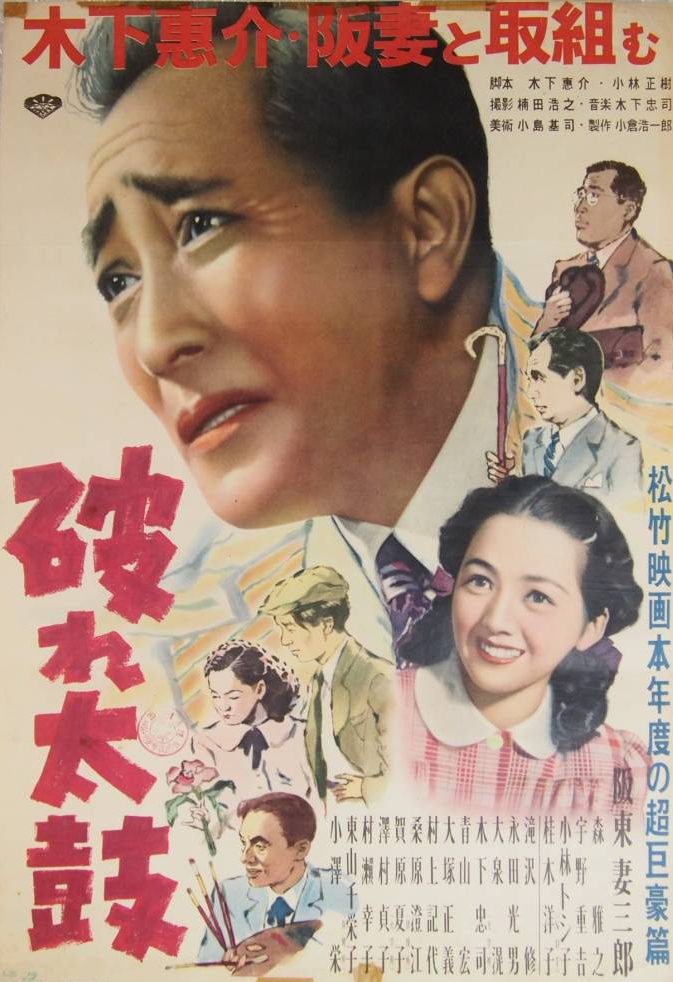
Broken Drum (破れ太鼓, Keisuke Kinoshita, 1949)

The evils of of authoritarianism are recast as family drama in Keisuke Kinoshita’s 1949 satirical comedy, Broken Drum (破れ太鼓, Yabure Daiko). Co-scripted by Masaki Kobayashi, a student of Kinoshita’s who went on to forge a long career dedicated to interrogating the place of the conscientious individual within an oppressive system, Broken Drum is also a testament to changing times and new possibilities as the youngsters slowly find the strength to resist and insist on their right to individual happiness. 

As the film begins, the family’s maid is leaving in a hurry, sick to the back teeth of the treatment she receives from the head of the household. Though she admits that the wife and children are all lovely, the husband is a tyrant and, according to her, a nouveau riche upstart, all money and no class. Tsuda (Tsumasaburo Bando), a self-made construction magnate, runs his family like a small cult and everyone is so afraid of upsetting him that they find themselves entirely unable to stand up for themselves. Times are, however, changing and Tsuda’s business is in trouble, which means his power may be waning. Denied loans all over town, he tries to railroad his eldest daughter, Akiko (Toshiko Kobayashi), into marrying a wealthy suitor, Hanada (Mitsuo Nagata), and is deaf to her cries of resistance.

Despite the rather ironical speech from the maid who describes herself as a “feminist” which is why she’s unable to put up with Tsuda’s poor conduct, stopping to tell a pregnant dog not to let anyone push her around just because she’s a girl, the world of 1949 is still an incredibly sexist one. Tsuda’s long suffering wife Kuniko (Sachiko Murase) complains that her younger daughter spends all her time rehearsing for her role as Hamlet rather than learning “useful” skills for women like cooking and housekeeping. Akiko’s suitor sides with the maid, affirming that “men should be nice to women” and making a point of telling her that all his maids love him without quite realising that what he’s just said isn’t quite as nice as he thought it was. Akiko doesn’t want to get married and she doesn’t even like Hanada, but she’s too conflicted to fully resist, unsure if she has the right to go against the “tradition” of arranged marriage. She asks her mother how she felt, and learns that she too cried every day, somehow normalising the idea that a woman’s marriage is supposed to make her miserable. 

Meanwhile, Tsuda is slowly destroying his oldest son, Taro (Masayuki Mori), who has been trying to quit the family construction firm to go into business with his aunt making music boxes. Tsuda isn’t having any of it, he tells Taro that music boxes aren’t a manly occupation and that he’ll never make it on his own, but Taro has an advantage in knowing that the construction company is in a bad place and his father’s authority is weakened. He becomes the first of the children to escape by rejecting Tsuda’s influence, decamping to his aunt’s which becomes a point of refuge for the other members of the Tsuda family seeking escape. 

Akiko begins to gain the courage to walk away after bonding with a painter she meets after her father was extremely rude to him on a bus, poking a hole in his canvas and then blaming it on the driver. Luckily he dropped his sketchbook which has his name, Shigeki Nonaka (Jukichi Uno), inside so she can pay him a visit to return it. Unlike the Tsuda’s, the Nonaka household is one of cheerful family warmth. They are not wealthy, but they do not particularly care. Mr & Mrs Nonaka fell in love in Paris decades ago where she was charmed by the sound of his violin while she sketched in the streets. Tsuda, angrily rejecting Akiko’s attempt to cancel the marriage, tells his wife that even if she doesn’t like him now, Hanada’s wealth will make her happy in the long run, but it’s at the Nonaka’s that she discovers “the true happiness of family”, vowing to do whatever it takes to be able to marry Shigeki with whom she has fallen in love. 

Even after losing two of his children and finally alienating his wife, Tsuda fails to learn, blaming his family for the failure of his business rather than accept his old school authoritarianism is out of step with the modern world. His middle son, Heizo (Chuji Kinoshita), actually the most sympathetic of the children, has written a satirical song that likens his father to a “broken drum”, something that makes a lot of noise but is confusing and very unpleasant to listen to. It doesn’t help that Tsuda also has the habit of going into speech mode, raising his arm in a fascist salute as he barks out his orders. “Life is most miserable when there’s no one to love”, Heizo tries to warn him, calmly explaining that a family is made up of “lonely creatures” with individual lives, and that that strong connection only survives through trust and independence.

Beginning to see the light, Tsuda accepts that he’ll be deposed if he doesn’t allow his family its democratic freedoms. Undergoing a conversion worthy of Scrooge at the end of a Christmas Carol, he he suddenly realises that “you need other people to succeed in life”, and is re-embraced by his family who decide to give him a chance to be better than he’s been in the knowledge that he has no more power over them than they choose to give him. 


Titles and opening (no subtitles)

CinemAsia Announces Complete Programme for 2020

CinemAsia returns to Amsterdam from 4th to 8th March for its 13th edition bringing with it another fantastic selection of recent East Asian cinema. This year’s festival opens with the European premiere of Japanese indie Mrs Noisy, and closes with heartwarming Taiwanese drama Heavy Craving, both of which are directed by female filmmakers.

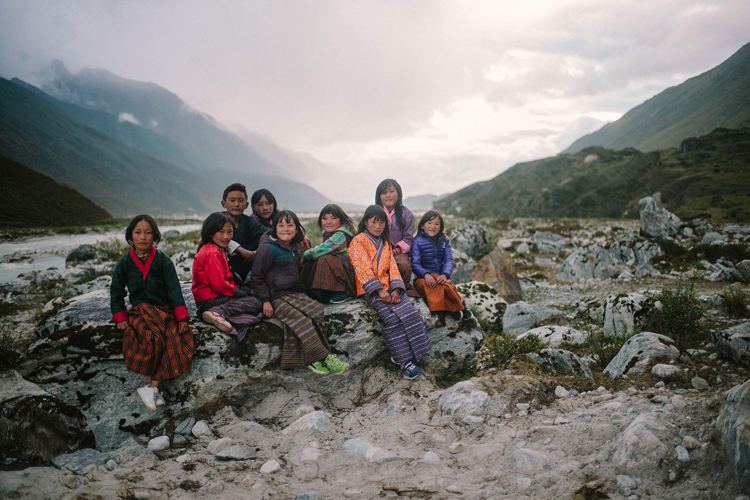
Bhutan

China

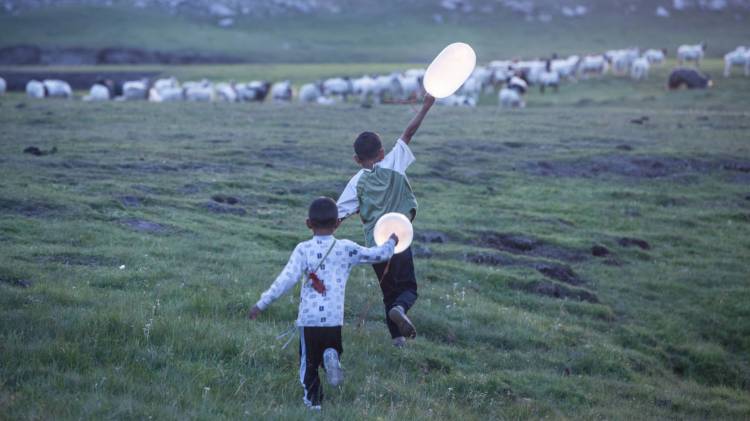
  • Balloon – Tibetan-language drama from Pema Tseden (Jinpa) following a sheep farming family facing a crisis thanks to the recently instituted One Child Policy. Review.
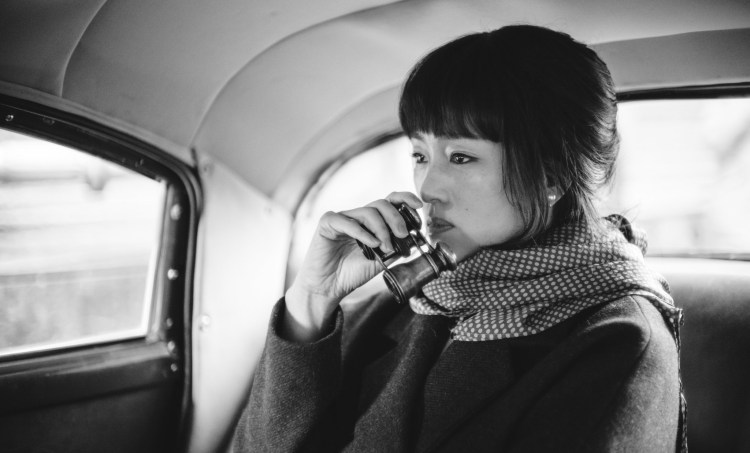
  • Saturday Fiction – Gong Li stars as an actress returning to Shanghai after a long absence to star in a play directed by an old flame but may have ulterior motives in the latest from Lou Ye.
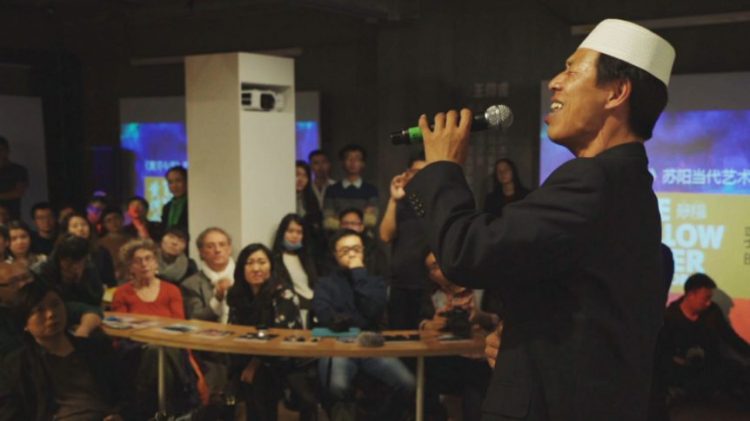
  • The River in Me – documentary exploring traditional folksong in modern China
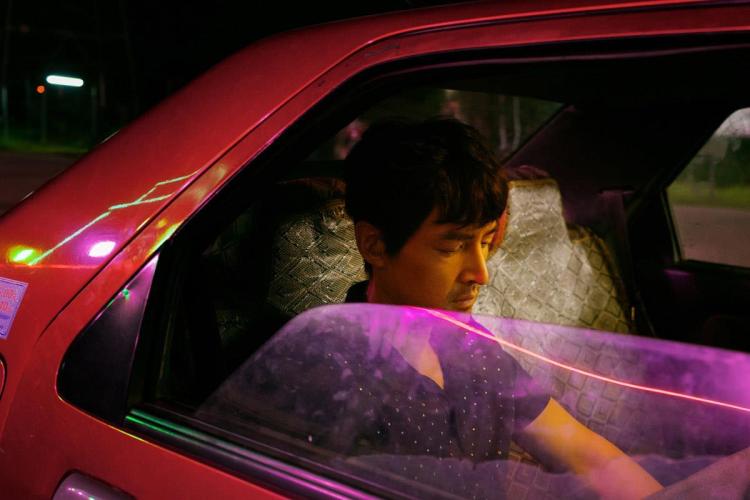
  • The Wild Goose Lake – Black Coal, Thin Ice’s Diao Yinan returns with another neo noir in which a smalltime mob boss tries to survive after he kills a policeman by mistake.

Hong Kong

  • Fagara – a young woman discovers the existence of two half-sisters, one from Taiwan and the other mainland China, following the death of her estranged father. Review.
  • Little Q – touching drama following the life of a guide dog who is assigned to a grumpy pastry chef. Review.
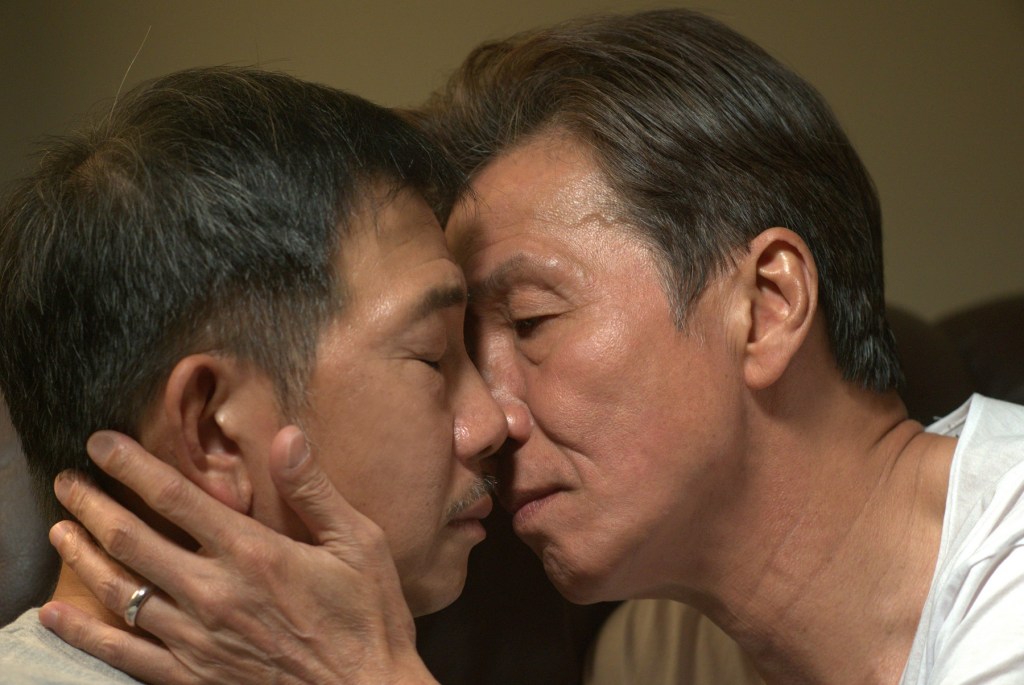
  • Suk Suk – voted the best HK film of 2019 by the Hong Kong Film Critics Society, Suk Suk follows two older men who meet by chance and fall in love after decades of keeping their true identities secret.

Indonesia

  • A Man Called Ahok – biopic of controversial political figure Basuki Tjahaja Purnama.
  • Bumi Manusia – period romance adapted from the novel by Pramoedya Ananta Toer in which a member of the Javanese royal family falls for a girl who is half-Dutch.
  • Gundala – superhero action from Joko Anwar
  • Homecoming – a couple get into an accident on the way to spend Eid with family bringing them into contact with the mysterious Santi.

Japan

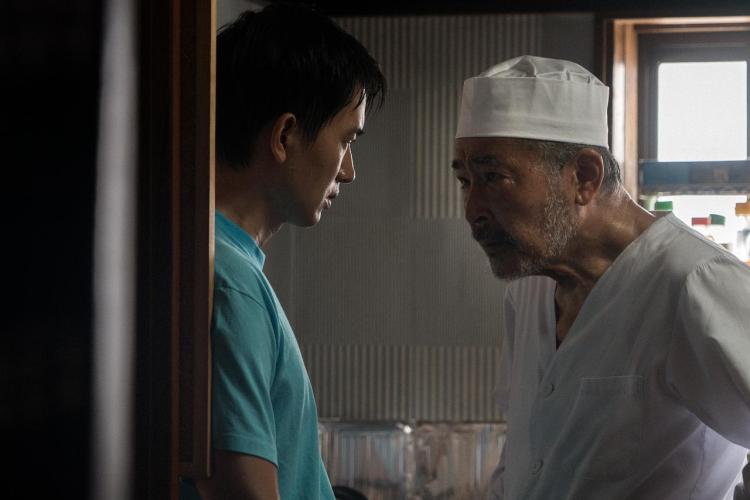
  • Complicity – an undocumented man from China embraces his cover identity and takes a job in a soba restaurant but struggles to maintain his sense of self in Chikaura’s sensitive drama. Review.
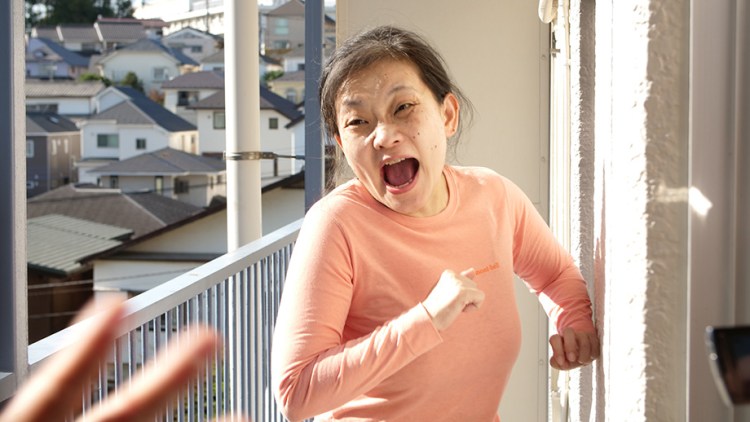
  • Mrs Noisy – a writer struggling to come up with new material after winning a major award is distracted by a vendetta with her noisy neighbour.
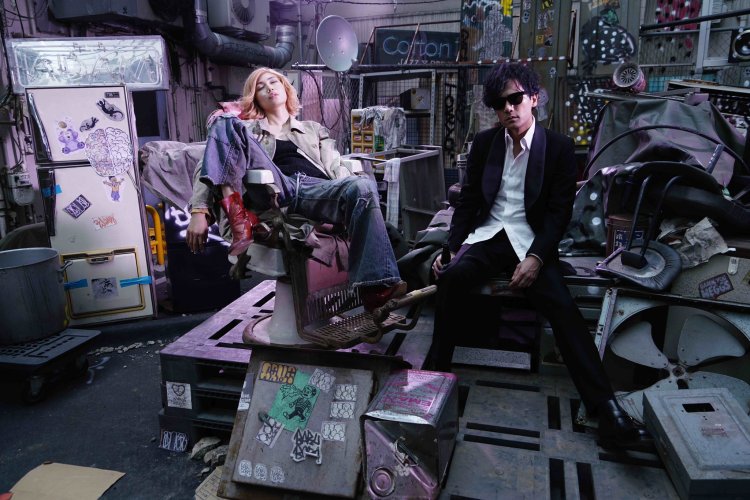
  • Tezuka’s Barbara – Macoto Tezka adapts the manga by his famous father in which a novelist (Goro Inagaki) becomes obsessed with a woman he picks up off the street (Fumi Nikaido).

Korea

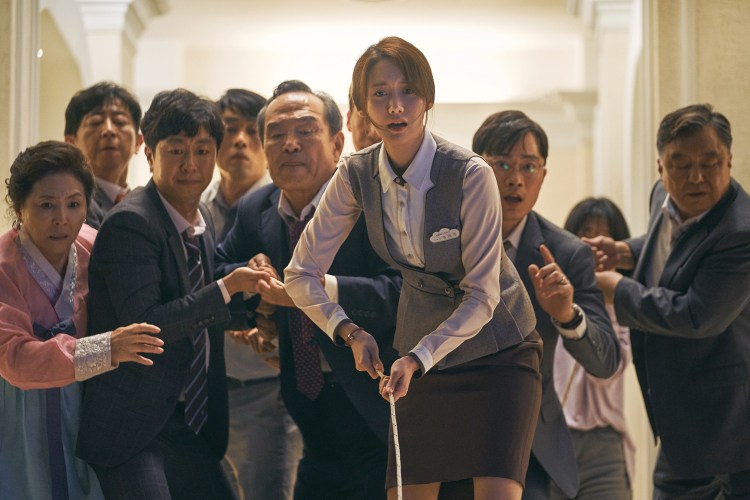
  • Exit – an unemployed rock climbing enthusiast finds himself in his element when his family is trapped by a mysterious white mist in a high rise restaurant he booked for his mother’s 70th birthday only because an old flame works there. Review.
  • Moonlit Winter – drama in which a teenage girl finds a love letter addressed to her recently divorced mother and determines to identify the sender, little knowing the secret her mother has been keeping.
  • Princess Aya – a princess with the power to turn into an animal marries an enemy prince to broker peace but finds herself beset by new threats in this charming animation.
  • Yellow Ribbon – Ju Hyun-sook’s documentary focussing on the aftermath of the Sewol ferry disaster.

Malaysia

  • Two Sisters – horror in which a young woman is discharged from a psychiatric hospital into the care of her novelist sister only to discover a new threat lurking in the family home.

Philippines

  • John Denver Trending – youth drama based on a true story in which a farm boy’s life is turned upside down when a video of him beating up a classmate goes viral.
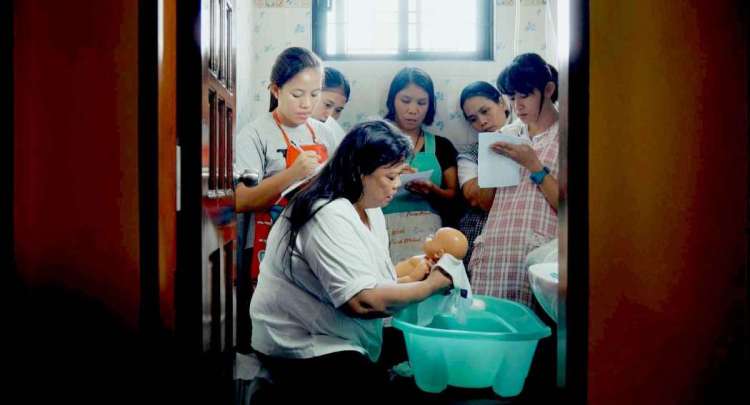
  • Overseas – documentary following those training to become overseas domestic helpers.
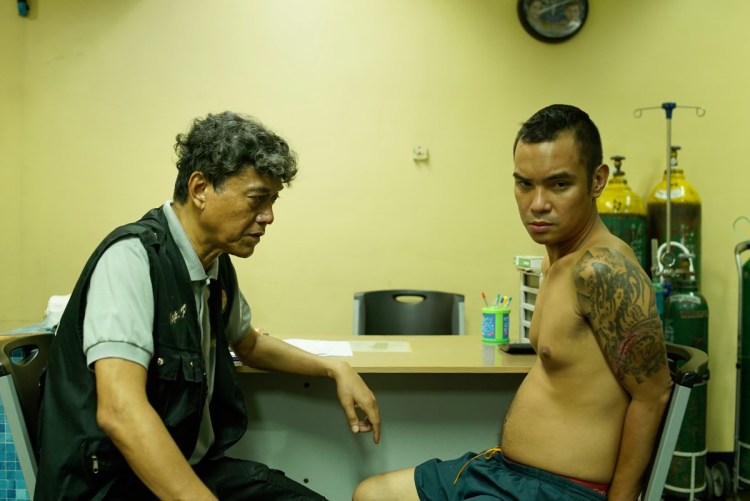
  • Verdict – a woman suffering domestic abuse tries to get help after her drunken husband hurts their child but struggles to find justice in a patriarchal society.

Taiwan

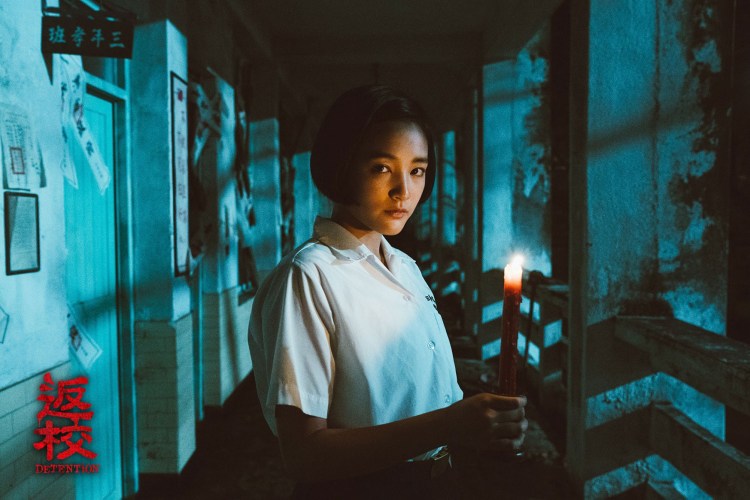
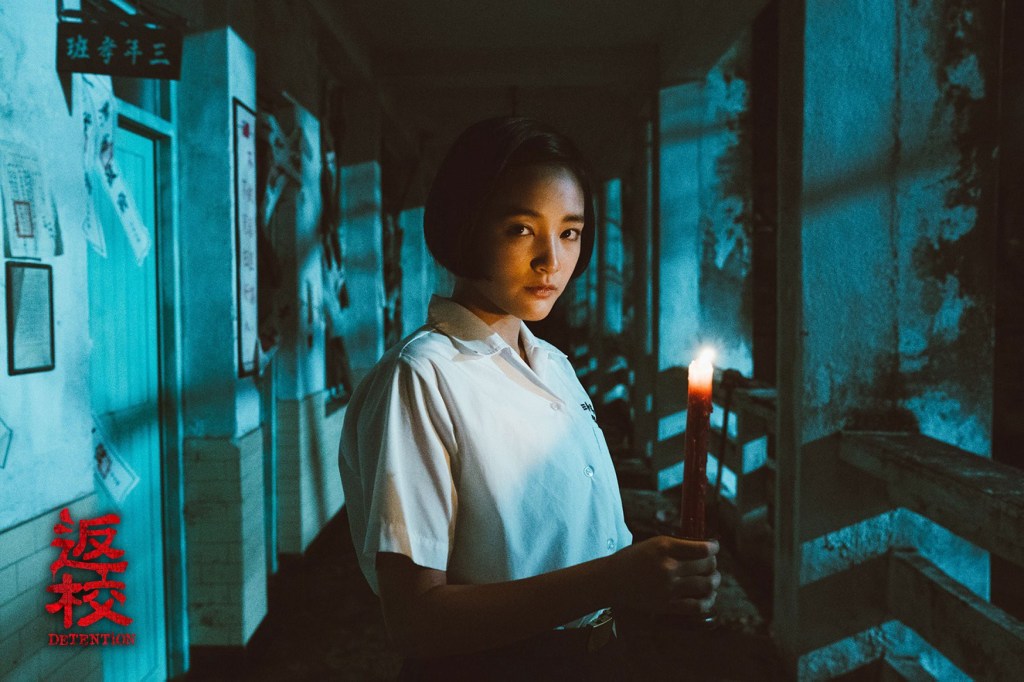
  • Detention – Lonely high schooler Fang falls for guidance councillor Zhang who alone seems to understand her. She joins his secret study group to read banned books, but Zhang soon “disappears” while only Fang and another student seem to remember him in this gothic horror set during Taiwan’s repressive martial law period.
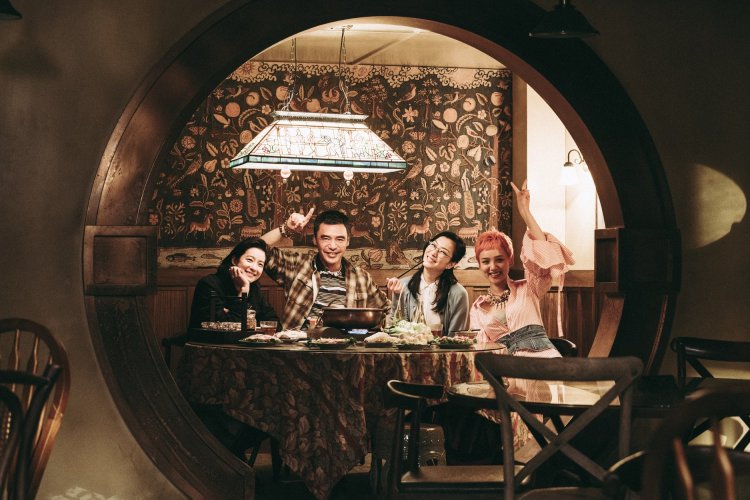
  • Heavy Craving – a lunch lady hoping to lose weight strikes up unexpected friendships with a deliveryman and a cross-dressing student. Review.

CinemAsia takes place in Amsterdam from 4th to 8th March, 2020. Full details for all the films can be found on the official website where tickets are already on sale, and you can keep up with all the latest news by following the festival on Facebook, Twitter, Instagram, and YouTube.

Till We Meet Again (あした来る人, Yuzo Kawashima, 1955)

(C) Nikkatsu 1955

“Men only want to treat women as pets” according to a disaffected housewife in Yuzo Kawashima’s Till We Meet Again (あした来る人, Ashita Kuru Hito). Given the well-meaning paternalism of her melancholy father, she may indeed be right. Her struggle, along with that of her husband, and of the lonely manageress of a dress shop, is in part to break free of paternalism, rejecting the “traditional” and breaking with the natural order of things to claim her own happiness. That, however, requires not only courage and conviction, but time and a willingness to endure hurtful failures. 

The hero, patriarch Kaji (So Yamamura), is a successful businessman. He’s married off his daughter, Yachiyo (Yumeji Tsukioka), to a promising young man, Kappei (Tatsuya Mihashi), but the marriage is unhappy. Kappei, a mountaineering enthusiast, rarely goes home – either out drinking with buddies in a bar with an Alpine theme, or away rock climbing in the mountains. Feeling neglected, Yachiyo resents her husband’s lack of interest and finds it increasingly difficult to get on with him, but her father proves unsympathetic, simply telling her she must put up with it and work harder at her marriage. A chance encounter on a train, however, kickstarts a change in Yachiyo’s outlook, while Kappei also finds himself drawn to a melancholy young woman who actively takes an interest in his mountain climbing career. 

Unfortunately, the young woman, Kyoko (Michiyo Aratama), is also in a strange “relationship” with Kaji who met her while she was a bar hostess in Ginza. Bonding with her for one reason or another, he funded her dress shop which has allowed her to escape the red light district, despite his oft repeated claim not to make frivolous investments. There is however, on his side at least, no “romantic” interest, his intentions are purely paternal. As Yachiyo said to her mother about Kappei, he is in a sense treating her as a kind of “pet”, to be loved and fussed over as an exercise in itself. He claims what he wants from her is his “lost youth”, presumably sacrificed for his business success, but she begins to believe herself painfully in love with him because, paradoxically, of his beneficence. Meanwhile, she meets Kappei by chance, never knowing his connection to Kaji, but bonding with him after taking in the little dog he brought home but was forced to give up by Yachiyo who claims to hate them (or, more accurately, living things). 

That ought to be as good a clue as any that Yachiyo and Kappei simply aren’t suited. Their marriage is already a failure which is making them both miserable, but they’re obliged to put on a show of being a happy couple for appearance’s sake. Yachiyo turns to her mother, Shigeno (Fukuko Sayo), for guidance, suddenly noticing that she looks much older than she’d remembered. Shigeno tells her that you age faster when you’ve nothing to do, busying herself by fussing over the cat (another living thing Yachiyo can’t abide). Yachiyo asks if she was ever happy with Kaji, but gets only the reply that she was “happy” to the extent that she knew she’d never have to worry about being hungry. Looking at her mother’s life, Yachiyo knows that she doesn’t want to end up in the same position, bored and aimless with no “dreams” to speak of. She doesn’t see why she has to stay in a loveless marriage and is convinced that only with another man could she ever truly be “herself”. 

The idea of divorce is still taboo, which is perhaps why her father insists she reconsider, aside of course from his business entanglements with Kappei. Talking it over the couple come to a mutual conclusion, that they only make each other unhappy and separating is the best decision for them both. Pretty much everyone, however, tries to talk them out of it – Kaji still wedded to the idea of marriage as an unbreakable sacrament, while new friend Sone (Rentaro Mikuni) is convinced he’s contributed to their marital discord.

Sone, a bumbling professor obsessed with his research into a rare type of fish and its possible ability to adapt to its environment, becomes friends with Yachiyo after a mix up with dinner bills on a train. She offers to introduce him to her father to see if he can help find financing, and thereafter generates a friendship which, in her mind at least, turns romantic. Sone, however, is a widower now only interested in his fish. Yachiyo falls for him because he’s a much softer, kinder presence than her husband and despite his dedication to his work, is keenly aware of the feelings of others even if he’s awkward in a charming sort of way when it comes to dealing with them. There is something, however, a little perverse in her immediate attraction to another emotionally distant man. She couldn’t stand Kappei’s obsession with the mountains, but could potentially become interested in Sone’s fish. Then again, that’s just as likely to be because Sone made a point of including her in his passion, where Kappei keeps his to himself, eventually sharing it with the more receptive Kyoko. 

Kaji, returning to the paternal, advises Kyoko that “romance is mutual deception”, or at least a kind of transaction and if she really wants to do this, she’d best be sure she’d be OK with regretting it at some point in the future. Previously, he’d told her that “marriage is pointless”, and she’d decided never to do it partly because she thought she was in love with him and he was married already. Her realisation that she’s just a kind of pet to him, a plaything he uses to feel useful while reclaiming his youth, pushes her towards an acceptance of her growing love for Kappei, an irony Kaji struggles with but eventually comes to understand. He really does want the best for her and will support her love story even though it’s also extremely inconvenient in providing an unwelcome link between the different branches of his life. Once Kyoko discovers the truth, however, her determination to fight for love begins to weaken as she reflects on an image of herself as a wicked and selfish woman betraying a man who’d been good to her, when in reality quite the reverse is true. 

Yachiyo, meanwhile, begins to understand that Sone does not necessarily return her feelings, perhaps still attached to the memory of his late wife, too preoccupied with his research, feeling awkward about her position as a married woman, or just not interested. So alarmed is he that he temporarily rushes off from his research to have a word with Kappei and is once again upset by his calm explanations that this is a decision they’ve come to mutually. It’s not because of his love for Kyoko, that only provided an excuse, but because they simply weren’t suited and made each other unhappy. Sone declares himself “sick of seeing beautiful things getting hurt”, but prepares to absent himself from the entire situation by returning to his research. Faced with the potential failure of their new romances, neither Yachiyo or Kappei reconsider their decision to divorce. Kappei retreats to his beloved mountains, while Yachiyo refuses an offer from her father to return home with him, electing to remain in Tokyo and live her own life.  

Now an old man, Kaji struggles to understand the young but somehow admires them for being what he couldn’t be. He describes them as having something pure that he did not have in his youth, but wonders if that purity hasn’t in a sense allowed them to be “damaged” in a way he never has been. Still, he thinks that’s probably a good a thing, because it allows them to become more themselves. Things might not work out right now, and it might hurt, but there’s always tomorrow. He admires the young people because they’re in the process of becoming whole and will be able to continue on their own journeys as complete people while he can only proceed down this corridor, unable to access the post-war future by actively rejecting the rigidity of the traditionalist past.


Currently available to stream on Mubi in the US.

Original trailer (no subtitles)
Asian Pop-Up Cinema Returns for Season 10!

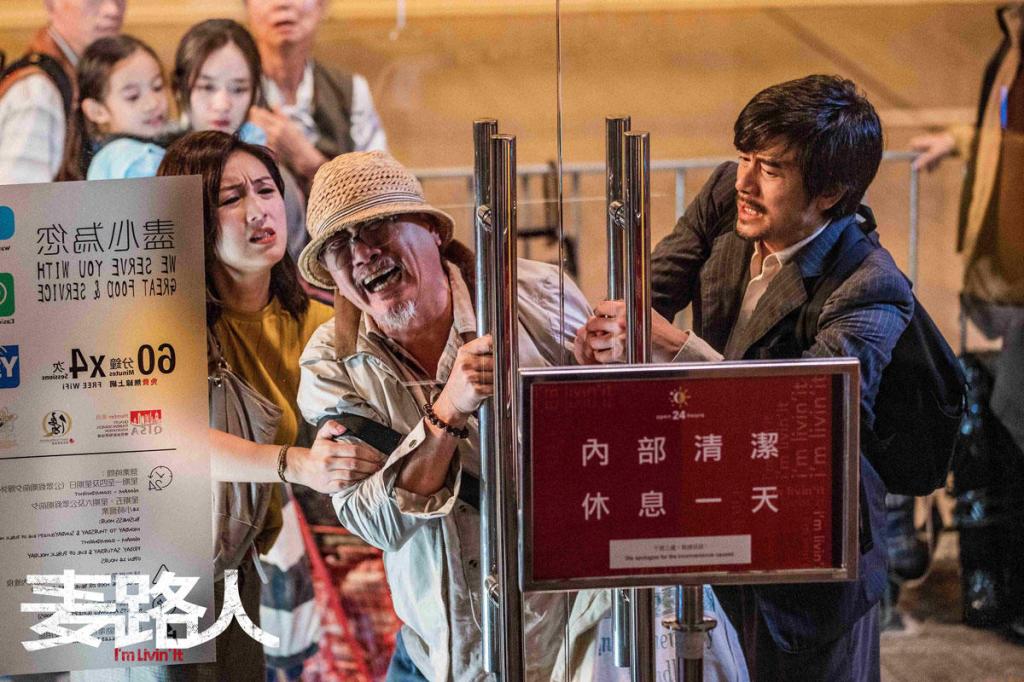
Chicago’s Asian Pop-Up Cinema returns March 10 to April 9 with another handpicked selection of the best in recent East Asian cinema! This landmark 10th Season kicks off with Aaron Kwok homelessness drama i’m livin’ it which is nominated in 10 categories at this year’s Hong Kong Film Awards, and closes with Yukiko Mishima’s much anticipated romantic drama Shape of Red.

March 10, 7pm: i’m livin’ it

Introduction and Q&A with Director Wong Hing Fan and Actress Kathy Wu

Receiving 10 nominations at this year’s Hong Kong Film Awards including all the major categories, i’m livin’ it stars Aaron Kwok as a once successful banker who has unexpectedly become homeless and spends his nights in a 24hr fast food restaurant among others facing similar difficulties.

March 11, 7pm: A Witness Out of the Blue

Introduction and Q&A with Director Fung Chih-Chiang

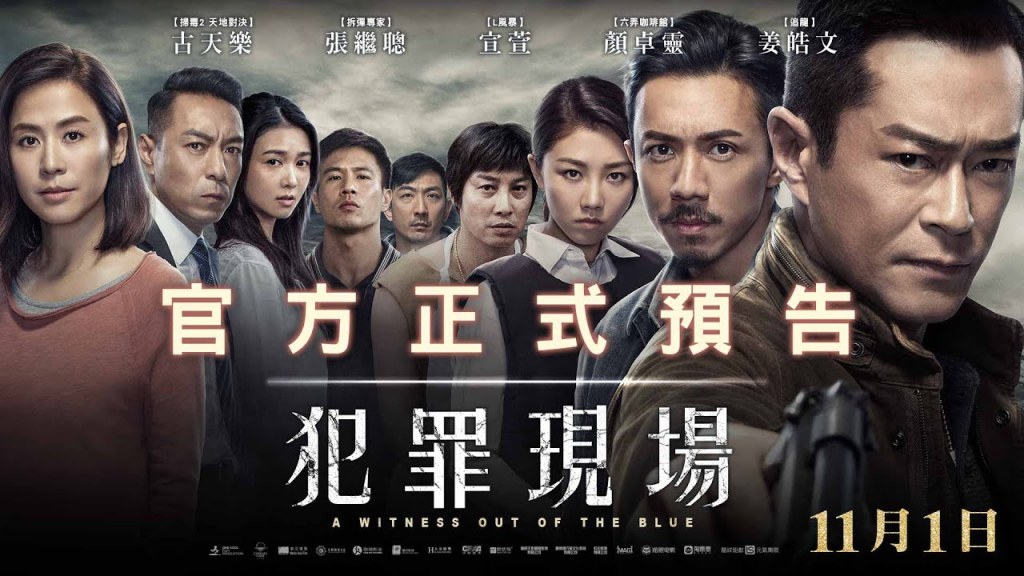
A detective finds himself investigating a murder in which the only witness is a parrot! Louis Koo is up for best actor at the Hong Kong film awards for his role as the prime suspect while Philip Keung also gets a nod for best supporting as a senior detective.

March 12, 7pm: First Night Nerves

Stanley Kwan’s starry drama pits two warring divas against each other in a battle for the spotlight as they rehearse for a new play penned by a transwoman who struggles to find acceptance in the surprisingly conservative theatre industry. Review.

March 14, 2pm: Men on the Dragon

A collection of dejected middle-aged men can no longer avoid facing their respective crises when forced to participate in the company dragon boat team in Sunny Chan’s heartfelt comedy drama. Review.

March 16, 6.30pm: A Touch of Spring

Introduction and Q&A with Director He Xiao-Dan

Following the breakup of her marriage, a young woman decides to return to her hometown in China after living in Montreal for 10 years. Reconnecting with her family and an old flame helps to show her new direction in her life.

March 18, 7pm: Red Flowers and Green Leaves

A young man who assumed he’d never marry because of a longterm illness suddenly finds himself with a beautiful wife through an arrangement made by his family.

March 19, 7pm: 3 Adventures of Brooke

A young Chinese woman has three very different adventures while traveling in Northern Malaysia, trying on different identities as she encounters different people.

March 21, 7pm: Vanishing Days

Zhu Xin’s debut feature follows a little girl, Li Sen-Lin, who loses her pet turtle while her dad is away on business. Overhearing other relatives talk about an alternate “Sen-Lin”, she begins to wonder if her aunt is really her mother.

March 25, 7pm: We Are Champions

Introduction and Q&A with Producer Rachel Chen and Actor Berant Zhu who will also pick up the Bright Star Award before the screening.

Taiwanese sporting drama in which teenage brothers attempt to change their fates through success on the basketball court.

March 26, 7pm: Detention

Lonely high schooler Fang falls for guidance councillor Zhang who alone seems to understand her. She joins his secret study group to read banned books, but Zhang soon “disappears” while only Fang and another student seem to remember him in this gothic horror set during Taiwan’s repressive martial law period.

April 1, 7pm: Vertigo

Introduction and Q&A with Director Jeon Gye-Soo

A woman in her 30s begins to feel a sense of existential vertigo, trapped in a dead end relationship with a feckless boyfriend while worrying that her career is going nowhere either. Then, she meets a tightrope walking window cleaner.

April 2, 7pm: Paper Flower

Introduction and Q&A with Director Koh Hoon and Actor Ahn Sung-ki who will also receive the Career Achievement Award.

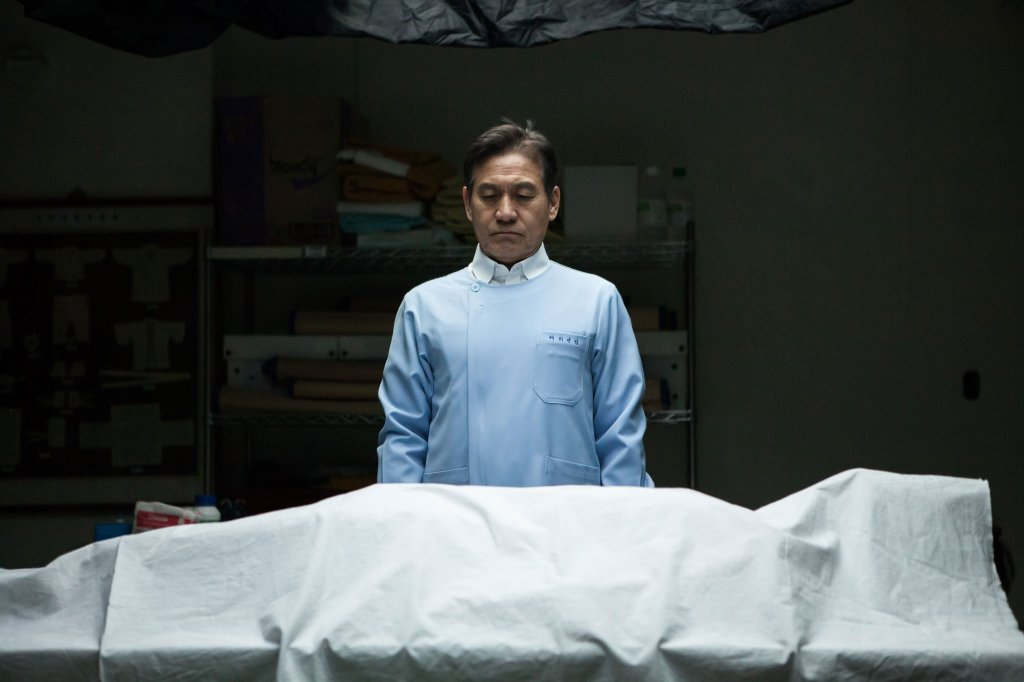
A funeral director struggling to care for his sickly son bonds with a cheerful single mother while going against the city to assist in a public funeral for a noodle stall owner who became a hero to the homeless.

April 4, 7pm: Life Finds a Way

Introduction and Q&A with Director Hirobumi Watanabe

Hirobumi Watanabe once again stars as a version of himself as he experiences a creative crisis as a director while hanging out with his elderly grandmother in sunny Tochigi.

April 8, 7pm: Samurai Marathon

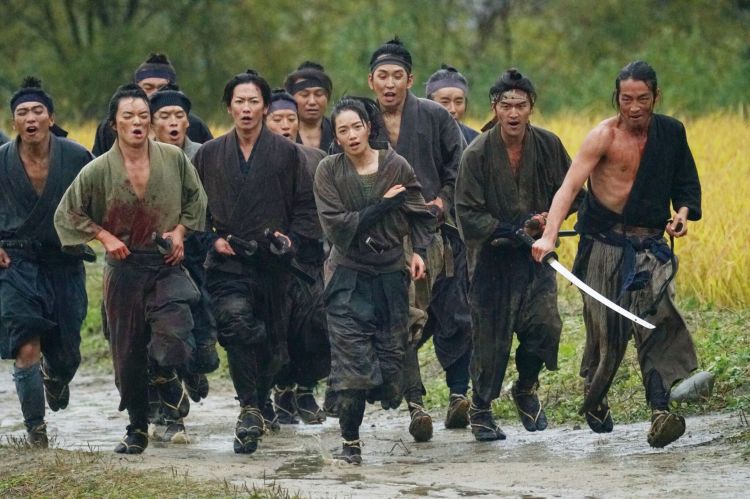
A small fiefdom is thrown into crisis when a ninja spy mistakes his lord’s intentions to toughen up his men as a prelude to rebellion in this unusual samurai drama directed by Bernard Rose. Review.

April 9, 7pm: Shape of Red

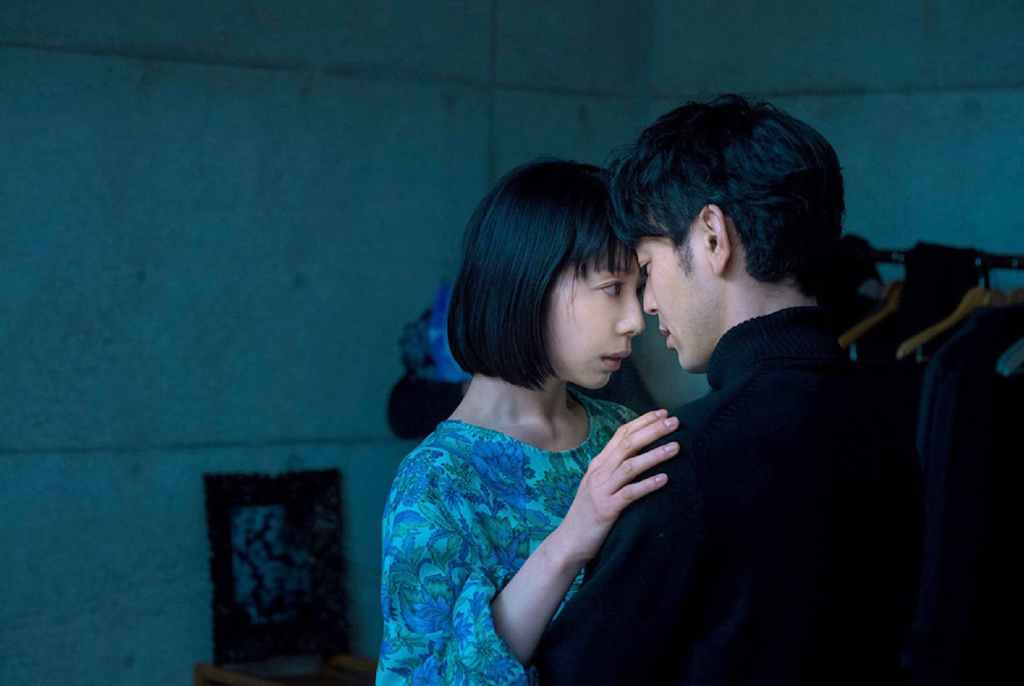
Kaho stars as a happily married woman who embarks on a passionate affair with an old flame (Satoshi Tsumabuki) in Yukiko Mishima’s steamy adaptation of the novel by Rio Shimamoto.
Asian Pop-up Cinema Season 10 runs in Chicago from March 10 to April 9. Full details for all the films are available via the festival’s official website where tickets are already on sale. You can also keep up with all the latest news by following Asian Pop-up Cinema on FacebookTwitterInstagram, and Vimeo.

The Rice Dumpling Vendors (燒肉粽, Hsin Chi, 1969)

What could be more wholesome and comforting than a rice dumpling? To support their desperate family, a father and daughter become, unbeknownst to each other, Rice Dumpling Vendors (燒肉粽), hoping to buy back their innocence through honest work but secretly ashamed of the depths to which they’ve fallen. Rising economic prosperity has it seemed provoked a moral decline and resulted in an arrogant entitlement that allows wealthy men to assume they can do as they please, but one ordinary businessman is about to get an unexpected humbling when confronted by the consequences of his moral transgressions. 

Tsibing (Yang Ming) is outwardly successful. He dresses in suits, has a large house and chauffeur driven car, can afford to employ a nanny, and comes home to an elegant middle-class wife (Jin Mei) and three adorable children. Despite all of that, however, he’s about to ruin everything. His mistress is secretly part of a criminal gang. She gets her boyfriend to pretend to rob the place, knocking out Tsibing’s wife and undressing her, leaving a pair of underpants on the bed to make it look like her lover has thrown his clothes on in a hurry and jumped out of the French doors to avoid being caught out by Tsibing’s unexpected arrival. Tsibing doesn’t stop to ask questions. He rounds on his wife, beating her violently in front of their young son whom he also kicks in the ribs for trying to defend her. Hypocritically pointing out that his taking a mistress is no justification for her to take a lover a too, he throws her out of his house, only to be thrown out himself when he realises that his mistress has stolen all his money. Ruined and penniless he moves into a shack with the three kids and tries to keep things together while meditating on his mistakes. 

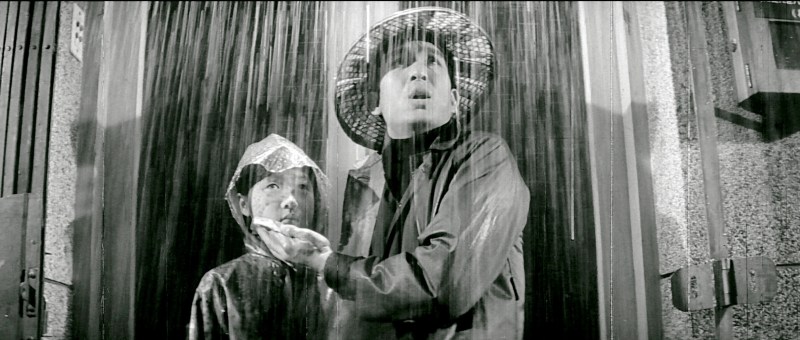
The Rice Dumpling Vendors is, somewhat unusually, a melodrama of male failure in which Tsibing experiences a humbling which pulls him away from the amoral capitalism of the post-war era towards humanistic compassion. The couple next-door, a balloon seller (Chin Tu) who dresses as a clown and his feisty wife (Siu Chu), were unable to have children of their own and quickly take to the young family, feeling sorry for Tsibing and often helping him out particularly with buying formula milk for the baby. “I always thought people were selfish” he confesses while lying on a hospital bed after sustaining a serious workplace injury, finally seeing a different, less materialistic way to live. 

As the closing song reminds us, however, you can’t do anything without money. Attempting to walk away from failure, Tsibing finds himself in an impossible position. He can’t find work that can support a family, and even once he finds a job he gets himself injured leaving him entirely unable to provide. Oldest daughter Hsiu-chuan (Dai Peishan) tries to take the burden on herself, selling lottery tickets and heading out at all hours to hawk rice dumplings to passersby in the streets, unconvincingly telling her father that she’s going to help a classmate who is sick in the hospital with their homework. Hsiu-chuan’s earnestness stands in complete contrast to her father’s increasing desperation compounded by guilt and regret. In a low moment, he even considers abandoning the baby in front of the house of a wealthy childless couple in the hope that they will adopt her.

Strangely, Tsibing never considers asking the childless couple from next-door who already dote on his children if they’d be willing to look after the baby, but determines straight on placing himself at the mercy of the wealthy. The couple at least seem nice – they want a child and would spoil it with both love and money, but they are also arch materialists. Their first thought is that they should give Tsibing money in compensation, as if they were buying a pet. It doesn’t quite occur to them that he might change his mind, after all they can give his baby a quality of life he currently cannot in which she’ll be well fed and taken care of. Is it selfish of him to deny her that? Hsiu-chuan and her brother, however, aren’t having any of it. They’re taking their sister home where she belongs, vowing to give up on school and double down on their part time jobs to make sure they can afford milk to feed her. 

Tsibing too lowers himself once again, selling not only lottery tickets but later rice dumplings, telling Hsiu-Chuan, who is doing exactly the same thing, that he’s got a job as a nightwatchman in a warehouse which is why he’s out all night. Humbled and encouraged by the warmhearted altruism of his kindly neighbours, he’s learning to renounce the materialist life and re-embrace what’s important. The mistress, meanwhile, making an unexpected reappearance, pays a heavy price both for her amoral materialism, and for her transgressions as an “immoral” woman whose attempts to use men provoke only jealousy and violence. Meanwhile, the wife is eventually vindicated and seems to have retained both her wealth and her class status even after being unfairly thrown out by Tsibing. 

What we’re presented with is a seemingly uncomplicated family reunion, completely ignoring Tsibing’s brutal use of violence against his wife and son which is itself intended to demonstrate his “manliness” and patriarchal authority. He reminds his wife of the cultural double standard that insists that a man may take a mistress but a wife must be faithful, punishing her not for betraying their family but for making a fool of him. Little does he know however that he’s already been made a fool of by a “wicked” woman, and it’s entirely his own fault for acting irresponsibly, regarding a mistress as little more than a status symbol. Nevertheless, now humbled he has a new appreciation for what it means to be a family man, seeking not riches but simple wholesome pleasures like rice dumplings and friendship surrounded by kind and honest people always willing to lend a hand to those in need.


Screened as part of touring retrospective Taiwan’s Lost Commercial Cinema

Ride Your Wave (きみと、波にのれたら, Masaaki Yuasa, 2019)

“The next wave is already on the horizon waiting for you to catch it” according to the heroine of Masaaki Yuasa’s uncharacteristically uncomplicated Ride Your Wave (きみと、波にのれたら, Kimi to, Nami ni Noretara) offering words of comfort to her dejected soon-to-be boyfriend over his continuing failure to master the surfboard. It’s advice she struggles to follow herself, however, after she’s blown off course by unexpected tragedy. Yet, nothing’s ever really as off course as you think it is and the waves she must learn to ride are her own and hers alone. 

Oceanography student Hinako (Rina Kawaei) is something of a mess. She’s moved out on her own to study at university in Chiba, but is struggling with the transition to adult life, unable to unpack her things or cook herself a decent dinner. Nevertheless, she’s become a “hero” to dashing fireman Minato (Ryota Katayose) who watches her bravely ride the waves from the roof of the fire station. The pair finally meet when some irresponsible students have an impromptu fireworks party that ends up setting fire to Hinako’s building, leaving her marooned on the roof cradling her surfboard at which point she’s rescued by Minato heroically appearing in a cherrypicker. She offers to teach him to surf, they go for coffee, and eventually fall hopelessly in love. Their romance, however, is cut short when Minato heads to the beach alone in stormy seas and drowns trying to save a jet skier who’s got into trouble. Unable to deal with the grief, Hinako avoids the sea altogether but begins to believe she is seeing Minato in every watery surface and can in fact summon him by singing their favourite song. 

Fellow firefighter Wasabi (Kentaro Ito), himself a little in love with the formerly fearless Hinako, tries to jolt her out of her “delusion” by asking how this could have happened to her, once so brave and independent now filled with grief and anxiety. Minato, whose name literally means “harbour”, had promised to protect her, staying by her side forever. Faced with her first serious relationship going far too well, Hinako identified a potential problem in her possible over reliance on her extremely capable boyfriend, preferring to wait until she was able to ride the waves alone before taking the next step. Minato wanted the same thing, encouraging her growth while providing a “safe harbour”, but his sudden absence has left her afraid to move forward and unwilling to leave the land. 

Delusion or not, Hinako clings to her lost love, carrying around “Minato” in a tiny flask of water or filling up an inflatable porpoise and walking it all around town to the constant consternation of the locals. What she learns, on one level, is that she has to learn to save herself, but also that in doing so she can help to save others. Learning something about Minato’s past and the reasons which eventually led to him becoming a fireman persuade her that she ought to use whatever skills she has for the common good. Meanwhile, the lovelorn Wasabi learns something similar after reconnecting with Minato’s spiky sister Youko (Honoka Matsumoto) who was once a shut-in refusing to go to school where her rather abrasive manner made her an outcast but found a new strength in self-acceptance on hearing Wasabi declare that just being herself was good enough for him. 

Youko decides to pick up her brother’s dream of opening an artisanal coffeeshop, which is nice but also a little shortsighted in that it does not allow her to pursue a dream that’s entirely her own other than through finding the courage to embrace the risk of romance. Likewise, Hinako and Wasabi are largely carried along in Minato’s wake, but nevertheless make unambiguously good decisions in choosing to dedicate their lives to helping others, accepting that that’s often less about grand heroic gestures than it is about small moments of connection. Hinako realises that she has to let go of the past, however painful, for Minato’s good as well as her own, while finding her sea legs to take her into a more promising future. After all, the waves keep coming. Minato recedes into the great confluence of life, while Hinako gains the courage to ride the waves alone, no longer afraid to leave the shore but in search of new horizons. 


Screened as part of the Japan Foundation Touring Film Programme 2020.

UK Trailer (English subtitles)