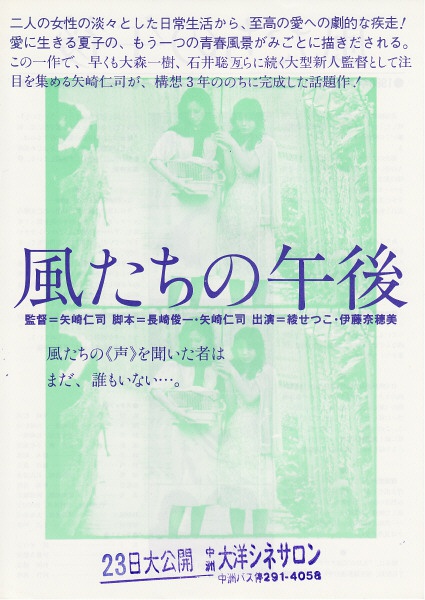
Even in the Japan of 1980, many kinds of love are impossible. Afternoon Breezes (風たちの午後, Kazetachi no gogo), the indie debut from Hitoshi Yazaki follows just one of them as a repressed gay nursery nurse falls hopelessly in love with her straight roommate. Based on a salacious newspaper report of the time, Afternoon Breezes is a textbook examination of obsessive unrequited love as its heroine is drawn ever deeper into a spiral of inescapable despair and incurable loneliness.
Nursery nurse Natsuko (Setsuko Aya) is in love with her hairdresser roommate Mitsu (Naomi Ito), who seems to be completely oblivious of her friend’s feelings. Mitsu has a boyfriend, Hideo (Hiroshi Sugita), and the relationship is becoming serious enough to have Natsuko worried. Hideo, unlike Mitsu, is pretty sure Natsuko is a lesbian and in love with his girlfriend but finds the situation amusing more than anything else. Beginning to go out of her mind with frustration, Natsuko tries just about everything she can to break Mitsu and Hideo up including introducing him to another pretty girl from the nursery, Etsuko (Mari Atake). Hideo is not exactly a great guy and shows interest in Etsuko though does not seem as intent on leaving Mitsu as Natsuko had hoped. Desperate times call for desperate measures and so Natsuko steels herself against her revulsion of men and seduces Hideo on the condition that he end things with her beloved Mitsu. He does, but the plan goes awry when Natsuko realises she is pregnant with Hideo’s child.
Less about lesbianism and more about love which can never be returned slowly eroding a mind, Afternoon Breezes perfectly captures the hopeless fate of its heroine as she idly dreams a future for herself which she knows she will never have. Natsuko buys expensive gifts for her roommate, returns home with flowers and courts her in all of the various ways a shy lover reveals themselves but if Mitsu ever recognises these overtures for what they are she never acknowledges them. Her boyfriend, Hideo, seems more worldly wise and makes a point of cracking jokes about Natsuko, asking Mitsu directly if her friend has a crush on her but Mitsu always laughs the questioning off. Mitsu may know on some level that Natsuko is in love with her, she seems to be aware of her distaste for men even if she tries to take her out to pick one up, but if she does it’s a truth she does not want to own and when it is finally impossible to ignore she will have nothing to do with it.
Despite Mitsu’s ongoing refusal to confront the situation, Natsuko basks in idealised visions of domesticity as she and Mitsu enjoy a romantic walk in the rain only to have their reverie interrupted by a passing pram containing a newborn baby. What Natsuko wants is a conventional family life with Mitsu, including children. After their walk, the pair adopt a pet mouse which Natsuko comes to think of as their “baby” but like a grim harbinger of her unrealisable dream, the mouse dies leading Mitsu to bundle it into a envelope and leave it on a rubbish heap along with Natsuko’s heart and dreams for the future.
When her colleagues at the nursery get stuck into the girl talk and ask Natsuko about boyfriends, her response is that she would not “degrade” herself yet that is exactly what she finally resorts to in an increasingly desperate effort to get close to Mitsu. After her attempts to get him to fall for another girl fail, Natsuko’s last sacrificial offering is her own body, surrendered on the altar of love as she pleads with the heartless Hideo to leave Mitsu for good. Though her bodily submission is painful to watch in her obvious discomfort her mental degradation has been steadily progressing as Hideo deliberately places himself between the two women, even going so far as to disrupt a seaside holiday planned for two by inviting himself along.
Yazaki perfectly captures Natsuko’s ever fracturing mental state through the inescapable presence of the dripping tap in the girls’ apartment which becomes a dangerous ticking in Natsuko’s time bomb mind. Occasionally gelling with clocks and doors and other oppressive noises, the internal banging inside Natsuko’s head only intensifies as she’s forced to endure the literal banging of Mitsu and Hideo’s lovemaking during her romantic getaway. Just as an earlier scene found Natsuko sitting on the swing outside embracing the flowers she’d brought for Mitsu only to find Hideo already there, Natsuko’s fate is to be perpetually left out in the cold, eventually resorting to rifling through her true love’s rubbish and biting into a half eaten apple in a desperate attempt at contact.
Natsuko’s love is an impossible one, not only because Mitsu is unable to return it, but because it is essentially unembraceable. In a society where her love is a taboo, Natsuko is not able to voice her desires clearly or live in an ordinary, straightforward way but is forced to act with clandestine subtlety. After Hideo unwittingly deflowers her and laughs about it, stating that she “must really be gay” Natsuko lunges at him with a knife, suddenly overburdened with one degradation too many. Though the prospect of the baby may raise the possibility of a happy family, albeit an unconventional one, the signs point more towards funerals than christenings, so devoid of hope does Natsuko’s world seem to be. Shot in a crisp 16mm black and white, Afternoon Breezes owes an obvious debt to the art films of twenty years before with its long takes, static camera giving way to handheld, and flower-filled conclusion, but adds an additional layer of youthful anxiety as its heroines find themselves moving into a more prosperous, socially liberal age only to discover some dreams are still off limits.
 Post-war cinema took many forms. In Korea there was initial cause for celebration but, shortly after the end of the Japanese colonial era, Korea went back to war, with itself. While neighbouring countries and much of the world were engaged in rebuilding or reforming their societies, Korea found itself under the corrupt and authoritarian rule of Syngman Rhee who oversaw the traumatic conflict which is technically still ongoing if on an eternal hiatus. Yu Hyun-mok’s masterwork Aimless Bullet (오발탄, Obaltan) takes place eight years after the truce was signed, shortly after mass student demonstrations led to Rhee’s unseating which was followed by a short period of parliamentary democracy under Yun Posun ending with the military coup led by Park Chung-hee and a quarter century of military dictatorship. Of course, Yu could not know what would come but his vision is anything but hopeful. Aimless Bullets all, this is an entire nation left reeling with no signposts to guide the way and no possible destination to hope for. All there is here is tragedy, misery, and inevitable suffering with no possibility of respite.
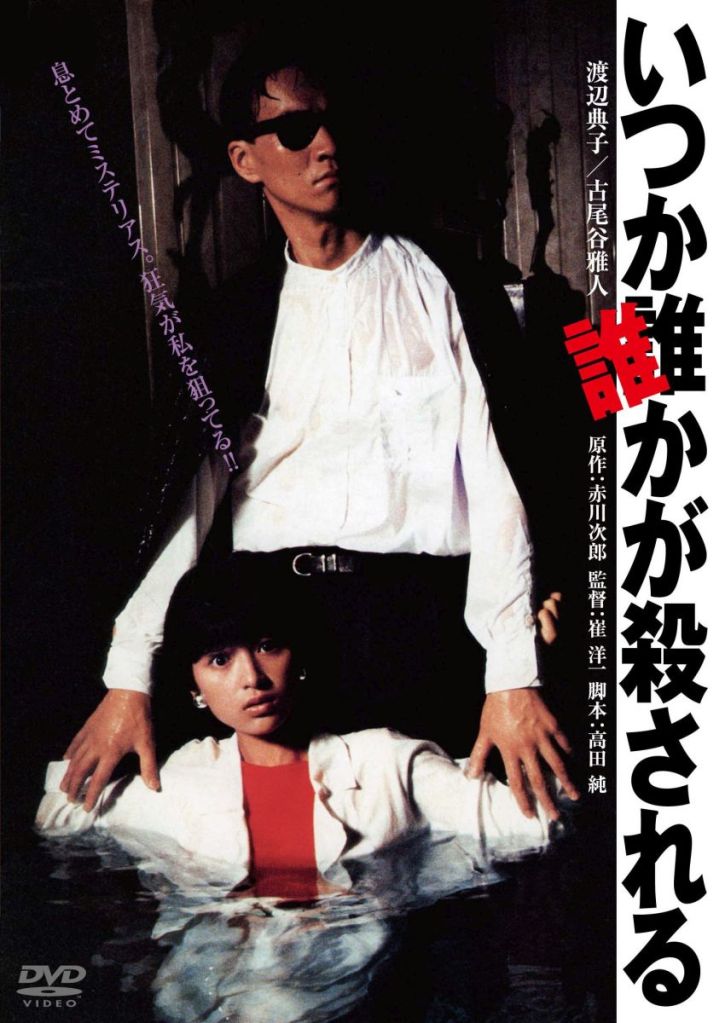 Haruki Kadokawa dominated much of mainstream 1980s cinema with his all encompassing media empire perpetuated by a constant cycle of movies, books, and songs all used to sell the other. 1984’s Someday, Someone Will be Killed (いつか誰かが殺される, Itsuka Dareka ga Korosareru) is another in this familiar pattern adapting the Kadokawa teen novel by Jiro Akagawa and starring lesser idol Noriko Watanabe in one of her rare leading performances in which she also sings the similarly titled theme song. The third film from Korean/Japanese director Yoichi Sai, Someday, Someone Will be Killed is an impressive mix of everything which makes the world Kadokawa idol movies so enticing as the heroine finds herself unexpectedly at the centre of an ongoing international conspiracy protected only by a selection of underground drop outs but faces her adversity with typical perkiness and determination safe in the knowledge that nothing really all that bad is going to happen.
 Raymond Yip Wai-man’s Cook up a Storm (决战食神, Juézhàn Shíshén) was scheduled to open at Chinese New Year but eventually found itself delayed and awkwardly repositioned as a Valentine’s Day date movie. Something of a rarity, there is no real romance in Cook up a Storm though it may inspire a post-movie visit to the nearest Chinese restaurant with its deeply felt tribute to classic Chinese cuisine and the raucous social gathering that often goes with it. Yip does his best to throw in as many themes as possible from the familiar tradition vs modernity to fathers and sons and the undue influence to China’s new ruling class who possess extreme wealth but (apparently) no taste. Most of these get somewhat lost in the meandering script which eventually falls into a conventional tournament narrative as two very different chefs face off in the kitchen before realising they have more in common than not.
 There are two kinds of people in the world, those who swing and those who…don’t – a metaphor which works just as well for baseball and, by implication, facing life’s challenges as it does for music. Shinobu Yaguchi returns after 2001’s
 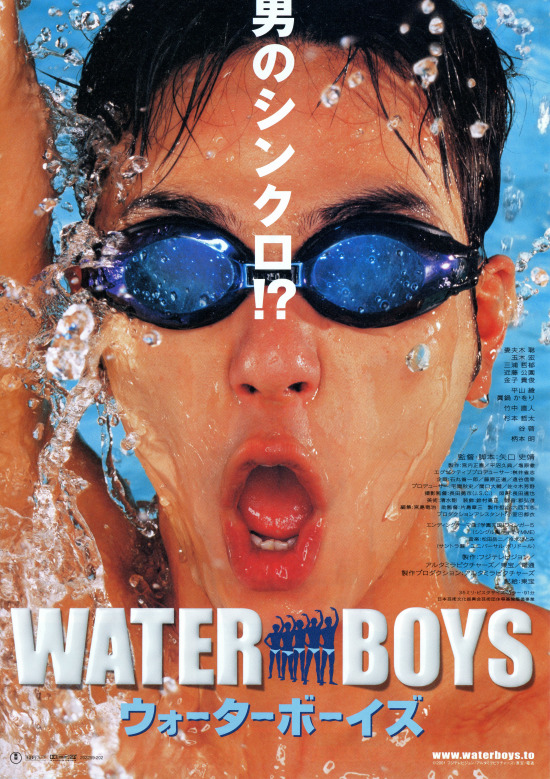 Japan has really taken the underdog triumphs genre of sports comedy to its heart but there can be few better examples than Shinobu Yaguchi’s 2001 teenage boys x synchronised swimming drama Waterboys (ウォーターボーイズ). Where the conventional sports movie may rely on the idea of individual triumph(s), Waterboys, like many similarly themed Japanese movies, has group unity at its core as our group of disparate and previously downtrodden high school boys must find their common rhythm in order to truly be themselves. Setting high school antics to one side and attempting to subvert the normal formula as much as possible, Yaguchi presents a celebration of acceptance and assimilation as difference is never elided but allowed to add to a growing harmony as the boys discover all new sides of themselves in their quest for water borne success.
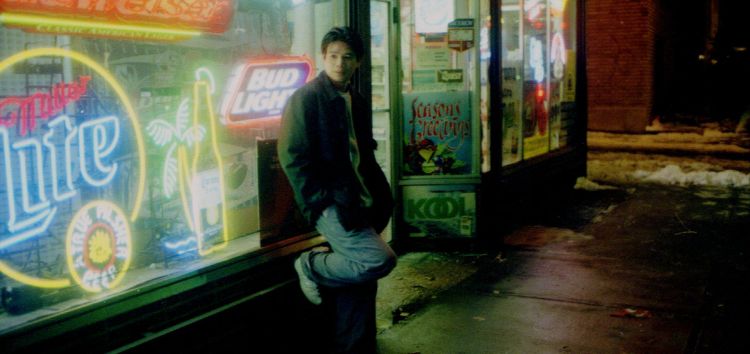 Lav Diaz’s auteurist break through, Batang West Side is among his more accessible efforts despite its daunting (if “concise” by later standards) five hour running time. Ostensibly moving away from the director’s beloved Philippines, this noir inflected tale apes a police procedural as New Jersey based Filipino cop Mijares (Joel Torre) investigates the murder of a young countryman but is forced to face his own darkness in the process. Diaspora, homeland and nationhood fight it out among those who’ve sought brighter futures overseas but for this collection of young Filipinos abroad all they’ve found is more of home, pursued by ghosts which can never be outrun. These young people muse on ways to save the Philippines even as they’ve seemingly abandoned it but for the central pair of lost souls at its centre, a young one and an old one, abandonment is the wound which can never be healed.
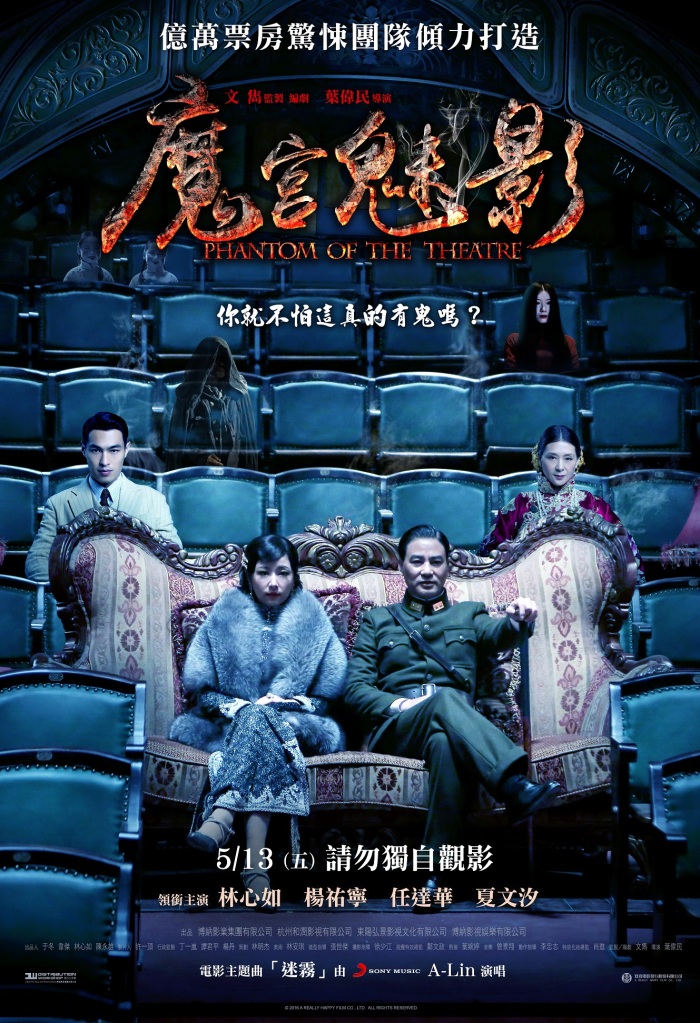 No ghosts! That’s one of the big rules when it comes to the Chinese censors, but then these “ghosts” are not quite what they seem and belong to the pre-communist era when the people were far less enlightened than they are now. One of the few directors brave enough to tackle horror in China, Raymond Yip Wai-man goes for the gothic in this Phantom of the Opera inspired tale of love and the supernatural set in bohemian ‘30s Shanghai, Phantom of the Theatre (魔宫魅影, Mó Gōng Mèi Yǐng). As expected, the thrills and chills remain mild as the ghostly threat edges closer to its true role as metaphor in a revenge tale that is in perfect keeping with the melodrama inherent in the genre, but the full force of its tragic inevitability gets lost in the miasma of awkward CGI and theatrical artifice.
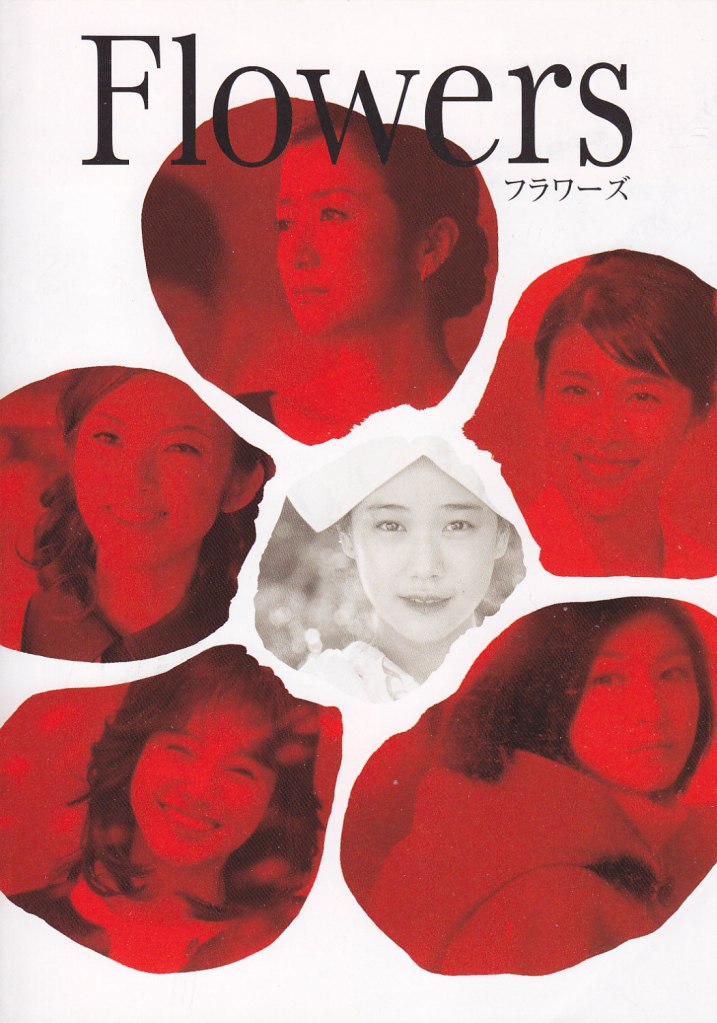 The rate of social change in the second half of the twentieth century was extreme throughout much of the world, but given that Japan had only emerged from centuries of isolation a hundred years before it’s almost as if they were riding their own bullet train into the future. Norihiro Koizumi’s Flowers (フラワーズ) attempts to chart these momentous times through examining the lives of three generations of women, from 1936 to 2009, or through Showa to Heisei, as the choices and responsibilities open to each of them grow and change with new freedoms offered in the post-war world. Or, at least, up to a point.
