The Catch (魚影の群れ, Shinji Somai, 1983)

the-catch

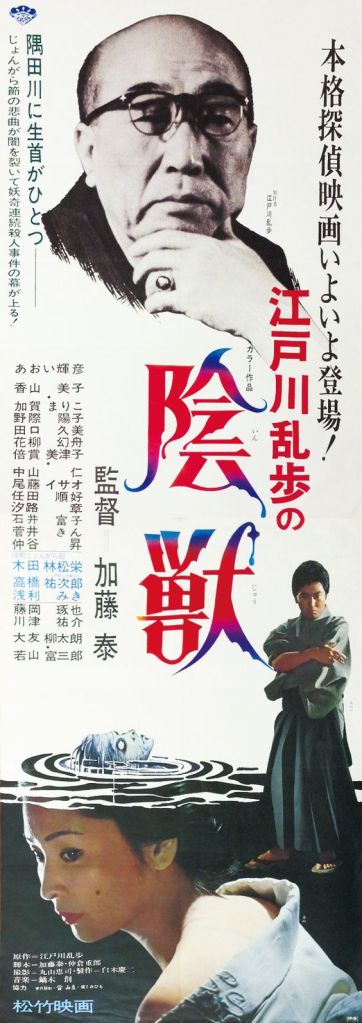
Some men become their work, the quest for success consumes them to the extent that there is barely anything left other than the chase. The Catch (魚影の群れ, Gyoei no Mure), Shinji Somai’s 1983 opus of fishermen at home on the waves and at sea on land is a complex examination of masculinity but also of fatherhood in a rapidly declining world filled with arcane ritual and ancient thought.

Fusajiro (Ken Ogata) is a middle aged man who looks old for his years. Man and boy he’s spent his life at sea, hunting down the elusive tuna fish which can be sold for vast amounts of money in the rare event that one is actually caught. This “first summer” as the title card refers to it, marks a change in his life as the daughter he’s been raising alone since his wife left him many years ago, Tokiko (Masako Natsume), has found a man she wants to marry. Her boyfriend, Shunichi (Koichi Sato), owns a coffee shop in town and Fusajiro has his doubts about a city boy marrying into a fisherman’s family. However, Shunichi isn’t just interested in Tokiko, he wants to set sail too. Though originally reluctant, Fusajiro eventually agrees to take Shunichi as a kind of apprentice but is dismayed when he gets seasick and seems to have no hint of a fisherman’s instinct.

Fusajiro is a legend among his peers – a big man of the sea, a true sailor and top hunter. He’s the one people turn to whenever anything goes wrong on the waves. However, he’s also a gruff man who speaks little and seems to prefer his own company.  In the rare event that he is speaking, it’s generally about tuna. When Shunichi first meets Fusajiro he remarks that he knew it must be him because he “smells of the sea”.

A later scene sees Fusajiro catch sight of a woman caught in the rain who immediately starts running away from him. Chasing her  just like one of his ever elusive tuna he eventually pins the woman down and takes her back to his boat to complete his conquest. The woman turns out to be his ex-wife, who left him precisely because of this violent behaviour. After momentarily considering returning to him, she realises that he hasn’t changed and accuses him of being unable to distinguish people from fish – he hooks them, reels them in, and if they don’t come willingly he hits them until they do so he can keep them with him. This overriding obsession with domination also costs Fusajiro his daughter when Shunichi is gravely injured on the boat and Fusajiro delays returning to port until he’s secured the tuna he was chasing at the time. Shunichi’s blood and the fish’s mingle together on the deck, one indistinguishable from the other, both victims of Fusajiro’s need to reign supreme over man and fish alike.

Fusajiro tried to warn Tokiko not to marry a fisherman, it would only make her miserable. Shunichi is warned that a fisherman’s life is a difficult one and the seas in this area less forgiving than most, but his mind is made up. Finally acquiring his own boat after selling his cafe, Shunichi, just like Fusajiro, starts to fall under the fisherman’s curse – endlessly chasing, living only for the catch. Unlike Fusajiro, however, Shunichi has little instinct for life at sea and fails to bring home his prey. Little by little, the mounting failures eat away at his self esteem as he feels belittled and humiliated in front of the other sailors culminating in an attempt to reinforce his manhood by raping his own wife. These men are little better than animals, consumed by conquest, permanently chasing at sea and on land. To be defeated, is to be destroyed.

Somai never shies away from the grimness and brutality of the work at hand. Ogata catches and spears these magnificent fish for real and the unfortunate creatures are then carved up right on the dockside before our very eyes. As we’re constantly reminded, physical strength is what matters for a fisherman and Fusajiro is a strong man, duelling with the tuna fish and straining to hold the line with all his might. Yet he’s getting old, his body is failing and like an aged toreador in the ring, his victory is no longer assured. The Japanese title of the film which translates as crowds of shadows of solitary fish expresses his nature more clearly, his fate and the tuna’s are the same – a lonely battle to the death. Unable to forge real human connections on land Fusajiro and his ilk are doomed to live out their days alone upon the sea wreaking only misery for those left behind on the shore.


Original trailer (No subtitles, graphic scenes of animal cruelty)

Behind the Yellow Line (緣份, Taylor Wong, 1984)

behind-yellow-lineBack in the 1980s, you could make a film that’s actually no good at all but because of its fluffy, non-sensical cheesiness still manages to salvage something and capture the viewer’s good will in the process. In the intervening thirty years, this is a skill that seems to have been lost but at least we have films like Taylor Wong’s Behind the Yellow Line (緣份, Yuan Fen) to remind us this kind of disposable mainstream youth comedy was once possible. Starring three youngsters who would go on to become some of Hong Kong’s biggest stars over the next two decades, Behind the Yellow Line is no lost classic but is an enjoyable time capsule of its mid-80s setting.

Paul (Leslie Cheung) is a mild mannered guy trying to get to work on time and make a good impression on his first day on the job but after having a taxi stolen out from under him and having to run some of the way, he rushes onto the underground where he has a meet cute with Monica (Maggie Cheung) – a sad looking lady who barely notices his presence. Paul is smitten and follows her onto the train where she continues to ignore him. Despite his best efforts he makes more of an impression on Anita (Anita Mui) – a wealthy and extremely fashionably dressed woman with giant 80s hair! Anita makes a play for Paul but he only has eyes for Monica. Monica is just getting over a failed affair with a married man and isn’t really sure of anything anymore. It’s all in the hands of fate and the mass transit authority but will true love really run its course?

Behind the Yellow Line (presumably so named for its train station setting, the chinese title is simply “fate”) is meandering mess of a picture though very much typical of its time. Paul and Monica get together but she’s still torn over her married lover who resurfaces at the most inconvenient moment whilst also fighting off the attentions of her flirtatious boss causing Paul to overreact in fit of jealously and almost ruin everything in the process. Eventually they decide to sort things out with a game of fate as Monica hides on the MTR expecting Paul to successfully pin point her location before the last train rolls so that she knows they are truly destined to be together.

This central spine of the film works well enough as Paul and Monica tempt fate with their true love romance but where does Anita fit into all this? Popping up now and then almost at random, Anita seems like a strange after thought or a refugee from another film. A stock ‘80s style kooky character, she’s all big hair and bold makeup but she’s also a wealthy woman trying to buy Paul (or more particularly his parents) with the promise of material security. ‘80s setting aside, consumerism is only a mild bi-product and neither Paul nor Monica is particularly pressed over material concerns – all that matters here is true love destiny and the successful resolution of their romantic difficulties. Anita becomes a kind of cupid, forsaking her own feelings in order to satisfy Paul’s in gesture of true love that also recognises having lost out in the great game of fate as her feelings are not returned. Or, there are things money cannot fix (at least, not in the way you want it to).

In this way Behind the Yellow line becomes more interesting as it’s Anita and Monica who begin to move the plot. Monica is quick to remind us that she’s a single woman and she has the right to choose – in this case, she feels sorry for both of her potential partners (whilst completely disinterested in her boss) and so is inclined to decide to remain alone. The film obviously doesn’t go this way, but it does present her choice as a perfectly valid one whilst also affording her the agency to choose her own destiny right the way through. Anita largely wields her power through her money (which appears to be inherited, the gang of other young people she hangs round with seem to be wealthy too making her choice of Paul a relatively strange one), but she exercises her individuality through her unconventional behaviour and bold fashion choices, refusing to give in to social norms but submitting to “destiny” in acknowledging that her feelings are unrequited.

Very much of its time, Behind the Yellow Line is an obvious piece of disposable entertainment designed to appeal to a very specific audience. Filled with cheerful ‘80s cantopop and bright neon lighting there’s relatively little angst in this tale of youthful romance. Everything bounces along much as one would expect with no melodramatic intrusions save Monica’s sometimes melancholy indecisiveness and Paul’s diffidence. Structurally the film is riddled with problems not least with its use of Anita who seems to appear and disappear as needed with no clear indication of her precise function yet it provides enough silly humour and good natured drama to coast though without too many problems. No great lost classic but enjoyable enough, Behind the Yellow is worth seeking out if only to witness the genesis of these three soon to be giants of the entertainment world whose careers became curiously intertwined before ending much too soon in the early years of the following century.


2003 Celestial Pictures trailer (English subtitles)

Original 1984 Cantonese trailer (English subtitles for onscreen text only, no subtitles for dialogue)

A Double Life (二重生活 , Yoshiyuki Kishi, 2016)

double-lifeA Double Life (二重生活, Nijyuu Seikatsu ), the debut feature from director Yoshiyuki Kishi adapted from Mariko Koike’s novel, could easily be subtitled “a defence of stalking with indifference”. As a philosophical experiment in itself, it recasts us as the voyeur, watching her watching him, following our oblivious heroine as she becomes increasingly obsessed with the act of observance. Taking into account the constant watchfulness of modern society, A Double Life has some serious questions to ask not only of the nature of existence but of the increasing connectedness and its counterpart of isolation, the disconnect between the image and reality, and how much  the hidden facets of people’s lives define their essential personality.

Tama (Mugi Kadowaki) is an MA philosophy student working on a thesis regarding the nature of existence in contemporary Japan. Discussing her work with her supervisor, Shinohara (Lily Franky), Tama reveals that she was drawn to her subject because she is unable to understand why she herself is alive. Her proposal was largely based on the tried and tested method of a survey but Shinohara is hoping for something more original. Catching sight of a Sophie Calle book on his desk, he suggests that Tama’s project might benefit from examining the life of one subject in depth and so he tasks her with following a random person and observing their daily activities in order to figure out what makes them tick.

Tama is conflicted, but when she catches sight of her neighbour at a book shop she makes an impulsive decision to follow him which will later develop into an all consuming obsession. Ishizaka (Hiroki Hasegawa) is a successful editor at a high profile publishing house with a pretty wife, cute daughter and lovely home just over the way from the apartment Tama lives in with her illustrator and game designer boyfriend, Takuya (Masaki Suda). However, while following Ishizaka to a local coffee shop Tama catches him illicitly meeting another woman. Not quite believing what she sees, Tama’s obsession with her target continues to grow until the fateful day that her cover is finally blown.

Tama, and her supervisor, both regard the exercise as essentially harmless because all Tama is supposed to do is observe. The nature of her experiment means that she must remain unseen so that the subject does not change his or her behaviour but Tama quickly becomes a passive observer to an unpleasant domestic episode when Ishizaka’s wife discovers the affair. Tama is, always, a passive presence. As she says herself, she carries a deep-seated sense of emptiness that prevents her from fully connecting with other people. Her stalking activities, however, reawaken a sense of connectedness that she had been unable to find in her everyday life.

While Tama is watching Ishizaka, she herself is also being watched. Firstly, of course, by us, but also by the busybody landlady whose obsession with the proper way to dispose of rubbish has led to her installing spy cameras to capture the offending tenants on film. Of course, the cameras capture a lot of other stuff too which, when used alongside other forms of evidence, paint a slightly different picture. The old lady is a classic curtain twitcher, albeit one with access to more sophisticated equipment, and looms big brother-like over her tiny domain, the possessor and disseminator of all information. Tama’s rules mean she must not be seen, but someone is always watching, collecting information to be repurposed and repackaged at the convenience of the collector.

Cameras capture images but humans conjure pictures. From the outside, the Ishizakas are the perfect model family – a successful husband, warm and friendly housewife who is quick to get involved in community events, and a lovely, well behaved little daughter. As we find out Ishizaka is not the committed family man which he first seems. After treating all of the women in his life extremely badly, Ishizaka adds Tama to his list after the affair is exposed and his life ruined. Tama was only ever a passive observer whose presence had no effect on the narrative, yet Ishizaka blames his predicament on her rather than address the fact the situation is entirely his own fault. He does, however, have a point when he accuses Tama of exploiting his secrets for her own gain.

Tama’s observations are limited to the public realm and so she’s left with a lot of unknown data making her conclusions less than reliable. The gap between her perception and the reality becomes even more apparent once she begins observing the life of her supervisor, Shinohara. In an elliptical fashion, the film begins with Shinohara’s presumed suicide attempt and for much of the first half we seem him struggle with the grief of his mother’s terminal illness. This again turns out to be not quite as it seems, undermining Tama’s whole research proposal as her conclusions on Shinohara’s reason for living were based on a deliberately constructed scenario.

Ironically enough, Tama’s attempts to connect eventually ruin her own relationship as she finds herself living “a double life” as a vicarious voyeur. Abandoning her sense of self and living through her subjects, Tama begins to connect with the world around her but it’s more overlapping than a true union of souls in which she becomes a passive receptacle for someone else’s drama. Hers is the life of a double, shadowy and incomplete. Take away a man’s life lie and you take away his happiness, so Ibsen told us. Tama would seem to come a similar conclusion, that the essence of life may lie in these petty secrets and projected images. An intriguing philosophical text in itself, A Double Life is an intense look at modern society and all of its various artifices which marks Kishi out as a promising new cinematic voice.


Reviewed at Raindance 2016

Original trailer (English subtitles)

Innocent15 (イノセント15, Hirokazu Kai, 2016)

innocent-15Innocence is a fairly nebulous concept and one often misused but if you were expecting an “innocent” tale of youthful romance, Hirokazu Kai’s Innocent15 (イノセント15) is out to wrong foot you from the get go. Kai does not shy away from the darker sides of human nature in examining abusive parenting and forced prostitution as well as the damage done when a secret is broken after long years of being unable to be honest about who you really are. This is a bleak tale, but one with with hope shining round the edges, even if uncertainly.

Narumi (Sara Ogawa) and Gin (Riku Hagiwara) are ordinary middle school students living in small town not far from the capital. When Narumi plucks up the courage to confess her love to her friend, she receives the kindest of brush offs but Gin is left confused. His two drop out friends who spend their days skateboarding around the neighbourhood can’t understand his decision to turn down such a pretty girl though they remember that he’s done the same thing before. Gin himself doesn’t quite know why, but even if he feels sorry for not returning Narumi’s feelings, he is unable to accept them.

Though Narumi may seem like the perfect high school girl – quiet, studious, and refined, if a little sad, her home life is anything but ordinary. Saddled with an aggressive woman child for a mother who demands Narumi abandon her homework to cook her dinner while she plays on her gameboy, Narumi keeps her head down and makes the best of things. After putting up with her mother’s regular beatings, she finally decides to leave when she learns that her mother has sold her virginity to her boyfriend for 100,000 yen.

Meanwhile, Gin’s life is turned upside-down when he learns his father is in love with another man. Already in a state of confusion about his own adolescent feelings, Gin is unable to comprehend this sudden bombshell and lashes out at all around him. Therefore when Narumi arrives and tells him she’s leaving for Tokyo to look for her father he immediately says he’ll come with her. However, their youthful ideas of going it alone in the big city are quickly dashed.

Gin’s problems are of a more immediate kind but Narumi has endured long term suffering at the hands of her abusive mother. When she belittles Narumi’s studying and remarks that she’s no need to go to high school because the world always needs more hookers, it seems like an instance of cruel sarcasm but it turns out she really is intent on prostituting her own daughter to her no good boyfriend.

When her mother’s boyfriend viciously attacks Gin, Narumi is left with nowhere else to go. The tragedy is that intense social pressures and her already existing isolation make it impossible for Narumi to confide in someone about the abuse she’s suffering at home. Being only 15, even if she were to simply walk out of her mother’s house she would have no way to support herself, leaving her with little choice between possible starvation on the streets and allowing her mother to sell her to her cruel and violent boyfriend.

Narumi’s “innocent” love for Gin becomes her last lifeline and his rejection a crushing end to her dreams of being saved. By contrast, Gin’s problems are much easier to solve. His resentment towards his father is more likely driven by the shock of the revelation rather than directly because he has fallen in love with another man. Gin may have temporarily rejected his father, but his father has not rejected him. Guilt and embarrassment over his actions aside, Gin is always welcome to return home where his father would welcome him with open arms. All of Gin’s problems are internal as he struggles with his adolescent confusion. All of Narumi’s problems are external – when Gin spots the scars and bruises on her shoulder, she tells him that she was able to put up with her mother’s cruelty because it only hurt her body and never touched her soul. Narumi’s interior is solid, but she’s trapped in a desperate situation from which there is no obvious way to escape.

Mirroring each other, Gin and Narumi try to run away from their problems but are each unable to escape. Kai opts for a series of reverses towards the film’s conclusion which offer hope only to dash it again and the final scene with only the sound of a motorbike’s flooded engine and eventual kickstart adds a note of anxious ambivalence in which there is a chance for the pair to ride away together but no further evidence that this attempt will be any more successful than the last. The general tone is one of gritty realism though Kai also admits the existence of life’s strange coincidence’s such as in the repeated appearance of a “weird lady” on a pink mobility scooter whose eccentric driving style has disastrous consequences. A necessarily bleak tale highlighting the plight of children in danger in their own homes and left with nowhere else to go coupled with a tentative, innocent teenage love story, Innocent15 is a tense, often horrifying experience filled with outrage but is careful to leave at least the possibility of a better way out, however far off it may be.


Reviewed at Raindance 2016.

Original trailer (English subtitles)
A Good Rain Knows (호우시절, Hur Jin-ho, 2009)

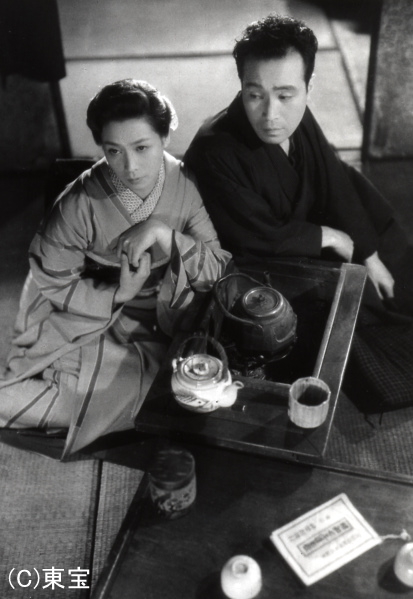
a-good-rain-knowsHur Jin-ho’s A Good Rain Knows (호우시절, Howoosijeol) was originally developed as a short intended to form part of the China/Korea collaborative omnibus film Chengdu, I Love You which was created as a tribute to the area following the devastating 2008 earthquake. However, Hur came to the conclusion that his tale of modern day cross cultural romance required more scope than the tripartite omnibus structure would allow and decided to go solo (Chengdu, I Love You was later released with just Fruit Chan and Cui Jian’s efforts alone). Very much Korean in terms of tone and structure, Hur uses his central love story to explore the effects time, memory, culture, and personal trauma on the lives of everyday people.

Smart suited businessman Park Dong-ha (Jung Woo-sung) has arrived in China as part of the Korean efforts to provide assistance in rebuilding after the 2008 earthquake which took thousands of lives and caused mass destruction. Met by a genial Korean ex-pat acting as his guide, Dong-ha takes in some sightseeing including a park dedicated to Tang dynasty poet Du Fu. As it turns out, an old university friend is also working at the park museum as a multilingual tour guide. There is more than a little unfinished business between Mei (Gao Yuanyuan) and Dong-ha though time has been passing all the while, throwing up obstacles every way you look to try and frustrate this serendipitous reunion.

Though the film is a collaborative effort between China and Korea, the bulk of the dialogue is spoken in English as Mei doesn’t speak Korean and Dong-ha doesn’t know any Mandarin (the pair apparently studied in the US and each returned to their home country separately, subsequently losing touch). Truth be told, the English is not always successful leaving both actors a little adrift – something which is not helped by conflicting Chinese and Korean acting styles. However, in someways this slight hesitance only adds to the restrained quality of their romance as each frequently adds tiny phrases of their own languages, becoming lost for words or trying to find exactly the right thing to say at the right moment.

The romance between Mei and Dong-ha never quite got going in their student days and seems to have taken on the status of a great lost opportunity. Time has moved on and they’re both different people. Student Dong-ha wanted to be a poet but now he’s a company man, even if a slightly conflicted, melancholy and romantic sort. Mei’s life has followed a more natural course though she too carries a deep seated sense of sadness caused by more recent personal tragedies. Both are left in a place of needing to relearn how be themselves – Dong-ha by getting back to writing and Mei by (literally) getting back on a bike but these are more natural, personal problems rather than the familial or social concerns which are the usual barriers to a successful melodrama romance.

Beautifully photographed, A Good Rain Knows takes its cues from Du Fu when it comes to the poetic, filling the screen with its vibrant green scenery. Of course, this contrasts strongly with the ruined buildings Dong-ha visits as well as the upscale hotels and restaurants, but the natural surroundings at least lend a healthy feeling of earthy wholesomeness to the proceedings. Hur has opted for a Korean orientated viewpoint, framing Chengdu as the slightly alien place it is to Dong-ha filled with bizarre foodstuffs and awkward conversations but nevertheless also an opportunity to reassess the current course of one’s life. A mature, realistic romance, A Good Rain Knows ends on a note of hopeful ambiguity – wisely avoiding the big romantic finale, Hur undercuts the inherent melodrama with wistful melancholy, the possibility of a happy ending is still in sight but there are no easy answers here, only a need for time and commitment.


Original trailer (English subtitles)
Seto and Utsumi (セトウツミ, Tatsushi Omori, 2016)

seto-and-utsumiThere are two very distinct sides to the career of Tatsushi Omori. Brother of the well known actor, Nao, Omori may be best known to certain audiences for his hard hitting, often gloomy and pessimistic dramas of human misery such as festival favourite Ravine of Goodbye or the little seen The Whispering of the Gods which proved so controversial that his only option of screening the film involved erecting a tent where he could show it himself. However, a closer look at his filmography discovers a steady strain of laid-back comedy such as the Tada’s Do It All House series in which two brothers played by Eita and Ryuhei Matsuda act as bumbling handymen-cum-detectives-cum-whatever-you-need-them-to-be. It might be less surprising therefore that his latest effort is an adaptation of Kazuya Konomoto’s comedy manga Seto and Utsumi (セトウツミ, Setoutsumi) which revels in the everyday absurdity of teenage life in Southern Japan.

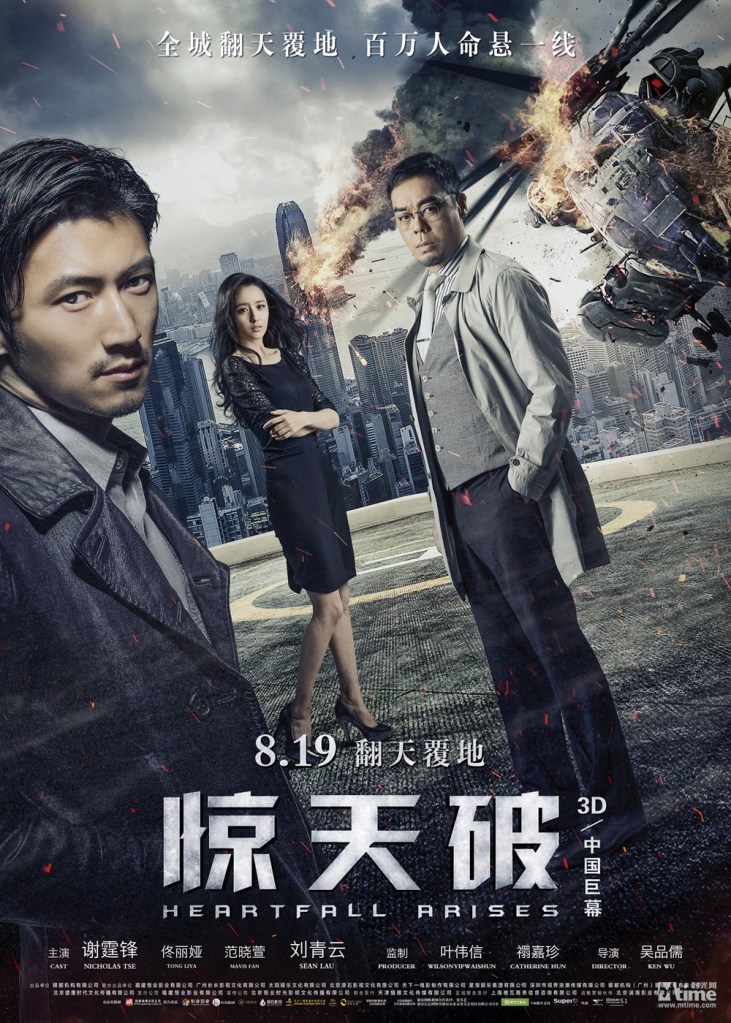
Seto (Masaki Suda) and Utsumi (Sosuke Ikematsu) are ordinary high school boys heading into their final year with the exam season and the end of their youthful, carefree days looming. Utsumi is a quiet, serious sort who generally doesn’t like a lot of company. Seto, by contrast, is a real live wire and not exactly a top student. Nevertheless, they found each other by a river one day and have been more or less inseparable ever since. Every day after school they meet and hang out in the same spot over looking the water where they shoot the breeze about various ordinary things from a non-argument over a girl to venus fly traps, Buddhist terminology, and ghosts.

Like many teenagers, Seto and Utsumi kill time doing nothing in particular and their conversations are generally inconsequential. Yet for all of their inherent randomness and absurdity, there’s a layer of poignancy underpinning each of them as the boys let slip various aspects of their private, interior lives. Seto’s big life drama involves the possible separation of his parents following the illness of the family cat which everyone in the family decided to indulge seeing as the poor thing didn’t have long left, but against expectation it’s two years later, the cat is still alive and Seto’s father is growing ever more resentful at spending so much money on luxury cat food. Seto’s family are a rowdy bunch, just as prone to drama as he is yet for all their complaining they seem fairly close – close enough for Seto to complain about the constant random text updates from his mother (a trait which Seto seems to have inherited himself).

Utsumi, by contrast, is much more aloof and keeps himself to himself. When Seto complains after his mother spots the boys at the river with bags full of shopping in her hands he remarks sadly that he rarely eats at home, implying it must be nice to have someone cook you a meal everyday. His approach to life is cerebral, calculating odds and planning angles, as he reveals to Seto in a piece of possibly not very helpful dating advice. Utsumi’s unseen parents are, presumably, just as aloof as he is, austere and religious. Nevertheless, in Seto he’s found a true sparring partner and someone he can waste time with amiably.

Utsumi’s parents are useful for one thing, they belong to the temple in which Seto’s crush, Kashimura (Ayami Nakajo), lives. Seto has been secretly trying to brush up on Buddhist terminology to impress her, but predictably she prefers the cool indifference of Utsumi to his friend’s energetic banter. Utsumi isn’t interested in Kashimura in any case, but not even this possible subject of conflict is big enough to seriously risk damaging the two boys’ friendship. As one character remarks towards the end of the film, it really is a once in a lifetime connection.

Omori keeps things simple, mostly sticking to static shots of the boys sitting on the steps near the river but he makes the stillness add to the sense of the absurd running through the quiet backwater town. After beginning with accordion music and ride through the canals, Seto and Utsumi’s first conversation takes place in front of an unintentional audience of a perfectly motionless older man, staring vacantly out at the river. The man turns out to have a valid (if sad) reason for being where he is, but the presence of the balloon animal vending clown from Eastern Europe (called Mr. Balloon) is a little harder to explain given that other than Seto, Utsumi, the aforementioned man, a high school bully, Seto’s mum, and a senile grandpa, no one else comes anywhere near this tranquil spot for the entire film. Using occasional dissolves and superimpositions to create a fleeting, dreamlike atmosphere with a handful of cutaways and flashbacks for comedic context, Seto and Utsumi is a truly charming ode to teenage friendship in all its pleasantly ridiculous absurdity.


Reviewed at Raindance 2016.

Original trailer (English subtitles)

There are also a few bonus web episodes of Seto and Utsumi enjoying even more pointless conversations:

No. 1 – Kendama (a kind of Japanese cup and ball game) (English subtitles)

No. 2: Timing (English subtitles)

3. Standing Ovation (no subtitles but you don’t really need them)

The Boss’ Son at College (大学の若旦那, Hiroshi Shimizu, 1933)

vlcsnap-2016-09-25-01h32m39s471It’s tough being young. The Boss’ Son At College (大学の若旦那, Daigaku no Wakadanna) is the first, and only surviving, film in a series which followed the adventures of the well to do son of a soy sauce manufacturer set in the contemporary era. Somewhat autobiographical, Shimizu’s film centres around the titular boss’ son as he struggles with conflicting influences – those of his father and the traditional past and those of his forward looking, hedonistic youth.

Fuji (Mitsugu Fujii) is the star of the university rugby team. In fact his prowess on the rugby field has made him something of a mini celebrity and a big man on campus which Fuji seems to enjoy very much. At home, he’s the son of a successful soy sauce brewer with distinctly conservative attitudes. Fuji’s father has just married off one of his daughters to an employee and is setting about sorting out the second one despite the reluctance of all parties involved. Everyone seems very intent on Fuji also hurrying up with finishing his studies so he can conform to the normal social rules by working hard and getting married.

Fuji, however, spends most of his off the pitch time drinking with geisha, one of whom has unwisely fallen in love with him. Like many teams, Fuji’s rugby buddies have a strict “orderly conduct” rule which Fuji has been breaking thanks to his loose ways. His top player status has kept him safe but also made him enemies and when an embarrassing incident proves too much to overlook he’s finally kicked off the team.

The times may have been changing, but Fuji’s soy sauce shop remains untouched. Gohei (Haruro Takeda), the patriarch, grumpily rules over all with a “father knows best” attitude, refusing to listen to his son’s complaints. In fact, he tries to bypass his son altogether by marrying off another employee to his younger daughter, Miyako. Though Miyako tries to come to the employee’s defence (as well as her own) by informing her father that “this way of treating employees is obsolete”, she is shrugged off by Gohei’s authoritarian attitude. He’s already tried this once by arranging a marriage for his older daughter but his son-in-law spends all his time in geisha houses, often accompanied by Fuji, and the match has produced neither a happy family nor a successful business arrangement.

Fuji is a young man and he wants to enjoy his youth, in part because he knows it will be short and that conformity is all that awaits him. His dalliance with a geisha which contributes to him being kicked off the rugby team is in no way serious on his part (caddish, if not usually so). However, when he befriends an injured teammate and meets his showgirl sister, Fuji falls in love for real. This presents a problem for the friend whose main commitment is to the rugby team who were thinking of reinstating Fuji because they have a big match coming up and need him to have any chance of not disgracing themselves. This poor woman who has apparently been forced onto the stage to pay her brother’s school fees is then physically beaten by him (if in a childishly brotherly way) until she agrees to break things off with Fuji for the good of the rugby team.

Fuji is finally allowed onto the pitch again, in part at the behest of his previously hostile father who thinks rugby training is probably better than spending all night drinking (and keeping his brother-in-law out all night with him). The loss of status Fuji experienced after leaving the team rocked him to the core though his central conflict goes back to his place as his father’s son. At one point, Fuji argues with a friend only for a woman to emerge and inform him that his friend had things he longed to tell him, but he could never say them to “the young master”. Fuji may have embraced his star label, but he doesn’t want this one of inherited burdens and artificial walls. Hard as he tries, he can never be anything other than “the boss’ son”, with all of the pressures and responsibilities that entails but with few of the benefits. Getting back on the team is, ironically, like getting his individual personality back but also requires sacrificing it for the common good.

In contrast with some of Shimizu’s post-war films which praise the importance of working together for a common good but imply that the duty of the individual is oppose the majority if it thinks it’s wrong, here Fuji is made to sacrifice everything in service of the team. At the end of his final match, Fuji remarks to his teammate that this is “the end of their beautiful youth”. After graduation, they’ll find jobs, get married, have children and lose all rights to any kind of individual expression. Fuji is still torn between his “selfish” hedonistic desires and the growing responsibilities of adulthood, but even such vacillation will soon be unavailable to him. Ending on a far less hopeful note than many a Shimizu film with Fuji silently crying whilst his teammates celebrate victory, The Boss’ Son Goes to College is a lament for the necessary death of the self as a young man contemplates his impending graduation into the adult world, but it’s one filled with a rosy kind of humour and an unwilling resignation to the natural order of things.


Mr. Shosuke Ohara (小原庄助さん, AKA Ohara Shosuke-san, Hiroshi Shimizu, 1949)

vlcsnap-2016-09-25-01h34m07s636Ohara Shousuke-san (小原庄助さん) is the name of a character from a popular folk song intended to teach children how not to live their lives. The Ohara Shosuke-san of Aizu Bandaisan has lost all his fortune but no one feels very sorry for him because it’s his own fault – he spent his days in idleness, drinking, sleeping in, and bathing in the morning. The central character of Hiroshi Shimizu’s 1937 film has earned this nickname for himself because he also enjoys a drink or too and doesn’t actually do very much else, but unlike the character in the song this a goodhearted man much loved by the community because he’s a soft touch and just can’t refuse when asked for a favour. An acknowledgement of the changing times, Shimizu’s Mr. Shousuke Ohara is a tribute to the soft hearted but also an argument for action over passivity.

If you turn up one day and ask for directions to the Sugimoto household, everyone will look at you with confusion but if you ask for Mr. Shousuke Ohara everyone will gladly walk you over and introduce you. Saheita Sugimoto (Denjiro Okochi) is the head of a once proud samurai household but his fortunes are far from those of his ancestors. Despite his pecuniary difficulties, Sugimoto is good hearted man who wants to help everyone that he can (out of a sense of altruism rather than duty or vanity). Consequently he is deeply in debt and nearing bankruptcy yet he can’t give up any of his three vices – drinking, gambling, and generosity.

The nature of the changing times is at the centre of this 1949 film. As Sugimoto is fond of telling people, his noble house used to stand for something but all of that historical influence is next to meaningless now. Though Western dress is not uncommon, the village is pretty much as it’s always been – children play in the fields and Sugimoto travels everywhere by donkey. Other than the tale of Sugimoto’s fall from grace, the central narrative concerns an election for a new village chief. Yoshida, a youngish man, wants Sugimoto’s support for his election campaign. His main campaign policy is modernisation – the introduction of electricity, modern transportation and communications, as well as greater cultural involvement starting with opening Western style ballroom dance classes for the children. Unfortunately his policies are not that firm and his motto seems to be “I’ll do that first!” to all aspects of his plan which is not very encouraging but still the desire is very much to move away from old fashioned village life towards a more sophisticated urbanism.

This of course also means an end to the inherited influence of idle nobleman such as Sugimoto. Though he’s a kind man who likes nothing other than helping other people, Sugimoto has been a passive steward, more consumed with his own idle pursuits than with making an active attempt at leading the village. This passivity has contributed to his downfall as he’s neglected the business of maintaining his own fortune. After taking out numerous loans which he only ever uses to help the villagers, Sugimoto has let the estate which ancestors founded, and which he was supposed to look after in the names of all that have gone before and all were to come after him, slip away. The ultimate failure and a disgrace to his ancestors, this loss of the ancestral home is an unforgivable betrayal yet there is something in Sugimoto which seems to regard it as right and proper that it should go.

Change is coming to the village, even if it isn’t coming with the speed that a young man like Yoshida may be hoping for. Change is also coming to Japan which is in the progress of rebuilding itself anew following long years of folly followed by confusion. There is no room for genial idleness anymore. “If you can work honestly with your hands you can make a living”, Sugimoto tells two would-be-burglars that he invites in for a drink as a apology for not having anything left for them to steal, but means the advice more for himself than anyone else. It’s time to say goodbye to Shousuke Ohara and the burden of inherited privilege and chart a new course as Seihata Sugimoto. Finishing on another of Shimizu’s much loved road shots, Sugimoto, like his nation, walks confidently along the road to an uncertain future yet he is not alone as he goes and may make something of himself yet.


Three (三人行, Johnnie To, 2016)

Johnnie To is best known as a purveyor of intricately plotted gangster thrillers in which tough guys outsmart and then later outshoot each other. However, To is a veritable Jack of all trades when it comes to genre and has tackled just about everything from action packed crime stories to frothy romantic comedies and even a musical. This time he’s back in world of the medical drama as an improbable farce develops driven by the three central cogs who precede to drive this particular crazy train all the way to its final destination.

Dr. Tong (Zhao Wei), is a tough as nails neurosurgeon. Having arrived in Hong Kong from the mainland at 17, she learned Cantonese, got into medical school and has built a fine career for herself but this same drive means she’s unwilling to delegate and constant overwork is beginning to eat into her statistics. She thinks her day can’t get much worse after an angry patient rants and calls her a quack because there has been a complication with his surgery and he’s currently unable to walk but her next patient, a man with a gunshot wound to the head brought in by the police, is about to add to her already long list of workplace stressors.

Shun (Wallace Chung) is actually almost OK except for having a bullet lodged in his brain. Against all the advice, Shun refuses the offer to have it removed surgically because he’s playing a long game with the police and it’s his one bargaining chip. The police’s story is that Shun grabbed a gun and tried to escape whereupon an officer shot him. However, this turns out to be not quite true and Inspector Chen (Louis Koo) has twin worries – finding Shun’s accomplices and covering up the extreme misconduct committed by his team members.

The original Chinese title of the film, 三人行 which means three people walking, is inspired by the traditional saying that among three people you will always find someone you can learn something from. However, the tragedy of these three is that they’re incapable of learning anything from anyone else and are actually quite disinterested in other people. Tong is always thinking of her targets and can’t bear the thought of losing again if Shun dies of his injuries, but rather than learning to step back and recharge, she continues to push herself to near breaking point. Chen is series of walking contradictions – a lawbreaking policeman, so certain of his own ability to counteract crime that he’s lost all accountability. Shun’s big personality flaw is taking far too much pleasure in his playful scams. He wants to make a phone call so he refuses surgery until he can (quoting Bertrand Russell and throwing the Hippocratic oath back at Tong, already nearing the boil), never quite realising that the delay could very well signal the end of everything.

Tong, Chen, and Shun are three pillars of society – the respectability of the medical profession, the authority of law enforcement, and the inevitability of crime. Tong, the most sympathetic, propels herself into overwork but her selfish need to prove herself to herself puts patients’ lives at risk. The police force which is supposed to represent protection under the law, is shown to be corrupt and little more than criminal in itself. Chen says he can break the law to enforce the law, but what he’s really trying to do is save his own skin after going too far. Shun is simply a sociopathic genius intent on showing off his cerebral prowess to anyone who will give him the slightest bit of attention but like all criminals he’s a goal orientated, short term thinker. Each of the three is, in a sense, moving in their own universe and driven only by their own certainty of primacy.

As much as Three is a crime thriller, psychological character piece, and medical drama, what lies at the heart of it is farce. In keeping with much of his work, To’s world is an absurd one filled with eccentric fringe characters who may be more important than they otherwise appear and, as usual, the final god is luck – a paralysed man attempts suicide by throwing himself down the stairs only to suddenly find he can stand up by himself at the bottom, and Chen’s gun jams several times preventing him from taking decisive action. At one very strange juncture, Shun even tries to escape the hospital by making use of the classic boys own adventure tactic of tying a number of sheets together and using them to climb out of the window. To’s true centrepiece takes the form of a tense, exciting shootout which looks like slow motion but was apparently filmed in real time with the actors moving slowly in perfectly choreographed formation. The improbable scene of carnage, prefaced by bombs going off right, left and centre, is conducted to a the strains of a genial pop song extolling Confucianist wisdom. Beautifully balletic, the bullets hit in real time but the actors react as if stunned, allowing us to fully experience all of their fear and confusion at the centre of such a shocking event.

The man who may have the most to teach us the genial old man with a key stealing habit who erupts into a bawdy song as he’s being discharged. He may have the right idea when he suggests that everyone follow his example and learn to laugh loudly to live a happy life. To reinforces his absurd intentions with intense realism, embracing the ritualistic, “theatrical” nature of the operating room with all of its various performances set atop the heated bloody scenes of bodily gore and coldly metallic nature of the surrounding equipment. To’s gleefully graceful aesthetic is back in force for this tale of lonely wandering planets pushed out of orbit by the imposing centrifugal forces of their rivals. Strange and tinged with absurd humour, Three is To is in a playful mood but nevertheless deadly serious.


Reviewed at Raindance 2016.

Original trailer (English/Traditional Chinese subtitles)

Star Athlete (花形選手, Hiroshi Shimizu, 1937)

vlcsnap-2016-09-23-01h52m32s055Japan in 1937 – film is propaganda, yet Hiroshi Shimizu once again does what he needs to do in managing to pay mere lip service to his studio’s aims. Star Athlete (花形選手, Hanagata senshu) is, ostensibly, a college comedy in which a group of university students debate the merits of physical vs cerebral strength and the place of the individual within the group yet it resolutely refuses to give in to the prevailing narrative of the day that those who cannot or will not conform must be left behind.

Seki (Shuji Sano) is the star of the athletics club and shares a friendly rivalry with his best friend Tani (Chishu Ryu). Tani likes to train relentlessly but Seki thinks that winning is the most important thing and perhaps it’s better to be adequately rested to compete at full strength. While the two of them are arguing about the best way to be productive, their two friends prefer to settle the matter by sleeping. The bulk of the action takes place as the guys take part in a military training exercise which takes the form of a long country march requiring an overnight stay in a distant town. The interpersonal drama deepens as Seki develops an interest in a local girl who may or may not be a prostitute, casting him into disrepute with his teammates though he’s ultimately saved by Tani (in an unconventional way).

Far from the austere and didactic nature of many similarly themed films, Shimizu allows his work to remain playful and even a little slapsticky towards the end. These are boys playing at war, splashing through lakes and waving guns around but it’s all fun to them. Their NCO maybe taking things much more seriously but none of these men is actively anticipating that this is a real experience meant to prepare them for the battlefield, just a kind of fun camping trip that they’re obliged to go on as part of their studies. The second half of the trip in which the NCO comes up with a scenario that they’re attempting to rout a number of survivors from a previous battle can’t help but seem ridiculous when their “enemies” are just local townspeople trying to go about their regular business but now frightened thinking the students are out for revenge for ruining their fun the night before.

That said, the boys do pick up some female interest in the form of a gaggle of young women who are all very taken with their fine uniforms. The women continue to track them on their way with a little of their interest returned from the young men (who are forbidden to fraternise). Singing propaganda songs as they go, the troupe also inspires a group of young boys hanging about in the village who try to join in, taken in by Tani’s mocking chant of “winning is the best” and forming a mini column of their own. After this (retrospectively) worrying development which points out the easy spread of patriotic militarism, the most overtly pro-military segment comes right at the end with an odd kind of celebration for one of the men who has received his draft card and will presumably be heading out to Manchuria and a situation which will have little in common with the pleasant boy scout antics of the previous few days.

Physical prowess is the ultimate social marker and Seki leads the pack yet, when he gets himself into trouble, his NCO reminds him that “even stars must obey the rules” and threatens to expel him though relents after Tani takes the opportunity to offer a long overdue sock to the jaw which repairs the boys’ friendship and prevents Seki being thrown out of the group. Seki’s individuality is well and truly squashed in favour of group unity though Shimizu spares us a little of his time to also point out the sorrow of the young woman from the inn, left entirely alone, excluded from all groups as the students leave.

Employing the same ghostly, elliptical technique of forward marching dissolves to advance along the roadway that proved so effective during Mr. Thank you, Shimizu makes great use of location shooting to follow the young men on the march. Though the final scene is once again a humorous one as the two sleepyheaded lazybones attempt to keep pace with the front runners, the preceding scene is another of Shimizu’s favourite sequences of people walking along a road and disappearing below a hill, singing as they go. However, rather than the cheerful, hopeful atmosphere this conveyed in Shiinomi School there is a feeling of foreboding in watching these uniformed boys march away singing, never to reappear. Shimizu casts the “training exercise” as a silly adolescent game in which women and children are allowed to mockingly join in, but he also undercuts the irony with a subtle layer of discomfort that speaks of a disquiet about the road that these young men are marching on, headlong towards an uncertain future.