The Man with Three Coffins (나그네는 길에서도 쉬지 않는다, Lee Jang-ho, 1987)

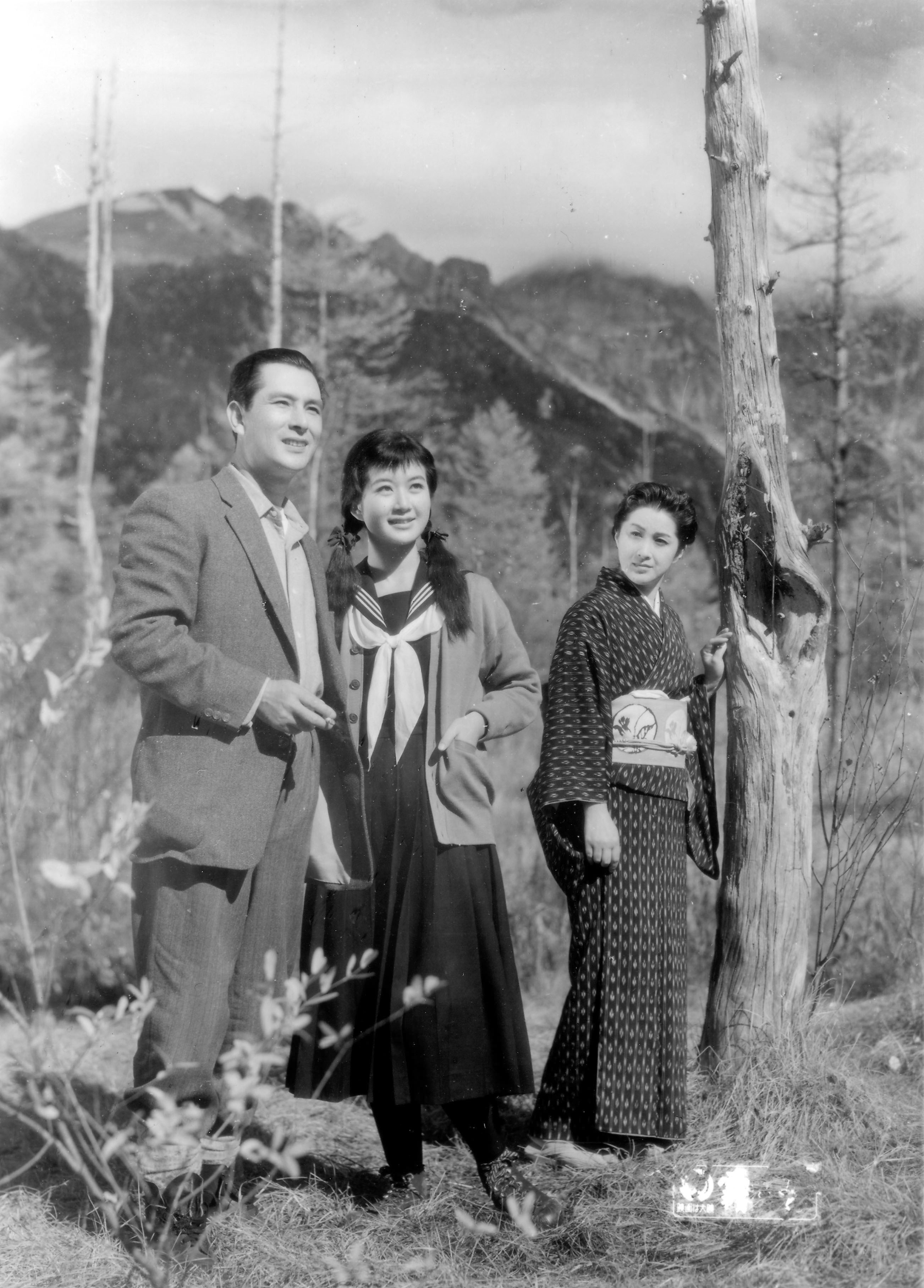
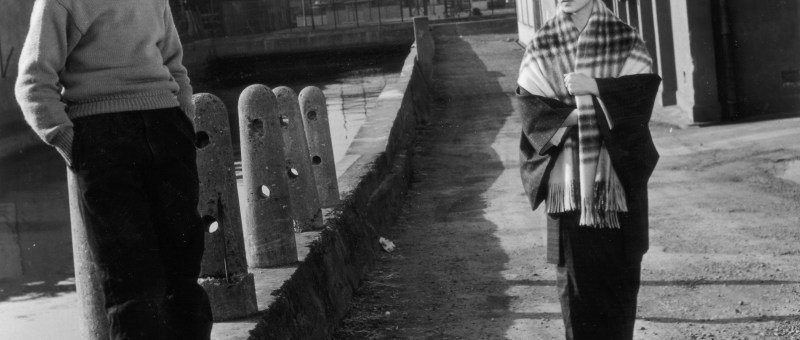
“What a piteous soul who wanders around with sorrow.” The echoes of a funeral song haunt the melancholy hero of Lee Jang-ho’s Division Film, The Man With Three Coffins (나그네는 길에서도 쉬지 않는다, Nageuneneun kileseodo swiji anhneunda). Adapting a novel by Lee Je-ha, Lee Jang-ho positions the divided nation as a more literal kind of limbo filled with wandering ghosts and souls who no longer have a home to return to in which the echoes of shamanism ring with fatalistic intensity.

In Lee’s elliptical screenplay, moments replay and reverberate in a stream of memory that echoes the protagonist’s fractured state of being. What eventually becomes apparent is that he is on a quest to return his wife’s ashes to her hometown, the problem is that she was one of many displaced by the Korean War. She became separated from her parents and no longer knew where her hometown was except somewhere in the North. The man who is being discussed in the opening sequence, Mr Kim, is also on a quest to return to his hometown but like that of Sun-seok’s wife (Lee Bo-hee) it lies in the North and it is unlikely he can reach it. The old man tightly grips a photograph of his family before the war, finally releasing it only when some henchman working for his son who only sees the South as his home come to retrieve him and destroy his hopes of dying in the place where he was born.

During his journey, Sun-seok (Kim Myung-gon) passes a sign which reads “Road to Reunification” but the bridge alongside it has been removed with only the supports remaining like thorns embedded in the landscape. Another sign reads “Restricted Area” marking the line beyond which Sun-seok cannot pass, like the man in the funeral song unable to pass through mountain or water. As he nears his destination, Sun-seok’s paths are blocked by snow preventing him from moving on or from returning to his ordinary life in Seoul. He is in more ways than one a purgatorial figure, a man already dead but trapped in the mortal realm even as the shamans attempt to guide him towards his rightful direction, a direction which Sun-seok may finally realise only on witnessing a woman with whom he may have fallen in love join in with the shamanistic dance though she two had been as soulless as he was and it may be impossible to say which of them is bound for the land of the dead. 

Mrs. Choi (Lee Bo-hee), the only woman given a name, remarks that a shaman had told her that at 30 she would meet a man by a river who was carrying three coffins and that this man was her husband in a previous life. This might explain why all of Sun-seok’s women are played by the same actress, as if they are all echoes of the same soul though equally it could reflect Sun-seok’s myopic view in which there is only ever really one woman. In any case, their connection seems both fated and frustrated because in this divided world there are only ever partings. Unable to reach his destination, Sun-seok scatters his wife’s ashes in the closest town to the DMZ, the same town where Mrs Choi and Mr Kim are also prevented from moving forward though in this case pulled back towards the soulless capitalism of the contemporary South as symbolised by Mr Kim’s son and his political ambitions. 

The implication is that is the division itself which caused the death of Sun-seok’s wife, ultimately unable to reconcile the division within herself and eventually consumed by it. Her death is echoed in that of a sex worker who dies gripping her throat and foaming at the mouth shortly after an encounter with Sun-seok, while a sex worker he meets in another town suffers a similar fate as if he were somehow spreading death along his way bringing him to his three coffins, which are in a way one and also four including perhaps his own. The washed out red of Lee’s distinctive colour palate lends the dusty land a hellish glow while the unusual camera techniques, a copulating couple superimposed on Sun-seok’s playing cards and a giant hand suddenly appearing in the sky for example, add a sense of ominous dread enhanced by the constant intrusions of shamanic ritual. It seems that as the song says, a funeral lament for a boy who disappeared feared drowned but also for Sun-seok himself, he really can’t go anywhere and is condemned to wander, a lost soul in a divided land who cannot any longer return to his home.


One More Chance (別叫我”賭神, Anthony Pun Yiu-Ming, 2023)

A feckless gambler gets a final shot at redemption when he’s suddenly asked to take care of an autistic son he never knew he had in Anthony Pun Yiu-Ming’s nostalgic drama, One More Chance (別叫我”賭神). Previously titled “Be Water, My Friend”, the film has had a troubled production history only reaching cinema screen four years after filming concluded in March 2019 and has been retitled in the Chinese “Don’t Call Me the God of Gamblers” which seems to be a blatant attempt to cash in the audience’s fond memories of similarly pitched Chow Yun-fat vehicles from the ’80s and ’90s such as All About Ah Long.

In truth, Chow is probably a little old for the role he’s cast to play as the middle-aged barber Water who’s long since fled to Macao in an attempt to escape problems with loansharks caused by his gambling addition. Of course, Macao is one of the worst places someone with a gambling problem could go and so Water is already up to his neck in debt and a familiar face at the local casino. That’s one reason he ends up going along with the proposal of old flame Lee Xi (Anita Yuen Wing-Yee) to look after her grownup son, Yeung (Will Or Wai-Lam), who is autistic, for a month in return for 50,000 HK dollars up front and another 50,000 at the end assuming all goes well. She claims that Water is Yeung’s father and even provides forms for him to send off for a DNA test if he doesn’t believe her, but at this point all Water is interested in is the cash. 

To begin with, he pretty much thinks of Yeung as cash cow, descending on a Rain Man-esque path of using him to up his gambling game but otherwise frustrated by his needs and ill-equipped to care for an autistic person whom he makes little attempt to understand. For his part, Yeung adapts well enough and tries to make the best of his new circumstances but obviously misses his mother and struggles when Water selfishly disrupts his routines. For all that, however, it’s largely Yeung who is looking after Water, tidying the apartment and bringing a kind of order into his life while forcing him to reckon with the self-destructive way he’s been living. 

Picking up a casino chip in the opening sequence, Water describes it as a “chance” in an echo of the way he’s been gambling his life just as he decides to gamble on taking in Yeung. At one point, he wins big on the horses but takes his winnings straight to the casino where he’s wiped out after staking everything on a single bet only to realise he’s been played by another grifter at the table. It seems that Xi left him because of his gambling problem and the resultant change in his lifestyle that had made it impossible for her to stay or raise a child with him, causing Water to become even more embittered and cynical. Where once he provided a refuge for wayward young men trying to get back on the straight and narrow, now he’s hassled by petty gangsters over his massive debts.

Nevertheless, it’s re-embracing his paternity that begins to turn his life around as he bonds with Yeung and begins to have genuine feelings for him rather than just fixating on the money while simultaneously recognising that Yeung is already a man and able to care for himself in many more ways than others may assume. One could say that he gambles on the boy, staking his life on him rather than endless rolls of the dice to fill an emotional void but also rediscovering a sense of himself and who he might have been if he had not developed a gambling problem and left it up to chance to solve all his problems. Unabashedly sentimental, the film flirts with nostalgia in the presence of Chow and Anita Yuen and largely looks back the Hong Kong classics of the 80s and 90s if with half an eye on the Mainland censors board, Bruce Lee shrine not withstanding, but nevertheless presents a heartwarming tale of father and son bonding and paternal redemption as Water crosses the desert and finally reclaims himself from his life of dissipation. 


Original trailer (English subtitles)

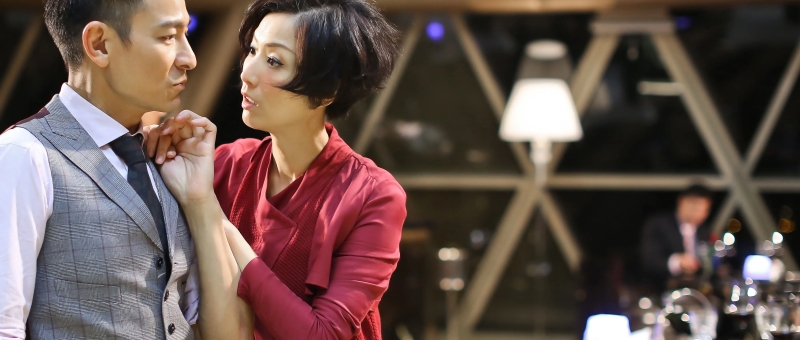
Criminal Woman: Killing Melody (前科おんな殺し節, Atsushi Mihori, 1973)

“Five women like us could take on the whole world!” a woman exclaims after a very successful mission of revenge in which they didn’t have to do very much at all except play on male pride and yakuza honour. Criminal Woman: Killing Melody (前科おんな殺し節, Zenka onna: Koroshi-bushi) stars the two main players of Toei’s pinky violence line, Reiko Ike and Miki Sugimoto, and plays with their star rivalry by casting them as a pair of women eventually divided by the conflicting loyalties presented by the heroine’s desire for revenge. 

Ike stars as Maki, an intense young woman first seen hiding behind a door in the classic club scene that opens the film. Eventually she darts inside and slashes some yakuza with a knife, but her assassination attempt is very unsuccessful landing her in prison for a number of years where she largely spends her time glaring at the bars and plotting her revenge. Nevertheless, it’s the solidarity she finds with her cellmates that eventually allows her to carry out her plan. On her arrival, she first clashes with cell boss Masayo (Miki Sugimoto), a former yakuza moll inside for slashing some guys with a razor after they caught her cheating at hanafuda, but eventually wins her respect after a prison test of strength in which each woman is armed with a glass shard and grips a rope between their teeth until the loser gives in and lets go. Maki is not a skilled fighter and easily wounded by Masayo but refuses to surrender, getting right back up again every time Masayo knocks her down until Masayo finally concedes defeat.

The early prison fight is repeated at the end of the film only without the rope and with real knives, drugs replacing the white chalk that clouded around them as they fought in the prison yard. This time they are more evenly matched. Maki is no good with a knife, but more than able to hold her own and the fight is more about settling a score than it is about revenge so neither really wants to harm the other anyway. Though they found themselves temporarily on opposing sides, inevitably it turns out that Masayo is the woman of the yakuza Maki is trying to bring down, the sense of solidarity between them as women eventually wins out and though Masayo is unable to betray Oba (Ryoji Hayama) she cannot betray Maki either and ends up helping in her in quest for revenge if in a round about way.

It’s this sense of solidarity that brings the other cell mates back to the prison when Maki is released already having decided to help her get her revenge on the yakuza who forced her father to traffic drugs and then had him killed. Maki first refuses their help, as she had the opportunity of getting legal justice by telling the police everything that had happened including her own gang rape at the hands of the same yakuza, because it’s important that she’s the one who takes down Oba but later accepts their gesture and forms a tightly knit gang of her own fronted out of former sex worker Kaoru’s (Yumiko Katayama) bar. To fund the mission, Maki goes on a two week sex work spree mostly bedding American servicemen with whom she later makes a deal to buy a large number of guns and grenades she eventually sells to hotheaded yakuza son Tetsu (Takeo Chii) who is already resentful towards Oba for having stolen his father’s turf.

All Maki has to do to is light the touch paper on a simmering gang war between old school yakuza and the amoral corporatising Oba. She antagonises him by expertly offing one of his guys in a rain drenched assassination scene and getting one of the other girls to strongly hint it was Tetsu’s doing, then pretending to come to Tetsu’s rescue with the guns only to further provoke Oba. The girls even joke they’re doing a public service by cleaning up the town in taking out the corrupt politician who was propping up Oba for his own financial gain. It’s all expertly planned by Maki who appears in a series of quite stunning power suits and sporting giant hair, battling yakuza with killer style and an expert understanding of the way their brains work. But the reason the plan succeeds is the shared sense of solidarity between the women, Masayo included, as they strike back together against an oppressive and patriarchal society.


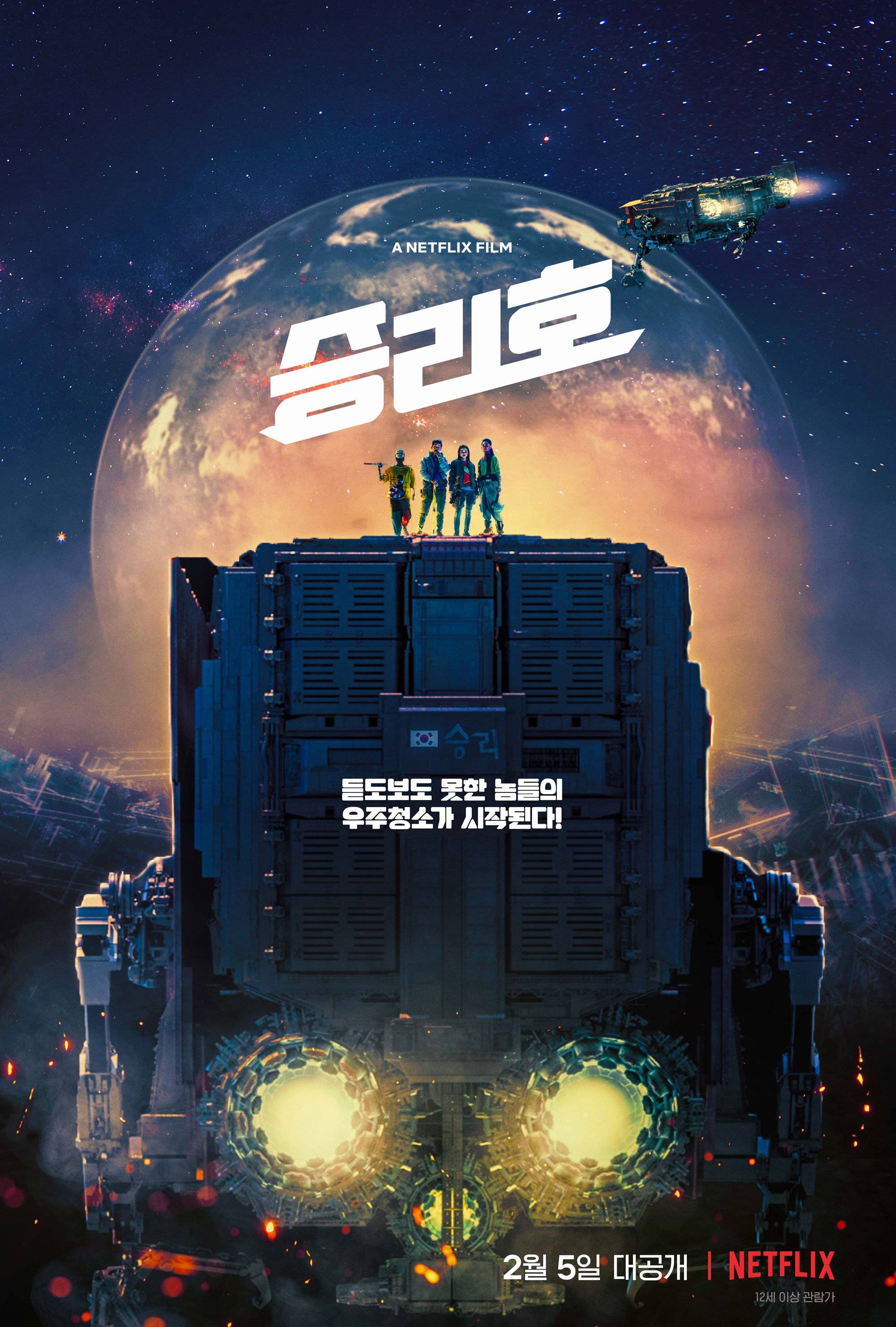
Noryang: Deadly Sea (노량: 죽음의 바다, Kim Han-min, 2023)

The strange thing about Noryang: The Deadly Sea (노량: 죽음의 바다, Noryang: Jugeumui Bada), the third and final instalment in Kim Han-min’s trilogy about 16th century admiral Yi Sun-sin is that everyone wants to end the war but they all want to end it definitively and so are unable to simply let it run its course. Then again, there is a little more complexity involved in the depiction of Yi in asking whether his desire to repel the Japanese once and for all is really about the national good or personal vengeance for the death of one of his sons at the hands of Japanese raiders.

The opening scenes taking place in 1598 witness the death of Toyotomi Hideyoshi who had launched two invasions of Korea in the previous decade which were in themselves precursors to an invasion of Ming China in an attempt to disrupt the Chinese Tributary System that prevented Japan from trading with China without agreeing to pay them taxes and recognise their political superiority. In the film at least, his deathbed order is to withdraw troops from Korea where they had been unsuccessfully fighting for the previous year. The leader of the Japanese forces, Konishi Yukinaga (Lee Kyu-hyung), is however prevented from leaving by a naval blockade placed by Admiral Yi around their fort on Suncheon Island. With Hideyoshi dead, Yukinaga is keen to return to Japan as quickly as possible in order to defend Hideyoshi’s young son, Hideyori, from Tokugawa Ieyasu who makes a very sinister appearance at Hideyoshi’s deathbed.

One might wonder why Yi does not allow Yukinaga to simply leave and return to Japan now that the war is technically over yet he insists that without a full surrender nothing is guaranteed and the Japanese may simply regroup and return as they had done before. Then again, he’s haunted by nightmares of his son’s death in which he witnesses him cut down by Japanese pirates while unable to intervene dragged back by shadowy figures rising from the water. Yi also later makes clear that his motivation is coloured by a desire for revenge to the extent that he is willing to sacrifice his life for it, which is one thing but it also necessarily means he’s willing to risk the lives of his men over what is partly a personal vendetta. 

Yukinaga, meanwhile, and the Japanese in general are depicted as cruel, ruthless, and cowardly. Shimazu (Baek Yoon-sik), the admiral leading the reinforcements sent to help spring Yukinaga, wilfully fires on his own men in order to cut his way through to the enemy and then threatens to execute sailors who tried to desert. In the end Yukinaga breaks his promise and declines to come to the assistance of Shimazu’s fleet as arranged, turning away and sailing back to Japan (he is subsequently beheaded after being on the losing side of the battle of Sekigahara as he was unable to commit ritual suicide because he was a Christian). They had originally been let down by a Chinese general they’d bribed to assist them but had decided not to turn up given the war was already over, making a secondary agreement with Admiral Chen (Jung Jae-young) who also desires a peaceful end to the disruption but vacillates between each side while not really wanting to get involved before making a fairly disastrous intervention in the final battle. 

There is something a little a uncomfortable in the film’s framing and most particularly in its post-credits scene which reinforces Yi’s conviction that the war isn’t really over without a complete surrender from Japan. In any case, Yi becomes a literal beating heart of the battle banging the drums of war to encourage weary fighters that it isn’t over yet and to keep going to the last man buoyed by the spirits who appear to him of his son and allies who lost their lives fighting similar battles in the previous films. That aside, Deadly Sea is mostly standalone though some knowledge of Japanese and Korean history in the late 16th century is undoubtedly helpful. Kim devotes the second half of the film to a lengthy series of naval battles as Yi tries to lure Shimazu to a vulnerable position, eventually shooting a harrowing long take from the perspective of an ordinary sailor trying to cut his way through after boarding a series of enemy boats. The senseless futility of the violence is the point, but it’s one that’s continually lost on Yi who continues to insist that this war will never really be over until they chase the invaders all the way back to their own islands and into total capitulation even as his quarry sails away towards his own unhappy destiny in an equally turbulent Japan.


International trailer (English subtitles)

Blue Ribbon Awards Announces Nominations for 66th Edition

Presented by the Association of Tokyo Film Journalists, the Blue Ribbon Awards has announced its nominations for the 66th edition honouring films released in 2023. This year’s front runners are Yuya Ishii’s The Moon and Daishi Matsunaga’s Egoist which each pick up five nominations while Ishii also scores four for Masked Hearts.

Best Film 

  • Masked Hearts – raucous comedy from Yuya Ishii in which a struggling film director returns home.
  • Ichiko – stage play adaptation starring Hana Sugisaki as a mysterious woman who suddenly disappears.
  • Egoist – a fashion editor reflects on the nature of love after falling for a personal trainer in Daishi Matsunaga’s deeply moving romantic drama.
  • Monster – latest from Hirokazu Koreeda starring Sakura Ando as a mother who confronts a teacher after noticing changes in her son’s behaviour.
  • The Dry Spell – a literal drought becomes a metaphor for bureaucratic heartlessness in Masaya Takahashi’s empathetic social drama.
  • Godzilla Minus One – a kamikaze pilot finds himself haunted by the manifestation of his war trauma in Takashi Yamazaki’s entry into the classic franchise.
  • Mom, Is That You?! – touching drama from Yoji Yamada starring Sayuri Yoshinaga and Yo Oizumi as mother and son.
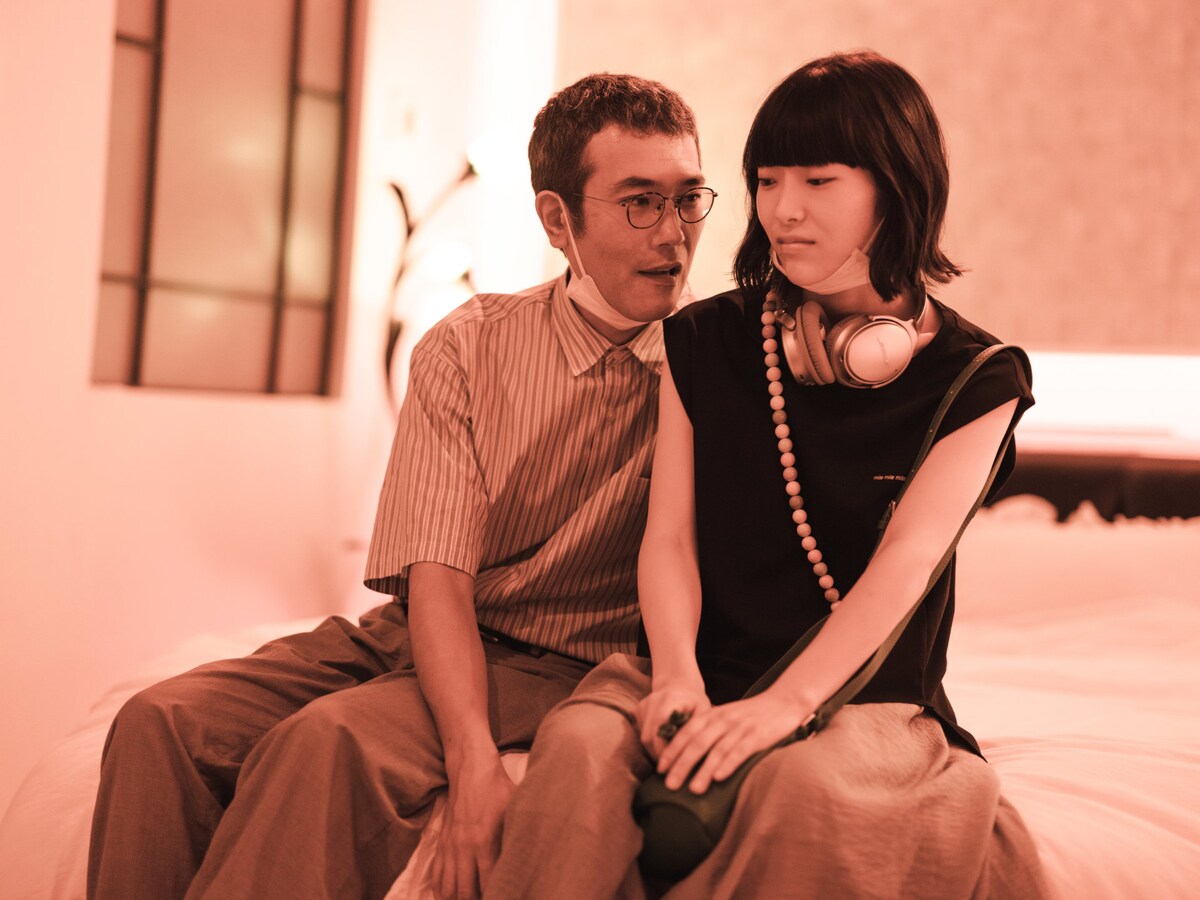
  • (Ab)normal Desire – Yoshiyuki Kishi’s adaptation of the novel by Asai Ryo starring Goro Inagaki and Yui Aragaki which explores the effects of a fetish on the lives of two former classmates.
  • The Moon – drama from Yuya Ishii starring Rie Miyazawa as a formerly successful writer who begins working at a facility for the severely disabled.
  • One Last Bloom – boxing drama in which a former contender who lost a match to due to an unfair decision begins training a man who suffered something similar.
  • Perfect Days – a man in late middle-age quite obviously living in the past begins to wake up to the possibilities of change in Wim Wenders’ Tokyo-set drama.
  • Bad Lands – fast paced crime thriller from Masato Harada starring Sakura Ando as a conwoman in over her head.
  • September 2023 – drama depicting the pogroms against Koreans which took place after the 1923 Kanto earthquake.
  • Do Unto Others – mystery thriller directed by Tetsu Maeda in which a caregiver becomes prime suspect in a series of unexplained deaths.
  • As Long as We Both Shall Live – a young woman with chronically low self-esteem learns to love herself after bonding with a taciturn nobleman in Ayuko Tsukahara’s adaptation of the light novel series.

Best Director

  • Yuya Ishii (The Moon, Masked Hearts)
  • Hirokazu Koreeda (Monster)
  • Daishi Matsunaga (Egoist)
  • Takashi Yamazaki (Godzilla Minus One)
  • Yoji Yamada (Mom, Is That You?!)

Best Actor

  • Goro Inagaki ((Ab)normal Desire)
  • Ryunosuke Kamiki (Godzilla Minus One, We’re Broke, My Lord!)
  • Ryohei Suzuki (Egoist, Tokyo MER: Mobile Emergency Room)
  • Masahiro Higashide (Winny, The Flower in the Sky, Trapped Balloon)
  • Kenichi Matsuyama (Do Unto Others)
  • Koji Yakusho (Perfect Days, Father of the Milky Way Railroad, Familia)
  • Ryusei Yokohama (One Last Bloom, The Village)

Best Actress

  • Haruka Ayase (Revolver Lily)
  • Sakura Ando (Bad Lands)
  • Mayu Matsuoka (Masked Hearts)
  • Rie Miyazawa (The Moon)
  • Sayuri Yoshinaga (Mom, Is That You?!)

Best Supporting Actor

  • Hayato Isomura (The Moon, The Dry Spell, Ripples, Hard Days)
  • Yo Oizumi (Mom, Is That You?!)
  • Jo Odagiri (The Moon, Yoko)
  • Masataka Kubota (One Last Bloom, Yudo: The Way of the Bath)
  • Koichi Sato (Masked Hearts, Okiku and the World, We’re Broke, My Lord!, Familia, etc)
  • Hio Miyazawa (Egoist, The Legend & Butterfly)

Best Supporting Actress

  • Sawako Agawa (Egoist)
  • Haru Kuroki (Ichikei’s Crow: The Movie, The Village, Okiku and the World, Fly On, Kyrie)
  • Yuko Tanaka (Monster)
  • Fumi Nikaido (The Moon)
  • Kanna Hashimoto (One Last Bloom)
  • Minami Hamabe (Godzilla Minus One, Shin Kamen Rider)
  • Haru (Analog)
  • Suzu Hirose (Kyrie)

Best Newcomer

Best Foreign Film

  • Living
  • Air
  • Everything Everywhere All at Once
  • A Man Called Otto 
  • Gran Turismo
  • The Super Mario Bros. Movie
  • Tar
  • Napoleon
  • Barbie
  • Mission: Impossible – Dead Reckoning Part One

Source: Sponichi

The Flying Swordsman (雪山飞狐之塞北宝藏, Qiao Lei, 2022)

Close to the conclusion of Qiao Lei’s The Flying Swordsman (雪山飞狐之塞北宝藏, xuěshān fēi hú zhī Sàiběi bǎozàng), the latest adaptation of Jin Yong’s classic wuxia novel Fox Volent of the Snowy Mountain, the villain is reminded that his quest for treasure is a headlong plunge into an abyss and it is indeed greed that eventually seals his fate. In any case, the karmic wheel is very much in motion as the sins of the past will soon catch up to him.

In a brief prologue, Lord Tian hopes to get his hands on some treasure buried deep beneath a land of cold and so engineers a duel between the treasure’s guardian Hu Yidao and the only swordsman who can match him. The two men end up killing each other, but largely due to the machinations of ambitious underling Baoshu (Chunyu Shanshan) who has poisoned their swords with arsenic. Additionally he’s massacred a local village, something of which the head of their group Tao Baisui (Raymond Lui Leung-wai) does not approve, but still didn’t get his hands on an iron box containing a map to the treasure nor the key needed to open it.

The box then turns up 10 years later but causes nothing other than chaos and discord among Baisui’s followers as they all jockey to get their hands on both the map and the key though the clever part of the plan is that no one has both at the same time ensuring the continuation of infighting and betrayal. The sad thing is that both Baisui and Baoshu are childless and have come to regard their underlings as children though they are quickly sacrificed during the internecine plotting. Gui Yu (Zhao Huawei), a mercenary picked up by Baoshu’s henchwoman Qingwen (Chen Yusi) after escaping enslavement at a coal mine, seems to vacillate, playing advantages against each side but also manipulated by both and left to die after being poisoned. Apparently each of the other eight villains has a special talent, though Gui Yu appears to have none and often claims to be doing only what he needs to survive which fair enough given the vagaries of the feudal era. 

This world is indeed quite grim, as we can see from the guy hacking up some suspicious looking meat on the way into the fort. An assassin is fond of asking if the target thinks villains never face retribution, hinting at the degree of hubris in Baoshu’s ambition and his lack of thought for the future or the various ways the karmic wheel may turn against him. His downfall is caused by greed, but then there’s also a degree of tenderness in his relationship with adopted daughter Qingwen who is often dismissed as a “little beauty” even if he at times seems willing to sacrifice her life for relatively little gain. 

In any case, the treasure becomes something of a MacGuffin, merely an unattainable object that drives the villains mad and turns them against each other or alternately can be used to manipulate them. In this supernaturally tinged world, the band come up against strange monsters including a pack of wild hyenas amid the freezing cold and otherwise have managed to keep their special powers more or less secret from each other despite their long association giving Qiao frequent opportunities for plot twists and unexpected returns. He adds to the mythological fantasy aesthetic through the forest-bound vistas of trees in bloom along with the endless snowscapes that reflect the moral and emotional emptiness of men like Baoshu. 

Karma does indeed come back to bite him, a victim of a poetic revenge destroyed by his own greed and immorality. Amid all the infighting there is a genuine degree of solidarity to be found at least among those robbed by the evils of feudalism and hoping to avenge themselves through tricking the gang into destroying itself. Qiao’s wire-heavy action sequences hint at a poetic beauty of wuxia martial arts even if close combat is necessarily brutal though mostly relying on trickery rather than simple skill with the sword. Told over a series of flashbacks, the tale eventually straightens itself out to reveal the tragic legacies that provoke the fate of all long after those who caused them have forgotten their dark deeds and believed themselves free from guilt or consequences.


The Flying Swordsman is released in the US on Digital and DVD on Jan. 9 courtesy of Well Go USA.

US trailer (English subtitles)

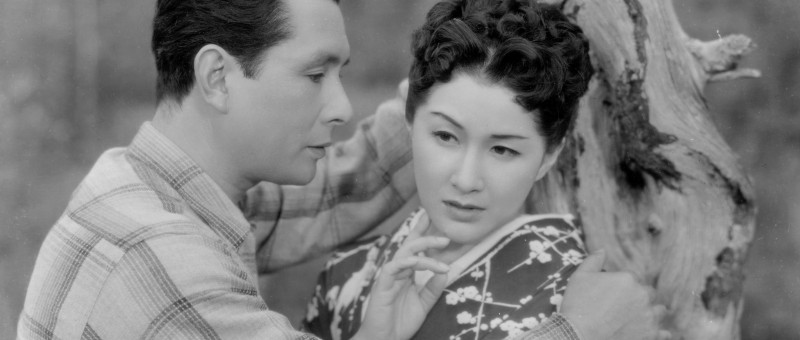
The Beauty and the Dragon (美女と怪龍, Kozaburo Yoshimura, 1955)

A clever princess takes advantage of a courtly crisis to save the kingdom and arrange her own marriage in Kozaburo Yoshimura’s adaptation of the well-known kabuki play Narukami, The Beauty and the Dragon (美女と怪龍, Kabuki Juhachiban: Narukami – Bijo to Kairyu), produced in celebration of the 25th anniversary of the Zenshinza kabuki troupe and starring many of its actors. Scripted by Kaneto Shindo, the film mines a deep seam of irony in the classic tale while allowing its heroine to take centre stage outwitting most of the feckless men from the palace with some clever manoeuvring and utilising the key asset of her femininity.

In a meta touch, Yoshimura opens in a kabuki hall where young lord Toyohide (Chiyonosuke Azuma) is called to perform a dance for the regent, Mototsune, only the show is soon interrupted by a procession of peasants who’ve come to protest the ongoing drought. The earth is cracked and the rivers run dry, but still they are told that they will be informed about the outcome of their petition at a later date. The peasants clearly believe that the emperor really is a god and expect him to fix this problem as soon as possible but in private Motosune is irritated if perhaps accurate in stating that the weather is not their responsibility and they can’t seriously be expected to deal with it. Annoyed by the noise of the protests around the palace, he orders that the peasants be sent away though his courtiers are more sympathetic and know that the peasants simply have no one else to turn to for help. If something isn’t done they will have no choice but to escalate their rebellion.

But as it turns out, the problem actually is their responsibility and is rooted in the misogynicistc patriarchy of the feudal world along with a dose of courtly intrigue. When shinto priest Narukami (Chojuro Kawarasaki) was consulted about the birth of a royal child and prophesied that it would be female, he was hired to alter its destiny and miraculously changed its sex to male through the power of prayer. In return, he was promised that a shrine would be built for him but now it’s 30 years later and he’s sick of waiting. Accordingly, he’s taken the Dragon God who brings the rains hostage and refuses to release him so the rain can return until he gets what he was promised. 

It seems that Mototsune has a very bad habit of promising people whatever their heart desires but conveniently forgetting about it once the job is done. This time though the problem is that disgraced prince Hayakumo (Kunitaro Kawarazaki) stopped the building of the shrine in fear of offending a rival temple, Ezian, which contains a large number of very intimidating bandit monks. Hayakumo is intent on using the courtly chaos to improve his own position, hoping that other lords will fall from favour leaving a space for him to fill. He’s also been obsessively courting princess Taema (Nobuko Otowa) who refuses him because he’s so obviously oily, and in any case she’s in love with Toyohide but can’t marry him seeing as he is already betrothed to another woman whom he does not care for. In a bizarre twist of fate, a scholar insists that the only way to break Narukami’s magic is by learning to read a scroll that once belonged to Taema’s grandfather so they charge her with deciphering it offering to give her whatever her heart desires if she ends the drought which is of course Toyohide’s hand in marriage. 

The ironic thing is that Taema doesn’t for a second believe that reading the scroll will make any difference to anything and quite clearly thinks the scholar they brought in who said it would is a charlatan who actively looks down on her. Yet she, like everyone else, does in fact believe that the cause of the drought is the Dragon God’s imprisonment and Narukami’s dark magic. Advised by her trusty maid, she learns to see opportunity in what could otherwise be a dangerous situation and ably out manoeuvres the foolish men at the court. She wields her femininity, the reason they discount her, as a weapon against the repressed masculinity of Narukami who is said to have been a monk since childhood and has never touched a woman. 

After getting her maid to do a sexy dance for his underlings so that they get drunk and pass out, she then sells Narukami a tragic love story pretending that she simply wants to wash some clothes that belonged to her late husband. Essentially she seduces him, but also targets his weakness in his repressed desires as a monk causing him to transgress his vows and in effect break his own magic by destroying his powers. On seeing her bared ankles he faints, and then ends up telling her how to break the curse after becoming drunk and randomly assuming they are now married. 

As she’d somewhat dangerously told Toyohide, the real problem is that the Regent is weak. Indifferent to the fates of his people and in any case an ineffective leader, he invites intrigue in the court. Yet court itself is weak precisely because it is rooted in patriarchy and defined by male weakness. Even Taema’s beloved Toyohide is preening and jealous, suddenly irritated to discover that Hayakumo had been courting her while later suspicious that she will be alone with Narukami. He was also denied romantic freedom in an inability to escape the marriage arranged for him by his father at three and reliant on Taema finding a way for them subvert the feudal order and be together. The play in fact ends with the rage of a scorned man as the aptly named Narukami is transformed into the god of thunder and vows vengeance against the woman who humiliated him. 

Taema, by contrast, is able to seize control ridding herself of Hayakumo while securing her marriage to a man she choses (the betrothed bride is herself similarly freed and appears not to mind the dissolution of her engagement having had no particular feelings for Toyohide, a man she barely knew) in addition to saving the kingdom along with the lives of peasants by unleashing the Dragon God. Having begun in the theatre, Yoshimura soon moves out to the court and then the country but eventually cycles back for the climactic dance of anger with which the film closes as if echoing a howl of pain from the wounded feudal era circumvented, if not ended, by a clever woman leveraging her only sources of power in a world defined by corrupted male authority. 


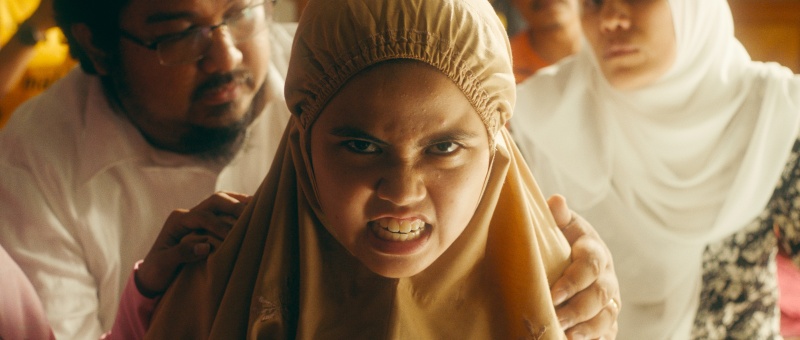
The Invisible Guest (瞒天过海, Chen Zhuo, 2023)

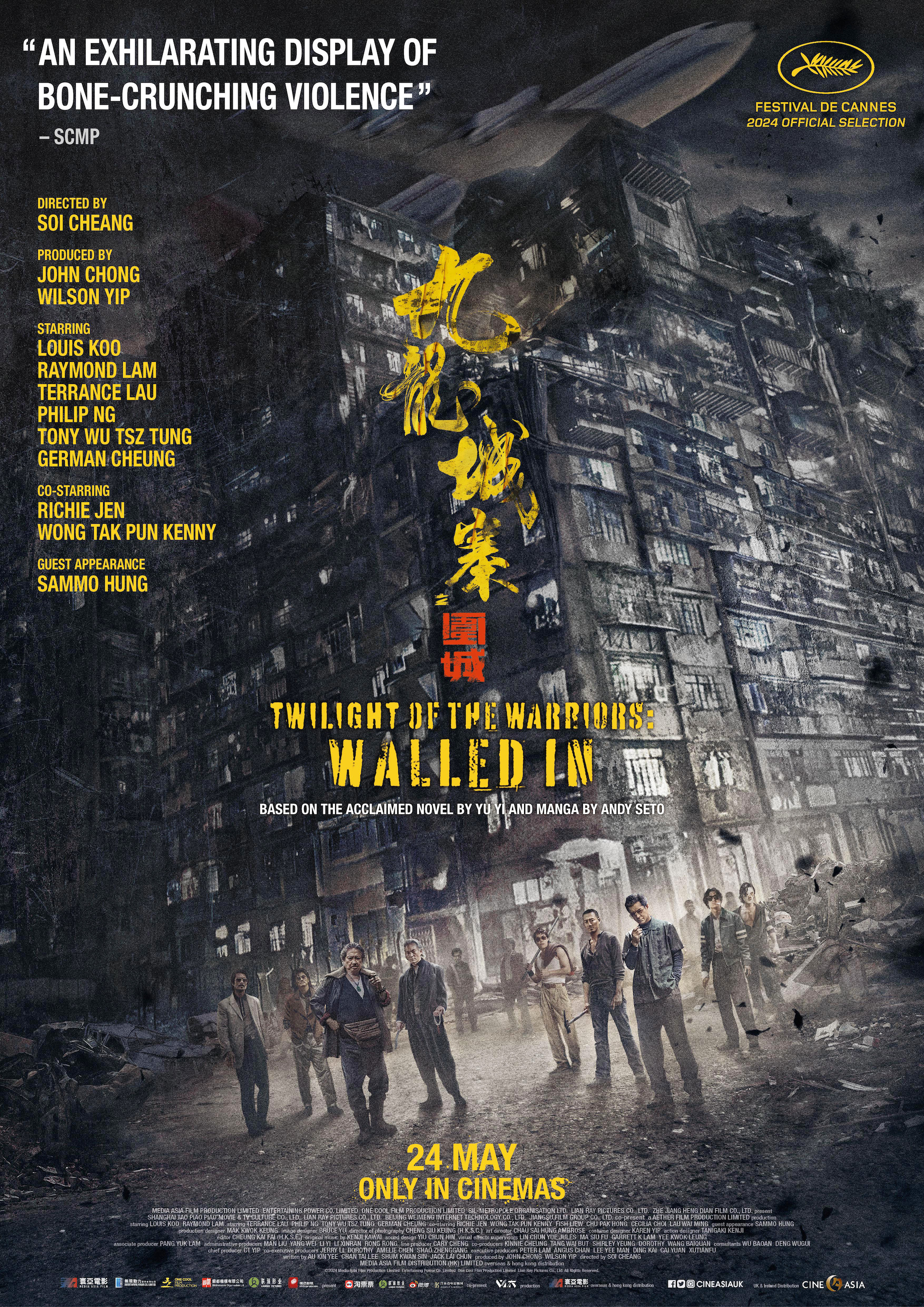
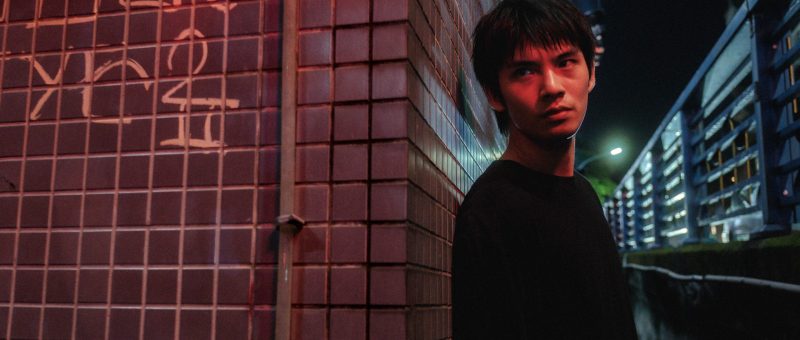
Prestige mystery thrillers are definitely having a moment at the Chinese box office and like last summer’s Lost in the Stars, The Invisible Guest (瞒天过海, mántiānguòhǎi) takes place in a fictional South East Asian nation among a largely Chinese community where the policemen mainly speak English and almost everyone else Mandarin. Like many similarly themed films that might partly be because there is a strong suggestion of normalised judicial corruption which would otherwise be a difficult sell for the Mainland censorship board even if very much on message in its anti-elitist themes in which it is repeatedly stated that money cannot in fact solve everything. 

Adapted from a Spanish film which was a huge hit on its Chinese release and recently remade in Korea under the title Confession, the film opens as a locked room mystery. A well-known architect, Minghao (Yin Zhung), who is also the adopted son of the nation’s only Chinese lawmaker, has been brutally murdered in a luxury hotel. Joanna (Chang Chun-ning), the wife of a filthy rich real estate magnate, has been arrested but maintains her innocence. She claims that they were attacked soon after entering the room and that she was temporarily knocked out waking up to find Minghao with his throat cut, the attacker vanished, and police kicking down the door.  

The twist is that she’s then approached by Zheng (Greg Hsu), a local cop, who offers to “help” her for a small fee promising to sort out all the problematic evidence against her if only she’s honest with him about what really happened in the room. Obviously, the depiction of such an openly corrupt law enforcement officer would not be possible on the Mainland which explains the international setting but it soon becomes clear that Joanna may not be a very reliable narrator and Zheng obviously knows a little more about what’s really going on than he pretends.

Joanna had only recently married her superwealthy husband whose business interests have been very badly affected by the scandal, suggesting at least that she may be a patsy at the centre of a corporate conspiracy with her husband’s firm possibly hoping to get rid of her or someone else’s using her to get to him. But the most essential message is that the rich and powerful shouldn’t have a right to assume that everything can be solved with money and they can get away with anything so long as they have financial means to pay for it. In a flashback which we can’t be sure is completely reliable, someone suggests that the victim’s life was meaningless and killing them no different from crushing an ant, a view somewhat validated by Zheng when he tells Joanna that he isn’t interested in people like that only people like her, wealthy. 

Conversely, a tangenital victim of the case later insists that you shouldn’t underestimate what poor people will do for their families because in the end that’s all they have. The film is sympathetic to those like them who do not have the means to face off against someone like Joanna who probably could, if she is not actually innocent as she claims, evade justice thanks to her vast wealth and social standing assuming her husband’s company don’t decide to drop her in it. There is also, however, the implication that Joanna was once herself poor and downtrodden and has been corrupted by her desire for the illusionary freedom of wealth, abandoning her integrity while carrying the innocent dream of buying an idyllic orchard where she could live in peace and comfort. 

Playing out in near realtime, Chen keeps the chamber drama tension high with frequent on-screen graphics reminding us that Joanna only has a couple of hours left to clear her name before the dossier of evidence against her will be presented to the prosecution and she’ll be charged with murder. Zheng says he can help but keeps pressing her not only for more money but more information, the “real” truth, rather than a favourable narrative though arguably the flow of hypotheses made more sense in the context of a lawyer prepping a client than a policeman probing for evidence in order to neutralise it as did the accused’s willingness to trust the person poking holes in their story. A kind of justice, at least, is done and not least poetic as the truth begins to emerge though the guilty parties or invisible guests of latent classism and social inequality are very much here to stay. 


The Invisible Guest is in UK cinemas now courtesy of CMC.

International trailer (English subtitles)

Ransomed (비공식작전, Kim Seong-hun, 2023)

A jaded diplomat finds himself caught between competing factions both at home and abroad while trying to rescue a kidnapped colleague in Kim Seong-hun’s action dramedy, Ransomed (비공식작전, Bigongsigjagjeon). Inspired by true events, the film ironically echoes the recent Chinese hit Home Coming which was itself at least incredibly indebted to Escape from Mogadishu in praising the efforts of a civil servant who braved a war zone to rescue a stranded colleague but received little support from his conflicted government.

During the time the film takes place, Korea is caught in a moment of transition technically still under the military dictatorship of Chun Doo-hwan but with the first democratic elections already scheduled and the 1988 Olympics in the offing. Diplomat Oh Jae-seok (Lim Hyung-guk) is kidnapped in during the civil war in Beirut in 1986 and believed dead after efforts to retrieve him fail. Nearly two years later, jaded Foreign Office Middle East specialist Lee Min-jun (Ha Jung-woo) picks up a call and hears a message in morse code including a special diplomatic password and the claim the that it comes from Jae-seok who is alive and requesting rescue. The problem is that both the Foreign Office and the KCIA are on the fence about taking action, each wanting the glory of bringing Jae-seok home but fearful of being professionally embarrassed if it turns out that the call is a hoax and they pay a ransom for a man who’s already dead. 

Min-jun finds himself caught between the two while essentially forced to set up a secret covert operation through former US CIA officer Carter (Burn Gorman) and a wealthy Swiss businessman with connections in Lebanon. The irony is that both he and Pan-su (Ju Ji-hoon), a Korean taxi driver he inexplicably runs into in Beirut, only want to go to the US, Min-jun desperate for a more prestigious positing to advance his diplomatic career while Pan-su, technically undocumented, seeks a better life in a more stable environment. As such, Min-jun’s motivations for rescuing Jae-seok are only partly a sense of responsibility as a fellow diplomat and the man who took the call that Jae-sook was alive, hoping to prove himself to his superiors only agreeing to the job on the promise of a transfer to a major US city resentful of having been passed over for a position in London in favour of an elite graduate of Seoul University. 

The irony is that once in Beirut he’s faced with a further series of kidnap threats, another random militia hot on Min-jun’s trail hoping to capture at least one Korean in the hope of a major payout though Min-jun’s problem is that the government only agrees to send more money after each step has been completed endangering the efficacy of the rescue mission while leaving him at the mercy of the militia leader the government has secretly and perhaps questionably agreed to pay to broker the negotiations to secure Jae-seok’s release and passage out of the country. Caught between competing militias in Beirut, Min-jun is also a victim of the push and pull between the waning influence of the KCIA and the Foreign Office with his fate decided largely by political infighting while in the end it’s his colleagues who eventually take a stand each chipping in three months’ salary to fund his rescue out of a sense of solidarity in the reflection that their job is only really possible given their government’s assurance of protection when they undertake dangerous work overseas for the national good. 

As expected, Min-jun soon rediscovers his sense of duty as does shady taxi driver Pan-su though more thanks to the shaming of his Lebanese girlfriend who points out that it’s not a good look to run off with millions of dollars intended to save to save a man’s life. Despite the constant precarity of the situation, what arises is an awkward brotherhood between the two men brokered by an uneasy trust and genuine fellow feeling as they try to rescue Jae-seok while evading the militia trying to kidnap them along with the wider civil war. Undercutting the seriousness of the situation with a healthy dose of irony and black humour, Kim lends his otherwise grim tale of citizenry held hostage by a bureaucracy in flux a degree of positivity if only in proving the power of the individual over a dysfunctional system. 


International trailer (English subtitles)

The Phoenix (火の鳥, Kon Ichikawa, 1978)

The people of early Japan contemplate different visions of immortality in Kon Ichikawa’s sprawling adaptation of the first chapter in Osamu Tezuka’s manga series, The Phoenix (火の鳥, Hi no Tori). Featuring a mix of animation and live action, the film takes place in an ancient, pre-modern Japan in which just about everyone chases the mysterious fire bird in belief that drinking its blood will confer eternal life. They each want it for different reasons, some more to stop someone else getting it than for themselves but all discover that there are other ways of living on than the strictly literal. 

Broadly speaking the film takes place during the era of possibly mythical sorceress queen Himiko (Mieko Takamine) who rules over the nation known as Yamatai which is the name given to a kingdom in Japan in ancient Chinese sources. Himiko wants the phoenix because she fears that her power is founded on a youth and beauty which has begun to fade while the people are beginning to lose faith in her magic, not least because her rule is oppressive and authoritarian. She also fears that should the Chinese emperor drink the phoenix blood first, they will forever be under his yoke yet the seal that confers her rule was in fact given by him so perhaps they are already. Her brother, Susano (Toru Emori) whom she also fears may usurp her, enlists famed hunter Yumihiko (Masao Kusakari) from the state of Matsuro to help them capture the phoenix seeing as the two nations have some kind of treaty. Yumihiko says he doesn’t really care about that, but ends up helping anyway.

In any case, Matsuro is soon overrun in a surprise attack by warlord Jingi (Tatsuya Nakadai) from Takamagahara who is set on colonisation, which is in its way another bid for “immortality” if culturally rather than literally. After all, he claims “I will implant our civilisation in these lands” before explaining that “not even the greatest kings live forever” but history will. Meanwhile, Yamatai doctor Guzuri (Ryuzo Hayashi) is washed up on the shores of remote kingdom Kumaso where Uraji (Masaya Oki) is hunting the phoenix in the hope of saving his seriously ill wife Hinaku (Reiko Ohara). Uraji is soon burnt to a crisp by the Phoenix’s light, but Guzuri is able to save Hinaku using “modern” medicine, that is by applying “blue mould” which as the onscreen text explains contains penicillin. Perhaps feeding someone mould doesn’t sound much more scientific than the bizarre folk medicine proposed by the witchdoctor which involves rubbing the severed heads of cats and ravens together and putting fish bones on the patient’s head while burning their buttocks, but it works which is not exactly a means of “immortality” but does promise the ability of temporarily overcoming death without the Pheonix’s help. 

But medicine can’t help you with an invasion, and when the Yamatai suddenly turn up and raze the village to get better access to the phoenix after realising it lives in a nearby volcano only Hinaku and her brother Nagi (Toshinori Omi) survive. Hinaku reluctantly remains with Guzuri and vows to rebuild her kingdom through childbirth vowing that she will enable the survival of Kumaso by passing her culture on through successive generations. Uzume (Kaoru Yumi), a dancer from Matsuro, later says something similar to Jingi in reminding him that “women have their own weapons” and he will “never be able to destroy life” as an abstract concept. There might be something a little uncomfortable in the implication that the phoenix is an allegory for childbirth in suggesting that one body is born in the ashes of another, but it is in the end the continuity of a lifecycle which wins out as the natural order of things. In the film’s concluding moments, the son of Hinaku and Guzuri in a sense experiences a kind of rebirth as, guided by the phoenix, he climbs out of the cave in which he has lived all his life and gazes at the vast expanses of a new world all around him. 

Ichikawa originally trained as an animator and includes several animated sequences throughout the film from cartoonish special effects when an elderly courtier bangs his head to a trio of foxes dancing to pink lady. His visual design is also heavily influenced by Tezuka’s manga with the young boy Nagi in particular striking Tezuka-esque poses and otherwise resembling Astroboy who does in fact make a surprise appearance in a brief animated sequence in which Nagi is kicked by a horse. Similarly, the conflicted general Saruta (Tomisaburo Wakayama) later gains a ridiculous Tezuka-style nose after being locked in a room filled with wasps, and Ichikawa’s vistas sometime echo the centrefold of a manga with the heroes reduced to tiny figures dwarfed by the majesty of the landscape. Even so, a rain-soaked battle pays ironic homage to Seven Samurai, while Ichikawa otherwise keeps violence to a minimum. The heads are chopped off horses and fall like cushions, entirely bloodlessly, but there is also a scene of implied attempted rape which may be out of keeping with the otherwise family-friendly approach. Despite the sense of defeat which may colour some of the closing scenes, the film ends on a note of optimistic wonder in a new journey for humanity emerging from scenes of desolation towards a bright new world.