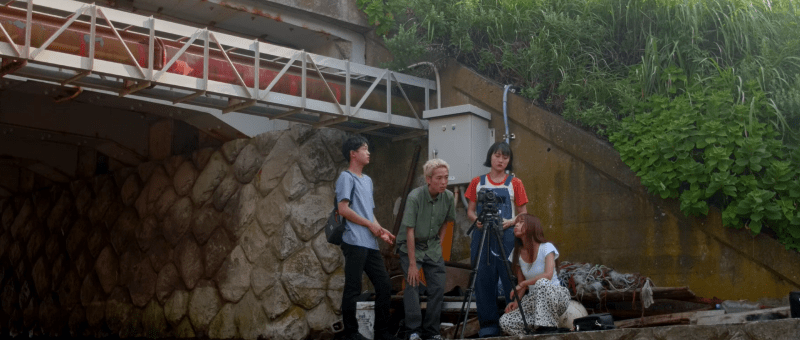

What if life were like a movie and you could simply go for another take when things didn’t turn out like you planned? That’s the way it works out for the hero of Kota Nakano’s Retake (リテイク), a young man editing in realtime in an attempt to fix his mistakes and engineer a happier outcome while preparing to meet the end of his youth. Part summer holiday movie, part meta take on storytelling and the movies, the film is most of all about moving on whether things work out or not.
To that extent it’s telling that the film the teens are making is about a couple who attempt to go to a place where time does not flow. For the flighty Yu, the film’s architect, the desire seems to reflect her own anxiety about growing up and entering a new world of adulthood. “I wish this time would go on forever,” she sighs while discussing with her cameraman Kei how the film should end. Nakano plays with this scene, repeating it several times as if it itself were a land where time does not flow and Kei were playing out a memory in his head envisaging how something should have gone rather than how it did. Eventually the conclusion that they come to is that they should continue their journey instead of staying here, trapped in an eternal loop of dead time with no past or future.
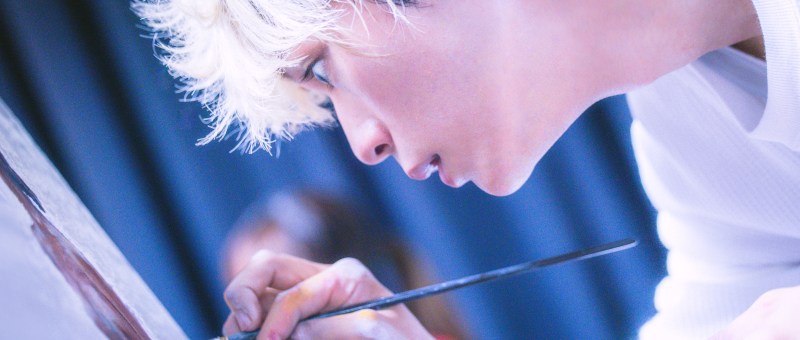
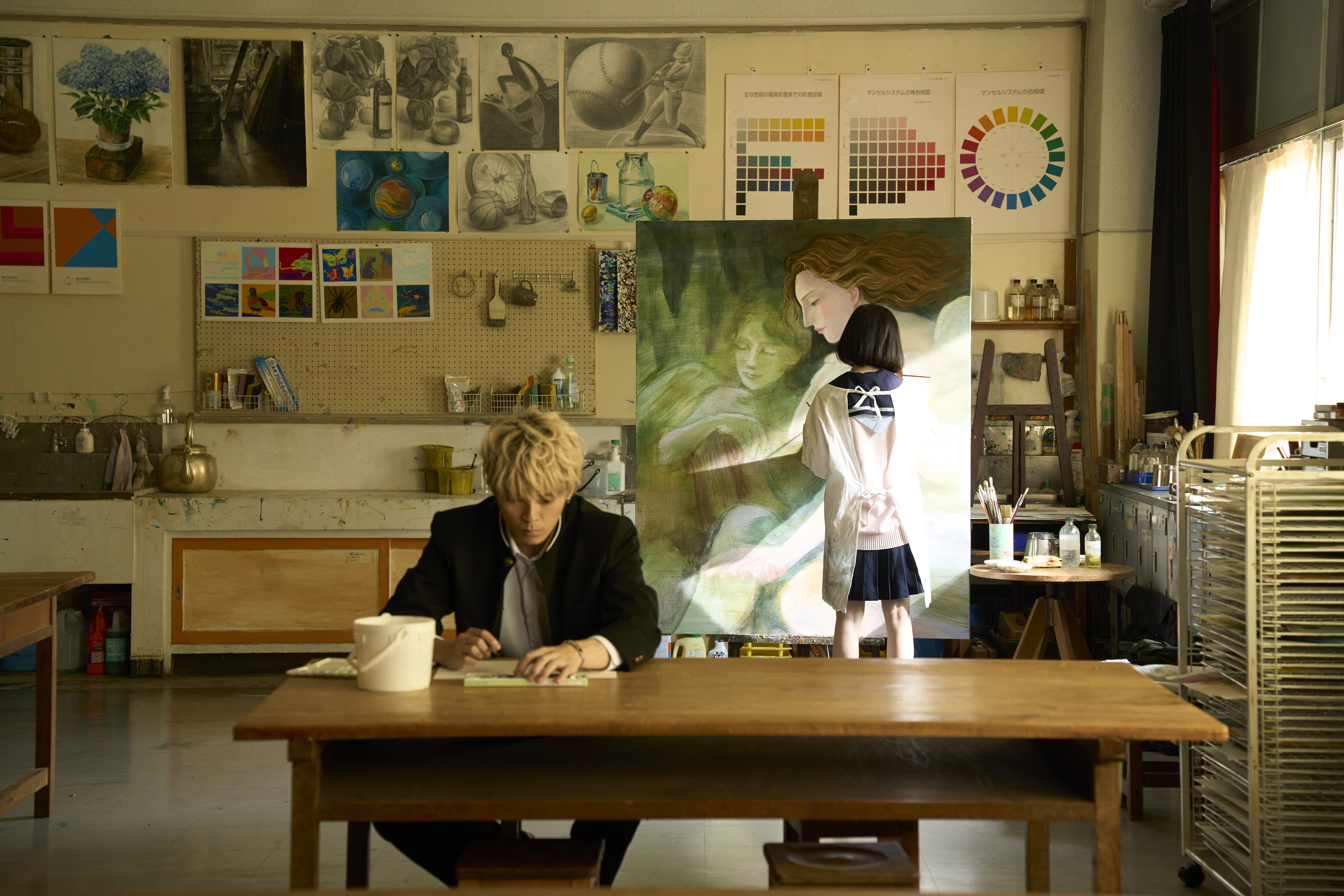
But moving forward is scary, after all it means leaving the past behind. Kei snaps images of the world around him as if he were trying to steal a moment, freeze it and take it with him. The hero of the film, played by his friend Jiro, is an artist who similarly tries to capture motion through the medium of sketching and constantly finds himself frustrated. He likes to sit still and concentrate, but he meets a girl who likes dance and move in the free flow of time. Kei is much the same, a natural observer yet sometimes blind to circumstance as in his decision to invite Allie, a girl they meet by chance while raiding the school broadcasting club for equipment, oblivious to the awkwardness that seems to exist between herself and Yu.
The film teases the conflict, eventually settling on a disagreement if not exactly over a boy than surrounding him though for the rest of the runtime seems as if it may more have been more about the tension between the girls themselves. Nevertheless, Kei quickly fixes on the idea of repairing their friendship to prevent the film collapsing when his own attempt to confess his feelings is seemingly the straw that breaks the camel’s back prompting Yu into a petulant conviction that no one cares about her film and there are only ulterior motives among her crew. But paradoxically, what Kei learns is the importance of speaking up in the moment, shaking off his diffidence to support Allie when her suggestion is treated with callous indifference by Yu and thereby building bridges.
Though those same bridges may ironically leave him feeling left out and isolated as a peripheral figure on the team while the others all seem to pair off leaving him alone. He tries different approaches, and retakes his mistakes looking for the perfect ending while otherwise buoyed by the warmth of the summer and company of his new friends wishing like Yu and the protagonists of the film that this moment would never end, symbolically repeating and reliving it as if himself trapped in the land where time doesn’t flow. Nakano signals the unreality of his environment by allowing Kei to approach the unseen camera and turn it off, announcing a new take with a clapperboard and then editing in real time in search of perfect answers. In some senses, it’s the operation of nostalgia but also an adolescent desire to find the right path forward along with the courage to take it. But what the teens discover is that in the end you just have to go, frustrated by the boredom of being trapped in an external limbo of stagnant time and eager to see what the next scene will bring in a continual flow of isolated moments that somehow constitute a life.
Retake screened as part of this year’s JAPAN CUTS.





 Windows on Worlds