Japan Society NY & ACA Cinema Project Announce The Female Gaze

Japan Society New York and ACA Cinema Project will present The Female Gaze: Women Filmmakers from JAPAN CUTS and Beyond from Nov. 11 to 20, a new series focussing on the work of female filmmakers from directors to screenwriters, producers, and cinematographers.

November 11, 2022 at 7:00 PM: Wedding High

A wedding planner has her work cut out for her when a young couple’s wedding day spirals out of control thanks to competitive speechmaking, over-invested guests, an ex on their way to stage a rescue, and a thief who’s just snuck in unnoticed, in an ensemble comedy from Akiko Ohku (Tremble All You Want).

November 12, 2022 at 1:00 PM: Dreaming of the Meridian Arc

A TV drama series centring on Tadataka Ino who produced the first map of Japan in 1821 hits a snag when it’s discovered that he died three years into the project but his assistants covered it up and decided to complete the map in his honour.

November 12, 2022 at 5:00 PM: She is me, I am her

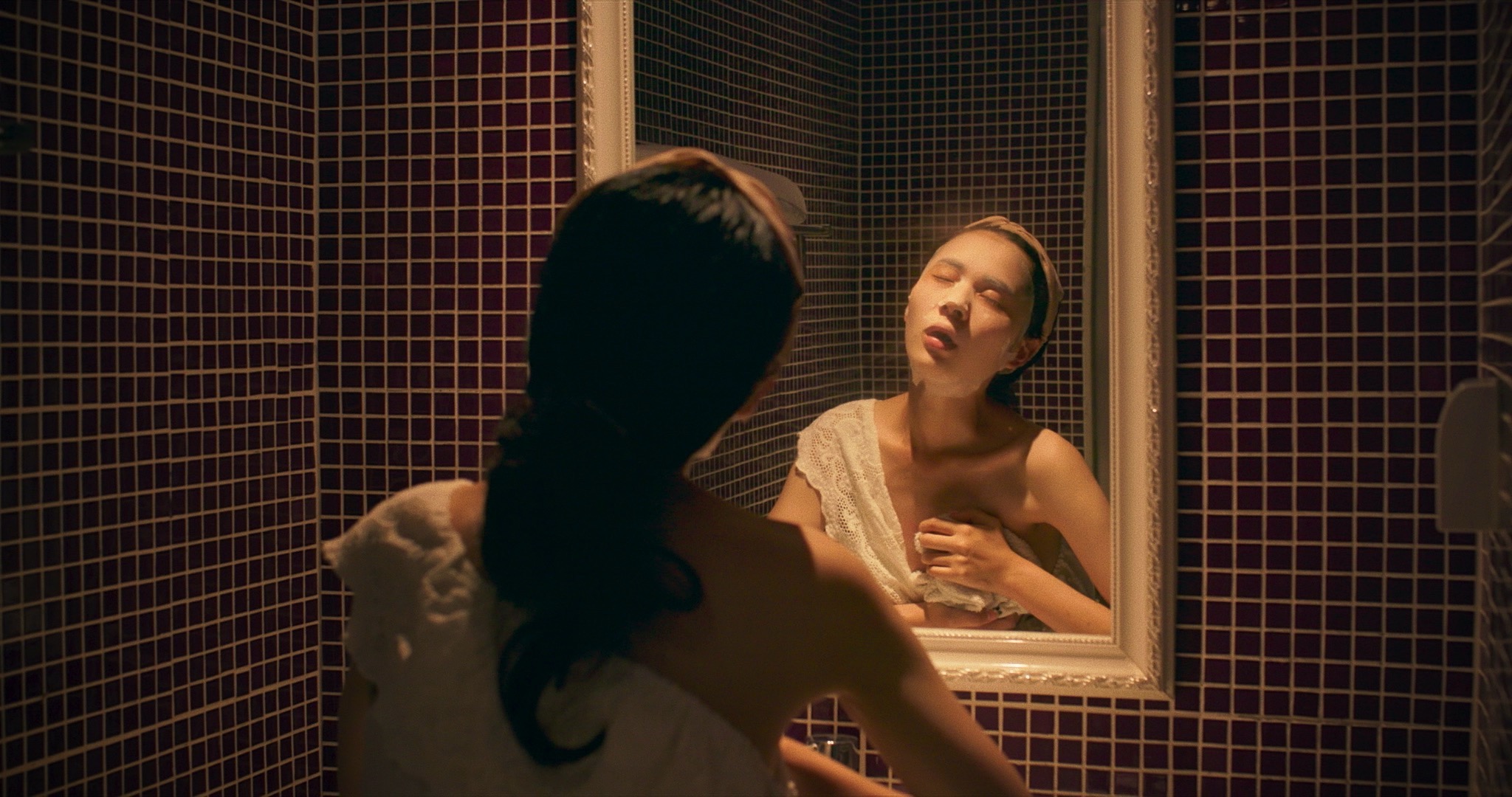
Four-part anthology film from Mayu Nakamura (Intimate Stranger) starring Nahana in a series of tales of urban loneliness and unexpected connection in pandemic-era Tokyo.

November 12, 2022 at 7:00 PM: One Summer Story

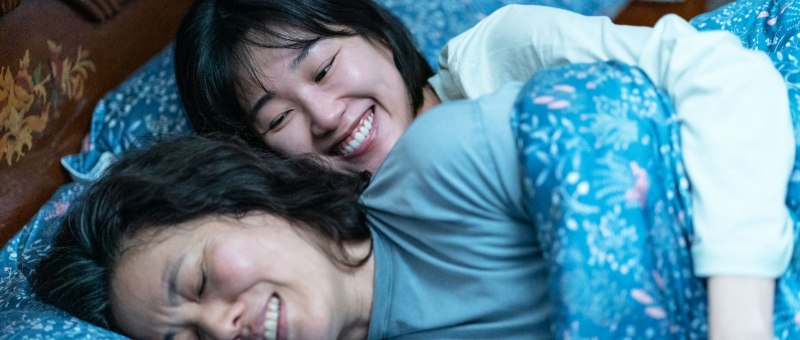
A classic summer adventure movie from Shuichi Okita in which a high school girl embarks on a journey of discovery trying to track down her estranged birth father, a former cult leader. Review.

November 13, 2022 at 1:00 PM: Good Stripes

A young couple on the verge of breaking up attempt to come to terms with an unexpected pregnancy in Yukiko Sode’s zeitgesity drama. Review.

November 13, 2022 at 4:00 PM: The Nighthawk’s First Love

Adaptation of the Rio Shimamoto novel following a young woman who has a facial birthmark that has left her afraid to pursue love but encounters new possibilities when invited to appear in a film.

November 18, 2022 at 8:00 PM: Riverside Mukolitta

Warmhearted quirky drama from Naoko Ogigami in which a man recently released from prison attempts to start again in a quiet rural town while unexpectedly forced to deal with the unclaimed remains of his estranged father. Review.

November 19, 2022 at 1:00 PM: No Longer Human

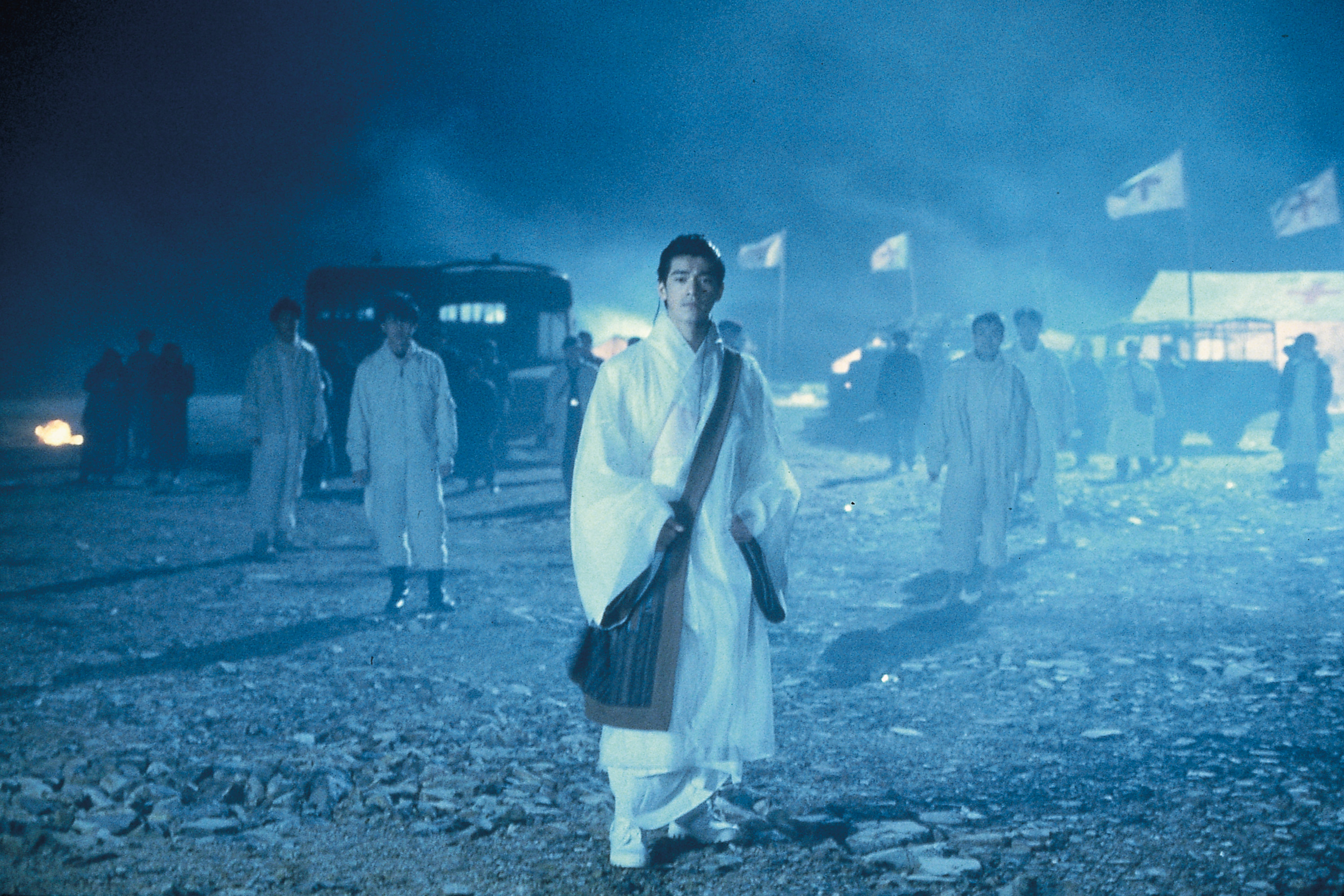
Visually striking drama inspired by the life of Osamu Dazai (Shun Oguri) as seen by the three women who surrounded him: his legal wife (Rie Miyazawa), sometime mistress (Erika Sawajiri), and the woman he died with (Fumi Nikaido). Review.

November 19, 2022 at 7:00 PM: Let Me Hear It Barefoot

Somehow in dialogue with Wong Kar-Wai’s Happy Together, Riho Kudo’s second feature follows two young men seeking escape from moribund small-town Japan and temporarily finding it in recording elaborate soundscapes for the benefit of an older woman who dreamed of travelling abroad. Review.

November 20, 2022 at 1:00 PM: Nagi’s Island

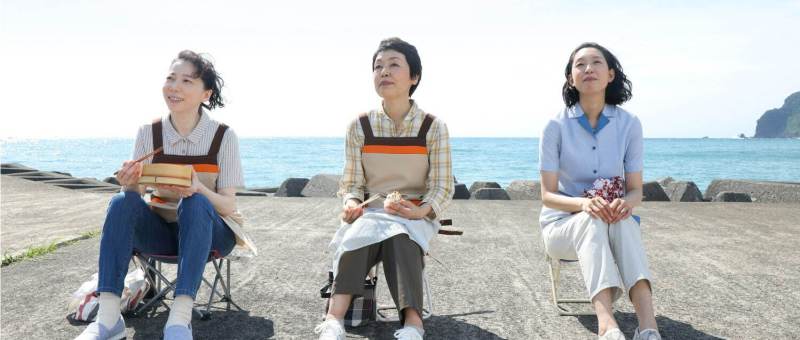
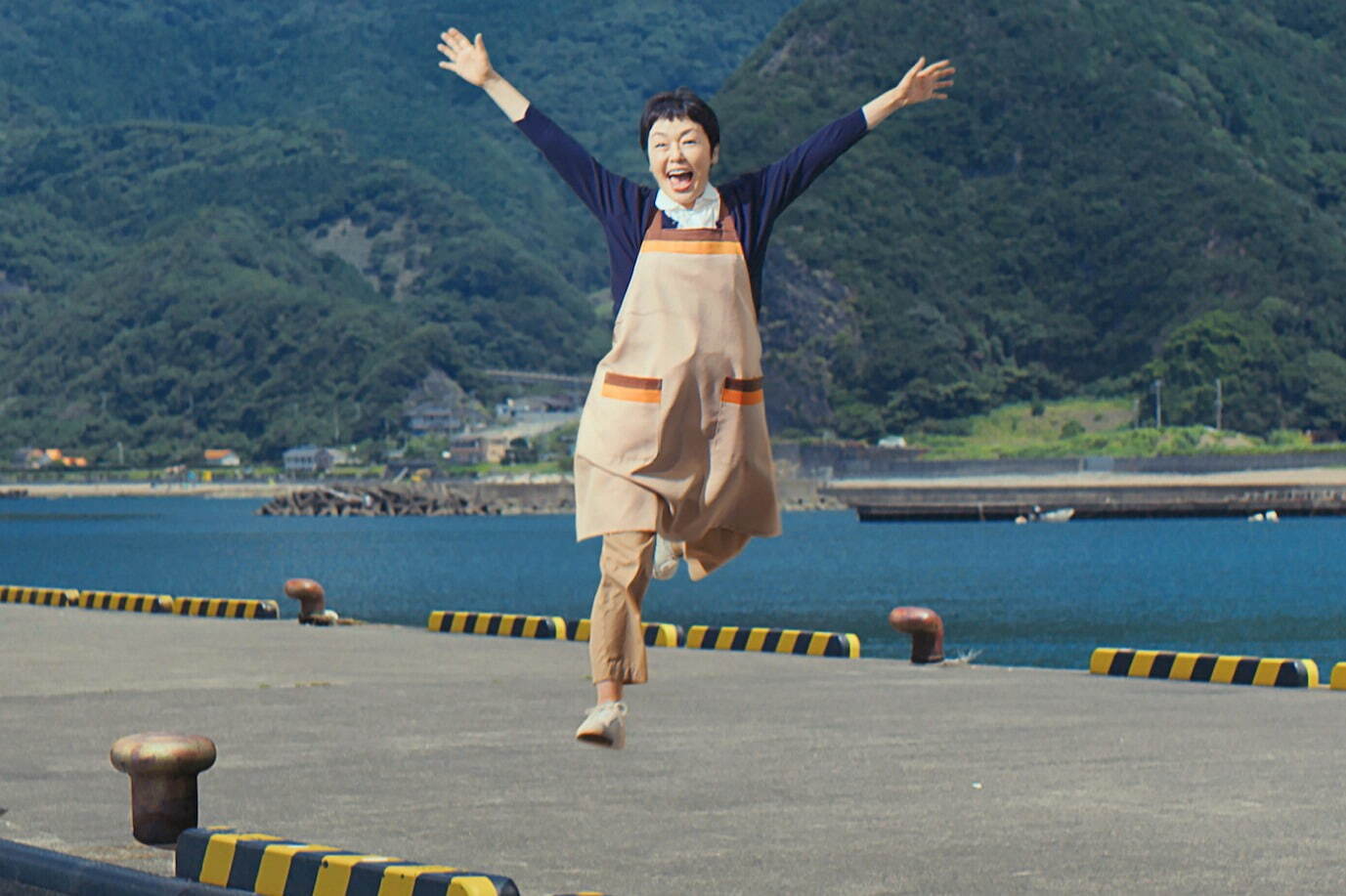
A young girl begins to heal from the trauma of her parents’ divorce and violent marriage while living with her grandmother on an idyllic island in a laidback heartwarming drama from Masahiko Nagasawa. Review.

November 20, 2022 at 4:00 PM: a stitch of life

Poignant drama from Yukiko Mishima in which a woman running a tiny boutique almost unchanged from her grandmother’s time is courted by a big fashion brand but eventually finds the courage to embrace change on her own terms. Review.

November 20, 2022 at 7:00 PM: Plan 75

Chie Hayakawa expands her 10 Years Japan short to explore a dystopian future in which the government has launched a voluntary euthanasia program for those aged over 75. Starring golden age star Chieko Baisho, the film explores the effects of the program on a Plan 75 volunteer, a salesman, and a caregiver in a society which has largely decided to discard those which it views as “unproductive”.

Classics Focus on Natto Wada and Yoko Mizuki

November 13, 2022 at 7:00: Her Brother

Kon Ichikawa drama adapted from the autobiographical novel by Aya Koda and scripted by Yoko Mizuki in which a young woman is forced to sacrifice herself for her family becoming a surrogate mother figure for her delinquent younger brother. Review.

November 14, 2022 at 7:00 PM: Conflagration


Adaptation of the Mishima novel directed by Kon Ichikawa and scripted by his wife Natto Wada in which a young man is driven to the brink of despair believing that the world has become so corrupt and polluted that beauty is in its way offensive.

Filmmakers in the Rise

November 15, 2022 at 7:30 PM: Two of Us / Long-Term Coffee Break

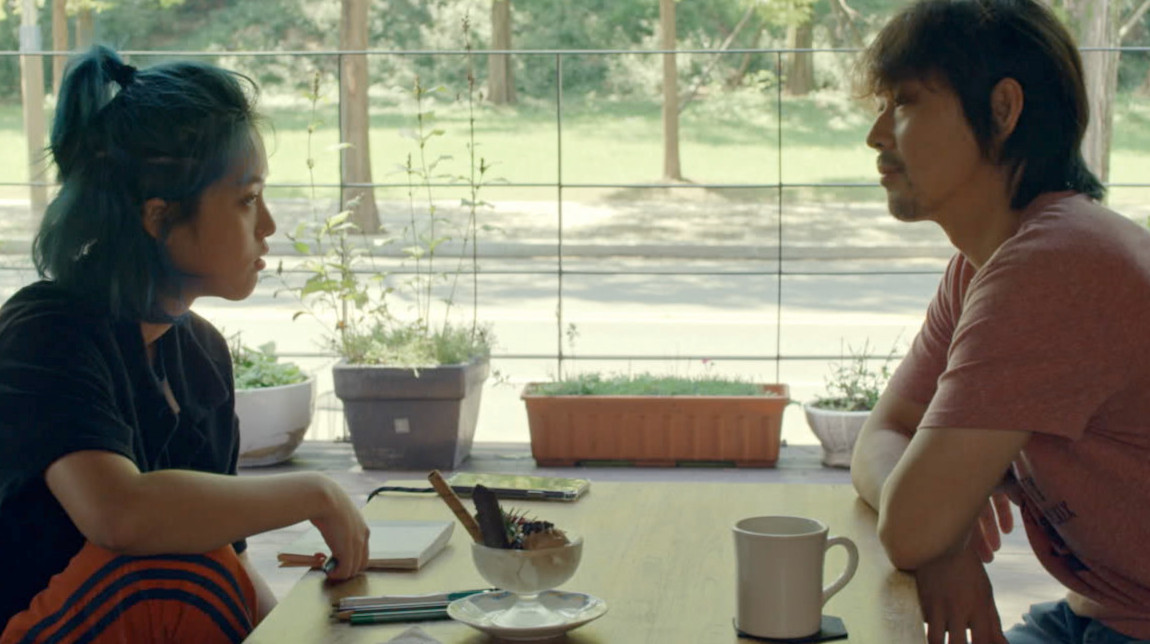
Two shorts including Risa Negishi’s Two of Us focussing on two women in various stages of loneliness and, Naoya Fujita’s Long-Term Coffee Break following a couple through a relationship that began with a cup of coffee.

November 18, 2022 at 5:00 PM: His Lost Name

Sensitive drama from Nanako Hirose in which an old man’s decision to take in a young man he finds at the riverbank places him at odds with his family. Review.

The Female Gaze: Women Filmmakers from JAPAN CUTS and Beyond runs from Nov. 11 to 20 at Japan Society New York. Full details for all the films along with ticketing links are available via the official website and you can also keep up with all the latest details by following the festival’s official Facebook page and Twitter account.

Leonor Will Never Die (Ang Pagbabalik ng Kwago, Martika Ramirez Escobar, 2022)

A grief-stricken screenwriter resolves to write her way out of self-imposed inertia while trapped in a world of her own creation in Martika Ramirez Escobar’s meta dramedy Leonor Will Never Die (Ang Pagbabalik ng Kwago). Drawing inspiration from the action exploitation films of the 1980s, the film asks some big questions about grief and agency and the role stories play in our lives while celebrating a sense of community in cinema along with the accidental immortality it may grant. 

Once a successful screenwriter of action films, Leonor Reyes (Sheila Francisco) is now an elderly lady who has largely shut herself away following the tragic death of her eldest son, Ronwaldo (Anthony Falcon). Her youngest, Rudie (Bong Cabrera), still lives with her but as she later reveals there is distance between them and a sort of repellant dependency in which each resents the other and longs for freedom while simultaneously afraid to chase it. When Leonor “forgets” to pay her electricity bill and is berated by Rudie, she is handed a newspaper by the ghost of Ronwaldo containing an ad for a screenplay competition and decides to dust off the script she broke off when he died. While taking a cigarette break, she is hit on the head by a flying TV thrown out by the man next-door fed up with his wife’s addiction to soap operas and finds herself falling into the world of the film hoping she can save the hero, also named Ronwaldo (Rocky Salumbides), from his tragic fate. 

Shifting into a grainy 4:3 with mono aural sound, Escobar perfectly recreates the world of retro action drama but subtly updates it from its Marcos-era backdrop in replacing activists with drug users, her authoritarian thugs carrying out extrajudicial killings for reasons of intimidation. The movie Ronwaldo is set on revenge against a corrupt mayor and his vigilante son who shot his brother and then placed a pistol and a small packet of drugs next to the body, resisting authoritarianism in a way it may not have actually been possible to do so directly in the movies of the past. In any case, Leonor slips into her own screenplay as an awkward omnipotent force writing as she goes but struggling with her own role and agency before picking up a hammer and venturing into danger to rescue the hero and his love interest herself.  

From the other side of the screen, Rudie asks her if she’d be OK with someone else finishing her screenplay which is in a way asking her if she’s alright with her final decisions being made for her. That might be what Leonor is trying to decide for herself by rewriting in real time, searching for the right ending for her life’s story. Rudie had resented his mother, blaming her for keeping him behind when he planned to apply for an overseas work visa to join his boyfriend abroad but she wonders if he isn’t just using her as an excuse while afraid to take the risk. She by turn insists she can manage alone, but is perhaps afraid she can’t which, along with the grief she feels over Ronwaldo’s death, leads her to push him away. 

Leonor’s coma perhaps brings them both clarity that allows them to discover what it is they really want, Rudie finally handing agency back to his mother in telling her do what she has to do in a world of her own creation while she tells both her sons to be sure they write their own lives. The doctor had told Rudie that Leonor was trapped in a world between sleeping and waking and that you can’t wake someone who is not asleep, they will have to find a way to escape by themselves something which in one way or another Leonor perhaps does coming to terms with Ronwaldo’s death and breaking free of her grief through recapturing her creative spirit if writing a poetic end for herself. Then again as an authorial voice breaks through, life is never as simple as narrative and we’re rarely given the opportunity to edit our own stories or decide the way in which they end, perhaps Leonor isn’t either but even so passes into a world of joy and song in which there are no real endings only a great expanse of cinema. Charmingly surreal and filled with good humour, Leonor Will Never Die is at once the story of an old woman rediscovering herself while letting go of her grief and a celebration of escapist pleasures as paths towards self actualisation. 


Leonor Will Never Die screens in Amsterdam on 30th October as part of this year’s Imagine Fantastic Film Festival.

US release trailer (English subtitles)

Missing (さがす, Shinzo Katayama, 2021)

“None of us are needed” claims the nihilistic serial killer at the centre of Shinzo Katayama’s dark mystery drama, Missing (さがす, Sagasu). That he’s wrong is an obvious point, but also one reinforced by the teenage heroine’s determination to find her father not just literally and physically, but spiritually and emotionally as she struggles to reorient herself and find direction in her life in the midst of grief and despair. Drawing inspiration from the so-called “Twitter Killer” case of 2017 Katayama asks some difficult questions about the ethics of life and death and how seemingly ordinary people can be pulled towards the dark side by a mixture of greed and misplaced compassion. 

As the film opens, young Kaede (Aoi Ito) is running through the backstreets of Osaka looking for her dad (Harada). What occurs is something of a role reversal as she arrives, breathless, at a convenience store and is forced to apologise because her father has been caught shoplifting having been short the paltry sum of 20 yen which she then has to pay to smooth things over so he won’t actually be arrested. It’s at this point that Satoshi tells her about his big get rich quick scheme which involves claiming the reward for catching a fugitive serial killer, Terumi Yamauchi (Hiroya Shimizu), known as “No Name”, whom he believes to have seen in the local area. Kaede does not take her father seriously, but then Satoshi suddenly disappears. She can’t help but wonder if he was telling the truth and that something untoward has happened to him. 

What she quickly discovers, however, is that no one except herself is very interested in her father’s disappearance. Her teacher tries to help by taking her to the police, but it’s clear that they do not consider Satoshi to be a person worth looking for suggesting that whatever’s happened to him is most likely his own fault for being an imperfect person, implying that he drinks and has debts so most likely has gone missing on purpose. The teacher later comes to the same conclusion, getting a nun from a local orphanage to come and fetch Kaede believing her father has no intention of returning. Probably meaning well, the nun also tells her that her father has abandoned her and there’s no point waiting for him. But even if everyone else thinks that Satoshi is an “unnecessary” person, he is important to her and so she will not stop until she finds him even if that puts her in similar danger hot on the heels of a serial murderer. 

Like the Twitter Killer, Yamauchi disingenuously claims to be helping people, offering “salvation” to those who want to die but cannot bring themselves to end their own lives. By his logic, there are some who are only clinging on to life out of guilt for those who will be left behind while simultaneously blaming themselves that they are “unneeded” and nothing more than a burden to the few who do care about them. His claims are however nothing more than sociopathic justification designed to convince others that what he’s doing is in some way compassionate rather than a sickening attempt to satisfy his own dark desires. As he finally concedes with a repeat customer, in the end none of the people he killed wanted to die but were looking for something else which obviously was not what he wanted to give them. 

Perhaps Satoshi was looking for something too though whether he found it or not only he could say. Katayama hints at the grimness of everyday life in Satoshi’s unsatisfying existence of casual labour, guilt, and loss. When Kaede tries to check whether or not he’s been going to work, no one recognises his picture and it turns out that someone else has been working under his name. A migrant worker urges her to be careful, that the man calling himself Satoshi Harada has bad vibes of the kind he claims you often find “in places like this”. All Satoshi wanted to was to reopen the ping pong parlour he was forced to close in order to care for his wife during a longterm illness which left him with financial debts along with the emotional. It is quite literally a back and fore between father and daughter, a ping pong ball flying across a table until finally hitting its mark as Kaede reveals that she has found the answers she was looking for even if not quite the ones she wanted. Lightened by moments of dark humour, Katayama’s strange procedural grimly suggests that none of us is really so far away from acts of desperate brutality but equally that none of us is ever unneeded no matter how lonely it might feel. 


Missing screens in Chicago on Oct. 30 as part of the 15th season of Asian Pop-Up Cinema. It will also be released in the US on Nov. 18 courtesy of Dark Star Pictures.

US release trailer (English subtitles)

The Wild, Wild Rose (野玫瑰之戀, Wong Tin-lam, 1960)

A free-spirited nightclub singer’s dreams of love are shattered by fragile masculinity and an unforgiving society in Wong Tin-lam’s take on the classic opera Carmen, The Wild, Wild Rose (野玫瑰之戀, yě méiguī zhī liàn). Where similar films of the era may paint the heroine’s plight as punishment for her subversion of societal norms, Wong’s musical noir implies that perhaps she was too good, too pure-hearted for the increasingly selfish and judgemental society around her while the man she loves is simply too weak to accept her transgressive femininity. 

It’s with the man, Hanhua (Chang Yang), that we first enter the world of the EW Ritz cabaret bar. An “elite” English graduate, Hanhua has fallen on hard times and unable to find teaching work has been forced to take a job he sees as sordid and degrading as a pianist in a nightclub. He and his teacher fiancée Suxin (So Fung), literally the girl next-door, joke about it outside, Hanhua asking her if she’s worried about all the “pretty bad women” in such establishments and pointing at his engagement ring as an amulet of protection against predatory femme fatales. Once inside, however, he’s instantly captivated by the alluring singer, Sijia (Grace Chang), who nevertheless takes against Hanhua because unbeknownst to him he’s displacing her regular piano player, Old Wang (Lui Tat), who’s being let go by the greedy boss for showing up late because his wife is seriously ill. 

Unable to accept such callous behaviour, Sijia tries to use her position to speak up on Wang’s behalf and almost loses her own job in the process while irritating her stage rival and the boss’ squeeze Meimei (Shen Yun). While Meimei sings a quiet romantic ballad on the dance floor, Sijia embarks on a crowd-pleasing, gender-bending routine in the bar which proves both that she is the star in this establishment and that she can bend the crowd to her will turning them on whoever she sees fit. After a fight breaks out, Hanhua finds himself physically restraining Sijia to prevent her from stabbing Meimei with an icepick. Though this originally annoys her, Sijia is quite clearly turned on watching Hanhua fight off all of the other men who rose up to defend her honour. Once he is wounded, she again asserts her authority by calling them off and proceeding to flirt with Hanhua who leaves with Suxin vowing never to return. 

But as Old Wang had said, it’s tough to find a job these days and faced with his mother’s excitement about his new career prospects Hanhua has no choice but continue working at the Ritz. We can perhaps tell something of Hanhua’s background from the interior of his home which though modest has a large classical portrait on one wall and is otherwise neat and well organised. He evidently envisaged a conventional middle-class life for himself and is humiliated to have been reduced to a mere piano player in a backstreet bar, the kind of place that he sees as sordid and dangerous and would not ordinarily think of himself visiting. He sees Sijia in much the same way but perhaps stops short of admitting her danger, refusing to look at her or only with contempt while furiously denying his barely controlled desires of the kind which were perhaps unleashed by the fight at the bar. 

Yet all the qualities which attract her to him are the ones he eventually wants to destroy in her rebellious goodness and refusal to follow the unjust rules of her society. She tells him point blank not only in her song but repeatedly to his face that she is a fickle woman who believes there are no good men and is essentially in this only for a good time for as long as it lasts. In fact, her interest in him largely stemmed from a bet with a guy at the bar that she couldn’t seduce him in 10 days, stung by his rough rejection of her after the fight. But Hanhua is too conventional a man to understand or accept her. He gives in to his desires after discovering that she slept with a rich man only to get the money for a life saving operation for Old Wang’s wife, witnessing her self-sacrificing goodness and therefore deciding that she is “worthy” of him after all. Ultimately he expects her to play the role of a conventional housewife, refusing to allow her to continue singing in nightclubs even while he is unable to find another job having served time in prison for bludgeoning her abusive ex. His fragile masculinity had also caused him to blow up at Suxin when she went to the headmaster at her school and asked him to give Hanhua a less degrading job, humiliated to have a woman beg for him just he is humiliated to be supported by Sijia and especially by her doing a job he thinks is somehow improper. 

It is not Sijia who ruins Hanhua, but Hanhua himself and the toxicity of conventional social codes that feed into his sense of resentment. His obsessive desire to possess Sijia, to dominate and tame her, drives him to drink and uselessness to the point he completely degrades himself, pathetically pleading with Sijia not to leave, prepared to allow her to return to work or even take other lovers if only she does not abandon him. Sijia meanwhile is in a sense tamed by her love for Hanhua in that she decides that love is sacrifice, that she must live a more conventionally proper life as Hanhua’s wife and eventually that she must separate from him in order to preserve his future. In this she is redeemed in the eyes of Suxin and Hanhua’s mother who realise that she is a good woman who genuinely cared for Hanhua, but is finally done in by her goodness. Her morality cares nothing for properness and all for humanity, her kindness to Old Wang and her best friend eventually repaid while all Hanhua can think of is a redemption of his masculinity through violence driven just like Don José to the peak of madness in obsessive love. But there’s more than just inevitable tragedy in Sijia’s fate, there is a deep sense of injustice and that Hanhua’s actions were as much about stifling her transgressive goodness as they were about vindicating himself as a man which in any case is only pathetic in its unrighteousness. Masterful in its musicality, Wong’s romantic noir positions its heroine as dangerous but only because she is better than the world around her and the world around her knows but does not want to see. 


The Wild, Wild Rose screens in Amsterdam on 27th/29th/31st October as part of this year’s Imagine Fantastic Film Festival.

The Narrow Road (窄路微塵, Lam Sum, 2022)

An earnest middle-aged man and a cynical young woman become unlikely friends in pandemic-era Hong Kong in Lam Sum’s melancholy drama, The Narrow Road (窄路微塵). The narrow road is indeed the line they have to walk as they find their already precarious lives straitened by the increasing pressures of life under corona with few possibilities open to them other than to trust in each other and discover unexpected solidarity in their contradictory approaches to life. 

As a customer later suggests, some might say the pandemic is good for those like Chak (Louis Cheung) who runs a one man cleaning business, turning up after hours to disinfect cafes and offices which are still technically open but forced to close early because of the current restrictions. But as we can see Chak is exhausted and his faithful van which has the logo of his company proudly emblazoned on the side is on its last legs. He lives a simple life with his elderly mother who suffers with arthritis but is afraid of the expense of going to the doctor and seems to find joy only in the vague hope of getting lucky on the horses or else the lottery. 

A good-hearted man, Chak’s philosophy is life in that if you work hard and do everything properly then you’ll be alright. Hoping to take advantage of an increase in trade he takes on a young single mother, Candy (Angela Yuen), as an assistant but her outlook is the polar opposite of his as he discovers on spotting her pilfering ice cream bars from a convenience store after the clerk told her the discount had expired because she arrived a new moments after midnight. Cynical because of her experiences, Candy doesn’t see why she or her daughter should go without just because they don’t have money when some have so much they’d hardly notice a little missing, nor does she see the problem with cutting corners when it’s not like anyone notices anyway but Chak points out he’d know and wouldn’t like to feel as if he’d cheated someone or broken his word. 

But then desperate times sometimes call for desperate measures. Chak’s cleaning business is as reliant on a circulating economy as any other as he discovers when the disinfectants he needs for his work are on backorder from a supplier because of pandemic-related delays. When the pair are dispatched to clean up after a lonely death, it plunges Candy into a moment of existential crisis if the result of life is ending up as a stain on someone’s floor to be washed away by a stranger who is themselves faceless and invisible, merely “a cleaner”. As the pair work at night when no one else is around, it’s as if these properties are cleaned by magic, sparkling and new the next day, when the reality is that their work is more important than ever in ensuring public safety not to mention allowing other people to continue operating their businesses confident that they’re doing everything they can to protect their customers.  

In a poignant moment, Candy looks out at the beautiful view from a child’s bedroom in a wealthy family’s apartment and reflects that her living space does not even have a window. Her small daughter Chu eventually draws a picture of one they stick on the wall behind makeshift curtains making do with only the illusion of the light and air they have so far been denied because of their poverty. The world around them seems to be shrinking with businesses across the city closing their doors for good while those with the means to do so are choosing to go abroad for obvious political reasons hoping to start again somewhere else. Chak can only do his best to ride the waves and when even that isn’t possible to keep looking forward even if it means settling for what the moment allows while trying not to let it make him cynical or resentful. The world’s messed up but you don’t have to be, he tries to tell Candy, reminding her that children are sponges and that the lessons she’s teaching her daughter might not serve her well in adulthood. “You’ll hate me when you’re grown up” Candy concedes on doing another midnight flight to another “temporary” situation albeit one which does at least come with a window.

Still as Chak says, they might be smaller than dust but if God doesn’t see them it doesn’t matter as long as they see each other echoing the film’s central message of togetherness and solidarity not just amid the difficult background of the pandemic but as a philosophy for life. Lam’s unshowy yet poetic and beautifully lensed photography captures the sense of shrinking isolation in the early days of COVID-19 while subtly contrasting the fortunes of those like Chak and Candy living in tiny airless spaces who are forced to risk their lives with those who their labour protects. “Are poor people sentenced to death?” Candy asks and forces a concession that perhaps they are by the vagaries of an unfeeling, increasingly capitalistic society. 


The Narrow Road screens in Chicago on Oct. 29 as part of the 15th season of Asian Pop-Up Cinema.

Original trailer (English subtitles)

The Roundup (범죄도시 2, Lee Sang-yong, 2022)

Force of justice Ma Seok-do returns five years after The Outlaws to right more wrongs in jet-setting action comedy, The Roundup (범죄도시 2, Beomjoidosi 2). By this stage in his career, actor Ma Dong-seok has succeeded in creating a persona for himself as a loveable bruiser whose violence is just a way of being and always in service of a greater good. These are qualities very much in play as Seok-do (Ma Dong-seok) finds himself defending the interests of Korean citizens abroad against crooks the cops failed to catch at home.

Seok-do is however in the dog house for being accused of using excessive force in the papers after neutralising a hostage incident in a convenience store. To keep him off the front pages, the higher ups decide to send him on a mini mission abroad bringing home a Korean fugitive who has apparently turned himself in to the Vietnamese authorities. Given that this is quite an odd thing to do and the criminal’s explanation that he was suddenly overcome with guilt and wanted to repay his debt to society doesn’t ring true, Seok-do smells a rat. As he discovers, it all points back to the kidnapping and murder of a rich man’s son by vicious gangster Hae-sang (Son Seok-koo) who preys on unsuspecting tourists. Rather than get the police involved, the boy’s father has decided to hire a bunch of mercenaries to take revenge further destabilising the local underworld in Ho Chi Min City. 

It has to be said that there is something a little uncomfortable in the quasi-nationalist posturing of the film’s central premise. Korea has effectively been exporting crime by allowing dangerous criminals to flee abroad where the law can’t touch them. Korean crooks then make trouble for Korean tourists even if not quite to the extent of Hae-sang, all of which ignores the effects on the local Vietnamese population in concentrating on Korean on Korean crime. At the end of the film it’s even suggested that Korean police officers might be dispatched to other areas of Asia to look after Korean tourists which shows a certain lack of respect for national sovereignties while more or less letting the same police officers off the hook for failing to catch criminals in Korea or address the issues which led to them entering lives of crime. A maverick cop, Seok-do does rather throw his weight around in a foreign country, caring little for protocol and threatening to spark a diplomatic incident every few seconds. 

Then again he is just particularly keen on shutting down Hae-sang and exposing him for his heinous acts, cleaning up a mess that has ended up spilling over abroad. Ironically enough, the bereaved father, Choi (Nam Moon-cheol), maybe a powerful CEO but he made his money loansharking and is pretty much a petty gangster himself so of course he wants personal vengeance once again uncomfortably hiring mercenaries from China. Meanwhile, Seok-do ends up enlisting the help of a formerly undocumented migrant when Choi ends up getting kidnapped himself by a cornered Hae-sang.

In any case, Seok-do more than holds his own against the bloodthirsty villains in a series of well choreographed action sequences culminating in a one-on-one showdown on a bus. Much of Ma’s appeal lies in his effortless ability to take down bad guys which he does a plenty, even dispatching one via escalator to his waiting teammates below. Even so, he knows not to take himself too seriously and is keen to cede screen time to the ensemble allowing a gentle camaraderie to appear among his squad members despite their separation while Seok-do and the Captain are in Vietnam trying to have a covert holiday and the rest of the team are left behind to do regular admin work in the office. Though it may present some rather uncomfortable ideas in a kind of Korean exceptionalism that implies a degree of superiority over and disregard towards other Asian nations, the film is nevertheless a charming retro action comedy and perfect showcase for the charismatic star as his no-nonsense policeman makes a point of slapping down bad guys and fighting international crime while generally living his best life hanging out with similarly justice-orientated buddies. 


The Roundup screens in Amsterdam on 27th October & 4th November as part of this year’s Imagine Fantastic Film Festival.

International trailer (English subtitles)

Nagi’s Island (凪の島, Masahiko Nagasawa, 2022)

“Doctors don’t heal patients. We just help them heal themselves” according to the kindly grandmother at the centre of Masahiko Nagasawa’s warmhearted drama Nagi’s Island (凪の島, Nagi no Shima). In many ways an island film, Nagasawa’s gentle tale of the power of community support and mutual compassion celebrates the healing power of laidback island life while simultaneously lamenting its decline amid rural depopulation and an ageing society which it leave it in someways vulnerable without the protections of big city infrastructure. 

For young Nagi (Chise Niitsu), however, it’s a kind of haven. Following her parents’ divorce she’s returned to live with her grandmother Yoshiko (Hana Kino) who runs the island’s only medical clinic while her mother (Rosa Kato) has a secured a job as a nurse at the hospital on the mainland. Nagi has adjusted to island life fairly quickly, but is also haunted by her past and suffers from panic attacks when witnessing small acts of violence and aggression that recall painful memories of her father’s drunken rages. In any case it seems that Nagi has maintained contact with her dad, Shimao, through social media while he is trying his best to undergo treatment for alcohol abuse and repair his relationships with his family. 

As Yoshiko puts it, history has in a sense repeated as she too came to the island with her daughter, Mao, after leaving her husband and was comforted by the total acceptance of the island community who asked few questions and never attached any social stigma to the fact she was a single mother. Many people here are, however, also suffering such as Nagi’s new friend Raita who is touched by her relationship with her mother while missing his own. Irritated by his grandfather’s refusal to explain to him what’s happened to her other than that she’s in a hospital, he determines to find out dragging Nagi along for an adventure but perhaps discovers something he wasn’t quite prepared for only to be comforted by a frank yet compassionate outlaying of the facts from a sympathetic doctor and the gentle support of his friends and family. 

Nagi’s arrival also begins back painful memories for the school’s janitor who is nicknamed Grumpy Grandpa (Kyusaku Shimada) by the kids (of whom there are only five) because of his morose appearance and the fact he never smiles. Having lost his own daughter to a heart attack, he worries for Nagi who in turn becomes determined to make him smile and eventually succeeds in making him feel a part of the community allowing him to begin making peace with his daughter’s death. 

That sense of community is however threatened by the realities of contemporary island life. Nagi’s new friends Kengo and Raita are secretly worried that Mao will decide to remarry and Nagi will leave the island leaving them alone again as the only children of their age. In the local school all the kids are taught together because there are only five of them, the other two being an older boy and his younger sister. Life on the island may seem so idyllic that it’s difficult to see why anyone would want to leave, but with few jobs available younger people often seek better futures in the city while there’s no denying that because of the decreasing population there are few resources available. Yoshiko is the only doctor on the island and her clinic is only a regular GP’s office meaning those who require more serious medical treatment will have to travel to the mainland which is possible only by small fishing boats in good weather. 

In any case the island provides a healing environment of its own, allowing Nagi and her mother to begin putting the past behind them while offering a chance of redemption for Shimao who may be able to start over in a kinder place free of the pressures of city life. As the islanders celebrate the first marriage taking place in the village in 30 years, there is promise of new life and new beginnings despite the prevailing narrative that communities such as these have little future in a continually evolving society. What is clear is that Nagi has found her place to belong along with a purpose in life in the gentle lull of the island’s seas and its welcoming shores. 


Nagi’s Island screened as part of this year’s Camera Japan. It will also be screening at Japan Society New York on Nov. 20 as part of The Female Gaze: Women Filmmakers from JAPAN CUTS and Beyond.

Original trailer (no subtitles)

Decision to Leave (헤어질 결심, Park Chan-wook, 2022)

“I went through hell for you but without you my life would be empty” a fugitive murderer asks an insomniac detective to tell the woman he loves, making his own Decision to Leave (헤어질 결심, Heojil kyolshim) which will in fact be one of many in Park Chan-wook’s achingly romantic noir. Tinged with fatalism, the pursuit of love is also one of death and leads inevitably to a kind of haunting from which there is no real escape though you wouldn’t really want one anyway. 

In any case, the detective Park Hae-joon’s (Park Hae-il) sense of reality is already fracturing under the strain of his incurable insomnia. As he tells his partner, it’s not that he can’t sleep because of his obsessive stakeouts, it’s that he goes on stakeouts because he cannot sleep. Unfortunately for him, there have been relatively few murders lately. He wonders if it’s because of the nice weather, as if homicidal rage were being held in check by the gentle art of picnicking which it has to be said has a strange logic to it. Living apart from his wife who is a nuclear engineer in provincial Ipo, Hae-joon prides himself on being a good policeman and is preoccupied by his failure to catch two suspects currently on the run for a vicious murder. When he’s called to the scene of a dead body lying below a cliff, most are ready to rule it a tragic accident or perhaps a suicide but Hae-joon isn’t so sure especially given the unusual behaviour of the man’s much younger widow, Seo-rae (Tang Wei), who appears almost indifferent to her husband’s death and giggles to herself during an interrogation a habit she later claims is born of nervousness and a lack of confidence in her ability to speak Korean having migrated from China. 

Seo-rae’s Korean is perhaps a little better than she makes out, but still we see her repeating lines from romantic dramas on television, lines she later repeats to Hae-joon, while he wonders if her taste for historical romance has lent her Korean its archaic quality. They are each in a way out of time, she remarking that he strikes her as “dignified” to a degree she didn’t expect in a “modern” man while he ironically tells her that he was drawn to her because like him she liked to look at things directly. Yet there’s nothing at all direct about the mysterious Seo-rae whom he suspects of murdering her husband, and though there might be something unspoken directly understood between them their attempts at communication are always frustrated. Not only is there an ever shifting language barrier, but a mediation through text message and voice note or else through the act of being observed at a distance. As they grow closer, Hae-joon allows Seo-rae to listen to his surveillance tapes recorded as he voyeuristically watched her apartment from the rooftop opposite. She immediately deletes them but later does something similar herself, and is finally undone by her inability to delete a potentially incriminating recording because it has come to mean too much to her. 

The pair are in a sense perfectly matched. Hae-joon’s melancholy wife finally exclaims that he needs murder and violence in order to be happy, while Seo-rae admits that she ends up with terrible men like husband because it would take something extreme such as a murder for a good man like Hae-joon to take notice of her. As the couple dance around each other, Park colours their non-romance with shades of the gothic in the repeated motif of the crow feathers each of them find as they work their way towards the apotheosis of their love. As they say every love story is a ghost story and what is love if not an unsolvable mystery? Hae-joon’s sense of reality is forever in flux, Park playfully dressing Hae-joon’s new team and his old team in similar outfits as he segues between fantasy, reality, and memory while trying to parse out an objective truth. Hae-joon’s tragedy may be that he discovers more than he ought to know but not enough to solve the mystery, destined to be haunted by his unresolved cases and the elusive silhouette of lost love lingering silently in the mists of memory. 


Decision to Leave screened as part of this year’s BFI London Film Festival and is now on general release in US & UK cinemas courtesy of MUBI.

International trailer (English subtitles)

Angae (Mist) by Jung Hoon-hee (1967) which is also the title song for Kim Soo-yong’s 1967 film of the same name.

Shiro – Hero of Heroes (諸葛四郎 – 英雄的英雄, Lin Yu-chun & Chuang Yung-hsin & Liu Yu-shu, 2022)

An earnest young man, grieving son, and feisty princess team up to stop the evil Demon Society from becoming all-powerful rulers of their land in an adaptation of classic Taiwanese comic book Shiro – Hero of Heroes (諸葛四郎 – 英雄的英雄, Zhūgě Sìláng – yīngxióng de yīngxióng). Created by Yeh Hong-Chia in the late 1950s, the series has become a nostalgic touchstone for generations of children and is about to reach new ones with a feature-length 3D CGI animation following Zhuge Shiro (Wang Chen-hua) on another exciting adventure to reunite the magical Dragon and Phoenix swords and stop their awesome power from falling into the wrong hands. 

Unfortunately the Dragon Sword has already been lost, much to the king’s regret. When Demon Society raid the palace during a festival and place a mask over the princess’ face, the king puts the land on lockdown and summons the nation’s locksmiths to try and free her only to realise there’s no way to unpick Demon Society’s diabolical locks without giving in to their demands to surrender the Phoenix Sword. Luckily hero of heroes Zhuge Shiro just happens to be in town on the invitation of his locksmith uncle and pledges to help the king salvage his fracturing relationship with his daughter who resents his hesitation to exchange the sword for her wellbeing and make sure Demon Society doesn’t get its hands on the swords’ unleashed power. 

Though this is in many ways a tale aimed at younger audiences, the incredibly witty script moving to the rhythms of traditional opera includes a series of meta jokes for grownups from a silly reference to a limited edition dart and workplace exploitation to subtle digs at societal authoritarianism along with a small cameo from a wandering cartoonist whose work is censored by the powers that be. Having faced Demon Society several times before, Zhuge Shiro is a pure hearted young man wise beyond his years with a strong sense of justice. His first act of goodness is standing up to an officious guard, General Shan, who won’t let a worried father with a sick child enter the town to find a doctor, while he soon earns the respect of the king through his compassion and emotional intelligence in trying to explain the king’s dilemma to the princess. He does however engage in a little sexism which the princess herself is quick to push back against, pointng out that she’s a skilled fighter herself and does not need protecting but will be joining him on this mission whether he likes it or not. 

Similarly, Zhuge Shiro gains another comrade in Zhen Ping (Chiang Tieh-Cheng) who is originally under the misapprehension that Zhuge Shiro is responsible for his father’s death only to later realise it was all the fault of Demon Society. To reunite the swords and save the kingdom, the trio find themselves battling through the villain’s booby trapped lair and discovering that the swords’ power lies in a different place than they first might have assumed, one Demon Society is largely unable to appreciate and therefore to benefit from even if they had managed to hold both swords in tandem. In other words, it’s brotherhood and justice which eventually enable the trio to prosper while the bumbling masked demons only make fools of themselves in their intense greed and villainy. 

Staying close to the aesthetic of the comic book, the film’s highly stylised designs closely match those of the original characters from back in the late 1950s if perhaps a little cuter and rounder in keeping with contemporary CGI animation while it moves to a comic beat inspired by traditional opera interspersed with a few song and dance numbers and exciting martial arts fight scenes as the trio face off against the minions of Demon Society while standing up for justice. Just as the king learns the real meaning of treasure, the trio discover a brotherly bond and a new mission to rid the land of the evils of Demon Society while accepting that even villains can change their ways and should be allowed a chance to redeem themselves, and those who may seem obviously villainous might be alright on the inside. In any case, Zhuge Shiro embarks on what could be the first of many adventures in charming style taking down the bad guys with good humour and righteousness fuelled by the power of friendship.


Shiro – Hero of Heroes screens in Chicago on Oct. 23 as part of the 15th season of Asian Pop-Up Cinema.

Original trailer (English subtitles)

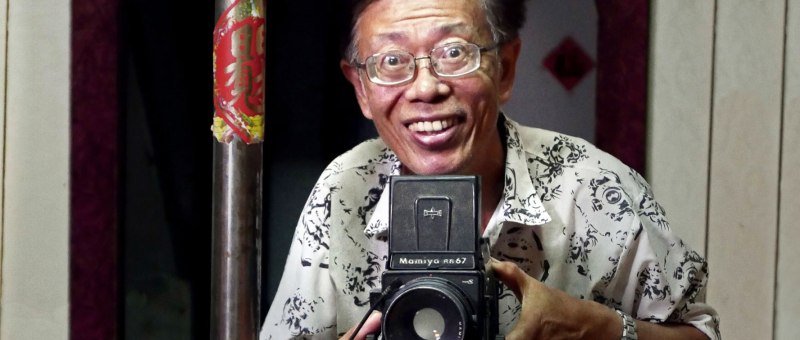
The Cabbie (運転手之戀, Chen Yi-wen & Chang Hwa-kun, 2000)

The crazy freewheeling life of a lovestruck taxi driver eventually takes a turn for the contemplative in Chen Yi-wen & Chang Hwa-kun’s infinitely charming comedy, The Cabbie (運転手之戀, yùn zhuǎn shǒu zhī liàn). Despite the film’s sunny atmosphere, darkness does indeed hang around the edges in the frequent references to car accidents and dismemberment yet it seems to be something that the affable hero can live with as he narrates a series of strange incidents from his ordinary life while meditating on his zany family when faced with mortal anxiety. 

As taxi driver Quan (Chu Chung-heng) points out, life can be pretty strange. His taxi can sometimes act as an unofficial confessional as his fares take the opportunity to unburden themselves to a complete stranger in a confined space, confessing the embarrassing details of their lives and even at one point seemingly confessing to a murder. Quan takes it in his stride, feeling as if he is one with his cab, Ah Di, and duty-bound to deliver his charges to their rightful destinations physical and emotional. Yet in an odd way it’s almost as if we’ve become the driver in this story and Quan is our fare, breaking the the fourth wall to speak to us directly of his strange life and the circumstances which led to this present turn of events. 

Quan is however unusual in that he tells his mother and father quite directly that he has no intention of marrying, giving a fairly logical reasoning based on the fact he believes women do not like him and he is not apparently much interested in them. This is of course a source of anxiety for his parents, his taxi driver father also turning fare in ranting at an old lady at the convenience store about his wayward son before trying to awaken something within him by gifting him porn. His mother meanwhile, the local coroner, decides to give up on him while ordering Quan to freeze his sperm so she can have a grandchild with or without his direct involvement at some point down the line. 

In any case, Quan changes his mind on falling in love at first sight with grumpy policewoman Jingwen (Japanese actress Rie Miyazawa, dubbed into Mandarin). Taking his mother’s advice about making an impression (not necessarily a good one) to heart, Quan decides the best way to woo his crush is to get fined by her as many times as possible. Even so there’s an undeniable Romeo and Juliet vibe to their relationship given the natural animosity between taxi drivers and traffic cops, along with a sense of cosmic irony that feeds directly back into the film’s darker themes. So much of life for Quan is coincidence, an act of cosmic collision not unlike the car crashes that occur so frequently outside the taxi depot. Quan encounters Jingwen by chance and then continues to push his luck by meeting her again in similar circumstances until she gives in to his unusual ardour. Yet not all of these accidents end well. One of Quan’s neighbours earns extra cash turning up at crash sites and making sure that the family gets all of the deceased’s body parts, reaching under twisted metal to retrieve pieces of severed flesh while his mother is indeed a coroner with a severed head in a jar sitting proudly in her office. 

In the end it might be that Quan is a mere passenger of fate, relating his life to us as it flashes before his eyes while threatened by a weird fare. What begins as absurd nonsense comedy as Quan tells us about his crazy family and the strangers who climb into his cab eventually takes an unexpected, poignant turn for the existential even as Quan continues to closely identify himself with Ah Di which might beg the question of who is driving who. Madcap and anarchic, there is something genuinely cheerful in Quan’s often simple existence governed both by chance and the rules of the road lending a fatalistic pall to all of his otherwise freewheeling adventures. Things don’t always always go right for him, but even when they go wrong it’s generally in the right way. Fast-forwarding though the “boring bits”, Quan races us through his life in the cab before taking us where we need to go keeping it cheerful while preparing for the inevitable collision with cosmic irony. 


The Cabbie screens 20th October as part of this year’s Taiwan Film Festival Edinburgh.

Original trailer (Traditional Chinese / English subtitles)