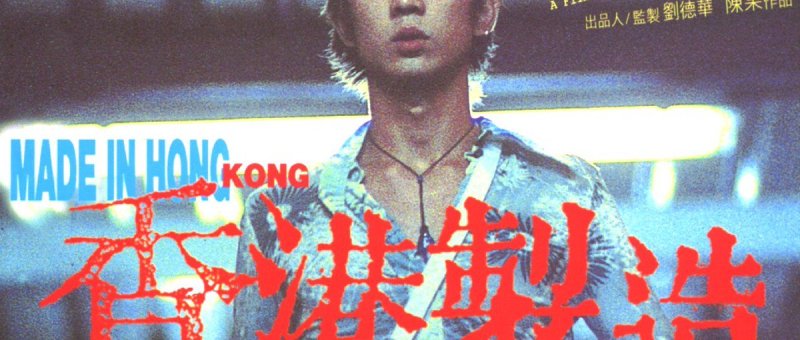
 The Hong Kong of 1997 becomes teenage wasteland for the trio at the centre of Fruit Chan’s urgent yet melancholy debut, Made in Hong Kong (香港製造). Made on a shoestring budget using cast-off film and starring then unknowns, Chan’s New Wave inflected meditation on dead end youth is imbued with the sense of endings – illness, suicide, murder, and despair dominate the lives of these young people who ought to be beginning to live but find their paths constantly blocked. The world is changing, but far from possibility the future holds only confusion and anxiety for those left hanging in constant uncertainty.
Autumn Moon (Sam Lee), our narrator, is a boy fighting to become a man but too afraid to leave his adolescence behind even if he knew how. Living alone with his mother (Doris Chow Yan-Wah) after his father abandoned the family, Moon is a high school drop out with no real job who spends his time playing basketball with the neighbourhood kids and running petty errands for small scale Triad Big Brother Wing (Sang Chan). Already indulging in a hero complex, Moon is friends with and the de facto protector of a young man with learning difficulties, Sylvester (Wenders Li), who has been disowned by his birth family and is constantly picked on, beaten up, and molested by the local high schoolers. Taking Sylvester with him on a job one day, Moon runs into Mrs. Lam (Carol Lam Kit-Fong) whose debt he’s supposed to collect but when Sylvester has one of his frequent nosebleeds on seeing Mrs Lam’s beautiful daughter, Ping (Neiky Yim Hui-Chi), Mrs. Lam manages to send them packing. Nevertheless, Sylvester and Moon end up becoming friends with Ping and enjoying the last days of Hong Kong together, engaged in a maudlin exploration of teenage mortality pangs.
As Moon puts it in his voice over, everything starts to go wrong when Sylvester picks up a pair of blood stained letters in the street. They belonged to a high school girl, Susan (Amy Tam Ka-Chuen), who we later find out killed herself from the pain of first love. The spectre of Susan haunts the trio of teens left behind who remain morbidly fascinated with her fate yet also afraid and anxious. Together they pledge to investigate her death and return the letters to their rightful owners as, one assumes, Susan would have wanted. Even so, when they finally track down the recipient of the first letter, the man Susan gave her life for, he barely looks at it and tears her carefully crafted words of heartbreak into a thousand pieces, scattering them to the wind unread.
In investigating Susan’s tragic love affair, Moon and Ping begin to fall in love but Ping too already has the grim spectre of death around her. Seriously ill, Ping is at constant risk if she can’t get a kidney transplant but the list is long and she’s running out of time. Moon wants to be the hero Ping thinks he is, but he’s powerless in the face of such a faceless threat. He makes two decisions – one, to get the money to pay her debt, and two to go on the organ donor’s register so that if anything happens to him, Ping might get his kidney, struggling to do something even if it won’t really help.
Powerlessness is the force defines Moon’s life as he adopts a kind of breezy passivity to mask the fact that he has no real agency. He says he doesn’t want to join the Triads full-time because he values his independence, prefers making his own decisions, and hates taking orders but he rarely makes decisions of his own and when he does they tend not to be good ones. Moon drifts into a life of petty gangsterism partly out of a lack of other options, and partly out of laziness. Abandoned by his father and then later by his mother too, Moon’s only real source of guidance is the minor Triad boss Big Brother Wing who, unlike his mother, at least pretends to trust and respect him. Getting hold of a gun, Moon dances around like some movie vigilante drunk on power and possibility but once again fails in the hero stakes when a friend comes to him in desperate need for help but he’s so busy playing the cool dude alone in his apartment that he doesn’t even hear him over the music.
When it comes to pulling a trigger, Moon can’t do it, no matter how many times he’s visualised the moment and seen himself making the precision kill like an ice cold hitman in a stylish thriller. Moon’s illusion of his heroic righteousness crumbles. He couldn’t save his friends, has been rejected by his family, and has lost all hope for a meaningful future. As if to underline the hopelessness and fatalism of his times, Fruit Chan ends on a radio broadcast which instructs the lister to say the same thing again, only this time in Mandarin – the language of the future. Moon, Sylvester, and Ping are all cast adrift in this dying world, abandoned by parental figures and left to face their uncertain futures all alone. As a portrait of youthful alienation and despair, Made in Hong is a timeless parable in which an indifferent society eats its young, but it’s also the story of a Hong Kong Holden Caulfield standing in for his nation as they both find themselves approaching an unbreachable threshold with no bridge in sight.
Screened at Creative Visions: Hong Kong Cinema 1997 – 2017
Trailer for the 4K restoration which premiered at the Udine Far East Film Festival 2017 (English subtitles)
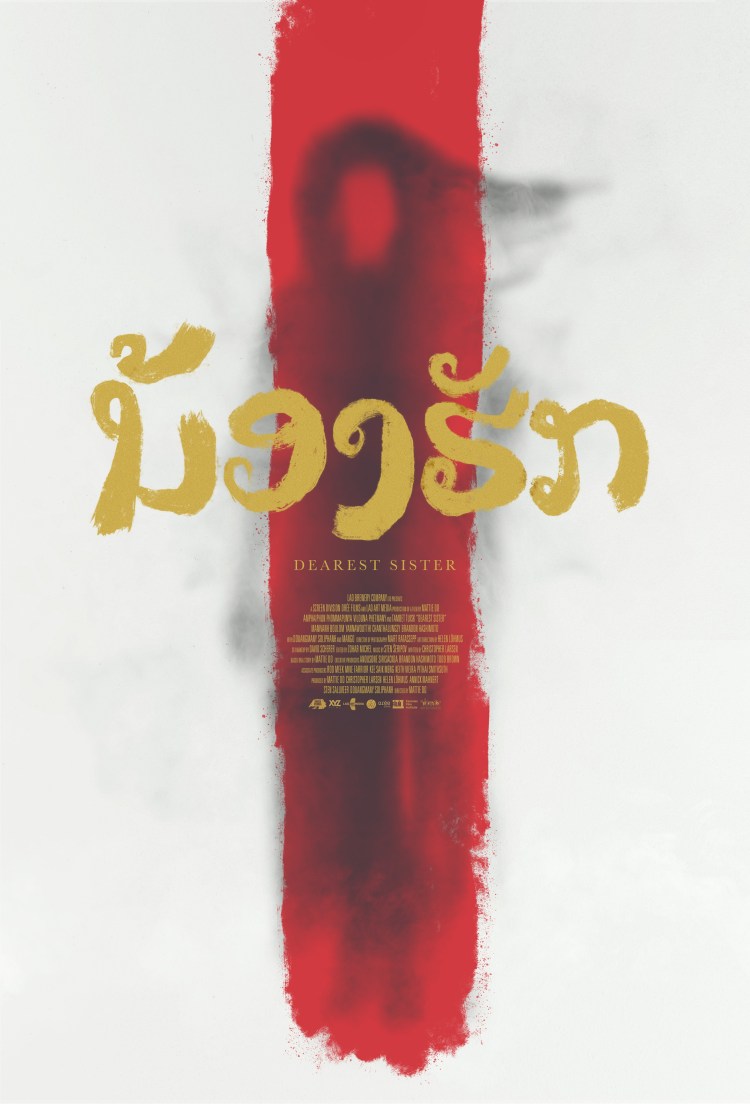 Marxist countries and horror movies often do not mix. Laos has only a fledgling cinema industry and Mattie Do, returning with her second film Dearest Sister (ນ້ອງຮັກ, Nong hak), is its only female filmmaker even if she finds herself a member of an extremely small group. Set in Laos it may be, but Dearest Sister also has something of the European gothic in its instantly recognisable tale of a good country girl fetching up in the city only to be treated like a poor relation and eventually corrupted by its dubious charms. Dearest Sister is a horror movie but one which places very real fears, albeit ones imbued with superstition, at the forefront of its tragedy.
 It’s a strange paradox that in a land defined by corruption of the legal system, your only hope my lie in a new trial. So it is for the hero of Kim Tae-yun’s latest film. Inspired by a real life miscarriage of justice (a case which was in fact still continuing at the time of filming), New Trial (재심, Jaesim) takes aim at everything from social inequality to unscrupulous lawyers and abuse of police power. A teenager pays dearly for being in the wrong place at the wrong time, not only losing 10 years of his life but the entire possibility of his future now that he’s forever branded a criminal. That’s aside from leaving his ageing (now blind mother) alone with no means of support and the additional burden of trying to clear her son’s name.
 Like the rest of the world, China, or a given generation at least, may be finding itself at something of a crossroads. The past few years have seen a flurry of coming of age dramas in which the melancholy and middle-aged revisit lost love from their youth but Derek Tsang’s Soul Mate (七月与安生, Qīyuè yǔ Anshēng) seems to be speaking to an older kind of melodrama in its examination of passionate friendship pulled apart by time, tragedy, and unspoken emotion. The story is an old one, but Tsang tells it well as its twin heroines maintain their intense, elemental connection even whilst cruelly separated.
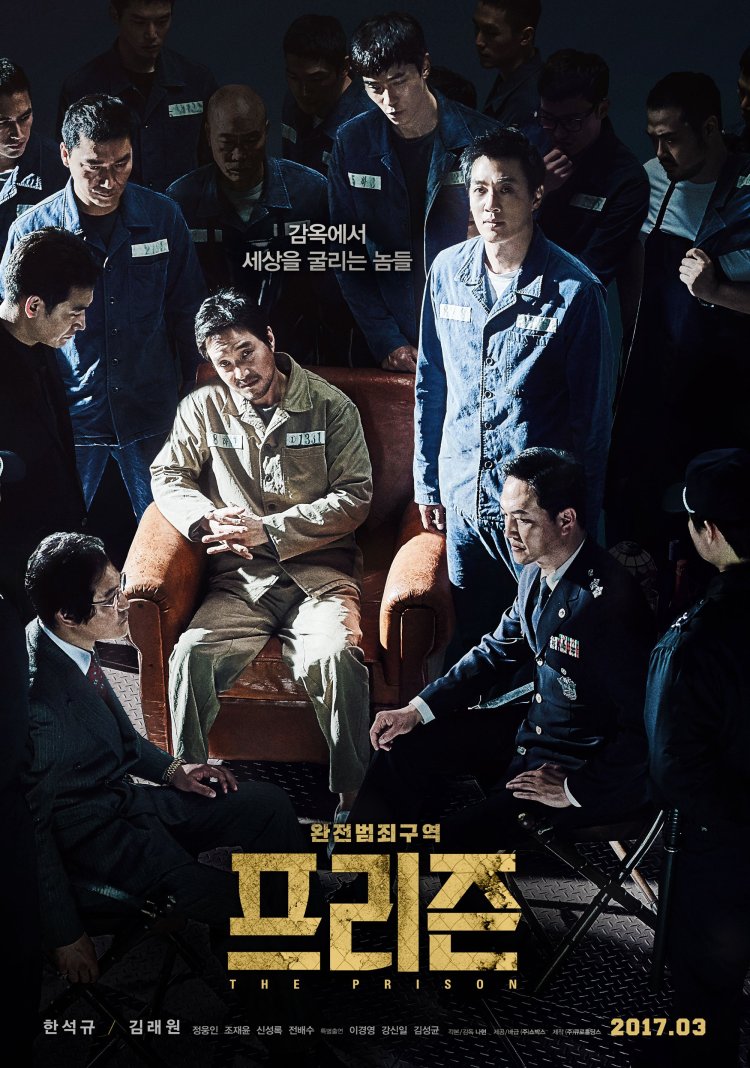 Prison can be a paradise if you’re doing it right, at least if you’re a top gangster in the movies. Na Hyun’s The Prison (프리즌) paints an interesting picture of incarceration and the way it links into his nation’s infinitely corrupt power structures. When investigators wonder why a crime spree suddenly came to an end, one of the frequently offered explanations is that the perpetrator was most likely arrested for another crime but what if you could turn this obviously solid alibi to your advantage and get those already behind bars to do your dirty work for you?
 Feng Xiaogang, often likened to the “Chinese Spielberg”, has spent much of his career creating giant box office hits and crowd pleasing pop culture phenomenons from World Without Thieves to Cell Phone and You Are the One. Looking at his later career which includes such “patriotic” fare as Aftershock, Assembly, and
  Youth looks ahead to age with eyes full of hope and expectation, but age looks back with pity and disappointment. Adapting her father’s novel, Liu Yulin joins the recent movement of disillusionment epics coming out of China with Someone to Talk to (一句頂一萬句, Yī Jù Dǐng Yīwàn Jù). Arriving at the same time as another adaptation of a Liu Zhenyun novel, I am Not Madame Bovary, Someone to Talk to takes a less comical look at the modern Chinese marriage with all of its attendant sorrows and ironies, a necessity and yet the force which both defines and ruins lives. Communism believes love is a bourgeois distraction and the enemy of the common good (it may have a point), but each of these lonely souls craves romantic fulfilment, a soulmate with whom they might not need to talk. The desire for someone they can connect with an elemental level becomes the one thing they cannot live without.
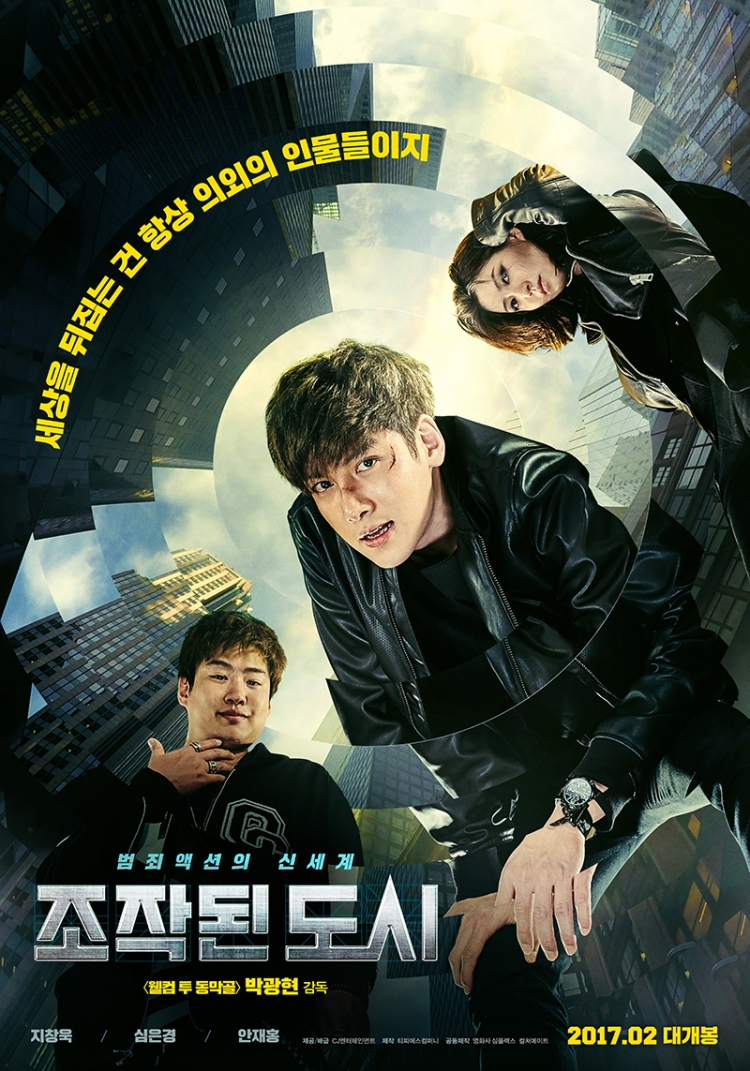 The real and the unreal. In the era of fake news, it’s become ever harder to draw a clear line between the two but when you live online, the borders are even more permeable. Twelve years after the wartime comedy Welcome to Dongmakgol, director Park Kwang-hyun finally makes a return to the director’s chair with an action packed cyberpunk thriller which joins the ranks of recent Korean films bemoaning the country’s hardwired tendency to social inequality where the rich and powerful are free to run roughshod over the merely ordinary. Fabricated City (조작된 도시, Jojakdwen Doshi) refers to more than just the literally manufactured online world, but to the social reality in which unseen forces govern and define the lives of others, operating in secret behind a government backed curtain.
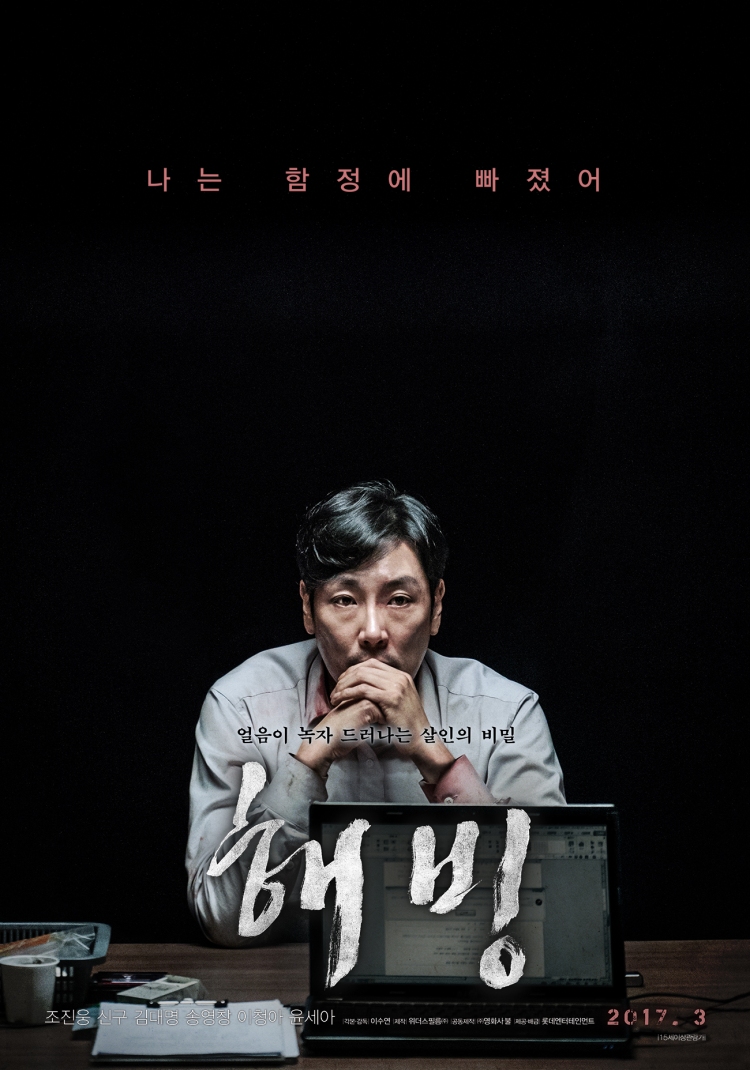 If you think you might have moved in above a modern-day Sweeney Todd, what should you do? Lee Soo-youn’s follow-up to 2003’s The Uninvited, Bluebeard (해빙, Haebing), provides a few easy lessons in the wrong way to cope with such an extreme situation as its increasingly confused and incriminated hero becomes convinced that his butcher landlord’s senile father is responsible for a still unsolved spate of serial killings. Rather than move, go to the police, or pretend not to have noticed, self-absorbed doctor Seung-hoon (Cho Jin-woong) drives himself half mad with fear and worry, certain that the strange father and son duo from downstairs have begun to suspect that he suspects.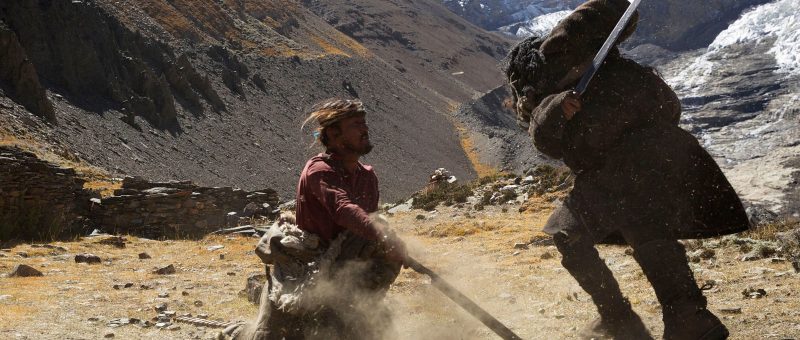
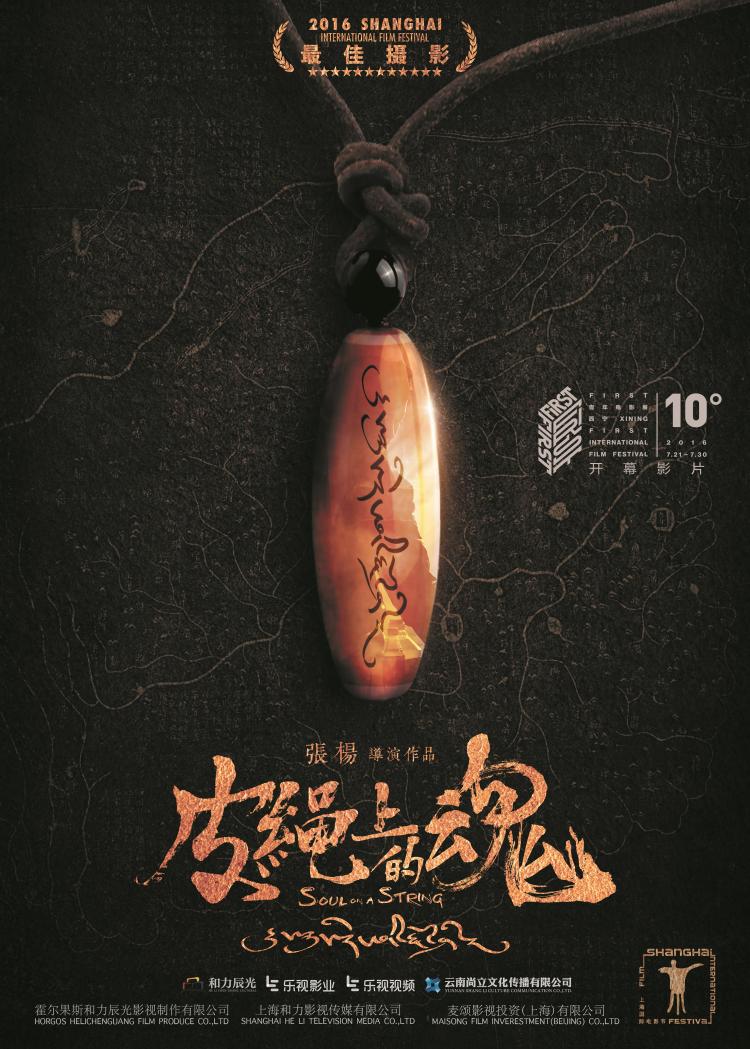 At the end of Zhang Yang’s
  Windows on Worlds