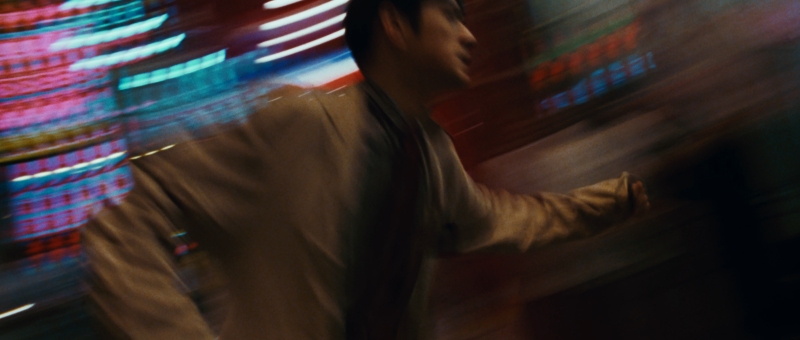
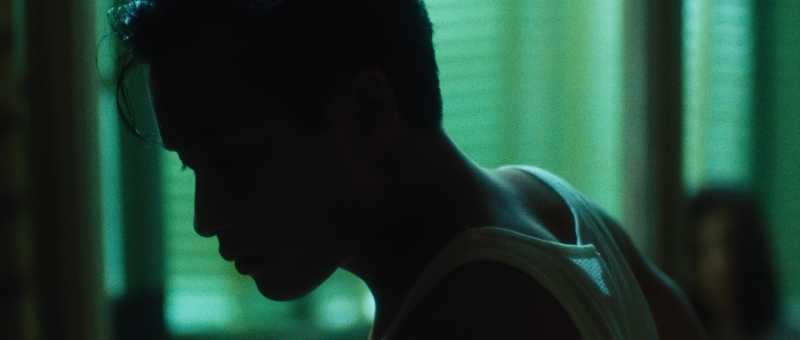
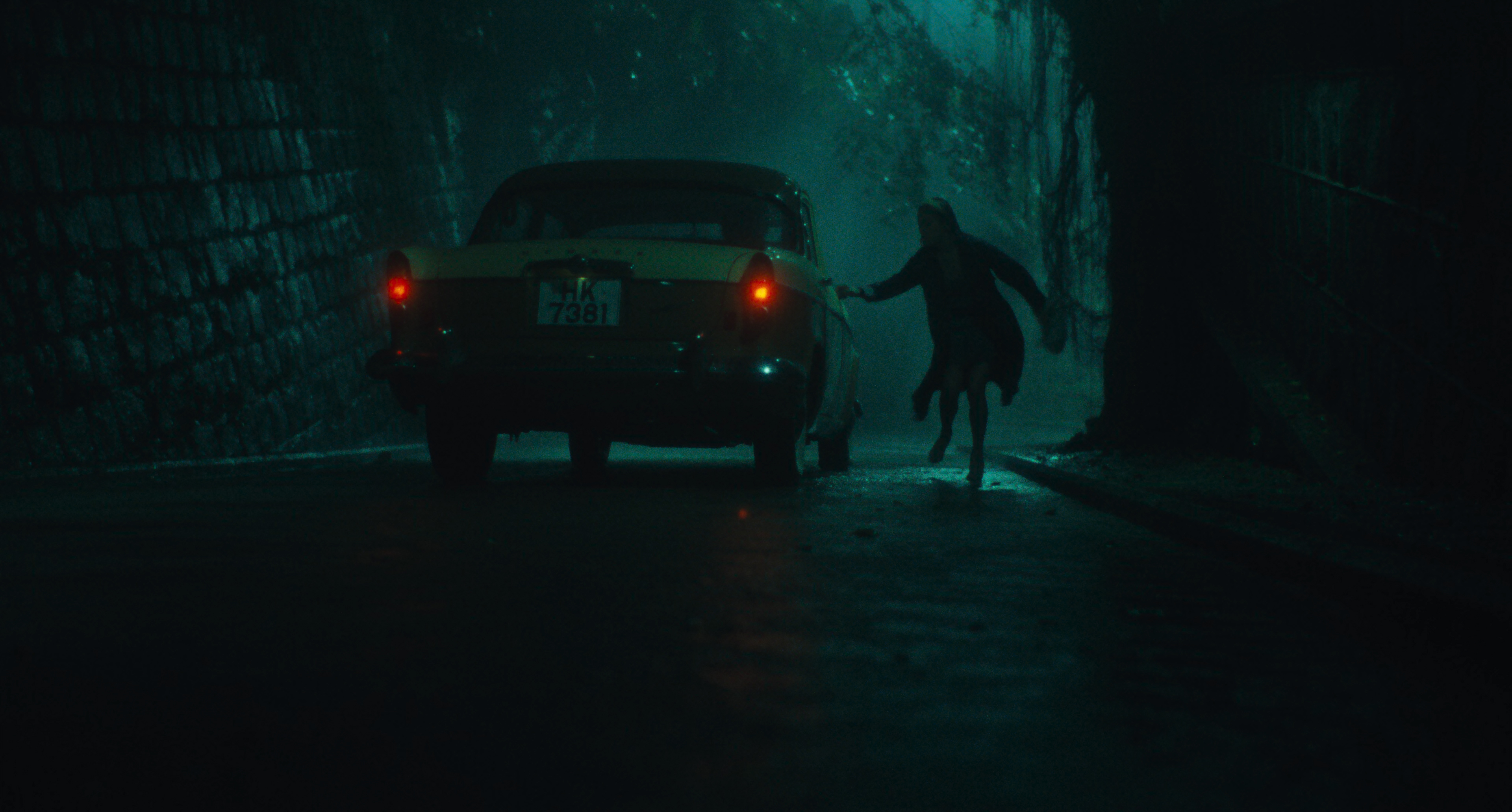
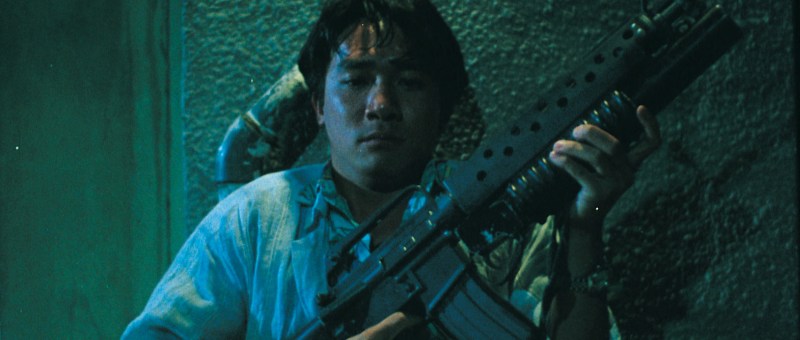
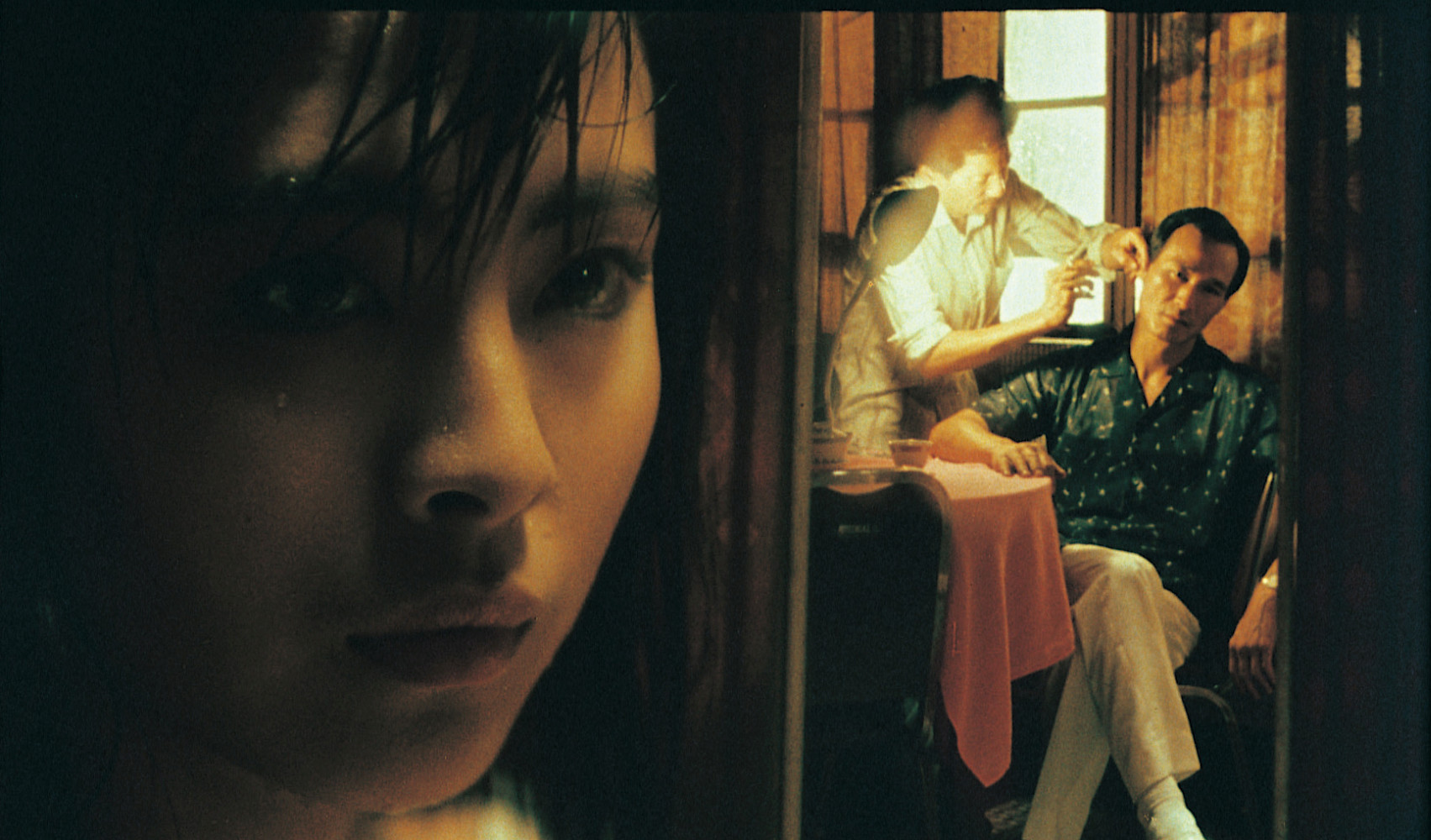
Days of Being Wild (阿飛正傳, Wong Kar Wai, 1990)

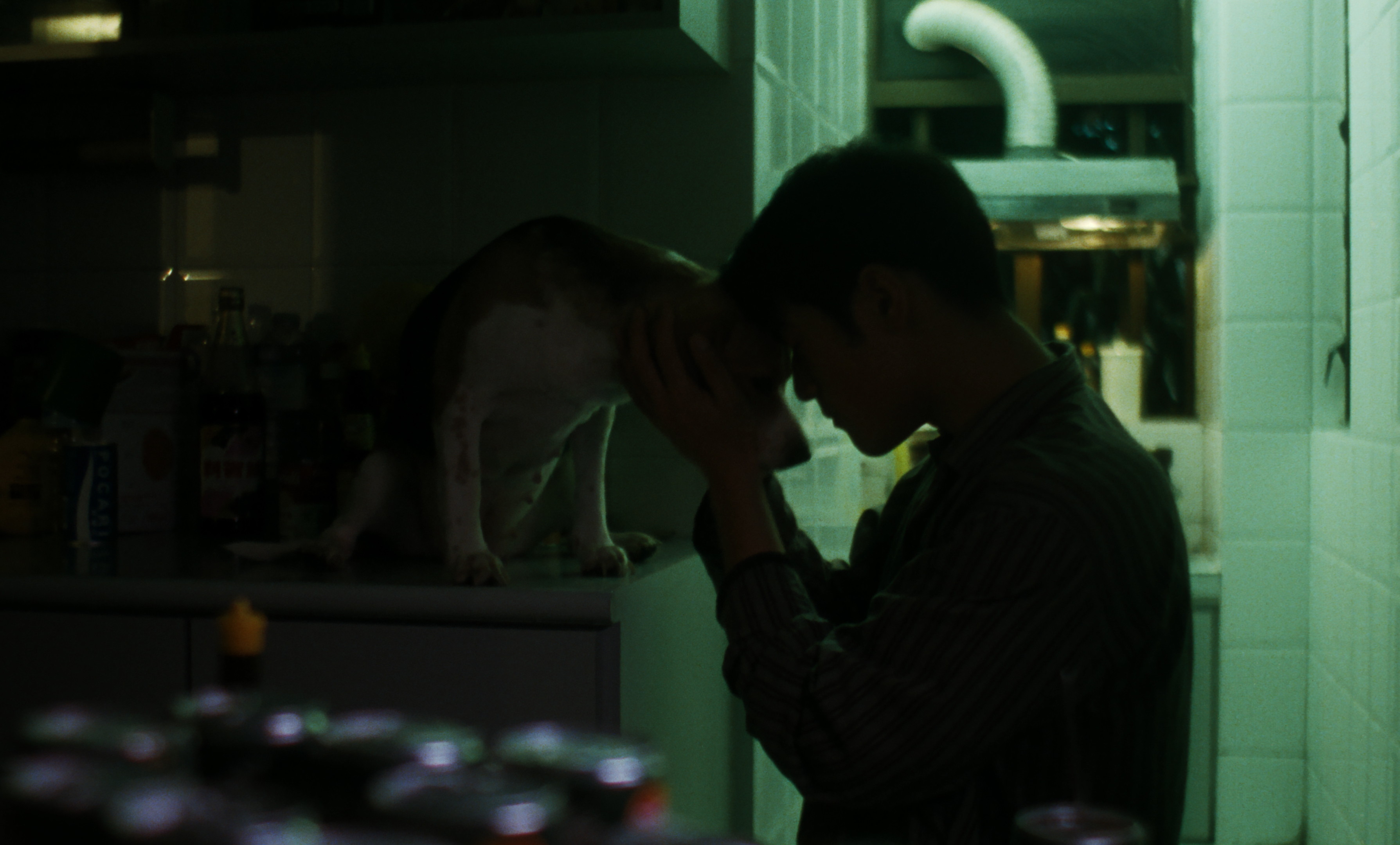
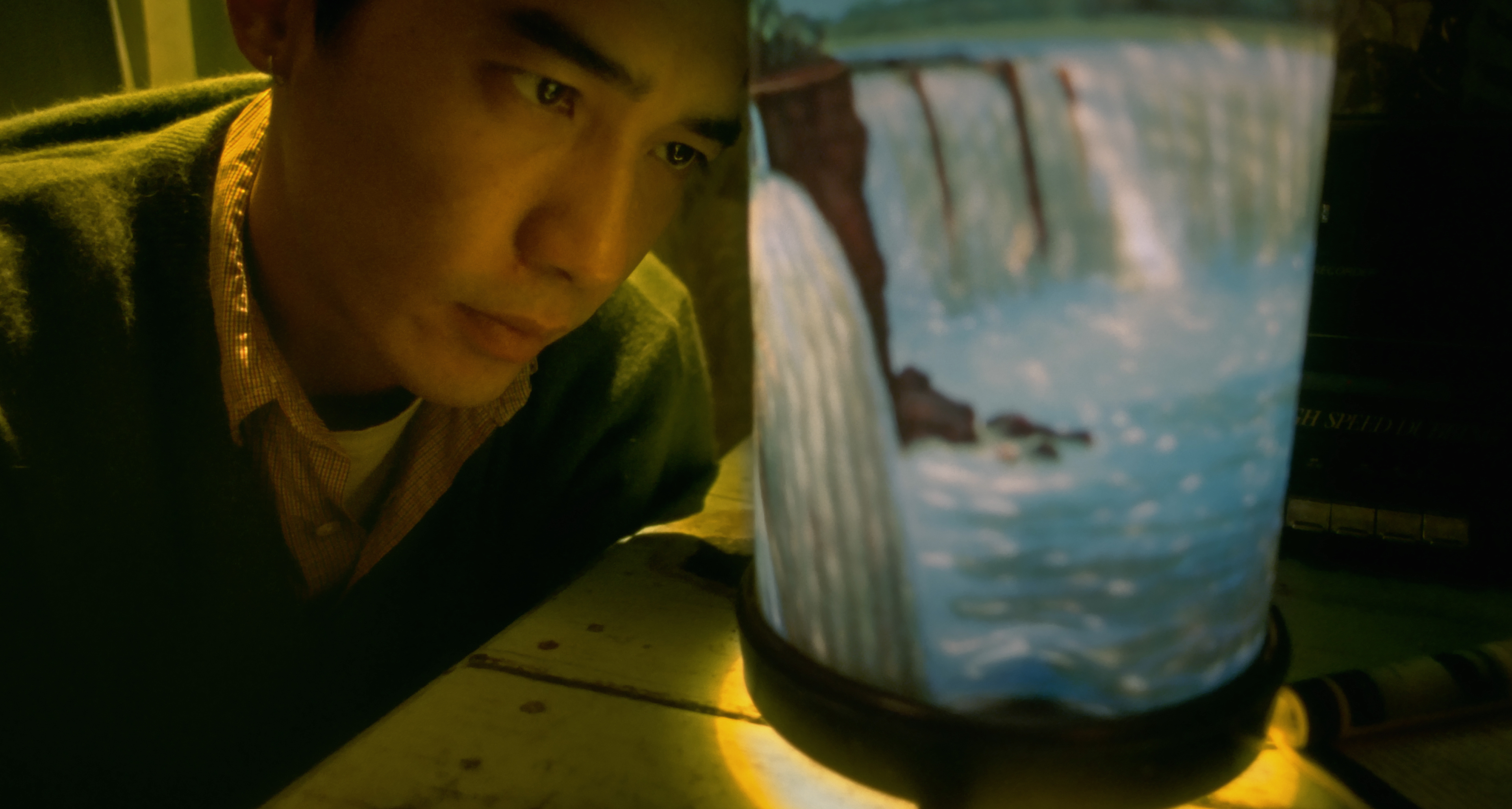
“I used to think a minute could pass so quickly, but actually it can take forever” laments a lovelorn heroine in Wong Kar Wai’s melancholy ‘60s romance Days of Being Wild (阿飛正傳), somehow neatly encapsulating the director’s entire philosophy. The heroes of Days are obsessed with minutes, seconds, hours, years, the barely perceptible passing of time. Clocks pervade the frame, their violent ticking the most prominent element of Wong’s strangely barren soundscape, a constant reminder of a life slowly etched away ceaselessly beaten towards an inevitable conclusion. 

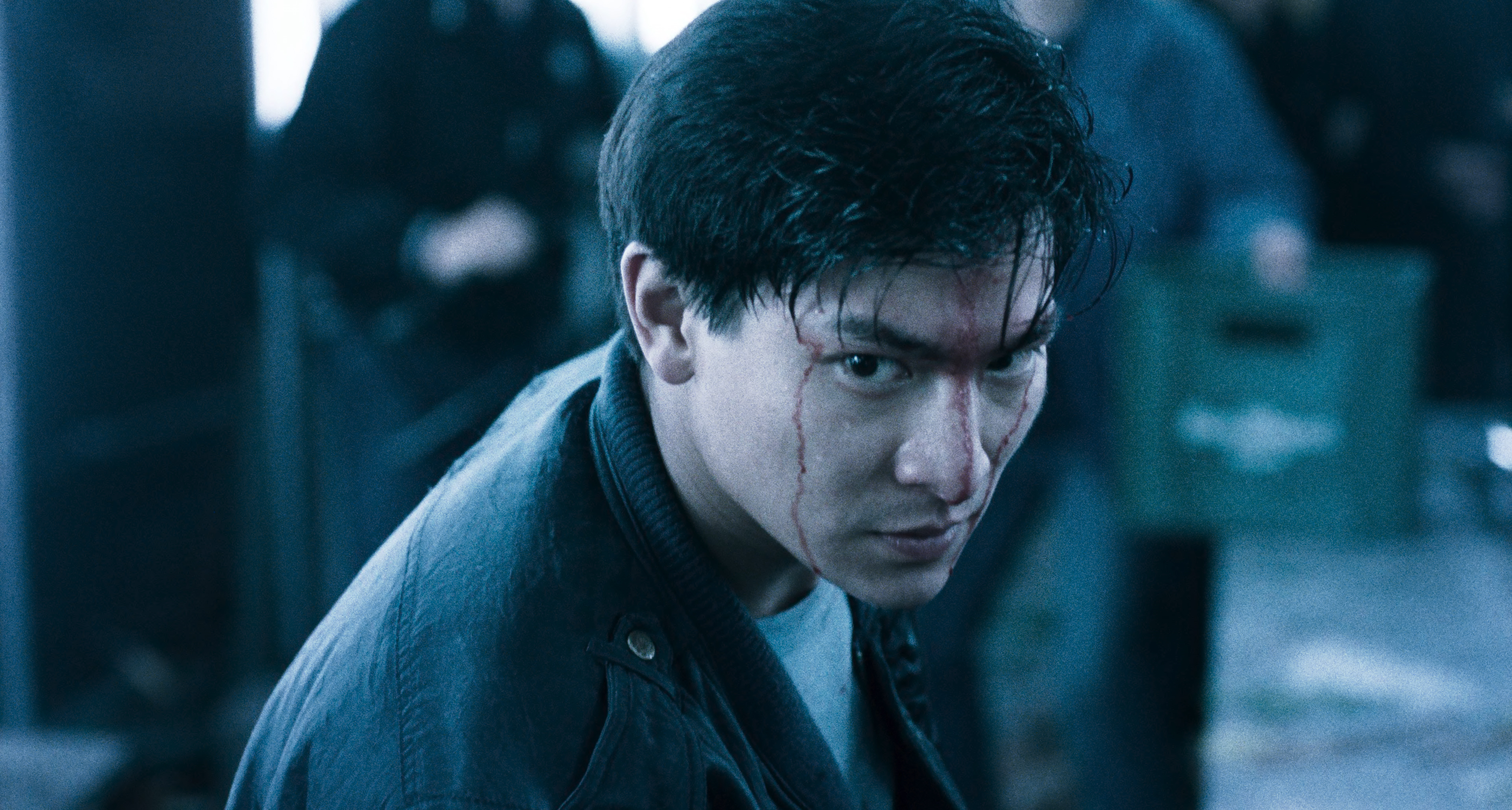
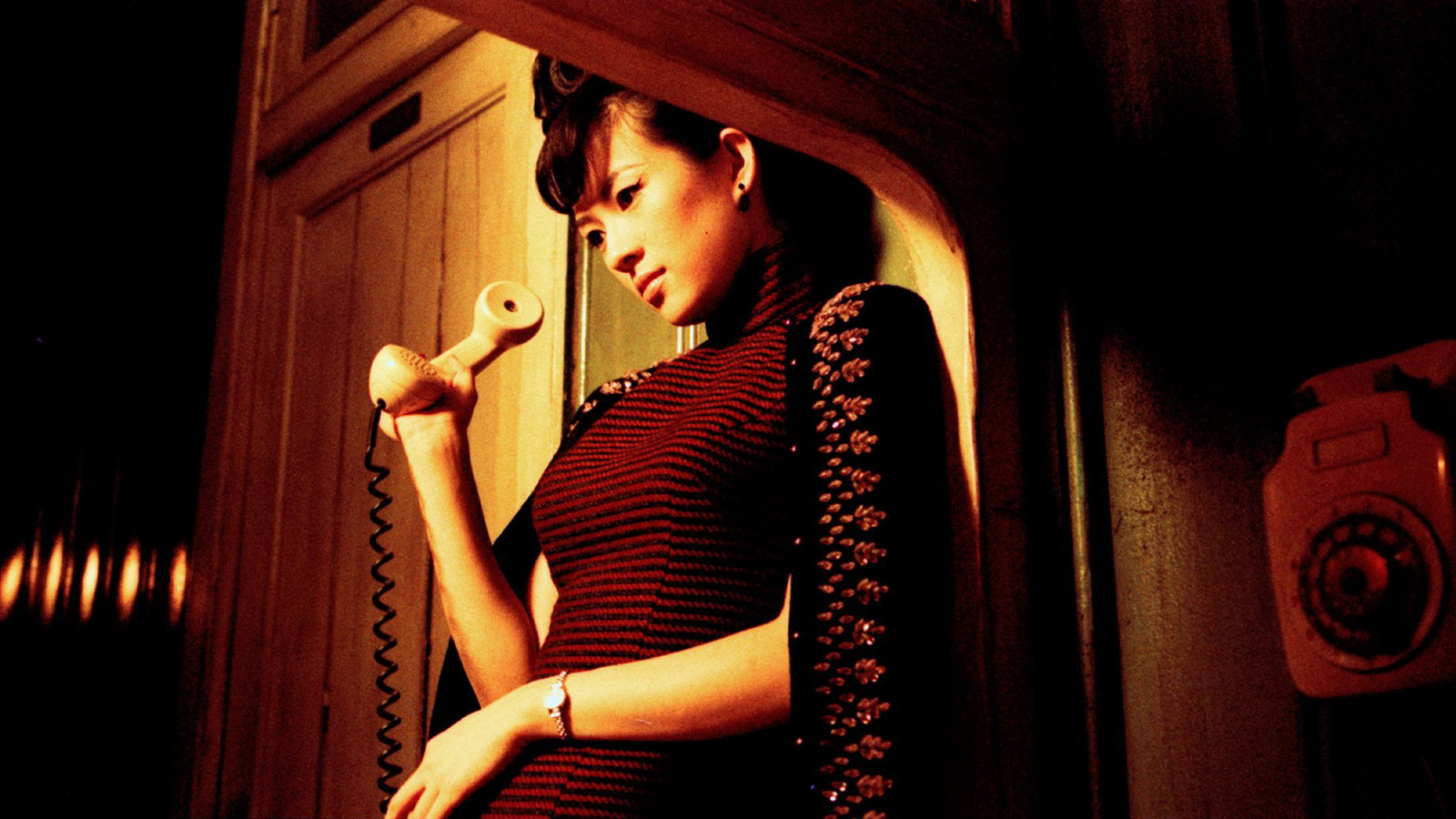
The hero, Yuddy (Leslie Cheung Kwok-wing), describes himself rather poetically as a bird without legs cursed to fly and fly meeting the ground only once at the moment of his death, an overly sentimental metaphor for which he is later taken to task by the equally rootless Tide (Andy Lau Tak-wah), a former policeman turned sailor who wonders if it’s just a line he uses to seduce lonely women with boyish sadness. We might wonder the same thing as he picks up the lonely Li-zhen (Maggie Cheung Man-yuk), a Macao émigré apparently unable to sleep, by telling her she’ll see him in her dreams before forcing her to look at his watch for a whole minute as if that after 3pm on April 16, 1960 were now a sacred date forever etched in time. She thought that sounded “so sweet”, but as he later tells her Yuddy is not the marrying kind and she too is trapped inside that moment, often framed behind bars or the tiny window of her box office booth before the door is cruelly slammed on her romantic delusion seemingly by automatic operation of the clock. 

In a twist of fate, Li-zhen meets Tide during his previous life as a policeman when she makes a fairly embarrassing attempt to get back together with Yuddy after he reacts coolly to her suggestion of marriage only to discover him with his new love, cabaret dancer Mimi (Carina Lau Kar-ling). “I’m not gonna be as stupid as her” Mimi insists flouncing out of his apartment only to find herself just that, making a desperate visit to Li-zhen at the stadium after the affair has ended to tell her to her back off only for the rather unsympathetic Li-zhen to point out they’ve both been deceived, “he treats all women the same”. 

A perpetual lothario Yuddy moves from woman to woman without touching the ground, but his rootlessness is seemingly born of maternal disconnection in his ambivalent relationship with the Hong Kong sex worker who raised him but refuses to disclose the identity of his Filipina birth mother supposedly a noble woman who for unknown reasons paid a foreigner US$50 a month to raise her son. Like the other women in Yuddy’s life, Rebecca (Rebecca Pan Di-hua) does her best to tie him down, apparently unwilling to reveal his origins in fear he’d leave her, but also mirrors him in her constant quest for affection bought from a series of younger men and apparently one older who threatens their relationship in inviting her to a new life overseas. Ironically enough, she soon tells her son to “fly, fly as far as you can” all the way to the Philippines, though Yuddy already suspects he’s been a flightless bird all along, dead from the very beginning.

Yuddy’s search for closure and identity ends disappointment and a painful lack of resolution, as does the nascent romance between the policeman and the box office girl, her mistimed phone calls amounting to a literal missed connection while Tide ponders lost love from foreign seas, and Mimi tragically chases the ghost of Yuddy all the way to Manila pined for by Yuddy’s self-conscious friend Zeb (Jacky Cheung Hok-yau) left behind alone. Trapped in the timeless present, they are each denied either past or future, lost in a lovelorn dream of perpetual longing. As if to ram his point home, Wong shows us another clock and then another man we’ve never seen before (Tony Leung Chiu-wai) as he gets ready for an evening out, crouching slightly in what appears to be a shallow, sub-divided garret making it clear that these stories have no endings, flying and flying until they hit ground and seemingly born in the air. A woozy, zeitgeisty journey through mid-century loneliness, Wong’s second feature leaves its melancholy heroes consumed by nostalgia for an ill-imagined future unable to escape the cruel tyranny of an interminable present. 


Transfer: Among the more faithful of the recent 4K restorations, Days of Being Wild nevertheless shifts to a slightly greener hue in keeping with the house style adopted for the series, adding to Wong’s sense of melancholy nostalgia and perhaps in keeping with Doyle’s original artistic vision.


Days of Being Wild is currently available to stream in the UK via BFI Player in its newly restored edition as part of the World Of Wong Kar Wai season.

Original trailer (unrestored, English subtitles)

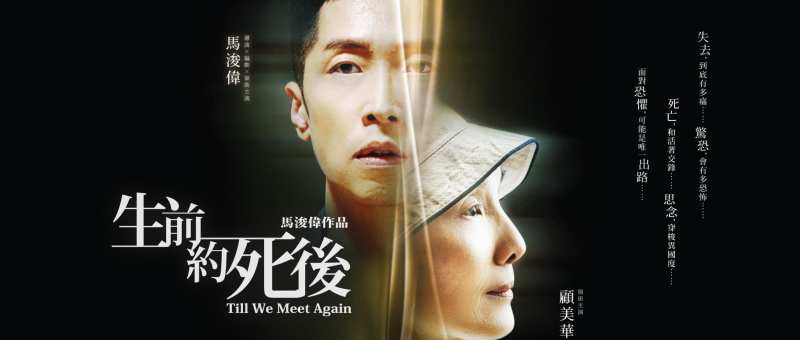
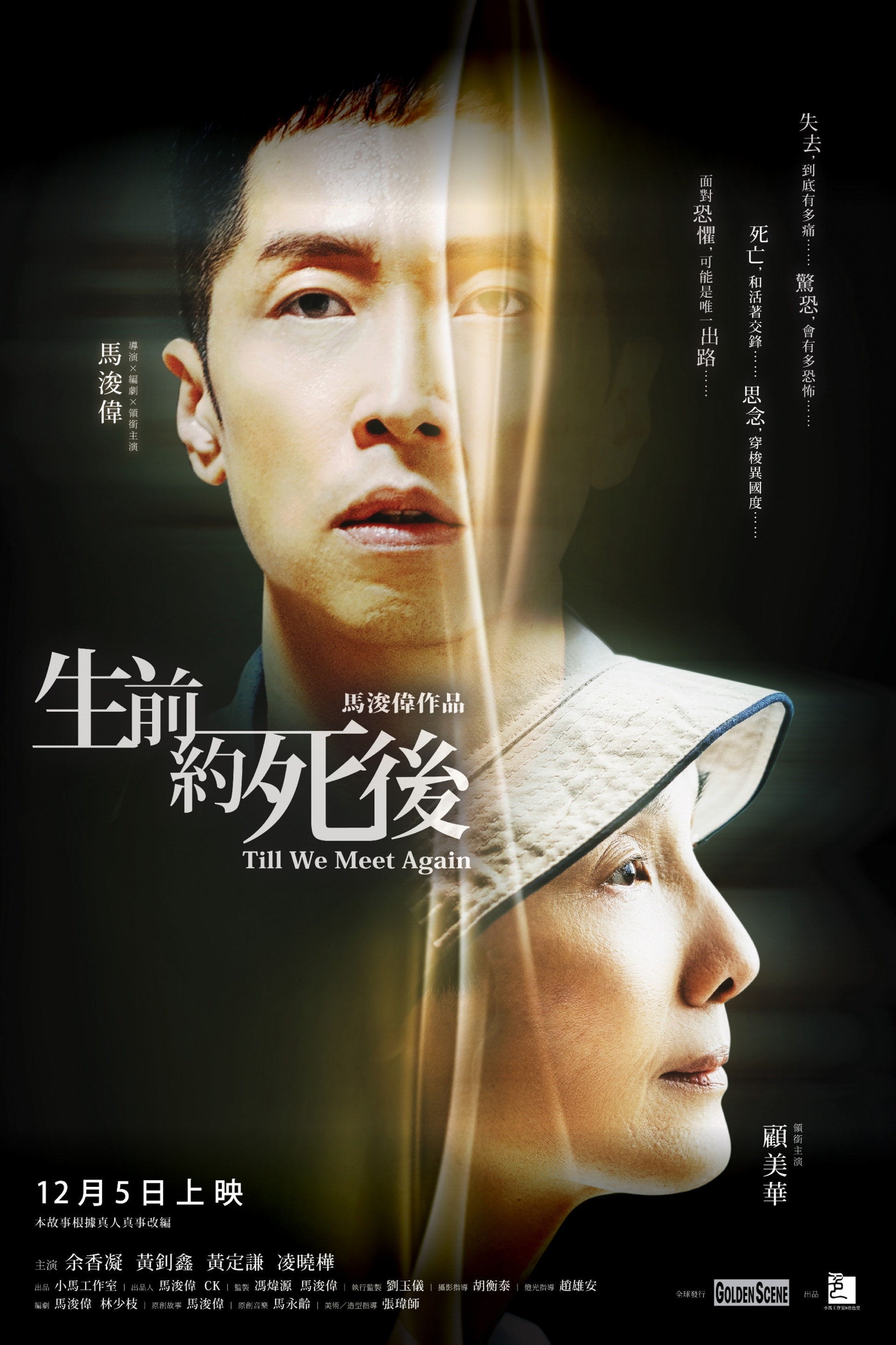
Till We Meet Again (生前约死后, Steven Ma, 2019)

“What if you let go of my hand and I get lost?” an over anxious little boy asks his mother. “Then you should stay where you are,” she tells him, “Mum will definitely come back for you.” It’s an instruction the now adult Wai (Steven Ma Chun-Wai) has perhaps taken too literally, struggling under the weight of grief and filial guilt while standing still waiting for his mother to find him again in the hope of earning her forgiveness for a sin he does not quite want to remember. Semi-autobiographical, Steven Ma’s Till We Meet (生前约死后) again is at once a dark psychodrama of man undone by loss but also a deeply touching evocation of an unbreakable mother son bond. 

Now a solitary salesman, 30-something Wai has only one wish – to reunite with his mother whom he hasn’t seen in over 10 years fearing that she bears some kind of grudge against him. We in fact see Mui (Josephine Koo Mei-Wah), his mother, angrily telling another woman, Lai (Bee Wong Chiu-Yam), that she refuses to see her son though the scene is not quite as it first seems. After abruptly quitting his job, Wai wanders out into the street and endures some kind of mental breakdown after which he visits his psychiatrist who reminds him that his mother is dead and has been for some time. 

Wai avows that he doesn’t like taking his medication because it makes him feel “sluggish” but increasingly finds his mental universe fracturing, shifting between sepia-tinted memories of his early childhood during which his mother first became ill and his life as a young man during which she suffered a relapse and later passed away. We begin to doubt Wai’s perception, uncertain if people and events he encounters are “real” or a product of his psychosis. His mother, ghost or merely spectre of memory, hovers on the sidelines apparently unwilling to see him though perhaps for his own good in hoping he will finally be able to move on and learn to be happy in acceptance of his loss. 

Tracey (Jennifer Yu Heung-Ying), his perhaps unrealistically invested psychiatrist, reminds Wai that he isn’t the only person who’s ever been bereaved or felt abandoned, left behind by those who have gone far away. She herself lost her mother young and was then abandoned by her father who left her in the care of an uncle who too abandoned her and ran off with all her father’s money. Another ghostly, perhaps imagined, conversation with Mui reveals that again Tracey may not have the full story and may never get it but unlike Wai may still have the chance to achieve a kind of closure with the traumatic past. He meanwhile carries the burden of his repressed guilt as it slowly works its way to the surface, cutting through his fragile psyche like a knife. 

While Mui’s conversations with third parties presumably taking place entirely within Wai’s mind may hint at a deeper psychological crisis they are essentially attempts to work out his guilt and shame, one-sided dialogues that eventually guide him back towards an acceptance of the truth he was intent on forgetting beginning with the traumatic fact of his mother’s death. Perhaps to some Wai’s maternal attachment may seem extreme, as the psychiatrist echoes in reminding him he’s not the only son to suffer such catastrophic loss, but it’s underpinned by a sense of filial guilt that lies at the heart of their bond in his worry that his own distress pushed Mui into pursuing a path she may otherwise have rejected on the grounds it would only cause her more pain for an additional few weeks of life. 

Trapped in his grief and guilt, Wai staggers through a nightmarish existence elegantly manifested in Ma’s abrupt tonal shifts as Wai finds himself staggering along a darkened corridor complete with faulty lighting and a single exit, while the sky itself seems to brighten to more romantic tones as he embraces a fantasy of a happier time drawing closer either to a kind of closure or the victory of his delusion whichever way you wish to read it. A painful journey through guilt and grieving, Ma’s unsparing drama provides few easy answers for living with loss but does perhaps allow its hero a degree of escape if only in unreality. 


Till We Meet Again streams in the UK until 15th February as part of Focus Hong Kong

Original trailer (English / Traditional Chinese subtitles)

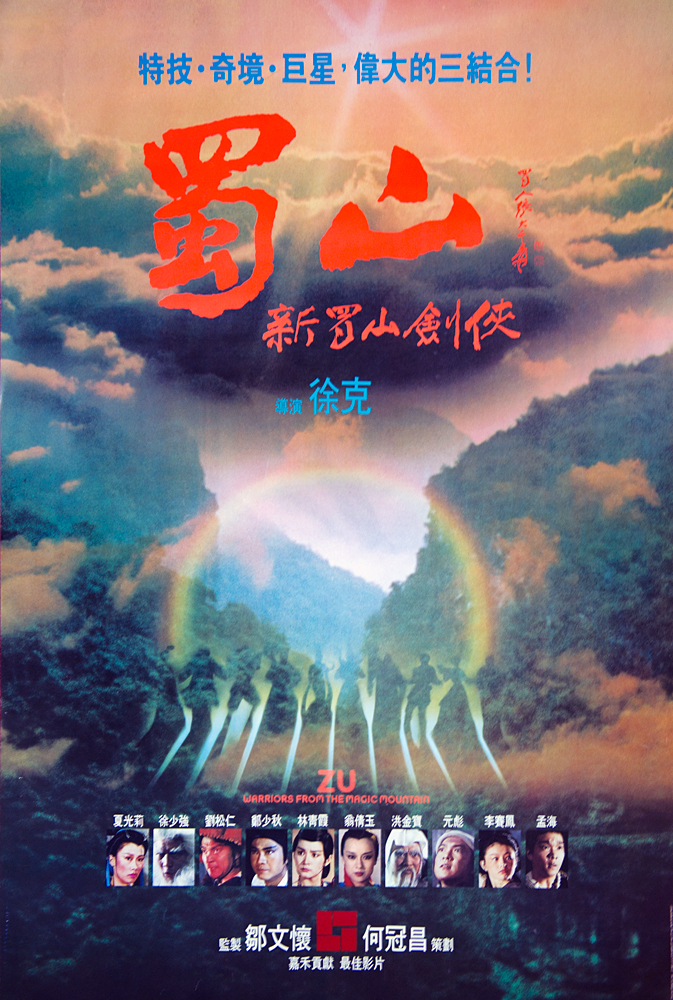
Zu: Warriors from the Magic Mountain (新蜀山劍俠, Tsui Hark, 1983)

“I never imagined that the righteous would not only refuse to unite, but also be incapable of action” laments a reluctant soldier realising there are no heroes coming to the rescue in Tsui Hark’s SFX-laden fantasy wuxia, Zu: Warriors from the Magic Mountain (新蜀山劍俠). Inspired by the work of Huanzhulouzhu (Li Shoumin), Tsui’s feudal fable marked a departure from the more “realistic” swordplay movies which were popular at the time harking back to an earlier era of fantastic adventures which drew inspiration from traditional Chinese folklore. It was also, however, an attempt to prove that Hong Kong could rival Hollywood in the post-Star Wars world, blending what might now be viewed as fairly camp but then cutting-edge special effects with classic wuxia action. 

Accordingly, after a brief voice over, Tsui opens with a world in chaos in which several factions are currently vying for hegemony over the hotly contested, mystical and mountainous terrain of Shu. Lowly retainer Ti Ming-Chi (Yuen Biao) has been tasked with delivering a message regarding troop movements to his superiors, but there is a difference of opinion in the chain of command as to whether to attack by land or sea. Placed in an impossible position, Ming-Chi eventually sees himself pledge to obey both captains, only for infighting to emerge within the group forcing him to flee for his life which is how he encounters “Fatty” (Sammo Hung Kam-Bo), a soldier from a rival faction and discovers, quite ironically, that they are from neighbouring villages which makes their rivalry all the more ridiculous. In the course of his attempt to escape, Ming-Chi falls into a mountain crevasse and finds himself entering a mysterious cave which takes him to another world in which he becomes similarly embroiled in a war against the evil Demon Cult which apparently practices child sacrifice and then uses the bones as a kind of magical armour. 

A reluctant soldier, Ming-Chi finds himself captivated by the “Great Hero” Ting Yin (Adam Cheng Siu-Chow) and determines to become his disciple while the pair form an uneasy alliance with a pair of similarly matched Buddhist monks, master Hsiao Yu (Damian Lau Chung-Yan) and his assistant I-Chen (Mang Hoi), also hot on the trail of the Demon Cult. Finding this world also confusing, he is nevertheless reassured by I-Chen’s simple explanation “they’re bad, we’re good” as the two masters face off against the Demon Lord, but comes to discover it’s not quite all as black and white as it seems and this world too is torn apart by chaos and disorder because “the hearts of men are so corrupt.” Ming-Chi begs Ting Yin to use his “peerless martial arts skills” to “save mankind”, but Ting Yin cynically tells him his best course of action is to retreat into the mountains and avoid human society because “neither you nor I have the ability to bring about change”. 

Yet Ming-Chi remains pure of heart, certain that “as long as everyone puts in the effort, peace can be restored under heaven”. “Teach me martial arts and once I’ve mastered it, I can fight oppression, help the weak, and save the masses” he pleads, but Ting Yin once again refuses him. In fact, in one of the later SFX sequences, Ting Yin will “transfer” his martial arts knowledge near instantly via a laying on of hands assisted by some elaborate prosthetics which see Ming-Chi’s body warp and bubble to accept it. Nevertheless, the lesson that Ming-Chi begins to learn, bonding with fellow assistant I-Chen who ignored his master’s petty parting words to bid him goodbye to hope they meet again along the way, is that the masters care only for themselves and are no better than the warring nobles from his own lands, obsessed with their rival sects and ideologies. If they want to save the world they’ll have to save themselves through mutual solidarity in pursuit of their goal, tracking down a pair of mystical swords which are the only way to end the demonic threat for good. 

There might of course be an added dimension to this allegory in the Hong Kong of 1983 which is perhaps also beginning to feel like disputed territory coveted by duplicitous elites who fight amongst themselves while ordinary people suffer, but Tsui is in any case more interested in zany action and excuses to employ zeitgeisty special effects making full use of the technology of the day from lasers to animation along with in-camera stunts to recreate his epic fantasy world in which old men can keep evil at bay for as long as 49 days using nothing but their powerfully hairy eyebrows and a fancy mirror. With small roles for Brigitte Lin and Moon Lee as an ice queen with a warm heart presiding over an all female palace and her spiky guard respectively, Tsui’s bonkers fairytale moves on at a glorious, confusing pace but is nevertheless filled with warmth and humanity as the goodhearted heroes attempt to head off the folly of war with human solidarity. 


Zu: Warriors from the Magic Mountain streams in the UK 9th to 15th February as part of Focus Hong Kong

Eureka release trailer (english subtitles)

The World of Wong Kar Wai Comes to BFI Player & ICA Cinema 3

4K

Wong Kar Wai’s long-awaited if controversial restorations are making their way to the UK streaming throughout February 2021 with physical screenings planned for such time as cinemas are able to reopen. After launching via ICA’s Cinema 3, seven of the newly restored classics will be available to stream via BFI Player from 8th February.

As Tears Go By


Hong Kong. 1988. Dir Wong Kar Wai. With Andy Lau, Maggie Cheung, Jacky Cheung. 102min. Digital 4K. 18
This 4K digital restoration was undertaken from the 35mm original camera negative by the Criterion Collection in collaboration with L’Immagine Ritrovata and One Cool. A Janus Films release.

4K

Wong Kar-Wai’s moody triad debut stars a young Andy Lau as a lovelorn petty gangster who is forced to host a distant cousin (Maggie Cheung) when she comes to the city to seek medical treatment for a respiratory illness. It is worth noting that the new restoration streams in the original Cantonese language track rather than the Mandarin dub previously released in the UK and therefore features the iconic Cantopop cover of Take My Breath Away. If nothing else, the film deserves an accolade for the most oblique cinematic I Love You in the unforgettable line “I found that glass”. Review.

(Clip from previous release)

Days of Being Wild

Hong Kong. 1990. Dir Wong Kar Wai. With Leslie Cheung, Carina Lau, Maggie Cheung, Andy Lau. 94min. Digital 4K. 12A
This 4K digital restoration was undertaken from the 35mm original camera negative by the Criterion Collection in collaboration with L’Immagine Ritrovata and One Cool. A Janus Films release.

Leslie Cheung stars as a restless Casanova unable to reconcile himself to his sense of rootlessness in maternal confusion while breaking hearts all over Hong Kong from the sweet and innocent Maggie Cheung who later falls for sad policeman Andy Lau to vivacious cabaret dancer Carina Lau who falls into a self-destructive spiral following the end of their affair.

Chungking Express

Hong Kong. 1994. Dir Wong Kar Wai. With Brigitte Lin Ching Hsia, Tony Leung Chiu Wai, Faye Wong, Takeshi Kaneshiro. 102min. Digital 4K. 12A
This 4K digital restoration was undertaken from the 35mm original camera negative by the Criterion Collection in collaboration with L’Immagine Ritrovata, Jet Tone, One Cool, and 3H Sound Studio. It was supervised and approved by Wong Kar Wai. A Janus Films release.

4K

A snapshot of ’90s Hong Kong, elliptical romance Chungking Express follows two lovelorn policemen each confronted by heartbreak as Takeshi Kaneshiro accidentally becomes involved with jaded assassin Brigitte Lin while Tony Leung Chiu-wai is semi-stalked by pixieish fast food stall counter-girl Faye Wong.

Fallen Angels

Hong Kong. 1995. Dir Wong Kar Wai. With Leon Lai Ming, Michelle Reis, Takeshi Kaneshiro, Charlie Young Choi Nei, Karen Mok Man Wai. 99min. Digital 4K. 15
This 4K digital restoration was undertaken from the 35mm original camera negative by the Criterion Collection in collaboration with L’Immagine Ritrovata, Jet Tone, and One Cool. It was supervised and approved by Wong Kar Wai. A Janus Films release.

4K

A quasi-sequel to Chungking Express, Fallen Angels features two intersecting stories one again featuring Kaneshiro but this time as a crazed criminal recently escaped from prison who falls for a mysterious woman whose boyfriend left her for a woman called “Blondie” who is also a point of tension between hitman Leon Lai and his partner who lives in Kaneshiro’s building.

Happy Together

Hong Kong. 1997. Dir Wong Kar Wai. With Leslie Cheung, Tony Leung Chiu Wai, Chang Chen. 96min. Digital 4K. 15
This 4K digital restoration was undertaken from the 35mm original camera negative by the Criterion Collection in collaboration with L’Immagine Ritrovata, Jet Tone, and One Cool. It was supervised and approved by Wong Kar Wai. A Janus Films release.

4K

A landmark for LGBTQ+ representation, Wong’s 1997 tragic romance stars Tony Leung Chiu Wai and Leslie Cheung as melancholy lovers who move to Argentina in an attempt to save their relationship only to break up and sporadically return to one another.

In the Mood for Love

Hong Kong. 2000. Dir Wong Kar Wai. With Tony Leung Chiu Wai, Maggie Cheung Man Yuk. 98min. Digital 4K. PG
This 4K digital restoration was undertaken from the 35mm original camera negative by the Criterion Collection in collaboration with Jet Tone Films, L’Immagine Ritrovata, One Cool, and Robert Mackenzie Sound. Supervised and approved by Wong Kar Wai. A Janus Films release.

Wong’s undoubted masterpiece and international breakthrough once again stars Tony Leung Chiu Wai and Maggie Cheung, this time as betrayed spouses in ’60s Hong Kong who begin to fall in love despite themselves as they bond in shared loneliness but are unable to act on their desires.

2046

Hong Kong. 2004. Dir Wong Kar Wai. With Tony Leung, Gong Li, Faye Wong, Takuya Kimura, Ziyi Zhang, Carina Lau, Chang Chen, Dong Jie, Maggie Cheung, Bird Thongchai McIntyre. 129min. Digital 4K. 12A
The 4K digital restoration was undertaken from the original 35mm elements by Sony Pictures Classics, in collaboration with Jet Tone Films,
L’Immagine Ritrovata, One Cool, and Robert Mackenzie Sound. The restoration was approved by Wong Kar Wai. A Sony Pictures Classics release.

A quasi-sequel to In the Mood for Love and Days of Being of Wild, 2046 follows Tony Leung Chiu Wai’s Chow Mo-wan as he struggles to overcome his longing for Maggie Cheung, romancing Days of Being Wild’s Carina Lau, observing the lovelorn landlord’s daughter Faye Wong as she struggles in her romance with Japanese tourist Takuya Kimura, entering a complicated relationship with 2046 resident Zhang Ziyi, and continuing to chase the past with gambler Gong Li who has the same name as the woman he can’t forget.

Screening at BFI Southbank (once reopened)

Ashes of Time Redux

Hong Kong. 2008. Dir Wong Kar Wai. With Leslie Cheung, Brigitte Lin, Tony Leung Chiu Wai, Carina Lau, Tony Leung Ka Fai, Charlie Young, Jacky Cheung, Maggie Cheung. 93min. 35mm. 15

This notoriously troubled production finds Wong in wuxia territory in the company of his frequent collaborators Leslie Cheung, Brigitte Lin, Tony Leung Chiu Wai, Carina Lau, Tony Leung Ka Fai, Charlie Young, Jacky Cheung, and Maggie Cheung for a prequel to the well-known tale The Legend of the Condor Heroes. With the original negatives of the film apparently lost, the 2008 “Redux” edition was re-edited and rescored from existing prints.

The Hand (Extended Cut)

Hong Kong. 2004. Dir Wong Kar Wai. With Gong Li, Chang Chen. 56min. Digital. 15

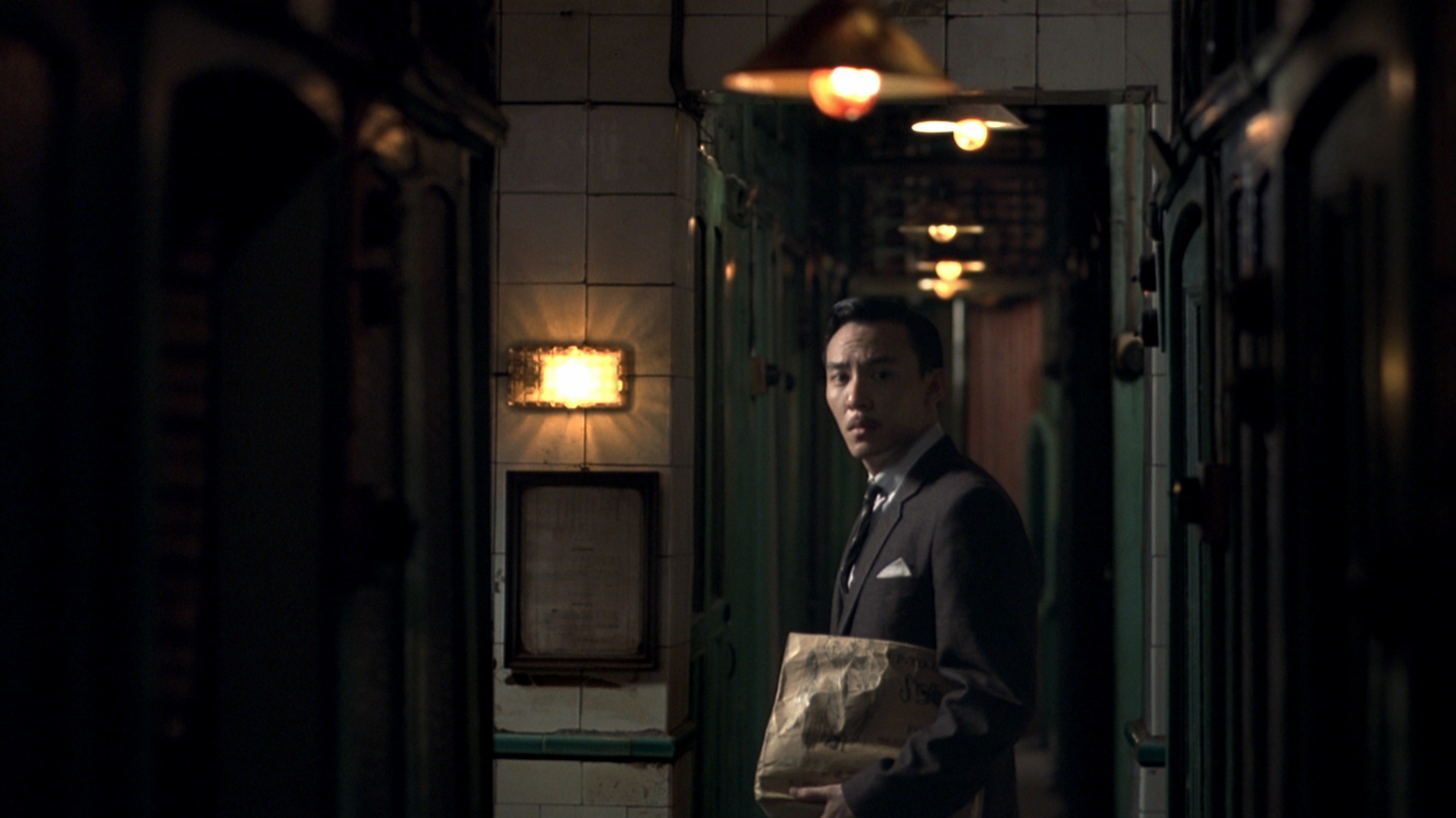
The director’s cut of Wong’s contribution to the 2004 anthology Eros stars Chang Chen (Happy Together, 2046, The Grandmaster) as a diffident tailor’s assistant who is sent to measure up high end call girl Gong Li in heady ’60s Hong Kong.

My Blueberry Nights

China/France/USA/Hong Kong. 2007. Dir Wong Kar Wai. With Norah Jones, Jude Law, Rachel Weisz, Natalie Portman. 90min. 35mm. 12A

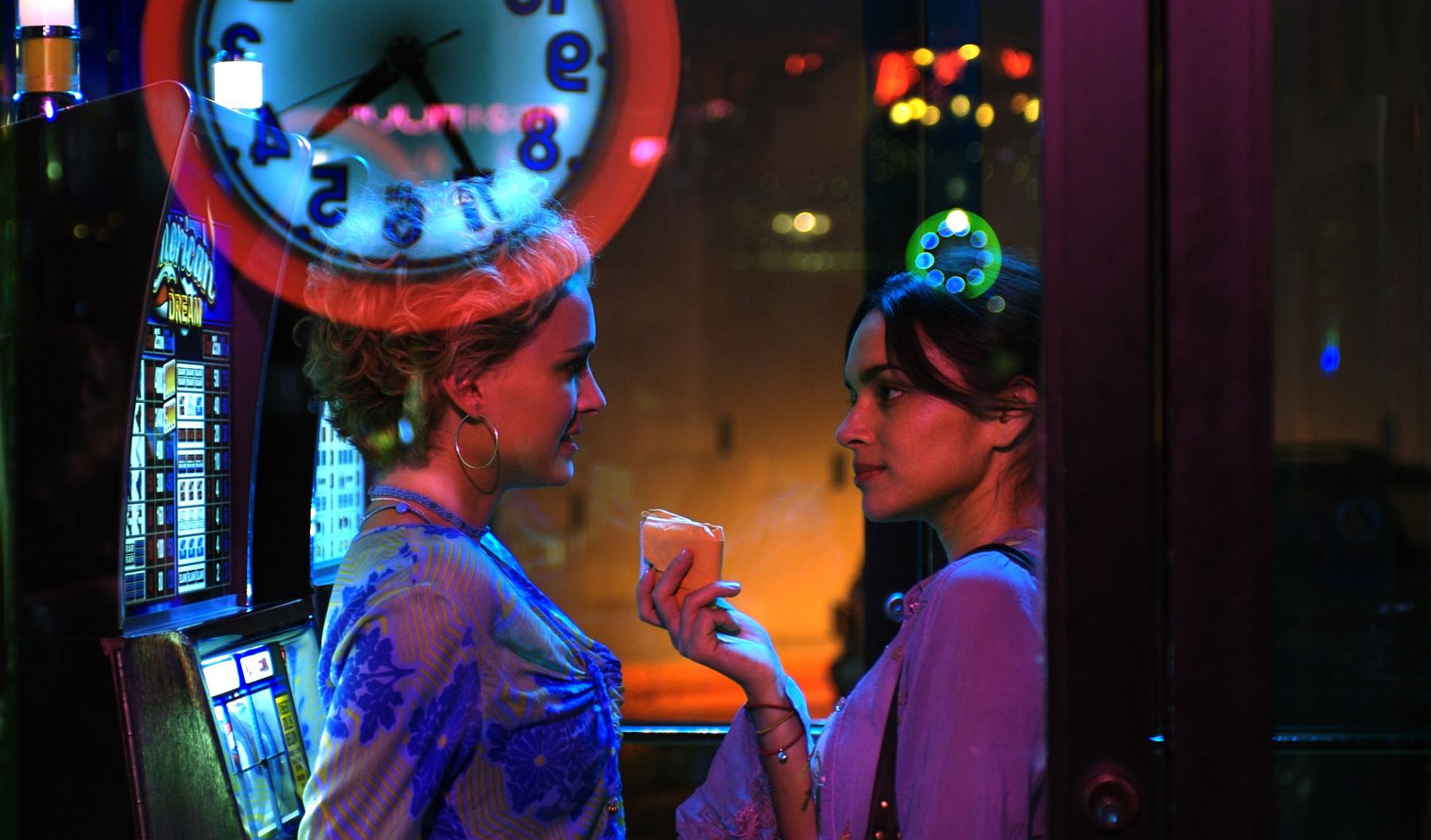
Despite an A-list roster of Hollywood talent, Wong’s international feature debut failed to live up to his homegrown reputation with critics often remarking that his attempt to reconfigure his key concerns for an American milieu inauthentic at best as he follows a Norah Jones on a US road trip through heartbreak and despair.

The Grandmaster

Hong Kong/China. 2013. Dir Wong Kar Wai. With Tony Leung, Ziyi Zhang, Chang Chen, Zhao Benshan, Xiao Shenyang, Song Hye Kyo. 108min. Digital. 15

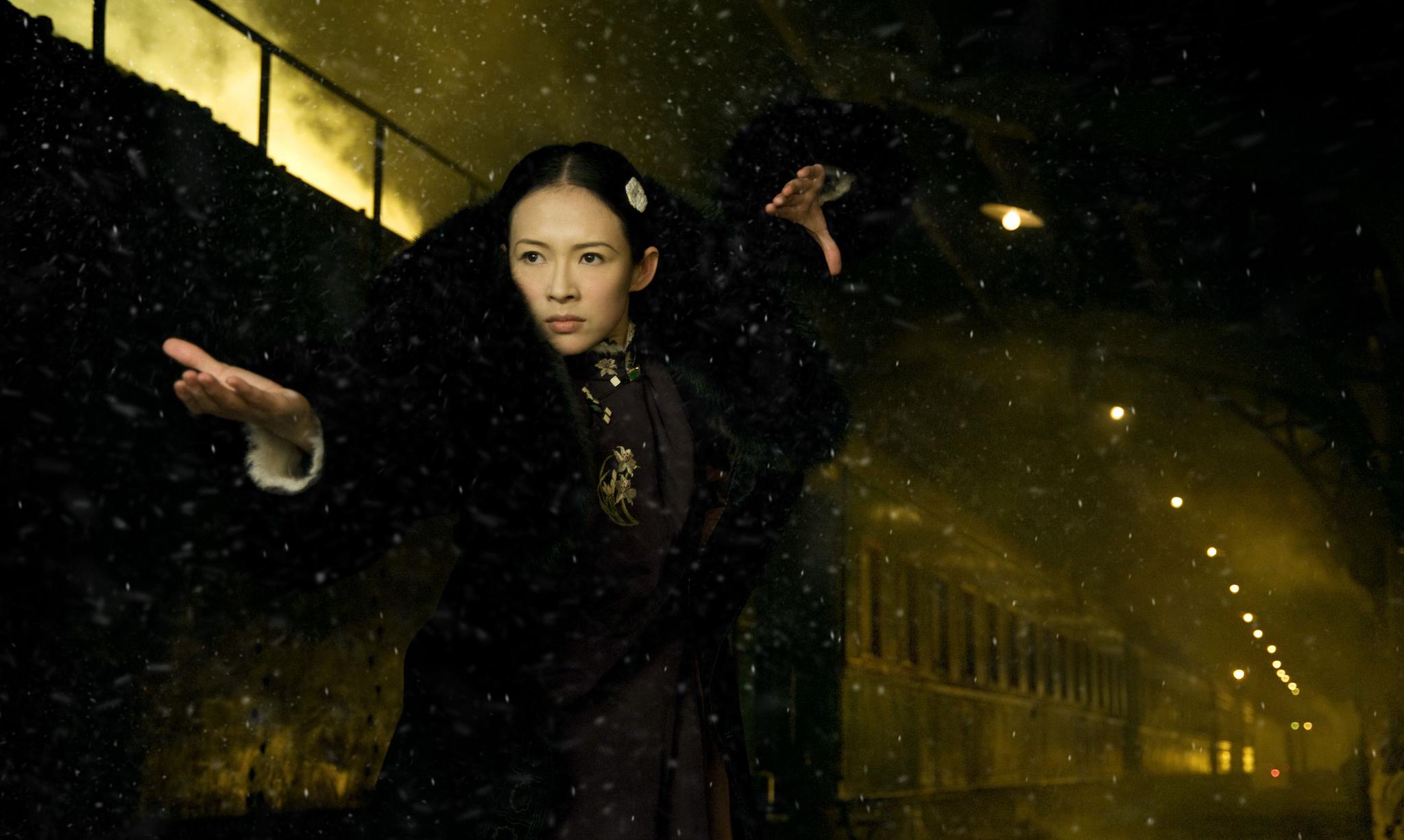
Starring Tony Leung Chiu Wai, Wong’s long-awaited take on the Ip Man legend finds the grandmaster reflecting on the nature of kung fu while sparring with the daughter of an old rival played by Zhang Ziyi. On its domestic premiere, the film ran to 130 minutes and was then cut down to 123 for Berlin. The “international” cut screening here, however, runs to 108 minutes and is so extensively re-edited as to constitute an entirely different film leaning heavier on action and on onscreen explanatory text. Still, Wong’s breathtaking fight sequences are present in the all their glory as is his melancholy romanticism. While not among the new restorations, The Grandmaster will also be available to stream via BFI Player.

The seven new restorations will be available to stream in the UK via BFI Player from 8th February and on ICA Cinema 3 for 14 days following the first screening.

The Empty Hands (空手道, Chapman To, 2017)

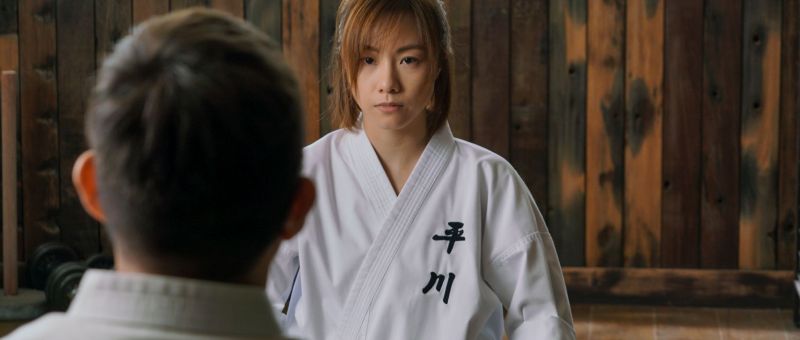
“You have to remember. You’ll always meet someone stronger than you. They might beat you down, but no matter what you need to have the courage to face it.” the defeated heroine of Chapman To’s second feature The Empty Hands (空手道) is reminded by her rediscovered mentor pushing her towards a literal reclaiming of her space in accepting her father’s legacy. The title, a literal translation of the characters which form the word “karate”, is perhaps also an allusion to the heroine’s sense of powerlessness and displacement even as she learns to rediscover a source of strength in that which she had previously dismissed as a worthless burden. 

30-something Mari Hirakawa (Stephy Tang Lai-Yan) is the daughter of a Japanese émigré, Akira (Yasuaki Kurata), who came to Hong Kong in 1972 on a work transfer and later married a local woman. Teaching karate as a hobby in his spare time, he eventually discovered that in the Hong Kong of the late 70s and 80s, martial arts was a valuable commodity and so he sunk all his savings into buying a sizeable flat in Causeway Bay, converting the living area into a Dojo with the family relegated to neighbouring rooms. The business did well but the family floundered and when Mari’s mother asked Akira to mortgage the dojo to help out her brother who ran into financial trouble during the 89 crisis his refusal and the uncle’s subsequent suicide led her to leave the family. A lonely child, Mari complains that her overly strict father forced her to practice karate against her will, something which she gave up as a brown belt after an unexpected tournament defeat swearing off the practice ever since.

When Akira dies suddenly, however, Mari is forced into a reconsideration of her life choices on discovering that he has left only 49% of the apartment/dojo to her with the controlling share entrusted to a former pupil, Chan Keung (Chapman To Man-Chat). Prior to this discovery, she had been cynically planning to subdivide the apartment into seven units, renting out six and living in the seventh solely on her proceeds from exploiting Hong Kong’s notoriously difficult housing market. Mari is, it has to be said, often difficult to like, defiantly aloof and with a healthy contempt for other people even throwing back a racial slur, albeit with a pinch of irony, at a little boy who’s been frequenting the dojo expressly in order to fight back against the discrimination he faces in everyday life as a member of the Indian community. This might be something you’d expect Mari to show a little more empathy for but she seems ambivalent in her sense of identity immediately introducing herself as Japanese on giving her name to man who works at the radio station where she gets a job as a security guard and with whom she drifts into a doomed affair. 

Mari’s affair with a married man is another thing of which she believes her father disapproved, but it’s also a reflection of her low self-esteem and awkward relationship with paternal authority in that she continues to seek but is afraid to ask for approval from emotionally distant men. She claims to have only one friend, Peggy (Dada Chan Ching), whom she somewhat cruelly dismisses as “all boobs and no brain”, explaining to her that what she likes about Ka Chun (Ryan Lau Chun-Kong) is his “loyalty” ironically admiring his refusal to leave his childhood sweetheart wife but also confident that he will one day choose her. Beaten down by life, Mari has perhaps backed away from the fight passively retreating while refusing to deal with her conflicted sense of identity and desire. She resents the implication that she petulantly jacked in karate after a single defeat destroyed her sense of confidence, but as we discover it is indeed her fear of failure which has been holding her back. Chan Keung’s bet that he will sign over his share of the apartment if she can remain standing, even if she loses, after three rounds in an upcoming competition is then a subtle way of getting her stand up again and rediscover a sense of confidence to fight for herself in the arena of life. 

Ironically enough, Chan Keung had been kicked out of the dojo for doing just that, told off for using karate to prove himself when its true purpose should be in the defence of others in need of help. He rediscovers the true spirit of karate after rescuing a little girl from a predatory triad, but Akira’s mission is also one of redemption for Chan Keung as he patiently mentors the originally reluctant Mari back towards an acceptance both of her father and of her relationship with karate along with the confidence that counters defeat. A meditative mood piece from the hitherto comedian To anchored by a stand out performance from Tang (who apparently spent six months training for the role) pushing back against glossy rom-com typecasting, The Empty Hands is less martial arts movie than gentle life lesson as its beaten-down heroine learns to fight her way out of existential malaise towards a more forgiving future. 


The Empty Hands streams in the UK 9th to 15th February as part of Focus Hong Kong

Original trailer (English subtitles)

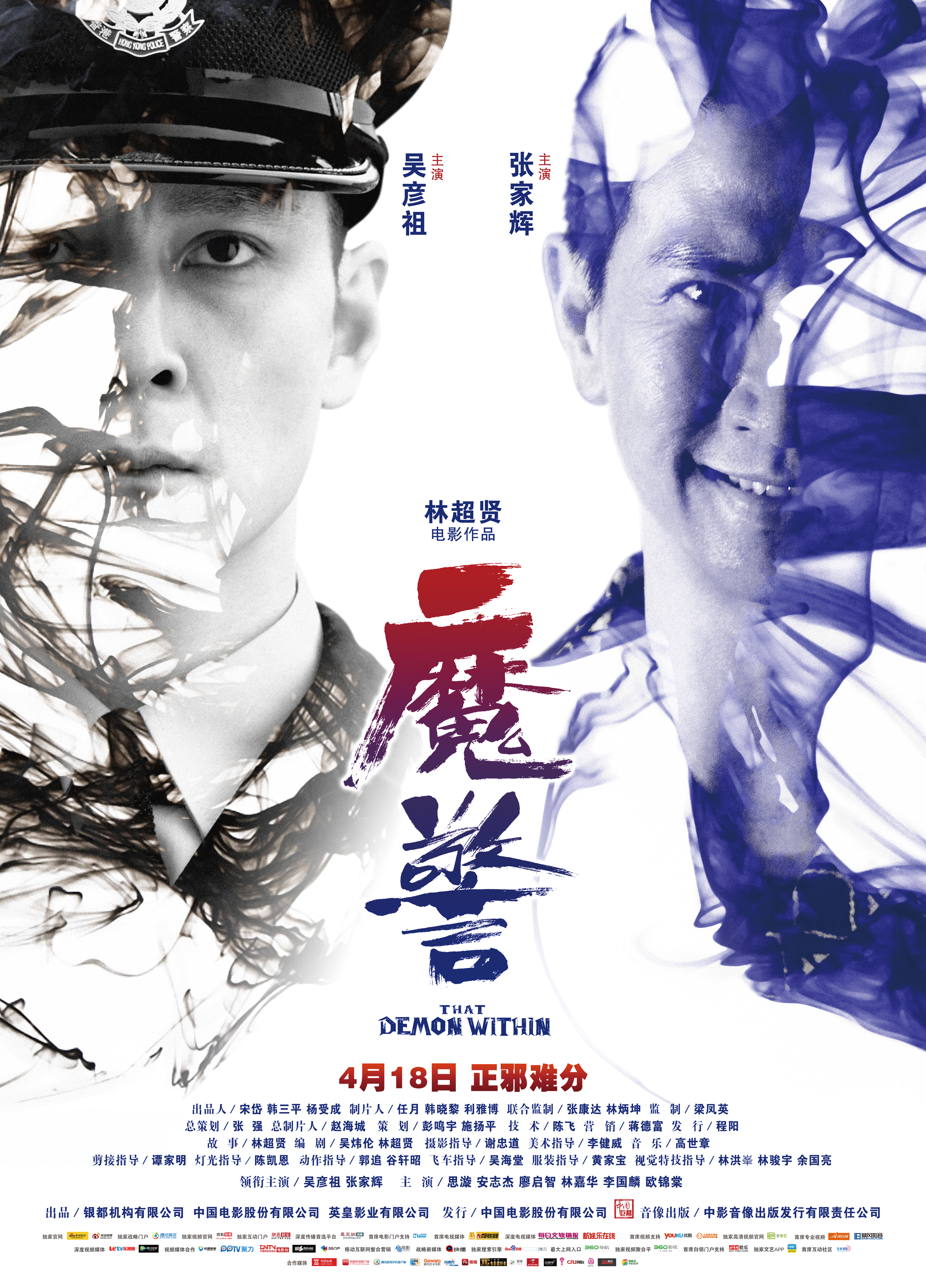
That Demon Within (魔警, Dante Lam, 2014)

“Every man has his own fear, and different ways of hiding it. But fear will never go away” according to the hero of Dante Lam’s That Demon Within (魔警), a twisty, metaphysical take on the futility of violence and inevitability of karmic justice. Hong Kong cinema has often held that cop and criminal are merely two sides of the same coin, but rarely has it taken its mistrust of authority and nihilistic cynicism to such great heights as in Lam’s B-movie-inflected psychological thriller.

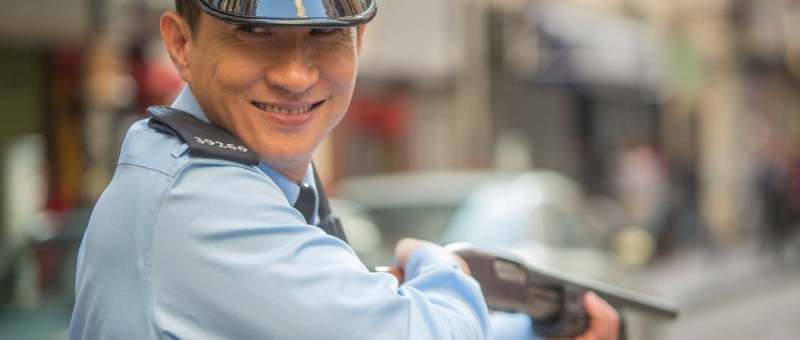
The hero, Officer Wong (Daniel Wu Neh-Tsu), is a fearful man. Now 35 and a 17-year veteran of the Hong Kong police he’s still a lowly beat cop currently occupying the police box in the reception area of a less than busy hospital. He tells us, paradoxically, that he puts on the uniform because it makes him feel safe. His life begins to change, however, when he makes the selfless offer to give some of his own blood to a man who staggers in badly injured after a bike accident. What Wong didn’t know is that the man is Hon (Nick Cheung Ka-fai), a notorious local gangster known as the Demon King responsible for the deaths of two fellow officers during the escape which led to his accident. Wong gets a dressing down from the Inspector in charge, Pops (Dominic Lam Ka-wah), and is thereafter haunted by his ironic action of being a policeman who saved the life of a cop killer.

Of course, others might say Wong did the right thing so that Hon can face justice and in any case it would be wrong to deny someone lifesaving treatment because of a moral judgement, but Wong can’t see it that way and continues to punish himself (quite literally) for his “mistake”, remembering the authoritarian father who taught him that mistakes are a sin. It turns out that Wong’s career has floundered because of “personality issues”, those being that he’s a bit of a prig, overly serious and by the book when most his fellow officers are anything but. His new commanding officer is, as it turns out, an old academy classmate who perhaps remembers what those issues might be but doesn’t see why they should have disrupted his career to the extent that they have and actively wants to help him get over them with the aid of a hypnotherapy psychologist.

Wong, however, is like everyone else dealing with his own demons but his decision to face them by chasing down Hon who has escaped to presumably do even more crime proves increasingly problematic as his sense of reality begins to unravel. There is something quite ironic in the fact that Hon’s “gang” (well, bunch of guys he hired for the job) is based in a funeral home and mostly involved with the rituals of death which, whichever way you look at it, is particularly convenient for their side business. Lam’s Hong Kong is a grimy, film noir land of dread and violence, a shadowy hellscape where no one is safe from the fire of karmic retribution. Wong has been in hell all along, waiting for the flames to consume him, but is only just starting to notice that it’s beginning to get warm.

Overcome with rage, Wong’s world literally glows red around the edges while Lam shifts to a steady cam closeup on his final mental break in the face not only of tremendous grief but the sudden impossibility of redemption and the manifestation of his guilt. Becoming a policeman was to Wong a way to protect himself from himself, an ironic form of atonement for past transgression. The source of all his trauma is echoed in the present plague of low level thuggery that sees “repo men” splash grease and paint on the homes of mostly elderly poor people presumably to pressure them to move while a single act of (accidental) police brutality at a protest against forced eviction changed not only his life but those of several others forevermore, kickstarting a chain of karmic retribution that leads us right back into the flames. If Wong is “mad” it’s because the world made him that way. Treading firmly within the realms of the B-movie with its comicbook-style aesthetic, incongruous score, and pop psychology take on the legacy of trauma, Lam’s nihilistic psycho-supernatural thriller leaves no doubt that cop or criminal there’s a demon within us all looking for an excuse to raise hell in a land of fear and violence.


Currently available to stream on Netflix in the UK and possibly elsewhere.

Original trailer (English subtitles)
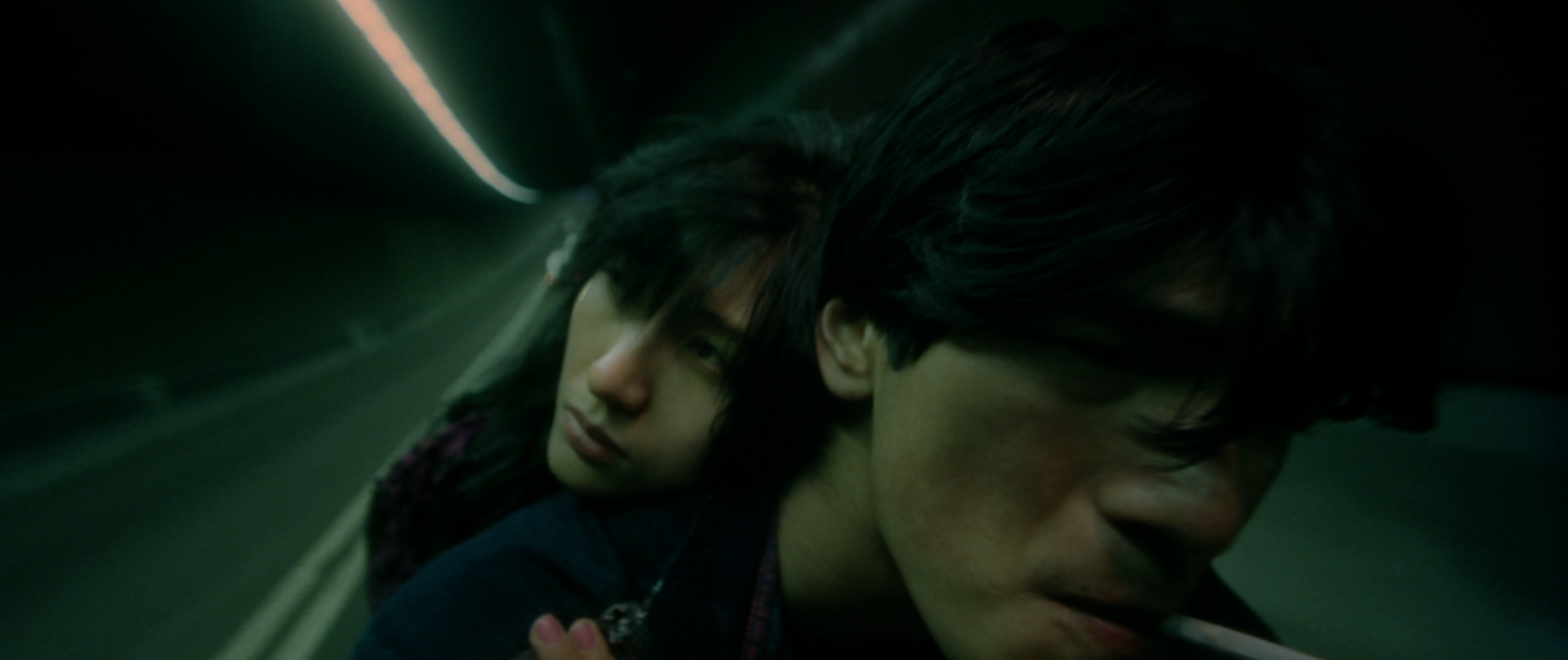
My Heart Is That Eternal Rose (殺手蝴蝶夢, Patrick Tam Kar-Ming, 1989)

“Now no one owes anything to anyone” a petty gangster ironically states on completing an errand for a friend in Patrick Tam’s heroic bloodshed off-shoot My Heart is that Eternal Rose (殺手蝴蝶夢). As the name perhaps implies, Tam’s film is less brotherhood than tragic romance as the fatalism of the noirish gangster world ruled by debt if not by honour conspires against love, not only romantic but filial and brotherly, in its infinite web of violence and futility.

Pinching a classic noir narrative, the picture opens in a cheerful waterside tavern run by former gangster Uncle Cheung (Kwan Hoi-Shan) where carefree gambler Rick (Kenny Bee) is in love with the old man’s daughter Lap (Joey Wong Cho-Yee) who works behind the bar. Uncle Cheung thinks he’s escaped the triad world, but the past is not done with him. Approached by local tough guy Law (Gam Lui), Uncle Cheung is made an offer he can’t refuse to help smuggle Law’s son (Cheung Tat-ming) to Hong Kong from the mainland. He asks Rick to pitch in as the driver and recruits corrupt cop Tang (Ng Man-tat) to help him get past the checkpoints. But Law’s kid is a chatterbox, excited to be in Hong Kong and eagerly boring everyone with his future plans to become a famous singer. Unwisely he drops his father’s name and rouses Tang’s interest. Tang makes the gang pull off at a rest stop so he can strong arm Uncle Cheung into ringing Law to up his pay, but the loudmouth kid jumps the gun, literally, and gets himself killed. Tang turns on Rick and Uncle Cheung to clear up loose ends but Rick kills him, escaping with Uncle Cheung and leaving the old lady at the rest stop to clean up the mess. Left with no choice but to flee, the trio arrange passage to the Philippines but Uncle Cheung is snatched by Law before they can leave. Lap is forced to make a deal with rival kingpin Godfather Shen (Michael Chan Wai-man) to save her dad, putting Rick on the boat with a promise to meet him later but knowing that she will likely never escape Shen’s grasp.

Six years pass, during which Lap becomes Shen’s right-hand woman entertaining wealthy Japanese businessmen in his swanky club as a singer and hostess. Consumed by guilt and remorse in knowing his daughter continues to pay the price for his mistake, Uncle Cheung has become a drunken liability while Lap is lost in romantic melancholy, mooning over the ruined love of her youth and dreaming that some day Rick may return and take her away from all this. Meanwhile, innocent rookie (confusingly also named) Cheung (Tony Leung Chiu-Wai) has fallen in love with her, captivated by her sadness and the futility of her life with Shen. Of course, Rick, having become a hit man, eventually returns leading to a confrontation not just with Shen but with the triad world itself. 

In the gangster universe, everyone owes something to someone. Debt is a kind of currency, and every bargain accrues its particular kind of interest. Lap is forced to sacrifice herself to save the men she loves by trading the only currency she has, her body, knowing that in doing so she destroys the possibility of a happy romantic future with Rick in order to keep him safe. Six years later she thinks she’s paid her debt to Shen, he has plenty of other women what difference can keeping her captive make? But that’s not the way the gangster world works. Shen merely gifts her to the psychotic underling who propositioned her on their first meeting and moments earlier had tried to betray his boss by raping her. Only Cheung, pure hearted and naive, is uncorrupted by the venal cruelty of the triad world, consumed by a truly selfless love that sees him determined to help Lap escape and save her future with Rick. 

This selfless love, however, eventually creates another debt in the moral dilemma faced by the lovers who know that if they escape alone they leave Cheung at the mercy of Shen while to return spells certain death. Co-shot by Christopher Doyle, Tam’s moral universe is lit by the red-tinted glow of the neo-noir, a dizzying yet melancholy world of violence and futility in which freeze frames and ethereal dissolves hint at the transient meaninglessness of the triad life where love and death go hand in hand while betrayal is an ever present companion. Only those sufficiently uncorrupted by the moral duplicities of an increasingly bankrupt existence are permitted to survive, but even so emerge beaten, wounded, and pale with loss literally at sea perpetual exiles without home or harbour.


Original trailer (Dialogue free, contains major spoilers)

Moon Warriors (戰神傳說, Sammo Hung, 1992)

“In fact, some stories are true. Especially the heartbreaking ones” according to a melancholy fisherman in Sammo Hung’s tragic wuxia romance, Moon Warriors (戰神傳說). Arriving in the middle of a fantasy martial arts boom, Moon Warriors boasts some of the biggest stars of the day in a beautifully composed tale of intrigue and derring-do as well as featuring an A-list creative team with such high profile talent as Mabel Cheung, Alex Law, Ching Siu-Tung, and Corey Yuen also involved in the production. 

Somewhere in feudal China, 13th Prince Shih-san (Kenny Bee) is on the run after being usurped by his evil brother, the predictably named 14th Prince (Kelvin Wong Siu) who burnt down his castle and has been following him throughout the land razing villages wherever he goes. Accompanied by trusty bodyguard Merlin (Maggie Cheung Man-Yuk) who is silently in love with him, Shih-san is desperate to get in touch with the Lord of Langling (Chang Yu), also the father of his betrothed princess Moony (Anita Mui Yim-Fong), in the hope of uniting their forces to retake the country together. Meanwhile, goodhearted yet eccentric fisherman Philip (Andy Lau Tak-Wah) is doing a spot of hunting in a bamboo grove during which he notices Shih-san and the others wading into a trap and leaps to the rescue, helping to despatch the black-clad assassins. As Shih-san is badly injured, he takes them back to his cheerfully idyllic village, serves them the local delicacy of spicy shark fin soup, and generally befriends them before 14th Prince’s goons track them all down again at which point he takes them to his secret hideout which turns out to be an ancient temple dedicated to Shih-san’s emperor ancestors. 

We find out just how evil 14th Prince is when he gets his minions to kill all of Moony’s ladies-in-waiting and dress up in their clothes to mount a sneak attack on the Langling estate while holding on to the pretty kites Moony was flying before the gang arrived. Though petulantly flying kites seems like quite a childish activity for a princess about to be married off, Moony more than holds her own in the fight even if finding it difficult to deal with having killed someone for the first time. Sent to protect her, Philip is less than sympathetic, but after a few arguments, a near death experience, and some magic glitter, the pair begin to fall in love, which is a problem because Moony is betrothed to Shih-san. 

What develops is a complicated love square in which Merlin pines for Shih-san who seems more interested in Philip, while Philip repeatedly tries to leave the group because of his conflicted loyalties and a feeling of inferiority as a peasant suddenly mixed up in imperial intrigue and forbidden romance. Moony tries to give him her half of a precious jade talisman which plays beautiful music, but her melancholy suggestion that it will sound better with his flute than with the other half which is held by Shih-san flies right over his head. Shih-san, meanwhile, who was spying on them talking, suddenly decides to give him his half too, leaving Philip holding the whole thing. Merlin, as it turns out, has a series of interior conflicts of her own that leave her resentful of just about everyone except Shih-san. 

Eventually, however, nowhere is safe from the destructive effects of political instability and Philip’s fishing village is soon a target for the vicious 14th Prince, ensuring he enters the fight with the help of his improbable best friend, a killer whale named “Sea-Wayne”. Before the romantic dilemmas can be resolved, the courtly intrigue collapses in on itself, fostering an accidental revolution in the literal implosion of an old order, suddenly becoming dust as in some long forgotten prophecy. In a strange moment of flirtatious smalltalk, Philip had remarked that legend has it the flowers in these fields are only so beautiful because they grow on top of bodies buried far below, something he later discovers to be more than just a fanciful story. 

There might be something in the tragic tale of two branches of elites destroying each other in order to take control of a disputed territory while the ordinary man is left behind alone to reflect on the fall of empires, but perhaps that’s a reading too far in a melancholy wuxia of 1992 and its unexpectedly gloomy ending in which true feelings are spoken only when all hope is lost. Nevertheless, with all of its high octane fight scenes, painful stories of romance frustrated by the oppressions of feudalism, and surreal killer whale action, Moon Warriors is a strangely poetic affair as doomed love meets its end in political strife.


Trailer (no subtitles)

The Last Affair (花城, Tony Au Ting-Ping, 1983)

“Why choose Paris?” a mysterious voice inquires. “Because it’s Paris” comes the slightly depressed reply. In terms of the movies, the City of Light has an undeniably romantic reputation, but those who go there are often drawn more towards the darkness. Art director Tony Au Ting-ping’s distinctly European directorial debut The Last Affair (花城) helped to launch the film careers of then TV stars Chow Yun-fat and Carol Cheng Yu-ling and finds a lonely young woman trapped in an unhappy marriage travelling to Paris alone for a friend’s wedding only to discover that you cannot escape yourself through romantic delusion. 

The dejected Ha-ching (Carol Cheng Yu-ling) once eagerly studied French after school with her best friend Bing (Pat Ha Man-lik) in the hope of travelling through Europe but married young and never got the opportunity while Bing moved to Paris and is about to marry a Vietnamese man who owns a family-run restaurant. Looking back at an old photo of the pair of them together, she laments that she was once young and full of dreams but is now middle-aged and filled with disappointment. Bing is surprised that Ha-ching has come to Paris on her own, but she deftly changes the subject, apparently unwilling to talk about her husband, Wai-ming seemingly a representative of an empty elitism of the newly prosperous society. Later she writes him a letter she doesn’t have the courage to send informing him that her trip to Paris has convinced her that she never loved him and she doesn’t see how their present relationship could continue. 

In any case, Wai-ming is supposed to arrive just before the wedding but perhaps only because he’s also going to a big architecture conference in Lyon. When he eventually turns up, he’s extremely rude to Bing and her fiancé who is obviously irritated but making a tremendous effort to be polite while Wai-ming makes a fuss about the quality of the hotel, snapping at Ha-ching that she should have booked the Georges V because it’s not as if they don’t have the money while endlessly droning on about himself. In short, it’s not difficult to see why Ha-ching is unhappy. 

Before he arrives, however, she starts to see a different future fuelled by ideas of European romance after locking eyes with handsome violinist Kwon-ping (Chow Yun-fat) busking in the subway. Awkwardly, Kwong-Ping turns out to be a member of Bing’s circle of friends, and the pair quickly hit it off, beginning a passionate affair. A phone call to his apartment from a French woman, however, has Ha-ching feeling uncertain. She has fallen in love with Kwon-ping and is intending to throw her life away for him, but he likes to have a good time in the bohemian bars of the city whereas she’d rather stay in cooking Chinese food to make them both feel more at home. Artists and dreamers all, the people at the bar make her uneasy. She’s always wanted to know how to find true happiness and has a feeling most of those at the bar are the same, never quite finding it and left with a terrible sense of incompleteness. In truth, she’s a little more conventional than she’d perhaps assumed.

That sense of existential displacement is something that, on the surface of things at least, doesn’t seem to bother Kwon-Ping, but then again perhaps explains the momentary monogamy of his womanising in which he loves them when he’s with them but forgets them when he’s not. For many, Paris seems to be the city of broken dreams. Melancholy art student Siu-tong is forced to make ends meet painting “traditional” furniture designs to European tastes while trying to make it as an artist. Bing’s fiancé is casually dismissive of those who paint for money by the river, but Siu-tong is left with no other choice, dismissed by the furniture maker and finding that all of the talk of his getting a solo show was just that. His girlfriend went back to the Philippines to study, worried he’d forget her, while he’s too ashamed to tell her that he’s giving up and going back to Hong Kong to be an art teacher. 

Bing, meanwhile, has troubles of her own, preparing to get married but perhaps getting cold feet in settling while still hung up on old love. She can’t forgive Kwon-Ping for his womanising ways, but is too close to the matter to be able to talk to Ha-ching even if she can tell that there’s something not right with her old friend. Unable to accept that Kwon-Ping is not a one woman sort of man, Ha-ching begins to go quietly out of her mind, falling out with Bing while resentful of her husband and certain she does not want to return with him to her old life in Hong Kong. She meets a Canadian-Chinese man travelling Europe alone and making ends meet through selling handicrafts along the way, but ultimately reflects that solo travelling is not the path to happiness at least not for her and is therefore faced with the impossibility of witnessing the implosion of her romantic delusion. Framed in the grandiose tones of avant-garde opera, Ha-ching’s existential despair takes a much darker turn than might originally be expected, but is perhaps in keeping with Au’s overtly European arthouse aesthetics. 


Chasing the Dragon II: Wild Wild Bunch (追龍II:賊王, Wong Jing & Jason Kwan, 2019)

In the grandest tradition of Hong Kong “sequels”, Chasing the Dragon II: Wild Wild Bunch (追龍II:賊王) has almost no connection to 2017’s Chasing the Dragon which starred Donnie Yen and Andy Lau as famed ‘70s gangster Crippled Ho and bent copper Lee Rock respectively. It is however part of a planned trilogy of films directed by Wong Jing and Jason Kwan “celebrating” legendary Hong Kong “heroes”. Abandoning the grand historical sweep of the first film, Wild Wild Bunch situates itself firmly in 1996 on the eve of the handover when, it claims, Hong Kong was close to a lawless state seeing as the colonial British authorities were already in retreat and therefore largely disinterested in governing. 

It’s this laxity, coupled with an age of excess, which has enabled the rise of real life kidnapping kingpin Cheung Tze-keung (Tony Leung Ka-fai) also known as Big Spender and here known as Logan Long. Logan makes his money by ransoming the richest figures not only in Hong Kong but the wealthier stretches of the Sinosphere and the Mainland cops are after him because they see him as an inconvenience from old Hong Kong they’d rather not inherit. Accordingly, they enlist veteran Hong Kong policemen, Inspector Li (Simon Yam Tat-wah) and bomb disposals expert He Sky (Louis Koo Tin-lok), to help them because they’ve heard that Logan is in need of a new explosives guy after the last one blew himself up. Sky is supposed to go deep undercover in Logan’s gang to save his next victim and take him down in the process. 

Though inspired by the real life legend, Sky’s infiltration is obviously fiction and in actuality Cheung Tze-keung was caught before his kidnapping of Macau gambling magnate Stanley Ho, here Standford He (Michael Wong Man-tak), could take place though setting the tale in the former Portuguese colony famous for its casinos (illegal in Mainland China) adds another meta level of colonial critique in situating itself firmly in the world of wealthy elites corrupted by their fabulous wealth. Real life gangster Cheung was apparently a well-liked figure, branding himself as a loveable rogue and less altruistic Robin Hood who liked to spread his wealth around by giving out lavish gifts seemingly at random though also enjoying living the high life himself. Logan is much the same, holing up at his mansion safe house in the rolling hills with his criminal “family”, declaring himself a fair man. If you cross him he’ll be sure to investigate fully but if he finds you betrayed him his revenge will be merciless. He cares deeply about his guys but also, perhaps unwittingly, terrorises them to the extent that they all pretend to enjoy eating durian fruit to please him, while reacting to tragedy with old-fashioned gangster ethics in trading his own girlfriend and a significant amount of cash to a gang member whose pregnant wife ended up dead because of his cowardly brother Farrell (Sherman Ye Xiangming) who is frankly a walking liability. 

Sky too is a family man, constantly worrying about his elderly mother and giving instructions to Li as to how to look after her if anything goes wrong and he doesn’t make it back from Macau. Sky’s mum is also quite concerned that her son has never married, and there is something quite homely in the strangely deep friendship between Li and Sky which has its unavoidably homoerotic context in Li’s cheerfully intimate banter in which it often seems he’s about to kiss his brother-in-arms which might not go down so well with the Mainland censors board who are otherwise so obviously being courted with the heroic presentation of the PRC police force only too eager to clear up the mess the British left behind. 

Then again, Cheung Tze-keung’s case was notable in that is presented an early constitutional conflict to the One Country Two Systems principle seeing as he was a Hong Konger tried (and sentenced to death) on the Mainland for crimes committed outside its jurisdiction, something which had additional resonance in the climate of summer 2019 in which vast proportions of the city came out to protest the hated Extradition Bill. In any case, Wild Wild Bunch owes more to classic ‘90s Hollywood actioners than it perhaps does to local cinema with its frequent bomb disposal set pieces and final climactic car chase which nevertheless literally pushes Logan over the line and into the arms of the PRC, the flamboyant gangster taking a bow as he tears up his ill gotten gains with a rueful grin in acknowledging his loss to a superior power. 


US release trailer (English / Traditional Chinese subtitles)