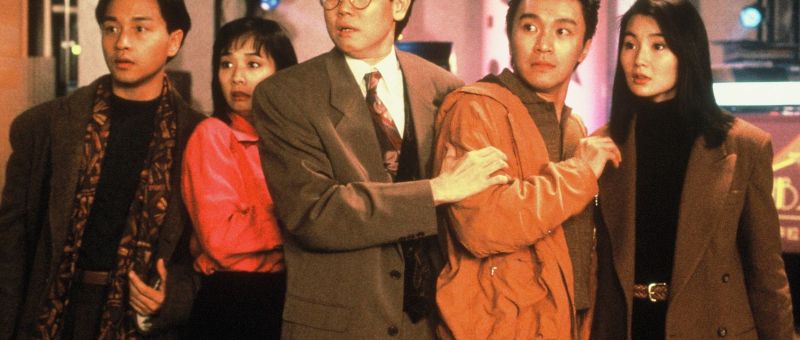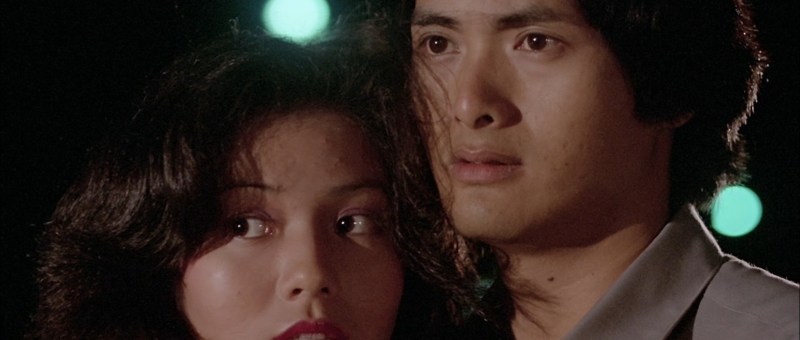
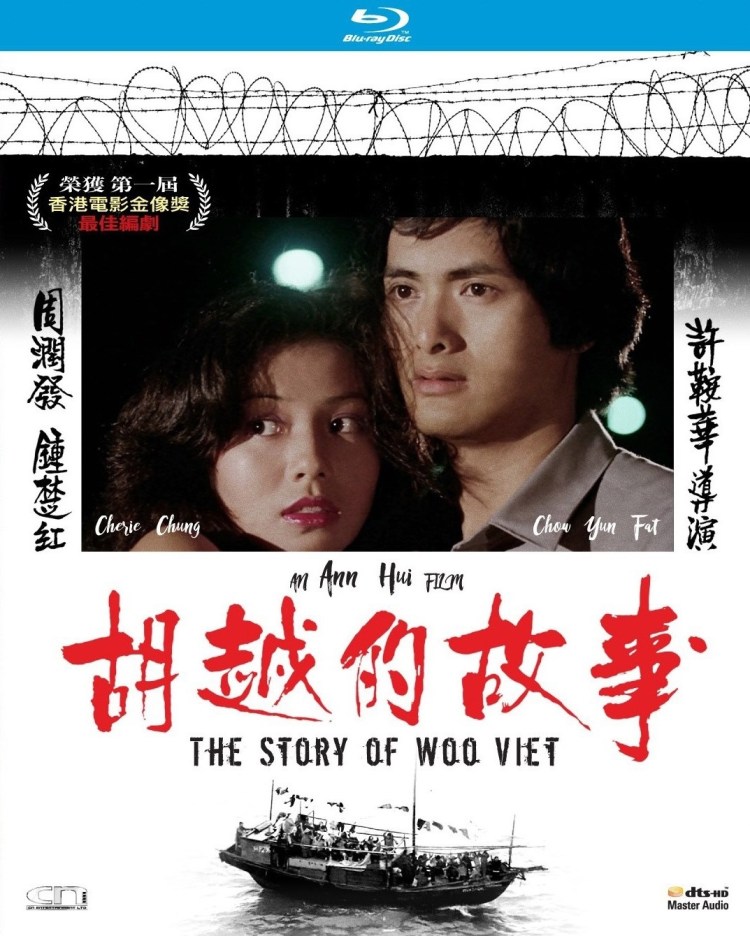
The Story of Woo Viet (胡越的故事, Ann Hui, 1981)

Displacement and a legacy of violence conspire against a young man attempting to escape the trauma of war in the second in Ann Hui’s “Vietnam trilogy”, The Story of Woo Viet (胡越的故事, AKA God of Killers). Starring a young Chow Yun-fat as Chinese-Vietnamese refugee headed to Hong Kong with a hope of making it to the US, Woo Viet’s story suggests that violence may be impossible to escape in a world increasingly corrupted by human indifference while only crushing disappointment awaits for those who live on dreams alone. 

After years fighting for the South Vietnamese army, Woo Viet (Chow Yun-fat) is one of many young Chinese-Vietnamese men attempting to escape through claiming asylum in Hong Kong so that he can eventually apply for a visa to the US. The reasons he needed to leave are readily apparent. Even on the overcrowded, primitive boat on which he arrives in Hong Kong, Woo Viet has already witnessed several atrocities in which fellow passengers were dumped overboard, killed, or marooned on isolated islands. He has become the surrogate father to a little boy who is now alone on the boat because his dad was killed by the guards, and subsequently becomes a target for Viet Cong “special agents” after they strangle his friend in his sleep for having seen something he shouldn’t have.  

Luckily, Woo Viet has a friend in Hong Kong, a female “penpal” Lap Quan (Cora Miao Chien-Jen) who sent him letters he rarely answered all through the war. After Woo Viet is forced to kill a special agent in the refugee camp in order to ensure his own survival, he finds himself relying on Lap Quan to help him organise a fake passport. He no longer has the luxury of waiting to do things properly, he needs to leave the country as soon as possible. The fake passports available are, for some reason, Japanese meaning he has to learn to at least sound plausible by picking up a few handy phrases to fool the border guards. It’s in the language classes that he meets fellow refugee Shum Ching (Cherie Chung Chor-hung) who is travelling to the US because a former customer who has already emigrated told her that he wanted her to come no matter what the cost. The problem is the HK trafficker has not been honest with either of them. Woo Viet may have a decent shot at actually making it to the US, but the girls are to be sold on at the first available Chinatown, which in this case is Manila where they’re waiting for a connecting flight. Having bonded with Shum Ching, Woo Viet surprises the traffickers by giving up his chance to go to America to stay in the Philippines to try and rescue her. 

“Whichever Chinatown it is, I think my situation will be the same” Woo Viet writes back to Lap Quan, keeping up a correspondence which becomes increasingly dishonest as he struggles come to terms the shattering of all his dreams. Trapped in a Philippine Chinatown, he discovers the only way he can save Shum Ching is by serving the gangsters that “bought” her from the HK trafficker. Yet, also in his letter to Lap Quan he claims that “it is much simpler to kill people here compared to Vietnam”, while suggesting that the reason his situation is “the same” in Chinatowns the world over is that he has no real identity and can therefore “solve people’s problems with no problem” which is why he’s ended up working as a hired gun for HK gangster Chung. 

Even so, he still harbours hopes of making it to the US when he’s made enough money to “redeem” Shum Ching who is already dreaming of finding a tiny house for them both where she can cook him proper Vietnamese food. While in Manila, he’s partnered with a slightly older man, Sarm (Lo Lieh), who came from Hong Kong a decade earlier. Woo Viet thinks he should have earned plenty of money after a decade making kills for Chung, so he doesn’t understand why he’s still here rather than off somewhere else enjoying a better life. He still doesn’t quite see that Sarm is a vision of his possible future, a man so beaten down by life that his only goal is to drink himself into an early grave. Sarm no longer believes in a future for himself, but he wants to believe in one for Woo Viet, and so he tries to help him but brotherhood, like love, is no match for the casual cruelty of the world in which they live. 

Woo Viet’s floating rootlessness is perhaps an echo of a potential anxiety in a Hong Kong facing its own sense of displacement with the handover less than 20 years away, as perhaps are his feelings of hopelessness as he attempts to write himself into a better future in his now constant letters to Lap Quan in which he somewhat insensitively talks of his love for Shum Ching born precisely out of that same sense of rootless desperation. Soon after they meet, the pair attempt to visit a flower market at night but their romantic moment is disrupted by another refugee couple being caught and dragged away by police, instantly throwing a fatalistic shadow over their innocent connection. All Woo Viet wanted was an ordinary settled life, perhaps adopting that orphaned little boy from the refugee camp and bringing him with them as he and Shum Ching claim a better life in the US, but even small dreams are seemingly impossible in a world in which the predominating force is not love or compassion but violence.  


Chasing Dream (我的拳王男友, Johnnie To, 2019)

“You gotta give everything to get everything” according to an intense rocker in Johnnie To’s musical boxing romance, Chasing Dream (我的拳王男友). What turns out to be most important however is not physical endurance but emotional authenticity, if you want to be taken seriously then you have to take yourself seriously first and that means learning to find the courage to embrace your authentic self. A tale of two crazy kids chasing the Chinese Dream, To’s colourful fantasy world is not without its bite as he leans in hard to what it costs to succeed and not in what is often a merciless society.

Our hero Tiger (Jacky Heung Cho), “The Gluttonous Boxer”, is a young man who broke with his boxing master to step into the MMA ring but is also an enforcer for a shady local loansharking gang run by his manager. Aware he is approaching the end of his career – a doctor later tells him he’s in danger of going blind, rupturing his liver, and getting Parkinson’s – Tiger’s life changes one day when he recognises one of the ring girls, Cuckoo (Wang Keru), as the granddaughter of an old woman who used to sell noodles back when he studied boxing in his rural hometown. Unfortunately, Tiger’s boss has also recognised her because she is in deep debt with the mob. Some of the guys want to cut their losses and sell her on to the sex trade but Tiger, seemingly indifferent, claims he can find her a way to work off her debt and thereby kickstarts his rescue not only of her but of himself from the increasingly empty life of an ageing prize fighter. 

What he discovers is that Cuckoo is harbouring intense resentment over being seduced and betrayed by one of China’s biggest pop stars who made himself a name as the “king of originality” after stealing all of her songs and leaving her in the lurch. Qu Fengfeng (Ma Xiaohui) is now a judge on China’s biggest TV singing competition Perfect Diva and Cuckoo has a plan to confront him by getting on the show, the only snag being that she is extremely unpolished as a performer. Tiger, meanwhile, wants to get out of the ring and has a plan to start his own hotpot empire essentially by copying all the best bits of the major chains and bringing them together. He vows to help Cuckoo train by having her mimic the performance styles of major stars, but what she quickly discovers is that there is no substitute for emotional authenticity. A fellow constant decides to switch her routine at the last minute after catching sight of Cuckoo rehearsing, but is unceremoniously voted off by judges who’d rather she “performed a tacky fan dance” (as she was originally planning to do) than simply copycatting famous artists. Challenged that her songs are too similar to Qu Fengfeng’s Cuckoo snaps back that it’s his style that’s close to hers, earning the admiration of astute female judge Zhao Ying (Wu Yitong) who can perhaps detect the artist inside her beginning to free itself from her sense of insecurity. 

Achieving your dreams can however come at a heavy cost. Pearl “the kick ass rocker” (Kelly Yu Wenwen) has an intense, aggressive performance style but in a running gag turns up at each consecutive audition with a new incapacity, eventually using a wheelchair and wearing a back brace only able to move her arms. “Totally worth it in the name of music!” she cheerfully explains, literally destroying herself to get to the top. Tiger does something much the same exploited as he is by his unscrupulous gangster manager, shouting out “it doesn’t hurt” as he trains by having people jump on his belly, but the battering he takes is not so much for himself as for others, stepping back into the ring in defence first of Cuckoo and then of his dejected master, Ma Qing (Shao Bing), whose attempt to defend the dignity of the noble art of boxing against the modern upstart MMA goes horribly wrong. But Tiger cannot fight others’ battles for them, and the only way he can win is by being himself while honouring their legacy. 

Finally finding how to bare their souls for all to see and “have someone share the fatigue of loneliness”, the pair learn to recalibrate their dreams while falling in love discovering that mutual support is their guiding light as they give each other the strength to be all they can be. Ostensibly somewhere in Mainland China, To’s make believe, retro future city has a colourful comic book intensity that adds a mythic quality to the saga of Tiger and Cuckoo that is perfectly in tune with his dreamy romanticism in which sudden flights of fancy including a full-blown Bollywood-style dance sequence seem entirely natural. A surprisingly moving, wilfully absurd musical love story between wildly grinning pugilist and a young woman learning to sing from the the heart, Chasing Dream is a delightful sugar pop confection in which two crazy kids find love in the ring and with it the power to believe in themselves and a better future.


Chasing Dream streamed as part of this year’s Udine Far East Film Festival.

Original trailer (Cantonese, no subtitles)

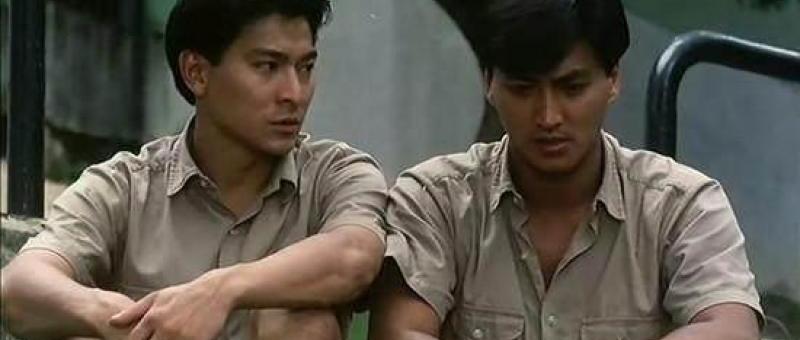
Dragon in Jail (獄中龍, Kent Cheng Jak-Si, 1990)

“For the poor life is a punishment” according to Henry (Andy Lau Tak-Wah), the embattled hero of Kent Cheng Jak-si’s Dragon in Jail (獄中龍), a subdued heroic bloodshed offshoot in which a poor boy and rich kid meet in juvie and become best friends for life even though fate seems to have very different paths in store for them. Less a critical expose of the cruelties of an increasingly stratified society than an ode to intense male friendship, Dragon in Jail puts its hero in a different kind of cell as he tries to escape the triad net but finds himself ensnared by past crime and present rage. 

Rich kid Wayne (Kenny Ho Ka-King) ends up in a reformatory for pulling petty stunts supposedly because he doesn’t like it that his widowed mother has remarried. Different from the other boys, he’s immediately hazed and asked for his gang affiliation, only he doesn’t have one. Tough boy Henry stands up for him, roping in his other friend Skinny (John Ching Tung) to take on the cell’s Mr. Big after which the boys become firm friends as they study together to sit their A Levels while inside. Wayne wasn’t planning to take his exams as a way of getting back to his mother, but Henry convinces him that education is the one way to show the world who’s boss. The boys come top in their class, Wayne gets out and decides to go the UK to study law, while Henry serves out the remainder of his sentence in an adult prison, sentenced to four years for manslaughter after accidentally killing a triad member during a fight over protection money at his family’s kiosk. 

Despite the differences in the scope of their possibilities, Henry and Wayne remain good friends, but once Henry gets out of prison he’s nothing much to look forward to. His hopes of attending a university are dashed by his defeatist father who thinks education is pointless and blames him for the failure of their business, while he struggles to find steady employment as a man with a criminal record. Eventually he decides to work as a mechanic by day and a cram school teacher by night with the aim of saving enough to apply for uni at later date so he can marry his longstanding girlfriend, Winnie (Gigi Lai Chi). Skinny, meanwhile, gets out of jail and heads straight back to the triads, trying to convince Henry he should join too. Henry doesn’t want to, but faces constant harassment from Brother Charlie (William Ho Ka-Kui), the boss of the man he killed in the fight. When his little brother is badly burned in a triad attack, he decides his only option is to become one himself to earn the protection of Boss Sean (Leung Gam-San) who mediates an uneasy truce with the psychopathic Charlie. 

When Wayne returns from the UK after graduating law school, Henry is married and a father-to-be living in a swanky apartment having risen in the triad ranks, but he’s also a hotheaded opium addict still sparring with the very present Charlie. “I’m a bad egg! I deserve it!” Henry wails on being confronted by Wayne who points out that it was he who was always encouraging him to study so that no one would ever look down on him. Henry thinks he’s not good enough to be Wayne’s friend and fully expects to be abandoned, but after some strong words of defence from Winnie, Wayne comes around, resolving to help get his friend off the stuff. The problem is the sense of futility which has already set in. Henry has become what everyone expected him to be, a thuggish triad, because they convinced him he could become nothing else.

Winnie berates Henry for keeping his sorrows to himself, remaining sullen and resentful at his inability to escape the triad world for an honest life of safety with his new family, though he once told Wayne that he should “speak up if you feel unhappy”. Despite everything the intense friendship between the two men endures. Cheng adds to the faintly homoerotic tone by shooting his early prison scenes with a lingering romantic gaze, while Wayne seems to pine for his broody friend, affirming that “no matter what you are, you are my buddy”. A caged dragon, Henry’s vengeance is swift and brutal but he retains his nobility even in the depths of his despair, eventually taking refuge in an unconditional friendship which transcends the forces which imprison him.


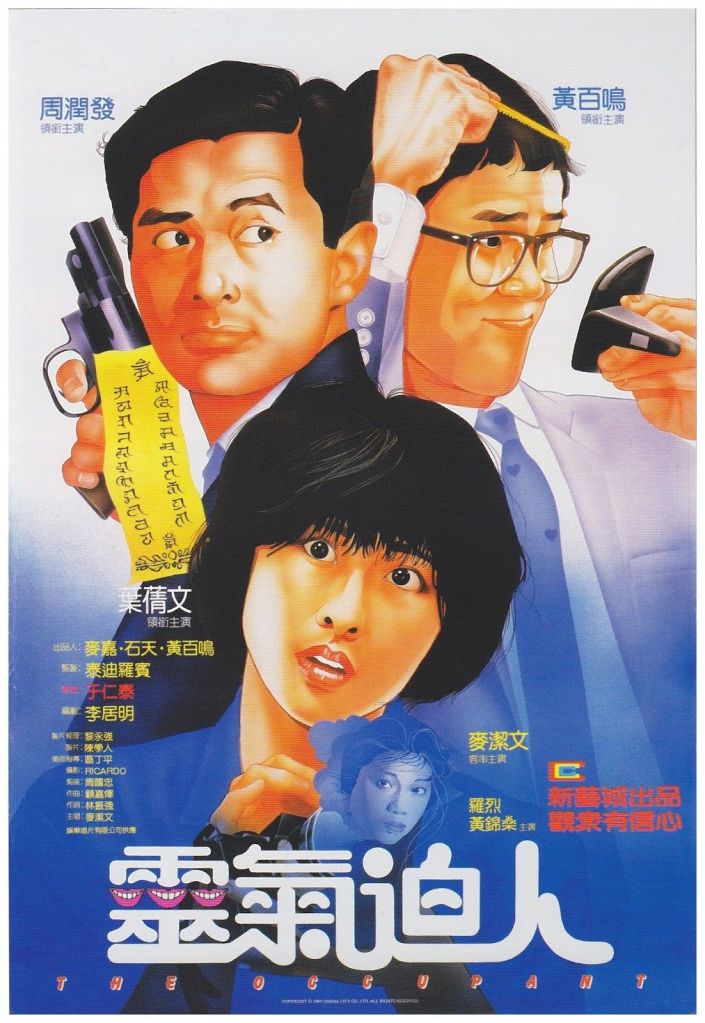
The Occupant (靈氣逼人, Ronny Yu Yan-Tai, 1984)

There’s no such thing as a reasonably priced apartment, and so when you find one that seems strangely spacious for the rent, it’s prudent to wonder why that might be. Yes, that’s right, your dream apartment may in fact be haunted! Going a bit meta, Ronny Yu Yan-Tai gets in on the comedy ghost game with The Occupant (靈氣逼人), a tale of supernatural suspense starring Taiwanese-Canadian actress and singer Sally Yeh as a young woman returning from Canada for a three week stay to work on her dissertation researching “Chinese superstition”.

Having not thought to book ahead for her accommodation, Angie (Sally Yeh Chian-Wen) is shocked to discover that hotel rooms in the Hong Kong of 1984 are in no way cheap. Locked out of even the cheapest flea pits, she decides to try renting an apartment only to run into the slimy Hansome Wong (Raymond Wong Pak-Ming), an unscrupulous estate agent/used car salesman. Angie spots an apartment sitting on his board that’s in her budget and asks to see it. Hansome is delighted because it’s been on the market ages, but what he doesn’t disclose is that the reason it’s so cheap is that the place is haunted. Angie is originally quite confused by the fact her furniture seems to move back to its original position all by itself, and irritated by loud noises such as a woman singing and a couple having an argument late at night, but on being told that she’s the only resident by the decidedly creepy caretaker (Yam Ho), decides she’s not really bothered if the apartment has another occupant besides herself and anyway it might be quite useful for her thesis. 

Very much in the Wong Jing vein, much of the early comedy revolves around Hansome’s cringeworthy attempts to worm his way into Angie’s life. Luckily for her, he says, Hansome is a very “superstitious” person and so offers to show her around all the best “superstitious” sights of the city, particularly a local temple where they seem to do every kind of taoist ritual going. The problem is that Angie can’t seem to get rid of him. He even pulls the trick of saying that he left something behind in her apartment so he can come in and retrieve it, only to get his arm trapped in a priceless vase. Hearing about the ghost he vows to stay the night and protect her from the boogeyman, but he didn’t count on the real thing turning up and expelling him from the apartment in exasperation with creepy men everywhere. 

Meanwhile, Angie is actually quite taken with a handsome policeman she runs into at the airport, but incorrectly assumes he’s a “sex maniac” because he was only hanging out with her as camouflage for surveilling another woman who turned out to be a pickpocket. Valentino (Chow Yun-Fat) is an honest cop, which is why he ends up getting asked to take some time off after discovering a fellow officer visiting an establishment they were raiding on a tip off that it was employing underage girls. Like Hansome, Valentino has also taken to Angie, if in a slightly less creepy way, and the three of them eventually get together to try and solve the ghost problem (not that Angie actually has much of a problem with it). 

On investigation, Angie discovers that the previous occupant of the apartment was a nightclub singer who apparently shot herself after a failed affair with a married man who wouldn’t leave his family. She becomes ever more obsessed with the dead woman, Lisa Law (Kitman Mak Kit-Man), despite the warnings from Valentino’s former policeman turned taoist priest buddy (Lo Lieh) who tells her that the ghost most likely bears a grudge and will try to engineer a reprise of her tragedy using a susceptible subject. Yu has fun parodying some of the genre staples like magical charms supposed to ward off ghosts which get mysteriously lost at critical moments, but edges towards a real supernatural dread as the curse takes hold, swallowing our trio in a bizarre recreation of the past which accidentally reveals a long hidden truth and helps to alleviate the ghost’s anger. In her frequent voice overs recorded on a dictaphone, Angie reveals that she came to Hong Kong with a low view of “Chinese superstition” but thanks to her experiences now has a new appreciation for the power of the supernatural. Ghosts it seems can’t be exorcised so much as appeased, ignore them at your peril.


Original trailer (no subtitles)

Au Revoir, Mon Amour (何日君再來, Tony Au Ting-Ping, 1991)

Love and Resistance go to war in Tony Au’s noirish romance, Au Revoir, Mon Amour (何日君再來, AKA Till We Meet Again). The evocative title sets the scene for a tale of love betrayed by changing times, but ultimately asks if love is a question of priorities and if you have the right to put your romantic destiny on hold to serve a greater good, even if that greater good is a shared ideal. Predictably, the answer may be no, because in the world of the movies at least love is an absolutist choice and you won’t be forgiven for resisting it. 

One fateful evening in the Shanghai of 1941, Resistance operative Sum (Tony Leung Ka-Fai) is an accidental witness to the murder of “notorious Japanese monks” which he later learns may have been set up by the Japanese authorities themselves. Chasing the perpetrator, Shirakawa (Jun Kunimura), through a series of back allies where he slices and dices his now redundant Chinese mercenaries, Sum is brought to a smoky nightclub where the singer, Mui-Yi (Anita Mui Yim-Fong), is none other than his one true love whom he met thanks to the Resistance movement some years earlier but was forced to leave behind with only a heartfelt letter explaining that he would return when the battle was done. Returning the favour Sum had done her in saving her life when she was about to be hit by a car, Mui-Yi tosses him a gun that allows him to defend himself against a crazed Shirakawa and thereafter shelters him in an abandoned garage until he is well enough to return to his mission. 

Heartbroken and embittered, Mui-Yi is still lowkey anti-Japanese and seemingly unafraid of telling the local goons where to get off despite her father’s attempts at collaboration. Her aunt Jing (Carrie Ng Ka-Lai), however, finds herself succumbing to the dubious charms of violent and thuggish turncoat Tit Chak-Man (Norman Chu Siu-Keung) who is working with the Japanese apparently because he thinks China is weak and unsophisticated. Tit Chak-Man thinks nothing of blowing up little children and blackmailing suspects which is how he begins to manipulate Mui-Yi after seizing her father’s bar and having him put in prison on a trumped up charge. Meanwhile, she flip flops in her relationship with Sum, at once resenting him for his tendency to disappear and then longing for his return, while he berates her in a mistaken assumption that she has decided to collaborate but promises that he will be hers and hers alone once the war is over. 

Unlike many similarly themed movies from both the Mainland and Hong Kong, the big bad is not the Japanese themselves but the Chinese who betrayed their country and sided with the enemy. Somewhat two dimensional, Tit Chak-Man is a thuggish brute who is prepared to do anything and everything to stamp out the Resistance but is at once humanised by his intense romance with Jing which continues even after she attempts to assassinate him and eventually proves his weakness when he refuses to abandon her to escape from a baying mob. Though Shirakawa is indeed crazed and bloodthirsty, we’re shown his opposite in the gentle, sensitive Noguchi (Hidekazu Akai) who has also fallen in deep and selfless love with Mui-Yi and is willing to facilitate her romance with Sum while doing everything he can to keep her safe. 

Years later, Sum irritably points out that Noguchi had a choice in serving his country and was therefore free to choose love instead which seems extremely disingenuous seeing as he was most likely (in some way) a conscript too but was in his own way resisting in order to serve the best interests of his country. Sum chose China over Mui-Yi. It’s unreasonable to expect someone to wait in line until you’ve finished being a revolutionary hero and have the proper time to devote to love, no one likes being second choice even if you’re right behind “freedom” when it comes to priorities. To save his love, Sum sent it into the arms of the enemy but failed to realise that she might also find a home there or at least a sense of relief in no longer needing to wait for someone who might never return. Can there be love in time of war? Yes, but love like revolution is a choice and it won’t wait for you forever, if you betray it you may not be forgiven. 


Fortune Star trailer (no subtitles)

Apart (散後, Lester Chan Chit-man, 2020)

“There’s gotta be a price for chasing dreams” sighs the heroine of Lester Chan Chit-man’s Apart (散後) as she mulls over lost love and the fight for Hong Kong independence. A collection of youngsters find themselves swept up in the Umbrella Movement, but some are more committed to the cause than others and divided loyalties are enough to eventually pull even those who love each other apart. 

Yin (Will Or), his cousin Toh (Chan Lit-man), Yin’s girlfriend Maryanne (Sofiee Ng Hoi-Yan), and the bashful Shi (Yoyo Fung) are all earnest university students studying hard to build professional lives for themselves. Maryanne is strongly against Mainland interference and has become a keen participant in the Umbrella Movement protests, dragging Yin and his more committed cousin along for the ride. The conflict lies in the fact that Yin comes from a fairly wealthy family. His father, Hung (Lester Chan Chit-man), is the CEO of a successful coach company and strongly pro-China. Authoritarian in the extreme, he thinks that you have to respect order and that the future lies in the Mainland. Yin’s animosity towards him may be more youthful rebellion against his hypocrisy in his many affairs and subsequent remarriage to younger woman Yin doesn’t seem to care for, than it is true political conviction. Toh’s father, meanwhile, is originally sympathetic towards the protestors and against Mainland interference (if only to needle Hung) but changes his tune when the protests start affecting his business.

“It turns out some people just want to make a living” Yin admits trying to broker peace, but finds his loyalties continually strained as he tries to balance his desire for Maryanne with his personal ambition. As the protests intensify, Yin pulls back. He objects to his friend’s increasing conviction that there can be no victory without violence and fears the outcome of a battle fought on such tense fault lines. Maryanne, however, doubles down, devoting all her energies to the movement, unforgiving of Yin when he dares to step back on the night that his grandmother dies and secretly beginning to doubt him, riddled with romantic jealousy over his growing attraction to Shi. 

In some ways Maryanne represents for him Hong Kong, while Shi represents the Mainland. Yin is a man pulled between two poles and perhaps treating neither of them with the respect they really deserve. The years wear on and the Umbrella Movement winds down. Yin pursues his technological interests in the US, perhaps hoping to escape the HK/China divide through removing himself to another continent. The crisis does not however stop. Maryanne becomes a lawmaker, trying to further her aims in the political arena but encountering fierce resistance. She is lonely and tired, but refuses to give up. Yin finds himself torn, in love with Maryanne but considering settling down with Shi who, like him, is ready for “a settled life”, while Maryanne knows she cannot rest until Hong Kong is free. He won’t come to the protests with her because he fears damaging his prospects on the Mainland, and she won’t be welcome if she accompanies him there (not that she would want to). Politics drives them apart, and as Maryanne said there’s a price for following your dreams. 

Toh, a little younger, remains committed to the ideal but also tempered by practicality, changing the future through teaching the past while his Chinese-American step-cousin, Jessica (Jocelyn Choi), eventually returns to chronicle the battle for democracy from an international perspective. In his student days, someone asks Yin why it is they who have to fight this battle and he replies that they alone can afford this naivety. They can afford to be bold, passionate, reckless, unrelenting, and unafraid of the consequences because they are young. As they grow older, some of them grow away. Yin gives in to practicalities, leans towards his father’s point of view, and eventually does what he thinks is right in looking for peace and compromise, but his actions betray Maryanne’s revolution. Maryanne looks for political solutions, but finds them slow going nevertheless continuing the fight. Nothing may change, but we’re here to show them we won’t mindlessly obey, Shi offers of the Umbrella Movement, filling the streets with the colour of resistance in tiny paper umbrellas in a vibrant yellow.


Apart was screened as part of this year’s Osaka Asian Film Festival.

Original trailer (English subtitles)

My Prince Edward (金都, Norris Wong Yee Lam, 2019)

(C)My Prince Edward Film Production Limited

“Why do you all think that marriage means happily ever after?” A conflicted young woman asks the man attempting to railroad her into a life of conventional respectability. “It doesn’t mean that” he explains, “But there’s no happiness if you don’t get married”. In 21st century Hong Kong can it still really be that a woman’s success or failure is measured by her age at marriage? The debut film from Norris Wong Yee Lam, My Prince Edward finds its heroine asking if there isn’t more to life than marrying a man you don’t love because it’s what everyone seems to expect. 

31-year-old Fong (Stephy Tang Lai-yan) has been in a committed relationship with wedding photographer Edward (Chu Pak Hong) for the last seven years, but she’s been keeping a secret from him. 10 years previously, she and her friend Yee (Eman Lam Yee-man) underwent sham marriages to Mainlanders in return for cash so they could rent a flat with a third friend, Mabel. Fong believed that the agency would deal with her “husband” on their own, arranging his Hong Kong residency permit and thereafter a divorce but although Yee’s “marriage” went off without a hitch, Fong’s hit a snag in that the agent was arrested so her husband never got his ID card and she never got her divorce. The reason she’s worried now is that she overheard Edward tell his assistant to photoshop his client’s marriage certificate to redact any mention that he’s been married before to avoid potential embarrassment at the ceremony.

The fact is, Edward is a strangely conservative, patriarchal sort of man and she knows he might not be very understanding even if she sits him down and explains that she’s technically still married to someone else. Everything might have carried on as normal if Edward had not taken it upon himself to make an ostentatious public proposal that Fong could hardly have refused even if she’d wanted to. The public proposal is perhaps another manifestation of Edward’s manipulative tendencies, but is also mostly undertaken to please his conservative and equally possessive mother (Nina Paw Hee-ching) with whom he still shares a joint bank account at the age of 31. Too afraid to face the potential consequences of the pair finding out, Fong attempts to track down her “husband”, Yang Shuwei (Jin Kaijie), to convince him to co-sign the divorce papers so they can come through before her mother-in-law’s preferred wedding date in a few months’ time. 

The grand irony is that Fong only did the sham marriage because she felt trapped by her conservative parents who objected to a teenage romance. She moved out to find freedom, but now feels trapped within the claustrophobic district of Prince Edward and most particularly the Golden Plaza shopping centre which houses her apartment and the bridal shop where she works which is next-door to Edward’s photography studio. She wanted to move into a swanky new flat, but Edward’s mother is dead set on buying the place where they currently live so Edward won’t have to move, an arrangement which suits him fine. Edward, meanwhile, is prone to jealous rages and Fong can hardly leave the apartment without getting 30 messages asking where she is and when she’ll be back. 

It turns out that “freedom” was what Shuwei was looking for too. He wanted a Hong Kong ID card as a stepping stone to going to America, hoping to make worldwide travel easier than with a PRC passport. Ironically, he can’t understand why Fong puts up with Edward’s prehistoric attitude and encourages her to reconsider marrying a man who’s already borderline abusive. Fong doesn’t quite want to admit it to herself but she feels the same, only she doesn’t have the courage to resist. She’s been successfully keeping Edward at arm’s length all these years, but now that the subject of marriage has been raised she’ll have to make a firm a decision. 

Working in the bridal shop she sees enough stressed out, unhappy couples going through the motions to realise that it’s not all sunshine and flowers, while it sounds like her family life was not exactly a bed of roses growing up. What she can’t seem to do, however, is to give herself permission not to marry. Unexpectedly getting his wings clipped, Shuwei asks her what it is she wanted to do and where she wanted to go, questions that no one else has really asked and Fong doesn’t know the answers to. If she stays with Edward, she might never find out. Like the flipped over turtle she tried to rescue from a pet shop, Fong runs the risk of swapping one tank for another, ending up trapped inside the Golden Plaza for the rest of her life being bossed around by her mother-in-law and walking on egg shells around the fragile Edward which seems like a heavy price to pay simply to be accounted respectable. “You don’t know what freedom is” Shuwei scolds her, confused that she chooses to stay when she has the choice to be anywhere she wants. The real Prince Edward gave up his throne for love, choosing one kind of freedom at least or perhaps just swapping one tank for another. Fong doesn’t know where she wants to go, but is beginning to realise that she has a choice and choosing herself is no bad thing. 


My Prince Edward screens on March 8/12 as part of this year’s Osaka Asian Film Festival.

Original trailer (English / Traditional Chinese subtitles)

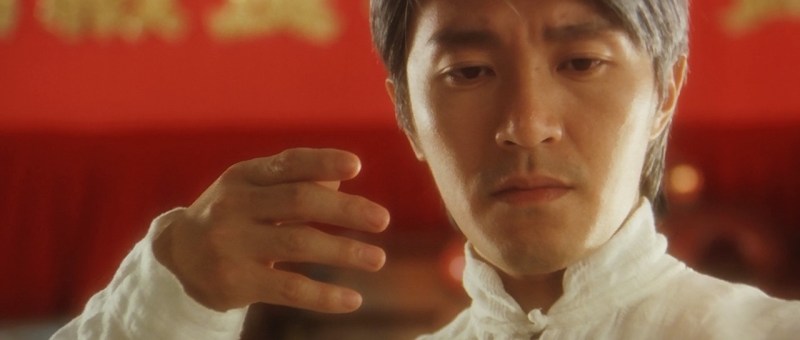
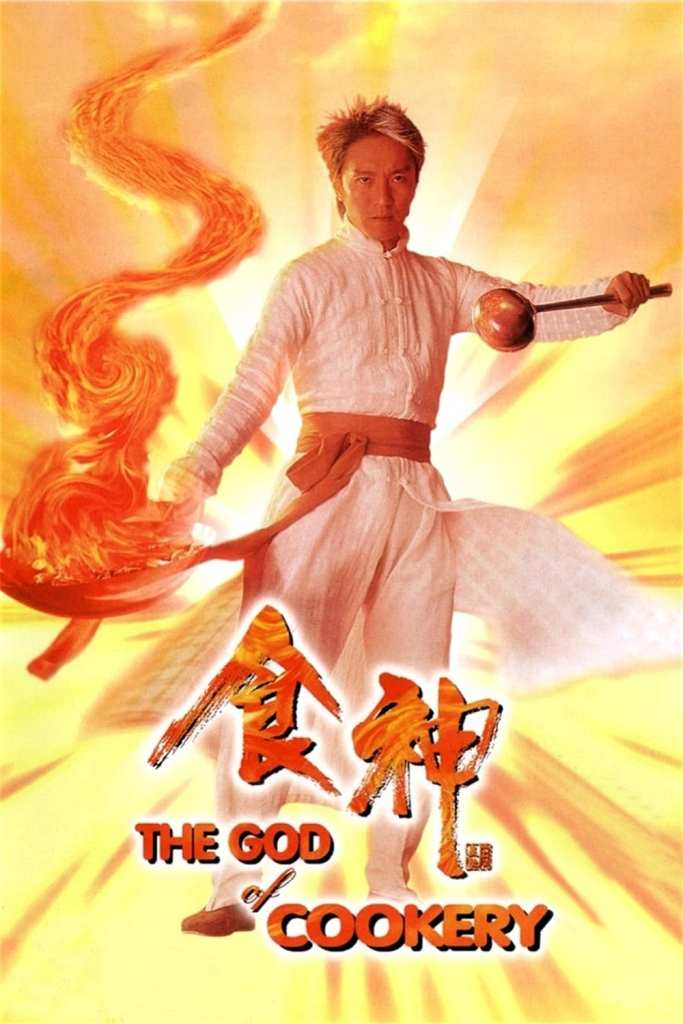
The God of Cookery (食神, Stephen Chow, 1996)

Thing about cooking is, you gotta have heart. At least, that’s the main takeaway from Stephen Chow’s 1996 culinary comedy God of Cookery (食神) in which he once again stars as a man who’s become rich and successful exploiting the talents of others but gets a major humbling when his duplicity is exposed by an even more duplicitous, though apparently talented, rival. Only by living among the people and rediscovering the simple joy of ordinary food cooked with love can he regain his true identity as the “God of Cooking”. 

Stephen Chow (Stephen Chow playing a character of the same name but written with different characters) has built up a successful food empire built around himself as a celebrity chef known as the “God of Cooking”. As a popular TV judge on a cooking competition, he makes a point of giving each of the contestants zero points, starting off with words of praise but eventually finding fault with “basic” techniques and even at one point complaining that it doesn’t matter how tasty the dish is because the chef is so ugly it’s made him lose his appetite. Chow treats his employees with total disdain, going so far as making a prospective hire defecate in public in front of a lift in return for a job, while schmoozing with Triads to expand his empire. The Triads, however, are getting fed up with him and have installed a mole in his organisation. Bull Tong (Vincent Kok Tak-chiu) is a talented chef who claims to have trained at the Chinese Culinary School on the mainland. He makes a point of causing public embarrassment to Chow by tearing apart one of his signature dishes at the press launch for the 50th branch of his branded restaurant chain. Chow is exposed as a talentless fraud and thanks to his haughty attitude, his friends abandon him. 

Penniless and destitute, he rocks up at a noodle stall run by Sister “Twin Daggers” Turkey (Karen Mok), critiquing her noodles in the same way Bull had torn apart his. Turkey takes pity on him after he’s beaten up by thugs and accepts him into her mini street gang. It’s Chow who finds an innovate solution to to her turf war with a rival stall holder in inventing the not entirely appetising “Pissing Beef Balls” which prove an instant hit with all who try them, even helping to cure those suffering with anorexia (apparently a widespread problem of the time, at least according to onscreen newspapers). Chow has not, however, lost his cynical streak and wants to get back to the top by opening a nationwide chain of Pissing Beef Ball restaurants, while Bull and the Triads begin to panic about his seemingly unstoppable success. 

Parodying both Tsui Hark’s Chinese Feast from the previous year, and Wong Jing hit God of Gamblers, Chow brings even more of his now familiar slapstick style, turning cookery into a kind of martial art, and even including a brief sequence in which he gets trapped inside the Shaolin Temple and ends up learning some of their patented culinary techniques. As the cynical top chef, Chow stands in for the evils of the age, puffed up on empty capitalism, openly telling his staff to pull dirty restaurant tricks like making the seats small and uncomfortable to increase turnover and filling the drinks with giant ice cubes to keep costs down and encourage guests to order more. Bull Tong, however, goes even further, beating the staff and suggesting they serve greasy, salt-laden dishes like French fries so kids order more soda, ignoring complaints from the chefs that it’s unethical to serve such obviously unhealthy food to children. 

Sister Turkey’s cuisine, by contrast, might not exactly be top table stuff but it makes no pretence of being anything other than it is. Her rival prides himself on using high quality ingredients, even making sure his oil is changed daily, making it plain that your average market hawker (whether he’s telling the truth or not) at least appears to have more concern for his customers than giant restaurant chains do. Turkey’s ordinary barbecue pork and rice dish with a side of egg is the best Chow’s ever tasted because it was made with kindness. He may have been fond of saying that you have to have heart to cook, but it was just one of his soulless catchphrases until he realised it was true. Good food, companionship, love, and a Christmas miracle slowly work their magic until the “God of Cookery” is finally restored thanks to a little celestial intervention, showing the Bull Tongs of the world exactly what they’re missing.


The God of Cookery screens in New York on Feb. 15 as part of this year’s New York Asian Film Festival Winter Showcase.

All’s Well, Ends Well (家有囍事, Clifton Ko, 1992)

Now an annual institution, the “New Year Movie” was only just beginning to find its feet at, arguably, the end of a golden age in Hong Kong cinema. Clifton Ko’s All’s Well, Ends Well (家有囍事) is often regarded as one of the key movies that made the genre what it is today, taking the box office by storm and spawning a small franchise with a series of sequels, the latest of which All’s Well, Ends Well 2020, is released this year. The original, however, is a classic “mo lei tau” nonsense comedy starring master of the form Stephen Chow as an improbable lothario chased into domesticity by the beautiful Maggie Cheung. 

The plot, such as it is, revolves around three brothers – Moon (Raymond Wong Pak-ming), Foon (Stephen Chow Sing Chi), and So (Leslie Cheung Kwok-wing). Oldest son Moon is a regular salaryman married to devoted housewife Leng (Sandra Ng Kwan-yue). Though it’s his seventh wedding anniversary, he’s late for the family dinner at home with his parents and brothers because he’s entertaining his mistress, Sheila (Sheila Chan), instead. Foon, meanwhile, is a disk jockey on local radio filling in for a friend taking a day off to get married. Eccentric movie enthusiast Holliyok (Maggie Cheung Man-yuk) rings into the show to complain that she feels lost and lonely, so Foon takes her address and phone number under the pretext of gifting her a laserdisc. So, meanwhile, is an effeminate young man who teaches flower arranging and clashes with his tomboyish, motorcycle riding “auntie” Mo-shang (Teresa Mo Shun-kwan) who practices extremely aggressive massage techniques. 

As this is a New Year movie, the conclusion we’re moving towards is the repairing of the family unit with the two unmarried brothers eventually pairing off, culminating in a mass wedding in which mum (Lee Heung-kam) and dad (Kwan Hoi-san) can participate too. Before that, however, we’re dropped into the increasingly affluent world of Hong Kong in the early ‘90s in which men like Moon think they’re king. Leng, meanwhile, laments that she married her husband after high school and unlike him does not have the option to quit her “job”, forced to serve the two “company directors” day and night with no overtime or double pay. Quit is exactly what she does do, however, when confronted with Moon’s infidelity. After promising to take her out for a swanky dinner, he gets distracted by his mistress and ends up getting rid of Leng to have dinner with Sheila after which he is so drunk she has to carry him to his own door. Sheila may have thought she was pushing herself into a middle class way of life, but being a housewife is hard work too, especially with Moon’s rather demanding if eccentric parents who suffer separation anxiety from their TV set and prefer to be vacuumed down to keep themselves clean while they watch. 

Leng, not quite having intended to really leave, is forced to reassert herself as an independent woman. She re-embraces her love of singing, getting one of the few jobs that’s open to women in her situation – working in a karaoke box. Eventually, she glams up and becomes a “credible” rival to Sheila, who has now become the housebound “hag” resented by the regretful (but perhaps not remorseful) Moon who has learned absolutely nothing at all about being a good husband.  

Meanwhile, Foon romances Holliyok through movie roleplay, cycling through Pretty Woman, to hit of the day Ghost, before heading into the darkness of Misery, and the unexpected salvation of Terminator 2. After himself getting caught with another girl, Foon gets hit on the head with an egg and “develops” a “brain disease” that causes him to lose his mind. Holliyok swears revenge, but, inexplicably, can’t seem to give up on the idea of Foon’s love while he remains just as pompously macho as Moon, believing women are things you win and then discard. 

Counter to all that, So and Mo-shang occupy a rather ambiguous space – quite clearly coded as gay complete with offscreen lovers they communicate with only by letter until they make a surprise appearance to make a surprise announcement. First feeling a spark of unexpected attraction while making some electrical repairs in the kitchen, they are eventually shocked straight – So transforming into a pillar of conventional masculinity, and Mo-shang suddenly wearing her hair long (did it grow overnight?), putting on makeup and dressing in ladies’ fashions. Thus, their gender non-conforming natures have been in some sense “corrected” by “love’ or “electroshock” depending on how you choose to look at it, assuming of course that their newfound romance is not just a clever ruse to neatly undercut the use of their homosexuality as a punchline. In any case, as the title says, all’s well that end’s well, and the Shang household seems to have regained its harmony, rejecting Sheila and all she stands for to embrace true family values just in time for the festive season.  


Screened in association with Chinese Visual Festival.

Rerelease trailer (traditional Chinese/English subtitles)

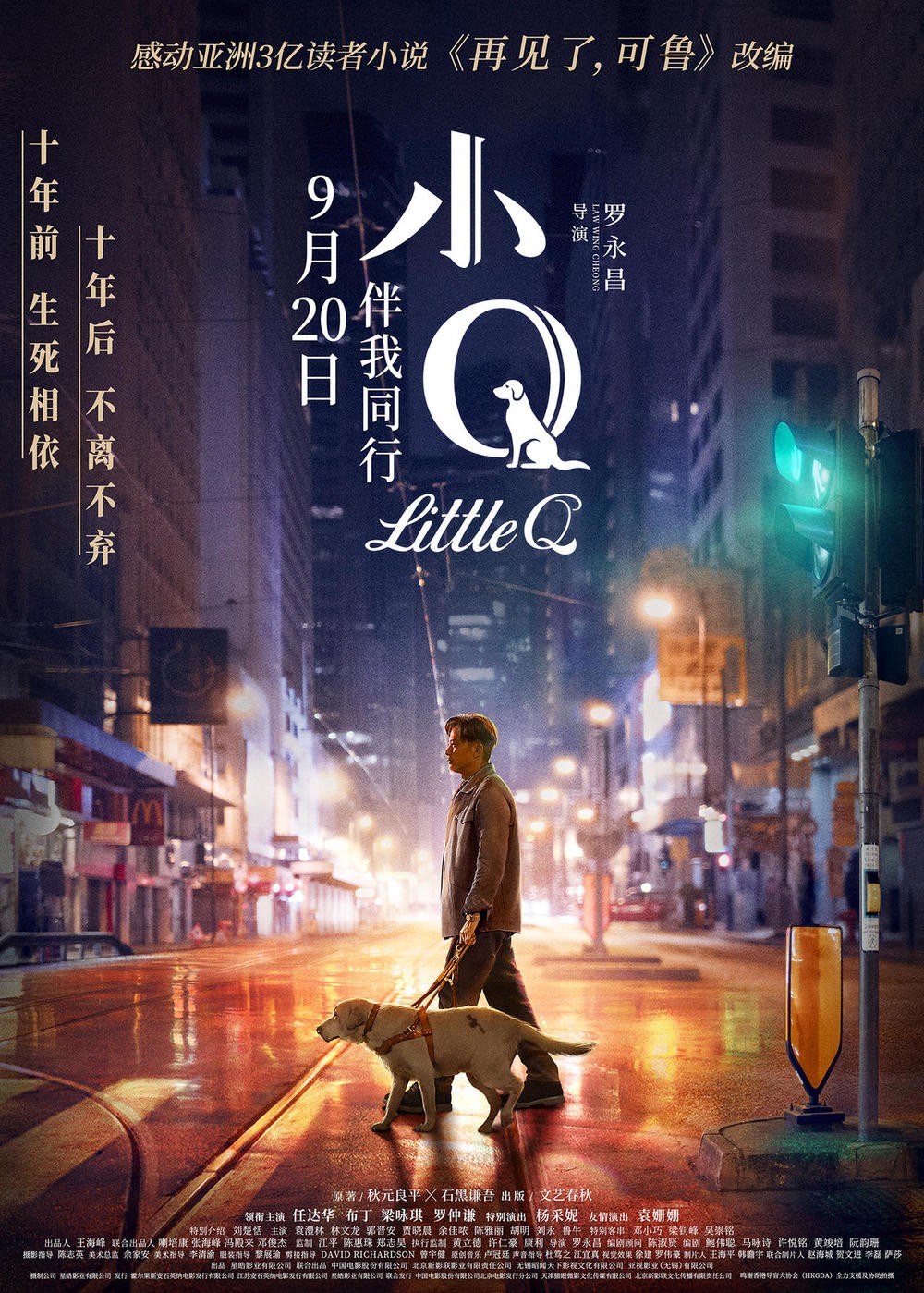
Little Q (小Q, Law Wing-Cheong, 2019)

little q poster 4You might think, in this day and age, that guide dogs are a fairly uncontroversial subject, but it might interest you to know that Hong Kong apparently has a vast guide dog deficit with fewer than 40 working in the city as of 2016 which is around one for every 4,300 visually impaired people. That might be part of the reason that Little Q (小Q, Xiǎo Q), adapted from a Japanese photobook by Ryohei Akimoto & Kengo Ishiguro, largely plays out as a feature length advert for the Hong Kong Guide Dogs Association, which is one of only two organisations training guide dogs and was set up in 2011 ending a 26-year absence of any such body.

The film charts the entire life cycle of the titular Little Q, whom we first meet literally falling into the arms of grumpy pastry chef Po-ting (Simon Yam Tat-wah). Rewinding a little, we realise that Po-ting’s sister and her vet husband are involved with the raising of guide dogs, sending Little Q off to live with his “foster family” which, perhaps irresponsibly, is in the home of plucky little girl Tsz-kiu (Jessica Liu Chutian). For those who don’t know, and as the film perhaps hopes to illuminate, guide dogs are trained in a family home by ordinary people who’ve agreed to look after them for the first 18 months of their lives, after which the dogs are given a final aptitude test and then placed with a blind person for a probationary period to assess their compatibility. Of course, agreeing to foster a dog knowing that you’ll eventually have to give it up can be emotionally difficult even for an adult, so placing that responsibility on a child is only going to lead to tears, of which there are plenty as Tsz-kiu is finally forced to accept that Little Q can’t stay with her forever because she has a greater calling.

Simon (Him Law Chung-him), the trainer/co-ordinator, promises Tsz-kiu that he’ll make sure Little Q has a lovely life with a person who truly appreciates her and that he’ll be sure to bring Little Q right back if she’s ever hurt or mistreated, but in part he knows he’s being disingenuous because they’ve already decided she’ll be going to Po-ting. Po-ting does not want a guide dog and is only getting one because of his sister’s connection to the programme. The problem is that Po-ting was always a “difficult” person. A well known TV pastry chef, he made a name for himself being mean in the way only a celebrity chef can. He has no respect for his service animal in part because he has no respect for other people, and because he was good at what he did people let him get away with it. Po-ting once cut down a contestant on the TV show by insisting that a chef must use all five senses, so he feels particularly trolled by the universe to have lost his sight and is struggling to accept his blindness. Feeling a sense of internalised shame because of his disability in addition to the fear and anxiety involved with adjusting to his new life has made him even more unpleasant and resentful than he was before. Angrily insisting he needs no additional help, he rejects and mistreats Little Q, even violently throwing her out of his well appointed home in the pouring rain.

As this is Little Q’s story, however, we only get a back seat view to Po-ting’s gradual softening as he begins to let her into his life, engineering not only a warmer relationship with his sister/partner in the pastry shop (Gigi Leung Wing-kei) but also with his apprentices, while he begins to see that the loss of his sight is only a change and not a tragedy. Through it all, Little Q is at his side, steadfastly loyal even when he tries to push her away, which is perhaps not quite the best message to be sending though it does emphasise the intense attachment that necessarily develops between a guide dog and its owner.

Law hints at an ethical dilemma in pointing out the toll taken on the dogs in the course of their work, but heads it off in reminding us that they get to “retire” and live out their final days as pampered pets while demonstrating that the reformed Po-ting breaks all the rules by playing ball with Little Q like a regular family dog. The paradox is difficult to bear as owners must act in symbiosis with their dogs, but are reminded that they’re service animals belonging to the organisation not personal pets and should something happen to them, will be shuffled on to others in need or returned to their foster families. Nevertheless, Little Q gets the best of both worlds, bonding fiercely with the grumpy Po-ting as he figures out how to live and love by following her lead.


Screened in association with Chinese Visual Festival.

Trailer (Cantonese with English subtitles)