My Name Ain’t Suzie (花街時代, Angie Chen, 1985)

Angie Chen’s response to The World of Suzie Wong, My Name Ain’t Suzie (花街時代) opens in the present day with its heroine apparently a gothic mystery, a Miss Havisham-style recluse and ghost of old Hong Kong trapped within the apartment of a legendary madam from old Shanghai. This conception of her turns out to be something of a myth in itself, as accidental witness to history Dick recounts to a young man working as a delivery boy (Jacky Yeung Tak-Ngai) for his ever evolving chip shop that she is actually still a wildly successful restauranteur and fixture in the local nightclub scene. 

This small enclave of Wan Chai, however, seems to have become a kind of ghost town having been largely abandoned as the American sailors who were once its main clientele stopped coming after the twin waves of the Korean and Vietnam Wars. Shui Mei (Pat Ha Man-Jik) now owns this block which signals her eventual mastery over the world in which she lives, if also her loneliness and isolation, occasionally staying in Miss Xiao’s (Angela Yu Chien) old apartment as if unable to let go of the irresolvable past. Her story is then, at least in part, a chronicle of the nation’s own post-war history as she successfully adapts to the times, yet retains a sense of melancholy nostalgia for an older Hong Kong which is fast disappearing as the Handover looms closer.

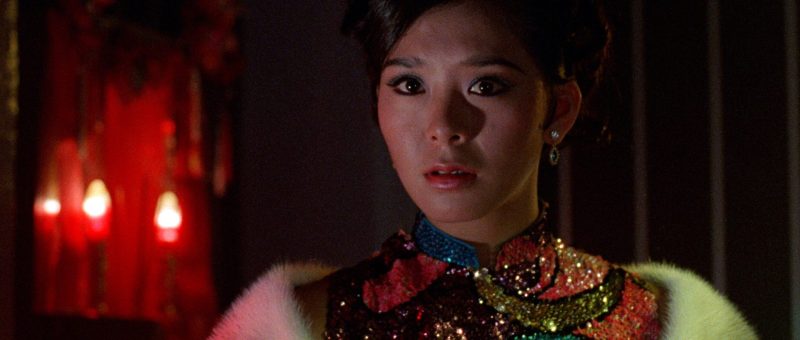
Indeed, Shui Mei’s life begins in an impoverished fishing village which is set a stir by the return of Monroe, a seemingly glamorous woman dressed in the latest fashions and handing out sticks of gum to the awestruck locals. Sex work is seen as a pathway out of poverty and towards the new modern society that Monroe represents. Having been raped by three local boys, it is also in a way Shui Mei’s means of rejecting her victimisation and asserting full ownership over her body even if, in other ways, she is exploited by brothel owner Miss Xiao, herself an exile who fled to Hong Kong from the formerly glamorous and sophisticated international centre that was Shanghai.

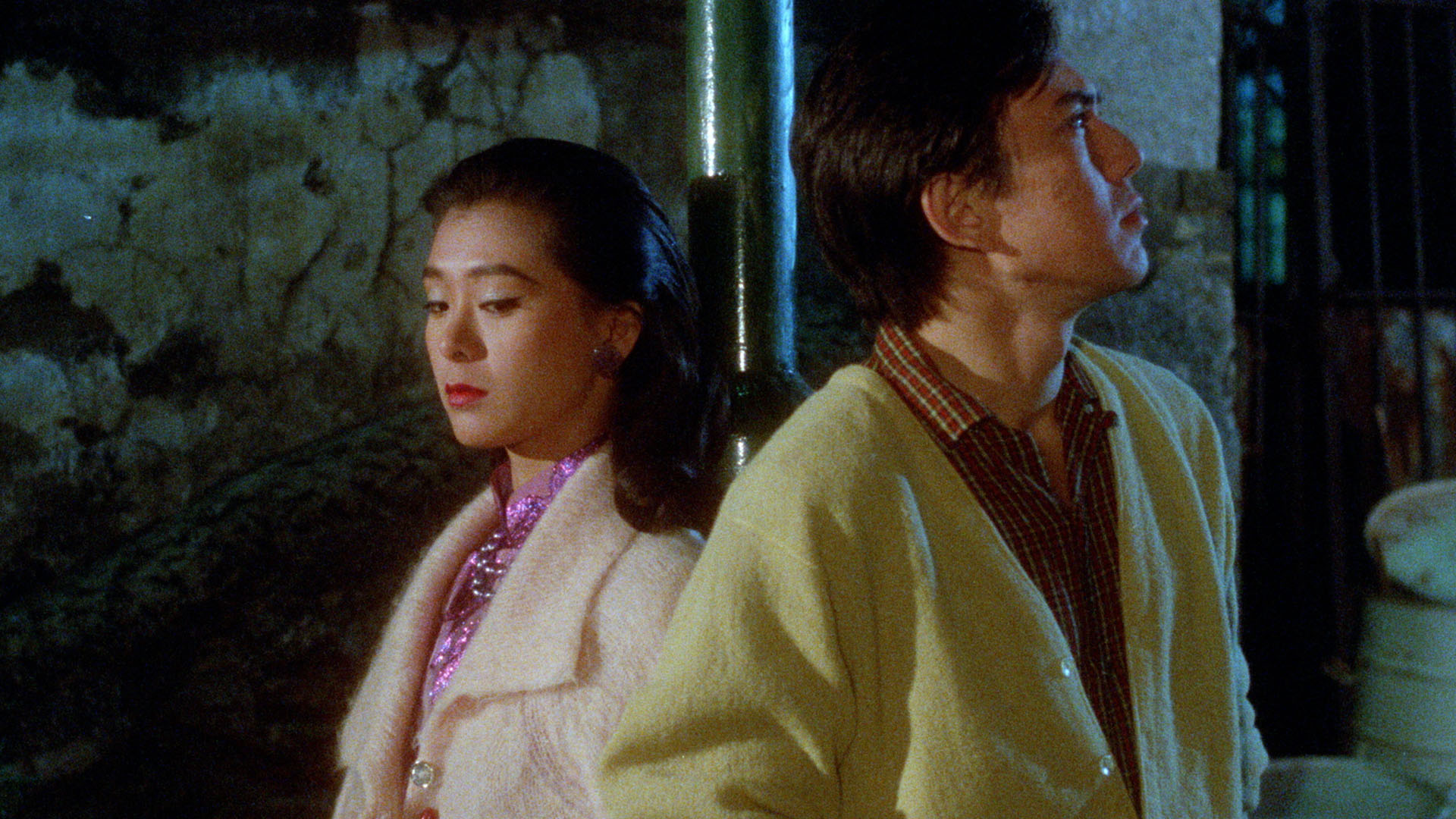
While working as a bar girl in Wan Chai, Shui Mei falls for Miss Xiao’s adopted son, Jimmy, on whom she has a quasi-incestuous fixation. Rather than casting an actor already under contract to Shaw Brothers, Chen cast a then unknown Anthony Wong, billed under the name Anthony Perry, through extensive auditions largely for the similarities he shared with the role. Like Jimmy, Wong was abandoned as a small child by his father, a British colonial official who already had a wife and children in the UK with whom he later emigrated to Australia. Jimmy’s idolisation of Hollywood icon James Dean and desperate search for his biological father, an American seaman, are symbolic of the search for cultural identity in a Hong Kong caught between a series of colonial influences while denied the kind of mastery over itself that Shui Mei eventually achieves.

Shui Mei’s relationship with Jimmy causes a rift with Miss Xiao that leads to her exile from Wan Chai, though Jimmy proves to be a faithless lover. After years of boasting of the revenge he’ll take for his mother’s suicide when he finds his father, Jimmy is seduced by promises of American wealth and comfort and accepts his invitation to return with him to the US, callously abandoning Shui Mei. Years later, when he returns with his two young sons, he has become in some ways very much Americanised. He complains that his first wife lacked a strong work ethic while having adopted an orientalist idea of the submissive hometown wife who will work hard in his business and raise his children. Though still resentful over her abandonment, Shui Mei harbours a lingering desire to rekindle the romance of her youth only to be cruelly disillusioned. Jimmy has forgotten her. He has not come back for Shui Mei, but is clearly in the market for a much younger woman, eventually marrying one of Shui Mei’s proteges at the bar she has opened in another part of the city after saving money made through temporarily working as a streetwalker.

This does, however, reinforce the idea that Shui Mei cannot rely on a man to save her but only on herself and female solidarity. When her new bar is targeted by triads, she enters a partnership with Sister Ying (Deanie Ip Tak-Han), the former wife of a gang boss who has pull in the underworld and a habit of chasing off gangsters with meat cleavers. Though the relationship is heavily implied as both a romantic and business partnership of equals, Shui Mei does not quite accept its validity due its same sex nature and wonders if she can really stay with Ying forever while tempted by the prospect of a more conventional, heterosexual union with Jimmy along with an easy life in America having run herself ragged creating a business empire and suffering the physical affects of a violent triad attack.

Though the end of her story may seem sad, Dick explains to his young delivery boy that Shui Mei refused to be beaten and got back up again each time she was knocked down, which perhaps provides a more positive prognosis in the shadow of the Handover. In one sense, she may have become a ghost of old Hong Kong as her silhouette now appears at Miss Xiao’s window, but may otherwise have avoided her fate. Despite their falling-out, an ageing Shui Mei returned to care for Miss Xiao who unlike her had been left behind by changing times, abandoned by all including her adopted son Jimmy who returns only after her death following many years of estrangement. Though Shui Mei may be consumed by an irresolvable nostalgia, like the nation itself she has progressed from her life in the impoverished fishing village to become an economic powerhouse while achieving total mastery over herself as an independent woman.


My Name Ain’t Suzie screened as part of Hong Kong Film Fest UK.

Trailer (English subtitles)
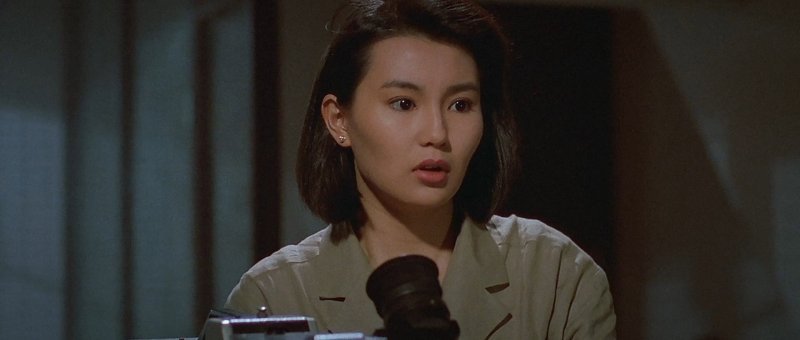
In Between Loves (求愛夜驚魂, Allan Fung Yi-Ching, 1989)

Zany rom-com meets serial killer thriller in Allan Fung Yi-Ching’s decidedly odd horror comedy, In Between Loves (求愛夜驚魂). Though the title may hint at romantic melodrama, the film is filled with unexpectedly edgy humour and references to the real life “Jars Killer” case that also inspired the film Dr. Lamb in which a taxi driver murdered several of his female passengers and kept their body parts in Tupperware boxes at his home where he lived with his apparently oblivious family members.

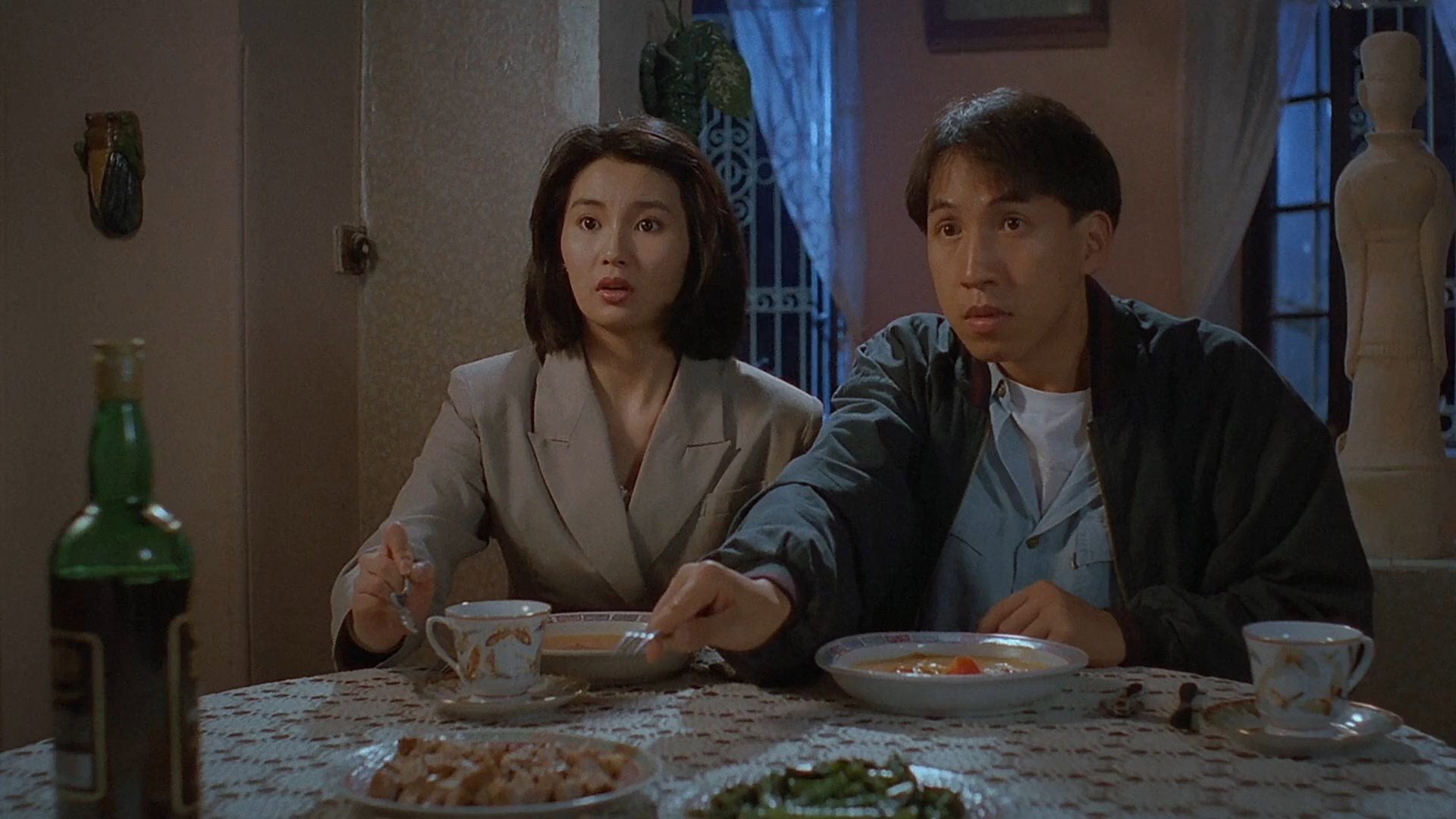
Lung (Alfred Cheung Kin-Ting) is the head of a small band of late night taxi drivers who entertain each other with various party tricks over the radio, Lung’s being the ability to tell Christmas cracker-style jokes. They seem to have a long-standing vendetta against another gang of taxi drivers who challenge them to drinking contests and other tests of strength. Lung, meanwhile, has a fixation with beautiful TV reporter Jenny (Maggie Cheung Man-yuk) who once said something nice to him getting out of his cab, and makes a point of watching the news whenever she’s on. His taxi driver friends mostly seem to support his crush and are keen to help him in his romantic quest which is why they all agree to pass on tips about newsworthy goings on that Lung can send to Jenny in the hope of making himself useful to her.

Jenny, meanwhile, is sort of grateful for the tips because she feels undervalued at the station where she works. She clearly wants to be a crusading reporter exposing things like political corruption and injustice, but as her boss tells her, the people of Hong Kong prefer soap operas to news and in any case, they don’t have the budget for serious investigative reporting. There is a mild criticism here of the mass media landscape which is increasingly compromised by its commercial concerns in world in which the line between factual reporting and entertainment is beginning to blur. The press are desperate for salacious content to keep viewers hooked, feeding on human misery and almost willing it into being.

Thus it’s not a stretch when it first appears that Lung has gone off the deep end after being insulted by Jenny’s terrible elitist boyfriend John (Lawrence Ng Kai-Wah) and actually become a serial killer just so that Jenny can have something exciting to report on followed by a scoop on his confession. It turns out that Lung is not the real killer and only wanted to give Jenny a real confession wrapped up in a false one, but this still bears out the depths of his problematic, one-sided romantic obsession with a public figure. In some ways, Lung is presented as an underdog whose pure-hearted love just hasn’t been properly noticed, yet. He picks up another man with flowers for Jenny who is more obviously deranged, but is irritated rather than noticing that he is really no different. He is also irritated to see John pick Jenny up, but, at the same time, perhaps thinks it’s fair enough if she has a boyfriend already.

The problem is that John might actually be the worst person in a film about a cannibalistic serial killer without needing to actually kill anyone. He is possessive of Jenny and has an unpleasant, elitist world view in which he is violent towards Lung and point-blank tells him that a lowly taxi driver who didn’t even finish high school has no business dating an educated, upper-middle-class woman like Jenny. Though this originally presented as an unpleasant point of view and a symbol of the kind of classist oppression faced by men like Lung, the film eventually embraces it with Lung coming to the conclusion that John is right, he’s not good enough for Jenny and ought to date someone from his own social class such as fellow taxi driver Ti (Sandra Ng Kwan-yue). As such, it adopts a rather conservative attitude that supports class divisions and negates the idea of social mobility in insisting that love across the class divide not only will not work but is in some way improper.

Lung may realise both that his infatuation is not “love” but “worship” and that his behaviour has been dangerously obsessive bordering on madness, but this is not the reason that he finally decides to give Jenny up so much as a sense of inferiority in returning to his own working-class world. Meanwhile, the film treats Ti as something of a joke, firstly mocking her for being a tomboyish woman in a man’s occupation, then half-hinting that she maybe transgender. Despite its offbeat humour, the film goes to a fairly grisly place in its final stretches, transitioning into slasher territory as Lung and Jenny are stalked by the real killer upset by Lung’s attempts to claim responsibility for their crimes. Order may have been restored, but this Hong Kong remains a fairly bleak place overshadowed by violence and anxiety in which romantic fantasy may be the only means of escape.


Trailer (no subtitles)

Dragon in Jail (獄中龍, Kent Cheng Jak-Si, 1990)

“For the poor life is a punishment” according to Henry (Andy Lau Tak-Wah), the embattled hero of Kent Cheng Jak-si’s Dragon in Jail (獄中龍), a subdued heroic bloodshed offshoot in which a poor boy and rich kid meet in juvie and become best friends for life even though fate seems to have very different paths in store for them. Less a critical expose of the cruelties of an increasingly stratified society than an ode to intense male friendship, Dragon in Jail puts its hero in a different kind of cell as he tries to escape the triad net but finds himself ensnared by past crime and present rage. 

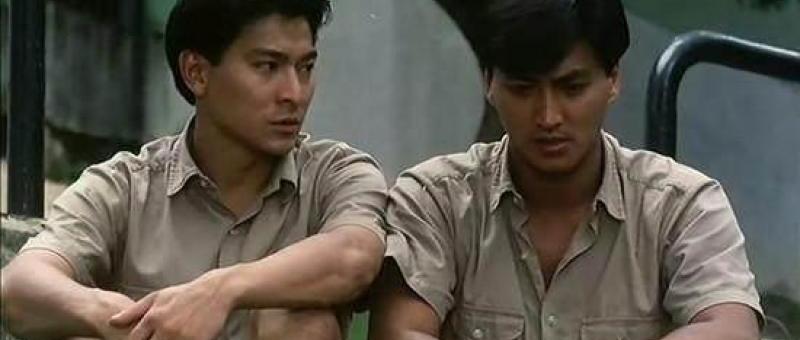
Rich kid Wayne (Kenny Ho Ka-King) ends up in a reformatory for pulling petty stunts supposedly because he doesn’t like it that his widowed mother has remarried. Different from the other boys, he’s immediately hazed and asked for his gang affiliation, only he doesn’t have one. Tough boy Henry stands up for him, roping in his other friend Skinny (John Ching Tung) to take on the cell’s Mr. Big after which the boys become firm friends as they study together to sit their A Levels while inside. Wayne wasn’t planning to take his exams as a way of getting back to his mother, but Henry convinces him that education is the one way to show the world who’s boss. The boys come top in their class, Wayne gets out and decides to go the UK to study law, while Henry serves out the remainder of his sentence in an adult prison, sentenced to four years for manslaughter after accidentally killing a triad member during a fight over protection money at his family’s kiosk. 

Despite the differences in the scope of their possibilities, Henry and Wayne remain good friends, but once Henry gets out of prison he’s nothing much to look forward to. His hopes of attending a university are dashed by his defeatist father who thinks education is pointless and blames him for the failure of their business, while he struggles to find steady employment as a man with a criminal record. Eventually he decides to work as a mechanic by day and a cram school teacher by night with the aim of saving enough to apply for uni at later date so he can marry his longstanding girlfriend, Winnie (Gigi Lai Chi). Skinny, meanwhile, gets out of jail and heads straight back to the triads, trying to convince Henry he should join too. Henry doesn’t want to, but faces constant harassment from Brother Charlie (William Ho Ka-Kui), the boss of the man he killed in the fight. When his little brother is badly burned in a triad attack, he decides his only option is to become one himself to earn the protection of Boss Sean (Leung Gam-San) who mediates an uneasy truce with the psychopathic Charlie. 

When Wayne returns from the UK after graduating law school, Henry is married and a father-to-be living in a swanky apartment having risen in the triad ranks, but he’s also a hotheaded opium addict still sparring with the very present Charlie. “I’m a bad egg! I deserve it!” Henry wails on being confronted by Wayne who points out that it was he who was always encouraging him to study so that no one would ever look down on him. Henry thinks he’s not good enough to be Wayne’s friend and fully expects to be abandoned, but after some strong words of defence from Winnie, Wayne comes around, resolving to help get his friend off the stuff. The problem is the sense of futility which has already set in. Henry has become what everyone expected him to be, a thuggish triad, because they convinced him he could become nothing else.

Winnie berates Henry for keeping his sorrows to himself, remaining sullen and resentful at his inability to escape the triad world for an honest life of safety with his new family, though he once told Wayne that he should “speak up if you feel unhappy”. Despite everything the intense friendship between the two men endures. Cheng adds to the faintly homoerotic tone by shooting his early prison scenes with a lingering romantic gaze, while Wayne seems to pine for his broody friend, affirming that “no matter what you are, you are my buddy”. A caged dragon, Henry’s vengeance is swift and brutal but he retains his nobility even in the depths of his despair, eventually taking refuge in an unconditional friendship which transcends the forces which imprison him.