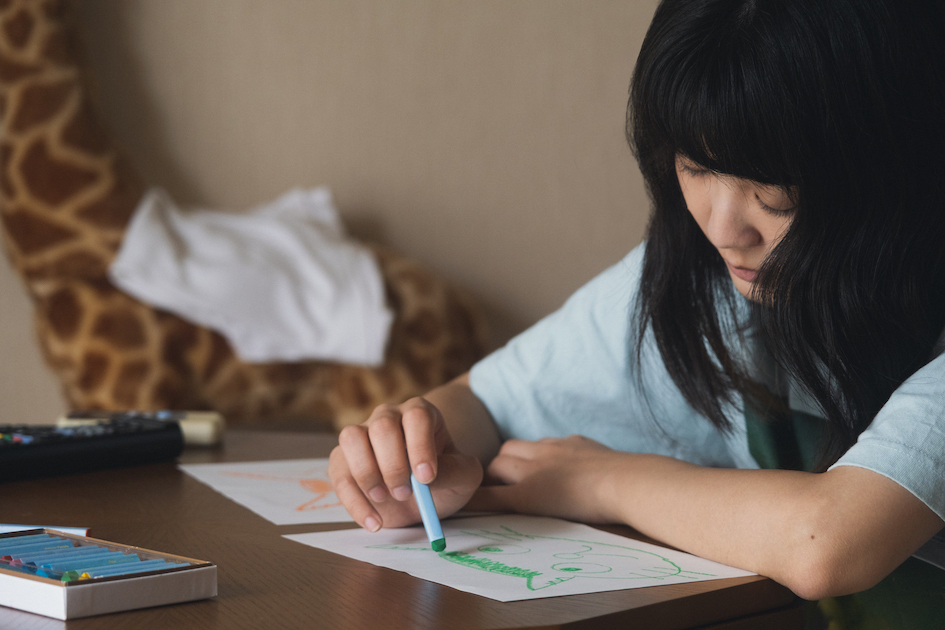
Door II: Tokyo Diary (Banmei Takahashi, 1991)

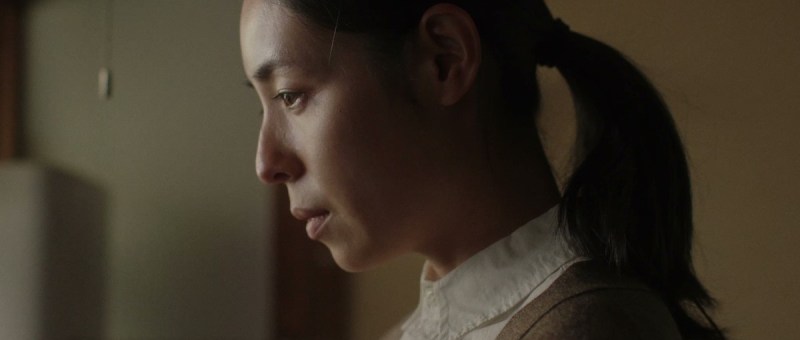
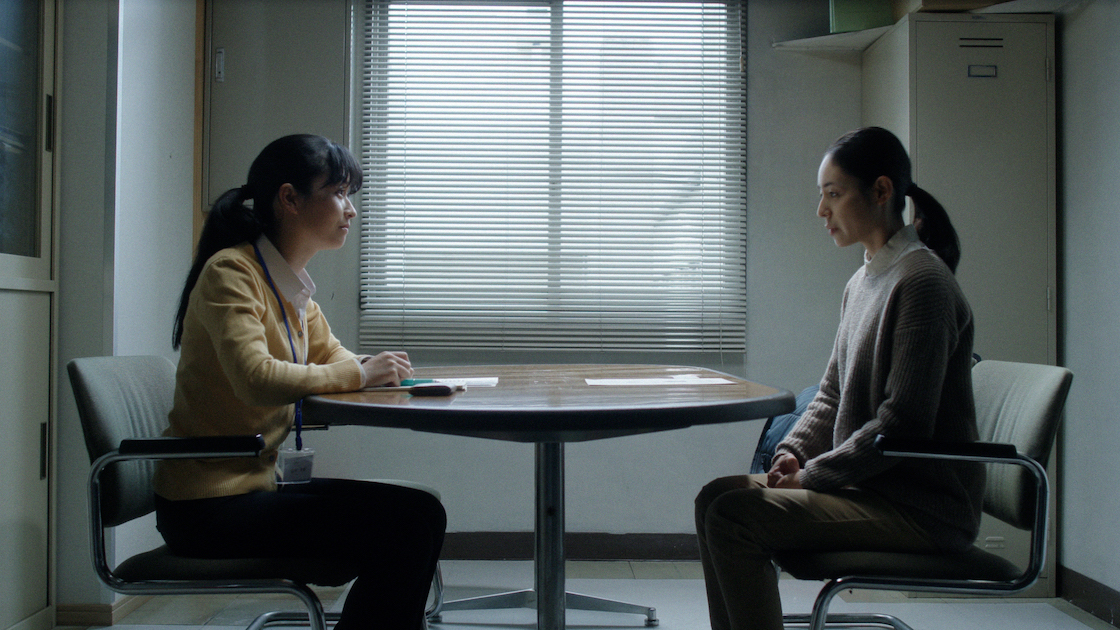
A sequel in name only, Banmei Takahashi’s Door II: Tokyo Diary has almost nothing to do with his previous film Door, the title was apparently tacked on at the behest of studio execs who noticed that it had sold well on home video. Nevertheless, the film has its own door motif as the aimless heroine searches for herself among the many available to her, temporarily trying on other personas while wilfully flirting with danger. 

A menacing voice message reminds Ai (Chikako Aoyama) that her work is dangerous, a woman telling her to back off but for unclear reasons either genuinely concerned for her safety or annoyed she’s infringing on her business. Ironically enough, Ai is a call girl who runs her own operation through the soon-to-be obsolete technology of a telephone answering service which unlike the phones in Door offer her a one way portal of communication that isolates her from her potential clients. She explains that she chooses the men for herself, watching idly having quadruple booked the same appointment until finally deciding which door to open though it seems unclear how far she is aware of her vulnerability given that working alone means there’s no one to call if something goes wrong as it eventually does. Even the first client we see her with changes the moment he steps over the threshold, becoming angry having realised that Ai doubled booked the appointment while playing rough with her and forcing her down onto the bed. 

Ai (whose name means love) seems to treat each of the doors as another world in which she must play her assigned role. As such, she submits herself to every degradation though it’s unclear if the act of submission is empowering or she is really just at the mercy of these wealthy mean who’ve paid to do what they like with her. Then again as Ai explains to sometime love interest Ichiro (Shingo Kazami), her real motive is sex and not money leading her to turn down an appointment with a sweet older gentleman who’s checking call girl experience off his bucket list but does not actually want to sleep with her only go on a date. Meanwhile, she finds herself bound and blindfolded while a man in heavy makeup and a nazi uniform dribbles wine down her face as part of a urination role-play. She later plays the piano for him while he curls up in a little ball at her side. 

Becoming involved with a mysteriously wealthy art dealer (Joe Yamanaka) who treats her with unusual tenderness seems to shift Ai’s world view, but equally does an incredibly dark encounter with a dangerous man who attacks Ai and her friend Tomoyo (Yukino Tobita) with a pair of scissors until Tomoyo bites one of his toes off so they can escape. This is the danger the middle-aged madam (Keiko Takahashi) tried to warn her about and causes her to reconsider her life as a call girl until she finally decides to try the same door again and bursts the fantasy bubble by telling the art dealer she loves him. 

A climatic and hugely inappropriate speech at a wedding which nevertheless earns the appreciation of the bride, allows Ai to begin to rediscover herself realising that it was the sense of anticipation that she craved not knowing what she’d discover beyond each and every door. She decides she’d like to swim in the great ocean of infinite possibility once again, ready to open more doors to find out what lies beyond possibly reassured by the art dealer’s assertion that though most of his paintings are fakes he’s discovered a handful of “originals” too restoring Ai’s sense of self as an individual rather than an anonymous call girl who comes when called and has no direction of her own. A melancholy tale of youthful anxiety in the fracturing economy of the Bubble on the eve of its implosion the film trades on Takahashi’s experience in pink film in its at times perverse eroticism but ultimately presents a tale of a young woman regaining control over her self and her life, willing to embrace new possibilities and their concurrent dangers so long as she chooses them for herself. 


Door II: Tokyo Diary is released in the UK on blu-ray 30th October courtesy of Third Window Films.

Restoration trailer (English subtitles)

Door (Banmei Takahashi, 1988)

You like to think you’re safe behind closed doors, that nothing that happens behind them is anybody’s business and you’re free to be yourself. But a door is as much about keeping things in as it is about keeping them out and perhaps you’re not as in control of it as you thought. Arriving at the tail end of the Bubble era, Banmei Takahashi’s giallo-esque home invasion thriller is at heart about insecurity, a feeling of anxiety and ever impending doom under the watchful eyes of a judgemental society. 

At least, Yasuko (Keiko Takahashi) feels the eyes of her neighbours keenly on her, nervously attempting to live up to the role that’s been assigned to her as a moderately affluent housewife in a nice middle-class area that is nevertheless full of hazards even if many of them are social and psychological rather than directly physical. We can feel her discomfort when an anonymous neighbour passive aggressively returns her rubbish to her front door when she attempts to throw it out on the incorrect day, her husband’s (Shiro Shimomoto) advice simply to make sure she follows the bin day timetable correctly in the future. Another neighbour whose face is also not seen later stares at her when she drops a tissue that has been placed in her letterbox by a salesman (Daijiro Tsutsumi) who is harassing her, forcing Yasuko to pick it back up and take to her own apartment to dispose of lest she be judged for failing to obey this simple rule of urban living despite realising that the tissue likely contains unpleasant bodily fluids. 

The great mystery is why Yasuko, who clearly finds the salesman’s attentions threatening, does not immediately hang up when he calls her but continues to listen to his ominous conversation which heavily implies he is close by and watching her. Previously he’d daubed an obscene message on her front door branding her as “sexually frustrated” which as it turns out may not be far off the mark. Her husband is largely absent and often works away. When he returns she tries to wake him up after putting their son to bed, but he’s dead to the world and leaves the next morning having explained that he’ll be away the next three nights due to a colleague falling ill. Among the junk mail delivered to their flat were a series of business cards for cabaret bars that he jokingly suggested keeping, though as it turns out he really is at work and not spinning a yarn for a three-day jaunt with a mistress even if you could make a case that he’s in an extra-marital affair with his career. Yasuko almost says as much when she calls and tells him she’s scared but he refuses to come home, crying out that he obviously has no regard for his wife and child. 

It’s clear that the economic demands of the late Bubble era have endangered the traditional family even as they’ve provided a level of financial comfort that enables Yasuko to live in this “nice” apartment even if it’s perhaps only ordinarily nice for a middling middle-class couple living a stereotypically middle-class suburban life. Yasuko’s sense of anxiety partly stems from being constantly observed by those around her in an alienating urban environment but also suggests an insecurity in her social status which is after all dependent on a financial security which may be about to disappear as the Bubble bursts. The home is also a burden, and the space behind the door one of isolation rather than safety that leaves her feeling vulnerable and alone in the continual absence of her husband. 

Tellingly all of the voices she hears other than his (and their son’s) are filtered as if they were speaking to her via telephone. She has two handsets in her home, one belonging to the phone itself, black with an answering machine, and the other to the intercom, white and wall-mounted, which is intended to give her control over her door but which in the end offers little comfort just like the near pointless chain-lock intended to keep strangers at arm’s length but in reality easily breakable. In this society of ultra-politeness simply not answering an urgent knocking may not be an option, but behind the door Yasuko is also lonely so perhaps those nuisance cold calls telling her she’s won a cruise, encouraging her to take up English conversation classes, or maybe join a cult, are not really so much of a nuisance at all simultaneously interrupting her loneliness while also penetrating the protective sanctuary of the private space of the home much as the salesman will eventually do in physically breaking a protective barrier. 

When Yasuko fights back, she does so with a housewife’s weapons such as carving forks and chopping boards even picking up her son’s rollerblades to enlist him in the resistance. Takahashi films the final confrontation from above in a complex aerial shot that suggests a literal cat and mouse game as if Yasuko were intent on ejecting a stubborn rodent from her home, the rounded, doorless entranceways between rooms almost like oversized mouse holes in a scene from a cartoon. The question is whether Yasuko can in fact protect this space, a space which represents her family, in overcoming her own anxieties and the latent dark desire which draws her towards her stalker in her loneliness and lack of fulfilment. Yet the answer doesn’t quite lie in perfecting the persona of the perfect housewife even if it could on one level be argued that she’s saved by another kind of male protector but in taking care of business and reasserting her control over the space by means of resetting its boundaries very much on her own terms.


Door is released in the UK on blu-ray 30th October courtesy of Third Window Films.

Restoration trailer (English subtitles)

Perfect Days (Wim Wenders, 2023)

A man in late middle-aged quite obviously living in the past begins to wake up to the possibilities of change in Wim Wenders’ Tokyo-set drama, Perfect Days. Even so, Hirayama’s (Koji Yakusho) days may be pretty much the same but that doesn’t necessarily mean that his life is dull or even predictable while it’s clear that he manages to find joy in small moments of serenity even if he may also seem to be harbouring a great sadness. 

The irony is that Hirayama lives in a rundown postwar tenement that happens to be almost directly under the Tokyo Skytree which Wenders often cuts back to as if to signal the disparity between the rich and glitzy skyline of the contemporary city and the lives of those on its margins. Hirayama’s home has an almost eerie quality owing to the glowing purple light shining out of the window of his spare room where he nurtures tiny saplings back to health. The traditional-style two-floor flat has two tatami-mat rooms on the upper level, the other filled with books and cassette tapes amid an otherwise spartan interior. Before leaving for work each morning he brushes his teeth over the kitchen sink, the place has no bathroom, and meticulously takes up his belongings neatly placed in order on a shelf by the front door. 

Perhaps it’s this kind of order that Hirayama craves, clinging to the security of the usual and dedicating himself to his work with unusual rigour. A municipal toilet cleaner, he painstakingly scrubs each and every bowl and urinal, checking the nozzles on the bidet function and shining a mirror underneath to make sure everything is as clean and tidy as it could possibly be only for drunken salarymen to push past him and quite literally piss all over his hard work. Like many such workers, he attains a kind of invisibility and should anyone need to use the facilities while he’s cleaning them he’s obliged to step outside and wait before starting all over again. When he finds a little boy crying alone in a park toilet he takes him by the hand and tries to help him find his mum, only when he finds her she completely ignores Hirayama and even goes so far as to wipe the boy’s hand with a wet wipe. The boy’s little wave of thank you as they leave is the only ray of comfort and recognition. 

Yet for all that, it’s as if this the life Hirayama has chosen. He barely interacts with his chatty colleague Takashi (Tokio Emoto) who has a habit of rating everything out of ten and sees no value in his work, hardly bothering to do much cleaning at all while complaining that he has no money to romance the bar hostess he’s hoping to make his girlfriend. Takashi and Aya are fascinated by Hirayama’s collection of cassette tapes which he plays in his van, though Takashi more so for the commercial value that may be attached to them in a world in which everything old is new again and specialised stores in the trendy neighbourhood of Shimokitazawa trade exclusively in secondhand LPs and Sony Walkmans. Even so, Aya too appears to have her private sadnesses drawn to the voice of Patty Smith but pressing stop when the tape mentions suicide. The melancholy office lady in the park and an elderly homeless man who lives there too must have their own stories as unknown to Hirayama as his is to them. 

A surprise visit from a teenage niece suggests that he may have come from a relatively wealthy family with a tyrannical patriarch and that this ascetic life of his is a kind of rebellion or else or a refuge, but there’s a look of pain on his face when the landlady at his favourite bar (played by enka legend Sayuri Ishikawa) laments that she wishes everything could stay the same. Perhaps he’s tired of this very analogue life and its otherwise pleasant monotony as he further confirms for himself realising that it’s not right for things not to change as he engages in a game of shadow tag with another middle-aged man who’s evaluating his life after a terminal cancer diagnosis. In truth, the film risks straying into orientalism in its advocation of Japanese serenity in simplicity (something not helped by the final title card explaining the term komorebi) while the musical choices appear a little on the nose and the celebration of mundanity in Hirayama’s labour might otherwise seem flippant. Even so, Yakusho’s typically astute performance keeps the film on an even keel as Hirayama finds himself on a turbulent journey towards a “new world” of fulfilment and possibility. 


Perfect Days screened as part of this year’s BFI London Film Festival.

Original trailer (English subtitles)

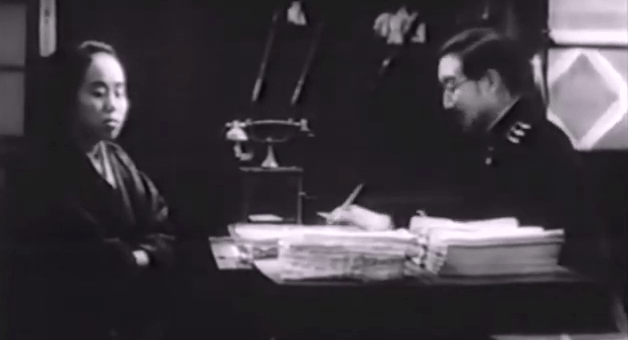
The Angry Street (怒りの街, Mikio Naruse, 1950)

As its opening text explains, Mikio Naruse’s The Angry Street (怒りの街, Ikari no Machi) takes place in a world in which a love of justice and faith in others has been crushed under foot. That might equally apply to any other of Naruse’s films and well enough reflects his generalised philosophy that the world in which we live betrays us, but in this case it’s more than usually true as he adopts the trappings of film noir to consider the series of reversals that have taken place amid post-war chaos chief among them class and gender. 

Sociopathic student Shigetaka’s (Yasumi Hara) primary motivation is to earn money for his family, once upper middle-class but now fallen on hard times, but he’s also engaged in an act of class warfare taking revenge on the “nouveau riche” who he feels have usurped his class privilege. His chief weapon is his good looks along with his seductive charm which he puts to full use on the dance floor flirting with naive young women to whom he sells sob stories of his poverty to extort money out of them. He and his friend Mori (Jukichi Uno) have an “agreement” that what they’re doing’s alright as long as they only take advantage of the women financially rather than sexually though at this point Shigetaka seems to have little interest in that anyway insisting that women are just business to him so he little cares for their feelings. 

Their sense of class resentment is rammed home by their mocking of their classmates who have to do “humiliating” jobs to support themselves such as selling lottery tickets in the streets. Trying to get them to attend a meeting about student employment, their classmates describe them as “privileged” suggesting they may feel it’s not their problem because they don’t need to work little knowing that each of them is impoverished and dependent on exploiting women for their income.

There is however also a gender reversal in play as Shigetaka misogynistically takes on a feminised role, playing the gold digger in attempting to manipulate women, who are now in a position of power, into supporting him financially. He even tells some of them that he’s being forced into a financial marriage by his “old-fashioned” family, playing the damsel in distress and hoping that his target will swoop in to rescue him. When one of the women writes to his home after he abandons her, his grandmother is scandalised by the idea that he might have formed an attachment to a woman to whom he had not been formally introduced but equally that he might have been frequenting “effeminate” places such as dance halls. Unmanliness is something he’s accused of several times but also the tool which he uses to seduce women who are taken in by his feminine features and graceful dancing. Closely echoing Alfred Hitchcock’s Rope, it’s near impossible not to read both Shigetaka and Mori as queer coded and the relationship between them filled with homoerotic tension as Mori looks on in jealously while Shigetaka goes about his business seducing naive young women they’ll swindle together. 

A point of crisis arrives when the pair bite off more than they can chew in getting involved with a woman who is slightly older and sophisticated in her dealings with men. An independent woman, Tagami (Yuriko Hamada) claims to be a dentist but actually makes her money through smuggling and the black market if drawing her line at drugs. Shigetaka thinks he’s using her, but Mori warns him she’s really the one in charge and playing him at his own game planning to drop him once she’s got what she wanted which in this case is his youthful flesh (realistically the only thing he could possibly offer her). Tagami draws him into a wider and more dangerous world of crime than he’s equipped to deal with just as Mori receives twin blows that break the spell and encourage him to want out of Shigetaka’s schemes firstly in discovering that one of their targets, Kimiko (Mayuri Mokusho), is the sweetheart of an old war buddy, and then into running into Shigetaka’s earnest sister Masako (Setsuko Wakayama) who is the film’s de facto moral authority pulling him away from Shigetaka’s dark machinations back towards a more conventional morality. 

In a series of flashbacks, he remembers more innocent times before the war when he too sold tickets on the street and worked in a shop washing windows while going on innocent dates with Masako. The implication is that it’s his wartime service along with the world he came back to that have filled him with nihilistic cynicism while he later says that he indulges in Shigetaka’s schemes as a means of staying close to him and earning his favour. But Shigetaka is already far too corrupt, filled with class resentment over his lost privilege along with a deep-seated misogyny as a reflection of his sense of emasculation in this new world in which young women wield significant economic power. Kimiko in particular is brash and insensitive even aside from her naivety remarking on the piles of money that turn up at her home every day before virtually throwing cash at Shigetaka with seemingly no thought as to how that might make him feel even if he weren’t conning her in offending his pride and masculinity. 

Mori wonders how he can save himself if Shigetaka remains so irredeemable and is instructed by Masako that they must work together and live honestly though even she hangs on to her ideas of social class scandalised by the revelation that her mother too has begun selling things in the street, in her case knitted socks which is a fairly labour intensive activity for an incredibly small profit margin. Echoing film noir, Naruse opens and closes with scenes of the present day city teeming with life yet in a way that seems more ominous than exuberant even in the myriad dance halls where youngsters come to look for love but soon find themselves lost amid the contradictions and confusions of a rapidly changing city.


Polan (ポラン, Kota Nakamura, 2022)

The closure of a second-hand bookshop leaves a gaping hole at the centre of a community in Kota Nakamura’s warmhearted documentary, Polan (ポラン). Driven to close their physical shop because of the ongoing economic effects of the pandemic, an elderly couple contemplate changing times but still hope to save something of paper culture and the organic pleasures of offline browsing from unexpected discoveries to serendipitous friendship and the comfort to be found in having a familiar place you can be certain of returning to. 

As he explains, Kyosuke Ishida found himself disillusioned when most of his fellow student protestors ended up getting regular salaryman jobs. He wanted to prove he was different, so he dropped out and started working as a tutor at cram schools before eventually deciding to open a small second-hand bookshop. The shop was so successful that they later moved to larger premises, but footfall began to fall during the pandemic while online sales remained constant. With his wife Chiseko who runs the bookshop with him already feeling the physical strain of their work and the landlord upping the cost of their lease, the pair eventually decide to close up though Kyosuke has mixed feelings and would have liked to continue a little longer. 

More than the books, what the shop offers is a sense of community. Some customers tearfully remark that they’ve grown up with the store and feel themselves bereft while others share happy memories of browsing the shelves. The store itself is like a place out of time, decorated in a whimsical, antique style from the fretted front window to the antique clock on the wall and old-fashioned dolls sitting on the cases. As they’re fond of pointing out, everyone is welcome at the store and they pride themselves on providing a diverse selection of books rather than just the things they particularly like or know will sell well. Kyosuke devotes whole shelves to each genre and keeps them all well stocked rather than prioritise sure sellers ensuring that rare books are always available. 

As he says, part of what he’s trying to save is paper culture. If you know what you’re looking for, then of course you can find it online right away and have it delivered quickly and cheaply. But perhaps something’s been lost in the drive towards convenience. Kyosuke remembers taking a lengthy train journey as a child during which they had to temporarily disembark in an unfamiliar place but that doesn’t happen with the Shinkansen where you can’t even open a widow or see much of the world around you as you rocket through it. As he sees it, you might have a happier life taking a more difficult path, much as he has opening a bookshop, discovering small things along the way rather than opting for easy convenience. He wants people to experience the thrill of the inconvenience of turning a page, along with “the joy of searching and pleasure of encountering” that can only be found with a physical experience in a real world bookshop. 

Nevertheless as he admits times have changed and we’re entering a new and unknown post-pandemic world. He regrets that the bookshop can’t go too but consoles himself with the knowledge it’ll exist online. There is however continuity as their employee, Minami, decides to open a bookshop of her own taking some of the same sentiments with her in providing another community hub open to a diverse collection of book lovers in pleasant surroundings. Revisiting the location a year later, Nakamura discovers the shop space still vacant. Its bare industrial walls are somehow devoid of life. It’s difficult to believe the bookshop with its whimsical old world charm once existed there. It takes just 20 days to demolish it with the shelving and other furnishings taken by other store owners such as Minami and a distant relative in another town suggesting that the shop itself lives on, moving in a cycle much the books though some of those are unfortunately pulped as last resort. A gentle tribute to a disappeared local institution, the film ponders on what we’re losing in the post-pandemic world along with what our love of convenience may be costing us in a warmth and sensation otherwise unavailable in our rapidly digitising world.


Polan screened as part of this year’s Camera Japan.

Original trailer (no subtitles)
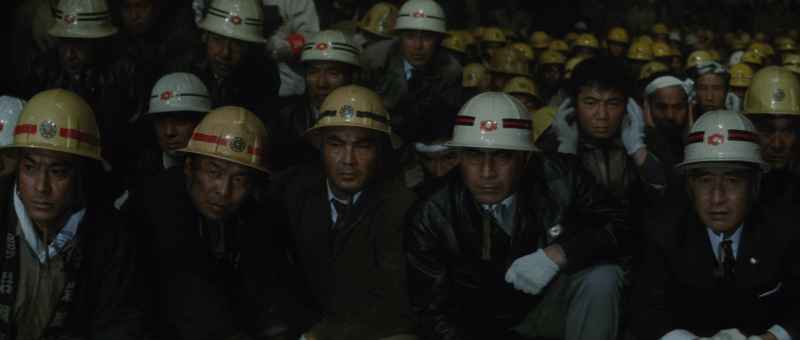
Baian the Assassin, M.D. (Part 1) (仕掛人・藤枝梅安, Shunsaku Kawake, 2023)

A traumatised assassin takes it upon himself to get rid of a few villains on realising there’s something not quite right with his latest contract in Shunsaku Kawake’s classic jidaigeki homage, Baian the Assassin, MD: (Part 1) (仕掛人・藤枝梅安, Shikakenin Fujieda Baian). The titular hero is the protagonist of a series of novels by Shotaro Ikenami which have spawned several previous adaptations on the big and small screens. Produced in celebration of Ikenami’s centenary the film, one of two, harks back to the golden age of period drama if with a more contemporary sensibility. 

Baian (Etsushi Toyokawa) is ostensibly an acupuncturist though by night he uses his needles to kill rather than to heal. Hired to take out the second wife an inn owner, Omino (Yuki Amami), his suspicions are raised on realising that he had also been the assassin who killed the man’s first wife two years earlier. He blames himself in part for having agreed to assassinate a woman in the first place, and remains conflicted even after accepting the job wondering if Omino is next in the firing line or if she was actually the one who had the other woman killed in order to usurp her place. 

The film makes clear from the outset what a difficult place Edo could be for a woman as Baian carries out an assassination on a boatman who had raped a samurai’s wife and then blackmailed her into further sexual favours only for her to hire an assassin and then kill herself confessing all. Omino had apparently been the stepdaughter of a gang leader who sexually abused her and then died leaving her with no support and nowhere to turn except to sex work. Maybe no one could blame her for taking advantage of a besotted client to escape her terrible circumstances though getting rid of his wife would obviously be a different matter. Omon (Miho Kanno), a maid Baian takes a liking to while investigating, admits something similar that as a widow with a young son realistically speaking there is nowhere else that could she work to support him except on the fringes of the sex trade. Then again, as she says the previous mistress was strict but it was because she cared, whereas Omino is just mean and self-interested. She’s fired all the old staff and brought in pretty young women who are quite obviously being expected to entertain their male customers in more direct ways. 

In any case, Baian soon finds himself drawn into a wider series of plots when his friend Hiko (Ainosuke Kataoka), a skewer maker who assassinates people with poison darts, is tasked with taking out first a lascivious carpenter and then a rogue samurai who has supposedly raped and kidnapped the daughter of his lord which obviously turns out not quite to be the case. Rape and kidnap are depressingly common in Edo-era society where it is largely women who suffer under a patriarchal society with intensely oppressive social codes that demand female purity. In a post-credits sequence, we come to understand that Hiko too is seeking vengeance for the death of a woman who killed herself and her child after being raped by bandits. Meanwhile, Baian reveals that he had a mild hatred of women himself born of pain in having been abandoned by his mother who left with another man and took only his sister with her after his father’s death. He had to overcome that resentment in order to fulfil himself as a doctor treating women’s bodies but struggles when he realises that someone involved in the case is closely linked with his own traumatic past and death may be the only way to save them. 

Both he and Hiko end up breaking the assassin’s code but only in defence of justice, which might sound odd considering the nature of their work. Nevertheless, they each have their scruples and don’t like to think of themselves as having been used or inadvertently killed someone who didn’t really deserve it. As Baian puts it, the greatest villains may really be “well-meaning weak cowards” though perhaps corrupt lords can’t really complain about falling victim to their own tactics. With noticeably polished production values and atmospheric cinematography, Kawake pays tribute to classic jidaigeki and eventually sets his heroes back on the road awaiting the next battle for justice in the distinctly unjust feudal era. 


Baian the Assassin, M.D. (Part 1) screened as part of this year’s Camera Japan.

Original trailer (English subtitles)

All Under the Moon (月はどっちに出ている, Yoichi Sai, 1993)

Throughout Yoichi Sai’s All Under the Moon (月はどっちに出ている, Tsuki wa Dotchi ni Dete iru), an earnest taxi driver, Anbo (Akio Kaneda), repeatedly calls in to despatch to inform them that he’s become lost and has no idea where he is despite rocking up next to such prominent landmarks as Tokyo Tower and Mount Fuji. His confusion reflects that of the changing post-Bubble society in which those like him struggle to reorient themselves and find new direction just as the nation appears slow to recognise itself and adjust to a new reality. 

It does seem that many of the drivers at Kaneda Taxi have themselves lost direction in their lives and are living very much on their margins while their rather deluded boss Sell is behaving like it’s still the Bubble dreaming of building a golf course and then a hotel to accommodate 2000 people. The Korean loan shark working with him alternately tells fellow Zainichi taxi driver Chun (Goro Kishitani) that he’s acquiring wealth to use for the reunification of Korea, and Sell that they are all children of capitalism, “Damn Reunification!”. At the wedding Chun attends, the guests take phone calls to deal with business and each remark on the precarious economic situation while one suggests that the North Korean association he represents is probably on the brink of failure joking that he fears they may sell their school and pocket the money. 

Yet despite the economic turbulence, the country has been slow to accept the presence of workers from outside Japan and many, including those at the taxi firm, still face discrimination as does Chun himself by virtue of his Korean heritage. One Japanese employee also seems to face a good deal of stigmatisation simply because he has a speech impediment, while an older mechanic with a limp insists on calling an Iranian colleague by a similar sounding Japanese name while baselessly accusing him of theft. Hoso (Yoshiki Arizono), a man with mental health issues provoked by his previous career as a professional boxer in which he accidentally killed an opponent during a bout, is fond of saying “I hate Koreans, but I like you” while otherwise fixating on Chun as a dependable big brother figure and resentful enough when he starts dating a Filipina hostess, Connie (Ruby Moreno), who works at his mother’s bar to pound down the door of her flat and demand to be let in. 

Chun himself is at least problematic and especially by the standards of today as he tries a series of crass pickup lines on Korean women at the wedding and then eventually forces a kiss on Connie not to mention physically striking her during a heated argument. He also insensitively tells her about his family’s tragic history in the war emphasising that citizens of Korea were abused for slave labour while seemingly unaware of the history of the Japanese occupation of the Philippines. Meanwhile, he also lies that his father was killed by the Japanese and that all his brothers died of malnutrition whereas they are (presumably) alive if possibly not so well in North Korea. His hard as nails mother (Moeko Ezawa) points out that she came to Japan at 10, while Connie counters that she came at 15, though their experiences have perhaps been very different leaving them somewhat at odds rather than sharing a kind of solidarity as otherwise echoed in the marginal status of each of the migrants who are similarly othered as merely not Japanese yet largely left to fend for themselves while facing possible exploitation and deportation. 

Divisions exist even within the Korean population with guests at the wedding complaining that there have been too many long and boring speeches along with North Korean propaganda songs, claiming that it is discriminatory against South Koreans and finally being allowed to sing a South Korean folksong instead which is at least a good deal more lively. The gangsters leverage the idea of reuinifaction to carry out their scams while later claiming that they have been scammed by their Japanese backer who turned out to be more racist than they had first assumed. Yet as Chun says during one of his cheesy pickup attempts, what really has reunification got to do with them, the younger post-war generation who know no other homeland than Japan? He too flounders, caught between a series of names from “Tadao Kanda” to “Chun”, to the name which appears on his taxi license “Kang” the Korean pronunciation of character read “ga” Japanese which is only otherwise used in the word for ginger as pointed out by a slightly racist fare who goes on to remark that he doesn’t see the point of the “comfort women issue”. Chun has to grin and bear it while technically powerless despite being in the driver’s seat. Predictably, the prejudiced passenger also attempted to make a run for it rather than actually pay Chun his money. “I was born after the war too” Chun reminds him, “but we say after the liberation.”

Sai introduces us to the world of Kanda Taxis through a roving long shot around the carpark travelling from one employee to another before drifting up to management on the second floor. He returns to a similar scene near the film’s conclusion as the remaining workers playfully hose each other with water while literally watching their world burn. Yet for some at least it may be liberating experience, Chun finally gaining the courage to choose his own destination and go after something that he wants, even if it he does it in a characteristically problematic way, seemingly no longer worrying about where it might be taking him but content to simply drive in the direction of the moon. 


Original trailer (no subtitles)

Love Will Tear Us Apart (ラヴ・ウィル・テア・アス・アパート, Kenichi Ugana, 2023)

“This film depicts a pure and genuine love between an awkward boy and a girl with a pure heart,” according to a pop idol starring in a film called “garbage love”, but it’s a true enough description of Kenichi Ugana’s genre-crossing slasher romance, Love Will Tear Us Apart (ラヴ・ウィル・テア・アス・アパート). Co-scripted by Hirobumi Watanabe, the film has a deadpan, surreal sensibility but has a lot to say about entrenched patriarchy and a bullying culture. 

As the film begins, Wakaba is a cheerful little girl who has an all encompassing obsession with a handsome pop idol, but is secretly enduring an oppressive atmosphere of domestic violence in her family home at the hands of her cruel and violent father. In this she might have found a kindred spirit in classmate Koki who is enduring physical abuse at the hands of his mother who openly tells him how much happier she’d be if only he’d never been born. Koki is also being bullied by a pair of mean kids at school and meekly takes it, unable to stand up for himself. When Wakaba steps up and tries to help him, the bullies turn on her too and their teacher (Atsuko Maeda) seemingly does nothing. After the pair bond through a screaming session at a local river, the bullies mysteriously fall out of a window which Koki is then seen ominously staring out of. 

The film jumps on seven years to a teenage Wakaba (Sayu Kubota) who discovers the world is not a safe place for women, repeatedly encountering a series of skeevy guys beginning with her favourite pop band who lure her to a cabin in the woods where they openly talk about getting her drunk to take advantage of her or spiking her drinks. One of the chief victimisers is another woman, Moeka, whose apparent “job” it is to recruit girls for the guys to have fun with. Wakaba’s friend Kanna (Riko) wants to leave, sensing that there’s something not quite right but Wakaba is naive and unable to see the danger. A similar thing happens when she visits Tokyo alone and has a meet cute with a guy who spills coffee on her shirt and offers to buy her a new one, then to show her around, takes her for sushi, declares his love and makes a proposal of marriage. 

As might be expected, many of these men end up dead at the hands of a vicious, chainsaw-wielding serial killer in a white hazmat suit, gas mask, and goggles. You can’t quite blame him for his crimes because everyone he kills is so irrediambly awful while it really does seem that he might be trying to protect Wakaba in some way from the hidden dangers she remains unable to see because of her pure heartedness. While her own father had been cruel and violent, she discovers that Moeka’s, police detective Kamiyama (Mitsuru Fukikoshi), is the opposite but worse in his unsettling obsession with his daughter, whom he believed to “pure and earnest” little knowing that she had been procuring young girls to serve up to the sleazy band members.

In a strange way, the serial killer turns out to be Wakaba’s healthiest relationship even if he’s basically stalking her not to mention murdering people with chainsaws because they threatened her happiness. The film runs through a series of genres from the cute childhood romance that soon turns ominous and the cabin in the woods slasher movie complete with creepy monkey and trainset, to martial arts epic as Wakaba abandons her life to train with a YouTube serial killer catching guru in a tropical resort town but retains its sense of anarchic innocence and internal integrity. As the pop star had implied, it really is a tale of genuine love between an awkward boy and a pure hearted girl in which they gradually realise that they each have a right to be happy and can be so together despite all violence and mayhem around them which includes killing a guy by shoving a grapefruit blender on his head. Strange and absurd the film nevertheless has a heartwarming romantic sensibility along with a desire for a less destructive world defined more by kindness and compassion than bullying and violence. 


Love Will Tear Us Apart screened as part of this year’s Camera Japan.

International trailer (English subtitles)

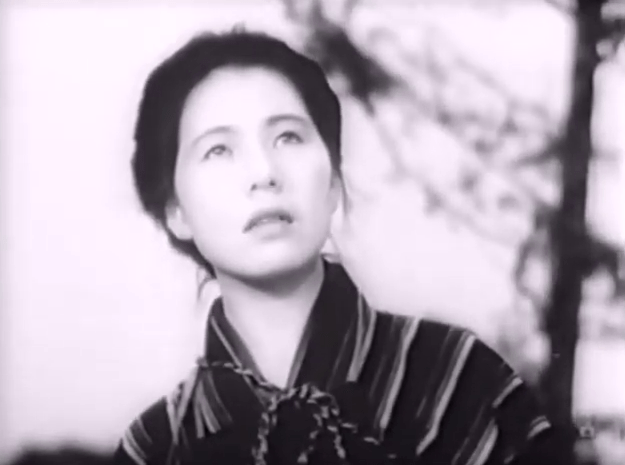
The Green Music Box (緑はるかに, Umetsugu Inoue, 1955)

An incredibly surreal musical kids adventure, The Green Music Box (緑はるかに, Midori Haruka ni) saw the film debut of future Nikkatsu star Ruriko Asaoka who in fact took her stage name from the character she plays in the movie. She was born in Manchuria in 1940 as Nobuko Asai (she retains the first character of her surname but the second “oka” or “hill” is also inspired by the “faraway” in the Japanese title). Her father was a political secretary but the family was extremely poor and her entry into the film world came about through an open audition for the role of Ruriko in the film adaptation of a serialised novel for children by Makoto Hojo which would be produced by Takiko Mizunoe and directed by Umetsugu Inoue. Junichi Nakahara who handled the costume design for the film personally picked Asaoka out from the 3000 applicants reportedly saying “this is the girl” after seeing her in makeup. 

A classic children’s adventure movie, the film nevertheless has a strong theme of loneliness and displacement as each of the young protagonists either has no parents or has in some way been separated from them. Ruriko’s father is a scientist who left for a research project in Hokkaido a year previously and has since stopped responding to her letters. Missing him, Ruriko uses a green music box he had given her as a present as a means of floating off into a surreal dream world on the moon filled with children dressed as bunny rabbits who sing and dance with her. Later she teams up with a trio of orphans who have left their orphanage in search of adventure as well as another girl a little younger than herself, Mami (Noriko Watanabe), who has run away from the countryside to look for her mother in Tokyo. At the film’s conclusion all the children have happy family homes, Mami now living with her mother and the three boys adopted by Ruriko’s family meaning that she’s no longer lonely with her brothers now beside her as they all take a trip to the moon and a nation ruled by love, justice, and peace. 

Before all that, however, Ruriko and her mother are kidnapped by a spy, Tazawa (Kenjiro Uemura), claiming to be a colleague of her father’s. Explaining that Professor Kimura (Minoru Takada) has been taken ill, he bundles the pair into a car but takes them to a secret lab in the middle of nowhere where Kimura is being held and attempts to use them to blackmail him into giving up the scientific research he burned on learning that Tazawa belonged to a foreign power explaining that his creation could greatly benefit the world if used peacefully but cause great destruction if not. He manages to sneak the key to his research into Ruriko’s music box and tells her to escape with it though at the film’s conclusion he’ll decide to burn it anyway resolving that it’s too dangerous were it to end up in the wrong hands. 

Such dark events are not exactly unusual in children’s films, though the level of violence is surprising. Ruriko’s mother is taken off and hanged by her wrists while the foreign spies whip her. Though much of it occurs off screen, the whip cracks and screams are audible to Ruriko and her father while we also see her spin and twist, writhing in agony before falling silent perhaps having died as Ruriko comes to infer from the eerie quiet. Later, during the chaos at a circus which is also a front for international espionage a large goon slams the head of one of the children, Fatty (Hideaki Ishii), repeatedly into a table though he appears relatively unhurt and soon fights back cartoonishly by hitting him on the head with an iron bar. 

It’s not really clear why the spies operate out of a weird circus which is also seemingly guilty of copyright infringement given the various Disney-inspired papier-mâché masks lying around, but it is strangely scary for something meant to entertain small children including a surreal performance by Frankie Sakai in a brief cameo as a clown beckoning the kids towards the circus tent. The film was also Nikkatsu’s first colour movie using the short-lived Konicolor method and has a slightly sickly, washed out effect that lends an additional layer of discomfort to the brightly decorated circus environment. In any case, Ruriko and her friends are eventually able to triumph, regaining the music box and even convincing the police that the circus guys really are foreign spies even if it’s partly down to the otherwise unexplained reappearance of her parents who are in fact alive and well. In some ways melancholy, appealing to a sense of loneliness in post-war children who either may have become orphaned or are otherwise separated from their parents, the film ends on a more hopeful note in championing the sense of family that emerges between the children themselves through generational solidarity in offering a happy ending that might seem overly optimistic but nevertheless returns the kids to the kingdom of the Moon Queen and a happy world of love, justice, and peace. 


A Mother’s Touch (桜色の風が咲く, Junpei Matsumoto, 2022)

A young man begins to ponder the meaning of his life while losing both his sight and hearing in Junpei Matsumoto’s heartwarming biopic, A Mother’s Touch (桜色の風が咲く,Sakurairo no Kaze ga Saku). The English title aptly hints at the maternal devotion that kept Satoshi (Taketo Tanaka) part of the world even as he feared becoming isolated from it, though the Japanese “when the pink wind blooms” leans towards the poetic in echoing the ways in which he is able to open himself to a different kind of sensory experience. 

Satoshi Fujisawa would later go on to become the first deaf blind university professor in Japan though the films opens with a toddler Satoshi discovering that he has a rare condition that causes the pressure in his eyeball to increase endangering his vision. Though he undergoes various treatments, he eventually loses the sight in one eye and then the other several years later. While in high school he then discovers that he is also beginning to lose his hearing which, along with braille, had been his primary way of experiencing the world around him. 

Matsumoto’s film does not really go into the various ways in which Satoshi is inconvenienced by a largely ableist society aside from his having to leave home and go to Tokyo to attend a school for the blind. Satoshi does, however, experience bullying as a child particularly from an obnoxious gang of boys who egg him on to remove his glass eye in front of them while otherwise isolated by the constant need to rest his eyes with only rakugo to listen to on the radio. Introduced to braille, he is immediately fascinated remarking that the person who came up with it must have been a genius and explaining that he has not given up on his sight but it doesn’t hurt to learn. 

It’s braille that eventually becomes his lifeline as his mother figures out a way to communicate with him by pressing his fingers as she were typing on a braille keyboard while he replies vocally. Her adhoc solution has apparently gone on to provide an important means communication for other deaf blind people across the world and reminds Satoshi that though he may feel as if he as been marooned in deep space he is not alone and is able to interact with the world around him. While still trying to save his hearing, he had decided to try an alternative treatment method which emphasised heavy exercise and bland food designed to boost the immune system though he discovered that it only robbed him of an additional sensory input and a resultant longing to eat something sweet. Though he is unable to see or hear, he can still taste and smell the world around him welcoming the spring in unexpected ways while embracing his potential and independence.

That said, his major philosophy is that life is full of voids designed for other people to fill in the ways that we can all help each other. The film doesn’t shy away from exploring the strain placed on Satoshi’s family as they try to cope with his medical needs which leave his mother feeling guilty that she is often away from her other two children caring for him at the hospital, and his father lonely and overburdened while trying to balance the demands of his working life with that of taking over the domestic space. In any case, they resolve to get through it as a family doing what they can to support Satoshi without robbing him of the opportunity to lead as independent a life as possible. Satoshi comes to believe that his disabilities may be the price for his purpose, that there must be something he is uniquely supposed to do with his life along with places only he could discover. The film eventually finds him in a space of possibility, recalling happy times with his family as a child but also looking forward towards a new potential for pushing the boundaries and moving beyond the limitations others might have placed on him. 


A Mother’s Touch screened as part of this year’s Camera Japan.

International trailer (English subtitles)