
A Matter of Interpretation (꿈보다 해몽, Lee Kwang-kuk, 2015)

matterofinterpretation_keyartFirst published on UK Anime Network – review of Lee Kwang-kuk’s A Matter of Interpretation (꿈보다 해몽, Ggumboda Haemong).


Romance Joe director Lee Kwung-kuk returns to the director’s chair with a another meta take on modern Korean life only this time he’s interested in the nature of dreams vs reality. A Matter of Interpretation is, ironically, a little closer to Lee’s mentor Hong Sang-soo thanks to its repeated dream motifs but always stands at a slightly more abstracted angle than the comparatively more realistic Hong. Building on the promise of Romance Joe, A Matter of Interpretation further marks Lee out as a talent to watch in modern Korean cinema.

The film begins with a group of performers nervously waiting in a rather circus-like theatre before eventually deciding to cancel the performance because no tickets have been sold. Yeon-shin, the star actress, storms out and goes for a smoke in a nearby park. Her boyfriend eventually finds her and they talk about the film project Yeon-shin has just been bumped from in favour of a young pop idol. They break up and we time jump to the same bench some point later as Yeon-shin talks to a policeman who, it turns out, can also interpret dreams. Yeon-Shin has had a dream about attempting to commit suicide in an abandoned car only to find a man (who now has the face of Seo, the policeman) tied up in the car’s boot.

The car itself ends up becoming a recurrent theme in the film, appearing in the dreams of multiple people and eventually in reality (maybe?). The policeman (who frequently pulls out a pocket watch and seems to be late for a very important date) interprets Yeon-shin’s dream as being about regret over rashly ending her relationship with her boyfriend and a mixture of guilt and worry that he quit his theatre job soon after and she hasn’t heard from him since. There are other repeated motifs such as the date 7th February circled on a calendar and, like Romance Joe, a pre-occupation with suicide but A Matter of Interpretation proves an apt title for a film that’s so bound up with playful symbolism.

Also like Romance Joe, A Matter of Interpretation owes a lot to Lee’s mentor Hong Sang-soo. Like Hong, Lee has opted for a concentration of static camera shots with his subjects centrally framed like a conventional landscape photograph albeit with the occasional creeping zoom. However, where Hong can be deliberately repetitious, Lee’s repeated motifs take on a different kind of playfulness – deliberately disorientating us with his mix of dream and reality to the point where we can’t really be sure which of the two is the “real” world. He’s also ported over his love of Alice in Wonderland (or this time Through the Looking Glass) which adds another surrealistic layer of whimsy to the film.

Ultimately, A Matter of Interpretation builds on the promise of Romance Joe to create something that feels much more well thought out as well as much more affecting than Joe’s rather distant atmosphere. Much of this is thanks to Shin Dong-mi’s engaging performance (even more so than her winning turn as the “coffee waitress” prostitute in Romance Joe) as the aging actress Yeon-shin who’s coming to regret some of her previous life choices and wondering how things might have been different. Whimsical is probably the best way to describe the film. It isn’t trying to be deep or profound so much as playfully thoughtful though its complex, interconnecting narrative symbolism is certainly likely to spur post viewing debate. Less contrived and undoubtedly more fun than Romance Joe, A Matter of Interpretation marks a definite step up for director Lee Kwang-kuk and hints at even more meta tales of playful absurdity to come from this promising director.


Reviewed at the London Korean Film Festival 2015.
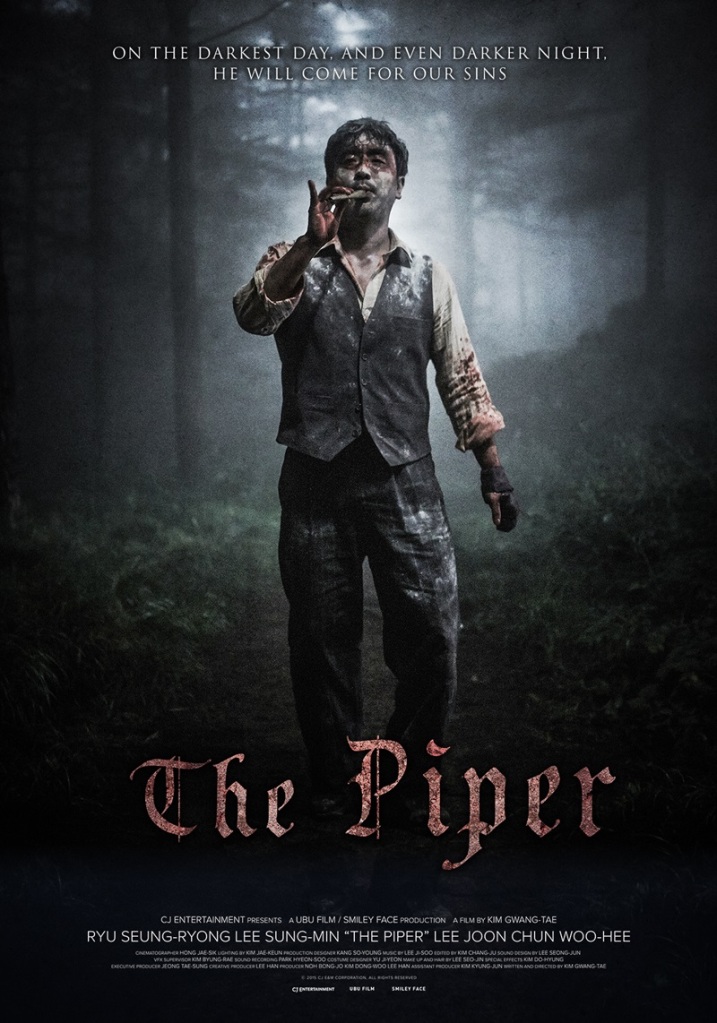
The Piper (손님, Kim Gwang-tae, 2015)

PiperPosterReview of Kim Gwang-tae’s The Piper (손님, Sonnim) up at UK Anime Network. I really liked this one!


The piper must be paid. So goes the old saying, and with good reason – one should always honour one’s promises but even so there are those should not be crossed. So the denizens at the centre of the mysterious hidden village in the debut feature from Korean director Kim Gwang-tae come to discover as they’re repaid for some not quite unforgotten sins when a travelling piper and his invalid son come calling.

Kim Woo-ryong is a travelling piper with a crippled leg journeying to Seoul with his young son after hearing that there is an American doctor there who may be able to treat the boy’s TB if only they can reach the city in time. After walking through the countryside they eventually come across a village which isn’t marked on any map and beg shelter from the village chieftain there. Life in the village seems like a scene from the middle ages, everyone is wearing traditional clothing and there’s something more than a “stranger in town” vibe about the way they look at Woo-ryong and his son Young-nam. The chieftain allows the pair to stay but warns them they can reveal nothing of the outside world to the village’s inhabitants and especially not that the Korean war is already “over” and has been for some time. Later Woo-ryong and Young-nam wander into a village dispute and in a fit of over helpfulness Young-nam exclaims he’s sure his dad can fix the problem (though he doesn’t know what it is). Woo-ryong jumps to the conclusion it must be about the rats which plague the town and offers to take care of them. The chieftain offers him the price of a cow if he can rid the town of vermin, but one gets the impression there’s more than one kind of rodent lurking in this strange, isolated place.

If you know the classic children’s fable, The Pied Piper of Hamelin, you likely know the outcome won’t be a pleasant one though the events of the The Piper turn a little bloodier and even more supernatural than in the Brothers Grimm  fairytale. The story starts out pleasant enough as Woo-ryong and Young-nam start to make friends in the village – Woo-ryong playing his pipe and Young-nam enjoying spending some time with the other children. However, from their very first entrance you can tell there is something very wrong in this community. There’s not just suspicion or curiosity in the way the villagers stare at the strangers, there’s fear too. Woo-ryong is a middle aged man with a lame leg, and Young-nam is a weedy 10 year old boy with a lung disease. They are no threat to anyone, what do these people have to fear?

The chieftain himself is obviously quite a sinister fellow. He charms Woo-ryong but lies to him when asked for guidance about the journey on to Seoul and seems to instil nothing but fear in the eyes of the other inhabitants. Woo-ryong strikes up a tentative romance with the village’s reluctant shaman which further raises the chieftain’s concerns – perhaps, he thinks, he doesn’t need to pay this piper after all. As might be expected, there’s a dark past at play here. Everyone is so terrified of the war, which they still believe is going on, and the things they’ve already done to survive that they’re prepared to go along with whatever their leader says to maintain their peaceful village life. Mob mentality at its worst, even those who were growing closer to the pair of strangers are quick to turn on them in a paranoid frenzy.

Like the original story, the moral is that you reap what you sew and if you don’t keep your promises, you deserve everything that’s coming to you. These are people who have lived in difficult times and done cruel things to survive. The rats which plague the town take on an almost supernatural air and have apparently developed a taste for human flesh. They become a kind of metaphor, a haunting presence which refuses to allow the villagers to forget the crimes they’ve committed and reminds them that their present safety was bought with innocent blood. A perfectly pitched fairytale with an all pervading sense of dread and foreboding, The Piper is an impressive effort from first time director Kim Gwang-tae and marks him out as a promising new voice in the world of Korean cinema.


Reviewed at the London Korean Film Festival 2015.

 

Miss Granny (수상한 그녀, Hwang Dong-hyeok, 2014)

131212-001_1401140436597Review of Hwang Dong-hyeok’s age swap comedy Miss Granny (수상한 그녀, Soosanghan Geunyeo) up at UK Anime Network.


Miss Granny is something of a departure for Korean director Hwang Dong-hyeok whose previous two films have both explored fairly weighty subjects firstly in The Father which, based on a true story, features an American adoptee looking for his father only to find him languishing on death row, and more recently in Silenced (also known as The Crucible) which depicted the harrowing, and again true, events that occurred at the Gwangju Inhwa School for the Deaf in which pupils were routinely abused by teachers and staff. So far as we know, Miss Granny is not based on a true story and is a more mainstream comedy in which a “difficult” old lady suddenly finds herself transformed into her 20 year old self.

At the beginning of the film, Oh Mal-soon is a bad tempered 74 year old woman who terrorises everyone around her into submission including her middle aged daughter-in-law who eventually lands up in the hospital with a heart condition that may in part have been brought on by Mal-soon’s constant criticism. Mal-soon’s son faces an impossible choice, ship his mother off to a home and give his wife some peace or risk losing either his marriage or his wife by keeping his mother around. Heartbroken at the thought her son maybe about to abandon her, Mal-soon wanders around the city before deciding to enter a mysterious portrait photographers and dolling herself up for a “funeral photo”. However, when she emerges she’s mysteriously transformed into a lithe and pretty 20 year old! Suddenly young again with potentially a whole life in front of her, what sort of choices will Mal-soon make this time around?

Much of the comedy of Miss Granny centres around the young Mal-soon, renamed Oh Doo-ri after her favourite actress, Audrey Hepburn, speaking and acting as if she really really were a 74 year old woman with all of the freedoms (and the invisibilities) that age grants you. Snapping away in her thick rural dialect and handing out unsolicited advice in the way only a nosy old woman can, Doo-ri is a very strange, and perhaps a slightly frightening, young woman. Undoubtedly, as we find out, Mal-soon has had a difficult life – starting out as an upperclass woman before becoming a young, penniless single mother dependent on the kindness of others and doing everything in her power to ensure that her son will grow up a fine man. Life has made her hard and in turn she makes things hard for all around her.

As a young woman she’s initially much the same yet comes to understand something of who she was and who she is. In her younger days she dreamed of being a singer and even as an old woman was well known for her fine voice. After unexpectedly jumping up to sing at a senior’s event in order to best another old lady rival, she’s “discovered” by a producer who’s tired of all the soulless idol stars who walk across his stage. Doo-ri is exactly what he’s been looking for, a young and pretty face with a voice that’s full of a lifetime’s heartbreak. Here is the real coup of the film – the younger actress, Shim Eun-kyung, reinterprets these classic pop songs from 40 years ago beautifully with exactly the right levels of pain and regret perfectly matching the montage flashbacks to Mal-soon’s youth. Becoming young again, experiencing everything again as if for the first time – opportunity, romance, friendship, Mal-soon finally begins to soften as if some of the harsh years of her original young life had been smoothed away.

Of course, nothing lasts forever and Mal-soon eventually has to make a choice between her newly returned youth and something else precious to her. She comes to understand that however hard it was she’d do it the same all over again because the same things would always have been the most important to her. Though it’s far from original and drags a little in the middle, Miss Granny still proves a warm and funny tale that walks the difficult line between serious and funny with ease and throws in a pretty catchy soundtrack to boot.


Reviewed at the London Korean Film Festival 2015.
Also here is one of the musical sequences in the film – I think this is a famous song from the ’70s (?) called White Butterfly. ‘Tis quite beautiful (mild spoilers for the film as it includes a montage of Mal-soon’s youth in the ’60s).


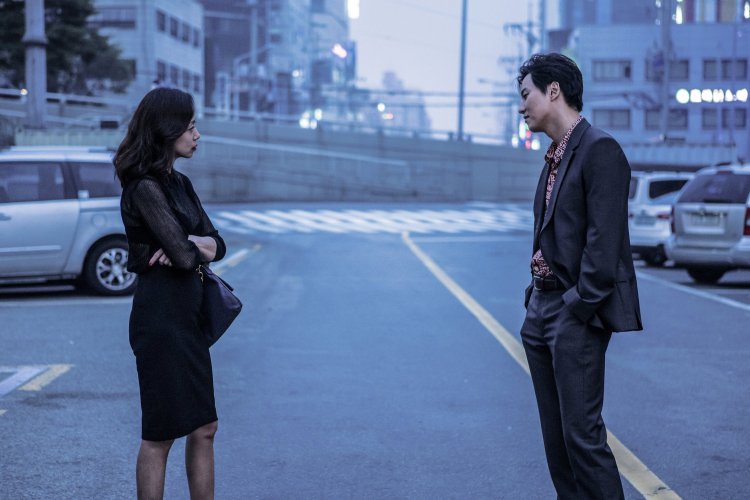
The Shameless (무뢰한, Oh Seung-uk, 2015)

fullsizephoto602641Review of Oh Seung-uk’s The Shameless (무뢰한, Moorwehan) up at UK Anime Network. I read some lukewarm reviews but I actually really liked this one (though I’m a sucker for B-movie noirs and my tolerance for melodrama is sky high)!


Director Oh Seung-uk maybe best known as the screenwriter behind such varied and well respected efforts as Green Fish (directed by Korean auteur Lee Chang-dong), Christmas in August and H, but way back in 2001 he made a minor splash at Cannes with his existential gangster piece, Kilimanjaro. The Shameless sees him one again turn to the shady world of underground crime though this time what he’s interested in is a romantic melodrama laced with deadly film noir morality.

Recently divorced police detective Jung Jae-gon has been handed what seems like a fairly straightforward murder. They already know who the killer is and the motive behind the crime, all that remains is to track the guy down. Luckily they also know that Park, a gangland thug, has a regular girlfriend, Kim Hye-kyung, who works at a seedy downtown bar. Through tailing her they’ll find their man. This is where things get sticky. Said girlfriend is the former lover of the head of another crime syndicate who’d now like to use Park’s current predicament to exact some revenge on the drifter who’s stolen his girl. Roping in a disgraced ex-cop, the gang offer Jae-gon a significant amount of money to cripple Park during his arrest and take him out of the picture for good. Jae-gon is conflicted. The way he sees it, the day you can’t tell which side you’re really on is the day you need to hand back your badge, but Jae-gon’s in need of money, this guy used to be his friend and then, there’s the girl…

Right here you have all the essential elements of your classic film noir. Basically good, if imperfect, detective receives an offer he can’t refuse and ultimately accepts it against his better judgement in part because of a femme fatale that he just can’t get out of his mind even if the more rational part of his brain knows this is something that is never going to happen. Before you know it, Jae-gon has researched Park’s history and adopted the persona of a former cellmate before taking an undercover job at Hye-kyung’s bar and attempting to become close to her in the hope that she’ll eventually lead them to Park’s whereabouts. Of course, he starts falling for her too and though she remains doggedly committed to Park, something in her begins to warm to him in return. This is a situation which can never end well and its classic B-movie style inevitability only adds to the eventual pathos of its deliberately downbeat ending.

The film is called The Shameless for a reason – nobody looks good in this shady world of corrupt cops and vicious gangsters who will stop at nothing to get what they want. The fact that you can barely tell who is on which side is a good indicator of the levels to which this world of chaos has become warped. Even the police are literally “shameless” stooping so far as to indulge in an interrogation technique which is, in fact, a sexual assault. At least the gangsters are abiding by their own rules.

The picture has a slick, stylish aesthetic which is perfectly in keeping with its morally grey, film noir inspired mood. It’s full of existential angst and the ennui of modern, aimless life. As usual for this kind of film, Hye-kyung repeatedly gets the short end of the stick – used and abused by faithless men, so massively in debt it’s almost impossible she’ll be able to extricate herself from the seedy world of hostess bars and petty gangsters before its too late. She’s only one victim of the pervasive sexism that defines this harsh world. Clinging desperately to Park, Hye-kyung’s one and only escape route is to hope one of these feckless men is the one who can take her away from this place.

Needless to say this isn’t one of those films where everyone gets what they want and walks off into the sunset of eternal happiness, but perhaps it isn’t as apocalyptic as the original premise might promise. That is actually something of a problem as the slightly softer ending undercuts the film’s emotional resonance and ultimately leaves one feeling a little less than satisfied. Still, even if The Shameless fails to hit its mark at the very end, Oh has still crafted a stylish and beautifully photographed neo-noir romance that stays true to its classic B-movie roots whilst also embracing the best of the modern crime movie.


Reviewed at the London Korean Film Festival 2015.
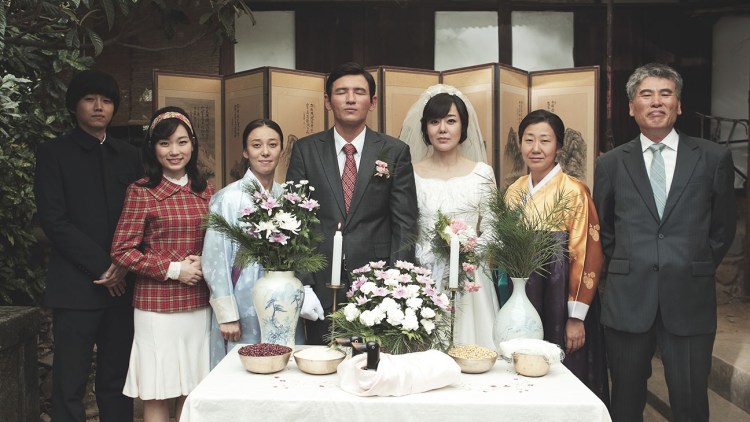
 

Ode to My Father (국제시장, JK Yoon, 2014)

ode_to_my_father_stillReview of JK Yoon’s Ode to My Father (국제시장, Gukjeshijang) – first published by UK Anime Network.


Of late, we’ve seen a lot of films attempt to trace the history of a nation through the story of one man and his family which ultimately becomes a metaphor for the that of the land itself. Many of these have come from China which shares something of the turbulent history that has affected the Korean peninsula over the last hundred years. In Ode to My Father, director JK Youn has tried to pay tribute both to his own father and to all the fathers of modern Korea who underwent great difficulties and suffered immensely in the hope of building a better, happier, future for their own children.

Mostly we view events from the point of view of Duk-soo – an old man at the beginning of the film who has made a success of himself and is surrounded by a large, loving family though seems to retain a kind of unresolved sadness. When we travel back with him, he’s just a small boy fleeing his homeland with his parents and siblings. As the oldest, he’s put in charge of his sister only to have her cruelly snatched away from him during the final escape. This event colours the rest of Duk-soo’s life as he carries with him both the tremendous guilt of having failed to protect his sister and of losing his father has he went back to look for her. The remaining family members gather together at the small imported goods shop belonging to an aunt which becomes another motif of the film.

Growing into manhood, Duk-soo is now the man of the house with both his siblings and his mother to provide for. Making countless sacrifices which see him abandoning his own dreams and travelling abroad to seek better paid work – first in the coalmines of West Germany and later the warzone of Vietnam, Duk-soo puts his family before himself every single time. Working tirelessly, Duk-soo grows up but inside he’s forever the little boy on a boat watching his father drift away him and desperately hoping he’ll some day miraculously turn up at the shop with a smile and an improbable story.

This is a story of painful separations and the shockwaves they send through the rest of one’s life and of all the lives throughout history. Having fled the Chinese and the communists in the North, Duk-soo and his family are excited about the prospect of being able to go home at the “end” of the war. However, this is a war which is still not technically over, merely suspended by a truce, and Duk-soo will never see his hometown again. Eventually, during the ‘80s, 30 years since Duk-soo was separated from his father and sister, a nationwide campaign is held to try and re-unite family members forced apart by the traumatic events of the 1950s. Entire squares in the city are covered with people desperately looking for each other wearing signs with their relatives’ names and point of last sighting, clothing etc all in the hope of finally finding each other again. Needless to say, some of these people are luckier than others and there are tears of both joy and sadness.

Still, all in all, Duk-soo and South Korea made a success of themselves even if there’s a resulting ache from the great wound which has split the nation in two. Much of the story is universal – a father’s love for his family, but Ode to My Father will obviously speak loudest to Koreans who can identify more strongly with the historical context. Yoon has also injected some humorous incidents involving real life Korean historical celebrities which may mystify international viewers even if they’re sign posted well enough that one gets the gist of it anyway.

Unabashedly sentimental and oftentimes overblown, Ode to My Father nevertheless succeeds in tugging at the heartstrings in all the intended ways. A paean to the post war generation and all that they endured in building the modern Korea that their children could live in without fear or hunger, Ode to My Father is in the end far too sugary but also, it has to be said, affecting.


Reviewed at the London Korean Film Festival 2015.
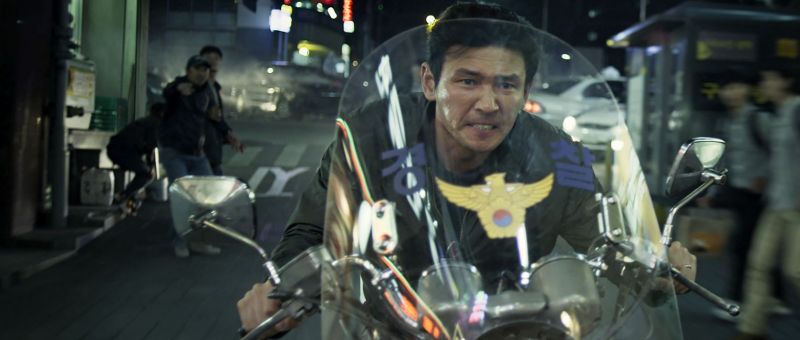
 

Veteran (베테랑, Ryoo Seung-wan, 2015)

1439210220_베테랑1Review of Ryoo Seung-wan’s Veteran (베테랑) – first published on UK Anime Network.


One of the top Korean box office hits of 2015, Ryoo Seung-wan’s Veteran is a glorious throw back to the uncomplicated days of ‘80s buddy cop crime comedy thrillers. A little less than subtle in its social commentary, Veteran nevertheless takes aim at corrupt corporate culture and the second generation rich kids who inherit daddy’s company but are filled with an apathetic, bored arrogance that is mostly their own.

Seo Do-cheol (Hwang Jung-min) is, as one other officer puts it, the kind of police officer who joined the force just to beat people up. He loves to fight and isn’t afraid of initiating a little “resisting arrest” action just to make things run a little more smoothly. However, when he strikes up a friendship with a put upon truck driver and his cute as a button son only to miss a crucial telephone call that eventually lands said truck driver in the hospital, Do-cheol’s sense of social justice is inflamed. After trying to join a trade union, Bae, the truck driver, is unceremoniously let go from his company. On taking his complaint directly to the head of Sin Jin Trading, play boy rich kid Tae-oh, Bae is subjected to the most cruel and humiliating “interview” of his life before apparently attempting to commit suicide after having realised the utter hopelessness of his situation. Incensed on his new friend’s behalf, Do-cheol is determined to take down these arrogant corporatists what ever the costs may be!

Veteran makes no secret of its retro roots. It even opens with a joyously fun sequence set to Blondie’s 1979 disco hit, Heart of Glass. Like those classic ‘80s movies, Veteran manages to mix in a background level of mischievous comedy which adds to the overall feeling of effortless cool that fills the film even when things look as if they might be about to take a darker turn. The action sequences are each exquisitely choreographed and filled with sight gags as the fight crazy Do-cheol turns just about any random object that appears to be close to hand into an improbable weapon.

Make no mistake about it either, this is a fight heavy film. Though Veteran has a very masculine feeling, it is to some degree evened out by the supreme Miss Bong whose high class high kicks can take out even the toughest opponents and seem to have most of her teammates looking on in awe, and the withering gaze of Do-cheol’s put upon wife who seems determined to remind him that he’s not some delinquent punk anymore but a respectable police officer with a wife and child who could benefit from a little more consideration.

Indeed, Tae-oh and his henchmen aren’t above going after policemen’s wives in an effort to get them to back off. Though this initial overture begins with an attempt at straightforward bribery (brilliantly dealt with by  Mrs. Seo who proves more than a match more the arrogant lackeys), there is a hint of future violence if the situation is not resolved. Tae-oh is a spoiled, psychopathic rich kid who lacks any kind of empathy for any other living thing and actively lives to inflict pain on others in order to breathe his own superiority. Probably he’s got issues galore following in his successful father’s footsteps and essentially having not much else to do but here he’s just an evil bastard who delights in torturing poor folk and thinks he can do whatever he likes just because he has money (and as far as the film would have it he is not wrong in that assumption).

He also loves to fight and finally meets his match in the long form finale sequence in which everything is decided in a no holds barred fist fight between maverick cop and good guy Do-cheol and irredeemable but good looking villain Tae-oh. Veteran never scores any points for subtlety and if it has any drawbacks it’s that its characterisations tend to be on the large side but what it does offer is good, old fashioned (in a good way) action comedy that has you cheering for its team of bumbling yet surprisingly decent cops from the get go. Luckily it seems Veteran already has a couple of sequels in the pipeline and if they’re anywhere near as enjoyable as the first film another new classic franchise may have just been born.


Reviewed at the first London East Asia Film Festival and the London Korean Film Festival.

King of Pigs (UK Anime Network Review)

image-8-king-of-pigsFirst Published on UK Anime Network in May 2013


Korea has a long tradition of animation but is perhaps more famous overseas for providing technical services to higher profile productions from other countries. The King of Pigs is the first feature length Korean animation to be shown at Cannes and has been screened at several other film festivals worldwide, picking up a few awards along the way too. Korean live action cinema of recent times has earned itself a reputation for being unafraid of violence and difficult subject matters – an ethos which appears to have directly penetrated into King of Pigs which nothing if not extremely bleak.

As the film begins, failed businessman Kyung-min weeps naked in a shower while the contorted face of a strangled woman lingers hauntingly in the next room. He makes a phone call hoping to track down an old childhood friend – perhaps because he feels he’s the only one who can help him understand what he’s done or because he feels somehow as if this person represents a fracture point in his life where everything started to go wrong. This long lost friend, Jong-suk, seems to be in a similarly dismal situation – an under appreciated ghost writer who’s constantly berated for writing unemotional prose, he returns home to beat his wife after accusing her of having an affair (which turns out to be doubly wrong as she’d been meeting with a publisher about Jong-suk’s own novel). The two men meet and talk over a traumatic period in their childhood when their only protector was another boy, Chul – self titled King of Pigs.

The school system was divided rigidly along lines of economic/social status and academic prowess and neither Kyung-min nor Jong-suk found themselves in the elite camp. Beaten, humiliated and molested the boys appear to have no recourse except to grin and bear it – even the teachers and authorities appear complicit in this unofficial caste system. That is until Chul dares to fight back, violently, on behalf of not only himself but all the other ‘pigs’ too. The three end up becoming a team bound by mutual suffering much more than friendship or human emotion. It takes more than one boy to destroy a system though and circumstances conspire to ruin whatever headway they might have made. These times will affect each boy more than he could ever have guessed and these changes will not be for the better.

The King of Pigs is certainly not an optimistic film. Though it seeks to depict a corrupt system based on arbitrary and unfair principles, perpetuated by the adults in charge and those trapped inside it, it has to be said that by the time we meet the young counterparts none of them is especially sympathetic. It’s an unfortunate part of the film’s message but the fact that both the young boys are so passive and complicit in their own degradation makes it very difficult to build up a sense of sympathy for them. You might think then that Chul would be the natural hero of this piece as the self appointed ‘savior’ of the hopeless cases but his manifesto rapidly turns so repellant that you can’t get behind him either. What you’re left with is a group of misogynistic ‘little men’ who in turn transfer the frustration they feel with their own sense of inferiority on to those they believe to be even weaker than themselves. The film tries to imply that the grown up failures of these men are a direct consequence of a broken school system, yet as we meet them already in the system rather than as totally innocent children, it’s not possible to follow this line of reasoning as the boys appear deeply unpleasant from the offset.

Unfortunately, another thing the film isn’t is subtle. The director really wants to hammer home his message about the socio-economic unfairness that seems to penetrate every area of society and prevent any sort of social mobility, but often it’s akin to being hit over the head with the same idea repeatedly several times over the course of the film. It is extremely violent in a deeply uncomfortable way to the extent that you could call this a ‘nasty’ film – the scene of animal cruelty alone feels both like an underdeveloped cliché and a thinly veiled attempt at shock value. In short, the film constantly undermines itself by shooting straight for the extreme where a more nuanced approach may have made its subject matter all the more powerful.

As it stands, it’s quite difficult to recommend The King of Pigs either as an entertainment piece or as a serious art film seeking to examine Korea’s attitudes to social class. The film was made on an independent basis and some may find its aesthetic a little basic in terms of animation quality yet it does have some interesting directorial ideas and composition. Though it ultimately fails, the film does deserve some praise for tackling such a difficult subject matter – genuinely adult contemporary animation can often be difficult to find. However it’s partly its desire to be ‘adult’ that destroys its ability to be taken seriously – by skewing towards the ‘extreme’ audience who may only be interested in the violence rather the problems that underly it, The King of Pigs risks been seen as a schlocky horror story rather than a parable about some very real social issues.


Available now in the UK from Terracotta Distribution.

Review of Yeon Sang-ho’s second and much improved animated feature The Fake.


Han Gong-ju (한공주, Lee Su-Jin, 2014)

Photo 1Review of this complex Korean social drama up at UK Anime Network. Went a bit intense with this one….


Hot on the heels of A Girl at My Door, we’re confronted with another impressive debut film from a Korean director which once again deals with a series of important, if unpleasant, often over looked social phenomenons. It’s difficult to review Han Gong-ju without revealing the mysterious events at its centre yet much of the film’s impact is bound up with the slow drip of its structural dissection of its raw and painful wounds. Based on a real life case from 2004, Hang Gong-ju is a harrowing tale of victim shaming, social injustice and ingrained systems of corruption which will shock even the most cynical Korean cinema fan.

At the beginning of the film, Hang Gong-ju is being a little less than sensitively dealt with by her school teacher who hands her a new mobile phone and instructs her not to call anyone she knows, not even her father, and only to accept calls from his own phone. She’ll be transferring to a new school and staying with her teacher’s mother until other suitable accommodation can be arranged. We don’t know why any of this is happening but the teacher seems put out, less than willing to help Gong-ju – almost as if he finds her existence a little embarrassing. At her new school she keeps herself to herself, making sure to remain distant from her fellow pupils. However, a group of singers finds out that Gong-ju has musical talents and becomes intent on adding her to their group. Though fearful and unwilling, Gong-ju gradually becomes closer to them. The reason for her aloofness leads back to the very reason she’s been exiled from her hometown and is a secret Gong-ju is terrified will eventually be revealed. Following a possibly well meaning (or maybe a little less so) action by her new group of friends, the true reasons for her being forced into hiding are thrown into the light and Gong-ju once again becomes the centre of a storm composed of a complex system of societal repercussions.

Without giving too much away, nothing that happens to Han Gong-ju is her fault yet she’s the one sent away from her home, from her friends and family, and forced to feel ashamed for having undergone a terrifying ordeal. She’s just a normal teenage girl, but there’s no one to stand with her or for her – she is left totally alone in the home of a stranger with no one to talk to or be comforted by. Those that are responsible, the guilty parties, who were able to act in such a morally repugnant way thanks to their connections, social standing and the arrogance the combination of those things afforded them seem to have largely escaped the shame and ignominy which has continued to dog Gong-ju who is still subject to physical manifestations of their actions – let alone the mental scarring. Not only that, Gong-ju is also pursued by the families of those that have caused her harm who seem to want her to change her statement of events in favour of their children. The father of one whom she had been close to even wants her to sign a petition to say that his child was “forced” into these heinous acts. Perhaps even, in a sense, he was though it’s hard to see how any rational person could ever see that as a mitigating factor in the events which did actually take place.

It’s not only Gong-ju who’s found herself at the mercy of rigid social codes. Her hard nosed and originally reluctant landlady-cum-responsible-adult Mrs. Lee has also had her fair share of disapproval from the local housewives thanks to her relationship with the town’s police chief. Her middle aged romance also causes a degree of resentment from her horrified son who doesn’t seem to care very much about his mother’s actual feelings or those of Gong-ju whom he deposited at his mother’s house like an inconvenient suitcase in the hope of making a good impression with his boss. Although originally put out by the sudden arrival of a teenage house guest who may even be some sort of delinquent, Mrs. Lee comes to a grudging admiration for this obviously damaged girl and is close to being her only real supporter (though perhaps only up to a point). Gong-ju’s growing closeness with Mrs. Lee is even more valuable as her relationship with her own mother was fractured even before the events that have befallen her and leave her unable even to count on her mother’s love and support during such a difficult time.

Told with remarkable assurance by Lee Su-jin who opts for a complex, non linear structure Han Gong-ju is frankly more harrowing than any horror film as the demons which plague the central character (and actually, many of the other women in the film) are all too real – manmade by a rigidly conformist, conservative society riddled with corruption and all too quick to point the finger of blame at those incorrectly positioned within its complex network of social hierarchies no matter what the facts of the matter may be. Shocking, even if sadly somewhat unsurprising, Han Gong-ju dares to shine a bright light on this dark corner of human suffering and by telling the sad story of this one lonely, victimised girl who nevertheless tries to live her life in spite of her difficult circumstances may help others finally wake-up to the kind of injustices we allow to take place in the world which we, daily, create.


Out today on DVD & blu-ray from Third Window Films

The Fake (UK Anime Network Review)

2013 - The Fake (still 7

Another Korean Film Festival review just gone live on UK Anime Network, this time a new animated effort from the director of King of Pigs – The Fake.


Yeon Sang-ho’s previous film, The King of Pigs, was the first Korean animation to be screened at Cannes and was nothing if not a bleak look at the prevalence and long term effects of bullying in the Korean high school system. His next film, The Fake, is another dark exposé but this time of another great pillar of Korean society – evangelical religion. False prophets abound as Yeon takes us on a difficult journey through the nature of faith, desperation and the exploitation of human weakness.

A small Korean town is slowly being dismantled before being sacrificed for new damming project. The people of the town are being appropriately compensated by the government, but still they’ll have to pick up and start again somewhere else even though many of them are already past retirement age. Two new forces are descending on this once ordinary town – one offers hope in the form of an evangelical preacher who claims to cure the sick and offers a place in a new paradise (to those with the money to buy a ticket – places strictly limited, terms and conditions may apply) and the other a violent drunkard, Min-chul, who wastes no time in wreaking havoc on the lives of his wife and daughter. Unfortunately, Min-chul picks a fight with the wrong person and is the only one to realise that the preacher’s “backer” is notorious fraudster currently wanted by police for a string of similar crimes. Sometimes the truth comes in unpleasant packages, and being the sort man he is, who would believe Min-chul when he’s the only one who’s seen through this “fake” miracle?

It goes without saying that like The King of Pigs, the world depicted in the The Fake is utterly bleak and without even the faintest glimmerings of hope. Every character is flawed, very few have any redeeming features at all and almost nothing good happens in the entire course of film. However, it is marginally more subtle than King of Pigs which is a much welcome upgrade over the previous film’s excesses. Faced with such a bleak situation, it isn’t surprising that the entire town has fallen hook, line and sinker for the false hope offered by the eerily cult-like preacher and his camp of evangelicals. The preacher himself may once have been a genuine man of god, but his business minded backer acts totally without compunction and is only interested in cold, hard cash. Peddling “holy water” as a supposed curative, neither the preacher nor the business man seem to care that one of their biggest supporters is currently suffering from tuberculosis and foregoing modern medicine in favour of this spiritual treatment – after all, the con is nearly played out and they’ll be on their way before their spurious claims are exposed.

Their only adversary is Min-chul, a man so rude and violent that people stopped paying attention to him years ago. It doesn’t help that Min-chul is much less interested in the injustice of the fraudulent operation than he is in taking personal revenge against the group, firstly because of what happened the first time he met the businessman and secondly because they threaten to take away his wife and daughter which seems to be the thing that most frightens him. Nevertheless, he is a dogged pursuer and his constant attention is enough to put the fraudsters on edge. The real horrifying truth is that some of these people half know the reality already, they just don’t want to hear it. It’s much easier to just believe in the false hope offered to you than to face a hopeless reality in which you have no control and no possibilities. If someone tells you they can carry your burdens for you and make it all OK, you likely won’t want to listen to someone who says differently and the fact of the matter is you’re very unlikely to trust someone you didn’t like very much in the first place no matter how sensible their arguments maybe.

In terms of animation style, The Fake offers a slight upgrade over The King of Pigs whilst retaining a similar aesthetic. Yeo overuses the shaky-cam effects which have an oddly rhythmical, computerised feeling which becomes distracting and works against their intended purpose but overall the The Fake feels much more accomplished in terms of production values. It’s a cynical message and hardly an original one, but The Fake offers its own take on the nature of faith and organised religion and bar a few missteps does so with a much more nuanced eye than The King of Pigs. Intensely bleak, violent and unremitting, The Fake is definitely not for the faint of heart but is a definite step up from The King of Pigs and ironically offers a ray of hope for serious animation in Korea.


A Hard Day (끝까지 간다, Kim Sung-hoon, 2014)

2014 - A Hard Day (still 2)In an unprecedented level of activity, here is another review up on UK-anime.net – this time Korean black comedy crime thriller, A Hard Day (끝까지 간다, Kkeutkkaji Ganda) which was shown at the London Film Festival and the London Korean Film Festival and is now out on DVD from Studio Canal.


For most people, a “hard day” probably means things like not being able to find a parking space, missing your train, the office coffee machine being broken and your boss having a mental breakdown right on the office floor but for not-totally-honest-but-sort-of-OK Seoul policeman Gun-su “hard” doesn’t quite begin to cover it.

Gun-su is driving furiously and arguing with his wife on the phone because he’s skipped out on his own mother’s funeral to rush to “an important work matter” which just happens to be that he has the only key to a drawer which contains some dodgy stuff it would have been better for internal affairs not to find – and internal affairs are on their way to have a look right now. So pre-occupied with the funeral, probable career ending misery and the possibility of dropping his fellow squad members right in it, Gun-su is driving way too fast. Consequently he hits something which turns out to be man. Totally stressed out by this point, Gun-su does the most sensible thing possible and puts the body in the boot of his car and continues on to the police station. Just when he thinks he’s finally gotten away with these very difficult circumstances, things only get worse as the guy the he knocked over turns out to be the wanted felon his now disgraced team have been assigned to track down. Oh, and then it turns out somebody saw him take the body too and is keen on a spot of blackmail. Really, you couldn’t make it up!

Some might say the Korean crime thriller format is all played out by this point, but what A Hard Day brings to the genre is a slice of totally black humour that you rarely see these days. Gun-su is obviously not an honest guy, but he’s not a criminal mastermind either and his fairly haphazard way of finding interesting solutions to serious problems is a joy to watch. This isn’t the first film where someone happens on the idea of hiding a body in a coffin, but it might be the first where said person uses a set of yellow balloons to block a security camera, his daughter’s remote control soldier to pull a body through an air conditioning duct and his shoelaces to prize the wooden nails out of his own mother’s coffin to safely deposit an inconvenient corpse inside. Gun-su (mostly) manages to stay one step ahead of whatever’s coming for him, albeit almost by accident and with Clouseau like ability to emerge unscathed from every deadly scrape. He’s definitely only slightly on the right side of the law but still you can’t help willing him on in his ever more dastardly deeds as he tries to outwit his mysterious opponent.

Though it does run a little long, refreshingly the plot remains fairly tight though it is literally one thing after another for poor old Gun-su. A blackly comic police thriller, A Hard Day isn’t claiming to be anything other than a genre piece but it does what it does with a healthy degree of style and confidence. The action scenes are well done and often fairly spectacular but they never dominate the film, taking a back seat to some cleverly crafted character dynamics. Frequent Hong Sang-soo collaborator Lee Sung-kyun excels as the slippery Gun-su whose chief weapon is his utter desperation while his nemesis, played by Cho Jing-woong, turns in an appropriately menacing turn as a seemingly omniscient master criminal.

Yes, A Hard Day contains a number of standard genre tropes that some may call clichés, but it uses them with such finesse that impossible not to be entertained by them. Bumbling, corrupt policemen come up against unstoppable criminals only to find their detective bones reactivating at exactly the wrong moment and threatening to make everything ten times worse while the situation snowballs all around them. However, A Hard Day also has its cheeky and subversive side and ends on a brilliantly a-moralistic note that one doesn’t normally associate with Korean cinema in particular. It may not be the most original of films, but A Hard Day is heaps of morbidly comic fun!