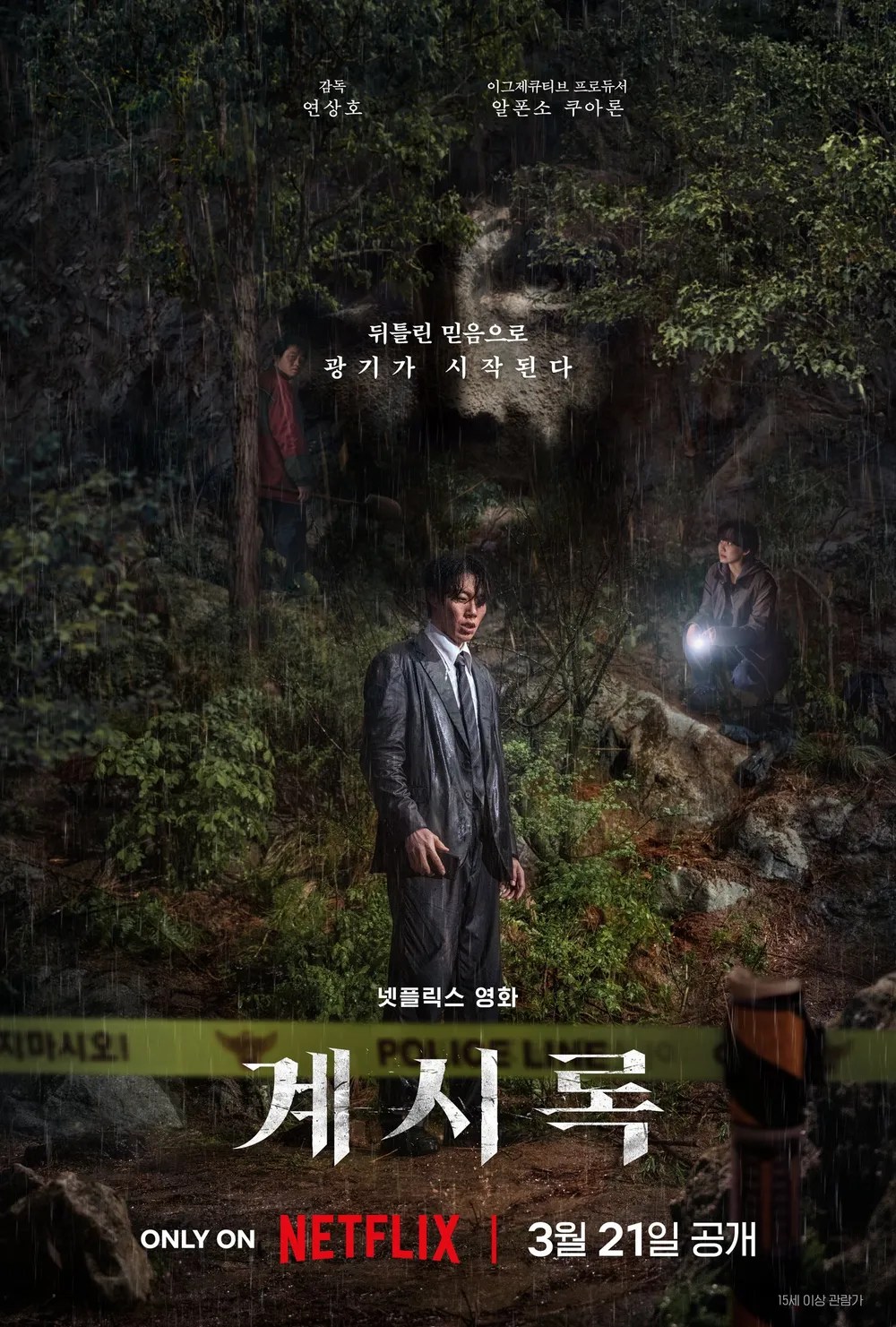
Revelations (계시록, Yeon Sang-ho, 2025)

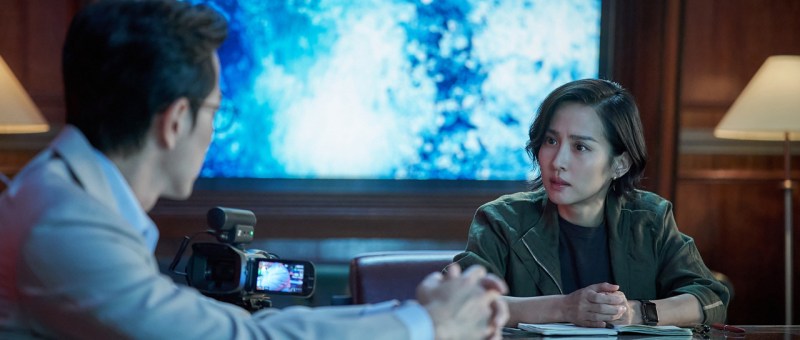
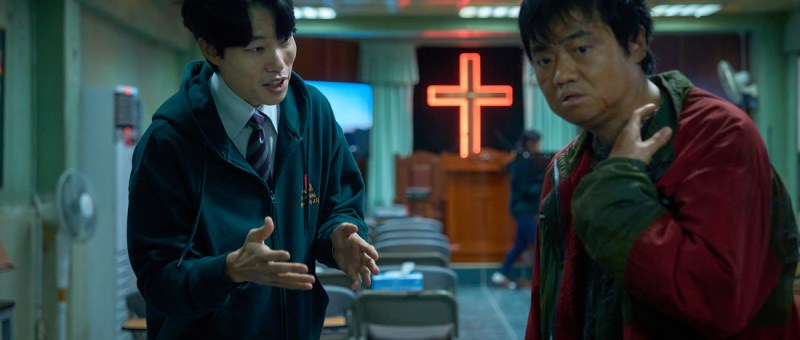
A put upon pastor’s life begins to spiral out of control when he comes to suspect a recently released sex offender has kidnapped his child in Yeon Sang-ho’s grim spiritual drama, Revelations (계시록, Gyesirok). Less about the crime at its centre, the film is more an exploration of our intense desire to justify our actions and remake the world in a way that makes sense to us while refusing to see or accept the reality of others.

Min-chan (Ryu Jun-yeol) runs a small evangelical church that is part of a larger religious organisation and like any other ambitious employee is hoping for advancement. With the area undergoing redevelopment, a larger church is to be built and Min-chan’s wife Si-yeong (Moon Joo-yeon) comes to the conclusion that his mentor Pastor Jung gave him this smaller church to build a congregation in preparation for heading up this larger one. But Jung rather insensitively asks him if he can think of anyone to run it while suggesting that ideally he’d prefer to give it to his son, Hwan-su, though Hwan-su doesn’t feel ready and thinks Min-chan would be a better fit. Min-chan consoles himself by repeating the pastor’s words that God will show them the right person for the job and is secretly heartened when Hwan-su is out of the running due to the exposure of an extra-marital affair with a parishioner. But on the other hand, he’s recently discovered his wife has been having an affair with her personal trainer, which means he wouldn’t get the job either if anyone found out.

As such, he’s under an intense amount of pressure and increasingly dependent on revelations he believes are from God. When Yang-rae (Shin Min-jae) walks into his church, Min-chan is intent on recruiting him but is unnerved by his ankle bracelet. When his own child goes temporarily missing, he becomes convinced that Yang-rae has taken them, especially when he sees Yang-rae loading up his van with shovels. Though this is an example of Min-chan’s latent prejudice and a contradiction in his religiosity given that he has no idea what Yang-rae might have done and is uninterested in helping him only in increasing the numbers of his congregation, it turns out that Yang-rae has taken another child from among his parishioners. Having had an altercation with Yang-rae and attempting to cover up his crime, Min-chan pretty much forgets about A-yeong (Kim Bo-min) and believes he has received a revelation that she’s dead and it’s his mission to purge the evil of kidnappers by killing Yang-rae, coming over all fire and brimstone and ignoring Yang-rae when he points out they’ll never find A-yeong if he dies.

For Min-chan, Yang-rae has become a faceless figure of evil in a similar way he has for traumatised policewoman Yeon-hee (Shin Hyun-been) who is haunted by the ghost of her sister who took her own life after being kidnapped and tortured by Yang-rae. A psychiatrist she meets explains to her that the ghost isn’t real but only a manifestation of the guilt she feels for not being able to save her sister. Her desire to save A-yeong is also a means of making peace with the traumatic past, but even she is caught between the desire for revenge and that of finding her in being at least tempted to pull the trigger and kill Yong-rae herself. She had also been further harmed psychologically by the fact that Yong-rae got a reduced sentence on the grounds of the horrific childhood abuse he’d suffered at the hands of his step-father. But it’s only by acknowledging that he wasn’t a faceless evil but a real person with his own feelings and trauma that she can come to understand him and put the clues together to find A-yeong. 

As the psychiatrist says, Min-chan’s God, Yeon-hee’s ghost, and Yang-rae’s one-eyed monster are all the same thing. They’re trying to overcome the reality that most tragedies in life are caused by things we can’t control. Placed into a police cell, Min-chan has a large square window that floods the room with light, but also a large smudge in the wall that looks sort of like Jesus. He begins scrubbing at it, trying to clarify the image, but it just becomes muddier and could just as easily be a demon rather than God, leaving him finally uncertain as to from whom he was receiving his “revelations”, be they from God, the devil, or just his own confused mind, while dealing with the stress of having his masculinity and career progress undermined in being cheated on by his wife and passed over by his mentor. While Yeon-hui has laid her ghosts to rest, all Min-chan is left with is uncertainty.


Trailer (English subtitles)
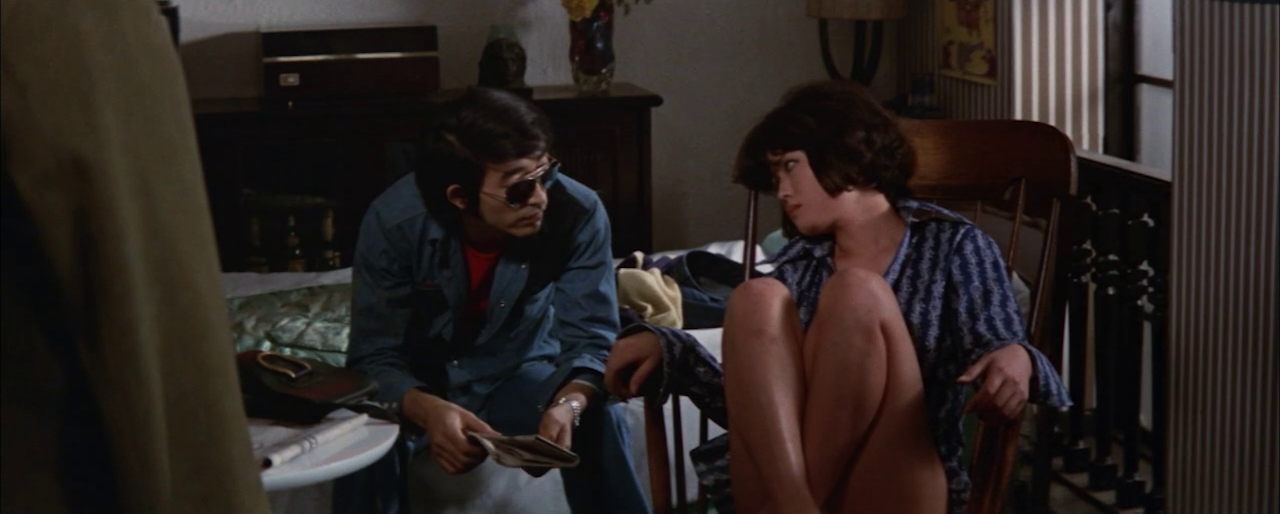
Delicate Skillful Fingers (白い指の戯れ, Toru Murakawa, 1972)

Toru Murakawa is most closely associated with his long and fruitful partnership with Yusaku Matsuda which came to define a certain kind of 1970s cinema, but he began his career at Nikkatsu in 1959 in the sales department before resigning and rejoining a year later as an aspiring director. At Nikkatsu he worked with established directors such as Toshio Masuda and Ko Nakahira, as well as with external directors such as Shiro Moritani before making his directorial debut in Nikkatsu Roman Porno, a line of soft core pornography the studio launched amid the collapse of the studio system, with Delicate Skillful Fingers (白い指の戯れ, Shiroi Yubi no Tawamure), in 1972.

Murakawa would actually leave the studio in the same year having completed two more Roman Porno films, returning to his hometown of Yamagata where he had married into the family of well-known metalwork artist Kenten Takahashi both training with him and helping his older brother Chiaki Murakawa set up the Yamagata Symphony Orchestra. In any case, his temporary withdrawal from the film industry had nothing to with a lack of success in his debut feature. Delicate Skillful Fingers was a critical hit and the first of Nikkatsu’s Roman Porno line to feature in Kinema Junpo’s prestigious Best Ten. It was also the debut film for lead actress Hiroko Isayama and, perhaps not entirely coincidentally, the first time the studio put the male star front and centre in their branding campaign. 

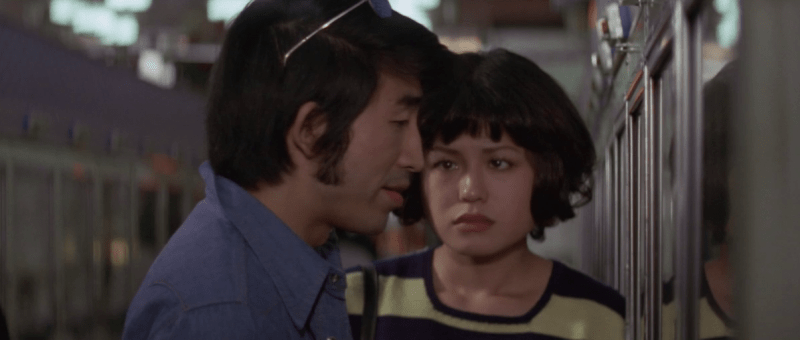
Co-scripted by another top Roman Porno name Tatsumi Kumashiro, the film follows the innocent and naive Yuki (Hiroko Isayama), who is so sensitive that the sight of a wrecked car makes her cry in sympathy, as she falls deeper into the world of petty street crime after being chatted up in a cafe by a goofy guy who just happens to have a problem with kleptomania. At least according to his sometime girlfriend Shoko, Jiro (Hajime Tanimoto) came from a wealthy family and attended a fee-paying school, seemingly stealing for the thrill of it rather than financial need. It has to be said that Yuki is rather ditsy, bamboozled into buying food to cook Jiro dinner while entering into a strange dialogue with a robot offering greetings in Chinese as to whether she should give him her virginity which she eventually does, perhaps recklessly, though it ends up not going particularly well, with Jiro having to explain that “the ceremony is now ended” without it seems much fanfare. In any case when he’s picked up by the police and put away for three years because he already had a record, Yuki has to quite her factory job because of persistent police harassment and bizarrely ends up living with Shoko who has predatory lesbian designs on her Yuki responds to but with a degree of internalised shame. 

Shoko’s desire for other women is in someways depicted as an expression of corruption caused by her pickpocket lifestyle as she implies sometime later in suggesting that Yuki will “come to like it” linking the idea of lesbian sex and the act of pickpocketing as implied by “delicate skilful fingers” of the film’s title. Yuki’s bodily submission but mental resistance is intended to suggest her lingering innocence, yet to submit herself to the hedonistic amorality of the pickpocket lifestyle. Rejecting Shoko, she later becomes sexually involved with Jiro’s former cellmate Taku (Ichiro Araki) who is responsible for teaching her how to pickpocket. Taku is otherwise seemingly less interested in sex, but allows Yuki to take the lead while he remains somewhat passive, lying still and still and chewing gum, always with his sunshades remaining firmly on. He even at one point passes her off to an associate in the middle of making love to her, Yuki first resisting on realising what’s going on but eventually giving in to it though clearly not willingly. 

The contrast between the two men, Jiro and Taku, is stark with Jiro clearly asking for consent at each step and waiting for Yuki to confirm it even if in the end he fails to perform whereas Taku seems to be merely using sex which doesn’t interest him to earn her trust and convince her to help him out in his various criminal operations. Yuki is seduced into a world of crime, but remains romantically naive, foolishly sacrificing herself for Taku and insisting she alone was responsible when cornered by the police while he simply walks away and then jokes with a policeman that he’ll look after her when she’s out. Even so, her loyalty to Taku, in contrast with Shoko’s continuing cynicism, proves that she is not fully corrupted by the pickpocket life, even if she foolishly damns herself by needlessly protecting him at the cost of her own future and wellbeing. On the other hand, to so is entirely her own choice just as it was her own choice to sleep with Jiro in the full embrace of her agency. Murakawa’s Nikkatsu debut is a gritty, grimy urban tale of amoral post-war youth but, even in its tragic conclusion, signals the hero’s spineless indifference and hands victory to the heroine who remains uncorrupted but only to her eternal cost. 


Don’t Look Up (女優霊, Hideo Nakata, 1996)

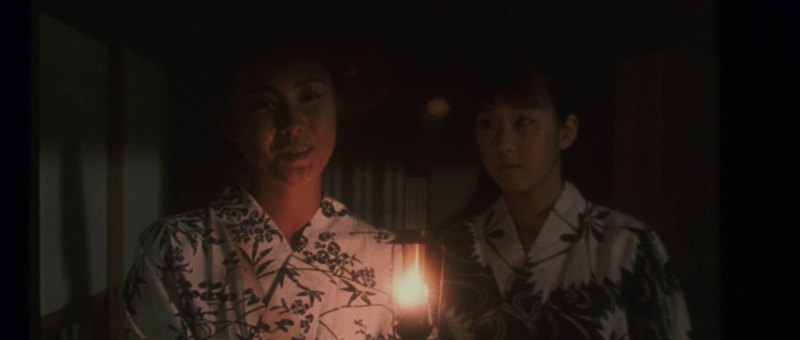
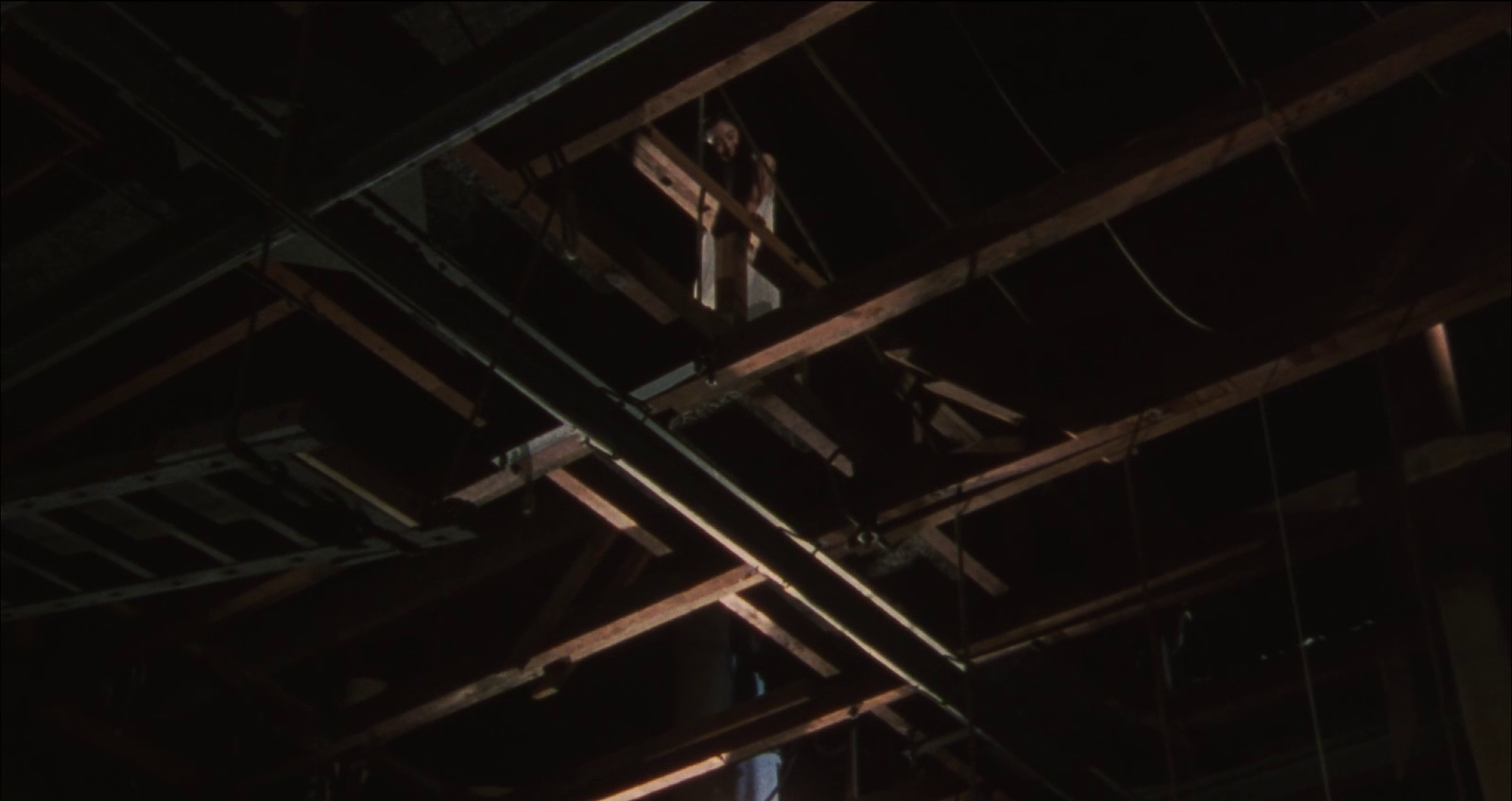
“Have you ever seen an old movie and not been able to get it out of your head?” For those of us who grew up in the pre-internet age, daytime television was a treasure trove of classic cinema where unexpected discoveries were made. Maybe you only caught a few minutes of a film whose title you never knew, but the images are burned into your brain like nothing before or since. It’s tempting, then, to wonder if it isn’t Muroi (Yurei Yanagi), the nascent director, who’s projecting the darkest corners of his mind onto this haunted celluloid, though as it turns out this film was never actually aired.

If Muroi saw the haunted film as a child, it was because the ghost within it chose to broadcast herself by hijacking the airwaves. As his friend points out, however, perhaps he just saw a newspaper report about an actress dying in an on-set fall and saw it in his mind, creating a movie of his own or perhaps a waking nightmare that continues to plague him into adulthood. In any case, the film he’s trying to make is a wartime melodrama rather than a ghost story, but it’s one that’s clearly built around dark secrets and hidden desires. Hitomi (Yasuyo Shirashima) reveals that her character killed her mother in the film to take her place and later kills a deserting soldier with whom she’s been in some kind of relationship that the younger sister threatens to reveal in fear that should the villagers find out they’ve been hindering the war effort by hiding a man who’s shirked his duty to the nation they’ll be ostracised and people will stop sharing their food with them.

But Hitomi has real-world issues too. There’s something going on with her overbearing manager who seemingly didn’t want her to do this film which is why she’s not on set with her. When she eventually turns up, she seems to have some psychic powers. After handing Hitomi an amulet, she runs from the studio screaming. Hitomi agrees there’s something eerie about this place. As the projectionist remarks, this studio is 50 years old, built during the post-war relaunch of the cinema industry. Many things have happened here. But Nikkatsu is now a ghost itself and these disused production facilities are a haunted spaced. The floorboards creak and the rigging may give way any moment, bringing down with it the dream of cinema.

That’s one reason Muroi is advised not to look up and break this sense of allusion, along with recalling the more recent tragedy of an actress’ accidental fall. As much as Hitomi and Saori (Kei Ishibashi) begin to overlap with the image of the ghostly actress, it’s Muroi who is eventually swallowed by his dream of cinema in his determination to climb the stairs and find out what horrors are lurking in the attic before being dragged away to some other world. Nevertheless, this is a film that could only be made with celluloid. Nakata slips back and fore between the film that we’re watching and the cursed negative with its ghost images from previous exposure. This is evidently a low-budget production too, made using end cuts from other reels. As someone points out, this unused footage would usually be thrown out but has somehow mysteriously ended up infecting their film and releasing its ghosts. The projectionist burns it, describing the film as “evil” and suggesting that it’s better to let sleeping dogs lie.

But Muroi seems unable to let it go, chasing his childhood nightmare in trying to explain the mystery behind the footage. Hitomi describes herself as being haunted by a role long after the film as ended. It’s the same when someone dies, she says. They hang on for a while. The actor too remarks that he feels like the camera hates him, as if he were feeling the ghost’s wrath directly but otherwise unable to see her. Yet we have this sense of history repeating and a curse that’s sure to recur while this film too will remain unfinished and linger in the realm of the unrealised. Nakata too only undertook this film after losing his job to Nikkatsu’s collapse and trying to finance a documentary about Joseph Losey as if captivated by his own dream of the cinematic past and the haunting images of a bygone world.


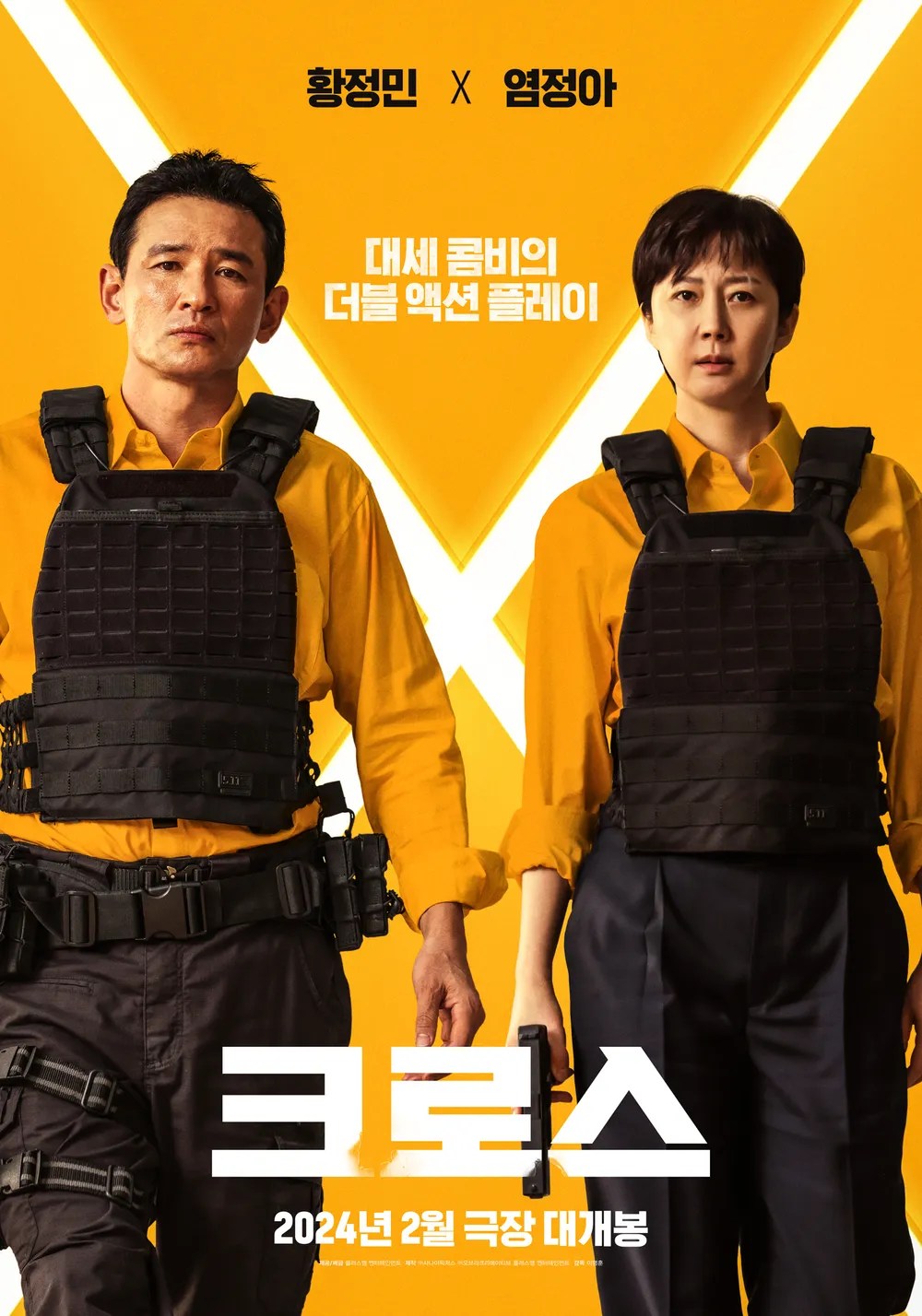
Mission: Cross (크로스, Lee Myung-hoon, 2024)

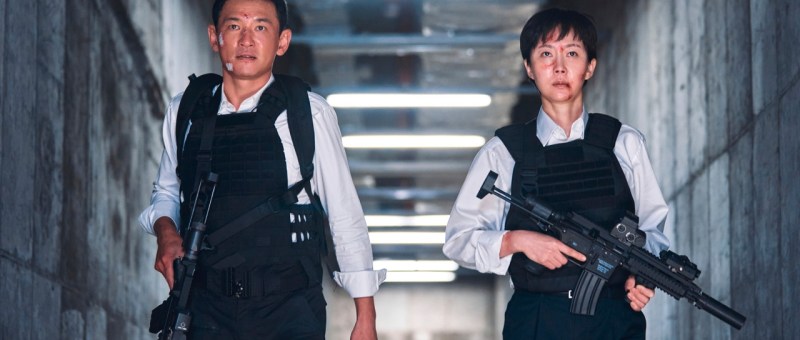
“Justifying each other’s existence, is that what marriage is about?” Asks top cop Mi-seon (Yum Jung-ah) while contemplating her vaguely dissatisfying marriage to househusband Kang-mu (Hwang Jung-min). In the opening sequences of Lee Myung-hoon’s action rom-com Mission: Cross (크로스), Mi-seon describes Kang-mu as a lottery ticket that’s never going win and suggests she only puts up with him because he’s not the worst man in the world and maybe marriage means putting up with each other. Only on discovering his long-buried secret does she begin re-evaluate him along with what marriage means to her.

Part of what puts her off, however, is Kang-mu’s seeming unmanliness. As a househusband, a rarity in South Korea’s patriarchal society, Kang-mu takes good care of care of her but Mi-seon finds it vaguely annoying and is irritated by his tendency to raid her wallet. It’s also Kang-mu that hosts when her colleagues come over for celebrations after solving a case and he’s got labelled Tupperware in his fridge with homemade kimchi for them. Nevertheless, they all jokingly refer to Kang-mu as Mi-seon’s “missus” which is also in part born of their characterisation of Mi-seon as a man because of her no-nonsense nature and the authority she holds over them. When Kang-mu asks Mi-seon’s colleague Sang-un (Jung Man-sik) to give her a wrist brace he bought her but thinks she’s too proud to accept from him, she jokingly asks if he fancies her but he replies that he only likes women. Nevertheless, Sang-un too is positioned as unmanly because his wife cheated on him which led to their divorce. The other two officers, meanwhile, are obsessed with romantic drama and act out their own version of events after spotting Kang-mu with another woman and becoming convinced that he’s having an affair.

Kang-mu, however, has a secret past as an intelligence officer from which he got fired for conducting an unauthorised mission to stop a Russian arms shipment reaching North Korea. While they were on the boat, they discovered that it was actually going to South Korea while one of his men was killed by the Russian Mafia. Six years later, one of his old colleagues has gone missing while trying to expose a procurement fraud scam run by the mysterious General Park through a fake contract to buy a new aerospace weapon from the Russians. Meanwhile, Mi-seon is investigating the attempted murder of a young woman who was shot after delivering a USB stick containing accounting files to a dead drop. 

Obviously, the cases are connected and Mi-seon is about to make a discovery about her husband but not before she experiences the unexpected jealousy of suspecting that he might actually be having an affair. The film actively turns an established trope on its head in that there are countless dramas in which a secret agent thinks he’s married to a regular housewife only to find out she used to be a top assassin, but in its way still ends up conforming to traditional gender roles while essentially subverting them. Mi-seon’s attraction to her husband is reignited when he becomes more stereotypically masculine by charging in with guns and rescuing her. In any case, finding out truth seems to complete the puzzle so that she can reconsider the point of marriage to reflect “Even if the whole world is against you, I’m on your side. That’s what marriage is.” 

Even so, the end result is that they fight crime together rather than Mi-seon having to take a back seat while she also commits to making it work rather than being vaguely irritated with Kang-mu but not making any attempt to improve their marriage. Lee cleverly plays with the tropes of the genre to create a genuinely surprising twist complete with a Bond-style maniacal villain playing off the region’s complicated geopolitics by working with the Russians who are thought to be colluding with North Korea against the South when really just in it for themselves. While the final mid-credits sequence, a reference to Hwang’s Netflix series Narco Saints, is a little uncomfortable in its implications, it’s clear that there’s a lot more milage in this potential franchise built around the unusual dynamics of the central pair’s marriage as well as those of Mi-seon’s equally unusual team of lovelorn romantics.


Trailer (English subtitles)

Both You and I (俺もお前も, Mikio Naruse, 1946)

Two dippy salarymen finally rise up against a feudalistic corporate culture in a rare comedy from Mikio Naruse, Both You and I (俺もお前も, Ore mo Omae mo). Essentially a vehicle for real life manzai double act Entatsu Yokoyama and Achako Hanabishi, it’s also an Occupation-era social message movie intended to discourage workers from extending too much deference to their employers, though its positioning of the left-wing student movement as the future countering the militarist past is perhaps surprisingly radical.

In other ways, however, it harks back to the salaryman movies of the 1930s such as Naruse’s own Flunky, Work Hard and Ozu’s I was Born, But… in which the male office worker has been essentially emasculated and forced to debase himself in order to please his boss. As the film opens, Ooki (Achako Hanabishi) and Aono (Entatsu Yokoyama) are guests at their boss’ dinner party at a geisha house where they’ve been ironically invited as entertainment. The pair of them take the place of the geisha doing a silly dance to entertain the boss who quips that they’re cheap considering how much it would cost to hire a pair of comedians. It’s worth saying that Ooki and Aono are not particularly doing this in a calculated way but actively appreciate being appreciated by the boss and see it as their duty to keep him happy. At times, others suggest that it’s their attempt to ingratiate themselves with him, though they seem quite surprised by the suggestion in part because they still believe in an old-fashioned idea of the employer-employee relationship in which the company is supposed to look after them, so they assume they’ll make career progress naturally by being affable team players and aren’t really worried about losing their jobs despite all this talk of restructuring.

Their boss, however, thinks the pair of them are idiots and takes advantage of their loyalty towards him by getting them to dig his garden and complete other inappropriate personal tasks. He gives them a pair of tickets for an onsen resort as a kind of reward, but once they get there, they realise he’s done it to get them to bring back his “luggage” which is actually black-market supplies for his daughter’s birthday party. The boss’ superiority over them is signalled by his large Western-style house, while Ooki and Aono both live in humbler, traditionally Japanese homes. Aono is a widower with four children though he can’t remember how old they are the oldest two daughters are of marriageable age. The boss even requests the eldest, Hatsuko’s presence at the party, but it quickly transpires that he wasn’t inviting her but asking her to do unpaid serving work signalling the class disparity between the middle-ranking salarymen and the boss.

But it’s at the party that things start to change as Hatsuko talks her father out of doing another silly dance as part of the entertainment, in part because of her embarrassment but mostly because her sister Yasuko’s (Itoko Kono) boyfriend is a guest and she’s worried it’ll put him off marrying her. This angers the boss, who insultingly suggests that Aono and Ooki aren’t even fully human and only become a whole person when together so one alone is as useless as an orphaned sandal. Meanwhile, Ooki’s son, whom he’s very proud to say is in university, is rehearsing a communist play that’s about a strike at factory. Ooki doesn’t really understand it, but is worried about the neighbours overhearing and the police getting involved. He still has a pre-war mindset and hasn’t realised that things like freedom of expression now exist. His son tells him that it’s only right to speak up. If you can’t say anything because you’re afraid of getting fired, then you’ll just end up getting exploited. But Ooki and his wife insist they feel too indebted to the boss to be able to talk about him like that. He thinks his son will change his mind when he enters the world of work. Sadao replies that he understands why his father had to do it, but insists that the world is unjust and has been created by the capitalists for their own benefit.

Pushed too far, Ooki and Aono do eventually decide to confront the boss even if they immediately back track when he arrives at the office by hanging up his hat and dusting his desk. They accuse him of being a wartime profiteer who caroused with militarists and made his money by exploiting their labour while he now abuses the black market. They find themselves supported by the other workers from the other side of the door as they insist they’ll fight the restructuring along with the boss’ underhanded plan to sell the company to a rival. They’ve discovered workers’ solidarity and resolved not to be complicit any more with a feudalistic working culture, though it’s unclear if anything will really come of it. They are nevertheless free from their lives of constant debasement and have reasserted their individual identities while otherwise being an unbreakable pair.


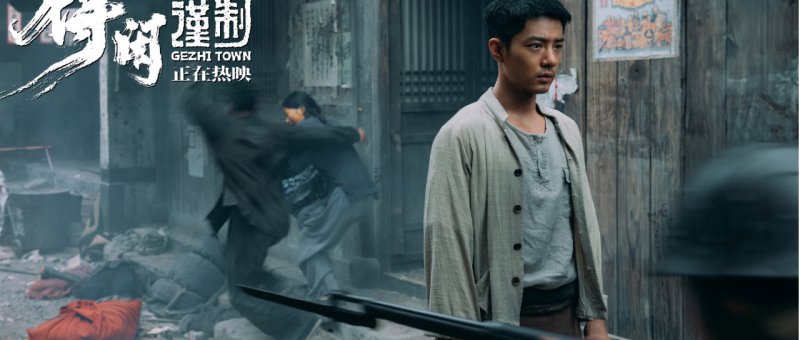
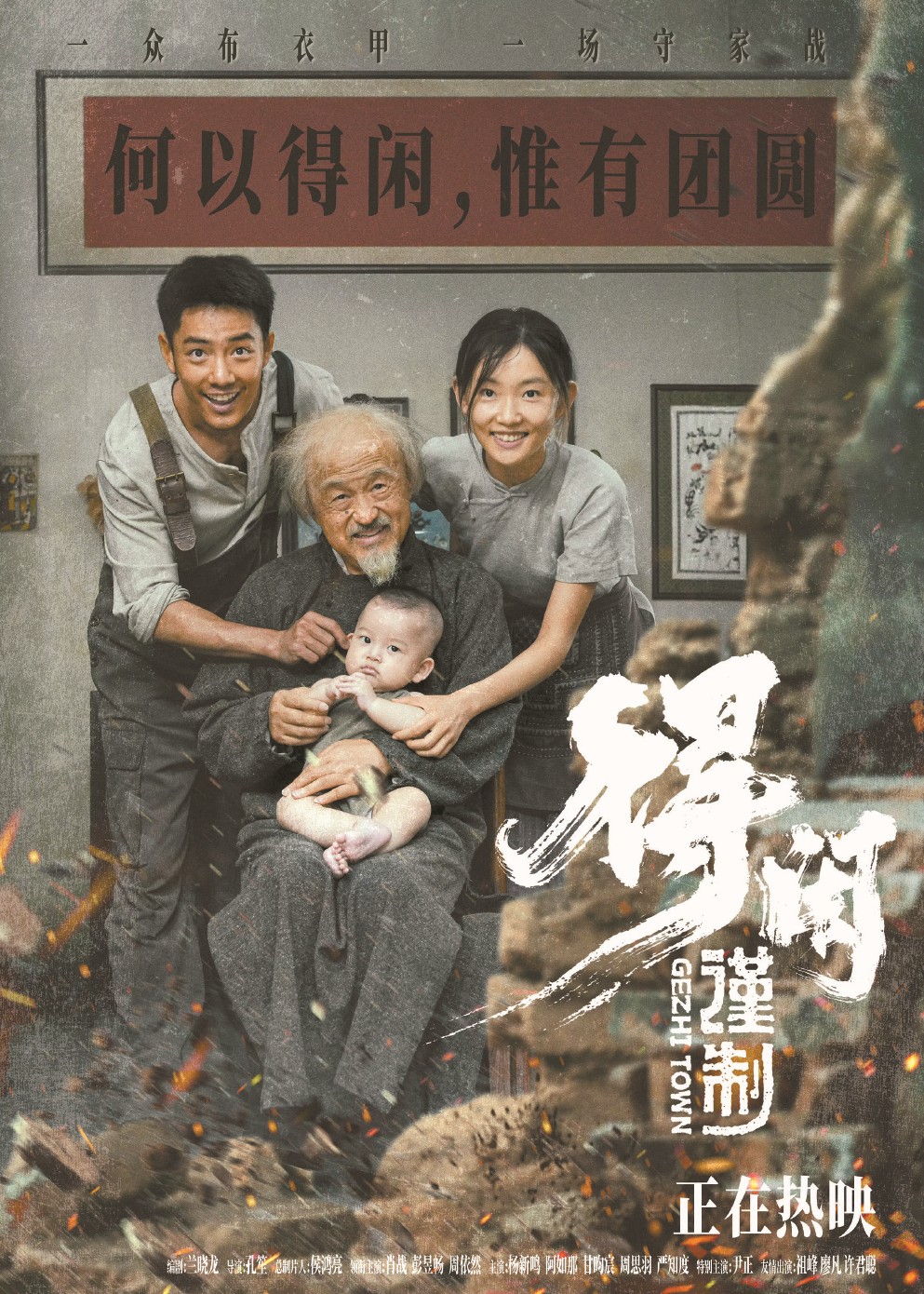
Gezhi Town (得闲谨制, Kong Sheng, 2025)

Fleeing the Japanese, a collection of former munitions factory workers and displaced soldiers take refuge in an abandoned village in Kong Sheng’s wartime action drama Gezhi Town (得闲谨制, dé xián jǐn zhì). Another in a series of films released to mark the 80th anniversary of the Chinese People’s War of Resistance Against Japanese Aggression and the World Anti-Fascist War alongside Dongji Rescue and Dead to Rights, the film is much more overtly propagandistic and an old-fashioned patriotism epic in which the hero’s quest to defend his home against the Japanese is quite obviously intended as a declaration that the modern China too will defend itself from incursion.

Indeed, Dexian (Xiao Zhan) says as much when risking his life to fire the artillery gun at a Japanese tank insisting that his resistance is not just for his own wife and child but for the future generations of the Chinese people. Getting in a few digs at Chiang Kai-Shek and the KMT, the film finds the heroes on the run implicitly denied their homeland in being forced into constant retreat. “I don’t want to die, I just want to go home,” the soldiers are fond of exclaiming, though already traumatised by their experiences, they’re effectively hiding from the war while attempting to create a new homeland in Gezhi Town after deciding to settle there rather than carry on along the road.  

Captain Xiao (Peng Yuchang) might actually be the worst artillery officer in history and has a habit of making exactly the wrong decisions that put all his men in danger while fiercely defending an artillery gun he doesn’t really know how to use and has little intention of doing so anyway. A former munitions worker, Denxian was press-ganged into accompanying them to do maintenance on the guns, but Xiao has only been paying him in IOUs. Like everyone else, he just wants a home and is wary of being made “homeless” again if the Japanese turn up, so has been sharpening many of his tools and his wife’s domestic implements into makeshift weapons, much to her chagrin. Xia Cheng (Zhou Yiran) objects in part because she thinks it’s dangerous for their young son Dengxian who seems to have hearing loss as a direct result of his exposure to warfare when they were on the road.

But the problem is that when the Japanese actually arrive, the villagers are largely clueless. One challenges a Japanese soldier with a bakeshop bayonet but drops it and grins when the soldier lowers his weapon slightly. The soldier then bayonets him. Others run directly into the Japanese soldiers’s blades, while Xiao’s men randomly shoot all their bullets in one go then realise that they have no idea what to do now they’re essentially unarmed even though there are only three Japanese men in the village at this point. Only Denxian, the plucky civilian, knows what to do though even he originally gives the sensible advice to hide and wait for the Japanese soldiers to go away because they won’t have time to do an intensive search of every house.

Then again, the Japanese are quite stupid too and arrogant rather than cruel as they were in Dead to Rights even if constant references are made to Nanjing. Despite the grittiness of its storyline, the film is essentially a comedy filled with goofy humour along with Denxian’s winning hero antics as he resolves to do whatever he can to save his wife and son even if it costs his own life. When the Japanese first arrive, a kind of defeatism sweeps across the village that is only eventually broken by Denxian’s realisation that they don’t have to give in to their fate but might as well go out fighting. The film paints him as a kind of folk hero, echoed in the closing song recounting his exploits while the final title card says that he went on to use his skills in the resistance against American imperialism and the assistance of Korea. Xia Cheng fares a little less well. Despite singing a song about the new women, her role is limited to motherhood while Denxian’s love of his family is a metaphor for love of the nation as he desperately tries to reclaim a home in the wake of constant incursions. Nevertheless, the use of silent-film style intertitles and flashback scenes shot in the style of pathé news sequences add a degree of poignancy to this boy’s own adventure story.


Trailer (Simplified Chinese / English subtitles)

Kazuo Umezu’s Horror Theater: Present (楳図かずお恐怖劇場 プレゼント, Yudai Yamaguchi, 2005)

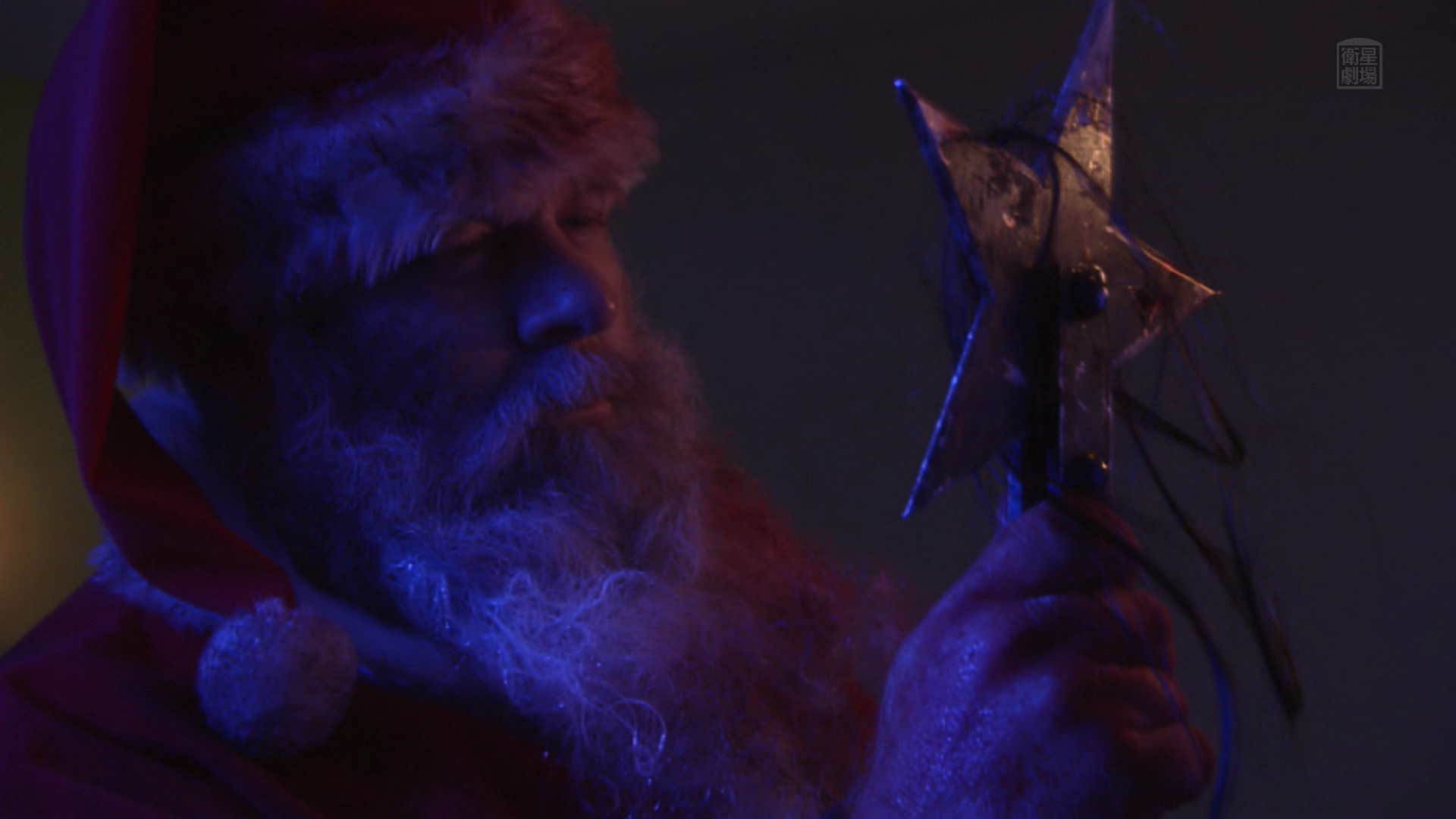
Generally speaking, Santa is quite a benevolent figure. Even the children who are naughty usually just get left out or else awarded a single piece of coal or some other worthy yet dull gift that lets them know how badly they’ve behaved. Not so in the world of Kazuo Umezu, however. You don’t want to get on the wrong side of this Santa, though in other ways it’s less “Santa” that is haunting these youngsters than the disappointed spectres of the children they once were.

As a small child, Yuko (Seiko Iwaido) had a funny dream, though her parents reassured her that Santa would come to save her. However, if she did anything wrong, he’d come after her too. Years later, when Yuko is a student, she writes a Christmas card to a boy she likes and goes to spend the night at a hotel with her friends. But the hotel looks weirdly like her doll’s house from when she was little, and other things from her childhood bedroom seem to turn up here and there. In case that wasn’t weird enough, the reception desk is manned by a creepy Santa, while the atmosphere inside couldn’t really be called “jolly” so much as mildly depressing.

Meanwhile, it almost seems as if Yuko is being bullied by her female friends and has been set up in some way as a figure of fun, though it turns out that Ryosuke (Takamasa Suga) seems to like her too. Only, that’s largely because she seems “pure” in comparison to her friends, which is a bit of a red flag. In any case, though this is a slasher film, it doesn’t really seem to be the case that Yuko is a “bad” girl for getting it on with Ryosuke but for some other transgression. As one of the kids says, they’re all apparently guilty of “desecrating” Christmas, which is what has annoyed Santa to the extent that he’s decided to take back all the gifts he previously gave them. What he actually takes, however, is most of their limbs and internal organs which he feeds to his reindeer.

How they “desecrated” this non-religious event isn’t really clear, but on the other hand it’s true that they don’t make much of an attempt to save each other apart from Ryosuke who is protective of Yuko suggesting that he did actually have feelings for her and wasn’t just looking for a bit of festive nookie. Yuko, by contrast, is revealed to be not quite all she seems and there are other reasons someone, like Santa, might judge her to have been “bad” not least in her rather callous disregard for her parents who were looking forward to seeing her over Christmas. The contrast with her younger self couldn’t be starker, while in her dream, the young Yuko believes herself to have beaten “the evil one” by pulling out her rotten brain which is either a fantastically grim paradox and metaphor about the various ways we disappoint our younger selves, or a kind of course correction in which the young Yuko “became Santa” and removed all the “rotten” parts of her future self’s mind so she won’t end up turning out like that.

The fact that everyone sees a different version of Santa also lends weight to the idea that they’re coming out of their own psyches and Santa is really a manifestation of their own fears and anxieties, though Yuko’s is a fairly conventional take based on what her mother told her Santa looked like. Her mother also attributes young Yuko’s rather gory dream to watching too many splatter films and reflects that perhaps she shouldn’t be letting her do that. “Who on earth would make such films?” she ironically asks in a meta moment while Yuko cheerfully plays “hide and seek” with her new stuffed toys of Santa and Rudolph smiling sweetly while her mother adds that she’s sure Yuko will grow up to be as gentle a woman as she is a child. Meatball Machine director Yudai Yamaguchi, however, indulges in some surreal Christmas gore as Santa goes on his killing spree utilising festive items to hack off the kids’ limbs before stuffing them in his sack and retreating to his decidedly unjolly grotto with his psychotic reindeer. The Christmas spirit is it seems alive and well.


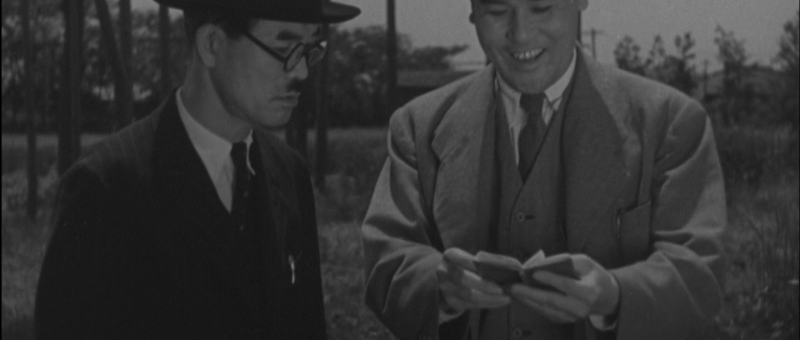
Wedding Day (嫁ぐ日まで, Yasujiro Shimazu, 1940)

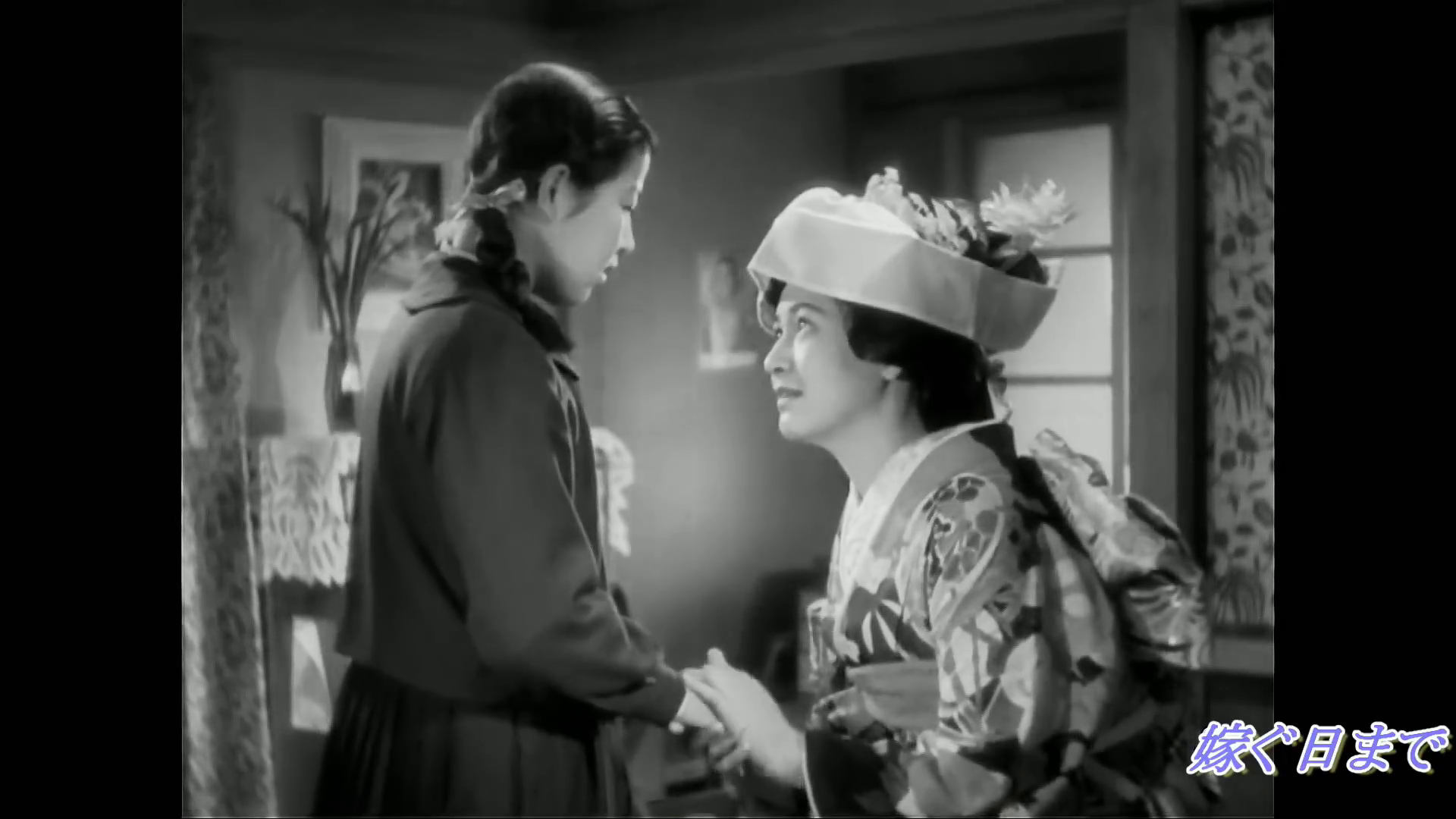
There are two weddings that occur during Yasujiro Shimazu’s Wedding Day (嫁ぐ日まで, Totsugu Hi Made), though we only really see one of them. The earlier part of the film seems to be leading up to the arrival of the widowed father’s second wife as the two daughters find themselves torn in their attachment to their late mother, but as we later discover, this first marriage is only intended to facilitate the second in “freeing” 20-year-old Yoshiko (Setsuko Hara) so that she too may marry.

Then again, perhaps “freeing” is the wrong word, seeing as Yoshiko is given very little choice in anything at all. It’s clear in the opening scenes that Yoshiko has taken over as the lady of the house, looking after the domestic space and raising her younger sister Asako (Yoko Yaguchi) who is still in school. But her mother’s absence is still keenly felt in Yoshiko’s quickening steps to return home after shopping. She’s left the front porch unlocked in anticipation of Asako’s arrival home from school and is anxious that she’ll be put out if she can’t get into the main house, though they could obviously have just given her a key. True to form, Asako has arrived early and come out looking for Yoshiko rather than having to sit and wait. The implication is that there is a domestic need that’s not being met because the house is understaffed and Yoshiko is taking on too much.

This is doubtless why the father, Mr Ubukata (Ko Mihashi), is being pressured into an arranged second marriage, though he doesn’t really seem all that keen and both he and the go-betweens are clear that it’s going to be a “marriage of convenience”. Tsuneko (Sadako Sawamura), a school teacher, seems to be a woman who’s resisted getting married so far and has aged out of the arranged marriage market, which is why she’s only being considered as a second wife to a widower with children. Nevertheless, she’s being taken on mostly to shoulder the domestic burden so that Yoshiko would be free to get married without worrying about leaving her father and sister alone with no one to look after them.

In fact, all of Yoshiko’s actions are dictated by filial piety and duty to the family, which is presumably how the film gets around an increasing desire for more patriotic content in the early 1940s. Asako’s attachment to her late mother is positioned as a barrier to the functioning of this system of social organisation in which feeling is almost secondary. Even if Mr Ubukata insists that it’s important not to forget human feelings and affection while being honest that he wants a wife to do his domestic chores, the point is that the nation is a collection of familial units led by a patriarchal figure to which all must be obedient. Once Yoshiko gets married, she writes to Asako and tells her that she should be nice to their step-mother because she’ll be the one looking after their father in the end once Asako too has married and that’s what will make their father happiest.

As such, Yoshiko’s own wedding arrives almost without warning. She does not marry the young man who’s been interested in her for the entirety of the film, but someone her father chooses, evidently a diplomat, with the help of the same go-betweens who can be seen in the back of the wedding car. The film, in part, seems to be a promotional tool for the song Totsugu Hi Made by Hideko Hirai which plays in a record towards the end where Asako has taken refuge after being scolded by her father by refusing to let go of her late mother’s memory. The lyrics express the mixed feelings of a bride who is giving all her girlish things to a younger sister as she transitions from daughter wife and is breaking from her original family in order to create a new one. Though the film views this as the proper order of things, it is sympathetic to Asako who is being left behind having lost first her mother and then her sister who had become a kind of mother to her.

Everyone has their role to play, and Asako’s is still that of a child as symbolised by her long pigtails. For her part, Tsuneko also does her best to fit into the household and is considerate of both daughters whom she treats kindly and with great sensitivity. Though Yoshiko and Mr Ubukata are keen to erase the memory of the late mother from the house in deference to Tsuneko, when she discovers the photograph Asako had misplaced she gives it back to her and tells her to hang on to it. She also does some of the less pleasant domestic tasks such as scrubbing the floors even if Mr Ubukata tells her to have one of the girls do it instead. But she’s also a part of this system and is fulfilling her role by doing her best to facilitate Yoshiko’s marriage. As she says, a bride should have delicate fingers. A mother, by contrast, those roughed by long years of loving domestic service. 

Without her presence, Yoshiko was in danger of ageing before her time. We can see subtle references to the straitened economic circumstances of the wartime era in the talk of the rising costs of vegetables, their late mother’s lessons in thriftiness, and perhaps how the family’s own circumstances have changed as their aunt enquires about their lack of a maid with Yoshiko avowing that they don’t really need one because she can manage on her own. A radio broadcast airs a recruitment ad for welders offering good salaries, hinting perhaps that more hands are needed for the war effort. But in other ways, life continues. Asako’s friends talk about seeing the 1938 French film Prison Without Bars which perhaps reflects Asako’s rebelliousness or the constraining nature of her of her home and life under entrenched patriarchy. Then again, the film very clearly thinks that’s as it should be in encouraging young women to believe that their duty lies in marriage and in obeying husbands and fathers with barely a recognition of their own hopes or desires.


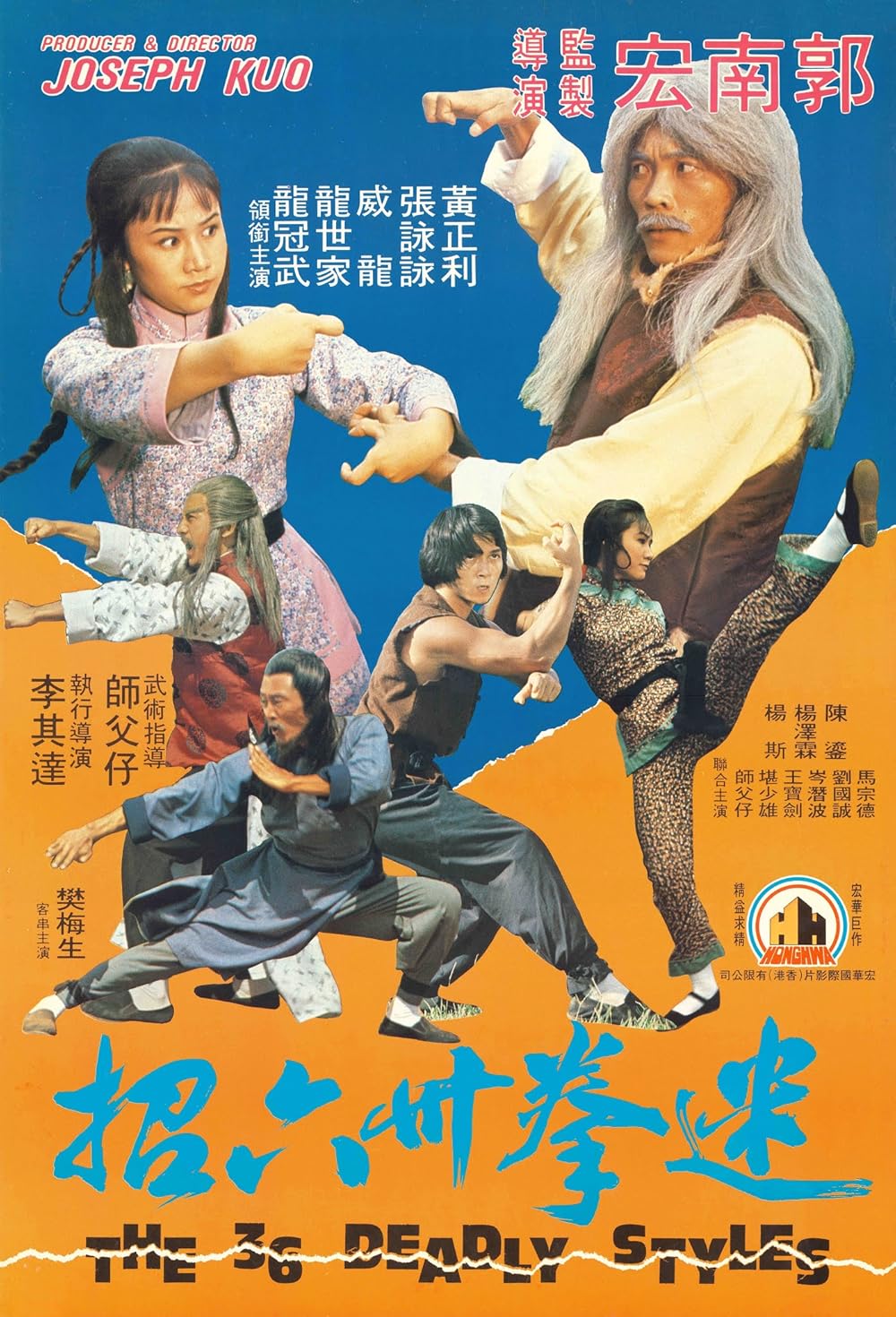
The 36 Deadly Styles (迷拳三十六招, Joseph Kuo, 1979)

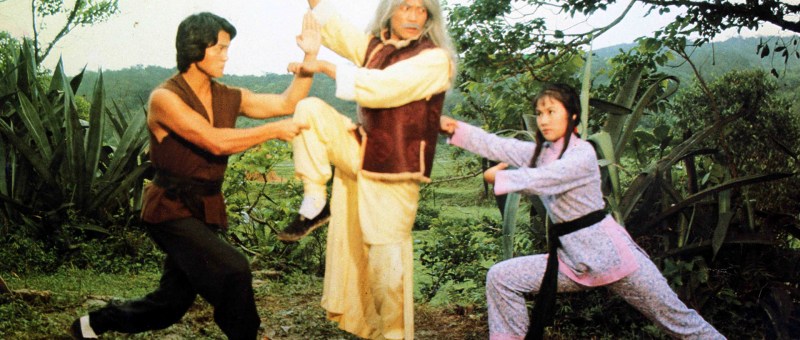
First you and your uncle are forced to flee for your life after getting attacked in a forest, then your uncle dies, you wake up in a monastery where you’re not a monk but the head monk keeps making you do all the chores anyway, and you still have no real idea of what is going on. That’s what happens to poor Wah-jee (Nick Cheung Lik) in Joseph Kuo’s wilfully confusing kung fu drama The 36 Deadly Styles (迷拳三十六招) which leaves us as much in the dark as the hero as he finds himself inexplicably pursued by a man with a red nose and his brothers who are each for some unexplained reason wearing ridiculous wigs. 

As much as we can gather, Wah-jee is on the run because the brother of a man his late father apparently killed by accident after messing up a kung fu move seeks vengeance against his entire family, leaving his uncles scattered and apparently unknown to him. As a young man, however, he is less than impressed with life in the monastery and often displays a comically cocky attitude, though if his torment of two of the lesser monks is intended to be comedic, it often comes off as cruel and bullying rather than just silly banter. Meanwhile, he remains clueless as to how to complete basic tasks familiar to the monks and even manages to get himself into a fight when sent to buy soy milk after forgetting he’d need to pay for it..

While all of this is going on, Kuo switches back and forth between a secondary plot strand concerning another man searching for the book of the 36 Deadly Styles before tracking down the man who’s supposed to have it only to be told he burnt the book ages ago without even reading it because it caused too much trouble in the martial arts world. It’s unclear how or if these two plot strands are intended to be connected, but they do perhaps hint at the confusing nature of personal vendettas and ironically destructive quests for full mastery over a particular style. Tsui-jee’s father (Fan Mei-Sheng) effectively splits his knowledge between Wah-jee and his daughter as a complementary pair of offence/defence partners. 

Meanwhile, Huang (Yeung Chak-Lam) and Tsui-jee’s father are also afflicted by pangs to the heart as a result of their previous battles, which can only be eased with strange medicine and herbal wine. Huang is a Buddhist monk but is seen early on skinning a live snake in order to make such a concoction. These are presumably symbolic of a bodily corruption caused by violence and the slow poisoning of the unresolved past. Wah-jee, a child at the time of his father’s transgression, is also forced to inherit this chaos of which he has little understanding and no real stake save vengeance for his familial disruption and a vindication for his father and brothers. If there is any kind of moral it seems to be in the ridiculous futility of vengeance as dictated by the codes of the martial arts world which demands that honour be satisfied even when it has lost all objective meaning. 

In any case, the narrative is largely unimportant merely connecting (or not) the various action scenes each well choreographed and expertly performed. Wah-jee undergoes a series of training sequences both at the monastery and after uniting with his second uncle who has some idiosyncratic teaching practices of his own that require Wah-jee to humble himself in order to learn. Then again, there are enough strange details to leave us wondering what is exactly is really going on such as Tsu-men suddenly turning up dressed as a woman looking for someone other than Wah-jee, eventually used for another bit of awkward comic relief as he struggles to write a letter and has to use drawings to make his point because he can’t remember the right characters. None of this makes any sense, but perhaps it never does when you live for the fight alone. 

Murderer Report (살인자 리포트, Cho Young-jun, 2025)

“Call it a psychodrama,” the psychiatrist/serial killer at the centre of Cho Young-jun’s psychological thriller Murderer Report (살인자 리포트, Salinja Report) suggests in a meta moment, and the film is, in some ways, a battle of wits between down on her luck journalist Sun-ju (Cho Yeo-Jeong) and a man who claims to have killed 11 people. There is, of course, more going on than it first seems, but also a push and pull between interviewer and interviewee in which the tables are always turning.

One might debate the wisdom of entering a hotel room with a man who says he’s a serial killer (Jung Sung-Il), but Sun-ju insists she’s agreeing to meet him not because she could really use an exclusive, but because he told her she could save his next victim by agreeing to interview him properly. She has no way of knowing whether he’s telling the truth, but leans towards assuming he’s a crank seeing as the victims he named didn’t have any obvious connections and were all killed in different ways, but still it’s a risky business. Despite assuring him that she hadn’t told anyone about their meeting, Sun-ju is being watched over by her policeman boyfriend Sang-woo (Kim Tae-Han) who is in the room below waiting to strike.

As for why the psychiatrist might want to be interviewed, he describes it as if it’s a kind of therapy session in which he can interrogate himself to ensure his practice is still justified. He believes it is because he only kills bad people that have harmed his patients and sees it as just another part of his treatment plan in alleviating his patients’ suffering as if he were excising a painful tumour from their lives. To that extent, it’s as if he’s providing extrajudicial justice in the face of a justice system in which he believes many have lost faith when criminals get off with light sentences while victims and their families will suffer forever. According to the psychiatrist, revenge is the best way to alleviate their pain. 

Or perhaps, as Sun-ju says, he just likes killing people and is trying to rationalise his actions. After all, even if he doesn’t, the patients probably feel guilty, though the psychiatrist claims to treat that too as part of his holistic service. Little by little he chips away at Sun-ju’s civility, pushing her towards an admission of her hypocrisy that if it were her in this situation and someone caused harm to her child, then she’d probably want them dead too. The psychiatrist obviously knows more about her than she does about him, including her career setbacks and difficult relationship with her teenage daughter whom she fears might rather live with her father instead.

That Sun-ju’s workplace troubles are concerned with a failed attempt to expose the wrongdoings of a major corporation who leaked toxic substances into the water supply leading to an increase in childhood cancers, further deepens the sense of rottenness in contemporary society. The corporation managed to cover it up by bribing prosecutors and politicians, implying that only a man like the psychiatrist is capable of providing true justice despite his claims that he isn’t trying to cure the slickness in his society only alleviate the pain of his patients. The doctor challenges Sun-ju’s ethics too, insisting that she as a duty to social justice and the safety of citizens, so rather than being here interviewing him she should have alerted law enforcement. Of course, Sun-ju has actually done that in having Sung-woo watch her, breaking her promise to keep it confidential, but perhaps trying to have her cake and eat it too. 

Still, the jury’s out on who is really interviewing who as the doctor and Sun-ju each attempt to dominate the narrative. This is indeed a psychodrama, or an extreme form of therapy in which the doctor is trying to force Sun-ju into a self-examination in order to alert her to things going on in her life that she is ironically unaware of. She, meanwhile, begins to get under his skin to the extent that he is mildly shaken from his mission, until hearing that there is another patient waiting to see him so his services may once again be needed. Tense, if eventually outlandish, the film reaches a rather troubling conclusion but is truly at its best in the verbal sparring between the doctor and Sun-ju each of whom has hidden agendas and a singular goal in mind.


Trailer (English subtitles)