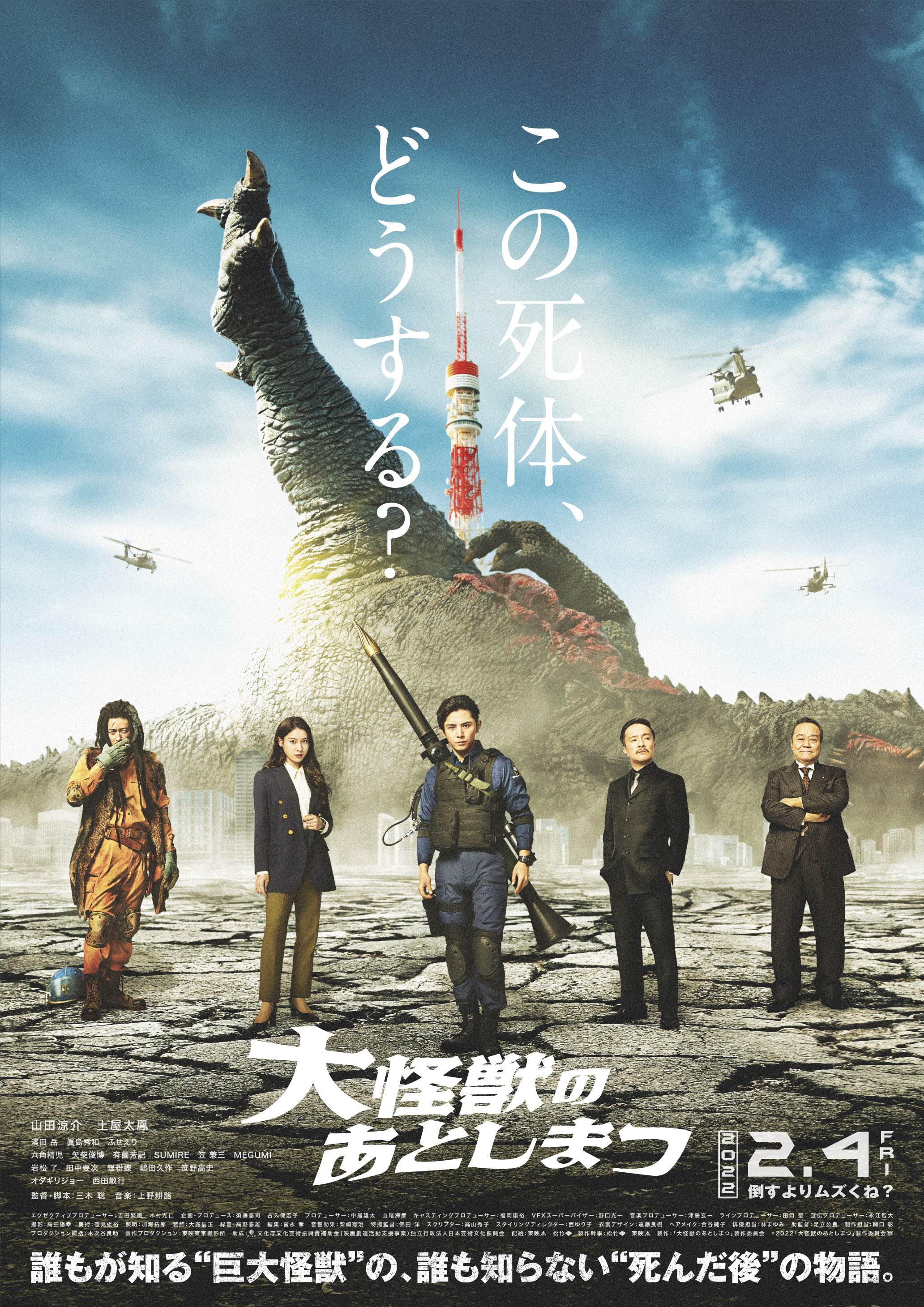
What to Do With the Dead Kaiju? (大怪獣のあとしまつ, Satoshi Miki, 2022) [Fantasia 2022]

The sudden appearance of a deus ex machina is usually where a story ends. After all, that’s the point. Whatever crisis is in play is suddenly ended without explanation. But what happens then? Satoshi Miki’s What to Do With the Dead Kaiju? (大怪獣のあとしまつ, Daikaiju no Atoshimatsu) steps in to wonder what it is that comes next after a giant monster has been defeated. Someone’s going to have to clean all that up, and in a surprising twist a fair few people are keen to take on the burden. Like Hideaki Anno & Shinji Higuchi’s Shin Godzilla, which the film is on one level at least attempting to parody, Miki’s kaiju comedy is a government satire this time casting shade on the nation’s pandemic response, though with considerably less nuance. 

As the opening onscreen text, a nod to Shin Godzilla, and accompanying voiceover tell us Japan had been plagued by a kaiju but it suddenly died after being engulfed by a mysterious ball of light. While attempting to comedown from the constant state of anxiety under which they’d been living, the prime minister (Toshiyuki Nishida) is at a loss for what to do next especially as no-one really knows if the kaiju corpse is safe. While trying to ascertain whether or not the fallen kaiju might explode, spread dangerous radiation, or present some other kind of threat, government departments start fighting amongst themselves about whose responsibility the clean up effort must be all of them wanting the glory but not the work or expense. 

Some suggest turning the kaiju’s body into a massive tourist attraction and are therefore less keen on anything that involves destroying it while others think it should be preserved and put in a museum. The government has placed the SJF, a militarised science force set up after a terrorist incident, in charge but isn’t listening to much of what they’re saying. Meanwhile, evil moustachioed staffer Amane (Gaku Hamada) is playing his own game behind the scenes which also involves his wife, Yukino (Tao Tsuchiya), who was previously engaged to the leader of the SJF Taskforce, Arata (Ryosuke Yamada), before he abruptly disappeared after being swallowed by a mysterious ball of light three years previously. 

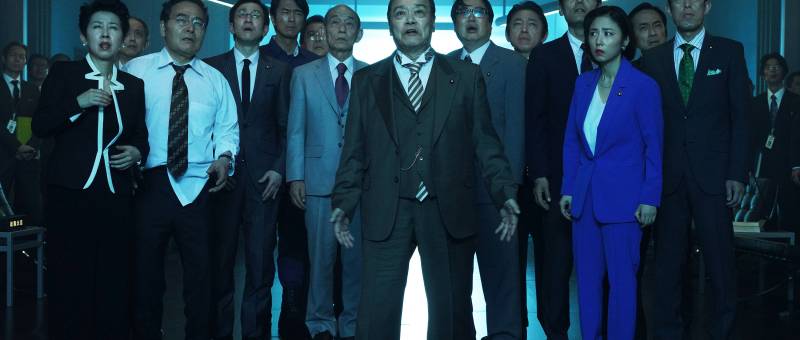
The political satire largely revolves around the indecisive PM, who at one point says he has no control or responsibility for what the other ministers do, and his anarchic cabinet meetings in which politicians run round in circles and insult each other like children. Not exactly subtle, much of the humour is indeed childish and scatological while one minister’s running gag is making sleazy sexist remarks even at one point accidentally playing a saucy video instead of displaying the latest kaiju data on the communal screen. The government experiences a public backlash in deciding to name the kaiju “Hope” which lends an ironic air to its rampage not to mention the necessity of its destruction, while the decision to declare the body safe for political reasons despite knowing it probably isn’t (“protecting the people’s right not to know”) casts shade on the pandemic response among other crises as do the constant refrains about getting back to normal now the crisis is over. 

Then again, there’s something a little uncomfortable going on with the film’s geopolitical perspectives, throwing up an angry politician on the screen with a mangled name who insists that the kaiju originated on their territory and must be returned to them in what seems to be an awkward allusion to Japan’s ongoing territorial disputes with Korea even while it’s suggested that the Americans wouldn’t mind getting their hands on the corpse either for purposes of experimentation and research. On the other hand it also becomes apparent that the Japanese military have deliberately destroyed civilian homes and cost lives in a reckless attempt to stop the kaiju which obviously failed. 

The closing scenes hint we may have been in a slightly different franchise than the one we thought we were dealing with, another deus ex machina suddenly arriving to save the day after the villains almost cause accidental mass destruction. The film’s problem may be that it’s the wrong kind of silly, relying on lowbrow humour while otherwise trying to conform to a blockbuster formula in which the kaiju corpse becomes the new kaiju but the battleground is bureaucracy. Ultimately the film’s prognosis is bleak. Even when the PM has achieved sufficient growth to realise he should make some kind of decision he makes the wrong call leaving everything up to a lone hero while fundamentally failing to come to any conclusion on what to do with a dead kaiju save trying to ensure it does not blow up in his face. 


What to Do With the Dead Kaiju? screened as part of this year’s Fantasia International Film Festival.

Original trailer (English subtitles)

Japan Society Monthly Classics: After Life

Hirokazu Koreeda’s 1998 masterpiece comes to Japan Society New York on August 12. Drawing on his documentary work, Koreeda meditates on memory and cinema as a collection of recently deceased souls are invited to preserve their most precious moments on film before moving on to the other side. You can read our full review of the film here.

After Life screens at Japan Society New York at 7pm on Aug. 12 as part of the Monthly Classics series.. Tickets priced at $15, $12 students & seniors, and $5 members are already on sale via Japan Society.

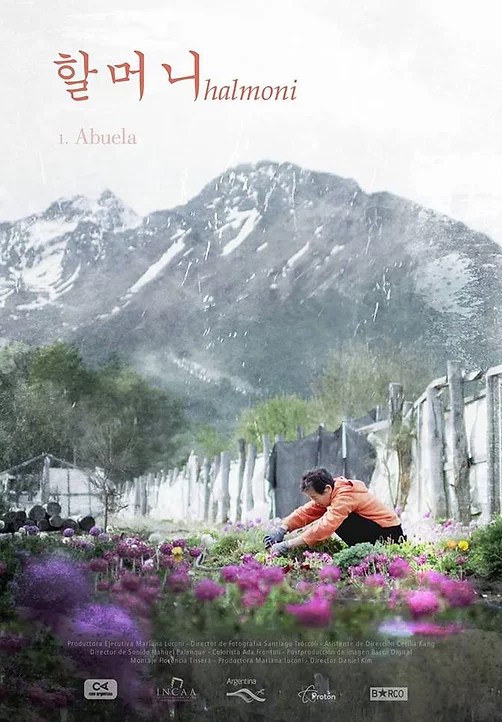
Halmoni (Daniel Kim, 2017)

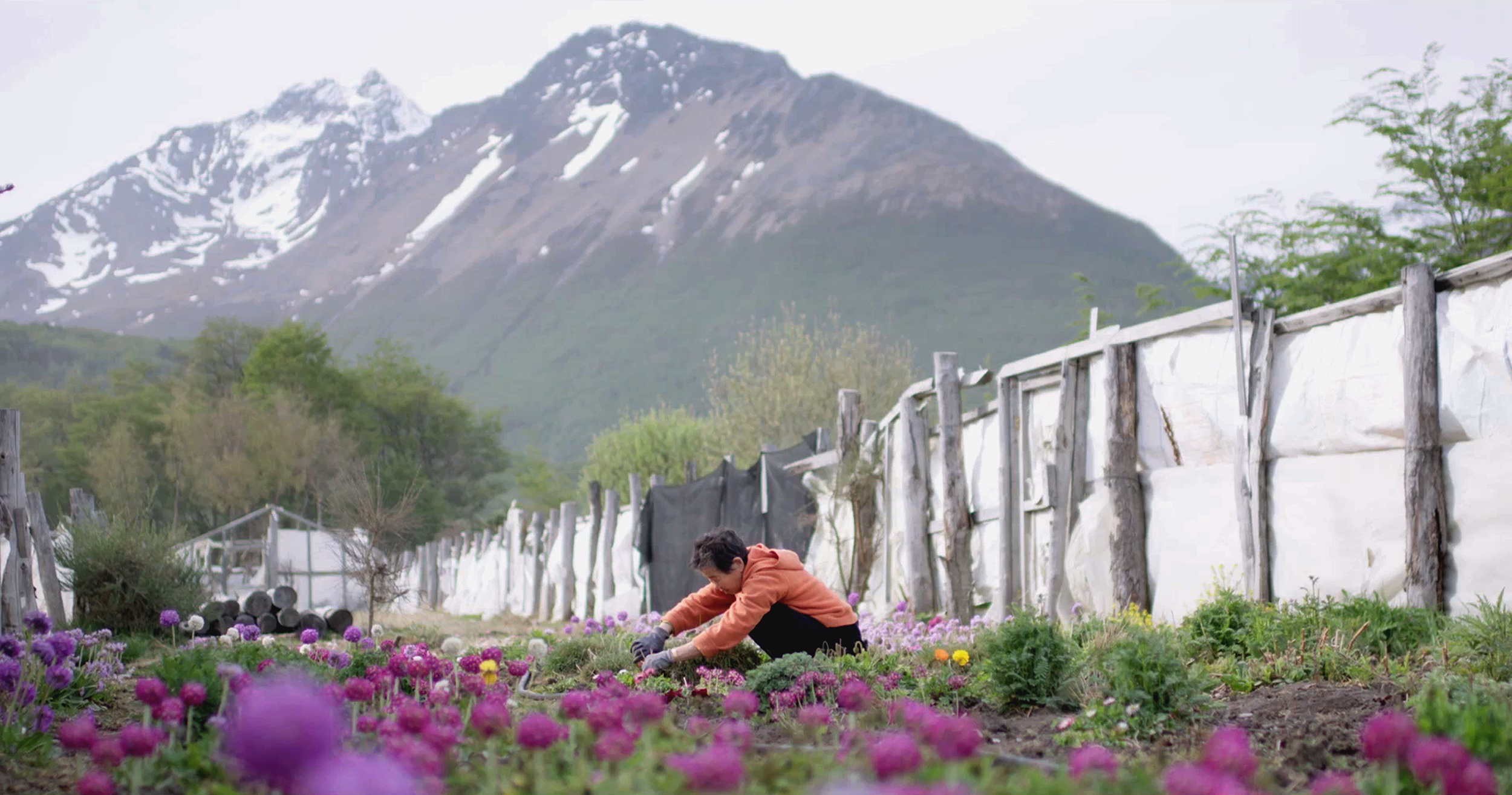
A Korean grandmother creates a paradise amid the arid lands of Argentina in Daniel Kim’s personal documentary, Halmoni. Underneath the film’s title, the Spanish translation, Abuela, appears hinting at the duality of cultures which the director contemplates while examining the longterm effects of the migration on his family who seem to console themselves with the notion that home is a place where you “live with a fully belly” while his grandmother finds a reason to live in the cultivation of land, planting flowers that will bloom long after she is gone. 

Kim’s grandparents married during the chaos of the Korean War and migrated to Argentina after a fire claimed the school where his grandfather had been working as a teacher. Travelling firstly to Brazil, the family then came to Argentina and received land from the government with a plan of growing lettuce which was otherwise thought unsuited to the terrain though grandfather was confident he could make it work after seeing fields of chicory growing in the same area. Though there have apparently been some problems with money and ownership, the farm now appears large and successful with the family still working it, the grandmother explaining that work keeps her alive and gives her life both rhythm and meaning. 

Yet it’s obvious that life there has not been easy. The land and farmhouse are very remote and when the family first arrived, there was not even a road that led to it. The grandfather and his son made one themselves while the son was later forced to give up on his education in Buenos Aires to help his family run the farm. As we later discover both men later took to drink in disappointment with their lives and eventually died of it. The women of the family who have largely kept the farm going also complain about the extreme cold and heavy snow which further isolate it and trap them in a liminal place that is both Korea and Argentina and simultaneously neither. 

The daughter suggests she’d rather be in Buenos Aires, but when she’s in Buenos Aires all she thinks about is the farm. Later in the film, the grandmother travels to Korea for the first time in 23 years and is moved on realising that she no longer recognises her now middle-aged nephew. Many of her friends and remaining family members encourage her to return to Korea, but she points out that her children and grandchildren are all settled in Argentina while the cultures have become so blurred for her that she lives moment to moment not always sure of what is Korea and what is Argentina. Another woman later says something similar but in Spanish, that if she were to go to Korea she doesn’t think she would feel Korean but neither does she feel Argentinian in Argentina and does not know where she is from. 

Yet the grandmother’s friends also worry for her when she tells them that despite her long years of hard work she has no savings while those who migrated to America or stayed in Korea were often able to find financial stability that will accompany them into old age. Kim briefly includes a scene from home video in which one of the children angrily challenges the grandfather and accuses him of misusing money while also raising some kind of religious dispute which receives no further explanation but hints at a buried resentment and discord within the family which is otherwise absent from the cheerful footage of them celebrating a wedding and coming together with other members of the Korean community. Meanwhile the government is said to have taken back half of their land when the farm experienced financial difficulty and that it was the inability to finish what his father had started that later drove the son to drink. Even so another of the women hurriedly finishes her tea worried that people watching the film will assume they are lazy while a man behind her counters that they should show them that they rest too. The grandmother tells her granddaughter about planting seeds and that some flowers must disappear so that new ones can grow as she patiently tends to her orchards, a hard-won paradise forged in arid land by little more than love and perseverance. 


Halmoni screens at the Korean Cultural Centre, London on 4th August as part of Korean Film Nights 2022: Living Memories.

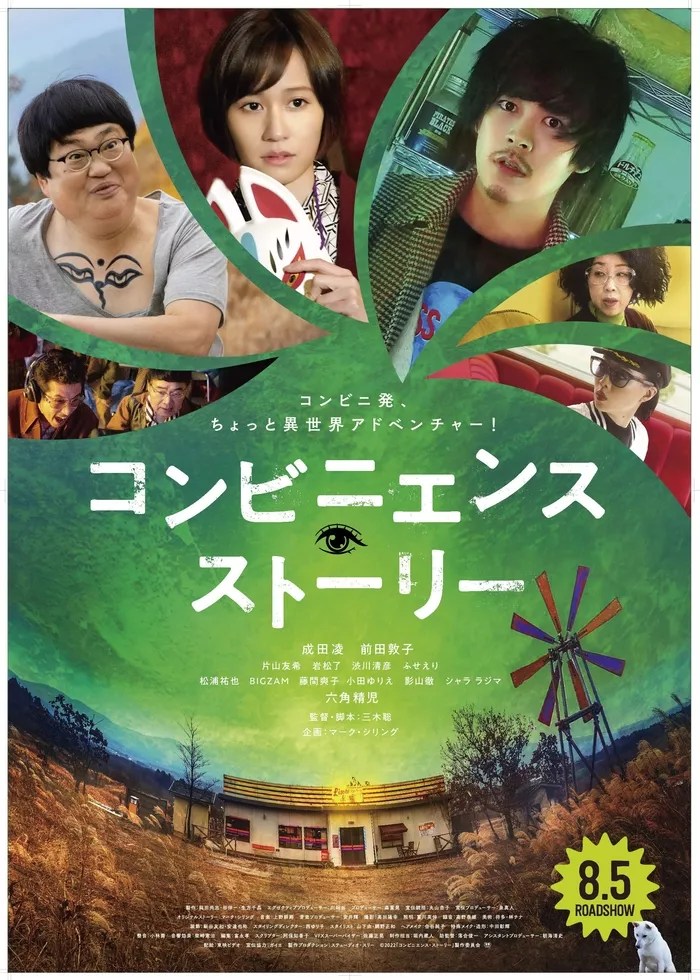
Convenience Story (コンビニエンス・ストーリー, Satoshi Miki, 2022) [Fantasia 2022]

“This is unreal, but it’s real” a blocked screenwriter exclaims in finding himself in an uncanny world only slightly divorced from his previous reality but perhaps excellent fodder for his art. Quite clearly influenced by David Lynch in its Twin Peaks-esque setting, jaunty jazz score, and overt references to Mulholland Drive, Fire Walk with Me, and Blue Velvet, Convenience Story draws inspiration from a short story by veteran Japan Times critic Mark Schilling to spin an elliptical tale of otherworldly adventure and inexorable fate. 

Down on his luck screenwriter Kato (Ryo Narita) can’t seem to get an idea off the ground and is in an increasingly volatile relationship with aspiring actress Zigag (Yuki Katayama) whose dog Cerberus he barely tolerates. When he has to venture out in search of Cerberus’ favourite brand of dog food, Weredog, the adorable pooch accidentally deletes the screenplay Kato has been working on leading him to decide to abandon him in the remote countryside. However, after damaging a Buddhist statue, he stops at a random petrol station convenience store which looks like it hasn’t been touched since the 1980s. Sucked through some kind of portal, he finds himself in an alternate combini reality in the company of pretty damsel in distress Keiko (Atsuko Maeda) and her decidedly weird husband Nagumo (Seiji Rokkaku). 

As the film begins to head into The Postman Always Rings Twice territory, Kato begins to rejuvenate his creative mojo while Zigzag, who is about to get her big break working with an incredibly insecure director (Kiyohiko Shibukawa) and sleazy producer, wonders what’s happened to her dog and takes drastic steps to find out. “Life’s big chances come in an instant” the director insists, though for Kato time seems to have stopped while he contemplates the combini existence. After all, it’s called a convenience store for a reason. They have everything you’ll ever need so there’s no real reason to leave. Smarting from his creative block, Kato asks if convenience stores sell interesting stories and in a way they do, or at least this one and the one in his neighbourhood which may or may not be connected by some kind of cosmic combini network, conspire to feed his imagination so he can deliver a promising script to his eccentric editor (Eri Fuse). 

Then again, Keiko asks him if he writes about an ideal world or his personal reality and it’s a question that he can’t quite answer hinting that this strange alternate universe may be some kind of fever dream conjured up by his latent imagination. “A screenwriter’s job is to fantasise”, Keiko seductively tells him, though his editor and a producer with whom he had also exchanged a flirtatious email had previously giggled over his non-starter of a screenplay which they described as an embarrassingly chauvinistic male fantasy. That’s certainly one way you could describe his otherworldly combini adventure in the foxy damsel in distress characterisation of Keiko who quite obviously just wants him to take her away from all this, sick of the oppressive convenience of the combini life and of her incredibly strange, seemingly controlling husband. 

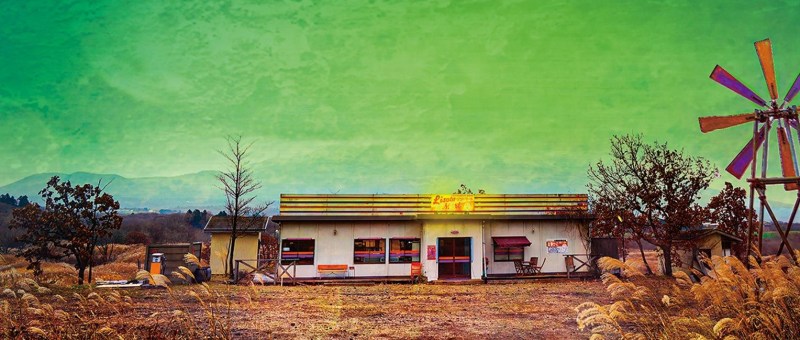
Then again on their attempt to escape, the couple end up in an endless three-day ceremony of eternity during which the souls of the dead are supposed to journey to the afterlife. Everyone is keen on travelling to another world, except perhaps for Kato who is already in one, yet struggles to escape the uncanny uniformity of the combini society. “Another world exists in here” Kato is creepily told on a visit to his local, much more contemporary though not all that different, convenience store beginning to realise that perhaps there is no real escape from this maddening world of convenience at least not for him. Shades of Orpheus and Eurydice guide him out of his purgatorial existence yet ironically only into more of the same until the inevitable, karmic conclusion. Fantastic production design adds to the sense of retro absurdity strongly recalling Twin Peaks in its use of ‘50s-style diners and the frozen in time petrol station road stop existing for some reason the middle of nowhere with no road in sight, while casting a note of fatalistic dread over the life of a blocked screenwriter who eventually comes to realise that convenience isn’t always quite what it’s cracked up to be.


Convenience Story screened as part of this year’s Fantasia International Film Festival.

Original trailer (English subtitles)

Mama Boy (初戀慢半拍, Arvin Chen, 2022)

A diffident young man gets a few lessons in love after falling for a middle-aged madam in Arvin Chen’s charming romantic dramedy, Mama Boy (初戀慢半拍, chūliàn mànbànpāi). The English-language title at least is a kind of pun, the awkward hero both described as a mother’s boy and falling for the mama of a hotel providing sexual services, but also hints at the awkwardness involved in his attempt to assert his independence at the comparatively late age of 30 by choosing to spend time with a mother the polar opposite of his own. 

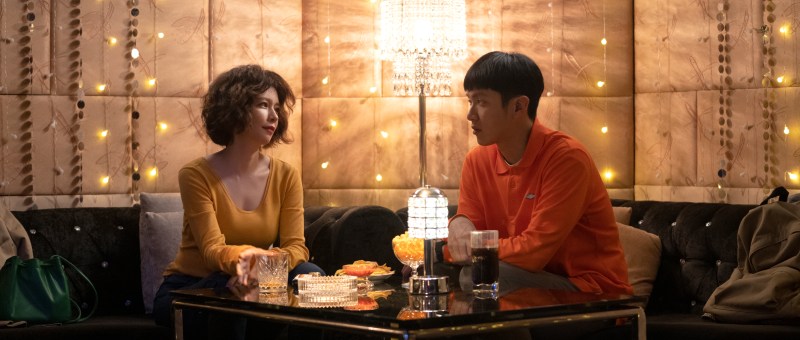
Xiao-hong’s (Kai Ko) mother Meiling (Yu Tzu-yu) describes him as “shy”, though the mother of one of the girls she attempts to set him up with less charitably brands him “not normal”. Not normal is closer to the way Xiao-hong thinks of himself, wishing his mother would stop with the blind dates knowing that in his awkwardness he ends up making women feel uncomfortable and has no idea how to talk to them. His sleazy cousin/boss at the tropical fish shop where he works, insists on taking him to an exclusive brothel where he is instantly captivated by the middle-aged madam, Sister Lele (Vivian Hsu). Too shy to say anything, he continues returning to the hotel and hiring a sex worker to sit blankly in the room solely for the opportunity of exchanging a few words with her. 

The two of them are in a sense in similar positions, a mother frustrated by a wayward son, and a son frustrated by his possessive mother. Some of Xiao-hong’s attraction at least is maternal in seeking a freer parental hand. Unlike his mother, Lele boosts his confidence by making him believe that he’s alright and girls are going to like him, while taking him to cosy nightspots and teaching him the basics of romance. She meanwhile admires him as an ideal son the polar opposite of her own. Weijie (Fandy Fan) only contacts her to ask for money (his father no longer answers his calls) and seems to be involved in several dodgy get rich quick schemes the latest of which is selling knock off wine while he’s also got himself in trouble with loansharks. 

There is something a little uncomfortable in the contrast presented between the two women, the prim and proper mum Meiling raising a sweet, polite child like Xiao-hong who nevertheless lacks several important life skills because of her overparenting, while the child raised by former sex worker Lele is a no good two bit wise guy. Lele certainly seems to see Xiao-hong as a symbol of her failed maternity believing that his mother must have raised him well while she blames herself for her son’s failings feeling as if she couldn’t give Weijie the attention he deserved because she was a single mother who had to work to support him. 

Meanwhile they are also each lonely, Xiao-hong shy and isolated and Lele spending her nights drinking alone in bars being chatted up by sleazy men. Spending time together they develop a tentative bond of love and affection only to find their connection interrupted by Weijie and Meiling each of whom obviously disapprove. Meiling has a suitor of her own in a retired police academy professor she rejects out of a sense of repressive properness but eventually warms to after feeling she needs police assistance to reclaim her son from Lele realising that he’s stopped picking her up from work in order to give Lele lifts instead. 

Despite the romantic themes, both women are essentially reduced to the maternal through their experiences with good son Xiao-hong, Lele trying to patch things up with the wayward Weijie while Meiling realises that she’s overstepped the mark and and will have to let go a little to let Xiao-hong live his life or risk turning him into a perpetual mother’s boy who’ll be all alone once she’s gone. Xiao-hong meanwhile begins to gain confidence, asserting himself as an individual free of his mother’s control now no longer so diffident in talking to women thanks to the patient ministrations of Lele. With its quirky production design and fairytale atmosphere Chen’s tale of first love delayed is also one of unexpected connection and mutual acceptance that perhaps missteps in effectively negating the relationship at its centre but nevertheless has only sympathy for its lovelorn hero. 


Mama Boy screened as part of this year’s New York Asian Film Festival.

Original trailer (English subtitles)

Images: © 2022 Filmagic Pictures Co.

The Girl From the Other Side (とつくにの少女, Yutaro Kubo & Satomi Maiya, 2022) [Fantasia 2022]

A kindly exile and lonely little girl find mutual salvation in Yutaro Kubo & Satomi Maiya’s gorgeously animated fairytale, The Girl from the Other Side (とつくにの少女, Totsukuni no Shojo). A poetic mood piece, the film has a painterly feel reminiscent of classic children’s picture books and essentially tells a very simple story about the redemptive power of kindness and acceptance in which two exiles find the strength to begin again taking care of the other in a world of warmth and safety.

Set in an indistinct time period, the film opens with a cohort of soldiers from the Inside dumping bodies in the forest, apparently victims of some kind of curse. Hearing a noise, one turns round explaining that they have to kill them all or their efforts will be meaningless, while mysterious man with goat horns on his head discovers the angelic figure of a little girl, Shiva (Rie Takahashi), fast asleep. Evading the soldier, who is later himself “cursed”, the man takes her home with him but explains that he cannot ever touch her, not even to treat her wounds, lest he infect her with the “curse” though he is not like the other “Outsiders” who spread it deliberately. 

The curse has robbed the man, whom Shiva calls “Teacher” (Jun Fukuyama), of his humanity. He is certain that he was once human and lived a normal life with a wife and child behind the walls of the Inside, but is now a lonely exile who no longer knows his name. He worries that Shiva will be frightened by his appearance and may choose to leave putting herself in danger in the process but Shiva accepts him instantly and quickly settles in to his cottage-style home while experiencing brief nightmares in which she is eventually rescued from her loneliness by the Teacher. But the closer they get, the more Teacher feels guilty convinced that Shiva would be better off in a community with other humans rather than living with him under the danger of inheriting his curse. 

Shiva and Teacher are each in their ways exiles, though there is also something dark in the constant references to Insiders and Outsiders along with the looming threat of the military and their determination to wipe out anything “suspicious” fearful of any kind of contamoination. The Outsiders are those in some way rejected by the mainstream society, many of whom have become dark and marauding, feeding on the souls of others who live outside the walls. Teacher wants to save Shiva from the unbearable loneliness he feels as a cursed man who no longer knows his past and is forbidden from human touch yet in the need to protect her he also discovers a purpose and begins to recover something of his humanity. “She is my light” he later explains to a supernatural force, himself stunned by the realisation that even he could be a light for someone else and discovering in it a new possibility for life. 

There is of course a sadness for the world that’s been lost and can never be regained, but also warmth and tenderness in the simple life of Teacher and the girl as symbolised by smoke rising from their chimney as if the house itself were breathing. As Teacher had said, all things must end in time, but the time is not necessarily now and there is much to be done before it runs out. In Teacher, Shiva finds a place of safety and protection. In her dreams she is rescued by the hands which on waking cannot touch her, while Teacher finds in her a path towards reclaiming his humanity. They may never find their way back to those they’ve lost, but they can now begin again as a new family overcoming their loneliness and despair through mutual compassion. 

Beautifully illustrated with a retro flickering effect and water colour-esque backgrounds, Girl From the Other Side situates itself in a melancholy world in which some are consumed by the curse of their inner darkness and suddenly sprout into huge burnt trees, yet as Shiva says there’s a poignancy even in their destruction noticing that whole communities sprouted together rather than wandering apart. Moving and tender, it reaches a kind of serenity in its final moments in the simple act of living with warmth and possibility. 


The Girl From the Other Side screened as part of this year’s Fantasia International Film Festival.

Original trailer (no subtitles)

Hansan: Rising Dragon (한산: 용의 출현, Kim Han-min, 2022)

“A battle of the righteous against the unrighteous” is how Admiral Yi (Park Hae-il) frames his resistance against the Japanese invasion, not a war between nations but an attempt to push back against the authoritarian ruthlessness of Toyotomi Hideyoshi’s desire to conquer most of Asia in a bid to cement his historical legacy as his health continued to fail. Hansan: Rising Dragon (한산: 용의 출현, Hansan: Yongui Chulhyeon) is a kind of prequel to 2014’s The Admiral: Roaring Currents set five years earlier during Hideyoshi’s first campaign and pits the the wise and steadfast Admiral Yi against ambitious yet overconfident Japanese general Wakizaka* (Byun Yo-han). 

Wakizaka’s ruthless cruelty is not in dispute even as the film opens with him dispatching a report stating that he intends to destroy the Korean naval detachment harboured on the southern coast which it seems is all that stands between him and conquest of the peninsula in its capacity to disrupt his supply line. When some of his men return in defeat talking about a “Bokkaisen” with a dragon’s head spouting fire, Wakizaka orders them killed to stop them spreading rumours of supernatural threat among the troops. Retrieving what looks to be a dragon’s tooth from the ruined vessel he begins to realise there might be something their story but still doesn’t take the threat of Admiral Yi’s fleet very seriously. 


Admiral Yi meanwhile, who was wounded in the same battle pitching his bow and arrow against a Japanese rifleman, is plagued by dreams and anxiety while trying to sort out a strategy for dealing with the Japanese invasion. Some of his fellow officers think offence is the best defence and they should try to strike before Wakizaka is able to amass his forces, while others think they should play it safe and continue to defend the coast. He and his chief engineer are working on improvements to their turtle boat which had so spooked the Japanese soldiers at the previous battle but at the same time had its limitations. They don’t call it a turtle boat for nothing, on ramming into the Japanese vessel its dragonhead became lodged in the side locking the two boats in a deathly embrace. Yi suggests removing it, but as it turns out the ability to latch on to the enemy like a snapping turtle can also be an advantage if you know how to use it while figuring out how to get the best out of limited resources, along with managing interpersonal relations, turns out to be Wakizaka’s weakness. 

Ever ambitious, Wakizaka is distracted by petty rivalry with his co-general who disagrees with his strategies and eventually betrays him. A Korean-speaking Japanese retainer sent as a spy later decides to defect precisely because of this ruthless disregard for the lives of one’s fellow soldiers, struck by Yi’s personal presence on the battlefield and willingness to put himself in harm’s way to protect his men. Though he is originally viewed with suspicion by some, Junsa (Kim Sung-kyu) is embraced as a fellow soldier after joining the defence forces at an inland fortress and told that all that is necessary is that he have a “shared righteous spirit” fighting together against the “unrighteous” Japanese invasion. 

In any case, neither Wakizaka or the Japanese care very much about Korea all they’re doing is clearing a path to China. Meanwhile, the nervous king continues to travel North leaving his generals fearful he will defect to the Ming and they will end up losing their sovereignty to China if not to Japan. Wakizaka’s strategy is somewhat hubristic, leaving himself vulnerable in the rear as he pushes forward while using land tactics to fight a war at sea and thereby allowing Yi to set a trap for him perfectly tailored to his vain complacency. Wakizaka may have the numbers, but Yi has superior technology and the respect of his men. Quite fittingly the real Wakizaka was marooned on an island after the battle and had to survive on seaweed while waiting for his chance to escape. With plenty of spy action, double crossings and betrayals, Kim Han-min saves the big guns for the final naval battle which begins in ominous fog before exploding in all out war but still makes clear that the battle is on the side of righteousness and that Yi owes his victory to human solidarity and compassion (leaving aside his torture of suspected spies) and Wakizaka his defeat to hubris and cruelty. 


Hansan: Rising Dragon screened as part of this year’s New York Asian Film Festival and is in US cinemas now courtesy of Well Go USA.

*these subtitles use Wakizaka but his name is sometimes also romanised as Wakisaka.

International trailer (English subtitles)

Images: Courtesy of Well Go USA Entertainment

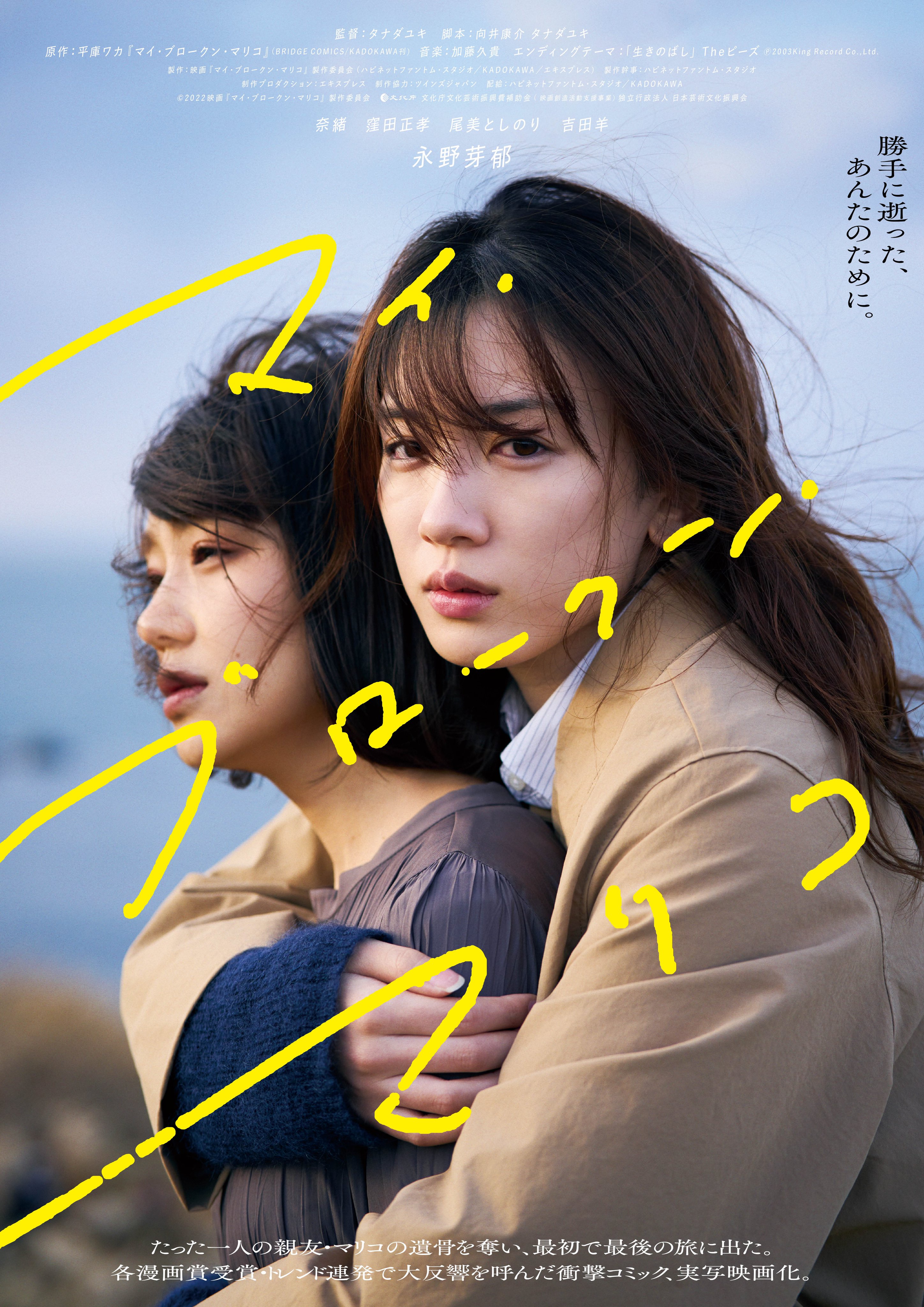
My Broken Mariko (マイ・ブロークン・マリコ, Yuki Tanada, 2022) [Fantasia 2022]

“The only thing you can do for a person who’s gone, is to live” according to a kindly soul at a train station attempting to comfort the heroine of Yuki Tanada’s adaptation of the manga by Hiroko Waka, My Broken Mariko (マイ・ブロークン・マリコ). It is in many ways, however, Shiino (Mei Nagano) who is trying to put herself back together after earth-shattering loss, attempting to reclaim her friend’s memory while struggling to reorient her life in the wake of her absence. Yet what she comes to realise is that all she can do for Mariko (Nao) now is to try to live.

At a cafe one ordinary day, Shiino hears the news announce the death of a woman presumed to have taken her own life who has the same name as her childhood friend. Overcome with anxiety, she tries to call Mariko on the phone but gets no answer nor reply to her messages. Dropping by her apartment, she realises the worst is true. Mariko is gone and she didn’t even say goodbye. Her apartment has already been cleared and her parents apparently opted for a “direct” cremation not even bothering to hold a funeral. It’s almost as if Mariko never existed at all. 

Consumed by grief and guilt that she didn’t see her friend’s death coming or in some way failed to save her, Shiino makes up her mind to rescue her unable to bear it that the father who beat and abused her all her life is allowed to keep her in death. After making a dramatic raid on their apartment, she kidnaps Mariko’s funerary urn and hits the road searching for new directions while on one last road trip looking for a safe place to let her friend rest. 

This was certainly an intense friendship or on Shiino’s side at least something more, she is clearly coded as queer in her masculine speech and attire, yet Mariko seems to have looked to her as a sisterly or maternal figure at one point exclaiming that she would have liked it if Shiino had given birth to her. As high school girls they’d idly looked at flats for rent, vowing to stay together until they were old and most importantly with a pet cat but even though Mariko had threatened suicide if Shiino were to get a boyfriend she eventually drifted away into a series of abusive relationships for which she continued to blame herself. Shiino can’t forgive herself that as much as she tried to show her she cared, she was never able to reach her or to restore Mariko’s sense of self worth. Now that she’s gone she finds herself still searching for her, struggling to remember not only the bad things or the good things but everything she was.

Through her random road trip, Shiino is forced to let Mariko go little by little firstly with the loss of her childhood letters to the unlikely appearance of a bag snatching biker in small-town rural Japan and secondly in ironically using the funerary urn to save another woman from abuse. The ghost of Mariko seems to hover around her, a street lamp flickering in comfort as she breaks down in tears in the street reading a letter in which the young Mariko told her she was no longer afraid to walk in the dark after hearing that Shiino used to go walking at night and she might bump into her at any time, while she is at one point almost possessed by her spirit when reclaiming her memory from the abusive father Shiino blames for causing her death in slow motion. In setting Mariko free she liberates herself not least from her all consuming friendship in which she admits that she had nothing and nobody else. 

“So this is how we get back to our ordinary lives” she reflects, lamenting that to the rest of the world Mariko’s death is an irrelevance and her absence barely felt, a realisation that can’t help but leave her feeling small and insignificant as do the offhand remarks from Mariko’s landlord that it’s a good thing she didn’t die in the apartment and her exploitative boss’ insistence that the death of a close friend isn’t a good enough excuse to take time off work. Replete with a quirky sense of humour despite the deep melancholy of Shiino’s overwhelming grief, Tanada’s empathetic drama finally allows its heroine to put herself back together again living quite literally in memory of her friend. 


My Broken Mariko screened as part of this year’s Fantasia International Film Festival.

Original trailer (English subtitles)

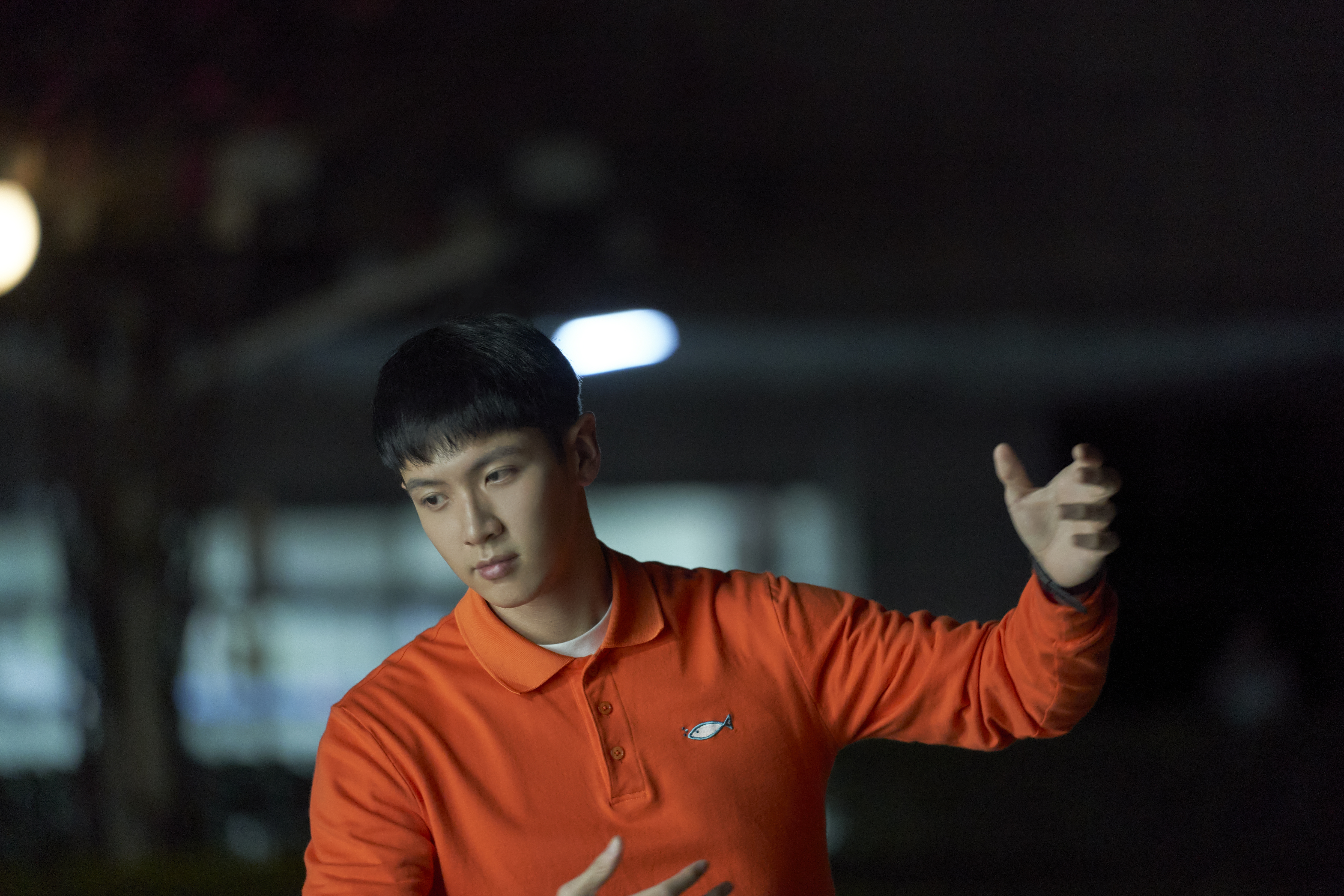
Confession (자백, Yoon Jong-seok, 2022)

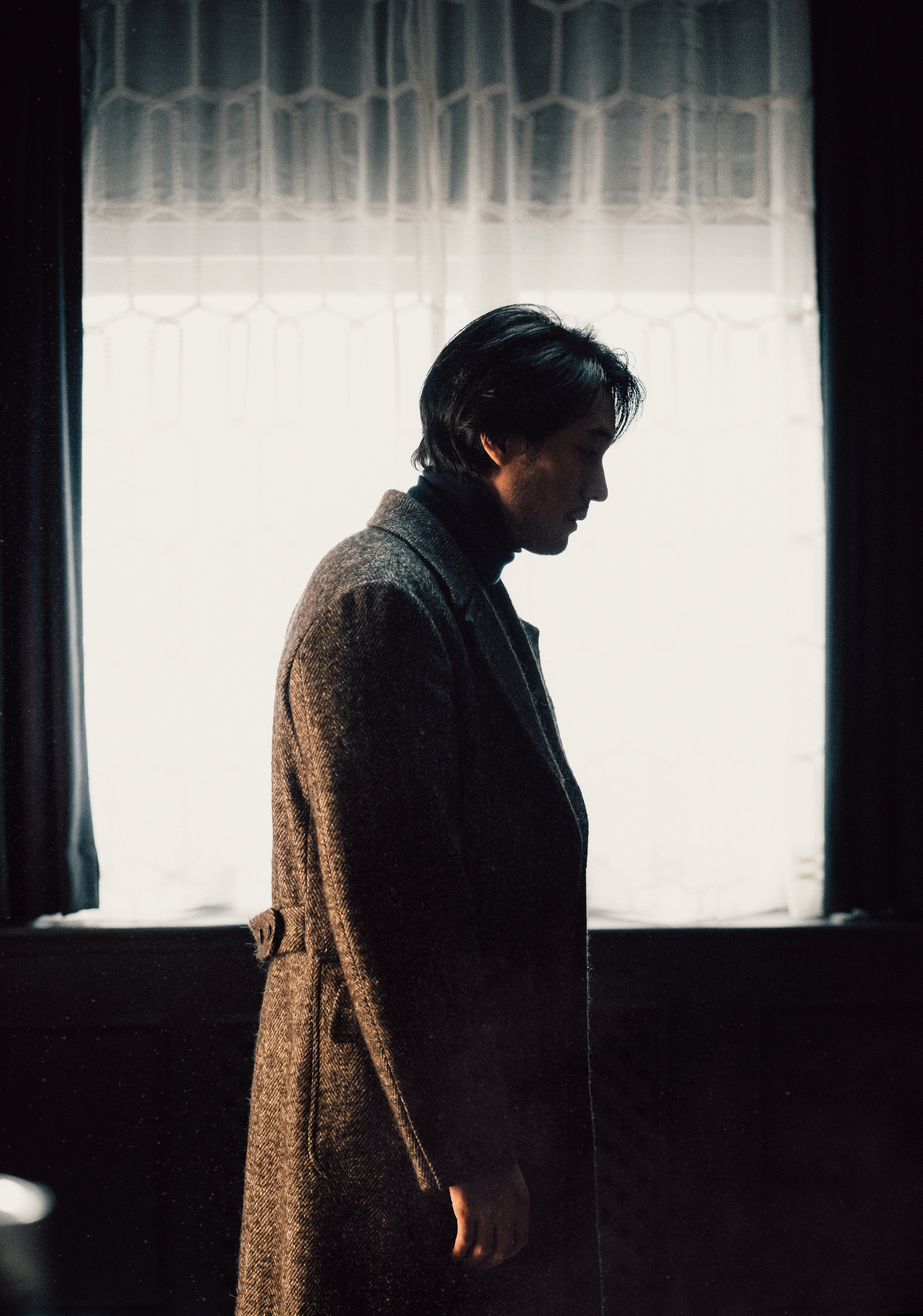
An accused man and the woman sent to defend him battle over the elusive nature of objective truth in Yoon Jong-seok’s steely psychological thriller, Confession (자백, Jabaek). A remake of the Spanish film Contratiempo, Confession is nevertheless the latest in a longline of Korean films critical of expanding chaebol culture and the utter entitlement of the elite who assume they have the right to do whatever they want because their money, status, and connections protect them from any potential consequences of their actions. Then again as the lawyer tells her client, salvation is never painless. 

Min-ho (So Ji-sub) had something of a golden life. Married to the daughter of the chairman of a large corporation, he was a rising star of cybersecurity who had even been named IT businessman of the year but was about to throw it all away through a lengthy affair with a woman, Se-hee (Nana), whom he has now been accused of killing. You’d have to admit, he had a motive and the circumstantial evidence against him is convincing yet Min-ho claims that he didn’t do it and there was a third party involved in this otherwise locked room mystery. 

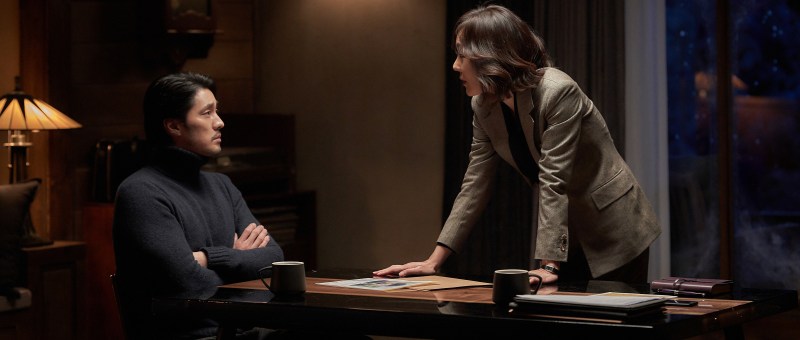
Much of the film takes place in a claustrophobic wooden cabin in the woods all but cut off by heavy snow in which Min-ho has chosen retreat after his chairman father-in-law managed to get his arrest warrant canceled. What emerges is a psychological battle between Ms. Yang (Kim Yunjin), the fancy lawyer hired by the chairman, and Min-ho who have somewhat opposing goals. Min-ho wants her to sign the documents confirming her as his legal counsel and therefore making anything he might have said subject to privilege while she presses him for the location of vital evidence while trying to expose the objective truth behind Min-ho’s selective testimony. 

Neither of them are reliable narrators, Ms. Yang coming up with potential scenarios and at times implying she has evidence that she does not in order to push Min-ho towards revealing the facts of the case. As she says, a lawyer can only help you if you’ve been rigorously honest because she in turn needs to construct a narrative that can undercut the prosecution’s case. The truth might in one sense be irrelevant, as she implies when advising that they frame Se-hee as the villain suggesting that she orchestrated a plot to blackmail Min-ho over their affair in a mix of vengeance and greed when he decided to end their relationship because he could no longer bear the guilt of cheating on his wife. 

Yet there are further transgressions in Min-ho’s past aside from his affair and it’s the attempt to cover them up more than the affair itself which has landed him in so much trouble. As he tells the lawyer, he doesn’t just want to avoid prison but is set on total exoneration unwilling to accept any kind of responsibility for what is currently happening to him. Because of his wealth and status he believes he is not subject to the same laws as everyone else and that even if he had killed Se-hee as his lawyer is beginning to suspect, he would still not be guilty of any crime. “What’s important is to survive” he tells the lawyer revealing his inner ruthlessness along with the complacent reckless streak which might hinder her attempts to defend him. 

There’s no denying that the film’s earliest twists are obvious and heavily foreshadowed but like a seasoned lawyer it is also laying a trap that leaves its final revelations extremely satisfying in implying a kind of justice at least is possible in this inherently corrupt society where dodgy lawyers and elite privilege go hand in hand to destroy the lives of ordinary people. Dark in its implications, the cat and mouse game between lawyer and client who each lie in an attempt to expose the truth hints at the malleability of what is considered to be “true” in the way in which we all construct the narrative of our lives to suit ourselves while denying the realities of others. There may be no such thing as objective truth, but guilt and complacency will still come for you in the end. Visually referencing Alfred Hitchcock’s Psycho, Yoon’s tense psychological drama is in its own way hopeful in its reeling conclusion even if as the lawyer says salvation is never painless. 


Confession screened as part of this year’s New York Asian Film Festival.

International trailer (English subtitles)

Korean Film Nights 2022: Living Memories

Korean Film Nights return on 29th July with Living Memories, a series of five documentary films screening throughout out August at the Korean Cultural Centre, London, and Birkbeck Cinema.

29 July, 6.30pm: Under Construction (2018)

Birkbeck Cinema

Personal documentary from director Jang Yun-mi following her construction worker father and exploring the impact of his 40 years of labour on his body and mind.

4 August, 7.00pm: Halmoni (2017)

Korean Cultural Centre, London

Personal documentary from Daniel Kim who was born to a Korean family of farmers in Argentina exploring his complex cultural identity.

11 August, 7.00pm: Soup & Ideology (2021)

Korean Cultural Centre, London

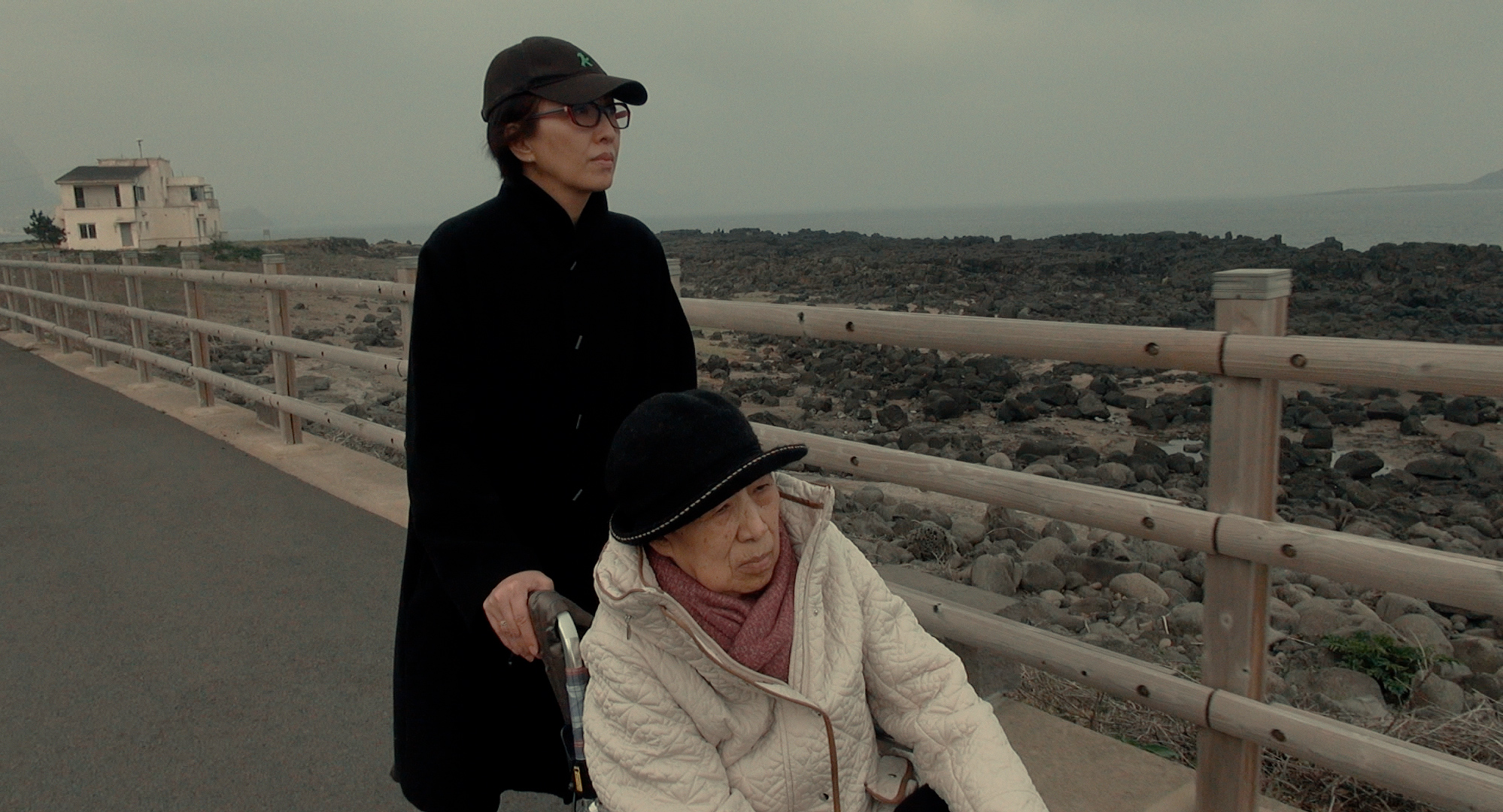
Documentary from Dear Pyongyang‘s Yang Yonghi focussing on her mother as she begins revealing tragic memories of her flight from South Korea to Japan during the Jeju Incident of 1948.

18 August, 7.00pm: With or Without You (2015)

Korean Cultural Centre, London

Documentary focussing on two elderly women who were once married to the same man at the same time and continue to live together long after his death.

25 August, 6.30pm: Factory Complex (2014)

Birkbeck Cinema

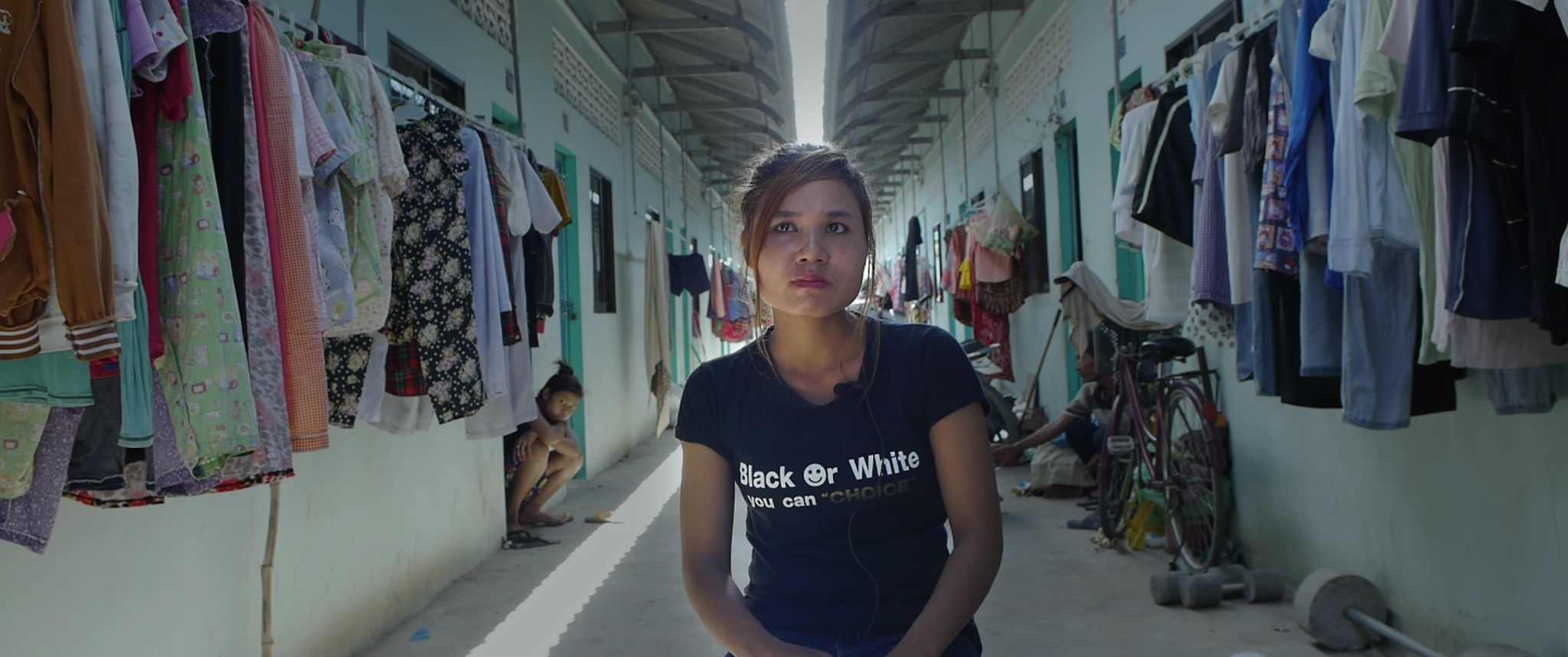
Experimental documentary exploring the lives of workers in the textile industry from the 1960s onwards eventually contrasting their experiences with those of women in contemporary Cambodia..

Living Memories runs at the Korean Cultural Centre, London, and Birkbeck Cinema 29th July to 25th August. Full details and ticketing links for all the films are available via the official website and you can keep up with all the latest screening news by following the London Korean Film Festival on FacebookTwitter, and Instagram.