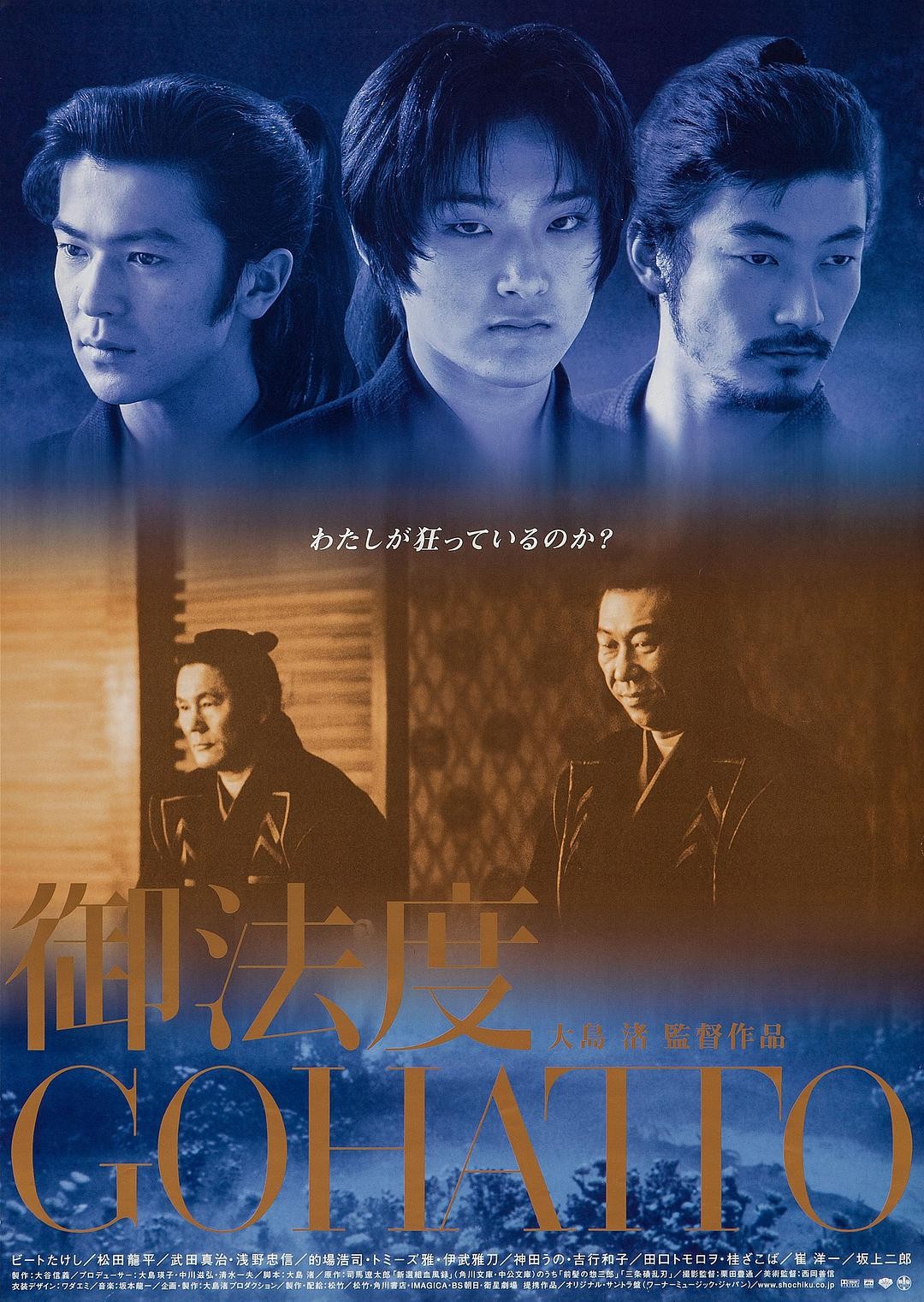
Fortune Favors Lady Nikuko (漁港の肉子ちゃん, Ayumu Watanabe, 2021) [Fantasia 2021]

Most children begin to find their parents embarrassing as they approach adolescence, but the problem seems to be particularly acute for young Kikuko. Adapted from the (quite wonderful) novel by Kanako Nishi, Ayumu Watanabe’s Fortune Favors Lady Nikuko (漁港の肉子ちゃん, Gyokou no Nikuko-chan) finds its young heroine struggling to define herself in world of constant anxieties while coming to accept that “ordinary is best” after all and even if her mother is “imperfect” it hardly matters, she loves her all the same. 

As Kikuko (Cocomi) outlines in her opening monologue, she’s recently moved to a small Northern port town with her larger than life mother, Nikuko (Shinobu Otake), after weaving a trail of romantic disappointment over half of Japan. In fact and somewhat unusually, mother and daughter share the same first name (if written with different characters), which is why the sometimes exasperated Kikuko has taken to referring to her mother as “Nikuko”, “Niku” meaning meat in reference to her weight. Though the film Kikuko is less caustic than her counterpart from the novel, there is a good deal of fat shaming in her sometimes contemptuous dismissal of her mother, also often regarding her as stupid both in terms of her intellectual ability, she’s obsessed with kanji puns but often makes spelling mistakes, and in her tendency to be duped by a string of no good men who generally take advantage of her kind heart. 

Being young as she is, Kikuko hasn’t yet learned to appreciate the importance of a kind heart, a lesson she’s about to learn as she finds herself in the middle of a burgeoning conflict between her classmates some of whom feel “left out” in never being picked by the popular girls when they peel off to play basketball at lunch time. When her friend Maria (Izumi Ishii) stages a rebellion, Kikuko doesn’t quite know what to do. After all, what Maria’s doing is only a different kind of bullying, but as she says it isn’t nice to feel left out and even if her solution may be wrongheaded perhaps Kikuko should have looked more deeply at why her friend felt that way rather than rather cruelly assuming she was doing it for attention and deserved everything she got. Bonding with a near silent boy, Ninomiya (Natsuki Hanae), who finds himself compelled to pull faces when no one’s looking, shows her the error of her ways in that she never thought herself to be such a “mean and nasty” person. 

It’s this lack of emotional intelligence that causes her to feel embarrassed by her mother who is, it has to be said, something of walking cliché of a stereotypical working class Osaka woman, loud, brash, and nattering away in her Southern dialect. Mother and daughter couldn’t be more different, tomboyish Kikuko stick thin and a serious bookworm, while the bubbly Nikuko is childishly impulsive and openhearted. Kikuko sometimes feels as if she’s the parent and is embarrassed by Nikuko’s larger than life qualities in a culture that prefers women to remain quiet and take up as little space as possible. Not to mention the fact they live on a boat. About to enter adolescence she’s also sick of being constantly on the move and is becoming paranoid that Nikuko is about to start another relationship with a terrible man meaning they’ll have to move again. 

Yet Nikuko hardly minds Kikuko’s contempt of her and despite having lived a hard life remains compassionate and understanding, seeing the best in everyone and always finding the small moments of joy life has to offer. She is also infinitely in tune with her daughter, half thinking she can hear it too when Kikuko “hears” various creatures and even a shrine “talking” to her as she wanders about the town exercising her rather overactive imagination. A series of climactic events culminating in a medical emergency in which she figures a few things out forces Kikuko to wrestle with herself and stop judging her fiercely non-judgemental mum to realise that she loves her after all even if she can’t resist being a little unkind in expressing it. A gentle coming-of-age tale set in a delightfully old-fashioned and beautifully animated fishing village, Fortune Favors Lady Kikuko is chock-full of heart (not to mention expertly translated kanji puns) as its somewhat resentful heroine begins to find safe harbour and finally steps into herself with a spirit of acceptance and understanding. 


Fortune Favors Lady Nikuko screened as part of this year’s Fantasia International Film Festival.

Original trailer (English subtitles)

Snowball (최선의 삶, Lee Woo-jung, 2020)

Three teenage girls seeking escape from an unsatisfying adolescence find only betrayal and disappointment in Lee Woo-jung’s sensitive adaptation of the novel by Lim Solah, Snowball (최선의 삶, Choisunui Sarm). Each oppressed by a resolutely patriarchal society, the three women nevertheless differ in the their respective traumas and resentments finding solidarity in the strength of their friendship only to witness it crumble when its barriers must necessarily be confronted. “Why did you do this to me?” Kang-yi (Bang Min-ah) eventually asks, only to receive no answer and realise that in the end they did to and for themselves. 

Though perhaps feeling a sense of familial rejection in the otherwise peaceful home she shares with her overly religious Buddhist mother, emotionally reserved father, and a little dog also yearning for love, Kang-yi is ostensibly the least burdened of her friends if facing a similar sense of detachment. Aloof golden child So-young (Han Sung-min) is clever and pretty, everything seems to go right for her as Kang-yi enviously explains, except for her dream to become a model and actress which her family apparently don’t support. Ah-ram (Shim Dal-gi), by contrast, is quirky and rebellious with a tendency to collect stray animals and other items from the street little caring who they may or may not belong to but is also trapped in abusive home with an authoritarian father. When So-young one day suggests running away together the other girls agree, but after the novelty wears off and they begin to run out of money the realities of a forced adulthood are suddenly brought home to them. 

The depths of their naivety are perhaps signalled in an early and misguided attempt to misuse a potentially predatory middle-aged man who offers them money for food, allows them to stay in his apartment, and suggests an improbably low stress job they might be able to do for him. As she’s want to do, Ah-ram runs off with his wallet only to begin feeling sorry him seeing as there’s so little in it and he is so clearly lonely even if So-young proclaims him a creep. Picking up a mattress in the street the girls end up sleeping in a stairwell, only for Kang-yi and So-young to return and find Ah-ram apparently beaten and raped by a man she later willingly returns to, talking as if such brutal treatment is a normal part of any relationship. “Children, when you’re in love you sometimes get into fights” she depressingly explains, later implying that her violent boyfriend has become her pimp as she slides into sex work in an effort to provide economic support to all three of them. 

So brutalised is she, that Ah-ram thinks nothing of the abuse she continues to suffer while So-young solipsistically wallows in a sense of defeat and despair. It’s at this point she whips out a credit card she’s apparently been carrying all along, her choice not to use it seemingly less about the possibility of its being traced than a stubborn desire to insist she is as underprivileged as her two friends. As we later discover, Kang-yi lied about her address to get into the school and in fact lives in a run-down semi-rural area some distance away, secretly regarded as even more of a hick provincial by the upwardly mobile So-young. Nevertheless, it’s not class differences which eventually shatter their friendship but repressed sexuality. One extremely hot evening, So-young and Kang-yi share a moment of physical intimacy but while it only seems to bind Kang-yi more closely to her friend, So-young is unable to cope with the taboo realisation of her desires and becomes increasingly irritable, distancing herself from both of the other girls before abruptly deciding to call the experiment in independence short and return to her parental home. 

All Kang-yi wants is a return to their former friendship, but So-young’s repression eventually turns violent. Rejecting Kang-yi and Ah-ram she becomes a part of the popular set and embarks on a campaign of bullying that leaves Kang-yi both physically bruised and emotionally wounded. Yet she is also in her own way repressed, unable to accept her parents’ love for her and often ignoring the plaintive cries of the family dog longing to be picked up and held. Neither she nor Ah-ram are able to conceive of a future for themselves, Kang-yi’s sense of rejection eventually pushing her towards a self-destructive act of violence that will further rob her of possibility and the potential for happiness. Captured with a restless, roving energy imbued with with the colours of twilight, Lee’s melancholy indie drama suggests that not even friendship can provide a refuge from the pressures of the modern society and its relentlessly oppressive social codes in which internalised shame can quickly snowball into an avalanche of violence.


Snowball screened as part of this year’s New York Asian Film Festival.

Festival trailer (no subtitles)

Tokyo Revengers (東京リベンジャーズ, Tsutomu Hanabusa, 2021) [Fantasia 2021]

“You don’t deserve to change my life” the hero of Tsutomu Hanabusa’s adaptation of Ken Wakui’s manga Tokyo Revengers (東京リベンジャーズ) eventually affirms in finally facing his fears while trying to change destiny not least his own. In contrast to its original meaning in English, the wasei eigo “Revenge” usually means not payback but “rematch” or at least a second chance to prove oneself or make up for a past mistake. Through his time travel shenanigans, this is perhaps what young Takemichi (Takumi Kitamura) is attempting to do in revisiting the events which he feels ruined his life and left him a useless coward too cowed to offer much resistance to his continual degradation. 

Now 27, Takemichi lives in a rundown, untidy apartment and works part-time in a bookstore where his boss inappropriately mocks for him for still being a virgin, the kind of guy who peaked in high school and can’t move on from adolescent bravado. He might have a point in a sense in that Takemichi is indeed arrested but hearing on the news one day that his first love Hinata (Mio Imada) has been killed in a car accident supposedly caused by the Tokyo Manji gang alongside her brother Naoto (Yosuke Sugino), he finds himself thinking back to his school days. It’s at this point that someone shoves him off a train platform and, facing certain death, he suddenly finds himself in the body of his 17-year-old, bleach blond delinquent self. Takemichi assumes it’s a near death flashback, but later wakes up back in the present and realises that his actions in the past have consequences in the future. 

Quite clearly taking its cues from classic high school delinquent manga in which moody high school boys vie for the top spot through relentless violence, Tokyo Revengers nevertheless undercuts the genre’s macho posturing in firstly having Takemichi broken by his first defeat and then allowing him to reclaim his space as a hero through his determination to care for and protect others even if his final victory is in facing the man he held responsible for shattering his sense of self. Sent back into the past to prevent the Tokyo Manji Gang from ever forming, Takemichi refuses the obvious early solution but remains conflicted in realising that at its inception “Toman” saw itself as a compassionate force for good, a far cry from the nihilistic violence it now brings to the city. Rather than more violence, he finds a solution in its reverse, safeguarding relationships and preventing heartbreak in order to ensure no one else’s soul is corrupted by grief or loneliness. 

Takemichi feels himself powerless but is valued by his friends for his determination to protect others no matter the cost to himself, as he unwittingly proves through his time travel adventures attempting to save himself as much as Hinata by restoring his sense of self apparently shattered by his subjugation at the hands of a rival gang back back in high school. At 27 he’s a meek and broken man, forever apologising for his existence and living an unfulfilling life always running away from challenge or difficulty. Given an improbable second chance, he begins to find the courage to do it all differently with the benefit of hindsight and the stability of age, finally facing his teenage trauma as a fully adult man.  

Like any good delinquent movie, Hanabusa makes space for more than a few mass brawls along with intensely personal one-on-one battles drawing a direct line between high school violence and street war thuggery. “Thugs aren’t cool anymore” Toman leader Mikey (Ryo Yoshizawa) had explained, his compassionate second in command Kenchin (Yuki Yamada) reminding him to “have a heart” in keeping gang violence within the confines of their society and refraining from injuring innocent people. Toman aren’t yakuza, but they are perhaps the inheritors of jingi, or at least would be if left untouched by trauma and betrayal. In beating his own trauma, Takemichi undoes his destiny saving his friends and himself by learning to embrace his inner strength and refusing to back down in the face of intimidation. Part high school delinquent manga, part time travel adventure, Hanabusa’s sci-fi-inflected drama swaps macho posturing for a more contemplative take on the weight of past mistakes while giving its hero a second chance to be the kind of man he always thought himself to be.


Tokyo Revengers screened as part of this year’s Fantasia International Film Festival.

Original trailer (English subtitles)
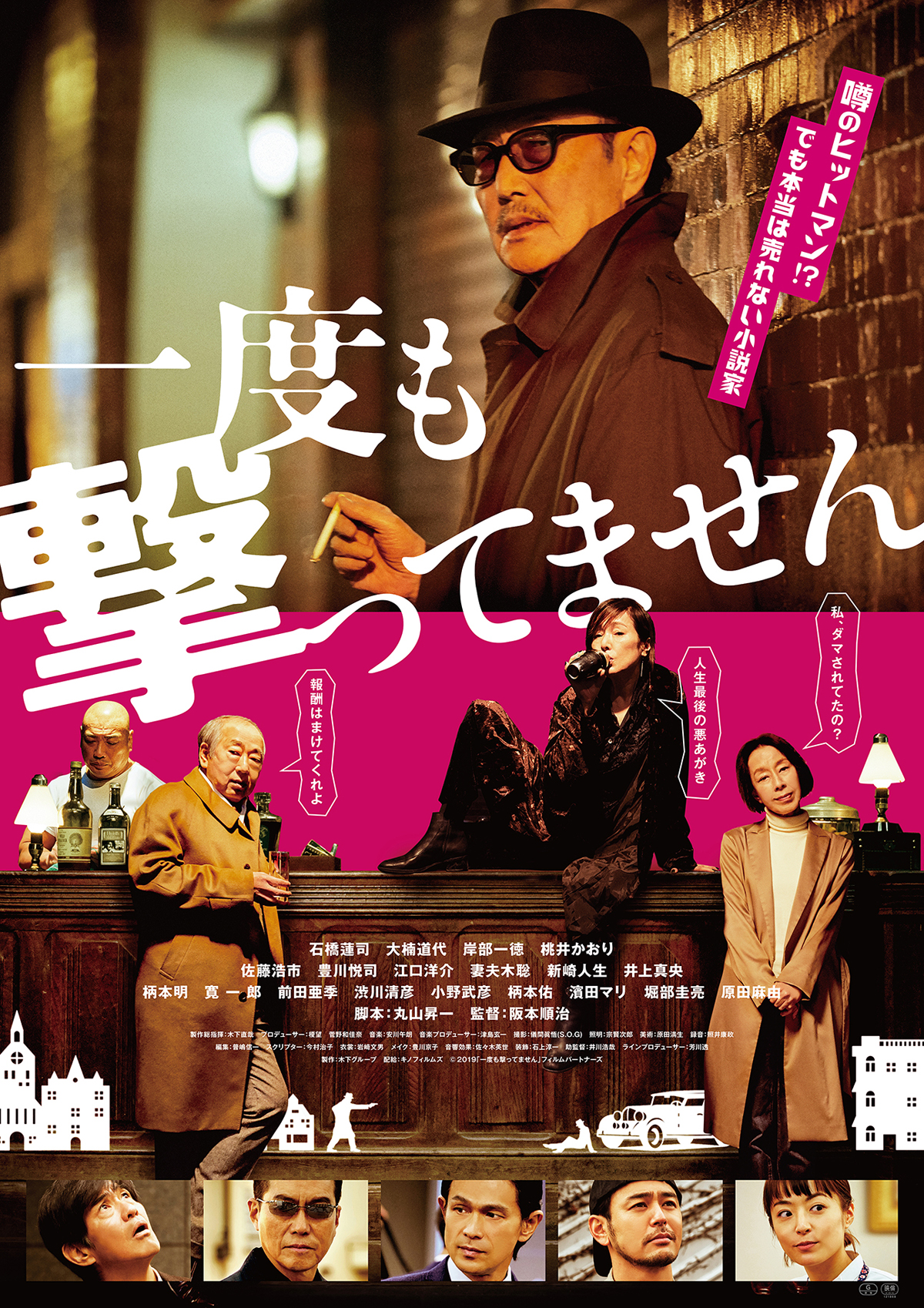
A Leg (腿, Chang Yao-sheng, 2020)

“Life is long. We all have some regrets.” a grieving widow is told by a disingenuous doctor in full damage limitation mode. He’s not necessarily wrong, nor is his advice that the widow’s pointless quest to retrieve her late husband’s amputated limb has little practical value though of course it means something to her and as he’d pointed out seconds earlier a physician’s duty is to alleviate suffering of all kinds. Apparently inspired by the true story of director Chang Yao-sheng’s mother, A Leg (腿, Tuǐ) is in many ways a story of letting go as the deceased man himself makes a presumably unheard ghostly confession while his wife attempts to do the only thing she can in order to lay him to rest. 

Husband Zi-han (Tony Yang) is in hospital to deal with a painful, seemingly necrotic foot which eventually has to be amputated in a last ditch attempt to cure his septicaemia. “Keep the leg and lose your life, or keep your life and lose the leg” the otherwise unsympathetic doctor advices wife Yu-ying (Gwei Lun-mei) in a remark which will come to seem ironic as, unfortunately, Zi-han’s case turns out to be more serious than first thought and he doesn’t make it through the night. Grief-stricken, Yu-ying leaves in an ambulance with the body but later turns back, determined to retrieve the amputated foot in order that her husband be buried “complete” only it turns out that it’s not as simple as she assumed it would be. 

The loss of Zi-han’s foot is all the more ironic as the couple had been a pair of ballroom dancers. As Yu-ying makes a nuisance of herself at the hospital, Zi-han begins to narrate the story of their romance which began when he fell in love with a photo of her dancing in the window of his friend’s photography studio. Explaining that, having died, he’s reached the realisation that everything beautiful is in the past only he was too foolish to appreciate it, Zi-han looks back over his tragic love story acknowledging that he was at best an imperfect husband who caused his wife nothing but pain and disappointment until the marriage finally broke down. He offers no real explanation for his self-destructive behaviour save the unrealistic justification that he only wanted Yu-ying to live comfortably and perhaps implies that his death is partly a means of freeing her from the series of catastrophes he brought into her life. 

Given Zi-han’s beyond the grave testimony, the accusation levelled at Yu-ying by his doctor that the couple could not have been on good terms because Zi-han must have been ill for a long time with no one to look after him seems unfair though perhaps hints at the guilt Yu-ying feels in not having been there for her husband when he needed her. As we later discover, however, this is also partly Zi-han’s fault in that he over invested in a single piece of medical advice and resisted getting checked out by a hospital until he managed to sort out an insurance scam using his photographer friend, wrongly as it turned out believing he had a few months slack before the situation became critical and paying a high price for his tendency to do everything on the cheap. Nevertheless, Yu-ying’s quest to reattach his leg is her way of making amends, doing this one last thing for the husband whom she loved deeply even though he appears to have caused her nothing but misery since the day they met. 

In order to placate her, the slimy hospital chief offers to have a buddhist sculptor carve a wooden replica of Zi-han’s leg made from wood destined for a statue of Guan-yin goddess of mercy but Yu-ying eventually turns it down, struck by the beauty of the object but convinced that turning it to ash along with her husband’s body would be wrong while believing that wood ash and bone ash are fundamentally different. She regrets having ticked the box on the consent form stating she didn’t want to keep the “specimen”, never for one moment assuming that her husband would not recover. Despite their dancing dreams, she thought the leg was worth sacrificing against the long years they would have spent together after, though this too seems a little unlikely considering the state of their relationship prior to her discovery of Zi-han’s precarious health. Zi-han meanwhile is filled with regret for his continually awful behaviour and the obvious pain he caused his wife. Getting his leg back allows him to begin “moving on” while doing something much the same for Yu-ying though his afterlife pledge about the endurance of love seems a little trite given how he behaved while alive. A little more maudlin than your average quirky rom-com, A Leg nevertheless takes a few potshots at a sometimes cold, cynical, and inefficient medical system, inserting a plea for a little more empathy from a pair of unexpectedly sympathetic police officers, while insisting that it’s important to dance through life with feeling for as long as you’re allowed. 


A Leg screens Aug. 14  & streams in the US Aug. 15 – 20 as part of this year’s New York Asian Film Festival.

Original trailer (English/Traditional Chinese subtitles)

The 12 Day Tale of the Monster that Died in 8 (8日で死んだ怪獣の12日の物語, Shunji Iwai, 2020) [Fantasia 2021]

“We, all of us, can be heroes! Let’s support each other to beat this monster.” the hero of Shunji Iwai’s pandemic dramedy, The 12 Day Tale of the Monster that Died in 8 (8日で死んだ怪獣の12日の物語, Yoka de Shinda Kaiju no Juninichi no Monogatari) affirms. Inspired by Shinji Higuchi’s Kaiju Defeat Covid project and originally streamed as a web series, Iwai’s surreal screen drama is replete with the atmosphere of the pandemic’s early days, a mix of boredom and intense anxiety coupled with a determination to protect and support each other through this difficult time. Yet it’s also a tale of uncanny irony taking place in world in which Ultraseven is a documentary while the Earth has apparently been subject to waves of monster aggression, alien visitors, and even apparently an epidemic of ghosts. 

All of this the hero, Takumi Sato (Takumi Saitoh playing a version of himself) finds out from director Shinji Higuchi after contacting him on Zoom for advice about how to raise the “Capsule Kaiju” he bought on the internet in order to do something to help battle corona virus. Sato’s single “egg” soon becomes three, later back down to one again causing him to worry if the other two managed to escape or perhaps were eaten by the sole remaining monster. In any case, while they are three he names each of them after various Covid-fighting drugs and is informed by Higuchi that they currently resemble three kaiju from classic tokusatsu series Ultraseven. 

Nevertheless, Takumi is continually confused and disappointed by the slow progress of his project, confessing to one of his friends online that they were rated only one star on the store he bought them from but he’s sure that’s just because they’re a new product. His friend Non, (also playing a version of herself), meanwhile, has invested in an alien though the alien is, conveniently enough, entirely invisible and inaudible via camera. Non’s alien seems to be making much better progress to the extent that it eventually becomes disillusioned with selfish, apathetic human society and decides to return to outer space. Challenged, Takumi has to admit he hasn’t really done anything to make the world a better place except for raising his capsule kaiju and even that hasn’t gone particularly well. 

Then again, perhaps just getting through is enough to be going along with in the middle of a global pandemic. Takumi’s friend So (So Takei) is separated from his family in Bangkok and is struggling to find work as a chef while all the restaurants are closed only to later confess that he actually has a second family he, understandably, had not mentioned before in Japan that he also needs to support financially. Even so, Takumi is bemused watching the YouTube channel of a young woman (Moeka Hoshi) who broadcasts from her bathtub dressed in a nightgown and has managed to raise a recognisably dragon-like kaiju while his keep shapeshifting without progressing into a final form. He starts to worry, what if his kaiju are actually evil and intend to destroy the world rather than save it? The fact that it eventually takes on the form of a giant coronavirus might suggest he has a point, but kaiju work in mysterious ways and perhaps they are trying to help in their own small ways even if it might not seem like it in the beginning. 

In many ways that might be the primary lesson of the pandemic, everyone is doing their best even if they’re only doing something small like staying at home and wearing their mask. Shot entirely in black and white and mostly as direct to camera YouTube-style monologues or split-screen Zoom calls complete with occasional lag and echoing, Iwai adds in eerie pillow shots from a camera positioned high above the streets of a strangely quiet but not entirely empty Tokyo along with fragmentary dance sequences of young women dressed in black with CGI kaiju heads. A whimsical slice of pandemic life, 12 Day Tale ends as it began, with Takumi once again reminding us that we are all heroes and should support each other to beat the “virus monster” but adds a much needed note of hope as he assures his audience that the the day we beat the virus will certainly come, “let’s do our best together”. 


The 12 Day Tale of the Monster that Died in 8 streams in Canada until Aug. 25 as part of this year’s Fantasia International Film Festival.

Original trailer (English subtitles)
A Balance (由宇子の天秤, Yujiro Harumoto, 2020)

“What’s moral isn’t always what’s best” according to the morally compromised heroine at the centre of Yujiro Harumoto’s A Balance (由宇子の天秤, Yuko no Tenbin). To Yuko (Kumi Takiuchi), a balance is what a documentarian should strike, not taking one side or another but shining a light on hidden truths. The irony is that in seeking to expose one truth she accidentally stumbles on another uncomfortably close to home and although her job is to highlight injustice finds herself making the decision to do the opposite concluding that in this case, and perhaps many others, keeping quiet may actually be what’s best for victims, victimisers, and everyone in-between. 

As the film opens, Yuko is shooting a potentially manipulative interview with the grieving father of a young woman, Hiromi, who took her own life after becoming the subject of scandal and rumour when it was revealed she may have been involved in an inappropriate “relationship” with a teacher. The teacher, Mr. Yano, eventually took his own life too leaving behind him a note proclaiming his innocence and explaining that death is the manner he has chosen for his resistance. Yuko is sympathetic to Mr. Hasebe (Yuya Matsuura), but also perhaps verging on the unethical in the depth of the questions she asks him of his daughter’s death. Soon enough a conflict emerges between the nature of the documentary Yuko would like to make which is more contemplative than polemical, and the “routine piece on bullying” the TV studio think they’ve commissioned. Consequently, we see the suits redacting problematic lines in Yuko’s scripts in editorial meetings, misrepresenting Mr. Hasebe’s words in removing his criticism of mass media which he blames for hounding Mr. Yano to his death and thereby depriving him of answers. 

Yuko remains determined to provide “a balance” in interviewing Yano’s surviving family members including his mother Toshiko (Mitsuko Oka) and sister Shiho (Misa Wada), but discovers them tyrannised by the treatment they’ve received at the hands of the media and a vindictive society. Toshiko near collapses towards the end of the interview when asked if there was anything the family could have done to prevent this tragedy happening, inviting Yuko to visit her at home whereupon she discovers her living in near total darkness, afraid to go out lest she be recognised and explaining that she has few possessions in case she has to move again in a hurry because someone has exposed her address online. This little old lady is living in terror because of something her son was accused of which later caused him to take his own life and even that did not end the torment for his family. 

Meanwhile, in an ironic touch, Yuko discovers that a young woman, Mei (Yumi Kawai), attending the cram school owned by her father where she also teaches part-time has become pregnant and claims her father, Mr. Kinoshita (Ken Mitsuishi), is responsible having accepted sex in lieu of her overdue fees. Yuko does not want to disbelieve her and confronts her father, holding up her iPhone as a record, who admits that what Mei has said is true. Yuko tells herself she’s doing what’s best for Mei, bonding with her as two women who lost their mothers young (as did Hiromi), understanding that she may not want to go to the authorities because of the lingering stigma of being involved such a scandal. But she also can’t deny that her actions are self-interested in that she doesn’t want her doc pulled or her career messed up by her father’s transgression, something which gets harder to ignore when she discovers Mei’s pregnancy may be high risk and requires immediate medical treatment from a proper hospital to ensure her safety. 

The lines become ever more blurred, Yuko developing a quasi-maternal relationship with the motherless Mei which is in its way perfectly genuine even as she pays their overdue gas bill and worries about her potentially abusive father (Masahiro Umeda), but is nevertheless coloured by her desire both to cover up this harmful secret and to atone for her father’s wrongdoing. For his part, Mr. Kinoshita wants to confess but as Yuko points out he’d be doing it to unburden himself which in effect would merely shift the burden onto others including Mei but also Yuko herself, her documentary team, the other students at the cram school, and in effect everyone else they’ve ever known. 

Yet can Yuko be an effective arbiter of the truth especially when, as it turns out, neither she nor anyone else is being entirely honest? Her job is to present information in such a way that conclusions can be drawn, but she is herself making decisions in selecting the information she presents and the manner in which she presents it. She may resent the interference of the studio, but in reality they aren’t doing anything she hasn’t already done even if they are acting less out of a sense of integrity than commercial concern. “Whatever we put together is the truth” as her exasperated producer (Yota Kawase) finally insists. It’s in this same conflict that she begins to lose her sense of balance, trying to help those victimised by an unforgiving society while attempting to protect herself from unwelcome consequences of social scandal aided and abetted by the industry in which she herself works. “Ask them who is the real victimiser” Toshiko asks of Yuko taking aim at the mass media who have shamed her into a life of total darkness, but all Yuko can in the end do is turn her camera back on herself in contemplation of her shattered integrity.  


A Balance screens Aug. 12 as part of this year’s New York Asian Film Festival.

Original trailer (English subtitles)
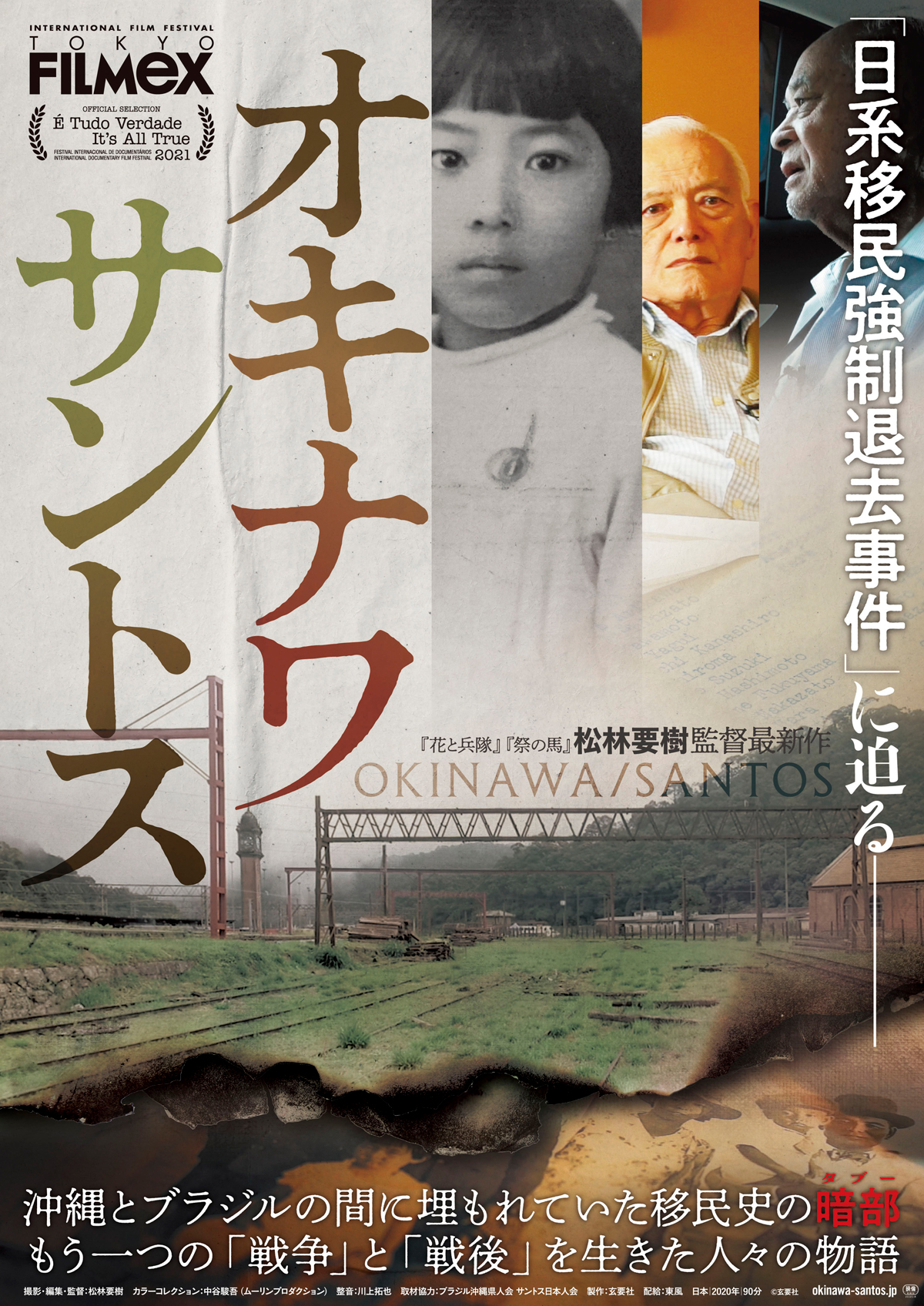
Seobok (서복, Lee Yong-ju, 2021) [Fantasia 2021]

Without death, would life still have meaning? Lee Yong-ju’s high concept sci-fi thriller Seobok (서복) situates itself in a near future Korea in which the possibility of immortality is tantalisingly close only there are some who would prefer it not to be, fearing that without the driving force of mortal dread humanity will lose its ambition and thereafter slide into internecine greed. Then again, humanity hasn’t needed much of an excuse before. 

When a foreign scientist is murdered by drone the incident is attributed to “terrorists” presumably objecting to his research into stem cell technology and the possibilities of eternal healing. Fearing exposure, NIS agent Ahn (Jo Woo-jin) advises the project move to a secret location and recruits a former associate, Min Ki-hun (Gong Yoo), to act both as a test subject and a bodyguard. Since leaving the service, Ki-hun has been suffering with a terminal brain tumour that leaves him plagued by debilitating headaches and distressing hallucinations. 

Ki-hun is roped in by the promise of a potential cure for his condition brokered by Seobok (Park Bo-gum), a genetically modified clone who cannot die. Speaking to the dubious ethics of the research project, no one quite thinks of Seobok as “human” though he was born in the same way as any other child. “It’s like collecting insulin from a pig” a doctor later scoffs at Ki-hun’s squeamishness witnessing Seobok hooked up to a chair and milked for his lifesaving properties, realising that this may be his life “forever”. Having lived all his life within the lab, Seobok is filled with wonder for the outside world begging Ki-hun to walk a little slower through a market when the pair are forced on the run together so he can take it all in a little better. He has no clothes of his own, cannot use chopsticks, and is left with nothing to do with his time other than think. The scientists refer to him only as a “specimen” refusing to acknowledge his humanity viewing him solely as a test subject. 

Seobok can’t decide if life in the presence of death is worse than the curse of immortality. Already condemned, Ki-hun no longer knows if he wants to live or is merely afraid of dying. The fear of death is itself a kind of weapon, at least according to those against the project, a force which propels mankind forward in imposing an unavoidable deadline as it struggles against its mortality. Ki-hun, meanwhile, regards his tumour as a punishment, a mark of his moral cowardice in failing to stand up to his boss’ duplicitous practices and blaming himself for the death a friend who was silenced for daring to speak to out. In bonding with Seobok he realises he cannot allow the same thing to happen again in choosing to prioritise his own survival over someone else’s life. Seobok, meanwhile, comes to the opposite conclusion in realising that his existence is potentially apocalyptic and that there is no escape for him because he has nowhere else to go other than back to his “home” at the lab despite coming to an understanding that much of his treatment there constitutes abuse. 

Nevertheless, Seobok is fiercely contested by mysterious foreign forces intent either on capturing or destroying him apparently terrified of the implications of a world in which sickness can be instantly cured and death has become a thing of the past. Such a world would, of course, be very bad news for Big Pharma and the medical industry, yet it’s the philosophical arguments which they claim motivate them in a fear of a permanent and destructive anarchy which is more than a little ironic considering what eventually unfolds in their quest to capture Seobok who, as it turns out, has also developed awesome powers of telekinesis. Rather than eternal life, however, it’s death that the two must learn to accept, Ki-hun reckoning with his trauma while coming to terms with his terminal diagnosis, and Seobok by contrast seizing his humanity by rejecting his immortality. 

Essentially a lowkey existential drama, Lee Yong-ju’s high concept sci-fi thriller boasts excellent production design and large scale action set pieces, yet situates itself in a cold world of paranoia and anxiety in which even mortal dread has been effectively weaponised by duplicitous forces intent on playing god in the permanent power vacuum of the modern society.


Seobok streams in Canada until Aug. 25 as part of this year’s Fantasia International Film Festival.

International trailer (English subtitles)

Raging Fire (怒火, Benny Chan, 2021)

“If you had chased Coke that day, would our destinies have been reversed?” a cop turned villain asks of his righteous colleague, but his friend has no answer for him. The final film from director Benny Chan who sadly passed away last year after being diagnosed with cancer while filming, Raging Fire (怒火) pits a disgruntled police officer wronged by the system against an incorruptible detective but suggests that the real villain is an increasingly corrupt society in which the rich and powerful have a direct line to justice. 

As the film opens, noble officer Cheung (Donnie Yen) is racing towards some kind of altercation in a shipyard but later wakes up next to his much younger and very pregnant wife (Qin Lan). After a years long operation, his team is about to take out a petty criminal involved with a previous investigation which resulted in fellow officers getting sent to prison for excessive use of force. After refusing to to help a wealthy businessman make his son’s drunken car accident go away, Cheung is taken off the case while the raid turns out to have been a trap leaving eight of his friends dead and many more injured. Through his investigations, Cheung begins to realise that his former colleague Ngo (Nicholas Tse), recently released from prison, may be responsible for the deaths of his friends in pursuing a vigilante revenge against the police force he feels betrayed him. 

“This society doesn’t reward good men” Ngo later insists, though his total and relatively sudden transformation from earnest cop to bloodthirsty psychopathic killer seems something of a stretch. Cheung aside, the Hong Kong police force is depicted as infinitely corrupt and working at the behest of the rich and powerful to further agendas not always in the interests of justice. The case which caused so much trouble related to the kidnapping of a prominent financier and the secretary he was canoodling with at the time, the financier’s wife having obeyed the kidnappers’ instructions not to call the police by ringing a government contact instead which is why the operation is covert. Ngo and his team were told to do whatever it took to extract information from a suspect who later wound up dead but were hung out to dry by the superior officer who ordered it. Not unreasonably they see themselves as victims of a corrupt system but care little who might get in the way of their vicious bid for revenge. 

For his part, Chueng is also a thorn in the side of his colleagues because of his refusal to play along with the base level corruption all around him. Dragged to the meeting with the businessman by nervous colleague Beau (Patrick Tam), Cheung sips tea rather than the wine everyone else is drinking and eventually storms out making a point of paying for his exorbitantly priced beverage while refusing to be complicit with systemic corruption. So upright is he that he asks a passing driver if he has insurance before borrowing his car to chase down Ngo and when he himself is accused of breaking protocol the entire squad shows up to petition the disciplinary panel on his behalf. Ngo asks him if the situation would have been reversed had it been Cheung who had questioned the suspect that night, but of course it wouldn’t because Cheung would never have beaten a suspect to death in the first place. 

Chan places this debate front and centre by setting the final showdown in a church currently undergoing renovation, Ngo seemingly judged for his moral transgressions while Cheung meditates on the man he used to be in a bromance montage that laments the tragedy of Ngo’s fall from grace. The battle of wits between the two men, Ngo of course uniquely positioned to game the system he rails against, ends only in futility while the system which created him remains unchanged. Chan shoots with characteristic visual flare sending his compromised cops through a golden hellscape of the contemporary city veering between beautifully choreographed, high octane action sequences including a lengthy car chase through a highly populated area, and procedural thrills tinged with ambivalent social commentary in which justice itself has become commodified while police officers exceed their authority and bow to the rich and powerful. A throwback to classic Hong Kong action, Chan’s final film is a fitting finale for the career of a director taken far too soon. 


Raging Fire screened as part of this year’s New York Asian Film Festival and will be released in US cinemas on Aug, 13 courtesy of Well Go USA.

International trailer (English subtitles)

Time (殺出個黃昏, Ricky Ko, 2021)

Youth is wasted on the young in Ricky Ko’s wistfully nostalgic ode to a bygone Hong Kong, Time (殺出個黃昏). Highlighting a series of very real social problems from the government’s failure to properly care for its old, to incurable loneliness, and the changing family dynamics of the modern society, Ko’s sometimes melancholy drama begins as a story about death but then finally becomes one about life granting its defeated heroes a second chance at a forgotten love in the formation of a new family. 

Ko opens, however, with a kitsch retro sequence filmed in the manner of ‘70s action movies in which a trio of assassins cooly eliminate their targets. Flashing forward to the present day, hitman Chau (Patrick Tse Yin) is unceremoniously let go from his job as a noodle chef. Unable to keep up with the breakneck pace of contemporary Hong Kong, he’s being replaced by a machine. A message on a radio show brings him back into contact with his old gang, fixer Fung (Petrina Fung Bo-Bo) now a nightclub singer and owner of at the Golden Phoenix cabaret bar catering for elderly romantics, and getaway driver Chung (Lam Suet) who has formed an unwise emotional attachment to a sex worker he dreams of marrying. Fung has found them a new job, but Chau immediately senses something different on his arrival. His target is a bedridden old lady who’s called the hit on herself because she can’t afford the bills for her medical treatment and has no real quality of life. 

Chau is so shocked he can’t go through with it, later seeing in a news report that the woman’s husband has been arrested in connection with her death. Her plight seems to have provoked a minor debate concerning lack of appropriate care for Hong Kong’s elderly. “Death is better than debt” is the way the woman’s husband characterised her choice, essentially affirming that there was no way for her to go on living in a society which has abandoned its elderly and infirm. Nevertheless, after that first case Chau takes on more requests for “euthanasia” from similarly afflicted people yet one of his most poignant is for a very wealthy man in good physical health who is simply lonely following the death of his wife. Though he had a large family, his children are far away with lives of their own and rarely visit. He chooses death in the hope of reuniting with his wife and escaping from the crushing loneliness of his existence. 

One particular assignment, however, brings Chau into contact with vulnerable teenager Tsz-Ying (Chung Suet-Ying) who has been abandoned by her parents following their divorce and is currently living alone. Despite himself, Chau ends up taking the girl in and acting as her “grandpa” while she insists on learning his knife technique and how to make noodles the old fashioned way. For his part, Chau finds himself at odds with the modern world, confused beyond belief about how to pay for a bus ticket and embarrassed when a younger woman does it for him by waving her phone at a box by the driver. He stands rather than sit in one of the priority seats reserved for elderly passengers unwilling to accept that he has become old. Yet living with Tsz-Ying he begins to emerge into the modern society, learning how to use a smartphone and regaining something of his youth even as he bests a few young whippersnappers who made the mistake of underestimating an old guy. 

While Chung, plagued by medical issues, quips that prison is “all inclusive” and you can get an appointment with your doctor any time you want, Fung has family issues of her own including a tense relationship with her snobbish daughter-in-law who’s determined to force her to sell her apartment and give up the club to get her grandson into an elite school. Despite their dark history as killers for hire, the trio are subject to the same problems faced by ordinary elderly people, witnessing lonely deaths and incurable pain coupled with a sense of futility which encourages them to think their lives are already over. Yet thanks to their involvement with Tsz-Ying they get a kind of second chance, building a new kind of family in intergenerational solidarity. Quirky and nostalgic, Ko’s aptly belated directorial debut feature may begin as a story about death and the inexorable march of time but finally makes the case for sidestepping the alienation of the modern society for a more wholesome sense of community and the eternal ability to start again no matter how old you are.


Time streams in the US Aug. 10 to 15 as part of this year’s New York Asian Film Festival.

Original trailer (English subtitles)

Satoshi Kon: The Illusionist (Satoshi Kon, l’illusionniste, Pascal-Alex Vincent, 2021) [Fantasia 2021]

“A genius but a nasty guy” is the way a former collaborator describes the late director Satoshi Kon, a sentiment echoed by others who’d worked alongside him though many also describe him as gentle if reserved remarking on his seeming impenetrability. Pascal-Alex Vincent’s documentary Satoshi Kon: The illusionist (Satoshi Kon, l’illusionniste) is less interested in illuminating the man than briefly sketching an overview of his career yet nevertheless seems to content to present him as an enigmatic figure filled with contradictions which his work, in some way, was intended to resolve. 

Skipping over Kon’s early life and beginnings as a manga artist, Vincent begins with Perfect Blue before proceeding through each of his features chronologically finishing with the incomplete Dreaming Machine. In essence a talking heads doc, he interviews a series of well-known figures in the anime world such as fellow directors Mamoru Oshii, Mamoru Hosoda, and Jin-Roh’s Hiroyuki Okiura, as well as those who had worked with Kon directly, the international filmmakers who’d found inspiration in his work such as Darren Aronofsky, Jeremy Clapin, Marc Caro, and Rodney Rothman, and experts in anime and manga history. 

In a sense, Vincent is less interested in Kon as a man than in the lasting impact of his oeuvre, which does in a sense lend an uncomfortable imbalance in implying Kon’s work is of greater importance because of the influence it went on to have on Western, particularly Hollywood, cinema. Kon’s impact on contemporary anime for example is not addressed in any real depth save for implying that it gave the art form permission to deal with more mature concepts and ideas which in itself implies that it up to that point had not done so. 

Yet even if Kon is described as “prickly”, an intense perfectionist unable to tolerate failure or resistance, he is also regarded as another kind of innovator in his determination to change the notoriously difficult, often exploitative working culture of the contemporary anime industry. Despite facing financial hardship, he ensured his crew members and animators were paid fairly while also determined to support the next generation of anime creatives. His goodbye letter published the day after he passed away similarly expresses concern for his animators now left adrift with Dreaming Machine destined to remain incomplete. A former colleague remembers Kon as a patient mentor and teacher, gaining a new appreciation for him when she dared to challenge some of the attitudes she found unpalatable in his work including his depiction of women only for Kon to reveal that the women in his films are often reflections of himself. Thus Mima’s torment is an expression of his own in dealing with the fractious politics of the anime and manga industry. 

According to others, the desire to address these issues was born of that to resolve the things he did not understand, Kon again describing the heroine of Millennium Actress’ quest to retrieve a lost key as like that of a director pursuing the idealised vision in his mind, finally arriving at the conclusion that what he loved was the chase itself. His work was frequently concerned with the interplay between dream and reality, yet his vision could sometimes be at odds with others’ describing Paprika as his “Sailor Moon” movie intended as a piece of commercial cinema about a dream hopping “magical girl”. Despite his perfectionism, his universe was anything but black and white, a space which held no place for those who embody evil and sought only to understand. According to an archive interview, Dreaming Machine would have marked a break with his persistent themes, aimed at children as well as adults though apparently also dealing with some darker ideas as mankind’s children attempt to survive their orphanhood. It’s this sense of contradiction which gives Kon’s work its power, at once a man who “radiated gentleness” but was unafraid to speak his mind, bluntly berating a colleague for not pulling his weight but hurt and confused when the colleague declined the opportunity to continue working together because of his intense management style. “He had two sides to him. He could be a nasty guy. A really nasty guy, OK? But I loved him” according to Madhouse’s Masao Maruyama, “He’ll always be in our hearts” a contradiction to the last.


Satoshi Kon: The Illusionist streams in Canada until Aug. 25 as part of this year’s Fantasia International Film Festival.

Original trailer (English subtitles)