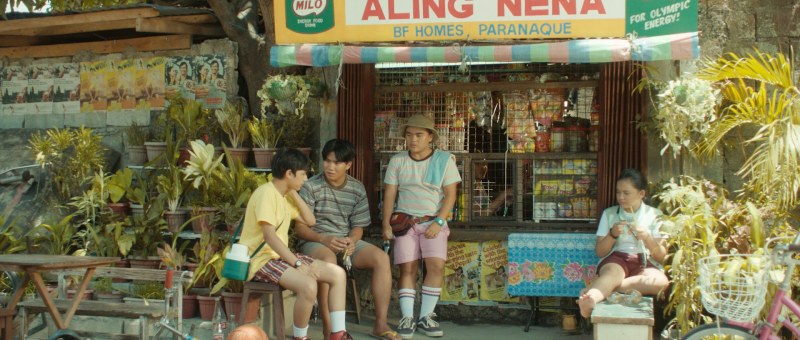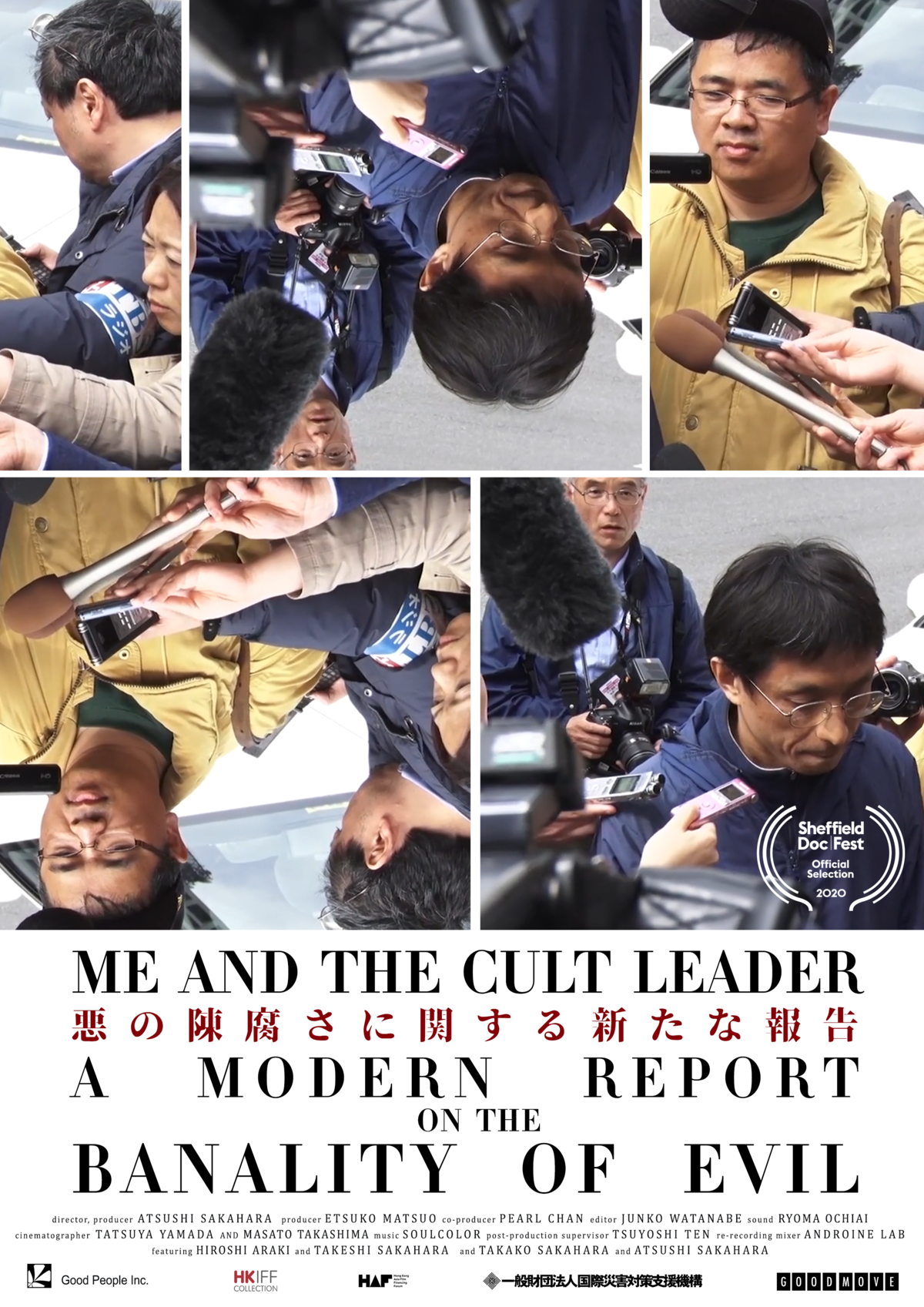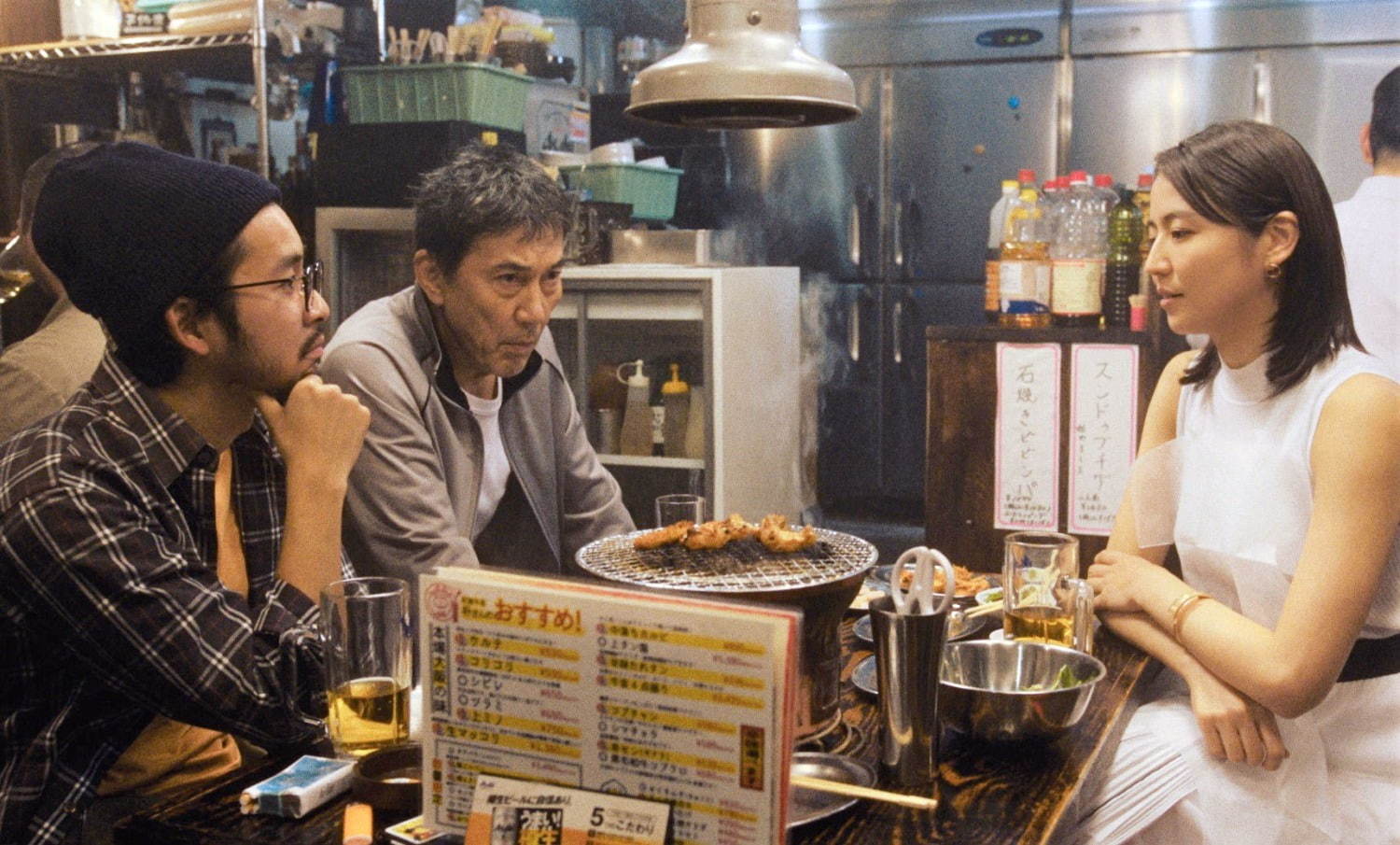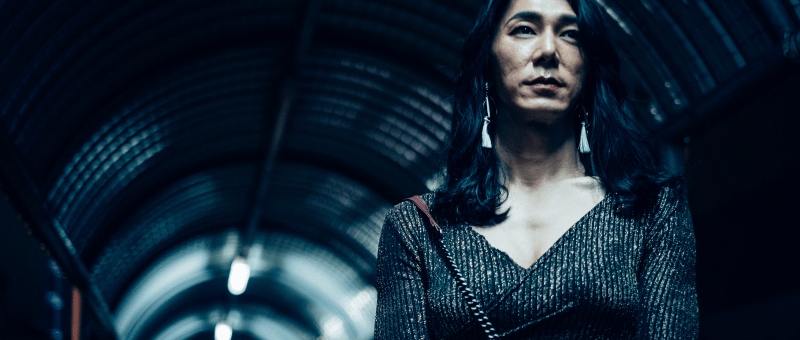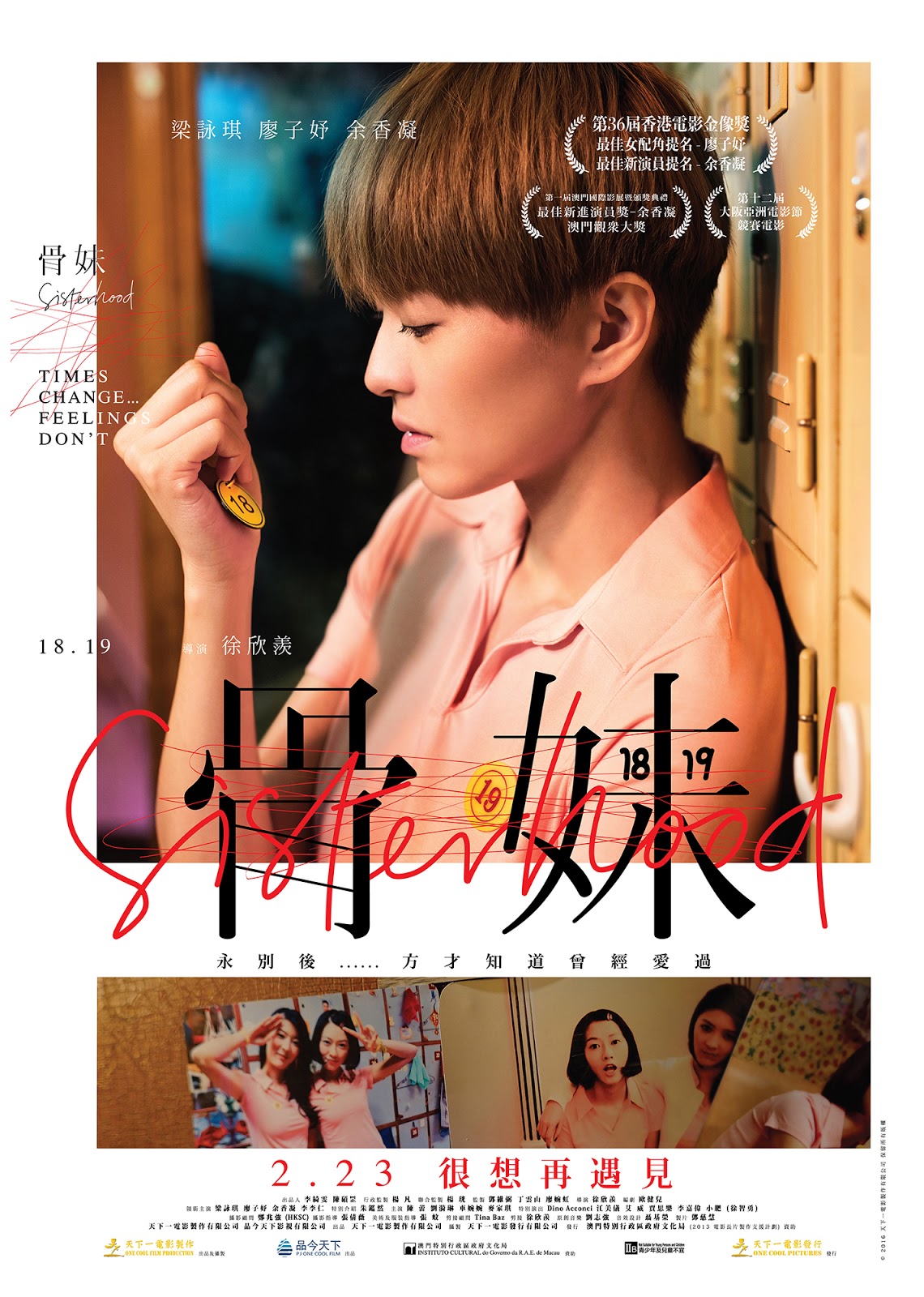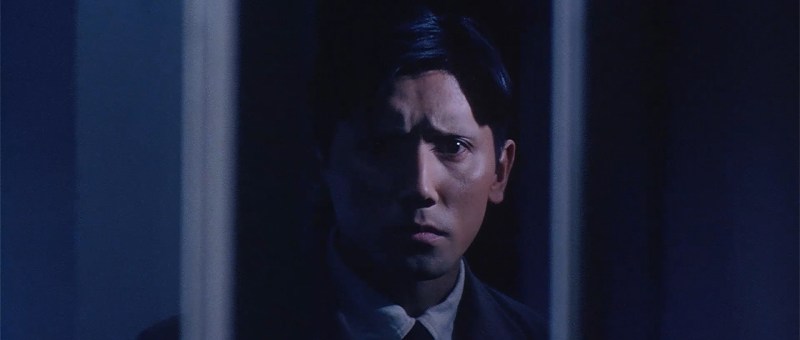
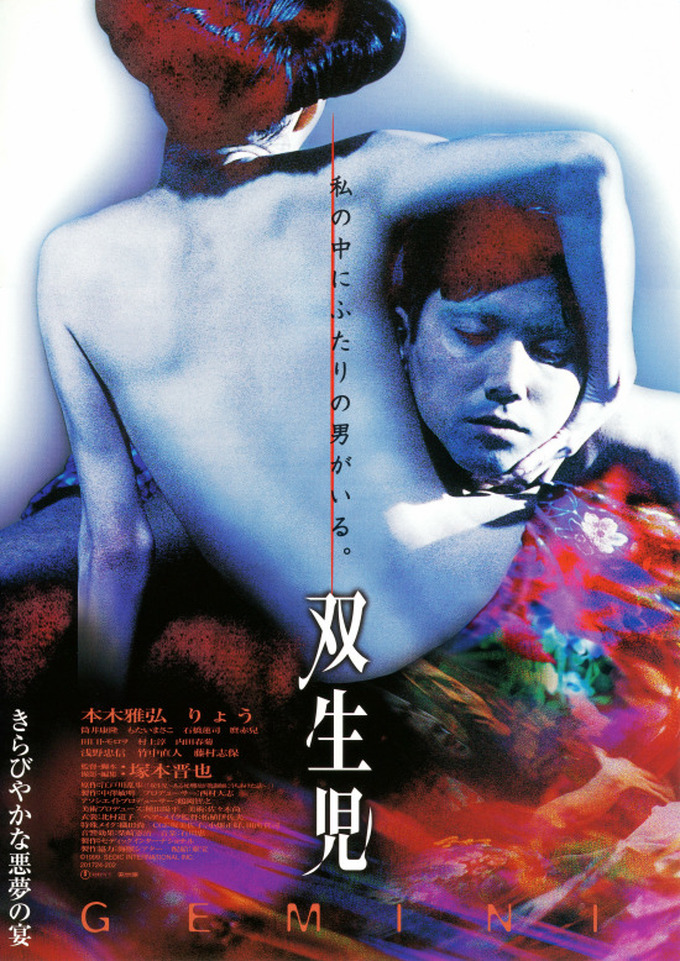
The Girl and the Gun (Babae at Baril, Rae Red, 2019)

“Everything is personal” according to one extremely oppressed young man in Rae Red’s neo noir voyage through the legacies of authoritarian violence, The Girl and the Gun (Babae at Baril). Drawing a direct line from Marcos-era oppression to Duterte’s Philippines and the war on drugs, Red’s debut solo feature is an irony-fuelled inquisition of the modern society equally ruled by fear and desperation in which many feel violence is the only recourse against their sense of despair only to discover that violence breeds only more of the same in a nihilistic spiral of hopeless impotence. 

The never named heroine (Janine Gutierrez) is a meek and mild young woman who works in a department store where women, in particular, are expected to be prim and proper. The girl, however, is forever pulled up about the ladder in her tights, seemingly her only pair and as we’ll see she cannot afford to buy a replacement nor will one be provided for her by her employers who pat down employees as they leave the store each evening to ensure they haven’t stolen anything. Despite this however she believes she works hard and is under-appreciated, her sense of disappointment palpable as she witnesses another young woman be named employee of the month. Her colleagues view her as aloof because she is always the last to leave the building and never joins them for drinks, little knowing that it’s not her shyness that keeps her away but shame in her poverty. She has a long and arduous journey home to the poor part of town where she shares a room with another young woman, unable even to make her rent because she sends most of what she earns to the mother she apparently feels unable to return to. For all these reasons, she finds herself alone with a predatory colleague (Felix Roco) who rapes her, sheepishly apologises, and then returns with more threatening violence to advise her to keep her mouth shut. 

The evening before she’d heard a gun shot, left her apartment to investigate and seen a man run away, noticing an abandoned pistol with a heart on the barrel discarded in a rubbish bin. After the rape, she picks it up, immediately pointing it directly at the abusive boyfriend of her roommate. The gun gives her a sense of empowerment that counters the trauma of her victimisation. She is already beyond caring and can now say all the things she’s ever wanted to say to the men who treat her with such utter contempt, taking a flirty customer to task for his inappropriate behaviour with his young daughter sitting right next to him, and eventually giving her boss a piece of her mind when he finally fires her over something as petty as a barely visible uniform infraction. 

The girl had not usually been the type to complain, both her sleazy landlord and priggish boss keen to tell her that there are plenty of people waiting to take her place as if she should be grateful that her awful life is still not more awful. She and her friend dream of escaping the city, going home, or at least far away to a place where they could live a better life. Jun Jun (Elijah Canlas) the teenage drug dealer from the news reports dreams of something similar, lamenting most of all that he had homework due before he became the subject of a manhunt with which he’d struggled. He wonders how he might have done. His friend gives him all his savings which he’d been collecting for his own escape, hoping to return to his mother with his younger sister in tow in order to save her from a father he at least fears is abusive. 

Tracking through the history of the gun before it found its way into the hands of the girl, Red takes us back to the authoritarian violence of the Marcos regime as a nervous policeman assassinates “activists” in place of the current “drug dealers”, his son eventually picking up his gun a “policeman” like his father but filled with resentment towards inescapability of his fate. The gun passes from hand to hand, a child sticking the little heart sticker on it, creating only more chaos wherever it goes. It gives the girl the courage she thought she lacked to seize her agency, to talk back, to be “unladylike” in insisting on her equality in the face of the countless men who ignore, cat call, and abuse her. But the gun itself is not enough, her quest for violent vengeance hollow and unfulfilling, the only real liberation coming as she decides to abandon it in a final act of catharsis that breaks the cycle of violence and oppression which had trapped each of the gun’s owners. As a boy had said, it’s all personal. You might think it’s nothing to do with you, but you can’t escape the oppressions of the world in which you live be they poverty, misogyny, or authoritarianism. 

Largely taking place at night, Red bathes her city in the tones of neo noir, a land of shadows among neon, a shining cityscape of high rise buildings the like of which neither the girl or the street kids are ever likely to enter. Making fantastic use of music from the noirish jazz to the nostalgic pop of the oppressive ‘80s she fully embraces the pulpy exploitation of the material but always maintains a sense of playful irony, never forgetting the full import of her sometimes grim satire of life on the margins of Duterte’s Philippines as her variously oppressed protagonists seek freedom in violence but find only more constraint in the depths of nihilistic despair.


The Girl and the Gun streamed as part of this year’s New York Asian Film Festival.

Original trailer (English subtitles)
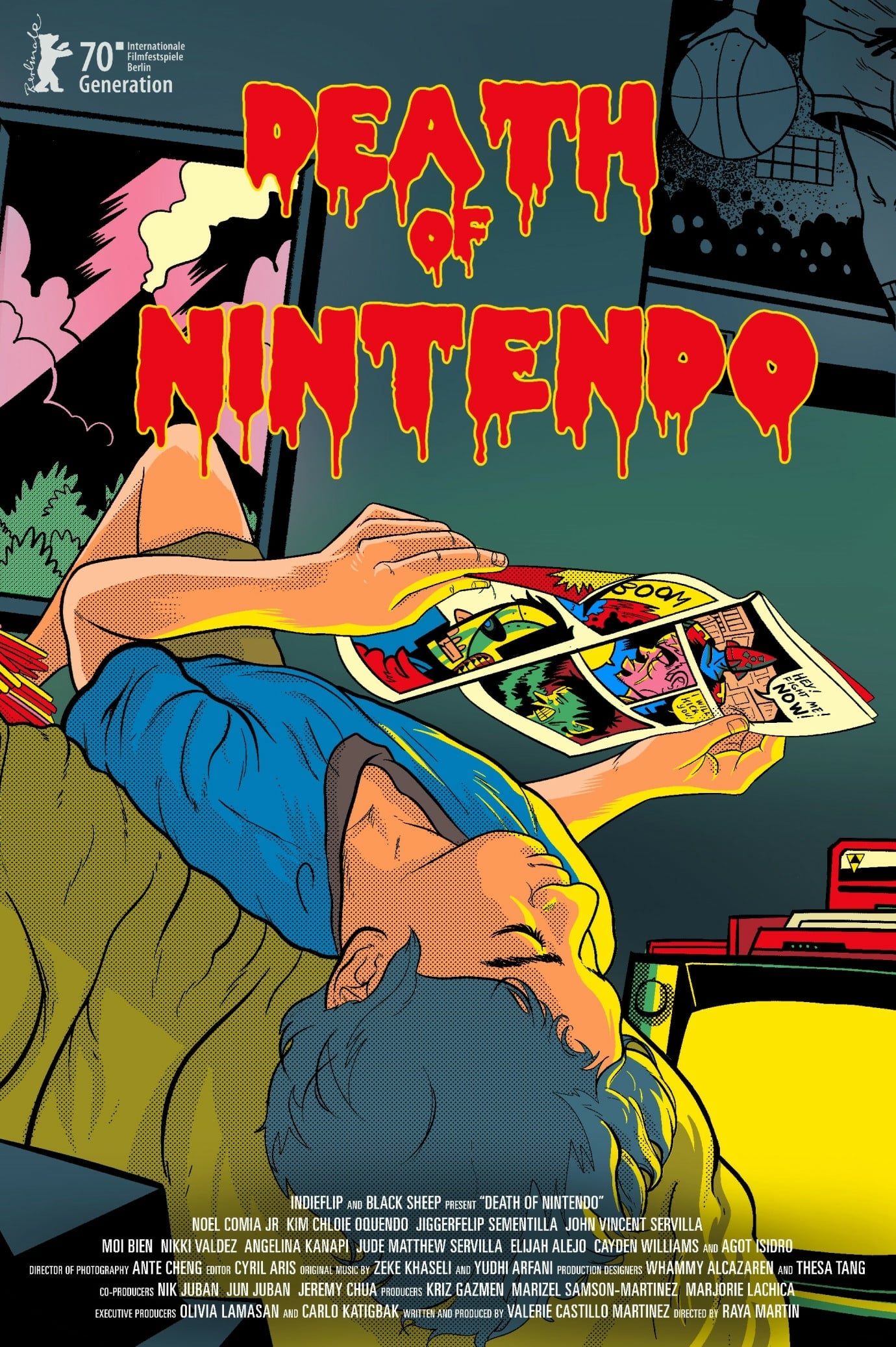
The Eight Hundred (八佰, Guan Hu, 2020)

“Enjoy Shanghai. Enjoy Your Life” reads a neon-lit sign in the art deco paradise of Shanghai in the 1930s. Across the river, however, a war is raging. Guan Hu’s The Eight Hundred (八佰, Bābǎi), the first Chinese film to be shot in IMAX and boasting an unprecedented budget of US$80 million, was the last in a series of movies to be ignominiously pulled from a festival slot, the opening night of the Shanghai International Film Festival no less, for “technical reasons”. In this case, most have interpreted the nebulous term as a squeamishness on the part of the censors’ board to the fact that the film celebrates the heroism not of the PLA but of Chiang Kai-shek’s Nationalist Revolutionary Army who put up the last stand during the fall of Shanghai, securing a warehouse on the opposite side of the river from the British Concession knowing that there was no hope of stopping the Japanese, but hoping that their defiance would inspire foreign powers over to the Chinese side. 

The action opens in October 1937 shortly after the outbreak of the second Sino-Japanese War. Shanghai is falling and the Japanese will soon be on their way towards Chiang’s capital, Nanking. Nevertheless, the Japanese have resolutely avoided encroachment into the foreign concessions for fear of inflaming international relations in ways which might be inexpedient for their current goals. As a diplomat later puts it, war is always a matter of politics. Ordered to hold the line, the last remnants of the NRA are expected to die as an act of political theatre. There is no practical benefit to their sacrifice save the vindication that they went down fighting, their moral righteousness a tool to garner sympathy firstly with the international community who might be persuaded to intervene at an upcoming conference in Brussels (which is finally postponed because of a corruption scandal engulfing the Belgian PM). 

In Guan’s retelling, however, it is a much more domestic audience which becomes the ultimate target. A contrast is repeatedly drawn between behind the lines China, a wasteland of fire and rubble, and the glittering lights of the foreign concession with its billboards for Hollywood movies, famous actresses surveying the scene while the sound of opera both domestic and Western wafts over the river and business carries on as normal in the large casino run by an eccentric short-haired madam dressed in a Western suit. Cynical journalists chase the story from the comparative safety of a balcony above the bridge, chiding the Chinese reporter, Fang (Xin Baiqing), who has also been working as an interpreter for the Japanese, that he acts as if this war is nothing at all to do with him. The heroism of the 800 is the key to unlocking the latent patriotism of those living in the dream of the foreign concession where war happens only across the water, in another world no more real to them than a movie. They stand by the water and they watch, increasingly grateful to the soldiers for their protection until they too remember that they are also Chinese and this war is also their war. Women extend their hands towards those retreating across the bridge while the Peking opera turns its drums to the rhythms of war and the casino madam gives up first a flag and then a large stash of morphine hidden in her safe for probably obvious reasons. 

The flag might be one of several explanations for the censors’ squeamishness in that it is obviously now the flag of Taiwan and reminds us that these men are members of Chiang Kai-shek’s NRA, more often characterised in ideological terms as traitors rather than heroes. They are not however saints in the propaganda movie mould and it is even perhaps suggested that they are not much better than the Japanese, ruthlessly executing their own men as deserters and using prisoners of war as target practice for untrained, nervous recruits (the Japanese meanwhile publicly dismember their prisoners with the intention of intimidating Chinese forces). The youngest of the soldiers is only 13, a farmer’s son pulled off his land with his older brother who was tricked into the war machine by the desire to see the shining city of Shanghai and perhaps travel to England. Some of them try to run, torn between the desire for escape and a responsibility to their fellow men, each eventually fully committed to their forlorn hope determined to hold the warehouse if only to prove that they held the line for as long as it could be held. 

That same diplomat encourages commander Colonel Xie (Du Chun) that what he does here will be remembered, and that his men are the “real Chinese people” in another statement that probably rankled with the censors. Repeated references to legendary general Guan Yu paradoxically link back to the contemporary context as the narrator of a shadow play echoes that the Han restoration rests with the young while an angry soldier rants about planting a flag on Mount Fuji as revenge for everything they’ve suffered, making the case for the resurgent China beholden to no one something echoed by the moving scenes juxtaposing the ruined warehouse with the ultramodern city which now surrounds it. Yet Guan opens with a peaceful image of pastoral serenity which stands in stark contrast to the chaos of war as his numbed camera slowly pans between one scene of carnage and the next. Men blow themselves up, cry out for their mothers, send letters home, and call out their names as they die to prove that they existed while a beautiful white horse runs wild in the vistas of desolation. Unashamedly patriotic despite its slightly subversive context, The Eight Hundred presents war as the meaningless chaos that it is, but also lionises the men who fought it in the mythic quality of their heroism as they alone stood their ground and finally convinced others to do the same.


The Eight Hundred is in UK Cinemas from 16th September courtesy of Cine Asia.

UK trailer (English subtitles)

Hell Bank Presents: Running Ghost (冥通銀行特約:翻生爭霸戰, Mark Lee, 2020)

“The most important thing in life is to know how we die” according to the very efficient lady manning the desk in the Labour Department of Hell where, it seems, everyone has to do their bit. No rest for the wicked, even in death. A glorious satire on the business of modern living, Mark Lee’s Hell Bank Presents: Running Ghost (冥通銀行特約:翻生爭霸戰) sends its recently deceased hero on a quest to find meaning in his life from the other side as he becomes an unwilling contestant in an undead variety show. 

Wong Hui Kwai (Wong You-nam) has been dead for 22 days. Unusually, he can’t remember how he died, and as he tells the lady at Labour Department of Hell when asked what he achieved while alive was known chiefly for his ability to install internet cables with maximum efficiency (unfortunately Hell is already fully covered for wi-fi). Sadly, Hui Kwai didn’t do anything of note in his life and now it’s over he’d really rather just take it easy, which is why when he’s offered a nice job he tries to back out towards fiery torture. Nevertheless he finds himself a sudden replacement for a contestant who ascended at an extremely inconvenient moment right before he was supposed to take to the stage on Hell’s hottest variety show Hell Bank Presents: Running Ghost in which the prize is instant resurrection. Hui Kwai needs to succeed in three rounds of ghostly pranks, making the living faint, possessing a living person, and then scaring someone to death. 

Asked again on the stage where the MC reframes his abilities as a cable guy to paint him as a concealment expert, a very useful skill for a ghost trying to scare people, Hui Kwai is again forced to confront the fact that his life was extremely disappointing, his only “talent” was going to work, sleeping, and then going to work again. You might even say he was already a ghost before he died, though the resurrection prize does sound good because it would allow him to take care of some “unfinished business” with his childhood sweetheart Bo Yee (Venus Wong) whom, he fears, is being taken advantage of by an unscrupulous estate agent. As General Bull tells him, his problem is he needs to believe in himself more, pointing out that his nerdy appearance is just like that of a super hero before they discover their hidden powers. He never accomplished anything because he never really tried, if he wants his life back he’ll have to actually fight for it. 

Unfortunately, having been dead only 22 days he’s not exactly powerful which is why he’s abruptly sucked into the dream catcher set up by eccentric ghost enthusiast Ling Kay (Cecilia So Lai Shan) who has some “unfinished business” of her own, trying to trap a spirit in the hope that they’ll be able to make contact with her late father. Lee has a lot of fun with the gadgetry of the supernatural which runs from Ling Kay’s old school dream catcher and Ouija boards to water pistols filled with ghost-busting pee and children’s flashlights “blessed” with the ability to burn up spirits. Are you a ghost needing to find an unlucky person to scare? There’s an app for that, and it works with your “Fat-bit” wristwatch. Meanwhile, even in Hell there are variety shows sponsored by Starbucks Coffins which have breaks featuring ads for services you can use to offload your unwanted funerary offerings. Paper money is no longer any good, in the after life they use “Helipay”, but General Bull who can presumably beam himself anywhere still travels in a gothic rickshaw pulled by an unfortunate underling forced to re-enact his suicide every night as part of his eternal torment. 

Running Ghost excels in its madcap world building in which the after life is somehow much more technologically advanced than the mortal realm, all slick touch screens and augmented reality, but perhaps still subject to the same old vices in which the undead vacuously watch reality shows and get their kicks pranking the living. Still, only after he’s died can Hui Kwai make the zero to hero journey, realising his unfinished business is really learning to unlock his latent potential which he does by protecting someone else, just not the someone he originally came back to protect. A much needed shot in the arm for HK supernatural comedy, Hell Bank Presents: Running Ghost is a spooky delight. 


Hell Bank Presents: Running Ghost streamed as part of this year’s New York Asian Film Festival.

Original trailer (Cantonese with English & Traditional Chinese subtitles)

Where the Seagull Flies (海鷗飛處, Li Hsing, 1974)

Regarded as the “father of Taiwanese cinema”, Li Hsing was one of many who migrated from the Mainland during the Chinese civil war in 1949. Originally working as an actor, Li shifted into directing with the boom in Taiyupian Taiwanese language cinema in late ‘50s though he himself did not speak it, moving then into documentaries and finally self-financing the Mandarin language indie film Our Neighbors in 1963 becoming known for a particular brand of “healthy realism”. Despite this, however, the later part of the decade saw him enter into a long association with publishing phenomenon and romance writer Chiung Yao for a series of mainstream melodramas starring popular idols of the day. 

Chiung Yao’s novels are known for their depiction of relationships which are often in some way taboo as in Outside the Window the film adaptation of which launched the career of Brigitte Lin as a schoolgirl in love with her teacher. Li’s adaptation of Where the Seagull Flies (海鷗飛處, Hǎi’ōu Fēi Chǔ) by contrast erects barriers between the two lovers which are largely psychological as they struggle to overcome their pride, stubbornness, and fear of intimacy to embrace their love but also ambivalently engages with the changing nature of patriarchal society at once insisting its feisty heroine be softened in order to become a “good wife” while allowing her the agency her society denies her only by going abroad. 

The hero, technically, is melancholy journalist Muhuai (Alan Tang Kwong-Wing) who encounters the heroine Yushang (Chen Chen) for the first time on a boat in Hong Kong where he saves her from committing suicide she later tells him, giving her name as “Seagull”, because she has just murdered her cheating husband by hitting him over the head with a wine bottle. Seagull disappears on him just as he’s trying to get through to the mistress to get her to check if the husband is really dead but he meets her again in Singapore where she gives her name as Ye Xin. Working as a nightclub singer she agrees to show him around the island, telling him that she’s originally from Manila and is supporting a troubled family. This time she doesn’t disappear but arrives too late to see off his plane at the airport. Disappointed that all his letters come back no such address, Muhuai is despondent and then extremely confused to meet the mysterious woman yet again as Yushang, a uni friend of his younger sister Mufeng (Tang Mei-Fang). 

Figuring out that all three women really are one and that Yushang is her “true” identity, Muhuai is extremely annoyed and decides to have his revenge by dating her until she falls in love with him and then ringing her to come out at 3am to tell her he was just having a bit of fun and never really loved her at all. The cause of all the drama is, at root, Muhuai’s male pride in that he resents being “deceived” by Yushang on their first two meetings during which she was essentially engaging in reckless role play as a break from her “boring” existence as a member of the new super rich elite (she can travel so freely because her father is a wealthy businessman who operates all over the world). Yushang, meanwhile, is being pushed towards an arranged marriage with her father’s business associate Shiche (Patrick Tse Yin) while attending college and falling in love with Muhuai. Each feeling spurned, their romance eventually turns dark with Yushang rebound marrying Shiche who turns out to be an abusive gold-digger. 

The barrier between herself and Muhuai then seems insurmountable. Believing she’s made her bed, Yushang quells her fiery, independent nature to conform to the image of the “good wife”, later literally beaten into submission by the cruel and manipulative Shiche. While it could be said that she’s being punished for her betrayal of love, it’s patriarchal social codes which eventually leave her trapped. Though her outwardly conventional mother had always been on her side, cautioning her to follow her heart rather than marry Shiche out of prideful self-destruction, she too thinks that her daughter should “be more like a woman, not a child. Feminine and tender”. When Yushang goes to her parents to suggest a divorce they reject the idea out of hand, refusing to believe that Shiche is really abusive, assuming that she is simply failing to adapt to married life in a refusal to accept her husband’s authority and is possibly realising she made a mistake while continuing to think of Muhuai. Yushang’s father eventually signals he may support her desire for a divorce if the marriage is unsalvageable but not if she’s merely leaving her husband for another man. 

Muhuai meanwhile has sunk into a depression, drowning his sorrows in drink and consumed by his sense of romantic impotence in having failed to fight for love while intensely resenting Yushang for making him feel this way. The barrier he has to overcome is male pride, getting over the literal inauthenticity of his relationships with the first two incarnations to realise that Yushang really is the one he loves no matter who else she might have been at various times in her life including Shiche’s wife. While the multi-country setting perhaps reflects a new globalising Taiwan as well as a rise in economic prosperity, Yushang’s globetrotting exploits are also an attempt to escape the patriarchal constrains of contemporary Taiwanese society, her “boring” life of continual ease and emotional emptiness where everyone is forever telling her that she has to be less, quieter, and above all obedient most particularly to men. 

Even so, the film too uncomfortably insists that Yushang’s feisty independence is “childish” and unfeminine while implying that her abusive relationship with Shiche turns her into a real woman capable of fulfilling her natural role as a housewife. Only by going abroad can she finally free herself of his control, and largely because he simply gets a better offer chasing an American oil heiress. It’s a minor irony that while Yushang’s problem is apparently her manly impulsivity both of her suitors are examples of male failure, Shiche in his laziness as a man who only wants to live off a rich woman rather than support himself, and Muhuai in his romantic diffidence too insecure to admit his love for Yushang. Nevertheless, Chiung Yao and Li Hsing are careful to leave the door open for love, refusing the possibility that it’s ever too late to fulfil one’s romantic destiny as the lovers each concede a movement towards the centre in finally finding the courage to open themselves to emotional authenticity. 


Where the Seagull Flies streams in the UK 21st to 27th September as part of the Taiwan Film Festival Edinburgh.

Trailer (English/Traditional Chinese subtitles)

Baseball Girl (야구소녀, Choi Yun-tae, 2019)

According to the title card which opens Choi Yun-tae’s Baseball Girl (야구소녀, Yagoosonyeo), an obscure regulation in the founding principles of the Korean Baseball League placed a bar on players who were “biologically non-male”, a ban which was struck down in 1996 allowing women to play professionally though attitudes it seems are much harder to change than regulations. In contrast to the grand tradition of Korean sports dramas, the contest is not a game but the right to play in one and the opposing team not talented rivals but sneering sexism and a conformist society. 

Joo Soo-in (Lee Joo-young) made the papers as the first girl to play in her high school team in over 20 years. Casting an eye around her room we see her trophies and discover that she is a talented pitcher known for top speed fastballs, but then as others seem to put it her balls are only fast “for a girl”. All she’s ever dreamed of is playing professionally and, after all, there’s nothing in the rulebook to say she can’t but that’s all anyone ever tells her. Why can’t I? she asks them, but the only answer they have for her is that it simply isn’t done. Lined up with her teammates following a meeting with a scout from the big leagues, Soo-in watches as only one of her friends, Jeong-ho (Kwak Dong-yeon), is picked. The others all walk off with resignation, accepting that they’ll need to find alternate careers but Soo-in doesn’t back down. 

Soo-in’s determination places her at odds with her working class family, her harried mother (Yum Hye-ran) continually insisting that she’s being childish and unreasonable and should give up her dreams to do something more practical with her life or risk becoming like her father (Song Young-Kyu) who is perpetually unemployed, unable to provide for the family while repeatedly failing the exam to become a licensed estate agent. There’s no shame in giving up when there’s no chance of success, her mother tells her, aligning her quest with her father’s as an egotistical act of prideful selfishness. As a teenage girl, however, Soo-in cannot help but feel the slight of her parents’ lack of support, resenting her mother’s understandable prioritisation of the ability to earn as she pushes Soo-in towards taking an office job in the factory where she works right out of high school in the belief that she’s helping her towards an economically stable life. 

Meanwhile, the new coach on the team, Jin-tae (Lee Joon-Hyuk), is quick to sideline her, viewing her as ridiculous and deluded. It’s not because you’re a girl, he tells her, it’s that you aren’t good enough, paradoxically insisting that she never could be because of the “limitations” of her female body which make it impossible for her to compete with men who also, as he points out, are extremely unlikely to make it as professional players. She tells him that he’s wrong, vowing to pitch at a speed unheard of, certain that if achieved the leagues would have to take her. Jin-tae has problems of his own, a never was player who wasted his youth trying to turn pro, became an alcoholic, and ruined his marriage. It’s understandable that his experiences have turned him cynical and mean, but something about Jin-soo’s determination, along with her strong skillset, begins to move him. Maybe he thinks it’s hopeless too, but it would be wrong to deny her the right to try. 

The biggest battle Soo-in faces, however, is from other players. Jeong-ho relates how in their little league days she was the only girl on the team and the kids mercilessly bullied her in part because the coach told them having a woman around was bad luck and made them all do intensive training to encourage her to quit. Jin-tae tries to get his scout friend to get her a tryout for a professional team, but he makes no secret of his distaste for the idea, exasperatedly complaining that Soo-in doesn’t look like a ball player (i.e., not a man, small and slight) only to later offer her an insulting token job as a figurehead for a “Woman’s Baseball Project” designed to make his big league team look more progressive than it really is. At her big try out, the guys in the dug out snigger and laugh, making fun of the batter who was struck out by “a girl” while the other coach congratulates her suggesting that she must have “trained with the boys” before giving her some unsolicited advice. 

As she tells the director of the big league team, baseball is for everyone. Her femininity is not a strength or a weakness, it simply is. She might not be as fast or as strong, but she’s smart, and brute force is not the point of the game. Some tell to her give up, that she should just play in the women’s leagues as a “hobby”, and perhaps at times Soo-in doubts herself but as Jin-tae tells her, other girls can dream because she showed them it was possible when she overcame huge prejudice to play on her high school team. Yet for Soo-in with every success it will only get harder. Even so she won’t give in, playing hardball with a relentlessly patriarchal society as she insists on the right to follow her dreams wherever they may take her.


Baseball Girl streams in the US via the Smart Cinema app until Sept.12 as part of this year’s New York Asian Film Festival.

Original trailer (English subtitles)
The Husband’s Secret (丈夫的秘密, Lin Tuan-Chiu, 1960)

Emotional pain flows out of wronged love, according to the gently judgemental voiceover cutting in at random moments throughout Lin Tuan-Chiu’s familial melodrama The Husband’s Secret (丈夫的秘密). A tale of changing gender roles and a conservative society, Lin’s film finds a frustrated female solidarity but also insists on the repair of the traditional family even when that family may not take the form one expects or in fact be entirely healthy while romantic love which destabilises the social order must be suppressed in order to preserve the maternal which only reinforces it. 

The film opens with Tshiu-Bi (Wu Li-Fen) meeting some of her old friends from college at a reunion only to be accidentally shamed by another woman boasting about her already large family. Despite being apparently happily married to rising executive Siu-Gi (Chang Pan-Yang) and living a financially comfortable life in a large Western-style home with a live-in maid, there is discord in the marriage because the couple have no children. A moment of crisis presents itself when Tshiu-Bi runs into her old friend Le-Hun (Chang Mei-Yao) who had been missing from the reunion and learns that the reason for her absence was shame. Seduced and betrayed, Le-Hun is now a single mother living in desperate poverty, forced to pawn her coat in the middle of winter and pound the streets amid the falling snow looking for work. She is always turned away, prospective employers complaining that she looks like a drug addict because of her shivering in the cold, sunken cheeks, and hollow expression. When her young song Ah-Siong is ill and she needs money for hospital treatment, she is forced to swallow her pride and ask Tshiu-Bi for help. Tshiu-Bi gives her a diamond ring to pawn, bringing her into conflict with her husband who is stunned to hear the name and realise that Le-Hun maybe the girlfriend he broke up with to agree to an arranged marriage with Tshiu-Bi to further his business prospects. 

Tshiu-Bi of course knows nothing of this, bringing Le-Hun to stay with them after she is found passed out in the street and hurt when she abruptly leaves after realising that Siu-Gi and her old friend are now a married couple. As Siu-Gi later acknowledges, much of this is all his fault in the moral cowardice that saw him abandon a woman he loved to make an advantageous match. He may have tried to be a good husband and is not a bad man, but he has perhaps behaved badly and the consequences of his bad behaviour are visited on the women in his life alone. Siu-Gi wants to make amends, but is also overwhelmed by old emotions. Perhaps he envisages a solution in which he could have it all, protect Le-Hun and the son he suspects may be his while maintaining his married life and his wife none the wiser. 

Unlike Tshiu-Bi, Le-Hun has certainly been unlucky, ruined by an early failed affair with a bad man who turned out to be a petty criminal and forced her to become a bar hostess to support him. She left Sing-Liat after discovering him with another woman, but he continues to pursue her, damaging her earlier relationship with Siu-Gi and disrupting every opportunity she takes to make a life for herself, seemingly never allowed to forget that she is a “fallen woman” as if haunted by her transgression. Le-Hun is even evicted from her flat when the landlady’s drunken husband tries it on while she is half-conscious with fever, the landlady choosing to blame her rather than the husband in a theme which will be repeated when the prior relationship between Le-Hun and Siu-Gi eventually comes to light. Tshiu-Bi’s uncle, who had arranged the marriage, reminds her that boys will be boys and having a mistress is perfectly normal, keen that she not cause further scandal with a divorce over something as trivial as a husband’s infidelity. Running into Le-Hun by chance after she had fled to another town, Siu-Gi gives in to his passion and spends the night with her, justifying himself that what they have done is perfectly natural while the judgemental voiceover cuts in to ask how educated people could behave in such an uncivilised manner. 

As a result of their night of passion, Le-Hun becomes pregnant and finds refuge with a close friend and fellow bar girl who helps her to raise Ah-Siong, but once the pregnancy is discovered the uncle reassumes control and lays claim to the baby. He orders Le-Hun never to see Siu-Gi again, to which she agrees already overcome with guilt in having betrayed her friend by sleeping with her husband, but also makes the completely unreasonable demand that he will take the baby away after it’s born, apparently intending to put it out for adoption. Tshiu-Bi, meanwhile, sees he obvious solution and wants to keep the child as her own which angers the fiercely patriarchal uncle because it would mean that the mistress’ son inherits the estate (Siu-Gi had married into their family which is why he has a different surname to the one he used when he was with Le-Hun, perhaps explaining his feelings of resentment and emasculation in the reversed power balance of his marriage). 

Yet the illicit affair provides a point both of fracture and of healing which turns the single point of crisis into two definitively separate yet viable branches. While the relationship between Le-Hun and her friend seems perhaps transgressively close and hints at an alternative family born of female solidarity of the kind that Tshiu-Bi tried to offer to Le-Hun but was frustrated by romantic crisis, Le-Hun is eventually forced to reunite with her no-good gangster boyfriend who has apparently reformed after a spot in jail and now bitterly regrets his treatment of her. Wayward men are brought back into superficial conformity in being forced to assume a degree of responsibility as husbands and fathers, while women are expected to suppress their emotions and stoically endure the consequences of male failure. Nevertheless, even while Le-Hun’s friend is seemingly left out in the cold, the social order is preserved in the repair of two “happy” families cauterising the wound of transgression through the reinforcement of the conservative.


The Husband’s Secret streams in the UK 18th to 27th September as part of the Taiwan Film Festival Edinburgh.

Clip (English / Traditional Chinese subtitles)

Restoration trailer (English / Traditional Chinese subtitles)

Diaspora: Arirang Road (디아스포라의 노래: 아리랑 로드, Lee Kyu-chul, 2019)

A song from home can be a powerful thing when you’re far away, as the various protagonists of Lee Kyu-chul’s Diaspora: Arirang Road (디아스포라의 노래: 아리랑 로드, Diaspora-eui Nolae: Arirang Road) make plain. Though they perhaps can no longer remember all the words, or are too overcome by emotion to be able to sing, each of Lee’s overseas Koreans has a deep connection to the melancholy folk song which sings, as one farmer puts it, of “the grief of living” but as others affirm is also full of life and hope if only in the solidarity of voices raised together in shared hardship. 

The guide, Korean-Japanese composer Yang Bang-ean, is on a quest to write his own version of Arirang, a new version which sings in the voices of the diaspora. Yang was himself born in Japan to Korean parents and is a member of the zainichi community committed to cross-cultural exchange. Unsurprisingly the first half of the film is dedicated to the Koreans who found themselves in Japan sometimes against their will, trafficked as forced labour during the colonial era and taking solace in Arirang while enduring harsh treatment and discrimination at the hands of the Japanese. In a brief reconstruction, a miner reads a letter to his mother in which he hides how much he is suffering, later likening himself to an octopus tricked into a pot, gradually consuming itself in a desperate attempt to survive.

Unlike many folksongs, little of Arirang is fixed aside from the distinctive chorus leaving melody and lyrics open to interpretation meaning there are thousands of different versions found all over Korea and beyond. The action later shifts to a perhaps forgotten diaspora community, the Koreans of Central Asia who travelled to Russia in search of a better life only to be moved on by Stalin in the 1930s as international tensions escalated. Packed onto a fetid train travelling for days on end with many dying during the journey from cold, stress, or hunger, they had only Arirang to unite them and offer hope that their lives would one day be better. 

As as someone puts it, Arirang is the “tragic history of a scattered people”, but also “a belief of our history and future”. According to another singer, it is “love. life. and living”, running like water with the rhythms of nature and leading those who share the song toward hope. Yang later re-characterises the song as both personal and universal, the singer in a sense becoming Arirang and Arirang the singer in a process of mutual change and evolution, something which is perhaps underway as he continues to write his own Arirang for those Koreans who remain outside of Korea. 

As many of the singers point out, there is much grief and sorrow in Arirang but also hope and a spirit of endurance. Lee Kyu-chul shows us two different burial grounds on different sides of the Earth, the first marked only with stones for Koreans buried anonymously in Japan, and the second a small city of walled headstones for those who died peacefully of old age in Kazakstan. Those who survived the train later prospered and endured, their grandchildren born and raised in Kazakstan but still united by Arirang as a marker of their culture while one young man enthusiastically belts out a K-pop tune to remind us they’ve not forgotten their roots. 

Yang concludes his performance with an intense jam session of various artists each forging a new Arirang together, testimony to the power the song has to bring people together as it has with Yang and the members of the Korean diaspora he has met from all over the world in some ways very like him and in other ways not but united in their Koreanness through the memory and the sentiment of Arirang no matter what lyrics they sang or what hardship they endured. A heartfelt tribute to the solidarity of voices raised in song and the cathartic properties of music, Lee Kyu-chul’s folksong odyssey rediscovers the invisible connections of the diasporic community brought together by the power of Arirang which offers, as Yang puts it, “the opportunity to hope” even in the depths of despair.


Diaspora: Arirang Road streams in the US Sept. 10 to 14 as part of the 11th season of Asian Pop-Up Cinema.

Original trailer (English subtitles)
They Say Nothing Stays the Same (ある船頭の話, Joe Odagiri, 2019)

“Something new comes along, old things have to go” according to the philosophical boatman at the centre of Joe Odagiri’s They Say Nothing Stays the Same (ある船頭の話, Aru Sendo No Hanashi). A Meiji-set lament for changing times, Odagiri’s first feature following his 2009 mid-length comedy Looking For Cherry Blossoms is a visual tour de force shot by Christopher Doyle with whom he worked on the 2017 Hong Kong film The White Girl whose ethereal images of the majestic Japanese landscape with its misty vistas and rolling river perfectly compliment Odagiri’s poetic contemplation of transience and goodness. 

Toichi (Akira Emoto), the boatman, has ferried weary souls across the river for as long as anyone can remember but his days are numbered. Modernity is coming to the village in the very literal form of a bridge currently under construction not far from the crossing point, the workmen’s hammers ringing in Toichi’s ears like a ticking clock reminding him that his era is coming to a close, industrial noise at war with the tranquility of nature. For all that he tries to be philosophical. The bridge will certainly be convenient, as he admits to a man (Takashi Sasano) who needs to transport his cow across the river, the only current solution being to cross where the water’s shallowest and have the cow (and its minder) swim alongside while the man rides the boat. Toichi’s young friend Genzo (Nijiro Murakami) who sells herbal medicines, however, isn’t quite so philosophical. He doesn’t think the bridge is a good thing at all and only half-jokingly suggests blowing it up before it’s finished. 

But change comes earlier than expected. Hitting a strange object in the water, Toichi discovers it to be the body of a young girl (Ririka Kawashima) apparently still alive if only just. He takes her in and nurses her back to health, dressing her in a red outfit incongruously in the Chinese style, though she claims to have lost her memory and only later gives her name as “Fu”. Toichi muses on the possibilities, her name perhaps taken from the character for wind which, he points out, is a great motivator for a boatman capable of speeding up the rate of change, but also hears tell of a heinous crime the next village over in which an entire family were brutally murdered with only the daughter apparently spared, feared to have been kidnapped by the killer. Suspecting Fu may be the missing girl, he decides to help her, explaining her presence away in implying she’s a relative from “upriver” he’s been asked to look after for unspecified reasons. 

Toichi too claims to be from “upriver” though we never find out where it was he got those clothes from, assuming someone left them on his boat or like the portrait of the Virgin Mary he admires for its beauty and a memory of sorrow in the eyes of the woman who gave it to him as she explained that she would not come this way again, they simply drifted into his life. The poetic import of his existence as a boatman is not lost on him as he crosses the wide river of life and death, haunted by the strange spectre of another young woman who tells him that he’s damned himself with kindness in intervening in matters of fate. The modern world ebbs ever closer, a city doctor dressed in a white suit bringing Western medicine that challenges Genzo’s concoctions while the arrogant engineer and coarse construction workers resentfully climb into Toichi’s boat. 

“Bridges aren’t important, I prefer fireflies” Fu affirms, hearing the various ways in which the river is already changing. We find the bridge completed in the depths of winter, Toichi attempting to earn a living with animal pelts but now throroughly out of place in the frozen landscape. Nihei (Masatoshi Nagase), a local, laments the way the bridge seems to have hurried their lives, everyone busily crossing back and forth, the modern world now thoroughly penetrating the village. No longer so young or so kind, Genzo is fully corrupted, dressed in a three-piece suit and cape with a brogues on his feet unsuited to the rocky terrain and now looking down on his old friend who will not be able to cross the bridge into the modern world but will be forever cast away, a boatman to the end never resting too long on the shore. 

Yet Toichi maintains his imperfect humanity, admiring Nihei’s father (Haruomi Hosono) as man who truly put others before himself even in death in bequeathing his body to the animals in recompense for the many lives he took as a hunter. Toichi admits that he is not so good, a “selfish nobody” who resents the bridge despite himself but resolves to do better to become a man like Nihei’s father. Odagiri shows us leaves on the water which resemble Toichi’s boat as if to remind us how small he is and how great the river, but leaving us with the knowledge that it and he flows on if in flight, continually displaced by the onrush of an unwelcome modernity with its all of its selfishness and lust for the dubious lure of convenience. Boasting a host of famous faces in tiny roles from an imposing Yu Aoi taking village women to perform in a festival to Masatoshi Nagase in an extended cameo and Harumi Hosono as a beatific corpse, Odagiri’s melancholy tone poem is an elegy for an idealised pre-modern age in which the fireflies still shone on the banks of the river and there was time enough for human goodness. 


They Say Nothing Stays the Same streamed as part of this year’s New York Asian Film Festival.

International trailer (English subtitles)

BFI London Film Festival Confirms Complete Programme for 2020

The BFI London Film Festival returns for 2020 a little different than you remember it, but even within the concentrated programme there are a few East Asian gems to be found. This year’s edition will be a mix of online and physical events taking place at cinemas around the country and in your living room via BFI Player.

Days (日子)

Tsai Ming-liang’s latest stars Lee Kang-Sheng as a wealthy man who ventures into the city to seek treatment for neck pain and encounters a young masseur whose life is no less lonely if much less grand.

Screenings:

  • BFI Southbank, NFT 2: 8th October, 17.30
  • BFI Southbank, NFT 3: 8th October, 17.40
  • ICA: 9th October, 19.40

Online:

  • BFI Player: available 8th October, 18.30 – 11th October, 18.30

Striding Into the Wind (野马分鬃)

Semi-autobiographical road movie from Wei Shujun in which a young film student in his final year spends his time driving around China in a Jeep Cherokee.

Online:

  • BFI Player: available 16th October 18:30 – 19.00

Genus Pan (Lahi, Hayop)

The latest from Philippine filmmaker Lav Diaz runs a trim 156 minutes but once again engages with the complex history of the nation through the story of three miners traversing the unforgiving wilderness of a mythical island as they journey towards their home village.

Online:

  • BFI Player: available 11th October, 17.30 – 14th October, 17.30

A Day-Off for Kasumi Arimura (有村架純の撮休)

The first episode of the 2020 WOWWOW TV series directed by Hirokazu Koreeda starring actress Kasumi Arimura (Sekigahara, Narratage, Flying Colors) as a fictionalised version of herself enjoying a day off between filming. Only the first episode is available here but the eight-part series of self-contained stories also includes episodes directed by Rikiya Imaizumi (Their Distance, Little Nights, Little Love), Santa Yamagishi, Satoko Yokohama (Bare Essence of Life, The Actor), and Megumi Tsuno (Ten Years Japan “Data“). Koreeda also directed the third episode, with Rikiya Imaizumi also doubling up directing episodes two and six, and Santa Yamagishi four and eight. A followup series starring actor Ryoma Takeuchi and directed by Ryuichi Hiroki, Eiji Uchida, and Hana Matsumoto, airs in Japan in November.

Online:

  • BFI Player: available 10th October 13.00 – 13th October, 13.00

So how does it work? East Asian titles aside, a number of the bigger films will be screened in cinemas around the country including London’s BFI Southbank, ICA, Curzon Soho, Curzon Mayfair, Cine Lumiere, Barbican and Prince Charles Cinema, as well as HOME, in Manchester; Watershed, in Bristol; Glasgow Film Theatre; Broadway, in Nottingham; Showroom, in Sheffield; Queen’s Film Theatre, in Belfast; and Chapter, in Cardiff. All of the East Asian titles will however be available via BFI Player within a specific window during which you will need to press play. You will then have three hours to finish watching and you can only watch once. All titles are geolocked to the UK, and you can access BFI Player via PC or Mac, iOS or Android devices (unfortunately LFF titles are not available via the Samsung TV app and are not compatible with AirPlay or Chromecast). Prices for cinema tickets vary with venue (for BFI Southbank, tickets are priced at £14 with a £2 discount for members), while BFI Player virtual premieres are priced at £12, £10 for members. Tickets can be booked online or via telephone from 14th September for Patrons, 15th September for Champions, 16th September for Members, and 21st September for the general public.

The BFI London Film Festival runs 7th to 18th October, 2020. The complete programme can be found on the official website along with full details for all the films as well as ticketing links. You can also keep up to date with all the latest news via the festival’s Facebook page, Twitter account, Instagram, and YouTube channels.

Paper Flower (종이꽃, Koh Hoon, 2019)

Rich or poor, we’re all the same when we die, according to dejected funeral director Sung-gil (Ahn Sung-ki). A mild rebuke on the heartless corporatism dominating contemporary Korean society, Paper Flower (종이꽃, Jongikkot) looks for beauty even in the depths of despair, but is unafraid to admit that the world has its ugliness too as its twin protagonists practice entirely contrary reactions to the traumatic past. While a single mother on the run fills her life with joy and light, Sung-gil struggles to hold on to his principles while never quite as cynical as the years have conspired to make him seem. 

Sung-gil’s problem is that his funeral business has run into trouble now that a conglomerate has entered the marketplace providing a more convenient, modern service which vastly undercuts his own. He’s been stubbornly holding out, but his rent is long overdue and his landlord’s getting antsy, meanwhile he’s also responsible for the care of his paralysed son Ji-hyuk (Kim Hye-seong) whose carers keep quitting because he keeps attempting suicide and generally makes their job as difficult as possible. All things considered, Sung-gil has no option other than to become a franchisee of the enemy conglomerate, Happy Endings. 

Across town, single mother Eun-sook (Kim Yoo-jin AKA Eugene) is facing a similar problem in that she’s just been unceremoniously let go from her cleaning job despite being promised a year’s contract because the company decided to outsource to a conglomerate who didn’t want to keep her on. Meanwhile, she’s also being pursued by men in suits handing her court orders which say that she has to go into “rehabilitation” as soon as possible or the order will be forcibly enforced. Overdue on her rent, she hopes to evade them by doing a flit, moving into the vacant apartment opposite Sung-gil’s with her small daughter No-eul. The pair are warned about the bad tempered old man next-door and quickly find out for themselves when he grumpily complains about their moving boxes cluttering the hallway but Sung-gil still needs someone to look after his son, and Eun-sook needs a job, so the obvious solution presents itself. 

What Sung-gil couldn’t have expected, however, is the light that Eun-sook brings into his home. We can infer that she’s had a difficult life, the prominent scar along her jaw proving a cause for concern at the job centre, but unlike Sung-gil and his son she remains unrelentingly cheerful, determined to find the tiny moments of joy in the everyday precisely because she’s known what it is to be without them. Her daughter No-eul is much the same, hilariously unfiltered and prone to asking the most inappropriate of questions with childlike innocence, but eventually bonding with the gruff Sung-gil after she pays his bus fare when he comes up short and he teaches her a few lessons about the funeral business. 

Sung-gil’s greatest crisis, however, arrives when a local man who’d been a hero to the homeless in operating a restaurant which became a point of refuge offering free noodles to anyone who needed them no questions asked, suddenly dies. Like Eun-sook and Sung-gil, Jang (Jung Chan-woo) also suffered at the hands of an increasingly capitalistic society, dropping dead while being pressed by a greedy landlord. Because Jang had no family and no named next of kin, no one is permitted to claim his body. The authorities send him to Happy Endings, which is where Sung-gil comes in, but the company resent having to deal with a case of death by poverty, instructing him to dispose of the body as quickly as possible. Even if Jang had no legal “family” he had a community who loved him and wanted to say goodbye even if they didn’t have the money to reclaim the body or give him the proper send off. Sung-gil remains conflicted. He believes Jang should be treated with dignity in death and that his friends should have the right to pay their respects, but he’s already in trouble for working with too much care and needs to make sure his contract is extended so he can pay his rent and look after Eun-sook. 

Jang’s friends want to have a public funeral in the local square where many of them first met him at his noodle stand, but that presents a problem for the local council who are in the middle of a clean streets campaign and trying to win the right to host Miss World in the hope of boosting the local economy. The authorities are very interested in “dealing” with “the homeless” but not at all with the issue of homelessness which is only exacerbated by their increasingly heartless social policies. Of course, they make a good point, somebody somewhere has to pay, but Sung-gil remains conflicted, originally opting for a kind of compromise but finally pushed towards reconsidering the source of his own trauma which turns out to have a curiously symbolic, national quality that encourages him to think that perhaps it is time to take a stand against this worryingly inhuman obsession with margins and conviction that nothing is worth anything if it can’t be monetised. Moved by Eun-sook’s sunniness which eventually gives new hope to the dejected Ji-hyuk, he begins to find the strength to fight back, masking the darkness with paper flowers in defiance of those who would say that some lives aren’t even worth that.


Paper Flower screens at Chicago’s Davis Drive-In on Sept. 10 as the opening night presentation of the 11th season of Asian Pop-Up Cinema.

Original trailer (English subtitles)