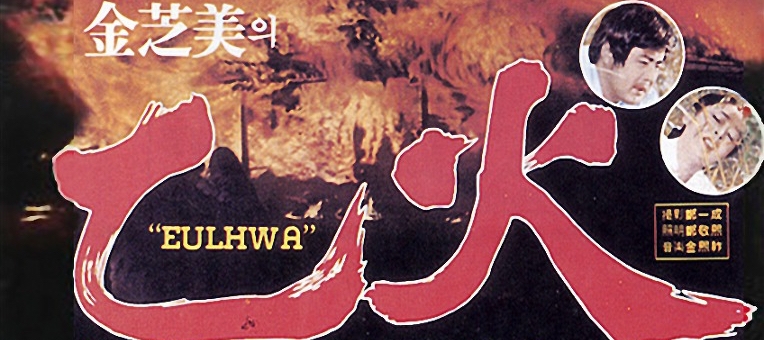
Eul-hwa (乙火 / 을화, Byun Jang-ho, 1979)

Changing times and karmic retribution conspire against a venal shamaness in Byun Jang-ho’s expressionist take on the often adapted story by conservative writer Kim Dong-ni, Eul-hwa (乙火 / 을화). Finding Korea at a moment of transition, Byun’s adaptation is a tale of tradition vs modernity, indigenous religion vs Western Christianity, nature vs civilisation, and the young vs the old, but it’s also an old-fashioned morality tale in which the sins of greed and arrogance can never be forgiven because there can be no peace or happiness for those who seek to prosper through betrayal. 

During an intense storm, Ok-sun (Kim Ji-mee) is woken by an order from a dream instructing her to dig up the cairn outside her home to free a trapped spirit. Fearful as her young son Young-sul is ill, Ok-sun dutifully does what she’s told and discovers a chest containing what appear to be the instruments of a shaman. Leaving Young-sul alone for the moment, she seeks advice from the local shamaness, Mother Pak-ji (Jeong Ae-ran), who reveals that a well known shaman once lived in her home and that she has been selected by the Holy Mother of Sun-do Mountain to serve her as a shamaness. Though some might find this an imposition at best, Ok-sun is not unwilling but is unable to afford the money involved to mount an initiation ceremony. Luckily, Mother Pak-ji agrees to help, taking her on as a pupil and renaming her “Eul-hwa” after the house in which she lives. Young-sul recovers, and Eul-hwa is fully converted to the life of a “mudang”. 

Eul-hwa is less reluctant than some might be to become a shamaness because she is in a sense already an outcast as the unmarried mother to an illegitimate son, forced out of her home village and living in a small, rundown home on the outskirts of a neighbouring settlement where she struggles to support herself and her child. As someone with supernatural powers she earns herself a degree of freedom otherwise rare as a lone woman from an ordinary family, able to earn good money and in fact be fairly wealthy while maintaining her independence even if that independence might come at a price as it may have done for Mother Pak-ji who remains single and is now in a vulnerable position as she enters old age alone with only her fellow shamans for support.  

As Eul-hwa explains to Bang-dol (Baek Il-seob), a male shaman musician who will later become her husband, she once chose to become the second wife of a wealthy man, perhaps the only means available to her feed her young son and though not unhappy with the arrangement chose independence rather than to stay with his family once he died. In one sense she retains the upper hand in her marriage as the star draw and higher earner, but is also manipulated by her husband towards the taboo transgression of betraying her mentor Mother Pak-ji through the very modern crime of stealing all her business and destroying her ability to support herself. Having become a talented shamaness drunk on her own sense of power and success she becomes cold to those who have been good to her when she was otherwise rejected, cruelly refusing Mother Pak-ji’s pleas to consider her position and thereafter earning her enmity. 

The female solidarity which had enabled the two women to prosper together has been corrupted by male greed, Bang-dol’s ambition mediated through his wife as he convinces her to betray her own “mother” without ever considering that she too may one day be betrayed. In this way it is Mother Pak-ji’s “curse” that overshadows her life and success, but Eul-hwa also finds herself a victim of changing times as modernity begins to encroach on the village. A passing Buddhist monk issues a prophecy to the effect that Young-sul will become a great man, but only if he is not raised by his mother in whose care he will otherwise die. Eul-hwa makes a maternal sacrifice and sends her son away to be educated at the temple, intending to train her daughter Wol-hee to become a “great shaman” though she is mute, only to see him return a decade later having converted to Christianity in the city. “The Jesus demon” is an existential threat to the mudang, one she’s so far managed to mediate by performing exorcisms outside the newly erected church that have convinced most of the villagers to stay away. 

The tragedy is that mother and son are intent on “saving” each other from their respective “demons”, Young-sul now convinced his mother is at the mercy of false idols while she believes him possessed by an evil spirit of the West. As representatives of past and future they cannot co-exist and are incapable of accepting that they each hold differing beliefs. Yet even aside from the church we can see modernity already encroaching on the village, uniformed police officers arriving to make an arrest, representatives of an urban authority dressed much like Young-sul in his Westernised student uniform complete with cap and cape. The mudang’s days are numbered, even if she were not about to face the same fate as Mother Pak-ji in being betrayed by her child. 

Cutting to the rhythms of ritual, Byun conjures an atmosphere of fatalistic dread from the expressionist opening with its crashing waves and flashes of lightning to the repeated fire motifs which foreshadow the famous ending and the ominous sound of gloomy church bells clashing with the angry cries of birds. In the clash of cultures, however, modernity will always triumph in the end leaving the present alone to wander in the wreckage of a world consumed by violent conflagration. 


Eul-hwa streams in the UK until 11th November as part of this year’s London Korean Film Festival.
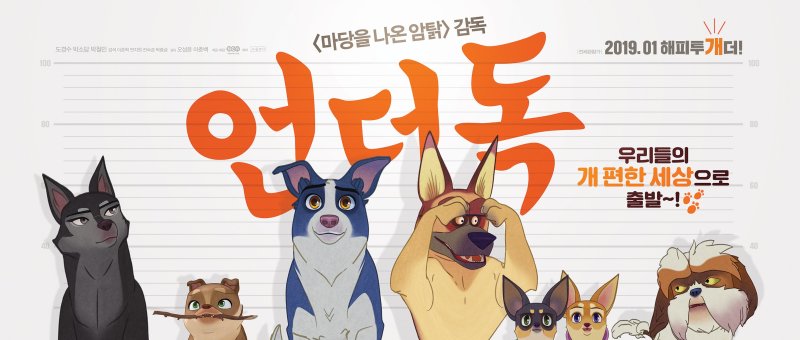
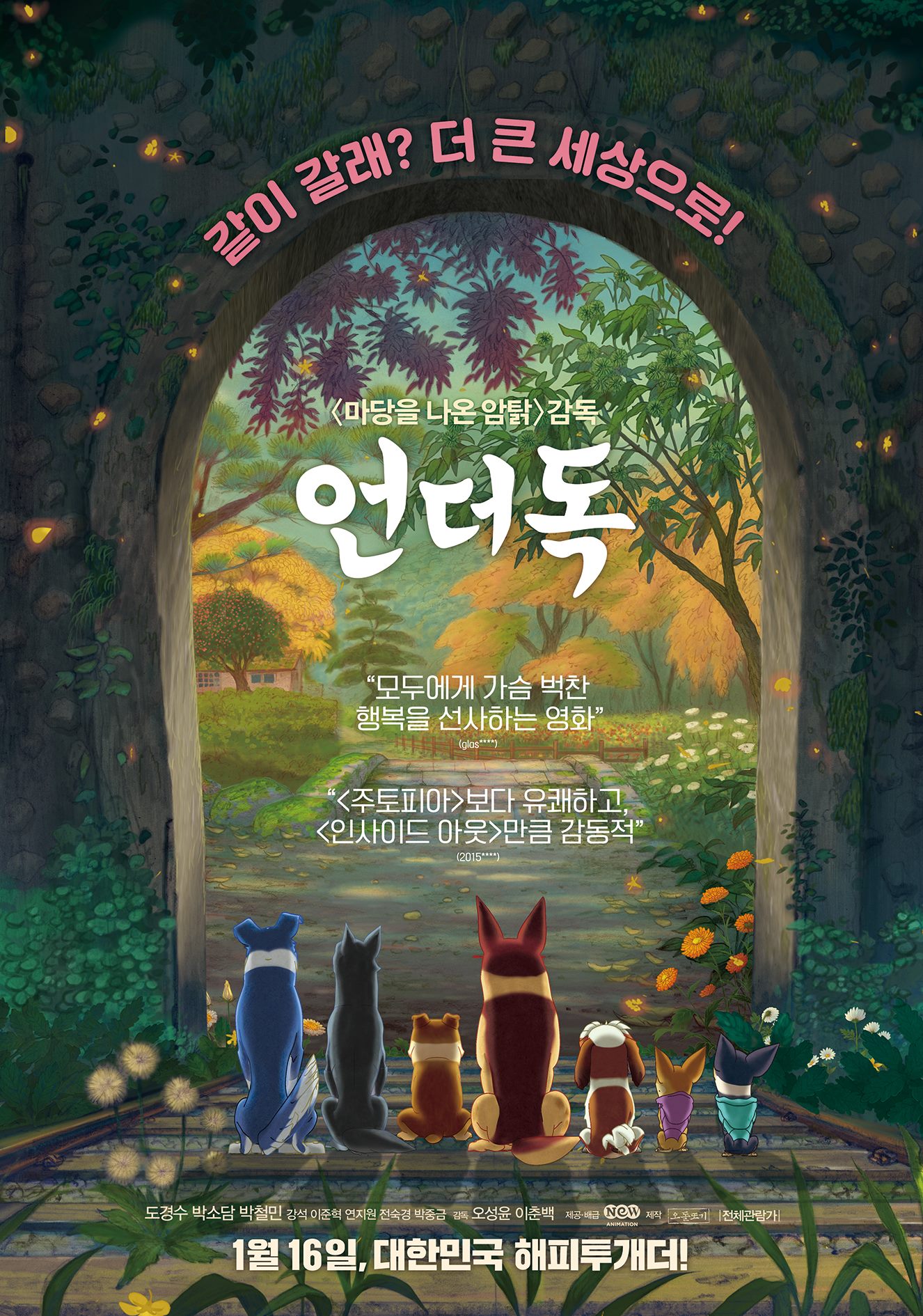
Underdog (언더독, Oh Sung-yoon & Lee Choon-baek, 2018)

“If you want freedom, you need to know how to survive” according to a wise old hound in Korean animation Underdog (언더독), produced by the team behind Leafie: A Hen into the Wild. A somewhat subversive tale of an individualistic desire for total freedom outside the walls of an indifferent society, Underdog also celebrates the power of friendship and family while following our oppressed canines all the way into the ironic paradise of the DMZ, a literal cage but one guarded on either side and guaranteed free of human cruelty. 

Our hero, Moong-chi (Do Kyung-soo), is a loyal family dog who has been raised as a domestic pet and knows nothing of life outside his apartment. Unfortunately, however, his owners bought a cute and tiny puppy without considering that he would eventually grow into a sizeable dog and so they no longer want to look after him. Heartless and irresponsible, Moong-chi’s owner drives him out into the forrest and leaves him there with a bag of kibble, seemingly aware that a domestic dog lacks the knowledge to survive in the wild. Pining and naive, Moong-chi fully expects his owner will be back to fetch him but eventually realises he’s been abandoned after meeting up with a small pack of other dogs in the same position and witnessing another car pull up and push a sick dog out of the passenger side before driving off. 

Trying to survive together while taking refuge in a derelict house in an abandoned part of town, the dogs lament their dependency on humans who have after all broken their hearts and then betrayed them. As they weren’t born wild, they’ve been deprived of their natural way of life, corrupted by a false civility that leaves them totally at the mercy of humans for the sustenance they need to survive while lacking the skills to hunt or forage for food other than that already discarded by the townspeople. Opinions within the group are divided with some fully accepting that they have no other option than to depend on humans despite the danger and duplicity they present, and others longing to find a place that’s free of humankind where they can truly be free to live as nature intended. 

For a children’s film, Underdog is entirely unafraid to be explicit in exploring exactly what “as nature intended” means, the ultimate goal of the dogs being to shift away from anonymous kibble towards tearing apart other kinds of wildlife with their bare teeth including cute bunnies and strangely scary deer. An early conflict arises between the abandoned domestic strays from the town and the true wild dogs from the mountain who complain that their hunting grounds and living environment are forever shrinking thanks to urban encroachment of which the strays are a minor symptom. The strays fear the mountain dogs for their ferocity, while the mountain dogs resent the strays for their neutered domesticity. Yet if they want to find freedom and a place free from human cruelty they’ll need to work together to get there. 

Meanwhile, the gang find themselves continually stalked by a psychotic dog catcher (Lee Jun-hyuk) who, paradoxically, relies on the exploitation of dogs for his livelihood yet vows to wipe them all out, particularly keen on bagging Moong-chi’s potential love interest mountain dog Ba-mi (Park So-dam) with whom he has a history. Bringing in the full horror of puppy farms and questionable ethics of a commercialised pet industry, not to mention dog fights and the meat trade, Underdog asks some uncomfortable questions about the unequal co-dependencies of animals and humans which will probably fly over the heads of the younger audience, but in any case insists on the right of wild animals to run free while simultaneously acknowledging the ability to choose to remain at the side of humans when the gang run into a kindly couple running a small animal sanctuary way out in the country living a more “natural” way of life free of the petty oppressions which mark urbanity. 

Nevertheless, the gang have an extremely ironic destination in mind in heading for the one place on Earth where human violence is not permitted, a buffer zone against the folly of war. Apparently seven years in the making Underdog boasts beautifully drawn backgrounds and an unusual 2D aesthetic that falls somewhere between cute and realistic while featuring scenes and themes that will undoubtedly prove distressing to sensitive younger viewers. Nevertheless, it presents a universal message of freedom and independence as well as solidarity among the oppressed as the abandoned dogs band together to find their path to paradise where they can live the lives they want to live free of human interference. 


Underdog streams in the UK 6th – 9th November as part of this year’s London Korean Film Festival.
International trailer (Korean with English subtitles)

Turning 18 (未來無恙, Ho Chao-ti, 2018)

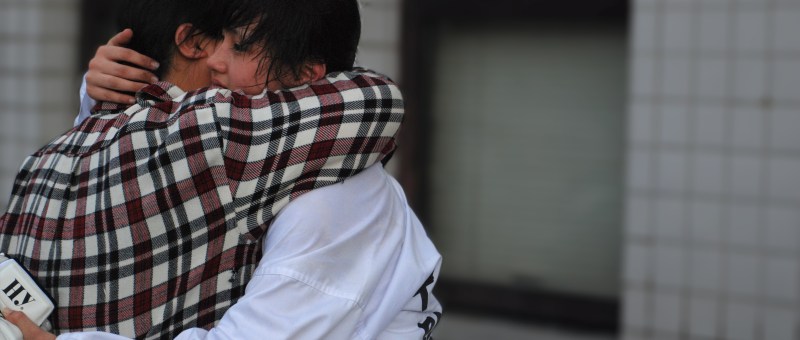
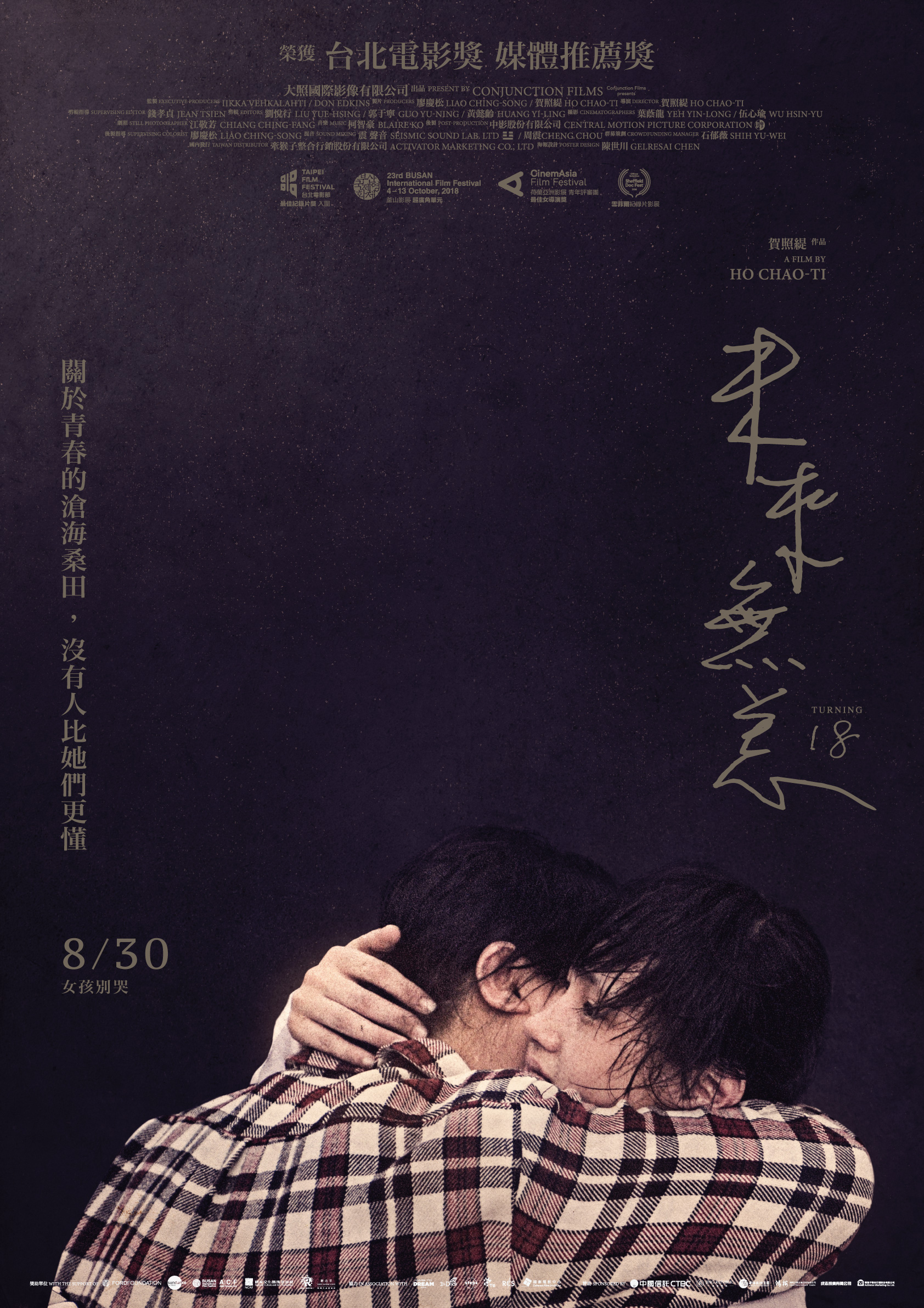
How much do you really owe a family that has failed you? A difficult question at the best of times, it’s one that continues to play on the mind of teenager Chen, one of two young women from indigenous communities at the centre of Ho Chao-ti’s documentary Turning 18 (未來無恙, Wèilái Wúyàng). Following the two girls who each come from challenging family backgrounds from the ages of 15 to 18, Ho perhaps draws a slightly uncomfortable contrast in the differing paths their lives eventually take after they briefly meet during an internship at funeral home but nevertheless presents an all too often ignored perspective on a hidden side of the island nation.  

Forced to grow up far too soon, both young women are children of single parent families in which there has been a history of domestic violence and, as we later discover, in Chen’s case sexual abuse. In response to her difficult family circumstances in which her mother has become an alcoholic and she has become the primary carer for her eight siblings, Chen has grown serious and mature. She intensely resents her mother’s drinking, not least because it plays into a racist stereotype about indigenous people while also trapping them in desperate poverty. Chen has had to take time out of education to look after her siblings and is grateful for the internship opportunity after which she will return to high school. 

Pei, meanwhile, has moved in with her possessive boyfriend, Wei, and his despairing mother. She is slightly less enthused about the internship, but dutifully completes it. Unlike Chen she never returns to school but remains with Wei who later becomes a delinquent and encounters trouble with the law. Pregnant before her 18th birthday, Pei finds herself navigating teenage motherhood and economic instability while the increasingly irresponsible Wei gravitates towards a life on the margins of crime. 

As such, it seems almost as if we’re being pushed towards judgement of the unlucky Pei for, perhaps, making the same mistake as her mother in unwisely depending on an unreliable man though they are both only teenagers, while it is undoubtedly much easier to get behind the earnest Chen who is determined to make something of her life while fiercely defending her family. Nevertheless, their marginalised status as members of an indigenous community is quickly brought home to us. Ho throws in a few snippets from post-war propaganda programs regarding the development of Hualien which describe the local Tayan population alternately as savage and uncivilised and then simple and innocent, apparently grateful for their “civilisation” at the hands of the KMT government which recommends Hualien to industry leaders as a source of cheap labour. 

Both the young women suffer at the hands of a patriarchal social code and fractured economy. Forced to compromise her education, Chen resents her mother for being unable to hold down a job of her own while it seems clear that she has little education herself and that her drinking is in part a response to her despair. Having escaped abusive spouses, the mothers of both girls have been left without effective means to support themselves in the absence of men, Chen’s mother depending on the support of her extended family who, we later learn, were also abusive. When the abuse is brought to light, Chen’s mother encourages her to lie to the court in order to protect her family members afraid perhaps of the shame but equally of the impossibility of surviving without them. 

Yet Chen continues to try to love her mother no matter how much she disappoints her, sorry only that her mother could not learn to love herself enough to save herself and determined never to make the same mistake. Finding an outlet in Taekwondo which she sees as another way to protect her family, Chen discovers another side of herself in dating another girl, at this young stage of her life incongruously insisting on referring to her as a “boyfriend” though the relationship appears to be accepted by her classmates as entirely normal. We never see how Chen’s family feels about her sexual identity save that she later affirms her desire to march in the Pride parade in Taipei precisely because she wants them to understand she loves women and that’s not something that will change, no one has the right to tell her who to love or who to marry. 

In this at least, Chen appears to have broken the cycle in definitively embracing her identities as a queer indigenous woman while also continuing to love and support her problematic family. Pei meanwhile is in a much less advantageous position, having perhaps repeated the same behaviour patterns in being letdown by an unreliable man and left to bring up a baby on her own though little more than a baby herself. Nevertheless, Ho’s camera is never judgemental in capturing this largely hidden side of Taiwanese society in which systemic male failure and entrenched patriarchy contribute to the marginalisation of the indigenous community even in the contemporary era. 


Turning 18 screens at London’s Riverside Studios on 3rd November as part of this year’s Queer East Film Festival.

Original trailer (English subtitles)

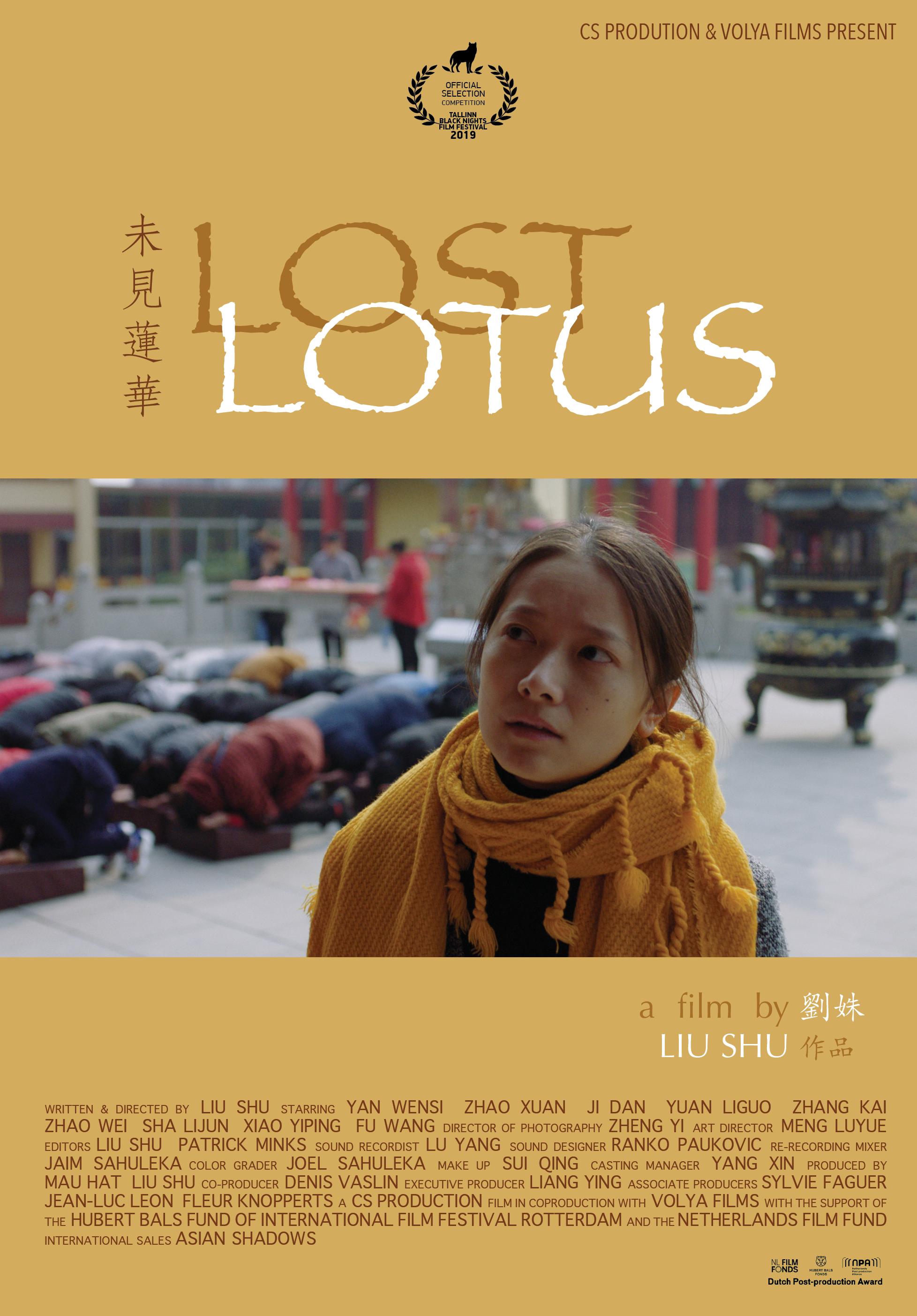
Lost Lotus (未见莲华, Liu Shu, 2019)

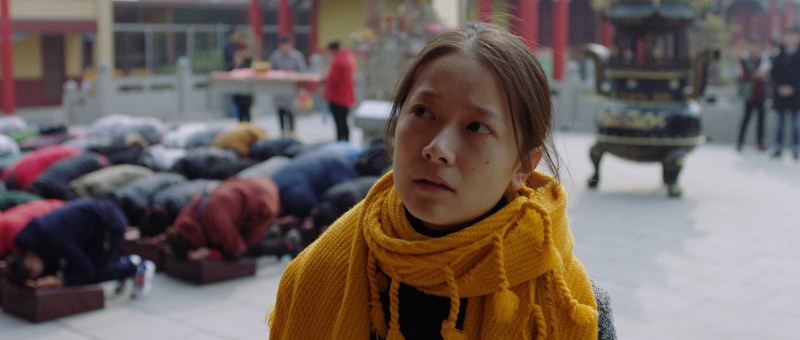
A grieving woman finds herself caught between the tenets of Buddhist thought and the contradictions of the modern China in Liu Shu’s emotionally complex drama, Lost Lotus (未见莲华, wèi jiàn lián huá). The paradoxes of Buddhism are, in a sense, a mirror for those of the contemporary society which has become mercilessly consumerist, obsessed with the material in direct rejection of the spiritual, yet even those who outwardly profess Buddhist values of compassion, goodness, and forgiveness are not perhaps free of the consumerist mindset in which everything has a price and for every transgression there is simply a fine to be paid in the next life rather than this. 

An intellectual teacher, Wu Yu (Yan Wensi) describes herself as irritated by her mother’s (Zhao Wei) devotion to Buddhism, viewing it in a sense as slightly backward and superstitious. Nevertheless when her mother is suddenly killed in a late night hit and run, she finds herself agreeing to hold a traditional Buddhist funeral guided by her mother’s friends at the temple despite having been warned by the police that going ahead with the cremation will obviously make it much more difficult to find the killer. While immersing herself in Buddhist thought helps her reconnect with her mother and deal with her grief, she continues to search for the driver determined to get some kind of Earthly justice in addition to the karmic. 

Increasingly worried and frustrated by Yu’s growing religious mania, her husband (Zhao Xuan) concentrates on finding those responsible in the hope of bringing closure so that they can try to move on with their lives as a couple. A kind and compassionate, modern man (he evidently does all the cooking), Yu’s husband does his best to support his wife in the depths of her grief but is himself conflicted particularly when he discovers that the man driving the car is a member of a rich and powerful elite who believes himself to be above the laws of men. 

Yu’s newfound Buddhism begins to change her outlook, though she struggles to orient herself in a world which is so at odds with its twin contradictory philosophies. Running parallel to her own quest for justice, she finds herself drawn into the struggles of one of her pupils who wanted to quit school because he has to look after his father who was badly beaten by thugs working for developers angry that he had refused relocation. Yu is originally quite unsympathetic, she and her husband blaming the boy’s father for valuing money over his life, cynically believing he must have been angling for a bigger compensation pay out though of course it is probably not so simple. While Yu and her husband are a two-income, professional household, the boy’s family are living in poverty having been evicted from their home, the father bedridden because of his injuries and therefore unable to work. Yu’s quest for justice strains her relationship with her husband and may later have economic consequences as his career prospects are used as a tool to convince them to back off, but her need for retribution affects only herself. The boy’s mother, however, feels terribly guilty knowing her obsessive quest to have the thugs held accountable is endangering her son’s future, but knowing also that she cannot simply give up and let them win. 

This is exactly the dilemma that preoccupies Yu as she weighs up how much of her anger is personal and how much societal. The driver, Chen (Xiao Yiping), offers them sizeable compensation which her husband is minded to accept, not for its monetary value but because taking the money means it’s over. But Yu wants “justice”, she resents the idea that there was a price on her mother’s life or that the culprit can simply pay a fine to assuage his guilt. Even justice, it seems, has been commodified. Yet Chen is also a Buddhist, subverting his beliefs to absolve himself in emphasising that all is fated and Yu’s mother’s death is a result of her karma from a previous life. His sin now pay later philosophy grates with Yu, undermining her new found faith in the Buddhist principles of compassion and goodness as the supposed devotee directly refuses to apologise for his role in the death of her mother. 

As her husband asks her, however, what sort of justice is she looking for? Does she want an apology, a jail sentence, to kill him with her own hands? Yu doesn’t know, lost in a fog of grief and spiritual confusion attempting to parse the contradictions of her mother’s faith and a society that has become selfish and consumerist, founded on elitist inequality which allows the rich and powerful to escape the constraints of conventional morality let alone the laws of men. In the end the only justice she can find is a retributive act of violence that perhaps forces Chen to feel something at least of her pain, paving the way for a kind of catharsis though not perhaps healing. An embittered portrait of the modern China, Lost Lotus suggests there can be no justice in an unjust society and only an eternal purgatory for those who cannot abandon their desire to find it. 


Lost Lotus streamed as part of this year’s San Diego Asian Film Festival.

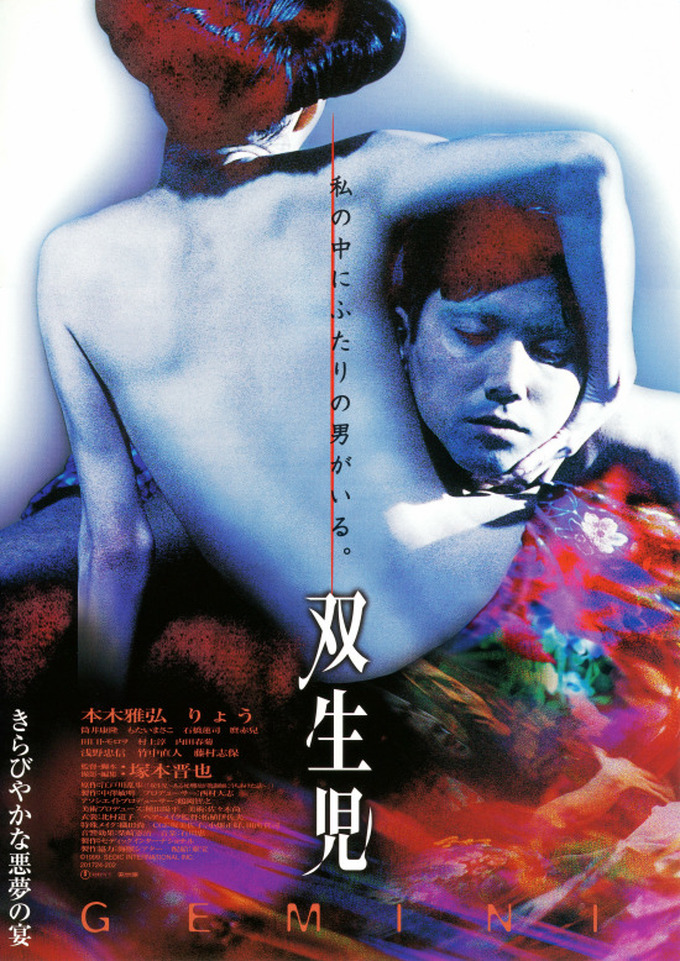
Gemini (双生児 GEMINI, Shinya Tsukamoto, 1999)

Shinya Tsukamoto made his name as a punk provocateur with a series of visually arresting, experimental indie films set to a pounding industrial score and imbued with Bubble-era urban anxiety. Inspired by an Edogawa Rampo short story, 1999’s Gemini (双生児 GEMINI, Soseiji Gemini) is something of a stylistic departure from the frenetic cyberpunk energy of his earlier career, marked as much by stillness as by movement in its strikingly beautiful classical composition and intense color play. Like much of his work, however, Gemini is very much a tale of societal corruption and a man who struggles against himself, unable to resist the social codes which were handed down to him while simultaneously knowing that they are morally wrong and offend his sense of humanity. 

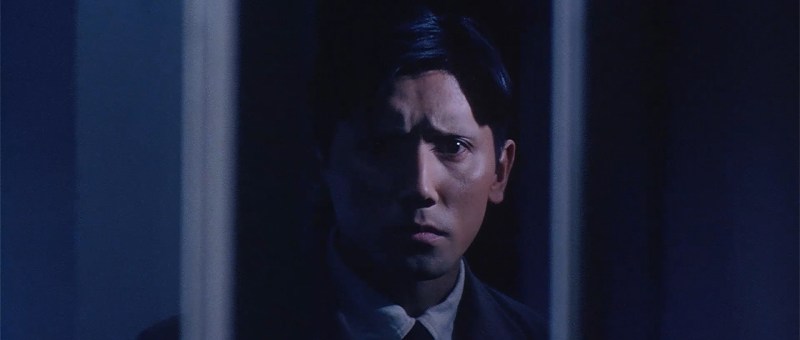
Yukio (Masahiro Motoki) is a war hero, decorated for his service as a battlefield medic saving the life of a prominent general during the first Sino-Japanese War. He’s since come home and taken over the family business where his fame seems to have half the well-to-do residents of the area inventing spurious excuses to visit his practice, at least according to one little boy whose mum has brought him in with a bump on the head after being beset by kids from the slums. “They’re just like that from birth” Yukio later tells his wife echoing his authoritarian father, “the whole place should be burned to the ground”. A literal plague is spreading, but for Yukio the slums are a source of deadly societal corruption that presents an existential threat to his way of life, primed to infect with crime and inequity. His home, which houses his practice, is hermetically sealed from those sorts of people but lately he’s begun to feel uneasy in it. There’s a nostalgia, a sadness, a shadowy presence, not to mention a fetid stench of decay which indicates an infection has already taken place, the perimeter has been penetrated. 

The shadowy presence turns out to belong to his double, Sutekichi whose name literally means “abandoned fortune”, a twin exposed at birth as unworthy of the family name owing to his imperfection in the form of a snake-like birthmark on his leg and raised by a travelling player in the slums. Having become aware of his lineage, Sutekichi has returned to make war on the old order in the form of the parents who so callously condemned him to death, engineering their demise and then pushing Yukio into a disused well with the intention of stealing his identity which comes with the added bonus that Yukio’s wife, Rin (Ryo), was once his. 

Rin’s presence had already presented a point of conflict in the household, viewed with contempt and suspicion by Yukio’s mother because of her supposed amnesia brought on by a fire which destroyed her home and family. Yukio had reassured her that “you can judge a person by their clothes”, insisting that Rin is one of them, a member of the entrenched upper-middle class which finds itself in a perilous position in the society of late Meiji in which the samurai have fallen but the new order has not quite arrived. In Rin modernity has already entered the house, a slum dweller among them bringing with her not crime and disease but a freeing from traditional austerity. In opposing his parents’ will and convincing them to permit his marriage, Yukio has already signalled his motion towards the new but struggles to free himself from the oppressive thought of his father. He confesses that as a battlefield physician he doubted himself, wondering if it might not have been kinder to simply ease the suffering of those who could not be saved while his father reminds him that the German medical philosophy in which he has been trained insists that you must continue treatment to the very last. 

This is the internal struggle Yukio continues to face between human compassion and the obligation to obey the accepted order which includes his father’s feelings on the inherent corruption of the slum dwellers which leads him to deny them his medical knowledge which he perhaps thinks should belong to all. The dilemma is brought home to him one night when a young woman is found violently pounding on his door wanting help for her sickly baby, but just as he makes up his mind to admit her, putting on his plague suit, a messenger arrives exclaiming that the mayor has impaled himself on something after having too much to drink. Yukio treats the mayor and tells his nurses to shoo the woman away, an action which brings him into conflict with the more compassionate Rin who cannot believe he could be so cynical or heartless. 

Where Yukio is repressed kindness, a gentle soul struggling against himself, Sutekichi is passion and rage. Having taken over Yukio’s life, he takes to bed with Rin who laughs and asks him why it is he’s suddenly so amorous. She sees or thinks she sees through him, recognising Sutekichi for whose return she had been longing but also lamenting the absent Yukio who was at least soft with her in ways Sutekichi never was. “It’s a terrible world because people like you exist” Sutekichi is told by a man whose fiancée he robbed and killed. Yukio by contrast is unable to understand why this is happening to him, believing that he’s only ever tried to make people happy and has not done anything to merit being thrown in a well, failing to realise that his very position of privilege is itself oppressive, that he bears his parents’ sin in continuing to subscribe to their philosophy in insisting on their innate superiority to the slum dwellers who must be kept in their place so that they can continue to occupy theirs. 

Apart, both men are opposing destructive forces in excess austerity and violent passion, only through reintegration of the self can there be a viable future. Tsukamoto casts the austerity of the medical practice in a melancholy blue, contrasting with the fiery red of the post-apocalyptic slums, eventually finding a happy medium with the house bathed in sunshine and the family seemingly repaired as a doctor in a white suit prepares to minister to the poor. Having healed himself, he begins to heal his society, treating the plague of human indifference in resistance to the prevalent anxiety of the late Meiji society. 


Gemini is released on blu-ray in the UK on 2nd November courtesy of Third Window Films in a set which also includes a commentary by Tom Mes, making of featurette directed by Takashi Miike, behind the scenes, make up demonstration featurette, Venice Film Festival featurette, and original trailer.

Original trailer (English subtitles)

Death of Nintendo (Raya Martin, 2020)

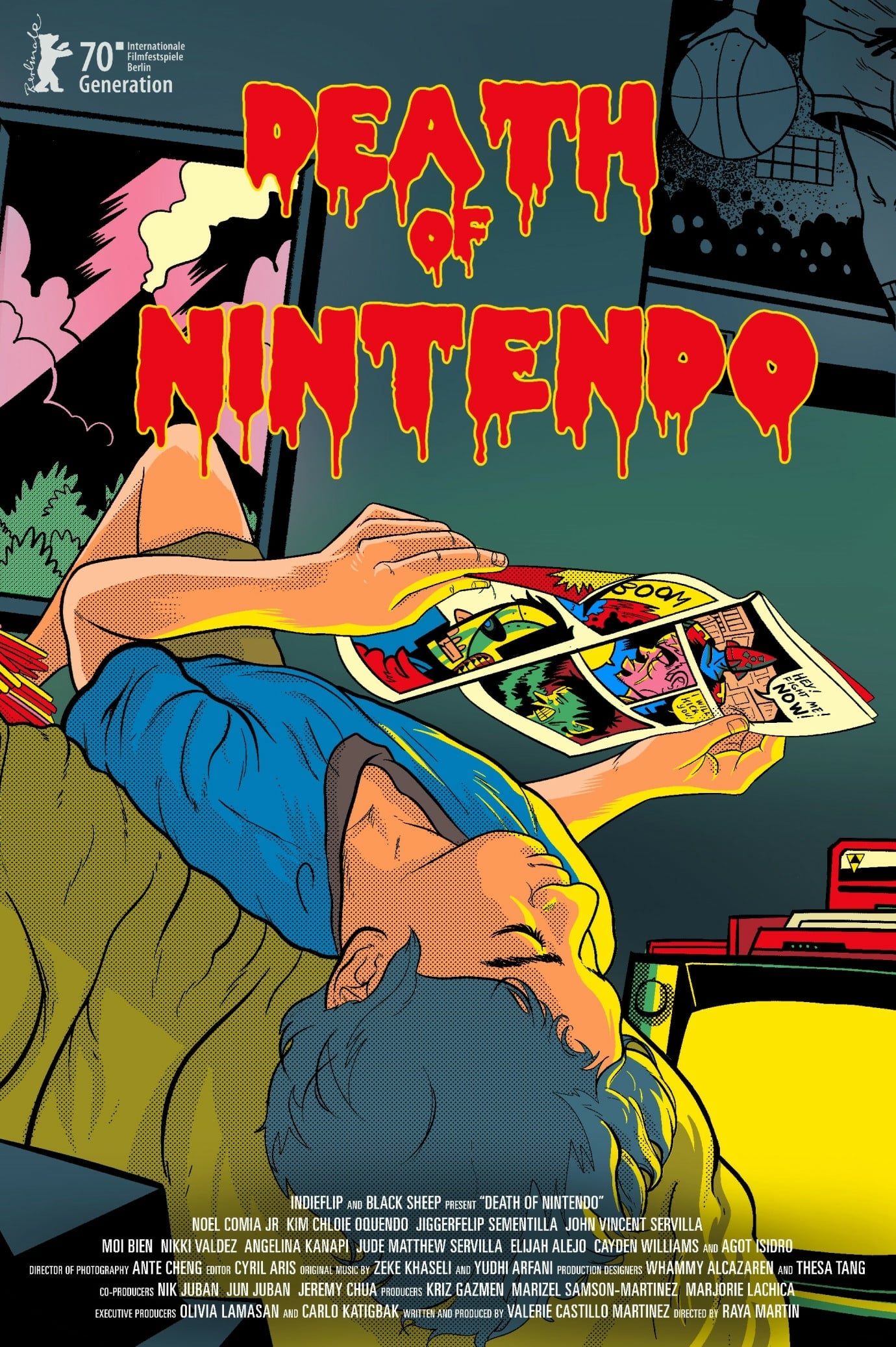
Raya Martin made his name as a pioneer of experimental cinema in the Philippines. While his more recent films have perhaps drawn increasingly closer to the mainstream, it might still come as a surprise that his latest feature is a retro teen movie of the kind that no-one really makes anymore save as an exercise in nostalgia. As the title may imply Death of Nintendo, scripted by Valerie Castillo Martinez, is indeed a nostalgia fest set in the post-Marcos early ‘90s, in a sense the dying days of the golden age of Mario, but it’s also a subtle critique of contemporary Filipino masculinity, a uncoming-of-age drama in which boys never really grow up but continue to occupy a space of perpetual adolescence. 

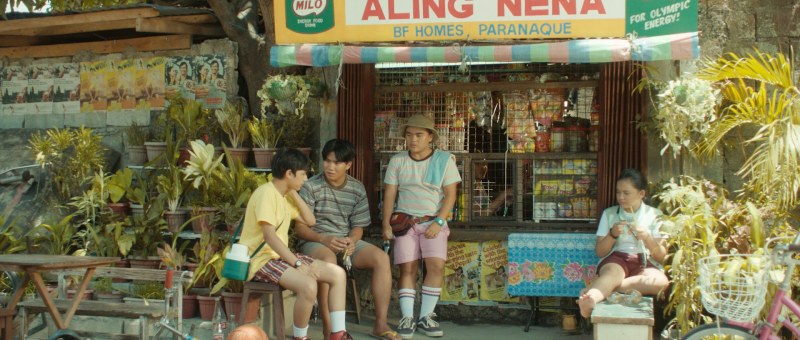
In a nebulous early ‘90s Manila, 13-year-old Paolo (Noel Comia Jr.) is an introspective rich kid obsessed with playing Nintendo of which his fiercely overprotective, helicopter mother Patricia (Agot Isidro) largely approves because it keeps him home in his room where she can keep an eye on him. She’s less keen, however, on Paolo’s circle of friends which includes both fellow rich kids Gilligan (Jiggerfelip Sementilla) and his sister Mimaw (Kim Chloie Oquendo) whose father has recently run off to America with another woman, and Kachi (John Vincent Servilla) who lives in the slums with his lothario older brother Badong (Jude Matthew Servilla) and sex worker mother Shirley (Angelina Canapi). Meanwhile, the gang’s arch nemesis, the uncouth and distinctly mean Filipino-American returnee Jimbo (Cayden Williams), is intent on making all their lives a misery and Paolo is in the first flushes of adolescent romance mooning over popular kid Shiara (Elijah Alejo). The upshot is that the boys are keen to become men as quickly as possible by undergoing the Tuli ritual circumcision, travelling to the remote village witch doctor who operated on Badong and apparently turned him into the top stud he is today.  

As all of the father figures are absent, Badong is the closest paternal presence that any of them have though in real terms his example may not be much of one to follow. He currently has a steady job working at the local Jollibee, but as Kachi fails to realise is also being courted by the petty gangsters of the slums, while his mother is quick to warn him about his promiscuous ways and possibilities of getting a girl into trouble. Neverthless, what all the guys want is to instantly transform into an idealised vision of masculinity largely gained from movies and pop culture rather than the weedy boys they currently feel themselves to be. Tellingly they see something of this in Jimbo and are intimidated by him because of it, later losing their fear after realising that he has not yet undergone the ritual and is therefore still a boy himself.

Mimaw, meanwhile, who has always been a tomboy is confronted by notions of idealised femininity after she becomes friends with Shiara and her coterie of popular girls. Allowing the other young women to give her makeovers, she wonders if it’s OK that her friendship group is her brother and his friends and why it is she’s more comfortable in jeans and T-shirts than skirts and heels. When Paolo asks her to put in a good word for him with Shiara she’s conflicted, and though it’s suggested that she’s got a crush on the most sensitive of the boys, we can’t help wondering if it’s not Shiara that she may secretly be drawn to. 

In any case, as the boys spend their time on childish competitions of masculinity, it’s Mimaw who’s perhaps beginning to realise that she wants something more out of life. Eventually, the NES is replaced by a SEGA Mega Drive, the boys having completed the ritual and become “men”, wearing jeans and smart shirts with greased hair yet looking almost identical, still boys on the inside. Mimaw prepares to move on, leaving the boys behind as they again suggest video games or basketball only for Kachi to decline because he doesn’t want to muss his hair and Gilligan because he’s got a hot date to prepare for later in the evening. The boys, it seems, have only swapped their games for girls, while Mimaw has truly grown-up, something telling us this was her story all along only no was really her paying much attention. Bathed in the golden glow of an eternal, adolescent summer in which there are earthquakes and eruptions figurative and literal as the boys edge their way towards a longed for manliness, Death of Nintendo is perhaps less conventional than it first seemed while filled with the ache of nostalgia for a more innocent era.


Death of Nintendo streams in California until Oct. 31 as part of this year’s San Diego Asian Film Festival.

Original trailer (English subtitles)

Jesters: The Game Changers (광대들: 풍문조작단, Kim Joo-ho, 2019)

“Even with swords to our necks we say what we must!” a stage actor insists, though somewhat duplicitously as he wilfully says what he must to survive while simultaneously defending his artistic integrity. Oddly timely, Jesters: The Game Changers (광대들: 풍문조작단, Gwangdaedeul: Pungmunjojakdan) is an ironic exploration of the importance of art in engendering narrative proving once and for all that it really can remake the world. Our hero finds himself less torn than you’d expect him to be, only too keen to parrot the words of a regime he does not respect in return not only for his life but for material gain. 

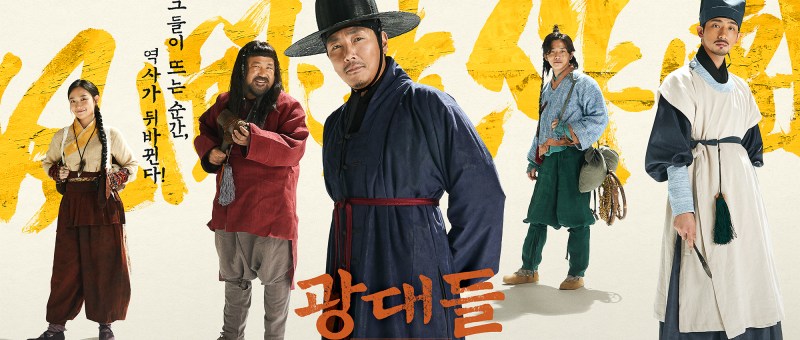
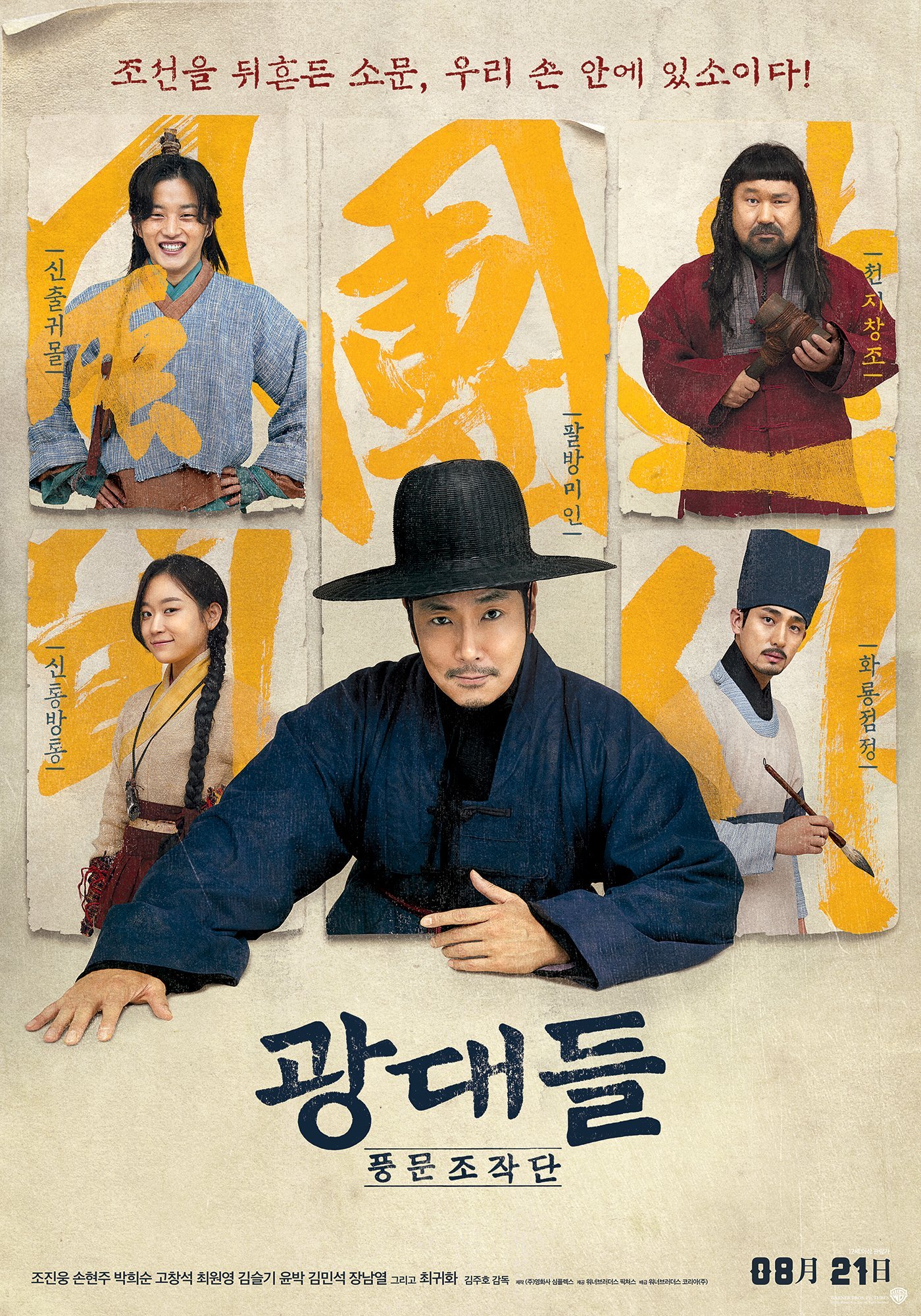
Our heroes are a band of “jesters”, itinerant street entertainers who belong to a kind of underclass and earn their living through their ability to change “reputations”. Petitioned by an ageing wife discarded in favour of a young and beautiful concubine, the gang blacken the other woman’s reputation by literally putting on a show with storyteller Ma Deok-ho (Cho Jin-woong) as the romantic hero sweeping her off her feet. The illusion is broken by a sudden spell of rain, but in any case the gang soon find themselves falling foul of prime minister Han Myeong-hoe (Son Hyun-joo) who makes them an offer they can’t refuse – counter the disadvantageous narrative that the king is a cruel tyrant who usurped the throne through murdering his brothers and nephew with tales of his magnificence, or die. Deok-ho points out that a good way of raising his reputation would be cutting taxes and getting rid of corrupt nobles but unsurprisingly as is rapidly becoming evident, he isn’t being hired to speak the truth. 

On the one hand, Jesters is the tale of Deok-ho’s slow path towards realising his responsibility as an artist to tell the “truth” even when it is inconvenient. His mentor Mal-bo (Choi Gwi-hwa) had come by a banned book, The Six Loyal Subjects, which recounted the real story of how the king came to the throne and was determined to promulgate it, merely changing the name of the king to that of Ming to protect himself against a censorious crack down on street entertainers spreading “fake news”. Deok-ho claims to believe only what he sees, rejecting the evidence of the book, cynically determined to do whatever it takes to escape his poverty. He’d rather not be threatened, but he has no particular objection to Han’s request, only using it to increase his social status by ensuring the gang are re-registered as “middle class” rather than lowly entertainers, later even angling for a position at court. For Han, he engineers miracles from a tree which bends to clear the way for the passing monarch to visitations from the Buddha and floral rain falling from golden skies, tales of which spread quickly through the gossip-hungry nation embellished as they go. 

As Han puts it “history is made by those with power” and to that extent he who controls the past controls the future. Han executes three street performers for spreading “fake news”, men who were literally prepared to die for their artistic integrity in the way Deok-ho was not, while employing Deok-ho to spread “propaganda” that glorifies a weakened king. Enjoying his new status Deok-ho does not really consider the implications of what he’s doing until he realises that Han is playing his own angle, improving his stunts for additional leverage, razing a village so that the nearby temple where one of Deok-ho’s “miracles” occurred might be expanded. Han claimed to be mounting an egalitarian revolution, deposing a “mad” king to hand power back to the people but of course only meant to manipulate regal power for himself. 

Power, as we see, belongs more or less to the storytellers who literally write the narrative. In old Joseon that’s those like Deok-ho, or in other times newspapers, TV shows, or social media feeds. Deok is only just realising he had power all along, if only he had listed to Mal-bo and used it more wisely rather than “rolling his tongue for fame and cheers”. A somewhat flippant satire on fake news/propaganda synchronicity, Jesters makes a passionate plea not only for the power of art to remake the world but for the responsibility of the artist to tell the truth even when it is not popular.


Jesters: The Game Changers screens at the Rio on 31st October as part of this year’s London Korean Film Festival.
International teaser trailer (English subtitles)

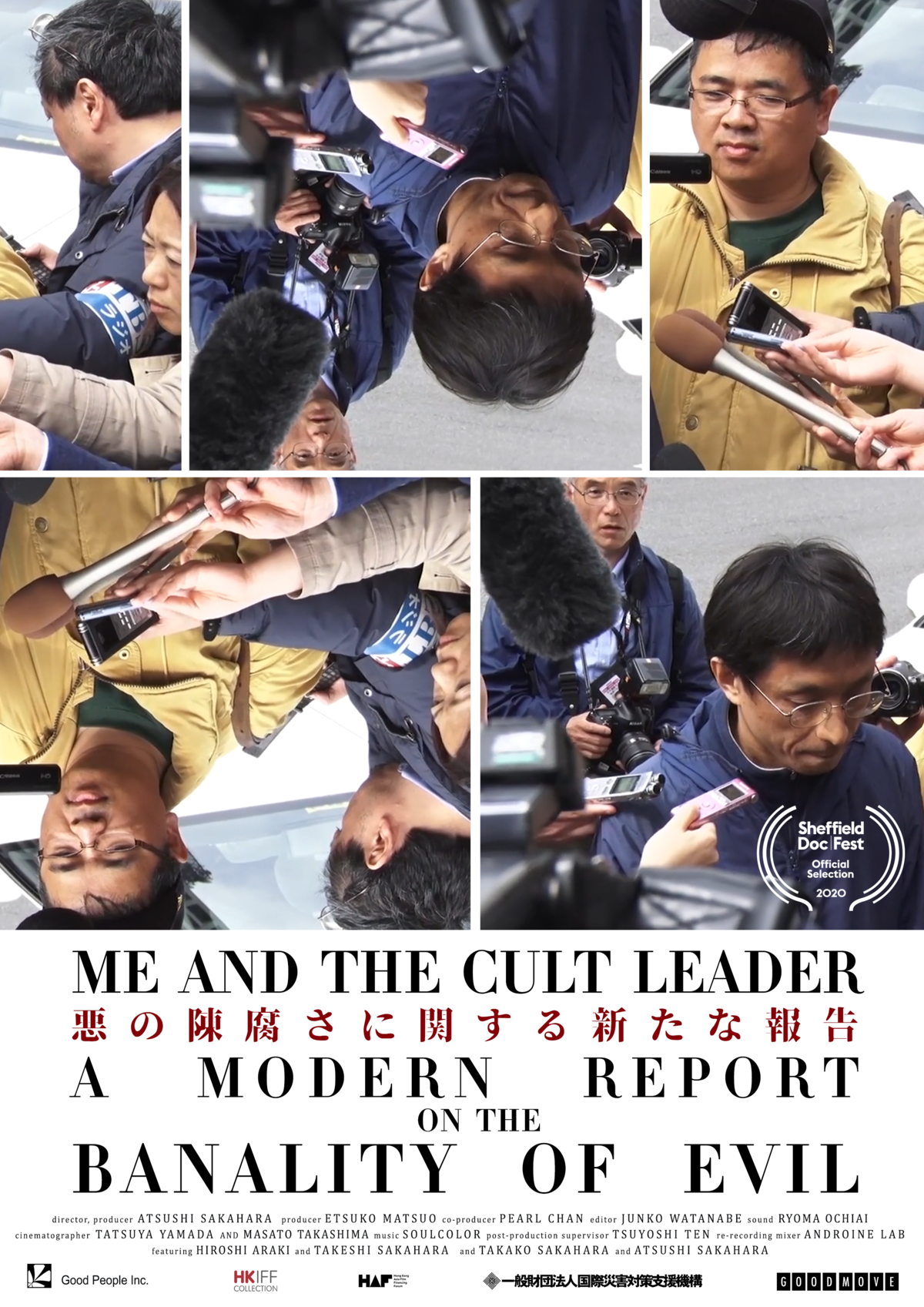
Me and the Cult Leader (AGANAI -悪の陳腐さについての新たな報告, Atsushi Sakahara, 2020)

How can you continue to serve an ideology which you know is responsible for a heinous act that offends your sense of moral righteousness? That’s a question that Atsushi Sakahara, a survivor of the sarin gas attacks on the Tokyo subway, finds himself asking in his documentary Me and the Cult Leader (AGANAI -悪の陳腐さについての新たな報告, Aku no Chinpusa Nitsuite Aratana Hokoku), as he meets with Hiroshi Araki, a current member of Aleph, the successor to Aum, the cult which planned and executed the 1995 act of terrorism which led to the deaths of 13 people and left 6200 injured, many like Sakahara with life changing consequences. 

Yet Sakahara’s purpose is the opposite of polemical, he merely reaches out to Araki in an effort to understand the mindset not only of someone who joined Aum in the early ‘90s and was a member at the time of the attack though not directly involved, but of someone who stayed and continues to believe in the teachings of cult leader Asahara who was executed in 2018 after years on death row along with other members responsible for Japan’s only exposure to domestic terrorism. Throughout it all, however what he seems to want is some kind of apology, or at least an act of contrition, something which proves elusive as the distant, thoughtful Araki largely refuses to engage as if afraid to accept that the ideology to which he has devoted all his adult life may in fact be corrupt and empty. 

Araki’s justifications run mainly to technicalities. He does not exactly deny that members of Aum were responsible for the attack, but explains that their guilt is the most logical explanation given the available evidence which includes their own confessions and so concludes it is likely the truth. The two men travel together on a kind of pilgrimage back to their respective hometowns which happen to be in the same area of the country, while in another coincidence they also attended the same university at the same time. A jovial presence, Sakahara attempts to hurry the near silent Araki along, pushing him to open up which he eventually does but failing to elicit from him anything which might begin to free him from the icy grip of his ideology. 

Sakahara subtitles his film “A modern report on the banality of evil”, and there’s certainly something of that as the film opens in a subway station, Sakahara and Araki merely two ordinary middle-aged men in anoraks waiting for a train. Yet Araki is clearly not an “evil” man. He appears to be thoughtful and sensitive, often breaking down in tears as the journey forces him to remember his life before he renounced the world, the vision of his grandmother waving him off at the station after a summer holiday leading back to that of his mother as he severed connection with her to join with Aum. He doesn’t quite explain what led him to join the cult save being overwhelmed by Asahara’s charisma when he gave a speech at Kyoto university in the early ‘90s, Sakahara having witnessed him arrive the year before but jokingly shouting out for the famously outlandish cult leader to show off his talent for levitation, save that he became disillusioned with consumerism after a pencil case he lusted over as a child lost its lustre when he got it home. The training, he goes on, caused him to lose the capacity for joy or pleasure, leaving him he explains with no other choice than to join the cult because there was no longer anything left for him in the outside world which had become unbearably painful as a result.

Yet knowing what he knows, how can he go on practicing Asahara’s teachings? Sakahara tries not to push him, only once or twice pressing for an answer as to whether or not he sees and understands his suffering and feels remorse, later introducing him to both his parents in an effort to prove that actions have wider consequences, that he is not the only victim but that others suffer because of his suffering. Meeting Sakahara’s equally compassionate mother and father does appear to move something with him, evoking a loose apology even if he immediately walks back on it with some manichean justifications that Sakahara is also responsible for everything that’s happened to him because it is all a result of his choices, good and bad. 

The unavoidable conclusion is perhaps that Araki is simply afraid to confront the implications of everything he’s seeing lest his entire worldview collapse and he realises he’s wasted all of his adult life serving a corrupt and empty ideology. Sakahara acts with total warmth and compassion for his dilemma, even at one point quite literally buying him a coat because he’s only brought his anorak despite it being freezing (Araki also constantly carries a sleeping bag because his asceticism seems to extend to beds and futons), patiently listening to his often sad stories of youth but every revelation is followed by extended silence, Araki shifting back inside himself unwilling risk bursting the bubble. Sakahara, however, remains patient hoping for the day that the cultist will finally see the light. 


 Me and the Cult Leader streams in the US until Oct. 31 as part of this year’s San Diego Asian Film Festival.

Original trailer (English subtitles)

The Shepherds (牧者, Elvis Lu, 2018)

Among the most liberal of Asian nations, Taiwan became the first to legalise same-sex marriage in 2019 but that doesn’t mean that it’s always easy to be LGBTQ+ particularly if you come from a religious background and wish to maintain your faith. Elvis Lu’s documentary The Shepherds (牧者, Mùzhě) follows a small group of religious leaders who are or have been involved with a progressive church, Tong-Kwang, which was the first in Taiwan to expressly embrace the LGBTQ+ community on its foundation back in 1996. Unfortunately, however, the pastors have faced significant barriers in their personal and professional lives because of their views on homosexuality which face staunch opposition from mainstream religious organisations. The founder of Tong-Kwang Yang Ya-hui, a heterosexual female pastor, eventually took her own life because of the discrimination she later faced within the religious community which made it impossible for her to continue working and support herself without compromising her beliefs. 

Discrimination is also something which has affected pastor Huang Guo-yao and his wife who now work for Tong-Kwang but began their careers in Hong Kong. Huang was forced to give up his ministry after advocating for LGBTQ+ rights brought him into conflict with the more conservative local Churches, eventually making the decision to migrate to Taiwan while his children remained in Hong Kong. He laments that the situation in which he found himself may have had a negative effect on his now grown-up sons, the younger one he worries having become increasingly withdrawn and unwilling to talk about his feelings. 

Zeng Shu-min, meanwhile, is in a similar position unable to find employment with more conventional churches as an openly gay pastor. While officiating at same sex weddings, he’s had to look for other employment to support himself and generally lives an ascetic existence, dependent on the kindness of friends such as Hsiao-en, a lesbian advocate for LGBTQ+ Christians who was herself ejected from the seminary for her liberal views. Running the Light Up project, she provides a more positive religious presence at rallies where conservative voices loudly protest against the advancement of rights for LGBTQ+ people and the movement for marriage equality. Presenting a united front in their priestly outfits, conservative preachers openly commit to undermining the seats of local politicians sympathetic to LGBTQ+ issues, some advancing that they want to “protect” the LGBTQ+ community who must be living “very painfully”, while they refuse to compromise the “basic values” of their society. 

As part of her outreach, Hsaio-en also liaises with the parents of LGBTQ+ children who often find themselves ostracised from their church community solely because of their children’s sexual orientation. Like Shu-min, she also has to work a regular job to support herself while feeling guilty for not being able to devote herself to activism full time and lamenting that hard as she works it often feels as if she isn’t getting anywhere and her efforts don’t make much difference. Yet Tong-Kwang in itself provides a valuable safe place for LGBTQ+ Christians, running a hotline those in distress can call for relief when experiencing difficulty in their personal or religious lives and affirming that their sexuality need not conflict with their faith nor is it a barrier to God’s love. 

With a mixture of observational footage and talking heads interviews, Lu bookends the film with poetic black and white re-enactment featuring the words of pastor Yang Ya-hui taken directly from her autobiography, positioning her as a kind of martyr for the rights of LGBTQ+ people in Taiwan and particularly for LGBTQ+ Christians. The film ends with the passing of the marriage equality act, but is quick to point out that that does not mean that prejudice and discrimination evaporated overnight, Hsiao-en in particular worried that organisations such as hers will come under greater pressure from conservative religious voices intensifying their opposition. Nevertheless, despite the sometimes great toll on their personal lives and those of their families, each of the shepherds remains committed to defending the rights of LGBTQ+ people not only to occupy an equal place within their society but also within their faith as members of a compassionate and progressive religious community. 


The Shepherds streams in the UK 30th October to 5th November courtesy of Queer East and Taiwan Film Festival Edinburgh.

Original trailer (English subtitles)

Memories to Choke On, Drinks to Wash Them Down (夜香・鴛鴦・深水埗, Leung Ming Kai & Kate Reilly, 2019)

Neither as maudlin nor as ironic as its witty English title implies, Leung Ming Kai and Kate Reilly’s four-part anthology Memories to Choke On, Drinks to Wash Them Down (夜香・鴛鴦・深水埗) attempts to capture the flavours of a Hong Kong in transition. Imbued with a gentle nostalgia the four stories do not so much eulogise as celebrate the island’s unique culture while perhaps provoking questions about an uncertain future in the face of political instability and widespread protest. 

The first of the four shorts, however, looks back towards the past as an old lady suffering with dementia repeatedly tells the same handful of stories to her patient Indonesian helper, Mia. In an ironic twist, the tale takes the two women on a circular journey as Chi Yin, the old woman, becomes determined to reconnect with her history through visiting a reunion for those who came to Hong Kong from her village on the Mainland while Mia patiently tries to explain that her son has instructed her not to take his mother out. Eventually she relents, humorously videoing the old woman promising not to tell her son so she can show her later, but thinks better of it after realising Chi Yin’s real longing to visit him at his job in the city. Mia is of course separated from her own son while caring for Chi Yin, the commonalities between the two women becoming ever more clear as their stories mix, mingle, and repeat in the confused mind of the older woman herself a migrant to Hong Kong who came to the island in childhood, recounting a life of hardship thankfully long since past. 

The city’s economic development is also at the forefront of the second tale which sees two grown up brothers revisiting their mother’s toy store in a now rundown part of town where, as another store keeper puts it, everyone is old and so there is no more call for toys. That might be one reason why it seems that their mother has decided to sell up, but the loss of their history seems to weigh heavier on one brother than the other. While the older has married and has a child of his own with another on the way, the younger has lost his job and secretly wants to take over the shop himself only is uncertain how this news will read to his mother. While they reminisce and recover long buried treasures of their youth, the differences and dilemmas between the two men are perhaps emblematic of the push and pull of modern Hong Kong torn in two directions uncertain which parts of the past to discard and which to keep. Nevertheless, the two men eventually find common ground and mutual support even as their conflicting desires send them each in opposing directions. 

The two at the centre of Yuenyeung meanwhile were always destined to part, yet their separation has its share of confusion and awkwardness. The titular Yuenyeung is a local drink acknowledged as intangible culture which has, according to the knowledgable protagonist, a slightly dark history in that it was created in part to enable further exploitation of port workers under British colonialism and consists of super strong Ceylon tea and caffeine high coffee mixed with condensed milk. American teaching assistant Ruth is keen to try it as part of her total immersion in Hong Kong culture, but local economics teacher John isn’t much of a fan not just because of its slightly sour history but because he seems to have an internalised snobbery when it comes to being a Hong Konger. Nevertheless, with an obvious ulterior motive that Ruth either is oblivious to or chooses to ignore, he joins her on her voyage through the city’s lower end eateries where the locals choose to eat with the occasional visit to a “romantic” KFC which whatever else you might want to say about it has a lovely view of an idealised Hong Kong street scene. Tellingly, Ruth is already planning to move on to China, while a rebound John who perhaps misunderstood her has his eyes ironically set on an extended trip to the States on a kind of cultural odyssey of his own. 

Breaking entirely with the first three sequences, and in truth a little out of place, the last is the most direct in abandoning the dialogue heavy, two-hander focus for pure documentary following an eccentric young woman running as a candidate for political office in order to provide opposition for an otherwise unopposed incumbent during the fractious 2019 elections. Jennifer describes those who don’t support the protests as “weird”, but also affirms that ideally she wants a steady job in a bank and to live a dull, comfortable life as a “useless” person. When not out flyering she works as a barista/bar tender and later claims that she didn’t even want to be on the council because the local populace is quite annoying. In a strange way she provides the perfect encapsulation of a fractious political moment, a mix of surprisingly conventional thought patterns coupled with a real desire for freedom and lasting social change. Never quite as a maudlin as the title suggests, Memories to Choke On, Drinks to Wash Them Down is perhaps filled with a nostalgia for a Hong Kong that’s not quite gone but also has within it a quiet resilience if only in its insistence on memory as a political act. 


Memories to Choke On, Drinks to Wash Them Down streams in California until Oct. 31 as part of this year’s San Diego Asian Film Festival.

Original trailer (English subtitles)