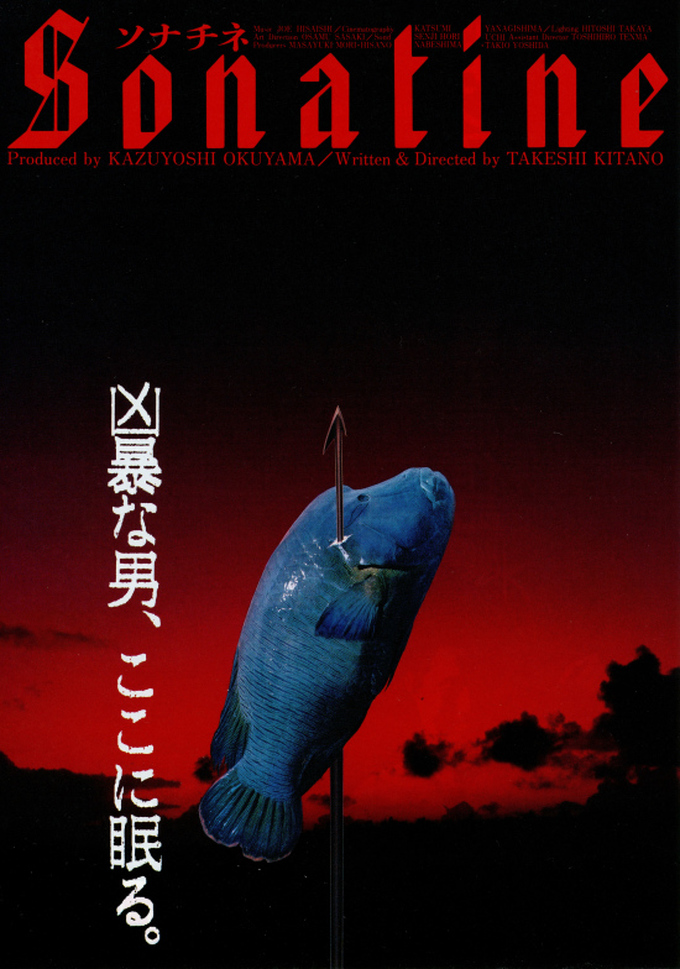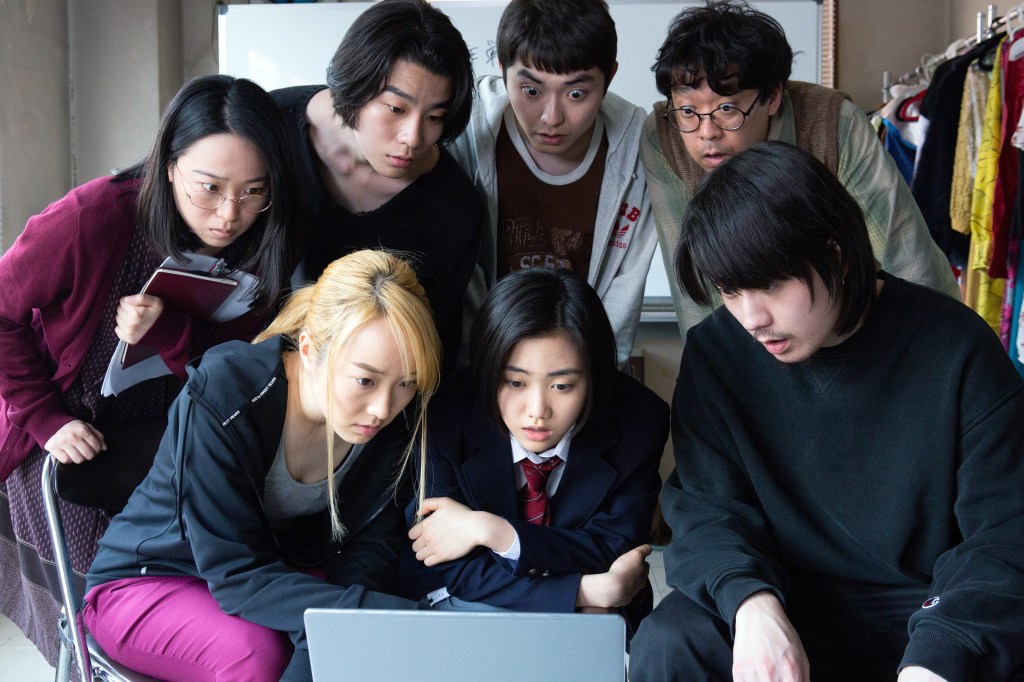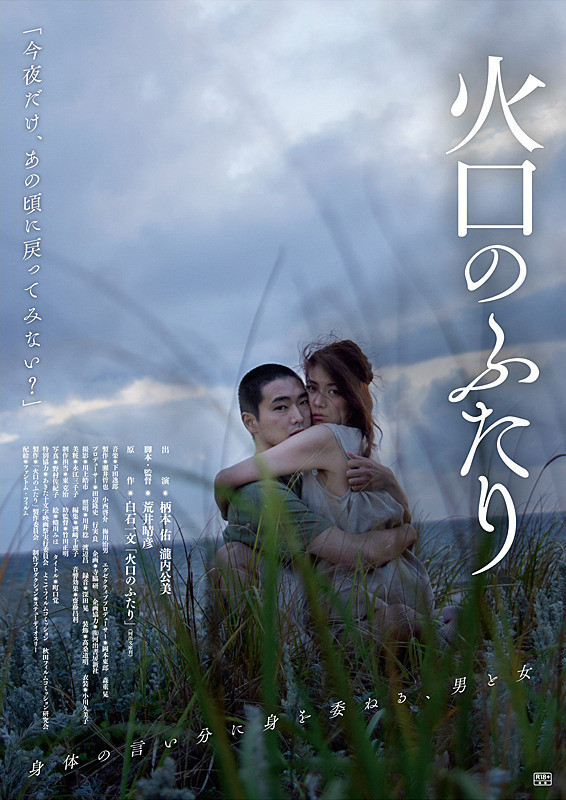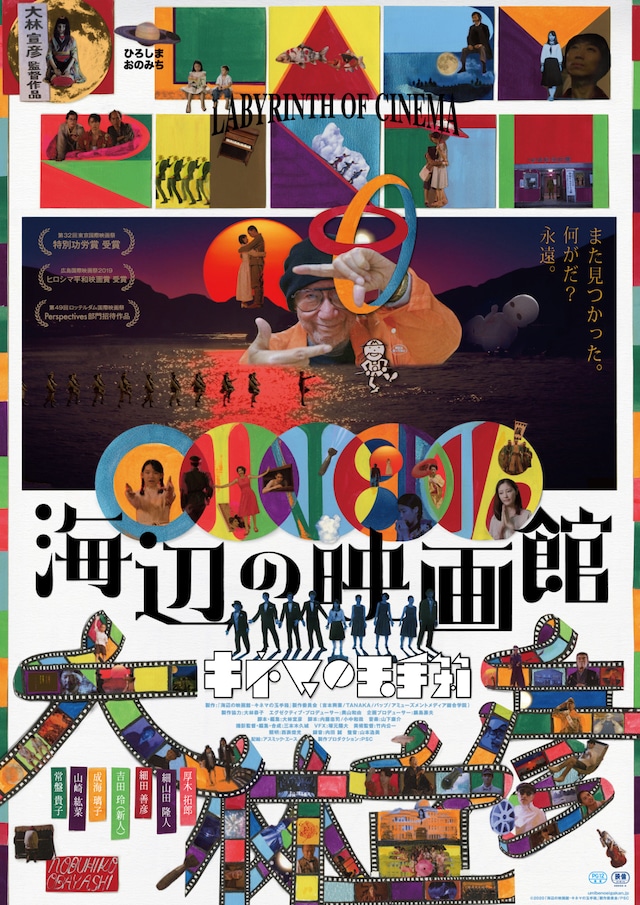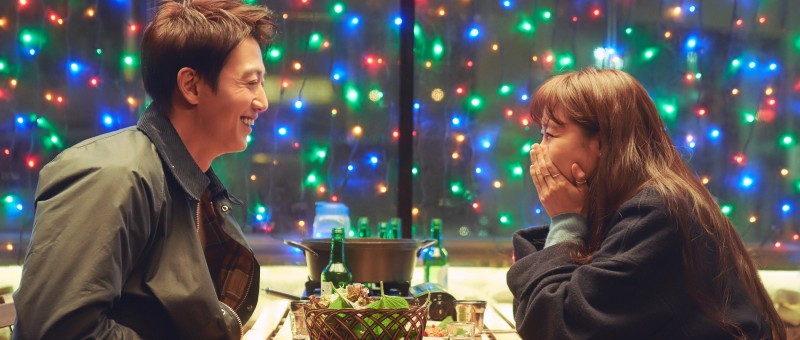
Happy Old Year (ฮาวทูทิ้ง..ทิ้งอย่างไรไม่ให้เหลือเธอ, Nawapol Thamrongrattanarit, 2019)

“Some things won’t go away just because you pretend to forget all about it” the heroine of Happy Old Year (ฮาวทูทิ้ง..ทิ้งอย่างไรไม่ให้เหลือเธอ) is reminded by an exasperated friend preparing to forgive her once again for another thoughtless hurt. According to Jean (Chutimon Chuengcharoensukying), “Minimalism is like…a Buddhist philosophy. It’s about letting go”, only her minimalism has been of an emotional kind and in essence the very opposite of letting go. Her approach to life’s many difficulties has been to throw them into a mental black bag, consign them to a black hole of memory, and then simply walk away, but there’s only so much space for delayed trauma and one day you’ll have to start opening some of those bags so that you can finally let go for real. 

20-something Jean has been living in Sweden for the past few years and has recently returned to Thailand, more or less against her will. For some reason, she seems to have asserted ownership over her family’s home which once housed her father’s musical instrument repair shop. Without bothering to ask her mother (Apasiri Nitibhon) or brother, Jean has decided to radically redesign the property’s ground floor into an office space, sending her remaining family members upstairs. Talking things over with her old friend Pink (Padcha Kitchaicharoen) who seems to be involved in construction, she wants to get the work started shortly after New Year not least because the new job she’s just been offered wants to make an office visit the following month. They’ve got a scant few weeks to clear 30 years’ worth of clutter so the builders can do their thing. 

Jean’s plan is basically to sweep everything into bin bags and dispose of them without giving it too much thought. Coming round to the idea, her brother Jay (Thirawat Ngosawang) starts watching Marie Kondo videos to get into the mood, but “complains” that everything he touches sparks joy. He can’t bring himself to part with the myriad “tacky” souvenirs he’s amassed over a lifetime because it’s the thought that counts and throwing them out is like throwing away kindness. According to Jean, “being emotional only brings trouble”, though she is perhaps a little troubled bagging up an oversize teddy gifted by a friend at graduation with a card that reads “take care of me”. She gets her comeuppance when Pink notices a CD she once gave her with a message inside lying on top of a to go pile and is understandably hurt. To Jean it’s just a meaningless object. No one listens to CDs anymore, but to Pink it doesn’t matter that it was gift from years ago, throwing out the CD is like erasing a moment in time, negating the importance of their teenage friendship. 

Pink’s reaction is Jean’s first clue that her wholesale bag and toss philosophy might be problematic. When she finds a scarf she’d knitted for Jay in his to go pile, she gets a taste of her own medicine. Reassessing her possessions, she realises she has more than a few items technically intended for other people that she has selfishly never passed on. Inspired by Pink and in a bid to find some kind of closure, she decides the best thing is to start returning the “borrowed” items to their rightful owners, but quickly discovers that not everyone is thrilled to have the past suddenly presented to them in the form of a random object. An attempt to return a double bass she was supposed to get her dad to repair goes very badly indeed, to the extent that Jean must simply have forgotten or just not realised how badly she had injured her friend. 

Emotionally immature, Jean has an almost childlike view of interpersonal relations, firmly believing that just saying sorry will make everything alright again (even you don’t really mean it). Her most difficult task is returning a camera and unused rolls of film to the high school boyfriend (Sunny Suwanmethanont) she dumped by ghosting after going to Sweden. Too cowardly to go in person, she tries mailing it, but when the parcel comes back return to sender she knows she has to try face to face. Aim listens to her heartfelt confession and seemingly forgives her, inviting her inside for tea with his new girlfriend Mi (Arisara Buaprang), but what Jean really wanted was a blazing row so she could expiate her guilt. 

Later, a slightly less magnanimous Aim points out that Jean’s quest to prove that she wasn’t selfish person is actually incredibly selfish. What she’s been doing, in essence, is dumping all of her emotional baggage on her friends and then walking away leaving them to deal with it on their own. The apology she made was for herself, not him. If she really cared, she’d have found a way to carry her guilt without burdening others. 

Nevertheless, some objects do have presence. “It seemed like an ordinary photo and now it’s priceless” Aim remarks on helping to find one of Jean’s errant objects, the first photo of a couple of high school sweethearts now about to get married. Another photo calls up memories of a supposedly happier time in Jean’s childhood but it’s a memory she can’t bear to keep or delete. While her mother doggedly clings to her father’s piano despite the fact that no one can play it, Jean wants to bulldoze everything, erase their history as a family by replacing their cluttered home with crisp white walls and shiny steel. Only too late may she realise what she’s losing, that with every discarded object a piece of her goes too and soon there may be nothing left at all. Turns out that trying to deal with your abandonment issues by abandoning things isn’t as sound a strategy as it might sound. “This is the era of cloud storage”, Jean points out, but in many ways it’s our orphaned files who make us who we are. Minimalism might be about letting go, but you need to remember to keep hold of yourself in the knowledge that memories don’t belong to you alone but connect you to the world through a thousand shared kindnesses and tiny hurts trapped inside the most banal of objects.


Currently available to stream on Netflix in the UK (and possibly other territories)

International trailer (English subtitles)
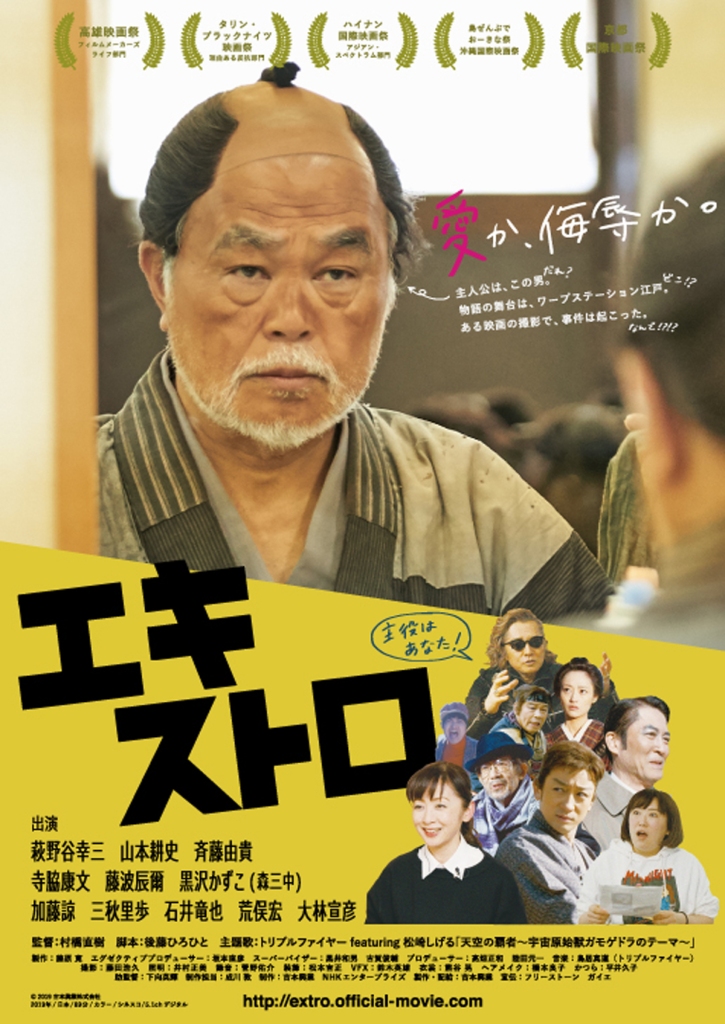
The Lady Vampire (女吸血鬼, Nobuo Nakagawa, 1959)

Three years after the Vampire Moth, Nobuo Nakagawa returns to the realms of bloodsucking adventure with the misleadingly titled The Lady Vampire (女吸血鬼, Onna Kyuketsuki). The only “vampire” on offer here is male, though his victim is indeed a “lady” in being the descendent of a noble family apparently the subject of a mysterious curse which, along with her resemblance to a beautiful ancestor, makes her so attractive to the sensitive, artistic bloodsucker at the tale’s centre. Heavily influenced both by Hammer Horror and Universal’s monster films from the ‘30s, Nakagawa plays fast and loose with his mythology while indulging in a common though problematic association between vampirism and Christianity.

Beginning in high style, the film opens with a driver escorting ace reporter Tamio (Takashi Wada) to the birthday party of his fiancée Itsuko (Junko Ikeuchi) for which he is already very late. The driver stops the car believing he has hit a woman pedestrian, but she seems to have vanished. Later, Tamio spots her wandering around near Itsuko’s home, while Itsuko brings darkness into her party by accidentally cutting her finger and getting a suspiciously large amount of blood on her cake. This alarms Itsuko’s father Shigekatsu (Akira Nakamura) because it reminds him of something that happened right before his wife, Miwako (Yoko Mihara), mysteriously disappeared 20 years previously. 

Of course, the mystery woman turns out to be none other than Itsuko’s long lost mother who is discovered in a long disused room by her extremely confused husband. To everyone’s consternation, Miwako looks exactly the same as she did 20 years ago and for the moment is more or less catatonic. The doctors can’t explain it, and no one is quite sure what to do about this miraculous development. Itsuko stops to make sure Tamio isn’t going to put any of this in his paper, fearful that people will think of her mother’s condition shamefully as a disease or a deformity. Paying a visit to a local art gallery, the pair are shocked to discover that the prizewinning work by a previously unknown artist seems to be a nude painting of Miwako and begin investigating to find out if it has some connection to her disappearance and present vacant state.

Meanwhile, a “fiend” is making trouble in the modern city. The artist behind the painting, using the name Shiro Sofue (Shigeru Amachi), is a brooding, dapper young man in a dark fedora and sunshades with a white scarf fashionably tied around his neck. We learn that he has an extreme aversion to moonlight because it makes him go crazy, feasting on the poor hotel maid who was only trying to make his stay as comfortable as possible. Aided by his dwarf minion Tiny (Tsutomu Wakui), Shiro (not his real name), puts the body neatly outside like a room service tray and pleads ignorance when the police, and crime reporter Tamio, arrive to investigate the heinous murder. The same thing happens again in a Ginza bar where, for reasons not quite obvious, Tiny starts making trouble and smashes a window letting the moonlight in sending Shiro into a murderous rage where he slashes six women with Tamio watching from the sidelines. 

Shiro steals the painting back and delivers it to Shigekatsu where Miwako eventually sees it and regains her memories. At this point, Shigekatsu enlightens us about the “Matsumura curse” which dates back to the 17th century and the rebellion of Shiro Amakusa who led Japan’s secret Christians in revolution against the Shogunate but was defeated. His troops were massacred and he himself was beheaded as a traitor. The Matsumuras are apparently direct descendents of the Amakusa clan and so have “cursed” blood. “Shiro Sofue” is not Amakusa Shiro but a lovelorn retainer, Takenaka, who coveted the princess Katsu but was unable to have her. When she asked him to take her life to save her from the Shogunate forces he complied, but then drank her blood out of love for her and apparently became an immortal being with the occasional urge to sustain himself with the blood of other young women. 

How this became a “Matsumura” curse or really what the curse supposedly refers to is unclear, especially as Takenaka isn’t even part of the family but a lesser retainer damned by love for an unattainable princess. Like subsequent Japanese vampires, the “curse” is directly linked to Christianity. Takenaka’s sales patter uses heavily ritualised language he likens to a “baptism” . “Accept my love, and you will live forever in eternal, unfailing youth” he tells his victims after drugging them with sweet smelling flowers and dragging them back to his underground castle which is built in the Western gothic style and, ironically, filled with crosses. This vampire makes good use of mirrors and has co-opted religious imagery for his own ends. Later we see that he has attempted to find an eternal mate several times before, turning his victims into fleshy statues by placing a gold cross on their heads in the same way a Taoist priest might stop a hopping vampire with a Buddhist sutra. The final of these is a direct echo of the archetypal Virgin Mary statue found at Christian churches all over the world. 

Through this, the “curse” is rendered a foreign import existing outside of and presenting a direct threat to traditional Japanese culture, again aligned somewhat problematically with Christianity by way of an overly literal interpretation of ritual. The  settings too are predominantly Western – the European-style mansion, hotels, bars, and galleries, while Takenaka dresses in a billowing white shirt and cape, living in a stone “castle” built in a cave, and eventually fighting with a fencer’s rapier rather than a katana. His minions, however, have a slightly more diverse flavour in addition to Tiny with a giant mute bald man providing security and a witchy old woman looking like she’s just walked out of Throne of Blood dispensing advice with a seemingly more “Japanese” context. As usual, Itsuko becomes mere bait hysterically running around the castle chased by Tiny while intrepid reporter Tamio heroically battles both the bald man and Takenaka himself until the police finally arrive and bring “order” to this orderless place. The young free themselves from an ancestral curse and prepare to move on, no longer burdened by “bad blood” as they watch the past dissolve while preparing to move into a freer future. 


The Last War (世界大戦争, Shue Matsubayashi, 1961)

As The Last War (世界大戦争, Sekai Daisenso) points out, by 1961 16 years had passed since the end of World War Two during which Japan had begun to rebuild itself, heading into a period of unprecedented economic prosperity with the Olympics already on the horizon. But the early 1960s were also a time of increased international tension as the Cold War mounted and many in Japan feared being pulled into another conflict especially with the Korean War not quite so much in the distant past. Toho had become the home of special effects cinema and such films were often coloured with strong messages of peace and social responsibility as humanity banded together to combat an existential threat be it a giant monster or mad scientist. The Last War is no different in that regard, but sadder in showing us that the end of the world may come suddenly and without warning and that if we for a second become complacent it could already be too late to stop it. 

Patriarch Mokichi (Frankie Sakai) has made a decent life for himself after the war working as a driver. His wife, Oyoshi (Nobuko Otowa), is in poor health and he dreams of buying a house by the sea where she can live in comfort. Meanwhile, they have a grownup daughter, Saeko (Yuriko Hoshi), born before the war, and two much younger children, a girl, Haru, and boy, Ichiro. They are a very happy, very ordinary family who are beginning to think that their days of hardship are finally behind them and they have escaped the war’s shadow. The only note of potential conflict lies in the fact that Saeko wants to marry a family friend, Takano (Akira Takarada), a sailor, and is afraid of Mokichi’s reaction, especially as he keeps trying to set up matches for her. 

In fact, having lived through the war Oyoshi and Mokichi are certain that nothing like that is going to happen again, even if the younger generation is filled with anxiety. “Who could ever profit from the destruction of the Earth?” Mokichi not unreasonably asks, signalling his newly consumerist world view. Mind you, he adds, everyone knows the alternative to calamity is hard work, “you have to work hard for peace”. 

Mokichi has indeed been working hard, but has perhaps begun to neglect other areas of his life in his desire to become rich even if that desire is only to make his family more comfortable and give his children better opportunities than he had. Brought over to see a new TV set now on sale, he scoffs that he already has one, “Who needs a second TV?” he asks, but on hearing the news that tensions are rising because a military plane has gone down off the coast of Africa, his first thought is to get on the phone to his broker and junk his real estate stocks for shares in aeronautics. Mokichi is unconvinced by an old man selling potatoes on their street who apparently lost everything in Hiroshima and has since become a devoted Christian donating most of his profits to anti-nuclear charities, describing him as just “showing off”, firmly believing that nothing like that is ever going to happen again. “I cannot accept it” he says, “what would be the point of the aspirations of humble folk like us if we’re all destined to go poof into extinction?”.  

As the only nation to have directly experienced nuclear war, the intense fear of its recurrence is indeed understandable. If a nuclear war escalates, it will be the end of everything. All human endeavours over thousands of years will be mere dust. There will be no weddings, no births, no graduations, no grand discoveries, just nothing. When the bomb does indeed hit, the scenes of devastation must have proved extremely traumatic for many in the audience as buildings crumble ominously, the sky turns a fiery red, the streets run with lava, and we can see the outlines of charred bodies lying among the wreckage. The tip of the Diet building sits neatly atop the rubble as if in rebuke of the political failures which, despite the best efforts of the Japanese politicians who make an effort to govern responsibly and are honest with the electorate while advocating strongly for peace through diplomatic channels, have led to the literal end of the world. “You have to work hard for peace” the closing title card reminds us. “We can stop this before it happens, but we have to work together”. “I won’t let you destroy our happiness” Mokichi had screamed at the void, but in the end he was powerless. All it takes is a minor slip, and the world as we know it will cease to be.


Black Money (블랙머니, Chung Ji-young, 2019)

Following hot on the heels of Default, Chung Ji-young’s financial thriller Black Money (블랙머니) once again has some questions to ask about the nature of capitalism in South Korea. Loosely based on a real life incident concerning the sale of the Korea Exchange Bank (KEB) to American private equity firm Lone Star Funds, Chung’s film points the finger at systematised corruption as its collection of greedy financial elites peddle national interest as a reason for keeping the public in the dark when it comes to their dodgy dealings.

The trouble starts in 2011 when an illicit couple, one working for Daehan bank and the other for the Financial Supervisory Service, are bumped off after being called in by the Supreme Prosectors’ Office in connection with an ongoing corruption investigation into the sale of the bank at rock bottom prices. The male bank employee is killed when the couple is run off the road by a truck but the FSS woman, Su-gyeong (Lee Na-ra), manages to escape. Fully aware that her life is at threat, she tries to get herself arrested by the police for protection but fails and is later discovered dead in her car next to a charcoal briquette. A “suicide note” in the form of a text message to her sister suggests that she has chosen to take her own life because of the aggressive tactics of prosecutors one of whom sexually harassed her after which she felt too humiliated to go on living. 

The mention of sexual harassment is intended to act as a tiny bomb by the shady forces in play, fully aware that just mentioning those words makes the entire case toxic ensuring it will be shut down never to be mentioned again. They have, however, picked the wrong man for their patsy in “bulldozer” Yang Min-hyuk (Cho Jin-woong) who is outraged to have been unfairly labelled a sex offender and will stop at nothing to clear his name, eventually uncovering the entire conspiracy after realising that Su-gyeong’s death was almost certainly a murder.

In this, Yang is obviously acting in self interest, which isn’t to say that he doesn’t care about the conspiracy, but it’s not his primary motivation. His opposing number, Kim Na-ri (Lee Honey), is perhaps much the same, a victim of her upbringing but increasingly conflicted. Brought up by a right-wing, ultra-capitalist professor who is good friends with former prime minister Lee Gwang-ju (Lee Kyoung-young) now working on the Daehan bank sale, Na-ri tells herself she’s acting in the national interest in her desire to set up her own international trade law firm to prevent Korea being taken advantage of by bigger foreign economic powers and in particular the Americans. Despite her law background, what Na-ri has mainly found herself doing is more like PR, finding palatable ways forward to make sure the deal goes through on favourable terms despite the already widespread public outcry.

Surprisingly, Na-ri and Yang end up bonding over the course of the investigation, discovering they have more in common than either might have assumed. Given the kind of evidence that Yang is digging up which points to a wide scale conspiracy involving complex fraud and murder, Na-ri finds herself conflicted. Maybe she isn’t quite as committed to ultra-capitalism as her father is, giving Lee’s speech at the Davos conference the heart-warming title of “free trade with a human face” which apparently went down very well with the audience. Whatever else she is, she’s a lawyer, and the kind of lawyer who doesn’t really like it when people break the law, so she’d rather not think that she’s been party to criminality without ever realising. Lee, meanwhile, uses their familial closeness against her, adopting a sleazy kind of sexist paternalism as he brushes off her concerns as if telling her not to worry her pretty little head about it while tacitly admitting what he’s up to isn’t quite right but is justifiable because the economy must be protected at all costs. 

Only, that’s a difficult claim to square when Na-ri’s restructuring plans for Daehan involve hundreds of workers being laid off and some of them are currently on a hunger strike in the public square to protest. Na-ri is used to thinking in big numbers, she’s not usually confronted by the human face of their results and the weight of her responsibility does perhaps shake her. Yang too is used to being equivocal, declaring himself a neutral force because his job is to enforce the law equally, but he got into this after his dad was involved in a traffic accident where the other driver turned out to be a chaebol kid, so he knows all about systemic inequality and entrenched corruption. Nevertheless, self interest continues to play its part. The sympathetic chief prosecutor who put his career on the line to take the case forward is ousted through a trumped up charge while his replacement offers to shelve it in return for a promotion. A combination of bribery and violence conspires to keep the financial elites doing what they’re doing because no one is secure enough to stop them. 

Trying to discourage her from her newfound sense of responsibility, Na-ri’s father reminds her that Lee is like family to them, which is one reason he’s put her forward for a top job as a financial commissioner, explaining that “that’s how we live through capitalism. Just accept it. It’s not something you can change on your own”. Chung ends the film with a sense of triumph as the common man, Yang, makes an impassioned speech in front of an angry mob, but according to the on screen text his was an empty victory because no one was ever brought to justice over the “illegal” bank sale which put a lot of ordinary citizens out of work while already wealthy elites lined their pockets aided by the financial authorities and a rotten judiciary. An attack on rampant capitalism, Black Money is not afraid to announce where its allegiances lie but seemingly has few answers other than indignation towards an inherently corrupt society ruled by greed and indifferent to the suffering of ordinary people.


Original trailer (no subtitles)
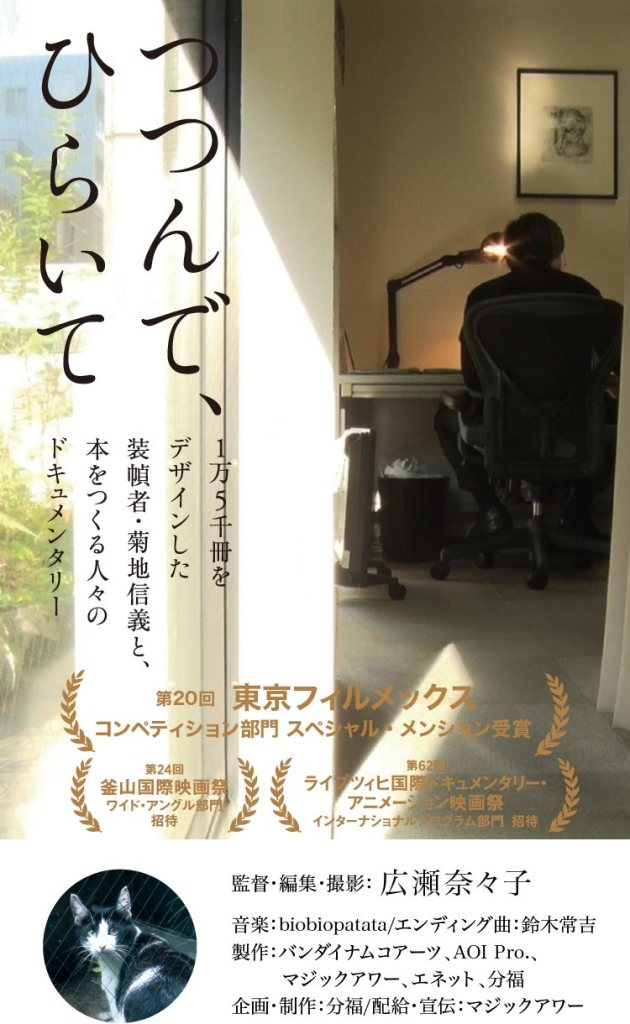
Father (父, Keisuke Kinoshita, 1988)

Keisuke Kinoshita’s long career spanned 45 years producing 49 films between 1943 and 1988. After joining Shochiku in 1933, he directed his first film, Port of Flowers, 10 years later and subsequently went on to direct some of the best loved classics in Japanese cinema such as the iconic Twenty-Four Eyes. Though sometimes dismissed by international critics as overly sentimental, Kinoshita’s comedies were often mercilessly cynical and his later work became progressively darker. His final film, however, Father (父, Chichi), skews the other way, chronicling a son’s gradual acceptance of his feckless dad as he prepares to come of age himself. 

As the film opens, the titular “father”, Kikutaro Higure (Eiji Bando), is launching a failed bid for political office in his beloved Kagoshima (his major policy is putting a giant umbrella on a local volcano to deal with the ash problem) while his son, the narrator Daijiro (Makoto Nonomura), is only four. Disappointed by his failure, Kikutaro moves the family to Kumamoto where he becomes a househusband while his long-suffering wife, Yae (Kiwako Taichi), runs a small bar. Daijiro is now six and is facing the first of many family crises because his mum has had enough and has asked for a divorce. The last straw was Kikutaro raiding her savings without permission to pour into another harebrained scheme to put on an all female pro-wrestling show. A late in the game plea from Daijiro’s sensible grandma (Kin Sugai) encourages the couple to try again, moving to Osaka and then to Tokyo but apparently taking all their problems with them. 

If she had to choose, Daijiro’s grandma would pick her daughter-in-law Yae over her son any day. “What a mistake I made giving birth to a son like that” she laments, “I’m beyond regret, I’m angry”. Kikutaro certainly is an exasperating sort of man, careering from one get rich quick scheme to another but never really taking anything seriously enough to see it through. Grandma assumes he’ll want her to help him repair his marriage (not least because he can’t support himself and is dependent on Yae to look after him) but he appears not to care at all, simply stating that he can always “find a replacement” for a wife but Daijiro is irreplaceable. If it were not for that comment, you could perhaps make a case for Kikutaro as an early example of the new man prepared take on child care duties in a strongly patriarchal society where he is the only dad attending parent and teacher meetings, but predictably Kikutaro is mostly doing it because he’s lazy. Taken out on a walk so grandma and Kikutaro can talk, Daijuro goes “missing” leaving Yae convinced he’s been abuducted but it turns out he got distracted by some pachinko balls and stopped to pick them up because that’s obviously what his dad has him doing while he’s supposed to be looking after him. 

Nevertheless, Kikutaro ends up sending Daijiro back to Kagoshima to live with grandma until the couple eventually reunite and take him back to live with them in Tokyo. That doesn’t last long either, and while his mother lands on her feet and works hard to make a life for them running a Spanish restaurant, Kikutaro bounces around trying out a host of other harebrained schemes until fetching up asking for money to launch a singing career for his new friend from Brazil, a Japanese-speaking black American man whom he treats in an entirely questionable way (the film is very of its time in terms of its racial politics), essentially selling the incongruity of a foreigner singing the Japanese songbook but later beating him when he somehow “insults” Kikutaro’s favourite ode to Kagoshima simply by performing it. 

The teenage Daijiro describes his dad as a “problem parent”, but like the rest of his family finds it extremely difficult to abandon him despite the fact that being a relative of Kikutaro seems to be completely exhausting. We even see him kick off at his sister-in-law’s funeral about wanting more money and not being respected as the eldest son. Yae constantly asks for a divorce and gets countless other offers from better men but never officially separates from Kikutaro who, despite his earlier protestations, always comes back to her (but only when he wants something). Daijiro begins to feel sorry for his father who seems to be moving further and further away from his beloved Kagoshima after vowing to return only once he’d become a success. He thinks he sees him at the iconic Ohara festival where grandma is cheerfully participating in the traditional song and dance parade, calling out but as usual receiving no reply. Kikutaro is a failure of a father, but perhaps in the new context of the bubble economy it no longer matters quite as much as might have done before. Daijiro at least seems to have rejected his example, but like everyone else chooses to forgive him as a loveable rogue rather than a deadbeat dad while secretly longing for his return. 


Original Trailer (no subtitles)
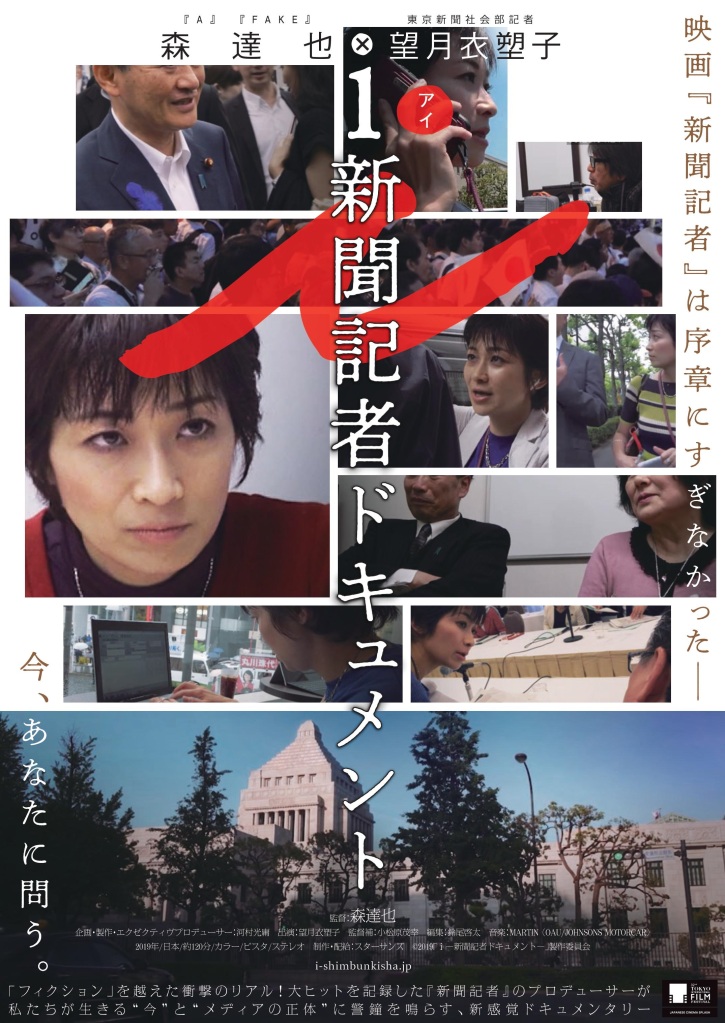
Bull’s Eye of Love (おしどり駕篭, Masahiro Makino, 1958)

Masahiro Makino was best known for jidaigeki and ninkyo eiga but also had an interesting sideline in cheerful period musicals including many collaborations with post-war singing sensation Hibari Misora. Bull’s Eye of Love (おしどり駕篭, Oshidori Kago) is, like Singing Lovebirds, a musical comedy in which a samurai (in disguise) and a feisty young woman fall in love while battling the corruption of their times. Though in this case Hibari takes a back seat in fighting samurai hypocrisy, she still gives as good as she gets as she fights for love across the class divide even while accepting that she can only have her love if he consents to renounce his nobility and live as a humble plasterer. 

The trouble starts when the old lord dies and a prominent retainer, Hyobu, leaps into action, taking control of the situation in fast tracking the accession of second son Sannojo (Sentaro Fushimi) who many feel to be too immature, weak willed, and naive to lead effectively. Top servant Zenbei complains, pointing out that Sannojo has an older brother, Genjiro (Yorozuya Kinnosuke), who should be first in line. But Genjiro has long been absent from the court, apparently intent on escaping the “stuffy” samurai lifestyle. Hyobu claims not that Genjiro has forfeited his position, but that he has actively renounced it in favour of Sannojo. Zenbei is not convinced, at the very least he feels they should find Genjiro and explain the situation to find out for sure what it is he intends to do with the rest of his life. 

It happens that Genjiro is living humbly as Genta the plasterer and has fallen in love with Kocho (Hibari Misora), the proprietress of an archery parlour who also likes to put on a show every now and then. The major problem in his life is that both he and Kocho are too stubborn and proud to say “I love you” which is making them bicker endlessly as a kind of substitute. The arrival of Zenbei and another retainer blows his cover and sends his new life into disarray. He has no desire to return to the samurai world, but also knows his brother is too susceptible to manipulation to be allowed to succeed unadvised, especially as Hyobu seems to be manoeuvring to get him married to his troubled daughter Chidori (Hiroko Sakuramachi) who seems to have some kind of ongoing mental disturbance which renders her distant and childlike. His romantic hopes will have to go on the back burner for a while as he becomes “Genjiro” once again to sort out Hyobu before hopefully returning to the simple life of an Edo plasterer. 

From Kocho’s point of view, the news that Genta has hidden his true status from her is alarming on two fronts, not only that he’s “lied” about who he is, but that if he is a noble lord then they can never be together because samurai don’t marry outside of their order. Genta, however, seems to be a fairly atypical sort of samurai who is entirely uninterested in wealth, status, and the restrictive codes which bind the noble. He looks for freedom in living as an ordinary man, which may be a bit disingenuous because there’s little freedom in starving and being constantly oppressed by the cruel order he was born into, but there is truth in it. It’s also unlikely that his clan would allow him to just up and leave, disappearing into Edo era society and abnegating his responsibility, but Bull’s Eye of Love is intent on a more cheerful depiction of the samurai world than that found in many contemporary period dramas in which its heroes are allowed to choose love and freedom without being forced to sacrifice their feelings in the name of duty. 

Kocho finally confesses her love but makes clear it is for Genta, not for Genjiro, only to end up falling for Genjiro too because of his manly samurai charms coupled with an unusual sense of compassion. Despite being told to stay at home, she takes her bow and arrow and follows him, relieved to discover she didn’t need to join the fight because he’d already handled it. In a fairly strange turn of events, however, Genjiro wipes out most of the treacherous retainers but then more or less enables Hyobu’s plan by putting Sannojo in charge and agreeing that he should marry Chidori who was only playing mad to undermine her father’s nefarious schemes. Having sorted everything out, the pair leave on a more equal footing after confirming their feelings towards each other and their intentions for the future. Genjiro renounces his samurai status to live “free” in Edo, cheerfully proceeding out of the palace and into the streets singing as he goes rejecting elitist authoritarianism in favour of the earthy pleasures of warmth and friendship to live as an ordinary man unburdened by the cruel hypocrisies of samurai soceity. 


Mao Mao Cool (猫猫果考试记, Zhang Yang, 2019)

Having turned his attention to Dali in China’s Yunnan province, Zhang Yang’s third in a series of documentaries exploring the area Mao Mao Cool (猫猫果考试记, Māo Māo Guǒ Kǎoshì Jì) takes a micro view of the modern society through the trials and tribulations of one little boy, Qu Hongrui, as he tries to pass the eccentric “exam” to graduate from Mao Mao primary school which takes the form of a daylong scavenger hunt leading to an overnight camp at a picturesque river. Perhaps a look at changing educational methods in a system which is often criticised for an over reliance on rote learning and test scores, Zhang’s documentary is also a gentle exploration of the art of growing up as Hongrui finds himself at loss for a way forward when he discovers that he cannot simply insist on having his own way. 

When we first meet Hongrui, he’s on the first of his tasks which involves a trip to the local market where he is charged with shopping for the various vegetables on his list to be used later in the day. Though he is accompanied by an “observer” to make sure he’s never in any immediate danger or causing trouble to others, the purpose of the test is to force Hongrui to act independently, teaching him how to interact with shopkeepers, manage his money, and shop for himself. When he’s got everything on his list, he’s supposed to go to the next checkpoint and have his “passport” stamped so he can proceed to the next stage. 

That’s when his problems begin. The next stage is a rock climbing challenge in which the children are supposed to venture up a climbing wall and retrieve a flag with the letter they’ve been assigned. Hongrui, however, seems to be more afraid than most of the other kids and finds the wall a confusing challenge despite frequent instructions and words of support from below. Eventually he bursts into tears and begins screaming to be let down but eventually composes himself enough to be able to complete the task successfully. That’s something of a pattern which will be repeated. It seems that Hongrui isn’t very popular with his peers and is regarded as a crybaby, one girl eventually asking him “why do you like to cry so much?” after getting fed up with one of his angry episodes. 

The same thing happens again during the next challenge when he’s placed in a group with four girls and asked to blend the juices of the vegetables he collected to create new colours and make a group painting. Some of the kids want to make a blue colour and the others pink. After a quick look around the room shows them most of the other groups have gone with blue the girls lean towards pink, which upsets Hongrui to the extent that he runs back out to the examiner complaining “We’ve got a massive schism over colours”. Every time Hongrui encounters a problem, he tries to run to the grownups to sort it out, but the examiners like the observers aren’t permitted to get involved. These exercises are about socialisation and harmonious living. They’re supposed to teach the kids how to compromise and work out their differences peacefully so they can work as a team, but Hongrui still has fairly underdeveloped interpersonal skills and makes frequent mistakes when it comes to negotiating with his teammates. When he comes back from speaking with the examiner, the girls have already found a solution on their own, making a pretty purple colour that suits everyone equally. 

Hongrui’s rage and frustration lead him to make unwise decisions, telling the teacher he wants to leave the group because the girls wouldn’t listen to him even if it means he won’t get a badge for this task, only relenting when the examiner explains the entire group will fail if he leaves so his friends won’t get their lunch either. He runs into a similar problem when he’s supposed to put a puzzle together as a clue to the next checkpoint but discovers that he’s lost a piece and concludes that another girl who has far more pieces than she needs must have picked it up. The girl insists the piece was in her pack to begin with and is therefore “hers” so she won’t help him, which proves very challenging to Hongrui who feels he’s been unfairly treated. He tries to appeal to the examiners again but they aren’t allowed to help, his observer explaining that he needs to learn to negotiate with others on his own. Sadly, though it appears not to benefit her in any way to hold on the puzzle piece, the girl continues to refuse to surrender it, perhaps irritated by Hongrui’s “accusation” that she took it from him, and eventually leaves him stranded, unable to move on the next task. 

This however a primary school exam so happily Hongrui is able to continue on his journey though it might be debatable how much he’s actually learnt. Crying hot, rage-fuelled tears in the car apparently unashamed to be so emotional in front of another girl in the same position who is increasingly exasperated by his “childishness”, Hongrui is reminded that he needs to learn to control his emotions as he grows up, but does at least seem to calm down enough to cheerfully make his way towards the finish line. The kids are, by and large, alright as they learn how to live in the world and with each other, overcoming their problems together and having fun along the way.


Mao Mao Cool is represented by Fortissimo Films.

The Sound of Dali (大理的声音, Zhang Yang, 2019)

Following his portrait of an artist Up the Mountain, Zhang Yang returns to Dali for the second in a trilogy of films celebrating this small area provincial China which has become known for its beautifully preserved traditional buildings and picturesque views. As such, it has already become a draw for tourists, but Zhang’s documentaries aim to explore the area from a more local perspective. The Sound of Dali (大理的声音, Dàlǐ de Shēngyīn), as the title suggests, captures the unique soundscape of the small city through four seasons as man and nature create their own symphonies. 

With more a straightforwardly observational approach than either of the other documentaries in the series, Zhang resists narrative but shows us scenes of Dali from unexpected angles beginning with the beauty of stormy skies filled with the perhaps ominous sound of rushing wind which soon gives way to snow. Ducks flap and fly, crash landing on water, while chickens strut and bees hum. Sheep and cows graze in the fields while oxen pull carts for the farmers labouring on the land. Women plant rice and later harvest it, shaking the sheaves to release the grain and making a music all of their own. 

Zhang cuts the sound of industry into an accidental symphony as a blacksmith bends and hammers metal, builders hammer wood, and engineers pummel the ground. Old women play their looms like lyres, and master carvers scrape wood into intricate designs with tiny, expert motions. 

Meanwhile, there is music of the more obvious kind in the singing of hymns in a Christian church, worship at a mosque, and rituals conducted by the farmers to ensure a good harvest. Others attend the local temple to make Buddhist offerings for perhaps much the same reason. Traditional opera takes place in the streets while buskers too add to the joyful sound of man-made music.

Zhang is keen to show us the sound of human industry in concert rather than conflict with nature. The seasons change, the skies darken, and sometimes the sound is frightening rather than harmonious, but there is life here at a nexus of the traditional and the modern. Colourful festivals fill the streets with processions of the old gods, farming is done the traditional way, and perhaps at times the sound of human voices drowns out the birds and rustle of the trees but does not destroy them. Meanwhile, a young man sets up a stand selling artisanal coffee and people dance and sing at the local markets enjoying family life as children play happily both amid the greenery and in the pleasant city streets. The young go to discos, and couples have their wedding photos taken against the backdrop of the beautiful local scenery. 

Perhaps cheating a little, Zhang cuts from an eagle soaring majestically above the landscape to drone footage giving us a birds’ eye view as we, for a moment, become “nature” too, observing the tremendous beauty of the land in all of its luscious greenery as the waterfalls tumble almost silently below. The Sound of Dali is one of harmony and happiness as human voices and the natural world blend as one in a great symphony of life in all its glorious cacophony.


The Sound of Dali is represented by Fortissimo Films.

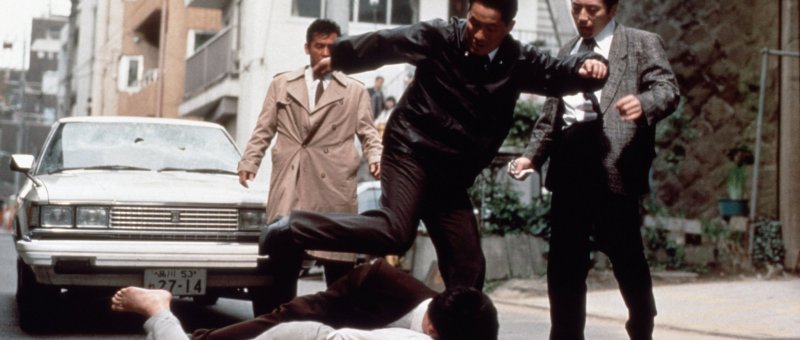
Yasha (夜叉, Yasuo Furuhata, 1985)

In melancholy gangster movies, the hero often dreams of leaving the city for an idealised rural paradise to start again as a righteous man redeeming himself through hard work with a good woman by his side. Usually, they don’t make it, their goodness is nothing but a weakness in the harsh post-war environment, but even if they did could they really lay their violent souls to rest and live as the rest of us do? Once again played by a manfully stoic Ken Takakura, the hero of Yasuo Furuhata’s Yasha (夜叉, AKA Demon) tries to find out, but discovers that sooner or later the past will always catch up with you. 

15 years ago, fisherman Shuji (Ken Takakura) was the notorious Osaka yakuza known as “Yasha”. A war orphan given refuge by a gangster brotherhood, two things happened to change his way of life, the first being innocent country girl Fuyuko (Ayumi Ishida) whom he met by chance and rescued on the dangerous streets of the city. The second is the death of his younger sister who had become addicted to heroin. Fiercely resistant to the traffic of drugs, Shuji quit the clan, married Fuyuko, and retreated to her fishing village home to take over her late father’s fishing business. Well respected in the community as a steady hand, he now has three children and a settled happy life though one tinged with anxiety in the need to keep his back covered lest anyone find out about his violent past. 

The violent past is brought home to him when a young woman, Keiko (Yuko Tanaka), arrives in kimono with her young son in tow to take over the local bar. Keiko is a bar hostess from Osaka hoping to make a new start far away from the city, not so much for herself it seems as her no-good boyfriend Yajima (Takeshi Kitano) who is a drug-addled thug and openly hostile to her little boy. It’s Yajima who threatens to disrupt the gentle rhythms of the town, firstly getting the fishermen hooked on all night games of mahjong which damage their daytime productivity, and then selling them heroin to keep them propped up. Unused to such urban vices as hard drugs and serious gambling, the fishermen are lambs to the slaughter, handing over their hard earned savings to the thuggish Yajima to keep their heads above the water. 

Shuji wants to keep the town clean, but he can’t exactly admit just how familiar he is with things like drink and drugs which are, as his friend Keita (Kunie Tanaka) points out, not things “normal” people should know about. After realising an old friend is the middle-man, Shuji has a quiet word with Yajima as one thug to another but it only makes the situation worse. He tries talking to Keiko instead, but her decision to get rid of the drugs has disastrous consequences for all when Yajima goes on a crazed, knife-wielding rampage through the town which only Shuji can end. During the fight Yajima slashes Shuji’s fisherman’s jumper right through to the expose the demon beneath, leaving his colourful tattoos on show for all to see. 

You’d think that Yajima’s rampage would have taught the town a lesson, shown them that they were in over their heads and Yajima was not the sort of person it was good to be associated with, but their animosity overwhelmingly turns to the demon Shuji whom they unfairly begin to blame for their many misfortunes. The fishwives begin to avoid Fuyuko, telling their kids not to hang out with her kids and suggesting that it must have been Shuji who got the guys playing mahjong. Shuji meanwhile doubts himself, drawn to Keiko as to Osaka and the sleeping demon within. Yasha reawakens and he wonders if he has the right to live here after all. 

Fuyuko’s mother tells her that it’s a good wife’s job to quell the demon, but she struggles to maintain hold on Shuji while Yasha is pulled towards the city. He makes a manly choice, attempting to redeem Yajima in redeeming himself by returning to his point of origin. The widow of his old boss warns him off, reminds him that he’s a fisherman now, and that should he move against her she will have to act in accordance with the rules of the underworld, but privately mutters to herself that he hasn’t changed at all, “stupid man”. In the end, Yasha’s manly gesture ends in futility. He cannot escape himself but neither can he solve his problems through violence as he might have before, not least because the code is no longer secure motivating those he thought he could trust towards betrayal. He still has a choice, leave with Keiko to be Yasha once again accepting the futilities of a violent life (and its inevitable end), or stay to be a peaceful fisherman with the “good wife” Fuyuko. One man cannot possess two souls, but the given the chance the demon can be subdued if there is the will to subdue it and the belief that the man himself is good enough for the world in which he wants to live.


Original trailer (no subtitles)
The Big Bee (天空の蜂, Yukihiko Tsutsumi, 2015)
Blockbuster cinema wades into the anti-nuclear debate in a characteristically ambivalent take from prolific author Keigo Higashino adapted from his 1995 novel. Brought to the screen by blockbuster master Yukihiko Tsutsumi, The Big Bee (天空の蜂, Tenku no Hachi) is less wedded to its anti-nuclear message than it might at first seem, eventually sliding into a more comfortable tale of failed fathers redeemed with a potentially ambiguous coda that perhaps undercuts much of what has gone before . 

The main action takes place on 8th August, 1995 which falls between the 50th anniversaries of the atomic bomb attacks on Hiroshima and Nagasaki and is also a few months after the devastating earthquake in Kobe. Engineer Yuhara (Yosuke Eguchi) is about to unveil the “Big Bee”, Japan’s largest ever helicopter built with state of the art technology. He’s brought along his wife and son, but it’s clear there is discord in the family and neither of them are very impressed that the security guard didn’t even seem to know who he was so perhaps he’s not such a big shot after all. While his wife Atsuko (Kei Ishibashi) takes their son Takahiko (Shota Taguchi) and another boy to get a drink from the vending machine, Yuhara talks things over with a colleague and reveals that his workaholic lifestyle has destroyed his family life. He’s about to be divorced and doesn’t seem particularly cut up about it. Asked what’s going to happen to Takahiko, Yuhara cooly explains that it’s best he stays with his mum because he isn’t capable of being a good father to him. Unfortunately, Takahiko overhears him say that he’s essentially planning to abandon him and runs off to explore on his own, eventually sneaking aboard the helicopter which is then hijacked by a mysterious villain via remote control who flies it over a nuclear power plant and gives the Japanese government the eight hours before the fuel runs out to agree to shut down all the nuclear power plants in Japan. 

Yuhara’s failure as a father is immediately brought home to him when his son manages to throw the other boy, who climbed in with him but got injured, to safety, but doesn’t trust his dad enough to jump himself after hearing him say he was going to abandon him to his mother. Yuhara, meanwhile, was able to jump and grab the ramp of the helicopter but not to climb up and reach his son. He has to accept that his failure as a father and in consequence as a man is complete and total. His quest to save Takahiko is also a quest to redeem himself in the eyes of his society and avoid being branded as a man who sacrificed his family for a career and was finally unable to protect them.

Yet, at the present time, he’s also trying to save a nation while in the place of a father. To his mind, he built the Big Bee as a rescue craft, but its usage is most obviously military. He and his former colleague Mishima (Masahiro Motoki) see themselves as neutral engineers interested in technology but not particularly in its application. The government is reluctant to shut the plants down not only because cutting the power is extremely inconvenient and damaging to the economy, but because they do not wish to reopen the nuclear debate and risk the general populace realising that nuclear power is not entirely “safe”. Of course, this has extreme resonance in light of the Fukushima disaster, the government wilfully putting lives at risk in order to safeguard its own ends in refusing to issue an evacuation order for a potential disaster area covering all of the nation’s major cities right across the centre of the Japanese mainland.

This cavalier approach to human life extends to those working in the plants. We’re quickly introduced to a middle-aged woman whose son died of leukaemia she believes caused by lax safety procedures while the prime suspect is a friend of his (Go Ayano) who may also be suffering from a terminal illness caused by exposure to radiation after working as a cleaner at the power station. He vows revenge on a society which has rendered him “disposable”, thrown away like used tissue and left to fend for himself only because he was born into socio-economic circumstances which left him with no other choice than to take a “dangerous” job for employers that failed to protect him in much the same way Yuhara has failed to protect his son. 

The farmers in the town where the plant has become the major source of employment complain that no one wanted it but everyone needed the money. One leans into the mild message that perhaps we take our electric lives for granted, plugging in our toothbrushes without really thinking of the costs incurred in how we generate our power. Hotels dim their lights and switch off elevators while guests complain of the heat in the absence of aircon, but didn’t we manage OK before the power grid? Perhaps so, but our lives have changed. It might be as well to think again if those changes are really as good for us as we think they are, but you can’t turn back the clock. 

Not even the villain really wants the clock turning back, just better accountability and proper governance that puts the lives of citizens ahead of economic gain. Then again, a lot of this is personal, an act of self harm rebranded as revenge taken in atonement for the failures of a father. In this respect Yuhara may redeem himself, but there’s a note of discomfort in the jump to 2011 and the Fukushima disaster which doesn’t so much shout “I told you so” as over rely on the heroic efforts of the Self Defence Force as they battle a disaster which the powers that be from the government to the power company have failed to prevent. Yuhara wonders if the country is worth dying for and is comforted only in a trick he taught his son to calm his anxiety in the wake of the Kobe earthquake, tapping out “I am here” in morse code as an affirmation of survival which might also serve to say the work goes on even while “fathers” continue to fail in their responsibilities. 


Hong Kong release trailer (English subtitles)