 A Japanese tragedy, or the tragedy of Japan? In Kinoshita’s mind, there was no greater tragedy than the war itself though perhaps what came after was little better. Made only eight years after Japan’s defeat, Keisuke Kinoshita’s 1953 film A Japanese Tragedy (日本の悲劇, Nihon no Higeki) is the story of a woman who sacrificed everything it was possible to sacrifice to keep her children safe, well fed and to invest some kind of hope in a better future for them. However, when you’ve had to go to such lengths to merely to stay alive, you may find that afterwards there’s only shame and recrimination from those who ought to be most grateful.
After opening with a series of genuine newsreel segments overlaid with newspaper clippings which tell of nothing other than crime, corruption and suicides, Kinoshita shifts focus to our ordinary mother, Haruko, currently working in an inn. Her son, Seiichi, has something he wants to tell her and will be staying with his sister, Utako, if she’d care to call. Neither of the children seems very excited about seeing their mother and, in fact, Seiichi’s news is that he wants to be adopted into a wealthy medical family so he can eventually take over their hospital. Utako is studying dressmaking and learning English but has also developed an attraction to her married English teacher which is threatening to develop into quite a difficult situation.
Kinoshita makes it plain that everybody suffered during the war which generally brought out the worst in people and even afterwards it was every man for himself as each tried desperately to climb out of the deepening hole that was Japan’s wartime defeat. Haruko lost her husband in the conflict, leaving her alone with two young children to feed and no one to help her. She did what she had to do whether that was a spot of black-marketeering, hoarding, or even casual prostitution but she put her children first every time. Unfortunately, she also falls for some bad self serving advice from her brother-in-law who offers to take over her husband’s land and look after the children while she earns more money out of town. Of course, he didn’t exactly keep his promises and both of the children suffered as a result.
Far from feeling grateful for their mother’s sacrifice, what the children feel is a mixture of shame and resentment. They’re embarrassed by their mother’s hardline personality and rural earthiness which no longer match their postwar upwardly mobile aspirations and force them to remember the unpleasantness of their upbringing. Seiichi is particularly disgusted by his mother’s having prostituted herself, branding her a “loose woman” and calling into question her character even before the disruptive effects of the war. Utako suffered a far greater betrayal at the hands of her relatives which has coloured her entire world view and left her with nothing but lingering resentment towards the mother who placed her in this situation.
Kinoshita intercuts the present day action with completely silent scenes of the family escaping from the military police, or memories of the various traumas each of the family members encountered in the chaotic period immediately after the end of the war. We see them travel from the warm letters sent by the children to their mother which lament the way their aunt and uncle are treating them to the outright hostility of the contemporary era. Haruko may not be the easiest of women, she’s certainly had a difficult life by any standards and it’s understandable why the relationship with her children might be strained, but in this case blood is not enough to overcome all the years of hardship and neither Seiichi nor Utako is willing to fulfil their filial obligations towards their mother.
Haruko substitutes the relationship she’s missing with her own children by offering maternal advice to the chef who works in her inn and a sad wandering guitarist who often comes by to serenade the guests. Not much older than her own son, the guitarist also has a mother in the country whom he rarely sees – Haruko gives him some money that he tearfully promises to use to send his mother a present, though he confesses at the end of the film that he drank it himself in the end. He feels guilty about it and he’s moved by Haruko’s kindness towards him but in the end he’s forgotten his own mother too and even if he isn’t treating her with the same level of disdain that Seiichi and Utako display for Haruko, he isn’t doing much better in the filial piety stakes.
An extended metaphor with a series of tightly packed layers, A Japanese Tragedy is a lament for a homeland that’s lost its way. Haruko, like the idealised mother, has given her own life in sacrifice for those of her children only to find that her children disown her for it. Everything she has ever done, good and bad, has been in their name yet they refuse even to acknowledge her suffering but rather apportion blame for their own hardships. Kinoshita litters Haruko’s story with news reports bearing out the depths to which the country has fallen – corrupt politicians, rioting, violence on the streets and mothers who commit suicide taking their children with them. At a moment near the end of the film, Haruko remains motionless on the train station steps as a crowd of passengers surges past her. Left alone, uncertain, and believing herself to have lost the only thing that has ever mattered to her, Haruko becomes a casualty of a society that is so intent on marching forward that it’s lost sight of where it’s going. An enraged state of the nation address, this bleak and tragic tale is nevertheless filled with genuine human feeling and naturalistic detail which only deepen the impact of the desperately sad ending.
Opening sequence of the film:
Reviewed at the 2016 Japan Foundation Touring Film Programme, ICA 7th February 2016.
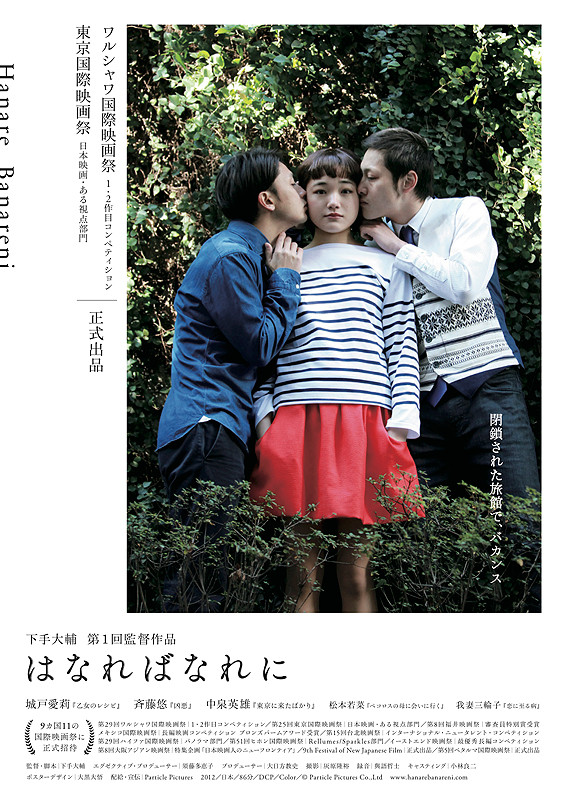 All these years later, it’s easy to forget just how revolutionary the wheezy, breezy youthfulness of the French New Wave was. Kuro proves that there’s life in this whimsical, summer seaside feeling yet as three misfits find themselves holing up at a disused small hotel to think about what they’ve done until they learn to grow up a little.
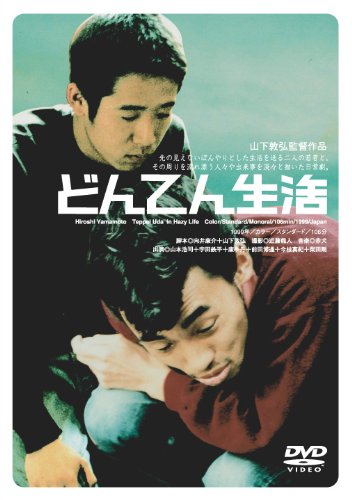 Starting as he meant to go on, Nobuhiro Yamashita’s debut feature film is the story of two slackers, each aimlessly drifting through life without a sense of purpose or trajectory in sight. His humour here is even drier than in his later films and though the tone is predominantly sardonic, one can’t help feeling a little sorry for his hapless, lonely “heroes” trapped in their vacuous, empty lives.
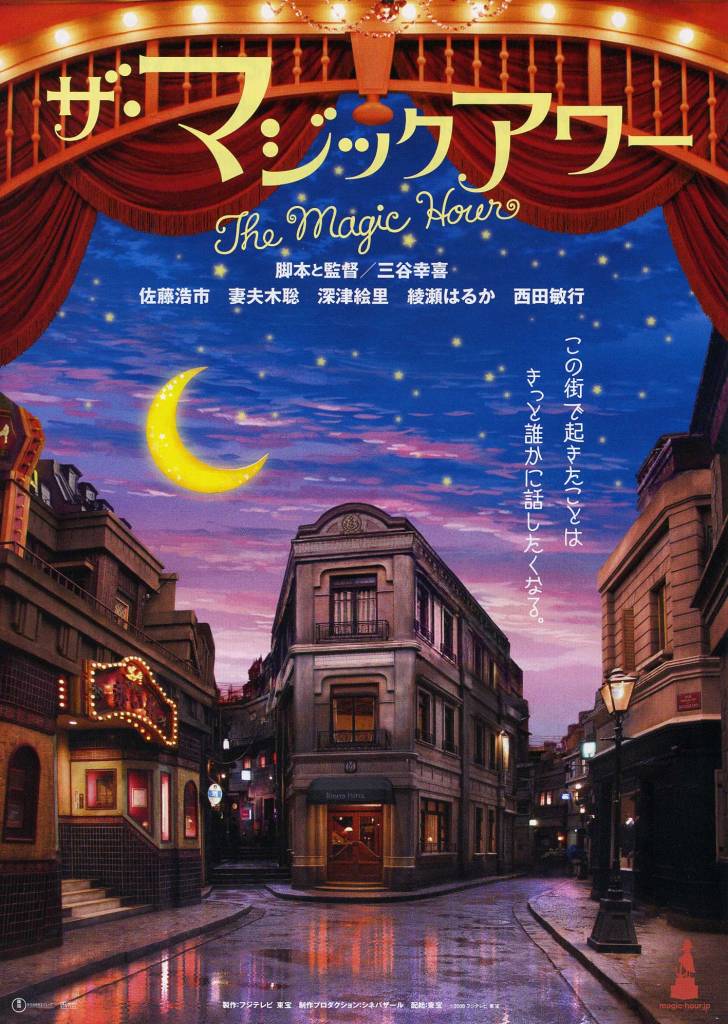 If there’s one thing you can say about the work of Japan’s great comedy master Koki Mitani, it’s that he knows his cinema. Nowhere is the abundant love of classic cinema tropes more apparent than in 2008’s The Magic Hour (ザ・マジックアワー) which takes the form of an absurdist meta comedy mixing everything from American ‘20s gangster flicks to film noir and screwball comedy to create the ultimate homage to the golden age of the silver screen.
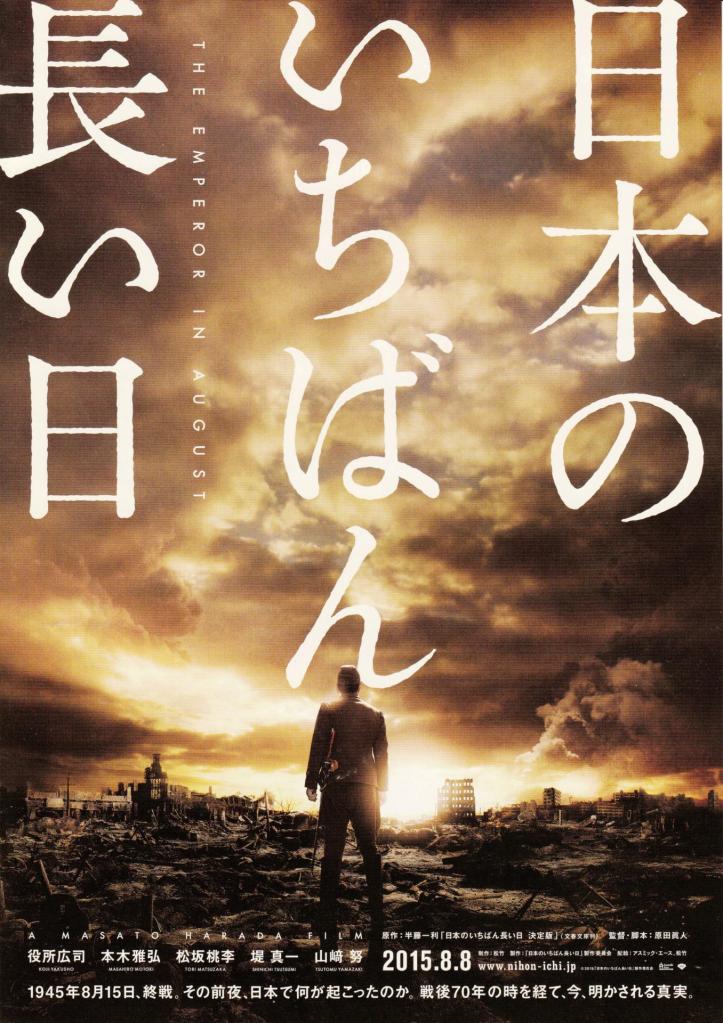 How exactly do you lose a war? It’s not as if you can simply telephone your opponents and say “so sorry, I’m a little busy today so perhaps we could agree not to kill each other for bit? Talk later, tata.” The Emperor in August examines the last few days in the summer of 1945 as Japan attempts to convince itself to end the conflict. Previously recounted by Kihachi Okamoto in 1967 under the title Japan’s Longest Day, The Emperor in August (日本のいちばん長い日, Nihon no Ichiban Nagai Hi) proves that stately events are not always as gracefully carried off as they may appear on the surface.
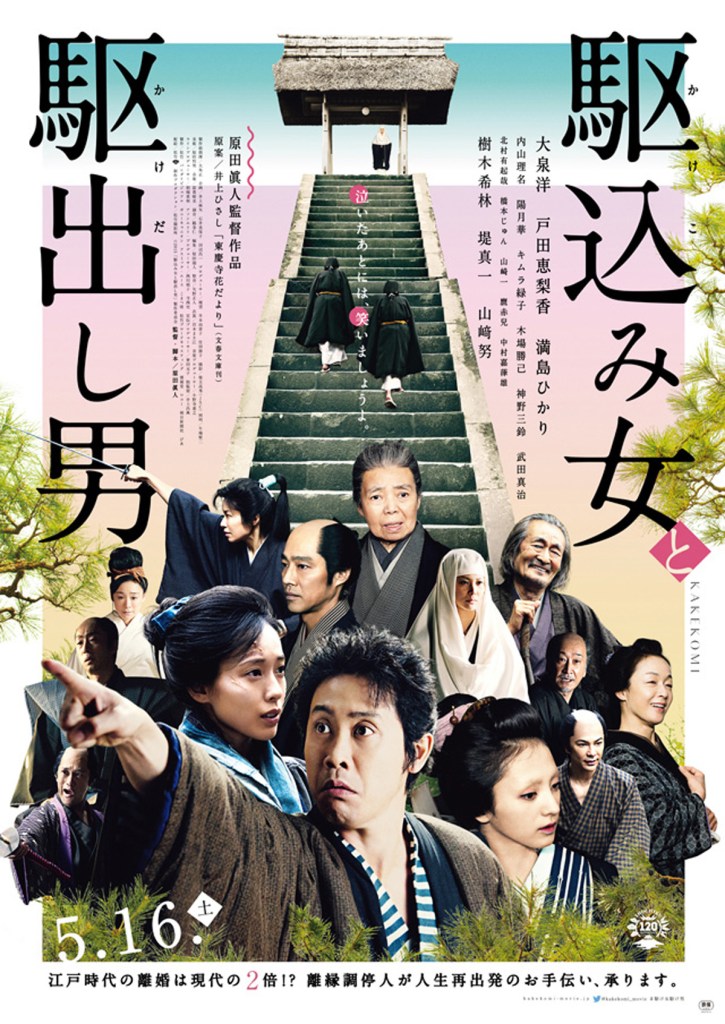 The world of the classical “jidaigeki” or period film often paints an idealised portrait of Japan’s historical Edo era with its brave samurai who live for nothing outside of their lord and their code. Even when examining something as traumatic as forbidden love and double suicide, the jidaigeki generally presents them in terms of theatrical tragedy rather than naturalistic drama. Whatever the cinematic case may be, life in Edo era Japan could be harsh – especially if you’re a woman. Enjoying relatively few individual rights, a woman was legally the property of her husband or his clan and could not petition for divorce on her own behalf (though a man could simply divorce his wife with little more than words). The Tokeiji Temple exists for just this reason, as a refuge for women who need to escape a dangerous situation and have nowhere else to go.
 When 21 year old Hitomi Kanehara’s Snakes and Earrings (蛇にピアス, Hebi ni Piasu) was published back in 2003 it took the coveted Akutagawa prize for literature and the country by storm. Its scandalous depictions of the dark and nihilistic sex life of its outsider youngsters outraged and fascinated enough people to get it onto the best seller lists and earn a cinematic adaptation from Japan’s top theatre director Yukio Ninagawa in only his second foray into the world of moving pictures. However, Snakes and Earrings is perhaps that rare instance of an adaptation which clings to closely to its source material as its detached, emotionless and straightforward approach end in something of a miss fire.
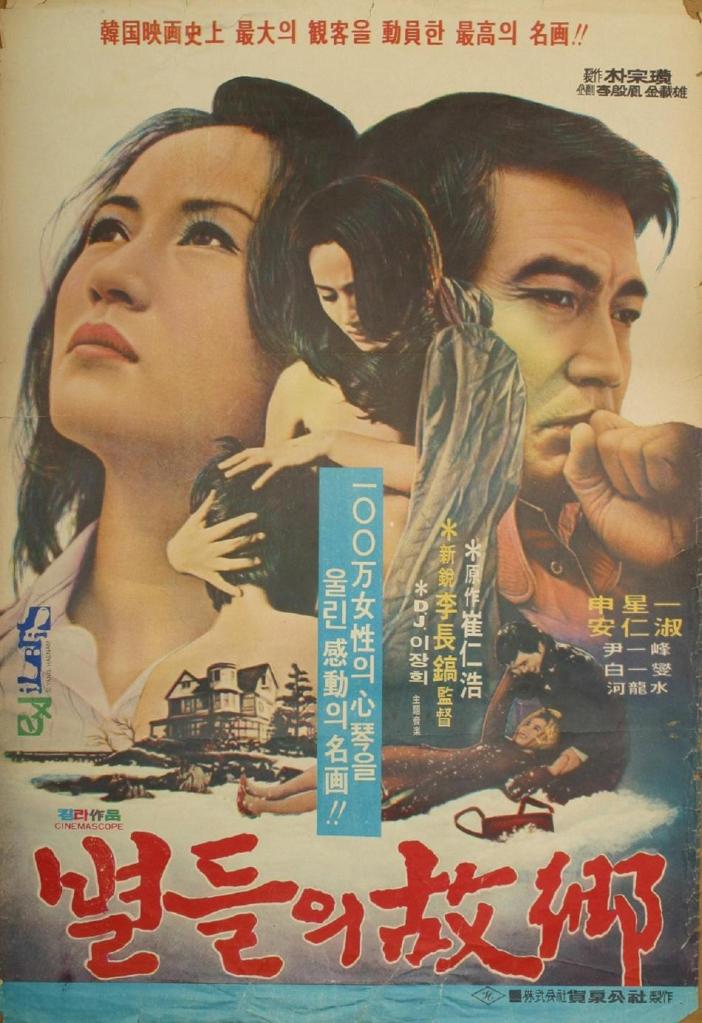 In writing the original novel which inspired Heavenly Homecoming to Stars, Choi In-ho stated that he wanted to tell the story of “a woman whom a city killed”. The novel itself was first serialised in a newspaper where it quickly became a must read and popular discussion point among readers of all ages. It’s perhaps less surprising then that this completely radical film adaptation by first time director Lee Jang-ho proved to be the big cinema hit of 1974. A new “youth culture” movement was beginning inspired by social and political developments from overseas and there was a growing appetite for films and novels which were equally revolutionary. Heavenly Homecoming to Stars managed to provide this but also, crucially, was able to appeal to older age ranges too thanks to its re-imagining of classical melodrama.
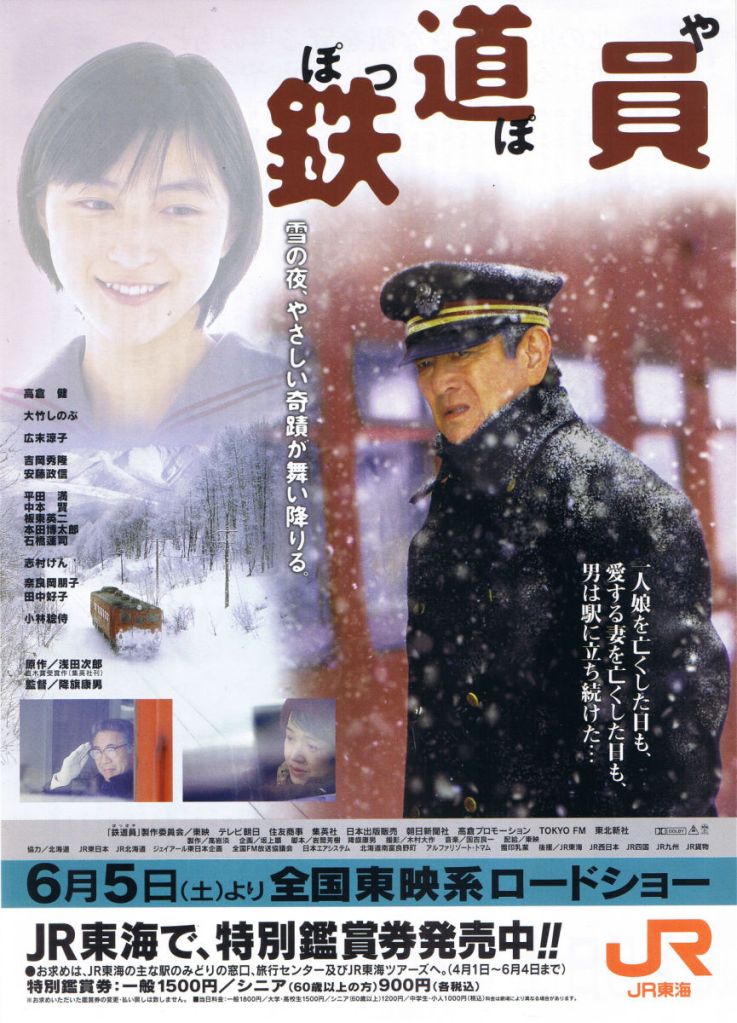 The late Ken Takakura is best remembered as cinema’s original hard man but when the occasion arose he could provoke the odd tear or two just the same. 1999’s Poppoya (鉄道員) directed by frequent collaborator Yasuo Furuhata sees him once again playing the tough guy with a battered heart only this time he’s an ageing station master of a small town in deepest snow country which was once a prosperous mining village but is now a rural backwater.
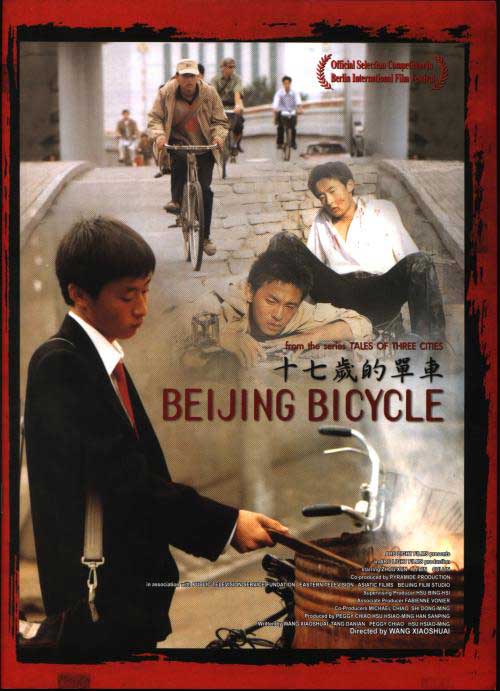 There are nine million bicycles in Beijing (going by the obviously very accurate source of a chart topping song) but there are 11.5 million inhabitants so that’s at least two million people who do not own a bike. Still, if you’re in the unlucky position of having your bike stolen by one of the aforementioned two million, your chances of finding it again are slim. Luckily for the protagonist of Wang Xiaoshuai’s Beijing Bicycle (十七岁的单车, Shí Qī Suì de Dānchē), he manages to track his down through sheer perseverance though even once he gets hold of it again his troubles are far from over.
 Windows on Worlds