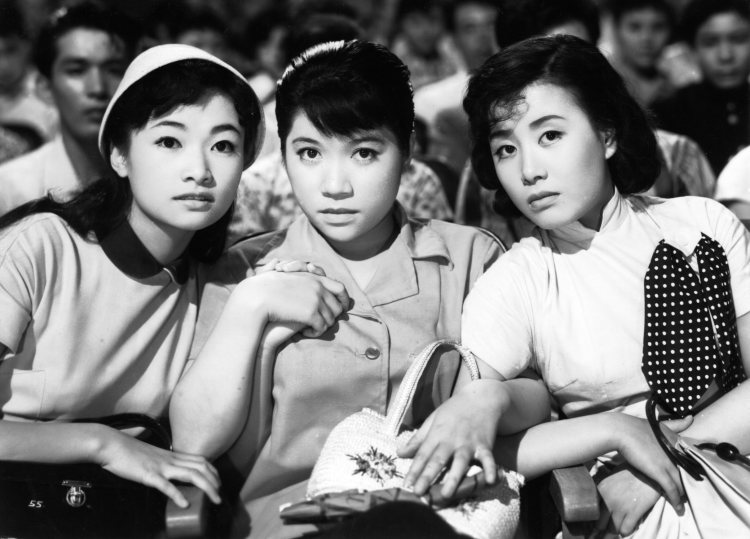
 Pop stars invading the cinematic realm either for reasons of commerce, vanity, or just simple ambition is hardly a new phenomenon and even continues today with the biggest singers of the era getting to play their own track over the closing credits of the latest tentpole feature. This is even more popular in Japan where idol culture dominates the entertainment world and boy bands boys are often top of the list for any going blockbuster (wisely or otherwise). Cycling back to 1955 when the phenomenon was at its heyday all over the world, So Young, So Bright (ジャンケン娘, Janken Musume) is the first of four so called “three girl” (Sannin Musume) musicals which united the three biggest female singers of the post-war era: Hibari Misora, Chiemi Eri, and Izumi Yukimura for a music infused comedy caper.
As far as plot goes, it’s actually very simple and yet quite complicated at the same time as highschoolers Yumi (Chiemi Eri) and Ruri (Hibari Misora) end up on a school trip to Kyoto where they fall in a river because they’re laughing so much at their classmates’ excitement at spotting someone filming a jidaigeki on the riverbank (neat cameo from director Toshio Sugie). Breaking off from their group, they take their uniforms off to dry only to be disturbed by a young man who tries to take photographs of them at which point they pretend to be washing some clothes in the river. Later they head to an inn which is owned by a friend of Ruri’s mother (who is also an inn owner and former geisha) where they befriend an apprentice geisha, Piyo (Izumi Yukimura).
Piyo then turns up in Tokyo in a bit of a state as it turns out she will shortly be sold into prostitution! She’s fallen in love with someone from the city who she thinks could save her if only she can find him so the girls set out to help her, except the guy’s name is Saito which is the Smith of Japan. During all of this, Ruri also has a subplot about her long lost father who will shortly be moving abroad and apparently wants to actually meet her, opening lots of old wounds.
So Young, So Bright is not a musical in the classical sense, it’s not integrated, but allows ample space for its singing stars to do their thing. Yumi just loves to sing so she randomly starts singing songs she’s heard everywhere, Piyo sings as a geisha and Ruri is rehearsing for some kind of kabuki style performance she gives alone on stage at the climax of the film.
That aside, the main musical sequence comes towards the end where the three girls go to the theatre together and strangely end up seeing “themselves” performing on stage. It’s a neat kind of fantasy sequence in which each of the girls indulges in a little bit of daydreaming as they imagine themselves as stage stars with Piyo being given the cutest, most MGM style number which is then followed by a number from Yumi entitled “Africa” which is very much of its time…and then you get the elegant number from Ruri which is mostly the English version of La Vie en Rose. They also get a trio number to close the film which takes place entirely on a rollercoaster but celebrates each of their slightly different singing styles.
So Young, So Bright is not intended to be anything other than irrepressibly cheerful fluff (despite containing a subplot about possible forced prostitution), but succeeds in being exactly that. An early colour film from Japan it certainly makes fantastic use of its technicolour swirl to give Hollywood a run for its money in the sophistication of happiness stakes. Hollywood musicals are quite clearly the biggest influence though perhaps more those from the pre-war era even down to the only large scale dance sequence which has a distinct Busby Berkley vibe (even it only lasts twenty seconds or so). The rest of the film is actually quite light on dance but makes sure to showcase the singing talents of each of its leading ladies equally. Strangely innocent, even if darkness lurks around the edges with the betrayed geisha and possible prostitution subplots, So Young, So Bright lives up to its name as a completely charming musical comedy that is perfectly primed to banish even the bluest of blues far into the distance.
These movies are so much fun! No subtitles but here are some clips of the various musical numbers:
Izumi Yukimura’s Cha Cha number:
Chiemi Eri’s Africa number (not very PC by modern standards, just a warning)
Hibari Misora’s take on the English language version of La Vie en Rose
And the finale:
 After Japan was defeated and later occupied by the Americans, there came the painstaking exercise of examining what exactly had happened during the conflict and assessing is who, if anyone, could be held accountable for any wrongdoing. The so called “war criminals” were divided into classes according to the severity of their crimes with Tojo himself at the top who eventually paid with his life. However, many of the men who were given the same Class A rating were just rank and file soldiers who had been “following orders”, often because they feared for their own lives if they refused. The debut directorial effort from writer Shinobu Hashimoto who provided scripts for some of Akira Kurosawa’s most famous works, I Want to be a Shellfish (私は貝になりたい, Watashi wa Kai ni Naritai), examines just one of these tragically absurd cases.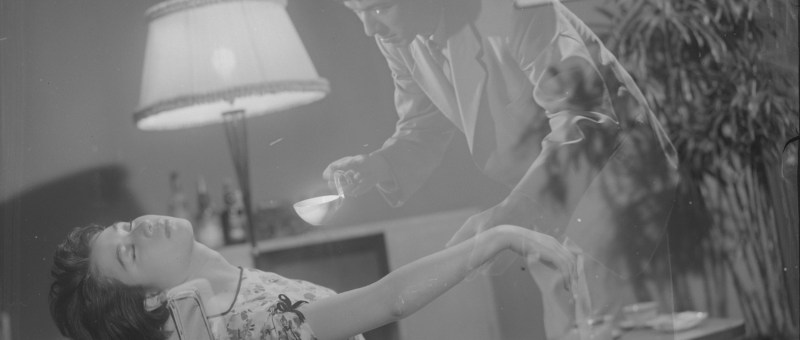
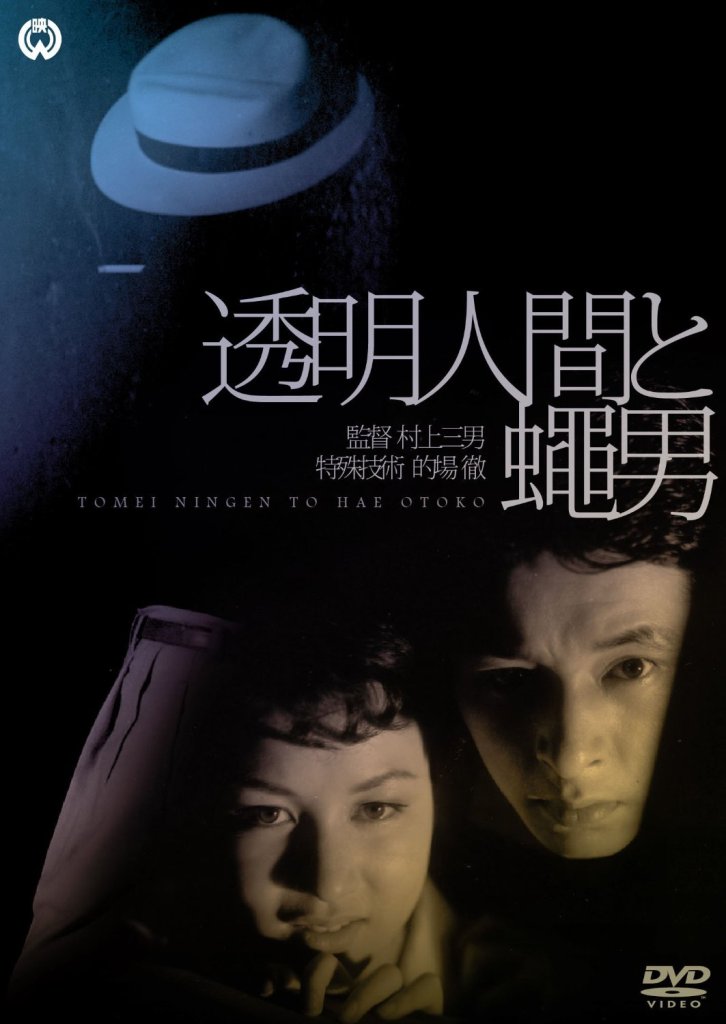 Who would win in a fight between The Invisible Man and The Human Fly? Well, when you think about it, the answer’s sort of obvious and how funny it would be to watch probably depends on your ability to detect the facial expressions of The Human Fly, but nevertheless Daiei managed to make an entire film out of this concept which is a sort of late follow-up to their original take on
 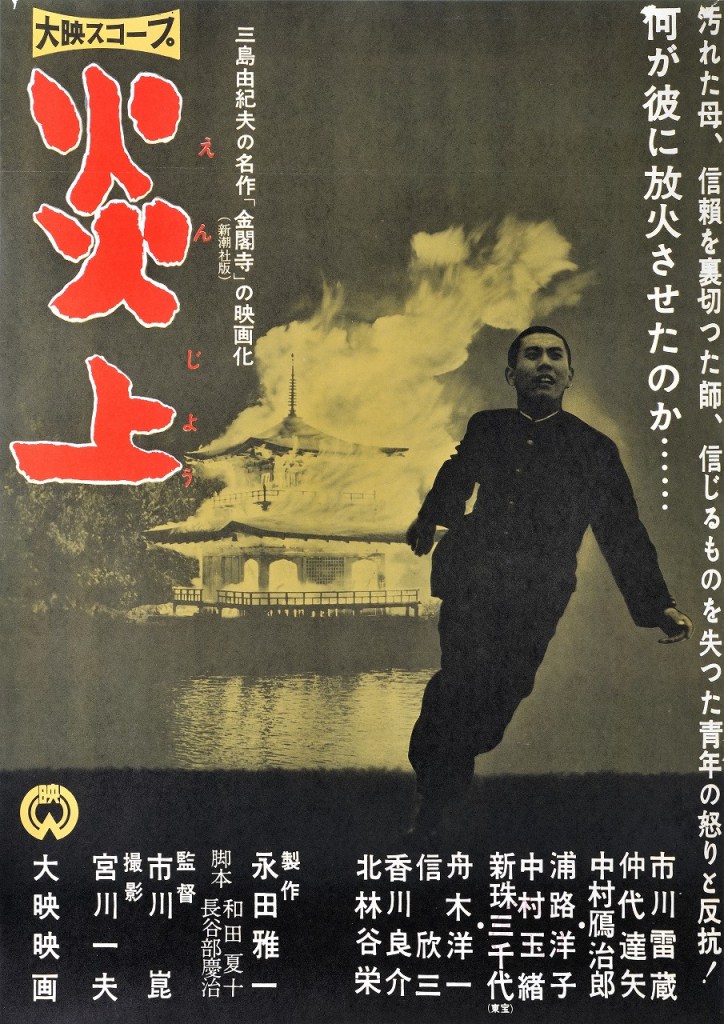 Kon Ichikawa turns his unflinching eyes to the hypocrisy of the post-war world and its tormented youth in adapting one of Yukio Mishima’s most acclaimed works, The Temple of the Golden Pavilion. Inspired by the real life burning of the Kinkaku-ji temple in 1950 by a “disturbed” monk, Enjo (炎上, AKA Conflagration / Flame of Torment) examines the spiritual and moral disintegration of a young man obsessed with beauty but shunned by society because of a disability.
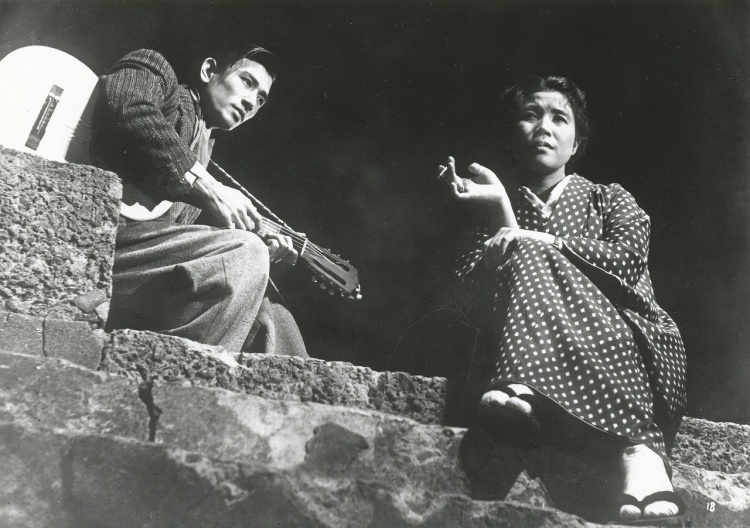 A Japanese tragedy, or the tragedy of Japan? In Kinoshita’s mind, there was no greater tragedy than the war itself though perhaps what came after was little better. Made only eight years after Japan’s defeat, Keisuke Kinoshita’s 1953 film A Japanese Tragedy (日本の悲劇, Nihon no Higeki) is the story of a woman who sacrificed everything it was possible to sacrifice to keep her children safe, well fed and to invest some kind of hope in a better future for them. However, when you’ve had to go to such lengths to merely to stay alive, you may find that afterwards there’s only shame and recrimination from those who ought to be most grateful.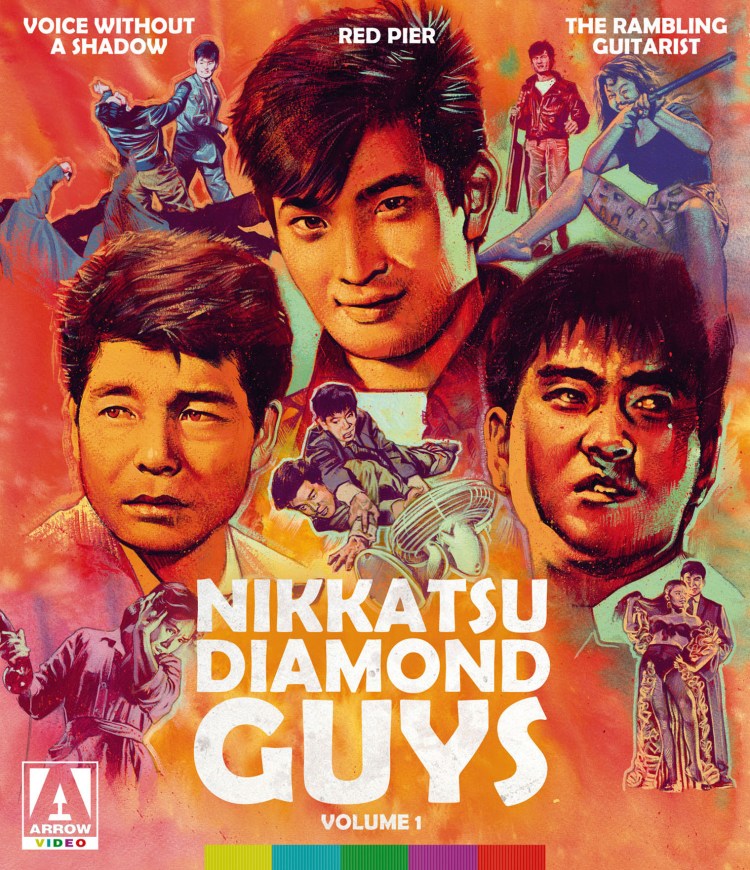
 Sometimes, just like an aimless drifter wandering into town, you feel as if you’ve come in during the second reel and missed some vital piece of information leaving you feeling a little at odds with the current situation. So it is with Buichi Saito’s The Rambling Guitarist (ギターを持った渡り鳥, Guitar wo Motta Wataridori) which is, apparently, the first film in a series though feels a little more like the second.
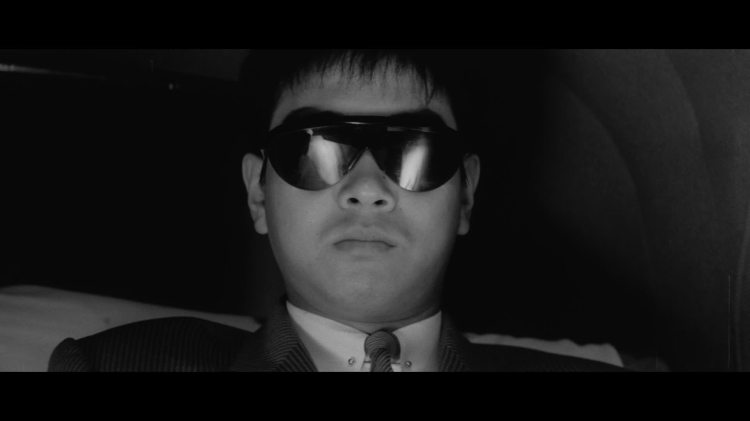 Loosely inspired by Julian Duvivier’s 1937 gangster movie Pépé le Moko, Toshio Masuda’s Red Pier (赤い波止場, Akai Hatoba) was designed as a vehicle for Nikkatsu’s rising star of the time, Yujiro Ishihara – later to become the icon of the Sun Tribe generation. On paper it sounds like a fairly conventional plot – young turk of a gangster comes to town to off a guy, sees said guy killed in an “accident”, and shrugs it off as one of life’s little ironies only to accidentally become acquainted with and fall head over heals for the dead guy’s sister. So far, so film noir yet Masuda adds enough of his own characteristic touches to keep things interesting.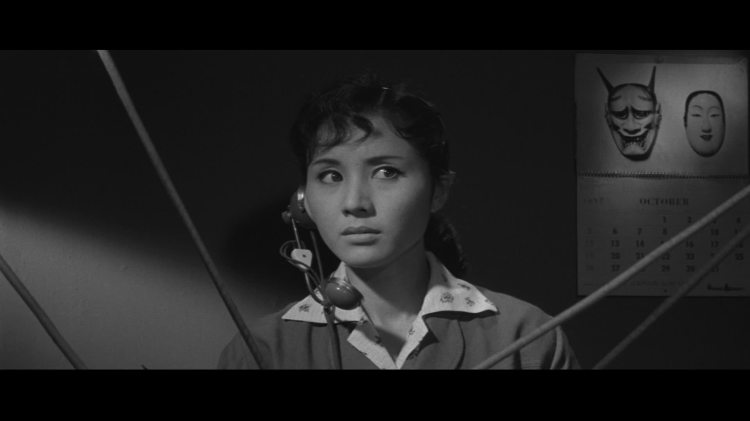
 The debut film from Yasuzo Masumura, Kisses (くちづけ, Kuchizuke) takes your typical teen love story but strips it of the nihilism and desperation typical of its era. Much more hopeful in terms of tone than its precursor and genre setter Crazed Fruit, or the even grimmer The Warped Ones, Kisses harks back to the more to wistful French New Wave romance (though predating it ever so slightly) as the two youngsters bond through their mutual misfortunes.
 Windows on Worlds