Crime Hunter: Bullets of Rage (クライムハンター 怒りの銃弾, Toshimichi Ohkawa, 1989)

Home video may still have been in a nascent and chaotic stage of development when Toei video executive Tatsu Yoshida began conducting customer research in video rental stores, but what he discovered shocked him. Customers were maxing out their five video allowance and watching them all the same evening. How did they have time for that, he wondered. The answer was that they were watching them all on fast forward to cut out the boring bits, like the story and exposition. It was this that gave him the idea to create “movies that will not be fast forwarded,” chiefly because they had already been excised of anything “inessential”.

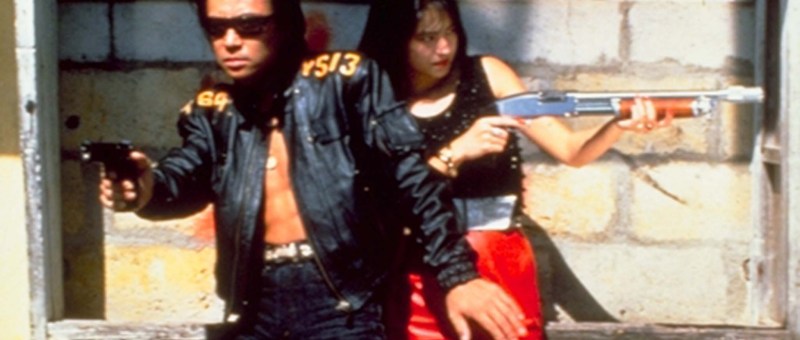
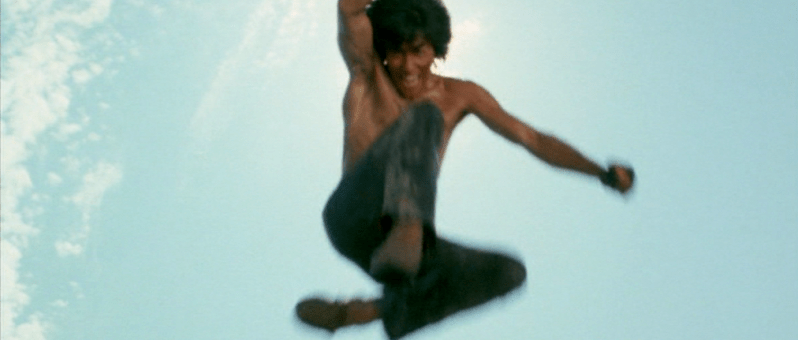
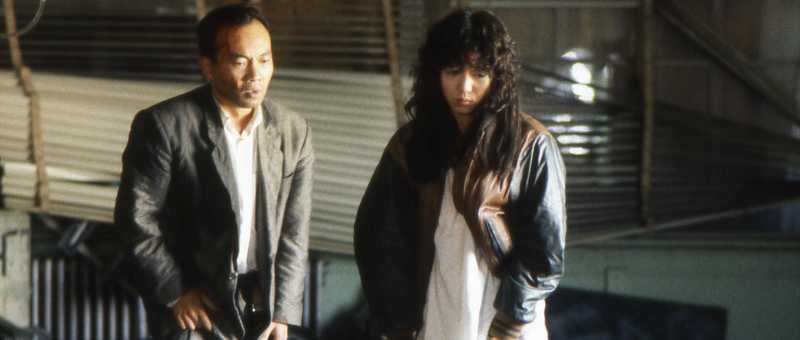
Only an hour in length, 1989’s Crime Hunter: Bullets of Rage (クライムハンター 怒りの銃弾, Crime Hunter: Ikari no Judan) was the first in Toei’s new V-Cinema range and was indeed made to conform to these aims. Consequently, it focuses mainly on action with minimal narrative and relies on genre archetypes to help the plot move along. In that, it owes something to Nikkatsu’s borderless action films in taking place in Little Tokyo (largely filmed in Okinawa) though otherwise in a world that’s recognisably Japanese despite the English-language police radio and Japanese-American names like that of fugitive criminal Bruce Sawamura (Seiji Matano) and Joe “Joker” Kawamura (Masanori Sera), the cop who’s trying to track him down but only as a means to an end in his quest to avenge the death of his partner, Ahiru (Riki Takeuchi). We can tell that Ahiru’s not going to last long in this film because we’re told quite quickly that he’s been invited to the chief’s daughter’s birthday party and is seen as a potential suitor, while after apprehending Bruce he complains that his mother bought him the shirt that’s now been stained. 

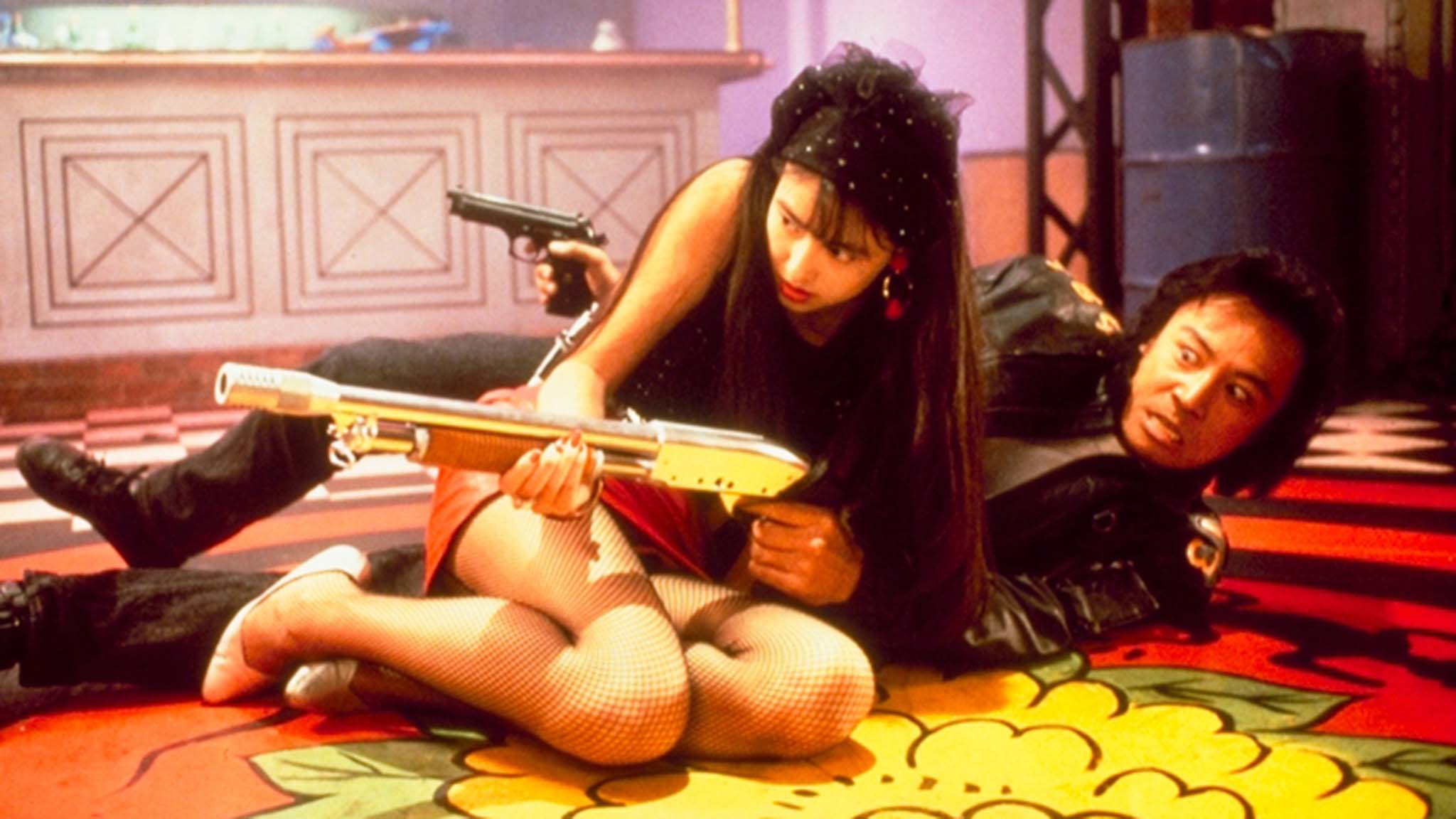
Joker’s attachment to Ahiru goes a little beyond that of a mere partner as he hands back his badge to pursue revenge while picking up the empty packet of pop-corn Ahiru had been eating and placing it over his heart. The film seems to owe a lot to contemporary Hong Kong action films and Heroic Bloodshed such as A Better Tomorrow, and it’s apparent that this almost homoerotic relationship between the men has taken the place of heteronormative romance. The female star, Lily (Minako Tanaka), is (nominally at least) at nun which makes her romantically unavailable to Joker or indeed to Bruce while in some senses she represents opposition because her cause is at odds with Joker’s. While they temporarily align in wanting to find Bruce, Joker wants information that will lead him to the identity of his partner’s killer, while for Lily he’s the endgame because she wants to get back the money he stole from the donation box at her church. 

This whole narrative strand doesn’t make a lot of sense in that Lily says she accidentally told Bruce about the donations after having too much to drink at a party with her non-nun girlfriends, which is strange behaviour for a bride of Christ. Now she feels like retrieving the money is her responsibility, though Joker isn’t really interested in that. What he discovers is further kinship with the fugitive Bruce on realising that they’ve both become victims of a corrupt police force. The opening police radio broadcast implies that Little Tokyo has become an oppressive police state in which the threat of drugs and gangs is being used to control people while cops like Joker have been given blanket permission to aim at the head of suspected criminals as they do while arresting Bruce. Joker had thought that the guys who attacked them were Bruce’s men breaking him out or otherwise trying to steal the money off him, only to later realise they were actually corrupt police. 

But really not much of that matters in comparison to the increasing outlandishness as Lily transitions from wimple-wearing bad ass sister to a nightclub dancer femme fatale in fishnets infiltrating the Cathay Tiger gang with expertly crafted dance routines. Former mercenary Bruce similarly boasts and improbably impressive arsenal of grenade launchers and machine guns before arriving at the depressing environment of a disused industrial complex for the nihilistic showdown in which Joker realises there is no way to right this world of corruption and that he and Bruce weren’t so different in each being controlled and defined by an oppressive society in which there are no happy endings even for heroes.


Evil Dead Trap (死霊の罠, Toshiharu Ikeda, 1988)

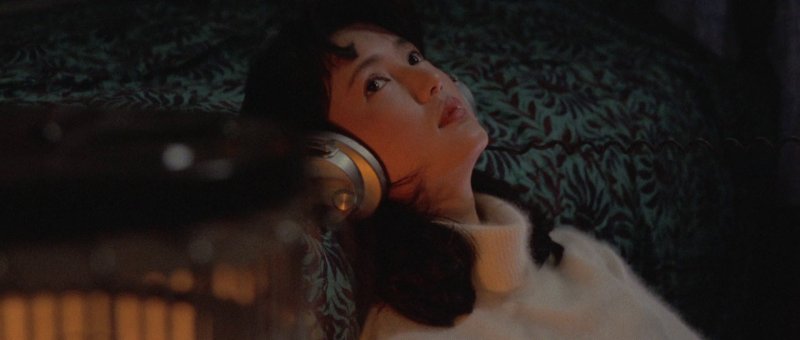
The embattled host of a late-night TV show is confronted by the image of corrupted maternity after receiving a snuff film in the mail that seems to feature herself in Toshiharu Ikeda’s body horror slasher, Evil Dead Trap (死霊の罠, Shiryo no Wana). A giallo-esque slasher echoing alternately by Argento and Cronenberg, the film is in part an exploration of changing gender norms at the height of the Bubble era in which the career woman hero is essentially stalked by a monster baby because she reminds him of a mother he for some reason hates.

Nami’s (Miyuki Ono) late night TV show “for those who can’t sleep” relies on viewers for its content, making use of newfangled VHS technology to play videos sent in to the studio. Her bosses are thinking of canning it for being too “fluffy” which might be one reason Nami does not immediately call the police after receiving a disturbing video of a woman being tortured and killed who is later revealed to have her own face. Instead, she gets the all female (plus one “bodyguard” who is the boyfriend of one of the team) crew together and heads out to the abandoned US military base which appears to feature in the video. 

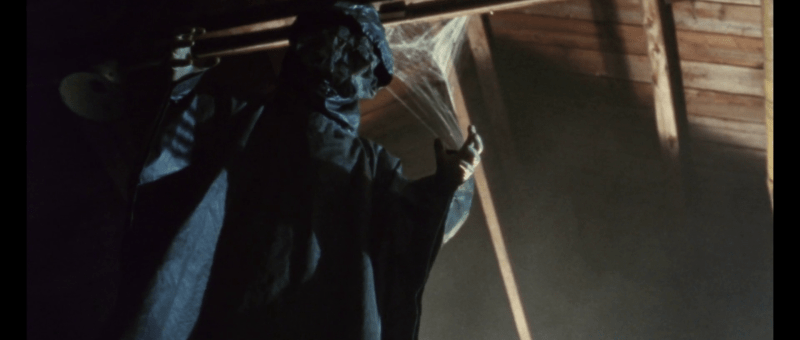
At several points, the women remark on how difficult it is for them working in the TV industry where they need a big story just to earn their place in their room. Nami even jokes that if she were to die investigating the tape it would only boost the ratings while simultaneously putting her life on the line for the sake of her career. Meanwhile, we later realise that Nami is being targeted in part because the killer, who has a child’s voice, thinks she looks like his mother whose voice is frequently heard playing on a loop via reel to reel tape. He later attempts to kill Nami by wrapping what appears to be an umbilical cord around her neck, while she is finally subjected to a forced birth as maternity is visited on her almost as an act of rape even as she resists it. It could even be said that she is a kind of mother to the group, and one who ultimately fails to take care of family as each of her team falls victim to one of the traps set by the killer.

Meanwhile, the film adopts a slasher-esque morality in which the first victim is killed shortly after having sex with her “bodyguard” boyfriend, assistant director Kondo (Masahiko Abe), who had up until that point been suffering with erectile dysfunction only to be sexually revived thanks to the violent and eerie space of the abandoned military base. Another of the women attempts to leave the compound, but is caught by a random man claiming to be working for the killer who violently rapes her but also strangely answers some of her questions about what’s really going on as he does he does so. Nami is also less than shocked by the video after putting it in the machine, giving a response which suggests it’s not unusual to receive this kind of material or to witness such brutal treatment of women. 

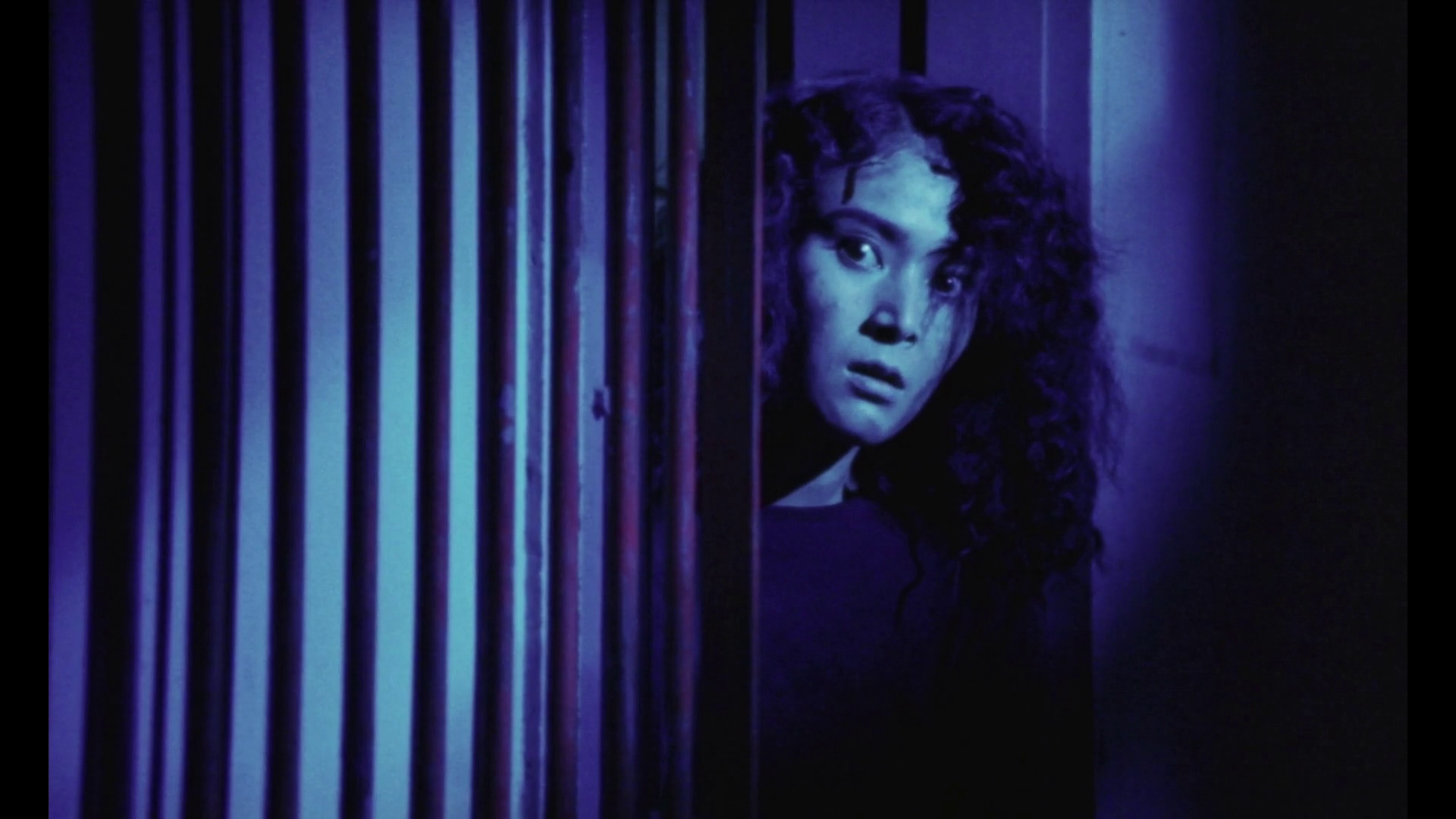
The killer does indeed make good and ironic use of new technology, at one point putting one of the victims on TV begging for their life to taunt Nami and having a giant set up featuring several screens plus the reel to reel tape. A mysterious man also lurking around the military base suggests to Nami that the sender of the video is likely a crazed stalker, a pervert who wanted to see her naked who lured her to this remote location and then murdered all her friends when actually it’s almost the reverse that’s true and Nami is being targeted both for and not being a mother. Often switching to a Testuo-style shuttling camera and blue-tinted filter, Ikeda enlivens his genre adventure with interesting composition and a fantastic use of lighting right down to the oscillating blue police light in the killer’s lair as Nami attempts to retake control of her image and escape the penetrating gaze of her audience along with the patriarchal cage of an oppressive society.


Trailer (dialogue free)

Hong Kong 1941 (等待黎明, Leong Po-Chih, 1984)

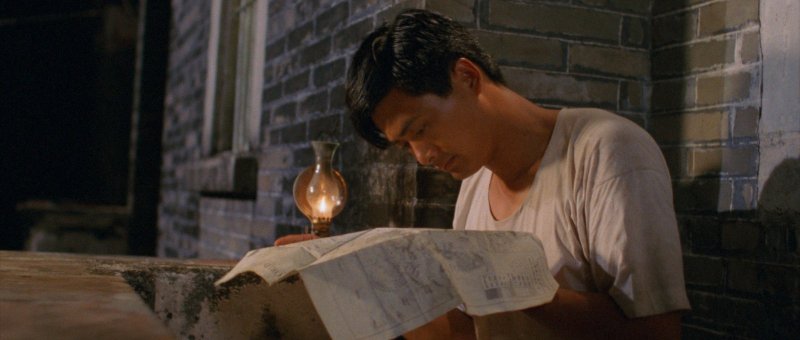
“Britain has reassured the people that it will not give up Hong Kong,” according to a radio broadcast at the beginning of Leong Po-Chih’s Hong Kong 1941 (等待黎明). The words have a kind of irony to them and not only because Britain did abandon the people following the Japanese invasion, but because the film was released on the eve of the Sino-British Joint Declaration in which it said something quite similar. 

But then again, the opening scenes are themselves quite critical of British rule as they, on the one hand, insist they aren’t going anywhere and, on the other, start evacuating women and children to “safer” areas of the commonwealth such as Australia. Out of work actor Fei (Chow Yun-fat) fled the Japanese incursion on the Mainland and came to Hong Kong, but now tries to stowaway abroad a boat going to Australia. He’s caught by a little British girl who speaks fluent Cantonese yet refers to him as her “slave” and insists that he “kowtow to me, now.” But then the girl suddenly adopts the persona of the Empress Dowager Cixi and demands the same. Fei makes the first of his many jumps into the water around Hong Kong, as if only in this liminal space can he be free. Anticipating the wave of migration occurring before and after the Handover, and also that of the present day, he and his friends Keung (Alexander Man Chi-leung) and Nam (Cecilia Yip Tung) set their sights on leaving to find Gold Mountain in Australia or America.

But they’re one day too late because the date of their departure is that the Japanese arrive in Hong Kong. Their haste to leave was in part caused by the fact that Nam’s father, Ha Chung-sun (Shih Kien), was trying to force her to go through with an arranged marriage her prospective groom didn’t want either. Nam is never really free as, as she points out, even after her father relents and allows Keung to marry her after she is raped by a police officer emboldened by the chaos and therefore worthless to him as currency, Keung never actually asked her and she’s in effect forced into a marriage with him instead. In fact, she returns to the shrine Keung lives in two find the two men constructing her marital bed for her with the double helix symbol of happiness already placed above it in an ironic expression of patriarchal oppression.

Indeed, her position is more precarious than either of the men and we see other families roughly cutting their daughters’ long hair to make them look like boys in fear of a rapacious Japanese army. But it largely turns out that it wasn’t so much the Japanese they needed to be worried about as the local population, experiencing a temporary limbo in which the social order has been suspended. Police officer Fa Wing (Paul Chun) who had acted as a lackey for Ha Chung-sun while constantly eying up Nam leads a gang of looters to Ha’s house to take their own revenge against his capitalistic oppression of them. Ha had largely made his money through rice profiteering and exploiting the local workforce. Recent layoffs at the warehouse had led to a labour riot, while Keung and his friends had been running a sideline skimming sacks of rice to sell on the black market. 

Ha and his henchmen anxiously await the arrival of the Japanese hoping that they will protect them from retribution, but the Japanese do not arrive fast enough. When they do, Ha collaborates and attempts to ingratiate himself with the Japanese officer in charge of the colony who once again takes a liking to Nam. General Kanezawa (Stuart Ong) also uses their poverty to starve them into submission, promising rice to anyone who will come and sing with him. The song he chooses is “Shina no Yoru” by Li Hsiang-lan, whom he describes as “their very own”, yet was actually a Japanese woman, Yoshiko Yamaguchi, groomed for stardom in Manchuria and marketed a Chinese star in propaganda films. Another song of hers, Ieraishan, can be heard earlier on the soundtrack as if heralding Japanese arrival. 

Though Nam tries to resist, Fei raises the trio’s arms in a cry of “banzai” in a moment of ostensible collaboration designed to buy them temporary safety. His philosophy and that of many others is to take the rice and deal with the rest later, which Fei does by becoming an enforcement officer with the Japanese to get papers that will allow all of them leave. He uses his position to help a gang of Mainlanders who are resisting the Japanese, and are, in fact, the last ones to stay behind and defend the colony, as well as well as save Keung when his attempt to rescue two friends who have been sold out for forced labour on another Japanese-controlled island by a local gangster backfires and he’s captured himself. 

Ironically enough, Fei had been the first one to try to leave and described himself as “selfish” after jumping back into the water to return to Nam and Keung who didn’t make the boat on time because they were trying to save a local eccentric everyone calls “emperor” played by the director himself. Fei is quite obviously in love with Nam, and she gradually falls for him in return though symbolically wedded to Keung, if not in the legal sense. Again, she has no say over her romantic future which is sorted out between the two men with Fei abiding to a code of honour in continuing to protect the relationship between Keung and Nam. Perhaps this echoes the way in which the Hong Kong people of 1941 or 1984 have little say in their future either as their fate is decided by two distant powers. Nevertheless, it leaves Keung feeling awkward and inadequate, realising that Nam likely prefers the smart and dynamic Fei over his constant failures and inability to protect her, though he is never jealous or resentful towards him only knowing that he is continually indebted. Yet it’s Nam who eventually strikes back for Hong Kong and for her own freedom while Fei looks on as children in the street play at beheadings as if they were Japanese soldiers. She embodies the spirit of Hong and carries it with her, and as the Chinese title of the film suggests, waits for a new dawn while accepting that just like old memories it will be replaced by what is to come. She speaks from a perspective that is both historical and uncertain, mourning the past while fearful of the future, but all the while continuing to live as one new dawn replaces another.


Hong Kong 1941 screened as part of this year’s Focus Hong Kong.

Trailer

Ah Ying (半邊人, Allen Fong, 1983)

“I want to make a film that reflects our time. If not, no one will ever know we existed,” frustrated filmmaker Cheung explains but finds himself hamstrung by the fact that he is not quite of this place by virtue of the fact that he is a Mandarin-speaking Mainlander who’s been living in the United States for several years. The old university friend who’s offered him this opportunity says as much, suggesting that in the end he doesn’t really understand Hong Kong while simultaneously failing to get a grip on his protagonist, a Hong Kong student in California.

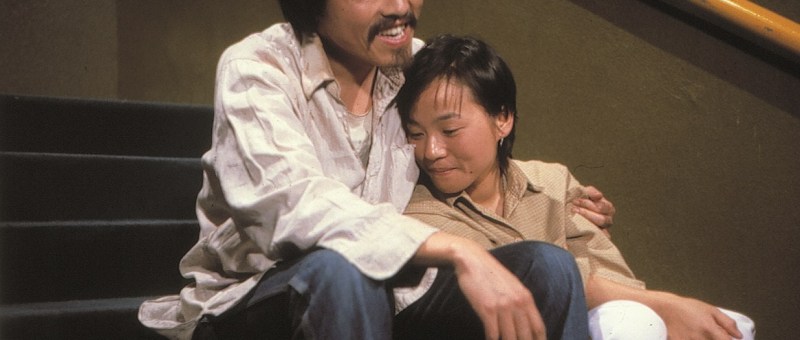
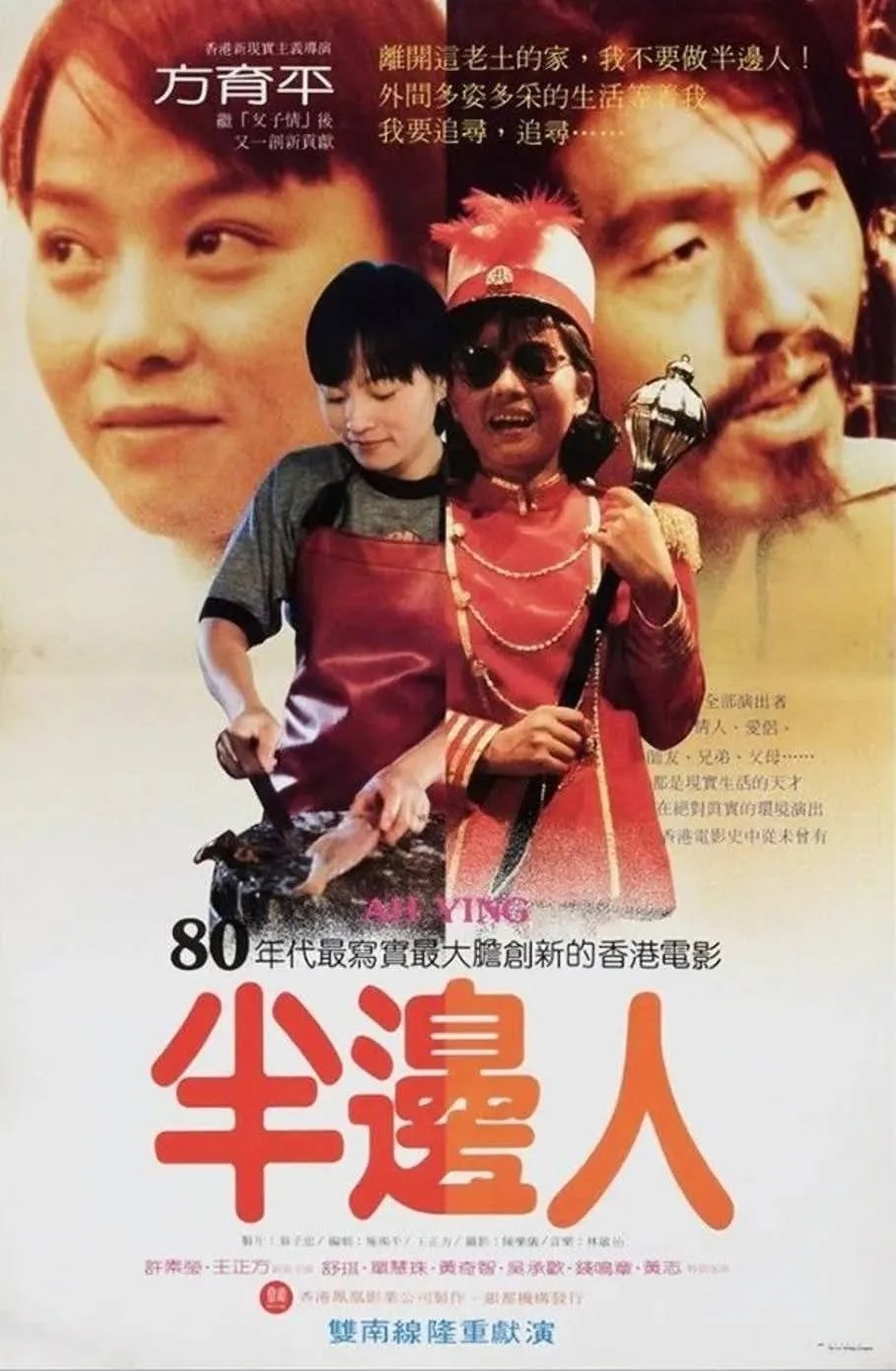
It may be this sense of dislocation that Allen Fong’s Ah Ying is hinting at. Fong himself studied at UN Berkley before returning to Hong Kong and based the character of Cheung on a friend of his who died suddenly in the middle of working on a project. But the film is really about its title character, a young woman who longs to transcend the world she was born into and find a more independent destiny while held back by her needy mother and drunken father who run a fishmongers at the market where Ah Ying is expected to help out. We her clumsily gutting fish, ripping off half the meat while stripping the skin and inelegantly tearing out its viscera, only to leave abruptly in response to a slightly rude customer and the fact she can’t get through to her increasingly distant boyfriend, Hung, on the telephone.

Later we see Ying try to scrub the fish smell off her hands after running off to her part-time job at the Hong Kong Film Centre in which she does menial work in return for free acting classes taught by Cheung. She tells him that she doesn’t really know why she’s there, but she wants to try it out and maybe it will lead to a career. Cheung is a little insensitive in mentioning a girl he knew who wanted to be an actress in California, but she spends 11th months of the year working in a cocktail bar. Nevertheless, acting quite literally gives Ying the opportunity to be someone else and helps her to imagine a different future outside of her family’s lack of aspiration for her. 

Ying’s family are comparatively lucky in that they have two adjacent apartments, but Ying and her four siblings all live in one with her parents too, while her taxi-driver brother and his wife live next-door though Ying likes to hang out there and listen to records. Western music is another means of escape as she demonstrates by singing an a cappella version of Time in Bottle as part of Cheung’s acting class, though he hasn’t heard of any of the musicians she mentions like Brian Eno or David Bowie further marking him as out of touch with “our times”. They do, however, bond over Simon & Garfunkel’s version of Scarborough Fair with Cheung noting that it sounds just like Chinese opera. 

In order to further research his screenplay, Cheung talks Ying into arranging an interview with her by then ex-boyfriend Hung who breaks up with her for being too nice to him which he finds clingy and unpleasant even when she tells him she’s fine with him continuing to sleep with other girls. Though she continues to look back on her relationship with Hung, Ying has already signalled her desire to move on by getting rid of her perm as if marking a new transition into adulthood. Her mother is not, however, particularly happy about it as Ying is currently the only one of her several children prepared to help out at the fish stand. Ying’s mother clings to her like life raft as a means of sustaining herself in what is in many ways a dissatisfying of existence filled with constant toil to provide for her ungrateful family who look down on her occupation while her husband sleeps in a chair all day after drinking too much and barely helps at all.

Ying’s mother tells Cheung that she’ll be lost without her when she marries, but otherwise suggests she’d prefer her not to because she’d be left to cope with everything on her own. Cheung asks Ying why she doesn’t move out and she replies that it’s it the rent, her father only pays her pocket money for helping on the stand and she doesn’t earn anything at the film centre, though it’s unlikely a young woman on her own would be able to afford to rent in Hong Kong anyway. Cheung becomes a kind of lifeline to her, a mentor figure guiding her towards another kind of life but equally lost himself and a stranger in the contemporary city. Though she may develop feelings for him, his interest in her remains paternal and like the characters they play on stage any union between them will have to wait until the next life. Nevertheless, through her connection with him, she may have begun to discover her true self and become at last a whole person even if seemingly tethered to the fish stand. In the busy streets and cramped apartments, Fong may have succeeded in recording his times after all but also an unexpected sense of optimism and possibility in discovering new paths even if they ultimately lead to a parting.


Roaring Fire (吼えろ鉄拳, Norifumi Suzuki, 1981)

If Chiba’s karate films and the Sister Streetfighter series had been influenced by Shaw Brother’s kung fu films, Roaring Fire (吼えろ鉄拳, Hoero Tekken) is an homage to contemporary action and in some senses anticipates Jackie Chan and heroic bloodshed though in other ways harking back to the classic serial with its diamond-themed MacGuffin. A vehicle for rising action star Hiroyuki Sanada, the film reflects a new internationalist Japan but also confronts the toxic legacy of the feudal past in the fall of a once noble house.

Joji (Hiroyuki Sanada) has spent his entire life on a ranch in Texas only to discover from a deathbed confession by the man that he thought was his father that he had been kidnapped as an infant and is actually the son of the wealthy Hinohara family. But on travelling there, he immediately finds himself in the middle of a conspiracy. His twin brother Toru has gone missing after going to London to study ophthalmology in order to cure his sister Chihiro’s (Etsuko Shihomi) eye condition. Though his uncle, Ikki (Mikio Narita), welcomes him with open arms, a weird ventriloquist act by a man called Mr. Magic (Shinichi Chiba) that he’s taken to see suggests that the plane crash his parents died in may not have been an accident and his uncle killed them to take over the family business. 

Ikki is mixed up in the drugs trade with Hong Kong Triads and in keeping with Suzuki’s other films, we once again have a new solution to smuggling in hiding drugs in underripe banana skins. Lured to Ikki’s underground lair which has a large photo of Hitler on the wall and other Nazi memorabilia scattered around, Joji is given the “join us or die” speech, but ultimately manages to escape with some help from Abdullah the Butcher who is working as some kind of bodyguard but apparently takes a liking to Joji and declares they will be the best of friends forever after their initial fight. In any case, we soon realise that Ikki’s purpose in life is feudal revenge in that his mother was a geisha who died young because of her poverty and the nature of her work while staring at the Hinohiras’ giant mansion though his father apparently took no responsibility for him until after his mother died. His only goal in life is to take over the estate and otherwise destroy the rest of the family that never fully accepted him. 

Of course, Joji is in his way, but Joji doesn’t really want this legacy either and only wants to save his sister who turns out to be a kung fu ace despite her blindness but is otherwise unable to escape. In his final confrontation with Ikki, he reclaims the name of the man who raised him, Hibiki, and rejects that of Hinohara as if symbolically refusing his feudal inheritance. Mr Magic, really an Interpol agent, makes an executive decision to let him go which is also a representative authority figure setting him, and the younger generation, free from the feudal legacy to live a more international life. 

Nevertheless, Suzuki fills the film with a series of high-impact action sequences and extreme stunt work such as a crazy bus chase through Hong Kong which predates that in Police Story by a few years. The shuttles back and forth between Hong Kong and Japan, but it’s clear here that Ikki and his weird Nazi cohorts are the villains rather than the Hong Kong gangsters who really just exist and otherwise only factor into the story because of their desire for Queen of Sheba diamond that Joji’s birth father hid before he died so Ikki wouldn’t get his hands on it. A possibly poor taste allusion to the holocaust aside, Suzuki sticks to the plucky teen adventure format in which Joji gets into fights with the local guys and is quickly befriended by Chihiro’s teenage friends who all hang out at the mansion, rather than opt for a gloomy sense of paranoia and conspiracy even as Joji finds himself at the centre of a Hamlet-esque plot in which his uncle has usurped the throne and he must return to set it right. Yet rather than restoring the existing order, Joji effectively resets it by ending the family’s influence and then moving on into a freer existence shorn of filial responsibilities. 


Trailer (no subtitles)

Strawman (稻草人, Wang Tung, 1987)

The literal “strawman” at the centre of Wang Tung’s colonial era satire is a scarecrow who occasionally narrates the events of this small village where, he laments, almost all the young men have been sent off to die in small corners of South East Asia in the name of the Japanese emperor. All of this sounds quite absurd to A Fa (Chang Po-Chou) and Big Mouth (Cho Sheng-Li), two brothers who’ve evaded the draft because their mother cleverly smears cow dung in their eyes while they sleep so they won’t get taken by the Japanese like everything else in the village.

The brothers are caught in a clash of imperial powers and changing times yet are busy just trying to live their ordinary lives. They each have several children, so many the scarecrow quips that they can’t remember all their names, which might be why the most recognisable two are nicknamed “doo-doo” and “stinky head,” and struggle to support themselves by farming sweet potatoes on the land that turns out to be owned by their pro-Japanese brother-in-law. Not really wanting to admit that the war is all but lost, the brother-in-law is planning to sell the farm and move his family to Japan, meaning the brothers will be displaced from their land and lose their livelihood with few other prospects for making a living. 

Though things carry on as normal in the village, it’s clear that the Japanese are essentially looting and exploiting them. Not only do they take the young to die for the emperor, but later come for the brothers’ cows too, insisting that they need them for “taxes” because men are starving at the front. This clash of cultures is obvious in the opening scenes as a Japanese soldier returns the ashes of men who fell in battle to their families while reading out a formal speech in his own language that the villagers do not really understand. While their brass band plays the ironically Westernised sounds of militarism, the villagers drown them out with their traditional instruments as they start their own set of death rituals. These two communities are essentially incompatible and effectively living separately. The soldiers turn around and walk in one direction, while the villagers walk in the other releasing the tension born of this oppositional meeting.

Indeed, the villagers all speak Taiwanese (though Wang was ironically, and anachronistically forced to use Mandarin at the time of release) and exist in a slightly different world to the Japanese-speaking soldiers. A Fa is annoyed with Doo-doo for asking if he should take a Japanese name but subsequently asks if he can have one too on learning that he’ll get better sugar rations. The brother-in-law mixes Japanese and Taiwanese in the same sentence while his wife mainly answers in Taiwanese when her children exclusively speak Japanese. The sight of the children’s traditional Japanese geta wooden sandals scandalises and confuses the brothers’ children, while the cousins mock them in Japanese knowing they won’t understand. Only the slightly bumbling local Japanese official straddles the two worlds by conversing mostly in Taiwanese with the villagers and Japanese with his bosses.

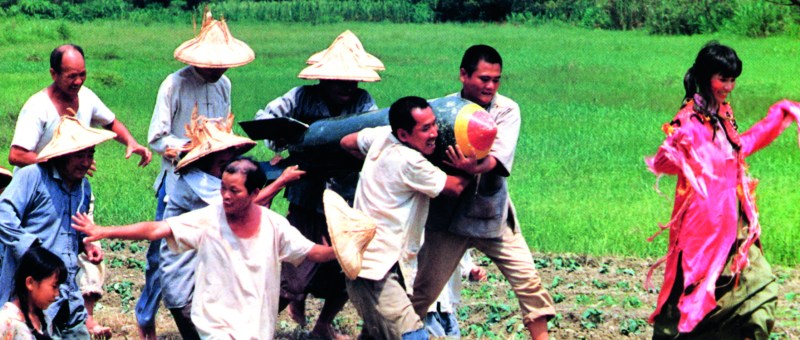
As good citizens of the empire, the children are asked to participate in metals collection and are given rewards for their finds. Doo-doo gets extra again when he picks up shrapnel from an American bomb which sets up a more complex relationship with American imperialism that will arrive after the war when the island is essentially recolonised by the arrival of the KMT and a large influx of mainlanders fleeing the communist take over. When a bomb lands on the brothers’ land but doesn’t go off, they think it’s manna from heaven and determine to take it to the main police station in the town in the hope of a large reward, while the official is convinced he’s going to get a big promotion for this tremendous find. 

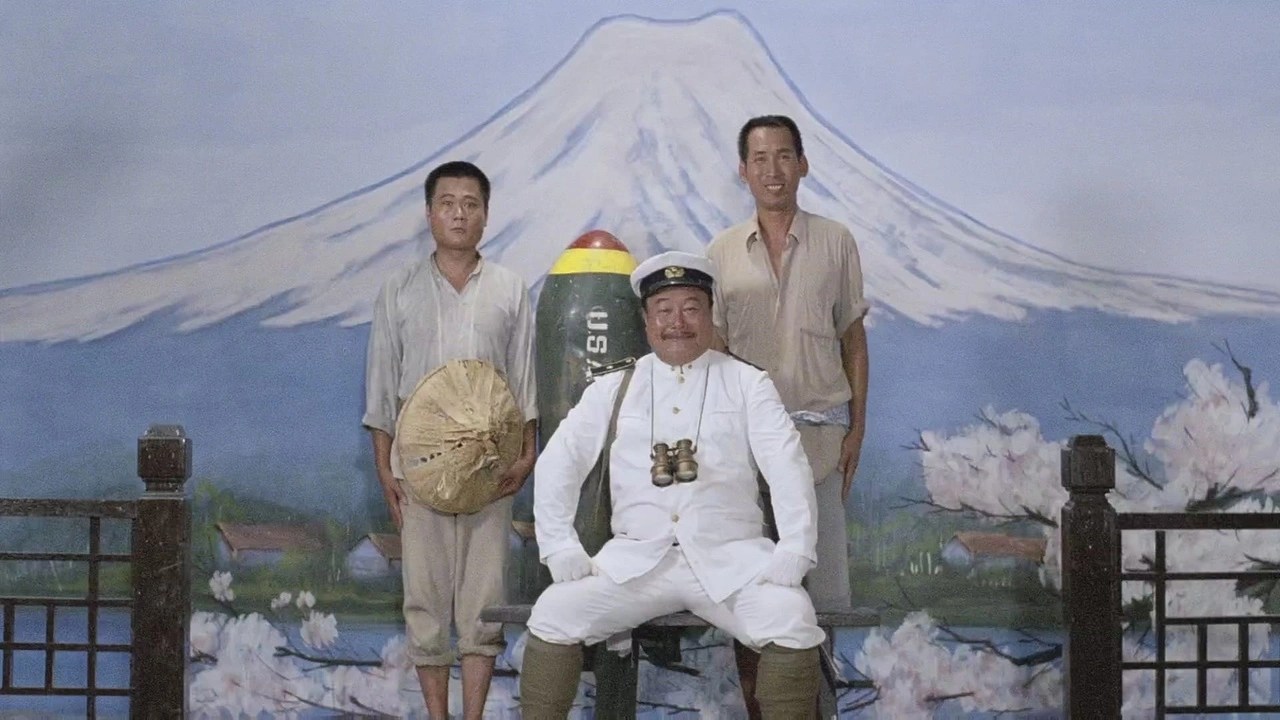
Everyone is so fixated on the economic potential that they’ve forgotten this is a bomb and even if it seems like a dud, there’s still a chance it could go off any second and this could all quite literally blow up in their faces. In this, the film seems to be satirising an over dependence on America who were the main backers of the KMT regime. The film was released shortly after the end of martial law during which there had been an attempt to rewrite the history of the island, preventing open discussion of the fact that Taiwanese men had died fighting for Japan and that the island had been bombed by the Americans. So impressed with themselves are they that the brothers and the official have their photo taken with bomb in-between and Mount Fuji backdrop behind as if signalling this complex network of relationships.

Still, even after the prize turns out not to be great riches after all but a hefty supply of fish, the Doo-doo and his grandmother cheer on the bombings hoping for more of the same in the future. The kids even put buckets out in the field waiting for the next raid hoping they can catch some of the shrapnel while forgetting that bombings are actually dangerous, rather than just lucrative, until being caught in one. Small moments of terror and sadness such as the brothers’ finding a frightened deserter hiding in their shed who doesn’t want to go to war because his wife’s pregnant and his family’s economically dependent on him, interrupt what is otherwise a warm and humorous depiction of rural life. A Fa and Big Mouth might be strawmen too, living their lives knowing little of the geopolitical situation but just trying to keep the crows off the grass long enough to get a little to eat before that too is taken away from them.


Strawman screened as part of the BFI’s Myriad Voices: Reframing Taiwan New Cinema.

Trailer (Traditional Chinese / English subtitles)

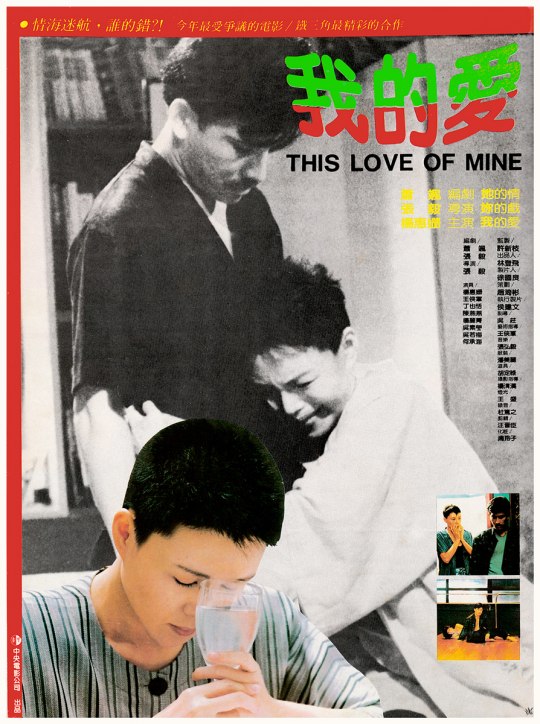
This Love of Mine (我的愛, Chang Yi, 1986)

When an already anxious housewife discovers her husband’s affair, she becomes aware of the extent to which she is already trapped by the patriarchal social codes of the contemporary society in Chang Yi’s psychological melodrama, This Love of Mine (我的愛, wǒ de ài). This very messy situation takes on a meta subtext given that This Love of Mine became the last film Chang Yi and his leading actress Loretta Yang would ever make as the pair were hounded out of the Taiwanese film industry after their affair was exposed by the film’s screenwriter, who also happened to be Chang’s wife, the novelist Hsiao Sa.

Wei-liang (Loretta Yang Hui-shan) is a typical housewife who’s devoted herself entirely to her husband and children, but she’s approached one day by a childhood friend, An Ping (Elten Ting), who tells her that her husband Wei-ye (Wang Hsia-Chun) is having an affair with her sister, An Ling (Cynthia Khan). The news comes as a shock to her and profoundly destabilises her world. When she confronts Wei-ye, he admits everything but makes no real excuses or promises to end the affair. In fact, he does not really do anything but only seems resigned to the situation as if he had no agency over it. 

Wei-liang takes the children to her mother’s and decamps to Kaohsiung to look at apartments but soon realises the impossibility of her situation. She can’t afford the deposit on a flat that she doesn’t like anyway and has no real income nor savings because she poured everything into Wei-liang’s business. Approaching an old friend about a job, she’s told that she’s just too old to re-enter the workforce and will struggle to find anyone who’ll hire her. Even if they do, it won’t be worth her while. The simple fact is that she’s trapped. She’s done everything “right” but has been betrayed and is now left with the realisation that she is powerless. Her husband can do as he pleases because she is economically dependent on him and therefore cannot leave. Wei-liang’s only option is to accept her humiliation and tolerate her husband’s affair.

Her anxieties had begun long before with the early death of her father. Wei-liang resented her mother for remarrying, but she too was faced with this same economic impossibility in the wake of widowhood rather than divorce. Her mother points out that without her stepfather, who does not seem to have treated Wei-liang particularly badly even if he is also a very patriarchal man and expects her mother to wait on him hand and foot, Wei-liang would not have finished her education and what else really could she have done in her situation? It may have been this sense of precarity that most frightened Wei-liang and explains her fixation on the children’s health, panicking about her son eating grapes with the skin on because of the pesticides and insisting on apple juice rather than the sugary drinks and junk food that Wei-ye buys for them. 

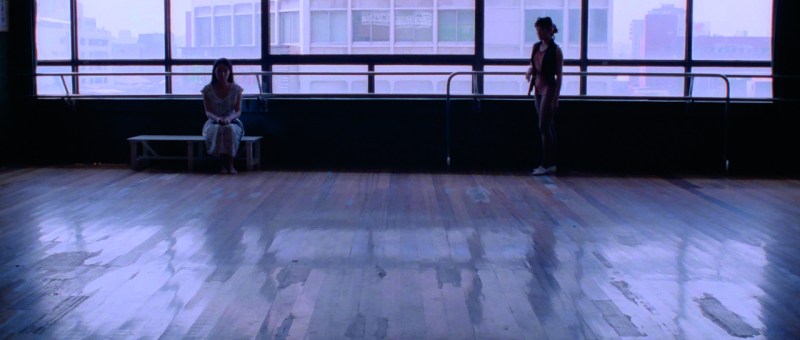
Wei-liang taking the children to KFC might be the clearest sign of her despair. Taking a razor blade to her hair, she hacks it all off and gives herself a slightly deranged look while directly attacking her femininity. Thereafter she falls into a depression, increasingly unable to see any kind of solution. Wei-ye says that their problem cannot be solved by divorce, but it’s unclear what kind of solution he favours. The implication is that Wei-liang should pretend to ignore his affair and allow him his desires while continuing to play the role of the perfect housewife. An Ling, meanwhile, has her own degree of intensity in insisting that Wei-liang is trapping her husband in obligation and that she is “cruel” for not letting him go so they can be together. Wei-ye hasn’t even really said whether he wants to leave his wife for An Ling or she’s just a casual thing, though it’s unlikely she wants to raise his children too. 

Nevertheless, when An Ling says the only way Wei-liang can win is if she dies, it opens the door to something darker as An Ling later manipulatively attempts to take her own life in romantic frustration. It becomes obvious that the only “solution” is that one of these women will have die for there are no other ways out of this situation, especially as Wei-ye refuses to make any decisions or play an active part until finally admitting that the status quo is “unfair” to Wei-liang, which just makes it sound as if he has rejected domesticity in favour of the freedom to pursue his desires with An Ling. Wei-liang points out that she had “desires” too, which were largely unmet by Wei-ye, but that she devoted herself to the family as society expected her to do with nothing left for herself, which might also explain her already fragile mental state. While Wei-liang’s daughter plays with a doll’s house in an echo of the Ibsen play, Wei-liang begins to see that her life has been a lie and her family a kind of illusion. There is only really one way out, and Wei-liang must put herself to sleep in one way or another in order to accommodate herself with it.


This Love of Mine screened as part of the BFI’s Myriad Voices: Reframing Taiwan New Cinema.

Trailer (Traditional Chinese / English subtitles)

Ah Fei (油麻菜籽, Wan Jen, 1983)

A few minutes into Wan Jen’s familial melodrama Ah Fei (油麻菜籽, yóu má càizǐ), a mother takes her children by the hand and walks to the end of a long jetty. We get the sense that she means jump and take her children with her, that she’s at the end of her tether and sees no other way out for herself, but still she thinks better of it and goes back anyway. Indeed, there isn’t really any way out for Hsin-chin, but there might be for her daughter, Ah Fei, if only Hsin-chin (Chen Chiu-yen) can bring herself to set her free.

Hsin-chin’s own mother died while she was a child and her otherwise sympathetic father later arranged her marriage to a man he thought was “honest” but turned out to be anything but. Shih-chen (Ko I-chen) is violent and irresponsible. He barely works and spends all the money Hsin-chin makes seamstressing on drink, gambling, and other women. Hsin-chin appeals to her father, but he ends up sending her back and siding with Shih-chen. He gives his son-in-law a not altogether stern talking to while encouraging him that there should at least be “civility” between husband and wife. 

We can see that this patriarchal sociality trumps all. Shih-chen originally takes no interest in Ah Fei but only in his son, Ah Shong whom he takes out with him drinking and introduces to his mistress. She buys him a toy sword which both buys the boy’s affection and creates further discord in the marital home as Shih-chen conspiratorially warns him not to tell his mother how he got it. On arriving home, Shin-chen had called for Ah Shong and he had come running in without even taking his shoes off, treading mud all over the floors Ah Fei had just been washing. 

Years later, Hsin-chin asks Shih-chen if he really thinks his son is as useless as he is. Shih-chen doesn’t answer, but it’s obvious that the answer is yes. These patriarchal patterns are quite obviously learned, passed down from fathers to sons in the ingrained codes of manliness. When his mother had tried to punish him when he was caught stealing bananas from a local farmer, Ah Shong turned round and said he’d tell his father her to beat her again if she didn’t stop. There is something sad and ironic in this circulation of violence as she beats her son to discipline him in much the same way her husband inflicts his violence on her and the teachers at Ah Fei’s school whack the pupils’ hands with a ruler when their grades dip below those of the previous paper. Ah Fei is studious and respectful, while Ah Shong is lazy and entitled. When his mother suffers a nasty miscarriage and calls for his help, Ah Shong doesn’t even wake up leaving Ah Fei to run alone through the night to the neighbour’s house so she can get the doctor. 

While the lived in the country, Hsin-chin had cherished her daughter and remarked that there was no point raising sons while Ah Fei is the only one contributing to the family by helping her with the housework. But on their return to Taipei after Shih-chen is caught sleeping with another man’s wife and forced to pay a humiliating fine in compensation, the situation is reversed. Shih-chen appears to mellow. He now stays home painting rather than going out to philander, but is still a figure of male failure who cannot find a job to support his family and leaves the heavy lifting to an increasingly embittered Hsin-chen. Hsin-chen meanwhile concentrates all her efforts on Ah Shong and resents Ah Fei. Though the family pay 200 dollars for Ah Shong’s private school, they begrudge the 30 for Ah Fei’s extra tuition so she can get into high school. Ah Fei doesn’t even want her to finish primary education. A neighbour has heard about an opening at a local factory and Hsin-chin wants her to start right away. It’s only Shih-chen who supports her education and switches his allegiance to Ah Fei rather than Ah Song who has disappointed him. He has come realise that Ah Shong is just like him after all, and seems to have a new degree of awareness about the family’s dynamics. He doesn’t want this life for Ah Fei, while Hsin-chin actively tries to trap her within the domestic space just as she was trapped.

In a repeated motif, Hsin-chin picks up a pair of scissors but can use them only in passive aggressive bouts of counter-productive revenge such as shredding Shih-chen’s suits, chopping the heads off roses to express her frustration, and cutting Ah Fee’s hair so she can’t go back to school after finding out that she had a boyfriend. Even once Ah Fei is a grown woman with a good job in advertising that is actively supporting the family, she struggles to separate herself from her mother who continues to frustrate her love and discourage her from marrying. Some of this is her own bitterness, and some honest advice that Ah Fei’s choice of husband is the most important decision she’ll ever make. Marry a good man and she’ll have a good life. Marry badly and she’ll end up like Hsin-chin knowing nothing but suffering. 

Of course, the crucial element is that Ah Fei has a choice that Hsin-chin never did. But at the same time she struggles to take it or to reject the internalised misogyny that ruled her mother’s life along with the patriarchal social codes that left her unable to leave a bad husband. She is well educated and financially independent so cannot be trapped in the same way her mother was even if her “escape” is ironically bound up with the patriarchal institution of marriage. Only on seeing her in a wedding dress does Hsin-chin finally accept her, reverting to the kind mother she had been in the countryside rather than the embittered old woman she had become in Taipei who is too afraid of her impending loneliness and the spectre of poverty to set her daughter free. Ah Fei’s liberation may speak of that of her generation, travelling from the countryside to a Taipei slum and finally a well-appointed flat in the centre of a rapidly developing city in the twilight of an authoritarian regime, but equally of the interconnected cycles of toxic masculinity, patriarchal entitlement, male failure, and internalised misogyny all seemingly dissolved in a single moment of forgiveness and acceptance.


Ah Fei screened as part of the BFI’s Myriad Voices: Reframing Taiwan New Cinema.

Trailer (Traditional Chinese / English subtitles)

My Favorite Season (最想念的季節, Chen Kun-Hou, 1985)

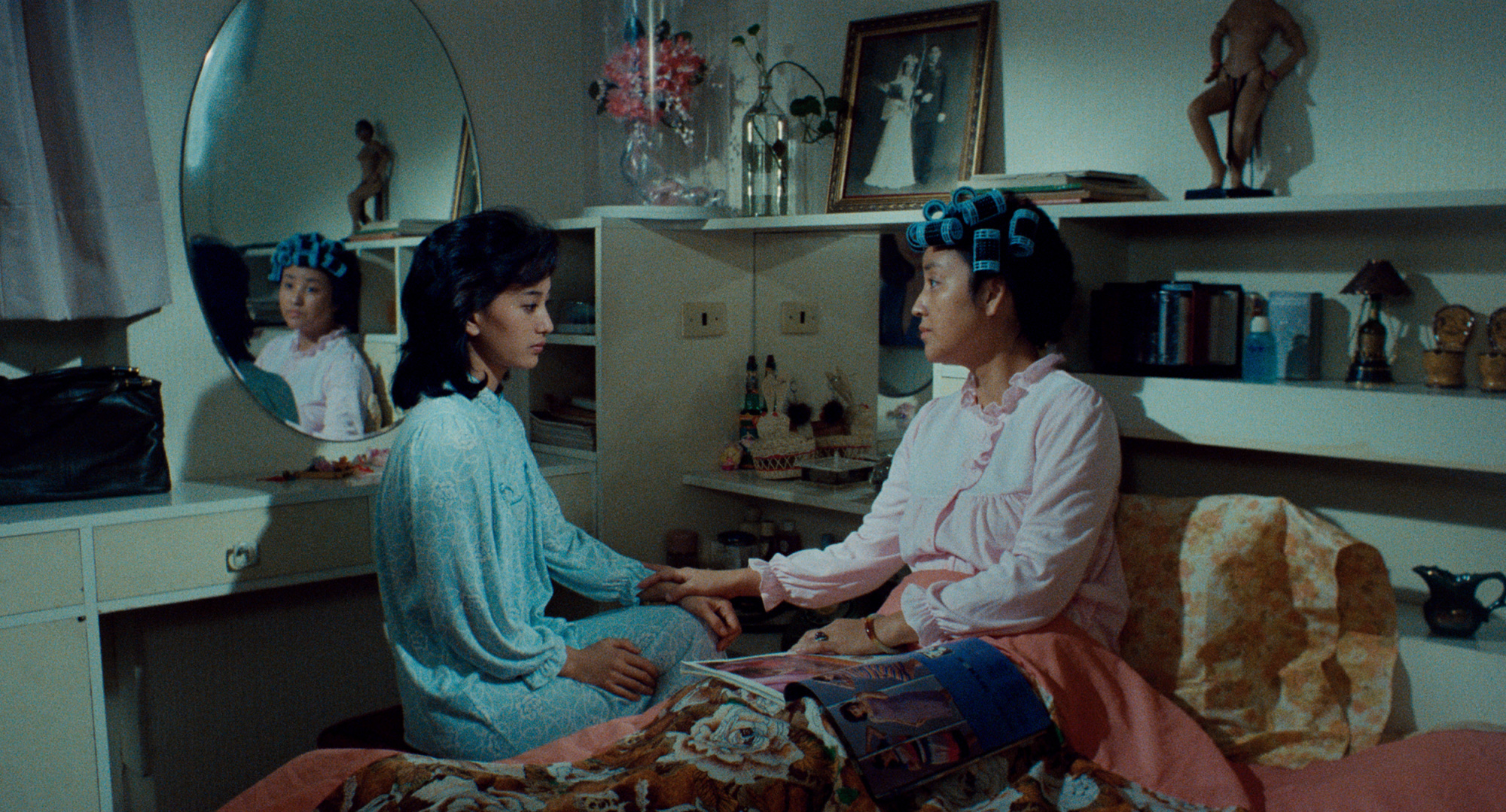
After becoming pregnant by her married lover, an otherwise independent young woman decides she must find a husband so that her baby will be legitimised but plans to divorce him a year later in Chen Kun-Hou’s charming Taipei-set rom-com, My Favourite Season (最想念的季節, zuì xiǎngniàn de jìjié). These contradictions perhaps express those at the centre of a changing society as the heroine temporarily shackles herself to a weak-willed man but finds herself both bonding with him and resentful of his attempts to control her, while the relationship itself continually straddles an awkward line.

Pao-liang (Jonathan Lee Chung-shan) is a somewhat nerdy guy who runs a print shop and has become a guardian to his niece because his sister and her husband are struggling artists. Incredibly superstitious, he insists he won’t get married before the age of 30 because it would be bad luck, but is roped into Hsiang-mei’s (Sylvia Chang Ai-chia) scheme by a friend who turned her down. Pao-liang tries to turn her down too, but is also struck by her beauty, his own improbable luck, and a possibly genuine emotional connection the pair may share even though they are in other ways opposites. 

Hsiang-mei works as a journalist for a fashion magazine and has more sophisticated tastes as well as a looser connection to money than the penny-pinching Pao-liang who, as the saying goes, knows the cost of everything but the value of nothing. He doesn’t like it when Hsiang-mei spends her own money on things she wants and insists on keeping a running tally of mutual expenses. When his sister asks him for a loan to tide her over, he immediately refuses despite having a large amount in his bank account, partly because he’s mean with money and partly because he’s essentially selfish. Hsiang-mei gives it to her instead, which annoys Pao-liang on several levels because he realises it’s made him look bad while he is now further indebted to Hsiang-mei. 

She, meanwhile, is from a small town and came to Taipei for a better life. The only girl in her family, Hsiao-mei strives for independence and ironically wanted a husband to secure it so she could have her baby and raise it on her own. As her brother says, “she does what she wants,” but seemingly hadn’t really thought through her plan assuming it would all go smoothly and she and Pao-liang could essentially hang out for a year and then bring the arrangement to an end. She picks Pao-liang partly because they do seem to get on, and possibly because she thought he’d be easy to manage, but is lucky in her choice of man that he presents little danger to her.

He is, however, petty and patriarchal in his mindset. He’s both attracted to Hsiang-mei and resentful of her strong will and independence while also small-minded and incapable of direct communication. It’s obvious that he wants this arrangement to continue, but often acts in ways that endanger it and lashes out at Hsiang-mei rather than explaining how he feels. When Hsiang-mei returns upset having met up with her married lover, Pao-liang shouts at her and accuses her of embarrassing him by sleeping with another man. He does something similar when she encounters unexpected tragedy, blaming and berating her in place of offering comfort even if his cruelty is motivated by frustrated affection. 

But Hsiang-mei is in some ways the same. She doesn’t really say what she wants either or acknowledge that she has grown fond of Pao-liang and his niece. She’s fiercely independent, but felt she still needed to have a husband to have a baby after having an affair with a man who was already married so was to her the ideal boyfriend because he wouldn’t tie her down. She buys a lamp for Pao-liang’s place because lamps make a place a home, but Pao-liang doesn’t want it or approve of the expense while simultaneously insisting on paying for half of it because it’s for a “communal” area. He’s still intent on keeping score and isn’t ready to accept that he and Hsiang-mei live in the house together so everything belongs to them “communally” as a couple. On a baseline level, he won’t cede his space to her nor acknowledge that she still has the upper-hand in this relationship even as the pair inevitably draw closer. Chen’s vision of 80s Taipei is warm and sophisticated as Pao-liang spends his time dancing with the old ladies in the park and loses his keys at opportune moments or drives his car into a ditch but even despite his pettiness and ineffectuality, can still find love and the courage to chase it if somewhat passive aggressively.


My Favorite Season screened as part of the BFI’s Myriad Voices: Reframing Taiwan New Cinema.

Trailer (Traditional Chinese / English subtitles)

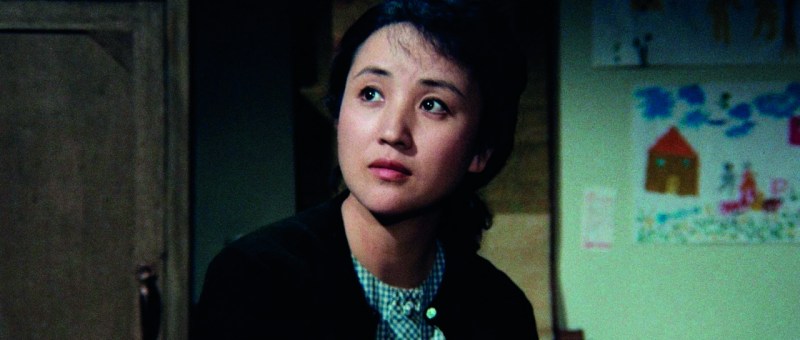
Autumn Tempest (落山風, Huang Yu-Shan, 1988)

When the autumn tempest comes, it can launch a buffalo into the air, according to a middle-aged woman working at a remote mountain temple. Wen-Hsiang (Yang Ching-huang) is in the spring of his life, but the tempest is coming for him too as he finds himself consumed by the desires he’s supposed to be shaking off after becoming fixated on a lonely, young-ish novice at the temple in flight from a failed marriage.

Su-pi’s (Kang Soo-yeon) decision to become a nun is reflective of the repressive patriarchal social codes under which she was living. We’re told that she’s essentially been rejected because she was unable to produce a male heir. Her husband has since got his mistress pregnant, or so he thinks, and the mother-in-law, who is really the one in charge, has decided to move her in, telling Su-pi she can like it or lump it. Unsurprisingly, Su-pi chose to leave but the temple hasn’t really accepted her either. Su-pi wants to shave her head and be admitted as a nun, but the abbess says she’s not ready. 

Su-pi does indeed have lingering attachments to this world and they seem to lead in two directions, firstly her unfilled and at the time taboo sexual desires, and her resentment towards her husband couple with the sense of righteous anger over her unfair dismissal. This desire to be desired is what draws her to Wen-Hsiang who is probably not all that much younger than her but is also a “kid” too young to know anything of real love. She asks him if she’s still young and pretty and if he loves her to which Wen-Hsiang readily agrees though it’s more that he becomes obsessed with her, drunk on his desire and his own need to be needed.

Wen-Hsiang’s parents’ marriage collapsed some years previously though they’ve never divorced because of the social stigma and now Wen-Hsiang’s mother has taken his sister to the US leaving him behind. Not getting along with his father, his doting grandmother sends him to the temple to help him study so he can fulfil his familial obligations, get into medical school, and follow in his father’s footsteps. No one seems to want Wen-Hsiang, not even the old girlfriend who wouldn’t stop calling when he first went to the temple but has since moved on. But even on decamping to the mountains, Wen-Hsiang can’t leave the city behind. He packs a series of coffee-related accoutrements as well as tapes of Western and Japanese pop music he listens to while he studies. When he finds the Buddha’s eyes intrusive, he simply throws his jacket over them.

But the transgressive sexual relationship they enter into also nearly kills the abbess who is struck down by some kind of psychic force that seems to emanate from it. Though the couple think they’ve kept it quiet, everyone appears to know, the abbess warning Su-pi that young men are impulsive, like bulls who can’t be tamed, and should be avoided. Struck by the weight of this spiritual transgression, Su-pi tries to end it but is both drawn by her own desire and by Wen-Hsiang’s obsession. The realisation that she is pregnant forces her hand, though we might also wonder if in the end her greatest desire was always for revenge or just to avenge herself by forcing her husband to realise the fault lies with him. She is fully capable of fulfilling the role society has forced on her though she may also reject it symbolically by becoming a nun while fulfilling her own desires by telling her husband where to go when he comes crawling back.

Though the film sets out to punish Wen-Hsiang for his transgressions, it cannot help but implicate Su-pi for his downfall, implying it’s is her fault rather than resolutely his own in his inability to overcome his desires. She meanwhile is equally punished by the film’s ambiguous ending in which she may have to live with the unintended consequences of embracing her sexuality as opposed to abandoning it by joining the temple. Even so, there’s something so classical about her features that they almost resemble the face of Buddha, not unlike that Wen-Hsiang’s grandmother prays to in the hope he’ll get into medical school. Huang frequently uses natural imagery to express the tumultuous emotions of the pair of lovers in contrast to the ordered and tranquil environment of the temple but also perhaps suggests that not even here can they really free themselves of the authoritarian oppressions of the city.


Autumn Tempest screened as part of the BFI’s Myriad Voices: Reframing Taiwan New Cinema.