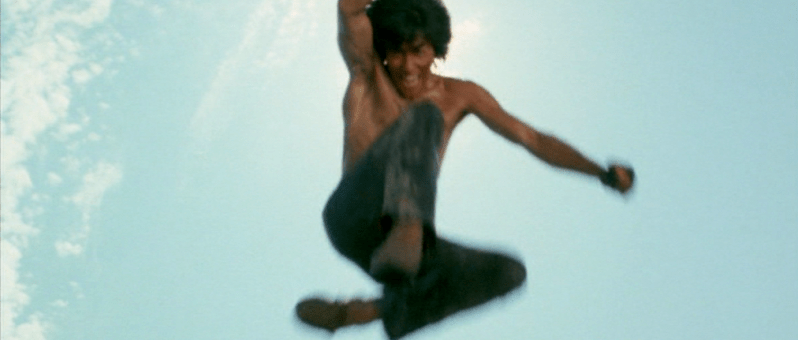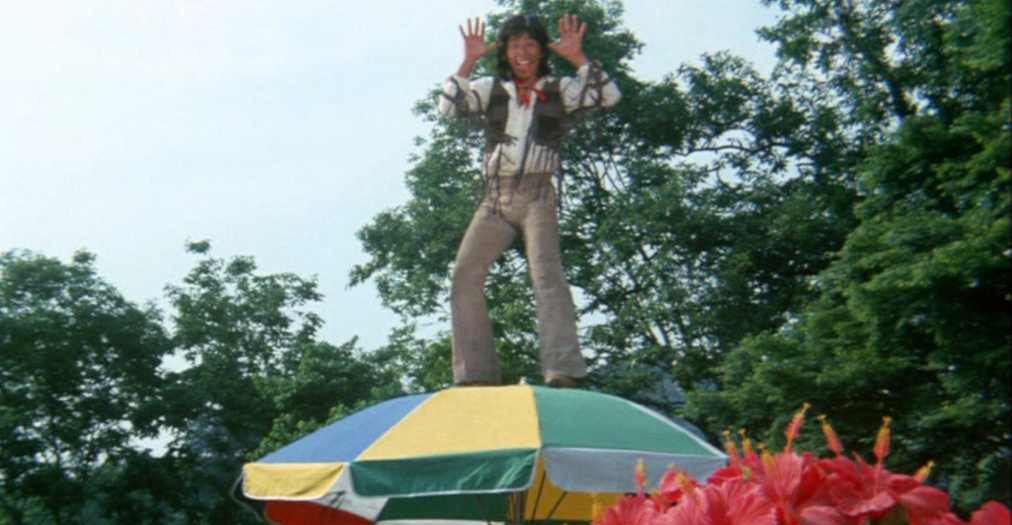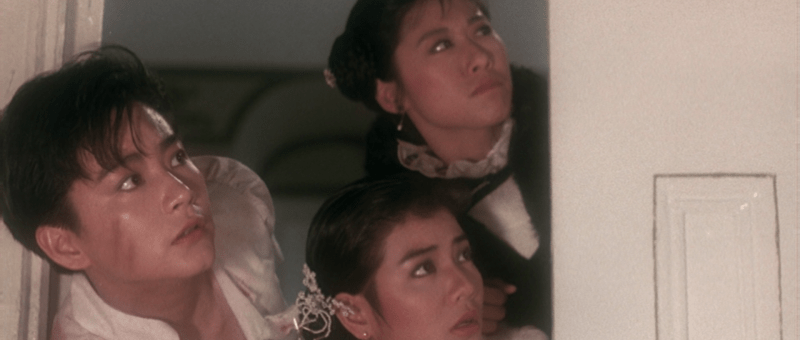
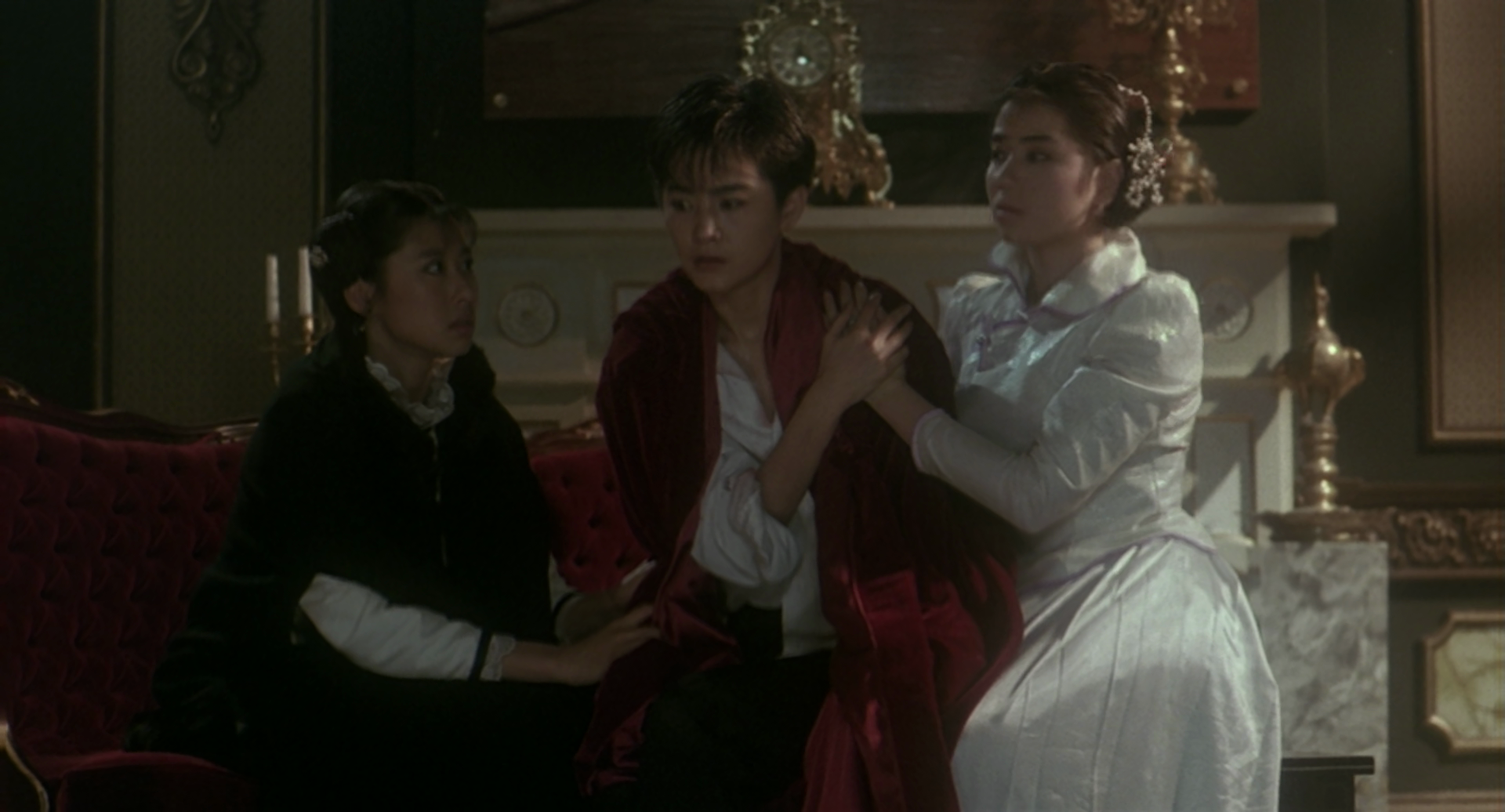
This Love of Mine (我的愛, Chang Yi, 1986)

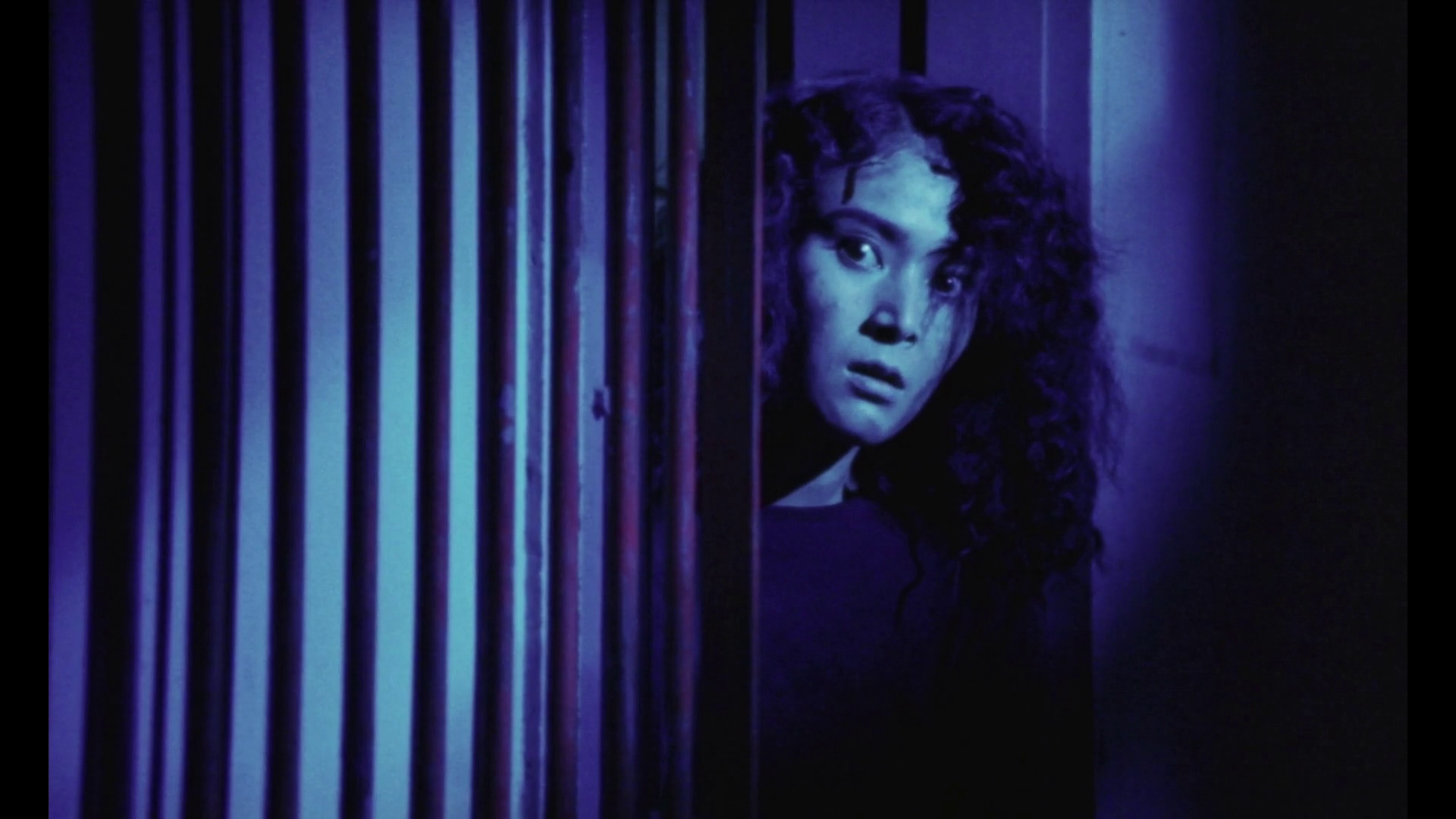
When an already anxious housewife discovers her husband’s affair, she becomes aware of the extent to which she is already trapped by the patriarchal social codes of the contemporary society in Chang Yi’s psychological melodrama, This Love of Mine (我的愛, wǒ de ài). This very messy situation takes on a meta subtext given that This Love of Mine became the last film Chang Yi and his leading actress Loretta Yang would ever make as the pair were hounded out of the Taiwanese film industry after their affair was exposed by the film’s screenwriter, who also happened to be Chang’s wife, the novelist Hsiao Sa.

Wei-liang (Loretta Yang Hui-shan) is a typical housewife who’s devoted herself entirely to her husband and children, but she’s approached one day by a childhood friend, An Ping (Elten Ting), who tells her that her husband Wei-ye (Wang Hsia-Chun) is having an affair with her sister, An Ling (Cynthia Khan). The news comes as a shock to her and profoundly destabilises her world. When she confronts Wei-ye, he admits everything but makes no real excuses or promises to end the affair. In fact, he does not really do anything but only seems resigned to the situation as if he had no agency over it. 

Wei-liang takes the children to her mother’s and decamps to Kaohsiung to look at apartments but soon realises the impossibility of her situation. She can’t afford the deposit on a flat that she doesn’t like anyway and has no real income nor savings because she poured everything into Wei-liang’s business. Approaching an old friend about a job, she’s told that she’s just too old to re-enter the workforce and will struggle to find anyone who’ll hire her. Even if they do, it won’t be worth her while. The simple fact is that she’s trapped. She’s done everything “right” but has been betrayed and is now left with the realisation that she is powerless. Her husband can do as he pleases because she is economically dependent on him and therefore cannot leave. Wei-liang’s only option is to accept her humiliation and tolerate her husband’s affair.

Her anxieties had begun long before with the early death of her father. Wei-liang resented her mother for remarrying, but she too was faced with this same economic impossibility in the wake of widowhood rather than divorce. Her mother points out that without her stepfather, who does not seem to have treated Wei-liang particularly badly even if he is also a very patriarchal man and expects her mother to wait on him hand and foot, Wei-liang would not have finished her education and what else really could she have done in her situation? It may have been this sense of precarity that most frightened Wei-liang and explains her fixation on the children’s health, panicking about her son eating grapes with the skin on because of the pesticides and insisting on apple juice rather than the sugary drinks and junk food that Wei-ye buys for them. 

Wei-liang taking the children to KFC might be the clearest sign of her despair. Taking a razor blade to her hair, she hacks it all off and gives herself a slightly deranged look while directly attacking her femininity. Thereafter she falls into a depression, increasingly unable to see any kind of solution. Wei-ye says that their problem cannot be solved by divorce, but it’s unclear what kind of solution he favours. The implication is that Wei-liang should pretend to ignore his affair and allow him his desires while continuing to play the role of the perfect housewife. An Ling, meanwhile, has her own degree of intensity in insisting that Wei-liang is trapping her husband in obligation and that she is “cruel” for not letting him go so they can be together. Wei-ye hasn’t even really said whether he wants to leave his wife for An Ling or she’s just a casual thing, though it’s unlikely she wants to raise his children too. 

Nevertheless, when An Ling says the only way Wei-liang can win is if she dies, it opens the door to something darker as An Ling later manipulatively attempts to take her own life in romantic frustration. It becomes obvious that the only “solution” is that one of these women will have die for there are no other ways out of this situation, especially as Wei-ye refuses to make any decisions or play an active part until finally admitting that the status quo is “unfair” to Wei-liang, which just makes it sound as if he has rejected domesticity in favour of the freedom to pursue his desires with An Ling. Wei-liang points out that she had “desires” too, which were largely unmet by Wei-ye, but that she devoted herself to the family as society expected her to do with nothing left for herself, which might also explain her already fragile mental state. While Wei-liang’s daughter plays with a doll’s house in an echo of the Ibsen play, Wei-liang begins to see that her life has been a lie and her family a kind of illusion. There is only really one way out, and Wei-liang must put herself to sleep in one way or another in order to accommodate herself with it.


This Love of Mine screened as part of the BFI’s Myriad Voices: Reframing Taiwan New Cinema.

Trailer (Traditional Chinese / English subtitles)

Ah Fei (油麻菜籽, Wan Jen, 1983)

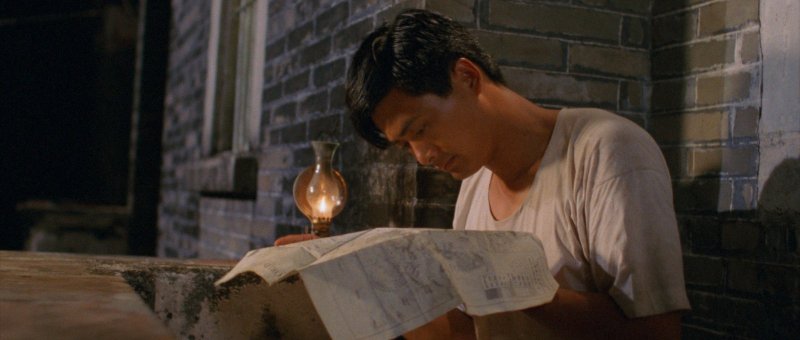
A few minutes into Wan Jen’s familial melodrama Ah Fei (油麻菜籽, yóu má càizǐ), a mother takes her children by the hand and walks to the end of a long jetty. We get the sense that she means jump and take her children with her, that she’s at the end of her tether and sees no other way out for herself, but still she thinks better of it and goes back anyway. Indeed, there isn’t really any way out for Hsin-chin, but there might be for her daughter, Ah Fei, if only Hsin-chin (Chen Chiu-yen) can bring herself to set her free.

Hsin-chin’s own mother died while she was a child and her otherwise sympathetic father later arranged her marriage to a man he thought was “honest” but turned out to be anything but. Shih-chen (Ko I-chen) is violent and irresponsible. He barely works and spends all the money Hsin-chin makes seamstressing on drink, gambling, and other women. Hsin-chin appeals to her father, but he ends up sending her back and siding with Shih-chen. He gives his son-in-law a not altogether stern talking to while encouraging him that there should at least be “civility” between husband and wife. 

We can see that this patriarchal sociality trumps all. Shih-chen originally takes no interest in Ah Fei but only in his son, Ah Shong whom he takes out with him drinking and introduces to his mistress. She buys him a toy sword which both buys the boy’s affection and creates further discord in the marital home as Shih-chen conspiratorially warns him not to tell his mother how he got it. On arriving home, Shin-chen had called for Ah Shong and he had come running in without even taking his shoes off, treading mud all over the floors Ah Fei had just been washing. 

Years later, Hsin-chin asks Shih-chen if he really thinks his son is as useless as he is. Shih-chen doesn’t answer, but it’s obvious that the answer is yes. These patriarchal patterns are quite obviously learned, passed down from fathers to sons in the ingrained codes of manliness. When his mother had tried to punish him when he was caught stealing bananas from a local farmer, Ah Shong turned round and said he’d tell his father her to beat her again if she didn’t stop. There is something sad and ironic in this circulation of violence as she beats her son to discipline him in much the same way her husband inflicts his violence on her and the teachers at Ah Fei’s school whack the pupils’ hands with a ruler when their grades dip below those of the previous paper. Ah Fei is studious and respectful, while Ah Shong is lazy and entitled. When his mother suffers a nasty miscarriage and calls for his help, Ah Shong doesn’t even wake up leaving Ah Fei to run alone through the night to the neighbour’s house so she can get the doctor. 

While the lived in the country, Hsin-chin had cherished her daughter and remarked that there was no point raising sons while Ah Fei is the only one contributing to the family by helping her with the housework. But on their return to Taipei after Shih-chen is caught sleeping with another man’s wife and forced to pay a humiliating fine in compensation, the situation is reversed. Shih-chen appears to mellow. He now stays home painting rather than going out to philander, but is still a figure of male failure who cannot find a job to support his family and leaves the heavy lifting to an increasingly embittered Hsin-chen. Hsin-chen meanwhile concentrates all her efforts on Ah Shong and resents Ah Fei. Though the family pay 200 dollars for Ah Shong’s private school, they begrudge the 30 for Ah Fei’s extra tuition so she can get into high school. Ah Fei doesn’t even want her to finish primary education. A neighbour has heard about an opening at a local factory and Hsin-chin wants her to start right away. It’s only Shih-chen who supports her education and switches his allegiance to Ah Fei rather than Ah Song who has disappointed him. He has come realise that Ah Shong is just like him after all, and seems to have a new degree of awareness about the family’s dynamics. He doesn’t want this life for Ah Fei, while Hsin-chin actively tries to trap her within the domestic space just as she was trapped.

In a repeated motif, Hsin-chin picks up a pair of scissors but can use them only in passive aggressive bouts of counter-productive revenge such as shredding Shih-chen’s suits, chopping the heads off roses to express her frustration, and cutting Ah Fee’s hair so she can’t go back to school after finding out that she had a boyfriend. Even once Ah Fei is a grown woman with a good job in advertising that is actively supporting the family, she struggles to separate herself from her mother who continues to frustrate her love and discourage her from marrying. Some of this is her own bitterness, and some honest advice that Ah Fei’s choice of husband is the most important decision she’ll ever make. Marry a good man and she’ll have a good life. Marry badly and she’ll end up like Hsin-chin knowing nothing but suffering. 

Of course, the crucial element is that Ah Fei has a choice that Hsin-chin never did. But at the same time she struggles to take it or to reject the internalised misogyny that ruled her mother’s life along with the patriarchal social codes that left her unable to leave a bad husband. She is well educated and financially independent so cannot be trapped in the same way her mother was even if her “escape” is ironically bound up with the patriarchal institution of marriage. Only on seeing her in a wedding dress does Hsin-chin finally accept her, reverting to the kind mother she had been in the countryside rather than the embittered old woman she had become in Taipei who is too afraid of her impending loneliness and the spectre of poverty to set her daughter free. Ah Fei’s liberation may speak of that of her generation, travelling from the countryside to a Taipei slum and finally a well-appointed flat in the centre of a rapidly developing city in the twilight of an authoritarian regime, but equally of the interconnected cycles of toxic masculinity, patriarchal entitlement, male failure, and internalised misogyny all seemingly dissolved in a single moment of forgiveness and acceptance.


Ah Fei screened as part of the BFI’s Myriad Voices: Reframing Taiwan New Cinema.

Trailer (Traditional Chinese / English subtitles)

My Favorite Season (最想念的季節, Chen Kun-Hou, 1985)

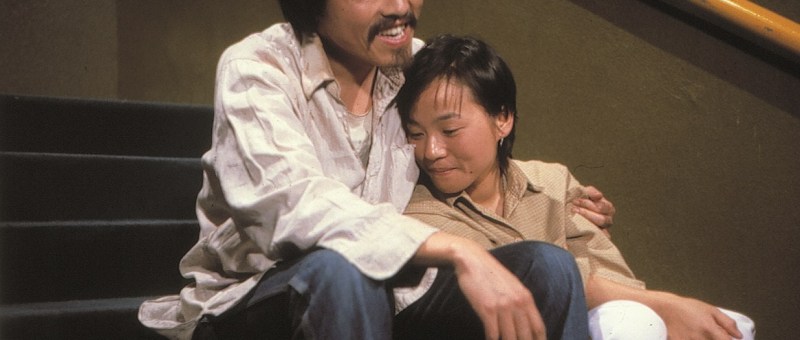
After becoming pregnant by her married lover, an otherwise independent young woman decides she must find a husband so that her baby will be legitimised but plans to divorce him a year later in Chen Kun-Hou’s charming Taipei-set rom-com, My Favourite Season (最想念的季節, zuì xiǎngniàn de jìjié). These contradictions perhaps express those at the centre of a changing society as the heroine temporarily shackles herself to a weak-willed man but finds herself both bonding with him and resentful of his attempts to control her, while the relationship itself continually straddles an awkward line.

Pao-liang (Jonathan Lee Chung-shan) is a somewhat nerdy guy who runs a print shop and has become a guardian to his niece because his sister and her husband are struggling artists. Incredibly superstitious, he insists he won’t get married before the age of 30 because it would be bad luck, but is roped into Hsiang-mei’s (Sylvia Chang Ai-chia) scheme by a friend who turned her down. Pao-liang tries to turn her down too, but is also struck by her beauty, his own improbable luck, and a possibly genuine emotional connection the pair may share even though they are in other ways opposites. 

Hsiang-mei works as a journalist for a fashion magazine and has more sophisticated tastes as well as a looser connection to money than the penny-pinching Pao-liang who, as the saying goes, knows the cost of everything but the value of nothing. He doesn’t like it when Hsiang-mei spends her own money on things she wants and insists on keeping a running tally of mutual expenses. When his sister asks him for a loan to tide her over, he immediately refuses despite having a large amount in his bank account, partly because he’s mean with money and partly because he’s essentially selfish. Hsiang-mei gives it to her instead, which annoys Pao-liang on several levels because he realises it’s made him look bad while he is now further indebted to Hsiang-mei. 

She, meanwhile, is from a small town and came to Taipei for a better life. The only girl in her family, Hsiao-mei strives for independence and ironically wanted a husband to secure it so she could have her baby and raise it on her own. As her brother says, “she does what she wants,” but seemingly hadn’t really thought through her plan assuming it would all go smoothly and she and Pao-liang could essentially hang out for a year and then bring the arrangement to an end. She picks Pao-liang partly because they do seem to get on, and possibly because she thought he’d be easy to manage, but is lucky in her choice of man that he presents little danger to her.

He is, however, petty and patriarchal in his mindset. He’s both attracted to Hsiang-mei and resentful of her strong will and independence while also small-minded and incapable of direct communication. It’s obvious that he wants this arrangement to continue, but often acts in ways that endanger it and lashes out at Hsiang-mei rather than explaining how he feels. When Hsiang-mei returns upset having met up with her married lover, Pao-liang shouts at her and accuses her of embarrassing him by sleeping with another man. He does something similar when she encounters unexpected tragedy, blaming and berating her in place of offering comfort even if his cruelty is motivated by frustrated affection. 

But Hsiang-mei is in some ways the same. She doesn’t really say what she wants either or acknowledge that she has grown fond of Pao-liang and his niece. She’s fiercely independent, but felt she still needed to have a husband to have a baby after having an affair with a man who was already married so was to her the ideal boyfriend because he wouldn’t tie her down. She buys a lamp for Pao-liang’s place because lamps make a place a home, but Pao-liang doesn’t want it or approve of the expense while simultaneously insisting on paying for half of it because it’s for a “communal” area. He’s still intent on keeping score and isn’t ready to accept that he and Hsiang-mei live in the house together so everything belongs to them “communally” as a couple. On a baseline level, he won’t cede his space to her nor acknowledge that she still has the upper-hand in this relationship even as the pair inevitably draw closer. Chen’s vision of 80s Taipei is warm and sophisticated as Pao-liang spends his time dancing with the old ladies in the park and loses his keys at opportune moments or drives his car into a ditch but even despite his pettiness and ineffectuality, can still find love and the courage to chase it if somewhat passive aggressively.


My Favorite Season screened as part of the BFI’s Myriad Voices: Reframing Taiwan New Cinema.

Trailer (Traditional Chinese / English subtitles)

Autumn Tempest (落山風, Huang Yu-Shan, 1988)

When the autumn tempest comes, it can launch a buffalo into the air, according to a middle-aged woman working at a remote mountain temple. Wen-Hsiang (Yang Ching-huang) is in the spring of his life, but the tempest is coming for him too as he finds himself consumed by the desires he’s supposed to be shaking off after becoming fixated on a lonely, young-ish novice at the temple in flight from a failed marriage.

Su-pi’s (Kang Soo-yeon) decision to become a nun is reflective of the repressive patriarchal social codes under which she was living. We’re told that she’s essentially been rejected because she was unable to produce a male heir. Her husband has since got his mistress pregnant, or so he thinks, and the mother-in-law, who is really the one in charge, has decided to move her in, telling Su-pi she can like it or lump it. Unsurprisingly, Su-pi chose to leave but the temple hasn’t really accepted her either. Su-pi wants to shave her head and be admitted as a nun, but the abbess says she’s not ready. 

Su-pi does indeed have lingering attachments to this world and they seem to lead in two directions, firstly her unfilled and at the time taboo sexual desires, and her resentment towards her husband couple with the sense of righteous anger over her unfair dismissal. This desire to be desired is what draws her to Wen-Hsiang who is probably not all that much younger than her but is also a “kid” too young to know anything of real love. She asks him if she’s still young and pretty and if he loves her to which Wen-Hsiang readily agrees though it’s more that he becomes obsessed with her, drunk on his desire and his own need to be needed.

Wen-Hsiang’s parents’ marriage collapsed some years previously though they’ve never divorced because of the social stigma and now Wen-Hsiang’s mother has taken his sister to the US leaving him behind. Not getting along with his father, his doting grandmother sends him to the temple to help him study so he can fulfil his familial obligations, get into medical school, and follow in his father’s footsteps. No one seems to want Wen-Hsiang, not even the old girlfriend who wouldn’t stop calling when he first went to the temple but has since moved on. But even on decamping to the mountains, Wen-Hsiang can’t leave the city behind. He packs a series of coffee-related accoutrements as well as tapes of Western and Japanese pop music he listens to while he studies. When he finds the Buddha’s eyes intrusive, he simply throws his jacket over them.

But the transgressive sexual relationship they enter into also nearly kills the abbess who is struck down by some kind of psychic force that seems to emanate from it. Though the couple think they’ve kept it quiet, everyone appears to know, the abbess warning Su-pi that young men are impulsive, like bulls who can’t be tamed, and should be avoided. Struck by the weight of this spiritual transgression, Su-pi tries to end it but is both drawn by her own desire and by Wen-Hsiang’s obsession. The realisation that she is pregnant forces her hand, though we might also wonder if in the end her greatest desire was always for revenge or just to avenge herself by forcing her husband to realise the fault lies with him. She is fully capable of fulfilling the role society has forced on her though she may also reject it symbolically by becoming a nun while fulfilling her own desires by telling her husband where to go when he comes crawling back.

Though the film sets out to punish Wen-Hsiang for his transgressions, it cannot help but implicate Su-pi for his downfall, implying it’s is her fault rather than resolutely his own in his inability to overcome his desires. She meanwhile is equally punished by the film’s ambiguous ending in which she may have to live with the unintended consequences of embracing her sexuality as opposed to abandoning it by joining the temple. Even so, there’s something so classical about her features that they almost resemble the face of Buddha, not unlike that Wen-Hsiang’s grandmother prays to in the hope he’ll get into medical school. Huang frequently uses natural imagery to express the tumultuous emotions of the pair of lovers in contrast to the ordered and tranquil environment of the temple but also perhaps suggests that not even here can they really free themselves of the authoritarian oppressions of the city.


Autumn Tempest screened as part of the BFI’s Myriad Voices: Reframing Taiwan New Cinema.

Out of the Blue (小爸爸的天空, Chen Kun-Hou, 1984)

A young man begins to dream after discovering he has become a father in Chen Kun-Hou’s poignant coming of age drama Out of the Blue (小爸爸的天空, xiǎo bàba de tiānkōng). Though it could perhaps be argued that the heroine suffers unduly, the film is remarkably unjudgemental about unplanned teenage pregnancy and at heart is rooting for the young couple. But the real world is not so kind, and it seems impossible that their love could survive in the liberalising but still oppressive late martial law society.

Long is a boy from an ordinary family with a crush on a wealthy young who goes to his school, Mi. Mi gets picked up by a chauffeured car every day, while Long watches her afar from his bicycle. Eventually, the pair get together and bond over their shared sense of dissatisfaction with their families by whom they are each trapped in opposing ways. Long complains that his former policeman father beats and berates him for not living up to his expectations, while Mi alternately implies her parents don’t really care about her because they’re always working and let her do as she pleases, and that she has no free will because she’s duty-bound by the expectations of filiality.

Perhaps bearing this out, Mi rarely speaks during her courtship with Long and only later is able to talk plainly to her mother, though her mother doesn’t listen. When she becomes pregnant after sleeping with Long when he stays out all night after a beating from his father, Mi can’t bring herself to tell anyone but stays at home alone while her parents head to LA. For unstated reasons, she can’t bring herself to tell Long, either. She ignores his calls and drops out of school, instructing the servants not to answer the phone when he calls. But when her mother finally finds out, she’s unexpectedly supportive. At least, she doesn’t disown her, force her to give up the child, to marry someone else or to stop seeing Long (though she does so anyway), all of which adds an additional layer to Mi’s sense of filial obligation feeling as if she cannot disobey her mother because she has been so kind and understanding of her “scandalous” behaviour.

When Mi abruptly disappears and he’s told she’s gone abroad, Long tries to talk to his father but in the end he doesn’t say anything. He simply refills his father’s ink pot while he continues to practice calligraphy. The only really time that Long’s father actually speaks to him is on hearing that he’s got the grades to get into his chosen university. It’s at this point that his father considers him “a man,” having his first drink with him and treating him as an adult rather than a naughty boy he can beat with a belt. In a sense, Long has conformed with his father’s authoritarianism in following the conventional path and is no longer trying to resist it, but on being unexpectedly reunited with his own son, Weiwei, is a more compassionate and empathetic presence, in love with the idea of having a family, though it is currently out of his reach. When he runs into Mi and realises the toddler she’s got in a pushchair is his, he’s still a student financially unable to support a wife and child let alone keep them in comfort.

As such, Long might be the unexpectedly good man who would have married and taken care of Mi if he knew but as they each say several times, everything’s different now. After their separation, both describe themselves as having grown up. Though he didn’t know he had become a father, Long feels as if he’s now older than his friends. He’s no longer interested in playing pool with them and is bored by their teenage pastimes. It’s ironically this sense of growing up that sets him on a more conventional path by knuckling down to study. But Mi perhaps feels trapped. Her parents have accepted her, but they have also more or less adopted Weiwei as their own and refuse to see her as a grown woman. When she tries to stand up to her mother about going to LA, her mother refuses to allow her to stay behind with Weiwei because she doesn’t believe she can look after herself let alone a child. Mi snaps back that could marry Long, but her mother doesn’t take it seriously. In the end, Mi is unable to break free of her filial obligations and defy her mother by leaving to make a new family with Long.

Mi’s mother stands in the way of progress, though she is in other ways a good and compassionate person who never tries to punish her daughter for her sexual transgression and only wanted to care for her and the baby. The baby has, however, now become part of her family to which Mi is merely an accessory, so he cannot now form a new family with Long. Long is unable to assume his paternity because of his financial status, but is otherwise good with the boy and in some ways better than Mi who becomes frustrated when he fails to settle in an unfamiliar environment. She admits that her mother usually tucks him in and is otherwise lost for what to do, leaving Long quite literally holding the baby.

But on the other hand, perhaps he’s only experiencing an idealised vision of fatherhood while spared the really difficult things like the anxiety of keeping food on the table and roof over his head. His friend at university is married with a child and is constantly late because of childcare issues. He recounts having to stay up all night because his son got enteritis from eating something he shouldn’t have when he wasn’t looking and now has a serious case of the runs. Long appears to want all of this too, but is prevented from having it as the older generation won’t surrender it to him or give Mi and Long the chance to figure it out. The closing scenes have a genuine sense of tragedy as Long watches his family ride away from him while Mi looks back with sadness and an expression that suggests she knows she will likely never see Long again. With minimal dialogue and elegant, expressive composition, Chen charts the course of a love too innocent to survive in a world of oppression and conformity but has only infinite sympathy for the young couple whose simple dreams are denied by generational authoritarianism.


Out of the Blue screened as part of the BFI’s Myriad Voices: Reframing Taiwan New Cinema.

Trailer (Traditional Chinese / English subtitles)

Scent of a Spell (魔性の香り, Toshiharu Ikeda, 1985)

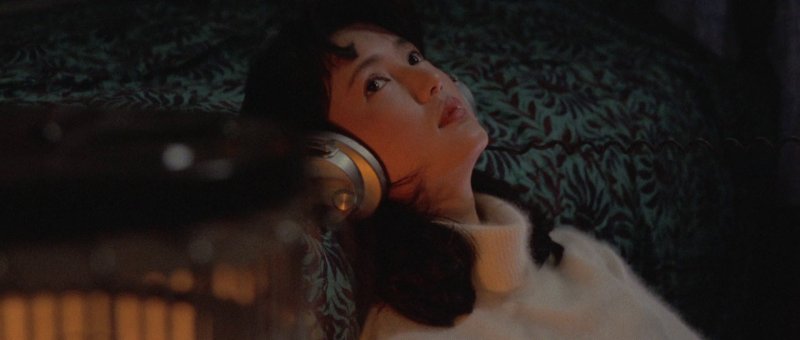
Esaka (Johnny Okura) feels like someone’s watching him. He has this sense of being observed by some otherworldly force along with a generalised feeling of uneasiness. But his paranoia seems to melt away after rescuing a young woman, Akiko (Mari Amachi), whose attempted suicide he witnesses during a rainstorm on his way home. He takes her in and one thing leads to another. For a time, they’re blissfully happy but then something starts to nag at him. Is Akiko really who she claims to be, or a demonic force of monstrous femininity?

It’s this malevolent quality to which the title of Toshiharu Ikeda’s noirish romance Scent of a Spell (魔性の香り, Masho no Kaori) alludes. Esaka is captivated by a hint of mystery and his own white knight syndrome, bewitched by Akiko but also perhaps growing tired of her and fearful of romantic commitment. He has after all been married before and his friend’s comments seems to suggest the cause of marital breakdown may either have been his womanising or his wife’s baseless jealousy. Akiko tells him that she’s on the run from an abusive husband prone to jealous rages and that though she has escaped from Osaka to Tokyo he always manages to track her down. Her sense of being pursued and Esaka’s of being watched seem to perfectly align while he seems to appreciate the fact that she needs him and he is quite literally sheltering her from danger.

Nevertheless, there are cracks in Akiko’s story beginning with the fact the bridge she threw herself off wasn’t the kind to pose a serious risk to life. The drop is only a few feet and though she resolutely refuses to be taken to a hospital because her husband might find her, she may be exaggerating the extent of her injuries. Meanwhile, she seems to have something of a jealous streak becoming irritated when Esaka talks to the proprietress of a local bar, thereafter apparently submitting herself to the attentions of his over-friendly colleague. Perhaps she had a reason to be annoyed given that she didn’t previously know any of these people and he inadvertently excluded her from the conversation, but it’s difficult for Esaka to know if she’s actually being unreasonable or he’s overreacting to a threat to his male pride and autonomy.

It’s this threat to his freedom that’s inflamed when he overhears another man talking to the lady behind the counter at a cafe he regularly goes to about his own girlfriend who is also named “Akiko” written with the character for “autumn”. Though there must be dozens of women with this not all that uncommon name combination in the city, it plants the seed of doubt in him that perhaps his Akiko and the other are the same and she’s two-timing him with this other guy while he’s at work. It also adds to his feeling that she has some kind of malevolent supernatural quality as if she were deliberately targeting lonely men for nefarious reasons. When the man from the cafe is found dead at home having been bludgeoned to death, he can’t help but feel that Akiko must have been involved and possibly intends to harm him too.

Of course, this may just be his fear that she will hurt him emotionally and his growing paranoia is a defence mechanism designed to protect himself against her abandonment or an infringement on his freedom. Or, alternatively, Akiko really is a dangerously crazed and jealous woman and letting her into his life will mean not a moment’s peace until it’s over. Even so, the pair of them discover intimacy in connection in their raw, desperate love making. Every time Esaka’s doubts rise to the surface, Akiko seduces him or he her and he momentarily forgets. In this, the film may have a latent misogyny as a final twist suggests that in the end all women are prone to fits of jealous rage not to mention cunning and trickery directed against each other as much as men who are also, to be fair, faithless liars and cheats. Akiko’s tragic backstory suggests something similar, that she is the inheritor of a legacy of compromised maternity and paternal betrayal. In any case, Esaka is not quite the hero he imagined himself to be either and in the end cannot save Akiko who may also in a way be choosing to sacrifice herself for love of him. Echoing the ending of In a Lonely Place, Ikeda casts their romance as fatalistic tragedy and bathes the noirish closing scenes in a heavenly golden light that suggests true love ends only in futility.


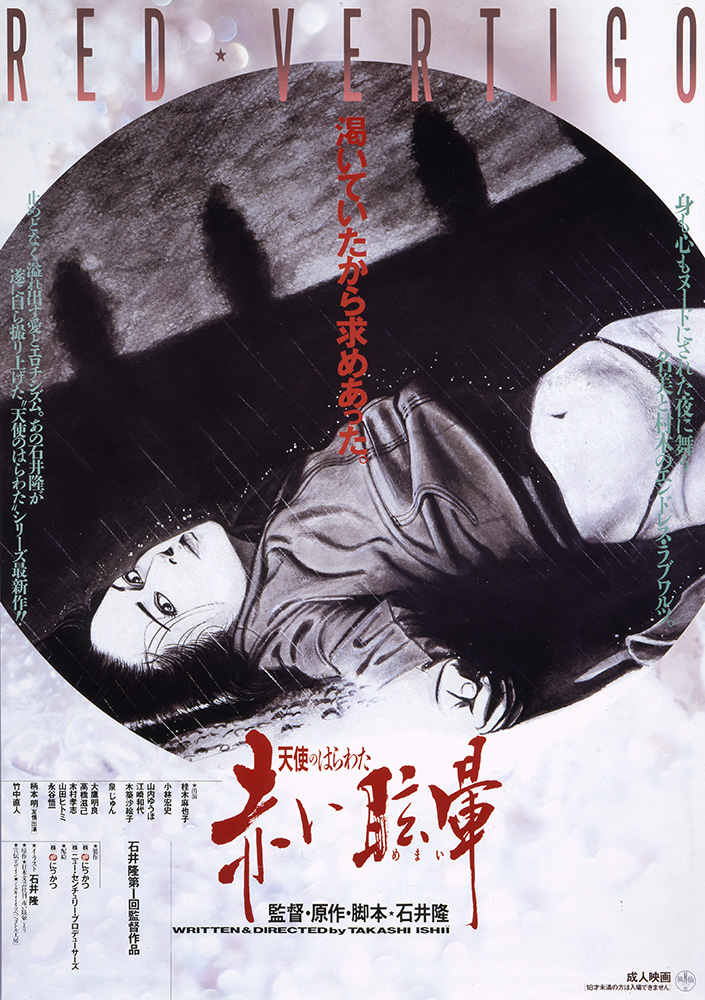
Scent of a Spell is released in the UK on blu-ray 17th February courtesy of Third Window Films.

Labyrinth Romanesque (花園の迷宮, Shunya Ito, 1988)

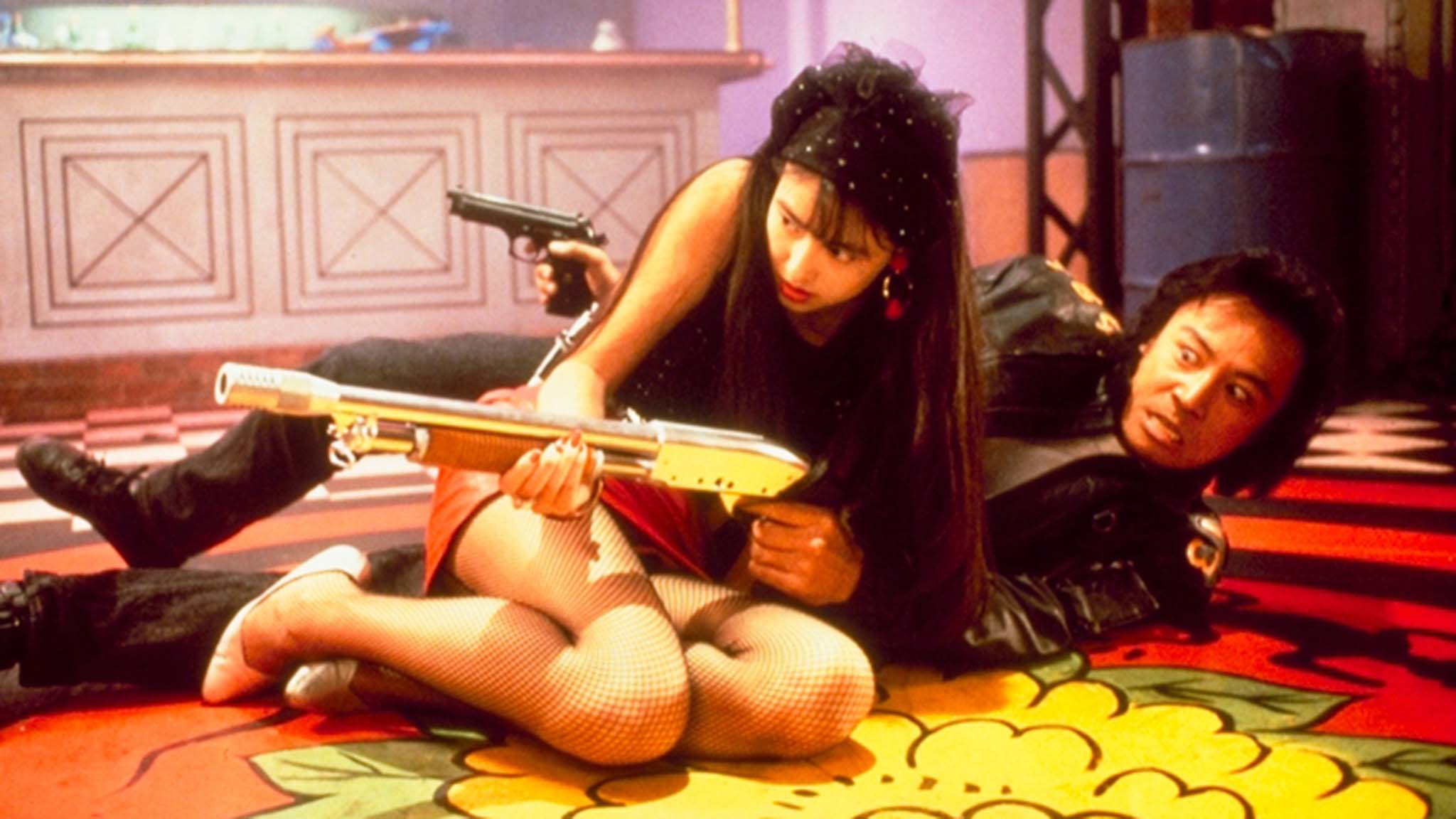
“Poor things, born in the wrong time,” a woman laments of two girls perhaps not that much younger than herself yet as trapped by the age of militarism as anyone else. Adapted from a short story by Edogawa Rampo, Shunya Ito’s gothic mystery Labyrinth Romanesque (花園の迷宮, Hanazono no Meikyu) effectively skewers militarism’s hypocrisies and lays bare the dehumanising effects its nihilistic philosophy has wrought on the nation as a whole. When killing is almost an imperative, life has little value and brutality seemingly the only acceptable response to mass violence.

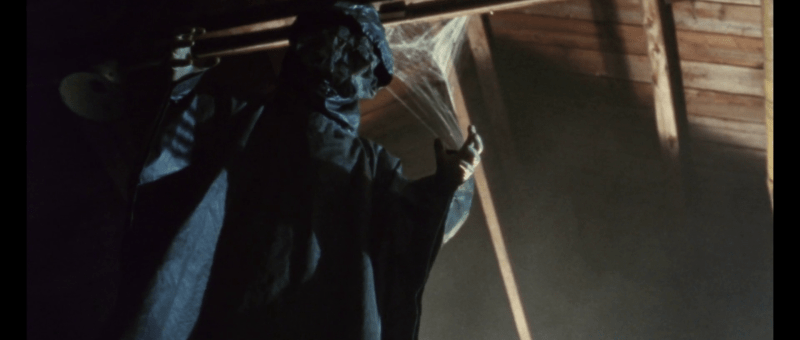
Ito conjures a sense of haunting by adding a modern day framing sequence in which the abandoned hotel is an eerie space of cobweb-ridden collapse. A wrecking ball arcs back and fore, threatening to unearth a truth long buried and this is after all a mystery, at least in part. With extraordinary finesse, the camera travels from the ruins into the hotel of old as a woman enters the frame. We are now in 1942. This is Yokohama, a harbour town, and so the “hotel” is filled with military personnel though transgressively it also seems trapped in a kind of before time. The sailors dance to American standards such as Georgia on my Mind and Goodnight Sweetheart though otherwise at war with America. All eyes are on sex worker Yuri (Hitomi Kuroki) and her dashing Zero Fighter pilot boyfriend, Takemiya (Tatsuo Nadaka).

But later we learn that Takemiya hated planes and was scared of heights to the point that it kept him up at night. Apparently from a military family, he felt unable to avoid going on with this militaristic charade and saw no future for himself other than glorious death. Everyone at the Fukuju Hotel is in their way already dead and chief among them the madam, Tae (Yoko Shimada), who becomes the prime suspect when her unpleasant husband Ichitaro (Akira Nakao) is murdered during the night. Her nemesis is however. Ichitaro’s sister, Kiku (Kyoko Enami), who has just been deported from the US where she had been living after selling herself into sexual slavery in order to financially support Ichitaro after their parents died. 

Kiku had been Tae’s madam, bringing her over from Japan at 17 and as she will do again, actively sitting on her face when she screamed and fought after being assigned her first customer. This brutalisation seems have driven Tae towards a desire for escape, but that was only available to her by marrying Ichiro who then betrayed his own sister to open another brothel that he ran with Tae before leaving the US and setting up in Yokohama in light of the declining relationship between America and Japan. Though she herself was brutalised, Tae can only earn her freedom by exploiting other women. At the beginning of the film two young girls, Mitsu (Mami Nomura), 18, and Fumi (Yuki Kudo), 17, arrive from the country excited for their new lives but without fully understanding what they’ve signed up to. Like Tae, Omitsu fights back when chosen by a sleazy, nouveau riche factory owner who made his money making planes for the navy, and while Tae tries to talk her down Kiku simply sits on her face and tells the man to do his business. Afterwards, Mitsu tries to kill herself and her friendship with Fumi is strained by her internalised sense of shame. Determined to save enough money to redeem Fumi’s contract before the same thing happens to her, she throws herself into sex work and begins to lose Fumi’s respect. 

It’s the two girls who see this place as haunted most clearly, firstly in catching sight of Tae wandering the corridors in her nighty on the night of her husband’s murder, and then by Fumi’s belief she has seen the pale ghost of a geisha only to realise it was just a wig on a shelf. Mitsu says it belonged to a woman who contracted syphilis, went mad, and then died, a fate she now fears may also befall her. Like many of the other women, the girls have been sold into sexual slavery by their parents most likely because their families are poor and they can’t feed their other children. This kind of rural poverty is of course exacerbated by the financial demands of imperial expansion while the dehumanising elements of militarism, the belief that everything must be devoted to the war effort, allow this heinous relic of the feudal past to continue. Sons after all belong to the emperor and will become brave soldiers fighting for their nation, while daughters have no intrinsic value other than as wives or sex workers to be advantageously traded or sold on.

It’s this that Fumi comes to realise and resent. She insists that she will never return to her home or parents because at the end of the day, they sold her. Yet she feels little sympathy on learning that one of the other women is a notorious criminal who murdered her foster parents because they too took girls in to sell them on. The hotel somehow becomes the nexus of all this pain and violence, a place the women can never escape. Ito does his best to make clear that this is hell by travelling through the air ducts, on towards the eerie glow of the furnace and the dank passages running under the hotel and out into the sea. The boiler room connects all other areas of the hotel and exposes all their secrets in the sound that travels through the ducts. But some secrets are designed to remain forever hidden until the wrecking balls of the contemporary era force them into the light and confront us with this buried history. Until then, the hotel exists in a ghostly state, Ito flooding it with hazy images and visitations that read as eternal apparitions of this place’s inescapable despair trapping all within its labyrinth of unresolved longing.


Trailer (no subtitles)
Manila by Night (Ishmael Bernal, 1980)

Contemporary youth is swallowed by the darkness of the Marcos-era capital in Ishmael Bernal’s meandering nocturnal epic, Manila by Night. So bleak was its vision that it was blocked from release by first lady Imelda Marcos who objected to the film’s characterisation of her beloved city and insisted that all references to Manila be removed which is why the film was retitled City After Dark in an attempt to distance itself from the realities of urban life under the authoritarian regime. 

Bernal opens however with a scene of aspirational suburban living at the home of a wealthy family as they prepare for an evening out attending a live gig by eldest son Alex (William Martinez), an aspiring folk singer. In a quiet city bar he performs a wholesome cover of the ’69 Crosby, Stills & Nash classic “Teach Your Children”, but the otherwise serene atmosphere is abruptly shattered by gunshots ending the performance and scattering the spectators. The choice of song is in itself instructive in hinting at the generational divide between the apathetic Alex and his respectable middle-class suburban mother Virgie (Charito Solis) who we later discover is carrying a degree of shame over her past as a sex worker and has perhaps overcompensated in her desire to ensure her children become successful members of a conservative society. 

As the song says, Alex too is incapable of understanding his parents’ youthful suffering and finds himself lost in the nighttime city. On the one hand he’s dating a young woman of a similar social class who may be joking when she talks about their marriage but is evidently more serious about the relationship than he is while they retreat to a hotel room experimenting with sex and drugs. On the other hand he’s also experimenting with a gay man, Manay (Bernardo Bernardo), who is also in an awkward relationship with bisexual taxi driver Pebrero (Orestes Ojeda) who has two children and a wife while simultaneously dating naive and innocent country girl Baby (Lorna Tolentino ) currently working as a waitress at a diner where a sleazy pimp keeps hassling her to become a sex worker promising megabucks from wealthy Japanese clients. 

The presence of the Japanese as external economic force is in its own way a reflection of the desire many of the young people have to leave the Philippines, such as that of blind sex worker Bea (Rio Locsin) who is also involved with Alex but hoping to move to Saudi Arabia with her boyfriend Greg (Jojo Santiago) who has been offered employment there but later discovers that he’s been scammed, temporarily stranded in Bangkok until managing to arrange his passage home. Mass unemployment is a constant spectre, Baby’s father also out of work but lamenting the only job prospect he’s found pays so little and is so far away as to be economically pointless. Lack of other options later causes Greg to attempt to manipulate Bea into participating in live sex shows without her full consent while many of the women are forced into sex work in order to support their families. When Baby falls pregnant, realises Pebrero won’t marry her, and is sacked from the diner she too is pushed into accepting the sleazy customer’s offer but ultimately cannot go through with it. Meanwhile, Pebrero’s wife Adelina (Alma Moreno) is also exposed as a sex worker catering to wealthy Japanese clients rather than the nurse she had claimed to be leaving every day in a crisp white uniform for the hospital and later paying a heavy price for her duplicity. 

The crowded tenements inhabited by Baby and Adelina where several members of a large family share a single room stand in stark contrast to Alex’s well-appointed suburban home complete with servants his mother makes a point of talking down to, but what may start for him as a reckless curiosity rebelling against his comfortable life becomes a self-destructive odyssey through midnight Manila in which he eventually becomes addicted to drugs. In a climactic scene, Virgie and her husband batter him with nearby objects while the camera cuts ironically to a series of religious icons and a large statue of Jesus looking down on the scene of chaos before Alex abandons his family to reunite with Manoy. The capture of his friend Kano (Cherie Gil), a tomboyish lesbian in love with an unreceptive Bea, by the police is framed as a kind of crucifixion, the torturing of youth by an implacable authority which restricts its freedom and presents it only with despair. 

Adelina had tried to warn Baby that in order to survive Manila she would need to become “wiser than the men”, but the city is itself full of duplicities and secrets and Baby perhaps ironically the only one finally able to escape its false promises. The perhaps more hopeful coda in which a less curious Alex appears to awaken from his slumber lying peacefully in the light of a new dawn was apparently a concession to the censors but still leaves him lost in a kind of limbo neither in one place nor another but perpetually wandering. At once a portrait of a city lively and free with its series of gay discos and drag nights, weird cults in parks, and nighttime callisthenics classes, and of a place marred by exploitation and hopelessness, Bernal’s odyssey through through Manila by night finds only an elusive hedonism born of internal despair in the intense repressions of authoritarianism.


Trailer (dialogue free)

Seven Years Itch (七年之癢, Johnnie To, 1987)

The shifting social codes of late ‘80s Hong Kong come under the microscope in Cinema City sex farce, Seven Years Itch (七年之癢). Loosely inspired by the 1955 Billy Wilder film, Johnnie To’s third directorial feature may in some senses suggest contemporary Hong Kong is little different from mid-50s America in its overly patriarchal gender politics but does in some senses at least attempt to redress the balance by turning the tables on the feckless husband if only to defiantly restore the status quo in the uncomfortable positioning of domestic violence as a means of social control. 

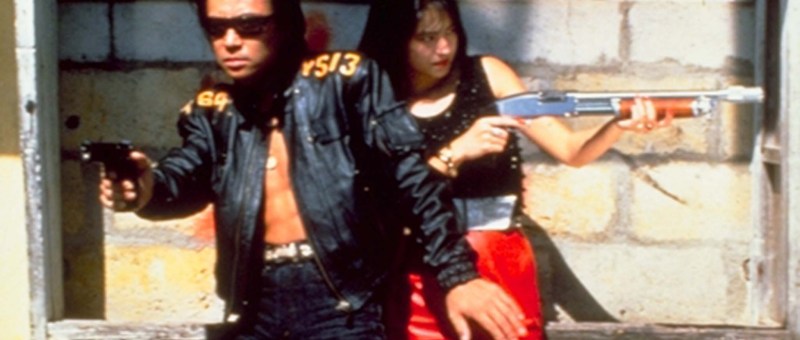
The ironically named Willie (Raymond Wong Pak-Ming) is a rising executive in a quasi marriage with Sylvia Chang (Sylvia Chang Ai-Chia) which is to say they live together as man and wife but Wille has never bothered to put in the paperwork (something which continues to annoy his harridan of a not quite mother-in-law). The couple have been together for seven years and Willie is beginning to tire of the monotony of (not actually) married life, irritated by Sylvia’s early morning Chinese Opera practice sessions and the fact he’s had nothing but sausage and egg for breakfast every day since moving in. Consequently, he fantasises about having an affair but is too mild-mannered despite the gentle ribbing of his colleagues and constant attempts of his brother-in-law John (Eric Tsang Chi-Wai) to introduce him to the red light district. 

In an early meeting with his colleagues after work, the men all discuss affairs suggesting that if a man isn’t chasing a woman it’s because he’s “sexually disabled” or gay quite clearly tying sexual prowess to masculinity. It’s also quite clear that the men view themselves as a group entirely separate from women, brother-in-law John evidently not thinking anything of it that he’s tempting his brother-in-law to cheat on his own sister implying that to him at least Willie’s masculinity is far more important than his sister’s feelings which in the end don’t seem to matter very much to him at all. John is also, however, a henpecked husband and moral coward. Challenged by his wife, sister, or mother, he immediately changes tack, dobbing Willie in when he’d tried to use him to placate Sylvia’s suspicions of an affair and quickly backtracking after having defended his decision not to file the papers by insisting “marriage is nonsense, old fashioned” only to counter with “I’m just saying for those silly men who try to overthrow the marriage tradition, I’m not one of them,”, “I absolutely agree with marriage. For women’s respect, I oppose living together”. 

Both John, whose constant badgering for loans also places a financial strain on the (non) marriage, and Wille feel themselves emasculated by the constraints of a monogamous relationship as the constant references to wild meat imply. Meanwhile the women are also depicted as vain and parasitical, the collection of trophy wives at Sylvia’s cookery class forever showing off the expensive gifts their husbands have bought them while alternately complaining they feel ignored. The implication is that the men can’t win, if they seem indifferent the wife worries they’re playing around, but too much affection is also regarded as a sign of infidelity. 

Even so it’s Sylvia who eventually gains the upper hand in refusing to play along with Willie’s games after he convinces her join him for a little Vertigo-esque role-play on a second honeymoon in Singapore, re-enacting his brief encounter with a foxy woman he met on a plane who was in fact conning him in order to facilitate a drug smuggling mission. Fed up with his ill-treatment, she falls asleep before the couple end up in an argument about her relationship with her “gay cousin” Chinese Opera partner with an inexplicably jealous Willie descending into an unpleasant homophobic rant. When he goes back to his own seat she has a meet cute of her own with a Chinese-American businessman literally named “Mr. Money” (Wu Fung) who took a liking to her in the departure hall and quite clearly needles Willie in the soft spots of his masculinity being both wealthy and cultured, able to take Sylvia off to a much more comfortable life in America with someone who is almost certainly going to treat her better than he ever intended to. 

As in many subsequent To comedies, it’s then the man who is put on the back foot blindly flailing while trying to win back a woman he took for granted. But if it seemed as if Sylvia might actually have more power in this relationship that either of them had assumed, the notion is quickly knocked back, literally, when her henpecked father raises a hand to her mother at the airport in order to support Willie’s attempt to prevent her leaving not because he thinks his daughter will be happier but in support of Willie’s compromised masculinity while reaffirming his own. An uncomfortable suggestion to a policeman that if “you slap her everything will be OK” reinforces the idea that actually the harridan mother-in-law now respects him more because of his show of manly violence, rebalancing the relationship back towards patriarchal norms while the father-in-law then turns full on sleaze cavorting with young women in public parks. 

It all adds to the impression that Willie is a sad sack, ineffectual man but largely because he turns back towards his wife while continuing to fantasise about other women seven years later claiming no longer to find her attractive and anticipating another itch this time presumably to escape his responsibilities as a father, his eyes following a pretty park jogger played by a then rising now iconic Hong Star who had appeared in the previous film Wong and To had made together. While To’s dancing camera shows glimpses of its future romanticism, it can’t quite escape the contradictions of the material even as it does its best to hand the balance of power back to Sylvia who could, it has to be said, do better. 


Raffles Hotel (ラッフルズホテル, Ryu Murakami, 1989)

An actress gradually dissolves into her own image while wandering around Singapore in search of lost love in Ryu Murakami’s adaptation of his own novel, Raffles Hotel (ラッフルズホテル). Ryu Murakami may generally be more associated with the extreme revolving around transgressive sex and violence, yet like its namesake the film is a more elegant affair indulging in its own sense of mystery tinged with a melancholy eeriness in its heroine’s apparent instability. 

Moeko (Miwako Fujitani) later admits that she is no longer an actress, and therefore no longer quite herself uncertain who it is she’s meant to be. In one sense perhaps that’s why she’s come to Singapore though in another it’s someone else she’s looking for though to begin with we may think she’s there to escape him, and it could be that too. “Maybe I’d feel better if he were,” she muses when her tour guide, Yuki (Masahiro Motoki), explains that there are no Japanese people near the gravestones she’s just been looking at trying to assure her that the man she’s seeking is not dead. She thinks she sees him everywhere, dropped into typical Singaporean scenes appearing as a durian seller or a man restoring a church while more literally haunted by the spectre of a friend who apparently died in Vietnam while covering the war. Kariya (Jinpachi Nezu) later tells her that he can’t forget the jungle while she asks to be taken there with him and travels to a mountain lodge where they hunt wild game with a crossbow. 

Yuki first becomes worried about her when her hotel room is filled with orchids she claims are from Kariya only to discover she ordered them herself when the orchid house contacts the hotel to complain that the bill has not been paid. Even so, she continues to believe they are from the man she’s looking for, even going so far as to thank him for them as if unable to process the gap between her realities. We often see her looking at photos from her photo shoots, while she later complains to Kariya that she wants to laugh when she wants to laugh and cry when she wants to cry as if making plain her disconnection with her self and desire to reassert her own identity over those she is forced to assume as an actress. 

This abstraction may also explain her words to Kariya that the sky is full of stars but that they are distant from each other and therefore the sky is only make-believe as if the image of Moeko that we see is only an illusion we’ve patched together from the various components available to us. It speaks of her alienation and loneliness, two qualities only deepened by her presence in an unfamiliar culture where she cannot speak the language. Acting as her guide, Yuki describes her as a polar opposite to his Singaporean girlfriend (Fawn Wong), the daughter of a wealthy family who is bold and confident, unafraid to chase her desires be they dancing or “Japanese hoods” as her father describes them. 

Murakami semi-exoticises Singapore if at times ironically in homing in on the portraits of famous authors in the bar and a man who always seems to be banging away on a typewriter. He sends Moeko all around the island and follows her as she takes in tourist sights, tries durian, and watches Chinese opera but lends an eerie quality to her place within the hotel implying finally that her room has in a way swallowed her as her name is added to the list of famous people who have stayed there even as she remarks that she feels as if the ceiling fan has become sentient in its movement. In any case, the camera is something that she both fears and craves as it both gives and takes her identity. She tries to pick it up herself but points it without looking, finally asking Kariya to take her picture only to find herself becoming one with her image just as Kariya is reduced to shadow as if her very essence had dissipated into the atmosphere as symbolised in a swimming pool full of orchids. “Lost in a fantasy” she may be, but so are we, led astray by a vision of a woman we can never really see.