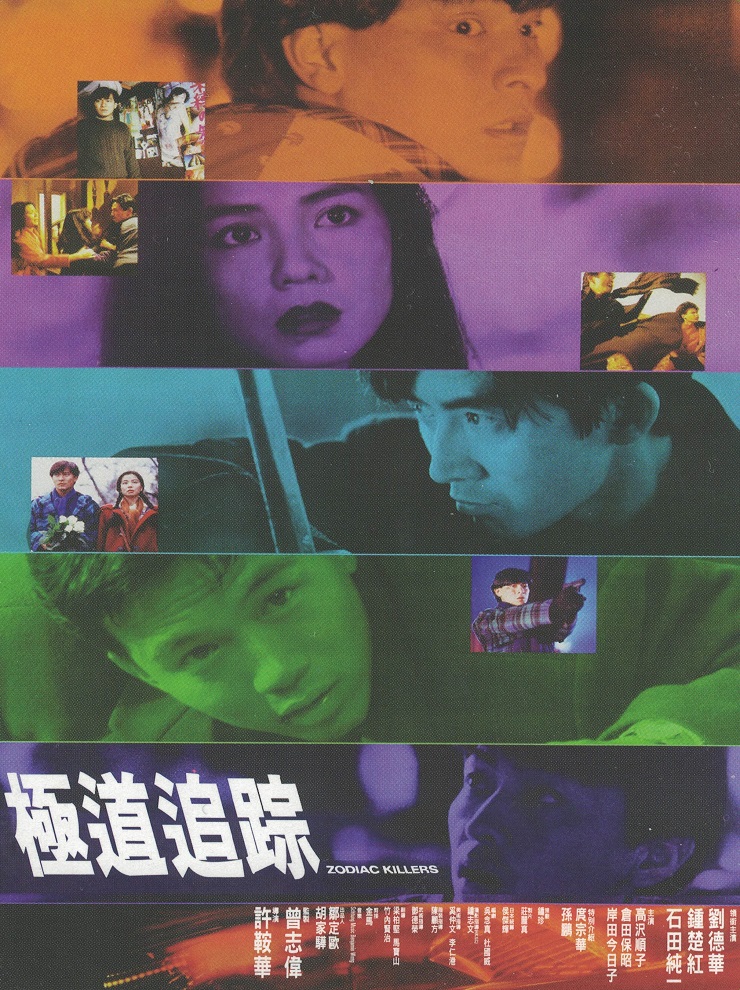
Zodiac Killers (極道追踪, Ann Hui, 1991)

Melancholy exiles seeking a better future find only futility in the dying days of the bubble economy in Ann Hui’s 1991 gangster drama, Zodiac Killers (極道追踪). The English title is admittedly misleading, there’s seemingly no connection to any kind of “zodiac” and no hint of conspiracy murder except those forced by the world’s enduring cruelty, though the Chinese is perhaps equally so meaning something like “yakuza pursuit” which is accurate but only to a point.

The hero, Ben (Andy Lau Tak-wah), has come to Tokyo from Hong Kong to study film but rarely goes to classes, preferring to learn how to make money instead. Making the most of the then affluent city, he works as a tour guide for Chinese tourists, dutifully delivering the men to the strip clubs of Shinjuku in the evenings for kickbacks and giving his boss a kicking when he tries to stiff him out of the agreed amount, heading to his second job in a kitchen immediately afterwards. “Man does not live to make money only, you must learn to spend it too”, he explains to his friend, Chang (Tou Chung-hua), persuading him to come hang out in a swanky bar they’ve been invited to by Ben’s shady relative Ming (Suen Pang) who is currently trying to make it as a yakuza by marrying the boss’ mama-san sister Yuriko (Junko Takazawa). It’s at the bar that Ben first sets eyes on Tieh-lan (Cherie Chung Chor-hung), a young woman from the Mainland in Tokyo studying at a Japanese language school and working as a hostess to make ends meet though as she points out “not every Chinese girl likes to work here”, instantly offending Ming but interestingly not Yuriko who seems sympathetic if embarrassed. 

All of them are in Tokyo because at that moment in time Japan looked like the future, though the window was rapidly closing. Tieh-lan is beginning to wonder why she came. Her friend Mei-mei (Tsang Wai-fai) has ended up in an unwanted sexual relationship with the man who sponsored their visas, Harada (Law Fei-yu), who nevertheless continually sexually harasses Tieh-lan. “Why did we come here?”, Tieh-lan asks Mei-mei, “for our future or for men? You can debase yourself at home, why have you come to Japan to do it?”. Ben later asks something similar of Ming who freely admits that he is prepared to sell his body for influence, “satisfying” Yuriko in order to buy influence with her brother and be admitted into his yakuza clan. The Tokyo they inhabit is one steeped in exile. They surround themselves with other Chinese migrants, be they from the Mainland, Hong Kong, or Taiwan, and congregate in the seedier parts of Shinjuku living on the fringes of society, working as bar hostesses, or gangsters, or in kitchens. For Ben whose bachelor pad student dorm is adorned with posters of Bruce Lee and Rocky, his purpose is more adventure and youthful longing for freedom than escape which is why he makes a point of ignoring his loving mother’s phone calls, but even he struggles to find what he needs on the unforgiving streets of a hostile city. 

That hostility is first brought home to him by a gang of ultranationalist bikers flying the imperial flag one of whom threatens him with a samurai sword (a moment which is tragically echoed in the film’s nihilistic conclusion). They are not, however, the only ones feeling displaced, as a heartbreaking cameo from golden age star Kyoko Kishida as an ageing geisha makes plain. Asano (Junichi Ishida), the melancholy yakuza with whom Tieh-lan has fallen in love much to Ben’s disappointment, declares himself “always a loner”, returning to Tokyo after years of exile in South America. An orphan, Asano laments that the beach he visited as child no longer exists and the city he’s come home to is changed beyond all recognition. Perhaps for that reason he falls for melancholy exile Tieh-lan as they bond in a shared sense of hopeless rootlessness. 

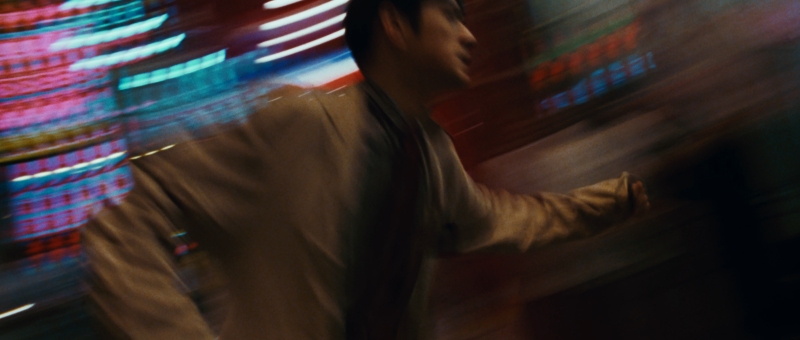
With the surprise introduction of Asano, Hui transitions into the moody noir with which the film opened, shots of Andy Lau plaintively looking back at the shore from a boat on the open sea intercut with Cherie Chung walking sadly through an empty, neon-lit city. Asano hoped for reconciliation but found only betrayal, there can be no home for exiles even if they return. The trio’s broken dreams find their final expression in the nihilistic violence of a non-existent yakuza war. Asano’s final gesture was one only of futility, no one wants to hear his inconvenient truth because the clans in question have already made “peace” and are intent on working together for future prosperity. “Your heart is too soft for this wicked world” Ming says of Ben but it’s a statement that rings true for them all, living life by movie logic in which good will eventually triumph. Ming sees no point in returning to Hong Kong because he’d be a nobody, tragically believing that being a gang boss’ brother-in-law is close enough to somebody in Shinjuku. Only Chang, who came to Japan to look for his missing sweetheart, manages to keep himself safe but largely, as we later find out during a rather bizarre sequence featuring a surprise outdoor porno shoot, because he does not yet know that his dream is futile too. A chronicle of a world in collapse, Zodiac Killers leaves its marginalised heroes with no place left to run, permanent exiles denied safe harbour sailing towards a promised horizon with no land in sight.


Original trailer (no subtitles)
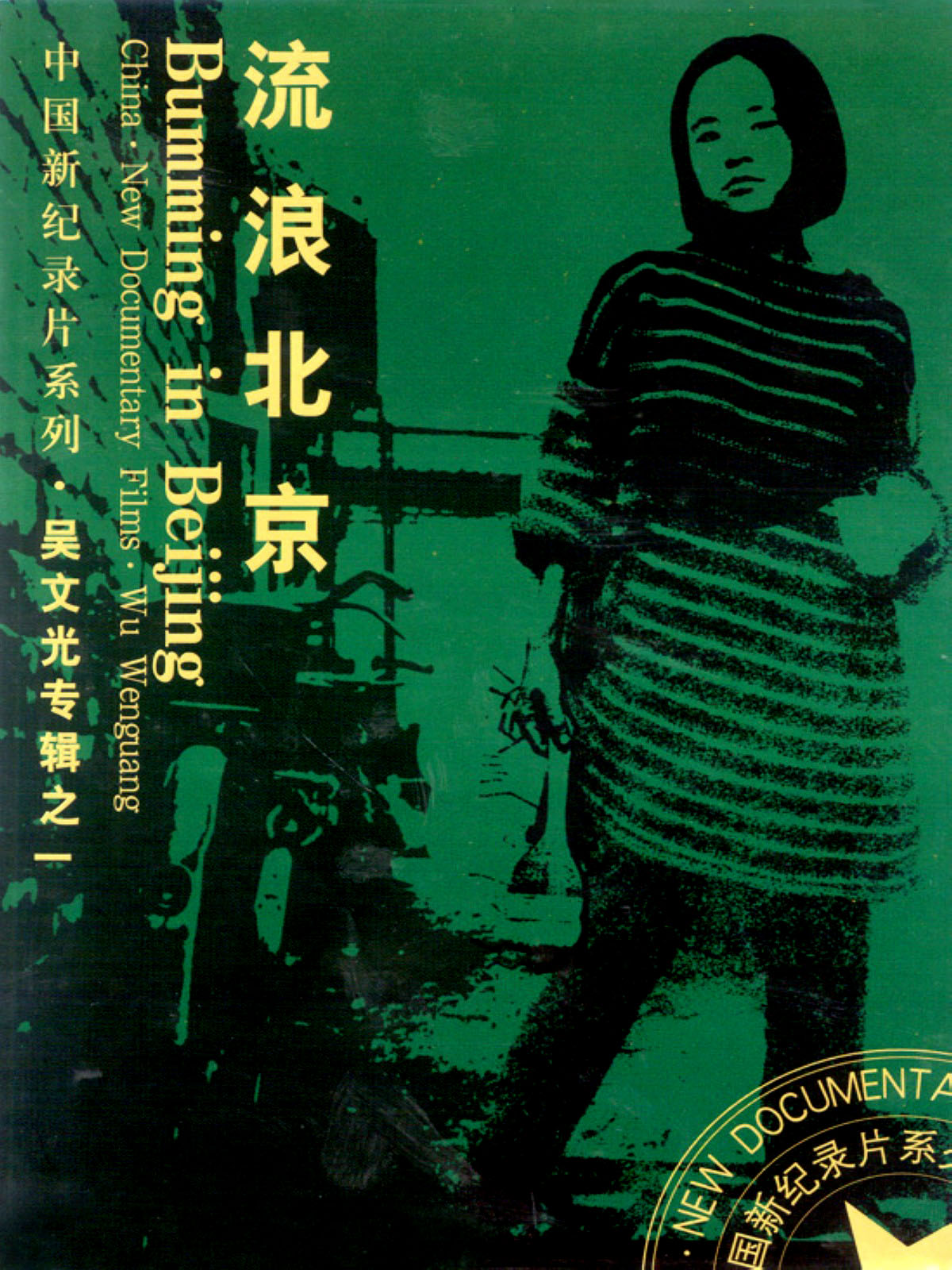
Bumming in Beijing: The Last Dreamers (流浪北京, Wu Wenguang, 1990)

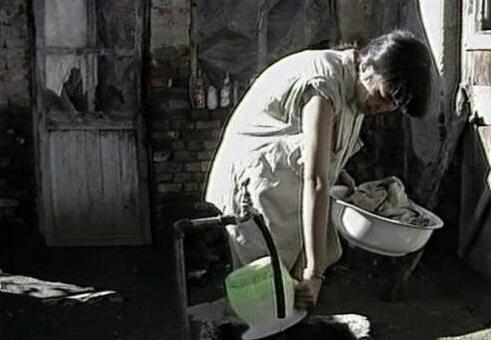
Wu Wenguang’s seminal documentary Bumming in Beijing (流浪北京, Liúlàng Běijīng) opens with a stark title card explaining that it was filmed between August 1988 and May 1990. Perhaps for obvious reasons, the film never mentions what happened between those dates and is in a sense defined by the things it doesn’t say. Often regarded as the father of Chinese independent documentary, Wu’s shooting style breaks with the accepted norms which had favoured meticulous control by shooting handheld and in 4:3 with a grainy camcorder as he interviews his counterculture friends accidentally documenting their lives on either side of an unbreachable divide. 

As the opening explains, his subjects are a group of 20-something bohemians who have each rejected their State assigned jobs and relocated to Beijing, without proper residence permits, to participate in an artistic and cultural revival in which anything seems possible. Zhang Ci was a magazine editor in her hometown but hated it and came to Beijing to be a freelance writer. Zhang Dali studied book binding in the city and stayed on living as a freelance painter, while his classmate Gao Bo did the same thing but is a freelance photographer. Also a freelance painter, Zhang Xiaping was working as a scenic artist in Yunnan and has only recently come to the capital, while Mou Sen, originally from Tibet, is a struggling avant-garde theatre director. 

While perhaps fulfilling the starving artist stereotype, what Wu discovers in the stories of his friends is a sense of despair and inertia at odds with the supposed hopefulness of the times. Ci often appears on the brink of tears as she talks about her life, obviously dissatisfied and uncomfortable with the harshness of her living conditions making use of the facilities at the near by university, offended and perplexed when foreigners compliment her on her bohemian lifestyle. Dali too declares himself bored with Beijing and its dull culture vultures while lamenting that it’s impossible to make a living as a freelance artist, only foreigners have money to buy his paintings and there aren’t many of those around. There is perhaps a sense of artistic rivalry between Dali and Xiaping who appears to have achieved a degree of success preparing for a big solo show while complaining that she hates selling her paintings and would almost rather sell her body. 

Dali and Bo expand on the phenomenon of “Cen Fan” as they sheepishly convince friends currently doing better to spot them dinner, while Bo declares himself a vagabond at heart but also remarks on the various anxieties of living on the margins trying to make rent in a fracturing Beijing. They each insist that they live for their art, Mou Sen certain that there could be no life for him without theatre, but some also dream of more conventional lives, Ci and Dali longing for materialist comforts of a decent home and a car even if in his case he wants these things to facilitate his art rather than to improve the quality of his life. Increasingly despondent, they discuss the idea of going abroad, Ci eventually making a, it’s implied, cynical marriage to an older American man to get a visa to emigrate while Dali eventually marries an Italian and Xiaping an Austrian. When Bo takes a job in Paris, Mou Sen is the only one left behind yet even he had mused on the idea of marrying a European in order to see Europe while admitting the possibility he may find a nice Chinese girl he likes and simply marry her. 

The artists’ mass exodus seems to run in tandem with the shockwaves of Tiananmen, as if they have given up on the prospect of social revolution and concluded that their only future lies abroad. Shortly before we are told she has left for Vienna, Xiaping appears to suffer a period of mental distress culminating in a public breakdown in a KFC from which Mou Sen and Wu himself had to rescue her, an incident which seems overly pregnant with symbolism as if the rapid changes of the modern China have fractured her mind. Wu never mentions Tiananmen, how could he, and it seems he encountered a degree of resistance including distressing footage of Xiaping’s manic episode (not for reasons of taste or privacy but shame on the part of the authorities), but the sense of painful defeat echoes all the same in a well placed title card as the artists make their exit signalling both the death and the failure of this short-lived counterculture movement. 


Bumming in Beijing: The Last Dreamers is currently available to stream in the UK as part of the Chinese Cinema Season.

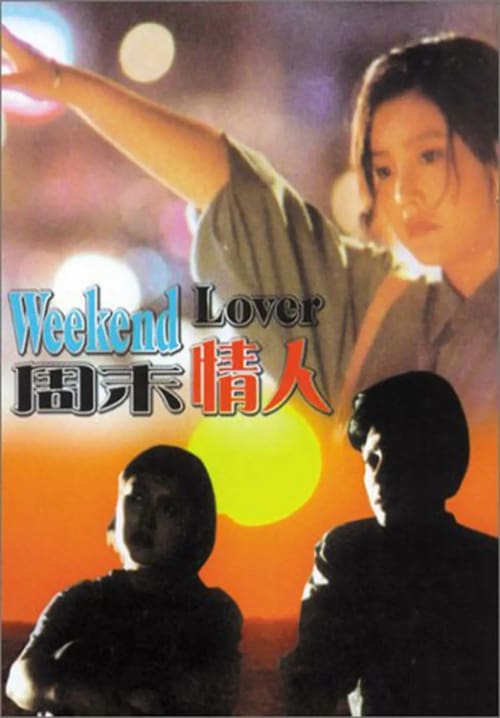
Weekend Lover (周末情人, Lou Ye, 1995)

Lou Ye’s troubles with the censors began at the very beginning of his career. Shot in 1993, his first feature Weekend Lover (周末情人, Zhōumò Qíngrén) was held up until late ’95, making ’94’s Don’t Be Young his accidental “debut”. Set in the contemporary era the film nevertheless has a strong sense of melancholy nostalgia coupled with air of nihilism that perhaps distressed the censors more than the otherwise potentially problematic bohemian setting, finding the post-Tiananmen generation floundering in a changing China in which the dream of freedom has long since flown. 

In one of many title cards, Lou opens with a lengthy piece of text claiming that this is a true story, a claim he will return to with the closing card the fantastical quality of which perhaps undermines the idea of its “reality”. The author of the text claims that this is a story some did not want to tell but mostly because it makes them sad to recall bygone days for reasons we will come to understand. Nevertheless, the filmmakers claim to have tracked down the central figure of Lixin (Ma Xiaoqing) who has agreed to share her story, which turns out to be the story of two men, violent thug Axi (Jia Hongsheng) and sensitive musician Lala (Wang Zhiwen), who find themselves bound for confrontation in order to lay claim to the affections of Lixin. 

Axi is the “weekend lover” of the title, a high school boyfriend of Lixin’s who used to spend weekends in her apartment while her parents were out but later went to prison for killing another boy who threatened their relationship. Lixin vows to wait, but ends up meeting Lala in a case of mistaken identity tasked with venturing into the unfamiliar world of back street pool halls to find a man in plaid in order to deliver something on behalf of Axi. The pair start dating, but Axi returns unexpectedly some years later put out to realise that Lixin has forgotten him and quite literally moved on. Hoping to get her back he threatens Lala and later Lixin herself, remaining somewhat obsessed with recapturing the past while little more than a violent street thug with nothing to offer other than intimidation. 

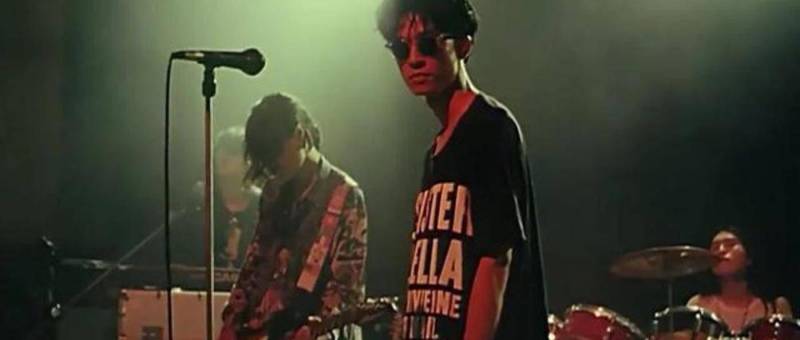
One could see Axi and Lala as embodiments of past and future with Lixin trapped painfully in an interminable present. Lala dreams of becoming a singer, eventually joining a band with whom Lixin also becomes friends hanging out in the beatnik bohemian space of the disused building she decribes as a “jail” they repurpose as their arena. Yet even this potential future is flawed. The band’s leader (Wang Xiaoshuai) explains to Lala that they will disband after their big concert as most of the members are going abroad, perhaps he will even go to America. There is no future for any of them in China while Lala rejects the idea he may stay and marry Lixin, realising she has not completely severed her connection to Axi believing their relationship is doomed to failure. 

Westernisation is indeed a persistent background theme from the discarded Coke cans, Marlboro cigarettes, and Lipton tea in Axi’s rundown room to the fancy new fast-food restaurant where Lixin works going under the name “California Rainbow”. These Bohemians dream of Western freedoms aside from the power of consumerism, longing for the right to seize their artistic potential but finding themselves continually constrained by a society they do not understand. “We drank a lot, always felt we were the most miserable and that society didn’t understand us. Later I came to realise it’s not that society didn’t accept us it’s that we didn’t understand society” Lixin explains in voiceover apparently from the vantage point of “many years” later in which she seems to have in part at least rejected her countercultural youth and developed an understanding of the contemporary society. 

Nevertheless, the film closes with both her wilful self-exile and an improbably optimistic coda which may only be a reflection of her dream followed by the title card which suggests that the couple may find happiness but only “many years later” in another city. “We felt the whole world belonged to us, as if everything would last forever. But we didn’t know what would happen.” Lixin laments, recalling her brief moment of youthful freedom later ruptured by the re-introduction of the violent past in a touch of rather elliptical irony that perhaps evokes Lou’s later taste for non-linear narrative. Moody yet imbued with a kind of youthful ennui, Weekend Lover’s frequent use of title cards, pop music, and self-consciously cool imagery may never quite coalesce beyond their various influences but edge towards an attempt to capture youth in a new age of anxiety caught between the death of idealism and the opportunities of a newly consumerist economy. 


Weekend Lover is currently available to stream in the UK as part of the Chinese Cinema Season.

Musical sequence (English subtitles)

Don’t Be Young (危情少女, Lou Ye, 1994)

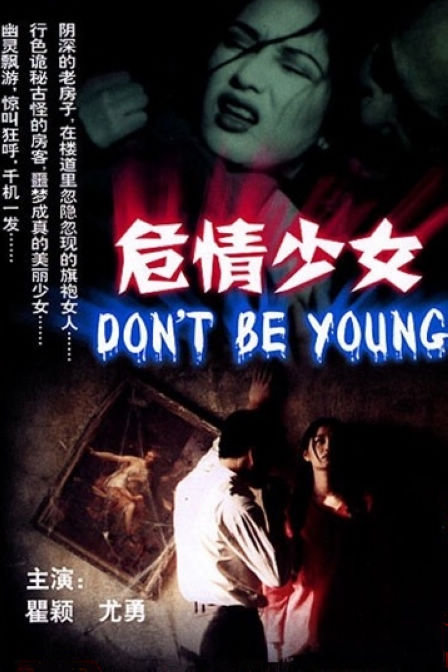
Lou Ye’s complicated relationship with China’s censorship board has been well documented though it is certainly not a recent phenomenon and has in fact plagued him from the very beginning of his career. His first feature, Weekend Lover, was shot in 1993 but not passed for release until two years later technically making 1994’s Don’t Be Young (危情少女, Wēi Qíng Shàonǚ) his cinematic debut. This might seem surprising seeing as Don’t Be Young flirts with themes the censors find problematic, an ethereal gothic ghost story perhaps permissible solely because the spectres can be read as existing only in the mind of the troubled, traumatised young woman at the film’s centre though the spirit that haunts is perhaps that of the age and of a traumatised China caught between failed revolution and rapidly expanding economic prosperity. 

As the heroine, Lan (Qing Yu), tells us this is the story of “another time, another place”. Unable to separate fantasy from reality, she nevertheless goes on to narrate a dream she later claims not to remember and in any case can no longer revisit. On smashing a bottle in the street she retrieves a device which seems to be the engine of a music box that once belonged to her mother and acts as a kind of key to an alternate reality that soon bleeds into her contemporary life. In the present, Lan is a nervous young woman struggling to deal with her mother’s death in an apparent suicide, watched over by her patient doctor boyfriend Lu Mang (You Yong) but after discovering a strange book similar to one her mother owned containing a floor plan and a letter after taking shelter from the rain under the porch of an abandoned mansion she finds herself investigating her own history. 

The dream world, shot in an ethereal blue, seems to exist sometime in the 1950s, Lan’s clothes and those of her boyfriend and the other people around her suddenly shifting without warning as she finds herself crossing over while everyone else appears in pale face as if this were the world of the dead, or a “hell” as an elderly woman later describes it. Lan insists that “everything is real” though the borders between the two worlds become increasingly thin even as the plot developments become ever more outlandish leading to a confrontation with a mad scientist veterinarian and his nefarious attempts at human experimentation with a weird drug that causes those who take it to lose control over their nervous systems. The scientist insists that science makes him a god with the right to dominate the world while the secondary villainess (Nai An) turns out to be a scorned nurse blackmailed into helping to “ruin” Lan over her murder of a patient who tried to assault her by pulling out his oxygen tubes. Only the earnest Lu Mang who is strangely absent for much of the action after leaving to “take an exam” but mostly wandering moodily around noirish rail stations served by atmospheric steam trains, is present to represent “science” as a force for good but ultimately ends up defending Lan in the most prehistoric of ways. 

Nevertheless, what she begins to uncover is a complicated family legacy running through romantic failure, adulterous liaison, and broken connections all contained in the house she inherits after decoding the messages from the dream. Lou throws in a series of unexpected cinematic allusions, including one to Ozu’s Late Spring as a lodger randomly peels an apple with intense melancholy, while drawing inspiration from the Hong Kong New Wave. Yet the key aesthetic is gothic horror as Lan finds herself trapped by generational trauma, witnessing her grandmother bound in cobwebs while attacked by razor-wielding spectres apparently keen to stop her further investigating her traumatic past. Finally she laments that all that remains is an “empty and beautiful end”, apparently returning to the present which is perhaps equally frightening in its sense of oppressive anxiety by abandoning the music box and thereby closing the door on the nightmarish dream world of haunted houses and cursed legacies. Nevertheless, the young couple seem to have beaten back the attempts of the older generation to reassert their control and emerge into a new society with a new sense of freedom if not quite liberation. 


Don’t Be Young  is currently available to stream in the UK as part of the Chinese Cinema Season.

Lotus Lantern (宝莲灯, Chang Guangxi, 1999)

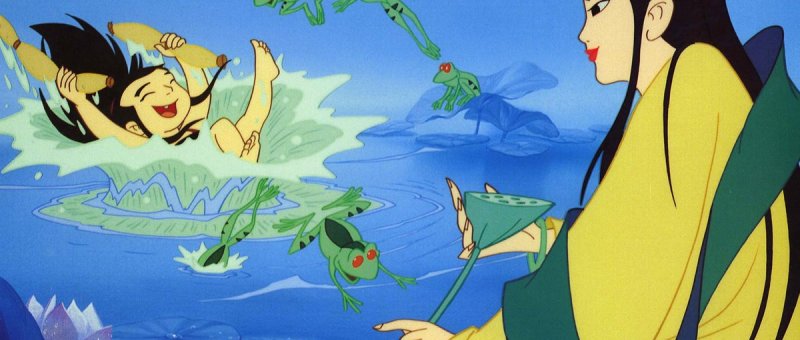
“I only want to have a normal life” a wronged woman complains on discovering that it’s almost impossible to escape the tyranny of the celestial realm and most particularly if you are a goddess. Released in 1999, Lotus Lantern (宝莲灯, Băo Lián Dēng) apparently took over four years to produce requiring 150,000 animation cells and 2000 painted backgrounds, and like much of the Shanghai Animation Film Studio’s output is inspired by a well-known folktale celebrating filial love and in fact featuring the Monkey King himself in a small role. Unlike the studio’s earlier work however and despite its roots in Chinese folklore, Lotus Lantern perhaps owes much more to Disney’s ‘90s renaissance than it does to the nation’s animation history. 

Animated in a classic 4:3, the tale opens with a voiceover as a scarf elegantly falls to Earth and into the arms of a young man. Defying her brother Yang Jian’s (Jiang Wen) wishes, the goddess Sanshengmu (Xu Fan) has chosen to leave the realm of the immortals to be with the man she loves taking the famed Lotus Lantern with her in an attempt to evade his control. He however finds her and attacks the pair with his eye lasers. Sanshengmu’s lover is killed but she gives birth to a son, Chenxiang (at 7: Yu Pengfei / at 14: Yang Shuo), and lives happily with him in the mortal realm for seven years until the flame in the Lotus Lantern is extinguished allowing Yang Jian to track her down and kidnap Chenxiang to force her to return. She tries to bargain with her brother but as she later puts it Heaven Temple lacks compassion and so he imprisons her underneath a mountain and tells Chenxiang his mother is dead. Chenxiang does not believe him and is determined to get the Lotus Lantern back, especially after a cryptic visit from the God of Land hints the same fate as befell the Monkey King, who has since become a Buddha, may have befallen his mother. 

First and foremost a tale of filial love and devotion, Lotus Lantern is also another subversively anti-authoritarian rebuke against heartless celestial tyranny. We learn than Sanshengmu’s mother also loved a mortal, yet her brother refuses to forgive her for this apparent transgression against the law of heaven, burying her under a mountain while vowing to raise her son as his own in accordance with filial piety. Meanwhile, he’s also quietly terrorising a community of non-Han Chinese trying to force them to carve a colossal statue of him by kidnapping the chief’s daughter Ga Mei (Ning Jing) and keeping her in Heaven Temple as a maid. Yet Yang Jian isn’t the only problem. The God of Land tells Chenxiang to seek out the Monkey King (Chen Peisi) for advice on busting out of a mountain, but now that he’s become a Buddha Sun Wukong has no interest in helping. Indifferent to all things, he believes suffering is a path to enlightenment and sees no reason to help Chenxiang alleviate his by showing him how to rescue his mother. 

Then again, the mortal world’s not much better. The first person Chenxiang meets on his quest turns out to be a dodgy priest who claims he knows where to find the Monkey King and can even help Chenxiang with his training but predictably ends up kidnapping his pet monkey and exploiting it as part of a fairground act even members of the crowd complain is cruel and distasteful. Nevertheless, after reuniting with his monkey buddy Chenxiang trudges on looking for a way to release his mother from under the mountain, finally moving the Monkey King by needling him about his own sense of maternal abandonment in his apparently parentless genesis. In this unsteady world, it seems to say, the only true thing is a boy’s love for his mother though a conflict perhaps arises after another seven year jump reunites Chenxiang with Ga Mei who has been returned to her tribe and probably should be his love interest if he were not currently fixated on his filiality. 

Yet as the disembodied voice of his mother reminds him, only by embracing true love which is what Heaven Temple lacks can Chenxiang finally defeat it. Borrowing heavily from Western animation and particularly from classic Disney, Lotus Lantern may in some senses seem old fashioned even for 1999 in its still frame pans and unconvincing effects, but perhaps reflects a desire to take Hollywood on at its own game as the studio found itself needing to commercialise its output especially in its series of musical montages featuring a contemporary pop songs performed by top Mandopop stars while the faces of the A-list voice acting cast are also showcased during the end credits. The approach apparently paid off, Lotus Lantern proved a huge domestic hit and is credited with reinvigorating the Chinese animation industry which had gone into decline in the market-orientated ‘90s. Complete with adorable monkey sidekick there’s certainly no doubting its mass appeal in its warmhearted, family-friendly take on filial devotion.


Lotus Lantern is currently available to stream in the UK as part of the Chinese Cinema Season.

Happy Together (春光乍洩, Wong Kar Wai, 1997)

4K

“Turns out, lonely people are all the same” according to the hero of Wong Kar Wai’s melancholy handover romance, Happy Together (春光乍洩). A statement cutting straight to the heart of Wong’s sensibility, it at once casts the individual as the universal as a man is forced to see himself from another direction, mirrored in the eyes of his former lover a man he can neither keep or forget. The title’s all too apparent irony becomes plain as the couple find peace only in incapacity, lovers on the run perpetually in search of but unable to attain the image of idealised romance. 

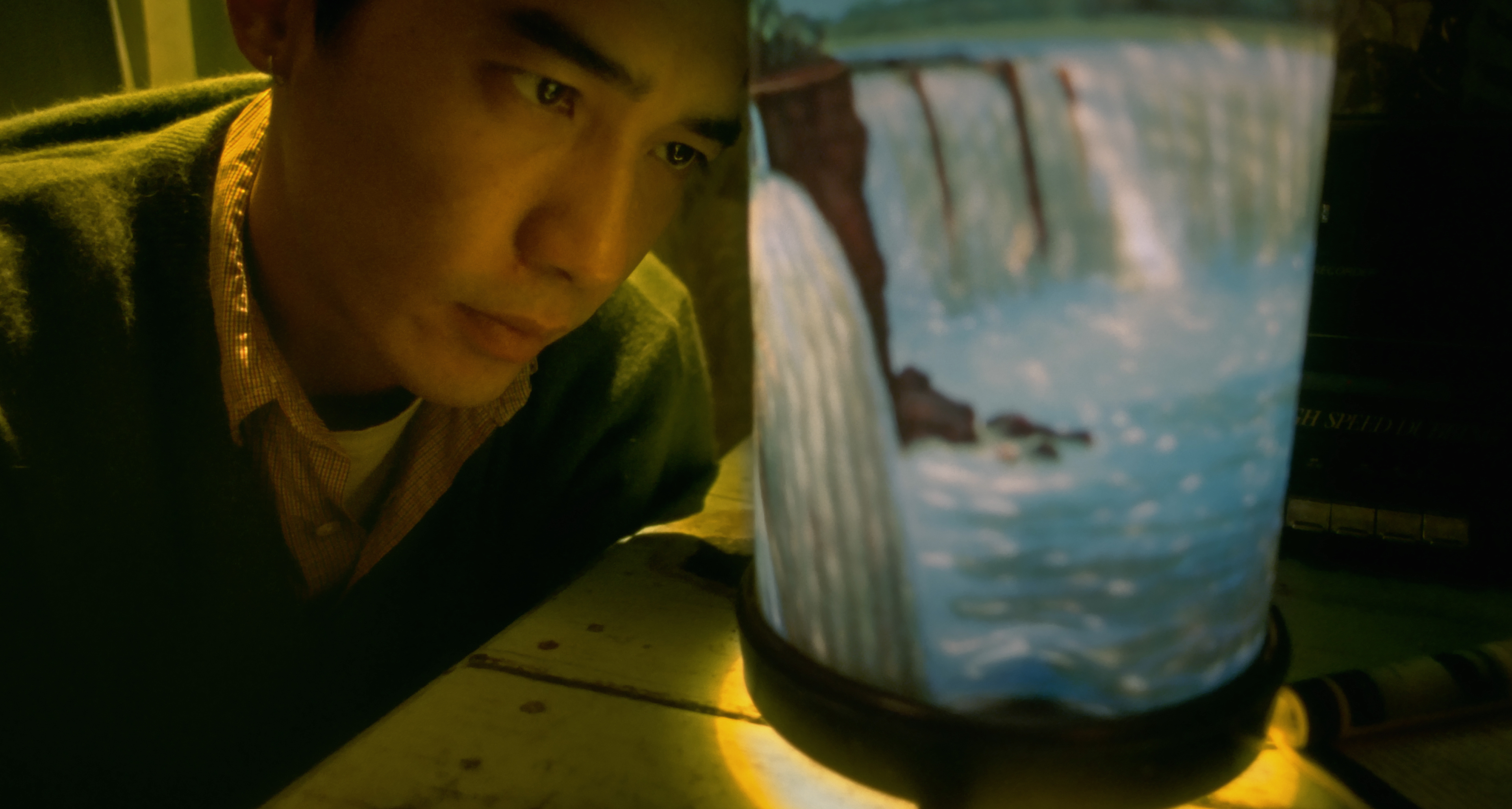
As if to signal his intent, Wong begins with a zoom in on the symbol of the love the two men can never fully realise in the colourful lamp bearing the image of a majestic waterfall they continue to search for but only one of them finds. Switching to a melancholy black and white he shows us for the time at least a semi-explicit sex scene between two men played by two of the biggest stars of the day while the hero, Yiu-Fai (Tony Leung Chiu-Wai), laments in voiceover his tendency to give in when his lover, Po-Wing (Leslie Cheung), utters the phrase “Let’s start over” encapsulating the tempestuous quality of their romance. To do just that, they’ve fled pre-Handover Hong Kong for Argentina in the hope of fixing their relationship but have discovered only more of the same, their contradictory qualities highlighted by their isolation in an unfamiliar environment. 

Tellingly Po-Wing first breaks up with Yiu-Fai on the road after they fail to find the waterfall as if in acknowledgment of the impossibility of mutual acceptance. Both ending up in Buenos Aires the pair awkwardly reunite, Yiu-Fai working earnestly as a bouncer at a tango bar while Po-Wing becomes a sex worker, his sharp outfits and sunshades an immediate contrast with Yiu-Fai’s somber workwear. Nevertheless, when his new life implodes leaving him badly beaten it’s to Yiu-Fai that he returns. By turns resentful, Yiu-Fai will later describe these days as their happiest, those in which Po-Wing was in a sense tethered, incapacitated, and dependent, his worst qualities neutered by his present need. Demonstrative and affectionate, he attempts to rekindle his relationship with the reluctant Yiu-Fai but is soon up to his old tricks again as his wounds begin to heal while strangely jealous as Yiu-Fai develops a friendship with an itinerant young man from Taiwan, Chang (Chang Chen), who works at the restaurant he transfers to after getting into a fight avenging Po-Wing at the tango bar. 

Like Yiu-Fai and Po-Wing, Chang claims he left Taipei because he was “unhappy” and is currently on a journey to the “end of the world”, looking for a lighthouse where it is said the brokenhearted can leave their sadness behind. It isn’t exactly clear if Chang realises Yiu-Fai is gay, seemingly shocked on picking up the phone to hear a man’s voice where he expected a woman’s but saying nothing of it and continuing to frame his conversation in heteronormative terms, though Yiu-Fai certainly seems worried what the fallout might be of Chang’s accidental discovery. Perhaps in flight from an uncertain future in a Hong Kong on the brink of a “reunion” with an authoritarian regime, the two men live freely bathing in the isolation of being two alone together in an unfamiliar culture, but their paths are always set to diverge. Sobbing into Chang’s Walkman, Yiu-Fai bounces to the end of the world and back again, observing the roaring waters for himself before travelling on echoing the footsteps of Chang, representative of another Sinophone nation, coming to realise that his wandering is possible only because he has a place to which he can return. 

Po-Wing, meanwhile, unexpectedly clings to the past, attempting to mend the lamp while living in the apartment he once shared with Yiu-Fai now regretful that they can perhaps never again “start over”. Leaving his sadness at the end of the world, Yiu-Fai extricates himself from a previously toxic relationship in exercising his right to “start over” having accepted the impossibility of his idealised dream of romance. Impassively observing the news of Deng Xiaoping’s death, he travels a nighttime Taipei, apparently resolved to reclaim his home choosing perhaps a kind of rooted independence following Chang’s example as he rides the elevated train into a neon-lit night filled with energy and positivity for the future. Shot with the melancholy greens and woozy ethereality of Wong’s emotional landscape, Happy Together deceptively mines the joys of moving on in a gradual unburdening that spells the end of loneliness.  


Transfer: As the original negative was damaged by fire and could not be fully restored, some of Tony Leung’s monologues have unfortunately been trimmed though the presentation is otherwise more faithful to the original than others in the series if also deepening the greenish tint.


Happy Together is currently available to stream in the UK via BFI Player in its newly restored edition as part of the World Of Wong Kar Wai season.

Restoration trailer (English subtitles)

Fallen Angels (墮落天使, Wong Kar Wai, 1995)

4K

Wong Kar Wai may be associated with a melancholy existentialism but Chunking Express, filmed on the fly in an effort to shake off frustration during the famously difficult shoot on Ashes of Time, had been a breath of fresh air which characterised pre-Handover Hong Kong as a place of anxiety mired in nostalgia but also with tremendous energy and a fervent hope for the future. Its quasi-sequel, however, is the other side of the coin. If Chungking Express’ Hong Kong were heaven Fallen Angels (墮落天使) is its hell. 

As if to signal the connection between the two visions of Hong Kong, the twin protagonists of Fallen Angels each repeat the words of He Qiwu, cop 223, that daily one rubs elbows with a thousand strangers some of whom may later become friends or confidants, but this time around the words spell less of possibility than of a fatalistic inevitability. Indeed, the central drama occurs because melancholy hitman Ming (Leon Lai-ming), tired of his life, yearns for control after years of “lazily” allowing all of his decisions to be made for him. “The best thing about my job is there’s no need to make decisions” he explains, “who’s to die, when, where..it’s all decided by others.” “I don’t know whether it’s a good decision or not” he adds after vowing to make a change, “but at least it’s mine”. 

Good or bad it hardly matters, it is all decided. The protagonists of Fallen Angels live in a kind of purgatory of perpetual longing, looking for a connection which seems to elude them. Ming has been in a non-relationship with his “partner” (Michelle Reis), more of a handler, for 155 weeks, a “dating” method which seems to spell out his preoccupation with time. Despite their long association, however, the pair rarely meet in person, believing that “partners should never get emotionally involved with one another”. That’s something the unnamed partner later comes to accept, explaining that after moving on from Ming she’ll be careful to avoid becoming attached. Mirroring Chungking’s Faye, we find her in Ming’s apartment, sharing his space, tidying up for him, changing his sheets, and repairing his ansaphone but slipping past him at the train station careful that the streams do not cross. Yet she also tells us that sometimes she sits in his favourite seat at their favourite bar because it makes her feel close to him, avowing that sometimes it’s better not to get too close, find out too much about someone and you lose interest. “I know how to make myself happy” she adds, ironically resorting to just that, alone on Ming’s bed while he drifts into another non-relationship with a woman who dyed her hair blonde (Karen Mok) in the hope that it would make her memorable. 

The obsession with blondes recalls Brigitte Lin’s wigged assassin from Chungking Express, another “Blondie” bringing together mute ex-con Ho Chi Moo (Takeshi Kaneshiro), prisoner no. 223 neatly mirroring He Qiwu’s badge number in addition to sharing his nickname and having apparently lost his voice as a child after eating expired tinned pineapple, with his “first love” Charlie Young (Charlie Yeung Choi-Nei) who enlists his help to track down the treacherous young woman about to marry her ex. He later rubs elbows with a changed Charlie, dressed in a stewardess’ uniform ironically mirroring the romantic ending of Chungking Express seconds after Chi Moo’s clumsy mimicking of Faye’s iconic dancing, though she does not remember him. Like Ming, Chi Moo wants control over his life, deciding to be his own boss, but does even this partly out of resignation that his muteness makes it much more difficult to make the kinds of connections he longs to make. He lives parasitically making an illicit living “borrowing” other people’s businesses after hours and intimidating customers into buying his services, eventually losing two father figures in quick succession, thrusting him into an unsought adulthood in which he returns to his former life but tries to pick stronger businesses that won’t “get hurt easily”.

Despite its sense of defeat and melancholy, perhaps even a touch of nihilism, Fallen Angels does however end with a sense of peace and positivity even in that which may or may not be a transitory connection for the gentle warmth it imparts. Collaborating once again with Christopher Doyle, Wong’s underground Hong Kong is a purgatorial dreamland of infinite longing filled with the fatalism of a gangster noir in which there is no future and no freedom only loneliness and death punctuated with brief moments of warmth, but in those brief moments is perhaps a reason for living at least until one’s “expiration date” arrives. 


Transfer: The most radical of the 4K restorations, Fallen Angels is presented in a 2.35:1 aspect ratio, cropped from the 1.79:1 of the original release with the effect that the images appear further constrained while additional distortion occurs at the edges of the frame. In his introduction to the series, Wong offered the following comment on the aspect ratio change:

With Fallen Angels, I have changed the format to CinemaScope, because it was originally what I had intended to release the film in. When we were cutting the film, we accidentally turned the Steenbeck on anamorphic instead of standard. I felt that the film looked much more interesting because the setting[ck] enhanced the distance of the characters on top of the extreme wide angle that we shot with. Back then, it was impossible to shoot a film in standard and release it in anamorphic. With this restoration, we have successfully fulfilled this wish.

Additionally, while the film maintains the distinctive green tint in keeping with the house style of the new restorations, several scenes originally in colour have been regraded to monochrome while others originally in monochrome have been retouched with elements of colour.


Fallen Angels is currently available to stream in the UK via BFI Player in its newly restored edition as part of the World Of Wong Kar Wai season.

Restoration trailer (English subtitles)

Chungking Express (重慶森林, Wong Kar Wai, 1994)

4K

Despite scoring an early success with his debut film As Tears Go By, an atmospheric gangster picture starring some of the most popular actors of the day, Wong Kar Wai’s second feature Days of Being Wild, a melancholy arthouse drama of loneliness and longing set in the heady 1960s, proved disappointing at the box office and divisive with domestic critics. Unable to secure funding for a planned sequel, Wong founded production company Jet Tone Films and agreed to a studio offer to direct a wuxia adventure which was at that time an extremely popular genre. The shoot on Ashes of Time was however notoriously difficult (Wong eventually extensively revised the film for its 2008 “Redux” re-issue), and during a short break from its various demands he shot Chungking Express (重慶森林), an extremely vibrant, zeitgeisty journey through pre-Handover Hong Kong in which a lovelorn policeman is preoccupied with expiration dates while another reflects on new possibilities when his stewardess girlfriend rediscovers her right to make her own choice. 

Lovelorn policeman He Qiwu (Takeshi Kaneshiro), badge number 223, has just been dumped by his girlfriend of five years but as she chose April 1 to break the news, he assumed it was a joke. To go along with it, he’s been buying tins of pineapple which expire on May 1, firstly because his girlfriend May loves pineapple and secondly because May 1 happens to be his birthday. If she hasn’t got back with him by then, he’ll accept that their love has “expired”. A rather melancholy young man, Qiwu gets his emotional release through jogging in the rain, avowing that while running your body sheds water so you don’t cry as much and in the rain no one can see you anyway. The password for his answering service is “love you for 10,000 years”, but his attempts to hook up with old flames from his little black book are a series of embarrassing misfires, the first having turned in early, another already married with two children, and the last not even remembering him. Nevertheless, despite his melancholy he lives in a constant state of possibility as his opening monologue reminds us in his defence of the city as a place in which one may brush past a hundred people a day some of whom may later become friends or lovers. 

Nevertheless, the Hong Kong he inhabits is one of infinite nostalgia. He tells us that his girlfriend is often likened to ‘70s Japanese pop star Momoe Yamaguchi, only to lament that he was never quite her Tomokazu Miura, Yamaguchi’s frequent co-star whom she later married and thereafter left showbiz to become the ideal housewife and mother. The woman that he falls for, a mysterious drug trafficker (Brigitte Lin Ching-hsia) hot on the trail of a group of Indian tailors she’d hired as mules who absconded at the airport, wears a trench coat, blonde wig, and sunglasses seemingly modelled on Gena Rowlands in Gloria. She too however is caught in a moment of crisis, admitting that the sunglasses and raincoat are in a sense an attempt to hedge her bets while the expiry date on an abandoned can reminds her that time is running out. The conclusion Qiwu comes to is that to May he is no different to a can of pineapple, past his best and fit to be abandoned, while the mysterious woman eventually implodes her assumed identity by taking her revenge and thereafter shedding her trademark wig to recede back into the crowd pausing only to send Qiwu a happy birthday message via his pager in another act of distanced communication.  

The irony of Qiwu’s seeming obliviousness to his proximity to crime is never touched upon despite his apparently deep, essential connection with this slightly older mysterious woman whom he manages to woo despite his awkward opening gambit of asking if she likes pineapple in four different languages. Nor does he seem to be familiar with fellow officer badge 663 (Tony Leung Chiu-Wai) who frequents the same late night food stand as he does, while neither of them apparently know the mysterious “Richard” who seems to have beaten them both to win the heart of previous assistant also coincidentally named May who has now been replaced by proprietor’s cousin, Faye (Faye Wong). Obsessively listening to California Dreamin’ at high volume because it stops her thinking too much, Faye falls for 663 who is apparently unceremoniously dumped by his air hostess girlfriend (Valerie Chow Kar-Ling) after being persuaded to alter his regular order of Chef’s Salad for Fish and Chips introduces a new element of choice into their relationship. 

In a kind of meta, expressionistic irony, 663 becomes obsessed with his sadness gently consoling the inanimate objects of his apartment in his girlfriend’s absence, lamenting that his soap bar has grown thin while his dish cloth weeps until finally the whole place floods. This last incident is partly down to the ministrations of Faye who has been, in the nicest possible way, semi-stalking him, using the keys which were returned to the food stand along with a letter 663 refuses to read to break into his flat and literally breathe life back into it by tidying up and replacing the fish in his fish tank. 663 appears not to notice as her distanced care seemingly nurses him back to health even as they begin in a sense to swap roles, he shedding the policeman’s uniform his ex mistakenly thought suited him better for the flannel shirts left by Faye which reflect perhaps his authentic self as observed by the woman who truly loves him. 

Even so she remains restless and bound for (temporary) exile while 663 once again refuses to open correspondence which may prove hurtful or unpleasant, getting a second chance at a fated love only thanks to the magical coincidences of the forever buzzing streets of Hong Kong. At once frenetic and anxious, Christopher Doyle’s swooping, mobile photography with frequent alteration in frame rate and transitions to slow motion capturing a sense of nervous energy, Wong’s take on the pre-Handover society is more positive than most as his neurotic, lovelorn protagonists breeze through their melancholia ultimately discovering a sense of forward motion in hope for the future born of chance connection in an ever moving city. 


Transfer: The 4K restoration is presented in the original 1.66:1 aspect ratio and in keeping with new the house style, has shifted slightly towards the green in terms of colour grading which is overall darker and richer than the previous Criterion release.


Chungking Express is currently available to stream in the UK via BFI Player in its newly restored edition as part of the World Of Wong Kar Wai season.

Restoration trailer (English subtitles)

Moon Warriors (戰神傳說, Sammo Hung, 1992)

“In fact, some stories are true. Especially the heartbreaking ones” according to a melancholy fisherman in Sammo Hung’s tragic wuxia romance, Moon Warriors (戰神傳說). Arriving in the middle of a fantasy martial arts boom, Moon Warriors boasts some of the biggest stars of the day in a beautifully composed tale of intrigue and derring-do as well as featuring an A-list creative team with such high profile talent as Mabel Cheung, Alex Law, Ching Siu-Tung, and Corey Yuen also involved in the production. 

Somewhere in feudal China, 13th Prince Shih-san (Kenny Bee) is on the run after being usurped by his evil brother, the predictably named 14th Prince (Kelvin Wong Siu) who burnt down his castle and has been following him throughout the land razing villages wherever he goes. Accompanied by trusty bodyguard Merlin (Maggie Cheung Man-Yuk) who is silently in love with him, Shih-san is desperate to get in touch with the Lord of Langling (Chang Yu), also the father of his betrothed princess Moony (Anita Mui Yim-Fong), in the hope of uniting their forces to retake the country together. Meanwhile, goodhearted yet eccentric fisherman Philip (Andy Lau Tak-Wah) is doing a spot of hunting in a bamboo grove during which he notices Shih-san and the others wading into a trap and leaps to the rescue, helping to despatch the black-clad assassins. As Shih-san is badly injured, he takes them back to his cheerfully idyllic village, serves them the local delicacy of spicy shark fin soup, and generally befriends them before 14th Prince’s goons track them all down again at which point he takes them to his secret hideout which turns out to be an ancient temple dedicated to Shih-san’s emperor ancestors. 

We find out just how evil 14th Prince is when he gets his minions to kill all of Moony’s ladies-in-waiting and dress up in their clothes to mount a sneak attack on the Langling estate while holding on to the pretty kites Moony was flying before the gang arrived. Though petulantly flying kites seems like quite a childish activity for a princess about to be married off, Moony more than holds her own in the fight even if finding it difficult to deal with having killed someone for the first time. Sent to protect her, Philip is less than sympathetic, but after a few arguments, a near death experience, and some magic glitter, the pair begin to fall in love, which is a problem because Moony is betrothed to Shih-san. 

What develops is a complicated love square in which Merlin pines for Shih-san who seems more interested in Philip, while Philip repeatedly tries to leave the group because of his conflicted loyalties and a feeling of inferiority as a peasant suddenly mixed up in imperial intrigue and forbidden romance. Moony tries to give him her half of a precious jade talisman which plays beautiful music, but her melancholy suggestion that it will sound better with his flute than with the other half which is held by Shih-san flies right over his head. Shih-san, meanwhile, who was spying on them talking, suddenly decides to give him his half too, leaving Philip holding the whole thing. Merlin, as it turns out, has a series of interior conflicts of her own that leave her resentful of just about everyone except Shih-san. 

Eventually, however, nowhere is safe from the destructive effects of political instability and Philip’s fishing village is soon a target for the vicious 14th Prince, ensuring he enters the fight with the help of his improbable best friend, a killer whale named “Sea-Wayne”. Before the romantic dilemmas can be resolved, the courtly intrigue collapses in on itself, fostering an accidental revolution in the literal implosion of an old order, suddenly becoming dust as in some long forgotten prophecy. In a strange moment of flirtatious smalltalk, Philip had remarked that legend has it the flowers in these fields are only so beautiful because they grow on top of bodies buried far below, something he later discovers to be more than just a fanciful story. 

There might be something in the tragic tale of two branches of elites destroying each other in order to take control of a disputed territory while the ordinary man is left behind alone to reflect on the fall of empires, but perhaps that’s a reading too far in a melancholy wuxia of 1992 and its unexpectedly gloomy ending in which true feelings are spoken only when all hope is lost. Nevertheless, with all of its high octane fight scenes, painful stories of romance frustrated by the oppressions of feudalism, and surreal killer whale action, Moon Warriors is a strangely poetic affair as doomed love meets its end in political strife.


Trailer (no subtitles)

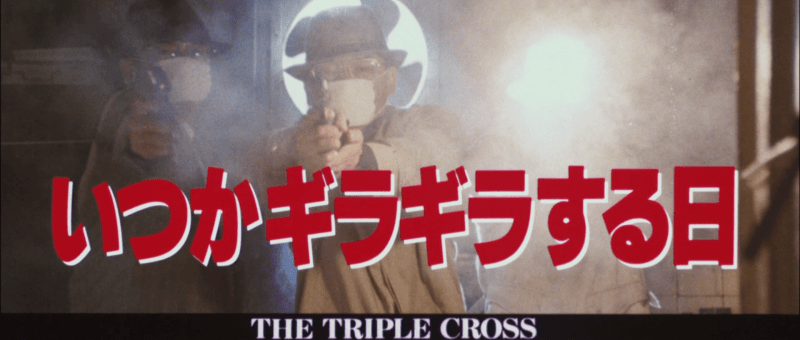
The Triple Cross (いつかギラギラする日, Kinji Fukasaku, 1992)

“It’s never over for men like me” laments the hero of Kinji Fukasaku’s infinitely zeitgeisty 1992 action thriller The Triple Cross (いつかギラギラする日,  Itsuka Giragira Suru Hi), though the director might as well be talking for himself. Fukasaku is most closely associated with the jitsuroku gangster genre which he helped to create at Toei in the mid-1970s with the hugely influential yakuza cycle Battles Without Honour and Humanity. Through the difficult ‘80s, he’d sustained his career with a series of commercial projects and critically acclaimed prestige pictures, which is perhaps why he felt secure enough to go all in with an absurdist take on the death spiral of the Bubble Era. 

As the film opens, a trio of veteran crooks commits a series of flawless armed robberies which makes them all very wealthy. In an age of excess, crime is perhaps for them more a way of life than a means of survival save for one, Imura (Renji Ishibashi), who has massive debts from loansharks and is living with a constant sense of anxiety that his failures as a man and as a father may result in his beloved wife (Kirin Kiki) and daughter leaving him (for which he wouldn’t blame them). Kanzaki (Kenichi Hagiwara), the veteran gangster, enlists his girlfriend Misato (Yumi Takigawa) along with Imura to scout a possible new job their “boss” Shiba (Sonny Chiba) is planning up in Hokkaido. When they get there it turns out that Shiba has taken up with an extraordinarily irritating much younger woman, Mai (Keiko Oginome), and through her has befriended a young guy, Kadomachi (Kazuya Kimura), who’s come up with a plan to rob the takings from a nearby resort which he has heard run to 200 million yen transported in cash by car via remote mountain road. 

Kadomachi, who later claims he was once a police officer, is an annoyingly entitled young punk with bleach blond hair who wants the money to open a live music venue in order to support real rock and roll. So manic he seems to be on something, it’s a surprise that the guys agree to work with him though after a quick hazing they apparently decide he’s OK only to bitterly regret their decision when it turns out he was mistaken about the amount being transported. As veteran pros, the trio know that it’s better to just be happy with what you can get and move on, but they had each hoped this job might be the last and the disappointment proves too much for Imura who flips out and points a gun at his friends intending to take the lot but is calmly talked down only for Kadomachi to grab a gun and start shooting, making off with the whole 50 million. 

Deliberately down with the kids with his pulsing club score, Fukasaku seems to be taking a swipe at the Bubble generation who want everything now and fully expect to get it. Shiba pays the price, essentially, for refusing to act his age, trying to be young and hip like Mai and Kadomachi, while Imura is perhaps the opposite unable to escape from the post-war era with its poverty and vicious loansharks while also facing discrimination as a zainichi Korean which further deepens his anxiety for his teenage daughter. Yet getting her hands on the money Mai confesses that she has absolutely no idea what to do with 50 million yen, spending 50,000 on a handkerchief just because while even Kadomachi is eventually struck by a sense of futility in realising the money has corrupted him though he knows that it will eventually slip through his fingers. “People, life, they pass us by” he muses sadly while Mai confesses all she wanted was for someone to “notice” her, which they eventually perhaps do only it’s in the context of a nationwide manhunt. 

The vacuous youngsters are finally slapped down by the calm and collected Kanzaki whose lack of ostentation serves him well in the ensuing war on two fronts as he goes up against not only Kadomachi but the loanshark he was in debt to in an attempt to get his hands on the money. Fukasaku takes the jitsuroku and turns it inside out for a tale of Bubble-era excess filled with increasingly elaborate action sequences culminating in a high octane car chase and a shoot out with the entire garrison of the Hokkaido police force, yet as before crime only yields futility, the money floating away in Hakodate harbour, while we end on a trademark note of irony that shows us banks on every street corner, money is literally everywhere. What does crime mean now, what is the point of such ceaseless acquisition in an age of plenty? For Kanzaki, perhaps it just spells opportunity and well you can’t argue with that. 


Original trailer (no subtitles)