Not One Less (一个都不能少, Zhang Yimou, 1999)

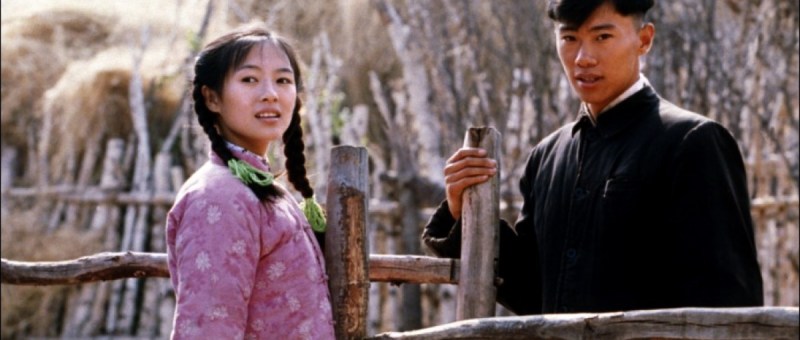
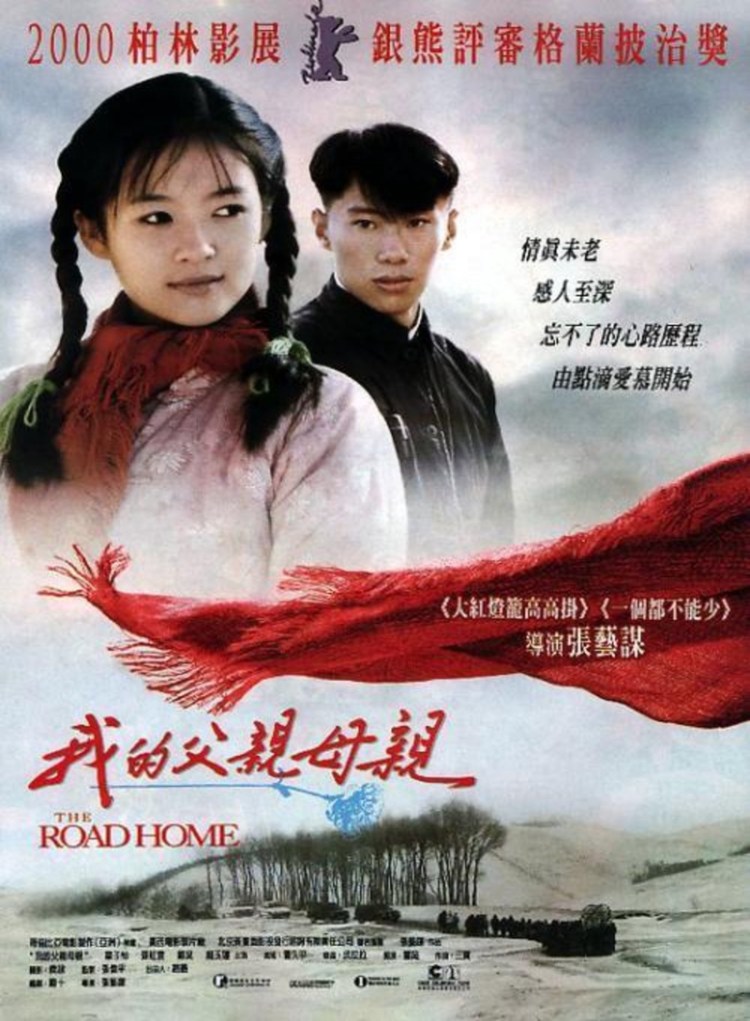
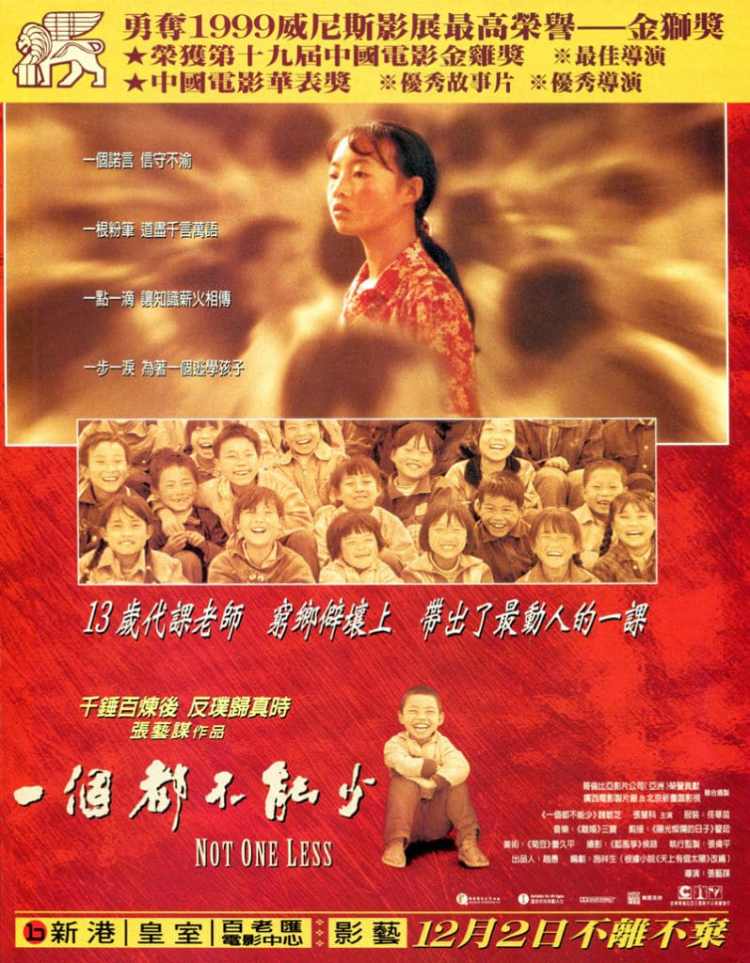
not one less posterIt’s tough being a kid in rural China. Childhood is perhaps the rarest of commodities, all too often cut short by the concerns of the adult world, but then again sometimes childish innocence can bring forth the real change in which grownups have long stopped believing. Zhang Yimou is no stranger to the struggles of life in China’s remote villages, but in Not One Less (一个都不能少, Yīgè Dōu Bùnéng Shǎo) he crouches a little closer to the ground as one tenacious little girl finds herself thrust into an unexpected position of authority and then cast away on an odyssey to rescue a lost sheep.

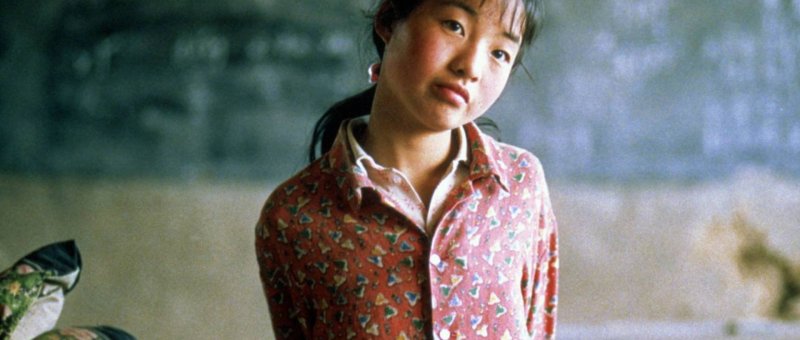
The girl, 13-year old Wei Minzhi has been brought over from an adjacent village to substitute for the local teacher whose mother is ill, meaning he needs to take a month off to go back to his own remote village and look after her. The problem is that no-one would agree to spend a month teaching little kids in a rural backwater for almost no money. Wei Minzhi graduated primary school which makes her one of the most educated people around and at least means that she’s a little way ahead of some of the other kids and, to be fair, teaching methods here generally end at copying the lessons from the master book up onto the blackboard so the kids can copy them down and study in their own time. Given the relative poverty of the village, children often drop out of school altogether because their parents need them at home. Teacher Gao has promised Wei 10 extra yuan if the same number of kids are still coming to school when he comes back as there were when he left.

Documenting daily life in the village, the early part of the film strikes a warm and comedic tone to undercut the hardship the villagers face. The Mayor, apparently a slightly dishonest but well meaning sort, is doing his best but the village is so poor that the children turn desks into beds and huddle together to sleep in the school. Chalk is strictly rationed and resources are scarce. Wei takes to her new found authority with schoolmarmish tenacity but struggles to exert her authority over her charges, and especially over one cheeky little boy, Zhang Huike.

When Zhang Huike disappears one day and Wei finds out he’s been sent to the city, she becomes fixated on the idea of going after him to drag him back and make sure she gets her 10 yuan bonus. The quest is a fallacious one – it will coast Wei far more than the 10 yuan bonus to get to the city and back so it’s hardly cost effective, but Wei is a literal sort and doesn’t tend to think things through. Nevertheless, the need to figure out how to get Zhang back does finally get her teaching as she gets the kids to help her do the calculations of how much money she’s going to need and to figure out how to get it.

If life in the village was tough, the city is tougher. When Wei arrives and tries to find Zhang, she winds up at the dorm of a construction site which is peopled exclusively by children who are (presumably) all working here to help their families out of poverty. Zhang, however, got lost on the way to his new job and is currently wandering the city alone, staring enviously at meat buns until someone takes pity on him and hands him one. Luckily he later meets a kind restaurant owner who takes him in off the street and gives him food in return for dishwashing. Wei, meanwhile, is completely at a loss as to how to look for Zhang. She hits on the idea of fliers but doesn’t think to leave contact details beyond the name of her school – after all, everyone in the village knows where the school is so why wouldn’t they in the city. Later someone recommends she try TV only for her to become semi-exploited for a human interest story on rural education in which the rabbit-in-the-headlights Wei can do little more than burst into tears and plead for Zhang’s return.

Wei’s single-mindedness may eventually reap rewards, but it’s impossible to escape the fact that it was motivated out of pure self interest. She wanted her 10 yuan bonus, and she never stopped to think about anyone’s else situation so long as she got it. Thus when scouts arrive from a nearby sports school with an amazing opportunity for one of her pupils, she tries to mess it up just so she’ll get the money. Similarly she’s determined to bring Zhang back even after visiting his home and meeting his bedridden mother who explains the family situation that necessitates sending her 11-year-old son away to work on a construction site. Despite having been warned about the chalk shortage, she allows half of it to get ground into the floor because she’s too busy trying to assert her authority to realise the (accidentally) destructive effects of her own actions. Nevertheless, her bullheadedness does eventually pay off. Asked about his experiences in the city, Zhang Huike remarks that the city is “beautiful and prosperous” before looking sad and admitting that he’ll never forget that he had to beg for food. Cities, it seems, are teeming hubs of wealth and success but they’re also cold, lonely, and so anonymous that small boys like Zhang get lost amid the hustle and bustle of the individualist life.


International trailer (English voice over)

March Comes in Like a Lion (三月のライオン, Hitoshi Yazaki, 1992)

March comes in like a lionIce in the heart of summer pins its hopes on spring in the second feature from Hitoshi Yazaki. Afternoon Breezes, Yazaki’s debut, chronicled forbidden love becoming dangerous obsession as a naive young woman falls for her straight roommate but has no mechanism by which to expresses herself in a society that deems her feelings so taboo as to not quite have the words to describe them. March Comes in Like a Lion (三月のライオン, Sangatsu no Lion) again focusses on an illicit connection but this time an incestuous one in which a strange young woman realises a life long crush on her older brother by telling him that she is his girlfriend after he wakes up from a coma with amnesia.

Natsuko (lit. summer’s child) told her brother, Haruo (lit. boy of spring), that she would one day be his wife when she was just seven and he eight. Years later, Haruo (Cho Bang-ho) has been involved in a motorcycle accident and lost his memory. Natsuko (Yoshiko Yura) seizes her chance. Taking the name of “Ice”, she tells her brother that she is his lover and they live together in a barely furnished apartment on the upper floor of a tenement building. Maintaining the ruse, Ice nurses Haruo back to health, watching his progression day by day and dreading the moment he might finally remember who she really is.

Ice has rented the apartment for two months only – putting an expiry date on her true love dream. She’s done this mostly to avoid taking her brother back to their childhood home, fearing it might jog his memory and wanting avoid the prying eyes of friendly neighbours they’ve known all their lives. Her love is, by the common values of her society, against nature yet Ice surrenders to it anyway, fully expecting the “storm” of March between the seasons of ice and flowers. Flowers here may be warmth or death, but Ice is prepared to wait for her heart to melt and become the summer once again.

The early ‘90s was a time of walls falling, for good or ill, though the Tokyo Ice inhabits is a cold and frozen place. One of loneliness and confusion where busyness has given way to ennui and listless lethargy. Natsuko (and Ice too) has been surviving on casual prostitution, swiping the fashionable clothes of a client to give to Haruo and bestowing on him his curiously mad hatter-like appearance, as if he’d just stepped out of a silent movie. Ice walks around with all her worldly goods stored inside a giant cool box which emits dry ice every time she opens it. She has a compulsion for eating ice lollies and fondling the fridge freezer that is the only appliance in the sparse apartment apart from a circus-like ceiling lamp which rests on its top. Ice does not really want to melt, she tries to keep herself cool, resisting the heat of passion which may reduce her frozen paradise to watery tears, but knows that her present life is but a dream, a lingering state of limbo which must one day end.

While Ice keeps things cool, Haruo gets a job in demolition. Post-bubble the city is failing, crumbling ominously to the ground. Where once there was life and creation, now there is only death and decay. Mirroring his sister, Haruo takes things apart and throws them away but becomes oddly fascinated by the looking glass. Looking at himself, through himself, Haruo searches for the keys to his existence. As his relationship with Ice becomes physical, his mind begins to turn. Haruo regains the power of speech, remembers there was someone he loved, and awakens to the coming spring.

Ice wants to know her love can last – she looks for proof everywhere. An elderly couple – she cutting his hair while he remains less steady, still in love forty years later. The housewife next-door sending her husband off to work in the middle of the night and talking of children. Polaroids and fairy tales, white rabbits and magic girls – her world is fantasy, she is Alice adrift in Wonderland. Natsuko dares to dream a dream of love in a world which is collapsing before her eyes yet she does for a time at least win it. Filled with whimsical poetry and beautifully composed images and set to a nostalgic folk score by Bolivian Rockers, March Comes in Like a Lion is a tender, touching romance made all the stranger and sadder for its unusual genesis.


Short scene from the film (English subtitles)

Nowhere to Hide (인정사정 볼 것 없다, Lee Myung-se, 1999)

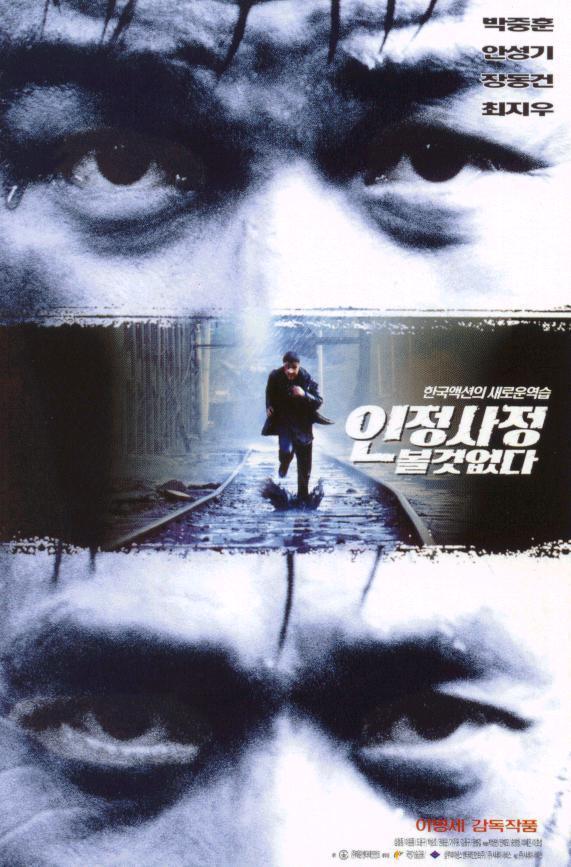
Nowhere to hide poster

One of Korea’s foremost visual stylists, Lee Myung-se’s work has often been under appreciated at the time of its release. His desire to experiment finds fertile ground in the intensely kinetic ode to the police procedural, Nowhere to Hide (인정사정 볼 것 없다, Injeongsajeong bol Geos Eobsda). A tale of cops and robbers, Nowhere to Hide follows a cop who talks too much on the trail of a silent assassin who is, in fact, an expert at hiding in plain sight through the art of disguise. Moving quickly from one intense, beautifully choreographed set piece to the next, Lee draws inspiration from the crime-tinged tragedies of old Hollywood and beyond whilst embracing those of his home nation in the classic twin pairing of actors Ahn Sung-ki as the enigmatic assassin, and Park Joong-hoon as the bullheaded cop hot on his trail.

Lee opens in black and white with Inspector Woo (Park Joong-hoon) in full on gangster mode as he wanders through a ruined landscape, pausing only to tie his shoelace while the pulsing, punkish music continues in the background, before he walks in on an entire room of besuited gangsters and calmly sits down to introduce himself. Sometime later, Sungmin (Ahn Sung-ki), in sunshades and trench coat, patiently bides his time before committing a dramatic murder and making off with a mysterious briefcase.

What follows then is a game of cat and mouse as Woo chases the ghost of Sungmin through dingy back allies and neighbourhood dive bars, taking his more serious partner, Kim (Jang Dong-kun), whose more primary motivations include his family or more particularly his little girl, along for the ride. Woo lives only for his work, drawing more thrill from the chase than he is likely to admit. Through his pursuit of Sungmin, Woo draws closer to a side of himself he hoped to avoid, burying his natural rebelliousness in service of the law. We see him brutally interrogate suspects, even at one point trussing one up like a prize pig and suspending him between two desks in the middle of the police station. It is, in this sense, Woo who is left with “nowhere to hide”. As a young man, he had a violent streak which might well have led him into crime if his father had not pointed him towards the police, but he can no longer claim to be very much different than the quarry he pursues. His true nature has been laid bare by his opposing number.

Woo’s rage and unpredictable energy are tempered by Kim’s evenhandedness, but after a job goes wrong and Kim kills a suspect by mistake he starts to fall apart. Suddenly Woo cannot rely on Kim to save him from himself and then tragically fails to save Kim during another operation, leaving him open to serious injury. His quest is now as much one of vengeance and personal feeling as it is of justice.

Sungmin, by contrast, says not one word in the entirety of the film. A felt presence more than a seen one, he slips in and out of personas, escaping from the scene in various disguises as a figure more of legend than of reality. A close relationship with a bar hostess girlfriend is Woo’s way in to Sungmin’s world, correctly identifying a weakness and pressing it, pursuing a more concrete route to the centre of Sungmin’s existence than simply tracking him through the shady netherworld in which he lives.

The two men run from and mirror each other as pictures of action and stillness, resistance and urgency. Through a relentless pursuit of capture or escape, neither can evade the shadow of himself, each moving closer to their true selves as repressed elements surface and threaten to destroy the whole. Woo and Sungmin are each on a mutually destructive pursuit of the self as much as they are for their own, self defined goals.

Lee frames all of this within his characteristically ironic world view, painting the drama as comedy imbued with its own kind of cartoonish slapstick. Throwing in cinematic homages from a brief nod to Battleship Potemkin to an ending plucked straight out of The Third Man, Lee mixes freeze frames with an odd jump dissolve technique which lends his intensely beautiful choreography an impressionistic, fleeting quality. Two men chase the shadow of the other, engaged in a desperate game of hide and seek, but when the game is up neither may like what they see.


Screened at London Korean Film Festival 2017.

Robbery sequence (dialogue free)

Ghost Soup (Shunji Iwai, 1992)

Christmas is a little different in Japan. Fried chicken takes the place of turkey with all the trimmings and even if Santa still makes his rounds for excited children, it’s couples who invest the most in the big day. That doesn’t mean however that you can’t still take time out for a spooky tale or two in the best European tradition though Ghost Soup turns out to have a more melancholy if ultimately heartwarming intention than your average round of Christmas ghost stories. Shunji Iwai, later a giant of ‘90s Japanese cinema, got an early start with this seasonal tale which runs just under an hour and was made for television as part of a series of food themed dramas but even if the production values are minimal and the camera work unremarkable, Ghost Soup exists firmly within Iwai’s wider cinematic universe.

The tale begins on Christmas Eve. Families are eagerly walking home with treats and Christmas trees, but poor old Ichiro (Hiroyuki Watari) is in the process of trying to move apartments. He was supposed to be moving in mid-January, but he’s been bumped from his current accommodation after the person who was supposed to be taking over his lease was forced out of their current apartment because the person they were renting from has come back from abroad and needs his house back. Luckily, the apartment Ichiro is moving into is already empty so he’s moving in early, but there’s a hitch. It’s not just that it’s very inconvenient to move house on Christmas Eve, Ichiro’s new apartment has already been earmarked for an annual Christmas party hosted by a bunch of ghosts and they don’t take kindly to having their venue so rudely invaded.

The first half of the film revolves around the comical actions of the ghosts as they try to keep Ichiro out of their party though it also provides the opportunity to introduce other vaguely ghoulish elements of the business of moving including a visit from the NHK man and a tenacious newspaper salesman not to mention a Jehovah’s Witness. Despite the fact that Ichiro has apparently landed himself in this situation by being “too nice” he manages to get rid of most of his unwelcome visitors by forcing himself to close the door on them even if he seems to feel bad about doing it. The ghosts are a slightly different matter.

Nana (Ranran Suzuki), a feisty teenage girl, and Mel (Dave Spector) – an American with excellent Japanese and a very strange speaking voice who seems to be dressed like world war two bomber crew, are having a Christmas Party for the area’s local ghosts of which there seem to be a few including Private Sakata (Ken Mitsuishi) who has been patiently standing guard ever since he passed away during the war. Nana’s “Ghost Soup” has become a Christmas fixture and is filled with warmth and happiness designed to help vengeful spirits move past their various grudges so that they can finally “move on”.

When the ghosts dress up like Santa and put Ichiro in their sack to dump him in an unfamiliar part of town in the hope he won’t make it back before their party, he ends up wandering through sections of his memory, remembering paths and houses from some forgotten time and noticing other “ghostly” presences he might not normally pay much attention to. As it turns out, Ichiro has tasted Ghost Soup before, long ago in childhood when he himself had a conversation with one recently deceased on a melancholy Christmas Eve.

Little Ichiro seemed very puzzled that so many people were lining up for just a cup of soup when they don’t even get any toys, but was somehow moved by the curious warmth of the small gathering. Despite his protestations of being “too nice” in agreeing to move early, Ichiro has not been a very good neighbour so far – despatching each of his visitors and trying to evict the ghostly presence intent on colonising his new flat, but eventually gets into the Christmas Spirit and agrees to help the ghosts make sure the soup gets those who need it. Tokyo it seems is a city of lonely souls, both living and dead, in which a bowl of hot soup might be the only highlight in a cold and unforgiving (after)life.

Made for television on a low budget and with a poor quality video camera, Ghost Soup is of its time but also bears out Iwai’s cheerfully surreal world view in which the city is peopled with the melancholy but protected by friendly guardians fostering a community spirit which might help to exorcise some of that existential loneliness. Ghost Soup is in many ways the perfect Christmas confection – a little bit sad, but sweet if strange and ultimately heartwarming in its embracing of the true Christmas spirit of compassion togetherness.


Closing scene (no subtitles)

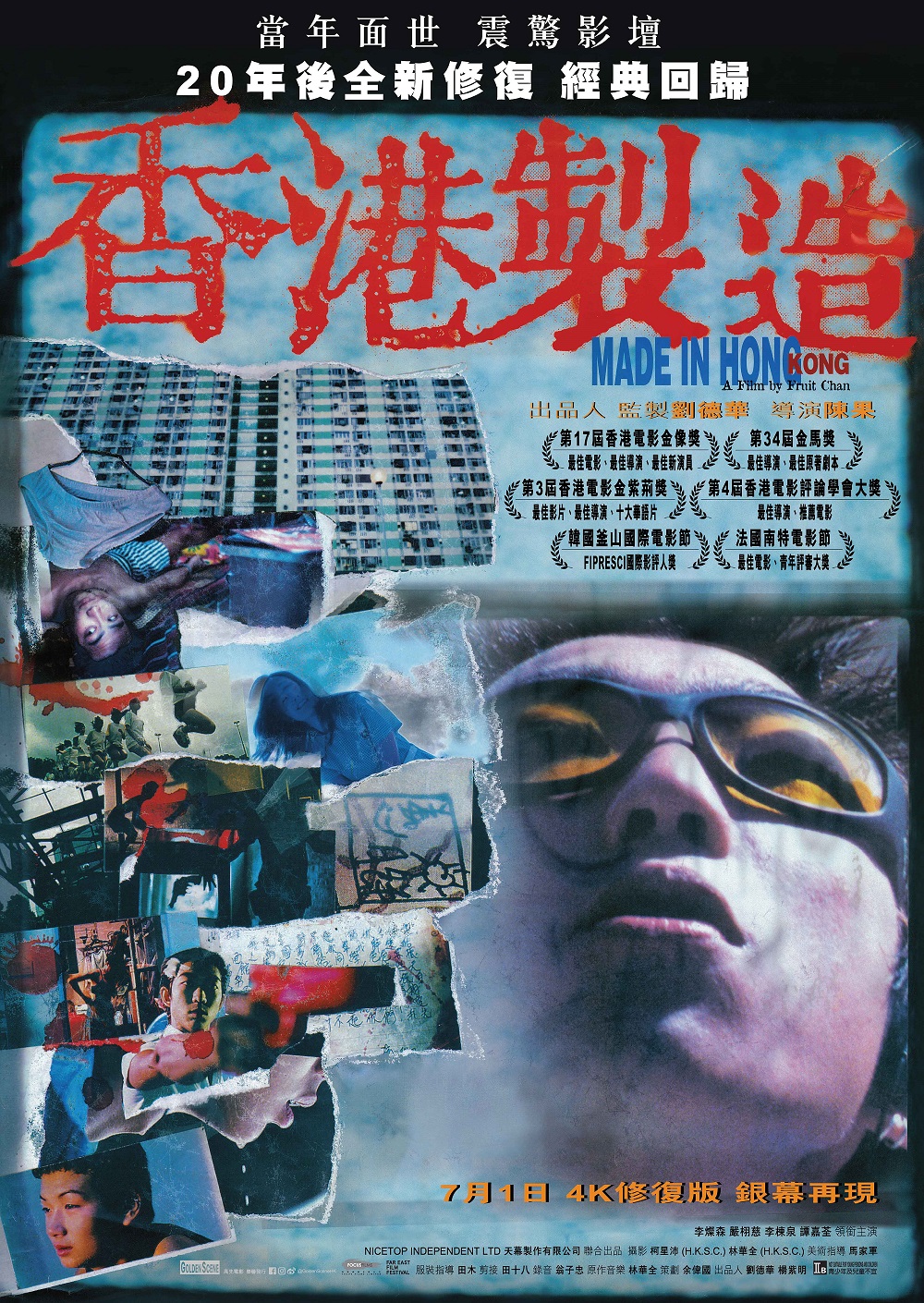
Made in Hong Kong (香港製造, Fruit Chan, 1997)

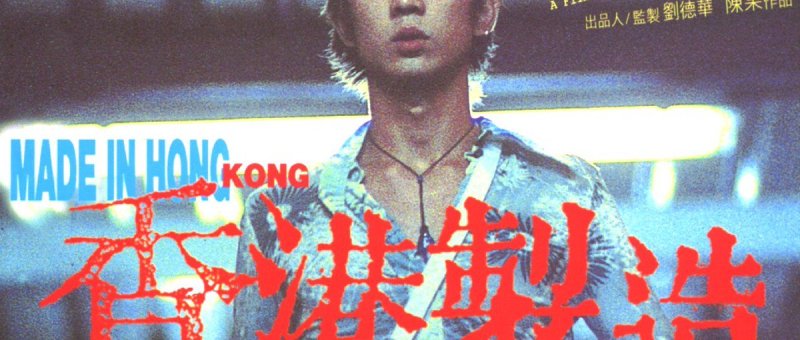
made in HK vertical posterThe Hong Kong of 1997 becomes teenage wasteland for the trio at the centre of Fruit Chan’s urgent yet melancholy debut, Made in Hong Kong (香港製造). Made on a shoestring budget using cast-off film and starring then unknowns, Chan’s New Wave inflected meditation on dead end youth is imbued with the sense of endings – illness, suicide, murder, and despair dominate the lives of these young people who ought to be beginning to live but find their paths constantly blocked. The world is changing, but far from possibility the future holds only confusion and anxiety for those left hanging in constant uncertainty.

Autumn Moon (Sam Lee), our narrator, is a boy fighting to become a man but too afraid to leave his adolescence behind even if he knew how. Living alone with his mother (Doris Chow Yan-Wah) after his father abandoned the family, Moon is a high school drop out with no real job who spends his time playing basketball with the neighbourhood kids and running petty errands for small scale Triad Big Brother Wing (Sang Chan). Already indulging in a hero complex, Moon is friends with and the de facto protector of a young man with learning difficulties, Sylvester (Wenders Li), who has been disowned by his birth family and is constantly picked on, beaten up, and molested by the local high schoolers. Taking Sylvester with him on a job one day, Moon runs into Mrs. Lam (Carol Lam Kit-Fong) whose debt he’s supposed to collect but when Sylvester has one of his frequent nosebleeds on seeing Mrs Lam’s beautiful daughter, Ping (Neiky Yim Hui-Chi), Mrs. Lam manages to send them packing. Nevertheless, Sylvester and Moon end up becoming friends with Ping and enjoying the last days of Hong Kong together, engaged in a maudlin exploration of teenage mortality pangs.

As Moon puts it in his voice over, everything starts to go wrong when Sylvester picks up a pair of blood stained letters in the street. They belonged to a high school girl, Susan (Amy Tam Ka-Chuen), who we later find out killed herself from the pain of first love. The spectre of Susan haunts the trio of teens left behind who remain morbidly fascinated with her fate yet also afraid and anxious. Together they pledge to investigate her death and return the letters to their rightful owners as, one assumes, Susan would have wanted. Even so, when they finally track down the recipient of the first letter, the man Susan gave her life for, he barely looks at it and tears her carefully crafted words of heartbreak into a thousand pieces, scattering them to the wind unread.

In investigating Susan’s tragic love affair, Moon and Ping begin to fall in love but Ping too already has the grim spectre of death around her. Seriously ill, Ping is at constant risk if she can’t get a kidney transplant but the list is long and she’s running out of time. Moon wants to be the hero Ping thinks he is, but he’s powerless in the face of such a faceless threat. He makes two decisions – one, to get the money to pay her debt, and two to go on the organ donor’s register so that if anything happens to him, Ping might get his kidney, struggling to do something even if it won’t really help.

Powerlessness is the force defines Moon’s life as he adopts a kind of breezy passivity to mask the fact that he has no real agency. He says he doesn’t want to join the Triads full-time because he values his independence, prefers making his own decisions, and hates taking orders but he rarely makes decisions of his own and when he does they tend not to be good ones. Moon drifts into a life of petty gangsterism partly out of a lack of other options, and partly out of laziness. Abandoned by his father and then later by his mother too, Moon’s only real source of guidance is the minor Triad boss Big Brother Wing who, unlike his mother, at least pretends to trust and respect him. Getting hold of a gun, Moon dances around like some movie vigilante drunk on power and possibility but once again fails in the hero stakes when a friend comes to him in desperate need for help but he’s so busy playing the cool dude alone in his apartment that he doesn’t even hear him over the music.

When it comes to pulling a trigger, Moon can’t do it, no matter how many times he’s visualised the moment and seen himself making the precision kill like an ice cold hitman in a stylish thriller. Moon’s illusion of his heroic righteousness crumbles. He couldn’t save his friends, has been rejected by his family, and has lost all hope for a meaningful future. As if to underline the hopelessness and fatalism of his times, Fruit Chan ends on a radio broadcast which instructs the lister to say the same thing again, only this time in Mandarin – the language of the future. Moon, Sylvester, and Ping are all cast adrift in this dying world, abandoned by parental figures and left to face their uncertain futures all alone. As a portrait of youthful alienation and despair, Made in Hong is a timeless parable in which an indifferent society eats its young, but it’s also the story of a Hong Kong Holden Caulfield standing in for his nation as they both find themselves approaching an unbreachable threshold with no bridge in sight.


Screened at Creative Visions: Hong Kong Cinema 1997 – 2017

Trailer for the 4K restoration which premiered at the Udine Far East Film Festival 2017 (English subtitles)

Ordinary Heroes (千言萬語, Ann Hui, 1999)

ordinary heroes posterThroughout her long career, Ann Hui has become adept at making subtle political points through addressing the struggles of the recent past. Ordinary Heroes (千言萬語) was released in 1999, just two years after the handover which signalled the end of British colonial rule. The Chinese title of the film is taken from a Teresa Teng song heard on a car radio and means “thousands of words, tens of thousands of languages” – a sentiment which could apply to the work of the activists as they work tirelessly to little effect, but the English title perhaps hints more closely at the film’s essential purpose as a tribute and pean to these ordinary people who dared to stand up to authority to fight for what they thought was right.

After a brief prologue from the street performer (Mok Chiu-yu) – inspired by the real life figure Ng Chun Yin, who will become the Brechtian narrator of the ongoing drama, Hui cuts to a title card reading “to forget”, only to open with the words “I remember”. The heroine has, however, forgotten her former life for reasons of which we aren’t yet sure. Sow (Loletta Lee) is a young woman and former activist being cared for by her friend, Tung (Lee Kang-sheng) who has been nursing a longterm crush on her ever since she pickpocketed him when he was in high school. Sow, however, had been involved with an activist, Yau (Tse Kwan-ho), who later married someone else, but remains committed to the cause, as hopeless as it might seem.

The cause is that of the Yau Ma Tei boat people. A historic community of former fisherman, the Yau Ma Tei boat people live off the shore of Hong Kong in what was constructed as a typhoon shelter after a fierce storm destroyed almost an entire fleet in 1915. During the 1950s, the community moved away from fishing and became a a kind of tourist spot and centre for petty crime. With their own distinctive accents, clothing, and isolated way of life the boat people were not always welcome on land but also faced an additional problem in that many of their wives were refugees from the mainland and technically illegal migrants forbidden from setting foot on Hong Kong proper. Though the government instituted an amnesty for the children of boat people, it took advantage of the women who came forward to get official birth certificates, deporting them back to mainland China and separating them from their families.

The boat people find few friends, but an Italian Catholic priest and, incongruously enough, committed Maoist, Father Kam (Anthony Wong) becomes a staunch defender, living with the boat people and providing education for the children as well as ministering to his flock. Yau and Kam work together to advance the cause of the boat people while Sow assists Yau and Tung follows Sow whilst also becoming close to Kam and influenced by his peculiar ideology. Kam, often to be found strumming his guitar and singing the Internationale, becomes a figurehead for the movement, even committing to a hunger strike in an attempt to get the authorities’ attention.

Structuring her tale in a non-linear fashion, Hui weaves the complex narrative of political descent in ‘70s Hong Kong, splitting her focus between the single issue activism of Yau and Kam and the wider leftist movement as recounted in the street theatre of Ng Chun Yin. Ng, a longterm leftist activist, was the founder of the Trotskyist Revolutionary Marxist League who later went to China to deliver a true Marxist, democratic revolution but ended up betraying his cause and being kicked out of his own movement. Such obviously left-wing agitation was, perhaps, difficult in the early 70s when news of the cultural revolution had discredited Chinese communism, especially as many residents of Hong Kong had arrived as refugees from the oppressive regime, but there are those who continue to believe in and fight for the values that they believe should be present North of the border.

Sadly these hopes are crushed by the Tiananmen Square incident in 1989 after which it was impossible to argue for the moral superiority of the Chinese state over the colonial government. The bursting of a political bubble runs in parallel with the sad love story of Sow and Tung who find themselves at odds with each other, never quite in the same temporal space. Hui signals the closing coda with another title card, this time reading “to not forget”, as Sow and Tung are forced to acknowledge their painful pasts as they look forward to an uncertain future. Forgetting and not forgetting become the central themes as the boat people plead for recognition, while there seems to be an active choice in play to decide to forget these “ordinary heroes” and the various sacrifices they made in the name of social justice as Hong Kong begins to look forward to its own uncertain future as one master is swapped for another and the silent majority sit idly by, opting for the consumerist revolution over the human one. Ng, in his opening statement, talks about heroes with unfulfilled missions. Tung and Sow find themselves at a new dawn with their illusions shattered, filled with thousands of words and nothing at all to say. 


Screened at Creative Visions: Hong Kong Cinema 1997 – 2017

Original trailer (Cantonese, no subtitles)

Teresa Teng’s Thousands of Words

Green Fish (초록 물고기, Lee Chang-dong, 1997)

Green Fish poster

You can never go home again. Lee Chang-dong’s debut, Green Fish (초록 물고기, Chorok Mulgogi), is as much a chronicle of his rapidly modernising nation’s gradual loss of innocence as it is that of its melancholy hero, Makdong (Han Suk-kyu), whose simple dream of family harmony is destroyed by the forces of desire and oppression. Perpetually someone’s little brother, Makdong struggles but finds no schoolyard protectors in his ongoing quest for leadership and direction from someone or something external to himself. All he finds is a gradual descent into darkness and criminality in which misplaced loyalties eventually carry the heaviest of penalties.

Returning home from his mandatory military service, still dressed in his warm weather combats, Makdong inhales a taste of freedom by hanging out of the open train doorway. He notices a woman doing the same thing a few doors down. Her red scarf floats away on the breeze and hits Makdong in the face. Later he notices the same woman being hassled by a gang of louts and decides to intervene. Despite his military uniform, Makdong is no great warrior and he’s quickly beaten up and humiliated, retreating to the bathroom where he soaks the woman’s scarf in water and puts it over his bloodied face, inhaling her scent through the fabric as it somehow expresses his otherwise repressed scream.

Vowing revenge for his humiliation Makdong jumps off the train and attacks the louts with a heavy stone trophy, but he mistimes his attack and ends up running after the departing carriages before being forced to abandon all hope of catching up and concentrate on evading the louts who are once again on his tail. On his arrival home, Makdong discovers nothing is as he left it. His family is scattered – father dead, mother going mad, one brother married and a policeman though apparently also a drunk, other brother a wideboy punk, little sister working as a hostess, where there were fields now there are apartment blocks as far as the eye can see, only his older brother with developmental disabilities remains the same. Unable to find work, Makdong chases the scent of the woman on the train, eventually encountering her in the city. Miae (Shim Hye-jin) is a nightclub singer involved with petty gangster Bae Tae-gon (Moon Sung-keun). Remaining close to her, Makdong finds himself drawn ever further into Maie’s self destructive spiral of desire and darkness.

Makdong, whose name literally means “youngest sibling”, is perpetually looking for a family. Turned away from the chaos of his childhood home, he looks for it in the traditional place of the dispossessed male – the gang. Desperate to prove himself and be accepted, Makdong is willing to undergo any kind of pain and humiliation. Given his first job, he sings a snatch of the karaoke song playing in the bar about a prodigal son who disappoints his parents, looks himself in the mirror then hesitates before slamming the stall door shut across his fingers, leaving them swollen and bloodied. He then picks a fight with a rival gangster to give Bae Tae-gon an excuse to settle a score. Bae, solicitous, expresses irritation with Makdong’s act of self-harm but also gives him a leg up into the organisation, something which does not prove universally popular with the already established crew.

Bae’s decision to make Makdong his latest “little brother” (a sort of pun on his name and Bae’s position as the gang’s “big brother”), is mirrored in Bae’s own turbulent relationship with his superior/rival, Yang-gil (Myung Gye-nam). Yang-gil, setting up shop right across from Bae’s establishment, describes Bae disparagingly as a scrappy puppy dog biting at his master’s heels. Much as he feels humiliated by Yang-gil’s authoritative disdain, he refuses to move against him, ordering his guys to back off even though it makes him look weak and diminishes him in the eyes of his followers. Just as Makdong has placed his faith in Bae, Bae’s is already installed in Yang-gil, something which Makdong tragically fails to understand.

Makdong’s loyalty to Bae also presents a conflict in his desire for Miae. A much stereotyped gangster’s moll, Miae is the melancholy nightclub singer familiar from classic noir. Her world is just as ruined and broken as Makdong’s. She wants to leave Bae and his life of violent chaos in which she’s often pimped out to serve his interests, but she’s looking for someone to help her, just as Makdong is looking for someone to defend him. A long train journey brings the pair together in a moment of innocent tenderness, but presented with a choice Makdong choses Bae and his new world of male chivalry over his original act of white knight rescue which brought him to Miae’s attention in the first place. Later he makes another, more final choice, burning Miae’s scarf which he’d been carrying like a talisman all along. The flames reflected in his sunglasses give him eyes of fire, but behind the frames there are tears too as he bids goodbye to one dream in the mistaken belief of buying himself another.

Facing his end, Makdong rings home and reminisces about a story of idealised childhood innocence in which he spent a day at the river with his siblings, trying to catch the green fish of the title from under a railway bridge. Earlier on the family had another picnic in a similar spot which quickly degenerated into a chaotic family spat with the trains passing ominously behind them. The world that Makdong wants is already fading, he is, in some sense, already its ghost and the future has no place for him. His dreams were small – a modest family restaurant, and a return to the warmth and security he felt as a child surrounded by unconditional love. His family, however, no longer support him, he is alone and unloved. The world has moved past him like a train leaving the station, Makdong runs but he can’t catch up. The future belongs to those who can move fast enough to adapt to the new reality of modern Korean life, not to old romantics like Makdong who still believe in archaic ideals of family and brotherhood. Yet, there is something of that old world remaining in the posthumous fulfilment of Makdong’s only wish, even if he himself is not permitted to witness it.


Screened at London Korean Film Festival 2017.

Cabaret scene (no subtitles)

The Rules of the Game (게임의 법칙, Jang Hyun-soo, 1994)

Rules of the GameEvery game has its rules, but then again perhaps the game lies in learning how to bend them to one’s advantage. Owing a debt to a Pacino/De Palma diptych – Scarface and the later but then just released Carlito’s Way, Jang Hyun-soo’s Rules of the Game (게임의 법칙, Gameui beobjig) was the first in a resurgence of contemporary action dramas which had gone out of fashion since their 1970s heyday. The story is a timeless one of a young man looking for gangland fame, his loyal girlfriend, and the duo’s loveable third wheel of a degenerate gambler whose sob story may actually turn out to be truer than it seemed.

Young-dae (Park Joong-hoon) is a young upstart in a tiny town. Bored with his life of daily drudgery washing cars, he decides to upsticks to the city, taking his adoring girlfriend Tae-suk (Oh Yeon-su) with him. Young-dae plans on engineering a meeting with famed ganger Gwang-cheon and pledging his allegiance to him, hoping to set himself on the road to gangland success. Things get off to a bad start when the pair of naive country bumpkins run into to smooth talking conman Man-su (Lee Kyoung-young) on a train. Man-su claims to know Gwang-cheon and writes a letter of recommendation before suddenly announcing they’re at his stop and jumping off the train leaving Young-dae and and Tae-suk with a healthy dinner bill.

The city proves particularly hostile to the out of towers as Young-dae realises joining a gang is not as simple as marching in, dropping to your knees and exclaiming “I will die for you, please accept me”. Repeatedly striking out, Young-dae distances himself from Tae-suk who ends up working as a hostess for the gangster Young-dae still hasn’t been able to meet. Finally spotting an opportunity to prove himself by interrupting a gang raid, Young-dae gets a foot on the ladder but as an outsider in an established gang he’s always going to be a liability.

Meanwhile, Man-su has continued to get himself into trouble with cards and is a constant thorn in the side to Gwang-cheon’s guys. After a beating leaves him crippled, Man-su turns to Young-dae for retribution. Young-dae, Man-su, and Tae-suk form an odd, sometimes volatile trio as they try to survive and make Young-dae’s gangster dreams come true while Man-su dreams to going to Saipan where the sun shines everyday and everything is palm trees and summer fruits.

It doesn’t take a genius to realise Saipan is a place Young-dae will never go, no matter how much he might want to. After getting into the gang and reuniting with Tae-suk, Young-dae does seem to be getting himself together but success soon goes to his head. He begins dressing in snappy suits moving from brown, to blue, to white, and drives a BMW around town as if he really owned it. As Tae-suk points out, he’s just a driver – a driver for a top gangster, but a driver all the same. In his desperation to reach the top, Young-dae makes himself a figure of suspicion in the mind of the boss he is so desperate to impress, inadvertently placing a target on his own back.

Jang may have pegged De Palma as an influence, one which is very much felt in the Tony Montana-esque story arc and Carlito’s Way denouement, but his shooting style is pure Hong Kong by way of John Woo – frantic action shot in slow motion. Young-dae is a slap-happy lover of violence, never one to let to the opportunity of getting into a fight pass him by. This is quite a good quality in an aspiring foot soldier, even if not in a potential boyfriend though Tae-suk does her best to tame him, but his impetuosity and naive faith in others’ ability to abide by the “rules” of gangsterdom are at the heart of his eventual downfall. His later decision to mistreat a fellow would-be minion who echoes his own phrase back to him “I will die for you, please accept me” is a clear indicator of how far he has moved away from the scrappy boy who left his village full of angry dreams even if something of his youthful innocence is later returned in his desire to leave the gangster world far behind for a life of ease and friendship with Man-su and Tae-suk in tranquil Saipan. The rules of the game, however, rarely reward missteps and Young-dae will pay heavily for his misplaced faith.


Screened at London Korean Film Festival 2017.

Getting Any? (みんな~やってるか!, Takeshi Kitano, 1995)

getting any? posterDespite his reputation for violent gangster dramas and melancholy arthouse pieces, Takeshi Kitano is one of Japan’s most successful comedians and began his career as half of an irreverent and anarchic “manzai” comedy double act. 1995’s Getting Any? (みんな~やってるか!Minna – yatteruka!) is his first big screen comedy and loosely takes the form of a series of variety-style skits in which a lonely, hapless middle-aged man tries on various different personas in the pursuit of his goal but remains an isolated bystander in the surreal events which eventually engulf him. Part bawdy, sleazy sex comedy and satire on the death of materialism in the post-bubble world, Getting Any? is a cineliterate journey through Showa era pop culture peppered with gratuitous nudity and absurd running jokes.

After watching a very 1980s “aspirational” movie in which a good looking, wealthy young salaryman type gives a young lady a lift in his flashy convertible in which they later end up having sex, Asao (Dankan), watching at home in his pants with his grandpa sitting behind him, decides the reason he hasn’t got any luck with women is that he doesn’t have a car. So, he goes and gets one from a very strange salesman but as he doesn’t have much money the car he gets is, well, it’s unlikely to get stolen, and he still isn’t getting anywhere. He tries a convertible too but that’s no good. Then he starts fantasising about air hostesses, decides to become an actor, gets mistaken for a top yakuza hitman, and comes into contact with a pair of mad scientists who want to turn him invisible.

Asao has only one goal – to have sex with a lady (preferably in a car), but he never stops to think of his potential partners as anything more than a receptacle for his desires. Consequently, he refuses to look at himself or consider the ways he might be getting in the way of his own needs, but constantly chases a quick fix thinking that the reason women don’t want him is because of something material that he lacks. He thinks the path to sexual success lies in cars, money, status, and finally technology, but none of these things really matter while Asao remains Asao.

As part of his journey, passive as it is, Asao does not always remain Asao, or at least the Asao he was for very long. Having failed to be the sort of man who can woo with car, he tries acting – literally playing a part, at which he seems quite good except for going “overboard”. An incident on an aeroplane sees him mistaken for a top yakuza which he is less good at but every mistake only ever works out in his favour. Thanks to his involvement with the mad scientists whom he allows to experiment on him so that he can go peeping in the women’s baths, Asao will finally become another kind of creature entirely, literally reduced to feeding off the excrement his nation has recently produced.

Kitano works in just about every element of almost “retro” pop-culture he can think of from the amusing soundtrack of Showa era hits and references to famous unsolved crimes to a hitman named “Joe Shishido” (star of Branded to Kill), the Zatoichi series, a Lone Wolf and Cub ventriloquist dummy duo, the Invisible Man, Ghostbusters, The Fly, and finally Toho’s tokusatsu classics culminating a lengthy skit inspired by Mothra including the iconic Mothra song given new lyrics and the same old dance performed by two full-sized ladies. Though most viewers will be able to spot the joke even without quite understanding it, some knowledge of Japanese pop-culture from the ‘70s and ‘80s will undoubtedly help.

The central joke revolves around Asao’s fecklessness as he repeatedly fails at each of his schemes, only occasionally succeeding and then by accident, and not for very long. A charmless literalist who lacks the imagination to achieve his goals in a more natural way, Asao fails to learn anything at all, engulfed by one surreal situation after another. It does however give Kitano the excuse to indulge Asao’s flights of fancy as his sexual frustration sends him off into a series of bizarre reveries involving topless women desperate to make love to the suave male stand-in Asao has imagined. Filled with silly slapstick humour and frequent nudity, Kitano’s subtle satire may get lost but even if the joke begins to wear thin just as “flyman” finally lands on his object of desire, there is plenty of amusement on offer for fans of lowbrow humour.


Getting Any? is released on blu-ray by Third Window Films on 16th October, 2017.

Original trailer (English subtitles)

Look Out, Officer! (師兄撞鬼, Lau Sze-yue, 1990)

look out officer BD 1The thing about classic Hong Kong comedies is, they were made for a very specific time and place as a quick populist diversion not intended to have much of a life beyond their original release. Despite the thrown together, sketch show-style progression from one tenuously related set piece to the next held together by quick fire comedy, they could also be surprisingly subversive as in this 1990 comedy starring a young Stephen Chow. Look Out, Officer! (師兄撞鬼) is a silly buddy cop comedy and supernaturally tinged procedural but it also satirises the Hong Kong government’s response to the growing “boat people” crisis in which, as is declared in the film, those who’ve come from Vietnam for “economic reasons” will be regarded as illegal immigrants and deported. 

The film begins with two policeman as one berates the other for stopping to burn “ghost money” on the street, describing his need for ritual as like that of an old woman. The first policeman, Biao (Bill Tung), then gets a message on his pager to check out an abandoned warehouse. Piling into the police car, Biao and religious cop Chin (Stanley Fung) arrive but don’t find anything suspicious. Chin decides to leave while Biao wants to investigate further. Poking around, Biao finds himself directly above some kind of large scale drugs lab into which he heroically jumps and beats up most of the grunts waiting below before the head gangster turns up and throws him out of a window. Biao’s body lands directly on the top of Chin’s car who has returned after having second thoughts and wanting to make sure his partner is OK.

The “official” explanation is that Biao has killed himself because of his excessive gambling debts. Up in heaven he gets put on trial (alongside recently deceased dictators Ceausescu and Marcos) and the judges find that his death is indeed suicide despite his protestations. Eventually they agree to let him go back to Earth as a ghost to prove he was murdered and take revenge on the killer. Biao gets assigned a “saviour” whom he will know thanks to an unusual birthmark. The “saviour” turns out to be rookie cop, Sing (Stephen Chow), who is not exactly top of his graduating class but aided by Biao’s supernatural powers he just might be able to find the real killer after all.

As it turns out Chin dabbles in Taoist magic (to make his arms longer, for no particular reason) as do the gangsters who seem to have demonic forces on their side. Biao never saw the face of the man who killed him because he had him in a headlock, but he does remember his terrible body odour thanks to being shoved under his armpits. Victory in the final battle relies on conjuring a unique charm which consists of equally stinky ingredients including virgin’s urine, cat poo, and flatulence neatly bringing several of the film’s running jokes together into one satisfying punchline.

Running gags there are a plenty from the grumpy old cleaner at the police station they’ve nicknamed the 1000 year old virgin who likes to mop up the men’s toilets while they’re busy so she can assess the policemen’s “capabilities” for herself, to the cat who keeps defecting on the altar, and Sing’s general weediness. The supernatural procedural runs in tandem with the usual romantic comedy subplots including Chin’s over protective attitude to his grown up daughter who inevitably ends up in a relationship with Sing thanks to Biao’s supernatural wingman-ing. One of the “charms” Baio has been given to help him in his quest is a “lewd” spell which suddenly makes the victim randy for the first person they see. Biao uses this to get his own back on Chin for leaving him behind by making their austere superior officer suddenly come over all goey only to have her snap out of it and accuse him of sexual harassment.

The humour maybe distinctly lowbrow, but there is a degree of satire lurking in the background as Sing is sent into a “massage parlour” with a codeword in Vietnamese only to discover that all the girls in the place can understand it and immediately parrot back the recent ordinance of Vietnamese immigration. Later, a Vietnamese man threatens to commit suicide over the cruel and inhumane treatment he has received as a Vietnamese immigrant trying to make a life in Hong Kong, fearing he may be forcibly deported and will be killed if he has to go back to Vietnam losing everything he’s tried to build in Hong Kong.

When Biao eventually gets back to heaven they don’t want to let him in even though he’s cleared his name because heaven has a quota and he doesn’t meet the criteria. All is not lost, however, because you can buy your way in as an immigrant with ”special investor” status. In heaven, it seems, everything is fine so long as you have money. As above, so below. Another characteristically nonsensical, juvenile comedy from Shaw Brothers, Look Out, Officer! is as silly and of its time as one would expect but it is undeniably entertaining and unexpectedly moving in its final moments.


Remake of Philip Chan & Ricky Lau’s Where’s Officer Tuba? (1986)

Celestial Pictures trailer (English/traditional Chinese subtitles)